

Similar neural responses predict friendship
Open accessThe DOI matches its Crossref record; 61 of the 61 references it cites were found in a registry or an index.
Abstract
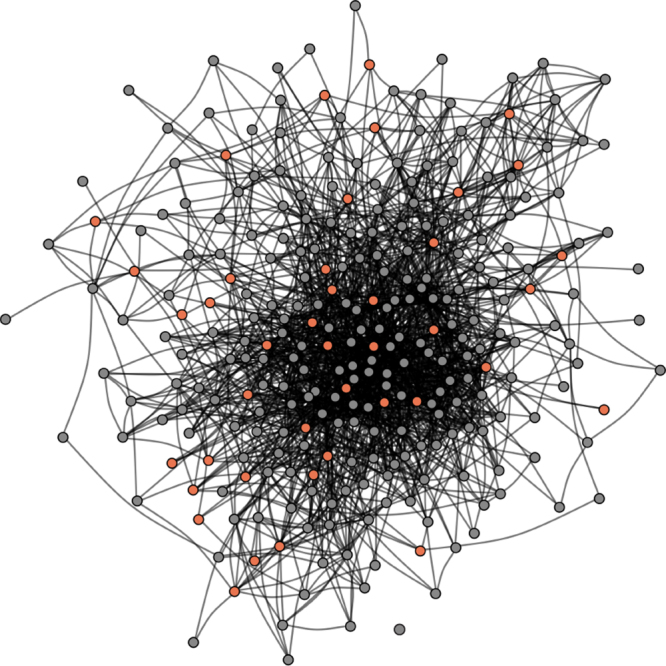
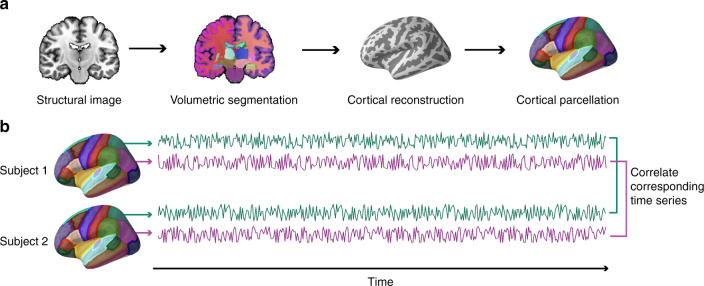
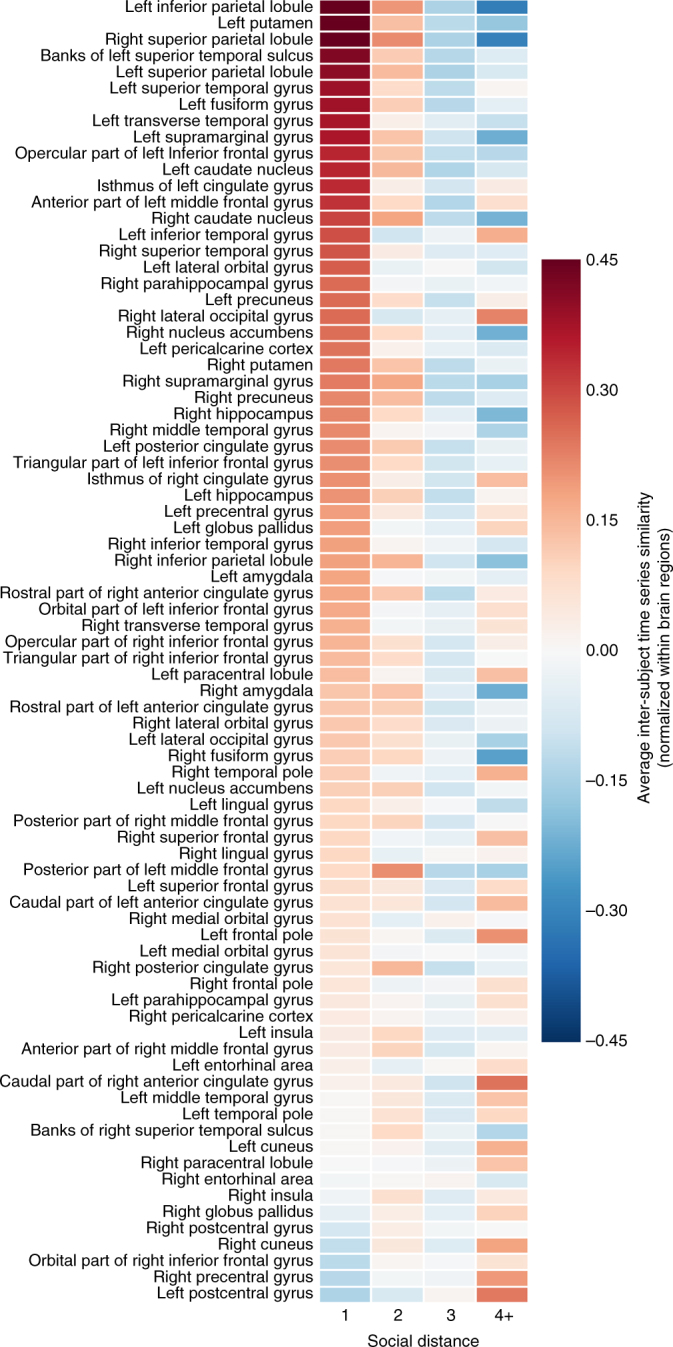
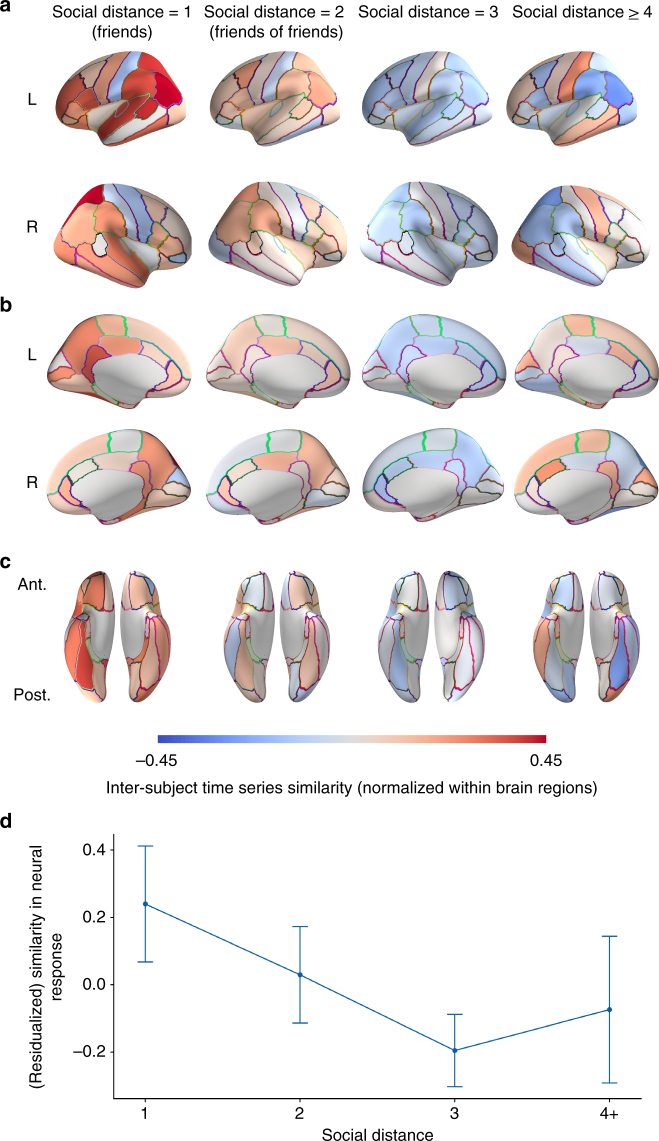
Human social networks are overwhelmingly homophilous: individuals tend to befriend others who are similar to them in terms of a range of physical attributes (e.g., age, gender). Do similarities among friends reflect deeper similarities in how we perceive, interpret, and respond to the world? To test whether friendship, and more generally, social network proximity, is associated with increased similarity of real-time mental responding, we used functional magnetic resonance imaging to scan subjects’ brains during free viewing of naturalistic movies. Here we show evidence for neural homophily: neural responses when viewing audiovisual movies are exceptionally similar among friends, and that similarity decreases with increasing distance in a real-world social network. These results suggest that we are exceptionally similar to our friends in how we perceive and respond to the world around us, which has implications for interpersonal influence and attraction.
Overview
The claims and statistics of this paper haven’t been checked yet.
Free: it reads the open-access text and checks the first 5 claims that cite a source we can check. Create a free account to check every claim.
Integrity signals
Registry
Cites
Statistics
Figures
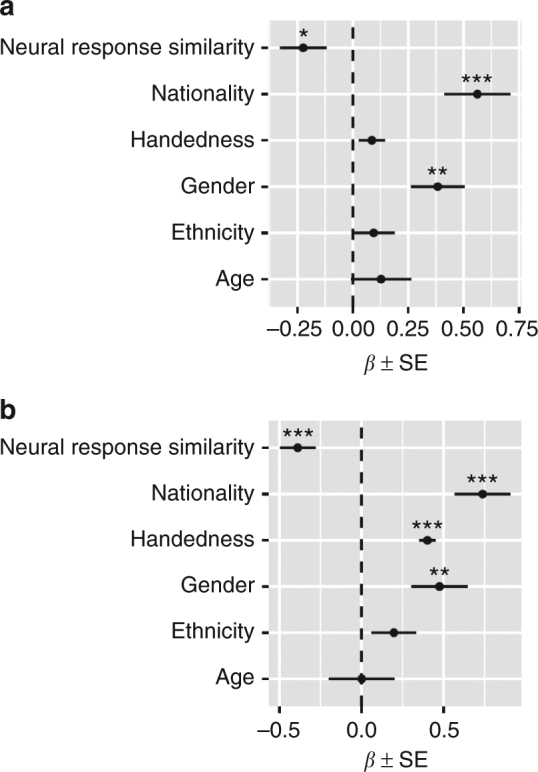
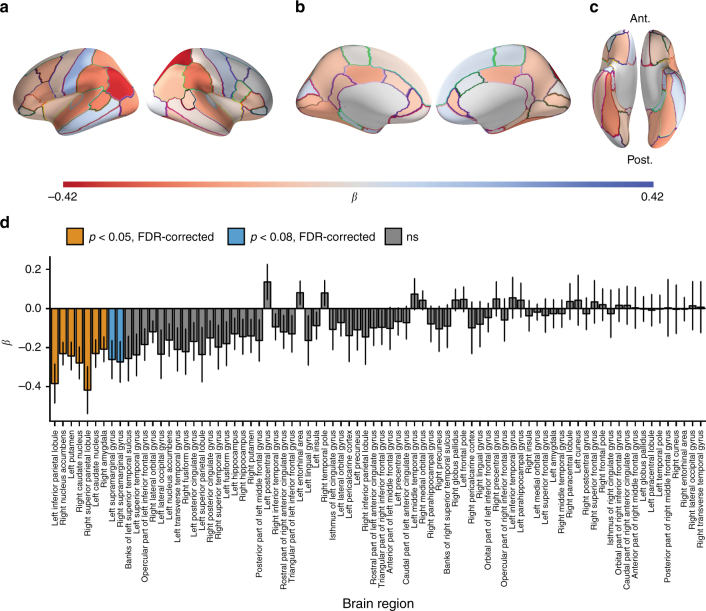
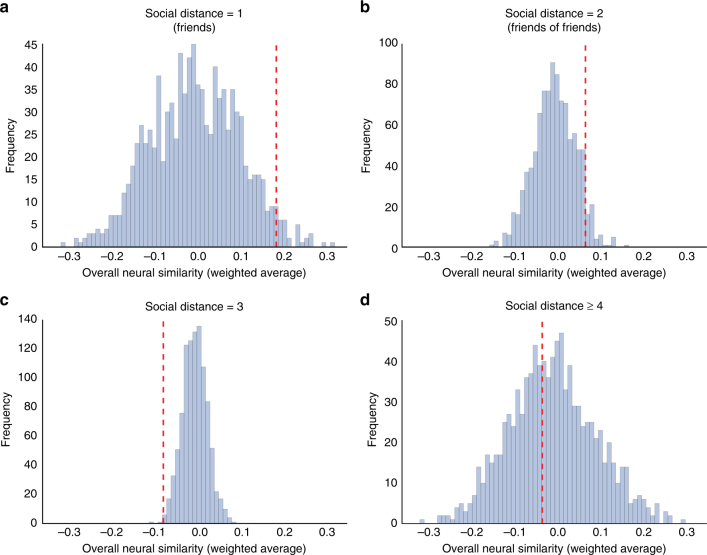
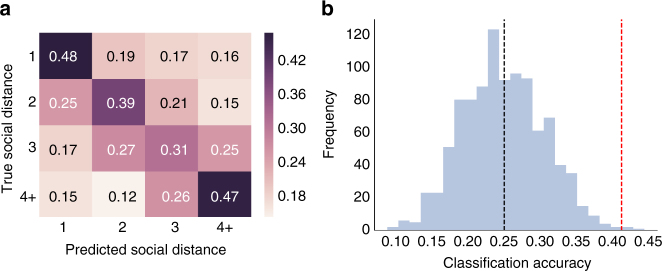
Verification
Claims the paper makes
The claims and statistics of this paper haven’t been checked yet.
Free: it reads the open-access text and checks the first 5 claims that cite a source we can check. Create a free account to check every claim.
Claims other papers make about this one
Each is checked against this paper’s own text: does it say what the citing paper says it does?
In the citing paper
“A striking recent study117,118 mapped the close-knit social network of a class of students at a business school and found that pairs of people who have closer social relationships have more similar neural responses to narratives than do pairs of people who are less close (Fig. 4d).”
From The default mode network: where the idiosyncratic self meets the shared social world (2021) · cites this paper as [117]
In the citing paper
“Emerging neuroscientific research provides evidence that neural alignment across subjects is influenced and shaped by the people with whom we are connected in our real and virtual social networks.”
From The default mode network: where the idiosyncratic self meets the shared social world (2021) · cites this paper as [117]
Self-check
Percentages, sums and reported differences re-computed from the paper’s own numbers.
The self-check needs the paper’s full text.
Citations
Cites
Scikit-learn: Machine Learning in Python
Pedregosa, F., Varoquaux, G., Gramfort, A., Michel, V., Thirion, B., Grisel, O., Blondel, M., Müller, A., Nothman, J., Louppe, G., et al. (2012) · arXiv · doi:10.48550/arxiv.1201.0490 · Cited by 71,016
Matplotlib: a 2D graphics environment
Hunter, J. D. (2007) · Computing in Science & Engineering · doi:10.1109/mcse.2007.55 · Cited by 39,249
Birds of a Feather: Homophily in Social Networks
McPherson, M., Smith-Lovin, L., & Cook, J. M. (2001) · Annual Review of Sociology · doi:10.1146/annurev.soc.27.1.415 · Cited by 18,567
ggplot2: Elegant Graphics for Data Analysis
Wickham, H. (2009) · doi:10.1007/978-0-387-98141-3 · Cited by 14,447
Desikan, R. S., Ségonne, F., Fischl, B., Quinn, B. T., Dickerson, B. C., Blacker, D., Buckner, R. L., Dale, A. M., Maguire, R. P., Hyman, B. T., et al. (2006) · NeuroImage · doi:10.1016/j.neuroimage.2006.01.021 · Cited by 13,324
Control of goal-directed and stimulus-driven attention in the brain
Corbetta, M., & Shulman, G. L. (2002) · Nature Reviews Neuroscience · doi:10.1038/nrn755 · Cited by 12,881
AFNI: Software for analysis and visualization of functional magnetic resonance neuroimages
Cox, R. W. (1996) · Computers and Biomedical Research · doi:10.1006/cbmr.1996.0014 · Cited by 10,913
Fischl, B. (2012) · NeuroImage · doi:10.1016/j.neuroimage.2012.01.021 · Cited by 9,526
Social Influence: Compliance and Conformity
Cialdini, R. B., & Goldstein, N. J. (2004) · Annual Review of Psychology · doi:10.1146/annurev.psych.55.090902.142015 · Cited by 6,077
(2006) · Cited by 3,705
Research works printed but not linked: 1
- Burt, R. S. Structural Holes: The Social Structure of Competition (Harvard Univ. Press, Cambridge, 1992).
Cited by
Using second-person neuroscience to elucidate the mechanisms of social interaction
Redcay, E., & Schilbach, L. (2019) · Nature Reviews Neuroscience · doi:10.1038/s41583-019-0179-4 · Cited by 738
The default mode network: where the idiosyncratic self meets the shared social world
Yeshurun, Y., Nguyen, M., & Hasson, U. (2021) · Nature Reviews Neuroscience · doi:10.1038/s41583-020-00420-w · Cited by 682
Keep it real: rethinking the primacy of experimental control in cognitive neuroscience
Nastase, S. A., Goldstein, A., & Hasson, U. (2020) · NeuroImage · doi:10.1016/j.neuroimage.2020.117254 · Cited by 344
Bevilacqua, D., Davidesco, I., Wan, L., Chaloner, K., Rowland, J., Ding, M., Poeppel, D., & Dikker, S. (2019) · Journal of Cognitive Neuroscience · doi:10.1162/jocn_a_01274 · Cited by 312
“Our findings on brain-to-brain synchrony in a group setting marry two lines of prior research, namely, studies investigating neural entrainment to engaging stimuli (e.g., Poulsen et al., 2017) and studies linking social connectedness to brain responses (Parkinson et al., 2017, 2018).”
Idiosynchrony: From shared responses to individual differences during naturalistic neuroimaging
Finn, E. S., Glerean, E., Khojandi, A. Y., Nielson, D., Molfese, P. J., Handwerker, D. A., & Bandettini, P. A. (2020) · NeuroImage · doi:10.1016/j.neuroimage.2020.116828 · Cited by 269
What Does Homophily Do? A Review of the Consequences of Homophily
Ertug, G., Brennecke, J., Kovács, B., & Zou, T. (2022) · Academy of Management Annals · doi:10.5465/annals.2020.0230 · Cited by 247
“For example, Parkinson, Kleinbaum, and Wheatley (2018) show evidence for neural homophily: neural responses when viewing audio-visual movies are exceptionally similar among friends, and argue that this has implications for interpersonal influence and attraction.”
BackgroundInteractional synchrony: signals, mechanisms and benefits
Hoehl, S., Fairhurst, M., & Schirmer, A. (2021) · Social Cognitive and Affective Neuroscience · doi:10.1093/scan/nsaa024 · Cited by 231
“same stimulus? For example, are individuals with correlated brain activity while watching the same video interactionally synchronizing (Levy et al., 2017; Parkinson et al., 2018)? Thinking about these questions is important, and although”
BackgroundPan, Y., Dikker, S., Goldstein, P., Zhu, Y., Yang, C., & Hu, Y. (2020) · NeuroImage · doi:10.1016/j.neuroimage.2020.116657 · Cited by 187
Smith, E. B., Brands, R. A., Brashears, M. E., & Kleinbaum, A. M. (2020) · Annual Review of Sociology · doi:10.1146/annurev-soc-121919-054736 · Cited by 160
“To do so, the authors replicated their 2018 study (Parkinson et al. 2018), but with a longitudinal design.”
BackgroundSelf-citationDikker, S., Michalareas, G., Oostrik, M., Serafimaki, A., Kahraman, H. M., Struiksma, M. E., & Poeppel, D. (2020) · NeuroImage · doi:10.1016/j.neuroimage.2020.117436 · Cited by 186
Weaverdyck, M. E., Lieberman, M. D., & Parkinson, C. M. (2020) · Social Cognitive and Affective Neuroscience · doi:10.1093/scan/nsaa057 · Cited by 157
“…to analyze other types of fMRI data (e.g. region-averaged time series, Yeshurun et al ., 2017; inter-subject similarities of response time series, Parkinson et al ., 2018; patterns of functional connectivity, Shirer et al ., 2012) or data from other neuroimaging modalities (e.g. fNIRS, MEG, EEG;…”
BackgroundSelf-citationSharing the social world via intersubject neural synchronisation
Nummenmaa, L., Lahnakoski, J. M., & Glerean, E. (2018) · Current Opinion in Psychology · doi:10.1016/j.copsyc.2018.02.021 · Cited by 118
Self-Other Representation in the Social Brain Reflects Social Connection
Courtney, A. L., & Meyer, M. L. (2020) · The Journal of Neuroscience · doi:10.1523/jneurosci.2826-19.2020 · Cited by 115
New Developments in Social Network Analysis
Brass, D. J. (2021) · Annual Review of Organizational Psychology and Organizational Behavior · doi:10.1146/annurev-orgpsych-012420-090628 · Cited by 133
Personal Networks: Classic Readings and New Directions in Egocentric Analysis
Pescosolido, B. A., & Smith, E. B. (2021) · Cited by 102
Eye contact marks the rise and fall of shared attention in conversation
Wohltjen, S., & Wheatley, T. (2021) · Proceedings of the National Academy of Sciences · doi:10.1073/pnas.2106645118 · Cited by 102
“These effects are strong and compelling, even showing that brain-to-brain synchrony while watching videos predicts friendship (56) and underscoring the need to study interacting humans rather than passive stimuli (57).”
BackgroundSelf-citationPredicting memory from the network structure of naturalistic events
Lee, H., & Chen, J. (2022) · Nature Communications · doi:10.1038/s41467-022-31965-2 · Cited by 145
Brief segments of neurophysiological activity enable individual differentiation
da Silva Castanheira, J., Orozco Perez, H. D., Misic, B., & Baillet, S. (2021) · Nature Communications · doi:10.1038/s41467-021-25895-8 · Cited by 101
Social cognition in context: A naturalistic imaging approach
Redcay, E., & Moraczewski, D. (2019) · NeuroImage · doi:10.1016/j.neuroimage.2019.116392 · Cited by 117
Collective minds: social network topology shapes collective cognition
Momennejad, I. (2021) · Philosophical Transactions of the Royal Society B Biological Sciences · doi:10.1098/rstb.2020.0315 · Cited by 123
“One such study [56] reported that the neural responses of individuals during audiovisual video viewing were more similar to neural responses of their close community ties.”
BackgroundMethodConservative and liberal attitudes drive polarized neural responses to political content
Leong, Y. C., Chen, J., Willer, R., & Zaki, J. (2020) · Proceedings of the National Academy of Sciences · doi:10.1073/pnas.2008530117 · Cited by 108
In-degree centrality in a social network is linked to coordinated neural activity
Baek, E. C., Hyon, R., López, K., Finn, E. S., Porter, M. A., & Parkinson, C. M. (2022) · Nature Communications · doi:10.1038/s41467-022-28432-3 · Cited by 105
“We also fi t analogous models to control for demographic variables that may be associated with neural similarity 26,40 , models that only incorporated neural similarities between participants who were living in Fig.”
BackgroundMethodInfluentialSelf-citationInterpersonal similarity of autistic traits predicts friendship quality
Bolis, D., Lahnakoski, J. M., Seidel, D., Tamm, J., & Schilbach, L. (2021) · Social Cognitive and Affective Neuroscience · doi:10.1093/scan/nsaa147 · Cited by 79
“, 2017) and distance of a relationship within a social network (Parkinson et al., 2018) appear to be reflected by similarities at the level of brain function.”
BackgroundA hierarchical model for interpersonal verbal communication
Jiang, J., Zheng, L., & Lu, C. (2020) · Social Cognitive and Affective Neuroscience · doi:10.1093/scan/nsaa151 · Cited by 102
“INS between people when freely viewing an audiovisual movie (Parkinson et al., 2018).”
BackgroundSpontaneous dyadic behavior predicts the emergence of interpersonal neural synchrony
Koul, A., Ahmar, D., Iannetti, G. D., & Novembre, G. (2023) · NeuroImage · doi:10.1016/j.neuroimage.2023.120233 · Cited by 75
Saxbe, D., Beckes, L., Stoycos, S. A., & Coan, J. A. (2019) · Perspectives on Psychological Science · doi:10.1177/1745691619876528 · Cited by 96
Synchronized affect in shared experiences strengthens social connection
Cheong, J. H., Molani, Z., Sadhukha, S., & Chang, L. J. (2023) · Communications Biology · doi:10.1038/s42003-023-05461-2 · Cited by 75
“Consequently, individuals ’ physiological arousal 4,14 , neural responses 10,15,16 , and facial expressions 17,18 may converge and diverge throughout the course of an experience re fl ecting dynamically shifting alignments of thoughts and feelings 4,19,20 .”
The Embodied-Enactive-Interactive Brain: Bridging Neuroscience and Creative Arts Therapies
Vaisvaser, S. (2021) · Frontiers in Psychology · doi:10.3389/fpsyg.2021.634079 · Cited by 95
Characterizing the mechanisms of social connection
Delgado, M. R., Fareri, D. S., & Chang, L. J. (2023) · Neuron · doi:10.1016/j.neuron.2023.09.012 · Cited by 98
“127 Moreover, non-verbal facial expressions, laughter, and chit-chat between dyads can increase synchronization of shared experiences when watching a movie together compared with watching alone.”
BackgroundWhat can narratives tell us about the neural bases of human memory?
Lee, H., Bellana, B., & Chen, J. (2020) · Current Opinion in Behavioral Sciences · doi:10.1016/j.cobeha.2020.02.007 · Cited by 71
Physiological linkage during shared positive and shared negative emotion
Chen, K.-H., Brown, C. L., Wells, J. L., Rothwell, E. S., Otero, M. C., Levenson, R. W., & Fredrickson, B. L. (2021) · Journal of Personality and Social Psychology · doi:10.1037/pspi0000337 · Cited by 72
Language Style Similarity and Friendship Networks
Kovács, B., & Kleinbaum, A. M. (2018) · Psychological Science · doi:10.1177/0956797619894557 · Cited by 85
“, & Pennebaker, J. W. (2010). Language style matching as a predictor of social dynamics in small groups. Communication Research, 37(1), 3-19. Greenberg, J., & Fernandez, R. M. (2016). The Strength of Weak Ties inMBA Job Search: A Within–Person Test. Sociological Science, 3, 296-316. Ireland, M. E., Slatcher, R. B., Ea…”
BackgroundInfluentialSelf-citationSchilbach, L., & Redcay, E. (2025) · Annual Review of Psychology · doi:10.1146/annurev-psych-080123-101149 · Cited by 71
Senomic view of the cell: Senome versus Genome
Baluška, F., & Miller, Jr. (2018) · Communicative & Integrative Biology · doi:10.1080/19420889.2018.1489184 · Cited by 68
“communication, underlies social networks in humans [100,101].”
The Influence of Social Contagion Within Education: A Motivational Perspective
Burgess, L. G., RIDDELL, P. M., Fancourt, A., & Murayama, K. (2018) · Mind Brain and Education · doi:10.1111/mbe.12178 · Cited by 101
“In other recent research Parkinson, Kleinbaum, and Wheatley (2018) used intersubject correlation analysis (Hasson, Nir, Levy, Fuhrmann, & Malach, 2004) to assess similarity in the brain activation between pairs of individuals while participants naturally watch movies.”
Reframing social cognition: Relational versus representational mentalizing.
Deschrijver, E., & Palmer, C. J. (2020) · Psychological Bulletin · doi:10.1037/bul0000302 · Cited by 80
van Baar, J. M., Halpern, D. J., & FeldmanHall, O. (2021) · Proceedings of the National Academy of Sciences · doi:10.1073/pnas.2022491118 · Cited by 91
“It is well established that similarities on demographic and social variables can increase intersubject synchrony in brain responses to video stimuli (90).”
BackgroundPersonal Networks: Classic Readings and New Directions in Egocentric Analysis
Pescosolido, B. A., & Smith, E. B. (2021) · Cambridge University Press eBooks · doi:10.1017/9781108878296 · Cited by 131
Social network analysis for social neuroscientists
Baek, E. C., Porter, M. A., & Parkinson, C. M. (2020) · Social Cognitive and Affective Neuroscience · doi:10.1093/scan/nsaa069 · Cited by 73
“…2017, 2018; Morelli et al., 2018), social neuroscientists can leverage tools from network analysis to characterize the structure of individuals’ social worlds and thereby improve understanding of how individual brains shape and are shaped by their social networks (Weaverdyck and Parkinson, 2018).”
Self-citationModeling multi-scale data via a network of networks
Gu, S., Jiang, M., Guzzi, P. H., & Milenković, T. (2022) · Bioinformatics · doi:10.1093/bioinformatics/btac133 · Cited by 64
“However, these other studies analyze NoNs where the level 2 network is a disease-disease similarity network and the level 1 networks are disease specific PINs [18], where the level 2 network is a social network and the level 1 networks are individuals’ brain networks [13, 20, 3], or where the level 2 network is a chem…”
BackgroundThe Emerging Science of Interacting Minds
Wheatley, T. P., Thornton, M. A., Stolk, A., & Chang, L. J. (2023) · Perspectives on Psychological Science · doi:10.1177/17456916231200177 · Cited by 93
“For example, most people tend to be homoph-ilous—gravitating to individuals who think in ways that are similar to themselves (Parkinson et al., 2018).”
BackgroundSelf-citationThe Interpersonal Neuroscience of Social Learning
Pan, Y., Novembre, G., & Olsson, A. (2021) · Perspectives on Psychological Science · doi:10.1177/17456916211008429 · Cited by 60
“Extending previous research, we found that machine-learning techniques were more successful when decoding behaviors during learning from BtBC data than when using a single-brain method: Whereas BtBC allowed us to discriminate between instructional strategies with a reasonable classification performance, the decoding a…”
MethodGüroğlu, B. (2022) · Child Development Perspectives · doi:10.1111/cdep.12450 · Cited by 84
Hyon, R., Youm, Y., Kim, J., Chey, J., Kwak, S., & Parkinson, C. (2020) · Proceedings of the National Academy of Sciences · doi:10.1073/pnas.2013606117 · Cited by 57
“Furthermore, given prior work demonstrating that similarity in neural responses to naturalistic stimuli is also predictive of social network proximity (15, 16) and that tasks can emphasize individual differences in functional connectivity (56), future work should test if and how interpersonal similarity in functional…”
BackgroundMethodSelf-citationRelational neuroscience: Insights from hyperscanning research
Felice, S. D., Chand, T., Croy, I., Engert, V., Goldstein, P., Holroyd, C. B., Kirsch, P., Krach, S., Ma, Y., Scheele, D., et al. (2024) · Neuroscience & Biobehavioral Reviews · doi:10.1016/j.neubiorev.2024.105979 · Cited by 86
“One of the first studies trying to explore the role of social contact in neural conformity was the study by Parkinson et al. (2018).”
Lonely Individuals Process the World in Idiosyncratic Ways
Baek, E. C., Hyon, R., López, K., Du, M., Porter, M. A., & Parkinson, C. M. (2023) · Psychological Science · doi:10.1177/09567976221145316 · Cited by 66
“We fit additional models to test whether any observed associations between loneliness and ISCs remain significant even after controlling for participants’ self-reported levels of objective social disconnection, whether the individuals in a dyad were friends (because prior research suggests that friends have larger ISC…”
InfluentialSelf-citationLiu, Y., Peng, S., Wu, X., Liu, Z., Lian, Z., Fan, H., Kuang, N., Gu, X., Yang, S., Hu, Y., et al. (2025) · Developmental Cognitive Neuroscience · doi:10.1016/j.dcn.2025.101566 · Cited by 58
“Additionally, studies have demonstrated that friends exhibited greater neural similarity than non-friends during both resting states (Hyon et al., 2020) and movie viewing tasks (Parkinson et al., 2018).”
Hyon, R., Kleinbaum, A. M., & Parkinson, C. (2020) · NeuroImage · doi:10.1016/j.neuroimage.2019.116492 · Cited by 49
“(Parkinson et al., 2018) depends critically not only on the stimuli used but also on the manner in which participants’ neural response to naturalistic stimuli are summarized.”
InfluentialSelf-citationMapping the social landscape: tracking patterns of interpersonal relationships
Basyouni, R., & Parkinson, C. M. (2022) · Trends in Cognitive Sciences · doi:10.1016/j.tics.2021.12.006 · Cited by 64
Self-citationStructural Holes Capstone, Cautions, and Enthusiasms
Burt, R. S. (2021) · Cambridge University Press eBooks · doi:10.1017/9781108878296.029 · Cited by 59
Analysis of stimulus-induced brain dynamics during naturalistic paradigms
Simony, E., & Chang, C. (2019) · NeuroImage · doi:10.1016/j.neuroimage.2019.116461 · Cited by 54
“, 2018)), link neural and social distance (Parkinson et al., 2018), and enhance compliance in pediatric studies (Vanderwal et al.”
Kalaganis, F. P., Georgiadis, K., Oikonomou, V. P., Laskaris, N. A., Nikolopoulos, S., & Kompatsiaris, I. Y. (2021) · Frontiers in Neuroergonomics · doi:10.3389/fnrgo.2021.672982 · Cited by 65
Consensus-building conversation leads to neural alignment
Sievers, B., Welker, C. L., Hasson, U., Kleinbaum, A. M., & Wheatley, T. P. (2024) · Nature Communications · doi:10.1038/s41467-023-43253-8 · Cited by 80
“Interestingly, Parkinsonandcolleagues 23 found that friends in a real-world social network were more likely to have similar brain activity, suggesting brain alignment may play a role in determining who befriends whom, perhaps in conjunction with social reward systems 24 .”
Self-citationThe Routledge International Handbook of Neuroaesthetics
Nadal, M., & Skov, M. (2022) · Routledge eBooks · doi:10.4324/9781003008675 · Cited by 54
Functional brain network architecture supporting the learning of social networks in humans
Tompson, S., Kahn, A. E., Falk, E. B., Vettel, J. M., & Bassett, D. S. (2020) · NeuroImage · doi:10.1016/j.neuroimage.2019.116498 · Cited by 47
Kišjuhas, A. (2023) · Leisure Studies · doi:10.1080/02614367.2023.2183979 · Cited by 64
“Similar neural responses predict social ties (Parkinson et al., 2018), and it is exactly during rituals that humans become emotionally and cognitively attuned to each other.”
BackgroundNeural synchronization predicts marital satisfaction
Li, L., Huang, X., Xiao, J., Zheng, Q., Shan, X., He, C., Liao, W., Chen, H., Menon, V., & Duan, X. (2022) · Proceedings of the National Academy of Sciences · doi:10.1073/pnas.2202515119 · Cited by 55
“(20) examined ISS during free viewing of naturalistic movies and found evidence for neural homophily: neural responses when viewing audiovisual movies were similar among friends, and decreased with increasing distance in a real-world social network.”
BackgroundBecker, K. H., Ebbers, J. J., & Engel, Y. (2023) · Journal of Business Venturing · doi:10.1016/j.jbusvent.2023.106299 · Cited by 46
Hyperscanning shows friends explore and strangers converge in conversation
Speer, S. P. H., Mwilambwe-Tshilobo, L., Tsoi, L., Burns, S. M., Falk, E. B., & Tamir, D. (2024) · Nature Communications · doi:10.1038/s41467-024-51990-7 · Cited by 63
“In hyperscanning research, with traditional methods calculating inter-brain neural synchronization between homologous/non-homologous regions, helps infer the role played by specific brain regions in communication (whether reverse inference is correct is another debate).”
BackgroundThe dawn of social bonds: what is the role of shared experiences in non-human animals?
Busia, L., & Griggio, M. (2020) · Biology Letters · doi:10.1098/rsbl.2020.0201 · Cited by 42
“According to the definition of social relationship itself [18,19], social bonds need time to develop [33,34].”
BackgroundThere is chemistry in social chemistry
Ravreby, I., Snitz, K., & Sobel, N. (2022) · Science Advances · doi:10.1126/sciadv.abn0154 · Cited by 44
“There are also more complex similarities such as personality (11, 12) and values (13) and even in measures such as patterns of neural activity (14, 15) and genetic makeup (16–19).”
BackgroundVu, T.-D., Iwasaki, Y., Shigenobu, S., Maruko, A., Oshima, K., Iioka, E., Huang, C., Abe, T., Tamaki, S., Lin, Y., et al. (2020) · PLoS Genetics · doi:10.1371/journal.pgen.1008831 · Cited by 44
“Moreover, deeper similarities in neural responses were found among friends who view the same movie [91], or between infants and adults while they communicate and play with one another [92].”
BackgroundNeural alignment during face‐to‐face spontaneous deception: Does gender make a difference?
Mei, C., Zhang, T., Zhang, R., Wang, N., Yin, Q. S., Li, Y., Liu, J., Liu, T., & Li, X. (2020) · Human Brain Mapping · doi:10.1002/hbm.25173 · Cited by 39
Personality homophily affects male social bonding in wild Assamese macaques, Macaca assamensis
Ebenau, A., von Borell, C., Penke, L., Ostner, J., & Schülke, O. (2019) · Animal Behaviour · doi:10.1016/j.anbehav.2019.05.020 · Cited by 44
The neural representation of social networks
Weaverdyck, M. E., & Parkinson, C. M. (2018) · Current Opinion in Psychology · doi:10.1016/j.copsyc.2018.05.009 · Cited by 39
Self-citationFareri, D. S., Smith, D. V., & Delgado, M. R. (2020) · Social Cognitive and Affective Neuroscience · doi:10.1093/scan/nsaa031 · Cited by 38
Baek, E. C., & Parkinson, C. M. (2022) · Social and Personality Psychology Compass · doi:10.1111/spc3.12710 · Cited by 55
“…been associated with shared understanding across various contexts (e.g., shared perspectives and goals; Lahnakoski et al., 2014; similar interpretations of ambiguous narratives; Nguyen et al., 2019; similar beliefs about characters; Yeshurun et al., 2017) and friendship (Parkinson et al., 2018).”
BackgroundInfluentialSelf-citationTask Allocation Model Based on Worker Friend Relationship for Mobile Crowdsourcing
Zhao, B., Wang, Y., Li, Y., Gao, Y., & Tong, X. (2019) · Sensors · doi:10.3390/s19040921 · Cited by 34
“A study [14] in the journal Nature Communications pointed out that from the brain scan results, when friends react to the same thing, the brain wavelengths are extremely similar.”
BackgroundPhysiological synchrony predicts observational threat learning in humans
Pärnamets, P., Espinosa, L., & Olsson, A. (2020) · Proceedings of the Royal Society B Biological Sciences · doi:10.1098/rspb.2019.2779 · Cited by 35
Tuen, Y. J., Bulley, A., Palombo, D. J., & O’Connor, B. B. (2022) · Cognition · doi:10.1016/j.cognition.2022.105283 · Cited by 36
“Tracking the distance of other people in one ’ s social network is so reflexive that it appears to be spontaneously computed while merely passively viewing others (Parkinson, Kleinbaum, & Wheatley, 2018).”
BackgroundSynchronized affect in shared experiences strengthens social connectionPreprint
Cheong, J. H., Molani, Z., Sadhukha, S., & Chang, L. J. (2020) · doi:10.31234/osf.io/bd9wn · Cited by 28
Song, X., Dong, M., Feng, K., Li, J., Hu, X., & Liu, T. (2023) · NeuroImage · doi:10.1016/j.neuroimage.2023.120473 · Cited by 33
“Previous studies have shown that individuals with closer interpersonal distance may exhibit higher levels of self-other integration and stronger INS (Parkinson et al., 2018).”
Two-Person Approaches to Studying Social Interaction in Psychiatry: Uses and Clinical Relevance
Pan, Y., & Cheng, X. (2020) · Frontiers in Psychiatry · doi:10.3389/fpsyt.2020.00301 · Cited by 31
“org 2 personal influences, such as social network proximity (17); friends showed more similar neural responses to naturalistic movies, and such similar neural responses decreased with increasing social distance between friends.”
BackgroundCulture, Mind, and Brain: Emerging Concepts, Models, and Applications
Kirmayer, L. J., Worthman, C. M., Kitayama, S., Lemelson, R., & Cummings, C. (2020) · Cambridge University Press eBooks · doi:10.1017/9781108695374 · Cited by 32
Culture in Mind – An Enactivist Account: Not Cognitive Penetration but Cultural Permeation
Hutto, D. D., Gallagher, S., Ilundáin‐Agurruza, J., & Hipólito, I. (2020) · Cambridge University Press eBooks · doi:10.1017/9781108695374.009 · Cited by 40
Li, Z., Li, J., Hong, B., Nolte, G., Engel, A. K., & Zhang, D. (2021) · Cerebral Cortex · doi:10.1093/cercor/bhab118 · Cited by 27
Consensus-building conversation leads to neural alignment
Sievers, B., Welker, C., Hasson, U., Kleinbaum, A. M., & Wheatley, T. (2020) · doi:10.31234/osf.io/562z7 · Cited by 25
Self-citationUnIC: Towards Unmanned Intelligent Cluster and Its Integration into Society
Zhang, F., Yu, J., Lin, D., & Zhang, J. (2022) · Engineering · doi:10.1016/j.eng.2022.02.008 · Cited by 30
Brain-to-Brain Synchrony in the STEM Classroom
Davidesco, I. (2020) · CBE—Life Sciences Education · doi:10.1187/cbe.19-11-0258 · Cited by 37
“This finding is consistent with recent fMRI research, which reported that neural responses to naturalistic movies were highly similar among friends, with similarity of neural responses decreasing as social distance increased (Parkinson et al., 2018).”
ResultUsing Identity Theory to Understand Homophily in Groups
Stets, J. E., Aldecoa, J., Bloom, Q., & Winegar, J. (2021) · Frontiers in sociology and social research · doi:10.1007/978-3-030-76966-6_14 · Cited by 36
Bentley, R. A. (2022) · Annual Review of Anthropology · doi:10.1146/annurev-anthro-041320-021036 · Cited by 37
Personality similarity predicts synchronous neural responses in fMRI and EEG data
Matz, S., Hyon, R., Baek, E. C., Parkinson, C. M., & Cerf, M. (2022) · Scientific Reports · doi:10.1038/s41598-022-18237-1 · Cited by 34
Self-citationDieffenbach, M. C., Gillespie, G. S. R., Burns, S. M., McCulloh, I., Ames, D. L., Dagher, M. M., Falk, E. B., & Lieberman, M. D. (2020) · Social Cognitive and Affective Neuroscience · doi:10.1093/scan/nsaa115 · Cited by 32
“Previous fMRI research has established that those who are ‘likeminded’ tend to show similarities based on how their brains respond to external stimuli (Parkinson et al., 2018).”
BackgroundKoch, G. E., Paulus, J. P., & Coutanche, M. N. (2020) · Cerebral Cortex · doi:10.1093/cercor/bhaa003 · Cited by 24
Gordon, A. M., & Diamond, E. (2023) · Current Opinion in Psychology · doi:10.1016/j.copsyc.2023.101687 · Cited by 26
Social and Affective Neuroscience of Everyday Human Interaction: From Theory to Methodology
Boggio, P. S., Wingenbach, T. S. H., Coêlho, M. L. D. S., Comfort, W. E., Marques, L. M., & Alves, M. V. (2022) · Springer eBooks · doi:10.1007/978-3-031-08651-9 · Cited by 31
Schwyck, M. E., Du, M., Li, Y., Chang, L. J., & Parkinson, C. M. (2023) · Personality and Social Psychology Bulletin · doi:10.1177/01461672221140269 · Cited by 24
“More recent research provides evidence for similarity among friends in terms of behavioral tendencies and how individuals process the world around them (Apicella et al., 2012; Centola, 2011; Parkinson et al., 2018; Pradel et al., 2009; K. M. Smith et al., 2018).”
BackgroundSelf-citationGendron, M., Mesquita, B., & Barrett, L. F. (2020) · Culture, Mind, and Brain · doi:10.1017/9781108695374.010 · Cited by 20
Lamb, M., Brant, J., & Brooks, E. (2021) · Journal of Character Education · doi:10.1108/jced-06-2021-0006 · Cited by 122
Guthrie, T. D., Benadjaoud, Y. Y., & Chavez, R. S. (2021) · Cerebral Cortex · doi:10.1093/cercor/bhab355 · Cited by 20
Influencers, Backfire Effects, and the Power of the Periphery
Centola, D. M. (2021) · Cambridge University Press eBooks · doi:10.1017/9781108878296.005 · Cited by 31
Ramot, M., Walsh, C., Reimann, G. E., & Martin, A. D. (2020) · Communications Biology · doi:10.1038/s42003-020-0771-1 · Cited by 21
Schemas, Interactions, and Objects in Meaning‐Making1
Rawlings, C. M., & Childress, C. (2021) · Sociological Forum · doi:10.1111/socf.12759 · Cited by 25
Imaging Real-Time Tactile Interaction With Two-Person Dual-Coil fMRI
Renvall, V., Kauramäki, J., Malinen, S., Hari, R., & Nummenmaa, L. (2020) · Frontiers in Psychiatry · doi:10.3389/fpsyt.2020.00279 · Cited by 19
Neural Underpinnings of Peer Experiences and Interactions: A Review of Social Neuroscience Research
Güroğlu, B., & Veenstra, R. (2021) · Merrill-palmer Quarterly · doi:10.1353/mpq.2021.0021 · Cited by 29
Mori, K., & Haruno, M. (2022) · Human Brain Mapping · doi:10.1002/hbm.25822 · Cited by 16
A cultural evolutionary theory that explains both gradual and punctuated change
Vidiella, B., Carrignon, S., Bentley, R. A., O’Brien, M. J., & Valverde, S. (2022) · Journal of The Royal Society Interface · doi:10.1098/rsif.2022.0570 · Cited by 22
“…a parameter for memory, as reputation — memory of an individual ’ s interaction history [59] — affects levels of reciprocity among humans and non-human primates [48,107 – 109] with different functional network components of the brain activated for direct and indirect reciprocity [110 – 112].”
BackgroundSynchrony to a beat predicts synchrony with other minds
Wohltjen, S., Tóth, B., Boncz, A., & Wheatley, T. P. (2023) · Scientific Reports · doi:10.1038/s41598-023-29776-6 · Cited by 19
Self-citationLiu, X., Liu, S., Huang, R., Chen, X., Xie, Y., Ma, R., Luo, Y., Bu, J., & Zhang, X. (2018) · Frontiers in Neuroscience · doi:10.3389/fnins.2018.00461 · Cited by 19
Classification of schizophrenia by intersubject correlation in functional connectome
Ji, G., Chen, X., Bai, T., Wang, L., Wei, Q., Gao, Y., Tao, L., He, K., Li, D., Dong, Y., et al. (2019) · Human Brain Mapping · doi:10.1002/hbm.24527 · Cited by 17
“In support of this hypothesis, Parkinson, Kleinbaum, and Wheatley (2018) found that the similarity of neural responses to audiovisual movies decreased with increasing distance between individuals in their shared social network.”
Metadata
- Authors
- Parkinson, C., Kleinbaum, A. M., & Wheatley, T.
- Affiliations
- University of California, Los Angeles (US)
- Dartmouth College (US)
- Corresponding author
- Parkinson, Carolyn
- Venue
- Nature Communications
- Published
- 2018-01-30
- Volume
- 9
- Issue
- 1
- Pages
- 332-332
- ISSN
- 2041-1723 (ISSN-L)
- PMC
- PMC5790806
- OpenAlex
- W2786454053
- Cited by
- 388
- References
- 59
- Citations by year
- 2026: 23 · 2025: 44 · 2024: 36 · 2023: 43 · 2022: 39 · 2021: 98 · 2020: 71 · 2019: 18 · 2018: 15
- FWCI
- 30.08
- Type
- journal article
- Language
- en
- Open access
- gold
- doi.org
- Licence
- cc-by
- creativecommons.org/licenses/by/4.0 (tdm)
- creativecommons.org/licenses/by/4.0 (vor)
- Locations
- Nature Communications (publishedVersion, cc-by)
- PubMed Central (publishedVersion, cc-by)
- PubMed (publishedVersion)
- RePEc: Research Papers in Economics (submittedVersion)
- DOAJ (DOAJ: Directory of Open Access Journals) (submittedVersion, cc-by-sa)
- DOAJ (DOAJ: Directory of Open Access Journals) (submittedVersion)
- eScholarship (California Digital Library) (submittedVersion, cc-by)
- Funders
- Dartmouth College
- Topics
- Life Sciences › Neuroscience › Cognitive Neuroscience › Functional Brain Connectivity Studies
- Social Sciences › Psychology › Social Psychology › Action Observation and Synchronization
- Social Sciences › Psychology › Experimental and Cognitive Psychology › Evolutionary Psychology and Human Behavior
- Keywords
- friendship, homophily, neural similarity, naturalistic movie viewing, audiovisual perception, interpersonal influence, interpersonal attraction
- MeSH terms
- Adolescent, Adult, Brain, Female, Humans, Interpersonal Relations, Magnetic Resonance Imaging, Male, Friends, Social Networking
About these checks
Registry, retraction, Cites and statistics results are computed, not judged, with one exception: a printed reference that no index lists is read once by a model before it counts as a citation error. Claims are extracted by a model and kept only when their quote appears verbatim in the text; each cited source is then checked, with a model’s help, for whether it says what the claim relies on. Those verdicts can be wrong — read the claim’s quote and the cited source before relying on one.
Statistics and arithmetic are recomputed, not judged.
Confidence bands are shown only for fields calibrated on our annotated test set. None is calibrated yet, so no band is shown.
What counts as a claim ›How we measure confidence ›How we check this ›
Are you an author, or do you see a problem with this page? Request a review
Data sources
Bibliographic data: Semantic Scholar, OpenAlex, Crossref.
Contains information from the Semantic Scholar Academic Graph Datasets, made available under the ODC Attribution License (ODC-BY 1.0).
Semantic Scholar’s data is described in: Kinney, R., et al. (2023). The Semantic Scholar Open Data Platform. arXiv:2301.10140.
