

Similar neural responses predict friendship
Open accessThe DOI matches its Crossref record; 61 of the 61 references it cites were found in a registry or an index.
Abstract
Human social networks are overwhelmingly homophilous: individuals tend to befriend others who are similar to them in terms of a range of physical attributes (e.g., age, gender). Do similarities among friends reflect deeper similarities in how we perceive, interpret, and respond to the world? To test whether friendship, and more generally, social network proximity, is associated with increased similarity of real-time mental responding, we used functional magnetic resonance imaging to scan subjects’ brains during free viewing of naturalistic movies. Here we show evidence for neural homophily: neural responses when viewing audiovisual movies are exceptionally similar among friends, and that similarity decreases with increasing distance in a real-world social network. These results suggest that we are exceptionally similar to our friends in how we perceive and respond to the world around us, which has implications for interpersonal influence and attraction.
Overview
The claims and statistics of this paper haven’t been checked yet.
Free: it reads the open-access text and checks the first 5 claims that cite a source we can check. Create a free account to check every claim.
Integrity signals
Registry
Cites
Statistics
Figures
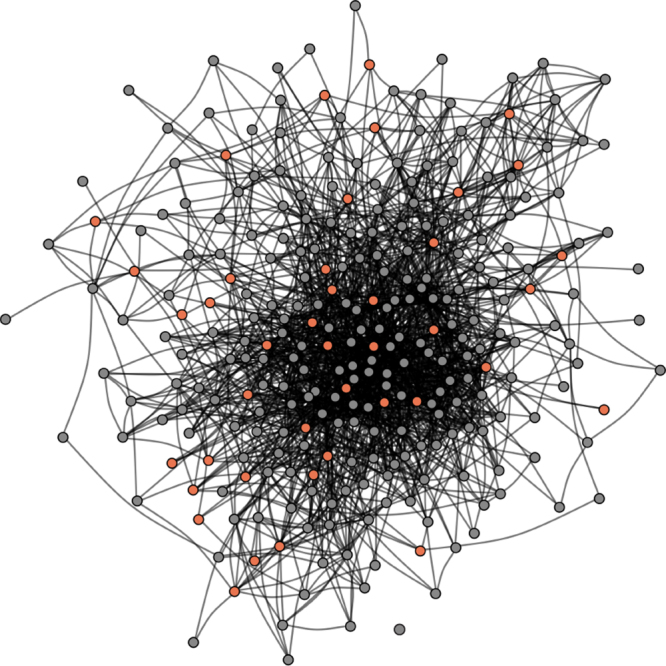
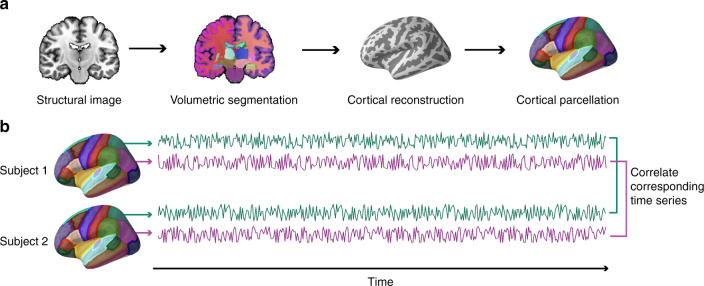
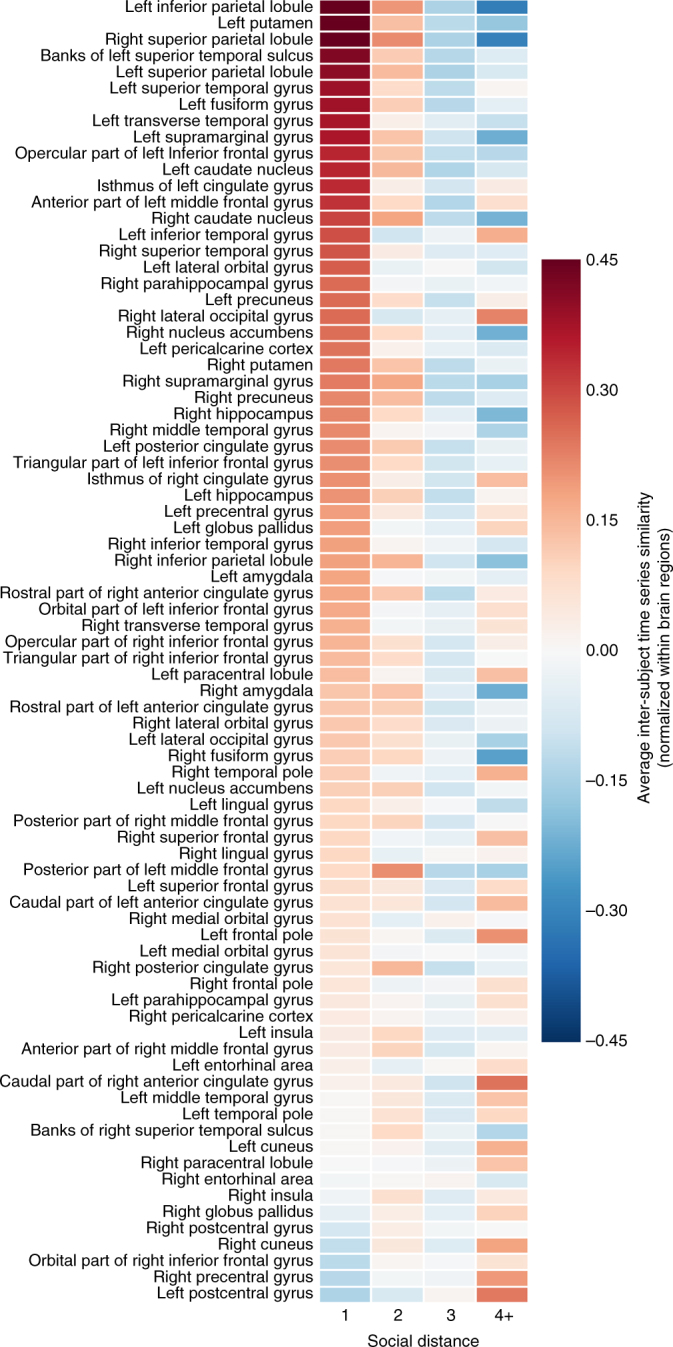
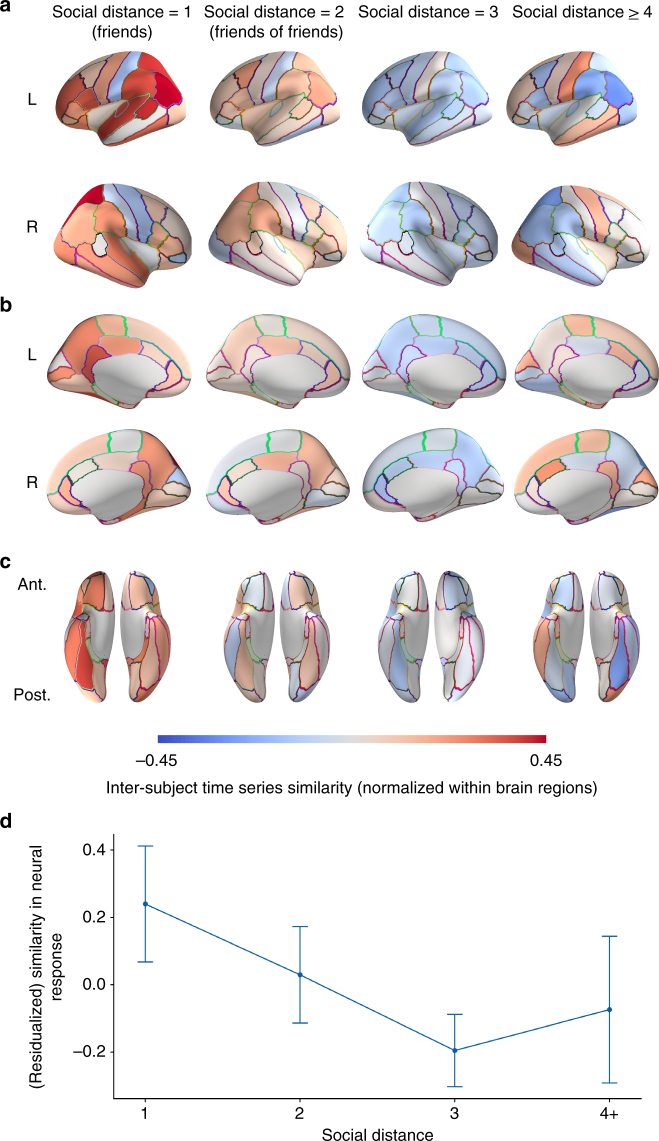
Verification
Claims the paper makes
The claims and statistics of this paper haven’t been checked yet.
Free: it reads the open-access text and checks the first 5 claims that cite a source we can check. Create a free account to check every claim.
Claims other papers make about this one
Each is checked against this paper’s own text: does it say what the citing paper says it does?
In the citing paper
“A striking recent study117,118 mapped the close-knit social network of a class of students at a business school and found that pairs of people who have closer social relationships have more similar neural responses to narratives than do pairs of people who are less close (Fig. 4d).”
From The default mode network: where the idiosyncratic self meets the shared social world (2021) · cites this paper as [117]
In the citing paper
“Emerging neuroscientific research provides evidence that neural alignment across subjects is influenced and shaped by the people with whom we are connected in our real and virtual social networks.”
From The default mode network: where the idiosyncratic self meets the shared social world (2021) · cites this paper as [117]
Self-check
Percentages, sums and reported differences re-computed from the paper’s own numbers.
The self-check needs the paper’s full text.
Citations
Cites
Scikit-learn: Machine Learning in Python
Pedregosa, F., Varoquaux, G., Gramfort, A., Michel, V., Thirion, B., Grisel, O., Blondel, M., Müller, A., Nothman, J., Louppe, G., et al. (2012) · arXiv · doi:10.48550/arxiv.1201.0490 · Cited by 71,016
Matplotlib: a 2D graphics environment
Hunter, J. D. (2007) · Computing in Science & Engineering · doi:10.1109/mcse.2007.55 · Cited by 39,249
Birds of a Feather: Homophily in Social Networks
McPherson, M., Smith-Lovin, L., & Cook, J. M. (2001) · Annual Review of Sociology · doi:10.1146/annurev.soc.27.1.415 · Cited by 18,567
ggplot2: Elegant Graphics for Data Analysis
Wickham, H. (2009) · doi:10.1007/978-0-387-98141-3 · Cited by 14,447
Desikan, R. S., Ségonne, F., Fischl, B., Quinn, B. T., Dickerson, B. C., Blacker, D., Buckner, R. L., Dale, A. M., Maguire, R. P., Hyman, B. T., et al. (2006) · NeuroImage · doi:10.1016/j.neuroimage.2006.01.021 · Cited by 13,324
Control of goal-directed and stimulus-driven attention in the brain
Corbetta, M., & Shulman, G. L. (2002) · Nature Reviews Neuroscience · doi:10.1038/nrn755 · Cited by 12,881
AFNI: Software for analysis and visualization of functional magnetic resonance neuroimages
Cox, R. W. (1996) · Computers and Biomedical Research · doi:10.1006/cbmr.1996.0014 · Cited by 10,913
Fischl, B. (2012) · NeuroImage · doi:10.1016/j.neuroimage.2012.01.021 · Cited by 9,526
Social Influence: Compliance and Conformity
Cialdini, R. B., & Goldstein, N. J. (2004) · Annual Review of Psychology · doi:10.1146/annurev.psych.55.090902.142015 · Cited by 6,077
(2006) · Cited by 3,705
Robust Inference With Multiway Clustering
Cameron, A. C., Gelbach, J. B., & Miller, D. L. (2011) · Journal of Business & Economic Statistics · doi:10.1198/jbes.2010.07136 · Cited by 3,203
BERGER, C. R., & CALABRESE, R. J. (1975) · Human Communication Research · doi:10.1111/j.1468-2958.1975.tb00258.x · Cited by 3,006
Mechanisms of visual attention in the human cortex
Ungerleider, S. K. A. L. G. (2000) · Annual Review of Neuroscience · doi:10.1146/annurev.neuro.23.1.315 · Cited by 2,159
Unconscious determinants of free decisions in the human brain
Soon, C. S., Brass, M., Heinze, H.-J., & Haynes, J.-D. (2008) · Nature Neuroscience · doi:10.1038/nn.2112 · Cited by 1,741
Strangers to ourselves: discovering the adaptive unconscious
(2003) · Choice Reviews Online · doi:10.5860/choice.40-3712 · Cited by 1,645
Social contagion theory: examining dynamic social networks and human behavior
Christakis, N. A., & Fowler, J. H. (2013) · Statistics in Medicine · doi:10.1002/sim.5408 · Cited by 1,303
Homophily in Voluntary Organizations: Status Distance and the Composition of Face-to-Face Groups
McPherson, J. M., & Smith-Lovin, L. (1987) · American Sociological Review · doi:10.2307/2095356 · Cited by 1,203
Brain-to-brain coupling: a mechanism for creating and sharing a social world
Hasson, U., Ghazanfar, A. A., Galantucci, B., Garrod, S., & Keysers, C. (2012) · Trends in Cognitive Sciences · doi:10.1016/j.tics.2011.12.007 · Cited by 1,140
Waskom, M., Botvinnik, O. B., O'Kane, D., Hobson, P., Ostblom, J., Lukauskas, S., Gemperline, D. C., Augspurger, T., Halchenko, Y., Cole, J. B., et al. (2014) · Zenodo (CERN European Organization for Nuclear Research) · doi:10.5281/zenodo.592845 · Cited by 1,119
Social desirability bias: A neglected aspect of validity testing
King, M. F., & Bruner, G. C. (2000) · Psychology and Marketing · doi:10.1002/(sici)1520-6793(200002)17:2<79::aid-mar2>3.0.co;2-0 · Cited by 1,067
The Neural Bases of Social Cognition and Story Comprehension
Mar, R. A. (2011) · Annual Review of Psychology · doi:10.1146/annurev-psych-120709-145406 · Cited by 950
Dynamics of Dyads in Social Networks: Assortative, Relational, and Proximity Mechanisms
Rivera, M. T., Soderstrom, S. B., & Uzzi, B. (2010) · Annual Review of Sociology · doi:10.1146/annurev.soc.34.040507.134743 · Cited by 939
The Structure of a Social Science Collaboration Network: Disciplinary Cohesion from 1963 to 1999
Moody, J. (2004) · American Sociological Review · doi:10.1177/000312240406900204 · Cited by 738
Functional magnetic resonance imaging of reward prediction
Knutson, B., & Cooper, J. C. (2005) · Current Opinion in Neurology · doi:10.1097/01.wco.0000173463.24758.f6 · Cited by 736
Social networks and cooperation in hunter-gatherers.
Apicella, C. L., Marlowe, F. W., Fowler, J. H., & Christakis, N. A. (2012) · Nature · doi:10.1038/nature10736 · Cited by 698
Reliability of cortical activity during natural stimulation
Hasson, U., Malach, R., & Heeger, D. J. (2010) · Trends in Cognitive Sciences · doi:10.1016/j.tics.2009.10.011 · Cited by 609
Social-desirability bias and the validity of self-reported values
Fisher, R. J., & Katz, J. E. (2000) · Psychology and Marketing · doi:10.1002/(sici)1520-6793(200002)17:2<105::aid-mar3>3.0.co;2-9 · Cited by 544
Social selection and peer influence in an online social network
Lewis, K., Gonzalez, M., & Kaufman, J. (2012) · Proceedings of the National Academy of Sciences · doi:10.1073/pnas.1109739109 · Cited by 542
Emotions promote social interaction by synchronizing brain activity across individuals
Nummenmaa, L., Glerean, E., Viinikainen, M., Jääskeläinen, I. P., Hari, R., & Sams, M. (2012) · Proceedings of the National Academy of Sciences · doi:10.1073/pnas.1206095109 · Cited by 538
Selfhout, M., Burk, W., Branje, S., Denissen, J., van Aken, M., & Meeus, W. (2010) · Journal of Personality · doi:10.1111/j.1467-6494.2010.00625.x · Cited by 506
The neural substrates of reward processing in humans: the modern role of FMRI
McClure, S. M., York, M. K., & Montague, P. R. (2004) · The Neuroscientist · doi:10.1177/1073858404263526 · Cited by 480
A Reinforcement-Affect Model of Attraction
CLORE, G. L., & BYRNE, D. (1974) · Foundations of Interpersonal Attraction · doi:10.1016/b978-0-12-362950-0.50013-6 · Cited by 415
Localization of Cardiac-Induced Signal Change in fMRI
Dagli, M. S., Ingeholm, J. E., & Haxby, J. V. (1999) · NeuroImage · doi:10.1006/nimg.1998.0424 · Cited by 384
Discretion Within Constraint: Homophily and Structure in a Formal Organization
Kleinbaum, A. M., Stuart, T. E., & Tushman, M. L. (2013) · Organization Science · doi:10.1287/orsc.1120.0804 · Cited by 377
Self-citationStatistical Analysis of fMRI Time-Series: A Critical Review of the GLM Approach
Monti, M. (2011) · Frontiers in Human Neuroscience · doi:10.3389/fnhum.2011.00028 · Cited by 321
On the other hand: including left-handers in cognitive neuroscience and neurogenetics
Willems, R. M., der Haegen, L. V., Fisher, S. E., & Francks, C. (2014) · Nature Reviews Neuroscience · doi:10.1038/nrn3679 · Cited by 319
Same Story, Different Story: The Neural Representation of Interpretive Frameworks
Yeshurun, Y., Swanson, S., Simony, E., Chen, J., Lazaridi, C., Honey, C. J., & Hasson, U. (2017) · Psychological Science · doi:10.1177/0956797616682029 · Cited by 300
Spontaneous neural encoding of social network position
Parkinson, C., Kleinbaum, A. M., & Wheatley, T. (2017) · Nature Human Behaviour · doi:10.1038/s41562-017-0072 · Cited by 251
Self-citationBen-Yakov, A., & Dudai, Y. (2011) · Journal of Neuroscience · doi:10.1523/jneurosci.0702-11.2011 · Cited by 238
The Accuracy of Verbal Reports About the Effects of Stimuli on Evaluations and Behavior
de Camp Wilson, T., & Nisbett, R. E. (1978) · Social Psychology · doi:10.2307/3033572 · Cited by 229
Chimps of a feather sit together: chimpanzee friendships are based on homophily in personality
Massen, J. J. M., & Koski, S. E. (2014) · Evolution and Human Behavior · doi:10.1016/j.evolhumbehav.2013.08.008 · Cited by 223
Cognitive functions of the posterior parietal cortex: top-down and bottom-up attentional control
Shomstein, S. (2012) · Frontiers in Integrative Neuroscience · doi:10.3389/fnint.2012.00038 · Cited by 206
Hasson, U., Avidan, G., Gelbard, H., Vallines, I., Harel, M., Minshew, N., & Behrmann, M. (2009) · Autism Research · doi:10.1002/aur.89 · Cited by 196
Game theory and the evolution of behaviour
Smith, J. M. (1984) · Behavioral and Brain Sciences · doi:10.1017/s0140525x00026327 · Cited by 192
Selfhout, M., Denissen, J., Branje, S., & Meeus, W. (2009) · Journal of Personality and Social Psychology · doi:10.1037/a0014468 · Cited by 189
Correlated genotypes in friendship networks
Fowler, J. H., Settle, J. E., & Christakis, N. A. (2011) · Proceedings of the National Academy of Sciences · doi:10.1073/pnas.1011687108 · Cited by 188
Cantlon, J. F., & Li, R. (2013) · PLoS Biology · doi:10.1371/journal.pbio.1001462 · Cited by 187
Synchronous brain activity across individuals underlies shared psychological perspectives
Lahnakoski, J. M., Glerean, E., Jääskeläinen, I. P., Hyönä, J., Hari, R., Sams, M., & Nummenmaa, L. (2014) · NeuroImage · doi:10.1016/j.neuroimage.2014.06.022 · Cited by 180
Kleinbaum, A. M., Jordan, A., & Audia, P. G. (2015) · Organization Science · doi:10.1287/orsc.2014.0961 · Cited by 178
Self-citationPopularity, Similarity, and the Network Extraversion Bias
Feiler, D. C., & Kleinbaum, A. M. (2015) · Psychological Science · doi:10.1177/0956797615569580 · Cited by 167
Self-citationOn the origin of respiratory artifacts in BOLD-EPI of the human brain
Windischberger, C., Langenberger, H., Sycha, T., Tschernko, E. M., Fuchsjäger-Mayerl, G., Schmetterer, L., & Moser, E. (2002) · Magnetic Resonance Imaging · doi:10.1016/s0730-725x(02)00563-5 · Cited by 160
Fu, F., Nowak, M. A., Christakis, N. A., & Fowler, J. H. (2012) · Scientific Reports · doi:10.1038/srep00845 · Cited by 153
Friendship and natural selection
Christakis, N. A., & Fowler, J. H. (2014) · Proceedings of the National Academy of Sciences · doi:10.1073/pnas.1400825111 · Cited by 134
Person-specific Theory of Mind in Medial pFC
Welborn, B. L., & Lieberman, M. D. (2015) · Journal of Cognitive Neuroscience · doi:10.1162/jocn_a_00700 · Cited by 80
Contextual Alignment of Cognitive and Neural Dynamics
Ames, D. L., Honey, C. J., Chow, M. A., Todorov, A., & Hasson, U. (2015) · Journal of Cognitive Neuroscience · doi:10.1162/jocn_a_00728 · Cited by 74
Waskom, M., Botvinnik, O. B., drewokane, et al. (2016) · Zenodo (CERN European Organization for Nuclear Research) · doi:10.5281/zenodo.54844 · Cited by 55
Cooperative behaviour in cooperative breeders: Costs, benefits, and communal breeding
Gilchrist, J. (2007) · Behavioural Processes · doi:10.1016/j.beproc.2006.12.013 · Cited by 25
Random House dictionary of popular proverbs & sayings
(1996) · Choice Reviews Online · doi:10.5860/choice.34-1309 · Cited by 23 · cited 2×
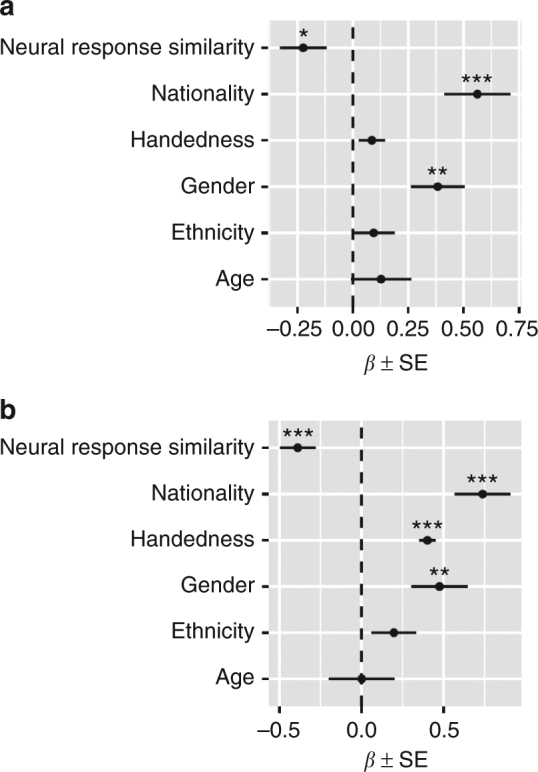
“Neural similarity added significant predictive power, above and beyond observable demographic similarity, χ2(1) = 11.”
BackgroundWaskom, M., Larson, E., Brodbeck, C. J., Gramfort, A., Burns, S., Luessi, M., Weidemann, C. T., Bitzer, S., Markiewicz, C., LaPlante, R. A., et al. (2015) · Zenodo (CERN European Organization for Nuclear Research) · doi:10.5281/zenodo.592515 · Cited by 11
Waskom, M., Gramfort, A., Larson, E. B., et al. (2016) · Zenodo (CERN European Organization for Nuclear Research) · doi:10.5281/zenodo.166337 · Cited by 1
(2006) · Medical Entomology and Zoology
Research works printed but not linked: 1
- Burt, R. S. Structural Holes: The Social Structure of Competition (Harvard Univ. Press, Cambridge, 1992).
Cited by
Using second-person neuroscience to elucidate the mechanisms of social interaction
Redcay, E., & Schilbach, L. (2019) · Nature Reviews Neuroscience · doi:10.1038/s41583-019-0179-4 · Cited by 738
The default mode network: where the idiosyncratic self meets the shared social world
Yeshurun, Y., Nguyen, M., & Hasson, U. (2021) · Nature Reviews Neuroscience · doi:10.1038/s41583-020-00420-w · Cited by 682
Keep it real: rethinking the primacy of experimental control in cognitive neuroscience
Nastase, S. A., Goldstein, A., & Hasson, U. (2020) · NeuroImage · doi:10.1016/j.neuroimage.2020.117254 · Cited by 344
Bevilacqua, D., Davidesco, I., Wan, L., Chaloner, K., Rowland, J., Ding, M., Poeppel, D., & Dikker, S. (2019) · Journal of Cognitive Neuroscience · doi:10.1162/jocn_a_01274 · Cited by 312
“Our findings on brain-to-brain synchrony in a group setting marry two lines of prior research, namely, studies investigating neural entrainment to engaging stimuli (e.g., Poulsen et al., 2017) and studies linking social connectedness to brain responses (Parkinson et al., 2017, 2018).”
Idiosynchrony: From shared responses to individual differences during naturalistic neuroimaging
Finn, E. S., Glerean, E., Khojandi, A. Y., Nielson, D., Molfese, P. J., Handwerker, D. A., & Bandettini, P. A. (2020) · NeuroImage · doi:10.1016/j.neuroimage.2020.116828 · Cited by 269
Metadata
- Authors
- Parkinson, C., Kleinbaum, A. M., & Wheatley, T.
- Affiliations
- University of California, Los Angeles (US)
- Dartmouth College (US)
- Corresponding author
- Parkinson, Carolyn
- Venue
- Nature Communications
- Published
- 2018-01-30
- Volume
- 9
- Issue
- 1
- Pages
- 332-332
- ISSN
- 2041-1723 (ISSN-L)
- PMC
- PMC5790806
- OpenAlex
- W2786454053
- Cited by
- 388
- References
- 59
- Citations by year
- 2026: 23 · 2025: 44 · 2024: 36 · 2023: 43 · 2022: 39 · 2021: 98 · 2020: 71 · 2019: 18 · 2018: 15
- FWCI
- 30.08
- Type
- journal article
- Language
- en
- Open access
- gold
- doi.org
- Licence
- cc-by
- creativecommons.org/licenses/by/4.0 (tdm)
- creativecommons.org/licenses/by/4.0 (vor)
- Locations
- Nature Communications (publishedVersion, cc-by)
- PubMed Central (publishedVersion, cc-by)
- PubMed (publishedVersion)
- RePEc: Research Papers in Economics (submittedVersion)
- DOAJ (DOAJ: Directory of Open Access Journals) (submittedVersion, cc-by-sa)
- DOAJ (DOAJ: Directory of Open Access Journals) (submittedVersion)
- eScholarship (California Digital Library) (submittedVersion, cc-by)
- Funders
- Dartmouth College
- Topics
- Life Sciences › Neuroscience › Cognitive Neuroscience › Functional Brain Connectivity Studies
- Social Sciences › Psychology › Social Psychology › Action Observation and Synchronization
- Social Sciences › Psychology › Experimental and Cognitive Psychology › Evolutionary Psychology and Human Behavior
- Keywords
- friendship, homophily, neural similarity, naturalistic movie viewing, audiovisual perception, interpersonal influence, interpersonal attraction
- MeSH terms
- Adolescent, Adult, Brain, Female, Humans, Interpersonal Relations, Magnetic Resonance Imaging, Male, Friends, Social Networking
About these checks
Registry, retraction, Cites and statistics results are computed, not judged, with one exception: a printed reference that no index lists is read once by a model before it counts as a citation error. Claims are extracted by a model and kept only when their quote appears verbatim in the text; each cited source is then checked, with a model’s help, for whether it says what the claim relies on. Those verdicts can be wrong — read the claim’s quote and the cited source before relying on one.
Statistics and arithmetic are recomputed, not judged.
Confidence bands are shown only for fields calibrated on our annotated test set. None is calibrated yet, so no band is shown.
What counts as a claim ›How we measure confidence ›How we check this ›
Are you an author, or do you see a problem with this page? Request a review
Data sources
Bibliographic data: Semantic Scholar, OpenAlex, Crossref.
Contains information from the Semantic Scholar Academic Graph Datasets, made available under the ODC Attribution License (ODC-BY 1.0).
Semantic Scholar’s data is described in: Kinney, R., et al. (2023). The Semantic Scholar Open Data Platform. arXiv:2301.10140.
