

Similar neural responses predict friendship
Open accessThe DOI matches its Crossref record; 61 of the 61 references it cites were found in a registry or an index.
Abstract
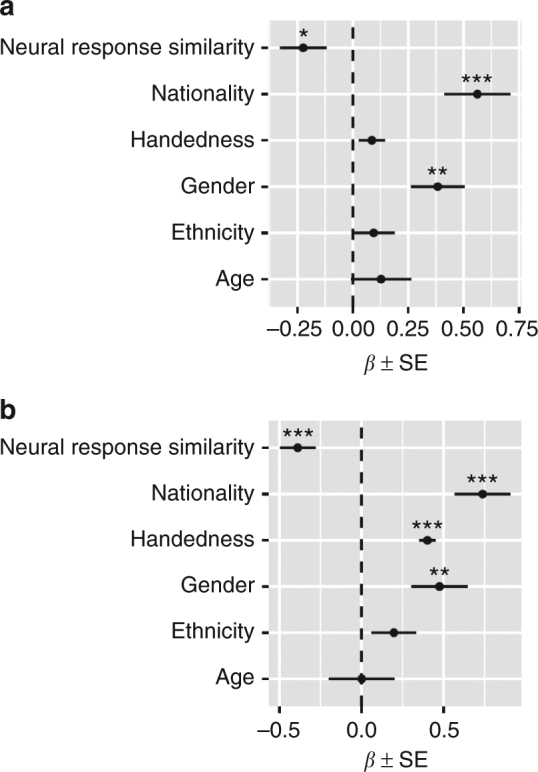
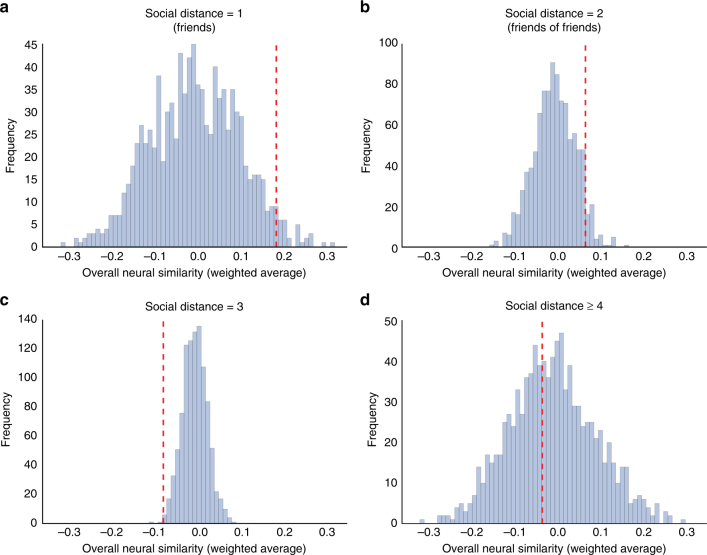
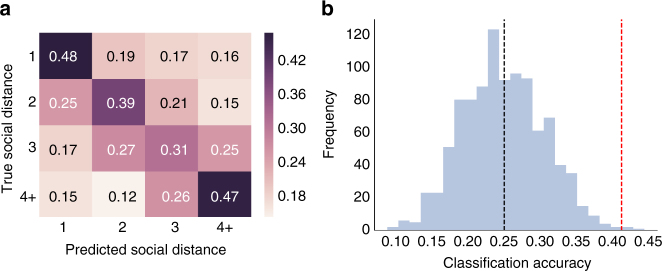
Human social networks are overwhelmingly homophilous: individuals tend to befriend others who are similar to them in terms of a range of physical attributes (e.g., age, gender). Do similarities among friends reflect deeper similarities in how we perceive, interpret, and respond to the world? To test whether friendship, and more generally, social network proximity, is associated with increased similarity of real-time mental responding, we used functional magnetic resonance imaging to scan subjects’ brains during free viewing of naturalistic movies. Here we show evidence for neural homophily: neural responses when viewing audiovisual movies are exceptionally similar among friends, and that similarity decreases with increasing distance in a real-world social network. These results suggest that we are exceptionally similar to our friends in how we perceive and respond to the world around us, which has implications for interpersonal influence and attraction.
Overview
The claims and statistics of this paper haven’t been checked yet.
Free: it reads the open-access text and checks the first 5 claims that cite a source we can check. Create a free account to check every claim.
Integrity signals
Registry
Cites
Statistics
Figures
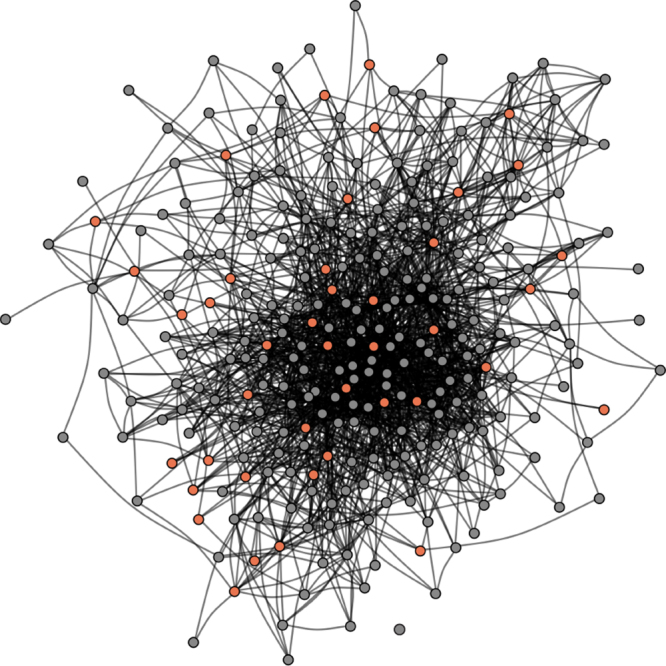
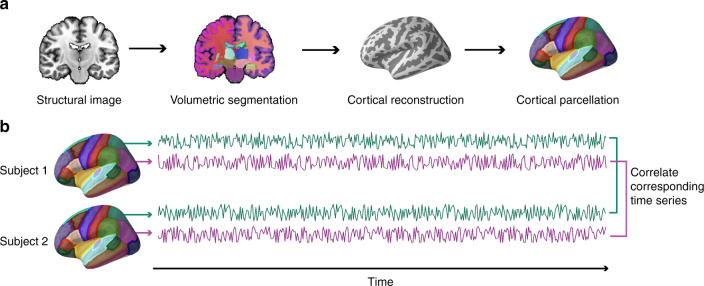
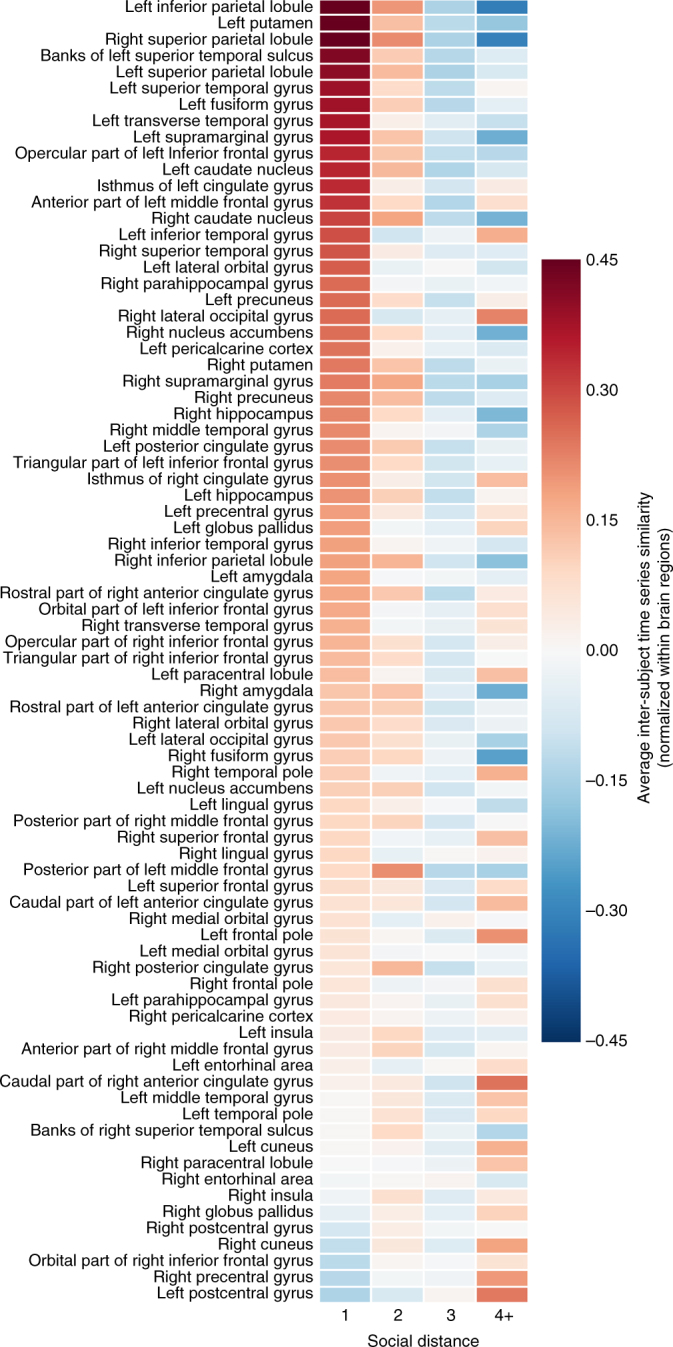
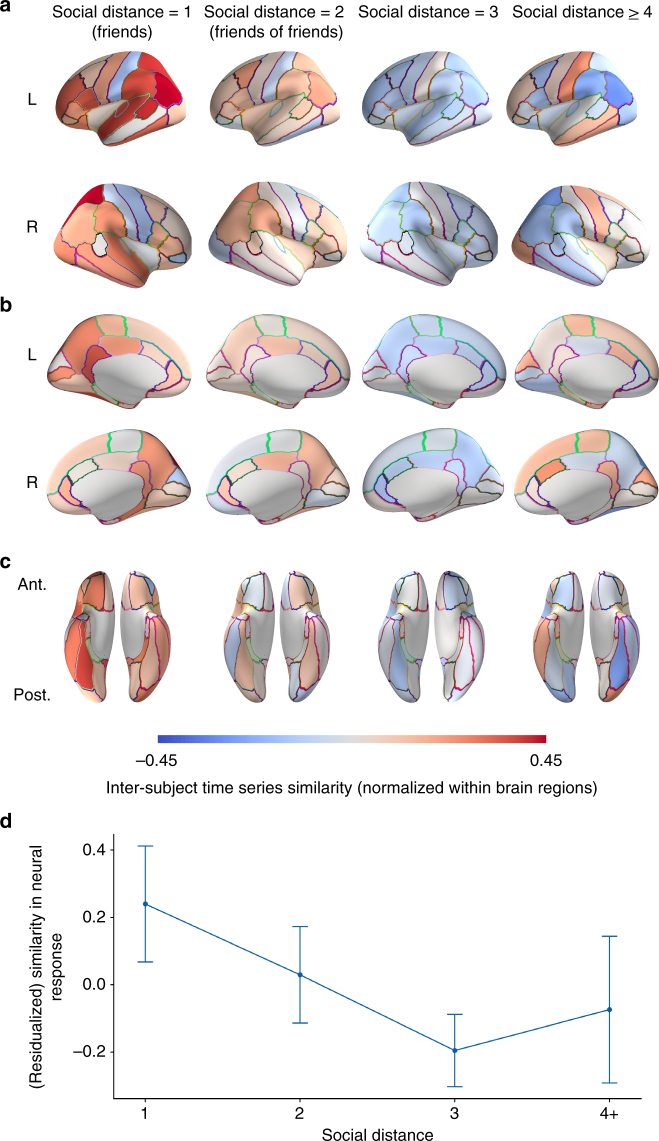
Verification
Claims the paper makes
The claims and statistics of this paper haven’t been checked yet.
Free: it reads the open-access text and checks the first 5 claims that cite a source we can check. Create a free account to check every claim.
Claims other papers make about this one
Each is checked against this paper’s own text: does it say what the citing paper says it does?
In the citing paper
“A striking recent study117,118 mapped the close-knit social network of a class of students at a business school and found that pairs of people who have closer social relationships have more similar neural responses to narratives than do pairs of people who are less close (Fig. 4d).”
From The default mode network: where the idiosyncratic self meets the shared social world (2021) · cites this paper as [117]
In the citing paper
“Emerging neuroscientific research provides evidence that neural alignment across subjects is influenced and shaped by the people with whom we are connected in our real and virtual social networks.”
From The default mode network: where the idiosyncratic self meets the shared social world (2021) · cites this paper as [117]
Self-check
Percentages, sums and reported differences re-computed from the paper’s own numbers.
The self-check needs the paper’s full text.
Citations
Cites
Scikit-learn: Machine Learning in Python
Pedregosa, F., Varoquaux, G., Gramfort, A., Michel, V., Thirion, B., Grisel, O., Blondel, M., Müller, A., Nothman, J., Louppe, G., et al. (2012) · arXiv · doi:10.48550/arxiv.1201.0490 · Cited by 71,016
Matplotlib: a 2D graphics environment
Hunter, J. D. (2007) · Computing in Science & Engineering · doi:10.1109/mcse.2007.55 · Cited by 39,249
Birds of a Feather: Homophily in Social Networks
McPherson, M., Smith-Lovin, L., & Cook, J. M. (2001) · Annual Review of Sociology · doi:10.1146/annurev.soc.27.1.415 · Cited by 18,567
ggplot2: Elegant Graphics for Data Analysis
Wickham, H. (2009) · doi:10.1007/978-0-387-98141-3 · Cited by 14,447
Desikan, R. S., Ségonne, F., Fischl, B., Quinn, B. T., Dickerson, B. C., Blacker, D., Buckner, R. L., Dale, A. M., Maguire, R. P., Hyman, B. T., et al. (2006) · NeuroImage · doi:10.1016/j.neuroimage.2006.01.021 · Cited by 13,324
Control of goal-directed and stimulus-driven attention in the brain
Corbetta, M., & Shulman, G. L. (2002) · Nature Reviews Neuroscience · doi:10.1038/nrn755 · Cited by 12,881
AFNI: Software for analysis and visualization of functional magnetic resonance neuroimages
Cox, R. W. (1996) · Computers and Biomedical Research · doi:10.1006/cbmr.1996.0014 · Cited by 10,913
Fischl, B. (2012) · NeuroImage · doi:10.1016/j.neuroimage.2012.01.021 · Cited by 9,526
Social Influence: Compliance and Conformity
Cialdini, R. B., & Goldstein, N. J. (2004) · Annual Review of Psychology · doi:10.1146/annurev.psych.55.090902.142015 · Cited by 6,077
(2006) · Cited by 3,705
Research works printed but not linked: 1
- Burt, R. S. Structural Holes: The Social Structure of Competition (Harvard Univ. Press, Cambridge, 1992).
Cited by
Items 201–300 of 387
A Fuzzy Logic-Based Approach to Predict Human Interaction by Functional Near-Infrared Spectroscopy
Jiang, X., Ou, L. S., Chen, Y., Ao, N., Chang, Y., Do, T., & Lin, C. (2025) · IEEE Transactions on Fuzzy Systems · doi:10.1109/tfuzz.2025.3528376 · Cited by 11
“This domain traditionally harnesses psychological and neuroscientific theories to explore the nuances of individual interactions and emotional bonds [1], [2], [3], [4], [5], [6], [7] and be applied to robotics [8].”
Multi-timepoint pattern analysis: improving classification with neural timeseries data
Goldstein, B. M., Pluta, A., Miao, G. Q., Binnquist, A. L., & Lieberman, M. D. (2025) · Social Cognitive and Affective Neuroscience · doi:10.1093/scan/nsaf058 · Cited by 4
The Reward of Musical Emotions and Expectations
Gold, B. P., & Zatorre, R. J. (2020) · Cambridge University Press eBooks · doi:10.1017/9781108695374.021 · Cited by 6
Being the Gatekeeper: How Thinking about Sharing Affects Neural Encoding of Information
Chan, H., Scholz, C., Baek, E. C., O’Donnell, M. B., & Falk, E. B. (2021) · Cerebral Cortex · doi:10.1093/cercor/bhab060 · Cited by 6
“2017), with particularly similar responses between individuals who are friends (Parkinson et al. 2018).”
On Migration: Personal Networks and Migration Trajectories
Lubbers, M. J., & Molina, J. L. (2021) · Cambridge University Press eBooks · doi:10.1017/9781108878296.052 · Cited by 5
Three Decades of Research into Social Capital: Achievements, Blind Spots, and Future Directions
Völker, B. (2021) · Cambridge University Press eBooks · doi:10.1017/9781108878296.023 · Cited by 8
On Inequality: The Context of Network Inequality
Shepherd, H. R., & Garip, F. (2021) · Cambridge University Press eBooks · doi:10.1017/9781108878296.048 · Cited by 6
Perry, B. L. (2021) · Cambridge University Press eBooks · doi:10.1017/9781108878296.046 · Cited by 5
The influence of personality traits and brain functional connectivity on social networks
Li, Y., Liu, C., Zhuang, K., Huo, T., Xu, P., Luo, Y., & Qiu, J. (2021) · Acta Psychologica Sinica · doi:10.3724/sp.j.1041.2021.01335 · Cited by 6
“…的个体在需要“值得信任”特质的社交网络中更受欢迎, 高宜人性的个体在需要“共享时光”的社交网络中更受欢迎; (2)在需要“相同兴趣”特质的社交网络中, 个体间人格相似性和社会距离呈显著负相关关系; (3)同样在需要“相同兴 趣”特质的社交网络中, 个体间部分功能连接相似性与社会距离呈显著负相关关系, 这些功能连接主要集中在额顶 控制网络以及背侧注意网络; 同时, 部分节点功能连接相似性与社会距离呈显著正相关关系, 这些功能连接主要 集中在默认网络。研究结果揭示了人格特质对不同社交网络结构的影响,…”
InfluentialSmall, M. L., Pescosolido, B. A., Perry, B. L., & Smith, E. B. (2021) · Cambridge University Press eBooks · doi:10.1017/9781108878296.001 · Cited by 4
Broom, T. W., Stahl, J. L., Ping, E. E. C., & Wagner, D. D. (2022) · Journal of Cognitive Neuroscience · doi:10.1162/jocn_a_01888 · Cited by 6
Cultural Evolution, Disinformation, and Social Division
Bentley, R. A., Horne, B. D., Borycz, J., Carrignon, S., Shteynberg, G., Vidiella, B., Valverde, S., & O’Brien, M. J. (2023) · Adaptive Behavior · doi:10.1177/10597123231186432 · Cited by 11
“It is notable that both neural synchronicity — similar time series of reactions to videos recorded by fMRI — between individuals in a friends ’ network (Parkinson et al., 2018) and gift amounts between individuals in hunter – gatherer societies (Apicella et al., 2012) decline with social distance,…”
BackgroundAttachment Reminders Trigger Widespread Synchrony across Multiple Brains
Shimon-Raz, O., Yeshurun, Y., Ulmer-Yaniv, A., Levinkron, A., Salomon, R., & Feldman, R. (2023) · Journal of Neuroscience · doi:10.1523/jneurosci.0026-23.2023 · Cited by 9
“…2014; Atzil et al., 2014), children (Pratt et al., 2018; Ulmer-Yaniv et al., 2022), romantic couples (Acevedo et al., 2012; Scheele et al., 2013), and close friends (Platek and Kemp, 2009; Parkinson et al., 2018) also binds humans ’ brains into a convergent response and enhances neural uniformity.”
BackgroundXu, J., Wainio‐Theberge, S., Wolff, A., Qin, P., Zhang, Y., She, X., Wang, Y., Wolman, A., Smith, D., Ignaszewski, J., et al. (2023) · Social Neuroscience · doi:10.1080/17470919.2023.2278199 · Cited by 4
“…to stimuli or tasks and shared understanding of personality and the world, social coordination and intimate social relationship (De Bruin et al., 2023; Hou et al., 2020; Li et al., 2022; Liu et al., 2019; Matz et al., 2022; Nguyen et al., 2019; Parkinson et al., 2018; Reinero et al., 2021).”
BackgroundIntolerance to uncertainty modulates neural synchrony between political partisansPreprint
van Baar, J. M., Halpern, D. J., & FeldmanHall, O. (2020) · bioRxiv (Cold Spring Harbor Laboratory) · doi:10.1101/2020.10.28.358051 · Cited by 4
“It is well-established that similarities on demographic and social variables can increase inter-subject synchrony in brain responses to video stimuli (50).”
BackgroundIndividual gaze predicts individual scene descriptionsPreprint
Kollenda, D., Reher, A.-S. V., & de Haas, B. (2024) · doi:10.31234/osf.io/nx7jy · Cited by 4
Li, L. Y., Grzelak, L. N., Auerbach, R. P., & Shankman, S. A. (2024) · Journal of Psychiatric Research · doi:10.1016/j.jpsychires.2024.11.069 · Cited by 4
Sanada, M., & Naruse, Y. (2025) · Scientific Reports · doi:10.1038/s41598-025-08191-z · Cited by 3
“Furthermore, the degree of similarity in fMRI signal patterns while watching movie clips predicts proximity within social networks 27 .”
Friendship: The Most Overlooked Public Health Asset
Krems, J. A., & Kaufman, V. A. (2025) · Policy Insights from the Behavioral and Brain Sciences · doi:10.1177/23727322251404386 · Cited by 6
“Notably, people tend to befriend similar others (McPherson et al., 2001) — including others who are similar even on genetic (Christakis & Fowler, 2014) and neural levels (Parkinson et al., 2018).”
Zhou, W., Wang, X., Zhang, X., & Hou, J. (2025) · Acta Psychologica · doi:10.1016/j.actpsy.2025.106117 · Cited by 3
Affiliation in human-AI interactions is based on shared psychological traits
Castiello, S., Pitliya, R. J., Lametti, D. R., & Murphy, R. A. (2026) · Communications Psychology · doi:10.1038/s44271-026-00433-8 · Cited by 7
“During social interactions, this af fi liative tendency is re fl ected in shared patterns of neural activity between friends 7 , and individuals assuming beliefs of their close network 8 .”
Li, L., Cui, Z., & Wang, L. (2022) · Brain Topography · doi:10.1007/s10548-022-00900-5 · Cited by 3
“A recent study had found that more similar neural responses aroused by viewing audiovisual movies were detected between friends than between social unrelated people (Parkinson et al. 2018).”
BackgroundKnyazev, G. G., Savostyanov, A. N., Bocharov, A. V., & Сапрыгин, А. Е. (2024) · Aggressive Behavior · doi:10.1002/ab.22125 · Cited by 6
Neural Similarity and Synchrony among Friends
Ma, C., & Liu, Y. T. (2024) · Brain Sciences · doi:10.3390/brainsci14060562 · Cited by 5
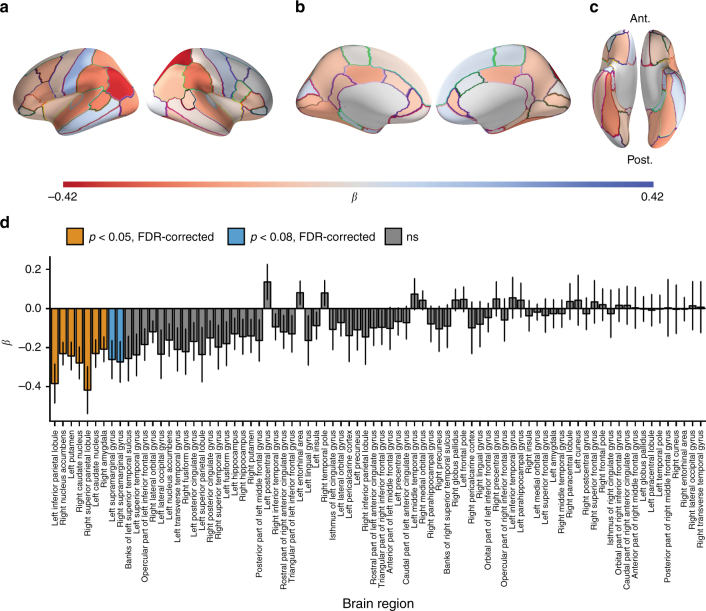
“…was identified in the dorsomedial prefrontal cortex and pre-cuneus [8]; the posterior parietal cortex [12]; the superior and inferior parietal lobe, nucleus accumbens, amygdala, putamen, and caudate nucleus [22]; and the speech production areas, auditory cortex and posterior cingulate cortex [24].”
BackgroundMethodResultInfluentialRahrig, H., Михайловна, Б. П., Castro, C., Sabet, K., Johnson, M., Pearce, O., Çelik, E., & Brown, K. W. (2025) · Scientific Reports · doi:10.1038/s41598-024-84510-0 · Cited by 8
Interspecies Relational Theory: A Framework for Compassionate Interspecies Interactions
Kieson, E. (2025) · Veterinary Sciences · doi:10.3390/vetsci12060586 · Cited by 4
“…over longer time periods provide not only associations and predictability (or lack thereof), but also facilitate opportunities for alignment of values, mutual goals, and emotional affects (affect-based trust) [33] that can result in both emotional and physiological changes in partners [81,82].”
Being There: Foundations, Theory, Method
Worthman, C. M. (2020) · Cambridge University Press eBooks · doi:10.1017/9781108695374.007 · Cited by 3
The Role of Mentalizing in Communication Behaviors
Parelman, J. M., Doré, B., & Falk, E. B. (2021) · Springer eBooks · doi:10.1007/978-3-030-51890-5_30 · Cited by 3
Mentalizing in Value-Based Vicarious Learning
Espinosa, L., Golkar, A., & Olsson, A. (2021) · Springer eBooks · doi:10.1007/978-3-030-51890-5_26 · Cited by 3
Clinical Neuroscience Meets Second-Person Neuropsychiatry
Schilbach, L., & Lahnakoski, J. M. (2022) · Springer eBooks · doi:10.1007/978-3-031-08651-9_11 · Cited by 2
Converging Crowds and Tied Twins
Schmälzle, R., Lim, S., Wu, J., Bezbaruah, S., & Hussain, S. A. (2024) · Journal of Media Psychology Theories Methods and Applications · doi:10.1027/1864-1105/a000422 · Cited by 3
Chou, F.-C. B., Chen, Y.-C. C., Kuo, Y.-S. A., Hsiao, P.-Y. A., Lin, C. R., Huang, Y.-W. Y., Peng, W.-L., Pan, H.-J., & Chen, P.-H. A. (2025) · Technology Mind and Behavior · doi:10.1037/tmb0000166 · Cited by 7
Ludwig, V. U., Prieur, L., Rennie, S. M., Beswerchij, A., Weintraub, D., Berry, B., Wey, J., Candido, K., & Platt, M. L. (2025) · Mindfulness · doi:10.1007/s12671-025-02588-7 · Cited by 5
“As a measure of overall synchrony, we calculated Pearson’s correlations between these smiling values for dyad partners across the entire 2 min of the exercise (Parkinson et al., 2018).”
SUMMER: Bias-aware Prediction of Graduate Employment Based on Educational Big Data
Xia, F., Guo, T., Bai, X., Shatte, A. B. R., Liu, Z., & Tang, J. (2021) · ACM/IMS Transactions on Data Science · doi:10.1145/3510361 · Cited by 7
“The failure of obtaining employment can lead to serious negative psychosocial outcomes including depression [5, 14, 30], particularly for students who may have poorer coping mechanisms due to being cognitively and emotionally less mature [40, 45].”
BackgroundIndividuals, Groups, and Networks: Implications for the Study and Practice of Democratic Politics
Huckfeldt, R. (2021) · Cambridge University Press eBooks · doi:10.1017/9781108878296.035 · Cited by 3
Popular individuals process the world in particularly normative waysPreprint
Baek, E. C., Hyon, R., López, K., Finn, E. S., Porter, M. A., & Parkinson, C. M. (2021) · doi:10.31234/osf.io/6fj2p · Cited by 3
Self-citationEmpathy, Thick and ThinPreprint
Crockett, M. J. (2025) · SSRN Electronic Journal · doi:10.2139/ssrn.5862422 · Cited by 6
Schwyck, M. E., & Parkinson, C. M. (2025) · Journal of Experimental Social Psychology · doi:10.1016/j.jesp.2025.104784 · Cited by 2
Self-citationOdor increases synchronization of brain activity when watching emotional movies
Gerardin, E., Delforge, J., Dousteyssier, O., Manetta, C., Gaeta, G., Pêtre, A., Dricot, L., Heinecke, A., & Kupers, R. C. (2025) · Journal of the International Neuropsychological Society · doi:10.1017/s1355617725101082 · Cited by 4
“Other brain areas where similar results were reported included the inferior and superiorparietal cortex, SMG, nucleus accumbens, caudate,putamen and amygdala (Parkinson et al., 2018).”
Yuan, D., Chan, J., Shoaib, Z., Chan, K., Kielman, A., & Wong, P. C. M. (2025) · NeuroImage · doi:10.1016/j.neuroimage.2025.121662 · Cited by 2
Miao, G. Q., Lieberman, I. J., Binnquist, A. L., Pluta, A., Goldstein, B. M., Dale, R. A. C., & Lieberman, M. D. (2026) · Social Cognitive and Affective Neuroscience · doi:10.1093/scan/nsag044 · Cited by 3
“Previous research has shown that individuals with strong pre-existing social bonds tend to exhibit greater DMN synchrony when passively viewing video clips (Parkinson et al. 2018; Li et al. 2022).”
Fischer, C. S. (2021) · Cambridge University Press eBooks · doi:10.1017/9781108878296.017 · Cited by 3
Collective Mourning during the COVID-19 Pandemic: The Importance of Neurosociology
Herrera, L. C., Torres–Lista, V., & Montenegro, M. (2021) · The Open Public Health Journal · doi:10.2174/1874944502114010587 · Cited by 2
How Do Our Brains Support Our Friendships?
Baek, E. C., Hyon, R., Porter, M. A., & Parkinson, C. M. (2022) · Frontiers for Young Minds · doi:10.3389/frym.2022.640262 · Cited by 2
“In one study, researchers examined a social network of business-school students [5].”
BackgroundSelf-citationPhysiological Responses to Movies Predict Marital Satisfaction
Ishikawa, Y., Kobayashi, N., Legaspi, R., Nakajima, K., & Naruse, Y. (2023) · IEEE Access · doi:10.1109/access.2023.3310814 · Cited by 4
“Following [29] and [37], we also adopted a setting where participants had no social interaction while watching the movies.”
BackgroundMethodResultInfluentialNeural similarity and interaction success in autistic and non-autistic adolescents
McNaughton, K. A., Dziura, S. L., Lemay, E. P., Yarger, H. A., & Redcay, E. (2025) · Scientific Reports · doi:10.1038/s41598-025-91176-9 · Cited by 5
Potential Indicator for Continuous Emotion Arousal by Dynamic Neural Synchrony
Pan, G., Wu, Z., Yang, Y., Wang, X., Liu, L., Zheng, Z., & Tang, S. (2025) · Communications in computer and information science · doi:10.1007/978-981-96-4001-0_6 · Cited by 2
Neural Synchrony and Consumer Behavior: Predicting Friends’ Behavior in Real-World Social Networks
Hu, Y., Ma, B., & Jin, J. K. (2025) · Journal of Neuroscience · doi:10.1523/jneurosci.0073-25.2025 · Cited by 3
Neural predictors of hidden, persistent psychological states at work
Goldstein, B. M., Burns, S. M., Binnquist, A. L., Dieffenbach, M. C., Konkoly, C., Abramowitz, S., & Lieberman, M. D. (2025) · Proceedings of the National Academy of Sciences · doi:10.1073/pnas.2504382122 · Cited by 3
Leipold, S., Rao, R. R., Schoffelen, J., Bögels, S., & Toni, I. (2026) · Imaging Neuroscience · doi:10.1162/imag.a.1400 · Cited by 8
“For example, friends show higher ISC than individuals who are more distant from one another in a social network ( Parkinson et al., 2018).”
Taylor, S. S. (2020) · Digital WPI · Cited by 2
Capturing Context Is Not Enough: The Embodied Impact of Story and Emotion in Ethnographic Film
Lemelson, R., & Tucker, A. (2020) · Cambridge University Press eBooks · doi:10.1017/9781108695374.023 · Cited by 2
Shinkuma, R., Nishida, S., Maeda, N., Kado, M., & Nishimoto, S. (2021) · IEEE Transactions on Systems Man and Cybernetics Systems · doi:10.1109/tsmc.2021.3074069 · Cited by 2
On J. Clyde Mitchell’s “The Concept and Use of Social Networks”
Borgatti, S. P., & Halgin, D. S. (2021) · Cambridge University Press eBooks · doi:10.1017/9781108878296.007 · Cited by 8
From Nan Lin, “Building a Network Theory of Social Capital”
Pescosolido, B. A., & Smith, E. B. (2021) · Cambridge University Press eBooks · doi:10.1017/9781108878296.036 · Cited by 7
From Miller McPherson, Lynn Smith-Lovin, and James M. Cook, “Birds of a Feather”
Pescosolido, B. A., & Smith, E. B. (2021) · Cambridge University Press eBooks · doi:10.1017/9781108878296.032 · Cited by 2
From Claude S. Fischer, To Dwell among Friends
Pescosolido, B. A., & Smith, E. B. (2021) · Cambridge University Press eBooks · doi:10.1017/9781108878296.016 · Cited by 2
Stendel, M. S., Ramstead, M. J. D., & Veissière, S. P. L. (2020) · Cambridge University Press eBooks · doi:10.1017/9781108695374.026 · Cited by 2
Universitas Padjadjaran, I., Rodiah, S., Dida, S., Universitas Padjadjaran, I., Maryani, E., Universitas Padjadjaran, I., Mustaffa, N., & Universitas Padjadjaran, I. (2022) · Jurnal Komunikasi Malaysian Journal of Communication · doi:10.17576/jkmjc-2022-3804-10 · Cited by 8
Smith, D. V., Zaff, O., Wyngaarden, J. Β., Dennison, J. B., Sazhin, D., Chein, J. M., McCloskey, M., Alloy, L. B., Jarcho, J. M., & Fareri, D. S. (2026) · Biological Psychology · doi:10.1016/j.biopsycho.2026.109209 · Cited by 3
Web of Students: Class-Level Friendship Network Discovery from Educational Big Data
Guo, T., Tang, T., Zhang, D., Li, J., & Xia, F. (2021) · Lecture notes in computer science · doi:10.1007/978-3-030-90888-1_38 · Cited by 2
Functional brain network architecture supporting the learning of social networks in humansPreprint
Tompson, S., Kahn, A. E., Falk, E. B., Vettel, J. M., & Bassett, D. S. (2019) · doi:10.31234/osf.io/r46gj · Cited by 2
Lonely individuals process the world in idiosyncratic waysPreprint
Baek, E. C., Hyon, R., López, K., Du, M., Porter, M. A., & Parkinson, C. M. (2021) · PsyArXiv (OSF Preprints) · doi:10.31234/osf.io/yt872 · Cited by 4
Self-citationConversational Linguistic Features Inform Social-Relational InferencePreprint
Schmidt, H., Tran, S., Medaglia, J. D., Ulichney, V., Mitchell, W. J., & Helion, C. (2022) · PsyArXiv (OSF Preprints) · doi:10.31234/osf.io/fn4my · Cited by 2
The Neural Mechanisms Underlying Social Norms: Norm Detection, Punishment, and Compliance
Mu, Y., & Gelfand, M. J. (2020) · Cambridge University Press eBooks · doi:10.1017/9781108695374.015 · Cited by 2
On Culture: The Problem of Culture Flows in Weak Ties
Erickson, B. H. (2021) · Cambridge University Press eBooks · doi:10.1017/9781108878296.050 · Cited by 2
Mentalizing in Infancy and Early Childhood
Campbell, C., Luyten, P., Allison, E., & Fonagy, P. (2024) · Springer eBooks · doi:10.1007/978-3-031-48627-2_23 · Cited by 4
Yang, M., & He, W. (2024) · Chinese Science Bulletin (Chinese Version) · doi:10.1360/tb-2023-1337 · Cited by 2
Wang, R., Luo, Y., Wang, Y., Zhang, L., & Wu, H. (2026) · Cognitive Affective & Behavioral Neuroscience · doi:10.3758/s13415-026-01413-5 · Cited by 2
“For instance, by using movie-watching paradigm and sophisticated social network metrics, researchers have found that the spontaneous neural response patterns were similar among friends and the similarity decreased as social distance increased in the network (Parkinson et al., 2018).”
Neural responses to peers moderate conversation-drinking associations in daily life
Jovanova, M., Stanoi, O. A., Scholz, C., Doré, B., Cosme, D., Kang, Y., Cooper, N., Boyd, Z. M., Bassett, D. S., Mucha, P. J., et al. (2025) · Scientific Reports · doi:10.1038/s41598-025-05846-9 · Cited by 3
“Our results are consistent with a growing body of work highlighting the role of mentalizing and reward processes in the brain in tracking relational status of others 17,50,51,55 and social influence processes 11,12,30 .”
Schwyck, M. E., Du, M., & Parkinson, C. M. (2025) · Journal of Experimental Psychology General · doi:10.1037/xge0001796 · Cited by 2
Self-citationNeurodevelopment of Emotional Processes in Adolescent Social Contexts
Shipkova, M., Dai, J., Lindquist, K. A., & Telzer, E. H. (2025) · Cambridge University Press eBooks · doi:10.1017/9781009342919.034 · Cited by 2
Tao, Y., Zhou, M., Wang, J., Li, X., & Ma, X. (2025) · Frontiers in Neuroscience · doi:10.3389/fnins.2025.1670193 · Cited by 1
“Furthermore, dyadic neuroimaging studies demonstrate that friendship predicts interpersonal neural synchronization during joint movie viewing (Parkinson et al., 2018), along with structural convergence in social cognition networks, including the dorsomedial prefrontal cortex (dmPFC),…”
Yu, H., Shu, L., Huang, Y., Jung, T., Xu, M., & Dong, M. I. N. G. (2026) · Learning and Instruction · doi:10.1016/j.learninstruc.2026.102323 · Cited by 1
Fareri, D. S., & Dejoie, J. M. (2026) · Springer eBooks · doi:10.1007/978-3-032-02925-6_22 · Cited by 2
Kemmerer, D. L., & Dove, G. O. (2026) · Cortex · doi:10.1016/j.cortex.2026.02.008 · Cited by 2
Scaffolding human and AI instruction: Neural alignment and learning gains in online education
Peng, Y., Nastase, S. A., Huang, Y., Li, Y., Guo, Z., & Li, P. (2026) · Neuron · doi:10.1016/j.neuron.2026.04.005 · Cited by 4
School-wide friendship metadata correlations
Aydin, M. N., & Perdahçı, Z. N. (2018) · Computers & Education · doi:10.1016/j.compedu.2018.11.001 · Cited by 1
Innovative health interventions at the intersection of neuroimaging and multimedia design
Fisher, J. T., & Weber, R. (2020) · Elsevier eBooks · doi:10.1016/b978-0-12-816958-2.00015-0 · Cited by 1
From Elizabeth Bott, “Urban Families: Conjugal Roles and Social Networks”
Pescosolido, B. A., & Smith, E. B. (2021) · Cambridge University Press eBooks · doi:10.1017/9781108878296.008 · Cited by 1
Investigating Human Interaction through Mathematical Analysis: The Queue Transform
Brintzenhofe, K. T. (2023) · Routledge eBooks · doi:10.4324/9781003325161 · Cited by 1
Russo, A. (2023) · Cortica · doi:10.26034/cortica.2023.3657 · Cited by 1
De l’apprentissage à la mémoire : Similitudes avec la topologie des réseaux sociaux
Gay, A. (2023) · Cortica · doi:10.26034/cortica.2023.3772 · Cited by 1
Sauteur, T. (2023) · Cortica · doi:10.26034/cortica.2023.4208 · Cited by 1
Sources of Facial Expression Synchrony
Lei, S., & Gratch, J. S. (2023) · International Conference on Affective Computing and Intelligent Interaction and workshops · doi:10.1109/acii59096.2023.10388107 · Cited by 5
“For example, friends become more synchronized in their neural responses when watching a movie, not because they are responding to each other but because they are experiencing the same film, even if on separate days [17].”
BackgroundDyadic body competence predicts movement synchrony during the mirror game
Moffat, R., Roos, L., Casale, C. E., & Cross, E. S. (2024) · Frontiers in Human Neuroscience · doi:10.3389/fnhum.2024.1401494 · Cited by 1
“Inside bodies, involuntary synchrony can emerge between the hearts, endocrine systems, and brains of the self and other (Feldman, 2017; Nummenmaa et al., 2018; Parkinson et al., 2018; Mayo and Gordon, 2020; De Hamilton, 2021).”
BackgroundGeneralization of rejection and acceptance in social networks
Zhang, Y., & Hackel, L. M. (2025) · Journal of Experimental Social Psychology · doi:10.1016/j.jesp.2025.104834 · Cited by 2
Social compatibility in opposite-sex prairie vole pairs is modulated by early-life sleep experience
Bueno-Júnior, L. S., Milman, N., Jones, C. E., Ghimire, A., Wickham, P. T., Hu, Y., Ye, B., Lim, M. M., & Watson, B. O. (2026) · PLoS Biology · doi:10.1371/journal.pbio.3003434 · Cited by 2
Neuropsychologie der Bedürfnisse
Markowitsch, H. J., & Schreier, M. M. (2019) · Springer eBooks · doi:10.1007/978-3-662-58265-7_4 · Cited by 1
Cities, Psychosis, and Social Defeat
Sayanvala, F., Bornstein, L., Choudhury, S., Shah, J. L., Weinstock, D., & Gold, I. (2020) · Cambridge University Press eBooks · doi:10.1017/9781108695374.025 · Cited by 1
Stout, D. (2020) · Cambridge University Press eBooks · doi:10.1017/9781108695374.005 · Cited by 1
Choudhury, S., & Berson, J. (2020) · Cambridge University Press eBooks · doi:10.1017/9781108695374.020 · Cited by 1
Neural polarization and routes to depolarization
Moore‐Berg, S. L., Parelman, J. M., Lelkes, Y., & Falk, E. B. (2020) · Proceedings of the National Academy of Sciences · doi:10.1073/pnas.2020107117 · Cited by 3
Fritz, J. B. (2021) · Behavioral and Brain Sciences · doi:10.1017/s0140525x20001739 · Cited by 1
Marsden, P. V., Fekete, M., & Baum, D. S. (2021) · Cambridge University Press eBooks · doi:10.1017/9781108878296.038 · Cited by 6
A Network Pilgrim’s Progress: Twenty-Six Realizations in Fifty-Five Years
Wellman, B., Hampton, K. N., Quan‐Haase, A., & Harper, M.-G. (2021) · Cambridge University Press eBooks · doi:10.1017/9781108878296.021 · Cited by 3
From James S. Coleman, “Social Capital in the Creation of Human Capital”
Pescosolido, B. A., & Smith, E. B. (2021) · Cambridge University Press eBooks · doi:10.1017/9781108878296.022 · Cited by 2
From Leon Festinger, Stanley Schachter, and Kurt Back, Social Pressures in Informal Groups
Pescosolido, B. A., & Smith, E. B. (2021) · Cambridge University Press eBooks · doi:10.1017/9781108878296.010 · Cited by 1
Dungeons for Science: Mapping Belief Places and SpacesPreprint
Dant, A., Feldman, P., & Lutters, W. G. (2019) · arXiv (Cornell University) · doi:10.48550/arxiv.1904.05216 · Cited by 3
“Uncommon perspectives are literally incomprehensible on a neurological level to people who have not encountered them previously [34] [27].”
BackgroundSocial Network Analysis for Social NeuroscientistsPreprint
Baek, E. C., Porter, M. A., & Parkinson, C. M. (2019) · doi:10.31234/osf.io/kgc2h · Cited by 1
Self-citation
Metadata
- Authors
- Parkinson, C., Kleinbaum, A. M., & Wheatley, T.
- Affiliations
- University of California, Los Angeles (US)
- Dartmouth College (US)
- Corresponding author
- Parkinson, Carolyn
- Venue
- Nature Communications
- Published
- 2018-01-30
- Volume
- 9
- Issue
- 1
- Pages
- 332-332
- ISSN
- 2041-1723 (ISSN-L)
- PMC
- PMC5790806
- OpenAlex
- W2786454053
- Semantic Scholar
- 855c80c254878874a31be0f2ce69809460acbf85
- Cited by
- 388
- References
- 59
- Citations by year
- 2026: 23 · 2025: 44 · 2024: 36 · 2023: 43 · 2022: 39 · 2021: 98 · 2020: 71 · 2019: 18 · 2018: 15
- FWCI
- 30.08
- Type
- journal article
- Language
- en
- Open access
- gold
- doi.org
- Licence
- cc-by
- creativecommons.org/licenses/by/4.0 (tdm)
- creativecommons.org/licenses/by/4.0 (vor)
- Locations
- Nature Communications (publishedVersion, cc-by)
- PubMed Central (publishedVersion, cc-by)
- PubMed (publishedVersion)
- RePEc: Research Papers in Economics (submittedVersion)
- DOAJ (DOAJ: Directory of Open Access Journals) (submittedVersion, cc-by-sa)
- DOAJ (DOAJ: Directory of Open Access Journals) (submittedVersion)
- eScholarship (California Digital Library) (submittedVersion, cc-by)
- Funders
- Dartmouth College
- Topics
- Life Sciences › Neuroscience › Cognitive Neuroscience › Functional Brain Connectivity Studies
- Social Sciences › Psychology › Social Psychology › Action Observation and Synchronization
- Social Sciences › Psychology › Experimental and Cognitive Psychology › Evolutionary Psychology and Human Behavior
- Keywords
- friendship, homophily, neural similarity, naturalistic movie viewing, audiovisual perception, interpersonal influence, interpersonal attraction
- MeSH terms
- Adolescent, Adult, Brain, Female, Humans, Interpersonal Relations, Magnetic Resonance Imaging, Male, Friends, Social Networking
About these checks
Registry, retraction, Cites and statistics results are computed, not judged, with one exception: a printed reference that no index lists is read once by a model before it counts as a citation error. Claims are extracted by a model and kept only when their quote appears verbatim in the text; each cited source is then checked, with a model’s help, for whether it says what the claim relies on. Those verdicts can be wrong — read the claim’s quote and the cited source before relying on one.
Statistics and arithmetic are recomputed, not judged.
Confidence bands are shown only for fields calibrated on our annotated test set. None is calibrated yet, so no band is shown.
What counts as a claim ›How we measure confidence ›How we check this ›
Are you an author, or do you see a problem with this page? Request a review
Data sources
Bibliographic data: Semantic Scholar, OpenAlex, Crossref.
Contains information from the Semantic Scholar Academic Graph Datasets, made available under the ODC Attribution License (ODC-BY 1.0).
Semantic Scholar’s data is described in: Kinney, R., et al. (2023). The Semantic Scholar Open Data Platform. arXiv:2301.10140.
