

Similar neural responses predict friendship
Open accessThe DOI matches its Crossref record; 61 of the 61 references it cites were found in a registry or an index.
Abstract
Human social networks are overwhelmingly homophilous: individuals tend to befriend others who are similar to them in terms of a range of physical attributes (e.g., age, gender). Do similarities among friends reflect deeper similarities in how we perceive, interpret, and respond to the world? To test whether friendship, and more generally, social network proximity, is associated with increased similarity of real-time mental responding, we used functional magnetic resonance imaging to scan subjects’ brains during free viewing of naturalistic movies. Here we show evidence for neural homophily: neural responses when viewing audiovisual movies are exceptionally similar among friends, and that similarity decreases with increasing distance in a real-world social network. These results suggest that we are exceptionally similar to our friends in how we perceive and respond to the world around us, which has implications for interpersonal influence and attraction.
Overview
The claims and statistics of this paper haven’t been checked yet.
Free: it reads the open-access text and checks the first 5 claims that cite a source we can check. Create a free account to check every claim.
Integrity signals
Registry
Cites
Statistics
Figures
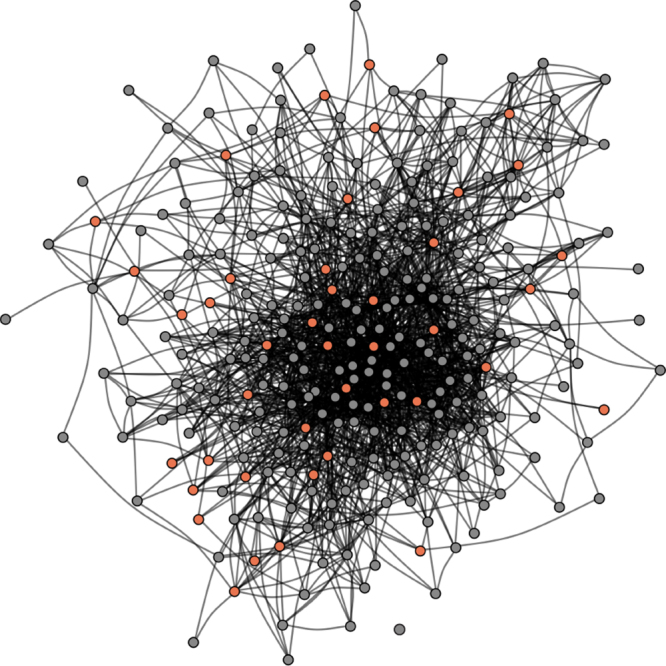
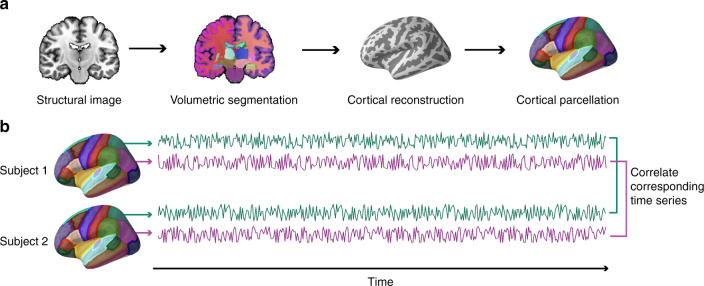
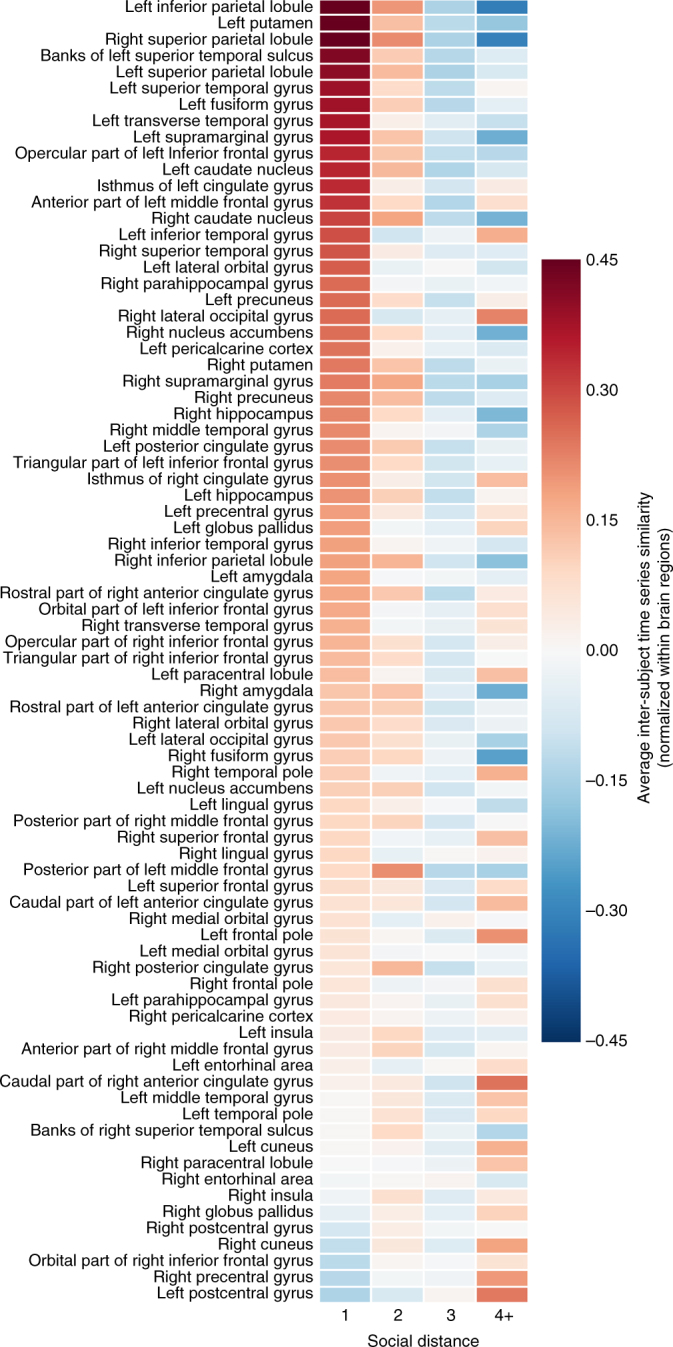
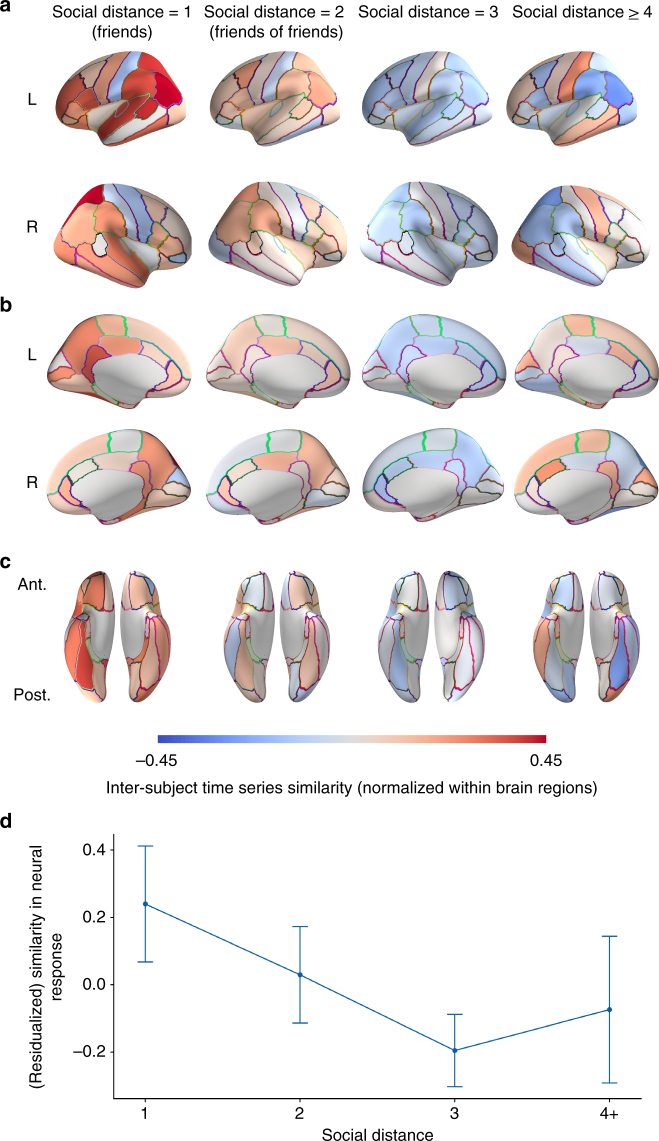
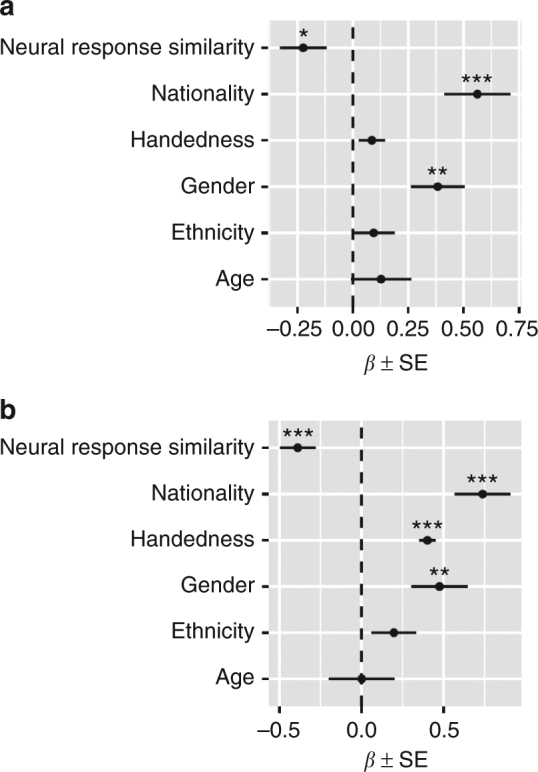
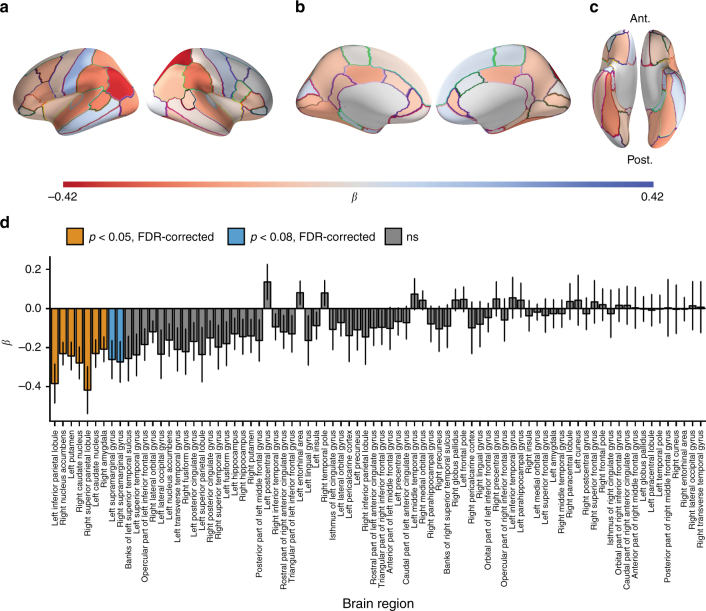
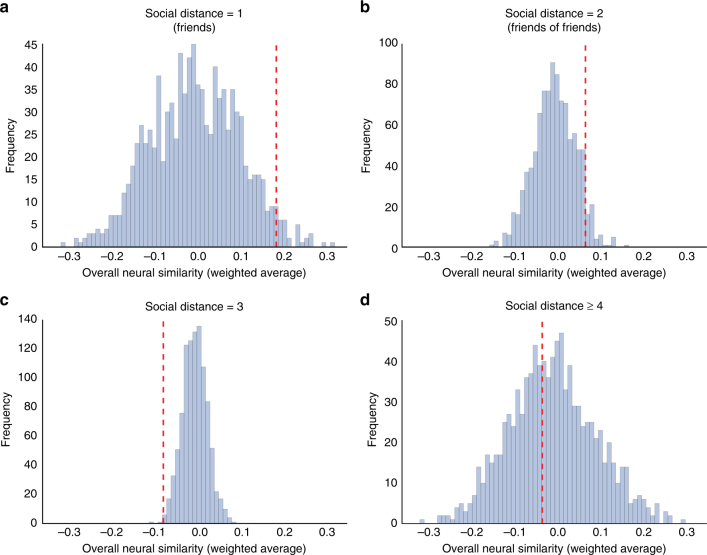
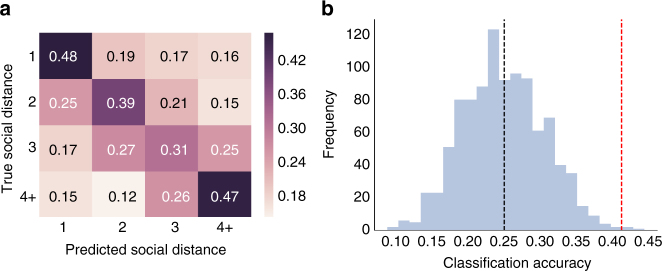
Verification
Claims the paper makes
The claims and statistics of this paper haven’t been checked yet.
Free: it reads the open-access text and checks the first 5 claims that cite a source we can check. Create a free account to check every claim.
Claims other papers make about this one
Each is checked against this paper’s own text: does it say what the citing paper says it does?
In the citing paper
“A striking recent study117,118 mapped the close-knit social network of a class of students at a business school and found that pairs of people who have closer social relationships have more similar neural responses to narratives than do pairs of people who are less close (Fig. 4d).”
From The default mode network: where the idiosyncratic self meets the shared social world (2021) · cites this paper as [117]
In the citing paper
“Emerging neuroscientific research provides evidence that neural alignment across subjects is influenced and shaped by the people with whom we are connected in our real and virtual social networks.”
From The default mode network: where the idiosyncratic self meets the shared social world (2021) · cites this paper as [117]
Self-check
Percentages, sums and reported differences re-computed from the paper’s own numbers.
The self-check needs the paper’s full text.
Citations
Cites
Scikit-learn: Machine Learning in Python
Pedregosa, F., Varoquaux, G., Gramfort, A., Michel, V., Thirion, B., Grisel, O., Blondel, M., Müller, A., Nothman, J., Louppe, G., et al. (2012) · arXiv · doi:10.48550/arxiv.1201.0490 · Cited by 71,016
Matplotlib: a 2D graphics environment
Hunter, J. D. (2007) · Computing in Science & Engineering · doi:10.1109/mcse.2007.55 · Cited by 39,249
Birds of a Feather: Homophily in Social Networks
McPherson, M., Smith-Lovin, L., & Cook, J. M. (2001) · Annual Review of Sociology · doi:10.1146/annurev.soc.27.1.415 · Cited by 18,567
ggplot2: Elegant Graphics for Data Analysis
Wickham, H. (2009) · doi:10.1007/978-0-387-98141-3 · Cited by 14,447
Desikan, R. S., Ségonne, F., Fischl, B., Quinn, B. T., Dickerson, B. C., Blacker, D., Buckner, R. L., Dale, A. M., Maguire, R. P., Hyman, B. T., et al. (2006) · NeuroImage · doi:10.1016/j.neuroimage.2006.01.021 · Cited by 13,324
Control of goal-directed and stimulus-driven attention in the brain
Corbetta, M., & Shulman, G. L. (2002) · Nature Reviews Neuroscience · doi:10.1038/nrn755 · Cited by 12,881
AFNI: Software for analysis and visualization of functional magnetic resonance neuroimages
Cox, R. W. (1996) · Computers and Biomedical Research · doi:10.1006/cbmr.1996.0014 · Cited by 10,913
Fischl, B. (2012) · NeuroImage · doi:10.1016/j.neuroimage.2012.01.021 · Cited by 9,526
Social Influence: Compliance and Conformity
Cialdini, R. B., & Goldstein, N. J. (2004) · Annual Review of Psychology · doi:10.1146/annurev.psych.55.090902.142015 · Cited by 6,077
(2006) · Cited by 3,705
Research works printed but not linked: 1
- Burt, R. S. Structural Holes: The Social Structure of Competition (Harvard Univ. Press, Cambridge, 1992).
Cited by
Items 301–387 of 387
Neural Similarity Predicts Whether Strangers Become FriendsPreprint
Shen, Y. L., Hyon, R., Kleinbaum, A. M., Welker, C. L., Parkinson, C. M., & Wheatley, T. P. (2016) · SSRN Electronic Journal · doi:10.2139/ssrn.2881692 · Cited by 2
Self-citationRavreby, I., Snitz, K., & Sobel, N. (2021) · bioRxiv (Cold Spring Harbor Laboratory) · doi:10.1101/2021.06.14.448352 · Cited by 1
“The known similarities that predict friendship range from the unsurprising such as age, race, education, religion, and indeed, physical appearance (9, 10), on to more complex measures such as personality (11, 12) and values (13), and culminating in measures such as patterns of neural activity (14), and genetic makeup…”
BackgroundCommentary on Bott’s “Family and Social Network”
Bidart, C. (2021) · Cambridge University Press eBooks · doi:10.1017/9781108878296.009 · Cited by 2
Peers in adolescence influence brain architecture, cognition and psychopathologyPreprint
Liu, Y., Wu, X., Liu, Z., Zhang, K., Fan, H., Peng, S., Gu, X., Lian, Z., Hu, Y., Yang, S., et al. (2023) · Research Square · doi:10.21203/rs.3.rs-2941306/v1 · Cited by 1
Vallorani, A., McNaughton, K. A., Lytle, M. N., Hallquist, M. N., Redcay, E., & Pérez‐Edgar, K. E. (2024) · PsyArXiv (OSF Preprints) · doi:10.31234/osf.io/z5ebw · Cited by 1
Neural moderators of social influence susceptibility on drinkingPreprint
Jovanova, M., Stanoi, O. A., Scholz, C., Doré, B., Cosme, D., Kang, Y., Cooper, N., Boyd, Z. M., Bassett, D. S., Mucha, P. J., et al. (2024) · doi:10.31234/osf.io/kahyg · Cited by 1
Does impartial altruism incur costs in close relationships?Preprint
Amormino, P., Kagel, A., Li, J., & Marsh, A. A. (2024) · doi:10.31234/osf.io/db8wv · Cited by 1
Birds of a Feather Synchronize Together
Lieberman, M. D. (2018) · Trends in Cognitive Sciences · doi:10.1016/j.tics.2018.03.001 · Cited by 1
“Parkinson, Kleinbaum, and Wheatley’s new study [6] is one of only a handful of neural synchrony studies to use machine learning algorithms, such that neural synchrony is actually being used to predict something about the people whose brains are synchronized.”
BackgroundCognitive Strategies in Attractions
Пантелеев, А. Ф. (2018) · Izvestiya of Saratov University Philosophy Psychology Pedagogy · doi:10.18500/1819-7671-2018-18-2-200-205
“Исследования подтверждают эти пред - ставления , социальные связи наиболее ча сто возникают и укрепляются между лицами одного возраста , пола , этниче ской принадлежности и другим характеристикам [3].”
TRANSFORMAÇÕES – PERENIDADES – INOVAÇÕES
(2018) · Universidade do Algarve eBooks · doi:10.23882/978-989-8859-31-0
Belief places and spaces: Mapping cognitive environmentsPreprint
Feldman, P., Dant, A., & Lutters, W. G. (2019) · arXiv (Cornell University) · doi:10.48550/arxiv.1907.04191
“Uncommon perspectives are literally incomprehensible on a neurological level to people who have not encountered them previously [49, 38].”
BackgroundProcessing of a spoken narrative in the human brain is shaped by family cultural backgroundPreprint
Hakonen, M., Ikäheimonen, A., Hultén, A., Kauttonen, J., Koskinen, M., Lin, F., Lowe, A., Sams, M. E., & Jääskeläinen, I. P. (2020) · bioRxiv (Cold Spring Harbor Laboratory) · doi:10.1101/2020.05.11.083931
“(2) provided neuroimaging evidence for 78”
Fuentemilla, L., Nicolás, B., Kastrinogiannis, A., & Silva, M. (2020) · bioRxiv (Cold Spring Harbor Laboratory) · doi:10.1101/2020.06.12.147942
Social Neuroscience in Global Mental Health: Case Study on Stigma Reduction in Nepal
Kohrt, B. A. (2020) · Cambridge University Press eBooks · doi:10.1017/9781108695374.024 · Cited by 3
Literary Analysis and Weak Theories
Moses, O. (2020) · Cambridge University Press eBooks · doi:10.1017/9781108695374.022
Experience-Dependent Plasticity in the Hippocampus
West, G. L., & Bohbot, V. D. (2020) · Cambridge University Press eBooks · doi:10.1017/9781108695374.019
Continuous marketing in the social business platform based on identifying consumer boring products
Li, S., Lu, H., Dou, Q., Ru, W., & Yu, Z. (2021) · Journal of Intelligent & Fuzzy Systems · doi:10.3233/jifs-201980
“In addition, the higher the frequency of interaction between friends, the higher their intimacy, and the more likely they are to have similar thinking, and thus affecting consumers’ decision-making behavior [32].”
Neural signatures of compression in the retelling of past eventsPreprint
Musz, E., & Chen, J. (2021) · bioRxiv (Cold Spring Harbor Laboratory) · doi:10.1101/2021.09.21.461232
Festinger, Schachter, and Back’s Social Pressures in Informal Groups
Martin, J. L., & Kwon, H. (2021) · Cambridge University Press eBooks · doi:10.1017/9781108878296.011 · Cited by 1
On Trust: Self-Verification, Trust, and Social Capital Mobilization
Smith, S. S., & Sanders, J. M. (2021) · Cambridge University Press eBooks · doi:10.1017/9781108878296.044
Implications of Informant Accuracy Research for Ego Networks
McCarty, C. (2021) · Cambridge University Press eBooks · doi:10.1017/9781108878296.013 · Cited by 1
From Scott L. Feld, “The Focused Organization of Social Ties”
Pescosolido, B. A., & Smith, E. B. (2021) · Cambridge University Press eBooks · doi:10.1017/9781108878296.026
Mische, A. (2021) · Cambridge University Press eBooks · doi:10.1017/9781108878296.015 · Cited by 1
From Barry Wellman and Scot Wortley, “Different Strokes from Different Folks”
Pescosolido, B. A., & Smith, E. B. (2021) · Cambridge University Press eBooks · doi:10.1017/9781108878296.020
From Ronald S. Burt, Structural Holes
Pescosolido, B. A., & Smith, E. B. (2021) · Cambridge University Press eBooks · doi:10.1017/9781108878296.028 · Cited by 1
Pescosolido, B. A., & Smith, E. B. (2021) · Cambridge University Press eBooks · doi:10.1017/9781108878296.059
From Robert Huckfeldt and John Sprague, “Networks in Context”
Pescosolido, B. A., & Smith, E. B. (2021) · Cambridge University Press eBooks · doi:10.1017/9781108878296.034
From J. Clyde Mitchell, “The Concept and Use of Social Networks”
Pescosolido, B. A., & Smith, E. B. (2021) · Cambridge University Press eBooks · doi:10.1017/9781108878296.006
Pescosolido, B. A., & Smith, E. B. (2021) · Cambridge University Press eBooks · doi:10.1017/9781108878296.058
Pescosolido, B. A., & Smith, E. B. (2021) · Cambridge University Press eBooks · doi:10.1017/9781108878296.002 · Cited by 1
From Mark S. Granovetter, “The Strength of Weak Ties”
Pescosolido, B. A., & Smith, E. B. (2021) · Cambridge University Press eBooks · doi:10.1017/9781108878296.018 · Cited by 2
From Bernice A. Pescosolido, “Beyond Rational Choice”
Pescosolido, B. A., & Smith, E. B. (2021) · Cambridge University Press eBooks · doi:10.1017/9781108878296.024
Pescosolido, B. A., & Smith, E. B. (2021) · Cambridge University Press eBooks · doi:10.1017/9781108878296.030 · Cited by 1
From Elihu Katz and Paul F. Lazarsfeld, Personal Influence
Pescosolido, B. A., & Smith, E. B. (2021) · Cambridge University Press eBooks · doi:10.1017/9781108878296.004
Pescosolido, B. A., & Smith, E. B. (2021) · Cambridge University Press eBooks · doi:10.1017/9781108878296.012
From Harrison C. White, Identity and Control
Pescosolido, B. A., & Smith, E. B. (2021) · Cambridge University Press eBooks · doi:10.1017/9781108878296.014
How Social Coordination and Cooperation are Achieved
Kirmayer, L. J., Worthman, C. M., Kitayama, S., Lemelson, R., & Cummings, C. A. (2020) · Cambridge University Press eBooks · doi:10.1017/9781108695374.013
Kirmayer, L. J., Worthman, C. M., Kitayama, S., Lemelson, R., & Cummings, C. A. (2020) · Cambridge University Press eBooks · doi:10.1017/9781108695374.001
The Co-emergence of Culture, Mind, and Brain
Kirmayer, L. J., Worthman, C. M., Kitayama, S., Lemelson, R., & Cummings, C. A. (2020) · Cambridge University Press eBooks · doi:10.1017/9781108695374.004
Kirmayer, L. J., Worthman, C. M., Kitayama, S., Lemelson, R., & Cummings, C. A. (2020) · Cambridge University Press eBooks · doi:10.1017/9781108695374.008
Kirmayer, L. J., Worthman, C. M., Kitayama, S., Lemelson, R., & Cummings, C. A. (2020) · Cambridge University Press eBooks · doi:10.1017/9781108695374.017
Franks, D. D. (2019) · SpringerBriefs in sociology · doi:10.1007/978-94-024-1600-8_11
Kirmayer, L. J., Worthman, C. M., Kitayama, S., Lemelson, R., & Cummings, C. A. (2020) · Cambridge University Press eBooks · doi:10.1017/9781108695374.029
Beierle, F. (2021) · T-labs series in telecommunication services · doi:10.1007/978-3-030-68840-0_8
How do our brains support our real-life friendships?Preprint
Baek, E. C., Hyon, R., Porter, M. A., & Parkinson, C. M. (2020) · doi:10.31235/osf.io/vy2jr
Self-citation耕彦, 小. (2019) · Journal of the Society of Biomechanisms · doi:10.3951/sobim.43.3_179
Mapping Friendship and Friendship Research: The Role of Analogies and Metaphors
Emmeche, C. (2022) · Synthese Library/Synthese library · doi:10.1007/978-3-030-90688-7_17 · Cited by 1
Attachment Stimuli Trigger Widespread Synchrony across Multiple BrainsPreprint
Shimon-Raz, O., Yeshurun, Y., Ulmer-Yaniv, A., Levinkron, A., Salomon, R., & Feldman, R. (2023) · bioRxiv (Cold Spring Harbor Laboratory) · doi:10.1101/2023.02.10.527970
“…Ulmer-Yaniv et al., 2022), romantic couples (Acevedo et al., 2012; Scheele et al., 2013), and close friends (Güroǧlu et al., 2008; Platek and Kemp, 2009; Parkinson et al., 2018) also functions to bind humans' brains into a synchronized response and enhance neural resemblance among participants.”
BackgroundSocial network analysis for developmental psychology
Pollard, D., & Heyes, S. B. (2018) · Developmental Psychology Forum · doi:10.53841/bpsdev.2018.1.88.5
MON CERVEAU MAIS NOS SOUVENIRS?
Gfeller, S. (2023) · Cortica · doi:10.26034/cortica.2023.3770
Memory: in my brain and beyond
Tribolet, F. (2023) · Cortica · doi:10.26034/cortica.2023.3658
Broom, T. W., Iyer, S., Courtney, A. L., & Meyer, M. L. (2023) · doi:10.31234/osf.io/8m4tb
Hu, Z., Di, X., & Yang, Z. (2023) · Frontiers in Human Neuroscience · doi:10.3389/fnhum.2023.1201728
“, 2021), interpersonal relationships (Parkinson et al., 2018), and even brain characteristics of mental illness (Hasson et al.”
BackgroundFeldman, P. (2023) · Elsevier eBooks · doi:10.1016/b978-0-44-313735-8.00013-9
Feldman, P. (2023) · Elsevier eBooks · doi:10.1016/b978-0-44-313735-8.00012-7
(2023) · Elsevier eBooks · doi:10.1016/b978-0-44-313735-8.00027-9
The impact of social networks on learning and memory processes
Petit, P. M. M. J. (2023) · Cortica · doi:10.26034/cortica.2023.4215
What We Are for Us, What We Are for Others: Consciousness and Identity
López-Segura, P., & Alonso, T. O. (2023) · Logic, argumentation & reasoning · doi:10.1007/978-3-031-46742-4_12
Rhoads, S. A., & Marsh, A. A. (2024) · PsyArXiv (OSF Preprints) · doi:10.31234/osf.io/g9e3z
When Your Heart Goes Bumpity Bump: Neurological Characteristics of Love
Hatfield, E. C., Rapson, R. L., & Cacioppo, S. (2023) · Oxford University Press eBooks · doi:10.1093/oso/9780190066994.003.0013
Inter-brain EEG Synchronization for Human-human Communication
Kawasaki, M. (2024) · The Brain & Neural Networks · doi:10.3902/jnns.31.63
Escala de Calidad de Amistad: adaptación y validación en población infantil mexicana
Barrios, M. C., Rodríguez, L. M., Ortíz, A. I. V., Schönfeld, F. S., Moreno, J. E., & Cruz, R. G. (2024) · European Journal of Education and Psychology · doi:10.32457/ejep.v17i2.2742 · Cited by 1
Similar trajectories of psychological states predict marital satisfaction
Li, L., Huang, X., Zheng, Q., Xiao, J., Shan, X., Chen, H., & Duan, X. (2025) · Imaging Neuroscience · doi:10.1162/imag_a_00466 · Cited by 1
“However, the similarity of one’s perceptions, thoughts, and feelings about their surroundings are probably more important ( Parkinson et al., 2018).”
InfluentialConversational linguistic features inform social-relational inference
Schmidt, H., Tran, S., Medaglia, J. D., Ulichney, V., Mitchell, W. J., & Helion, C. (2025) · Psychonomic Bulletin & Review · doi:10.3758/s13423-025-02654-0 · Cited by 1
“However, since relationships unfold over time, we wanted to further examine if early semantic similarity is associated with later relational judgments and explore if similarity precedes relational homophily (Parkinson et al., 2018).”
Generalization of Rejection and Acceptance in Social NetworksPreprint
Zhang, Y., & Hackel, L. M. (2025) · SSRN Electronic Journal · doi:10.2139/ssrn.5263641
Armony, J. L., & Vuilleumier, P. O. (2025) · Cambridge University Press eBooks · doi:10.1017/9781009342919.030
Understanding Family Dynamics Through a Neurocognitive Lens
Held, R. F., Lorusso, A. M., Hogenhuis, A., Kluwer, E. S., & Hortensius, R. (2025) · Journal of Family Theory & Review · doi:10.1111/jftr.70018
Neurological Perspectives on Gender in Entrepreneurial Finance
Heaton, S., Klein, P. G., Platt, M. L., & Yun, J. H. (2025) · Emerald Group Publishing Limited eBooks · doi:10.1108/s1074-754020250000024003
Liu, Q., Sun, L., Zhao, X., Qu, W., Zhou, J., Wang, Z. P., Li, K. X., Lei, H., & Liang, X. (2025) · bioRxiv (Cold Spring Harbor Laboratory) · doi:10.64898/2025.11.30.691450 · Cited by 1
“…such as inter-subject functional connectivity (ISFC), as measures of shared neural responses among individuals exposed to naturalistic stimuli (Chang et al., 2021; Chen et al., 2020; Di et al., 2022; Finn et al., 2020; Lahnakoski et al., 2014; Parkinson et al., 2018; Yeshurun et al., 2017).”
Connectome Similarity Varies with Global Metastability in Naturalistic fMRI
Pereira, T. D., Cravo, A. M., & Biazoli, C. E. (2026) · Imaging Neuroscience · doi:10.64898/2025.12.14.694198
Тенденции и технологии генерации медиаконтента.Preprint
Пономарев, Н. (2025) · doi:10.24108/preprints-3113801
In-group neural alignment serves as a biomarker of social identity
Zvi, Y., Kerem, N., Aviv, E., & Yeshurun, Y. (2026) · Proceedings of the National Academy of Sciences · doi:10.64898/2025.12.03.692126 · Cited by 1
Liu, Q., Sun, L., Zhao, X., Qu, W., Zhou, J., Wang, Z., Li, K. X., Lei, H., & Liang, X. (2026) · eLife · doi:10.7554/elife.110061
Liu, Q., Sun, L., Zhao, X., Qu, W., Zhou, J., Wang, Z., Li, K. X., Lei, H., & Liang, X. (2026) · eLife · doi:10.7554/elife.110061.1
上田, 竜. (2025) · Journal of the Society of Biomechanisms · doi:10.3951/sobim.49.1_25
Deguilhem, T. (2018) · theses.fr (ABES) · doi:10.70675/1e158031zee29z4f52zaca0z17c2726ffe7b · Cited by 5
The Challenges of Communication and Collaboration in Teaching in 21st-Century Higher Education
Tadesse, T. (2026) · Springer eBooks · doi:10.1007/978-981-95-5997-8_17 · Cited by 1
Mapping friendship: The foundations and origins of social network cognition
Jensen, H. L., & Parkinson, C. M. (2026) · Evolution and Human Behavior · doi:10.1016/j.evolhumbehav.2026.106879 · Cited by 1
Self-citationShin, W.-G., Sung, K., Bang, J., Sul, S., Youm, Y., & Parkinson, C. M. (2026) · Proceedings of the National Academy of Sciences · doi:10.1073/pnas.2536452123 · Cited by 1
Self-citationLiu, Q., Shi, W., Wang, H., Li, W., Liu, N., Dong, S., Chu, C., Fan, L., & Jiang, T. (2026) · bioRxiv (Cold Spring Harbor Laboratory) · doi:10.64898/2026.06.04.730065
“To verify that the naturalistic paradigm effectively engaged neural processing [14, 15, 17], we first assessed shared neural responses across the entire cohort (N=72).”
29513 Neuroimaging in communication science
Wheeler, B. L., & Weber, R. (2026) · De Gruyter eBooks · doi:10.1515/9783111203577-013
I sync, therefore I am: brain–body synchrony in typical and disordered consciousness
Young, A., Ericson, M., & Schooler, J. W. (2026) · Neuroscience of Consciousness · doi:10.1093/nc/niag028 · Cited by 1
“…to enhanced performance in cooperative tasks ( Hasson et al. 2012; Dikker et al. 2017; Nguyen et al. 2020), homophily and social network proximity ( Parkinson et al. 2018), experiences of self –other merging ( Valencia and Froese 2020), and increased feelings of group affiliation ( Hove and Risen…”
Nakai, T. (2026) · Frontiers in Psychology · doi:10.3389/fpsyg.2026.1881045
“…2004; Nastase et al., 2019), whereas extensions test whether neural similarity varies with participant-level characteristics or relationships, such as shared narrative interpretation, social network proximity, or political attitudes (Parkinson et al., 2018; Nguyen et al., 2019; Leong et al., 2020).”
Zamberg-Elad, M., Har-Shalom, I., Jarbi, A., Wilf, M., & Ramot, M. (2026) · bioRxiv (Cold Spring Harbor Laboratory) · doi:10.64898/2026.08.14.744685
“…has shown that shared neural responses during naturalistic viewing reflect the computations engaged by the stimulus (Lahnakoski et al. 2012; Hasson et al. 2004) and relate to shared memories, interpretations, and social relationships (J. Chen et al. 2017; Nguyen et al. 2019; Parkinson et al. 2018).”
Park, J., Emery, L. F., & Leong, Y. C. (2026) · bioRxiv (Cold Spring Harbor Laboratory) · doi:10.64898/2026.09.11.751017
“Interbrain synchrony has also been shown to track social relationships, with friends having more similar brain responses when viewing the same content (23), and the degree of neural similarity between strangers while viewing videos predicts whether they will become friends (24).”
The question that wouldn’t die: A history of research on social interactions
Votinov, M. (2026) · Elsevier eBooks · doi:10.1016/b978-0-443-34080-2.00005-6
Metadata
- Authors
- Parkinson, C., Kleinbaum, A. M., & Wheatley, T.
- Affiliations
- University of California, Los Angeles (US)
- Dartmouth College (US)
- Corresponding author
- Parkinson, Carolyn
- Venue
- Nature Communications
- Published
- 2018-01-30
- Volume
- 9
- Issue
- 1
- Pages
- 332-332
- ISSN
- 2041-1723 (ISSN-L)
- PMC
- PMC5790806
- OpenAlex
- W2786454053
- Semantic Scholar
- 855c80c254878874a31be0f2ce69809460acbf85
- Cited by
- 388
- References
- 59
- Citations by year
- 2026: 23 · 2025: 44 · 2024: 36 · 2023: 43 · 2022: 39 · 2021: 98 · 2020: 71 · 2019: 18 · 2018: 15
- FWCI
- 30.08
- Type
- journal article
- Language
- en
- Open access
- gold
- doi.org
- Licence
- cc-by
- creativecommons.org/licenses/by/4.0 (tdm)
- creativecommons.org/licenses/by/4.0 (vor)
- Locations
- Nature Communications (publishedVersion, cc-by)
- PubMed Central (publishedVersion, cc-by)
- PubMed (publishedVersion)
- RePEc: Research Papers in Economics (submittedVersion)
- DOAJ (DOAJ: Directory of Open Access Journals) (submittedVersion, cc-by-sa)
- DOAJ (DOAJ: Directory of Open Access Journals) (submittedVersion)
- eScholarship (California Digital Library) (submittedVersion, cc-by)
- Funders
- Dartmouth College
- Topics
- Life Sciences › Neuroscience › Cognitive Neuroscience › Functional Brain Connectivity Studies
- Social Sciences › Psychology › Social Psychology › Action Observation and Synchronization
- Social Sciences › Psychology › Experimental and Cognitive Psychology › Evolutionary Psychology and Human Behavior
- Keywords
- friendship, homophily, neural similarity, naturalistic movie viewing, audiovisual perception, interpersonal influence, interpersonal attraction
- MeSH terms
- Adolescent, Adult, Brain, Female, Humans, Interpersonal Relations, Magnetic Resonance Imaging, Male, Friends, Social Networking
About these checks
Registry, retraction, Cites and statistics results are computed, not judged, with one exception: a printed reference that no index lists is read once by a model before it counts as a citation error. Claims are extracted by a model and kept only when their quote appears verbatim in the text; each cited source is then checked, with a model’s help, for whether it says what the claim relies on. Those verdicts can be wrong — read the claim’s quote and the cited source before relying on one.
Statistics and arithmetic are recomputed, not judged.
Confidence bands are shown only for fields calibrated on our annotated test set. None is calibrated yet, so no band is shown.
What counts as a claim ›How we measure confidence ›How we check this ›
Are you an author, or do you see a problem with this page? Request a review
Data sources
Bibliographic data: Semantic Scholar, OpenAlex, Crossref.
Contains information from the Semantic Scholar Academic Graph Datasets, made available under the ODC Attribution License (ODC-BY 1.0).
Semantic Scholar’s data is described in: Kinney, R., et al. (2023). The Semantic Scholar Open Data Platform. arXiv:2301.10140.
