

Similar neural responses predict friendship
Open accessThe DOI matches its Crossref record; 61 of the 61 references it cites were found in a registry or an index.
Abstract
Human social networks are overwhelmingly homophilous: individuals tend to befriend others who are similar to them in terms of a range of physical attributes (e.g., age, gender). Do similarities among friends reflect deeper similarities in how we perceive, interpret, and respond to the world? To test whether friendship, and more generally, social network proximity, is associated with increased similarity of real-time mental responding, we used functional magnetic resonance imaging to scan subjects’ brains during free viewing of naturalistic movies. Here we show evidence for neural homophily: neural responses when viewing audiovisual movies are exceptionally similar among friends, and that similarity decreases with increasing distance in a real-world social network. These results suggest that we are exceptionally similar to our friends in how we perceive and respond to the world around us, which has implications for interpersonal influence and attraction.
Overview
The claims and statistics of this paper haven’t been checked yet.
Free: it reads the open-access text and checks the first 5 claims that cite a source we can check. Create a free account to check every claim.
Integrity signals
Registry
Cites
Statistics
Figures
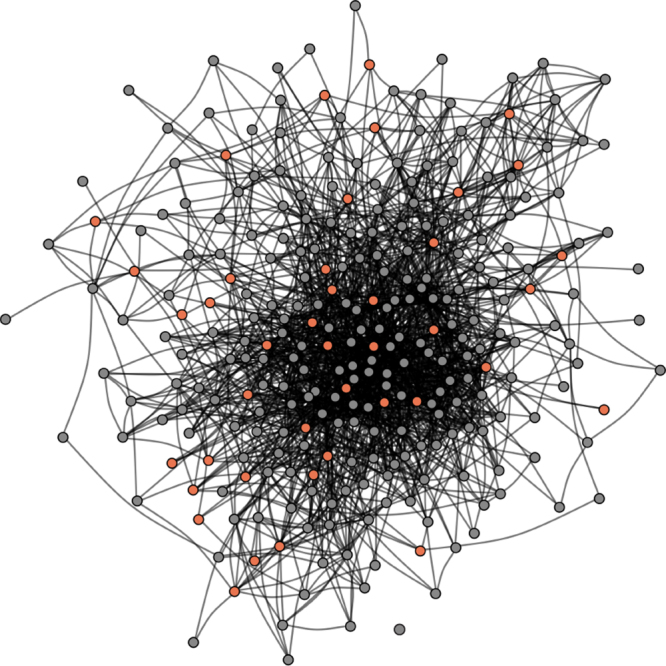
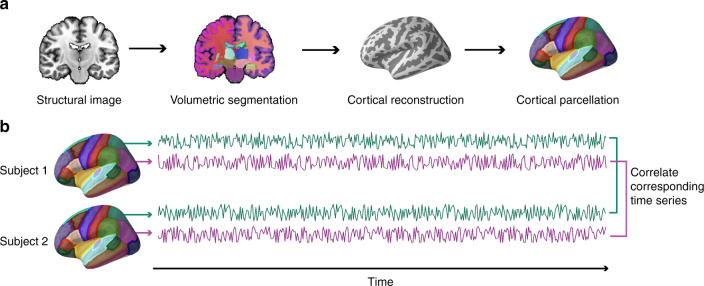
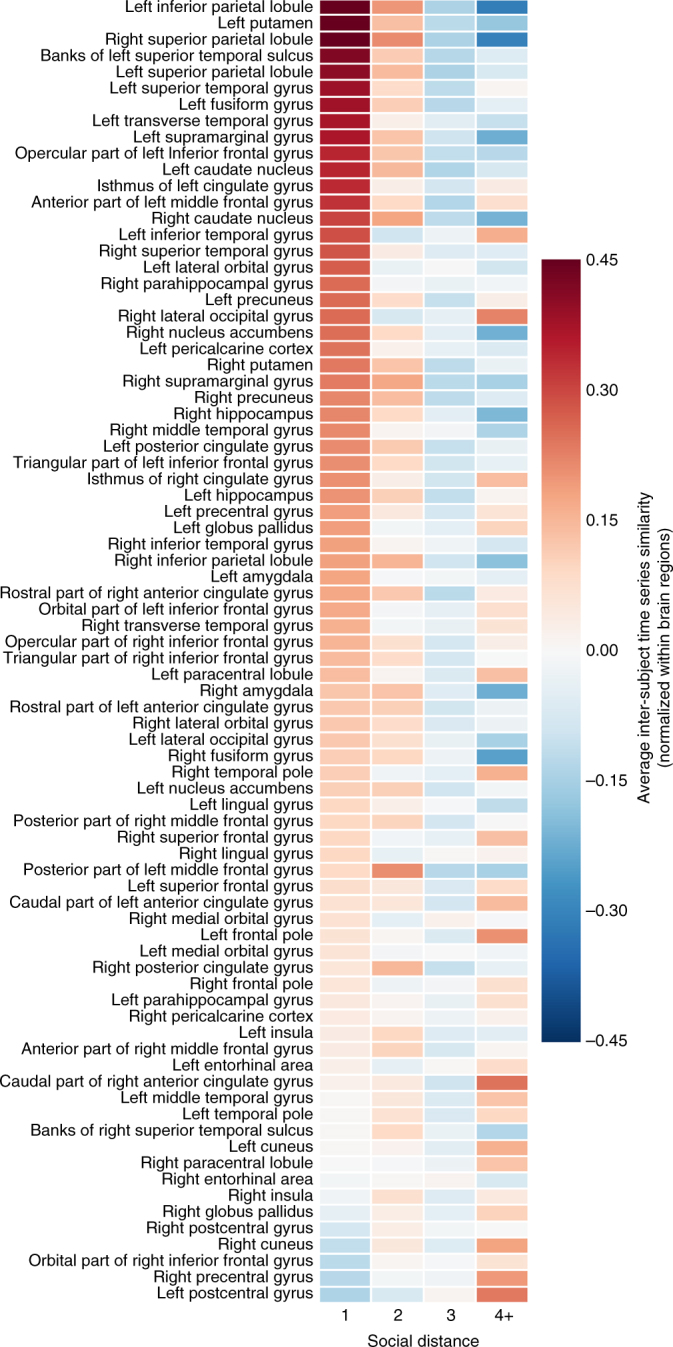
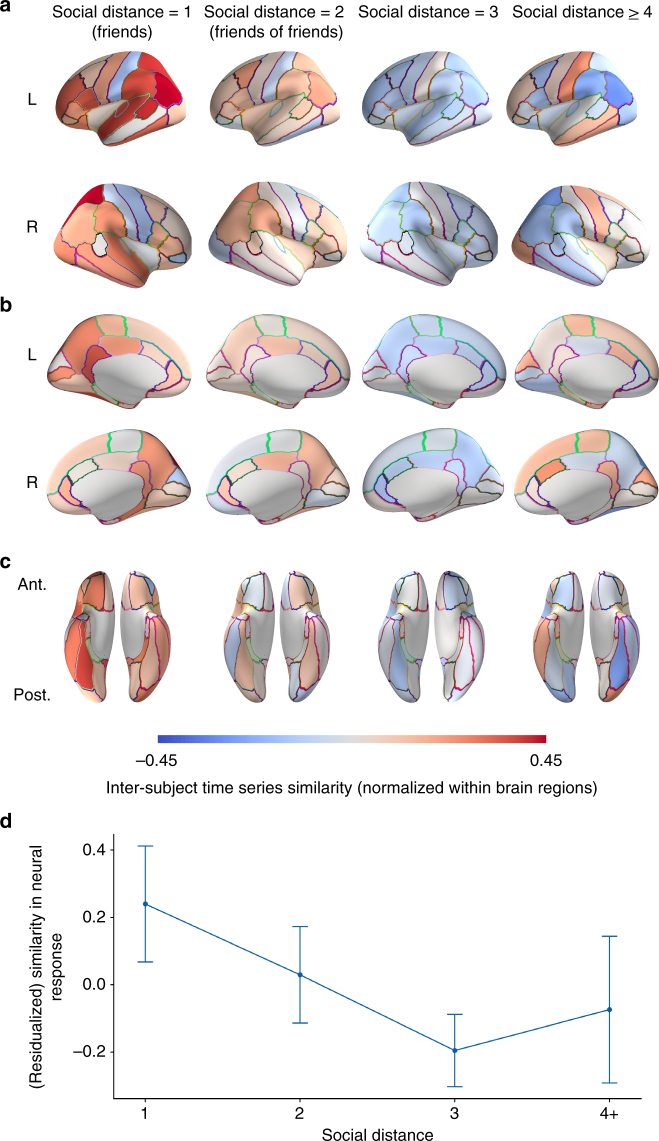
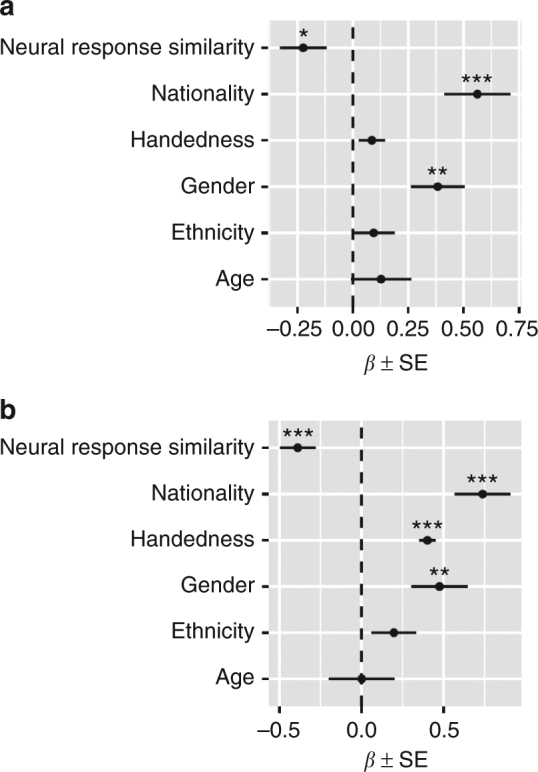
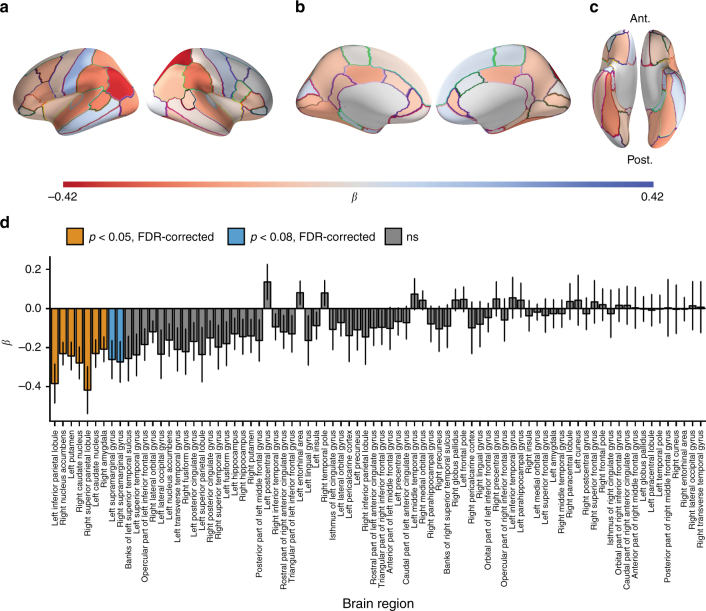
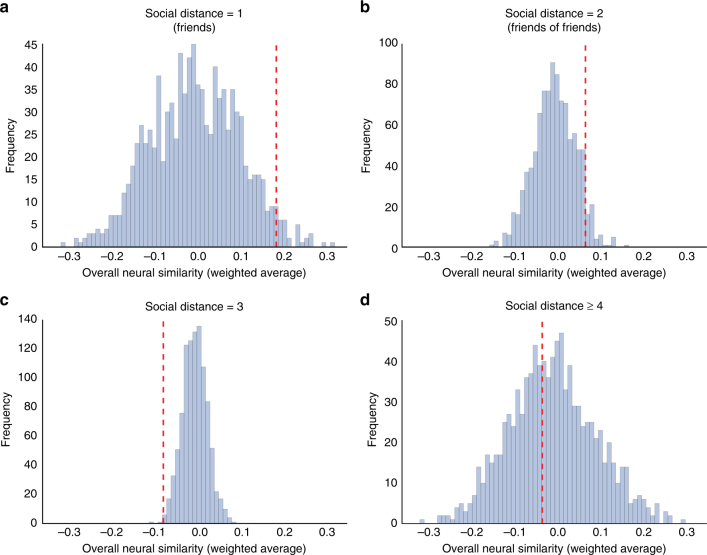
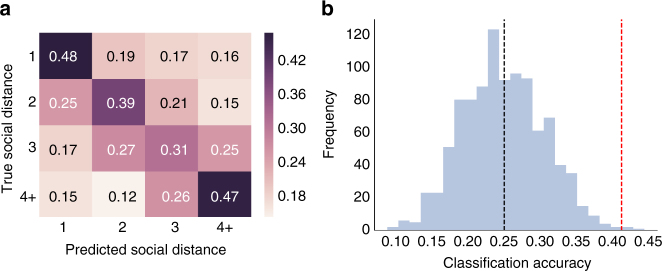
Verification
Claims the paper makes
The claims and statistics of this paper haven’t been checked yet.
Free: it reads the open-access text and checks the first 5 claims that cite a source we can check. Create a free account to check every claim.
Claims other papers make about this one
Each is checked against this paper’s own text: does it say what the citing paper says it does?
In the citing paper
“A striking recent study117,118 mapped the close-knit social network of a class of students at a business school and found that pairs of people who have closer social relationships have more similar neural responses to narratives than do pairs of people who are less close (Fig. 4d).”
From The default mode network: where the idiosyncratic self meets the shared social world (2021) · cites this paper as [117]
In the citing paper
“Emerging neuroscientific research provides evidence that neural alignment across subjects is influenced and shaped by the people with whom we are connected in our real and virtual social networks.”
From The default mode network: where the idiosyncratic self meets the shared social world (2021) · cites this paper as [117]
Self-check
Percentages, sums and reported differences re-computed from the paper’s own numbers.
The self-check needs the paper’s full text.
Citations
Cites
Scikit-learn: Machine Learning in Python
Pedregosa, F., Varoquaux, G., Gramfort, A., Michel, V., Thirion, B., Grisel, O., Blondel, M., Müller, A., Nothman, J., Louppe, G., et al. (2012) · arXiv · doi:10.48550/arxiv.1201.0490 · Cited by 71,016
Matplotlib: a 2D graphics environment
Hunter, J. D. (2007) · Computing in Science & Engineering · doi:10.1109/mcse.2007.55 · Cited by 39,249
Birds of a Feather: Homophily in Social Networks
McPherson, M., Smith-Lovin, L., & Cook, J. M. (2001) · Annual Review of Sociology · doi:10.1146/annurev.soc.27.1.415 · Cited by 18,567
ggplot2: Elegant Graphics for Data Analysis
Wickham, H. (2009) · doi:10.1007/978-0-387-98141-3 · Cited by 14,447
Desikan, R. S., Ségonne, F., Fischl, B., Quinn, B. T., Dickerson, B. C., Blacker, D., Buckner, R. L., Dale, A. M., Maguire, R. P., Hyman, B. T., et al. (2006) · NeuroImage · doi:10.1016/j.neuroimage.2006.01.021 · Cited by 13,324
Control of goal-directed and stimulus-driven attention in the brain
Corbetta, M., & Shulman, G. L. (2002) · Nature Reviews Neuroscience · doi:10.1038/nrn755 · Cited by 12,881
AFNI: Software for analysis and visualization of functional magnetic resonance neuroimages
Cox, R. W. (1996) · Computers and Biomedical Research · doi:10.1006/cbmr.1996.0014 · Cited by 10,913
Fischl, B. (2012) · NeuroImage · doi:10.1016/j.neuroimage.2012.01.021 · Cited by 9,526
Social Influence: Compliance and Conformity
Cialdini, R. B., & Goldstein, N. J. (2004) · Annual Review of Psychology · doi:10.1146/annurev.psych.55.090902.142015 · Cited by 6,077
(2006) · Cited by 3,705
Research works printed but not linked: 1
- Burt, R. S. Structural Holes: The Social Structure of Competition (Harvard Univ. Press, Cambridge, 1992).
Cited by
Items 101–200 of 387
Han, J., Lang, A., & Amon, M. J. (2021) · Communication Monographs · doi:10.1080/03637751.2021.1942105 · Cited by 17
Individual fixation tendencies in person viewing generalize from images to videos
Broda, M. D., & de Haas, B. (2022) · i-Perception · doi:10.1177/20416695221128844 · Cited by 18
“Participants viewed eight different director-cut video clips downloaded from YouTube, which included social content and were similar to videos used in a previous study (Parkinson et al., 2018; Table S1).”
MethodHyon, R., Chavez, R. S., Chwe, J. A. H., Wheatley, T. P., Kleinbaum, A. M., & Parkinson, C. M. (2022) · Communications Biology · doi:10.1038/s42003-022-03655-8 · Cited by 19
Self-citationPerry, B. L., & Roth, A. R. (2021) · Cambridge University Press eBooks · doi:10.1017/9781108878296.031 · Cited by 20
A developmental framework of interpersonal neural synchrony
Hoehl, S., Bánki, A., Brzozowska, A., Carollo, A., Kostorz, K., Nguyen, T., Pletti, C., Reisner, S., Schäfer, V. T., Schaetz, C., et al. (2025) · Developmental Review · doi:10.1016/j.dr.2025.101234 · Cited by 22
“Friends, in particular, tend to exhibit more similar neural processing of narratives (Parkinson et al., 2018).”
The anatomy of friendship: neuroanatomic homophily of the social brain among classroom friends
D’Onofrio, P., Norman, L. J., Sudre, G. P., White, T. J. H., & Shaw, P. (2021) · Cerebral Cortex · doi:10.1093/cercor/bhab398 · Cited by 17
Murray, J., Sánchez-Franco, S., Sarmiento, O. L., Kimbrough, E. O., Tate, C., Montgomery, S. C., Kumar, R., Dunne, L., Ramalingam, A., Krupka, E. L., et al. (2023) · Humanities and Social Sciences Communications · doi:10.1057/s41599-023-02124-9 · Cited by 25
Disrupted Human–Dog Interbrain Neural Coupling in Autism‐Associated Shank3 Mutant Dogs
Ren, W., Yu, S. P., Guo, K., Lu, C., & Zhang, Y. (2024) · Advanced Science · doi:10.1002/advs.202402493 · Cited by 31
Butt, A. S., Ahmad, A. B., & Shah, S. H. H. (2021) · VINE Journal of Information and Knowledge Management Systems · doi:10.1108/vjikms-01-2021-0009 · Cited by 22
From Symbols to Embeddings: A Tale of Two Representations in Computational Social Science
Chen, H., Yang, C. H., Zhang, X., Liu, Z., Sun, M., & Jin, J. (2021) · Journal of Social Computing · doi:10.23919/jsc.2021.0011 · Cited by 21
Culture, Mind, and Brain: Emerging Concepts, Models, and Applications
Kirmayer, L. J., Worthman, C. M., Kitayama, S., Lemelson, R., & Cummings, C. A. (2020) · Cited by 37
Foundations of Intelligence in Natural and Artificial Systems: A Workshop ReportPreprint
Millhouse, T., Moses, M. E., & Mitchell, M. (2021) · arXiv (Cornell University) · doi:10.48550/arxiv.2105.02198 · Cited by 18
“For example, across a diverse range of video clips, patterns of brain activity are more similar for more closely connected individuals, with friends exhibiting especially high levels of similarity (Parkinson, Kleinbaum, & Wheatley, 2018).”
BackgroundRewiring the organizational network: Corporate offsites and network tie formation
Kneeland, M. K., & Kleinbaum, A. M. (2024) · Strategic Management Journal · doi:10.1002/smj.3653 · Cited by 16
“…Kleinbaum et al., 2013; Kleinbaum & Stuart, 2014; Mayer & Puller, 2008; Yakubovich & Burg, 2019), individual differences (Feiler & Kleinbaum, 2015; Mehra et al., 2001; Parkinson et al., 2018; Sasovova et al., 2010) and interactions thereof (Kleinbaum, 2018) that bring about differences in networks.”
BackgroundSelf-citationCaregiver-child neural synchrony: Magic, mirage, or developmental mechanism?
Roche, E. C., Redcay, E., & Romeo, R. R. (2024) · Developmental Cognitive Neuroscience · doi:10.1016/j.dcn.2024.101482 · Cited by 17
“In one neural similarity study with adults, Parkinson et al. (2018) examined the relationship between real-life closeness and similarity of neural responses during passive movie watching in an fMRI scanner.”
Predicting memory from the network structure of naturalistic eventsPreprint
Lee, H., & Chen, J. (2021) · bioRxiv (Cold Spring Harbor Laboratory) · doi:10.1101/2021.04.24.441287 · Cited by 19
Neuroimaging of human and non-human animal emotion and affect in the context of social relationships
Zablocki-Thomas, P. B., Rogers, F. D., & Bales, K. L. (2022) · Frontiers in Behavioral Neuroscience · doi:10.3389/fnbeh.2022.994504 · Cited by 13
Chen, P.-H. A., & Qu, Y. (2021) · Frontiers in Human Neuroscience · doi:10.3389/fnhum.2021.703999 · Cited by 19
Neural signatures associated with temporal compression in the verbal retelling of past events
Musz, E., & Chen, J. (2022) · Communications Biology · doi:10.1038/s42003-022-03418-5 · Cited by 16
Exploring age-related changes in inter-brain synchrony during verbal communication
Dikker, S., Mech, E. N., Gwilliams, L., West, T. V., Dumas, G., & Federmeier, K. D. (2022) · The Psychology of learning and motivation/The psychology of learning and motivation · doi:10.1016/bs.plm.2022.08.003 · Cited by 18
An interactionist perspective on the development of coordinated social attention
Hoehl, S., & Bertenthal, B. I. (2021) · Advances in child development and behavior · doi:10.1016/bs.acdb.2021.05.001 · Cited by 25
Dikker, S., Michalareas, G., Oostrik, M., Serafimaki, A., Kahraman, H. M., Struiksma, M. E., & Poeppel, D. (2019) · bioRxiv (Cold Spring Harbor Laboratory) · doi:10.1101/822320 · Cited by 13
Kragness, H. E., Eitel, M. J., Anantharajan, F., Gaudette-Leblanc, A., Berezowska, B., & Cirelli, L. K. (2023) · Psychology of Aesthetics Creativity and the Arts · doi:10.1037/aca0000597 · Cited by 17
Synchrony and subjective experience: the neural correlates of the stream of consciousness
Lieberman, M. D. (2025) · Trends in Cognitive Sciences · doi:10.1016/j.tics.2025.04.007 · Cited by 14
“A couple of studies have assessed the differential synchrony of people who are more or less likely to be socially connected [42,43], with shared reality research suggesting that people who experience things similarly are more likely to connect [44,45].”
Rogers, C. R., Lee, T., Fry, C. M., & Telzer, E. H. (2020) · Journal of Research on Adolescence · doi:10.1111/jora.12581 · Cited by 17
The Enormous Flock of Homophily Researchers: Assessing and Promoting a Research Agenda
McPherson, M., Smith‐Lovin, L., & Rawlings, C. M. (2021) · Cambridge University Press eBooks · doi:10.1017/9781108878296.033 · Cited by 18
Oakes, R. A., Peschel, L., & Barraclough, N. E. (2024) · iScience · doi:10.1016/j.isci.2024.109843 · Cited by 20
On the neural networks of self and other bias and their role in emergent social interactions
Forbes, C. E. (2024) · Cortex · doi:10.1016/j.cortex.2024.05.002 · Cited by 12
A framework for integrating neural development and social networks in adolescence
Capella, J., & Telzer, E. H. (2024) · Developmental Cognitive Neuroscience · doi:10.1016/j.dcn.2024.101442 · Cited by 19
“…(i.e., how different one ’ s neural response is from all others measured in their network) relate to measures of connectedness, such as proximity (Hyon, Kleinbaum, et al., 2020; Hyon, Youm, et al., 2020; Parkinson et al., 2018) and centrality (Baek et al., 2022), in the social networks.”
Amormino, P., Kagel, A., Li, J., & Marsh, A. A. (2024) · Communications Psychology · doi:10.1038/s44271-024-00181-7 · Cited by 17
“That close others respond similarly during the discounting task aligns with a growing body of neuroscience fi ndings that social closeness predicts similarity in how peoplerespond toeventsintheworldatneurallevel 51 .”
Route of fire: Pregame rituals and emotional synchrony among Brazilian football fans
Xygalatas, D., Profeta, V. L. D. S., Saraei, M., & Pinto, G. B. (2025) · Proceedings of the National Academy of Sciences · doi:10.1073/pnas.2422779122 · Cited by 16
McNabb, C. B., Burgess, L. G., Fancourt, A., Mulligan, N. F., FitzGibbon, L., RIDDELL, P. M., & Murayama, K. (2020) · Scientific Reports · doi:10.1038/s41598-020-67718-8 · Cited by 15
On Social Media: Studying Social Media from an Egocentric Perspective
Hampton, K. N., & Chen, W. (2021) · Cambridge University Press eBooks · doi:10.1017/9781108878296.056 · Cited by 11
Georg Simmel’s Contribution to Social Network Research
Hollstein, B. (2021) · Cambridge University Press eBooks · doi:10.1017/9781108878296.003 · Cited by 20
‘Entanglement’ – A new dynamic metric to measure team flow
Gloor, P. A., Zylka, M. P., Colladon, A. F., & Makai, M. (2021) · Social Networks · doi:10.1016/j.socnet.2021.11.010 · Cited by 14
Oxytocin modulates social brain network correlations in resting and task state
Wu, Q., Huang, Q., Liu, C., & Wu, H. (2022) · Cerebral Cortex · doi:10.1093/cercor/bhac295 · Cited by 9
On Mobilization: How Actors Mobilize Their Networks in Practice
Small, M. L. (2021) · Cambridge University Press eBooks · doi:10.1017/9781108878296.042 · Cited by 17
Tendency to laugh is a stable trait: findings from a round-robin conversation study
Wood, A., Templeton, E. M., Morrel, J., Schubert, F. T., & Wheatley, T. P. (2022) · Philosophical Transactions of the Royal Society B Biological Sciences · doi:10.1098/rstb.2021.0187 · Cited by 15
“This finding complements prior experimental evidence that being made to laugh with a stranger increases feelings of closeness [53] and that similarity is a marker of friendship [54].”
ResultSelf-citationBroom, T. W., Iyer, S., Courtney, A. L., & Meyer, M. L. (2024) · Communications Psychology · doi:10.1038/s44271-024-00088-3 · Cited by 16
“The results of control analyses are reported in the Supplementary Information (Supplementary Results pages 4 – 6 and Supplementary Tables 2 – 4).”
BackgroundInfluentialIndividual gaze predicts individual scene descriptions
Kollenda, D., Reher, A.-S. V., & de Haas, B. (2025) · Scientific Reports · doi:10.1038/s41598-025-94056-4 · Cited by 18
Deguilhem, T., Berrou, J., & Combarnous, F. (2019) · Review of Social Economy · doi:10.1080/00346764.2019.1627573 · Cited by 12
“…information about the possible opportunities because of their contacts’ shared characteristics, such as the residential neighborhood, ethnicity or conformism in individual practices through relationships (Fernandez and Fernandez-Mateo 2006, Smith 2016, Jackson et al. 2017, Parkinson et al. 2018).”
Gratch, J. S. (2023) · Philosophical Transactions of the Royal Society B Biological Sciences · doi:10.1098/rstb.2021.0475 · Cited by 19
“For example, friends will show more neural synchrony than strangers when watching a debate alone in their own home, not because they respond to each other but because they are interpreting the same environmental events with similar goals [40].”
BackgroundMEG, myself, and I: individual identification from neurophysiological brain activityPreprint
Castanheira, J. D. S., Perez, H. D. O., Mišić, B., & Baillet, S. (2021) · bioRxiv (Cold Spring Harbor Laboratory) · doi:10.1101/2021.02.18.431803 · Cited by 10
Study protocol: Social Health Impact of Network Effects (SHINE) StudyPreprint
Cosme, D., Kang, Y., Tartak, J. C., Ahn, J., Corbani, F. E., Cooper, N., Doré, B., He, X., Helion, C., Jovanova, M., et al. (2022) · PsyArXiv (OSF Preprints) · doi:10.31234/osf.io/cj2nx · Cited by 10
Murray, J., Sánchez-Franco, S., Sarmiento, O. L., Kimbrough, E. O., Tate, C., Montgomery, S. C., Kumar, R., Dunne, L., Ramalingam, A., Krupka, E. L., et al. (2025) · Frontiers in Psychology · doi:10.3389/fpsyg.2025.1655761 · Cited by 14
“…(Hoffman et al., 2007; Mercken et al., 2012; Flashman and Gambetta, 2014; Fowler and Christakis, 2008; Go et al., 2012; Miething et al., 2016; Parkinson et al., 2018; Rohrer et al., 2021; Mercken et al., 2009; Ripley et al., 2025; Steglich et al., 2010; Snijders et al., 2010; Mercken et al.,…”
Learning with others: teacher–learner brain synchrony depends on mutual gaze and joint attention
Felice, S. D., Ciò, F. D., Tompkins, D., Hakim, U., Pinti, P., Vigliocco, G., & Hamilton, A. F. D. C. (2025) · Cerebral Cortex · doi:10.1093/cercor/bhaf323 · Cited by 13
“Relational duration and closeness may have influenced INS (Parkinson et al. 2018; De Felice et al. 2025).”
Raykov, P., Keidel, J. L., Oakhill, J. V., & Bird, C. M. (2022) · eNeuro · doi:10.1523/eneuro.0116-22.2022 · Cited by 14
“Other studies have relied on preexisting differences between participants, which meant that they are likely to process the narratives in more similar ways, such as people who are closer in a social network (Parkinson et al., 2018), have a similar personality trait (Finn et al.”
BackgroundNeuroanthropological Perspectives on Culture, Mind, and Brain
Lende, D. H., & Downey, G. (2020) · Cambridge University Press eBooks · doi:10.1017/9781108695374.014 · Cited by 10
Social networks and neural receptivity to persuasive health messages.
Pandey, P., Kang, Y., Cooper, N., O’Donnell, M. B., & Falk, E. B. (2021) · Health Psychology · doi:10.1037/hea0001059 · Cited by 11
Hierarchical consciousness: the Nested Observer Windows model
Riddle, J., & Schooler, J. W. (2024) · Neuroscience of Consciousness · doi:10.1093/nc/niae010 · Cited by 8
“…(Pinotsis et al. 2023), the molecular scale (Fisher 2015), or at supervening levels, e.g. whole-brain structure (Pang et al. 2023), the electric field of the body (Klimesch 2013, 2018), or between individuals in social settings (Gallagher and Frith 2003, Dikker et al. 2017, Parkinson et al. 2018).”
BackgroundNeural Variability and Cognitive Control in Individuals With Opioid Use Disorder
Ye, J., Mehta, S., Peterson, H., Ibrahim, A., Saeed, G., Linsky, S., Kreinin, I., Tsang, S. W., Nwanaji-Enwerem, U., Raso, A., et al. (2025) · JAMA Network Open · doi:10.1001/jamanetworkopen.2024.55165 · Cited by 12
Health neuroscience 2.0: integration with social, cognitive and affective neuroscience
Inagaki, T. K. (2020) · Social Cognitive and Affective Neuroscience · doi:10.1093/scan/nsaa123 · Cited by 11
“, 2013), such as investigating how people connect during social interaction (Parkinson et al., 2018), similarly lends itself to filling large gaps in understanding of how social factors and health bidirectionally influence one another.”
BackgroundA Practical Introduction to Network Neuroscience for Communication Researchers
Fisher, J. T., Hopp, F. R., & Weber, R. (2020) · Communication Methods and Measures · doi:10.1080/19312458.2020.1860206 · Cited by 9
Processing of an Audiobook in the Human Brain Is Shaped by Cultural Family Background
Hakonen, M., Ikäheimonen, A., Hultén, A., Kauttonen, J., Koskinen, M., Lin, F., Lowe, A., Sams, M. E., & Jääskeläinen, I. P. (2022) · Brain Sciences · doi:10.3390/brainsci12050649 · Cited by 12
Dimanova, P., Borbás, R., & Raschle, N. M. (2023) · Developmental Cognitive Neuroscience · doi:10.1016/j.dcn.2023.101324 · Cited by 10
“…have reported that higher brain similarity is linked to higher similarity in behavioral correlates that are associated with psychosocial functioning, impacting individuals ’ mental well-being (Baek et al., 2022; Finn et al., 2018; Lee et al., 2017; Nummenmaa et al., 2012; Parkinson et al., 2018).”
Crone, E. A., Bol, T., Braams, B. R., de Rooij, M., Franke, B., Franken, I. H. A., Gazzola, V., Güroğlu, B., Huizenga, H. M., Pol, H. E. H., et al. (2024) · Developmental Cognitive Neuroscience · doi:10.1016/j.dcn.2024.101403 · Cited by 13
“…to have an adverse influence on their goals can become a strategy to scaffold self-regulation, yet we still know very little about the neural mechanisms through which different young adults select their peers, and how the peers they select influences their neural activity (Parkinson et al., 2018).”
BackgroundSelf-views converge during enjoyable conversations
Welker, C. L., Wheatley, T. P., Cason, G., Gorman, C., & Meyer, M. L. (2024) · Proceedings of the National Academy of Sciences · doi:10.1073/pnas.2321652121 · Cited by 12
“For example, although people tend to show similar neural responses to videos from popular media ( 22 , 26 , 99 ), lonelier individuals, as well as individuals in objectively peripheral social network positions, show more atypical neural responding ( 95 , 96 ).”
Self-citationComputational methods in social neuroscience: recent advances, new tools and future directions
Parkinson, C. M. (2021) · Social Cognitive and Affective Neuroscience · doi:10.1093/scan/nsab073 · Cited by 9
“, 2018), as well as to friendships and the proximity between people in their real-world social networks (Parkinson et al., 2018; Hyon et al., 2020a).”
Self-citationDai, J., Kwon, S., Prinstein, M. J., Telzer, E. H., & Lindquist, K. A. (2023) · Human Brain Mapping · doi:10.1002/hbm.26317 · Cited by 12
“Indeed, recent neuroimaging work suggests a coordinated neural activity (i.e., intersubject similarity) among social network members, which subserves similar social behaviors among friends (Baek et al., 2022; Finn et al., 2020; Parkinson et al., 2018).”
BackgroundPartner similarity and social cognitive traits predict social interaction success among strangers
Dziura, S. L., Hosangadi, A., Shariq, D. A., Merchant, J. S., & Redcay, E. (2023) · Social Cognitive and Affective Neuroscience · doi:10.1093/scan/nsad045 · Cited by 12
“…initial successful communication endeavors among strangers may go on to support forming healthy relationships, as both empathy and neural similarity have been linked to closer and more supportive friendships (Hruschka, 2010; Ciarrochi et al. , 2017; Parkinson et al. , 2018; Hyon et al. , 2020).”
BackgroundMethodInfluentialMutual Constitution of Culture and the Mind: Insights from Cultural Neuroscience
Kitayama, S., & Yu, Q. (2020) · Cambridge University Press eBooks · doi:10.1017/9781108695374.006 · Cited by 10
Toward a Sociological Perspective on the Gender and Sexuality of Friendship
Fox, E. C. (2024) · Sociology Compass · doi:10.1111/soc4.13263 · Cited by 11
Interactions between neural representations of the social and spatial environment
Thompson, J. C., & Parkinson, C. M. (2024) · Philosophical Transactions of the Royal Society B Biological Sciences · doi:10.1098/rstb.2022.0522 · Cited by 7
“…in a social network are more likely to cooperate with each other [77] and tend to be similar to one another in terms of diverse characteristics (e.g. age, gender, moral values [78,79]), to process the world similarly [80,81], and to evince similarities in brain structure and function [82,83].”
BackgroundSelf-citationNeural similarity predicts whether strangers become friends
Shen, Y. L., Hyon, R., Wheatley, T. P., Kleinbaum, A. M., Welker, C. L., & Parkinson, C. M. (2025) · Nature Human Behaviour · doi:10.1038/s41562-025-02266-7 · Cited by 26
“The survey question was adapted from Burt 60 and has been previously used in the modified form used here 11,20,60,61 .”
InfluentialSelf-citationEpilogue: Interdisciplinarity in the Study of Culture, Mind, and Brain
Kirmayer, L. J., Worthman, C. M., & Kitayama, S. (2020) · Cambridge University Press eBooks · doi:10.1017/9781108695374.028 · Cited by 10
Left frontal eye field encodes sound locations during passive listening
Sun, L., Li, C., Wang, S., Si, Q., Lin, M. K., Wang, N., Sun, J., Li, H., Liang, Y., Wei, J., et al. (2022) · Cerebral Cortex · doi:10.1093/cercor/bhac261 · Cited by 9
Enhanced neural synchrony associated with long-term ballroom dance training
Wu, X. X., Wang, X., Lu, X., Kong, Y., & Hu, L. (2023) · NeuroImage · doi:10.1016/j.neuroimage.2023.120301 · Cited by 9
“For instance, ISC between two individuals during free viewing of naturalistic movies was found to be inversely related to their distance in real-world social networks (Parkinson et al., 2018).”
Neurodiversity as a Conceptual Lens and Topic of Cross-Cultural Study
Cascio, M. A. (2020) · Cambridge University Press eBooks · doi:10.1017/9781108695374.027 · Cited by 10
Lin, N., & Bian, Y. (2021) · Cambridge University Press eBooks · doi:10.1017/9781108878296.037 · Cited by 9
Sisterhood predicts similar neural processing of a film
Bacha‐Trams, M., Yorulmaz, G. E., Glerean, E., Ryyppö, E., Tapani, K., Virmavirta, E., Saaristo, J., Jääskeläinen, I. P., & Sams, M. E. (2024) · NeuroImage · doi:10.1016/j.neuroimage.2024.120712 · Cited by 8
“…for acquaintances) and b) former work for friends as e.g. Parkinson et al., 2018 has shown similarity in brain activity using a set of movie clips (Parkinson et al., 2018), we would expect to still find higher inter-subject correlations of brain activity in sisters (compared with friends and…”
BackgroundResultInfluentialProximity within adolescent peer networks predicts neural similarity during affective experience
Feldman, M. J., Capella, J., Dai, J., Bonar, A. S., Field, N. H., Lewis, K., Prinstein, M. J., Telzer, E. H., & Lindquist, K. A. (2024) · Social Cognitive and Affective Neuroscience · doi:10.1093/scan/nsae072 · Cited by 8
“Future work should also replicate and extend these findings with other multivariate methods for computing intersubject similarity (e.g. see Parkinson et al. 2018, Hyon et al. 2020a, Baek et al. 2022).”
BackgroundResultInfluentialLi, Z., Dong, Q., Hu, B., & Wu, H. (2023) · Human Brain Mapping · doi:10.1002/hbm.26285 · Cited by 6
“By using linear mixed-effects modelling, this analysis could account for inherent statistical dependencies between all possible subject pairs (dyads) (Chen et al., 2017; Parkinson et al., 2018) and evaluate the interactions between MMS and rs-FC simultaneously, which is impossible in standard RSA.”
MethodCulture, Self, and Agency: An Ecosocial View
Kirmayer, L. J., Gómez-Carrillo, A., Langlois‐Thérien, T., Ramstead, M. J. D., & Gold, I. (2020) · Cambridge University Press eBooks · doi:10.1017/9781108695374.012 · Cited by 7
The Synergy Zone: Connecting the Mind, Brain, and Heart for the Ideal Classroom Learning Environment
Zadina, J. N. (2023) · Brain Sciences · doi:10.3390/brainsci13091314 · Cited by 17
“Social affiliation, or connection, is seen in brain responses [139,140].”
BackgroundLong-term community development within a researcher network
Hall, H., Cruickshank, P., & Ryan, B. (2018) · Journal of Documentation · doi:10.1108/jd-05-2017-0069 · Cited by 6
Xygalatas, D. (2018) · Behavioral and Brain Sciences · doi:10.1017/s0140525x18001814 · Cited by 8
Pescosolido, B. A. (2021) · Cambridge University Press eBooks · doi:10.1017/9781108878296.025 · Cited by 8
Tindall, D. B., Stoddart, M. C. J., McLevey, J., Jasny, L., Fisher, D. R., Earl, J., & Diani, M. (2021) · Cambridge University Press eBooks · doi:10.1017/9781108878296.054 · Cited by 12
Wilcox, S., Huskey, R., & DeAndrea, D. C. (2021) · Journal of Media Psychology Theories Methods and Applications · doi:10.1027/1864-1105/a000312 · Cited by 7
“This is supported by evidence showing that individuals who are socially closer tend to process messages more similarly than those who are socially distant (Parkinson et al., 2018 ).”
BackgroundPhysiological Synchrony Predicts Observational Threat Learning in HumansPreprint
Pärnamets, P., Espinosa, L., & Olsson, A. (2018) · bioRxiv (Cold Spring Harbor Laboratory) · doi:10.1101/454819 · Cited by 6
“minimal group induction or by using natural covariates such as friendship [38], to investigate if and how this affects synchrony’s role in learning.”
Individual fixation tendencies in person viewing generalize from images to videosPreprint
Broda, M. D., & de Haas, B. (2022) · doi:10.31234/osf.io/nfkr4 · Cited by 6
Relationship evolution shapes inter-brain synchrony in affective sharing: The role of self-expansion
Wang, D., Ren, Y., & Chen, W. (2024) · Brain Structure and Function · doi:10.1007/s00429-024-02841-0 · Cited by 8
Lin, F., Albantakis, L., Noppari, T., Santavirta, S., Brandi, M., Sun, L., Lukkarinen, L., Tani, P., Salmi, J., Nummenmaa, L., et al. (2026) · Molecular Autism · doi:10.1101/2025.02.04.636405 · Cited by 7
Cultural Priming Effects and the Human Brain
Han, S., & Northoff, G. (2020) · Cambridge University Press eBooks · doi:10.1017/9781108695374.011 · Cited by 7
Introduction: Co-constructing Culture, Mind, and Brain
Kirmayer, L. J., Worthman, C. M., & Kitayama, S. (2020) · Cambridge University Press eBooks · doi:10.1017/9781108695374.002 · Cited by 11
Walla, P., Külzer, D., Leeb, A., Moidl, L., & Kalt, S. (2023) · Brain Sciences · doi:10.3390/brainsci13050831 · Cited by 8
Parent–child couples display shared neural fingerprints while listening to stories
Habouba, N., Talmon, R., Kraus, D., Farah, R., Apter, A., Steinberg, T., Radhakrishnan, R., Barazany, D., & Horowitz‐Kraus, T. (2024) · Scientific Reports · doi:10.1038/s41598-024-53518-x · Cited by 6
“Moreover, our findings are in line with studies that reported brain activation similarities while listening to stories, among socially connected people who shared similar perceptions and social behavior 25,26,59 .”
ResultBipolar spectrum risk and social network dimensions in emerging adults: Two social sides?
Ibonie, S. G., Young, G. R., Ploe, M. L., Mauss, I. B., Alloy, L. B., Borelli, J. L., Bullock, B., Holley, S. R., Jopling, E. N., Kamble, S. V., et al. (2025) · Journal of Social and Clinical Psychology · doi:10.1521/jscp.2025.44.1.001 · Cited by 8
Ritual and Religion as Social Technologies of Cooperation
Kavanagh, C. M., Jong, J., & Whitehouse, H. (2020) · Cambridge University Press eBooks · doi:10.1017/9781108695374.016 · Cited by 10
Strength of Weak Ties in the Labor Market: An Assessment of the State of Research
Fernandez, R. M. (2021) · Cambridge University Press eBooks · doi:10.1017/9781108878296.019 · Cited by 12
Feld, S. L., Knighton, D., & McGail, A. (2021) · Cambridge University Press eBooks · doi:10.1017/9781108878296.027 · Cited by 8
Fujisaki, I., Honda, H., & Ueda, K. (2022) · Scientific Reports · doi:10.1038/s41598-022-16584-7 · Cited by 6
Trust in Social Interaction: From Dyads to Civilizations
Christov‐Moore, L., Bolis, D., Kaplan, J., Schilbach, L., & Iacoboni, M. (2022) · Springer eBooks · doi:10.1007/978-3-031-08651-9_8 · Cited by 13
The Cultural Brain as Historical Artifact
Boddice, R. (2020) · Cambridge University Press eBooks · doi:10.1017/9781108695374.018 · Cited by 9
Default mode network synchrony reflects shared understanding
Ohad, T., Zvi, Y., & Yeshurun, Y. (2025) · Current Opinion in Behavioral Sciences · doi:10.1016/j.cobeha.2025.101540 · Cited by 9
“Ad-ditionally, greater synchronization in DMN responses predicted stronger social connections, both during video-watching [36] and during resting state, even after controlling for demographic and personality similarities [37].”
Media Entertainment, Flow Experiences, and the Synchronization of Audiences
Fisher, J. T., Lonergan, C., Hopp, F. R., & Weber, R. (2021) · Oxford University Press eBooks · doi:10.1093/oxfordhb/9780190072216.013.19 · Cited by 4
Sun, H., Brashears, M. E., & Smith, E. B. (2021) · Cambridge University Press eBooks · doi:10.1017/9781108878296.040 · Cited by 5
Lo, C. L., & Tseng, H. (2021) · Journal of electronic commerce research · Cited by 14
How heterogeneity in connections and cycles matter for synchronization of complex networks
Lacerda, J. C., Freitas, C. B. N., Macau, E. E. N., & Kurths, J. (2021) · Chaos An Interdisciplinary Journal of Nonlinear Science · doi:10.1063/5.0068136 · Cited by 4
Visual category-driven differences in memory
Steel, A., & Silson, E. H. (2022) · Routledge eBooks · doi:10.4324/9781003158134-14 · Cited by 3
Psychopathy and associations with reward responsiveness and social networks in emerging adults
Ploe, M. L., Berluti, K., Ibonie, S. G., Villanueva, C. M., Marsh, A. A., & Gruber, J. (2023) · Journal of Research in Personality · doi:10.1016/j.jrp.2023.104357 · Cited by 6
Metadata
- Authors
- Parkinson, C., Kleinbaum, A. M., & Wheatley, T.
- Affiliations
- University of California, Los Angeles (US)
- Dartmouth College (US)
- Corresponding author
- Parkinson, Carolyn
- Venue
- Nature Communications
- Published
- 2018-01-30
- Volume
- 9
- Issue
- 1
- Pages
- 332-332
- ISSN
- 2041-1723 (ISSN-L)
- PMC
- PMC5790806
- OpenAlex
- W2786454053
- Semantic Scholar
- 855c80c254878874a31be0f2ce69809460acbf85
- Cited by
- 388
- References
- 59
- Citations by year
- 2026: 23 · 2025: 44 · 2024: 36 · 2023: 43 · 2022: 39 · 2021: 98 · 2020: 71 · 2019: 18 · 2018: 15
- FWCI
- 30.08
- Type
- journal article
- Language
- en
- Open access
- gold
- doi.org
- Licence
- cc-by
- creativecommons.org/licenses/by/4.0 (tdm)
- creativecommons.org/licenses/by/4.0 (vor)
- Locations
- Nature Communications (publishedVersion, cc-by)
- PubMed Central (publishedVersion, cc-by)
- PubMed (publishedVersion)
- RePEc: Research Papers in Economics (submittedVersion)
- DOAJ (DOAJ: Directory of Open Access Journals) (submittedVersion, cc-by-sa)
- DOAJ (DOAJ: Directory of Open Access Journals) (submittedVersion)
- eScholarship (California Digital Library) (submittedVersion, cc-by)
- Funders
- Dartmouth College
- Topics
- Life Sciences › Neuroscience › Cognitive Neuroscience › Functional Brain Connectivity Studies
- Social Sciences › Psychology › Social Psychology › Action Observation and Synchronization
- Social Sciences › Psychology › Experimental and Cognitive Psychology › Evolutionary Psychology and Human Behavior
- Keywords
- friendship, homophily, neural similarity, naturalistic movie viewing, audiovisual perception, interpersonal influence, interpersonal attraction
- MeSH terms
- Adolescent, Adult, Brain, Female, Humans, Interpersonal Relations, Magnetic Resonance Imaging, Male, Friends, Social Networking
About these checks
Registry, retraction, Cites and statistics results are computed, not judged, with one exception: a printed reference that no index lists is read once by a model before it counts as a citation error. Claims are extracted by a model and kept only when their quote appears verbatim in the text; each cited source is then checked, with a model’s help, for whether it says what the claim relies on. Those verdicts can be wrong — read the claim’s quote and the cited source before relying on one.
Statistics and arithmetic are recomputed, not judged.
Confidence bands are shown only for fields calibrated on our annotated test set. None is calibrated yet, so no band is shown.
What counts as a claim ›How we measure confidence ›How we check this ›
Are you an author, or do you see a problem with this page? Request a review
Data sources
Bibliographic data: Semantic Scholar, OpenAlex, Crossref.
Contains information from the Semantic Scholar Academic Graph Datasets, made available under the ODC Attribution License (ODC-BY 1.0).
Semantic Scholar’s data is described in: Kinney, R., et al. (2023). The Semantic Scholar Open Data Platform. arXiv:2301.10140.
