

The DOI matches its Crossref record; 70 of the 70 references it cites were found in a registry or an index.
CA1 and CA3 differentially support spontaneous retrieval of episodic contexts within human hippocampal subfields
Open accessPublished version of a preprint
Abstract
The hippocampus plays a critical role in spatial and episodic memory. Mechanistic models predict that hippocampal subfields have computational specializations that differentially support memory. However, there is little empirical evidence suggesting differences between the subfields, particularly in humans. To clarify how hippocampal subfields support human spatial and episodic memory, we developed a virtual reality paradigm where participants passively navigated through houses (spatial contexts) across a series of videos (episodic contexts). We then used multivariate analyses of high-resolution fMRI data to identify neural representations of contextual information during recollection. Multi-voxel pattern similarity analyses revealed that CA1 represented objects that shared an episodic context as more similar than those from different episodic contexts. CA23DG showed the opposite pattern, differentiating between objects encountered in the same episodic context. The complementary characteristics of these subfields explain how we can parse our experiences into cohesive episodes while retaining the specific details that support vivid recollection.
Overview
The claims and statistics of this paper haven’t been checked yet.
Run the check — free, no account needed. It reads the open-access text and checks the sources it cites.
Integrity signals
Registry
Cites
Statistics
Figures
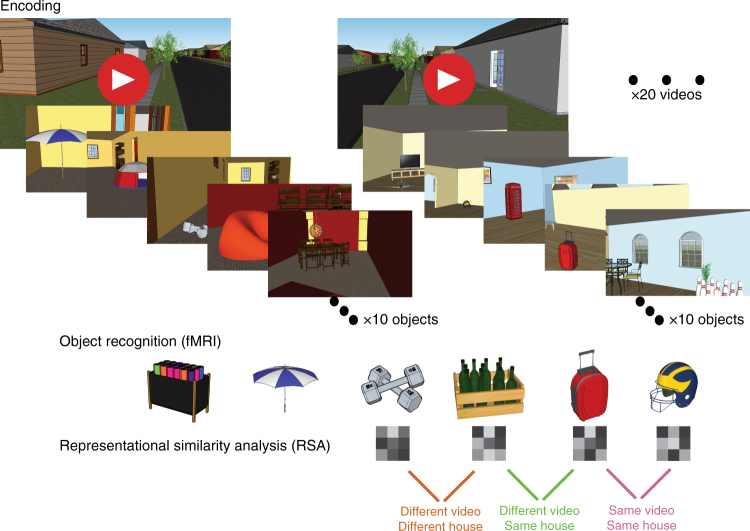
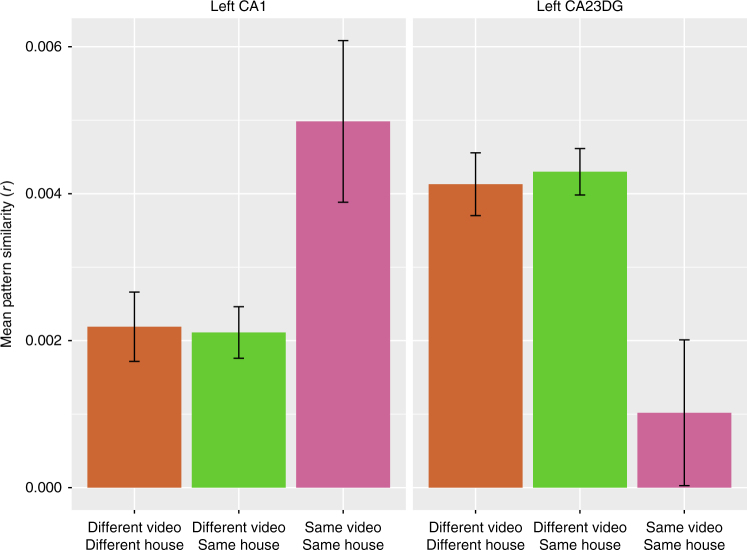
Verification
Claims the paper makes
The claims and statistics of this paper haven’t been checked yet.
Run the check — free, no account needed. It reads the open-access text and checks the sources it cites.
Claims other papers make about this one
Each is checked against this paper’s own text: does it say what the citing paper says it does?
In the citing paper
“Recent human imaging studies shed light on the distinct but complementary characteristics of CA1 and CA3 in episodic memory (Copara et al., 2014; Dimsdale-Zucker et al., 2018).”
From The medial prefrontal cortex - hippocampus circuit that integrates information of object, place and time to construct episodic memory in rodents: Behavioral, anatomical and neurochemical properties (2020) · cites this paper as Dimsdale-Zucker et al., 2018
Self-check
Percentages, sums and reported differences re-computed from the paper’s own numbers.
The self-check needs the paper’s full text.
Citations
Cites
Fitting Linear Mixed-Effects Models Using lme4
Bates, D., Mächler, M., Bolker, B., & Walker, S. (2015) · Journal of Statistical Software · doi:10.18637/jss.v067.i01 · Cited by 86,835
Random effects structure for confirmatory hypothesis testing: Keep it maximal
Barr, D. J., Levy, R., Scheepers, C., & Tily, H. J. (2013) · Journal of Memory and Language · doi:10.1016/j.jml.2012.11.001 · Cited by 10,328
Power, J. D., Barnes, K. A., Snyder, A. Z., Schlaggar, B. L., & Petersen, S. E. (2012) · NeuroImage · doi:10.1016/j.neuroimage.2011.10.018 · Cited by 7,429
The Nature of Recollection and Familiarity: A Review of 30 Years of Research
Yonelinas, A. P. (2002) · Journal of Memory and Language · doi:10.1006/jmla.2002.2864 · Cited by 3,840
Self-citationRepresentational similarity analysis-connecting the branches of systems neuroscience
Kriegeskorte, N. (2008) · Frontiers in Systems Neuroscience · doi:10.3389/neuro.06.004.2008 · Cited by 3,355
Simple memory: a theory for archicortex
Marr, D. (1971) · Philosophical Transactions of the Royal Society of London. B, Biological Sciences · doi:10.1098/rstb.1971.0078 · Cited by 2,771
The Medial Temporal Lobe and Recognition Memory
Eichenbaum, H., Yonelinas, A. P., & Ranganath, C. (2007) · Annual Review of Neuroscience · doi:10.1146/annurev.neuro.30.051606.094328 · Cited by 2,580
Self-citationThe human hippocampus and spatial and episodic memory
Burgess, N., Maguire, E. A., & O'Keefe, J. (2002) · Neuron · doi:10.1016/s0896-6273(02)00830-9 · Cited by 2,401
Evaluating significance in linear mixed-effects models in R
Luke, S. G. (2017) · Behavior Research Methods · doi:10.3758/s13428-016-0809-y · Cited by 1,704
Meta-analysis of experiments with matched groups or repeated measures designs
Dunlap, W. P., Cortina, J. M., Vaslow, J. B., & Burke, M. J. (1996) · Psychological Methods · doi:10.1037/1082-989x.1.2.170 · Cited by 1,693
Research works printed but not linked: 1
- Bates, D. lme4: Mixed-effects Modeling with R (Springer, Madison, WI, 2010).
Cited by
Sorted by citations
Roddy, D. W., Farrell, C., Doolin, K., Roman, E., Tozzi, L., Frodl, T., O’Keane, V., & O’Hanlon, E. (2019) · Biological Psychiatry · doi:10.1016/j.biopsych.2018.08.021 · Cited by 287
Space, time, and episodic memory: The hippocampus is all over the cognitive map
Ekstrom, A. D., & Ranganath, C. (2017) · Hippocampus · doi:10.1002/hipo.22750 · Cited by 278
Self-citationInhibitory stabilization and cortical computation
Sadeh, S., & Clopath, C. (2020) · Nature reviews. Neuroscience · doi:10.1038/s41583-020-00390-z · Cited by 191
Chao, O. Y., de Souza Silva, M. A., Yang, Y.-M., & Huston, J. P. (2020) · Neuroscience & Biobehavioral Reviews · doi:10.1016/j.neubiorev.2020.04.007 · Cited by 158
Nonmonotonic Plasticity: How Memory Retrieval Drives Learning
Ritvo, V. J. H., Turk‐Browne, N. B., & Norman, K. A. (2019) · Trends in Cognitive Sciences · doi:10.1016/j.tics.2019.06.007 · Cited by 154
A Locus Coeruleus- Dorsal CA1 Dopaminergic Circuit Modulates Memory Linking
Chowdhury, A., Luchetti, A., Fernandes, G., Filho, D. A., Kastellakis, G., Tzilivaki, A., Ramirez, E. M., Tran, M. Y., Poirazi, P., & Silva, A. J. (2021) · Neuron · doi:10.1016/j.neuron.2022.08.001 · Cited by 122
Multimodal Parcellations and Extensive Behavioral Profiling Tackling the Hippocampus Gradient
Plachti, A., Eickhoff, S. B., Hoffstaedter, F., Patil, K. R., Laird, A. R., Fox, P. T., Amunts, K., & Genon, S. (2018) · Cerebral Cortex · doi:10.1093/cercor/bhy336 · Cited by 110
Episodic recognition memory and the hippocampus in Parkinson's disease: A review
Das, T., Hwang, J. J., & Poston, K. L. (2018) · Cortex · doi:10.1016/j.cortex.2018.11.021 · Cited by 121
Integration and differentiation of hippocampal memory traces
Brunec, I. K., Robin, J., Olsen, R. K., Moscovitch, M., & Barense, M. D. (2020) · Neuroscience & Biobehavioral Reviews · doi:10.1016/j.neubiorev.2020.07.024 · Cited by 122
Mnemonic prediction errors bias hippocampal states
Bein, O., Duncan, K. D., & Davachi, L. (2020) · Nature Communications · doi:10.1038/s41467-020-17287-1 · Cited by 103
Representational Similarity Analyses
Dimsdale-Zucker, H. R., & Charan Ranganath, A. (2018) · Handbook of behavioral neuroscience · doi:10.1016/b978-0-12-812028-6.00027-6 · Cited by 93
Self-citationEnhancing the Ecological Validity of fMRI Memory Research Using Virtual Reality
Reggente, N., Essoe, J. K.-Y., Aghajan, Z. M., Tavakoli, A. V., Mcguire, J. F., Suthana, N., & Rissman, J. (2018) · Frontiers in Neuroscience · doi:10.3389/fnins.2018.00408 · Cited by 98
Molitor, R. J., Sherrill, K. R., Morton, N. W., Miller, A. A., & Preston, A. R. (2020) · Journal of Neuroscience · doi:10.1523/jneurosci.0394-20.2020 · Cited by 96
Yao, Z., Fu, Y., Wu, J., Zhang, W., Yu, Y., Zhang, Z., Wu, X., Wang, Y., & Hu, B. (2018) · Brain Imaging and Behavior · doi:10.1007/s11682-018-0003-1 · Cited by 89
Dalton, M. A., D’Souza, A., Lv, J., & Calamante, F. (2022) · eLife · doi:10.7554/elife.76143 · Cited by 91
The Primacy of Spatial Context in the Neural Representation of Events
Robin, J., Buchsbaum, B. R., & Moscovitch, M. (2018) · Journal of Neuroscience · doi:10.1523/jneurosci.1638-17.2018 · Cited by 94
Hippocampal representations as a function of time, subregion, and brain state
Duncan, K. D., & Schlichting, M. L. (2018) · Neurobiology of Learning and Memory · doi:10.1016/j.nlm.2018.03.006 · Cited by 86
Prolonged Cannabidiol Treatment Effects on Hippocampal Subfield Volumes in Current Cannabis Users
Beale, C., Broyd, S. J., Chye, Y., Suo, C., Schira, M. M., Galettis, P., Martin, J. H., Yücel, M., & Solowij, N. (2018) · Cannabis and Cannabinoid Research · doi:10.1089/can.2017.0047 · Cited by 82
Differentiable Processing of Objects, Associations, and Scenes within the Hippocampus
Dalton, M. A., Zeidman, P., McCormick, C., & Maguire, E. A. (2018) · Journal of Neuroscience · doi:10.1523/jneurosci.0263-18.2018 · Cited by 73
Virtual reality video game improves high-fidelity memory in older adults
Wais, P. E., Arioli, M., Anguera‐Singla, R., & Gazzaley, A. H. (2021) · Scientific Reports · doi:10.1038/s41598-021-82109-3 · Cited by 67
Mızrak, E., Bouffard, N. R., Libby, L. A., Boorman, E. D., & Ranganath, C. (2021) · Cell Reports · doi:10.1016/j.celrep.2021.110065 · Cited by 72
Abrupt hippocampal remapping signals resolution of memory interference
Guo, W., Favila, S. E., Kim, G., Molitor, R. J., & Kuhl, B. A. (2021) · Nature Communications · doi:10.1038/s41467-021-25126-0 · Cited by 67
Moscovitch, M., & Gilboa, A. (2021) · PsyArXiv (OSF Preprints) · doi:10.31234/osf.io/yxbrs · Cited by 68
Extra-hippocampal contributions to pattern separation
Amer, T., & Davachi, L. (2023) · eLife · doi:10.7554/elife.82250 · Cited by 84
Surface-based hippocampal subfield segmentation
DeKraker, J., Köhler, S., & KHAN, A. R. (2021) · Trends in Neurosciences · doi:10.1016/j.tins.2021.06.005 · Cited by 59
3D Hippocampal Place Field Dynamics in Free-Flying Echolocating Bats
Wohlgemuth, M. J., Yu, C., & Moss, C. F. (2018) · Frontiers in Cellular Neuroscience · doi:10.3389/fncel.2018.00270 · Cited by 56
Sequence Memory in the Hippocampal–Entorhinal Region
Bellmund, J. L. S., Polti, I., & Doeller, C. F. (2020) · Journal of Cognitive Neuroscience · doi:10.1162/jocn_a_01592 · Cited by 56
Adaptive Repulsion of Long-Term Memory Representations Is Triggered by Event Similarity
Chanales, A. J. H., Tremblay-McGaw, A. G., Drascher, M. L., & Kuhl, B. A. (2021) · Psychological Science · doi:10.1177/0956797620972490 · Cited by 57
Exploring the Facets of Emotional Episodic Memory: Remembering “What,” “When,” and “Which”
Palombo, D. J., Te, A. A., Checknita, K. J., & Madan, C. R. (2021) · Psychological Science · doi:10.1177/0956797621991548 · Cited by 52
Morikawa, M., Tanaka, Y., Cho, H., Yoshihara, M., & Hirokawa, N. (2018) · Cell Reports · doi:10.1016/j.celrep.2018.05.089 · Cited by 49
Parker, T. D., Slattery, C. F., Yong, K. X. X., Nicholas, J. M., Paterson, R. W., Foulkes, A., Malone, I. B., Thomas, D. L., Cash, D. M., Crutch, S. J., et al. (2018) · NeuroImage Clinical · doi:10.1016/j.nicl.2018.101632 · Cited by 51
Increasing stimulus similarity drives nonmonotonic representational change in hippocampus
Wammes, J. D., Norman, K. A., & Turk‐Browne, N. B. (2022) · eLife · doi:10.7554/elife.68344 · Cited by 55
Sex Differences in Cognition Across Aging
Lee, B. H., Richard, J. E., de leon, R. G., Yagi, S., & Galea, L. A. M. (2022) · Current topics in behavioral neurosciences · doi:10.1007/7854_2022_309 · Cited by 59
Liu, C., Ye, Z., Chen, C., Axmacher, N., & Xue, G. (2021) · Cerebral Cortex · doi:10.1093/cercor/bhab304 · Cited by 51
Hippocampal Shape Maturation in Childhood and Adolescence
Lynch, K. M., Shi, Y., Toga, A. W., Clark, K. A., & Pediatric Imaging, N. A. G. S. (2018) · Cerebral Cortex · doi:10.1093/cercor/bhy244 · Cited by 50
From remembering to reconstruction: The transformative neural representation of episodic memory.
Xue, G. (2022) · Progress in Neurobiology · doi:10.1016/j.pneurobio.2022.102351 · Cited by 49
Martin, C. B., Hong, B., Newsome, R. N., Savel, K., Meade, M. E., Xia, A., Honey, C. J., & Barense, M. D. (2022) · Proceedings of the National Academy of Sciences · doi:10.1073/pnas.2214285119 · Cited by 47
Identifying the cognitive processes underpinning hippocampal-dependent tasks.
Clark, I. A., Hotchin, V., Monk, A. M., Pizzamiglio, G., Liefgreen, A., & Maguire, E. A. (2019) · Journal of Experimental Psychology General · doi:10.1037/xge0000582 · Cited by 49
Goal-oriented representations in the human hippocampus during planning and navigation
Crivelli-Decker, J. E., Clarke, A., Park, S. A., Huffman, D. J., Boorman, E. D., & Ranganath, C. (2023) · Nature Communications · doi:10.1038/s41467-023-35967-6 · Cited by 48
Dimensions and mechanisms of memory organization
de Sousa, A. F., Chowdhury, A., & Silva, A. J. (2021) · Neuron · doi:10.1016/j.neuron.2021.06.014 · Cited by 48
The Hippocampus Generalizes across Memories that Share Item and Context Information
Libby, L. A., Reagh, Z. M., Bouffard, N. R., Ragland, J. D., & Ranganath, C. (2019) · Journal of Cognitive Neuroscience · doi:10.1162/jocn_a_01345 · Cited by 42
Self-citationA matter of time: how does emotion influence temporal aspects of remembering?
Petrucci, A. S., & Palombo, D. J. (2021) · Cognition & Emotion · doi:10.1080/02699931.2021.1976733 · Cited by 49
Mapping the spatial transcriptomic signature of the hippocampus during memory consolidation
Vanrobaeys, Y. S., Mukherjee, U., Langmack, L., Beyer, S. E., Bahl, E., Lin, L., Michaelson, J. J., Abel, T. G., & Chatterjee, S. (2023) · Nature Communications · doi:10.1038/s41467-023-41715-7 · Cited by 39
Alves, J. M., LUO, S. H., Chow, T., Herting, M. M., Xiang, A. H., & Page, K. A. (2020) · Brain and Behavior · doi:10.1002/brb3.1522 · Cited by 42
Hippocampal ripples signal contextually mediated episodic recall
Sakon, J. J., & Kahana, M. J. (2022) · Proceedings of the National Academy of Sciences · doi:10.1073/pnas.2201657119 · Cited by 40
Multiple Memory Subsystems: Reconsidering Memory in the Mind and Brain
Sherman, B. E., Turk‐Browne, N. B., & Goldfarb, E. V. (2023) · Perspectives on Psychological Science · doi:10.1177/17456916231179146 · Cited by 48
Koch, S. B. J., van Ast, V. A., Kaldewaij, R., Hashemi, M. M., Zhang, W., Klumpers, F., & Roelofs, K. (2021) · Neuropsychopharmacology · doi:10.1038/s41386-020-00947-7 · Cited by 38
Molecular evidences on anti‐inflammatory, anticancer, and memory‐boosting effects of frankincense
Khajehdehi, M., Khalaj‐Kondori, M., & Baradaran, B. (2022) · Phytotherapy Research · doi:10.1002/ptr.7399 · Cited by 37
Lum, P. T., Sekar, M., Seow, L.-J., Shaikh, M. F., Arulsamy, A., Retinasamy, T., Gan, S. H., Gnanaraj, C., Esa, N. M., Ramachawolran, G., et al. (2023) · Frontiers in Pharmacology · doi:10.3389/fphar.2023.1189957 · Cited by 37
Neural substrates of human fear generalization: A 7T-fMRI investigation
Huggins, A. A., Tomas, C. W., Parisi, E. A., Bennett, K. P., Miskovic, V., & Larson, C. L. (2021) · NeuroImage · doi:10.1016/j.neuroimage.2021.118308 · Cited by 31
Distinct Patterns of Hippocampal and Neocortical Evolution in Primates
Vanier, D. R., Sherwood, C. C., & Smaers, J. B. (2019) · Brain Behavior and Evolution · doi:10.1159/000500625 · Cited by 29
Skouras, S., Torner, J., Andersson, P. U., Koush, Y., Falcón, C., Minguillón, C., Fauria, K., Alpiste, F., Blenow, K., Zetterberg, H., et al. (2020) · Brain · doi:10.1093/brain/awaa011 · Cited by 28
Adaptive Memory Distortions Are Predicted by Feature Representations in Parietal Cortex
Zhao, Y., Chanales, A. J. H., & Kuhl, B. A. (2021) · Journal of Neuroscience · doi:10.1523/jneurosci.2875-20.2021 · Cited by 31
Structure–Function Dissociations of Human Hippocampal Subfield Stiffness and Memory Performance
Delgorio, P. L., Hiscox, L. V., Daugherty, A. M., Sanjana, F., McIlvain, G., Pohlig, R. T., McGarry, M., Martens, C. R., Schwarb, H. D., & Johnson, C. L. (2022) · Journal of Neuroscience · doi:10.1523/jneurosci.0592-22.2022 · Cited by 28
Hippocampal contributions to serial‐order memory
Long, N. M., & Kahana, M. J. (2018) · Hippocampus · doi:10.1002/hipo.23025 · Cited by 29
Zou, F., Guo, W., Allen, E., Wu, Y., Charest, I., Naselaris, T., Kay, K., Kuhl, B. A., Hutchinson, J. B., & DuBrow, S. (2023) · Nature Communications · doi:10.1038/s41467-023-40100-8 · Cited by 29
Bein, O., & Davachi, L. (2023) · Journal of Neuroscience · doi:10.1523/jneurosci.0627-23.2023 · Cited by 28
Update on temporal lobe‐dependent information processing, in health and disease
Chauvière, L. (2019) · European Journal of Neuroscience · doi:10.1111/ejn.14594 · Cited by 26
Content-specific vulnerability of recent episodic memories in Alzheimer's disease
Grande, X., Berron, D., Maaß, A., Bainbridge, W. A., & Düzel, E. (2021) · Neuropsychologia · doi:10.1016/j.neuropsychologia.2021.107976 · Cited by 27
Hippocampal circuits underlie improvements in self‐reported anxiety following mindfulness training
Sevinc, G., Greenberg, J., Hölzel, B. K., Gard, T., Calahan, T., Brunsch, V., Hashmi, J. A., Vangel, M. G., Orr, S. P., Milad, M. R., et al. (2020) · Brain and Behavior · doi:10.1002/brb3.1766 · Cited by 24
Visualization of Information Retrieval in Smart Library Based on Virtual Reality Technology
Fang, S. (2020) · Complexity · doi:10.1155/2020/6646673 · Cited by 23
RetractedTime, memory, and the legacy of Howard Eichenbaum
Ranganath, C. (2018) · Hippocampus · doi:10.1002/hipo.23007 · Cited by 27
Higher post-encoding cortisol benefits the selective consolidation of emotional aspects of memory
Cunningham, T. J., Mattingly, S. M., Tlatenchi, A., Wirth, M. M., Alger, S. E., Kensinger, E. A., & Payne, J. D. (2021) · Neurobiology of Learning and Memory · doi:10.1016/j.nlm.2021.107411 · Cited by 23
Brain health is independently impaired by E-vaping and high-fat diet
Chen, H., Wang, B., Li, G., Steele, J. R., Stayte, S., Vissel, B., Chan, Y. L., Yi, C., Saad, S., Machaalani, R., et al. (2020) · Brain Behavior and Immunity · doi:10.1016/j.bbi.2020.11.028 · Cited by 23
Xu, H.-B., Liu, Y., Wang, L., Zeng, X., Xu, Y., & Wang, Z. (2023) · NeuroImage: Clinical · doi:10.1016/j.nicl.2023.103370 · Cited by 23
Volumetric Analysis of Amygdala and Hippocampal Subfields for Infants with Autism
Li, G., Chen, M., Li, G., Wu, D., Lian, C., Sun, Q., Rushmore, J., & Wang, L. (2022) · Journal of Autism and Developmental Disorders · doi:10.1007/s10803-022-05535-w · Cited by 20
Reggente, N. (2023) · Current topics in behavioral neurosciences · doi:10.1007/7854_2023_425 · Cited by 21
Cui, Y., Zhang, Z., Zhang, B., Zhao, L., Hou, C., Zeng, Q., Nie, J., Yu, J., Zhao, Y., Gao, T., et al. (2018) · Toxicology Letters · doi:10.1016/j.toxlet.2018.08.020 · Cited by 19
Liu, G., Liu, C., Qiu, A., & Initiative, T. A. D. N. (2021) · Human Brain Mapping · doi:10.1002/hbm.25414 · Cited by 19
Cao, J., Tang, Y., Chen, S., Yu, S., Wan, K., Yin, W., Zhen, W., Zhao, W., Zhou, X., Zhu, X., et al. (2024) · Journal of Alzheimer s Disease · doi:10.3233/jad-231114 · Cited by 17
Zhang, K., Chen, L., Li, Y., Paez, A. G., Miao, X., Cao, D., Gu, C., Pekar, J. J., van Zijl, P. C. M., Hua, J., et al. (2023) · Journal of Neuroscience · doi:10.1523/jneurosci.1488-22.2023 · Cited by 16
Hippocampal subfield alterations in schizophrenia: A selective review of structural MRI studies
Hu, N., Luo, C., Zhang, W., Yang, X., Xiao, Y., Sweeney, J. A., Lui, S., & Gong, Q. (2020) · Biomarkers in Neuropsychiatry · doi:10.1016/j.bionps.2020.100026 · Cited by 16
Matos, P., & Albuquerque, P. B. (2021) · Cognitive Processing · doi:10.1007/s10339-021-01016-7 · Cited by 16
Tompary, A., & Davachi, L. (2024) · eLife · doi:10.7554/elife.84359 · Cited by 17
Near-Death High-Frequency Hyper-Synchronization in the Rat Hippocampus
Zhang, Y., Li, Z., Zhang, J., Zhao, Z., Zhang, H., Vreugdenhil, M., & Lu, C. (2019) · Frontiers in Neuroscience · doi:10.3389/fnins.2019.00800 · Cited by 15
Association of Hippocampal Subfield Volumes with Amyloid-Beta Deposition in Alzheimer’s Disease
Baek, M. S., Lee, N., Kim, J. W., & Hong, J. Y. (2022) · Journal of Clinical Medicine · doi:10.3390/jcm11061526 · Cited by 14
He, M., Li, Y., Zhou, L., Li, Y., Lei, T., Yan, W., Song, J., & Chen, L. (2022) · Frontiers in Aging Neuroscience · doi:10.3389/fnagi.2022.823535 · Cited by 13
Representations of Complex Contexts: A Role for Hippocampus
Dimsdale-Zucker, H. R., Montchal, M. E., Reagh, Z. M., Wang, S.-F., Libby, L. A., & Ranganath, C. (2022) · Journal of Cognitive Neuroscience · doi:10.1162/jocn_a_01919 · Cited by 20
Self-citationZheng, L. J., Lin, L., Schoepf, U. J., Varga‐Szemes, Á., Savage, R. H., Zhang, H., Wang, Y. F., Zhang, X. Y., Luo, S. J., Liu, Y., et al. (2021) · Molecular Neurobiology · doi:10.1007/s12035-021-02292-2 · Cited by 12
Subcortical brain volume variations in autistic individuals across the lifespan
Christensen, D., Shin, Y. S., Wang, J., Cuomo, C. R., Dentry, T., Gemmell, H. M., Pulver, S. L., Orlando, A., McKinney, W. S., Stevens, C. J., et al. (2025) · Molecular Autism · doi:10.1186/s13229-025-00673-1 · Cited by 12
Samara, A., Raji, C. A., Li, Z. A., & Hershey, T. G. (2021) · American Journal of Neuroradiology · doi:10.3174/ajnr.a7244 · Cited by 14
Chi, C.-H., Yang, F., & Chang, Y. (2022) · Brain and Cognition · doi:10.1016/j.bandc.2022.105877 · Cited by 13
Challenges in Understanding the Role of Reactivation in Modifying Hippocampal Representations
Tarder-Stoll, H., Gasser, C., Yu, W., & Dimsdale-Zucker, H. R. (2021) · Journal of Neuroscience · doi:10.1523/jneurosci.0334-21.2021 · Cited by 10
Self-citationDynamics of Brain Structure and its Genetic Architecture over the Lifespan
Brouwer, R. M., Klein, M., Grasby, K. L., Schnack, H. G., Jahanshad, N., Teeuw, J., Thomopoulos, S. I., Sprooten, E., Franz, C. E., Gogtay, N., et al. (2020) · Zenodo (CERN European Organization for Nuclear Research) · doi:10.5281/zenodo.5658141 · Cited by 9
Elucidating behavioral and functional connectivity markers of aberrant threat discrimination in PTSD
Keefe, J. R., Suarez‐Jimenez, B., Zhu, X., Lazarov, A., Durosky, A., Such, S., Marohasy, C., Lissek, S. M., & Neria, Y. (2022) · Depression and Anxiety · doi:10.1002/da.23295 · Cited by 13
Chen, H., Zhou, W., & Yang, J. (2019) · Journal of Neuroscience · doi:10.1523/jneurosci.3181-18.2019 · Cited by 13
Reduction in hippocampal volumes subsequent to heavy cannabis use: a 3-year longitudinal study
Wang, Y., Zuo, C., Wang, W., Xu, Q., & Lei, H. C. (2020) · Psychiatry Research · doi:10.1016/j.psychres.2020.113588 · Cited by 13
Wang, K., Li, X., Wang, X., Hommel, B., Xia, X., Qiu, J., Fu, Y., & Zhou, Z. (2023) · Journal of Psychiatric Research · doi:10.1016/j.jpsychires.2023.07.012 · Cited by 11
Dimsdale-Zucker, H. R., Maciejewska, K., Kim, K., Yonelinas, A. P., & Ranganath, C. (2021) · Neuropsychologia · doi:10.1016/j.neuropsychologia.2022.108287 · Cited by 12
Self-citationStress disrupts insight-driven mnemonic reconfiguration in the medial temporal lobe
Grob, A.-M., Milivojevic, B., Alink, A., Doeller, C. F., & Schwabe, L. (2022) · NeuroImage · doi:10.1016/j.neuroimage.2022.119804 · Cited by 13
Kwon, D., Kim, J., Yoo, S. B. M., & Shim, W. M. (2025) · Nature Communications · doi:10.1038/s41467-025-55833-x · Cited by 11
Mishra, A., Tostaeva, G., Nentwich, M., Espinal, E., Markowitz, N., Winfield, J., Freund, E., Gherman, S., Leszczyński, M., Schroeder, C. E., et al. (2025) · Science Advances · doi:10.1126/sciadv.adv0986 · Cited by 12
The Neural Correlates of Analogy Component Processes
Parsons, J., & Davies, J. (2022) · Cognitive Science · doi:10.1111/cogs.13116 · Cited by 11
Chen, R., Cai, G., Xu, S., Sun, Q., Luo, J., Wang, Y., Li, M., Lin, H., & Liu, J. (2022) · Frontiers in Aging Neuroscience · doi:10.3389/fnagi.2022.905035 · Cited by 9
Systems Consolidation, Transformation, and Reorganization
Moscovitch, M., & Gilboa, A. (2024) · Oxford University Press eBooks · doi:10.1093/oxfordhb/9780190917982.013.43 · Cited by 14
Ranganath, C. (2024) · Oxford University Press eBooks · doi:10.1093/oxfordhb/9780190917982.013.6 · Cited by 10
Hsieh, C. C., Lo, Y., Li, S., Lin, T., Chang, C., Chen, T., Yang, S., Lee, Y., & Chen, Y. (2020) · Brain Pathology · doi:10.1111/bpa.12870 · Cited by 9
Cremona, S., Zago, L., Mellet, E., Petit, L., Laurent, A., Pepe, A., Tsuchida, A., Beguedou, N., Joliot, M., Tzourio, C., et al. (2021) · Human Brain Mapping · doi:10.1002/hbm.25614 · Cited by 6
Affective Episodic Memory System for Virtual Creatures: The First Step of Emotion‐Oriented Memory
Martin, L., Rosales, J.-H., Jaime, K., & Ramos, F. (2021) · Computational Intelligence and Neuroscience · doi:10.1155/2021/7954140 · Cited by 7
Neural Reinstatement of Overlapping Memories in Young and Older Adults
Lee, K., Mirjalili, S., Quadri, A., Corbett, B., & Duarte, A. (2022) · Journal of Cognitive Neuroscience · doi:10.1162/jocn_a_01871 · Cited by 8
Metadata
- Authors
- Dimsdale-Zucker, H. R., Ritchey, M., Ekstrom, A. D., Yonelinas, A. P., & Ranganath, C.
- Affiliations
- University of California, Davis (US)
- Boston College (US)
- Corresponding author
- Dimsdale-Zucker, Halle R.
- Venue
- Nature Communications
- Published
- 2018-01-18
- Volume
- 9
- Issue
- 1
- Pages
- 294-294
- ISSN
- 2041-1723 (ISSN-L)
- PMC
- PMC5773497
- OpenAlex
- W2953335281
- Cited by
- 205
- References
- 70
- Citations by year
- 2026: 20 · 2025: 23 · 2024: 34 · 2023: 24 · 2022: 22 · 2021: 27 · 2020: 19 · 2019: 14 · 2018: 21
- FWCI
- 12.06
- Type
- journal article
- Language
- en
- Open access
- gold
- doi.org
- Locations
- Nature Communications (publishedVersion, cc-by)
- bioRxiv (Cold Spring Harbor Laboratory) (acceptedVersion, cc-by-nc-nd)
- Europe PMC (PubMed Central) (publishedVersion, cc-by)
- PubMed Central (publishedVersion, cc-by)
- PubMed (publishedVersion)
- RePEc: Research Papers in Economics (submittedVersion)
- DOAJ (DOAJ: Directory of Open Access Journals) (submittedVersion)
- DOAJ (DOAJ: Directory of Open Access Journals) (submittedVersion, cc-by-sa)
- eScholarship (California Digital Library) (submittedVersion)
- Funders
- National Science Foundation (1650042)
- University of California, Davis
- National Institute of Mental Health (K99MH103401, R00MH103401)
- Topics
- Life Sciences › Neuroscience › Cognitive Neuroscience › Memory and Neural Mechanisms
- Life Sciences › Neuroscience › Cognitive Neuroscience › Memory Processes and Influences
- Social Sciences › Psychology › Experimental and Cognitive Psychology › Spatial Cognition and Navigation
- Keywords
- hippocampal subfields, CA1, CA3, episodic memory, spatial memory, recollection, contextual memory, virtual reality navigation, multivariate pattern analysis, human hippocampus
- MeSH terms
- Brain Mapping, Female, Humans, Magnetic Resonance Imaging, Male, Mental Recall, Space Perception, Young Adult, CA1 Region, Hippocampal, CA3 Region, Hippocampal, Memory, Episodic
About these checks
Registry, retraction, Cites and statistics results are computed, not judged, with one exception: a printed reference that no index lists is read once by a model before it counts as a citation error. Claims are extracted by a model and kept only when their quote appears verbatim in the text; each cited source is then checked, with a model’s help, for whether it says what the claim relies on. Those verdicts can be wrong — read the claim’s quote and the cited source before relying on one.
Statistics and arithmetic are recomputed, not judged.
Confidence bands are shown only for fields calibrated on our annotated test set. None is calibrated yet, so no band is shown.
What counts as a claim ›How we measure confidence ›How we check this ›
Are you an author, or do you see a problem with this page? Request a review
