

The DOI matches its Crossref record; 102 of the 102 references it cites were found in a registry or an index.
Media use and brain development during adolescence
Open accessAbstract
The current generation of adolescents grows up in a media-saturated world. However, it is unclear how media influences the maturational trajectories of brain regions involved in social interactions. Here we review the neural development in adolescence and show how neuroscience can provide a deeper understanding of developmental sensitivities related to adolescents’ media use. We argue that adolescents are highly sensitive to acceptance and rejection through social media, and that their heightened emotional sensitivity and protracted development of reflective processing and cognitive control may make them specifically reactive to emotion-arousing media. This review illustrates how neuroscience may help understand the mutual influence of media and peers on adolescents’ well-being and opinion formation.
Overview
The claims and statistics of this paper haven’t been checked yet.
Run the check — free, no account needed. It reads the open-access text and checks the sources it cites.
Integrity signals
Registry
Cites
Statistics
Figures



Verification
Claims the paper makes
The claims and statistics of this paper haven’t been checked yet.
Run the check — free, no account needed. It reads the open-access text and checks the sources it cites.
Claims other papers make about this one
Each is checked against this paper’s own text: does it say what the citing paper says it does?
The source backs part of the claim, not all of it — or backs it for a different population, condition or comparison.
In the citing paper
“It is possible, and even likely, that the effects of social media go beyond overall use and instead largely depend on user pattern and/or type of platform turned to [4,44].”
From Social Media and Mental Health Among Early Adolescents in Sweden: A Longitudinal Study With 2-Year Follow-Up (KUPOL Study). (2021) · cites this paper as [4]
Experimental — accuracy not yet measuredThe source backs part of the claim, not all of it — or backs it for a different population, condition or comparison.
In the citing paper
“Moreover, the use of social media and other activities on phones have also been found to release feel-good neurochemicals such as dopamine [52, 53].”
From “From the moment I wake up I will use it…every day, very hour”: a qualitative study on the patterns of adolescents’ mobile touch screen device use from adolescent and parent perspectives (2019) · cites this paper as [53]
Experimental — accuracy not yet measuredThe source backs part of the claim, not all of it — or backs it for a different population, condition or comparison.
In the citing paper
“Both adolescents and young adults are more sensitive than older age groups to the benefits and harms of SMU (Crone and Konijn, 2018; Hayes et al., 2015).”
From Social media use, mental health and sleep: A systematic review with meta-analyses (2024) · cites this paper as Crone and Konijn, 2018
Experimental — accuracy not yet measuredThe cited source says what the claim attributes to it.
In the citing paper
“It is therefore plausible that these processes heighten adolescents’ sensitivity to the interactive, communicative, and self-portraying nature of social media22, a technology they use more extensively than other age groups23,24.”
From Windows of developmental sensitivity to social media (2022) · cites this paper as [22]
Self-check
Percentages, sums and reported differences re-computed from the paper’s own numbers.
The self-check needs the paper’s full text.
Citations
Cites
Digital Natives, Digital Immigrants Part 1
Prensky, M. (2001) · On the Horizon · doi:10.1108/10748120110424816 · Cited by 11,104 · cited 2×
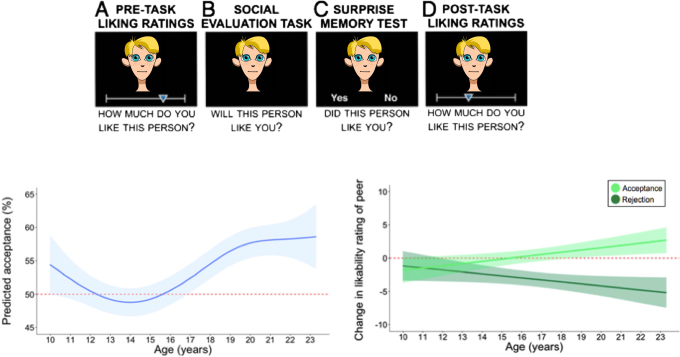
“We will specifically focus on the following three aspects of media exposure of interest to adolescent development21: (1) social acceptance or rejection, (2) peer influence on self-image and self-perception, and (3) the role of emotions in media use.”
BackgroundDigital Natives, Digital Immigrants Part 2: Do They Really Think Differently?
Prensky, M. (2001) · On the Horizon · doi:10.1108/10748120110424843 · Cited by 4,035
The reward circuit: linking primate anatomy and human imaging
Haber, S. N., & Knutson, B. (2010) · Neuropsychopharmacology · doi:10.1038/npp.2009.129 · Cited by 3,718
Kowalski, R. M., Giumetti, G. W., Schroeder, A. N., & Lattanner, M. R. (2014) · Psychological Bulletin · doi:10.1037/a0035618 · Cited by 3,266
Tokunaga, R. S. (2010) · Computers in Human Behavior · doi:10.1016/j.chb.2009.11.014 · Cited by 2,566
Understanding adolescence as a period of social–affective engagement and goal flexibility
Crone, E. A., & Dahl, R. E. (2012) · Nature Reviews Neuroscience · doi:10.1038/nrn3313 · Cited by 2,507
Self-citationIs Adolescence a Sensitive Period for Sociocultural Processing?
Blakemore, S.-J., & Mills, K. L. (2014) · Annual Review of Psychology · doi:10.1146/annurev-psych-010213-115202 · Cited by 2,264
The social brain in adolescence
Blakemore, S.-J. (2008) · Nature Reviews Neuroscience · doi:10.1038/nrn2353 · Cited by 1,896
Bullying Prevalence Across Contexts: A Meta-analysis Measuring Cyber and Traditional Bullying
Modecki, K. L., Minchin, J., Harbaugh, A. G., Guerra, N. G., & Runions, K. C. (2014) · Journal of Adolescent Health · doi:10.1016/j.jadohealth.2014.06.007 · Cited by 1,659
Morphometric study of human cerebral cortex development
Huttenlocher, P. R. (1990) · Neuropsychologia · doi:10.1016/0028-3932(90)90031-i · Cited by 1,239
Research works printed but not linked: 3
- Konijn, E. A., Veldhuis, J., Plaisier, X. S., Spekman, M. & den Hamer, A. H. in The Handbook of Psychology of Communication Technology (ed. Sundar. S.) (Wiley-Blackwell, Hoboken, NJ, 2015).
- Valkenburg, P. M. & Taylor Piotrowski, J. How Media Attract and Affect Youth (Yale University Press., Yale, 2017).
- Konijn, E. A. & Hoorn, J. F. in The International Encyclopedia of Media Effects (ed. Roessler, P., Hoffner, C. A. & Zoonen, L. v.) 1–15 (Wiley-Blackwell Publishers, Hoboken, NJ, 2017).
Cited by
Odgers, C. L., & Jensen, M. R. (2020) · Journal of Child Psychology and Psychiatry · doi:10.1111/jcpp.13190 · Cited by 1,189
“Progress has been made in other areas with respect to mapping new media use on trajectories of adolescent brain development during this period (Crone & Konijn, 2018); however, what is currently needed is a developmentally calibrated evaluation of the fit between the affordances and constraints of…”
The “online brain”: How the Internet may be changing our cognition
Firth, J., Torous, J., Stubbs, B., Firth, J. A., Steiner, G. Z., Smith, L., Alvarez‐Jimenez, M., Gleeson, J., Vancampfort, D., Armitage, C. J., et al. (2019) · World Psychiatry · doi:10.1002/wps.20617 · Cited by 694
de Figueiredo, C. S., Sandre, P. C., Portugal, L. C. L., Mázala-de-Oliveira, T., da Silva Chagas, L., Raony, Í., Ferreira, E. S., Giestal-de-Araujo, E., dos Santos, A. A., & Bomfim, P. O.-S. (2021) · Progress in Neuro-Psychopharmacology and Biological Psychiatry · doi:10.1016/j.pnpbp.2020.110171 · Cited by 662
Problematic Social Media Use in Adolescents and Young Adults: Systematic Review and Meta-analysis.
Shannon, H., Bush, K., Villeneuve, P. J., Hellemans, K. G., & Guimond, S. (2022) · JMIR Mental Health · doi:10.2196/33450 · Cited by 593
“Furthermore, their use occurs when critical brain circuits involved in emotion regulation and motivation are continuing to undergo development [24].”
BackgroundSocial media use and risky behaviors in adolescents: A meta-analysis
Vannucci, A., Simpson, E. G., Gagnon, S., & Ohannessian, C. M. (2020) · Journal of Adolescence · doi:10.1016/j.adolescence.2020.01.014 · Cited by 410
Metadata
- Authors
- Crone, E. A., & Konijn, E. A.
- Affiliations
- Leiden University (NL)
- Vrije Universiteit Amsterdam (NL)
- Corresponding author
- Crone, Eveline A.
- Venue
- Nature Communications
- Published
- 2018-02-21
- Volume
- 9
- Issue
- 1
- Pages
- 588-588
- ISSN
- 2041-1723 (ISSN-L)
- PMC
- PMC5821838
- OpenAlex
- W2788647475
- Semantic Scholar
- 2db711b72843fbcdd2e929d41dbe463551ac5a4c
- Cited by
- 464
- References
- 102
- Citations by year
- 2026: 71 · 2025: 56 · 2024: 75 · 2023: 47 · 2022: 57 · 2021: 60 · 2020: 57 · 2019: 35 · 2018: 6
- FWCI
- 14.05
- Type
- journal article
- Language
- en
- Open access
- gold
- doi.org
- Licence
- cc-by
- creativecommons.org/licenses/by/4.0 (tdm)
- creativecommons.org/licenses/by/4.0 (vor)
- Locations
- Nature Communications (publishedVersion, cc-by)
- PubMed Central (publishedVersion, cc-by)
- PubMed (publishedVersion)
- VU Research Portal (publishedVersion, other-oa)
- Leiden Repository (Leiden University) (submittedVersion)
- RePub (Erasmus University Rotterdam) (submittedVersion, other-oa)
- RePEc: Research Papers in Economics (submittedVersion)
- DOAJ (DOAJ: Directory of Open Access Journals) (submittedVersion)
- DOAJ (DOAJ: Directory of Open Access Journals) (submittedVersion, cc-by-sa)
- Leiden Repository (Leiden University) (submittedVersion, cc-by)
- Data Archiving and Networked Services (DANS) (submittedVersion, other-oa)
- Funders
- Netherlands Institute for Advanced Study in the Humanities and Social Sciences
- Nederlandse Organisatie voor Wetenschappelijk Onderzoek (14-001, 453-14-011, 45314001, VICI 453‐14‐001, NWO?VICI 453-14-001, 453-14-001 E.A.C)
- H2020 European Research Council (681632)
- Topics
- Social Sciences › Sociology and Political Science › Impact of Technology on Adolescents
- Life Sciences › Neuroscience › Cognitive Neuroscience › Neural and Behavioral Psychology Studies
- Social Sciences › Education › Child Development and Digital Technology
- Keywords
- adolescent media use, brain development, social media, emotional sensitivity, reflective processing, cognitive control, peer influence, youth welfare, opinion formation
- MeSH terms
- Adolescent, Brain, Emotions, Humans, Impulsive Behavior, Mental Health, Peer Group, Psychological Distance, Internet, Adolescent Development, Social Media
About these checks
Registry, retraction, Cites and statistics results are computed, not judged, with one exception: a printed reference that no index lists is read once by a model before it counts as a citation error. Claims are extracted by a model and kept only when their quote appears verbatim in the text; each cited source is then checked, with a model’s help, for whether it says what the claim relies on. Those verdicts can be wrong — read the claim’s quote and the cited source before relying on one.
Statistics and arithmetic are recomputed, not judged.
Confidence bands are shown only for fields calibrated on our annotated test set. None is calibrated yet, so no band is shown.
What counts as a claim ›How we measure confidence ›How we check this ›
Are you an author, or do you see a problem with this page? Request a review
How to cite
Cite CoChat for the checks on this page, and the paper for its own findings.
- This page
- CoChat. (2026). Citation check: Media use and brain development during adolescence. https://app.cochat.ai/papers/10.1038/s41467-018-03126-x
- The paper
- Crone, E. A., & Konijn, E. A. (2018). Media use and brain development during adolescence. Nature Communications. https://doi.org/10.1038/s41467-018-03126-x
Data sources
Bibliographic data: Semantic Scholar, OpenAlex, Crossref.
Contains information from the Semantic Scholar Academic Graph Datasets, made available under the ODC Attribution License (ODC-BY 1.0).
Semantic Scholar’s data is described in: Kinney, R., et al. (2023). The Semantic Scholar Open Data Platform. arXiv:2301.10140.
