

Media use and brain development during adolescence
Open accessThe DOI matches its Crossref record; 103 of the 103 references it cites were found in a registry or an index.
Abstract
The current generation of adolescents grows up in a media-saturated world. However, it is unclear how media influences the maturational trajectories of brain regions involved in social interactions. Here we review the neural development in adolescence and show how neuroscience can provide a deeper understanding of developmental sensitivities related to adolescents’ media use. We argue that adolescents are highly sensitive to acceptance and rejection through social media, and that their heightened emotional sensitivity and protracted development of reflective processing and cognitive control may make them specifically reactive to emotion-arousing media. This review illustrates how neuroscience may help understand the mutual influence of media and peers on adolescents’ well-being and opinion formation.
Overview
The claims and statistics of this paper haven’t been checked yet.
Free: it reads the open-access text and checks the first 5 claims that cite a source we can check. Create a free account to check every claim.
Integrity signals
Registry
Cites
Statistics
Figures
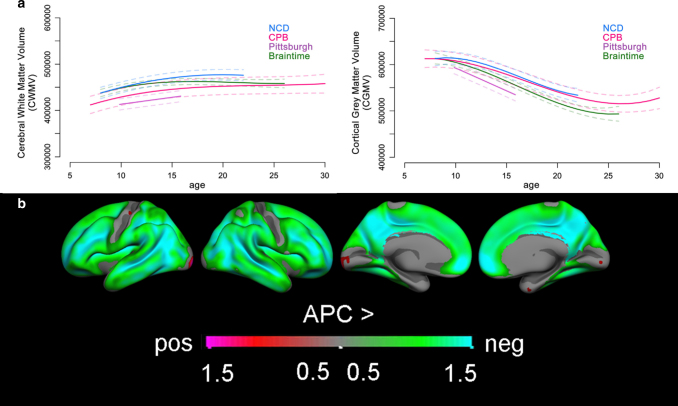
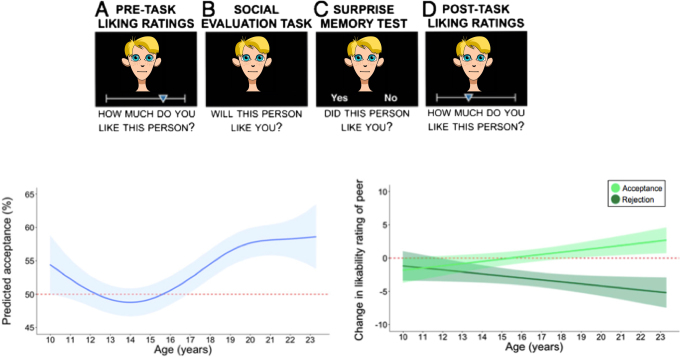
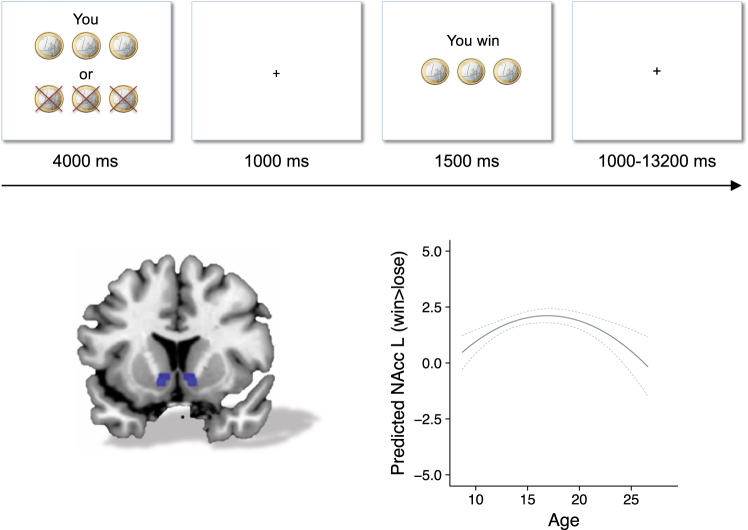
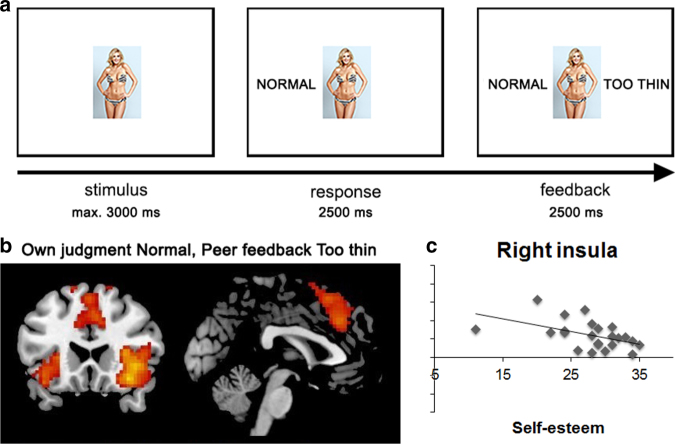
Verification
Claims the paper makes
The claims and statistics of this paper haven’t been checked yet.
Free: it reads the open-access text and checks the first 5 claims that cite a source we can check. Create a free account to check every claim.
Claims other papers make about this one
Each is checked against this paper’s own text: does it say what the citing paper says it does?
The source backs part of the claim, not all of it — or backs it for a different population, condition or comparison.
In the citing paper
“It is possible, and even likely, that the effects of social media go beyond overall use and instead largely depend on user pattern and/or type of platform turned to [4,44].”
From Social Media and Mental Health Among Early Adolescents in Sweden: A Longitudinal Study With 2-Year Follow-Up (KUPOL Study). (2021) · cites this paper as [4]
Experimental — accuracy not yet measuredThe source backs part of the claim, not all of it — or backs it for a different population, condition or comparison.
In the citing paper
“Moreover, the use of social media and other activities on phones have also been found to release feel-good neurochemicals such as dopamine [52, 53].”
From “From the moment I wake up I will use it…every day, very hour”: a qualitative study on the patterns of adolescents’ mobile touch screen device use from adolescent and parent perspectives (2019) · cites this paper as [53]
Experimental — accuracy not yet measuredThe source backs part of the claim, not all of it — or backs it for a different population, condition or comparison.
In the citing paper
“Both adolescents and young adults are more sensitive than older age groups to the benefits and harms of SMU (Crone and Konijn, 2018; Hayes et al., 2015).”
From Social media use, mental health and sleep: A systematic review with meta-analyses (2024) · cites this paper as Crone and Konijn, 2018
Experimental — accuracy not yet measuredThe cited source says what the claim attributes to it.
In the citing paper
“It is therefore plausible that these processes heighten adolescents’ sensitivity to the interactive, communicative, and self-portraying nature of social media22, a technology they use more extensively than other age groups23,24.”
From Windows of developmental sensitivity to social media (2022) · cites this paper as [22]
Self-check
Percentages, sums and reported differences re-computed from the paper’s own numbers.
The self-check needs the paper’s full text.
Citations
Cites
Digital Natives, Digital Immigrants Part 1
Prensky, M. (2001) · On the Horizon · doi:10.1108/10748120110424816 · Cited by 11,104 · cited 2×
“We will specifically focus on the following three aspects of media exposure of interest to adolescent development21: (1) social acceptance or rejection, (2) peer influence on self-image and self-perception, and (3) the role of emotions in media use.”
BackgroundDigital Natives, Digital Immigrants Part 2: Do They Really Think Differently?
Prensky, M. (2001) · On the Horizon · doi:10.1108/10748120110424843 · Cited by 4,035
The reward circuit: linking primate anatomy and human imaging
Haber, S. N., & Knutson, B. (2010) · Neuropsychopharmacology · doi:10.1038/npp.2009.129 · Cited by 3,718
Kowalski, R. M., Giumetti, G. W., Schroeder, A. N., & Lattanner, M. R. (2014) · Psychological Bulletin · doi:10.1037/a0035618 · Cited by 3,266
Tokunaga, R. S. (2010) · Computers in Human Behavior · doi:10.1016/j.chb.2009.11.014 · Cited by 2,566
Understanding adolescence as a period of social–affective engagement and goal flexibility
Crone, E. A., & Dahl, R. E. (2012) · Nature Reviews Neuroscience · doi:10.1038/nrn3313 · Cited by 2,507
Self-citationIs Adolescence a Sensitive Period for Sociocultural Processing?
Blakemore, S.-J., & Mills, K. L. (2014) · Annual Review of Psychology · doi:10.1146/annurev-psych-010213-115202 · Cited by 2,264
The social brain in adolescence
Blakemore, S.-J. (2008) · Nature Reviews Neuroscience · doi:10.1038/nrn2353 · Cited by 1,896
Bullying Prevalence Across Contexts: A Meta-analysis Measuring Cyber and Traditional Bullying
Modecki, K. L., Minchin, J., Harbaugh, A. G., Guerra, N. G., & Runions, K. C. (2014) · Journal of Adolescent Health · doi:10.1016/j.jadohealth.2014.06.007 · Cited by 1,659
Morphometric study of human cerebral cortex development
Huttenlocher, P. R. (1990) · Neuropsychologia · doi:10.1016/0028-3932(90)90031-i · Cited by 1,239
Research works printed but not linked: 3
- Konijn, E. A., Veldhuis, J., Plaisier, X. S., Spekman, M. & den Hamer, A. H. in The Handbook of Psychology of Communication Technology (ed. Sundar. S.) (Wiley-Blackwell, Hoboken, NJ, 2015).
- Valkenburg, P. M. & Taylor Piotrowski, J. How Media Attract and Affect Youth (Yale University Press., Yale, 2017).
- Konijn, E. A. & Hoorn, J. F. in The International Encyclopedia of Media Effects (ed. Roessler, P., Hoffner, C. A. & Zoonen, L. v.) 1–15 (Wiley-Blackwell Publishers, Hoboken, NJ, 2017).
Cited by
Items 201–300 of 464
Sullanmaa, J., Tikkanen, L., Ulmanen, S., & Pyhältö, K. (2025) · Social Psychology of Education · doi:10.1007/s11218-025-10081-1 · Cited by 10
“In adolescence, students also become more sensitive about peer acceptance and rejection (Crone & Konijn, 2018).”
Modern Day High: The Neurocognitive Impact of Social Media Usage
Satani, A., Satani, K. K., Barodia, P., & Joshi, H. (2025) · Cureus · doi:10.7759/cureus.87496 · Cited by 16
“The European Union’s Digital Services Act (2023) introduced "neurowellbeing" requirements, citing EEG evidence of fatigue associated with Delta and Theta wave activity [32].”
Arana-Rodríguez, A., Garrido‐Fernández, A., Sánchez‐Alcón, M., Sánchez-Galloso, J., Rodríguez‐Domínguez, Á., & Padilla, F. M. G. (2025) · BMC Public Health · doi:10.1186/s12889-025-25793-4 · Cited by 8
“Social media are online platforms that encourage reward-seeking behaviour, comparable to a Skinner box, with teenagers tending to be more vulnerable to these stimuli [16, 17].”
Hodge, D. R., & Gebler-Wolfe, M. (2022) · Children & Schools · doi:10.1093/cs/cdac007 · Cited by 13
Li, X., Li, H., & Luo, J. (2024) · BMC Public Health · doi:10.1186/s12889-024-19840-9 · Cited by 12
“This accessibility may lead to a decrease in sleep time due to the Time Displacement Hypothesis [17], potentially inten-sifying the adverse effects of social networking sites on sleep [18].”
BackgroundMcLoughlin, L. T., Shan, Z., Mohamed, A. Z., Boyes, A., Driver, C., Lagopoulos, J., & Hermens, D. F. (2022) · Current Research in Neurobiology · doi:10.1016/j.crneur.2022.100054 · Cited by 8
“The authors posit that adolescents are particularly sensitive to acceptance and rejection, and that social media exacerbates this, making adolescents vulnerable to emotional sensitivity and poor cognitive control (Crone and Konijn, 2018).”
BackgroundHuang, S., Lai, X., Ke, L., Qin, X., Yan, J. J., Xie, Y., Dai, X., & Wang, Y. (2023) · Journal of Children and Media · doi:10.1080/17482798.2023.2239951 · Cited by 7
“Some researchers have argued that adolescents’ coping strategies during the phase of adolescence when their brains change (Crone & Konijn, 2018), are critical for reducing psychopathological risk and developing resilience (Compas et al., 2017).”
BackgroundWhat adolescents see on Instagram : Content analysis of #intermittentfasting, #keto, and #lowcarb
Lister, N. B., Melville, H., & Jebeile, H. (2023) · Nutrition & Dietetics · doi:10.1111/1747-0080.12853 · Cited by 25
Basay, K., Başay, Ö., Akdogan, C., Karaisli, S., Satilmis, M., Gozen, B., & Sekerci, B. (2020) · Psihologija · doi:10.2298/psi190802009k · Cited by 12
“These findings are especially important because children and adolescents are vulnerable to negative consequences of increasing screen exposure since their neurological and psychological development is ongoing (Crone & Konijn, 2018; Wolf, Wolf, Weiss, & Nino, 2018).”
BackgroundAz okoseszközök használata kognitív idegtudományi nézőpontból
Csépe, V., & Török, Á. (2020) · Gyermeknevelés Tudományos Folyóirat · doi:10.31074/gyntf.2020.2.133.145 · Cited by 15
Sabiote, C. R., Rodríguez, J. Á., Ferrándiz, D. Á., & Ortega, F. Z. (2020) · International Journal of Environmental Research and Public Health · doi:10.3390/ijerph17218252 · Cited by 22
Robot Affect: the Amygdala as Bloch SpherePreprint
Hoorn, J. F., & Ho, J. K. W. (2019) · arXiv (Cornell University) · doi:10.48550/arxiv.1911.12128 · Cited by 8
“…and Perkowski (2010) and Yan, Iliyasu, Liu, Salama, Dong, and Hirota (2015), we offer a Bloch sphere representation of psychological states but applied to the affective and reflective processing of information as described in LeDoux (1996/1999), Cerić (2012), and Crone and Konijn (2018).”
BackgroundMethodWorse Weather Amplifies Social Media Activity
Minor, K., Moro, E., & Obradovich, N. (2025) · Psychological Science · doi:10.1177/09567976241306099 · Cited by 13
“…have been espoused for their capacity to boost social capital (Appel et al., 2020; Campante et al., 2022; Ellison et al., 2007), they have also been engineered to capture human attention and engagement (Crone & Konijn, 2018; Fogg, 2002; Kramer et al., 2014; Kuss & Griffiths, 2011; Zuboff, 2015).”
Domínguez-Vergara, J., Santa-Cruz-Espinoza, H., Chávez-Ventura, G., & Carranza, J. Y. (2023) · International Journal of Sociology of Education · doi:10.17583/rise.10786 · Cited by 17
Zimmermann, E., & Tomczyk, S. (2024) · JMIR Research Protocols · doi:10.2196/51085 · Cited by 9
“Given the ongoing developmental stage of adolescents [9], they frequently lack the essential social-emotional and cognitive skills required for functional and constructive engagement with social media [10].”
Dacka, M. (2024) · Psychiatria i Psychologia Kliniczna · doi:10.15557/pipk.2024.0011 · Cited by 11
Martínez-Iniesta, E., Montenegro-Espinosa, J. A., Bizzozero‐Peroni, B., Arancibia, J. E. O., Sepulveda, R. A. Y., Bastías, D. M. D., Royo, J. M. P., Mesas, A. E., López‐Gil, J. F., & Jiménez‐López, E. (2025) · Frontiers in Psychiatry · doi:10.3389/fpsyt.2025.1499679 · Cited by 9
“This suggests that adolescents can be particularly sensitive to acceptance and rejection of SNs, as their heightened emotional sensitivity and the ongoing development of their re fl exive thinking and cognitive control make them especially responsive to emotion-provoking content (10).”
Macedo‐Rouet, M., Trópia, G., Castilhos, W., Massarani, L., Brasil, V., & Almeida, C. (2023) · International Journal of Science Education Part B · doi:10.1080/21548455.2023.2175625 · Cited by 8
“…et al., 2021), but adolescents may be particularly prone to accepting and/or sharing false or biased information online because they are constantly connected to the internet and their neuro-cognitive skills are still developing (Anderson & Jiang, 2018; Crone & Konijn, 2018; Metzger et al., 2015).”
BackgroundBeard, E. C., Venkatraman, V., & Chein, J. M. (2023) · Journal of the Association for Consumer Research · doi:10.1086/728205 · Cited by 7
“…adolescent risk taking and maladaptive behavior, they have also been successfully applied to a much broader array of adolescent behaviors, such as decisions about prosociality and digital media engagement (van Hoorn et al. 2016; Crone and Konijn 2018; Duell et al. 2021; Chiu and Chein 2022).”
BackgroundSitnik‐Warchulska, K., Izydorczyk, B., & Wajda, Z. (2022) · Routledge eBooks · doi:10.4324/9781003221043 · Cited by 4
Huang, S., Lai, X., Zhang, C., Xinmei, Z., Xinran, D., Mengdi, Q., Huanlei, W., Wenrong, W., & Wang, Y. (2024) · Acta Psychologica Sinica · doi:10.3724/sp.j.1041.2024.00745 · Cited by 13
Huang, S., Lai, X., Wolfers, L. N., Li, Y., Dai, X., Zhao, X., Wu, H., Song, S., Wang, H., He, Y., et al. (2024) · Cyberpsychology Journal of Psychosocial Research on Cyberspace · doi:10.5817/cp2024-2-3 · Cited by 4
“During adolescence, adolescents undergo major biological, psychological and social transitions (Sawyer et al., 2018), which make them extremely vulnerable to various negative online content (e.g., online stress; Crone & Konijn, 2018) and offline stress (Petersen et al., 1991).”
BackgroundGrund, T., Krüger, H., & Pascu, I. (2025) · International Journal of Mental Health and Addiction · doi:10.1007/s11469-025-01566-3 · Cited by 19
Genome‐Wide by Lifetime Environment Interaction Studies of Brain Imaging Phenotypes
Wang, S., Wang, M., Zhang, P., Cheng, J., Zhang, L. J., Zhu, W., Qiu, S., Geng, Z., Cui, G., Yu, Y., et al. (2025) · Advanced Science · doi:10.1002/advs.202500852 · Cited by 4
Benjamin, T. N. E., Saengsri, W., Lin, W., Huang, S., & Waits, A. (2025) · Journal of Adolescence · doi:10.1002/jad.70101 · Cited by 5
Smartphone use, sleep, and mental health in Korean adolescents
Kim, Y.-J., & Oh, H. Y. (2026) · Journal of Affective Disorders · doi:10.1016/j.jad.2026.121153 · Cited by 6
Torun, G., Akgenç, F., & ÖZ, Y. C. (2026) · BMC Psychology · doi:10.1186/s40359-026-04148-7 · Cited by 9
“During adolescence, a period of ongoing cognitive and emotional development, insufficient development of self-control and risk assessment mechanisms increases susceptibility to social media addiction [13].”
Social Media Use and Loneliness
d’Hombres, B., & Gentile, C. (2024) · Population economics · doi:10.1007/978-3-031-66582-0_5 · Cited by 7
Christensen, R. N., Morris, B. S., Arenas, A. E., & Hubert, M. (2025) · International Journal of Consumer Studies · doi:10.1111/ijcs.70115 · Cited by 8
Batool, S., Zaffer, N., & Kausar, S. (2023) · Journal of Policy Research · doi:10.61506/02.00010 · Cited by 5
“The behavioral phenomenon of risk taking as well as sensation-seeking among social media users has been indicated to transform in association with broader social and cultural aspects throughout history (Crone & Konijn, 2018; Matviyenko, 2010; Riberio, 2009).”
BackgroundSalzberg, M. R., Kim, H. H., Basnayake, C., Holt, D. Q., & Kamm, M. A. (2024) · Journal of Gastroenterology and Hepatology · doi:10.1111/jgh.16698 · Cited by 4
Merkaš, M., Selak, M. B., & Žulec, A. (2024) · Applied Research in Quality of Life · doi:10.1007/s11482-024-10391-0 · Cited by 6
“…can be tricky for them because the brain systems linked to social media-related behaviors, such as emotion-based processing, social reward processing, control, and mentalizing about other people, are still developing and changing significantly during adolescence (Crone & Konijn, 2018).”
Pubic hair removal practices among women: Findings from a U.S. nationally representative survey
Javidi, H., Walsh-Buhi, M. L., Houghton, R. F., Herbenick, D., & Buhi, E. R. (2024) · Women s Health · doi:10.1177/17455057241296982 · Cited by 5
“Love lies”: A content analysis of romantic attachment style in popular music
Jorgensen-Wells, M. A., Coyne, S. M., & Pickett, J. M. (2022) · Psychology of Music · doi:10.1177/03057356221110633 · Cited by 5
“This molding of attitudes may be particularly prominent for adolescents, whose developmental capacities make them vulnerable to outside influences (Blakemore & Mills, 2014; Welborn et al., 2016), including media (Crone & Konijn, 2018).”
BackgroundSocial Interaction in Spatial Augmented Exertion Interfaces
Mast, D. (2019) · Annual Symposium on Computer-Human Interaction in Play · doi:10.1145/3341215.3356331 · Cited by 4
“This is interesting, considering that while interactive technology has become more and more present in the daily lives of youth [2], some argue that this has negative effects on their social interaction (less face to face contact) and health (sedentary behavior) [3].”
BackgroundMachinskaya, R. I., Zakharova, M. N., & Ломакин, Д. И. (2020) · Human Physiology · doi:10.1134/s0362119720030111 · Cited by 5
Obstacles Of Using Edmodo Platform In The Omani Resource Room Program
Al–Zoubi, S. M. (2019) · doi:10.36752/1764-008-005-010 · Cited by 4
Korkmaz, M., & Ayaz, S. T. (2024) · Journal of Pediatric Nursing · doi:10.1016/j.pedn.2024.07.008 · Cited by 4
Onat, M., Kılıç, D. E. S. M., Ünver, A. B. N., Özyurt, G., Dinç, G. Ş., & Çöp, E. (2025) · Pediatrics International · doi:10.1111/ped.70064 · Cited by 3
Polarization: linking loneliness and social media dependency
Rynarzewska, A. I., Waldsmith, C., & Nikolov, A. N. (2025) · Journal of Services Marketing · doi:10.1108/jsm-08-2025-0508 · Cited by 7
Tie, B., Maheux, A. J., Xu, Y. V., Peng, Y., Wang, P., He, J., & Qiu, J. (2025) · Body Image · doi:10.1016/j.bodyim.2025.102006 · Cited by 3
Jin, Z., Yang, X., Hu, L., Yao, L., Ge, W., Chen, J., Wu, Z., Lin, S., Guo, Y., & Chen, Y. (2025) · Psychological Medicine · doi:10.1017/s0033291725102869 · Cited by 3
“The age-specific strengthening of all associations highlights adolescence as a critical vulnerability window (Crone & Konijn, 2018; Fuhrmann, Knoll, & Blakemore, 2015).”
Willms, M., & Virji‐Babul, N. (2020) · Developments in neuroethics and bioethics · doi:10.1016/bs.dnb.2020.03.006 · Cited by 3
Der Einfluss der Medien auf die kindliche und jugendliche Psyche
Mößle, T., & Föcker, J. (2020) · Springer Reference Medizin · doi:10.1007/978-3-662-49289-5_48-1 · Cited by 10
Internet Gaming Disorder and Mental Health of Children in China: A Latent Profile Analysis
Ahmed, M. Z., Ahmed, O., Gao, L., Jobe, M. C., & Li, W. (2024) · International Journal of Mental Health Promotion · doi:10.32604/ijmhp.2024.051055 · Cited by 3
“Children and adolescents perceive media presences (e.g., social media, messaging, gaming online) as essential for everyday life [2].”
Sennock, S., Wilkau, K. V. L. U., Günther, A., Brandhorst, I., Zinke, K., Conzelmann, A., Renner, T. J., & Kurz, E. (2024) · Sleep Medicine · doi:10.1016/j.sleep.2024.09.034 · Cited by 13
Assessment of the psychometric properties of the eHealth Literacy Scale for Brazilian adolescents
Barbosa, M. C. F., Baldiotti, A. L. P., Resende, J. L., Perazzo, M. F., Firmino, R. T., Granville‐Garcia, A. F., Paiva, S. M., & Ferreira, F. M. (2024) · PLoS ONE · doi:10.1371/journal.pone.0314099 · Cited by 7
Digitale-Medien-Nutzungsstörungen im Kindes- und Jugendalter
Paschke, K., & Thomasius, R. (2024) · Monatsschrift Kinderheilkunde · doi:10.1007/s00112-024-02089-2 · Cited by 4
Advanced theory of mind predicts adolescents’ evaluation of source benevolence while reading
Dyoniziak, Y., Potocki, A., Burnel, M., Macedo-Rouet, M., & Rouet, J. (2025) · Computers in Human Behavior · doi:10.1016/j.chb.2024.108552 · Cited by 5
Problematic Media Use and Anxiety Symptoms in Adolescents: The Role of Age and Gender
Rodríguez‐Rojo, I. C., González, R. L., Peñacoba, C., García-Sastre, M., Espín‐Lorite, E. J., Cuesta‐Lozano, D., Esteve, Á. L. A., & Noriega, C. (2025) · Healthcare · doi:10.3390/healthcare13030281 · Cited by 4
A Comparative Study of Short-Term Social Media Use with Face-to-Face Interaction in Adolescence
Mendonça, I., Coelho, F., Rando, B., & Abreu, A. M. (2025) · Children · doi:10.3390/children12040460 · Cited by 11
Meta-moral cognition: an introduction
Cheruvalath, R. (2019) · Mind & Society · doi:10.1007/s11299-019-00209-0 · Cited by 3
Caring for the Digital Generation: Understanding Electronic Aggression
Brandau, M., & Ray, S. (2020) · Journal of Pediatric Health Care · doi:10.1016/j.pedhc.2020.07.010 · Cited by 5
Normative Values for Adolescent Quality of Life in Plastic Surgery: A Longitudinal, Cohort Study
Nuzzi, L. C., Firriolo, J. M., McNamara, C. T., Malloy, S. M., Massey, G. G., DiVasta, A. D., & Labow, B. I. (2022) · Plastic & Reconstructive Surgery Global Open · doi:10.1097/gox.0000000000004311 · Cited by 4
Galperina, E. I., Kruchinina, O. V., Станкова, Е. П., & Kornev, A. N. (2022) · Neuroscience and Behavioral Physiology · doi:10.1007/s11055-022-01251-1 · Cited by 5
“In adolescents, as compared with children, there are signifi cant increases in the effectiveness of attention and working memory [Crone and Dahl, 2012; Crone and Konijn, 2018] and increases in cognitive fl exibility [Steinbeis and Crone, 2016].”
BackgroundVideo games, the brain and magical thinking: A 21 st century controversy
Antar, R. (2022) · E-Learning and Digital Media · doi:10.1177/20427530221107779 · Cited by 4
“Research has shown that cognitive and socio-affective development in adolescence goes through structural and functional brain changes where synaptic density is at its peak in early childhood (Crone and Konijn, 2018).”
BackgroundInfluentialHodnoty českých a slovenských adolescentov pod vplyvom kyberpriestoru
Považanová, B., Dolejš, M., Kňažek, G., & Banárová, K. (2022) · doi:10.5507/ff.22.24462578 · Cited by 3
Dirks, R. L., Smith, T. D., González-Moreno, P. A., & Phelps, A. (2023) · String Research Journal · doi:10.1177/19484992231195013 · Cited by 3
“Although the cause of the mental health crisis is debated, there is growing evidence that newly introduced social and technological behaviors as well as environmental factors may contribute (Crone & Konijn, 2018; Smith, 2019; Twenge et al., 2019).”
BackgroundRogobete, D., Ionescu, T., & Miclea, M. (2024) · The Journal of Early Adolescence · doi:10.1177/02724316241230516 · Cited by 7
“Recent studies have indicated that engaging with media this way has the potential to shape adolescent neural development (e.g., Crone & Konijn, 2018; Moisala et al., 2016) and cognition, especially processes involved in self-regulation (e.g., van der Schuur et al., 2015; Wilmer et al., 2017).”
Jankauskiene, R., & Bacevičienė, M. (2024) · Jurnal sport science · doi:10.1080/02640414.2024.2338022 · Cited by 5
“Finally, adolescents are more vulnerable to sociocultural pressures compared to adults (Crone & Konijn, 2018) and spend a lot of time on highly visual social media (i.e., Instagram, Snapchat) that negatively affects body image (Salomon & Brown, 2019).”
BackgroundBarbosa, M. C. F., Baldiotti, A. L. P., Resende, J. L., Braga, N. S., Firmino, R. T., Paiva, S. M., Granville‐Garcia, A. F., & Ferreira, F. M. (2024) · International Journal of Environmental Research and Public Health · doi:10.3390/ijerph21111458 · Cited by 5
Li, M., Patel, J., & Katapally, T. R. (2025) · Technology in Society · doi:10.1016/j.techsoc.2025.103012 · Cited by 20
Fortschritte und Herausforderungen für die Analyse von Big Data in sozialen Medien im Jugendalter
Schmidt, S. J., & Kaess, M. (2018) · Zeitschrift für Kinder- und Jugendpsychiatrie und Psychotherapie · doi:10.1024/1422-4917/a000623 · Cited by 3
Zweig, K. A., Lachmann, B., Montag, C., & Herrlich, M. (2019) · Springer eBooks · doi:10.1007/978-3-658-23841-4_4 · Cited by 4
Guedes, S. D. C., Nobre, J. N. P., Morais, R. L. D. S., Mascarenhas, R. D. O., Santos, L. R., Martins-Reis, V. D. O., Oliveira, V. C., & Santos, J. N. (2020) · Motriz Revista de Educação Física · doi:10.1590/s1980-65742020000400095 · Cited by 6
The Natural Evolution of Computing
Duran‐Nebreda, S., & Valverde, S. (2023) · Oxford University Press eBooks · doi:10.1093/oxfordhb/9780198869252.013.38 · Cited by 4
Problematic Internet use in adolescent psychosocial and physiological development
Krishna, S. N., Venkataramanan, V., & McNerney, M. W. (2022) · Elsevier eBooks · doi:10.1016/b978-0-12-818872-9.00070-4 · Cited by 3
Leisure screen time predicts free sugar consumption in children
Mumena, W. A., Alahmadi, A. I., Alenazi, A. E., Alfaruqi, F. I., Alqarafi, G. M., Ahmed, H. A., Aljabri, L. A., Joraid, N. N., Almukhlifi, R. S., Alhejaili, R. Y., et al. (2023) · Nutrition · doi:10.1016/j.nut.2022.111963 · Cited by 4
Boruah, A., Cormier, M., Murray, N. E., Marin-Dragu, S., Hossne, J. S., Li, S., Muzamil, M., Bagnell, A. L., Orji, R., Stewart, S. H., et al. (2025) · Child Abuse & Neglect · doi:10.1016/j.chiabu.2024.107239 · Cited by 3
Addictive-like Dimensions of Problematic Use of Social Media
Yuste, R., Baler, R., & Volkow, N. D. (2025) · Journal of Addiction Medicine · doi:10.1097/adm.0000000000001525 · Cited by 4
Tearjerkers may leave some eyes dry: Emotional reactivity to film clips from adolescence to old age
Rauers, A., Knitter, L. A., Studtmann, M., & Riediger, M. (2025) · British Journal of Developmental Psychology · doi:10.1111/bjdp.70002 · Cited by 2
“…the transition period between childhood and adulthood, is a time of marked emotional instability (Bailen et al., 2019; Griffith et al., 2021) and pronounced reactivity to emotional stimuli and stressors, particularly those involving rewards or social information (Crone & Konijn, 2018; Spear, 2011).”
Muris, P., Otgaar, H., Donkers, F. C. L., Ollendick, T. H., & Deckers, A. (2025) · Clinical Child and Family Psychology Review · doi:10.1007/s10567-025-00539-1 · Cited by 6
“…are implicated in the social hassles, emotional turmoil, and heightened reward sensitivity of young people (Crone & Dahl, 2012; Walker et al., 2017), and some scholars have linked these to the increased digital media use typically noted during this developmental stage (Crone & Konijn, 2018).”
Kovačič, M., & Orso, C. E. (2025) · Review of Economics of the Household · doi:10.1007/s11150-025-09796-z · Cited by 5
“The authors also emphasise that part of this effect is driven by unfavourable social comparisons, which may be particularly harmful during formative years when identity development is most critical (Crone and Konijn, 2018; Orben, Przybylski, Blakemore and Kievit, 2022).”
Zhang, X., Xie, C., Chen, Y., & Qiu, B. (2026) · Journal of Medical Internet Research · doi:10.2196/75126 · Cited by 4
“Notably, early adolescence is a critical period during which the neurodevelopment is particularly vulnerable to bullying [66] and highly sensitive to acceptance and rejection, especially through social media [67].”
Mindfulness and Problematic Digital Media Use in Children and Adolescents: A Systematic Review
Fritsch, N., Büsch, K., Paschke, K., Thomasius, R., & Arnaud, N. (2026) · SUCHT - Zeitschrift für Wissenschaft und Praxis / Journal of Addiction Research and Practice · doi:10.1024/0939-5911/a000983 · Cited by 2
Brain Health in the Digital Era
Mahdi, S. S., Gunjal, S., Babar, M. G., Sakina, S., & Andiesta, N. S. (2023) · Springer eBooks · doi:10.1007/978-981-99-6637-0_7 · Cited by 3
Enhanced Classification of Video-Evoked Stress Response Using Power Spectral Density Features
Anjum, M., Batool, W., Saher, R., & Saeed, S. M. U. (2024) · Applied Sciences · doi:10.3390/app14209527 · Cited by 2
Șipoș, R., Văidean, T., Răpciuc, A.-M., Poetar, C.-R., & Predescu, E. (2024) · Journal of Clinical Medicine · doi:10.3390/jcm13237461 · Cited by 4
“This issue is particularly significant for the generations born after 2000, often referred to as “digital natives” [1].”
Social Networking Site Use and Adolescents Empathic Skills: A Systematic Literature Review
Baumann, L., Spangenberger, P., Birkefeld, K., Dörre, M., Bollmacher, L., & Nebel, S. (2026) · Adolescent Research Review · doi:10.1007/s40894-025-00279-x · Cited by 3
“Due to these neurological changes, adolescents are susceptible to social evaluation, rejection, acceptance, and emotional content in social media environments (Crone & Konijn, 2018; Somer-ville, 2013).”
Filaili, L. N., Rosyita, H., & Handayani, P. R. (2021) · Jurnal Teknologi Informasi · doi:10.52643/jti.v7i2.1905 · Cited by 4
Hoorn, J. F., & Tuinhof, D. J. (2021) · Cognitive Systems Research · doi:10.1016/j.cogsys.2021.10.003 · Cited by 4
Personality and Individual Differences
Ellis, D. A. (2020) · Cambridge University Press eBooks · doi:10.1017/9781108671408.006 · Cited by 3
Ellis, D. A. (2020) · Cambridge University Press eBooks · doi:10.1017/9781108671408.003 · Cited by 2
Stop or Go? Playing Violent Games Reduces Inhibitory Control in AdolescentsPreprint
Międzobrodzka, E., Buczny, J., Waiyaki, F. M., & Konijn, E. A. (2021) · PsyArXiv (OSF Preprints) · doi:10.31234/osf.io/2anrt · Cited by 2
Self-citationLizut, J. (2019) · Advances in early childhood and K-12 education · doi:10.4018/978-1-5225-8076-8.ch008 · Cited by 1
Cardiovascular health risk behaviors among college students of Pokhara, Nepal
Shrestha, K., Shahi, N., Pokharel, G., & Shrestha, C. (2022) · Journal of Patan Academy of Health Sciences · doi:10.3126/jpahs.v9i2.49034 · Cited by 1
Zhang, J., Sebben, S., & Browne, D. T. (2024) · Springer eBooks · doi:10.1007/978-3-031-69224-6_3 · Cited by 1
Dhalla, D., Dhiman, A., & Sharma, A. (2025) · doi:10.38124/ijisrt/25jun1035 · Cited by 1
Ability emotional intelligence amplifies affective responses to social media content in young people
Lea, R. G., Mahoney, B., Qualter, P., & Davis, S. K. (2025) · Current Psychology · doi:10.1007/s12144-025-08237-5 · Cited by 4
“…exposure to emotionally triggering material online can adversely affect adolescent mental health and wellbe - ing (e.g., Popat & Tarrant, 2023 ), likely exacerbated by the heightened emotional sensitivity and protracted development of cognitive control during adolescence (Crone & Konijn, 2018).”
To What Extent Does Excessive Addiction to Short Videos Affect Teenagers Mental Health?
Lin, J. (2024) · Advances in Social Behavior Research · doi:10.54254/2753-7102/11/2024097 · Cited by 3
Online Social Networking as a Social Zeitgeber
Nugent, N. R., Armey, M. F., Bozzay, M. L., Brick, L. A. D., Chun, T. H., Donise, K. R., Huang, J. J. S., Kudinova, A. Y., & Saletin, J. (2025) · Current Psychiatry Reports · doi:10.1007/s11920-025-01618-4 · Cited by 2
Niven, K., Seymour-Smith, S., Buglass, S. L., & Prikrylova, E. (2025) · International Journal of Bullying Prevention · doi:10.1007/s42380-025-00333-1 · Cited by 5
Galeotti, T., Lenzi, M., Elgar, F. J., Marino, C., Canale, N., Gaboardi, M., Stevens, G. W. J. M., Brons, H., Ciardullo, S., Lazzeri, G., et al. (2025) · Journal of Epidemiology & Community Health · doi:10.1136/jech-2025-224805 · Cited by 1
“43 44 Finally, according to the family stress model, 45 parents in single-parent households may perceive higher distress due to the increased amount of responsibilities they must handle.”
Teng, J., & Cho, S. (2026) · Applied Research in Quality of Life · doi:10.1007/s11482-026-10606-6 · Cited by 4
“Age moderation proved especially striking for depression: adolescents on photo-sharing platforms exhibited effect sizes double those of adults ( d = 0.52 vs. d = 0.26, p = 0.004), consistent with developmental vulnerability during identity for - mation periods (Crone & Konijn, 2018 ).”
InfluentialGiunta, K., Burton, M., Nicholas, M., Villegas, L., & Minihan, S. (2025) · Sex Education · doi:10.1080/14681811.2025.2594597 · Cited by 1
“The integration of the internet into the lives of children and teenagers means that these developmental processes are taking place in a digital landscape (Crone and Konijn 2018; Nesi, E, and Prinstein 2020).”
The Impact of Social Media on the Adolescent Brain: Cognitive, Emotional, and Societal Implications
Yuan, D., Li, S., & Chen, S. (2025) · Journal of Education and Educational Research · doi:10.54097/03c3y333 · Cited by 3
“Due to the high neural plasticity during these formative years, repeated exposure to rapidly shifting stimuli may impair the maturation of executive functions such as working memory, impulse control, and sustained attention [3].”
InfluentialRowlinson, K., Grummitt, L. R., Newton, N. C., Chapman, C. E., Maratos, F. A., Kelly, E. V., & Barrett, E. L. (2026) · Australian Psychologist · doi:10.1080/00050067.2025.2603448 · Cited by 2
“Further, research has found that sensitivity to acceptance or rejection has become exacerbated by the recent adoption of social media as a major form of communication among adolescents (Crone & Konijn, 2018; Vannucci & McCauley Ohannessian, 2019; Vannucci et al., 2020).”
Einstein, D. A., Marsh, S., Moshel, M. L., Sinani, T., & Burrell, T. (2026) · International Journal of Environmental Research and Public Health · doi:10.3390/ijerph23030364 · Cited by 3
“We propose that modern digital environments interact with adolescents’ heightened sensitivity to rewards and social evaluation, reweighting how goals, motivation, and uncertainty are managed [74,76,149].”
Gan, X., Huang, Y. B., & Fan, H. (2026) · Mindfulness · doi:10.1007/s12671-026-02830-w · Cited by 2
“Ado-lescence is a developmental period marked by significant changes in cognitive, emotional, and social processing, making it a critical stage for understanding the development of media-related behaviors (Blakemore & Robbins, 2012; Crone & Konijn, 2018).”
Aldemir, A. (2026) · Frontiers in Psychology · doi:10.3389/fpsyg.2026.1760981 · Cited by 1
“Adolescence is not only a period of neurobiological vulnerability but also a critical time for identity formation and peer connection (Crone and Konijn, 2018).”
Metadata
- Authors
- Crone, E. A., & Konijn, E. A.
- Affiliations
- Leiden University (NL)
- Vrije Universiteit Amsterdam (NL)
- Corresponding author
- Crone, Eveline A.
- Venue
- Nature Communications
- Published
- 2018-02-21
- Volume
- 9
- Issue
- 1
- Pages
- 588-588
- ISSN
- 2041-1723 (ISSN-L)
- PMC
- PMC5821838
- OpenAlex
- W2788647475
- Semantic Scholar
- 2db711b72843fbcdd2e929d41dbe463551ac5a4c
- Cited by
- 464
- References
- 102
- Citations by year
- 2026: 71 · 2025: 56 · 2024: 75 · 2023: 47 · 2022: 57 · 2021: 60 · 2020: 57 · 2019: 35 · 2018: 6
- FWCI
- 14.05
- Type
- journal article
- Language
- en
- Open access
- gold
- doi.org
- Licence
- cc-by
- creativecommons.org/licenses/by/4.0 (tdm)
- creativecommons.org/licenses/by/4.0 (vor)
- Locations
- Nature Communications (publishedVersion, cc-by)
- PubMed Central (publishedVersion, cc-by)
- PubMed (publishedVersion)
- VU Research Portal (publishedVersion, other-oa)
- Leiden Repository (Leiden University) (submittedVersion)
- RePub (Erasmus University Rotterdam) (submittedVersion, other-oa)
- RePEc: Research Papers in Economics (submittedVersion)
- DOAJ (DOAJ: Directory of Open Access Journals) (submittedVersion)
- DOAJ (DOAJ: Directory of Open Access Journals) (submittedVersion, cc-by-sa)
- Leiden Repository (Leiden University) (submittedVersion, cc-by)
- Data Archiving and Networked Services (DANS) (submittedVersion, other-oa)
- Funders
- Netherlands Institute for Advanced Study in the Humanities and Social Sciences
- Nederlandse Organisatie voor Wetenschappelijk Onderzoek (14-001, 453-14-011, 45314001, VICI 453‐14‐001, NWO?VICI 453-14-001, 453-14-001 E.A.C)
- H2020 European Research Council (681632)
- Topics
- Social Sciences › Sociology and Political Science › Impact of Technology on Adolescents
- Life Sciences › Neuroscience › Cognitive Neuroscience › Neural and Behavioral Psychology Studies
- Social Sciences › Education › Child Development and Digital Technology
- Keywords
- adolescent media use, brain development, social media, emotional sensitivity, reflective processing, cognitive control, peer influence, youth welfare, opinion formation
- MeSH terms
- Adolescent, Brain, Emotions, Humans, Impulsive Behavior, Mental Health, Peer Group, Psychological Distance, Internet, Adolescent Development, Social Media
About these checks
Registry, retraction, Cites and statistics results are computed, not judged, with one exception: a printed reference that no index lists is read once by a model before it counts as a citation error. Claims are extracted by a model and kept only when their quote appears verbatim in the text; each cited source is then checked, with a model’s help, for whether it says what the claim relies on. Those verdicts can be wrong — read the claim’s quote and the cited source before relying on one.
Statistics and arithmetic are recomputed, not judged.
Confidence bands are shown only for fields calibrated on our annotated test set. None is calibrated yet, so no band is shown.
What counts as a claim ›How we measure confidence ›How we check this ›
Are you an author, or do you see a problem with this page? Request a review
Data sources
Bibliographic data: Semantic Scholar, OpenAlex, Crossref.
Contains information from the Semantic Scholar Academic Graph Datasets, made available under the ODC Attribution License (ODC-BY 1.0).
Semantic Scholar’s data is described in: Kinney, R., et al. (2023). The Semantic Scholar Open Data Platform. arXiv:2301.10140.
