

Media use and brain development during adolescence
Open accessThe DOI matches its Crossref record; 103 of the 103 references it cites were found in a registry or an index.
Abstract
The current generation of adolescents grows up in a media-saturated world. However, it is unclear how media influences the maturational trajectories of brain regions involved in social interactions. Here we review the neural development in adolescence and show how neuroscience can provide a deeper understanding of developmental sensitivities related to adolescents’ media use. We argue that adolescents are highly sensitive to acceptance and rejection through social media, and that their heightened emotional sensitivity and protracted development of reflective processing and cognitive control may make them specifically reactive to emotion-arousing media. This review illustrates how neuroscience may help understand the mutual influence of media and peers on adolescents’ well-being and opinion formation.
Overview
The claims and statistics of this paper haven’t been checked yet.
Free: it reads the open-access text and checks the first 5 claims that cite a source we can check. Create a free account to check every claim.
Integrity signals
Registry
Cites
Statistics
Figures
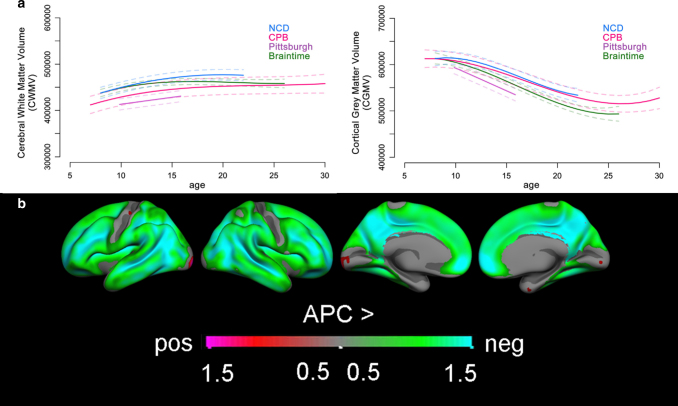
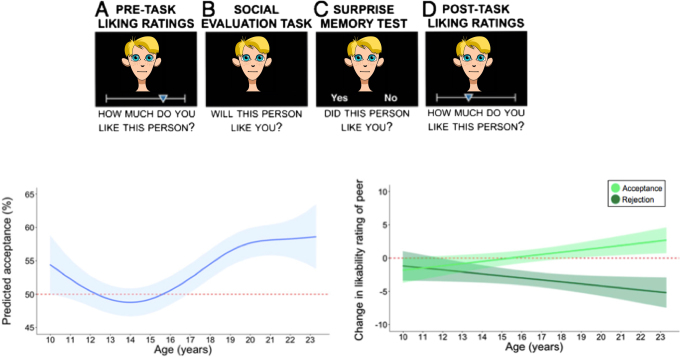
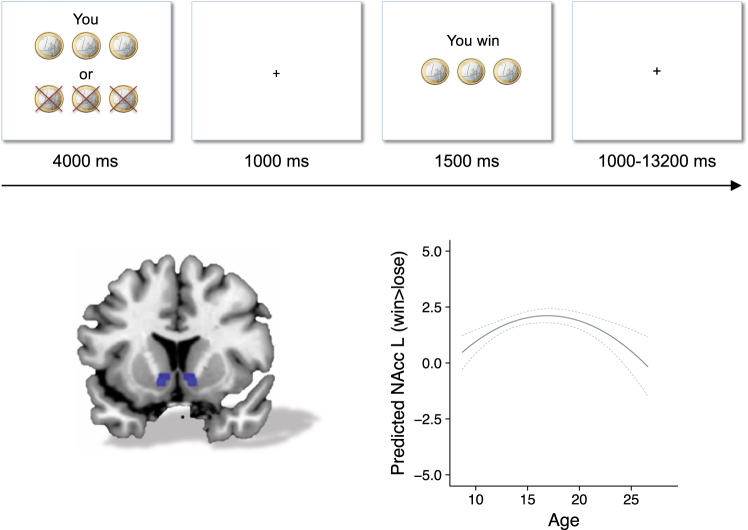
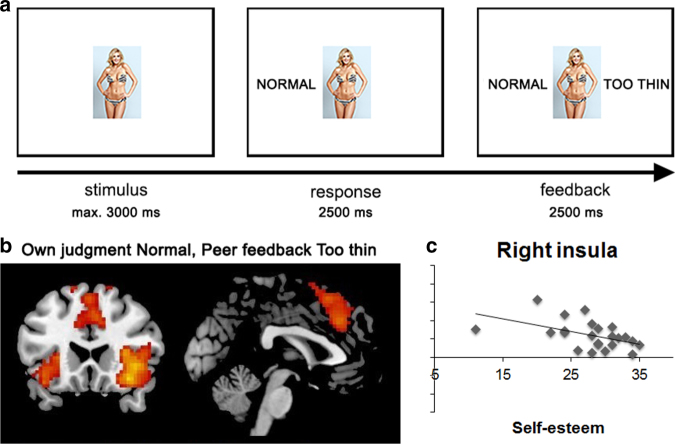
Verification
Claims the paper makes
The claims and statistics of this paper haven’t been checked yet.
Free: it reads the open-access text and checks the first 5 claims that cite a source we can check. Create a free account to check every claim.
Claims other papers make about this one
Each is checked against this paper’s own text: does it say what the citing paper says it does?
The source backs part of the claim, not all of it — or backs it for a different population, condition or comparison.
In the citing paper
“It is possible, and even likely, that the effects of social media go beyond overall use and instead largely depend on user pattern and/or type of platform turned to [4,44].”
From Social Media and Mental Health Among Early Adolescents in Sweden: A Longitudinal Study With 2-Year Follow-Up (KUPOL Study). (2021) · cites this paper as [4]
Experimental — accuracy not yet measuredThe source backs part of the claim, not all of it — or backs it for a different population, condition or comparison.
In the citing paper
“Moreover, the use of social media and other activities on phones have also been found to release feel-good neurochemicals such as dopamine [52, 53].”
From “From the moment I wake up I will use it…every day, very hour”: a qualitative study on the patterns of adolescents’ mobile touch screen device use from adolescent and parent perspectives (2019) · cites this paper as [53]
Experimental — accuracy not yet measuredThe source backs part of the claim, not all of it — or backs it for a different population, condition or comparison.
In the citing paper
“Both adolescents and young adults are more sensitive than older age groups to the benefits and harms of SMU (Crone and Konijn, 2018; Hayes et al., 2015).”
From Social media use, mental health and sleep: A systematic review with meta-analyses (2024) · cites this paper as Crone and Konijn, 2018
Experimental — accuracy not yet measuredThe cited source says what the claim attributes to it.
In the citing paper
“It is therefore plausible that these processes heighten adolescents’ sensitivity to the interactive, communicative, and self-portraying nature of social media22, a technology they use more extensively than other age groups23,24.”
From Windows of developmental sensitivity to social media (2022) · cites this paper as [22]
Self-check
Percentages, sums and reported differences re-computed from the paper’s own numbers.
The self-check needs the paper’s full text.
Citations
Cites
Digital Natives, Digital Immigrants Part 1
Prensky, M. (2001) · On the Horizon · doi:10.1108/10748120110424816 · Cited by 11,104 · cited 2×
“We will specifically focus on the following three aspects of media exposure of interest to adolescent development21: (1) social acceptance or rejection, (2) peer influence on self-image and self-perception, and (3) the role of emotions in media use.”
BackgroundDigital Natives, Digital Immigrants Part 2: Do They Really Think Differently?
Prensky, M. (2001) · On the Horizon · doi:10.1108/10748120110424843 · Cited by 4,035
The reward circuit: linking primate anatomy and human imaging
Haber, S. N., & Knutson, B. (2010) · Neuropsychopharmacology · doi:10.1038/npp.2009.129 · Cited by 3,718
Kowalski, R. M., Giumetti, G. W., Schroeder, A. N., & Lattanner, M. R. (2014) · Psychological Bulletin · doi:10.1037/a0035618 · Cited by 3,266
Tokunaga, R. S. (2010) · Computers in Human Behavior · doi:10.1016/j.chb.2009.11.014 · Cited by 2,566
Understanding adolescence as a period of social–affective engagement and goal flexibility
Crone, E. A., & Dahl, R. E. (2012) · Nature Reviews Neuroscience · doi:10.1038/nrn3313 · Cited by 2,507
Self-citationIs Adolescence a Sensitive Period for Sociocultural Processing?
Blakemore, S.-J., & Mills, K. L. (2014) · Annual Review of Psychology · doi:10.1146/annurev-psych-010213-115202 · Cited by 2,264
The social brain in adolescence
Blakemore, S.-J. (2008) · Nature Reviews Neuroscience · doi:10.1038/nrn2353 · Cited by 1,896
Bullying Prevalence Across Contexts: A Meta-analysis Measuring Cyber and Traditional Bullying
Modecki, K. L., Minchin, J., Harbaugh, A. G., Guerra, N. G., & Runions, K. C. (2014) · Journal of Adolescent Health · doi:10.1016/j.jadohealth.2014.06.007 · Cited by 1,659
Morphometric study of human cerebral cortex development
Huttenlocher, P. R. (1990) · Neuropsychologia · doi:10.1016/0028-3932(90)90031-i · Cited by 1,239
Research works printed but not linked: 3
- Konijn, E. A., Veldhuis, J., Plaisier, X. S., Spekman, M. & den Hamer, A. H. in The Handbook of Psychology of Communication Technology (ed. Sundar. S.) (Wiley-Blackwell, Hoboken, NJ, 2015).
- Valkenburg, P. M. & Taylor Piotrowski, J. How Media Attract and Affect Youth (Yale University Press., Yale, 2017).
- Konijn, E. A. & Hoorn, J. F. in The International Encyclopedia of Media Effects (ed. Roessler, P., Hoffner, C. A. & Zoonen, L. v.) 1–15 (Wiley-Blackwell Publishers, Hoboken, NJ, 2017).
Cited by
Items 101–200 of 464
Carrignon, S., Bentley, R. A., & Ruck, D. J. (2019) · Humanities and Social Sciences Communications · doi:10.1057/s41599-019-0295-9 · Cited by 32
The good, the bad and the ugly of children´s screen time during the COVID‐19 pandemic
Korhonen, L. (2021) · Acta Paediatrica · doi:10.1111/apa.16012 · Cited by 32
Complement in malaria: immune evasion strategies and role in protective immunity
Kiyuka, P. K., Meri, S., & Khattab, A. (2020) · FEBS Letters · doi:10.1002/1873-3468.13772 · Cited by 32
Ngqangashe, Y., Maldoy, K., Backer, C. J. S. D., & Vandebosch, H. (2021) · Communications · doi:10.1515/commun-2019-0164 · Cited by 26
“Media play a significant role in adolescents’ lives: This age group engages with multiple media platforms for various purposes such as information seeking, entertainment, communication, self-disclosure, and identity exploration (Crone and Konijn, 2018; Uhls, Ellison, and Subrahmanyam, 2017).”
BackgroundHow teens negotiate privacy on social media proactively and reactively
Chou, H.-L., & Chou, C. (2021) · New Media & Society · doi:10.1177/14614448211018797 · Cited by 29
“Furthermore, the limited cognitive abilities of youths hinder them from making a rational decision (Crone and Konijn, 2018; Maddux et al., 1986).”
BackgroundBrain structural covariation linked to screen media activity and externalizing behaviors in children
Zhao, Y., Paulus, M. P., Bagot, K. S., Constable, R. T., Yaggi, H. K., Redeker, N. S., & Potenza, M. N. (2022) · Journal of Behavioral Addictions · doi:10.1556/2006.2022.00044 · Cited by 33
Papola, D., Barbui, C., & Patel, V. (2023) · Mental Health & Prevention · doi:10.1016/j.mhp.2023.200317 · Cited by 28
Predicting mental health using social media: A roadmap for future development
Safa, R., Edalatpanah, S. A., & Sorourkhah, A. (2023) · Elsevier eBooks · doi:10.1016/b978-0-443-19413-9.00014-x · Cited by 35
Laaber, F., Koch, T., Hubert, M., & Florack, A. (2023) · Computers in Human Behavior · doi:10.1016/j.chb.2023.108077 · Cited by 32
Société canadienne de pédiatrie, G. D. T. S. L. S. N. (2019) · Paediatrics & Child Health · doi:10.1093/pch/pxz096 · Cited by 33
“• Puisqu’à l’adolescence, le cerveau n’a pas encore atteint la maturité nécessaire pour permettre de pleinement contrôler les impulsions, réguler les émotions et évaluer les risques et les conséquences, les adolescents peuvent être prédisposés sur le plan du développement à prendre des risques en ligne (69,70).”
Association Between Social Media Use and Substance Use Among Middle and High School-Aged Youth
Liu, J., Charmaraman, L., & Bickham, D. S. (2024) · Substance Use & Misuse · doi:10.1080/10826084.2024.2320372 · Cited by 35
“Youth receive much of their knowledge and interact with their peers online, thus youth are highly influenced by the content they see on social media and this may translate to their in-person social behaviors (Riehm et al., 2019; Lenhart et al., 2015; Nesi et al., 2018; Crone & Konijn, 2018).”
BackgroundPhysical, emotional and social aspects of vulnerability in adolescence
Ciampo, L. A. D., & Ciampo, I. R. L. D. (2020) · International Journal of Advanced Community Medicine · doi:10.33545/comed.2020.v3.i1c.135 · Cited by 51
Li, T. M. H., Chan, N. Y., Li, C.-T., Chen, J., Chan, J. W. Y., Liu, Y., Li, S. X., Li, A. M., Zhang, J., & Wing, Y. K. (2022) · Frontiers in Psychiatry · doi:10.3389/fpsyt.2022.892583 · Cited by 32
“Multiple binary logistic regression was used to investigate: (1) the associations of the participants’ demographic characteristics (predictors) with SEBD, sleep and circadian problems (including insomnia, eveningness, social jetlag, and sleep deprivation), and excessive and bedtime EMU (outcomes); (2) the effects of t…”
BackgroundMethodKemp, B. J., Parrish, A.-M., & Cliff, D. P. (2020) · International Journal of Behavioral Nutrition and Physical Activity · doi:10.1186/s12966-019-0908-0 · Cited by 20
“There is evidence that early maturation is associated with increased internet use [49], and it has been suggested that youth are particularly vulnerable to social media influence due to extensive neural development that occurs during puberty [50].”
BackgroundImpact of Screen Time on Development of Children
Kar, S. S., Dube, R., Goud, M., Gibrata, Q. S., El-Balbissi, A. A., Salim, T. A. A., & Fatayerji, R. N. M. A. K. (2025) · Children · doi:10.3390/children12101297 · Cited by 67
“Children’s social skills, language development, and problem-solving abilities can all be improved via educational media, e.g., encouraging kids to watch instructional cartoons, documentaries, or learning-focused applications [30].”
Tao, S., Lan, M., Wang, M., & Li, H. (2026) · Computers and Education Artificial Intelligence · doi:10.1016/j.caeai.2026.100561 · Cited by 44
Andersen, E., Fiacco, S., Gordon, J. L., Kozik, R. G., Baresich, K. L., Rubinow, D. R., & Girdler, S. S. (2022) · Psychoneuroendocrinology · doi:10.1016/j.psyneuen.2022.105747 · Cited by 23
Wilmer, H. H., Hampton, W. H., Olino, T. M., Olson, I. R., & Chein, J. M. (2019) · Social Cognitive and Affective Neuroscience · doi:10.1093/scan/nsz024 · Cited by 31
“…investigating the links between technology usage and cognitive/affective functioning (Wilmer et al. ,2017; Marty-Dugas et al. ,2018),there has emerged a body of work exploring the brain mechanisms by which these behaviors may be connected (Mills, 2014; Meshi et al. , 2015; Crone and Konijn, 2018).”
Associations between adolescent media use, mental health, and risky sexual behaviors
Merrill, R. A., & Liang, X. (2019) · Children and Youth Services Review · doi:10.1016/j.childyouth.2019.05.022 · Cited by 30
Cabré-Riera, A., van Wel, L., Liorni, I., Thielens, A., Birks, L. E., Pierotti, L., Joseph, W., González, L., Ibarluzea, J. M., Ferrero, A., et al. (2020) · International Journal of Hygiene and Environmental Health · doi:10.1016/j.ijheh.2020.113659 · Cited by 24
“Exposure to RF-EMF has become ubiquitous because of the enormous increase in the use of mobile communication devices in recent years, especially in late childhood (Birks et al., 2018; Crone and Konijn, 2018; IARC, 2013; ICT, 2017; Sage and Burgio, 2018; van Deventer et al., 2011).”
BackgroundAltered markers of stress in depressed adolescents after acute social media use
Shafi, R. M. A., Nakonezny, P. A., Miller, K. A., Desai, J., Almorsy, A. G., Ligezka, A. N., Morath, B. A., Romanowicz, M., & Croarkin, P. E. (2021) · Journal of Psychiatric Research · doi:10.1016/j.jpsychires.2021.01.055 · Cited by 19
“In addition, it subjects them to online environments at a young age, when they are more neurobiologically susceptible to the effects of peer rejection and when engagement can influence their cognitive development (Crone and Konijn, 2018; Firth et al., 2019).”
BackgroundInfluentialHristova, D., & Lieberoth, A. (2021) · Springer eBooks · doi:10.1007/978-3-030-68207-1_12 · Cited by 25
Montag, C. (2018) · Lecture notes in information systems and organisation · doi:10.1007/978-3-030-01087-4_32 · Cited by 22
“Why did we lose our snapchat streak?”. Social media gamification and metacommunication
Hristova, D., Jovicic, S., Göbl, B., de Freitas, S., & Slunecko, T. (2022) · Computers in Human Behavior Reports · doi:10.1016/j.chbr.2022.100172 · Cited by 24
Bankole, E., Harris, N., Rutherford, S., & Wiseman, N. (2023) · Obesity Science & Practice · doi:10.1002/osp4.676 · Cited by 28
“67,68 Critically, the majority of the brands observed by the studies in this review encouraged users to comment, like or share their posts; as any form of engagement with these posts may appear on the news feed of the users' friends, effortlessly spreading the promotional message across the network.”
BackgroundAbadi, Y. R., Stefanovics, E. A., Zhai, Z. W., & Potenza, M. N. (2024) · Journal of Psychiatric Research · doi:10.1016/j.jpsychires.2024.03.033 · Cited by 28
Zhang, Y., Li, T., Yao, R., Han, H., Wu, L., Wu, X., Gao, H., Sun, L., & Fu, L. (2020) · Psychology Research and Behavior Management · doi:10.2147/prbm.s242645 · Cited by 26
Old Strategies, New Environments: Reinforcement Learning on Social Media
Turner, G., Ferguson, A. M., Katiyar, T., Palminteri, S., & Orben, A. C. (2024) · Biological Psychiatry · doi:10.1016/j.biopsych.2024.12.012 · Cited by 37
Brain Responses to Peer Feedback in Social Media Are Modulated by Valence in Late Adolescence
Wikman, P. A., Moisala, M., Ylinen, A., Lindblom, J., Leikas, S., Salmela‐Aro, K., Lonka, K., Güroğlu, B., & Alho, K. (2022) · Frontiers in Behavioral Neuroscience · doi:10.3389/fnbeh.2022.790478 · Cited by 30
“Given these age-related changes in the “social brain,” young people may be especially sensitive to the emotional content of social media (Crone and Konijn, 2018).”
BackgroundPrince, T., McLoughlin, L. T., Lagopoulos, J., Elwyn, R., & Hermens, D. F. (2022) · Journal of Psychiatric Research · doi:10.1016/j.jpsychires.2022.10.058 · Cited by 19
Digitale Mediennutzung und psychische Gesundheit bei Adoleszenten – eine narrative Übersicht
Paschke, K., & Thomasius, R. (2024) · Bundesgesundheitsblatt - Gesundheitsforschung - Gesundheitsschutz · doi:10.1007/s00103-024-03848-y · Cited by 27
“…die damit im Zusammenhang stehendeerhöhte emotionale Reak-tivität, Belohnungssensitivität, vermehr-te Inkaufnahme von Risiken, aber auch dieerhöhteneuronaleSuszeptibilitäthin-sichtlich sozialer Akzeptanz und Orien-tierung an Peers als bedeutsame Einfluss-faktoren auf adoleszente Mediennutzung [10].”
BackgroundSocial Media and Anxiety in Youth
Chochol, M. D., Gandhi, K., & Croarkin, P. E. (2023) · Child and Adolescent Psychiatric Clinics of North America · doi:10.1016/j.chc.2023.02.004 · Cited by 16
Healthy development as a human right: insights from developmental neuroscience for youth justice
Casey, B. J., Taylor-Thompson, K., Rubien-Thomas, E., Robbins, M., & Baskin-Sommers, A. (2020) · Annual Review of Law and Social Science · doi:10.1146/annurev-lawsocsci-101317-031101 · Cited by 16
“On the other hand, when rewards versus losses are used as incentives to perform well, rather than as distractors, adolescent performance improves relative to adults (Barkley-Levenson & Galván 2014, Davidow et al. 2016, Geier et al. 2010, Somerville & Casey 2010).”
BackgroundChoi, E. J., Christiaans, E., & Duerden, E. G. (2025) · Computers in Human Behavior · doi:10.1016/j.chb.2025.108688 · Cited by 31
Wong, C. A., Hakimi, S., Santanam, T. S., Madanay, F. L., Fridman, I., Ford, C. A., Patel, M. S., & Ubel, P. A. (2020) · Journal of Adolescent Health · doi:10.1016/j.jadohealth.2020.10.007 · Cited by 19
Międzobrodzka, E., Buczny, J., Konijn, E. A., & Krabbendam, L. (2021) · Frontiers in Psychology · doi:10.3389/fpsyg.2021.651759 · Cited by 22
Self-citationGluckman, P. D., Low, F. M., & Hanson, M. A. (2020) · Evolution Medicine and Public Health · doi:10.1093/emph/eoaa042 · Cited by 20
Connected but at Risk: Social Media Exposure and Psychiatric and Psychological Outcomes in Youth
Marano, G., Lisci, F. M., Rossi, S., Marzo, E. M., Boggio, G., Brisi, C., Traversi, G., Mazza, O., Pola, R., Gaetani, E., et al. (2025) · Children · doi:10.3390/children12101322 · Cited by 39
Medyanın Çocuklar Üzerindeki Etkileri ve Kullanımına İlişkin Öneriler
Yılmaz, D., & Güney, R. (2021) · Etkili Hemşirelik Dergisi · doi:10.46483/deuhfed.829839 · Cited by 30
Gonzalez, A. J., Vandenbosch, L., & Rousseau, A. (2023) · Environment and Behavior · doi:10.1177/00139165231194331 · Cited by 21
“Moreover, social media provide ample opportunities to interact with peers on environmental content by sharing and discussing it on social media (Crone & Konijn, 2018).”
BackgroundZioga, T., Nega, C., Ρούσσος, Π., & Kourtesis, P. (2024) · European Journal of Investigation in Health Psychology and Education · doi:10.3390/ejihpe14030048 · Cited by 32
“Teens in middle adolescence also seemed to have better overall cognition scores than those in early adolescence, with research supporting this outcome [31,126,128,132].”
ResultZimmermann, E., & Tomczyk, S. (2025) · Journal of Prevention · doi:10.1007/s10935-025-00826-1 · Cited by 29
“Adolescents particularly need to be protected from the risks of social media use because their neural maturation processes are incomplete during the teenage years, and their knowledge of social media functions and legal regulations is often limited (Crone & Konijn, 2018; Initiative D21, 2021).”
Social Reinforcement Learning to Combat Fake News Spread
Goindani, M., & Neville, J. (2019) · Uncertainty in Artificial Intelligence · Cited by 28
Smartphones within Psychological Science
Ellis, D. A. (2020) · Cambridge University Press eBooks · doi:10.1017/9781108671408 · Cited by 15
Międzobrodzka, E., van Hooff, J. C., Konijn, E. A., & Krabbendam, L. (2022) · Psychology of Popular Media · doi:10.1037/ppm0000290 · Cited by 18
“Adolescence is a sensitive period for empathy for pain development (Mella et al., 2012) and teenagers may be especially susceptible to media violence effects (Crone & Konijn, 2018).”
BackgroundSelf-citationOver, H., Bunce, C., Konu, D., & Zendle, D. I. (2025) · Child and Adolescent Mental Health · doi:10.1111/camh.12747 · Cited by 24
Walla, P., & Zheng, Y. (2024) · Life · doi:10.3390/life14030290 · Cited by 21
“A recent review highlights the importance of neuroscience in understanding the influence of media on adolescents’ brains [15].”
BackgroundÖzkan, Y., Öztürk, M., Tvrtkovic, S., Aydın, O., & Ünal-Aydın, P. (2025) · Addictive Behaviors · doi:10.1016/j.addbeh.2024.108169 · Cited by 14
Konijn, E. A., Preciado, D. F., & van Minkelen, P. (2025) · Communication Theory · doi:10.1093/ct/qtaf007 · Cited by 23
Self-citationHu, B., Yu, Y., Yan, L., Qi, G., Wu, D. F., Li, Y., Shi, A., Liu, C., Shang, Y., Li, Z., et al. (2022) · Human Brain Mapping · doi:10.1002/hbm.25786 · Cited by 15
“Studies have associated social media with decreased attention, memory, and learning abilities (Crone & Konijn, 2018; Firth et al., 2019; Ophir, Nass, & Wagner, 2009) as well as structural (Hutton, Dudley, Horowitz-Kraus, DeWitt, & Holland, 2020) and functional (Moisala et al., 2016) brain changes.”
BackgroundDigital Media, Cognition, and Brain Development in Adolescence
Marciano, L., Dubicka, B., Magis‐Weinberg, L., Morese, R., Viswanath, K., & Weber, R. (2024) · Springer eBooks · doi:10.1007/978-3-031-69362-5_4 · Cited by 34
Emotion Recognition and Inhibitory Control in Adolescent Players of Violent Video Games
Międzobrodzka, E., Konijn, E. A., & Krabbendam, L. (2021) · Journal of Research on Adolescence · doi:10.1111/jora.12704 · Cited by 17
Self-citationShawcroft, J. E., Gale, M., Coyne, S. M., Twenge, J. M., Carroll, J. S., Wilcox, W. B., & James, S. L. (2022) · Heliyon · doi:10.1016/j.heliyon.2022.e09898 · Cited by 18
“As adolescents' social lives seem to occur largely via smartphone technology or other forms of media (Crone and Konijn, 2018; Domahidi et al., 2016), it is”
Wiguna, T., Minayati, K., Kaligis, F., Teh, S. D., Sourander, A., Dirjayanto, V. J., Krishnandita, M., Meriem, N., & Gilbert, S. (2024) · Heliyon · doi:10.1016/j.heliyon.2023.e23325 · Cited by 13
“Screen time is defined as the time spent on digital media, including computers, televisions, video games, smartphones, tablets, and handheld devices, excluding acoustic activities such as listening to music or conversing on the phone [14].”
BackgroundPreadolescents’ healthy eating behavior: peeping through the social norms approach
Ragelienė, T., & Grønhøj, A. (2020) · BMC Public Health · doi:10.1186/s12889-020-09366-1 · Cited by 15
“Adolescents tend to adjust their behavior towards the group norm showing general susceptibility to peer influence [45].”
BackgroundDesensitized gamers? Violent video game exposure and empathy for pain in adolescents – an ERP study
Międzobrodzka, E., van Hooff, J. C., Krabbendam, L., & Konijn, E. A. (2023) · Social Neuroscience · doi:10.1080/17470919.2023.2284999 · Cited by 27
“On the one hand, the effects could be enhanced, given that adolescence is a sensitive developmental stage for media violence effects (Crone & Konijn, 2018), and emotion regulation skills are not yet fully matured (Desatnik et al., 2017).”
BackgroundSelf-citationLiszkai-Peres, K., Budai, Z., Kocsis, A., Jurányi, Z., Pogány, Á., KAMPIS, G., Miklósi, Á., & Konok, V. (2024) · Frontiers in Child and Adolescent Psychiatry · doi:10.3389/frcha.2024.1330243 · Cited by 20
Nagata, J. M., Shim, J. E., Low, P., Ganson, K. T., Testa, A. M., He, J., Santos, G., Brindis, C. D., Baker, F. C., & Shao, I. Y. (2024) · Drug and Alcohol Dependence · doi:10.1016/j.drugalcdep.2024.112504 · Cited by 23
Wanka, F., Vogel, M., Grafe, N., Aßmann, M., Kieß, W., & Poulain, T. (2025) · Pediatric Research · doi:10.1038/s41390-025-03866-9 · Cited by 22
TEKNOLOGI PERSUASIF : AKTOR PENTING MEDIA SOSIAL DALAM MENGUBAH SIKAP DAN PERILAKU PENGGUNA
Rahmatullah, T. (2021) · Jurnal Soshum Insentif · doi:10.36787/jsi.v4i1.509 · Cited by 48
Marchuk, A. V. (2023) · Socio-economic relations in the digital society · doi:10.55643/ser.1.47.2023.482 · Cited by 33
Predictive Model of The Factors Involved in Cyberbullying of Adolescent Victims
Estrada-Vidal, L. I., Larrañaga, A. E., & Chacón-Borrego, F. (2022) · Frontiers in Psychology · doi:10.3389/fpsyg.2021.798926 · Cited by 19
#SwitchedOn: a call for assessing social media use of adolescents
Shafi, R. M. A., Romanowicz, M., & Croarkin, P. E. (2018) · The Lancet Psychiatry · doi:10.1016/s2215-0366(18)30350-x · Cited by 13
Foubister, C., Jago, R., Sharp, S. J., & van Sluijs, E. M. F. (2023) · Pediatric Obesity · doi:10.1111/ijpo.13017 · Cited by 16
“Early adolescence is relatively understudied in this research area using objective BMI measurements while early-stage adolescents may be particularly sensitive to social media influence via social rejection and acceptance processes, peer influence, and emotion precedence.(10)”
BackgroundHinduja, S., & Patchin, J. W. (2026) · New Media & Society · doi:10.1177/14614448241284413 · Cited by 12
“Given that digital experiences affect adolescents in profound ways during certain developmental windows (Crone and Konijn, 2018; Orben et al., 2022) and understanding that social experiences online can profoundly affect the mental health and well-being of young people (Office of the Surgeon…”
Quantum affective processes for multidimensional decision-making
Ho, J. K. W., & Hoorn, J. F. (2022) · Scientific Reports · doi:10.1038/s41598-022-22855-0 · Cited by 21
Interconnections of screen time with neuroinflammation
Verma, A., Kumar, A., Chauhan, S. S., Sharma, N., Kalani, A., & Gupta, P. C. (2024) · Molecular and Cellular Biochemistry · doi:10.1007/s11010-024-05123-9 · Cited by 22
“…of independence, teenagers prefer to stay with their friends or alone, and the Internet, which plays a crucial role during this development period [19] is accessible through different screen-based devices that provide them an opportunity to ‘escape’ from parents to easily engage in highly…”
Digital support seeking in adolescent girls: A qualitative study of affordances and limitations
Mackenzie, E., McMaugh, A. L., & Bergen, P. V. (2020) · Cyberpsychology Journal of Psychosocial Research on Cyberspace · doi:10.5817/cp2020-3-5 · Cited by 19
“Being accepted by peers activates reward pathways in the adolescent brain (Crone & Konijn, 2018), meaning that peers are highly influential in decision-making (Chein et al., 2011).”
BackgroundDoes High Self-Efficacy in Adolescents Minimize Cyber Bullying Behaviour?
Peker, A., Eroğlu, Y., & Yıldız, M. N. (2021) · Clinical and Experimental Health Sciences · doi:10.33808/clinexphealthsci.864038 · Cited by 15
Cooper, S. C., Schobert, K., Cheruvillil, S., Porter, A. W., & Palmedo, P. C. (2021) · Journal of Health Communication · doi:10.1080/10810730.2021.1890283 · Cited by 14
“Peer acceptance or rejection plays a greater role in adolescents’ lives compared to adults, and a greater proportion of adolescents’ social lives involves using these technologies (Crone & Konijn, 2018).”
BackgroundBos, D. J., Barnes, E. D., Silver, B., Ajodan, E. L., Clark-Whitney, E., Scult, M. A., Power, J. D., & Jones, R. M. (2021) · PLoS ONE · doi:10.1371/journal.pone.0249326 · Cited by 14
“However, given that adolescents are also more sensitive to online peer acceptance and rejection [10, 18], adolescent users of social media might show greater motivation, i.”
BackgroundBeyond screen time: The core influences of problematic screen use on adolescent development networks
Xu, L., Song, K., Deng, H.-Y., Geng, X., Zhang, J., Fang, X., Potenza, M. N., & Zhang, J. (2025) · Journal of Behavioral Addictions · doi:10.1556/2006.2025.00035 · Cited by 17
“Adolescence is also marked by heightened social demands and sensitivity, rendering social media and mobile phone use central in adolescent networks (Crone & Konijn, 2018; Madigan & Reich, 2023).”
He, X., Hu, J., Yin, M., Zhang, W., & Qiu, B. (2023) · Brain Sciences · doi:10.3390/brainsci13101452 · Cited by 18
“The ongoing brain development of adolescents makes them specifically reactive to emotion-arousing screen media [14], such as playing violent video games and experiencing online social rejection.”
BackgroundZimmermann, E., & Tomczyk, S. (2025) · Journal of Medical Internet Research · doi:10.2196/71510 · Cited by 24
“…emotional, and cognitive skills required for functional social media use, such as understanding interrelationships or underlying mechanisms, distinguishing between reputable and dubious sources, making moral decisions and acting accordingly, or making profitable use of social exchange [16-18].”
Theory of Robot Communication: II. Befriending a Robot Over Time
Hoorn, J. F. (2020) · International Journal of Humanoid Robotics · doi:10.1142/s0219843620500279 · Cited by 12
“…with robots, possibly more reflective and comparatively slower processes (e.g., perspective taking, emotion regulation) are alternated with the fast processing of emotions that are related to engagement, excitement, and emotional reactions to the robot’s behaviors (cf. Crone & Konijn, 2018).”
BackgroundInfluentialMetwally, A. M., El-Sonbaty, M. M., Elmosalami, D. M., Amer, H., Abuelela, M. H., Mohamed, H., Ahmed, M., Hasan, H. M., Mohsen, A., Etreby, L. A. E., et al. (2021) · Open Access Macedonian Journal of Medical Sciences · doi:10.3889/oamjms.2021.7620 · Cited by 13
Child Abuse and Exploitation: What We Know About the Problem and New Perspectives
Caffo, E., Asta, L., & Scandroglio, F. (2021) · Springer eBooks · doi:10.1007/978-3-030-66654-5_2 · Cited by 11
Mental health benefits and opportunities
Hamilton, J. L., Coulter, R. W. S., & Radović, A. (2020) · Elsevier eBooks · doi:10.1016/b978-0-12-817319-0.00013-x · Cited by 11
Hu, B., Cui, Y.-L., Yu, Y., Li, Y., Yan, L.-F., Sun, J.-T., Sun, Q., Zhang, J., Wang, W., & Cui, G. (2022) · Frontiers in Neuroscience · doi:10.3389/fnins.2022.827396 · Cited by 10
Karsay, K., Schmuck, D., Stević, A., & Matthes, J. (2022) · Behaviour and Information Technology · doi:10.1080/0144929x.2022.2100277 · Cited by 9
Deng, H., Song, K., Geng, X., Xu, L., Zhang, J., Li, X., He, J., Potenza, M. N., & Zhang, J. (2024) · European Child & Adolescent Psychiatry · doi:10.1007/s00787-024-02620-6 · Cited by 12
“Meanwhile, the brain is still undergoing significant develop - ment, making this a sensitive period for social development and self-perception [ 6, 7].”
Chen, S., Liao, J., Wang, X., Li, J., Liu, Y., & Zhang, W. (2025) · Computers in Human Behavior · doi:10.1016/j.chb.2025.108608 · Cited by 9
Conceptualizing age‐appropriate social media to support children's digital futures
Livingstone, S., & Sylwander, K. R. (2025) · British Journal of Developmental Psychology · doi:10.1111/bjdp.70006 · Cited by 44
“This suggests that the developing adolescent brain may be particularly sensitive to social media environments as they interact with the neural systems associated with social reward processing and emotional regulation (Crone & Konijn, 2018; Ladouceur et al., 2012).”
Ferguson, G. M., Nelson, M. R., Fiese, B. H., Gardner, J. M., Koester, B. D., & JUS Media? Programme Study Team (2020) · Journal of Research on Adolescence · doi:10.1111/jora.12571 · Cited by 11
“Second, the adolescent brain is particularly reactive to emotionarousing media (Crone & Konijn, 2018) and emotional appeals are a principal tactic of food advertising targeting youth (Page & Brewster, 2007).”
BackgroundThe Impact of Short-Form Video Use on Cognitive and Mental Health Outcomes: A Systematic ReviewPreprint
arouch, S., Edgcumbe, D., Pezaro, S., & da Silva, K. M. (2025) · medRxiv · doi:10.1101/2025.08.27.25334540 · Cited by 8
Liu, Y., Liu, Y., & Feng, Y. (2024) · Psychology Research and Behavior Management · doi:10.2147/prbm.s473523 · Cited by 11
Jungmann, S. M., & Dessauer, E. (2025) · Journal of Medical Internet Research · doi:10.2196/65792 · Cited by 24
“It is assumed that media and internet use can have relevant effects on the adolescent brain, neurophysiological functions, and mental health [29-31].”
Manske, A., & Schmidt, S. J. (2019) · Praxis der Kinderpsychologie und Kinderpsychiatrie · doi:10.13109/prkk.2019.68.8.690 · Cited by 10
Vijayakanthi, N., Marcus, D. J., Fritz, S. P., Xiang, Y., & Fadoju, D. (2021) · The Journal of Clinical Endocrinology & Metabolism · doi:10.1210/clinem/dgab889 · Cited by 8
Arrivillaga, C., Rey, L., & Extremera, N. (2022) · Cyberpsychology Journal of Psychosocial Research on Cyberspace · doi:10.5817/cp2022-4-7 · Cited by 15
“At present, most social interactions with peers occur through social media and smartphones (Crone & Konijn, 2018).”
BackgroundAdolescent development and schooling in the digital age
Kreniske, P., Spindler, E., & Santelli, J. S. (2020) · Elsevier eBooks · doi:10.1016/b978-0-12-817319-0.00001-3 · Cited by 17
Alqahtani, R. A., AlSaadi, Z. S., Al-Qahtani, Z., Al-Garni, A. M., Shati, A. A., Malik, A. A., Jabbar, I. A., & Mahmood, S. E. (2024) · Technology and Health Care · doi:10.3233/thc-230756 · Cited by 10
“Most earlier studies focused solely on the impact of traditional media on people’s body image, eating attitudes, and behaviors [9,10,11].”
Tretyak, V., Huffman, A., & Lippard, E. (2022) · Pharmacology Biochemistry and Behavior · doi:10.1016/j.pbb.2022.173409 · Cited by 10
Stanovsek, S. (2019) · Scholars' Bank (University of Oregon) · Cited by 10
Macedo‐Rouet, M., Kammerer, Y., & Cerdán, R. (2020) · Journal for the Study of Education and Development Infancia y Aprendizaje · doi:10.1080/02103702.2020.1723987 · Cited by 10
“As Crone and Konijn (2018) put forward, because they are particularly sensitive to peers’ opinions and emotionally charged messages, and their neural systems are still developing and undergoing many changes, adolescents may be more prone than adults to accepting claims that are not based on…”
BackgroundInfluentialBozhar, H., de Rooij, S. R., Lok, A., Vrijkotte, T. G. M., & Larsen, H. (2024) · Journal of Public Health · doi:10.1093/pubmed/fdae290 · Cited by 9
“7 Nowadays such peer norms are also shared on social media, which is acting as a powerful driver for maintaining social connectedness.”
The brain digitalization: it's all happening so fast!
Boulos, L. (2024) · Frontiers in Human Dynamics · doi:10.3389/fhumd.2024.1475438 · Cited by 12
Riolo, M., Piombo, M. A., Spicuzza, V., Novara, C., Grutta, S. L., & Epifanio, M. S. (2025) · Behavioral Sciences · doi:10.3390/bs15040434 · Cited by 9
“During adolescence, peer support and validation become particularly salient, and social media platforms serve as a primary medium for seeking feedback and connection (Crone & Konijn, 2018).”
Biernesser, C. L., Win, E., Escobar-Viera, C. G., Rose, M., & Goldstein, T. R. (2025) · Journal of Adolescent Research · doi:10.1177/07435584251330809 · Cited by 7
“…the high rate of social media use at this age (Rideout et al., 2022), which could thus increase exposure to online victimization (Sampasa-Kanyinga & Hamilton, 2015) and features of adolescent development such as sensitivity to peer influence and intense emotional experiences (Crone & Konijn, 2018).”
Anciones-Anguita, K., & Romero, M. C. (2025) · Sexuality & Culture · doi:10.1007/s12119-025-10389-2 · Cited by 9
“This developmental stage is associated with increased sensitivity to social acceptance and rejection, especially through social networks (Bey-ens et al., 2020; Crone & Konijn, 2018).”
Metadata
- Authors
- Crone, E. A., & Konijn, E. A.
- Affiliations
- Leiden University (NL)
- Vrije Universiteit Amsterdam (NL)
- Corresponding author
- Crone, Eveline A.
- Venue
- Nature Communications
- Published
- 2018-02-21
- Volume
- 9
- Issue
- 1
- Pages
- 588-588
- ISSN
- 2041-1723 (ISSN-L)
- PMC
- PMC5821838
- OpenAlex
- W2788647475
- Semantic Scholar
- 2db711b72843fbcdd2e929d41dbe463551ac5a4c
- Cited by
- 464
- References
- 102
- Citations by year
- 2026: 71 · 2025: 56 · 2024: 75 · 2023: 47 · 2022: 57 · 2021: 60 · 2020: 57 · 2019: 35 · 2018: 6
- FWCI
- 14.05
- Type
- journal article
- Language
- en
- Open access
- gold
- doi.org
- Licence
- cc-by
- creativecommons.org/licenses/by/4.0 (tdm)
- creativecommons.org/licenses/by/4.0 (vor)
- Locations
- Nature Communications (publishedVersion, cc-by)
- PubMed Central (publishedVersion, cc-by)
- PubMed (publishedVersion)
- VU Research Portal (publishedVersion, other-oa)
- Leiden Repository (Leiden University) (submittedVersion)
- RePub (Erasmus University Rotterdam) (submittedVersion, other-oa)
- RePEc: Research Papers in Economics (submittedVersion)
- DOAJ (DOAJ: Directory of Open Access Journals) (submittedVersion)
- DOAJ (DOAJ: Directory of Open Access Journals) (submittedVersion, cc-by-sa)
- Leiden Repository (Leiden University) (submittedVersion, cc-by)
- Data Archiving and Networked Services (DANS) (submittedVersion, other-oa)
- Funders
- Netherlands Institute for Advanced Study in the Humanities and Social Sciences
- Nederlandse Organisatie voor Wetenschappelijk Onderzoek (14-001, 453-14-011, 45314001, VICI 453‐14‐001, NWO?VICI 453-14-001, 453-14-001 E.A.C)
- H2020 European Research Council (681632)
- Topics
- Social Sciences › Sociology and Political Science › Impact of Technology on Adolescents
- Life Sciences › Neuroscience › Cognitive Neuroscience › Neural and Behavioral Psychology Studies
- Social Sciences › Education › Child Development and Digital Technology
- Keywords
- adolescent media use, brain development, social media, emotional sensitivity, reflective processing, cognitive control, peer influence, youth welfare, opinion formation
- MeSH terms
- Adolescent, Brain, Emotions, Humans, Impulsive Behavior, Mental Health, Peer Group, Psychological Distance, Internet, Adolescent Development, Social Media
About these checks
Registry, retraction, Cites and statistics results are computed, not judged, with one exception: a printed reference that no index lists is read once by a model before it counts as a citation error. Claims are extracted by a model and kept only when their quote appears verbatim in the text; each cited source is then checked, with a model’s help, for whether it says what the claim relies on. Those verdicts can be wrong — read the claim’s quote and the cited source before relying on one.
Statistics and arithmetic are recomputed, not judged.
Confidence bands are shown only for fields calibrated on our annotated test set. None is calibrated yet, so no band is shown.
What counts as a claim ›How we measure confidence ›How we check this ›
Are you an author, or do you see a problem with this page? Request a review
Data sources
Bibliographic data: Semantic Scholar, OpenAlex, Crossref.
Contains information from the Semantic Scholar Academic Graph Datasets, made available under the ODC Attribution License (ODC-BY 1.0).
Semantic Scholar’s data is described in: Kinney, R., et al. (2023). The Semantic Scholar Open Data Platform. arXiv:2301.10140.
