

Media use and brain development during adolescence
Open accessThe DOI matches its Crossref record; 103 of the 103 references it cites were found in a registry or an index.
Abstract
The current generation of adolescents grows up in a media-saturated world. However, it is unclear how media influences the maturational trajectories of brain regions involved in social interactions. Here we review the neural development in adolescence and show how neuroscience can provide a deeper understanding of developmental sensitivities related to adolescents’ media use. We argue that adolescents are highly sensitive to acceptance and rejection through social media, and that their heightened emotional sensitivity and protracted development of reflective processing and cognitive control may make them specifically reactive to emotion-arousing media. This review illustrates how neuroscience may help understand the mutual influence of media and peers on adolescents’ well-being and opinion formation.
Overview
The claims and statistics of this paper haven’t been checked yet.
Free: it reads the open-access text and checks the first 5 claims that cite a source we can check. Create a free account to check every claim.
Integrity signals
Registry
Cites
Statistics
Figures
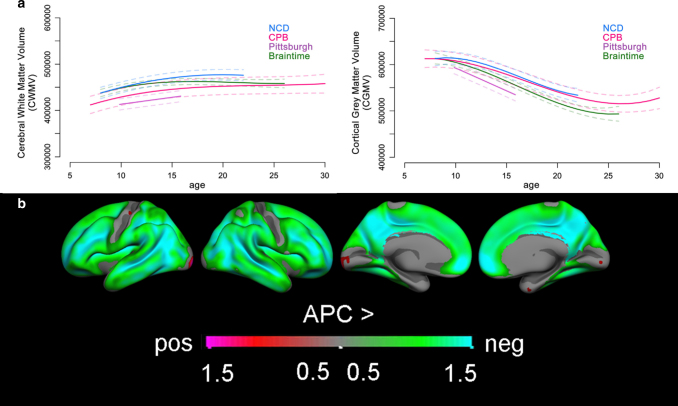
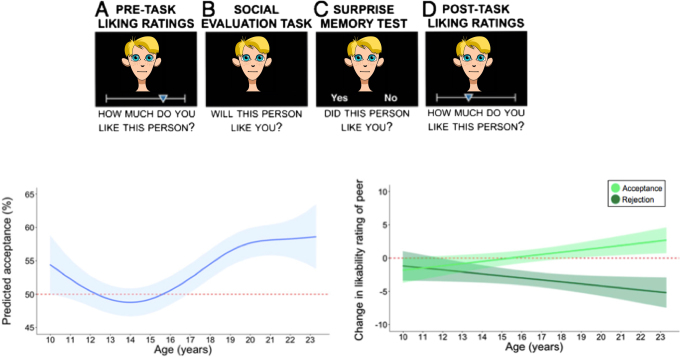
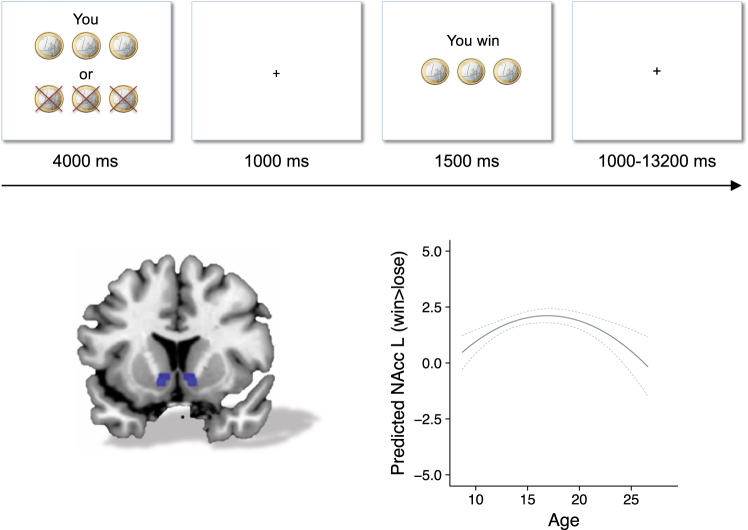
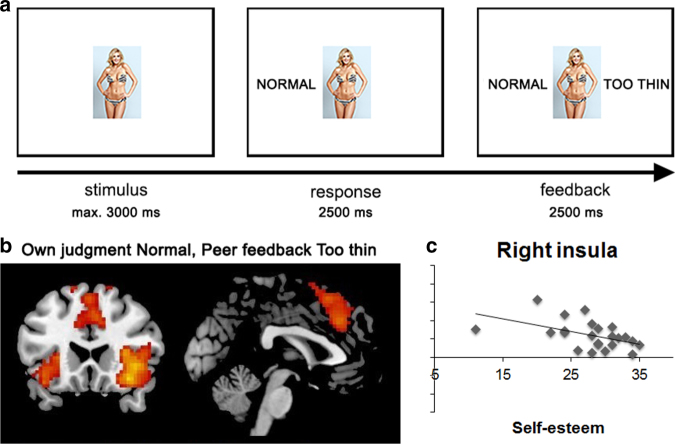
Verification
Claims the paper makes
The claims and statistics of this paper haven’t been checked yet.
Free: it reads the open-access text and checks the first 5 claims that cite a source we can check. Create a free account to check every claim.
Claims other papers make about this one
Each is checked against this paper’s own text: does it say what the citing paper says it does?
The source backs part of the claim, not all of it — or backs it for a different population, condition or comparison.
In the citing paper
“It is possible, and even likely, that the effects of social media go beyond overall use and instead largely depend on user pattern and/or type of platform turned to [4,44].”
From Social Media and Mental Health Among Early Adolescents in Sweden: A Longitudinal Study With 2-Year Follow-Up (KUPOL Study). (2021) · cites this paper as [4]
Experimental — accuracy not yet measuredThe source backs part of the claim, not all of it — or backs it for a different population, condition or comparison.
In the citing paper
“Moreover, the use of social media and other activities on phones have also been found to release feel-good neurochemicals such as dopamine [52, 53].”
From “From the moment I wake up I will use it…every day, very hour”: a qualitative study on the patterns of adolescents’ mobile touch screen device use from adolescent and parent perspectives (2019) · cites this paper as [53]
Experimental — accuracy not yet measuredThe source backs part of the claim, not all of it — or backs it for a different population, condition or comparison.
In the citing paper
“Both adolescents and young adults are more sensitive than older age groups to the benefits and harms of SMU (Crone and Konijn, 2018; Hayes et al., 2015).”
From Social media use, mental health and sleep: A systematic review with meta-analyses (2024) · cites this paper as Crone and Konijn, 2018
Experimental — accuracy not yet measuredThe cited source says what the claim attributes to it.
In the citing paper
“It is therefore plausible that these processes heighten adolescents’ sensitivity to the interactive, communicative, and self-portraying nature of social media22, a technology they use more extensively than other age groups23,24.”
From Windows of developmental sensitivity to social media (2022) · cites this paper as [22]
Self-check
Percentages, sums and reported differences re-computed from the paper’s own numbers.
The self-check needs the paper’s full text.
Citations
Cites
Digital Natives, Digital Immigrants Part 1
Prensky, M. (2001) · On the Horizon · doi:10.1108/10748120110424816 · Cited by 11,104 · cited 2×
“We will specifically focus on the following three aspects of media exposure of interest to adolescent development21: (1) social acceptance or rejection, (2) peer influence on self-image and self-perception, and (3) the role of emotions in media use.”
BackgroundDigital Natives, Digital Immigrants Part 2: Do They Really Think Differently?
Prensky, M. (2001) · On the Horizon · doi:10.1108/10748120110424843 · Cited by 4,035
The reward circuit: linking primate anatomy and human imaging
Haber, S. N., & Knutson, B. (2010) · Neuropsychopharmacology · doi:10.1038/npp.2009.129 · Cited by 3,718
Kowalski, R. M., Giumetti, G. W., Schroeder, A. N., & Lattanner, M. R. (2014) · Psychological Bulletin · doi:10.1037/a0035618 · Cited by 3,266
Tokunaga, R. S. (2010) · Computers in Human Behavior · doi:10.1016/j.chb.2009.11.014 · Cited by 2,566
Understanding adolescence as a period of social–affective engagement and goal flexibility
Crone, E. A., & Dahl, R. E. (2012) · Nature Reviews Neuroscience · doi:10.1038/nrn3313 · Cited by 2,507
Self-citationIs Adolescence a Sensitive Period for Sociocultural Processing?
Blakemore, S.-J., & Mills, K. L. (2014) · Annual Review of Psychology · doi:10.1146/annurev-psych-010213-115202 · Cited by 2,264
The social brain in adolescence
Blakemore, S.-J. (2008) · Nature Reviews Neuroscience · doi:10.1038/nrn2353 · Cited by 1,896
Bullying Prevalence Across Contexts: A Meta-analysis Measuring Cyber and Traditional Bullying
Modecki, K. L., Minchin, J., Harbaugh, A. G., Guerra, N. G., & Runions, K. C. (2014) · Journal of Adolescent Health · doi:10.1016/j.jadohealth.2014.06.007 · Cited by 1,659
Morphometric study of human cerebral cortex development
Huttenlocher, P. R. (1990) · Neuropsychologia · doi:10.1016/0028-3932(90)90031-i · Cited by 1,239
Research works printed but not linked: 3
- Konijn, E. A., Veldhuis, J., Plaisier, X. S., Spekman, M. & den Hamer, A. H. in The Handbook of Psychology of Communication Technology (ed. Sundar. S.) (Wiley-Blackwell, Hoboken, NJ, 2015).
- Valkenburg, P. M. & Taylor Piotrowski, J. How Media Attract and Affect Youth (Yale University Press., Yale, 2017).
- Konijn, E. A. & Hoorn, J. F. in The International Encyclopedia of Media Effects (ed. Roessler, P., Hoffner, C. A. & Zoonen, L. v.) 1–15 (Wiley-Blackwell Publishers, Hoboken, NJ, 2017).
Cited by
Items 301–400 of 464
Yong, J. C., Lim, A. J. Y., Tan, E., & Chan, S. (2026) · Behavioral Sciences · doi:10.3390/bs16050650 · Cited by 3
Li, S., Feng, N., & Cui, L. (2026) · Journal of Research on Adolescence · doi:10.1111/jora.70210 · Cited by 2
Chmiel, M., Cieśluk, M., & Znajdek, J. (2026) · Brain Sciences · doi:10.3390/brainsci16070724 · Cited by 4
“…formation and other psychological changes are still underway during adolescence, young people may be particularly sensitive to the negative consequences of social media use [5], as well as the maturation of neural structures and circuits associated with emotion regulation and motivation [6].”
Hossain, M., & Jabbari, J. (2026) · Social Science Research · doi:10.1016/j.ssresearch.2026.103398 · Cited by 3
Villodas, M. L., Acevedo, N., Wheeler, M., Hamati, F., & Kapur, I. (2026) · Journal of Policy Practice and Research · doi:10.1007/s42972-026-00155-5 · Cited by 1
Peng, W., Zhou, Z., & Chen, Z. (2026) · Frontiers in Public Health · doi:10.3389/fpubh.2026.1818418 · Cited by 3
Substances of Abuse and the Brain
Moreland-Capuia, A. R. (2019) · Springer eBooks · doi:10.1007/978-3-030-19208-2_4 · Cited by 2
Gyeong, S., Park, C., & Shin, H. (2021) · THE KOREAN JOURNAL OF DEVELOPMENTAL PSYCHOLOGY · doi:10.35574/kjdp.2021.9.34.3.87 · Cited by 1
Developmental aspects (including cyberbullying)
Mestre‐Bach, G., Fernández‐Aranda, F., Jiménez‐Múrcia, S., & Potenza, M. N. (2021) · Elsevier eBooks · doi:10.1016/b978-0-12-822201-0.00007-1 · Cited by 1
Promoting the student’s development. A holistic perspective
Budziszewska, M. (2021) · Wydawnictwa Uniwersytetu Warszawskiego eBooks · doi:10.31338/uw.9788323551423.pp.214-226 · Cited by 1
Working with a group in a school
Sokołowska, E., & Katra, G. (2021) · Wydawnictwa Uniwersytetu Warszawskiego eBooks · doi:10.31338/uw.9788323551423.pp.154-165 · Cited by 1
The school psychologist in the face of the challenges of adolescence
Katra, G. (2021) · Wydawnictwa Uniwersytetu Warszawskiego eBooks · doi:10.31338/uw.9788323551423.pp.76-94 · Cited by 1
Characteristics of the school environment
Dryll, E. (2021) · Wydawnictwa Uniwersytetu Warszawskiego eBooks · doi:10.31338/uw.9788323551423.pp.34-46 · Cited by 1
The Road to Improving the Anti-addiction Mode of Short-video Software
Zhou, S. (2022) · Journal of Education Humanities and Social Sciences · doi:10.54097/ehss.v3i.1555 · Cited by 1
Mental Health Aspects of Information Technology: Impact on Behavior and on Treatment Applications
Nallapula, K., & Pumariega, A. J. (2023) · Oxford University Press eBooks · doi:10.1093/med/9780197521359.003.0038 · Cited by 1
Social Media and the Developing Brain
Telzer, E. H., & Maza, M. T. (2024) · Springer eBooks · doi:10.1007/978-3-031-56537-3_3 · Cited by 4
Fong, T. C. T., Choi, E. P. H., Fong, D., Kung, M. C., Lam, M. W. C., Lee, A. M., Wong, W. C. W., Lam, T., & YIP, P. S. F. (2024) · Computers in Human Behavior Reports · doi:10.1016/j.chbr.2024.100574 · Cited by 3
Preventing Teen Pregnancy at Pre-Adolescence
Harris, K. R., & Hopper, M. T. (2018) · Advances in human services and public health (AHSPH) book series · doi:10.4018/978-1-5225-6108-8.ch010 · Cited by 1
Policies for early learning: Shaping pedagogy
Schleicher, A. (2019) · International Summit on the Teaching Profession · doi:10.1787/8c108e5c-en · Cited by 1
Mobile Use During Adolescence: Determinants and Impacts
Terras, M. M., & Ramsay, J. E. (2019) · Advances in human and social aspects of technology book series · doi:10.4018/978-1-5225-7885-7.ch001 · Cited by 1
Social Media and the Social Brain
Andrews, M. E., Pei, R., Lauharatanahirun, N., Paul, A. M., & Falk, E. B. (2023) · Oxford University Press eBooks · doi:10.1093/oso/9780197520536.003.0006 · Cited by 3
Social Interaction and Interpersonal Relationships
Ellis, D. A. (2020) · Cambridge University Press eBooks · doi:10.1017/9781108671408.005
Gender socialization in childhood and adolescence: The role of the media in context
van Oosten, J. M. F. (2022) · Elsevier eBooks · doi:10.1016/b978-0-12-818872-9.00127-8 · Cited by 1
Let‘s Play: Edukačné videá a vzdelávanie počas pandémie Covid-19 v Českej a Slovenskej republike
Kňažek, G., Dolejš, M., Považanová, B., Banárová, K., & Čerešník, M. (2022) · doi:10.5507/ff.22.24462134 · Cited by 1
Leisure Activities of Adolescents - Associations with Well-Being and Parental Leisure EngagementPreprint
Wanka, F., Vogel, M., Grafe, N., Aßmann, M., Kieß, W., & Poulain, T. (2023) · Research Square · doi:10.21203/rs.3.rs-3268763/v1 · Cited by 1
Faniyan, O. O., Marcotulli, D., Simayi, R., Gallo, F. D., Carlo, S. D., Ficiarà, E., Caramaschi, D., Richmond, R. C., Franchini, D., Bellesi, M., et al. (2023) · bioRxiv (Cold Spring Harbor Laboratory) · doi:10.1101/2023.10.11.561858 · Cited by 2
“Increased use of technology at night [2], consumption of caffeine, academic and social demands combine with ontogenetic preference towards later sleep and wake up times and lead to reduced sleep duration and quality across adolescence [3–5].”
BackgroundSocial Media Use, Loneliness and Emotional Distress Among Young People in EuropePreprint
Martínez, B. C., d’Hombres, B., & Kovačič, M. (2025) · SSRN Electronic Journal · doi:10.2139/ssrn.5089729 · Cited by 6
Elektronische Medien, Internet, World Wide Web in den Neurowissenschaften und im Alltag
Markowitsch, H. J., & Schreier, M. M. (2019) · Springer eBooks · doi:10.1007/978-3-662-58265-7_5
INVESTIGATING THE IMPACT OF VIDEO GAMING ON CHILDREN’S MAGICAL THINKING IN EARLY CHILDHOOD
Antar, R. (2019) · Digital Commons-DePaul (DePaul University)
Lee, B. (2020) · Digital Commons-TMC (Texas Medical Center)
AS CONCEPÇÕES DE ADOLESCENTES SOBRE NOTÍCIAS FALSAS: UM ESTUDO COM JOVENS DO ABC PAULISTA
da Silva, G. M., & Toledo, R. (2021) · Zenodo (CERN European Organization for Nuclear Research) · doi:10.5281/zenodo.4741388
Metwally, A. M., Abuelela, M. H., Elmosalami, D. M., Mohsen, A., Amer, H., Eldeeb, S. M., Etreby, L. A. E., Elshaarawy, G. A., El-Sonbaty, M. M., Hasanin, H. M., et al. (2021) · Research Square · doi:10.21203/rs.3.rs-790266/v1
Chawarura, W. I., Zhou, M., Matsika, C., & Zhou, T. G. (2021) · Advances in human and social aspects of technology book series · doi:10.4018/978-1-7998-8318-0.ch014
Auswirkungen von digitalen Medien
Habermann, K. (2021) · Springer eBooks · doi:10.1007/978-3-662-63532-2_1
Sokołowska, E. (2021) · Wydawnictwa Uniwersytetu Warszawskiego eBooks · doi:10.31338/uw.9788323551423.pp.95-108
The Role and Tasks of the Psychologist in a Contemporary School
Katra, G., Sokołowska, E., & Bieleń, M. (2021) · Wydawnictwa Uniwersytetu Warszawskiego eBooks · doi:10.31338/uw.9788323551423 · Cited by 13
Dryll, E. (2021) · Wydawnictwa Uniwersytetu Warszawskiego eBooks · doi:10.31338/uw.9788323551423.pp.141-153
Working with families in a school
Cierpka, A. (2021) · Wydawnictwa Uniwersytetu Warszawskiego eBooks · doi:10.31338/uw.9788323551423.pp.166-176
Violence and abuse – work in a school
Sokołowska, E. (2021) · Wydawnictwa Uniwersytetu Warszawskiego eBooks · doi:10.31338/uw.9788323551423.pp.109-127
Czwartosz, E. (2021) · Wydawnictwa Uniwersytetu Warszawskiego eBooks · doi:10.31338/uw.9788323551423.pp.128-140
The model of the school psychologist’s role – an authorial proposal
Katra, G. (2021) · Wydawnictwa Uniwersytetu Warszawskiego eBooks · doi:10.31338/uw.9788323551423.pp.23-33 · Cited by 14
Babiuch-Hall, M. (2021) · Wydawnictwa Uniwersytetu Warszawskiego eBooks · doi:10.31338/uw.9788323551423.pp.61-75
The psychologist in a contemporary Polish school – theoretical inspirations
Sokołowska, E. (2021) · Wydawnictwa Uniwersytetu Warszawskiego eBooks · doi:10.31338/uw.9788323551423.pp.47-60
Tasks and responsibilities of the psychologist in a Polish school
Katra, G. (2021) · Wydawnictwa Uniwersytetu Warszawskiego eBooks · doi:10.31338/uw.9788323551423.pp.15-22 · Cited by 1
Specificity of contact between the school psychologist and teachers
Małek, K. (2021) · Wydawnictwa Uniwersytetu Warszawskiego eBooks · doi:10.31338/uw.9788323551423.pp.177-187
Sokołowska, E. (2021) · Wydawnictwa Uniwersytetu Warszawskiego eBooks · doi:10.31338/uw.9788323551423.pp.188-213
Ellis, D. A. (2020) · Cambridge University Press eBooks · doi:10.1017/9781108671408.008
Ellis, D. A. (2020) · Cambridge University Press eBooks · doi:10.1017/9781108671408.001
Ellis, D. A. (2020) · Cambridge University Press eBooks · doi:10.1017/9781108671408.004
Ellis, D. A. (2020) · Cambridge University Press eBooks · doi:10.1017/9781108671408.002
Ellis, D. A. (2020) · Cambridge University Press eBooks · doi:10.1017/9781108671408.009
Ellis, D. A. (2020) · Cambridge University Press eBooks · doi:10.1017/9781108671408.007
Preventing Teen Pregnancy at Pre-Adolescence
Harris, K. R., & Hopper, M. T. (2022) · IGI Global eBooks · doi:10.4018/978-1-6684-5360-5.ch023
Schleicher, A. (2019) · International Summit on the Teaching Profession · doi:10.1787/aa0105c2-en
Quantum Affective Processes: decision-making from a quantum computing perspectivePreprint
Ho, J. K. W., & Hoorn, J. F. (2022) · Research Square · doi:10.21203/rs.3.rs-1572773/v1
Révay, P., Barnes, H., & Sheldon, R. (2021) · SocArXiv (OSF Preprints) · doi:10.31235/osf.io/9ywnd
Ellis, D. A. (2020) · Cambridge University Press eBooks · doi:10.1017/9781108671408.010
Discrimination and Discriminatory Practices in Schools
Zajda, J. (2022) · Globalisation, comparative education and policy research · doi:10.1007/978-3-030-96075-9_1 · Cited by 2
Tasawar, A. (2022) · SURG Journal · doi:10.21083/surg.v14i1.7071 · Cited by 1
Theron, F. H., Rosenstein, D. A., & McCoubrey, D. (2022) · Elsevier eBooks · doi:10.1016/b978-0-323-91709-4.00004-4
Internal uncertainty impacts social information use in risky choice across adolescencePreprint
Ciranka, S., & van den Bos, W. (2022) · doi:10.31234/osf.io/73dja
Scaffolding Undergraduate Students' Ethical Cyber Behaviour With Philosophy and Theory
Zaman, T., Yi, A. L. H., & Cheng, H. Y. (2022) · Advances in information security, privacy, and ethics book series · doi:10.4018/978-1-6684-5284-4.ch006 · Cited by 1
Shannon, H. (2022) · Carleton University's Institutional Repository (MacOdrum Library, Carleton University) · doi:10.22215/etd/2022-15233 · Cited by 1
Child and adolescent suicidal and self-harm behavior
Goldman-Mellor, S. J., Cruz, S. S., Jensen, J., & Hall, C. (2022) · Elsevier eBooks · doi:10.1016/b978-0-12-818872-9.00182-5 · Cited by 1
Ciència i humanitats durant la infància i l'adolescència
Bueno, D., & Molins, L. L. (2023) · Journal of Neuroeducation · doi:10.1344/joned.v3i2.41451 · Cited by 1
Path and Value of Literature Communication in the New Media Era Based on Education Cloud Platform
(2023) · International Journal of Educational Innovation and Science · doi:10.38007/ijeis.2023.040105
Loneliness and Information Communication Technology (ICT) in Adolescents
Erawan, L. E., & Sari, R. (2021) · Psycho Holistic · doi:10.35747/ph.v3i2.134
The Decline in the Age of Onset of Puberty – A Source of Concern
Mangla, M. (2023) · Current Women s Health Reviews · doi:10.2174/1573404820666230505105815 · Cited by 1
Development and validation of a measure of smartphone coping style among Chinese adolescentsPreprint
Huang, S., Lai, X., Ke, L., Qin, X., Yan, J. J., Xie, Y., Dai, X., & Wang, Y. (2023) · doi:10.31219/osf.io/38y42
Traces of Violent Video Gameplay in Adolescent Development
Międzobrodzka, E. (2023) · doi:10.5463/thesis.310 · Cited by 2
Barbosa, M. C. F., Baldiotti, A. L. P., Resende, J. L., Braga, N. S., Firmino, R. T., Paiva, S. M., Granville‐Garcia, A. F., & Ferreira, F. M. (2023) · doi:10.2196/preprints.53974
The social dilemma: unravelling the disturbing impact on youth mental health
Nichani, S., & Corno, A. F. (2023) · Translational Pediatrics · doi:10.21037/tp-23-426 · Cited by 5
“Furthermore, integrating digital literacy and mental health education into school curricula can empower young individuals to navigate the digital landscape responsibly and develop resilience against the negative impact of social media (8-10).”
Naseem, Z., & Batool, S. (2024) · Qlantic Journal of Social Sciences and Humanities · doi:10.55737/qjssh.497007307
Lourenço, B. (2023) · Digital Library of Theses and Dissertations (Universidade de São Paulo) · doi:10.11606/t.5.2023.tde-22022024-123622
Netto, F. N., Nunes, S. A. N., Menuchi, M. R. T. P., & Fernandes, M. G. (2024) · Psicologia Argumento · doi:10.7213/psicolargum.42.116.ao12 · Cited by 1
Unravelling Adolescent Perceptions: Profiles of Victims and Offenders in Cyber Interpersonal Abuse
Machado, B., & Caridade, S. (2024) · Advances in information security, privacy, and ethics book series · doi:10.4018/979-8-3693-5436-0.ch002
Language variation in the Instagram discourse of Indonesian Papuan dialect
Mawene, A., & Handayani, T. P. (2024) · Diksi · doi:10.21831/diksi.v32i1.66627 · Cited by 2
3. Hvis digital dannelse er svaret, hvad er så spørgsmålet?
Johansen, S. L. (2024) · Fagbokforlaget eBooks · doi:10.55669/oa380303
Dralega, C. A. (2024) · Fagbokforlaget eBooks · doi:10.55669/oa380311
Danning i digitale praksiser: Digital danning i barnehage, skole, hjem og fritid
Steen, R., Dralega, C. A., Eikhaug, R., Gjesdal, B. E., Haugestad, A., Johansen, S. L., Keeling, C. P., Kjærgård, P. I., Kyrkjebø, T., Mainsah, H. N., et al. (2024) · Fagbokforlaget eBooks · doi:10.55669/oa3803
5. Danning og digitale praksiser i barnehagen: På spor av pedagogiske danningsdiskurser
Kyrkjebø, T. (2024) · Fagbokforlaget eBooks · doi:10.55669/oa380305
2. Digital danning i barnehage, skole, hjem og fritid
Dahle, M. S., & Meyer, G. S. (2024) · Fagbokforlaget eBooks · doi:10.55669/oa380302
6. Globale børn: Om billedleg og digital dannelse i børnehaver
Thestrup, K. (2024) · Fagbokforlaget eBooks · doi:10.55669/oa380306
10. Miljøengasjement som digital danning
Økland, Ø. (2024) · Fagbokforlaget eBooks · doi:10.55669/oa380310
7. Fra lærebok til nett: Læreres erfaringer i lys av danning og digital kompetanse
Kjærgård, P. I. (2024) · Fagbokforlaget eBooks · doi:10.55669/oa380307
8. Danning av morgendagens helter: First Lego League-praksis som læringsarena for lærerstudenter
Eikhaug, R., & Gjesdal, B. E. (2024) · Fagbokforlaget eBooks · doi:10.55669/oa380308
Rosyanti, L., Hadi, I., Akhmad, A., Dwiyanti, D., & Indrayana, M. (2024) · Sasambo Jurnal Abdimas (Journal of Community Service) · doi:10.36312/sasambo.v6i1.1778
“…bagian yang tidak terpisahkan dari kehidupan sosial remaja, sehingga menurunkan kualitas, kognitif, etika dan sikap, moral dan motivasi remaja (Crone & Konijn, 2018) Pelatihan jenazah merupakan upaya untuk mengembangkan sumber daya manusia, khususnya untuk mengembangkan kemampuan intelektual,…”
Backgroundدار, ه., جاد, س. أ. ع. ا., & مجدي, أ. (2024) · المجلة العلمیة لکلیة السیاحة و الفنادق جامعة الأسکندریة · doi:10.21608/thalexu.2024.302413.1133
Developmental perspectives on threat learning and memory in rodents
Malik, S., Demidova, A., Park, C. H. J., & Kim, J. H. (2024) · Elsevier eBooks · doi:10.1016/b978-0-443-15754-7.00028-6
Otrok in mladostnik ter pametne naprave
Bregant, T. (2024) · doi:10.18690/um.mf.4.2024.6
Jungmann, S. M., & Dessauer, E. (2024) · doi:10.2196/preprints.65792
Der Einfluss der Medien auf die kindliche und jugendliche Psyche
Mößle, T., & Föcker, J. (2024) · Springer Reference Medizin · doi:10.1007/978-3-662-66744-6_48
Persuasion for protection: an analysis of online safety videos on YouTube
Huang, L., Goh, D. H., & Yin, S. X. (2024) · Aslib Journal of Information Management · doi:10.1108/ajim-03-2024-0184 · Cited by 1
A Novel Instagram Intervention for College Students Who Binge Drink
Thomas, H. A., & Grekin, E. R. (2024) · Substance Use & Misuse · doi:10.1080/10826084.2024.2446728 · Cited by 1
“Additionally, participants’ memories of specific posts may have been affected by recall bias, particularly given the large amount of online content that most young adults are exposed to daily (Crone & Konijn, 2018).”
Auswirkungen von digitalen Medien
Habermann, K. (2024) · Springer eBooks · doi:10.1007/978-3-662-70055-6_1
Neural correlates of social feedback from friends and self-reported happiness in adolescence
Breiner, K., & Galván, A. (2024) · Journal of Psychology & Clinical Psychiatry · doi:10.15406/jpcpy.2024.15.00798
Medienkonsum – Gift oder Prävention?
Berlit, P., & Timmermann, L. (2025) · DGNeurologie · doi:10.1007/s42451-025-00736-w
From Virtual to Real: Considerations on Life Purpose and Media Use in Adolescents
Leite, J. P. D. C., & Dellazzana‐Zanon, L. L. (2025) · Springer eBooks · doi:10.1007/978-3-031-87986-9_9
Lee, S. Y., Brown, S., Vergara‐Lopez, C., Mathis, K. J., Bock, B. C., Nugent, N. R., Parade, S. H., Tyrka, A. R., & Stroud, L. R. (2025) · Journal of Neural Transmission · doi:10.1007/s00702-025-02962-8 · Cited by 1
“…integral part of their lives and older generations also regularly use digital media as a way to stay connected (Allen et al. 2014; Broughton et al. 2019; Crone and Konijn 2018; Doty and Dworkin 2014; Drentea and Moren-Cross 2005; Gentina et al. 2020; Jang and Dworkin 2014; Marc 2001; Ståhl 2017).”
Metadata
- Authors
- Crone, E. A., & Konijn, E. A.
- Affiliations
- Leiden University (NL)
- Vrije Universiteit Amsterdam (NL)
- Corresponding author
- Crone, Eveline A.
- Venue
- Nature Communications
- Published
- 2018-02-21
- Volume
- 9
- Issue
- 1
- Pages
- 588-588
- ISSN
- 2041-1723 (ISSN-L)
- PMC
- PMC5821838
- OpenAlex
- W2788647475
- Semantic Scholar
- 2db711b72843fbcdd2e929d41dbe463551ac5a4c
- Cited by
- 464
- References
- 102
- Citations by year
- 2026: 71 · 2025: 56 · 2024: 75 · 2023: 47 · 2022: 57 · 2021: 60 · 2020: 57 · 2019: 35 · 2018: 6
- FWCI
- 14.05
- Type
- journal article
- Language
- en
- Open access
- gold
- doi.org
- Licence
- cc-by
- creativecommons.org/licenses/by/4.0 (tdm)
- creativecommons.org/licenses/by/4.0 (vor)
- Locations
- Nature Communications (publishedVersion, cc-by)
- PubMed Central (publishedVersion, cc-by)
- PubMed (publishedVersion)
- VU Research Portal (publishedVersion, other-oa)
- Leiden Repository (Leiden University) (submittedVersion)
- RePub (Erasmus University Rotterdam) (submittedVersion, other-oa)
- RePEc: Research Papers in Economics (submittedVersion)
- DOAJ (DOAJ: Directory of Open Access Journals) (submittedVersion)
- DOAJ (DOAJ: Directory of Open Access Journals) (submittedVersion, cc-by-sa)
- Leiden Repository (Leiden University) (submittedVersion, cc-by)
- Data Archiving and Networked Services (DANS) (submittedVersion, other-oa)
- Funders
- Netherlands Institute for Advanced Study in the Humanities and Social Sciences
- Nederlandse Organisatie voor Wetenschappelijk Onderzoek (14-001, 453-14-011, 45314001, VICI 453‐14‐001, NWO?VICI 453-14-001, 453-14-001 E.A.C)
- H2020 European Research Council (681632)
- Topics
- Social Sciences › Sociology and Political Science › Impact of Technology on Adolescents
- Life Sciences › Neuroscience › Cognitive Neuroscience › Neural and Behavioral Psychology Studies
- Social Sciences › Education › Child Development and Digital Technology
- Keywords
- adolescent media use, brain development, social media, emotional sensitivity, reflective processing, cognitive control, peer influence, youth welfare, opinion formation
- MeSH terms
- Adolescent, Brain, Emotions, Humans, Impulsive Behavior, Mental Health, Peer Group, Psychological Distance, Internet, Adolescent Development, Social Media
About these checks
Registry, retraction, Cites and statistics results are computed, not judged, with one exception: a printed reference that no index lists is read once by a model before it counts as a citation error. Claims are extracted by a model and kept only when their quote appears verbatim in the text; each cited source is then checked, with a model’s help, for whether it says what the claim relies on. Those verdicts can be wrong — read the claim’s quote and the cited source before relying on one.
Statistics and arithmetic are recomputed, not judged.
Confidence bands are shown only for fields calibrated on our annotated test set. None is calibrated yet, so no band is shown.
What counts as a claim ›How we measure confidence ›How we check this ›
Are you an author, or do you see a problem with this page? Request a review
Data sources
Bibliographic data: Semantic Scholar, OpenAlex, Crossref.
Contains information from the Semantic Scholar Academic Graph Datasets, made available under the ODC Attribution License (ODC-BY 1.0).
Semantic Scholar’s data is described in: Kinney, R., et al. (2023). The Semantic Scholar Open Data Platform. arXiv:2301.10140.
