

miR200-regulated CXCL12β promotes fibroblast heterogeneity and immunosuppression in ovarian cancers
Open accessThe DOI matches its Crossref record; 71 of the 71 references it cites were found in a registry or an index.
Abstract
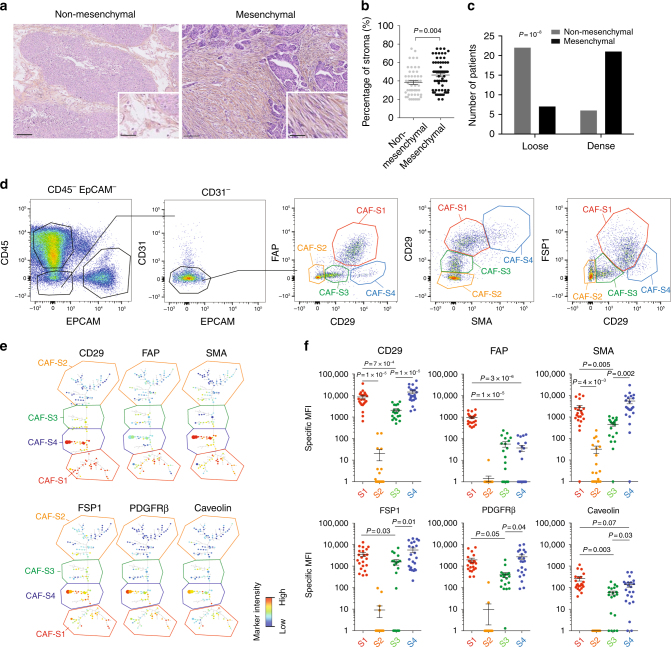
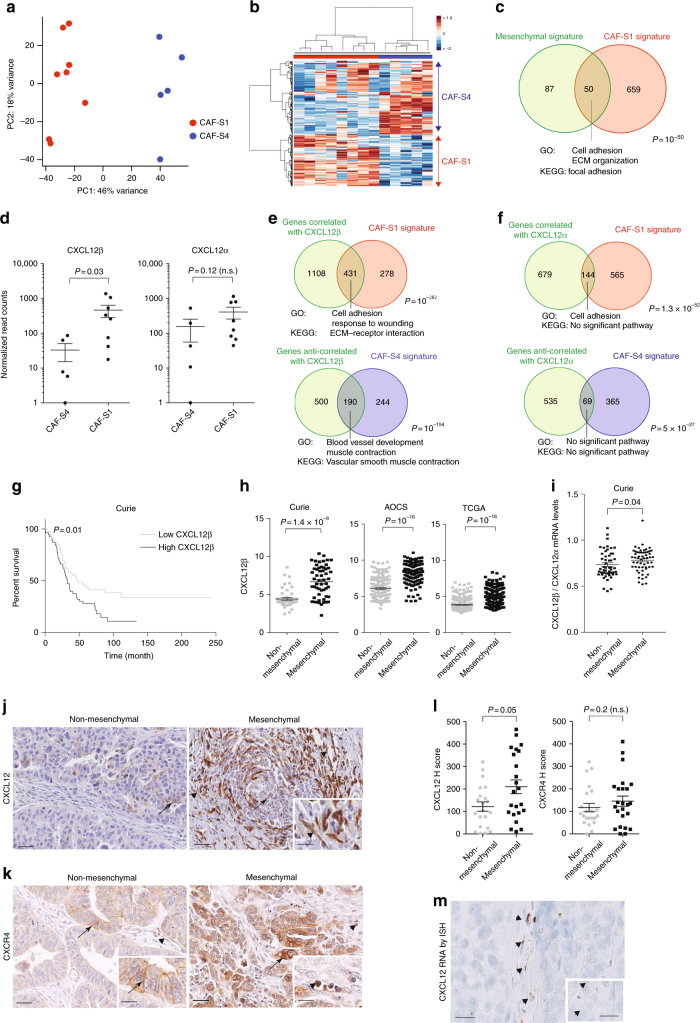
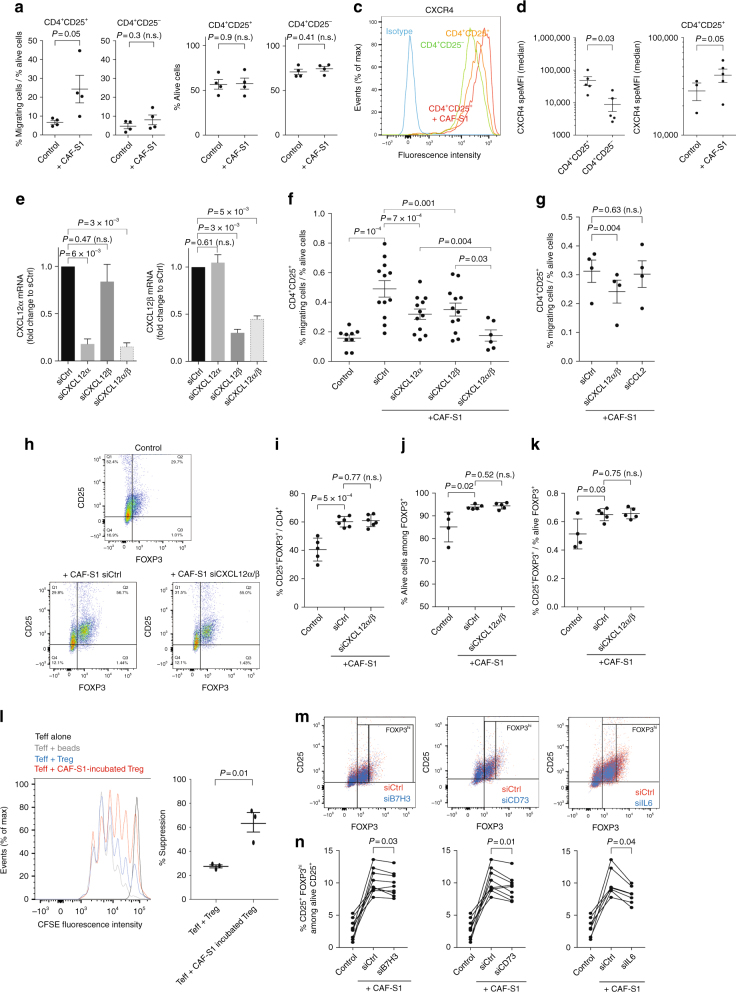
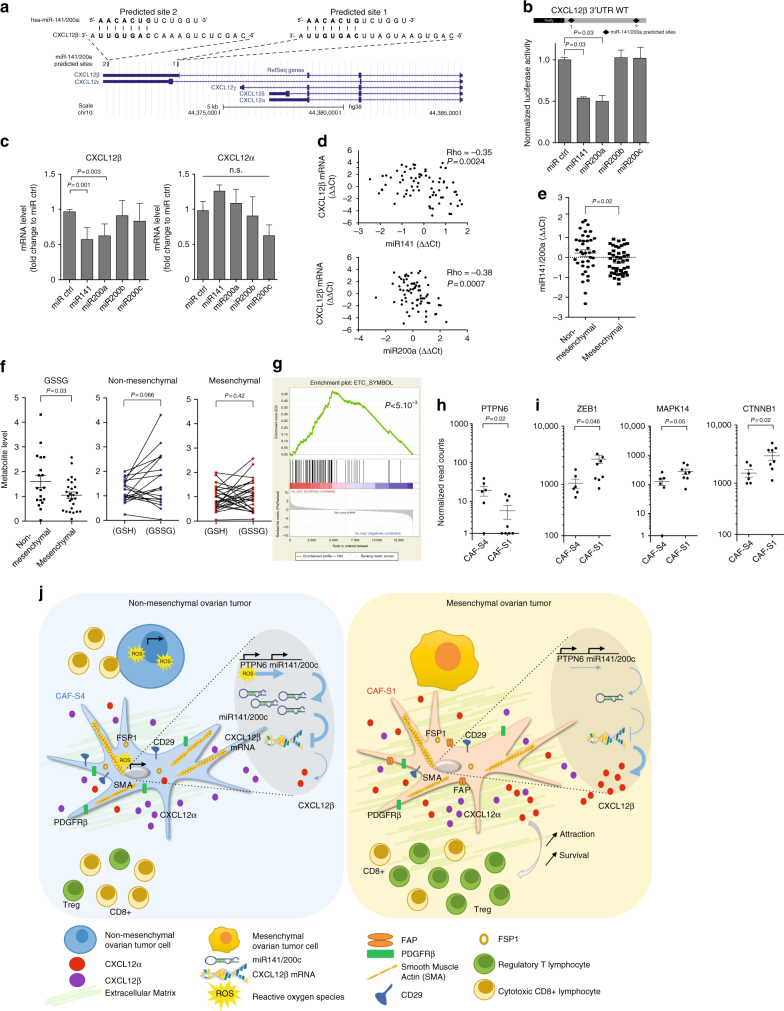
Abstract High-grade serous ovarian cancers (HGSOC) have been subdivided into molecular subtypes. The mesenchymal HGSOC subgroup, defined by stromal-related gene signatures, is invariably associated with poor patient survival. We demonstrate that stroma exerts a key function in mesenchymal HGSOC. We highlight stromal heterogeneity in HGSOC by identifying four subsets of carcinoma-associated fibroblasts (CAF-S1-4). Mesenchymal HGSOC show high content in CAF-S1 fibroblasts, which exhibit immunosuppressive functions by increasing attraction, survival, and differentiation of CD25 + FOXP3 + T lymphocytes. The beta isoform of the CXCL12 chemokine (CXCL12β) specifically accumulates in the immunosuppressive CAF-S1 subset through a miR-141/200a dependent-mechanism. Moreover, CXCL12β expression in CAF-S1 cells plays a crucial role in CAF-S1 immunosuppressive activity and is a reliable prognosis factor in HGSOC, in contrast to CXCL12α. Thus, our data highlight the differential regulation of the CXCL12α and CXCL12β isoforms in HGSOC, and reveal a CXCL12β-associated stromal heterogeneity and immunosuppressive environment in mesenchymal HGSOC.
Overview
The claims and statistics of this paper haven’t been checked yet.
Free: it reads the open-access text and checks the first 5 claims that cite a source we can check. Create a free account to check every claim.
Integrity signals
Registry
Cites
Statistics
Figures
Verification
Claims the paper makes
The claims and statistics of this paper haven’t been checked yet.
Free: it reads the open-access text and checks the first 5 claims that cite a source we can check. Create a free account to check every claim.
Claims other papers make about this one
Each is checked against this paper’s own text: does it say what the citing paper says it does?
The source backs part of the claim, not all of it — or backs it for a different population, condition or comparison.
In the citing paper
“Further, a subpopulation of CAFs (CAF-S1) found in mesenchymal HGSOC tumors upregulates CXCL12, which plays a role in increasing the attraction, survival, and differentiation of immunosuppressive CD25+FOXP3+ T lymphocytes (Givel et al., 2018).”
From Microphysiological systems as models for immunologically ‘cold’ tumors (2024) · cites this paper as Givel et al., 2018
Experimental — accuracy not yet measured
Self-check
Percentages, sums and reported differences re-computed from the paper’s own numbers.
The self-check needs the paper’s full text.
Citations
Cites
Integrated genomic analyses of ovarian carcinoma
Perou, C. M. (2019) · Carolina Digital Repository (University of North Carolina at Chapel Hill) · doi:10.17615/hvp3-wg08 · Cited by 7,925
Curiel, T. J., Coukos, G., Zou, L., Alvarez, X., Cheng, P., Mottram, P., Evdemon-Hogan, M., Conejo-Garcia, J. R., Zhang, L., Burow, M., et al. (2004) · Nature Medicine · doi:10.1038/nm1093 · Cited by 5,151
Kalluri, R., & Zeisberg, M. (2006) · Nature Reviews Cancer · doi:10.1038/nrc1877 · Cited by 4,538 · cited 1×
“To do so, we combined the use of six different markers, previously tested individually but never studied concomitantly 45 – 48 .”
MethodIntratumoral T Cells, Recurrence, and Survival in Epithelial Ovarian Cancer
Zhang, L., Conejo-Garcia, J. R., Katsaros, D., Gimotty, P. A., Massobrio, M., Regnani, G., Makrigiannakis, A., Gray, H., Schlienger, K., Liebman, M. N., et al. (2003) · New England Journal of Medicine · doi:10.1056/nejmoa020177 · Cited by 3,397 · cited 1×
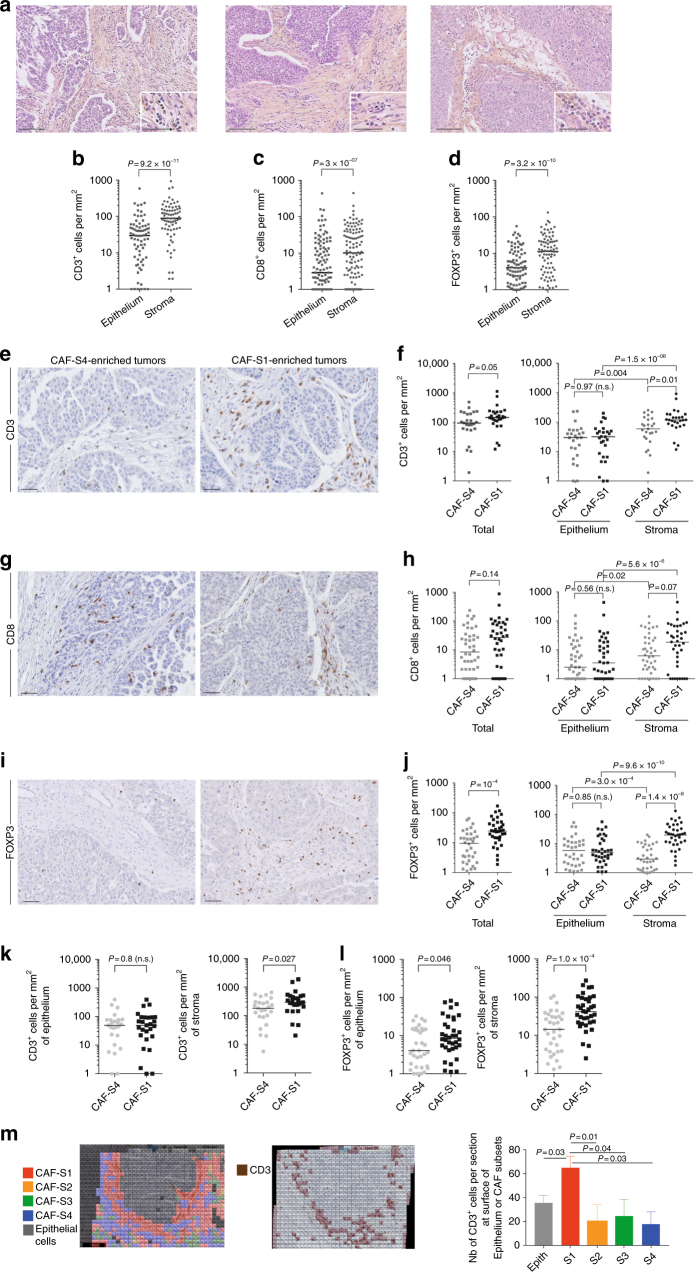
“In that sense, | DOI: 10.1038/s41467-018-03348-z | www.nature.com/naturecommunications detection of CD3 + and CD8 + T lymphocytes in tumor epithelial compartment is correlated with improved patient survival in HGSOC 60,61 .”
BackgroundInfluentialRecommendations for myeloid-derived suppressor cell nomenclature and characterization standards
Bronte, V., Brandau, S., Chen, S.-H., Colombo, M. P., Frey, A. B., Greten, T. F., Mandruzzato, S., Murray, P. J., Ochoa, A., Ostrand-Rosenberg, S., et al. (2016) · Nature Communications · doi:10.1038/ncomms12150 · Cited by 2,751 · cited 2×
“Human MDSC are commonly described as Lin-CD11b + CD33 + HLADR − cells, with neutrophilic or monocytic phenotype 57 .”
BackgroundDistinct populations of inflammatory fibroblasts and myofibroblasts in pancreatic cancer
Öhlund, D., Handly-Santana, A., Biffi, G., Elyada, E., Almeida, A. S., Ponz-Sarvise, M., Corbo, V., Oni, T. E., Hearn, S. A., Lee, E. J., et al. (2017) · Journal of Experimental Medicine · doi:10.1084/jem.20162024 · Cited by 2,590
Niraparib Maintenance Therapy in Platinum-Sensitive, Recurrent Ovarian Cancer
Mirza, M. R., Monk, B. J., Herrstedt, J., Oza, A. M., Mahner, S., Redondo, A., Fabbro, M., Ledermann, J. A., Lorusso, D., Vergote, I., et al. (2016) · New England Journal of Medicine · doi:10.1056/nejmoa1611310 · Cited by 2,451
Sato, E., Olson, S. H., Ahn, J., Bundy, B., Nishikawa, H., Qian, F., Jungbluth, A. A., Frosina, D., Gnjatic, S., Ambrosone, C., et al. (2005) · Proceedings of the National Academy of Sciences · doi:10.1073/pnas.0509182102 · Cited by 2,372
Audeh, M. W., Carmichael, J., Penson, R. T., Friedlander, M., Powell, B., Bell-McGuinn, K. M., Scott, C., Weitzel, J. N., Oaknin, A., Loman, N., et al. (2010) · The Lancet · doi:10.1016/s0140-6736(10)60893-8 · Cited by 2,279
Park, S.-M., Gaur, A. B., Lengyel, E., & Peter, M. E. (2008) · Genes & Development · doi:10.1101/gad.1640608 · Cited by 2,272 · cited 2×
“P refers to false discovery rate q-value. h, i PTPN6 ( h ) and ZEB1 , MAPK14 , CTNNB1 (miR-141/200a-target genes 7,35,36 ) ( i ) mRNA levels in CAF-S1 and CAF-S4.”
BackgroundResult
Cited by
Items 101–200 of 295
Pawar, J. S., Salam, M. A., Dipto, M. S. U., Al-Amin, M. Y., Salam, M. T., Sengupta, S., Kumari, S., Gujjari, L., & Yadagiri, G. (2025) · Cancers · doi:10.3390/cancers17152484 · Cited by 49
Circular RNA CircCCNB1 sponges micro RNA-449a to inhibit cellular senescence by targeting CCNE2
Yu, A. Q., Wang, Z. X., Wu, W., Chen, K. Y., Yan, S. R., & Mao, Z. B. (2019) · Aging · doi:10.18632/aging.102449 · Cited by 45
Yan, X., Xie, Y., Yang, F., Hua, Y., Zeng, T., Sun, C., Yang, M., Huang, X., Wu, H., Fu, Z., et al. (2021) · Journal of Experimental & Clinical Cancer Research · doi:10.1186/s13046-021-01949-z · Cited by 47
Magagna, I., Gourdin, N., Kieffer, Y., Licaj, M., Mhaidly, R., André, P., Morel, A., Vincent‐Salomon, A., Paturel, C., & Mechta‐Grigoriou, F. (2021) · Cancers · doi:10.3390/cancers13235878 · Cited by 48
Sung, J., & Cheong, J. (2022) · Cells · doi:10.3390/cells11050768 · Cited by 51
“CXCL12β expression levels in CAF-S1 cells have also been shown to crucially affect immunosuppressive activity in high-grade serous ovarian cancers [136].”
BackgroundMicroRNAs in Cancer and Cardiovascular Disease
Ilieva, M. S., Panella, R., & Uchida, S. (2022) · Cells · doi:10.3390/cells11223551 · Cited by 48
Dual Role of Fibroblasts Educated by Tumour in Cancer Behavior and Therapeutic Perspectives
Toledo, B., Picon‐Ruiz, M., Marchal, J. A., & Perán, M. (2022) · International Journal of Molecular Sciences · doi:10.3390/ijms232415576 · Cited by 43
“miR-200s CAF activation: Invasion, metastasis via transcription factors Fli-1 and TCF12 [70]”
BackgroundEpigenetic regulation and therapeutic targets in the tumor microenvironment
Xie, Z., Zhou, Z., Yang, S., Zhang, S., & Shao, B. (2023) · Molecular Biomedicine · doi:10.1186/s43556-023-00126-2 · Cited by 42
Milosevic, V., & Östman, A. (2024) · Upsala Journal of Medical Sciences · doi:10.48101/ujms.v129.10710 · Cited by 49
“CAF-S1 subset has been known to control the production of the CXCL12β chemokine isoform through miR-141/200a post-transcriptional regulation, which is crucial for attracting regulatory T-cells (85).”
BackgroundRai, A., Greening, D. W., Xu, R., Suwakulsiri, W., & Simpson, R. J. (2020) · PROTEOMICS · doi:10.1002/pmic.202000016 · Cited by 36
The actin modulator hMENA regulates GAS6‐AXL axis and pro‐tumor cancer/stromal cell cooperation
Melchionna, R., Spada, S., Modugno, F. D., D’Andrea, D., Carlo, A. D., Panetta, M., Mileo, A. M., Sperduti, I., Antoniani, B., Gallo, E., et al. (2020) · EMBO Reports · doi:10.15252/embr.202050078 · Cited by 37
“Four different CAF subsets identified by analyzing specific CAF markers (FAP, integrin b 1/CD29, a SMA, S100-A4/ FSP1, PDGFR b , and CAV1) have been reported and related to immune modulation in human breast and ovarian cancers (Costa et al , 2018; Givel et al , 2018).”
Mogi, K., Yoshihara, M., Iyoshi, S., Kitami, K., Uno, K., Tano, S., Koya, Y., Sugiyama, M., Yamakita, Y., Nawa, A., et al. (2021) · Cancers · doi:10.3390/cancers13061352 · Cited by 45
Sun, L., Ke, M.-L., Wang, X., Yin, M., Wei, J., Xu, L., Tian, X., Wang, F., Zhang, H., Fu, S., et al. (2022) · Molecular Carcinogenesis · doi:10.1002/mc.23445 · Cited by 42
“Mesenchymal HGSOC has a high content of CAF‐S1 fibroblasts, which promote tumor immunosuppression via enhancement of attraction, survival, and differentiation of CD25FOXP3 T lymphocytes.(47) Moreover, with the development of single‐cell RNA sequencing technology, accumulating CAF subpopulations have been identified, f…”
BackgroundXu, T., Liu, Z., Huang, L., Jing, J., & Liu, X. (2022) · Frontiers in Immunology · doi:10.3389/fimmu.2022.1057850 · Cited by 39
“In addition, CXCL12b expression in CAF cells promotes the migration and differentiation of Tregs (87).”
BackgroundCross-Talk Between Cancer and Its Cellular Environment—A Role in Cancer Progression
Turlej, E., Domaradzka, A., Radzka, J., Drulis‐Fajdasz, D., Kulbacka, J., & Gizak, A. (2025) · Cells · doi:10.3390/cells14060403 · Cited by 50
Minini, M., & Fouassier, L. (2023) · Current Oncology · doi:10.3390/curroncol30040319 · Cited by 40
“In breast (BC) and ovarian (OC) cancers [8,41], four different CAF subtypes (CAFS1 to CAF-S4) have been identified.”
BackgroundEffects of CAF-Derived MicroRNA on Tumor Biology and Clinical Applications
Wang, X., Wang, X., Xu, M., & Sheng, W. (2021) · Cancers · doi:10.3390/cancers13133160 · Cited by 37
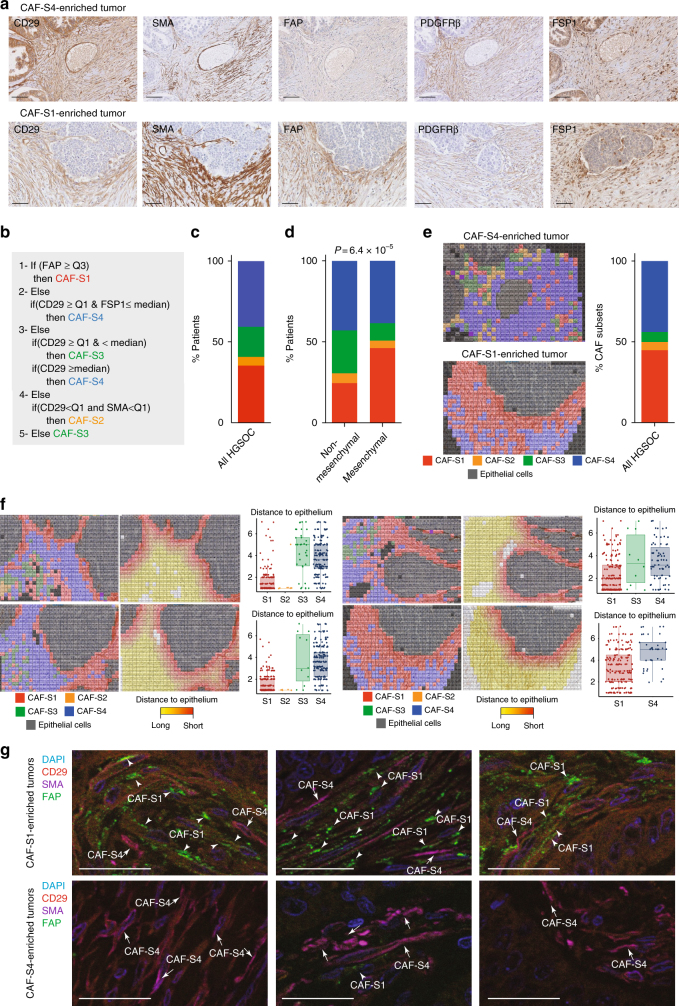
“According to the expression levels of CD29, FAP, FSP1, and SMA, CAFS in High-grade serous ovarian cancers (HGSOCs) are distinguished into the following four sub-populations: CAF-S1, S2, S3, and S4 [53].”
BackgroundNocquet, L., Juin, P. P., & Souazé, F. (2020) · Cancers · doi:10.3390/cancers12103017 · Cited by 41
“The four subsets have also been identified in ovarian cancer [72].”
BackgroundRole of tumor microenvironment in ovarian cancer metastasis and clinical advancements
Wang, Y., Zhu, N., Liu, J., Chen, F., Song, Y., Ma, Y., Yang, Z., & Wang, D. (2025) · Journal of Translational Medicine · doi:10.1186/s12967-025-06508-0 · Cited by 56
Cancer‐associated fibroblasts: Is it a key to an intricate lock of tumorigenesis?
Aden, D., Zaheer, S., Ahluwalia, H., & Ranga, S. (2023) · Cell Biology International · doi:10.1002/cbin.12004 · Cited by 33
Stress responses in stromal cells and tumor homeostasis
Vitale, I., Manic, G., Galassi, C., & Galluzzi, L. (2019) · Pharmacology & Therapeutics · doi:10.1016/j.pharmthera.2019.04.004 · Cited by 34
The Outside-In Journey of Tissue Transglutaminase in Cancer
Sima, L. E., Matei, D. E., & Condello, S. (2022) · Cells · doi:10.3390/cells11111779 · Cited by 38
Ding, H., Zhang, J., Zhang, F., Xu, Y., Yu, Y., Liang, W., & Li, Q. (2022) · International Immunopharmacology · doi:10.1016/j.intimp.2022.109052 · Cited by 33
Nowicki, A., Kulus, M., Wieczorkiewicz, M., Pieńkowski, W., Stefańska, K., Skupin-Mrugalska, P., Bryl, R., Mozdziak, P. E., Kempisty, B., & Piotrowska‐Kempisty, H. (2021) · Cancers · doi:10.3390/cancers13164178 · Cited by 36
Arebro, J., Towle, R. M., Lee, C.-M., Bennewith, K. L., & Garnis, C. (2023) · Frontiers in Cell and Developmental Biology · doi:10.3389/fcell.2023.1240159 · Cited by 30
“CAFs activated by OSCC-derived EVs revealed in line with this upregulated IL-6 (Supplementary Table S1).”
InfluentialOxygen gradient and tumor heterogeneity: The chronicle of a toxic relationship
Pandkar, M. R., Dhamdhere, S. G., & Shukla, S. (2021) · Biochimica et Biophysica Acta (BBA) - Reviews on Cancer · doi:10.1016/j.bbcan.2021.188553 · Cited by 37
Thiery, J. (2022) · Exploration of Targeted Anti-tumor Therapy · doi:10.37349/etat.2022.00103 · Cited by 33
Xue, X., Wang, X., Pang, M., Yu, L., Qian, J., Li, X., Tian, M., Lu, C. Y., Xiao, C., & Liu, Y. (2024) · Journal of Nanobiotechnology · doi:10.1186/s12951-024-02452-1 · Cited by 34
Cancer cells with high-metastatic potential promote a glycolytic shift in activated fibroblasts
Kogure, A., Naito, Y., Yamamoto, Y., Yashiro, M., Kiyono, T., Yanagihara, K., Hirakawa, K., & Ochiya, T. (2020) · PLoS ONE · doi:10.1371/journal.pone.0234613 · Cited by 28
“stress-induced miR-200 expression [14].”
Plasticity and Functional Heterogeneity of Cancer-Associated Fibroblasts
Flynn, J. M., Thadani, N., Gallagher, E. E., Azzaro, I., Bodnar, C. M., McCarty, C. P., Romano, G., Webster, M. R., & Capparelli, C. (2025) · Cancer Research · doi:10.1158/0008-5472.can-24-3037 · Cited by 39
Immune mediator expression signatures are associated with improved outcome in ovarian carcinoma
Nakamura, M., Bax, H. J., Scotto, D., Souri, E. A., Sollie, S., Harris, R. J. C., Hammar, N., Walldius, G., Winship, A., Ghosh, S., et al. (2019) · OncoImmunology · doi:10.1080/2162402x.2019.1593811 · Cited by 27
“CXCL-12, likely secreted by cancer-associated fibroblasts (CAFs), may promote accumulation of FoxP3 + T cells and cancer cell survival in high grade serous ovarian cancer.(60) Moreover, binding of CXCL-12 to its receptor CXCR4 has been shown to induce tumor proliferation and cancer progression, and these effects were…”
BackgroundLu, C., Jia, S., Zhao, S., & Shao, X. (2019) · Cancer Biomarkers · doi:10.3233/cbm-192399 · Cited by 26
The biological role of the CXCL12/CXCR4 axis in esophageal squamous cell carcinoma
Wu, X., Zhang, H., Sui, Z., Wang, Y., & Yu, Z. (2021) · Cancer Biology and Medicine · doi:10.20892/j.issn.2095-3941.2020.0140 · Cited by 26
Loret, N., Vandamme, N., Coninck, J. D., Taminau, J., Clercq, K. D., Blancke, G., Jonckheere, S., Goossens, S., Lemeire, K., Prijck, S. D., et al. (2022) · Molecular Cancer Research · doi:10.1158/1541-7786.mcr-21-0565 · Cited by 26
Qiu, W., Wu, B., & Fang, F. (2020) · World Journal of Stem Cells · doi:10.4252/wjsc.v12.i4.251 · Cited by 32
miR-142-5p Inhibits Cell Invasion and Migration by Targeting DNMT1 in Breast Cancer
Li, H., Li, H.-H., Chen, Q., Wang, Y.-Y., Fan, C.-C., Duan, Y.-Y., Huang, Y., Zhang, H.-M., Li, J.-P., Zhang, X.-Y., et al. (2021) · Oncology Research Featuring Preclinical and Clinical Cancer Therapeutics · doi:10.3727/096504021x16274672547967 · Cited by 26
Du, Y., Cao, J., Jiang, X. W., Cai, X., Wang, B., Wang, Y., Wang, X., & Xue, B. (2021) · Cancer Cell International · doi:10.1186/s12935-021-02314-y · Cited by 25
“Studies have demonstrated that CAFs can attract and sequester CD8 + T cells in the extramural compartment [12], which is suggested to impair the effectiveness of ICB therapy.”
BackgroundFolate Transport and One-Carbon Metabolism in Targeted Therapies of Epithelial Ovarian Cancer
Wallace-Povirk, A., Hou, Z., Nayeen, M. J., Gangjee, A., & Matherly, L. H. (2021) · Cancers · doi:10.3390/cancers14010191 · Cited by 27
Zhang, X., Wang, Y., Cui, W., Li, D., Song, J., Liu, Y., Liu, Y., & Yang, S. (2025) · Drug Resistance Updates · doi:10.1016/j.drup.2025.101273 · Cited by 30
Fan, C., Zhu, W., Chen, Y., Zhu, W., & Ding, J. (2025) · MedComm · doi:10.1002/mco2.70415 · Cited by 36
“Beyond PDAC, six CAF markers—FAP, CD29 (integrin-β 1), α -SMA, FSP1, PDGFR β , and caveolin—have delineated four subtypes (CAF-S1 to CAF-S4) in ovarian and breast cancers [37].”
The plasticity of cancer-associated fibroblasts
Xia, Z., & Wever, O. D. (2025) · Trends in cancer · doi:10.1016/j.trecan.2025.04.012 · Cited by 32
New insights into healthy ageing, inflammageing and frailty using metabolomics
Abdullah, G. A., Akpan, A., Phelan, M. M., & Wright, H. L. (2024) · Frontiers in Aging · doi:10.3389/fragi.2024.1426436 · Cited by 27
Liu, L., Wan, W., Chang, Y., Ao, L., Xu, Y., & Xu, X. (2025) · Journal of Experimental & Clinical Cancer Research · doi:10.1186/s13046-025-03527-z · Cited by 36
“…immunosuppressive microenvironment through distinct mechanisms, with CAF-S1 being particularly prominent in this regard, significantly increasing the proportion of CD4 ⁺ CD25 ⁺ FOXP3 ⁺ Tregs through a multi-step mechanism and enhancing their ability to inhibit effector T cell proliferation [8, 65].”
InfluentialHeterotypic signaling of cancer-associated fibroblasts in shaping the cancer cell drug resistance
Butti, R., Khaladkar, A., Bhardwaj, P., & Prakasam, G. (2023) · Cancer Drug Resistance · doi:10.20517/cdr.2022.72 · Cited by 27
Tumor Microenvironment Modulation by Cancer-Derived Extracellular Vesicles
Ten, A., Kumeiko, V. V., Farniev, V. M., Gao, H., & Shevtsov, M. A. (2024) · Cells · doi:10.3390/cells13080682 · Cited by 27
The Role of Post-Translational Modifications of Chemokines by CD26 in Cancer
Zutter, A. D., Damme, J. V., & Struyf, S. (2021) · Cancers · doi:10.3390/cancers13174247 · Cited by 23
Zheng, L., Cai, W., Ke, Y., Hu, X., Yang, C., Zhang, R., Wu, H., Liu, D., Yu, H., & Wu, C. (2025) · Cell Communication and Signaling · doi:10.1186/s12964-025-02138-7 · Cited by 23
Barrera, L. N., Ridley, P., Bermejo‐Rodríguez, C., Costello, E., & Pérez-Mancera, P. A. (2022) · Journal of Physiology and Biochemistry · doi:10.1007/s13105-022-00899-0 · Cited by 23
“The rapid development of next-generation sequencing technologies is shedding new light on the existence of diverse CAF subtypes, with different activities, within the tumour microenvironment [21, 29, 35, 57, 63, 65, 94, 119].”
BackgroundCancer-Associated Fibroblast Heterogeneity in Malignancy with Focus on Oral Squamous Cell Carcinoma
Arebro, J., Lee, C.-M., Bennewith, K. L., & Garnis, C. (2024) · International Journal of Molecular Sciences · doi:10.3390/ijms25021300 · Cited by 28
“[6,7,57].”
BackgroundPediatric Tumors-Mediated Inhibitory Effect on NK Cells: The Case of Neuroblastoma and Wilms’ Tumors
Pelosi, A., Fiore, P. F., Matteo, S. D., Veneziani, I., Caruana, I., Ebert, S., Munari, E., Moretta, L., Maggi, E., & Azzarone, B. G. (2021) · Cancers · doi:10.3390/cancers13102374 · Cited by 25
Fibroblasts in cancer: Defining target structures for therapeutic intervention
Boesch, M., Baty, F., Rumpold, H. F., Sopper, S., Wolf, D. G. F., & Brutsche, M. H. (2019) · Biochimica et Biophysica Acta (BBA) - Reviews on Cancer · doi:10.1016/j.bbcan.2019.06.003 · Cited by 20
James, N. E., Woodman, M. F., DiSilvestro, P., & Ribeiro, J. R. (2020) · Cancers · doi:10.3390/cancers12082150 · Cited by 21
“Moreover, these CAF-S1 cells secrete CD73, B7-H3, and IL-6, which encourages survival and proliferation of these intratumoral Tregs [29].”
BackgroundXu, S., Yuan, X., Wang, Y., Fu, Z., Chen, K., Cui, Z., Xu, L., Zhang, H., Xia, D., & Wu, Y. (2025) · Journal of Hazardous Materials · doi:10.1016/j.jhazmat.2025.137824 · Cited by 21
du Manoir, S., Delpech, H., Orsetti, B., Jacot, W., Pirot, N., Noel, J., Colombo, P., Sardet, C., & Theillet, C. G. (2022) · The Journal of Pathology · doi:10.1002/path.5896 · Cited by 23
Burley, A., Rullan, A., & Wilkins, A. C. (2022) · Frontiers in Oncology · doi:10.3389/fonc.2022.1000888 · Cited by 21
“Of note, the CAF-S1 (CD29Med, FAPHi, fibroblast-specific protein 1 (FSP1)Low-Hi , aSMAHi, PDGFRbMed-Hi, caveolin 1 (CAV1)Low) subset was associated with an immunosuppressive phenotype via the recruitment of Foxp3+ CD4+ CD25+ regulatory T-cells (Tregs) and inhibition of cytotoxic CD8+ T-cells.”
BackgroundInfluentialHelicobacter pylori–activated fibroblasts as a silent partner in gastric cancer development
Krzysiek-Mączka, G., Brzozowski, T., & Ptak‐Belowska, A. (2023) · Cancer and Metastasis Reviews · doi:10.1007/s10555-023-10122-1 · Cited by 22
Shen, W., Li, Y., Yang, Z., Li, W., Cao, Y., Liu, Y., Wang, Z., Pei, R., & Xing, C. (2024) · Journal of Nanobiotechnology · doi:10.1186/s12951-024-02401-y · Cited by 18
“…TME, cancer-associated fibroblasts (CAFs) have emerged as central players to shape the TME to an immunosuppressive phenotype by producing dense extracellular matrix (ECM) and secreting suppressive cytokines, effectively hindering the accumulation of T cells in the vicinity of cancer cells [9, 10].”
BackgroundNing, L., Quan, C., Wang, Y., Wu, Z., Yuan, P., & Xie, N. (2024) · Frontiers in Oncology · doi:10.3389/fonc.2024.1348299 · Cited by 21
Szubert, S., Koper, K., Dutsch-Wicherek, M. M., & Jóźwicki, W. (2019) · Ginekologia Polska · doi:10.5603/gp.2019.0003 · Cited by 20
“These findings suggest that the prognosis of cancer patients is more related to the type of stroma infiltrating cells, and less to their number [30].”
BackgroundEnabling CAR-T cells for solid tumors: Rage against the suppressive tumor microenvironment
Antoñana-Vildosola, A., Zanetti, S. R., & Palazón, A. (2022) · International review of cytology · doi:10.1016/bs.ircmb.2022.03.004 · Cited by 18
Xue, X., Liu, Y., Chen, X., Tao, B.-Y., Liu, P., Zhou, H.-W., Zhang, C., Wang, L., Jiang, Y.-K., Ding, Z.-W., et al. (2022) · Frontiers in Pharmacology · doi:10.3389/fphar.2022.1064032 · Cited by 18
“CAF-S1) expressed NT5E could upregulate the power of Tregs to inhibit the proliferation of effector T cells (Costa et al., 2018; Givel et al., 2018), while this effect could be neutralize after using an antiCD73 antibody (Magagna et al.”
BackgroundNew insights into fibrotic signaling in renal cell carcinoma
Chen, J., Yiu, W. H., Tang, P. M., & Tang, S. C. W. (2023) · Frontiers in Cell and Developmental Biology · doi:10.3389/fcell.2023.1056964 · Cited by 19
“Fibrotic signaling can also mediate immunosuppression by facilitating Treg cell and myeloid-derived suppressor cell (MDSC) differentiation and recruitment (Costa et al., 2018; Givel et al., 2018; Lin et al., 2022), metabolic reprogramming (Hamanaka and Mutlu, 2021), and long non-coding RNA (lncRNA) regulation (Shi et…”
BackgroundBioengineered Hydrogels Recapitulate Fibroblast Heterogeneity in Cancer
Ho, N. C. W., Yap, J. Y. Y., Zhao, Z., Wang, Y., Fernando, K., Li, C. H., Kwang, X. L., Quah, H. S., Arcinas, C., Iyer, N. G., et al. (2024) · Advanced Science · doi:10.1002/advs.202307129 · Cited by 20
Axemaker, H., Plesselova, S., Calar, K., Jorgensen, M. M., Wollman, J. W., & de la Puente, P. (2024) · Biochimica et Biophysica Acta (BBA) - Molecular Cell Research · doi:10.1016/j.bbamcr.2024.119801 · Cited by 24
Sylvestre, M., Tarte, K., & Roulois, D. (2019) · Epigenomics · doi:10.2217/epi-2019-0165 · Cited by 19
Ruocco, M. R., Gisonna, A., Acampora, V., D'Agostino, A. G., Carrese, B., Santoro, J., Venuta, A., Nasso, R., Rocco, N., Russo, D., et al. (2024) · International Journal of Molecular Sciences · doi:10.3390/ijms25116224 · Cited by 22
Li, Y., Tian, R., Liu, J., Li, J., Tan, H. L. E., Wu, Q., & Fu, X. (2022) · Frontiers in Immunology · doi:10.3389/fimmu.2022.940801 · Cited by 18
“Furthermore, CAFs exerted immunosuppressive effects from the following several aspects: modulating the degree of tumorassociated neutrophils (TANs) activation (62); cooperating with mast cells to induce the early malignant morphological transition of benign epithelial cells (63); impairing the functionality of infiltr…”
BackgroundComparative Tumor Microenvironment Analysis of Primary and Recurrent Ovarian Granulosa Cell Tumors
Khlebus, E., Vuttaradhi, V. K., Welte, T., Khurana, N., Celestino, J., Beird, H. C., Gumbs, C. E., Little, L., Legarreta, A. F., Fellman, B. M., et al. (2023) · Molecular Cancer Research · doi:10.1158/1541-7786.mcr-22-0623 · Cited by 16
“Speci fi c sub-populations ofCAFsaccumulation inmesenchymalhigh-gradeserous ovarian cancers are associated with an immunosuppressive environment (60).”
Hulahan, T. S., & Angel, P. M. (2024) · Journal of Experimental & Clinical Cancer Research · doi:10.1186/s13046-024-03236-z · Cited by 20
Cai, Y., Ling, Y., Huang, L., Huang, H., Chen, X., Xiao, Y., Zhu, Z., & Chen, J. (2020) · Oncology Letters · doi:10.3892/ol.2020.11378 · Cited by 18
“Studies have demonstrated that CCL5/CCR5 and chemokine (C‐X‐C) motif ligand 12 (CXCL12) β promote tumor immune tolerance and tumor progression (32,33).”
BackgroundMicroenvironmental modulation of the developing tumour: an immune‐stromal dialogue
Jones, J. O., Moody, W. M., & Shields, J. D. (2020) · Molecular Oncology · doi:10.1002/1878-0261.12773 · Cited by 18
Chen, L., Miao, X., Si, C., Qin, A., Zhang, Y., Chu, C., Li, Z.-Y., Wang, T., & Liu, X. (2021) · Frontiers in Cell and Developmental Biology · doi:10.3389/fcell.2021.647527 · Cited by 19
“Recent studies have shown that miRNA can be involved in the occurrence and progression of many malignant tumors, including breast cancer or even TNBC (Givel et al., 2018; Kong et al., 2018).”
BackgroundOvarian Cancer Stem Cells: Characterization and Role in Tumorigenesis
Saha, S., Parte, S. C., Roy, P., & Kakar, S. S. (2021) · Advances in experimental medicine and biology · doi:10.1007/978-3-030-73359-9_10 · Cited by 17
Adine, C., Fernando, K., Ho, N. C. W., Quah, H. S., Ho, S. S. W., Wu, K. Z., Teng, K. W. W., Arcinas, C., Li, L., Ha, K., et al. (2024) · Biomaterials · doi:10.1016/j.biomaterials.2023.122460 · Cited by 24
Reprogramming the tumor microenvironment to improve the efficacy of cancer immunotherapies
Faraj, J. A., Al-Athari, A. J. H., Mohie, S. E. D., Kadhim, I. K., Jawad, N. M., Abbas, W. J., & Jalil, A. T. (2022) · Medical Oncology · doi:10.1007/s12032-022-01842-5 · Cited by 19
“, ovarian tumor, by CAFs-expressing CXCL12β followed by creating the immunosuppressive TME while reduced CD4+CD25+ T-lymphocyte attraction [27].”
BackgroundLansche, C., Ladaigue, S., Gropplero, G., Zimmermann, N., Nurmik, M., Veith, I., Nguyen, M., Brosseau, S., Poté, N., Mordant, P., et al. (2025) · Advanced Healthcare Materials · doi:10.1002/adhm.202403446 · Cited by 16
Wang, G., Zhang, H., Shen, X., Jin, W., Wang, X., & Zhou, Z. (2023) · Cancer Cell International · doi:10.1186/s12935-023-03152-w · Cited by 16
You, S., Han, X., Xu, Y., Sui, L., Song, K., & Yao, Q. (2024) · Cancer Medicine · doi:10.1002/cam4.7217 · Cited by 17
“9 In HGSOC, CAFs have been proven to promote cancer cell proliferation, 10 spread tumors through the abdominal cavity, 11 promote immunosuppression, 12 and mediate chemotherapy resistance.”
BackgroundMa, X., Xue, F., Pei, Z., & Zhao, Y. (2025) · Experimental Cell Research · doi:10.1016/j.yexcr.2025.114656 · Cited by 16
Peritumoral CD90+CD73+ cells possess immunosuppressive features in human non-small cell lung cancer
Wang, L., Yang, H., Dorn, P., Berezowska, S., Blank, F., Wotzkow, C., Marti, T. M., Peng, R., Harrer, N. E., Sommergruber, W., et al. (2021) · EBioMedicine · doi:10.1016/j.ebiom.2021.103664 · Cited by 15
Rio, D. D., Masi, I., Caprara, V., Ottavi, F., Petroni, G. A., Salvati, E., Trisciuoglio, D., Giannitelli, S. M., Bagnato, A., Mauri, E., et al. (2024) · Cell Death and Disease · doi:10.1038/s41419-024-06730-6 · Cited by 14
“Cells were incubated at 37 °C in a humidi fi ed atmosphere containing 5% CO 2 and were tested for the absence of viral/ mycoplasma contamination.”
MethodMicrophysiological systems as models for immunologically ‘cold’ tumors
Gaebler, D., Hachey, S. J., & Hughes, C. C. W. (2024) · Frontiers in Cell and Developmental Biology · doi:10.3389/fcell.2024.1389012 · Cited by 14
Research advances of secretory proteins in malignant tumors
Zhang, N., Hao, J., Cai, Y., & Wang, M. (2021) · Chinese Journal of Cancer Research · doi:10.21147/j.issn.1000-9604.2021.01.12 · Cited by 13
Cancer-associated fibroblasts in gynecological malignancies: are they really allies of the enemy?
Villegas‐Pineda, J. C., Ramírez-de-Arellano, A., Bueno-Urquiza, L. J., Lizarazo-Taborda, M. D. R., & Pereira-Suárez, A. L. (2023) · Frontiers in Oncology · doi:10.3389/fonc.2023.1106757 · Cited by 13
Wang, Y.-R., Meng, L., Su, F., Qiu, Y., Shi, J., Xu, X., & Luo, Q. (2020) · Computational Biology and Chemistry · doi:10.1016/j.compbiolchem.2020.107229 · Cited by 13
Dikshit, A., Zong, H., Anderson, C. M., Zhang, B., & Ma, X. (2020) · Methods in molecular biology · doi:10.1007/978-1-0716-0623-0_19 · Cited by 13
Tassinari, M., & Gandellini, P. (2021) · Cancers · doi:10.3390/cancers13040709 · Cited by 12
D’Alterio, C., Spina, A., Arenare, L., Chiodini, P., Napolitano, M., Galdiero, F., Portella, L., Simeon, V., Signoriello, S., Raspagliesi, F., et al. (2022) · Cancers · doi:10.3390/cancers14071849 · Cited by 13
“Interestingly, the most immunosuppressive CAF-S1 in EOC is rich in CXCL12 (CXCL12β) [42].”
BackgroundImmunosuppressive mechanisms and therapeutic targeting of regulatory T cells in ovarian cancer
Li, J., Huang, H., Xie, R., Yang, R., Wang, H., & Wan, L. (2025) · Frontiers in Immunology · doi:10.3389/fimmu.2025.1631226 · Cited by 25
Hofer, I., Kieffer, Y., Mencattini, A., Croizer, H., Mhaidly, R., Descroix, S., Tourneau, C. L., Kamal, M. T., Lamy, C., Bonneau, C., et al. (2025) · Cancer Research · doi:10.1158/0008-5472.can-25-0966 · Cited by 18
Integrative Analysis of ceRNA Networks in human periodontal ligament stem cells under hypoxia
Ye, Y., Fu, L., Liu, L., Tong, X., Manduca, A. G. C., & Yu, J. (2021) · Oral Diseases · doi:10.1111/odi.14096 · Cited by 10
Insights into the tumor-stromal-immune cell metabolism cross talk in ovarian cancer
Tang, P. W., Frisbie, L. G., Hempel, N., & Coffman, L. G. (2023) · American Journal of Physiology-Cell Physiology · doi:10.1152/ajpcell.00588.2022 · Cited by 11
Metabolism-associated molecular classification of gastric adenocarcinoma
Ye, Y., Yang, W., Ruan, X., Xu, L., Cheng, W., Zhao, M., Wang, X., Chen, X., Cai, D., Li, G., et al. (2022) · Frontiers in Oncology · doi:10.3389/fonc.2022.1024985 · Cited by 10
Nano-drug delivery system targeting FAP for the combined treatment of oral leukoplakia
Li, R., Zhao, Y., Liu, T., Li, Y., Wan, C., Gao, R., Liu, C., Li, X., & Li, B. (2023) · Drug Delivery and Translational Research · doi:10.1007/s13346-023-01397-6 · Cited by 11
Markey, M., Kim, J., Goldstein, Z., Gerardin, Y., Brosnan‐Cashman, J. A., Javed, S. A., Juyal, D., Pagidela, H., Yu, L., Rahsepar, B., et al. (2025) · Modern Pathology · doi:10.1016/j.modpat.2025.100772 · Cited by 11
Govindarajan, M., Ignatchenko, V., Ailles, L., & Kislinger, T. (2022) · Biomolecules · doi:10.3390/biom13010075 · Cited by 9
“In HGSC, CAFs have been shown to promote cancer cell proliferation [7], enable tumor dissemination through the abdominal cavity [8], facilitate immune suppression [9], and mediate chemotherapy resistance [10].”
BackgroundLi, H., Yin, H., & Yan, Y. (2022) · The International Journal of Biological Markers · doi:10.1177/03936155221086599 · Cited by 10
Vallejos, R., Zhantuyakova, A., Negri, G. L., Martin, S. D., Miko, S. E. S., Thornton, S., Leung, S. C. Y., Lynch, B. J., Qin, Y., Chow, C., et al. (2024) · The Journal of Pathology · doi:10.1002/path.6338 · Cited by 9
“Functional studies have demonstrated that a FAP + CAF subset, referred to as CAF-S1, contributes to the retention and differentiation of CD4 + T cells into CD4 + FOXP3 + Tregs by secreting CXCL12 [28,29].”
Naito, Y. (2025) · Cancer Science · doi:10.1111/cas.70133 · Cited by 10
The tumor ecosystem: Rewiring an open, systemically integrated network for therapeutic gain
Chiodelli, P., Papait, A., Agoni, L., Quaglia, F., Silini, A. R., & Parolini, O. (2026) · Biomedicine & Pharmacotherapy · doi:10.1016/j.biopha.2026.119047 · Cited by 12
Metadata
- Authors
- Givel, A.-M., Kieffer, Y., Scholer-Dahirel, A., Sirven, P., Cardon, M., Pelon, F., Magagna, I., Gentric, G., Costa, A., Bonneau, C., Mieulet, V., Vincent-Salomon, A., & Mechta-Grigoriou, F.
- Affiliations
- Inserm (FR)
- ORCID
- Venue
- Nature Communications
- Published
- 2018-03-13
- Volume
- 9
- Issue
- 1
- Pages
- 1056-1056
- ISSN
- 2041-1723 (ISSN-L)
- PMC
- PMC5849633
- OpenAlex
- W2792780338
- Semantic Scholar
- c6deb4ae3b7d59d8a4a37f3f33c401b2ae210576
- Cited by
- 295
- References
- 70
- Citations by year
- 2026: 32 · 2025: 30 · 2024: 42 · 2023: 35 · 2022: 50 · 2021: 39 · 2020: 35 · 2019: 23 · 2018: 9
- FWCI
- 28.42
- Type
- journal article
- Language
- en
- Open access
- gold
- doi.org
- Licence
- cc-by
- creativecommons.org/licenses/by/4.0 (tdm)
- creativecommons.org/licenses/by/4.0 (vor)
- Locations
- Nature Communications (publishedVersion, cc-by)
- PubMed Central (publishedVersion, cc-by)
- PubMed (publishedVersion)
- HAL (submittedVersion, other-oa)
- RePEc: Research Papers in Economics (submittedVersion)
- DOAJ (DOAJ: Directory of Open Access Journals) (submittedVersion, cc-by-sa)
- DOAJ (DOAJ: Directory of Open Access Journals) (submittedVersion)
- Funders
- Institut National de la Santé et de la Recherche Médicale
- Fondation ARC pour la Recherche sur le Cancer (INCa-DGOS-4654)
- Institut National Du Cancer (2015-1-RT-04-ICR-1, 2011-1-PLBIO-12-IC-1)
- Direction Générale de l’offre de Soins
- Topics
- Health Sciences › Medicine › Oncology › Ovarian cancer diagnosis and treatment
- Health Sciences › Medicine › Oncology › Chemokine receptors and signaling
- Life Sciences › Biochemistry, Genetics and Molecular Biology › Cancer Research › MicroRNA in disease regulation
- Keywords
- high-grade serous ovarian cancer, miR-200a, miR-141, cancer-associated fibroblasts, immunosuppression, regulatory T cells, Foxp3, mesenchymal subtype, prognosis, chemokine signaling
- MeSH terms
- Cell Differentiation, Female, Fibroblasts, Humans, Ovarian Neoplasms, Gene Expression Regulation, Neoplastic, MicroRNAs, Cell Line, Tumor, Cell Proliferation, Chemokine CXCL12
About these checks
Registry, retraction, Cites and statistics results are computed, not judged, with one exception: a printed reference that no index lists is read once by a model before it counts as a citation error. Claims are extracted by a model and kept only when their quote appears verbatim in the text; each cited source is then checked, with a model’s help, for whether it says what the claim relies on. Those verdicts can be wrong — read the claim’s quote and the cited source before relying on one.
Statistics and arithmetic are recomputed, not judged.
Confidence bands are shown only for fields calibrated on our annotated test set. None is calibrated yet, so no band is shown.
What counts as a claim ›How we measure confidence ›How we check this ›
Are you an author, or do you see a problem with this page? Request a review
Data sources
Bibliographic data: Semantic Scholar, OpenAlex, Crossref.
Contains information from the Semantic Scholar Academic Graph Datasets, made available under the ODC Attribution License (ODC-BY 1.0).
Semantic Scholar’s data is described in: Kinney, R., et al. (2023). The Semantic Scholar Open Data Platform. arXiv:2301.10140.
