

miR200-regulated CXCL12β promotes fibroblast heterogeneity and immunosuppression in ovarian cancers
Open accessThe DOI matches its Crossref record; 71 of the 71 references it cites were found in a registry or an index.
Abstract
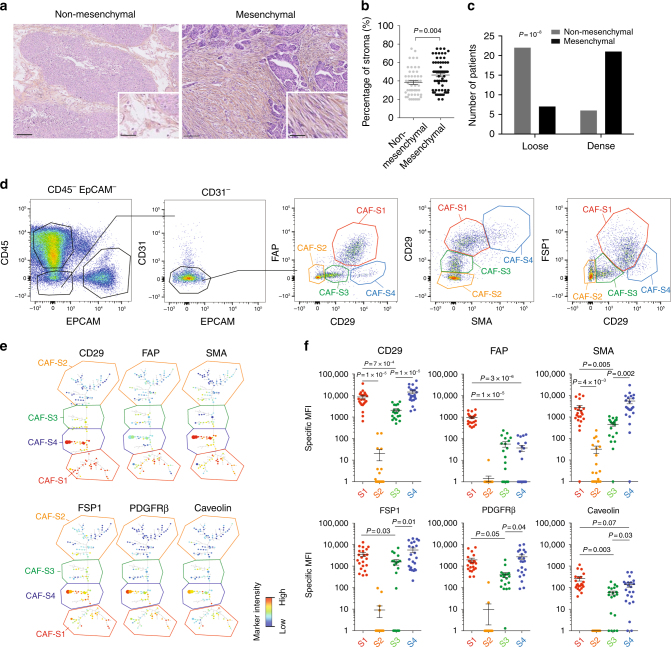
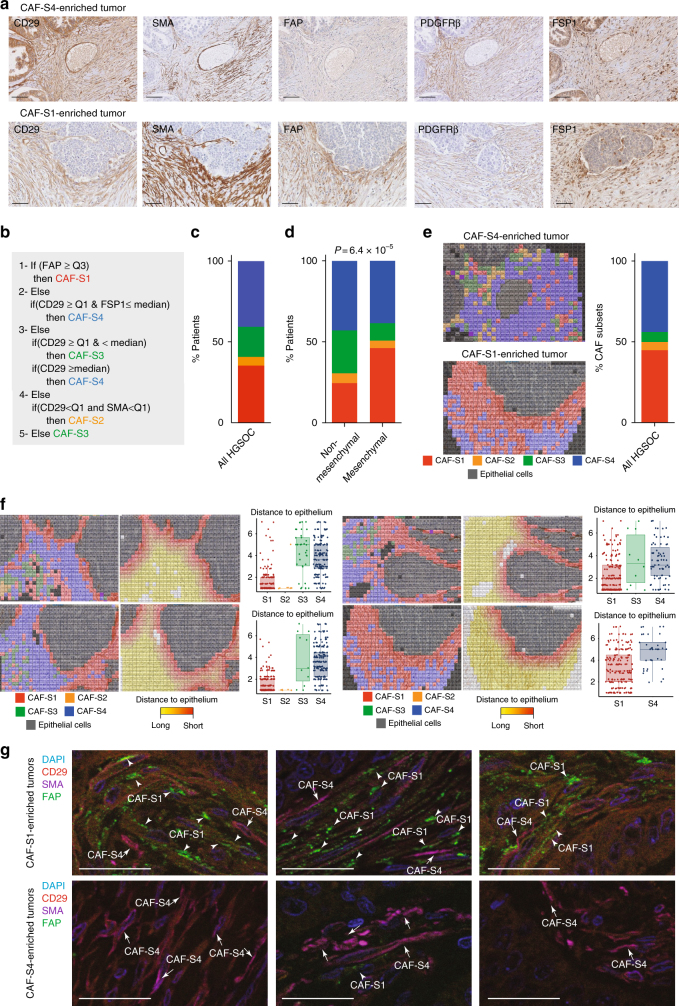
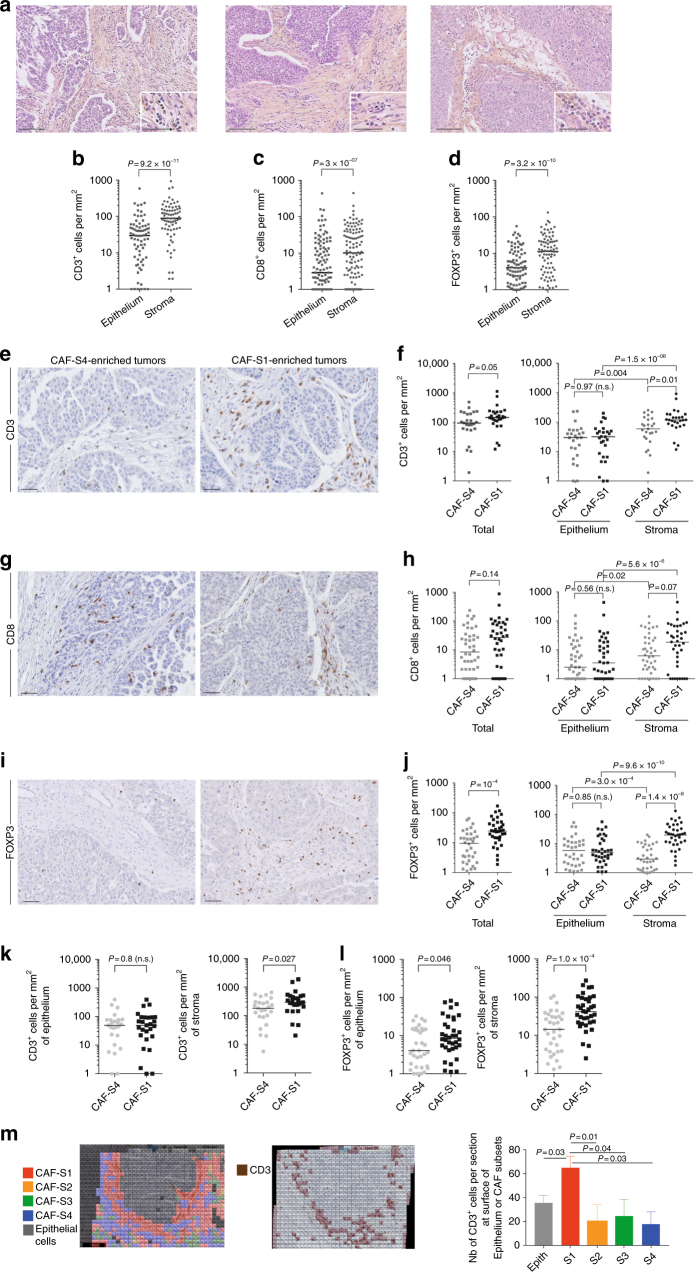
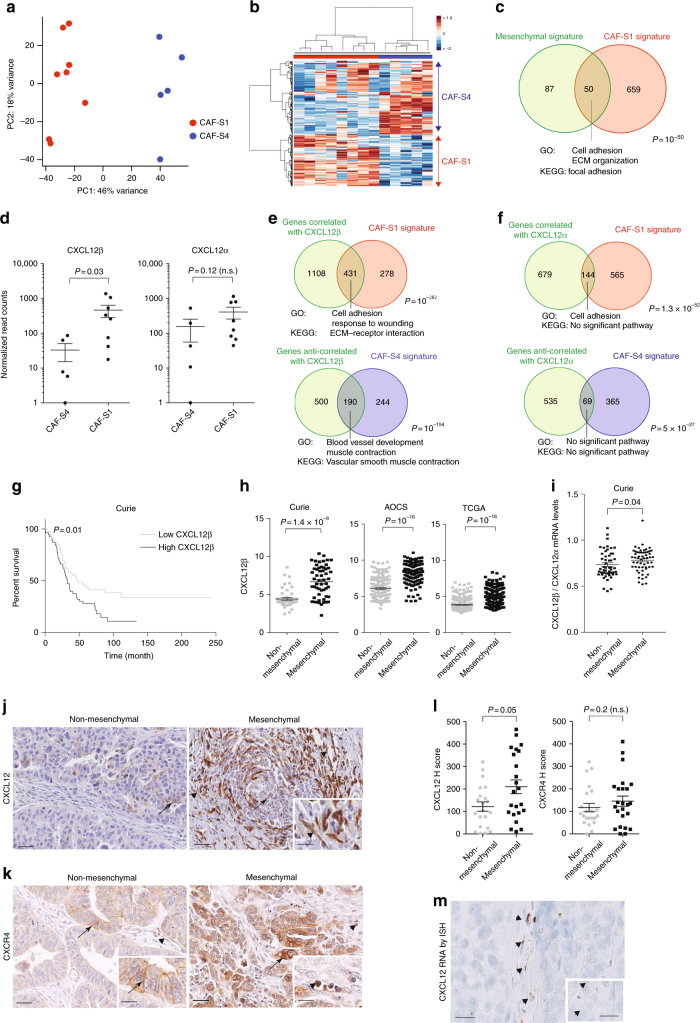
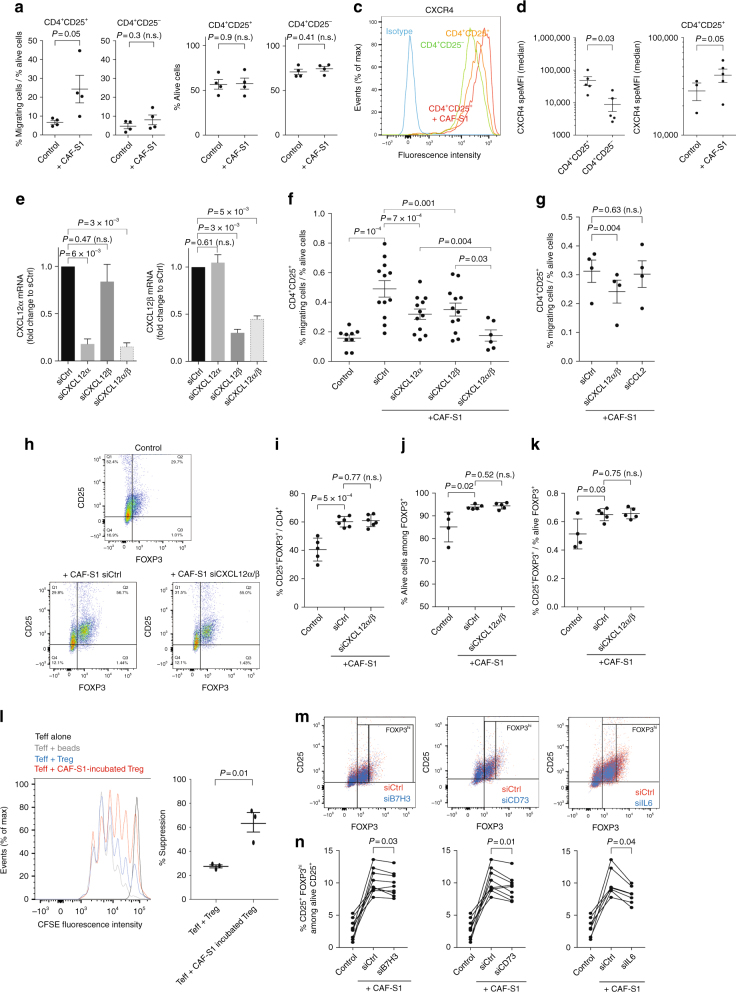
Abstract High-grade serous ovarian cancers (HGSOC) have been subdivided into molecular subtypes. The mesenchymal HGSOC subgroup, defined by stromal-related gene signatures, is invariably associated with poor patient survival. We demonstrate that stroma exerts a key function in mesenchymal HGSOC. We highlight stromal heterogeneity in HGSOC by identifying four subsets of carcinoma-associated fibroblasts (CAF-S1-4). Mesenchymal HGSOC show high content in CAF-S1 fibroblasts, which exhibit immunosuppressive functions by increasing attraction, survival, and differentiation of CD25 + FOXP3 + T lymphocytes. The beta isoform of the CXCL12 chemokine (CXCL12β) specifically accumulates in the immunosuppressive CAF-S1 subset through a miR-141/200a dependent-mechanism. Moreover, CXCL12β expression in CAF-S1 cells plays a crucial role in CAF-S1 immunosuppressive activity and is a reliable prognosis factor in HGSOC, in contrast to CXCL12α. Thus, our data highlight the differential regulation of the CXCL12α and CXCL12β isoforms in HGSOC, and reveal a CXCL12β-associated stromal heterogeneity and immunosuppressive environment in mesenchymal HGSOC.
Overview
The claims and statistics of this paper haven’t been checked yet.
Free: it reads the open-access text and checks the first 5 claims that cite a source we can check. Create a free account to check every claim.
Integrity signals
Registry
Cites
Statistics
Figures
Verification
Claims the paper makes
The claims and statistics of this paper haven’t been checked yet.
Free: it reads the open-access text and checks the first 5 claims that cite a source we can check. Create a free account to check every claim.
Claims other papers make about this one
Each is checked against this paper’s own text: does it say what the citing paper says it does?
The source backs part of the claim, not all of it — or backs it for a different population, condition or comparison.
In the citing paper
“Further, a subpopulation of CAFs (CAF-S1) found in mesenchymal HGSOC tumors upregulates CXCL12, which plays a role in increasing the attraction, survival, and differentiation of immunosuppressive CD25+FOXP3+ T lymphocytes (Givel et al., 2018).”
From Microphysiological systems as models for immunologically ‘cold’ tumors (2024) · cites this paper as Givel et al., 2018
Experimental — accuracy not yet measured
Self-check
Percentages, sums and reported differences re-computed from the paper’s own numbers.
The self-check needs the paper’s full text.
Citations
Cites
Integrated genomic analyses of ovarian carcinoma
Perou, C. M. (2019) · Carolina Digital Repository (University of North Carolina at Chapel Hill) · doi:10.17615/hvp3-wg08 · Cited by 7,925
Curiel, T. J., Coukos, G., Zou, L., Alvarez, X., Cheng, P., Mottram, P., Evdemon-Hogan, M., Conejo-Garcia, J. R., Zhang, L., Burow, M., et al. (2004) · Nature Medicine · doi:10.1038/nm1093 · Cited by 5,151
Kalluri, R., & Zeisberg, M. (2006) · Nature Reviews Cancer · doi:10.1038/nrc1877 · Cited by 4,538 · cited 1×
“To do so, we combined the use of six different markers, previously tested individually but never studied concomitantly 45 – 48 .”
MethodIntratumoral T Cells, Recurrence, and Survival in Epithelial Ovarian Cancer
Zhang, L., Conejo-Garcia, J. R., Katsaros, D., Gimotty, P. A., Massobrio, M., Regnani, G., Makrigiannakis, A., Gray, H., Schlienger, K., Liebman, M. N., et al. (2003) · New England Journal of Medicine · doi:10.1056/nejmoa020177 · Cited by 3,397 · cited 1×
“In that sense, | DOI: 10.1038/s41467-018-03348-z | www.nature.com/naturecommunications detection of CD3 + and CD8 + T lymphocytes in tumor epithelial compartment is correlated with improved patient survival in HGSOC 60,61 .”
BackgroundInfluentialRecommendations for myeloid-derived suppressor cell nomenclature and characterization standards
Bronte, V., Brandau, S., Chen, S.-H., Colombo, M. P., Frey, A. B., Greten, T. F., Mandruzzato, S., Murray, P. J., Ochoa, A., Ostrand-Rosenberg, S., et al. (2016) · Nature Communications · doi:10.1038/ncomms12150 · Cited by 2,751 · cited 2×
“Human MDSC are commonly described as Lin-CD11b + CD33 + HLADR − cells, with neutrophilic or monocytic phenotype 57 .”
BackgroundDistinct populations of inflammatory fibroblasts and myofibroblasts in pancreatic cancer
Öhlund, D., Handly-Santana, A., Biffi, G., Elyada, E., Almeida, A. S., Ponz-Sarvise, M., Corbo, V., Oni, T. E., Hearn, S. A., Lee, E. J., et al. (2017) · Journal of Experimental Medicine · doi:10.1084/jem.20162024 · Cited by 2,590
Niraparib Maintenance Therapy in Platinum-Sensitive, Recurrent Ovarian Cancer
Mirza, M. R., Monk, B. J., Herrstedt, J., Oza, A. M., Mahner, S., Redondo, A., Fabbro, M., Ledermann, J. A., Lorusso, D., Vergote, I., et al. (2016) · New England Journal of Medicine · doi:10.1056/nejmoa1611310 · Cited by 2,451
Sato, E., Olson, S. H., Ahn, J., Bundy, B., Nishikawa, H., Qian, F., Jungbluth, A. A., Frosina, D., Gnjatic, S., Ambrosone, C., et al. (2005) · Proceedings of the National Academy of Sciences · doi:10.1073/pnas.0509182102 · Cited by 2,372
Audeh, M. W., Carmichael, J., Penson, R. T., Friedlander, M., Powell, B., Bell-McGuinn, K. M., Scott, C., Weitzel, J. N., Oaknin, A., Loman, N., et al. (2010) · The Lancet · doi:10.1016/s0140-6736(10)60893-8 · Cited by 2,279
Park, S.-M., Gaur, A. B., Lengyel, E., & Peter, M. E. (2008) · Genes & Development · doi:10.1101/gad.1640608 · Cited by 2,272 · cited 2×
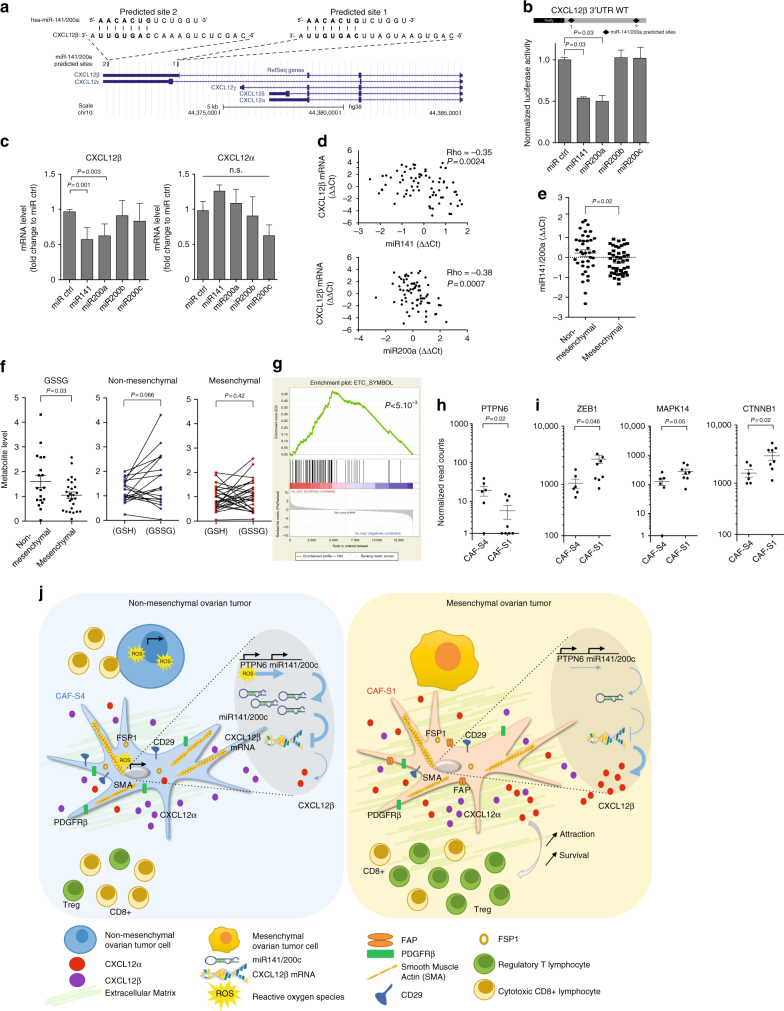
“P refers to false discovery rate q-value. h, i PTPN6 ( h ) and ZEB1 , MAPK14 , CTNNB1 (miR-141/200a-target genes 7,35,36 ) ( i ) mRNA levels in CAF-S1 and CAF-S4.”
BackgroundResultFeig, C., Jones, J. O., Kraman, M., Wells, R. J. B., Deonarine, A., Chan, D. S., Connell, C. M., Roberts, E. W., Zhao, Q., Caballero, O. L., et al. (2013) · Proceedings of the National Academy of Sciences · doi:10.1073/pnas.1320318110 · Cited by 2,100
Olaparib Maintenance Therapy in Platinum-Sensitive Relapsed Ovarian Cancer
Ledermann, J., Harter, P., Gourley, C., Friedlander, M., Vergote, I., Rustin, G., Scott, C., Meier, W., Shapira-Frommer, R., Safra, T., et al. (2012) · New England Journal of Medicine · doi:10.1056/nejmoa1105535 · Cited by 1,883
Whole–genome characterization of chemoresistant ovarian cancer
Patch, A.-M., Christie, E. L., Etemadmoghadam, D., Garsed, D. W., George, J., Fereday, S., Nones, K., Cowin, P., Alsop, K., Bailey, P. J., et al. (2015) · Nature · doi:10.1038/nature14410 · Cited by 1,569
Novel Molecular Subtypes of Serous and Endometrioid Ovarian Cancer Linked to Clinical Outcome
Tothill, R. W., Tinker, A. V., George, J., Brown, R., Fox, S. B., Lade, S., Johnson, D. S., Trivett, M. K., Etemadmoghadam, D., Locandro, B., et al. (2008) · Clinical Cancer Research · doi:10.1158/1078-0432.ccr-08-0196 · Cited by 1,467
Suppression of Antitumor Immunity by Stromal Cells Expressing Fibroblast Activation Protein–α
Kraman, M., Bambrough, P. J., Arnold, J. N., Roberts, E. W., Magiera, L., Jones, J. O., Gopinathan, A., Tuveson, D. A., & Fearon, D. T. (2010) · Science · doi:10.1126/science.1195300 · Cited by 1,134
Fong, P. C., Yap, T. A., Boss, D. S., Carden, C. P., Mergui-Roelvink, M., Gourley, C., De Greve, J., Lubinski, J., Shanley, S., Messiou, C., et al. (2010) · Journal of Clinical Oncology · doi:10.1200/jco.2009.26.9589 · Cited by 1,010
Extracting a cellular hierarchy from high-dimensional cytometry data with SPADE
Qiu, P., Simonds, E. F., Bendall, S. C., Gibbs, K. D., Bruggner, R. V., Linderman, M. D., Sachs, K., Nolan, G. P., & Plevritis, S. K. (2011) · Nature Biotechnology · doi:10.1038/nbt.1991 · Cited by 956
Fibroblast heterogeneity in the cancer wound
Öhlund, D., Elyada, E., & Tuveson, D. (2014) · Journal of Experimental Medicine · doi:10.1084/jem.20140692 · Cited by 926
Yang, X., Lin, Y., Shi, Y., Li, B., Liu, W., Yin, W., Dang, Y., Chu, Y., Fan, J., & He, R. (2016) · Cancer Research · doi:10.1158/0008-5472.can-15-2973 · Cited by 748
Carcinoma-associated fibroblasts: orchestrating the composition of malignancy
Gascard, P., & Tlsty, T. D. (2016) · Genes & Development · doi:10.1101/gad.279737.116 · Cited by 732
Tan, W., Zhang, W., Strasner, A., Grivennikov, S., Cheng, J. Q., Hoffman, R. M., & Karin, M. (2011) · Nature · doi:10.1038/nature09707 · Cited by 647
Prognostically relevant gene signatures of high-grade serous ovarian carcinoma
Verhaak, R. G. W., Tamayo, P., Yang, J.-Y., Hubbard, D., Zhang, H., Creighton, C. J., Fereday, S., Lawrence, M., Carter, S. L., Mermel, C. H., et al. (2012) · Journal of Clinical Investigation · doi:10.1172/jci65833 · Cited by 569
Chaudhary, B., & Elkord, E. (2016) · Vaccines · doi:10.3390/vaccines4030028 · Cited by 511
miR-141 and miR-200a act on ovarian tumorigenesis by controlling oxidative stress response
Mateescu, B., Batista, L., Cardon, M., Gruosso, T., de Feraudy, Y., Mariani, O., Nicolas, A., Meyniel, J.-P., Cottu, P., Sastre-Garau, X., et al. (2011) · Nature Medicine · doi:10.1038/nm.2512 · Cited by 502 · cited 8×
“Inter-estingly, both SMA and PDGFR β markers, used in our study, belong to several mesenchymal signatures 6,7 .”
BackgroundMethodResultInfluentialSelf-citationStromal senescence establishes an immunosuppressive microenvironment that drives tumorigenesis
Ruhland, M. K., Loza, A. J., Capietto, A.-H., Luo, X., Knolhoff, B. L., Flanagan, K. C., Belt, B. A., Alspach, E., Leahy, K., Luo, J., et al. (2016) · Nature Communications · doi:10.1038/ncomms11762 · Cited by 496
Myeloid-Derived Suppressor Cells
(2015) · Advances in Cancer Research · doi:10.1016/bs.acr.2015.04.002 · Cited by 482
Magenta, A., Cencioni, C., Fasanaro, P., Zaccagnini, G., Greco, S., Sarra-Ferraris, G., Antonini, A., Martelli, F., & Capogrossi, M. C. (2011) · Cell Death & Differentiation · doi:10.1038/cdd.2011.42 · Cited by 457
Kryczek, I., Lange, A., Mottram, P., Alvarez, X., Cheng, P., Hogan, M., Moons, L., Wei, S., Zou, L., Machelon, V., et al. (2005) · Cancer Research · doi:10.1158/0008-5472.465.65.2 · Cited by 421
Prognostic and Therapeutic Relevance of Molecular Subtypes in High-Grade Serous Ovarian Cancer
Konecny, G. E., Wang, C., Hamidi, H., Winterhoff, B., Kalli, K. R., Dering, J., Ginther, C., Chen, H.-W., Dowdy, S., Cliby, W., et al. (2014) · JNCI: Journal of the National Cancer Institute · doi:10.1093/jnci/dju249 · Cited by 398
Cheon, D.-J., Tong, Y., Sim, M.-S., Dering, J., Berel, D., Cui, X., Lester, J., Beach, J. A., Tighiouart, M., Walts, A. E., et al. (2014) · Clinical Cancer Research · doi:10.1158/1078-0432.ccr-13-1256 · Cited by 373
Oxidative stress promotes myofibroblast differentiation and tumour spreading
Toullec, A., Gerald, D., Despouy, G., Bourachot, B., Cardon, M., Lefort, S., Richardson, M., Rigaill, G., Parrini, M., Lucchesi, C., et al. (2010) · EMBO Molecular Medicine · doi:10.1002/emmm.201000073 · Cited by 339
Self-citationCarcinoma-associated fibroblasts are a rate-limiting determinant for tumour progression
Shimoda, M., Mellody, K. T., & Orimo, A. (2010) · Seminars in Cell & Developmental Biology · doi:10.1016/j.semcdb.2009.10.002 · Cited by 325
Fearon, D. T. (2014) · Cancer Immunology Research · doi:10.1158/2326-6066.cir-14-0002 · Cited by 288
Righi, E., Kashiwagi, S., Yuan, J., Santosuosso, M., Leblanc, P., Ingraham, R., Forbes, B., Edelblute, B., Collette, B., Xing, D., et al. (2011) · Cancer Research · doi:10.1158/0008-5472.can-10-3143 · Cited by 245
Zhang, Y., Tang, H., Cai, J., Zhang, T., Guo, J., Feng, D., & Wang, Z. (2011) · Cancer Letters · doi:10.1016/j.canlet.2011.01.011 · Cited by 242
Identification and expression of novel isoforms of human stromal cell-derived factor 1
Yu, L., Cecil, J., Peng, S.-B., Schrementi, J., Kovacevic, S., Paul, D., Su, E. W., & Wang, J. (2006) · Gene · doi:10.1016/j.gene.2006.02.001 · Cited by 232
A Dynamic Inflammatory Cytokine Network in the Human Ovarian Cancer Microenvironment
Kulbe, H., Chakravarty, P., Leinster, D. A., Charles, K. A., Kwong, J., Thompson, R. G., Coward, J. I., Schioppa, T., Robinson, S. C., Gallagher, W. M., et al. (2012) · Cancer Research · doi:10.1158/0008-5472.can-11-2178 · Cited by 220
miR-141 regulates KEAP1 and modulates cisplatin sensitivity in ovarian cancer cells
van Jaarsveld, M. T. M., Helleman, J., Boersma, A. W. M., van Kuijk, P. F., van IJcken, W. F., Despierre, E., Vergote, I., Mathijssen, R. H. J., Berns, E. M. J. J., Verweij, J., et al. (2013) · Oncogene · doi:10.1038/onc.2012.433 · Cited by 219
Xia, H., Ng, S. S., Jiang, S., Cheung, W. K. C., Sze, J., Bian, X.-W., Kung, H.-F., & Lin, M. C. (2010) · Biochemical and Biophysical Research Communications · doi:10.1016/j.bbrc.2009.11.093 · Cited by 193
Functional diversity of SDF-1 splicing variants
Janowski, M. (2009) · Cell Adhesion & Migration · doi:10.4161/cam.3.3.8260 · Cited by 189
Thibault, B., Castells, M., Delord, J.-P., & Couderc, B. (2014) · Cancer and Metastasis Reviews · doi:10.1007/s10555-013-9456-2 · Cited by 184
Jiang, Y.-P., Wu, X.-H., Shi, B., Wu, W.-X., & Yin, G.-R. (2006) · Gynecologic Oncology · doi:10.1016/j.ygyno.2006.02.036 · Cited by 173
Cancer Associated Fibroblasts express pro-inflammatory factors in human breast and ovarian tumors
Erez, N., Glanz, S., Raz, Y., Avivi, C., & Barshack, I. (2013) · Biochemical and Biophysical Research Communications · doi:10.1016/j.bbrc.2013.06.089 · Cited by 167
Wei, S., Kryczek, I., Edwards, R. P., Zou, L., Szeliga, W., Banerjee, M., Cost, M., Cheng, P., Chang, A., Redman, B., et al. (2007) · Cancer Research · doi:10.1158/0008-5472.can-07-0565 · Cited by 159
Schauer, I. G., Sood, A. K., Mok, S., & Liu, J. (2011) · Neoplasia · doi:10.1593/neo.101720 · Cited by 155
Gil, M., Komorowski, M. P., Seshadri, M., Rokita, H., McGray, A. J. R., Opyrchal, M., Odunsi, K. O., & Kozbor, D. (2014) · The Journal of Immunology · doi:10.4049/jimmunol.1400201 · Cited by 151
Huang, Z., Shi, T., Zhou, Q., Shi, S., Zhao, R., Shi, H., Dong, L., Zhang, C., Zeng, K., Chen, J., et al. (2014) · Gut · doi:10.1136/gutjnl-2012-304213 · Cited by 133
HOXA9 promotes ovarian cancer growth by stimulating cancer-associated fibroblasts
Ko, S. Y., Barengo, N., Ladanyi, A., Lee, J.-S., Marini, F., Lengyel, E., & Naora, H. (2012) · Journal of Clinical Investigation · doi:10.1172/jci62229 · Cited by 132
Bentink, S., Haibe-Kains, B., Risch, T., Fan, J.-B., Hirsch, M. S., Holton, K., Rubio, R., April, C., Chen, J., Wickham-Garcia, E., et al. (2012) · PLoS ONE · doi:10.1371/journal.pone.0030269 · Cited by 130
Integrated genomic analyses of ovarian carcinoma
The Cancer Genome Atlas Research Network (2011) · Nature · doi:10.1038/nature10166 · Cited by 129
The chemokine, CXCL12, is an independent predictor of poor survival in ovarian cancer
Popple, A. L., Durrant, L. G., Spendlove, I., Rolland, P. D., Scott, I., Deen, S., & Ramage, J. M. (2012) · British Journal of Cancer · doi:10.1038/bjc.2012.49 · Cited by 124
Lisanti, M. P., Martinez-Outschoorn, U. E., & Sotgia, F. (2013) · Cell Cycle · doi:10.4161/cc.25695 · Cited by 119
Filios, S. R., Xu, G., Chen, J., Hong, K.-H., Gu, J., & Shalev, A. (2014) · Journal of Biological Chemistry · doi:10.1074/jbc.m114.592360 · Cited by 108
Pils, D., Pinter, A., Reibenwein, J., Alfanz, A., Horak, P., Schmid, B. C., Hefler, L., Horvat, R., Reinthaller, A., Zeillinger, R., et al. (2007) · British Journal of Cancer · doi:10.1038/sj.bjc.6603581 · Cited by 103
Suppressive activity of human regulatory T cells is maintained in the presence of TNF
Zaragoza, B., Chen, X., Oppenheim, J. J., Baeyens, A., Gregoire, S., Chader, D., Gorochov, G., Miyara, M., & Salomon, B. L. (2016) · Nature Medicine · doi:10.1038/nm.4019 · Cited by 97
CXCR4 inhibitors could benefit to HER2 but not to triple-negative breast cancer patients
Lefort, S., Thuleau, A., Kieffer, Y., Sirven, P., Bieche, I., Marangoni, E., Vincent-Salomon, A., & Mechta-Grigoriou, F. (2017) · Oncogene · doi:10.1038/onc.2016.284 · Cited by 86
The Prognostic Value of CXCR4 in Ovarian Cancer: A Meta-Analysis
Liu, C., Liu, S.-Y., Min, X.-Y., Ji, Y., Wang, N., Liu, D., Ma, N., Li, Z., & Li, K. (2014) · PLoS ONE · doi:10.1371/journal.pone.0092629 · Cited by 74
Xu, S., Zhang, R., Niu, J., Cui, D., Xie, B., Zhang, B., Lu, K., Yu, W., Wang, X., & Zhang, Q. (2012) · International Journal of Molecular Sciences · doi:10.3390/ijms131216945 · Cited by 73
Regulatory T cells, inherited variation, and clinical outcome in epithelial ovarian cancer
Knutson, K. L., Maurer, M. J., Preston, C. C., Moysich, K. B., Goergen, K., Hawthorne, K. M., Cunningham, J. M., Odunsi, K., Hartmann, L. C., Kalli, K. R., et al. (2015) · Cancer Immunology, Immunotherapy · doi:10.1007/s00262-015-1753-x · Cited by 62
Gunaydin, G., Kesikli, S. A., & Guc, D. (2015) · OncoImmunology · doi:10.1080/2162402x.2015.1034918 · Cited by 59
Gruosso, T., Garnier, C., Abelanet, S., Kieffer, Y., Lemesre, V., Bellanger, D., Bieche, I., Marangoni, E., Sastre-Garau, X., Mieulet, V., et al. (2015) · Nature Communications · doi:10.1038/ncomms9583 · Cited by 57
Targeting Stromal-Cancer Cell Crosstalk Networks in Ovarian Cancer Treatment
Yeung, T.-L., Leung, C., Li, F., Wong, S., & Mok, S. (2016) · Biomolecules · doi:10.3390/biom6010003 · Cited by 52
The Role of the Tumor Stroma in Ovarian Cancer
Davidson, B., Tropé, C., & Reich, R. (2014) · Frontiers in Oncology · doi:10.3389/fonc.2014.00104 · Cited by 51
Pujade-Lauraine, É., & Combe, P. (2016) · Annals of Oncology · doi:10.1093/annonc/mdw079 · Cited by 47
Corvigno, S., Wisman, G. B. A., Mezheyeuski, A., van der Zee, A. G. J., Nijman, H. W., Åvall-Lundqvist, E., Östman, A., & Dahlstrand, H. (2016) · Oncotarget · doi:10.18632/oncotarget.7613 · Cited by 46
Regulation of miR-200c/141 expression by intergenic DNA-looping and transcriptional read-through
Batista, L., Bourachot, B., Mateescu, B., Reyal, F., & Mechta-Grigoriou, F. (2016) · Nature Communications · doi:10.1038/ncomms9959 · Cited by 41
Batista, L., Gruosso, T., & Mechta‐Grigoriou, F. (2013) · The International Journal of Biochemistry & Cell Biology · doi:10.1016/j.biocel.2013.03.001 · Cited by 39
Connective tissue growth factor as a novel therapeutic target in high grade serous ovarian cancer
Moran-Jones, K., Gloss, B. S., Murali, R., Chang, D. K., Colvin, E. K., Jones, M. D., Yuen, S., Howell, V. M., Brown, L. M., Wong, C. W., et al. (2015) · Oncotarget · doi:10.18632/oncotarget.6082 · Cited by 39
Mhawech-Fauceglia, P. Y., Wang, D., Samrao, D., Kim, G., Lawrenson, K., Meneses, T., Liu, S., Yessaian, A. A., & Pejovic, T. B. (2013) · Cancer Microenvironment · doi:10.1007/s12307-013-0140-4 · Cited by 32
CXCL12 expression by healthy and malignant ovarian epithelial cells
Machelon, V., Gaudin, F., Camilleri‐Broët, S., Nasreddine, S., Bouchet‐Delbos, L., Pujade-Lauraine, É., Alexandre, J., Gladieff, L., Arenzana‐Seisdedos, F., Émilie, D., et al. (2011) · BMC Cancer · doi:10.1186/1471-2407-11-97 · Cited by 29
Functional Alteration of Tumor-infiltrating Myeloid Cells in RNA Adjuvant Therapy.
Seya, T., Shime, H., & Matsumoto, M. (2015) · PubMed · Cited by 10
Cited by
Macrophages as regulators of tumour immunity and immunotherapy
DeNardo, D. G., & Ruffell, B. (2019) · Nature Reviews Immunology · doi:10.1038/s41577-019-0127-6 · Cited by 2,528
Mao, X., Xu, J., Wang, W., Liang, C., Hua, J., Liu, J., Zhang, B., Meng, Q., Yu, X., & Shi, S. (2021) · Molecular Cancer · doi:10.1186/s12943-021-01428-1 · Cited by 2,290
“CAF-S2 (non-activated) Not reported Not reported [97]”
BackgroundResultInfluentialClinical and therapeutic relevance of cancer-associated fibroblasts
Chen, Y., McAndrews, K. M., & Kalluri, R. (2021) · Nature Reviews Clinical Oncology · doi:10.1038/s41571-021-00546-5 · Cited by 1,230
Single-cell analysis reveals fibroblast clusters linked to immunotherapy resistance in cancer.
Kieffer, Y., Hocine, H. R., Gentric, G., Pelon, F., Bernard, C., Bourachot, B., Lameiras, S., Albergante, L., Bonneau, C., Guyard, A., et al. (2020) · Cancer Discovery · doi:10.1158/2159-8290.cd-19-1384 · Cited by 910
“CAF-S1 fibroblasts are defined by extracellular matrix and inflammation signatures, and CAF-S4 are characterized by a perivascular signature (8,10).”
BackgroundMethodResultInfluentialSelf-citationCancer-associated fibroblasts: an emerging target of anti-cancer immunotherapy
Liu, T., Han, C., Wang, S., Fang, P., Ma, Z., Xu, L., & Yin, R. (2019) · Journal of Hematology & Oncology · doi:10.1186/s13045-019-0770-1 · Cited by 860
“However, the effect of ECM composition on Tregs, DCs, and neutrophils remains poorly understood.”
BackgroundInfluential
Metadata
- Authors
- Givel, A.-M., Kieffer, Y., Scholer-Dahirel, A., Sirven, P., Cardon, M., Pelon, F., Magagna, I., Gentric, G., Costa, A., Bonneau, C., Mieulet, V., Vincent-Salomon, A., & Mechta-Grigoriou, F.
- Affiliations
- Inserm (FR)
- ORCID
- Venue
- Nature Communications
- Published
- 2018-03-13
- Volume
- 9
- Issue
- 1
- Pages
- 1056-1056
- ISSN
- 2041-1723 (ISSN-L)
- PMC
- PMC5849633
- OpenAlex
- W2792780338
- Cited by
- 295
- References
- 70
- Citations by year
- 2026: 32 · 2025: 30 · 2024: 42 · 2023: 35 · 2022: 50 · 2021: 39 · 2020: 35 · 2019: 23 · 2018: 9
- FWCI
- 28.42
- Type
- journal article
- Language
- en
- Open access
- gold
- doi.org
- Licence
- cc-by
- creativecommons.org/licenses/by/4.0 (tdm)
- creativecommons.org/licenses/by/4.0 (vor)
- Locations
- Nature Communications (publishedVersion, cc-by)
- PubMed Central (publishedVersion, cc-by)
- PubMed (publishedVersion)
- HAL (submittedVersion, other-oa)
- RePEc: Research Papers in Economics (submittedVersion)
- DOAJ (DOAJ: Directory of Open Access Journals) (submittedVersion, cc-by-sa)
- DOAJ (DOAJ: Directory of Open Access Journals) (submittedVersion)
- Funders
- Institut National de la Santé et de la Recherche Médicale
- Fondation ARC pour la Recherche sur le Cancer (INCa-DGOS-4654)
- Institut National Du Cancer (2015-1-RT-04-ICR-1, 2011-1-PLBIO-12-IC-1)
- Direction Générale de l’offre de Soins
- Topics
- Health Sciences › Medicine › Oncology › Ovarian cancer diagnosis and treatment
- Health Sciences › Medicine › Oncology › Chemokine receptors and signaling
- Life Sciences › Biochemistry, Genetics and Molecular Biology › Cancer Research › MicroRNA in disease regulation
- Keywords
- high-grade serous ovarian cancer, miR-200a, miR-141, cancer-associated fibroblasts, immunosuppression, regulatory T cells, Foxp3, mesenchymal subtype, prognosis, chemokine signaling
- MeSH terms
- Cell Differentiation, Female, Fibroblasts, Humans, Ovarian Neoplasms, Gene Expression Regulation, Neoplastic, MicroRNAs, Cell Line, Tumor, Cell Proliferation, Chemokine CXCL12
About these checks
Registry, retraction, Cites and statistics results are computed, not judged, with one exception: a printed reference that no index lists is read once by a model before it counts as a citation error. Claims are extracted by a model and kept only when their quote appears verbatim in the text; each cited source is then checked, with a model’s help, for whether it says what the claim relies on. Those verdicts can be wrong — read the claim’s quote and the cited source before relying on one.
Statistics and arithmetic are recomputed, not judged.
Confidence bands are shown only for fields calibrated on our annotated test set. None is calibrated yet, so no band is shown.
What counts as a claim ›How we measure confidence ›How we check this ›
Are you an author, or do you see a problem with this page? Request a review
Data sources
Bibliographic data: Semantic Scholar, OpenAlex, Crossref.
Contains information from the Semantic Scholar Academic Graph Datasets, made available under the ODC Attribution License (ODC-BY 1.0).
Semantic Scholar’s data is described in: Kinney, R., et al. (2023). The Semantic Scholar Open Data Platform. arXiv:2301.10140.
