

miR200-regulated CXCL12β promotes fibroblast heterogeneity and immunosuppression in ovarian cancers
Open accessThe DOI matches its Crossref record; 71 of the 71 references it cites were found in a registry or an index.
Abstract
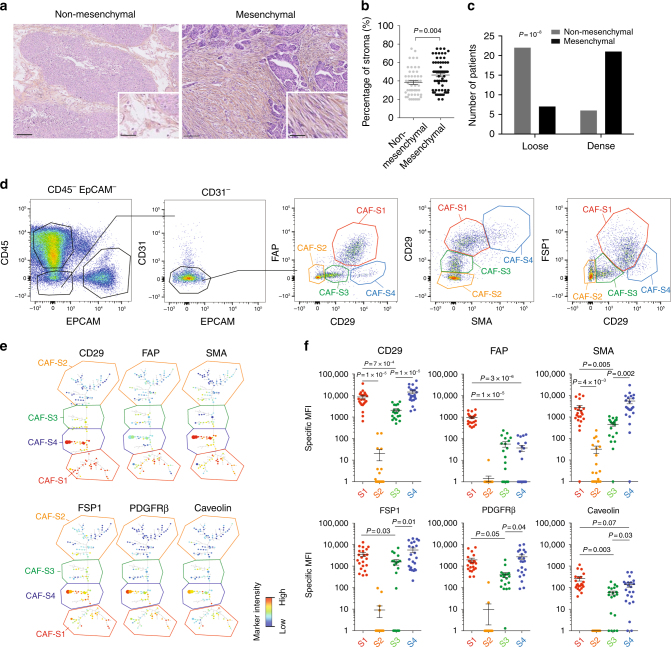
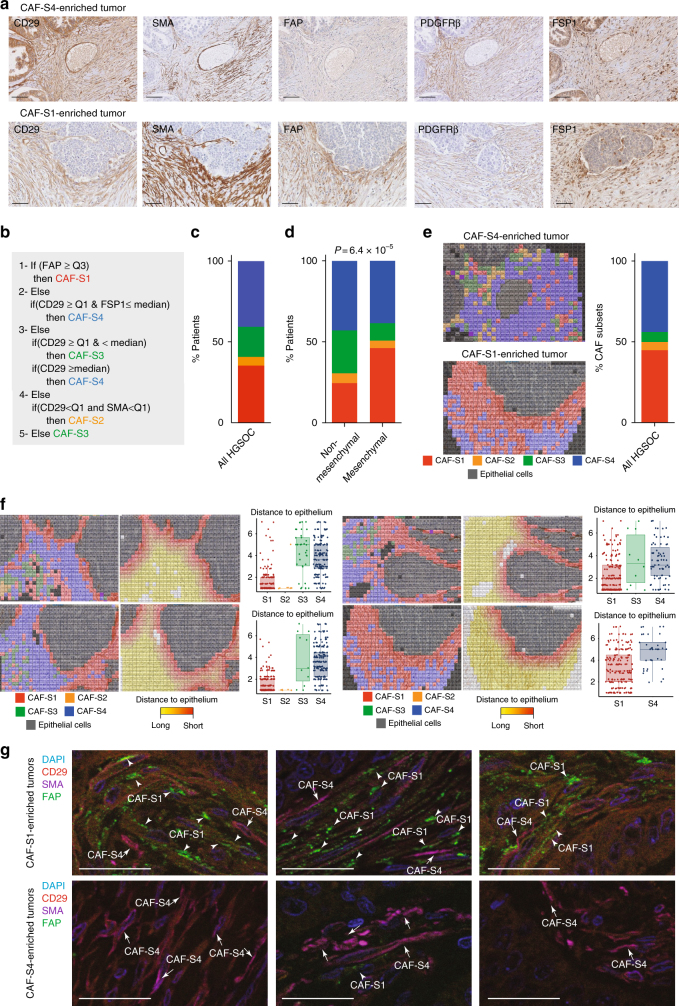
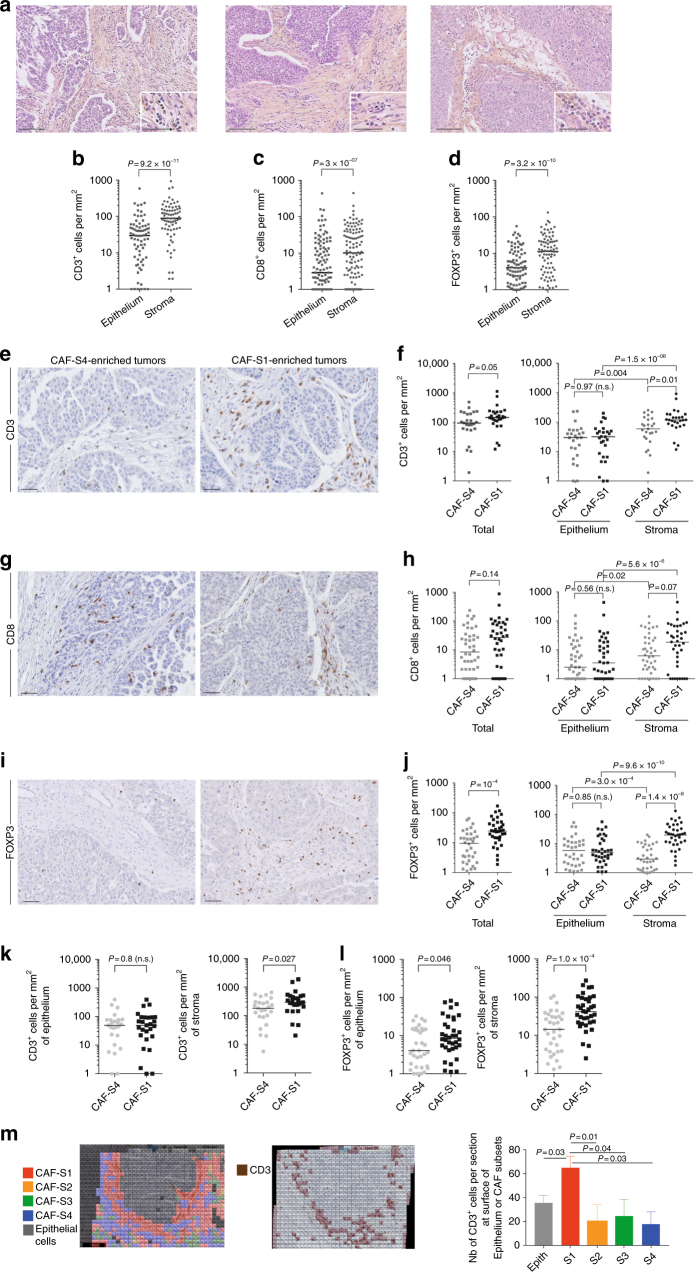
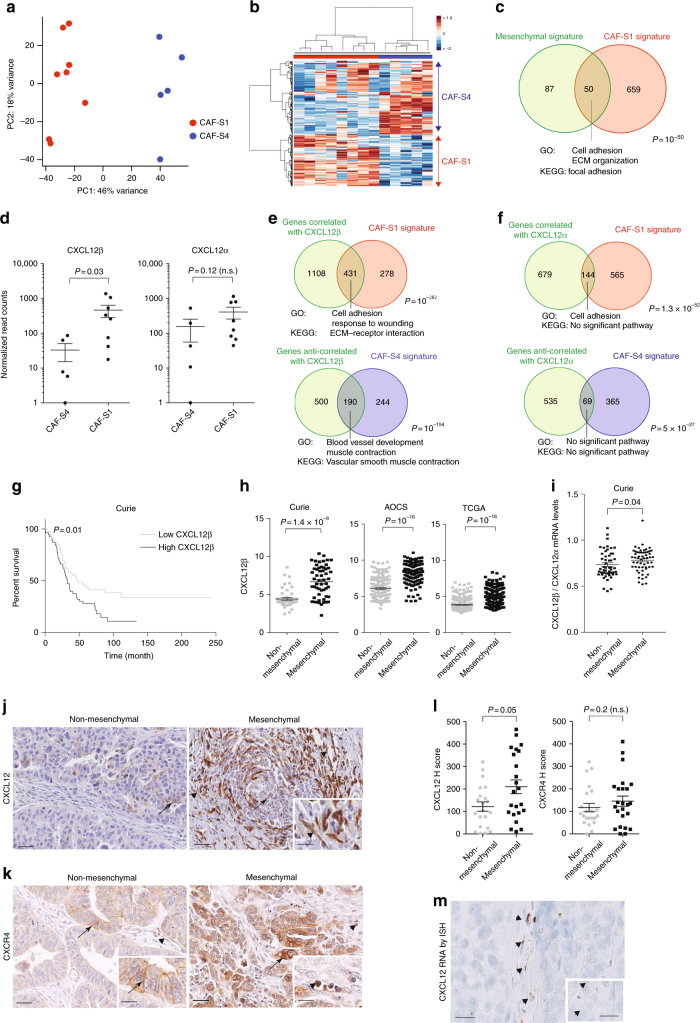
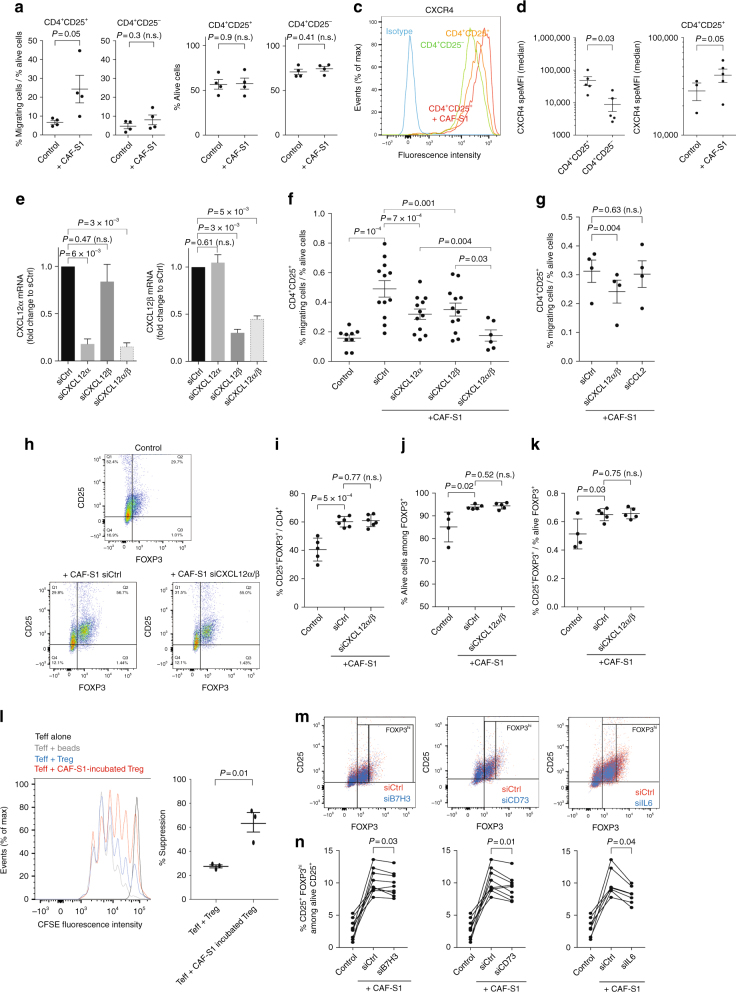
Abstract High-grade serous ovarian cancers (HGSOC) have been subdivided into molecular subtypes. The mesenchymal HGSOC subgroup, defined by stromal-related gene signatures, is invariably associated with poor patient survival. We demonstrate that stroma exerts a key function in mesenchymal HGSOC. We highlight stromal heterogeneity in HGSOC by identifying four subsets of carcinoma-associated fibroblasts (CAF-S1-4). Mesenchymal HGSOC show high content in CAF-S1 fibroblasts, which exhibit immunosuppressive functions by increasing attraction, survival, and differentiation of CD25 + FOXP3 + T lymphocytes. The beta isoform of the CXCL12 chemokine (CXCL12β) specifically accumulates in the immunosuppressive CAF-S1 subset through a miR-141/200a dependent-mechanism. Moreover, CXCL12β expression in CAF-S1 cells plays a crucial role in CAF-S1 immunosuppressive activity and is a reliable prognosis factor in HGSOC, in contrast to CXCL12α. Thus, our data highlight the differential regulation of the CXCL12α and CXCL12β isoforms in HGSOC, and reveal a CXCL12β-associated stromal heterogeneity and immunosuppressive environment in mesenchymal HGSOC.
Overview
The claims and statistics of this paper haven’t been checked yet.
Free: it reads the open-access text and checks the first 5 claims that cite a source we can check. Create a free account to check every claim.
Integrity signals
Registry
Cites
Statistics
Figures
Verification
Claims the paper makes
The claims and statistics of this paper haven’t been checked yet.
Free: it reads the open-access text and checks the first 5 claims that cite a source we can check. Create a free account to check every claim.
Claims other papers make about this one
Each is checked against this paper’s own text: does it say what the citing paper says it does?
The source backs part of the claim, not all of it — or backs it for a different population, condition or comparison.
In the citing paper
“Further, a subpopulation of CAFs (CAF-S1) found in mesenchymal HGSOC tumors upregulates CXCL12, which plays a role in increasing the attraction, survival, and differentiation of immunosuppressive CD25+FOXP3+ T lymphocytes (Givel et al., 2018).”
From Microphysiological systems as models for immunologically ‘cold’ tumors (2024) · cites this paper as Givel et al., 2018
Experimental — accuracy not yet measured
Self-check
Percentages, sums and reported differences re-computed from the paper’s own numbers.
The self-check needs the paper’s full text.
Citations
Cites
Integrated genomic analyses of ovarian carcinoma
Perou, C. M. (2019) · Carolina Digital Repository (University of North Carolina at Chapel Hill) · doi:10.17615/hvp3-wg08 · Cited by 7,925
Curiel, T. J., Coukos, G., Zou, L., Alvarez, X., Cheng, P., Mottram, P., Evdemon-Hogan, M., Conejo-Garcia, J. R., Zhang, L., Burow, M., et al. (2004) · Nature Medicine · doi:10.1038/nm1093 · Cited by 5,151
Kalluri, R., & Zeisberg, M. (2006) · Nature Reviews Cancer · doi:10.1038/nrc1877 · Cited by 4,538 · cited 1×
“To do so, we combined the use of six different markers, previously tested individually but never studied concomitantly 45 – 48 .”
MethodIntratumoral T Cells, Recurrence, and Survival in Epithelial Ovarian Cancer
Zhang, L., Conejo-Garcia, J. R., Katsaros, D., Gimotty, P. A., Massobrio, M., Regnani, G., Makrigiannakis, A., Gray, H., Schlienger, K., Liebman, M. N., et al. (2003) · New England Journal of Medicine · doi:10.1056/nejmoa020177 · Cited by 3,397 · cited 1×
“In that sense, | DOI: 10.1038/s41467-018-03348-z | www.nature.com/naturecommunications detection of CD3 + and CD8 + T lymphocytes in tumor epithelial compartment is correlated with improved patient survival in HGSOC 60,61 .”
BackgroundInfluentialRecommendations for myeloid-derived suppressor cell nomenclature and characterization standards
Bronte, V., Brandau, S., Chen, S.-H., Colombo, M. P., Frey, A. B., Greten, T. F., Mandruzzato, S., Murray, P. J., Ochoa, A., Ostrand-Rosenberg, S., et al. (2016) · Nature Communications · doi:10.1038/ncomms12150 · Cited by 2,751 · cited 2×
“Human MDSC are commonly described as Lin-CD11b + CD33 + HLADR − cells, with neutrophilic or monocytic phenotype 57 .”
BackgroundDistinct populations of inflammatory fibroblasts and myofibroblasts in pancreatic cancer
Öhlund, D., Handly-Santana, A., Biffi, G., Elyada, E., Almeida, A. S., Ponz-Sarvise, M., Corbo, V., Oni, T. E., Hearn, S. A., Lee, E. J., et al. (2017) · Journal of Experimental Medicine · doi:10.1084/jem.20162024 · Cited by 2,590
Niraparib Maintenance Therapy in Platinum-Sensitive, Recurrent Ovarian Cancer
Mirza, M. R., Monk, B. J., Herrstedt, J., Oza, A. M., Mahner, S., Redondo, A., Fabbro, M., Ledermann, J. A., Lorusso, D., Vergote, I., et al. (2016) · New England Journal of Medicine · doi:10.1056/nejmoa1611310 · Cited by 2,451
Sato, E., Olson, S. H., Ahn, J., Bundy, B., Nishikawa, H., Qian, F., Jungbluth, A. A., Frosina, D., Gnjatic, S., Ambrosone, C., et al. (2005) · Proceedings of the National Academy of Sciences · doi:10.1073/pnas.0509182102 · Cited by 2,372
Audeh, M. W., Carmichael, J., Penson, R. T., Friedlander, M., Powell, B., Bell-McGuinn, K. M., Scott, C., Weitzel, J. N., Oaknin, A., Loman, N., et al. (2010) · The Lancet · doi:10.1016/s0140-6736(10)60893-8 · Cited by 2,279
Park, S.-M., Gaur, A. B., Lengyel, E., & Peter, M. E. (2008) · Genes & Development · doi:10.1101/gad.1640608 · Cited by 2,272 · cited 2×
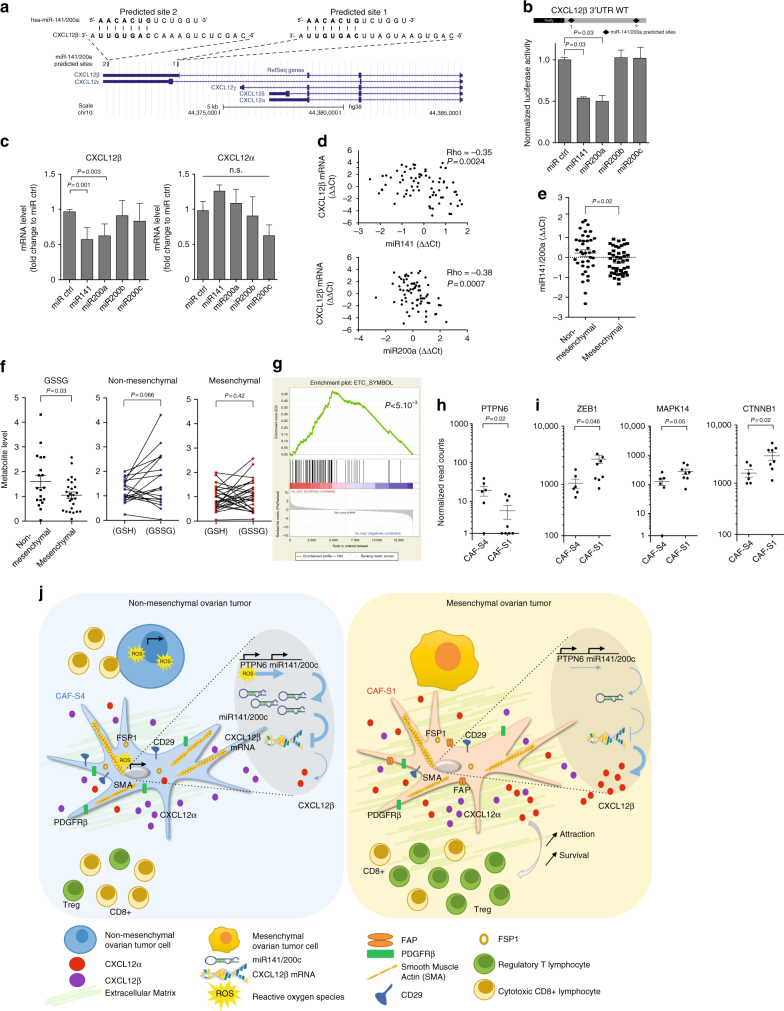
“P refers to false discovery rate q-value. h, i PTPN6 ( h ) and ZEB1 , MAPK14 , CTNNB1 (miR-141/200a-target genes 7,35,36 ) ( i ) mRNA levels in CAF-S1 and CAF-S4.”
BackgroundResult
Cited by
Items 201–295 of 295
Mathieson, L., Jones, P., Koppensteiner, L., Neilson, L., Dorward, D. A., O’Connor, R. A., & Akram, A. R. (2025) · BJC Reports · doi:10.1038/s44276-025-00159-w · Cited by 9
Lv, Y., Duan, T., Song, J., Liu, S., Zhou, Z., Ba, Y., Weng, S., Zuo, A., Xu, H., Luo, P., et al. (2026) · 癌症:英文版 · doi:10.34133/cancomm.0002 · Cited by 8
Dong, L., Li, Y., Song, X., Sun, C., & Song, X. (2024) · BMC Cancer · doi:10.1186/s12885-024-12907-1 · Cited by 9
“…gene signature and mass spectrometry analysis have shown that the secretion profile of CAF, including CXCL1, CXCL2, CXCL5, CXCL12, CCL5, IL-1β, IL-6, IL-10, VEGF, and TGFβ, plays a major role in modulating the TME by regulating immune cell recruitment and functions within tumors [9, 40–47].”
MethodTortora, K., Margheri, F., Luceri, C., Mocali, A., Ristori, S., Magnelli, L., Caderni, G., & Giovannelli, L. (2021) · International Journal of Cancer · doi:10.1002/ijc.33796 · Cited by 6
McQuarter, A. A., Cruz, J., Yamauchi, C. R., Chouchen, M., Carter, C. S., Webb, T. J., & Khan, S. (2026) · Current Oncology · doi:10.3390/curroncol33010059 · Cited by 8
“…carcinoma, tumor cells reprogram fibroblasts through TGF-β and inflammatory signaling, generating distinct CAF states that reciprocally promote tumor growth, ECM remodeling, and immune suppression via IL-6/signal transducer and activator of transcription 3 (STAT3) and CXCL12 signaling [22,25–27].”
[Research Status of Tumor-associated Fibroblasts Regulating Immune Cells].
Mu, G., Zhang, W., Huang, J., Chen, Z., & Wang, J. (2022) · PubMed Central · doi:10.3779/j.issn.1009-3419.2022.101.04 · Cited by 8
Role of cancer-associated fibroblasts in tumor microenvironment
Mir, M. A., Sofi, S., & Aisha, S. (2022) · Elsevier eBooks · doi:10.1016/b978-0-443-18696-7.00002-6 · Cited by 6
A novel humanized immune stroma PDX cancer model for therapeutic studies
Yang, D., Beddows, I., Tang, H., Bai, S., Cascio, S., McGonigal, S. C., Johnson, B. K., Powers, J. J., Acharya, R., Bao, R., et al. (2026) · Cancer Immunology Immunotherapy · doi:10.1007/s00262-026-04349-4 · Cited by 8
S100A4/FSP1: A Prognostic Marker and a Promising Target for Antitumor Therapy
Bogachek, M. V., Kazakova, A., Sergeevichev, D., Vladimirov, S., Richter, V. A., & Nushtaeva, A. A. (2025) · International Journal of Molecular Sciences · doi:10.3390/ijms26199370 · Cited by 8
Romoli, J., Chiodelli, P., Signoroni, P. B., Vertua, E., Ferrari, C., Giuzzi, E., Paini, A., Scalvini, E., Papait, A., Stefani, F. R., et al. (2025) · MedComm · doi:10.1002/mco2.70172 · Cited by 6
“Further phenotypic characterization revealed that FAP, a fibroblast activation broad marker [62], was upregulated in all OC-CM conditions, regardless of TGF-β , while MFAP5 was selectively upregulated by OV-90-CM, SKOV3-CM, and TGF-β .”
Yan, J. C., Zhu, J., Zhu, X., Liu, H., & Chen, G. (2022) · Bioengineered · doi:10.1080/21655979.2022.2080386 · Cited by 5
RetractedLiang, Z.-Q., He, R., Luo, J., Huang, Z., Li, J., Zhong, L.-Y., Chen, J., Huang, S., Shi, L., Wei, K., et al. (2022) · Pathology & Oncology Research · doi:10.3389/pore.2022.1610404 · Cited by 4
“However, the roles of CAFs were heterogeneous [55].”
BackgroundPicard, M., Guillé, A., Finetti, P., de Rauglaudre, B., Belfil, N., Mescam, L., Birnbaum, D. J., Bertucci, F., & Mamessier, É. (2026) · Journal for ImmunoTherapy of Cancer · doi:10.1136/jitc-2025-013356 · Cited by 7
Tumor-Fibroblast Interactions in Carcinomas
Dongre, H., & Costea, D. E. (2022) · Springer eBooks · doi:10.1007/978-3-030-98950-7_7 · Cited by 5
Mai, W., Liu, Q., Li, J., Zheng, M., Yan, F., Liu, H., Lei, Y., Xu, J., & Xu, J. (2023) · Aging · doi:10.18632/aging.204707 · Cited by 4
Teisseire, M., Giuliano, S., & Pagès, G. (2024) · Biomedicines · doi:10.3390/biomedicines12020385 · Cited by 5
“Then, several combinations of anti-angiogenic drugs and ICI were studied, including bevacizumab (anti-VEGF)/atezolizumab (anti-PDL1) [80], axitinib/pembrolizumab (anti-PD1) [81], and axitinib/avelumab (anti-PDL1) [82].”
BackgroundChen, Q., Zhang, Y., Wang, C., Ding, H., & Chi, L. (2024) · Frontiers in Pharmacology · doi:10.3389/fphar.2024.1450751 · Cited by 5
Wilczyński, J. R., Wilczyński, M., & Paradowska, E. (2023) · Frontiers in Oncology · doi:10.3389/fonc.2023.1201497 · Cited by 5
Wilczyński, J. R., Paradowska, E., & Wilczyński, M. (2023) · Journal of Personalized Medicine · doi:10.3390/jpm14010049 · Cited by 6
Birnbaum, D. J., Picard, M., Costa, Q. D., Delayre, T., Finetti, P., Cabaud, O., Agavnian, E., de Rauglaudre, B., Denicolaï, E., Bertucci, F., et al. (2023) · Cancers · doi:10.3390/cancers15020447 · Cited by 5
Wang, W., Liu, X., Xu, S., Dai, E., Li, Y., Liu, Y., Shan, L., & Li, Y. (2025) · Translational Oncology · doi:10.1016/j.tranon.2025.102414 · Cited by 5
Jalilivand, S., Yazdanparast, S., Bakhtiyaridovvombaygi, M., Izadirad, M., Mikanik, F., & Gharehbaghian, A. (2025) · Clinical and Experimental Medicine · doi:10.1007/s10238-025-01908-4 · Cited by 4
“However, the tumorigenic roles of CAF-S2 and S3 have not been fully clarified yet [53–55].”
Liu, B., Cai, Z., Sun, H., Liu, Z., Wang, P., Dong, N., Zeng, H., Zeng, C., Gou, J., Zhang, Y. J., et al. (2026) · Cancer Letters · doi:10.1016/j.canlet.2026.218242 · Cited by 3
Ruiz‐Martínez, S., Gustafsson, A., Johansson, E., Garré, E., Helou, K., Ståhlberg, A., & Landberg, G. (2026) · Biomedicine & Pharmacotherapy · doi:10.1016/j.biopha.2025.118952 · Cited by 5
Current evidence and emerging approaches in immunotherapy for gynecological cancers
Ashonibare, V. J., Hezekiah, O. S., Kukoyi, O. S., Hassan, S. A., Afolabi, O. A., Akhigbe, T. M., & Akhigbe, R. E. (2026) · Discover Oncology · doi:10.1007/s12672-026-04785-9 · Cited by 3
“High-risk HPV types that have been identified include HPV types 6, 16, 18, 31, 33, 35, 39, 45, 58, 51, 52, 56, 59, 68, 70, 73, 66, and 82.”
de Souza, J. C., Junior, R. S. R., Pimenta, T. M., Martins, B. D. S., & Rangel, L. B. A. (2023) · Journal of Cancer Metastasis and Treatment · doi:10.20517/2394-4722.2022.91 · Cited by 6
The Immune Landscape in Women Cancers
Timperi, E., Vissio, E., Marchiò, C., & Romano, E. (2020) · Cancer treatment and research · doi:10.1007/978-3-030-38862-1_8 · Cited by 4
Axemaker, H., Plesselova, S., Calar, K., Jorgensen, M. M., Wollman, J. W., & de la Puente, P. (2023) · bioRxiv (Cold Spring Harbor Laboratory) · doi:10.1101/2023.09.29.560158 · Cited by 3
“…Naba matrisome and a CAF score was produced from gene sets used in previous studies: 24 carcinoma-associated fibroblast genes upregulated by MSCs grown in tumor conditioned media 37 ; 7 CAF markers used to identify two CAF subtypes 36 ; and 5 CAF markers used to identify four CAF subtypes 38 .”
Zu, P., & Yu, Z. (2026) · Frontiers in Cell and Developmental Biology · doi:10.3389/fcell.2026.1761070 · Cited by 3
“…we summarize the current research to provide new insights for subsequent treatment (Table 2: Markers of CAFs in different tumours (Elyada et al., 2019; Neuzillet et al., 2019; Bartoschek et al., 2018; Su et al., 2018; Costea et al., 2013; Li et al., 2017; Givel et al., 2018; Affo et al., 2021)).”
Ringham, O. R., Rivera, M., Loffredo, L. F., Ozsoy, M. A., Healy, C. M., Cheng, M. F., Jin, Y., Chen, N., Santos, K. D. L., Azizi, E., et al. (2026) · Nature Immunology · doi:10.1038/s41590-026-02607-2 · Cited by 4
“In melanoma, breast and ovarian cancers, the presence of specific CAF subtypes has been correlated with enhanced T reg cell trafficking, retention and activation in the TME, likely through chemokine signaling gradients and specialized receptor–ligand interactions 5,17,18 .”
Cancer-Associated Fibroblasts: Heterogeneity and Bimodality in Oncogenesis
Lunina, N. A., Safina, D. R., & Kostrov, S. V. (2023) · Molecular Biology · doi:10.31857/s0026898423050105 · Cited by 2
Reciprocal molecular dialogues between ovarian cancer stem cells and their microenvironmental niches
Motohara, T., & Kondoh, E. (2024) · Academia oncology. · doi:10.20935/acadonco7406 · Cited by 2
Zhou, Z., Su, J., van Os, B. W., Plug, L. G., de Jonge‐Muller, E. S. M., Brands, L., Janson, S. G. T., van de Beek, L. M., Jong, A. E. V. D. M., Hawinkels, L. J. A. C., et al. (2025) · Inflammatory Bowel Diseases · doi:10.1093/ibd/izae255 · Cited by 2
Castillo-Falconi, V. D., Rodriguez, J. G., Fragoso‐Ontiveros, V., Contreras‐Espinosa, L., Pedroza‐Torres, A., Díaz‐Chávez, J., & Herrera, L. A. (2025) · Molecular Medicine Reports · doi:10.3892/mmr.2025.13509 · Cited by 3
Peraldi, P., Loubat, A., Chignon‐Sicard, B., Dani, C., & Ladoux, A. (2022) · Biomedicines · doi:10.3390/biomedicines10081928 · Cited by 2
“Mammospheres, as classical 2D cultures, were able to produce TGFβ which induced a conversion of Population 1 cells into “activated” CAFs, which are known to play an important pro-invasive role that is similar to that described in ovarian cancers [60,61].”
ResultMarkey, M., Kim, J., Goldstein, Z., Gerardin, Y., Brosnan‐Cashman, J. A., Javed, S. A., Juyal, D., Pagidela, H., Yu, L., Rahsepar, B., et al. (2024) · bioRxiv (Cold Spring Harbor Laboratory) · doi:10.1101/2024.08.12.607604 · Cited by 2
Cancer-Associated Fibroblasts: Heterogeneity and Bimodality in Oncogenesis
Lunina, N. A., Safina, D. R., & Kostrov, S. V. (2023) · Molecular Biology · doi:10.1134/s0026893323050096 · Cited by 1
Piki, E., Dini, A., Rantanen, F., Bentz, F., Paavolainen, L., Barker, H. R., Raivola, J., Hirasawa, A., Kallioniemi, O., Murumägi, A., et al. (2024) · Molecular Therapy Oncology · doi:10.1016/j.omton.2024.200903 · Cited by 2
“20 A comparison of 2D and 3D models of HOSE transcriptomic pro fi les showed increased FAP , PDGFRA , and PDGFRB expression in 3D settings for both cell lines, a trait previously demonstrated for fi broblasts grown in 3D. 24 However, we did not observe a CAF-like phenotype de fi ned by the high or low…”
Du, Q., Chen, Z., Zhang, W., Zhu, M., Yang, Z., Li, Y., Xu, L., Zhang, J., Peng, A., & Feng, Q. (2025) · Brain Research Bulletin · doi:10.1016/j.brainresbull.2025.111678 · Cited by 2
Exploring the inherent susceptibility of cancer-associated fibroblasts to oncolytic virus infection
Dam, N., Ioannidis, G., Hawinkels, L. J. A. C., & Kemp, V. (2026) · Expert Opinion on Biological Therapy · doi:10.1080/14712598.2026.2617274 · Cited by 1
“Two of these modified OVs target fibroblast activation protein (FAP) [30,31], a marker that is described as either a pan-CAF marker or expressed on certain CAF subsets [12,32–34].”
Immunotherapy for Esophageal Cancer
Wang, T., & Zhang, Y. (2018) · InTech eBooks · doi:10.5772/intechopen.78644 · Cited by 1
“Mainly, there is stromal cell derived factor-1 (CXCL12/SDF-1) secreted by fibroblasts [26], binding to its corresponding receptor CXCR4 or CXCR7 thus inducing tumor growth, promoting angiogenesis, stimulating tumor movement, invasion and metastasis [26].”
BackgroundMolecular and Cellular Advances in Gynecologic Cancer Research
Patel, D., Thankachan, S., Bhardwaj, B. K., & Suresh, P. S. (2023) · Clinical and Experimental Obstetrics & Gynecology · doi:10.31083/j.ceog5006122 · Cited by 1
“Moreover, the chemokine CXCL12 β is specifically found to accumulate within the immunosuppressive CAF subset [6,7].”
BackgroundLung cancer in pulmonary fibrosis: no room for nihilism!
Crestani, B., & Kolb, M. R. J. (2022) · European Respiratory Journal · doi:10.1183/13993003.01946-2022 · Cited by 1
Tian, S., Mi, W., Zhang, M., Xing, L., & Zhang, C. (2020) · Journal of Cellular and Molecular Medicine · doi:10.1111/jcmm.14968
Ye, Y., Hou, L., Tang, H., Liu, L., Xu, Y., & Yu, J. (2021) · Research Square · doi:10.21203/rs.3.rs-715687/v1
Xiao, B., Liu, L., Chen, Z., Li, A., Xia, Y., Wang, P., Zhao, Z., Xiang, C., Zeng, Y., Li, H., et al. (2022) · Research Square · doi:10.21203/rs.3.rs-1278219/v1
Pathophysiology roles and translational opportunities of miRNAs in ovarian cancer
Davidson, B., & Reich, R. (2022) · Elsevier eBooks · doi:10.1016/b978-0-12-822287-4.00004-9
Khlebus, E., Vuttaradhi, V. K., Welte, T., Khurana, N., Celestino, J., Beird, H. C., Gumbs, C. E., Little, L., Legarreta, A. F., Fellman, B. M., et al. (2023) · doi:10.1158/1541-7786.c.6603389.v1
Veith, I., Mencattini, A., Nurmik, M., Damei, I., Lansche, C., Brosseau, S., Gropplero, G., Corgnac, S., Filippi, J., Poté, N., et al. (2023) · bioRxiv (Cold Spring Harbor Laboratory) · doi:10.1101/2023.06.21.545960
Tumor microenvironment and chemoresistance
Asare-Werehene, M., & Tsang, B. K. (2024) · Elsevier eBooks · doi:10.1016/b978-0-12-824040-3.00001-7
Crosstalk Between Cancer-Associated Fibroblasts and Immune Cells
Kikuchi, R., Kubota, H., Nishimura, Y., & Shimoda, M. (2025) · Springer eBooks · doi:10.1007/978-3-030-80962-1_41-1
Solomon, N., Scharff, Y., Rubinstein, Y., Monteran, L., Ershaid, N., Cohen, N., Zait, Y., Aizic, A., Laskov, I., Grisaru, D., et al. (2025) · Cancer Research · doi:10.1016/j.ijgc.2024.101129
Picard, M., Guillé, A., Finetti, P., de Rauglaudre, B., Belfil, N., Maescam, L., Birnbaum, D. J., Bertucci, F., & Mamessier, É. (2025) · bioRxiv (Cold Spring Harbor Laboratory) · doi:10.1101/2025.06.30.662277
Prasan, D., Raut, U., Madhumathi, H. K., Siddappa, G., Bonney, L. J., Suresh, A., & Dhar, S. K. (2025) · medRxiv · doi:10.1101/2025.09.23.25336416
Crosstalk Between Cancer-Associated Fibroblasts and Immune Cells
Kikuchi, R., Kubota, H., Nishimura, Y., & Shimoda, M. (2025) · Springer eBooks · doi:10.1007/978-3-032-00759-9_41
Wang, G., Zhang, H., Shen, X., Jin, W., Wang, X., & Zhou, Z. (2024) · Figshare · doi:10.6084/m9.figshare.26645269
Wang, G., Zhang, H., Shen, X., Jin, W., Wang, X., & Zhou, Z. (2024) · Figshare · doi:10.6084/m9.figshare.26645272
Shen, W., Li, Y., Yang, Z., Li, W., Cao, Y., Liu, Y., Wang, Z., Pei, R., & Xing, C. (2024) · Figshare · doi:10.6084/m9.figshare.25556579
Wang, G., Zhang, H., Shen, X., Jin, W., Wang, X., & Zhou, Z. (2024) · Figshare · doi:10.6084/m9.figshare.26645263
Wang, G., Zhang, H., Shen, X., Jin, W., Wang, X., & Zhou, Z. (2024) · Figshare · doi:10.6084/m9.figshare.26645266
Regulatory T cells in ovarian cancer: Insights into cancer immunotherapy
Chang, Y., Yu, J., Qiu, Z., Zhang, J., Yang, Z., He, J., Li, N., & Wang, H. B. (2026) · Critical Reviews in Oncology/Hematology · doi:10.1016/j.critrevonc.2026.105237 · Cited by 2
Fibroblastic heterogeneity and metastatic spread in breast cancers
Pelon, F. (2018) · theses.fr (ABES) · doi:10.70675/829dfe15z9dbfz4622za60cz77fac9fc8a96
Maimaiti, Y., Chen, Y., Li, L., Cai, M., Li, Z., Lin, L., Gao, S., Zhuang, G., Wu, W., & Zang, R. (2026) · Therapeutic Advances in Medical Oncology · doi:10.1177/17588359261436959
Systems analysis of intercellular communication in the tumor microenvironment
Massenet-Regad, L. (2023) · theses.fr (ABES) · doi:10.70675/909b8153z00efz42f7za922z6b476829dbf2
Cancer associated fibroblasts stimulate cancer resistance to therapy
Zajac, O. (2024) · theses.fr (ABES) · doi:10.70675/62ded90az3604z4c61zb521z8878a12ed0d9
HVEM : une nouvelle cible prometteuse d'immunothérapie anti-cancéreuse
Demerle, C. (2023) · theses.fr (ABES) · doi:10.70675/9e290f7fz176bz4249zba2aze5e67eeff324
Barbier, N. (2024) · theses.fr (ABES) · doi:10.70675/99c2b3c5z36bdz42fdz9878z99a368eb72e3
Serafini, M. (2024) · theses.fr (ABES) · doi:10.70675/ab8b1f5az3c15z4b5fzba28z247b40b8c7e0
Cardiovascular diseases as systemic modulators of oncogenesis: Mechanisms and clinical implications
Chen, Z., Ren, S., Li, L., & Zhang, L. (2026) · Genes & Diseases · doi:10.1016/j.gendis.2026.102195
Feng, S., Ding, Z., Wang, Y., Zhu, Z., Zhong, W., Zhang, K., Zhang, Y., Chen, L., & J, Y. (2026) · Journal of Inflammation Research · doi:10.2147/jir.s571158 · Cited by 1
Djerroudi, L., Mhaidly, R., Kieffer, Y., Damei, I., Croizer, H., Selvarasa, V., Gentric, G., Fuhrmann, L., Goncalves, A., Caly, M., et al. (2026) · Nature Communications · doi:10.1038/s41467-026-72844-4 · Cited by 2
“The FAP+ iCAF enriched cases were then de fi nedastumorswithlowANTXR1H-score,theECM-myCAFenriched as cases with ANTXR1-High/SDC1-high H-scores and the other myCAF enriched as cases with ANTXR1-high/SDC1-low H-scores, on the basis of previous publications 11,12,23,27,31 .”
Shafaghat, Z., Golshanrad, P., Saharkhiz, S., Leśniak, A., Mikeladze, D., Datukishvili, N., Farani, M. R., & Alipourfard, I. (2026) · Cell Cycle · doi:10.1080/15384101.2026.2630878
“They function as a double agent in malignancies because of the intricate and subtle interactions that can have either stimulatory (such as increasing metastasis) or inhibitory effects on CAF cells and related cells [93–96].”
Picard, M., Finetti, P., Guillé, A., Lumet, G., Mescam, L., Boudin, L., Gonçalvès, A., Bertucci, F., & Mamessier, É. (2026) · bioRxiv (Cold Spring Harbor Laboratory) · doi:10.64898/2026.05.28.728418
Li, R., Huang, X., Chen, Y., Chen, X., Yang, Y., Yurui, L., Bai, B., Meng, F., Li, Y., & Ning, Y. (2026) · Proceedings of the National Academy of Sciences · doi:10.1073/pnas.2529786123
Campinoti, S., Kirubendran, K., Wei, L., Medic, M., Joshi, O., & Urbani, L. (2026) · npj gut and liver. · doi:10.1038/s44355-026-00075-x · Cited by 1
Ma, H., Zheng, Y., Pei, M., Zeng, Y., Zhang, Z. J., Xu, Y., Wang, X., Zhang, W., Li, N., & Wang, S. (2026) · Medical Oncology · doi:10.1007/s12032-026-03346-y · Cited by 1
Diversity within ovarian cancer subtypes and their tumor microenvironment
Winstone, L., Bevelander, B. B., & Chamberlain, M. D. (2026) · Frontiers in Oncology · doi:10.3389/fonc.2026.1876327
“As mentioned above there are different subclassi fi cations of CAFs in OC patients and it has been shown by various studies that speci fi c CAFs signatures are related to poor patient prognosis (155, 169, 170).”
Pelissier-Combescure, M., Villemin, J.-P., Bonzom, D., Berger, C., Estoup-Streiff, C., Lakhman, Y., Woitek, R., Colombo, P., Lin, Z., Li, H., et al. (2026) · Frontiers in Oncology · doi:10.3389/fonc.2026.1874918
Targeting Fibroblast Activation Protein for Precision Medicine
Liu, J., Zhao, X., Liu, P., Yu, J., Chen, X. S., & Zhang, J. (2026) · Accounts of Chemical Research · doi:10.1021/acs.accounts.6c00139
Serafini, M., Fazio, F. D., Kieffer, Y., Djerroudi, L., Dec, L., Richard, M. D., Aubert, Y., Marchesoni-Acland, F., Díaz‐Muñoz, M. D., Vincent‐Salomon, A., et al. (2026) · Nature Communications · doi:10.1038/s41467-026-76046-w
“However, most HGSOC tumors do not respond to immune check-point blockade therapies 22,23 , possibly due to accumulation of an immunosuppressive stroma 24 – 26 .”
InfluentialWu, H., Cheng, Y., Yan, H., Zhang, S., Chen, H., Xue, H., Chen, H., & Yuan, J. (2026) · Frontiers in Oncology · doi:10.3389/fonc.2026.1877829
Picard, M., Finetti, P., Guillé, A., Lumet, G., Mescam, L., Boudin, L., Gonçalvès, A., Bertucci, F., & Mamessier, É. (2026) · Research Square · doi:10.21203/rs.3.rs-10538956/v1
Gabola, M., Benzarti, M., & Letellier, E. (2026) · Seminars in Immunology · doi:10.1016/j.smim.2026.102068
Zhang, S., Cai, X., 杨潇, Li, Y., & Jin, Y.-H. (2026) · Malignancy Spectrum · doi:10.15302/msp.2026.0018
Senescence and tumor immunology: A multifaceted interplay of influence
Xie, Y., Zhang, J., Wang, S., Rao, D., Zhang, J., & Ao, Y. (2026) · iScience · doi:10.1016/j.isci.2026.117849
Zhan, J., Yan, Z., Cao, Z., Wu, F., Wang, Y., & Zhan, Y. (2026) · Medical Oncology · doi:10.1007/s12032-026-03471-8
Cancer-associated fibroblasts: origins, functional heterogeneity and therapeutic potential
Zhou, L., Tang, M., Wang, K., Wang, N., Zhang, J., Liu, K., Li, X., & Dong, Z. (2026) · Signal Transduction and Targeted Therapy · doi:10.1038/s41392-026-02743-z · Cited by 1
Metadata
- Authors
- Givel, A.-M., Kieffer, Y., Scholer-Dahirel, A., Sirven, P., Cardon, M., Pelon, F., Magagna, I., Gentric, G., Costa, A., Bonneau, C., Mieulet, V., Vincent-Salomon, A., & Mechta-Grigoriou, F.
- Affiliations
- Inserm (FR)
- ORCID
- Venue
- Nature Communications
- Published
- 2018-03-13
- Volume
- 9
- Issue
- 1
- Pages
- 1056-1056
- ISSN
- 2041-1723 (ISSN-L)
- PMC
- PMC5849633
- OpenAlex
- W2792780338
- Semantic Scholar
- c6deb4ae3b7d59d8a4a37f3f33c401b2ae210576
- Cited by
- 295
- References
- 70
- Citations by year
- 2026: 32 · 2025: 30 · 2024: 42 · 2023: 35 · 2022: 50 · 2021: 39 · 2020: 35 · 2019: 23 · 2018: 9
- FWCI
- 28.42
- Type
- journal article
- Language
- en
- Open access
- gold
- doi.org
- Licence
- cc-by
- creativecommons.org/licenses/by/4.0 (tdm)
- creativecommons.org/licenses/by/4.0 (vor)
- Locations
- Nature Communications (publishedVersion, cc-by)
- PubMed Central (publishedVersion, cc-by)
- PubMed (publishedVersion)
- HAL (submittedVersion, other-oa)
- RePEc: Research Papers in Economics (submittedVersion)
- DOAJ (DOAJ: Directory of Open Access Journals) (submittedVersion, cc-by-sa)
- DOAJ (DOAJ: Directory of Open Access Journals) (submittedVersion)
- Funders
- Institut National de la Santé et de la Recherche Médicale
- Fondation ARC pour la Recherche sur le Cancer (INCa-DGOS-4654)
- Institut National Du Cancer (2015-1-RT-04-ICR-1, 2011-1-PLBIO-12-IC-1)
- Direction Générale de l’offre de Soins
- Topics
- Health Sciences › Medicine › Oncology › Ovarian cancer diagnosis and treatment
- Health Sciences › Medicine › Oncology › Chemokine receptors and signaling
- Life Sciences › Biochemistry, Genetics and Molecular Biology › Cancer Research › MicroRNA in disease regulation
- Keywords
- high-grade serous ovarian cancer, miR-200a, miR-141, cancer-associated fibroblasts, immunosuppression, regulatory T cells, Foxp3, mesenchymal subtype, prognosis, chemokine signaling
- MeSH terms
- Cell Differentiation, Female, Fibroblasts, Humans, Ovarian Neoplasms, Gene Expression Regulation, Neoplastic, MicroRNAs, Cell Line, Tumor, Cell Proliferation, Chemokine CXCL12
About these checks
Registry, retraction, Cites and statistics results are computed, not judged, with one exception: a printed reference that no index lists is read once by a model before it counts as a citation error. Claims are extracted by a model and kept only when their quote appears verbatim in the text; each cited source is then checked, with a model’s help, for whether it says what the claim relies on. Those verdicts can be wrong — read the claim’s quote and the cited source before relying on one.
Statistics and arithmetic are recomputed, not judged.
Confidence bands are shown only for fields calibrated on our annotated test set. None is calibrated yet, so no band is shown.
What counts as a claim ›How we measure confidence ›How we check this ›
Are you an author, or do you see a problem with this page? Request a review
Data sources
Bibliographic data: Semantic Scholar, OpenAlex, Crossref.
Contains information from the Semantic Scholar Academic Graph Datasets, made available under the ODC Attribution License (ODC-BY 1.0).
Semantic Scholar’s data is described in: Kinney, R., et al. (2023). The Semantic Scholar Open Data Platform. arXiv:2301.10140.
