

miR200-regulated CXCL12β promotes fibroblast heterogeneity and immunosuppression in ovarian cancers
Open accessThe DOI matches its Crossref record; 71 of the 71 references it cites were found in a registry or an index.
Abstract
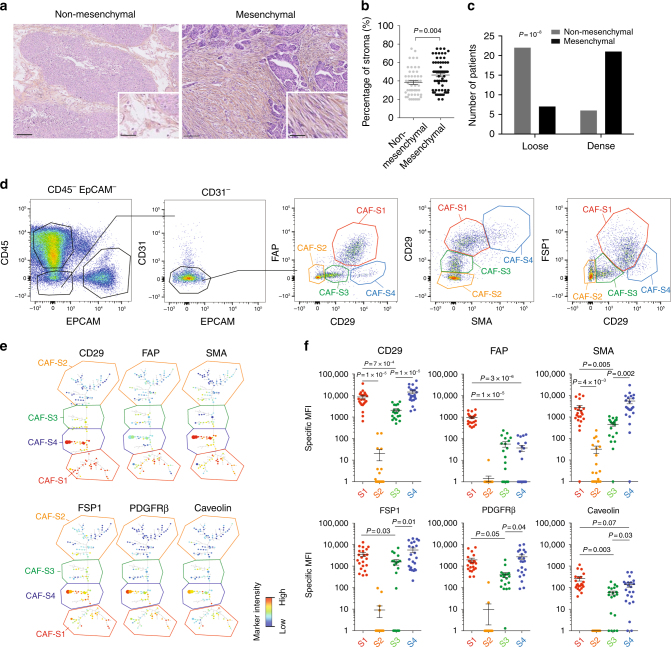
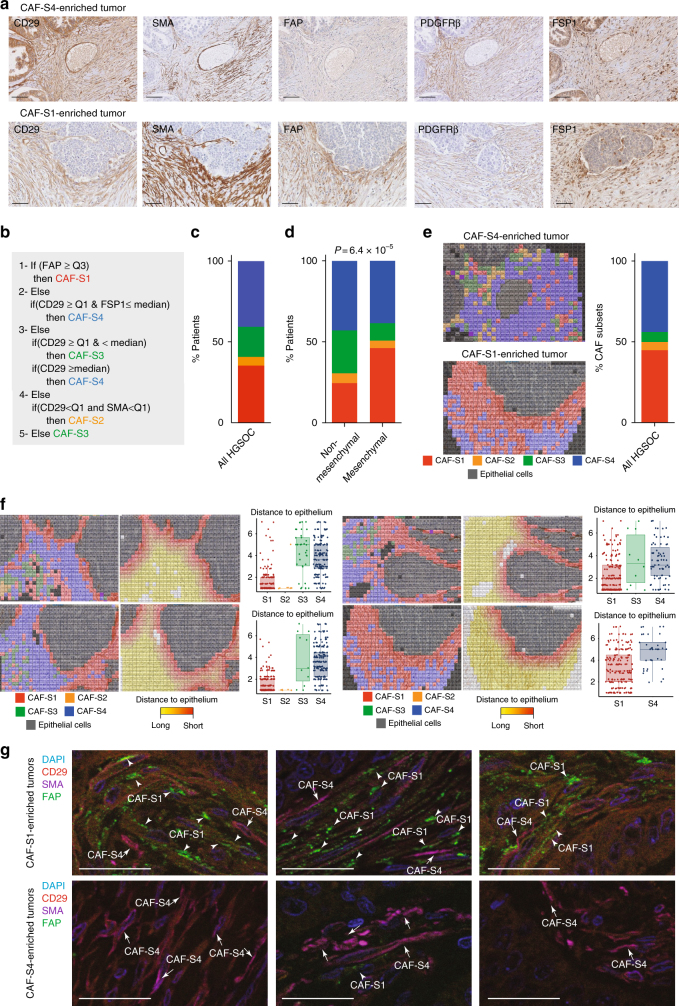
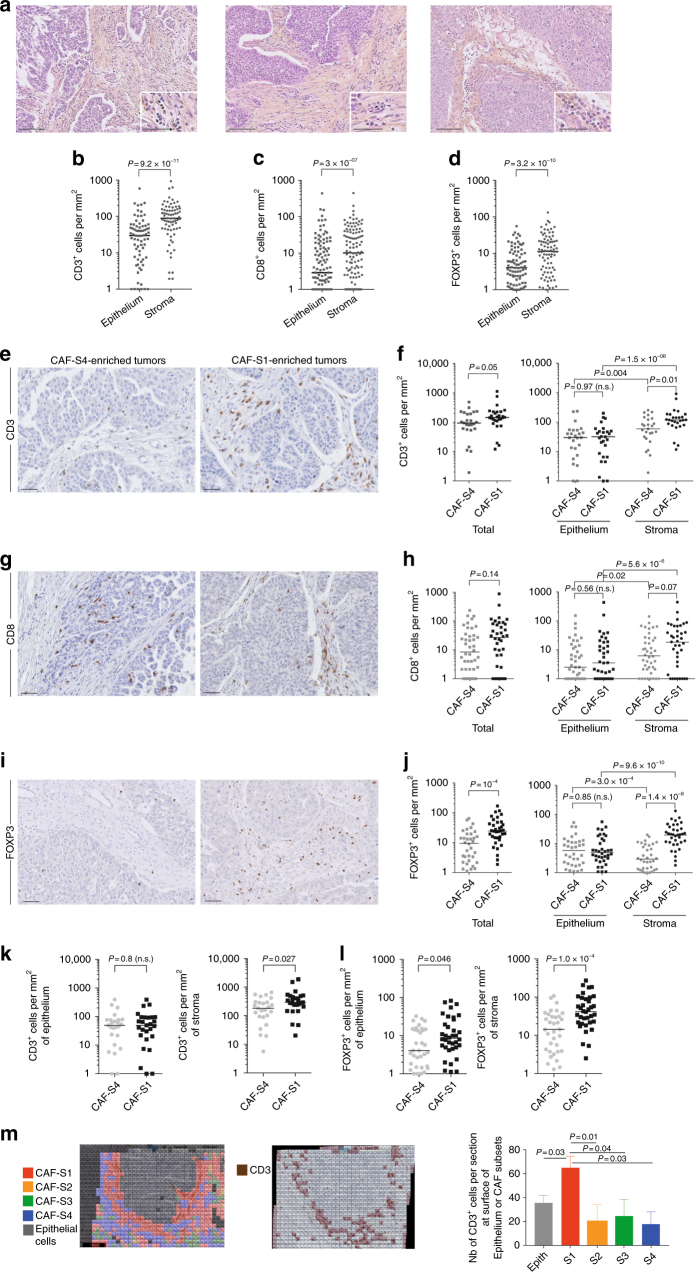
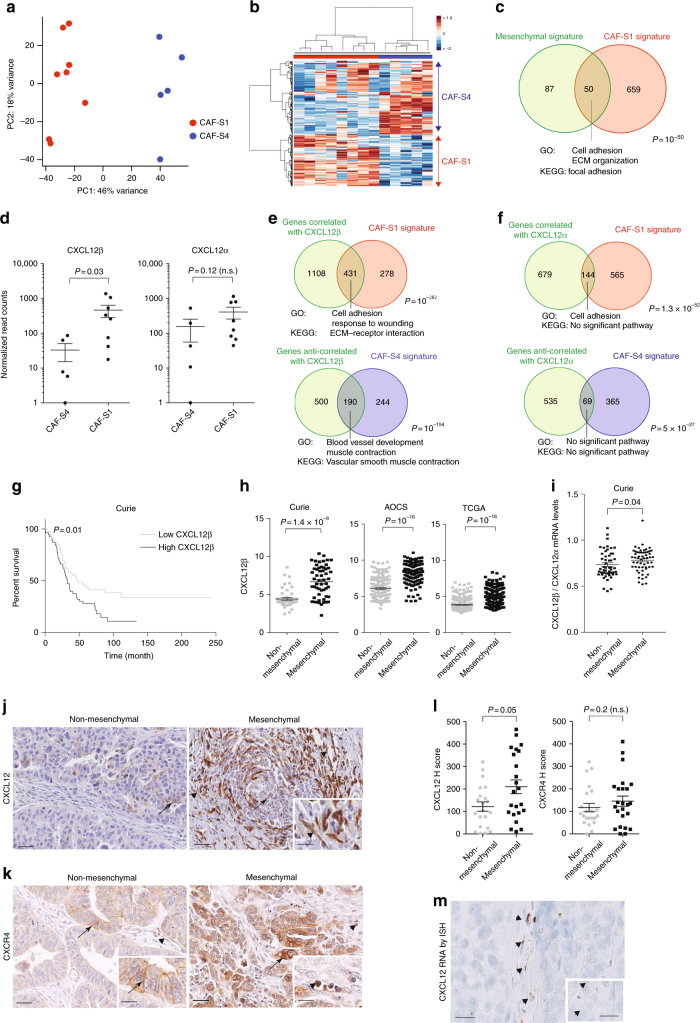
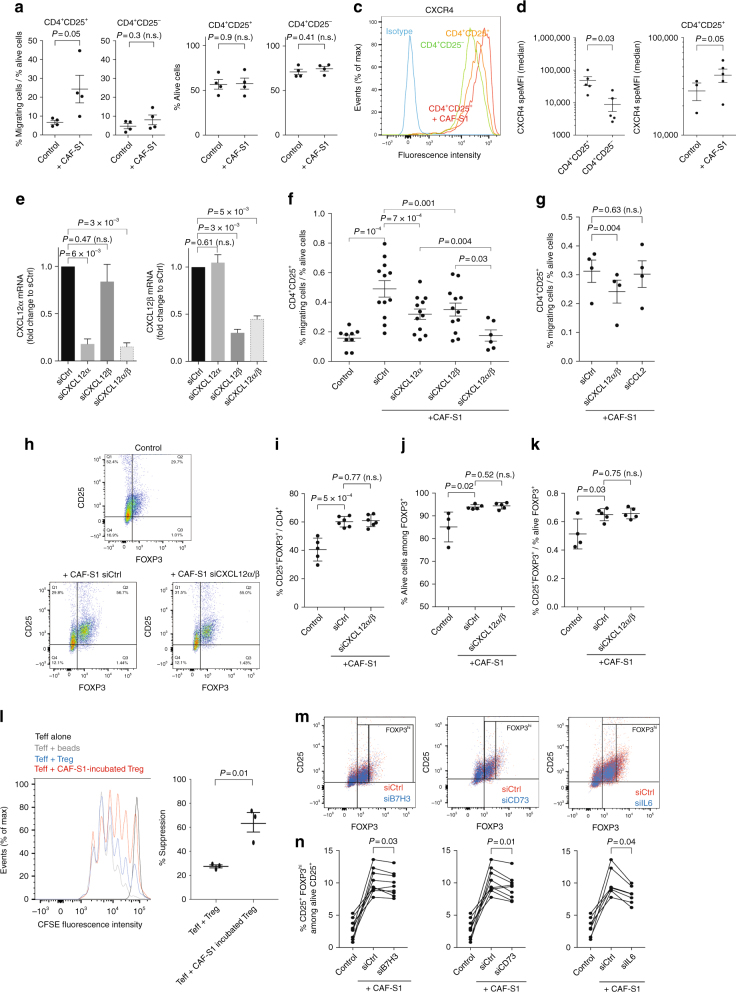
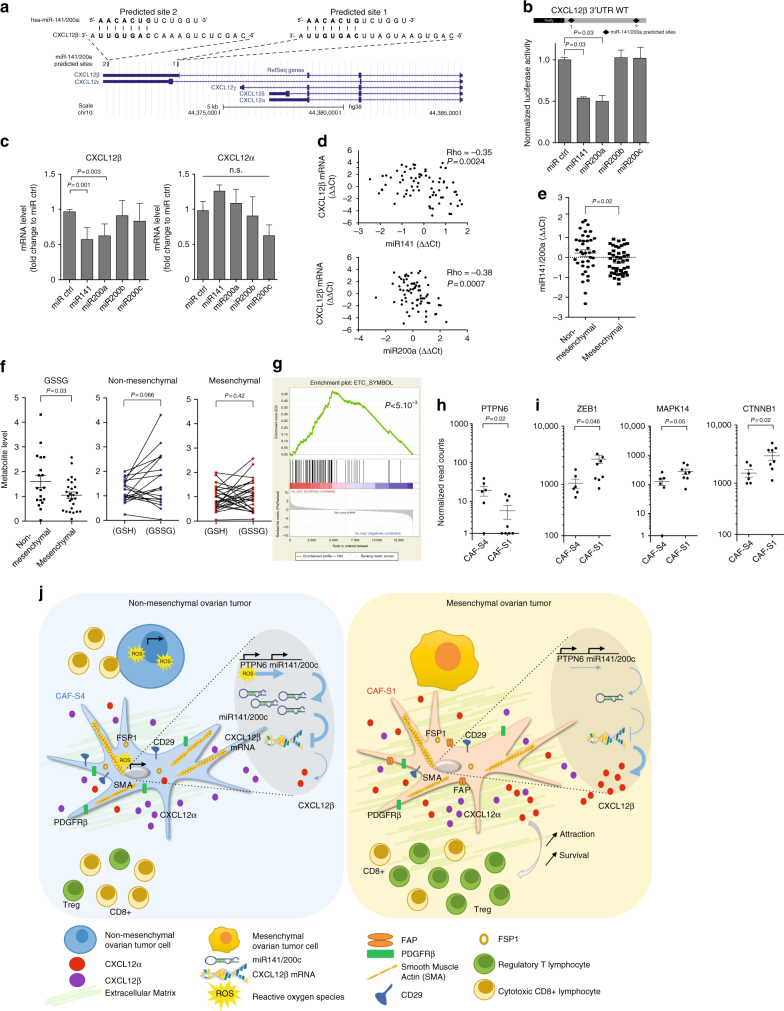
Abstract High-grade serous ovarian cancers (HGSOC) have been subdivided into molecular subtypes. The mesenchymal HGSOC subgroup, defined by stromal-related gene signatures, is invariably associated with poor patient survival. We demonstrate that stroma exerts a key function in mesenchymal HGSOC. We highlight stromal heterogeneity in HGSOC by identifying four subsets of carcinoma-associated fibroblasts (CAF-S1-4). Mesenchymal HGSOC show high content in CAF-S1 fibroblasts, which exhibit immunosuppressive functions by increasing attraction, survival, and differentiation of CD25 + FOXP3 + T lymphocytes. The beta isoform of the CXCL12 chemokine (CXCL12β) specifically accumulates in the immunosuppressive CAF-S1 subset through a miR-141/200a dependent-mechanism. Moreover, CXCL12β expression in CAF-S1 cells plays a crucial role in CAF-S1 immunosuppressive activity and is a reliable prognosis factor in HGSOC, in contrast to CXCL12α. Thus, our data highlight the differential regulation of the CXCL12α and CXCL12β isoforms in HGSOC, and reveal a CXCL12β-associated stromal heterogeneity and immunosuppressive environment in mesenchymal HGSOC.
Overview
The claims and statistics of this paper haven’t been checked yet.
Free: it reads the open-access text and checks the first 5 claims that cite a source we can check. Create a free account to check every claim.
Integrity signals
Registry
Cites
Statistics
Figures
Verification
Claims the paper makes
The claims and statistics of this paper haven’t been checked yet.
Free: it reads the open-access text and checks the first 5 claims that cite a source we can check. Create a free account to check every claim.
Claims other papers make about this one
Each is checked against this paper’s own text: does it say what the citing paper says it does?
The source backs part of the claim, not all of it — or backs it for a different population, condition or comparison.
In the citing paper
“Further, a subpopulation of CAFs (CAF-S1) found in mesenchymal HGSOC tumors upregulates CXCL12, which plays a role in increasing the attraction, survival, and differentiation of immunosuppressive CD25+FOXP3+ T lymphocytes (Givel et al., 2018).”
From Microphysiological systems as models for immunologically ‘cold’ tumors (2024) · cites this paper as Givel et al., 2018
Experimental — accuracy not yet measured
Self-check
Percentages, sums and reported differences re-computed from the paper’s own numbers.
The self-check needs the paper’s full text.
Citations
Cites
Integrated genomic analyses of ovarian carcinoma
Perou, C. M. (2019) · Carolina Digital Repository (University of North Carolina at Chapel Hill) · doi:10.17615/hvp3-wg08 · Cited by 7,925
Curiel, T. J., Coukos, G., Zou, L., Alvarez, X., Cheng, P., Mottram, P., Evdemon-Hogan, M., Conejo-Garcia, J. R., Zhang, L., Burow, M., et al. (2004) · Nature Medicine · doi:10.1038/nm1093 · Cited by 5,151
Kalluri, R., & Zeisberg, M. (2006) · Nature Reviews Cancer · doi:10.1038/nrc1877 · Cited by 4,538 · cited 1×
“To do so, we combined the use of six different markers, previously tested individually but never studied concomitantly 45 – 48 .”
MethodIntratumoral T Cells, Recurrence, and Survival in Epithelial Ovarian Cancer
Zhang, L., Conejo-Garcia, J. R., Katsaros, D., Gimotty, P. A., Massobrio, M., Regnani, G., Makrigiannakis, A., Gray, H., Schlienger, K., Liebman, M. N., et al. (2003) · New England Journal of Medicine · doi:10.1056/nejmoa020177 · Cited by 3,397 · cited 1×
“In that sense, | DOI: 10.1038/s41467-018-03348-z | www.nature.com/naturecommunications detection of CD3 + and CD8 + T lymphocytes in tumor epithelial compartment is correlated with improved patient survival in HGSOC 60,61 .”
BackgroundInfluentialRecommendations for myeloid-derived suppressor cell nomenclature and characterization standards
Bronte, V., Brandau, S., Chen, S.-H., Colombo, M. P., Frey, A. B., Greten, T. F., Mandruzzato, S., Murray, P. J., Ochoa, A., Ostrand-Rosenberg, S., et al. (2016) · Nature Communications · doi:10.1038/ncomms12150 · Cited by 2,751 · cited 2×
“Human MDSC are commonly described as Lin-CD11b + CD33 + HLADR − cells, with neutrophilic or monocytic phenotype 57 .”
BackgroundDistinct populations of inflammatory fibroblasts and myofibroblasts in pancreatic cancer
Öhlund, D., Handly-Santana, A., Biffi, G., Elyada, E., Almeida, A. S., Ponz-Sarvise, M., Corbo, V., Oni, T. E., Hearn, S. A., Lee, E. J., et al. (2017) · Journal of Experimental Medicine · doi:10.1084/jem.20162024 · Cited by 2,590
Niraparib Maintenance Therapy in Platinum-Sensitive, Recurrent Ovarian Cancer
Mirza, M. R., Monk, B. J., Herrstedt, J., Oza, A. M., Mahner, S., Redondo, A., Fabbro, M., Ledermann, J. A., Lorusso, D., Vergote, I., et al. (2016) · New England Journal of Medicine · doi:10.1056/nejmoa1611310 · Cited by 2,451
Sato, E., Olson, S. H., Ahn, J., Bundy, B., Nishikawa, H., Qian, F., Jungbluth, A. A., Frosina, D., Gnjatic, S., Ambrosone, C., et al. (2005) · Proceedings of the National Academy of Sciences · doi:10.1073/pnas.0509182102 · Cited by 2,372
Audeh, M. W., Carmichael, J., Penson, R. T., Friedlander, M., Powell, B., Bell-McGuinn, K. M., Scott, C., Weitzel, J. N., Oaknin, A., Loman, N., et al. (2010) · The Lancet · doi:10.1016/s0140-6736(10)60893-8 · Cited by 2,279
Park, S.-M., Gaur, A. B., Lengyel, E., & Peter, M. E. (2008) · Genes & Development · doi:10.1101/gad.1640608 · Cited by 2,272 · cited 2×
“P refers to false discovery rate q-value. h, i PTPN6 ( h ) and ZEB1 , MAPK14 , CTNNB1 (miR-141/200a-target genes 7,35,36 ) ( i ) mRNA levels in CAF-S1 and CAF-S4.”
BackgroundResult
Cited by
Macrophages as regulators of tumour immunity and immunotherapy
DeNardo, D. G., & Ruffell, B. (2019) · Nature Reviews Immunology · doi:10.1038/s41577-019-0127-6 · Cited by 2,528
Mao, X., Xu, J., Wang, W., Liang, C., Hua, J., Liu, J., Zhang, B., Meng, Q., Yu, X., & Shi, S. (2021) · Molecular Cancer · doi:10.1186/s12943-021-01428-1 · Cited by 2,290
“CAF-S2 (non-activated) Not reported Not reported [97]”
BackgroundResultInfluentialClinical and therapeutic relevance of cancer-associated fibroblasts
Chen, Y., McAndrews, K. M., & Kalluri, R. (2021) · Nature Reviews Clinical Oncology · doi:10.1038/s41571-021-00546-5 · Cited by 1,230
Single-cell analysis reveals fibroblast clusters linked to immunotherapy resistance in cancer.
Kieffer, Y., Hocine, H. R., Gentric, G., Pelon, F., Bernard, C., Bourachot, B., Lameiras, S., Albergante, L., Bonneau, C., Guyard, A., et al. (2020) · Cancer Discovery · doi:10.1158/2159-8290.cd-19-1384 · Cited by 910
“CAF-S1 fibroblasts are defined by extracellular matrix and inflammation signatures, and CAF-S4 are characterized by a perivascular signature (8,10).”
BackgroundMethodResultInfluentialSelf-citationCancer-associated fibroblasts: an emerging target of anti-cancer immunotherapy
Liu, T., Han, C., Wang, S., Fang, P., Ma, Z., Xu, L., & Yin, R. (2019) · Journal of Hematology & Oncology · doi:10.1186/s13045-019-0770-1 · Cited by 860
“However, the effect of ECM composition on Tregs, DCs, and neutrophils remains poorly understood.”
BackgroundInfluentialIn search of definitions: Cancer‐associated fibroblasts and their markers
Nurmik, M., Ullmann, P., Rodriguez, F., Haan, S., & Letellier, E. (2020) · International Journal of Cancer · doi:10.1002/ijc.32193 · Cited by 739
“A number of studies have already been conducted in order to identify the various CAF subtypes that reside within the overall tumor microenvironment.23,33,56,89,90,96 These subtypes have been shown to possess extreme variability in regards to their marker expression, with certain subtypes showing almost no expression o…”
BackgroundInfluentialMonteran, L., & Erez, N. (2019) · Frontiers in Immunology · doi:10.3389/fimmu.2019.01835 · Cited by 675
Cancer-associated fibroblasts in the single-cell era
Lavie, D., Ben-Shmuel, A., Erez, N., & Scherz-Shouval, R. (2022) · Nature Cancer · doi:10.1038/s43018-022-00411-z · Cited by 616
Fibroblasts in cancer: Unity in heterogeneity
Chhabra, Y., & Weeraratna, A. T. (2023) · Cell · doi:10.1016/j.cell.2023.03.016 · Cited by 474
Stromal cell diversity associated with immune evasion in human triple‐negative breast cancer
Wu, S. Z., Roden, D. L., Wang, C., Holliday, H., Harvey, K., Cazet, A. S., Murphy, K. J., Pereira, B., Al‐Eryani, G., Bartonicek, N., et al. (2020) · The EMBO Journal · doi:10.15252/embj.2019104063 · Cited by 436
“In addition, myofibroblast-like CAFs have been shown to contribute to an immunosuppressive microenvironment by attracting T-regulatory cells in breast and ovarian cancer (Costa et al, 2018; Givel et al, 2018).”
BackgroundInfluentialZhang, H., Yue, X., Chen, Z., Liu, C., Wu, W., Zhang, N., Liu, Z., Yang, L., Jiang, Q., Cheng, Q., et al. (2023) · Molecular Cancer · doi:10.1186/s12943-023-01860-5 · Cited by 424
“Breast cancer and ovarian cancer Patient CAF-S1 CD29 FAP FSP1 α-SMA PDGFRb CAV1 [93, 94]”
BackgroundInfluentialPelon, F., Bourachot, B., Kieffer, Y., Magagna, I., Mermet-Meillon, F., Bonnet, I., Costa, A., Givel, A.-M., Attieh, Y., Barbazan, J., et al. (2020) · Nature Communications · doi:10.1038/s41467-019-14134-w · Cited by 390
Immunotherapy for Ovarian Cancer: Adjuvant, Combination, and Neoadjuvant
Yang, C., Xia, B.-R., Zhang, Z.-C., Zhang, Y.-J., Lou, G., & Jin, W.-L. (2020) · Frontiers in Immunology · doi:10.3389/fimmu.2020.577869 · Cited by 350
Yang, R., Xing, L., Zheng, X., Sun, Y., Wang, X., & Chen, J. (2019) · Molecular Cancer · doi:10.1186/s12943-018-0933-7 · Cited by 332
RetractedYoshida, G. J. (2020) · Journal of Experimental & Clinical Cancer Research · doi:10.1186/s13046-020-01611-0 · Cited by 316
“The CXCL12β isoform is regulated by microRNA (miR)-141/200a; the miR-200 family members miR-141 and miR-200a are responsible for the downregulation of CXCL12β in CAFS4, whereas miR141/200a promote the specific accumulation of CACL12β in the CAF-S1 subpopulation, inducing the infiltration of CD4 + CD25+ T lymphocytes […”
BackgroundInfluentialBiomarkers for cancer-associated fibroblasts
Han, C., Liu, T., & Yin, R. (2020) · Biomarker Research · doi:10.1186/s40364-020-00245-w · Cited by 299
Timperi, E., Gueguen, P., Molgora, M., Magagna, I., Kieffer, Y., Lopez-Lastra, S., Sirven, P., Baudrin, L. G., Baulande, S., Nicolas, A., et al. (2022) · Cancer Research · doi:10.1158/0008-5472.can-22-1427 · Cited by 289
Cancer-Associated Fibroblasts in Inflammation and Antitumor Immunity
Kennel, K. B., Bozlar, M., De Valk, A. F., & Greten, F. R. (2023) · Clinical Cancer Research · doi:10.1158/1078-0432.ccr-22-1031 · Cited by 279
Fibroblast heterogeneity in tumor micro-environment: Role in immunosuppression and new therapies
Mhaidly, R., & Mechta-Grigoriou, F. (2020) · Seminars in Immunology · doi:10.1016/j.smim.2020.101417 · Cited by 259
Cancer-Associated Fibroblasts: Tumorigenicity and Targeting for Cancer Therapy
Glabman, R. A., Choyke, P. L., & Sato, N. (2022) · Cancers · doi:10.3390/cancers14163906 · Cited by 254
Mhaidly, R., & Mechta‐Grigoriou, F. (2021) · Immunological Reviews · doi:10.1111/imr.12978 · Cited by 231
Self-citationThe Role of Cancer-Associated Fibroblasts in Tumor Progression
Joshi, R. S., Kanugula, S. S., Sudhir, S., Pereira, M. P., Jain, S., & Aghi, M. K. (2021) · Cancers · doi:10.3390/cancers13061399 · Cited by 243
“FAP-neg-low, SMA-positive) were shown for the first time to harbor heterogeneous metabolic programming amongst CAF cells in the same tumor type [126].”
BackgroundTumor microenvironment in ovarian cancer: function and therapeutic strategy
Yang, Y., Yang, Y., Yang, J., Zhao, X., & Wei, X. (2020) · Frontiers in Cell and Developmental Biology · doi:10.3389/fcell.2020.00758 · Cited by 218
“Several studies have indicated that CAFs was a biomarker of poor prognosis in ovarian cancer (Yang et al., 2013; MhawechFauceglia et al., 2015; Zhao et al., 2017; Givel et al., 2018).”
BackgroundCancer‐associated fibroblasts: Key players in shaping the tumor immune microenvironment
Desbois, M., & Wang, Y. (2021) · Immunological Reviews · doi:10.1111/imr.12982 · Cited by 216
Dissection of intercellular communication using the transcriptome-based framework ICELLNET
Noël, F., Massenet-Regad, L., Carmi-Levy, I., Cappuccio, A., Grandclaudon, M., Trichot, C., Kieffer, Y., Mechta-Grigoriou, F., & Soumelis, V. (2021) · Nature Communications · doi:10.1038/s41467-021-21244-x · Cited by 209
Self-citationTargeting CAFs to overcome anticancer therapeutic resistance
Saw, P. E., Chen, J., & Song, E. (2022) · Trends in Cancer · doi:10.1016/j.trecan.2022.03.001 · Cited by 197
Cancer-associated fibroblasts: Origin, function, imaging, and therapeutic targeting
Rimal, R., Desai, P., Daware, R., Hosseinnejad, A., Prakash, J., Lammers, T., & Singh, S. (2022) · Advanced Drug Delivery Reviews · doi:10.1016/j.addr.2022.114504 · Cited by 195
Extracellular Matrices and Cancer-Associated Fibroblasts: Targets for Cancer Diagnosis and Therapy?
Belhabib, I., Zaghdoudi, S., Lac, C., Bousquet, C., & Jean, C. (2021) · Cancers · doi:10.3390/cancers13143466 · Cited by 191
“This emergent concept of CAF subpopulations is based on several recent publications reporting the presence of CAF subgroups in PDAC (pancreatic ductal adenocarcinoma), breast carcinoma, colon carcinoma, lung adenocarcinoma and high-grade serous ovarian cancers [27,28] (Table 1).”
BackgroundInfluentialNguyen, M., De Ninno, A., Mencattini, A., Mermet-Meillon, F., Fornabaio, G., Evans, S. S., Cossutta, M., Khira, Y., Han, W., Sirven, P., et al. (2018) · Cell Reports · doi:10.1016/j.celrep.2018.12.015 · Cited by 184
“The heterogeneity of CAFs was very recently characterized in breast and ovarian cancers, identifying at least 4 different CAF subpopulations, referred to as CAF-S1–CAF-S4, with distinct properties and levels of activation (Costa et al., 2018; Givel et al., 2018).”
BackgroundInfluentialSelf-citationDeciphering the spatial landscape and plasticity of immunosuppressive fibroblasts in breast cancer
Croizer, H., Mhaidly, R., Kieffer, Y., Gentric, G., Djerroudi, L., Leclere, R., Pelon, F., Robley, C., Bohec, M., Meng, A., et al. (2024) · Nature Communications · doi:10.1038/s41467-024-47068-z · Cited by 164
“The text (in the introduction and throughout the manuscript) would benefit from further proof-reading as some phrasing is unclear or grammatically incorrect.”
Targeting the CD73-adenosine axis in immuno-oncology
Allard, D., Chrobak, P., Allard, B., Messaoudi, N., & Stagg, J. (2019) · Immunology Letters · doi:10.1016/j.imlet.2018.05.001 · Cited by 158
Fibroblasts Fuel Immune Escape in the Tumor Microenvironment
De Jaeghere, E. A., Denys, H. G., & De Wever, O. (2019) · Trends in Cancer · doi:10.1016/j.trecan.2019.09.009 · Cited by 160
Zhang, F., Ma, Y., Li, D., Wei, J., Chen, K., Zhang, E., Liu, G., Chu, X., Liu, X., Liu, W., et al. (2024) · Journal of Hematology & Oncology · doi:10.1186/s13045-024-01600-2 · Cited by 213
Rai, A., Greening, D. W., Chen, M., Xu, R., Ji, H., & Simpson, R. J. (2019) · PROTEOMICS · doi:10.1002/pmic.201800148 · Cited by 157
Shaping Up the Tumor Microenvironment With Cellular Fibronectin
Efthymiou, G., Saint, A., Ruff, M., Rekad, Z., Ciais, D., & Obberghen‐Schilling, E. V. (2020) · Frontiers in Oncology · doi:10.3389/fonc.2020.00641 · Cited by 164
“Various combinations of markers including but not limited to αSMA, FAP, FSP1, CAV1, IL6, VIM, ITGB1, PDGFRα/β have been used to identify CAF subtypes in different tumor tissues using flow cytometry (22, 23) and single cell transcriptomics (12, 24).”
MethodCancer-Associated Fibroblasts: Understanding Their Heterogeneity
Louault, K., Li, R.-R., & DeClerck, Y. A. (2020) · Cancers · doi:10.3390/cancers12113108 · Cited by 148
“CAF-S1 also have an immunosuppressive activity through the secretion of IL-6, IL-17, IL-10 and CXCL12 that induce the inhibition of CD4+ T lymphocytes, as well as the activation and the proliferation of Treg lymphocytes [68,70].”
BackgroundCd73: An Emerging Checkpoint for Cancer Immunotherapy
Chen, S., Wainwright, D. A., Wu, J. D., Wan, Y., Matei, D. E., Zhang, Y., & Zhang, B. (2019) · Immunotherapy · doi:10.2217/imt-2018-0200 · Cited by 163
Rodriguez, G., Galpin, K., McCloskey, C., & Vanderhyden, B. (2018) · Cancers · doi:10.3390/cancers10080242 · Cited by 140
“The CAF-S1 cells also express CD73, B7-H3 and IL-6, which subsequently promote survival and proliferation of Tregs [204].”
BackgroundCXCR4/CXCL12 Activities in the Tumor Microenvironment and Implications for Tumor Immunotherapy
Mezzapelle, R., Leo, M., Caprioglio, F., Colley, L. S., Lamarca, A., Sabatino, L., Colantuoni, V., Crippa, M. P., & Bianchi, M. E. (2022) · Cancers · doi:10.3390/cancers14092314 · Cited by 144
“CAF-S1 enhance the survival as well as the activation of regulatory T lymphocytes, independently of CXCL12, which could account for the poor survival of mesenchymal HGSOC patients [71].”
BackgroundXiang, X., Niu, Y., Wang, Z.-H., Ye, L., Peng, W., & Zhou, Q. (2022) · Cytokine & Growth Factor Reviews · doi:10.1016/j.cytogfr.2022.07.006 · Cited by 138
Naito, Y., Yamamoto, Y., Sakamoto, N., Shimomura, I., Kogure, A., Kumazaki, M., Yokoi, A., Yashiro, M., Kiyono, T., Yanagihara, K., et al. (2019) · Oncogene · doi:10.1038/s41388-019-0832-4 · Cited by 120
“In IHC for CXCL8 and α-SMA in CAFs, the cases with 22 considered as positive if at least 5 fibroblasts right next to GC cells were stained in one 23 high power field (HPF) on average.”
BackgroundInfluentialRegulation of Ovarian Cancer Prognosis by Immune Cells in the Tumor Microenvironment
Drakes, M. L., & Stiff, P. J. (2018) · Cancers · doi:10.3390/cancers10090302 · Cited by 121
Zhu, Y., Li, X., Wang, L., Hong, X., & Yang, J. (2022) · Frontiers in Endocrinology · doi:10.3389/fendo.2022.988295 · Cited by 126
Dual Relationship Between Stromal Cells and Immune Cells in the Tumor Microenvironment
Mun, J.-Y., Leem, S.-H., Lee, J. H., & Kim, H. S. (2022) · Frontiers in Immunology · doi:10.3389/fimmu.2022.864739 · Cited by 103
“CAF subset 1 can secrete CXCL12 to attract T cells, increase the survival of CD4CD25 T cells, and promote differentiation into CD25FOXP3 Treg cells via B7H3, CD73, and DPP4 (83, 84).”
BackgroundImmunotherapy in Ovarian Cancer: Thinking Beyond PD-1/PD-L1
Chardin, L., & Leary, A. F. (2021) · Frontiers in Oncology · doi:10.3389/fonc.2021.795547 · Cited by 110
“CAFs also down-regulate the antigen presentation capacity of dendritic cells (97, 98) and increase differentiation of Tregs (98, 99).”
BackgroundAnsems, M., & Span, P. N. (2020) · Clinical and Translational Radiation Oncology · doi:10.1016/j.ctro.2020.04.001 · Cited by 116
Sierra: discovery of differential transcript usage from polyA-captured single-cell RNA-seq data
Patrick, R., Humphreys, D. T., Janbandhu, V. C., Oshlack, A., Ho, J. W. K., Harvey, R. P., & Lo, K. (2020) · Genome biology · doi:10.1186/s13059-020-02071-7 · Cited by 114
Loss of exosomal miR-3188 in cancer-associated fibroblasts contributes to HNC progression
Wang, X., Qin, X., Yan, M., Shi, J., Xu, Q., Li, Z., Yang, W., Zhang, J., & Chen, W. (2019) · Journal of Experimental & Clinical Cancer Research · doi:10.1186/s13046-019-1144-9 · Cited by 100
“MiRNAs play a regulatory role in not only cancer cells but also CAF-mediated tumor progression [30, 31].”
BackgroundFibroblast heterogeneity in solid tumors: From single cell analysis to whole-body imaging
Peltier, A., Seban, R., Buvat, I., Bidard, F., & Mechta‐Grigoriou, F. (2022) · Seminars in Cancer Biology · doi:10.1016/j.semcancer.2022.04.008 · Cited by 102
Hussain, A., Voisin, V., Poon, S., Karamboulas, C., Bui, N. H. B., Meens, J., Dmytryshyn, J., Ho, V. W., Tang, K. H., Paterson, J., et al. (2020) · The Journal of Experimental Medicine · doi:10.1084/jem.20191094 · Cited by 109
The Role of MiRNA in Cancer: Pathogenesis, Diagnosis, and Treatment
Uzuner, E., Ulu, G. T., Gürler, S. B., & Baran, Y. (2021) · Methods in molecular biology · doi:10.1007/978-1-0716-1170-8_18 · Cited by 109
The Emerging Role of YAP/TAZ in Tumor Immunity
Pan, Z., Tian, Y., Cao, C., & Niu, G. (2019) · Molecular Cancer Research · doi:10.1158/1541-7786.mcr-19-0375 · Cited by 94
Role of Cancer-Associated Fibroblast in Gastric Cancer Progression and Resistance to Treatments
Ham, I., Lee, D., & Hur, H. (2019) · Journal of Oncology · doi:10.1155/2019/6270784 · Cited by 108
“However, in other solid tumors such as those of the head and neck, breast, and pancreas, recent studies show that CAFs contained in one tumor were heterogeneous, presenting different gene expression patterns and a variety of functions [21, 70, 71].”
BackgroundArwert, E. N., Milford, E. L., Rullan, A., Derzsi, S., Hooper, S., Kato, T., Mansfield, D., Melcher, A., Harrington, K. J., & Sahai, E. (2020) · Nature Cell Biology · doi:10.1038/s41556-020-0527-7 · Cited by 90
Vickman, R. E., Broman, M. M., Lanman, N. A., Franco, O. E., Sudyanti, P. A. G., Ni, Y., Ji, Y., Helfand, B. T., Petkewicz, J., Paterakos, M. C., et al. (2020) · The Prostate · doi:10.1002/pros.23929 · Cited by 88
The Signaling Duo CXCL12 and CXCR4: Chemokine Fuel for Breast Cancer Tumorigenesis
Zielińska, K. A., & Katanaev, V. L. (2020) · Cancers · doi:10.3390/cancers12103071 · Cited by 102
“In mesenchymal high-grade serous ovarian cancer, the CAF-S1-derived CXCL12β isoform induced immunosuppression via attraction of CD25+FOXP3+Tregs [82].”
BackgroundMieulet, V., Garnier, C., Kieffer, Y., Guilbert, T., Nemati, F., Marangoni, E., Renault, G., Chamming’s, F., Vincent-Salomon, A., & Mechta-Grigoriou, F. (2021) · Scientific Reports · doi:10.1038/s41598-021-83685-0 · Cited by 79
Self-citationThe Role of Cancer-Associated Fibroblasts in Ovarian Cancer
Zhang, M., Chen, Z., Wang, Y., Zhao, H., & Du, Y. (2022) · Cancers · doi:10.3390/cancers14112637 · Cited by 92
“CAF-S1 facilitates the immunosuppressive activities of tumors by enhancing recruitment, differentiation, and activation of CD25+FOXP3+ T cells [41].”
BackgroundInfluentialChen, P., Wei, W.-F., Wu, H.-Z., Fan, L., & Wang, W. (2021) · Frontiers in Immunology · doi:10.3389/fimmu.2021.671595 · Cited by 89
Exosomal cargos-mediated metabolic reprogramming in tumor microenvironment
Tan, S., Yang, Y., Yang, W., Han, Y., Huang, L., Yang, R., Hu, Z., Tao, Y., Liu, L., Li, Y., et al. (2023) · Journal of Experimental & Clinical Cancer Research · doi:10.1186/s13046-023-02634-z · Cited by 94
“TME Tumor microenvironment EVs Extracellular vesicles MVs Microvesicles ncRNA Non-coding RNA CAFs Cancer-associated fibroblasts ECM Extracellular matrix NFs Normal fibroblasts HGSOC High-grade serous ovarian cancer TAMs Tumor-associated macrophages MDMs Monocyte-derived macrophages RCC Renal cell carcinoma APCs Antige…”
BackgroundYoshihara, M., Kajiyama, H., Yokoi, A., Sugiyama, M., Koya, Y., Yamakita, Y., Liu, W., Nakamura, K., Moriyama, Y., Yasui, H., et al. (2020) · International Journal of Cancer · doi:10.1002/ijc.32854 · Cited by 79
“As it relates to OvCa, a variety of CAFs have been reported to comprise the tumor stroma, thereby contributing to the development of stromal heterogeneity.(43,44) Moreover, it has been recognized that mesenchymal conversion of MCs is associated with tissue fibrosis in peritoneal dialysis.”
BackgroundTreg–tissue cell interactions in repair and regeneration
Loffredo, L. F., Savage, T. M., Ringham, O. R., & Arpaia, N. (2024) · The Journal of Experimental Medicine · doi:10.1084/jem.20231244 · Cited by 96
Yu, K.-X., Yuan, W.-J., Wang, H.-Z., & Li, Y. (2024) · Cancer Immunology Immunotherapy · doi:10.1007/s00262-024-03675-9 · Cited by 96
“It is reported that four different CAF subtypes (CAF-S1 to CAF-S4) have been identified in breast cancer and ovarian cancer [132, 133].”
BackgroundCohen, C., Mhaidly, R., Croizer, H., Kieffer, Y., Leclère, R., Vincent‐Salomon, A., Robley, C., Anglicheau, D., Rabant, M., Sannier, A., et al. (2024) · Nature Communications · doi:10.1038/s41467-024-44886-z · Cited by 93
A subset of activated fibroblasts is associated with distant relapse in early luminal breast cancer
Bonneau, C., Eliès, A., Kieffer, Y., Bourachot, B., Ladoire, S., Pelon, F., Hequet, D., Guinebretière, J.-M., Blanchet, C., Vincent-Salomon, A., et al. (2020) · Breast Cancer Research · doi:10.1186/s13058-020-01311-9 · Cited by 70
Cancer-Associated Fibroblasts and T Cells: From Mechanisms to Outcomes
Baker, A. T., Abuwarwar, M. H., Poly, L., Wilkins, S., & Fletcher, A. L. (2021) · The Journal of Immunology · doi:10.4049/jimmunol.2001203 · Cited by 67
“cruit and induce Treg differentiation (34, 35).”
Targeting the tumour microenvironment in platinum-resistant ovarian cancer
Cummings, M., Freer, C., & Orsi, N. M. (2021) · Seminars in Cancer Biology · doi:10.1016/j.semcancer.2021.02.007 · Cited by 71
Cancer Associated Fibroblasts - An Impediment to Effective Anti-Cancer T Cell Immunity
Koppensteiner, L., Mathieson, L., O’Connor, R. A., & Akram, A. R. (2022) · Frontiers in Immunology · doi:10.3389/fimmu.2022.887380 · Cited by 76
Stromal Cells in the Pathogenesis of Inflammatory Bowel Disease
Barnhoorn, M. C., Hakuno, S. K., Bruckner, R. S., Rogler, G., Hawinkels, L. J. A. C., & Scharl, M. M. (2020) · Journal of Crohn s and Colitis · doi:10.1093/ecco-jcc/jjaa009 · Cited by 74
Mathieson, L., Koppensteiner, L., Pattle, S. B., Dorward, D. A., O’Connor, R. A., & Akram, A. R. (2024) · British Journal of Cancer · doi:10.1038/s41416-024-02671-1 · Cited by 78
“Several studies have shown that CAFs represent a heterogeneous population composed of functionally distinct subtypes [6, 16 – 21].”
BackgroundLicaj, M., Mhaidly, R., Kieffer, Y., Croizer, H., Bonneau, C., Meng, A., Djerroudi, L., Mujangi-Ebeka, K., Hocine, H. R., Bourachot, B., et al. (2024) · Nature Communications · doi:10.1038/s41467-024-45595-3 · Cited by 72
Cancer-Associated Fibroblasts: Accomplices in the Tumor Immune Evasion
Hilmi, M., Nicolle, R., Bousquet, C., & Neuzillet, C. (2020) · Cancers · doi:10.3390/cancers12102969 · Cited by 69
“As CTLs, Tregs can be recruited and expanded by CAFs either directly by CXCL12, OX40L, PD-L2, and JAM2 expression [44,45], or indirectly through MDSCs and regulatory DCs recruitment [25,30].”
BackgroundChatterjee, A., Jana, S., Chatterjee, S., Wastall, L. M., Mandal, G., Nargis, N., Roy, H., Hughes, T. A., & Bhattacharyya, A. (2019) · British Journal of Cancer · doi:10.1038/s41416-019-0566-7 · Cited by 67
Li, Y., Feng, C., Gao, M., Jin, M., Liu, T., Yuan, Y., Yan, G., Gong, R., Sun, Y., He, M., et al. (2019) · Journal of Cellular and Molecular Medicine · doi:10.1111/jcmm.14490 · Cited by 59
The clinical impact of intra‐ and extracellular miRNAs in ovarian cancer
Yoshida, K., Yokoi, A., Kato, T., Ochiya, T., & Yamamoto, Y. (2020) · Cancer Science · doi:10.1111/cas.14599 · Cited by 59
Mezawa, Y., & Orimo, A. (2021) · FEBS Journal · doi:10.1111/febs.15851 · Cited by 61
Li, Y., Xiang, S., Pan, W., Wang, J., Zhan, H., & Liu, S. (2023) · Frontiers in Oncology · doi:10.3389/fonc.2023.1166860 · Cited by 72
Cancer-associated fibroblasts drive CXCL13 production in activated T cells via TGF-beta
O’Connor, R. A., Martinez, B. R., Koppensteiner, L., Mathieson, L., & Akram, A. R. (2023) · Frontiers in Immunology · doi:10.3389/fimmu.2023.1221532 · Cited by 70
“There was an increased frequency Foxp3 Treg in the presence A B D E F G C FIGURE 1 NSCLC Tumours contain recently activated CXCL13 producing T cells expressing multiple co-inhibitory molecules with decreased potential for cytokine production (A) Contour plots showing flow cytometry staining for PD-1, CD39, and TIGIT e…”
BackgroundThe fibroinflammatory response in cancer
Xiao, Z., & Puré, E. (2025) · Nature reviews. Cancer · doi:10.1038/s41568-025-00798-8 · Cited by 74
“In high-grade serous ovarian cancers, CAFs were enriched in an immunosuppressive CD29 + FAP + subpopulation, referred to as CAF-S1, that supports recruitment, survival and differentiation of T reg cells 169 .”
Fight the Cancer, Hit the CAF!
Papait, A., Romoli, J., Stefani, F. R., Chiodelli, P., Montresor, M. C., Agoni, L., Silini, A. R., & Parolini, O. (2022) · Cancers · doi:10.3390/cancers14153570 · Cited by 61
Motohara, T., Yoshida, G. J., & Katabuchi, H. (2021) · Seminars in Cancer Biology · doi:10.1016/j.semcancer.2021.03.038 · Cited by 60
Zhang, J., Lu, S., Lü, T., Han, D., Zhang, K., Gan, L., Wu, X., Li, Y., Zhao, X., Li, Z., et al. (2023) · Frontiers in Pharmacology · doi:10.3389/fphar.2023.1121586 · Cited by 72
“…of CD8+ T cells and promoting recruitment of regulatory T cells (Treg), myeloid-derived suppressor cells (MDSC) and macrophages (Garg et al., 2018; Givel et al., 2018; Yu et al., 2019), our findings indicated that CSFs may promote the formation of immunosuppressive microenvironment through the…”
BackgroundGao, D., Fang, L., Liu, C., Yang, M., Yu, X., Wang, L., Zhang, W., Sun, C., & Zhuang, J. (2023) · Biomedicine & Pharmacotherapy · doi:10.1016/j.biopha.2023.115622 · Cited by 62
Bose, S., Saha, P., Chatterjee, B., & Srivastava, A. (2022) · Seminars in Cancer Biology · doi:10.1016/j.semcancer.2022.03.028 · Cited by 59
Carvalho, R. F., do Canto, L. M., Abildgaard, C., Aagaard, M. M., Tronhjem, M. S., Waldstrøm, M., Jensen, L. H., Steffensen, K. D., & Rogatto, S. R. (2022) · Cell Communication and Signaling · doi:10.1186/s12964-022-00991-4 · Cited by 58
Tumor Cells and Cancer-Associated Fibroblasts: An Updated Metabolic Perspective
Gentric, G., & Mechta‐Grigoriou, F. (2021) · Cancers · doi:10.3390/cancers13030399 · Cited by 59
“In ovarian carcinoma, transcriptomic analyses of two different CAF SMA+ subpopulations detected within the same tumor type, CAF-S1 (FAPHigh CD29Med SMAMed-High) versus CAF-S4 (FAPNeg-Low CD29High SMAHigh), highlighted for the first time a heterogeneous metabolic program among CAF [134].”
BackgroundResultInfluentialBhome, R., Emaduddin, M., James, V. H., House, L. M., Thirdborough, S. M., Mellone, M., Tulkens, J., Primrose, J. N., Thomas, G. J., Wever, O. D., et al. (2022) · Journal of Extracellular Vesicles · doi:10.1002/jev2.12226 · Cited by 53
“In another recent study, miR-200a/141 was shown to target CXCL β , allowing the formation of a non-immunogenic CAF subset in ovarian cancer (Givel et al., 2018).”
Timperi, E., Croizer, H., Khantakova, D., Rana, M., Molgora, M., Guerriero, J. L., Mechta-Grigoriou, F., & Romano, E. (2024) · Clinical Cancer Research · doi:10.1158/1078-0432.ccr-24-1690 · Cited by 49
Self-citationFang, Z., Xu, J., Zhang, B., Wang, W., Liu, J., Liang, C., Hua, J., Meng, Q., Yu, X., & Shi, S. (2020) · Journal of Hematology & Oncology · doi:10.1186/s13045-020-00988-x · Cited by 49
Fotsitzoudis, C., Koulouridi, A., Messaritakis, I., Konstantinidis, T., Gouvas, N., Tsiaoussis, J., & Souglakos, J. (2022) · Cancers · doi:10.3390/cancers14184394 · Cited by 46
Xu, Y., Li, W., Lin, S., Liu, B., Wu, P., & Li, L. (2023) · Cell Communication and Signaling · doi:10.1186/s12964-023-01204-2 · Cited by 55
“The immunosuppressive effects of FAP + CAFs in multiple malignancies have also been described, with their depletion enabling effective tumor progression con-trol [48–50 , 165– 168].”
BackgroundAssessing personalized responses to anti-PD-1 treatment using patient-derived lung tumor-on-chip
Veith, I., Nurmik, M., Mencattini, A., Damei, I., Lansche, C., Brosseau, S., Gropplero, G., Corgnac, S., Filippi, J., Poté, N., et al. (2024) · Cell Reports Medicine · doi:10.1016/j.xcrm.2024.101549 · Cited by 63
“29,31 Notably, in metastatic melanoma and NSCLC, specific CAF-S1 populations (namely the extracellular matrix [ECM]-myCAF, wound-myCAF, and transforming growth factor b -myCAF clusters) are enriched at diagnosis in non-responders, indicating that they might be predictive of immuno-therapy responses.”
BackgroundZou, R., Jiang, Q., Jin, T., Chen, M., Yao, L., & Ding, H. (2022) · Frontiers in Immunology · doi:10.3389/fimmu.2022.956224 · Cited by 47
Role of extracellular matrix architecture and signaling in melanoma therapeutic resistance
Popovic, A., & Tartare‐Deckert, S. (2022) · Frontiers in Oncology · doi:10.3389/fonc.2022.924553 · Cited by 50
Differential activity of MAPK signalling defines fibroblast subtypes in pancreatic cancer
Veghini, L., Pasini, D., Fang, R., Delfino, P., Filippini, D., Neander, C., Vicentini, C., Fiorini, E., Lupo, F., D’Agosto, S. L., et al. (2024) · Nature Communications · doi:10.1038/s41467-024-54975-8 · Cited by 53
Targeting the Microenvironment in High Grade Serous Ovarian Cancer
Nwani, N. G., Sima, L. E., Nieves‐Neira, W., & Matei, D. E. (2018) · Cancers · doi:10.3390/cancers10080266 · Cited by 50
“This chemokine promotes infiltration of immunosuppressive CD25+ FOXP3+ T lymphocytes in the HGSOC milieu, which in turn allows tumor growth [25].”
BackgroundPolymeric Hydrogels for In Vitro 3D Ovarian Cancer Modeling
Braccini, S., Tacchini, C., Chiellini, E., & Puppi, D. (2022) · International Journal of Molecular Sciences · doi:10.3390/ijms23063265 · Cited by 49
“CAFs enhance tumor progression, invasion and migration via various mechanisms, such as expressing CXCL14, an important factor in promoting cancer growth [29], and increasing the infiltration of FOXP3+ regulatory T lymphocytes (Tregs) in the tumor site, which exerts immune suppression effect [30] and whose presence dir…”
BackgroundCircRNAs in tumor immunity and immunotherapy: Perspectives from innate and adaptive immunity
Yu, L., Xiao, Q., Yu, B., Lv, Q., Liu, Z., & Yin, J. (2023) · Cancer Letters · doi:10.1016/j.canlet.2023.216219 · Cited by 43
Jia, B., Qiu, X., Chen, J., Sun, X., Zheng, X., Zhao, J., Li, Q., & Wang, Z. (2019) · Journal of Cellular Physiology · doi:10.1002/jcp.28550 · Cited by 39
RetractedDeciphering Tumor Niches: Lessons From Solid and Hematological Malignancies
Mancini, S. J. C., Balabanian, K., Corre, I., Gavard, J., Lazennec, G., Bousse‐Kerdilès, M. L., Louache, F., Maguer‐Satta, V., Mazure, N. M., Mechta‐Grigoriou, F., et al. (2021) · Frontiers in Immunology · doi:10.3389/fimmu.2021.766275 · Cited by 47
Metadata
- Authors
- Givel, A.-M., Kieffer, Y., Scholer-Dahirel, A., Sirven, P., Cardon, M., Pelon, F., Magagna, I., Gentric, G., Costa, A., Bonneau, C., Mieulet, V., Vincent-Salomon, A., & Mechta-Grigoriou, F.
- Affiliations
- Inserm (FR)
- ORCID
- Venue
- Nature Communications
- Published
- 2018-03-13
- Volume
- 9
- Issue
- 1
- Pages
- 1056-1056
- ISSN
- 2041-1723 (ISSN-L)
- PMC
- PMC5849633
- OpenAlex
- W2792780338
- Cited by
- 295
- References
- 70
- Citations by year
- 2026: 32 · 2025: 30 · 2024: 42 · 2023: 35 · 2022: 50 · 2021: 39 · 2020: 35 · 2019: 23 · 2018: 9
- FWCI
- 28.42
- Type
- journal article
- Language
- en
- Open access
- gold
- doi.org
- Licence
- cc-by
- creativecommons.org/licenses/by/4.0 (tdm)
- creativecommons.org/licenses/by/4.0 (vor)
- Locations
- Nature Communications (publishedVersion, cc-by)
- PubMed Central (publishedVersion, cc-by)
- PubMed (publishedVersion)
- HAL (submittedVersion, other-oa)
- RePEc: Research Papers in Economics (submittedVersion)
- DOAJ (DOAJ: Directory of Open Access Journals) (submittedVersion, cc-by-sa)
- DOAJ (DOAJ: Directory of Open Access Journals) (submittedVersion)
- Funders
- Institut National de la Santé et de la Recherche Médicale
- Fondation ARC pour la Recherche sur le Cancer (INCa-DGOS-4654)
- Institut National Du Cancer (2015-1-RT-04-ICR-1, 2011-1-PLBIO-12-IC-1)
- Direction Générale de l’offre de Soins
- Topics
- Health Sciences › Medicine › Oncology › Ovarian cancer diagnosis and treatment
- Health Sciences › Medicine › Oncology › Chemokine receptors and signaling
- Life Sciences › Biochemistry, Genetics and Molecular Biology › Cancer Research › MicroRNA in disease regulation
- Keywords
- high-grade serous ovarian cancer, miR-200a, miR-141, cancer-associated fibroblasts, immunosuppression, regulatory T cells, Foxp3, mesenchymal subtype, prognosis, chemokine signaling
- MeSH terms
- Cell Differentiation, Female, Fibroblasts, Humans, Ovarian Neoplasms, Gene Expression Regulation, Neoplastic, MicroRNAs, Cell Line, Tumor, Cell Proliferation, Chemokine CXCL12
About these checks
Registry, retraction, Cites and statistics results are computed, not judged, with one exception: a printed reference that no index lists is read once by a model before it counts as a citation error. Claims are extracted by a model and kept only when their quote appears verbatim in the text; each cited source is then checked, with a model’s help, for whether it says what the claim relies on. Those verdicts can be wrong — read the claim’s quote and the cited source before relying on one.
Statistics and arithmetic are recomputed, not judged.
Confidence bands are shown only for fields calibrated on our annotated test set. None is calibrated yet, so no band is shown.
What counts as a claim ›How we measure confidence ›How we check this ›
Are you an author, or do you see a problem with this page? Request a review
Data sources
Bibliographic data: Semantic Scholar, OpenAlex, Crossref.
Contains information from the Semantic Scholar Academic Graph Datasets, made available under the ODC Attribution License (ODC-BY 1.0).
Semantic Scholar’s data is described in: Kinney, R., et al. (2023). The Semantic Scholar Open Data Platform. arXiv:2301.10140.
