

Downregulation of cytoplasmic DNases is implicated in cytoplasmic DNA accumulation and SASP in senescent cells
Open accessThe DOI matches its Crossref record; 67 of the 67 references it cites were found in a registry or an index.
Abstract
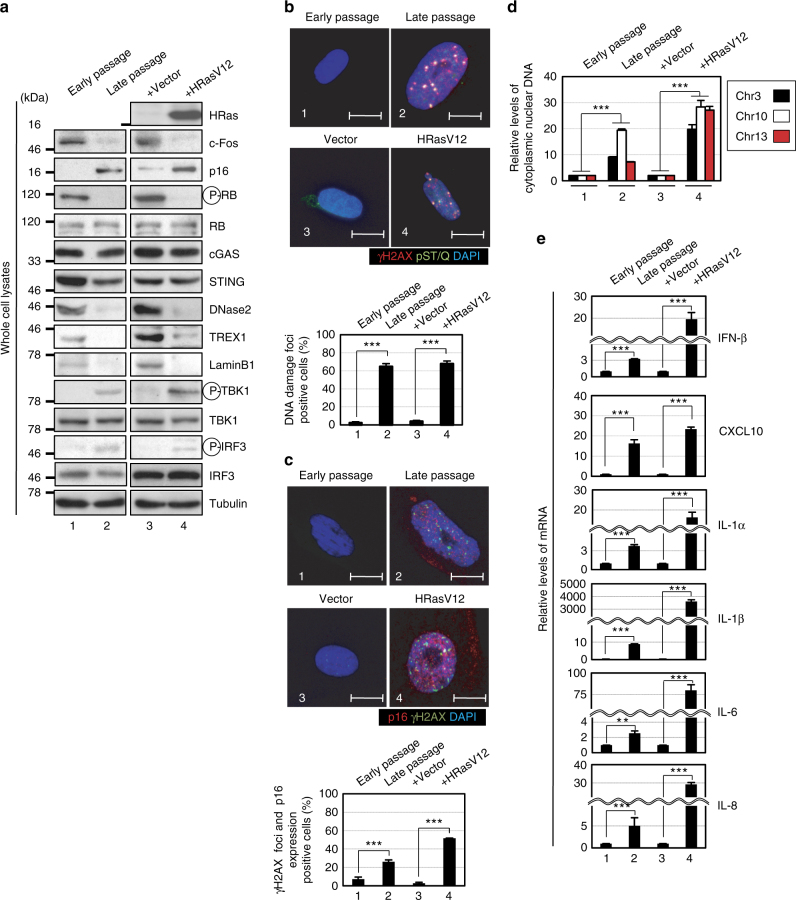
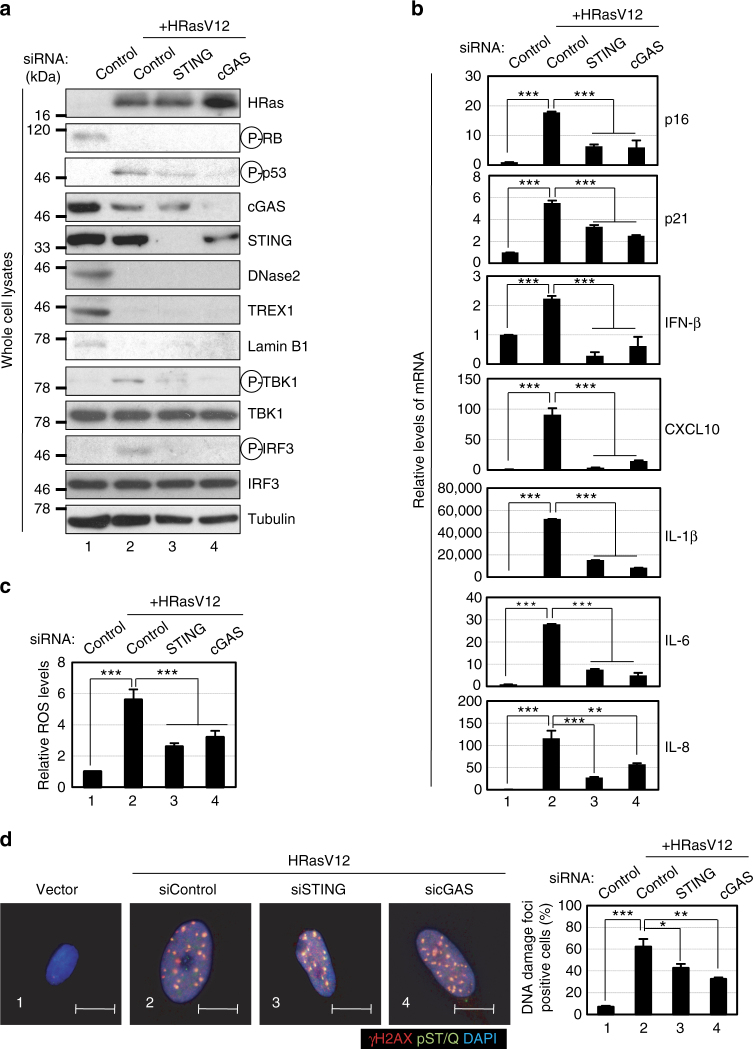
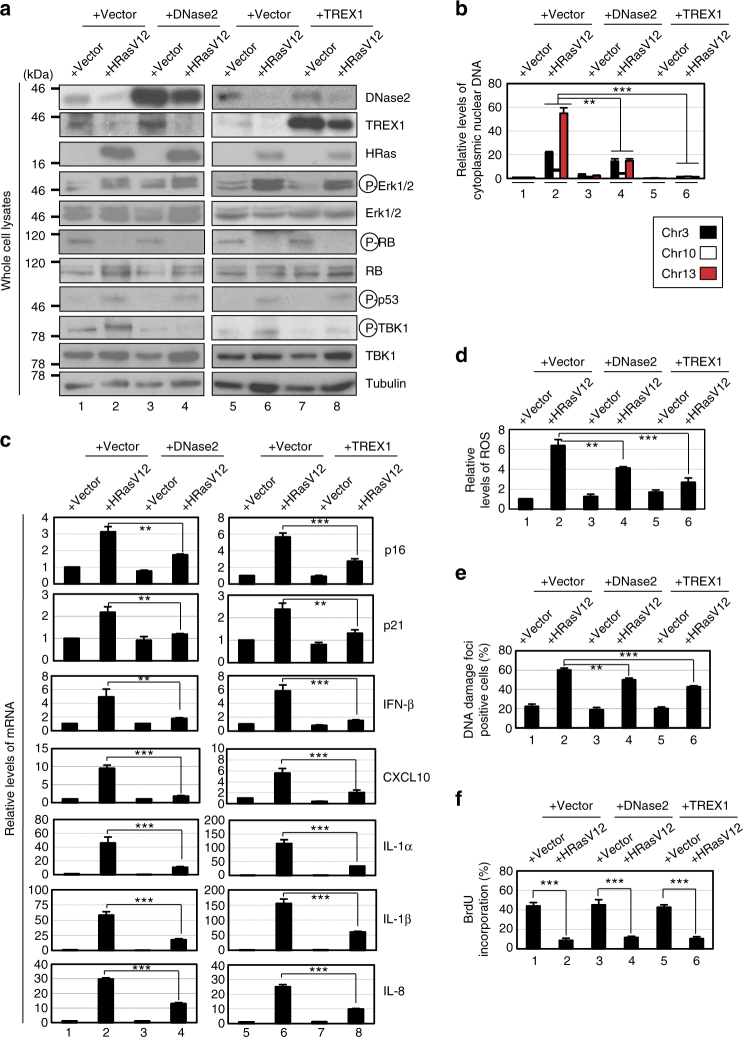
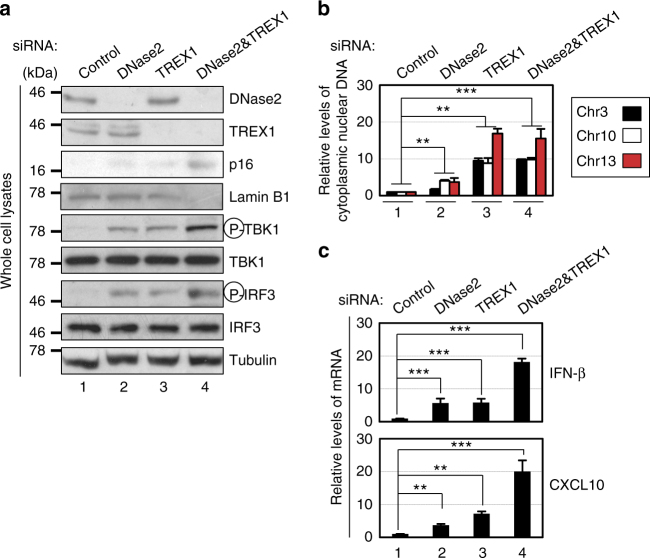
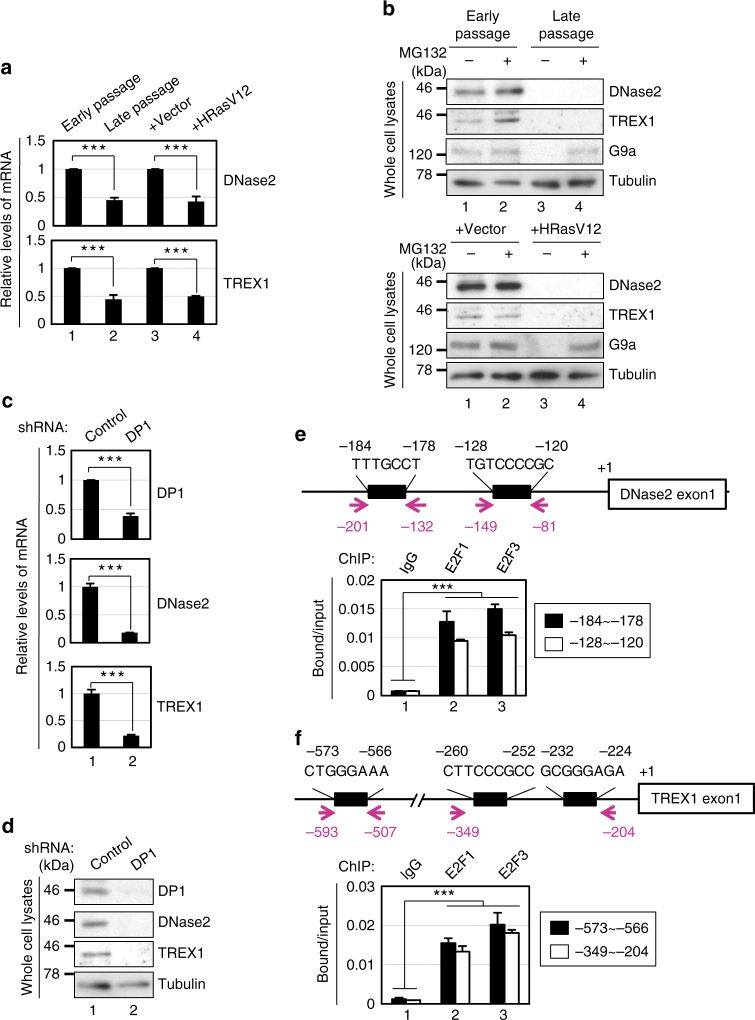
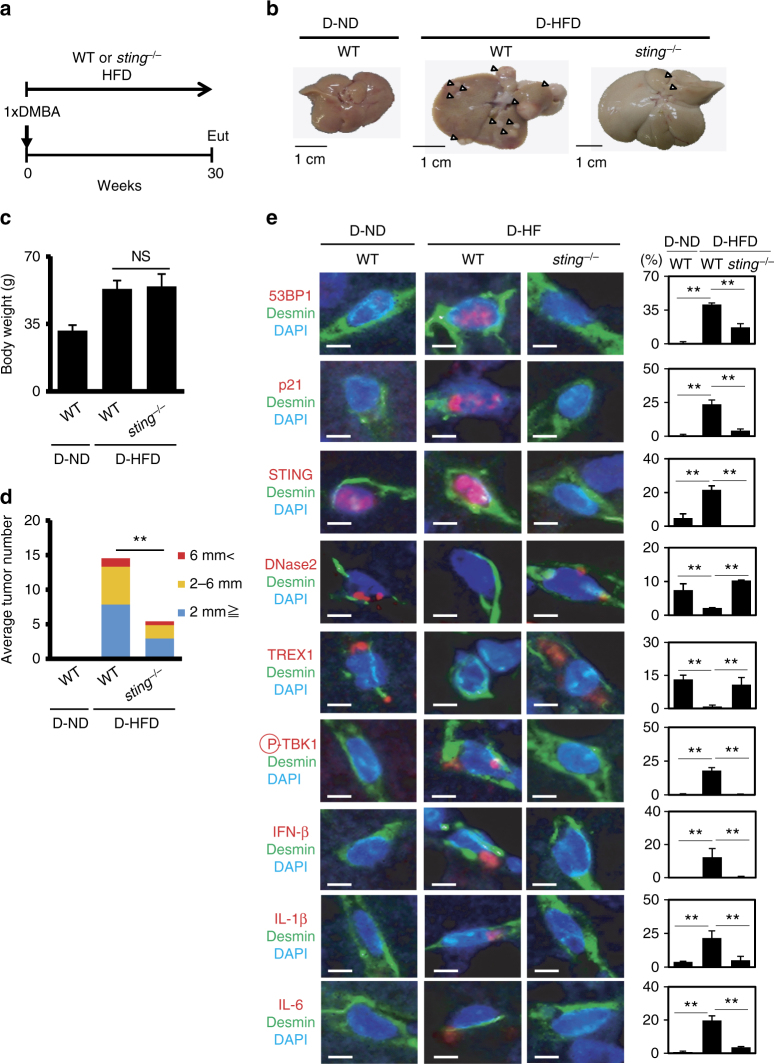
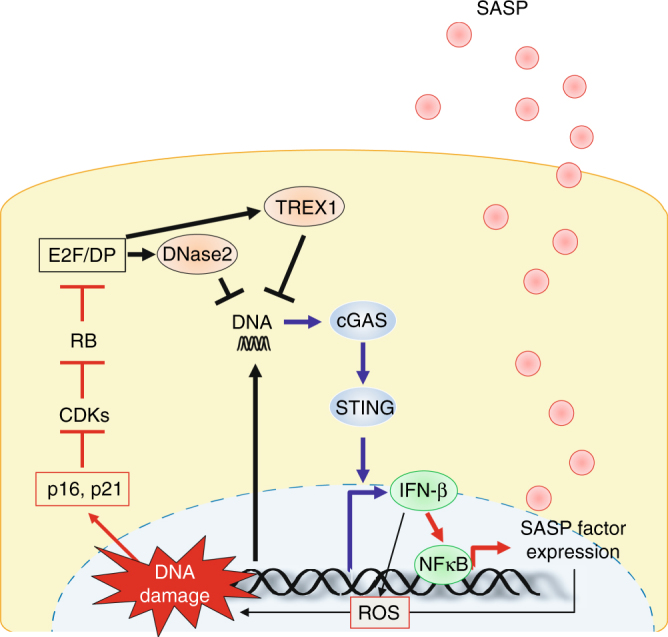
Accumulating evidence indicates that the senescence-associated secretory phenotype (SASP) contributes to many aspects of physiology and disease. Thus, controlling the SASP will have tremendous impacts on our health. However, our understanding of SASP regulation is far from complete. Here, we show that cytoplasmic accumulation of nuclear DNA plays key roles in the onset of SASP. Although both DNase2 and TREX1 rapidly remove the cytoplasmic DNA fragments emanating from the nucleus in pre-senescent cells, the expression of these DNases is downregulated in senescent cells, resulting in the cytoplasmic accumulation of nuclear DNA. This causes the aberrant activation of cGAS-STING cytoplasmic DNA sensors, provoking SASP through induction of interferon-β. Notably, the blockage of this pathway prevents SASP in senescent hepatic stellate cells, accompanied by a decline of obesity-associated hepatocellular carcinoma development in mice. These findings provide valuable new insights into the roles and mechanisms of SASP and possibilities for their control.
Overview
The claims and statistics of this paper haven’t been checked yet.
Free: it reads the open-access text and checks the first 5 claims that cite a source we can check. Create a free account to check every claim.
Integrity signals
Registry
Cites
Statistics
Figures
Verification
Claims the paper makes
The claims and statistics of this paper haven’t been checked yet.
Free: it reads the open-access text and checks the first 5 claims that cite a source we can check. Create a free account to check every claim.
Claims other papers make about this one
Each is checked against this paper’s own text: does it say what the citing paper says it does?
The source backs part of the claim, not all of it — or backs it for a different population, condition or comparison.
In the citing paper
“However, downregulation of DNase2 and TREX1, which are transcriptional targets of the E2F complex, results in accumulation of cytosolic DNA, promoting SASP in senescent cells.73”
From Cellular senescence and senescence-associated secretory phenotype via the cGAS-STING signaling pathway in cancer (2020) · cites this paper as [73]
Experimental — accuracy not yet measuredThe source backs part of the claim, not all of it — or backs it for a different population, condition or comparison.
In the citing paper
“Since previous studies have shown that elevated SASP in CAFs contributes to the development of cancers (11, 21, 41, 42), chromatin conformational changes at hSATII might promote the malignant transformation or cancer progression (Fig. 4E).”
From Chromatin conformational changes at human satellite II contribute to the senescence phenotype in the tumor microenvironment (2023) · cites this paper as [41]
Experimental — accuracy not yet measuredThe cited source says what the claim attributes to it.
In the citing paper
“it was reported that aberrant activation of the cGAS–STING pathway could be linked to the downregulation of DNases (for example, DNase 2 and TREX1) that are normally devoted to cytoplasmic DNA degradation, resulting in cytosolic accumulation of nuclear DNA during senescence establishment115.”
From Cellular senescence in ageing: from mechanisms to therapeutic opportunities (2021) · cites this paper as [115]
The cited source says what the claim attributes to it.
In the citing paper
“Once CCF enter the cytoplasm, they are sensed by the cGAS-STING pathway (Dou et al., 2017; Gluck et al., 2017; Takahashi et al., 2018; Yang et al., 2017) (Fig. 2).”
From Cytoplasmic DNA: sources, sensing, and role in aging and disease (2021) · cites this paper as Takahashi et al., 2018
The cited source says what the claim attributes to it.
In the citing paper
“Chronic inflammation caused by SASP via the cGAS‐STING pathway is crucial for the development of HCC in the obesity‐induced liver cancer model.73”
From Cellular senescence and senescence-associated secretory phenotype via the cGAS-STING signaling pathway in cancer (2020) · cites this paper as [73]
2 more claims about this paper
Create a free account to see every claim other papers make about this one.
Self-check
Percentages, sums and reported differences re-computed from the paper’s own numbers.
The self-check needs the paper’s full text.
Citations
Cites
1 retracted
Kaur, A., Webster, M. R., Marchbank, K., Behera, R., Ndoye, A., Kugel, C. H., Dang, V. M., Appleton, J., O’Connell, M. P., Cheng, P., et al. (2016) · Nature · doi:10.1038/nature17392 · Cited by 398
RetractedCyclic GMP-AMP Synthase Is a Cytosolic DNA Sensor That Activates the Type I Interferon Pathway
Sun, L., Wu, J., Du, F., Chen, X., & Chen, Z. J. (2013) · Science · doi:10.1126/science.1232458 · Cited by 4,996
Cellular senescence: when bad things happen to good cells
Campisi, J., & d'Adda di Fagagna, F. (2007) · Nature Reviews Molecular Cell Biology · doi:10.1038/nrm2233 · Cited by 4,441
STING is an endoplasmic reticulum adaptor that facilitates innate immune signalling
Ishikawa, H., & Barber, G. N. (2008) · Nature · doi:10.1038/nature07317 · Cited by 3,576
Self-citationRegulation and function of the cGAS–STING pathway of cytosolic DNA sensing
Chen, Q., Sun, L., & Chen, Z. J. (2016) · Nature Immunology · doi:10.1038/ni.3558 · Cited by 2,333
Persistent DNA damage signalling triggers senescence-associated inflammatory cytokine secretion
Rodier, F., Coppé, J.-P., Patil, C. K., Hoeijmakers, W. A. M., Muñoz, D. P., Raza, S. R., Freund, A., Campeau, E., Davalos, A. R., & Campisi, J. (2009) · Nature Cell Biology · doi:10.1038/ncb1909 · Cited by 2,232
Obesity-induced gut microbial metabolite promotes liver cancer through senescence secretome
Yoshimoto, S., Loo, T. M., Atarashi, K., Kanda, H., Sato, S., Oyadomari, S., Iwakura, Y., Oshima, K., Morita, H., Hattori, M., et al. (2013) · Nature · doi:10.1038/nature12347 · Cited by 2,219
Self-citationOncogene-Induced Senescence Relayed by an Interleukin-Dependent Inflammatory Network
Kuilman, T., Michaloglou, C., Vredeveld, L. C. W., Douma, S., van Doorn, R., Desmet, C. J., Aarden, L. A., Mooi, W. J., & Peeper, D. S. (2008) · Cell · doi:10.1016/j.cell.2008.03.039 · Cited by 2,086
The essence of senescence: Figure 1.
Kuilman, T., Michaloglou, C., Mooi, W. J., & Peeper, D. S. (2010) · Genes & Development · doi:10.1101/gad.1971610 · Cited by 2,038
DNA exonuclease Trex1 regulates radiotherapy-induced tumour immunogenicity
Vanpouille-Box, C., Alard, A., Aryankalayil, M. J., Sarfraz, Y., Diamond, J. M., Schneider, R. J., Inghirami, G., Coleman, C. N., Formenti, S. C., & Demaria, S. (2017) · Nature Communications · doi:10.1038/ncomms15618 · Cited by 1,834
Cited by
Items 101–200 of 353
The rOX‐stars of inflammation: links between the inflammasome and mitochondrial meltdown
Holley, C. L., & Schroder, K. (2020) · Clinical & Translational Immunology · doi:10.1002/cti2.1109 · Cited by 64
“Cytosolic DNases are also transcriptionally downregulated in senescent cells, 71 suggesting that PRR sensing of accumulated mislocalised DNA may contribute to age-related inflammation ('inflammaging').”
BackgroundCellular senescence: mechanisms and relevance to cancer and aging
Yamauchi, S., & Takahashi, A. (2024) · The Journal of Biochemistry · doi:10.1093/jb/mvae079 · Cited by 69
“In contrast, STING promotes SASP factor expression in obesity-induced senescent hepatic stellate cells, thereby promoting liver tumorigenesis (40) .”
Self-citationCytoplasmic chromatin fragments-from mechanisms to therapeutic potential.
Miller, K. N., Dasgupta, N., Liu, T., Adams, P. D., & Vizioli, M. G. (2021) · eLife · doi:10.7554/elife.63728 · Cited by 55
“…originate from several other sources such as micronuclei arising from chromosome segregation errors (Harding et al., 2017; Mackenzie et al., 2017; Terradas et al., 2010; Zhang et al., 2015), mitochondrial DNA (mtDNA) released from stressed mitochondria (West and Shadel, 2017), or cDNA produced…”
BackgroundTanaka, Y., & Takahashi, A. (2020) · The Journal of Biochemistry · doi:10.1093/jb/mvaa109 · Cited by 65
Self-citationCellular senescence in the tumor microenvironment and context‐specific cancer treatment strategies
Yasuda, T., Baba, H., & Ishimoto, T. (2021) · FEBS Journal · doi:10.1111/febs.16231 · Cited by 61
The struggle of a good friend getting old: cellular senescence in viral responses and therapy
Kohli, J., Veenstra, I., & Demaria, M. (2021) · The EMBO Reports · doi:10.15252/embr.202052243 · Cited by 52
“Accumulated LINE-1 DNA is then recognised by cGAS to promote IFN-b expression (Takahashi et al , 2018; De Cecco et al , 2019).”
RIPK1 blocks T cell senescence mediated by RIPK3 and caspase-8
Imanishi, T., Unno, M., Yoneda, N., Motomura, Y., Mochizuki, M., Sasaki, T., Pasparakis, M., & Saito, T. (2023) · Science Advances · doi:10.1126/sciadv.add6097 · Cited by 53
Ohtani, N. (2019) · The Journal of Biochemistry · doi:10.1093/jb/mvz055 · Cited by 57
Self-citationZhao, D., Gao, Y., Su, Y., Zhou, Y., Yang, T., Yang, L., Wang, Y., Sun, Y., Chen, L., Zhang, F., et al. (2022) · Pharmacological Research · doi:10.1016/j.phrs.2022.106590 · Cited by 54
The Post-amyloid Era in Alzheimer's Disease: Trust Your Gut Feeling
Osorio, C., Kanukuntla, T., Diaz, E., Jafri, N., Cummings, M., & Sfera, A. (2019) · Frontiers in Aging Neuroscience · doi:10.3389/fnagi.2019.00143 · Cited by 49
cGAS/STING: novel perspectives of the classic pathway
Gao, M., He, Y., Tang, H., Chen, X., Liu, S., & Tao, Y. (2020) · Molecular Biomedicine · doi:10.1186/s43556-020-00006-z · Cited by 53
The cGAS-STING pathway: a therapeutic target in diabetes and its complications
He, W., Mu, X., Wu, X., Liu, Y., Deng, J., Liu, Y., Han, F. Y., & Nie, X. (2024) · Burns & Trauma · doi:10.1093/burnst/tkad050 · Cited by 57
Du, M., Sun, L., Guo, J. J., & Lv, H. (2024) · Pharmacological Research · doi:10.1016/j.phrs.2024.107198 · Cited by 57
Xie, T., Yao, L., & Li, X. (2024) · Antioxidants · doi:10.3390/antiox13060659 · Cited by 65
Aleksova, A., Ferro, F., Gagno, G., Cappelletto, C., Santon, D., Rossi, M., Ippolito, G., Zumla, A. I., Beltrami, A. P., & Sinagra, G. (2020) · Journal of Internal Medicine · doi:10.1111/joim.13101 · Cited by 48
Zhu, Z., Lu, H., Jin, L., Gao, Y., Qian, Z., Lu, P., Tong, W., Lo, P. K., Mao, Z., & Shi, H. (2023) · Bioactive Materials · doi:10.1016/j.bioactmat.2023.07.002 · Cited by 74
Song, M. J., Park, C., Kim, H., Han, S., Lee, S., Lee, D. H., & Chung, J. H. (2023) · Aging Cell · doi:10.1111/acel.14000 · Cited by 52
A tale of the good and bad: Cell senescence in bone homeostasis and disease
(2019) · International Review of Cell and Molecular Biology · doi:10.1016/bs.ircmb.2019.03.005 · Cited by 45
Role of Post-Translational Modifications of cGAS in Innate Immunity
Wu, Y., & Li, S. (2020) · International Journal of Molecular Sciences · doi:10.3390/ijms21217842 · Cited by 48
The cGAS-STING pathway in cardiovascular diseases: from basic research to clinical perspectives
An, C., Li, Z., Chen, Y., Huang, S., Yang, F., Hu, Y., Xu, T., Zhang, C., & Ge, S. (2024) · Cell & Bioscience · doi:10.1186/s13578-024-01242-4 · Cited by 50
“Takahashi et al. [83] found that when DNA enzymes (i.e., DNase2 and TREX1) are progressively downregulated in senescent cells, the aberrant accumulation of cytosolic DNA activates cGAS-STING, which induces senescence-associated secretory phenotypes (SASPs) via IFN-β.”
BackgroundPathophysiological Role of Organelle Stress/Crosstalk in AKI-to-CKD Transition
Maekawa, H., & Inagi, R. (2019) · Seminars in Nephrology · doi:10.1016/j.semnephrol.2019.10.007 · Cited by 47
Chemically Modified mocRNAs for Highly Efficient Protein Expression in Mammalian Cells
Aditham, A. J., Shi, H., Guo, J., Zeng, H., Zhou, Y., Wade, S. D., Huang, J., Liu, J., & Wang, X. (2022) · ACS Chemical Biology · doi:10.1021/acschembio.1c00569 · Cited by 46
Xue, H., Zhao, B., Towers, M., Liao, L., Luzete-Monteiro, E., Xu, X., Freeman, C., Peng, H., Tang, H., Havas, A. P., et al. (2024) · Nature Aging · doi:10.1038/s43587-023-00564-1 · Cited by 44
“Given the importance of CCFs in activating the cGAS–STING pathway 3–6 , we examined the effects of TXNRD1 knockdown on the localization of cGAS to CCFs (Fig.”
Miller, K. N., Li, B., Pierce-Hoffman, H. R., Patel, S., Lei, X., Rajesh, A., Teneche, M. G., Havas, A. P., Gandhi, A., Macip, C. C., et al. (2025) · Nature Communications · doi:10.1038/s41467-025-57229-3 · Cited by 231
“CCF are sensed by the cGAS/ STINGpathway,whichactivatesthemastertranscriptionalregulatorof the SASP, NFkB 23 – 26 .”
Telomeres as hotspots for innate immunity and inflammation
Nassour, J., Przetocka, S., & Karlseder, J. (2023) · DNA repair · doi:10.1016/j.dnarep.2023.103591 · Cited by 42
Behind the Wheel of Epithelial Plasticity in KRAS-Driven Cancers
Arner, E. N., Du, W., & Brekken, R. A. (2019) · Frontiers in Oncology · doi:10.3389/fonc.2019.01049 · Cited by 44
Igarashi, N., Miyata, K., Loo, T. M., Chiba, M., Hanyu, A., Nishio, M., Kawasaki, H., Zheng, H., Toyokuni, S., Kon, S., et al. (2022) · Nature Communications · doi:10.1038/s41467-022-31642-4 · Cited by 38
Self-citationGong, T., Zhang, X., Liu, X., Ye, Y., Tian, Z., Yin, S., Zhang, M., Tang, J. Y., & Liu, Y. (2024) · Translational research · doi:10.1016/j.trsl.2024.04.001 · Cited by 46
Nutrition and cellular senescence in obesity-related disorders
Rubio‐Tomás, T., Rueda‐Robles, A., Plaza‐Díaz, J., & Álvarez‐Mercado, A. I. (2021) · The Journal of Nutritional Biochemistry · doi:10.1016/j.jnutbio.2021.108861 · Cited by 43
Changes in the biochemical taste of cytoplasmic and cell-free DNA are major fuels for inflamm-aging
Storci, G., Carolis, S. D., Olivieri, F., & Bonafè, M. (2018) · Seminars in Immunology · doi:10.1016/j.smim.2018.08.003 · Cited by 38
Cellular senescence and senescence‐associated T cells as a potential therapeutic target
Nakagami, H. (2020) · Geriatrics & Gerontology International · doi:10.1111/ggi.13851 · Cited by 35
Loo, T. M., Zhou, X., Tanaka, Y., Sugawara, S., Yamauchi, S., Kawasaki, H., Matsuoka, Y., Sugiura, Y., Sakuma, S., Yamanishi, Y., et al. (2025) · Nature Communications · doi:10.1038/s41467-025-61894-9 · Cited by 35
“Immuno fl uorescence analysis was performed as previously described 52 .”
Self-citationA noncanonical cGAS–STING pathway drives cellular and organismal aging
de Faria, R. C., Silva, L. N. D. E., Teodoro-Castro, B., McCommis, K. S., Shashkova, E. V., & Gonzalo, S. (2025) · Proceedings of the National Academy of Sciences · doi:10.1073/pnas.2424666122 · Cited by 43
Emerging roles of extracellular vesicles in physiology and disease
Hanayama, R. (2020) · The Journal of Biochemistry · doi:10.1093/jb/mvaa138 · Cited by 37
Diabetes induces macrophage dysfunction through cytoplasmic dsDNA/AIM2 associated pyroptosis
Nie, L., Zhao, P., Yue, Z., Zhang, P., Ji, N., Chen, Q., & Wang, Q. (2021) · Journal of Leukocyte Biology · doi:10.1002/jlb.3ma0321-745r · Cited by 33
Breaking barriers: The cGAS‐STING pathway as a novel frontier in cancer immunotherapy
Yan, Y., Tan, X., Song, B., Yi, M., Chu, Q., & Wu, K. (2025) · 癌症:英文版 · doi:10.1002/cac2.70067 · Cited by 42
“In senescent cells, the expressions of DNases (both DNase II and TREX1) are significantly down-regulated, and DNA fragments accumulate in the cytosol, thereby stimulating cGAS-STING activation [167].”
Targeting STING to generate therapeutic anti-tumor immunity
Fahey, C. G., Cordova, A. F., Gedeon, P. C., & Barbie, D. A. (2025) · Cancer Cell · doi:10.1016/j.ccell.2025.12.002 · Cited by 44
Baba, T., Yoshida, T., Tanabe, Y., Nishimura, T., Morishita, S., Gotoh, N., Hirao, A., Hanayama, R., & Mukaida, N. (2021) · Cell Death and Disease · doi:10.1038/s41419-021-03587-x · Cited by 35
Interplay of cGAS with chromatin
Wischnewski, M., & Ablasser, A. (2021) · Trends in Biochemical Sciences · doi:10.1016/j.tibs.2021.05.011 · Cited by 36
Senescent cells and SASP in cancer microenvironment: New approaches in cancer therapy
Özdemir, A., Demir, Y. D. Ş., Yeşilyurt, Z. E., & Ark, M. (2022) · Advances in protein chemistry and structural biology · doi:10.1016/bs.apcsb.2022.10.002 · Cited by 37
Du, H., Xiao, N., Zhang, S., Zhou, X., Zhang, Y., Lu, Z., Fu, Y., Huang, M., Xu, S., & Chen, Q. (2023) · iScience · doi:10.1016/j.isci.2023.107090 · Cited by 35
“Recent studies have reported down-regulation of TREX1 in senescent cells and its association with SASP secretion.(30) In this context, we hypothesized that TREX1 deletionmay accelerate cellular senescence.”
BackgroundAge-related self-DNA accumulation may accelerate arthritis in rats and in human rheumatoid arthritis
Luo, W. D., Wang, Y., Lu, J. J., Liu, Y., Qu, Y. Q., Xu, X., Yang, L., Lin, Z., Wang, L., Chen, R., et al. (2023) · Nature Communications · doi:10.1038/s41467-023-40113-3 · Cited by 35
“3D); IFN-β is also a factor contributing to the SASP and has been reported to stimulate the DNA damage response (DDR) via the induction of ROS production 15 , which leads to senescence-like cell cycle arrest in human diploid fi broblasts (HDFs) 36 .”
Reduced RNA turnover as a driver of cellular senescence
Mullani, N., Porozhan, Y., Mangelinck, A., Rachez, C., Costallat, M., Batsché, É., Goodhardt, M., Cenci, G., Mann, C., & Muchardt, C. (2021) · Life Science Alliance · doi:10.26508/lsa.202000809 · Cited by 35
“The variations of DNASE2 and TLR9 expression suggest that that these cells may accumulate simultaneously both cytoplasmic DNA and dsRNA.”
InfluentialNuclear softening mediated by Sun2 suppression delays mechanical stress-induced cellular senescence
Yue, X., Cui, J., Sun, Z., Liu, L., Li, Y., Shao, L., Feng, Q., Wang, Z., Hambright, W. S., Cui, Y., et al. (2023) · Cell Death Discovery · doi:10.1038/s41420-023-01467-1 · Cited by 33
Post‐transcriptional control of immune responses and its potential application
Yoshinaga, M., & Takeuchi, O. (2019) · Clinical & Translational Immunology · doi:10.1002/cti2.1063 · Cited by 33
“Since the role of IFN-b upon dsDNA stimulation is implicated in cellular senescence as well as pathogen control, the regulation of m(6)A status may have an impact on not only infection but also aging.(80) Although these compounds could be used for modulating above-mentioned biological processes, they are relatively no…”
BackgroundGuo, D., Ma, D., Liu, P., Lan, J., Liu, Z., & Liu, Q. (2021) · Aging · doi:10.18632/aging.202740 · Cited by 35
“Since DDR activation induces cytoplasmic DNA accumulation while the DNase enzymes function as digester of DNA [20], we evaluated the hypothesis that DNASE1L3 may relieve cytoplasmic DNA accumulation under DDR activation.”
MRE11 and TREX1 control senescence by coordinating replication stress and interferon signaling
Técher, H., Gopaul, D., Heuzé, J., Bouzalmad, N., Leray, B., Vernet, A., Mettling, C., Moreaux, J., Pasero, P., & Lin, Y. (2024) · Nature Communications · doi:10.1038/s41467-024-49740-w · Cited by 37
“In senescent cells, overexpression of the major cytosolic 3 ’ -exonuclease TREX1 was shown to decrease SASP levels during OIS 24 , suggesting that cytosolic DNA determines the SASP response.”
Ding, Z., Ma, G., Zhou, B., Cheng, S., Tang, W., Han, Y., Chen, L., Pang, W., Chen, Y., Yang, D., et al. (2024) · Cell Reports Medicine · doi:10.1016/j.xcrm.2024.101665 · Cited by 42
STING signaling in inflammaging: a new target against musculoskeletal diseases
Song, C., Hu, Z., Xu, D., Bian, H., Lv, J., Xuanxuan, Z., Zhang, Q., Su, L., Yin, H., Lu, T., et al. (2023) · Frontiers in Immunology · doi:10.3389/fimmu.2023.1227364 · Cited by 34
“However, in normal physiological states, two DNA enzymes, DNase2 and TREX1, can target and remove nuclear DNA in the cytoplasm to avoid abnormal activation of cGASSTING (97, 98).”
BackgroundWang, J., Chen, Y., Xu, Y., Zhang, J., Yang, S., Zhou, Y. J., Lei, J., Ren, R., Chen, Y., Zhao, H., et al. (2024) · Theranostics · doi:10.7150/thno.102995 · Cited by 38
“Previous research has demonstrated that other DNA enzymes, such as three prime repair exonuclease 1 (TREX1) and Deoxyribonuclease 2 (DNASE2), facilitate dsDNA degradation and inhibit cGAS-STING1 pathway activation [40, 41].”
BackgroundAdvances in cGAS-STING Signaling Pathway and Diseases
Yang, Y., Huang, Y., & Zeng, Z. (2022) · Frontiers in Cell and Developmental Biology · doi:10.3389/fcell.2022.800393 · Cited by 40
An old problem with new solutions: Strategies to improve vaccine efficacy in the elderly
Bell, M. R., & Kutzler, M. A. (2022) · Advanced Drug Delivery Reviews · doi:10.1016/j.addr.2022.114175 · Cited by 29
The dual function of cGAS-STING signaling axis in liver diseases
Li, X., Qu, J., Zhang, Y.-H., & Liu, R. (2024) · Acta Pharmacologica Sinica · doi:10.1038/s41401-023-01220-5 · Cited by 29
“Consistently, in obese STING − / − mice, the level of SASP factor expression in HSCs was largely reduced, accompanied by diminished development of HCC [91].”
The role of lamin B receptor in the regulation of senescence-associated secretory phenotype (SASP)
En, A., Takauji, Y., Ayusawa, D., & Fujii, M. (2020) · Experimental Cell Research · doi:10.1016/j.yexcr.2020.111927 · Cited by 30
Gao, L., Zheng, W.-G., Wu, X., Du, G., & Qin, X. (2021) · ACS Chemical Neuroscience · doi:10.1021/acschemneuro.1c00024 · Cited by 30
Takikawa, T., Hamada, S., Matsumoto, R., Tanaka, Y., Kataoka, F., Sasaki, A., & Masamune, A. (2022) · International Journal of Molecular Sciences · doi:10.3390/ijms23169275 · Cited by 38
Major depression, physical health and molecular senescence markers abnormalities
Seitz‐Holland, J., Mulsant, B. H., Reynolds, C. F., Blumberger, D. M., Karp, J. F., Butters, M. A., Mendes‐Silva, A. P., Vieira, É. L. M., Tseng, G. C., Lenze, E. J., et al. (2023) · Nature Mental Health · doi:10.1038/s44220-023-00033-z · Cited by 33
“In humans, an increase in SASP proteins is related to obesity, cardiometabolic dysregulation 22 and frailty 14 .”
BackgroundSakai, C., Ueda, K., Goda, K., Fujita, R., Maeda, J., Nakayama, S., Sotomaru, Y., Tashiro, S., Yoshizumi, M., Ishida, T., et al. (2023) · Scientific Reports · doi:10.1038/s41598-023-43848-7 · Cited by 30
Inflammation and tumor immune escape in response to DNA damage
Nihira, N. T., Kudo, R., & Ohta, T. (2025) · Seminars in Cancer Biology · doi:10.1016/j.semcancer.2025.02.005 · Cited by 33
Giannakoulis, V. G., Dubovan, P., Papoutsi, E., Kataki, A., & Koskinas, J. S. (2021) · Cancers · doi:10.3390/cancers13184732 · Cited by 30
Zheng, Z., Wang, J., Lin, J.-G., Ye, W., Zou, J., Liang, L.-Y., Yang, P.-L., Qiu, W., Li, Y.-Y., Yang, S.-J., et al. (2024) · Acta Pharmacologica Sinica · doi:10.1038/s41401-024-01281-0 · Cited by 34
“…senescence is a cellular stress response initiated by molecular damage that causes permanent cell cycle arrest and elicits signi fi cant phenotypic alterations, including the generation of the biologically active secretion set known as the senescence-associated secretory phenotype (SASP) [20].”
The dual role of cellular senescence in human tumor progression and therapy
Ma, L., Yu, J., Fu, Y., He, X., Ge, S., Jia, R., Zhuang, A., Yang, Z. H., & Fan, X. (2024) · MedComm · doi:10.1002/mco2.695 · Cited by 33
“51”
BackgroundSenescence and Cancer: Role of Nitric Oxide (NO) in SASP
Mabrouk, N., Ghione, S., Laurens, V., Plenchette, S., Bettaïeb, A., & Paul, C. (2020) · Cancers · doi:10.3390/cancers12051145 · Cited by 31
“Another study showed that STING activation induces obesity-associated hepatocellular carcinoma (HCC) in mice [46].”
BackgroundAutophagy and PTEN in DNA damage-induced senescence
Sharma, A., & Almasan, A. (2021) · Advances in cancer research · doi:10.1016/bs.acr.2021.01.006 · Cited by 29
Qian, J., Zhou, X., Tanaka, K., & Takahashi, A. (2023) · DNA repair · doi:10.1016/j.dnarep.2023.103572 · Cited by 27
Self-citationDasgupta, N., Lei, X., Shi, C. H., Arnold, R., Teneche, M. G., Miller, K. N., Rajesh, A., Davis, A. E. M., Anschau, V., Campos, A. R., et al. (2024) · Molecular Cell · doi:10.1016/j.molcel.2024.08.006 · Cited by 28
Senescent Cells in Cancer: Wanted or Unwanted Citizens
Niklander, S. E., Lambert, D., & Hunter, K. D. (2021) · Cells · doi:10.3390/cells10123315 · Cited by 28
Cytosolic Self-DNA—A Potential Source of Chronic Inflammation in Aging
Akbari, M., Shanley, D. P., Bohr, V. A., & Rasmussen, L. J. (2021) · Cells · doi:10.3390/cells10123544 · Cited by 27
Senescent Stromal Cells in the Tumor Microenvironment: Victims or Accomplices?
Ye, M., Huang, X., Wu, Q., & Liu, F. (2023) · Cancers · doi:10.3390/cancers15071927 · Cited by 30
“The cGAS/STING pathway, an aberrant signaling perceptor of innate immunity, is activated in senescent stromal cells in the presence of cytoplasmic DNA accumulation due to DNase2/TREX1 downregulation and elevates expression of common SASP factors such as IL-1β and IL-6 by promoting ROS production [92].”
BackgroundChromosomal instability and pro-inflammatory response in aging
Barroso‐Vilares, M., & Logarinho, E. (2019) · Mechanisms of Ageing and Development · doi:10.1016/j.mad.2019.111118 · Cited by 28
Non‐canonical ATM/MRN activities temporally define the senescence secretory program
Malaquin, N., Carrier-Leclerc, A., Martinez, A., Dessureault, M., Ghadaouia, S., Coppé, J., Nadeau, S., Cardin, G., Campisi, J., & Rodier, F. (2020) · EMBO Reports · doi:10.15252/embr.202050718 · Cited by 30
“…the link between DNA damage and senescence, TREX1-, PARP-, GATA4-, p38MAPK, or cGAS/STING-related damage responses have been linked to both SAPA and SASP (Freund et al , 2011; Ohanna et al , 2011; Kang et al , 2015; Dou et al , 2017; Ito et al , 2018; Takahashi et al , 2018; De Cecco et al , 2019).”
Cytoplasmic DNA in cancer cells: Several pathways that potentially limit DNase2 and TREX1 activities
Anindya, R. (2022) · Biochimica et Biophysica Acta (BBA) - Molecular Cell Research · doi:10.1016/j.bbamcr.2022.119278 · Cited by 26
Telomere Maintenance and the cGAS-STING Pathway in Cancer
Ebata, H., Loo, T. M., & Takahashi, A. (2022) · Cells · doi:10.3390/cells11121958 · Cited by 29
“They downregulate the E2F transcriptional targets, DNase2 and TREX1, which eliminate cytosolic dsDNA in normal cells [23].”
BackgroundSelf-citationCan the cGAS-STING Pathway Play a Role in the Dry Eye?
Ouyang, W., Wang, S., Hu, J., & Liu, Z. (2022) · Frontiers in Immunology · doi:10.3389/fimmu.2022.929230 · Cited by 26
“TREX1 is a cytoplasmic DNA exonuclease that degrades accumulated DNA in cells (56).”
BackgroundExtracellular Vesicles in Pathophysiology: A Prudent Target That Requires Careful Consideration
Shahi, S., Kang, T., & Fonseka, P. (2024) · Cells · doi:10.3390/cells13090754 · Cited by 28
“To complement this notion, Hessvik et al. demonstrated that the inhibition of lysosomal fusion, mediated by the knockdown of phosphoinositide kinase PIKfyve, promotes the fusion of autophagosome and MVB to give rise to a hybrid endosomal organelle called an amphisome.”
BackgroundRibosomal DNA instability: An evolutionary conserved fuel for inflammaging
Storci, G., Bacalini, M. G., Bonifazi, F., Garagnani, P., Carolis, S. D., Salvioli, S., Olivieri, F., & Bonafè, M. (2020) · Ageing Research Reviews · doi:10.1016/j.arr.2020.101018 · Cited by 24
Sugawara, S., Okada, R., Loo, T. M., Tanaka, H., Miyata, K., Chiba, M., Kawasaki, H., Katoh, K., Kaji, S., Maezawa, Y., et al. (2022) · Communications Biology · doi:10.1038/s42003-022-04369-7 · Cited by 23
“Cytoplasmic DNA was prepared by modifying a previously described method 16,58 .”
Self-citationThe Role of p53 in Regulating Chronic Inflammation and PANoptosis in Diabetic Wounds
He, W., Tang, M., Gu, R., Wu, X., Mu, X., & Nie, X. (2024) · Aging and Disease · doi:10.14336/ad.2024.0212 · Cited by 53
Cyclic GMP-AMP synthase recognizes the physical features of DNA
Dong, L., Hou, Y.-R., Xu, N., Gao, X., Sun, Z., Yang, Q., & Wang, L. (2024) · Acta Pharmacologica Sinica · doi:10.1038/s41401-024-01369-7 · Cited by 24
“However, in senescent cells, the expression of these DNases is down-regulated, leading to accumulation of nuclear DNA in the cytoplasm [68].”
Pathophysiological Roles of the cGAS-STING Inflammatory Pathway
Maekawa, H., Fain, M. E., & Wasano, K. (2023) · Physiology · doi:10.1152/physiol.00031.2022 · Cited by 25
Zhang, T., Tian, H., Qin, S., Gao, Y., Zhang, X., Nice, E. C., Du, Z., & Huang, C. (2024) · Advanced Functional Materials · doi:10.1002/adfm.202313384 · Cited by 22
N-MYC impairs innate immune signaling in high-grade serous ovarian carcinoma
Miranda, A., Pattnaik, S., Hamilton, P. T., Fuss, M. A., Kalaria, S., Laumont, C. M., Smazynski, J., Mesa, M., Banville, A. C., Jiang, X., et al. (2024) · Science Advances · doi:10.1126/sciadv.adj5428 · Cited by 22
“The amount of nuclear DNA in cytosol was determined by qPCR using three different sets of primers designed for different chromosomes as described previously ( 78 ).”
MethodIdentification of Novel Senescent Markers in Small Extracellular Vesicles
Misawa, T., Hitomi, K., Miyata, K., Tanaka, Y., Fujii, R., Chiba, M., Loo, T. M., Hanyu, A., Kawasaki, H., Kato, H., et al. (2023) · International Journal of Molecular Sciences · doi:10.3390/ijms24032421 · Cited by 23
Self-citationIntertwined: SAMHD1 cellular functions, restriction, and viral evasion strategies
Majer, C., Schüssler, M., & König, R. (2019) · Medical Microbiology and Immunology · doi:10.1007/s00430-019-00593-x · Cited by 21
Type-I Interferon Signaling in Fanconi Anemia
Landelouci, K., Sinha, S., & Pépin, G. (2022) · Frontiers in Cellular and Infection Microbiology · doi:10.3389/fcimb.2022.820273 · Cited by 24
Nishimura, S., Linares, J. F., L’Hermitte, A., Durán, Á., Cid-Diaz, T., Martínez-Ordóñez, A., Ruíz-Martínez, M., Kudo, Y., Marzio, A., Heikenwälder, M. F., et al. (2024) · Molecular Cell · doi:10.1016/j.molcel.2024.09.026 · Cited by 21
Mou, J., Chen, Y., Zhu, X., Xu, B.-Y., Wang, M., Xie, J., Lin, T., Gu, Q., Wu, Q., Che, Z., et al. (2025) · Molecular Medicine · doi:10.1186/s10020-025-01273-8 · Cited by 29
“In certain studies, the cGAS-STING pathway is activated by remaining aberrant DNA fragments in the cytoplasm, consequently facilitating SASP production and intensifies cellular senescence (Han et al. 2020; Kang et al. 2015; Ohtani 2022; Takahashi et al. 2018; Wang et al. 2023; Wei et al., 2018).”
Salminen, A., Kaarniranta, K., & Kauppinen, A. (2025) · Biogerontology · doi:10.1007/s10522-025-10353-5 · Cited by 21
“Currently, it is known that the accumulation of cytosolic double-stranded DNA (dsDNA) has a crucial role in the generation of the senescence state in diverse cell types in many experimental conditions as well as in aged tissues (Glück et al. 2017; Lan et al. 2019; Takahashi et al. 2018).”
InfluentialIdentification of a small molecule SR9009 that activates NRF2 to counteract cellular senescence
Gao, L., Wang, Y., Liu, Z., Sun, Y., Cai, P., & Jing, Q. (2021) · Aging Cell · doi:10.1111/acel.13483 · Cited by 22
Modulation of SF3B1 in the pre-mRNA spliceosome induces a RIG-I-dependent type I IFN response
Chang, A. Y., Zhou, Y., Iyengar, S., Pobiarzyn, P. W., Tishchenko, P., Shah, K. M., Wheeler, H., Wang, Y., Loria, P. M., Loganzo, F., et al. (2021) · Journal of Biological Chemistry · doi:10.1016/j.jbc.2021.101277 · Cited by 21
“Unlike healthy cells, cancer cells often accumulate cytoplasmic DNA from genomic and mitochondrial sources (39, 40).”
BackgroundKimura, S., Ichikawa, M., Sugawara, S., Katagiri, T., Hirasawa, Y., Ishikawa, T., Matsunaga, W., & Gotoh, A. (2022) · Cureus · doi:10.7759/cureus.28812 · Cited by 24
“p16 5'-CTGTCCTGCGTGTTGAAAGA-3' 5'-TTGGGTAATTTTTGGGATCTACA-3' [22]”
MethodFan, Z., Wei, X. S., Zhu, X., Yang, K., Tian, L., Wang, X., Du, Y., & Yang, L. (2025) · Frontiers in Pharmacology · doi:10.3389/fphar.2025.1549462 · Cited by 20
A Link between Replicative Stress, Lamin Proteins, and Inflammation
Willaume, S., Rass, E., Fontanilla-Ramirez, P., Moussa, A., Wanschoor, P., & Bertrand, P. (2021) · Genes · doi:10.3390/genes12040552 · Cited by 30
Stress-induced cellular senescence contributes to chronic inflammation and cancer progression.
KOBASHIGAWA, S., M. SAKAGUCHI, Y., MASUNAGA, S., & MORI, E. (2019) · Thermal Medicine · doi:10.3191/thermalmed.35.41 · Cited by 18
Interactions between radiotherapy resistance mechanisms and the tumor microenvironment
Li, D., Wang, J., Li, X., Wang, Z., Yu, Q., Koh, S., Wu, R., Ye, L., Guo, Y., Okoli, U. A., et al. (2025) · Critical Reviews in Oncology/Hematology · doi:10.1016/j.critrevonc.2025.104705 · Cited by 24
Salminen, A., Kaarniranta, K., & Kauppinen, A. (2025) · Biogerontology · doi:10.1007/s10522-025-10268-1 · Cited by 25
“…the activity of the three prime repair exonuclease 1 (TREX1) and deoxyribonuclease 2 (Dnase 2) robustly augmented the level of cytosolic dsDNA, stimulated cGAS-STING signaling, and subsequently increased cellular senescence in different experimental models (Takahashi et al. 2018; Du et al. 2023).”
RIG-I-driven CDKN1A stabilization reinforces cellular senescence
Wang, C., Jiang, X., Li, H., Hu, J., Ji, Q., Wang, Q., Liu, X., Huang, D., Yan, K., Zhao, L., et al. (2025) · Science China Life Sciences · doi:10.1007/s11427-024-2844-8 · Cited by 21
“…as a central mediator linking the accumulation of double-stranded DNA (dsDNA) from endogenous sources, such as human endogenous retroviruses (HERVs), to the induction of the SASP (Dou et al., 2017; Takahashi et al., 2018; Gulen et al., 2023; Liu et al., 2023; Xie et al., 2023; Zhang et al., 2023).”
Nakamura, Y., Iwata, H., Kuwayama, T., & Shirasuna, K. (2019) · American Journal of Reproductive Immunology · doi:10.1111/aji.13163 · Cited by 19
Passarella, S., Kethiswaran, S., Brandes, K., Tsai, I.-C., Cebulski, K., Kröger, A., Dieterich, D. C., & Landgraf, P. (2024) · Frontiers in Aging Neuroscience · doi:10.3389/fnagi.2024.1429005 · Cited by 18
Yamada, K., Kaneko, H., Shimizu, H., Suzumura, A., Namba, R., Takayama, K., Ito, S., Sugimoto, M., & Terasaki, H. (2020) · Translational Vision Science & Technology · doi:10.1167/tvst.9.8.1 · Cited by 17
Metadata
- Authors
- Takahashi, A., Loo, T. M., Okada, R., Kamachi, F., Watanabe, Y., Wakita, M., Watanabe, S., Kawamoto, S., Miyata, K., Barber, G. N., Ohtani, N., & Hara, E.
- Affiliations
- Japan Science and Technology Agency (JP)
- Tokyo University of Science (JP)
- Japanese Foundation For Cancer Research (JP)
- Research Institute for Microbial Diseases, The University of Osaka (JP)
- University of Miami (US)
- Corresponding author
- Hara, Eiji
- ORCID
- Venue
- Nature Communications
- Published
- 2018-03-28
- Volume
- 9
- Issue
- 1
- Pages
- 1249-1249
- ISSN
- 2041-1723 (ISSN-L)
- PMC
- PMC5871854
- OpenAlex
- W2805184558
- Semantic Scholar
- a8e74698470297832f40665fa03b211bb2aaad29
- Cited by
- 350
- References
- 67
- Citations by year
- 2026: 26 · 2025: 48 · 2024: 64 · 2023: 47 · 2022: 42 · 2021: 42 · 2020: 39 · 2019: 34 · 2018: 8
- FWCI
- 21.10
- Type
- journal article
- Language
- en
- Open access
- gold
- doi.org
- Licence
- cc-by
- creativecommons.org/licenses/by/4.0 (tdm)
- creativecommons.org/licenses/by/4.0 (vor)
- Locations
- Nature Communications (publishedVersion, cc-by)
- Europe PMC (PubMed Central) (publishedVersion, cc-by)
- PubMed Central (publishedVersion, cc-by)
- PubMed (publishedVersion)
- RePEc: Research Papers in Economics (submittedVersion)
- DOAJ (DOAJ: Directory of Open Access Journals) (submittedVersion, cc-by-sa)
- DOAJ (DOAJ: Directory of Open Access Journals) (submittedVersion)
- Funders
- Naito Foundation
- Cell Science Research Foundation
- Japan Agency for Medical Research and Development (17gm0610002h0406, 17fk0210206h0002, JP17gm5010001)
- Princess Takamatsu Cancer Research Fund
- Japan Society for the Promotion of Science (25290046, 16H04700, 18K15065, JP17gm5010001, 26250028, 16H04699, 15K19031, 15K06942, 17K19618)
- Japan Science and Technology Agency
- National Cancer Institute (R01CA194404)
- National Institute of Allergy and Infectious Diseases (R01AI079336)
- Precursory Research for Embryonic Science and Technology
- Topics
- Life Sciences › Biochemistry, Genetics and Molecular Biology › Cell Biology › Telomeres, Telomerase, and Senescence
- Life Sciences › Immunology and Microbiology › Immunology › interferon and immune responses
- Life Sciences › Biochemistry, Genetics and Molecular Biology › Aging › Genetics, Aging, and Longevity in Model Organisms
- Keywords
- senescence-associated secretory phenotype, cellular senescence, TREX1, cGAS-STING pathway, interferon-beta, hepatic stellate cells, cytosolic DNA sensing
- MeSH terms
- Animals, Cell Line, Cytoplasm, Deoxyribonucleases, DNA Damage, DNA, Single-Stranded, Exodeoxyribonucleases, Carcinoma, Hepatocellular, Humans, Liver, Liver Neoplasms, Male, Mice, Inbred C57BL, Microscopy, Fluorescence, Phenotype, Phosphoproteins, Phosphorylation, Down-Regulation, Interferon-beta, Cellular Senescence, RNA Interference, Mice, Hepatic Stellate Cells
About these checks
Registry, retraction, Cites and statistics results are computed, not judged, with one exception: a printed reference that no index lists is read once by a model before it counts as a citation error. Claims are extracted by a model and kept only when their quote appears verbatim in the text; each cited source is then checked, with a model’s help, for whether it says what the claim relies on. Those verdicts can be wrong — read the claim’s quote and the cited source before relying on one.
Statistics and arithmetic are recomputed, not judged.
Confidence bands are shown only for fields calibrated on our annotated test set. None is calibrated yet, so no band is shown.
What counts as a claim ›How we measure confidence ›How we check this ›
Are you an author, or do you see a problem with this page? Request a review
Data sources
Bibliographic data: Semantic Scholar, OpenAlex, Crossref.
Contains information from the Semantic Scholar Academic Graph Datasets, made available under the ODC Attribution License (ODC-BY 1.0).
Semantic Scholar’s data is described in: Kinney, R., et al. (2023). The Semantic Scholar Open Data Platform. arXiv:2301.10140.
