

Mimicking the surface and prebiotic chemistry of early Earth using flow chemistry
Open accessThe DOI matches its Crossref record; 50 of the 50 references it cites were found in a registry or an index.
Abstract
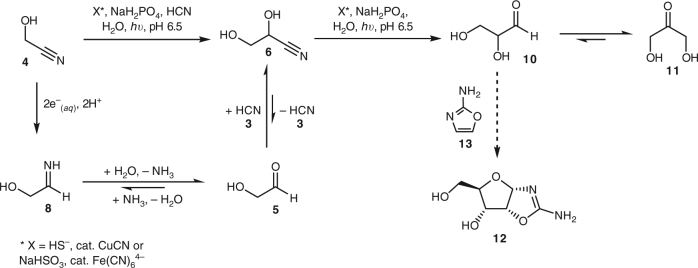
When considering life’s aetiology, the first questions that must be addressed are “how?” and “where?” were ostensibly complex molecules, considered necessary for life’s beginning, constructed from simpler, more abundant feedstock molecules on primitive Earth. Previously, we have used multiple clues from the prebiotic synthetic requirements of (proto)biomolecules to pinpoint a set of closely related geochemical scenarios that are suggestive of flow and semi-batch chemistries. We now wish to report a multistep, uninterrupted synthesis of a key heterocycle (2-aminooxazole) en route to activated nucleotides starting from highly plausible, prebiotic feedstock molecules under conditions which mimic this scenario. Further consideration of the scenario has uncovered additional pertinent and novel aspects of prebiotic chemistry, which greatly enhance the efficiency and plausibility of the synthesis.
Overview
The claims and statistics of this paper haven’t been checked yet.
Free: it reads the open-access text and checks the first 5 claims that cite a source we can check. Create a free account to check every claim.
Integrity signals
Registry
Cites
Statistics
Figures

Verification
Claims the paper makes
The claims and statistics of this paper haven’t been checked yet.
Free: it reads the open-access text and checks the first 5 claims that cite a source we can check. Create a free account to check every claim.
Claims other papers make about this one
Each is checked against this paper’s own text: does it say what the citing paper says it does?
The source backs part of the claim, not all of it — or backs it for a different population, condition or comparison.
In the citing paper
“At this point in the reaction mixture, the excess sulfite favours the reversible formation of bisulfite adducts.”
From Prebiotic Reaction Networks in Water (2020) · cites this paper as [116]
Experimental — accuracy not yet measuredThe cited source says what the claim attributes to it.
In the citing paper
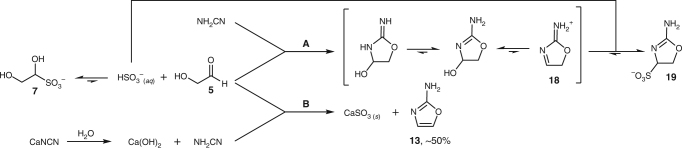
“The resulting single combined stream is made to concentrate by dry-down and then passed into a vessel containing solid calcium cyanamide (CaNCN). The calcium precipitates as CaSO3, freeing up glycolaldehyde, allowing it to react with cyanamide, which itself is produced upon addition of water, yielding 2-aminooxazole 27.”
From Prebiotic Reaction Networks in Water (2020) · cites this paper as [116]
The cited source says what the claim attributes to it.
In the citing paper
“This scenario relies on two main monomers, formaldehyde and HCN, to produce glyconitrile, plus the action of schreibersite ((Fe, Ni) 3P), hydrosulfide (HS−) as reducing agent, copper and ultraviolet light, to promote the homologation to higher cyanohydrins”
From The protometabolic nature of prebiotic chemistry (2023) · cites this paper as [99]
In the citing paper
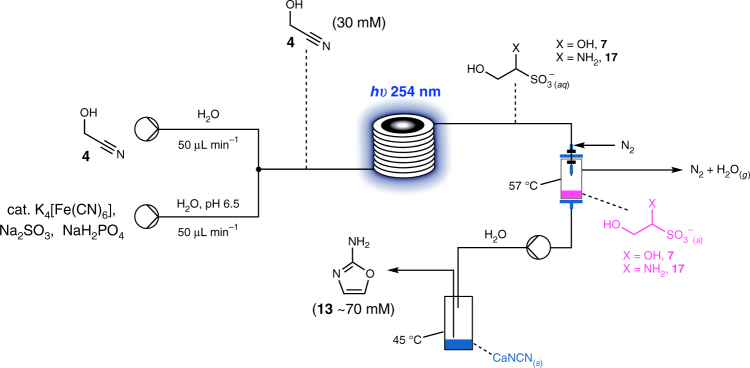
“In one variation demonstrated, the flow-chemistry reaction network begins with two separate aqueous streams of (i) glycolonitrile and (ii) catalytic potassium ferrocyanide, sodium sulfite and inorganic phosphate at pH 6.5.”
From Prebiotic Reaction Networks in Water (2020) · cites this paper as [116]
In the citing paper
“In 2018, Ritson, Sutherland and co-workers [116] used flow chemistry to help model this geochemical scenario whereby streams of different chemical composition combine and collect.”
From Prebiotic Reaction Networks in Water (2020) · cites this paper as [116]
Self-check
Percentages, sums and reported differences re-computed from the paper’s own numbers.
The self-check needs the paper’s full text.
Citations
Cites
Common origins of RNA, protein and lipid precursors in a cyanosulfidic protometabolism
Patel, B. H., Percivalle, C., Ritson, D. J., Duffy, C. D., & Sutherland, J. D. (2015) · Nature Chemistry · doi:10.1038/nchem.2202 · Cited by 949
Self-citationThe emergence of life from iron monosulphide bubbles at a submarine hydrothermal redox and pH front
RUSSELL, M. J., & HALL, A. J. (1997) · Journal of the Geological Society · doi:10.1144/gsjgs.154.3.0377 · Cited by 822
On the origin of biochemistry at an alkaline hydrothermal vent
Martin, W., & Russell, M. J. (2007) · Philosophical Transactions of the Royal Society B: Biological Sciences · doi:10.1098/rstb.2006.1881 · Cited by 771
Activated Acetic Acid by Carbon Fixation on (Fe,Ni)S Under Primordial Conditions
Huber, C., & Wächtershäuser, G. (1997) · Science · doi:10.1126/science.276.5310.245 · Cited by 714
Baross, J. A., & Hoffman, S. E. (1985) · Origins of life and evolution of the biosphere · doi:10.1007/bf01808177 · Cited by 621
The oxidation state of Hadean magmas and implications for early Earth’s atmosphere
Trail, D., Watson, E. B., & Tailby, N. D. (2011) · Nature · doi:10.1038/nature10655 · Cited by 613
The rocky roots of the acetyl-CoA pathway
Russell, M. J., & Martin, W. (2004) · Trends in Biochemical Sciences · doi:10.1016/j.tibs.2004.05.007 · Cited by 432
Mowry, D. T. (1948) · Chemical Reviews · doi:10.1021/cr60132a001 · Cited by 404
The Origin of Life—Out of the Blue
Sutherland, J. D. (2016) · Angewandte Chemie International Edition · doi:10.1002/anie.201506585 · Cited by 401
Self-citationSubmarine hot springs and the origin of life
Miller, S. L., & Bada, J. L. (1988) · Nature · doi:10.1038/334609a0 · Cited by 338
Research works printed but not linked: 1
- Pincass H Die bildung von calciumcyanamid aus ferrocyancalcium Chem. Ztg. 1922 46 661
Cited by
Nonenzymatic Metabolic Reactions and Life’s Origins
Muchowska, K. B., Varma, S. J., & Moran, J. (2020) · Chemical Reviews · doi:10.1021/acs.chemrev.0c00191 · Cited by 317
“21 Some have argued that highly unlikely sequences of events should not be ruled out because life itself might be a rare occurrence, 22 but ignoring constraints on probabilities makes it impossible to rationally discriminate between competing hypotheses.”
Chemistry of Abiotic Nucleotide Synthesis
Yadav, M., Kumar, R., & Krishnamurthy, R. (2020) · Chemical Reviews · doi:10.1021/acs.chemrev.9b00546 · Cited by 225
The origin of life as a planetary phenomenon
Sasselov, D. D., Grotzinger, J. P., & Sutherland, J. D. (2020) · Science Advances · doi:10.1126/sciadv.aax3419 · Cited by 210
Self-citationA carbonate-rich lake solution to the phosphate problem of the origin of life
Toner, J. D., & Catling, D. C. (2020) · Proceedings of the National Academy of Sciences · doi:10.1073/pnas.1916109117 · Cited by 201
“Recent attempts at “ one-pot ” syntheses have proposed closed-basin lakes as sites for the formation of amino acids, nucleotides, and lipid precursors in reaction networks involving ultraviolet light, phosphate, sulfur, and cyanide (53, 60).”
When Did Life Likely Emerge on Earth in an RNA‐First Process?
Benner, S. A., Bell, E. A., Biondi, E., Brasser, R., Carell, T., Kim, H., Mojzsis, S. J., Omran, A., Pasek, M. A., & Trail, D. (2020) · ChemSystemsChem · doi:10.1002/syst.201900035 · Cited by 162
“Adapted from Xu et al. (2018)[22] and Ritson et al. (2018).”
MethodOn the origins of life’s homochirality: Inducing enantiomeric excess with spin-polarized electrons
Ozturk, S. F., & Sasselov, D. D. (2022) · Proceedings of the National Academy of Sciences · doi:10.1073/pnas.2204765119 · Cited by 119
“In addition, the effects of photo-oxidation on the magnetite surface can be reversed and the surface can be refreshed by reductants such as bisulfite (HSO3 – ) which has also been shown to concentrate and stabilize aldehydes, and prevent the racemization of glyceraldehyde into dihydroxyacetone [50].”
BackgroundA Light-Releasable Potentially Prebiotic Nucleotide Activating Agent
Mariani, A., Russell, D. A., Javelle, T., & Sutherland, J. D. (2018) · Journal of the American Chemical Society · doi:10.1021/jacs.8b05189 · Cited by 113
Self-citationGreen Rust: The Simple Organizing ‘Seed’ of All Life?
Russell, M. J. (2018) · Life · doi:10.3390/life8030035 · Cited by 101
“Here, we not only list experiments favoring the theory overlooked by, for example, Ritson and his coworkers, but detail further predictions, some of which could be falsified, reveal embarrassing missing links, or even leave the AHVT as just one more casualty of the general theory of natural rejection (Table 1) [296,29…”
BackgroundInsights Into the Origin of Life: Did It Begin from HCN and H2O?
Das, T., Ghule, S., & Vanka, K. (2019) · ACS Central Science · doi:10.1021/acscentsci.9b00520 · Cited by 101
Origin of biological homochirality by crystallization of an RNA precursor on a magnetic surface
Ozturk, S. F., Liu, Z., Sutherland, J. D., & Sasselov, D. D. (2023) · Science Advances · doi:10.1126/sciadv.adg8274 · Cited by 98
“The mechanism we have shown here benefits from the presence of flow and streams as previously considered by Ritson et al.[33].”
MethodSelf-citationLength-Selective Synthesis of Acylglycerol-Phosphates through Energy-Dissipative Cycling
Bonfio, C., Caumes, C., Duffy, C. D., Patel, B. H., Percivalle, C., Tsanakopoulou, M., & Sutherland, J. D. (2019) · Journal of the American Chemical Society · doi:10.1021/jacs.8b12331 · Cited by 91
Self-citationAlkaline lake settings for concentrated prebiotic cyanide and the origin of life
Toner, J. D., & Catling, D. C. (2019) · Geochimica et Cosmochimica Acta · doi:10.1016/j.gca.2019.06.031 · Cited by 85
Origin of Life’s Building Blocks in Carbon- and Nitrogen-Rich Surface Hydrothermal Vents
Rimmer, P. B., & Shorttle, O. (2019) · Life · doi:10.3390/life9010012 · Cited by 83
pH-Driven RNA Strand Separation under Prebiotically Plausible Conditions
Mariani, A., Bonfio, C., Johnson, C. M., & Sutherland, J. D. (2018) · Biochemistry · doi:10.1021/acs.biochem.8b01080 · Cited by 85
Self-citationSupply of phosphate to early Earth by photogeochemistry after meteoritic weathering
Ritson, D. J., Mojzsis, S. J., & Sutherland, J. D. (2020) · Nature Geoscience · doi:10.1038/s41561-020-0556-7 · Cited by 78
Self-citationKadoya, S., Krissansen‐Totton, J., & Catling, D. C. (2020) · Geochemistry, Geophysics, Geosystems · doi:10.1029/2019gc008734 · Cited by 72
“…organic chemists tend to favor a surface environment for prebiotic chemistry because under such conditions nucleotides, amino acids, and lipid precursors have been synthesized in the laboratory, whereas no similar synthesis in hydrothermal vent conditions has been done (Ritson et al., 2018).”
BackgroundMechanochemical Prebiotic Peptide Bond Formation**
Stolar, T., Grubešić, S., Cindro, N., Meštrović, E., Užarević, K., & Hernández, J. G. (2021) · Angewandte Chemie International Edition · doi:10.1002/anie.202100806 · Cited by 65
The protometabolic nature of prebiotic chemistry
Nogal, N., Sanz-Sánchez, M., Vela-Gallego, S., Ruiz-Mirazo, K., & de la Escosura, A. (2023) · Chemical Society Reviews · doi:10.1039/d3cs00594a · Cited by 61
Marine phosphate availability and the chemical origins of life on Earth
Brady, M. P., Tostevin, R., & Tosca, N. J. (2022) · Nature Communications · doi:10.1038/s41467-022-32815-x · Cited by 67
Wogan, N. F., Krissansen‐Totton, J., & Catling, D. C. (2020) · The Planetary Science Journal · doi:10.3847/psj/abb99e · Cited by 63
“Laboratory experiments that have successfully synthesized nucleobases, which are building blocks of RNA, require the following nitriles: hydrogen cyanide (HCN), cyanoacetylene (HCCCN), and cyanogen (NCCN; Sutherland 2016; Ritson et al. 2018; Benner et al. 2019).”
BackgroundOrigin of Life on Mars: Suitability and Opportunities
Clark, B. C., Kolb, V. M., Steele, A., House, C. H., Lanza, N., Gasda, P. J., VanBommel, S. J. V., NEWSOM, H. E., & Martínez‐Frías, J. (2021) · Life · doi:10.3390/life11060539 · Cited by 59
“Although most PCE experiments are conducted at circumneutral pH, there are some which benefit or begin from a more acidic, or more basic, environment [14,33].”
BackgroundThe difficult case of an RNA-only origin of life
Le Vay, K., & Mutschler, H. (2019) · Emerging Topics in Life Sciences · doi:10.1042/etls20190024 · Cited by 48
Biogeochemical explanations for the world’s most phosphate-rich lake, an origin-of-life analog
Haas, S., Sinclair, K. P., & Catling, D. C. (2024) · Communications Earth & Environment · doi:10.1038/s43247-023-01192-8 · Cited by 49
Toward RNA Life on Early Earth: From Atmospheric HCN to Biomolecule Production in Warm Little Ponds
Pearce, B. K. D., Molaverdikhani, K., Pudritz, R. E., Henning, T. K., & Cerrillo, K. E. (2022) · The Astrophysical Journal · doi:10.3847/1538-4357/ac47a1 · Cited by 57
A Continuous Reaction Network that Produces RNA Precursors
Yi, R., Tran, Q. P., Ali, S., Yoda, I., Adam, Z. R., Cleaves, H. J., & Fahrenbach, A. C. (2020) · Proceedings of the National Academy of Sciences · doi:10.1073/pnas.1922139117 · Cited by 45
Molecular Precursors of the RNA-World in Space: New Nitriles in the G+0.693−0.027 Molecular Cloud
Rivilla, V. M., Jiménez-Serra, I., Martín-Pintado, J., Colzi, L., Tercero, B., de Vicente, P., Zeng, S., Martín, S., de la Concepción, J. G., Bizzocchi, L., et al. (2022) · Frontiers in Astronomy and Space Sciences · doi:10.3389/fspas.2022.876870 · Cited by 49
“The former (HOCH2CN) is not only a fundamental precursor to ribonucleotides and lipids (Ritson and Sutherland 2012, 2013; Patel et al. 2015; Liu et al. 2018; Ritson et al. 2018), but also of other biologically-important molecules such as the simplest amino acid glycine (NH2CH2COOH; Rodriguez et al.”
BackgroundFerus, M., Rimmer, P. B., Cassone, G., Knížek, A., Civiš, S., Šponer, J. E., Ivanek, O., Šponer, J., Saeidfirozeh, H., Kubelík, P., et al. (2020) · Astrobiology · doi:10.1089/ast.2020.2231 · Cited by 49
“This can be liberated by liquid water and UV light once the haze clears (Ritson et al. , 2018), or it can be subducted, reprocessed, and degassed in the form of HCN and HCCCN (Rimmer and Shorttle, 2019).”
Organometallic compounds as carriers of extraterrestrial cyanide in primitive meteorites
Smith, K. E., House, C. H., Arévalo, R., Dworkin, J. P., & Callahan, M. P. (2019) · Nature Communications · doi:10.1038/s41467-019-10866-x · Cited by 54
Enzymatic Fischer–Tropsch-Type Reactions
Hu, Y., Lee, C. C., Grosch, M., Solomon, J. B., Weigand, W., & Ribbe, M. W. (2023) · Chemical Reviews · doi:10.1021/acs.chemrev.2c00612 · Cited by 40
UV Transmission in Natural Waters on Prebiotic Earth
Ranjan, S., Kufner, C. L., Lozano, G. G., Todd, Z. R., Haseki, A., & Sasselov, D. D. (2022) · Astrobiology · doi:10.1089/ast.2020.2422 · Cited by 49
“If it is solely sulfite, it is unknown whether the chemistry can function with the dilute, optically thin ferrocyanide required for sulfite photolysis (Xu et al., 2018; Ritson et al., 2018; Green et al., 2021).”
BackgroundRimmer, P. B., Ferus, M., Waldmann, I. P., Knížek, A., Kalvaitis, D., Ivanek, O., Kubelík, P., Yurchenko, S. N., Burian, T., Dostál, J., et al. (2020) · The Astrophysical Journal · doi:10.3847/1538-4357/ab55e8 · Cited by 34
“Additionally, HCN can be stored on the surface in the form of ferrous cyanide and other organometallic complexes, to be liberated by liquid water once the haze clears, after which the HCN photochemistry can proceed unimpeded (Ritson et al. 2018).”
BackgroundPrebiotic Reaction Networks in Water
Tran, Q. P., Adam, Z. R., & Fahrenbach, A. C. (2020) · Life · doi:10.3390/life10120352 · Cited by 32
Role of stellar physics in regulating the critical steps for life
Lingam, M., & Loeb, A. (2019) · International Journal of Astrobiology · doi:10.1017/s1473550419000016 · Cited by 25
“…such as glycolaldehyde and glyceraldehyde (Ritson and Sutherland 2012, 2013; Todd et al. 2018; Xu et al. 2018), (iii) precursors of nucleic acids, amino acids, lipids and carbohydrates (Barks et al. 2010; Patel et al. 2015; Ritson et al. 2018), and (iv) iron-sulfur clusters (Bonfio et al. 2017).”
BackgroundThiophosphate photochemistry enables prebiotic access to sugars and terpenoid precursors
Ritson, D. J., & Sutherland, J. D. (2023) · Nature Chemistry · doi:10.1038/s41557-023-01251-9 · Cited by 24
“Halving the concentration of NH 4 Cl returned ∼ 10% of 24 at either pH 7.0 or 9.2 (Supplementary Table 10).”
InfluentialSelf-citationExploring the Emergence of RNA Nucleosides and Nucleotides on the Early Earth
Biscans, A. (2018) · Life · doi:10.3390/life8040057 · Cited by 24
“This bisulfite adduct formation, allowing the stabilization of the aldehyde, could have led to the formation of ribose [28,29].”
BackgroundTodd, Z. R., Szostak, J. W., & Sasselov, D. D. (2021) · ACS Earth and Space Chemistry · doi:10.1021/acsearthspacechem.0c00270 · Cited by 24
“AO could plausibly have been synthesized on the early Earth by making use of UV light 28 or gamma radiation.”
Chapter 4: A Geological and Chemical Context for the Origins of Life on Early Earth
Rodriguez, L. E., Altair, T., Hermis, N. Y., Jia, T. Z., Roche, T. P., Steller, L. H., & Weber, J. M. (2024) · Astrobiology · doi:10.1089/ast.2021.0139 · Cited by 24
“This oxidation mechanism can be coupled with reduction of HCN to form biologically relevant organics (Ritson et al., 2018; Xu et al., 2018).”
Macrobiont: Cradle for the Origin of Life and Creation of a Biosphere
Clark, B. C., & Kolb, V. M. (2020) · Life · doi:10.3390/life10110278 · Cited by 19
Liu, Z., Wu, L.-F., Bond, A. D., & Sutherland, J. D. (2020) · Chemical Communications · doi:10.1039/d0cc05752e · Cited by 18
Self-citationMolecular basis of Arginine and Lysine DNA sequence-dependent thermo-stability modulation
Martin, B., Dans, P. D., Wieczór, M., Villegas, N., Heath, I. B., Battistini, F., Terrazas, M., & Orozco, M. (2022) · PLoS Computational Biology · doi:10.1371/journal.pcbi.1009749 · Cited by 20
Ferrocyanide survival under near ultraviolet (300–400 nm) irradiation on early Earth
Todd, Z. R., Lozano, G. G., Kufner, C. L., Sasselov, D. D., & Catling, D. C. (2022) · Geochimica et Cosmochimica Acta · doi:10.1016/j.gca.2022.08.012 · Cited by 20
From prebiotic chemistry to supramolecular oligomers: urea–glyoxal reactions
Lavado, N., de la Concepción, J. G., Gallego, M., Babiano, R., & Cintas, P. (2019) · Organic & Biomolecular Chemistry · doi:10.1039/c9ob01120j · Cited by 18
In search of the RNA world on Mars
Mojarro, A., Jin, L., Szostak, J. W., Head, J. W., III, & Zuber, M. T. (2021) · Geobiology · doi:10.1111/gbi.12433 · Cited by 19
Compositional Persistence in a Multicyclic Network of Synthetic Replicators
Huck, J., Kosikova, T., & Philp, D. (2019) · Journal of the American Chemical Society · doi:10.1021/jacs.9b06697 · Cited by 16
Abdoul‐Carime, H., Thiam, G., Rabilloud, F., Charlieux, F., & Kopyra, J. (2022) · ACS Earth and Space Chemistry · doi:10.1021/acsearthspacechem.2c00024 · Cited by 17
Small-Molecule Organocatalysis Facilitates In Situ Nucleotide Activation and RNA Copying
Aitken, H. R. M., Wright, T. H., Radakovic, A., & Szostak, J. W. (2023) · Journal of the American Chemical Society · doi:10.1021/jacs.3c04635 · Cited by 16
“Therefore, we next tested activation and copying initiated by more prebiotically relevant aldehydes, such as acetaldehyde 32,33 and glycolaldehyde, 32 − 34 and were gratified to see that they afforded comparable yields of primer extension products (Table 2, entries 12 and 13).”
Protometabolism as out-of-equilibrium chemistry
Nader, S., Sebastianelli, L., & Mansy, S. S. (2022) · Philosophical Transactions of the Royal Society A Mathematical Physical and Engineering Sciences · doi:10.1098/rsta.2020.0423 · Cited by 23
“Work on non-hydrothermal, out-of-equilibrium systems thus far has made impressive progress, but none of these previous studies attempted to work within prebiotically plausible conditions and rarely made use of molecules that were clearly on a path from prebiotic chemistry to life-as-we-know-it, with a possible excepti…”
ResultGull, M., Feng, T., Bracegirdle, J., Abbott-Lyon, H. L., & Pasek, M. A. (2022) · Journal of Molecular Evolution · doi:10.1007/s00239-022-10086-w · Cited by 15
Li, S., Wang, F., Xing, X., Yue, X., Sun, S., Lin, H., & Xu, C. (2023) · Advanced Healthcare Materials · doi:10.1002/adhm.202303476 · Cited by 12
Liu, Z., Mariani, A., Wu, L.-F., Ritson, D. J., Folli, A., Murphy, D. M., & Sutherland, J. D. (2018) · Chemical Science · doi:10.1039/c8sc02513d · Cited by 12
Self-citationTheoretical Investigations on the Possibility of Prebiotic HCN Formation via O-Addition Reactions
Ghoshal, S., Pramanik, A., & Sarkar, P. (2020) · The Journal of Physical Chemistry A · doi:10.1021/acs.jpca.0c02538 · Cited by 12
Carbon dioxide photoreduction in prebiotic environments
Vadivel, D., Ferraro, F., Merli, D., & Dondi, D. (2022) · Photochemical & Photobiological Sciences · doi:10.1007/s43630-021-00168-x · Cited by 12
“[84] demonstrated that aldehyde adducts of bisulfite can lead to the formation of relevant prebiotic heterocycles, and that sulfonates could have been fundamental for protection of these molecules in the Hadean eon.”
BackgroundMethodInfluentialC 2 H 5 NO Isomers: From Acetamide to 1,2-Oxazetidine and Beyond
Simmie, J. M. (2022) · The Journal of Physical Chemistry A · doi:10.1021/acs.jpca.1c09984 · Cited by 11
Molecular basis or arginine and lysine DNA sequence-dependent thermo-stability modulation
Martín Martínez, B., Dans, P. D., Wieczór, M., Villegas, N., Heath, I. B., Battistini, F., Terrazas, M., & Orozco, M. (2022) · Dipòsit Digital de la Universitat de Barcelona (Universitat de Barcelona) · Cited by 10
Azoles as Auxiliaries and Intermediates in Prebiotic Nucleoside Synthesis
Ritson, D. J., Poplawski, M. W., Bond, A. D., & Sutherland, J. D. (2022) · Journal of the American Chemical Society · doi:10.1021/jacs.2c07774 · Cited by 13
Self-citationCarrascoza, F., Rydzewski, J., Szóstak, N., Błażewicz, J., & Nowak, W. (2019) · Life · doi:10.3390/life9020046 · Cited by 13
“An interesting geochemical scenario was dependent on schreibersite ((Fe,Ni)3P), HCN, hydrosulfide (HS–), copper, and ultraviolet light under postimpact conditions [3].”
BackgroundMechanochemical Prebiotic Peptide Bond Formation**
Stolar, T., Grubešić, S., Cindro, N., Meštrović, E., Užarević, K., & Hernández, J. G. (2021) · Angewandte Chemie · doi:10.1002/ange.202100806 · Cited by 9
Model Atmospheric Aerosols Convert to Vesicles upon Entry into Aqueous Solution
Nader, S., Baccouche, A., Connolly, F., Abou‐Ghanem, M., Styler, S. A., Lewis, J. D., Pink, D., & Mansy, S. S. (2022) · ACS Earth and Space Chemistry · doi:10.1021/acsearthspacechem.2c00328 · Cited by 9
Heat‐Flow‐Driven Nonequilibria for Prebiotic Chemistry
Mast, C. B. (2024) · ChemSystemsChem · doi:10.1002/syst.202400039 · Cited by 10
Redox chemistry of early Earth and the origin of life
Moldogazieva, N. T., Terentiev, A. A., Mokhosoev, I. M., & Astakhov, D. V. (2026) · Communications Chemistry · doi:10.1038/s42004-026-01969-w · Cited by 12
“Additionally, using a continuous fl ow chemistry that mimics the stream environments of early Earth, the multi-step photochemical reduction of HCN for the synthesis of 2-aminooxazole has been demonstrated 171 .”
Hydrogenation of Calix[4]pyrrole: From the Formation to the Synthesis of Calix[4]pyrrolidine
Journot, G., Neier, R., & Gualandi, A. (2021) · European Journal of Organic Chemistry · doi:10.1002/ejoc.202100620 · Cited by 9
Encoding Multiple Reactivity Modes within a Single Synthetic Replicator
Robertson, C. C., Kosikova, T., & Philp, D. (2020) · Journal of the American Chemical Society · doi:10.1021/jacs.0c03527 · Cited by 6
Konishi, N., Shirahata, T., Yoshida, Y., Sato, N., Kaji, E., & Kobayashi, Y. (2021) · Carbohydrate Research · doi:10.1016/j.carres.2021.108437 · Cited by 5
Gull, M., & Pasek, M. A. (2021) · Catalysts · doi:10.3390/catal11111384 · Cited by 5
Serov, N. Y., Shtyrlin, V. G., & Khayarov, K. R. (2020) · Amino Acids · doi:10.1007/s00726-020-02854-z · Cited by 6
Hara, E., & Templeton, A. S. (2024) · ACS Earth and Space Chemistry · doi:10.1021/acsearthspacechem.4c00038 · Cited by 4
Glidden, A., Seager, S., Huang, J., Petkowski, J. J., & Ranjan, S. (2022) · The Astrophysical Journal · doi:10.3847/1538-4357/ac625f · Cited by 4
“…favorable local conditions for prebiotic chemistry not accessed in global mean conditions (e.g., Ranjan et al. 2019; Toner & Catling 2020), and heterogenous reservoirs whose coupling can enable chemistry not possible in a one-reservoir scenario (multi-pot syntheses; e.g., Ritson et al. 2018).”
BackgroundJia, X., Zhang, S. J., Zhou, L., & Szostak, J. W. (2024) · Nucleic Acids Research · doi:10.1093/nar/gkae355 · Cited by 5
“Dry-down has been extensively used to model potentially prebiotic conditions in the field of prebiotic chemistry ( 7 ,27 ).”
Physicochemical Processes That Probably Originated Life
Коваленко, С. П. (2020) · Russian Journal of Bioorganic Chemistry · doi:10.1134/s1068162020040093 · Cited by 4
Cuéllar‐Cruz, M., Ramírez-Cardona, M., Islas, S. R., & Moreno, A. (2022) · ACS Earth and Space Chemistry · doi:10.1021/acsearthspacechem.2c00277 · Cited by 6
Nucleotide Photochemistry on the Early Earth
Whitaker, D. E., Colville, B. W. F., & Powner, M. W. (2023) · Wiley eBooks · doi:10.1002/9781119555568.ch15 · Cited by 4
An exploration of origin of life for exoplanetary science
Keller, F., Kataria, T., Barge, L. M., Chen, P., Yung, Y. L., & Weber, J. M. (2025) · Frontiers in Astronomy and Space Sciences · doi:10.3389/fspas.2025.1544426 · Cited by 4
ChemOrigins: a community-curated database for origins-of-life chemistry
Cuevas-Zuviría, B., Adam, Z. R., Cove, D., & Kaçar, B. (2025) · Interface Focus · doi:10.1098/rsfs.2025.0034 · Cited by 3
Prebiotic thiol-catalyzed thioamide bond formation
Hyde, A. S., & House, C. H. (2024) · Geochemical Transactions · doi:10.1186/s12932-024-00088-6 · Cited by 4
Fioroni, M. (2021) · Advances in astrobiology and biogeophysics · doi:10.1007/978-3-030-81039-9_1 · Cited by 2
The Origin and Early Evolution of Life: Prebiotic Chemistry of Biomolecules
Fiore, M. (2019) · MDPI eBooks · doi:10.3390/books978-3-03921-607-9 · Cited by 2
Computational Investigation of Radical‐ and Catalyst‐Assisted Decomposition of CH2NO• to HCN
Ghoshal, S., & Sarkar, P. (2025) · ChemPlusChem · doi:10.1002/cplu.202500295 · Cited by 1
Intercepting Methanimine for the Synthesis of Piperidine-Based N-Heterocycles in an Aqueous Medium
Pocock, E. E., Diefenbach, M., Hood, T. M., Nunn, M., Krewald, V., Lewis, S. E., & Webster, R. L. (2025) · The Journal of Organic Chemistry · doi:10.1021/acs.joc.5c01213 · Cited by 1
Field-Theodore, T. E., Ravasio, M., Alessandrini, S., Carlo, C., & Puzzarini, C. (2025) · The Astrophysical Journal · doi:10.3847/1538-4357/ae058d · Cited by 1
Finding Pathways in Reaction Networks Guided by Energy Barriers Using Integer Linear Programing
Pal, A., Fagerberg, R., Andersen, J. L., Dittrich, P., & Merkle, D. (2026) · Molecular Informatics · doi:10.1002/minf.70021 · Cited by 3
“The choice of 2-hydroxyethanenitrile as the starting molecule was driven by the fact that it has been reported to occur in interstellar medium as a product of the condensation of methanal with hydrogen cyanide and act as a precursor to important molecules in pre-biotic systems [48].”
From Space Dust to Protocells: Micrometeorites in Early Cellular Evolution
Gözen, İ. (2026) · Astrobiology · doi:10.1177/15311074261434670 · Cited by 1
“…have already been suggested as potential key contributors to the transition of prebiotic structures to living cells but only in the context of surface-based chemistry (Wächtershäuser, 1990, 2008; Pasek, 2017; Ritson et al., 2018; Gibard et al., 2019; Ritson et al., 2020; Trapp et al., 2026).”
Cyanide Storage on Ferroan Brucite (MgxFe1−x(OH)2): Implications for Prebiotic Chemistry
Hara, E., & Templeton, A. S. (2025) · Minerals · doi:10.3390/min15020141 · Cited by 1
“Modeling studies of prebiotic reaction networks have shown that the reaction of cyanide with copper, phosphorus, and hydrogen sulfide can synthesize the precursors of RNA, proteins, and lipids [4,5].”
A Natural Origin of LifePreprint
Stout, T. R., & Matzko, G. (2018) · OSF Preprints (OSF Preprints) · doi:10.31219/osf.io/p5nw3
Green Rust: The Simple Organizing ‘Seed’ of All Life?Preprint
Russell, M. J. (2018) · Preprints.org · doi:10.20944/preprints201808.0096.v1
The Scientific View of the Origin of Life
Adams, J. C., & Engel, J. (2021) · Springer eBooks · doi:10.1007/978-3-030-59075-8_3
First Steps of Prebiotic Chemistry Catalyzed by Minerals and Metals
Huber, L., & Trapp, O. (2022) · Royal Society of Chemistry eBooks · doi:10.1039/9781839164798-00077 · Cited by 1
Cuéllar‐Cruz, M., Islas, S. R., & Moreno, A. (2024) · Earth · doi:10.3390/earth5030016
“The fact that kaolinite is an abundant mineral on our planet that has also been found in similar phases on Mars indicates that this mineral possibly played an essential role in the origin of the first building blocks of life on Earth [17–19].”
BackgroundLi, J., & Lan, Z. (2026) · Journal of Chemical Theory and Computation · doi:10.1021/acs.jctc.6c00571
Planetary Constraints on Prebiotic Chemistry
Walton, C. R. (2026) · Oxford University Press eBooks · doi:10.1093/9780197851500.003.0313
Metadata
- Authors
- Ritson, D. J., Battilocchio, C., Ley, S. V., & Sutherland, J. D.
- Affiliations
- MRC Laboratory of Molecular Biology (GB)
- University of Cambridge (GB)
- Corresponding author
- Ritson, Dougal J.
- Sutherland, John D.
- Venue
- Nature Communications
- Published
- 2018-05-08
- Volume
- 9
- Issue
- 1
- Pages
- 1821-1821
- ISSN
- 2041-1723 (ISSN-L)
- PMC
- PMC5940729
- OpenAlex
- W2801200686
- Cited by
- 89
- References
- 50
- Citations by year
- 2026: 5 · 2025: 6 · 2024: 7 · 2023: 6 · 2022: 18 · 2021: 11 · 2020: 14 · 2019: 15 · 2018: 7
- FWCI
- 6.16
- Type
- journal article
- Language
- en
- Open access
- gold
- doi.org
- Licence
- cc-by
- creativecommons.org/licenses/by/4.0 (tdm)
- creativecommons.org/licenses/by/4.0 (vor)
- Locations
- Nature Communications (publishedVersion, cc-by)
- Europe PMC (PubMed Central) (publishedVersion, cc-by)
- PubMed Central (publishedVersion, cc-by)
- PubMed (publishedVersion)
- RePEc: Research Papers in Economics (submittedVersion)
- DOAJ (DOAJ: Directory of Open Access Journals) (submittedVersion)
- DOAJ (DOAJ: Directory of Open Access Journals) (submittedVersion, cc-by-sa)
- Apollo (University of Cambridge) (submittedVersion, cc-by)
- Apollo (cc-by)
- Funders
- Simons Foundation (290360)
- Medical Research Council (MC UP A024 1009)
- Engineering and Physical Sciences Research Council (EP/M004120/1, EP/K009494/1, EP/K039520/1, EP/K00949/1)
- Topics
- Physical Sciences › Physics and Astronomy › Astronomy and Astrophysics › Origins and Evolution of Life
- Physical Sciences › Physics and Astronomy › Astronomy and Astrophysics › Space Science and Extraterrestrial Life
- Life Sciences › Biochemistry, Genetics and Molecular Biology › Molecular Biology › RNA and protein synthesis mechanisms
- Keywords
- prebiotic chemistry, origin of life, 2-aminooxazole, heterocyclic synthesis, flow chemistry, early Earth, nucleotide precursors
- MeSH terms
- Origin of Life, Aldehydes, Oxazoles, Surface Properties, Earth, Planet, Molecular Mimicry, Physical Phenomena, Photochemical Processes
About these checks
Registry, retraction, Cites and statistics results are computed, not judged, with one exception: a printed reference that no index lists is read once by a model before it counts as a citation error. Claims are extracted by a model and kept only when their quote appears verbatim in the text; each cited source is then checked, with a model’s help, for whether it says what the claim relies on. Those verdicts can be wrong — read the claim’s quote and the cited source before relying on one.
Statistics and arithmetic are recomputed, not judged.
Confidence bands are shown only for fields calibrated on our annotated test set. None is calibrated yet, so no band is shown.
What counts as a claim ›How we measure confidence ›How we check this ›
Are you an author, or do you see a problem with this page? Request a review
Data sources
Bibliographic data: Semantic Scholar, OpenAlex, Crossref.
Contains information from the Semantic Scholar Academic Graph Datasets, made available under the ODC Attribution License (ODC-BY 1.0).
Semantic Scholar’s data is described in: Kinney, R., et al. (2023). The Semantic Scholar Open Data Platform. arXiv:2301.10140.
