

Co-expression of CD39 and CD103 identifies tumor-reactive CD8 T cells in human solid tumors
Open accessThe DOI matches its Crossref record; 52 of the 52 references it cites were found in a registry or an index.
Abstract
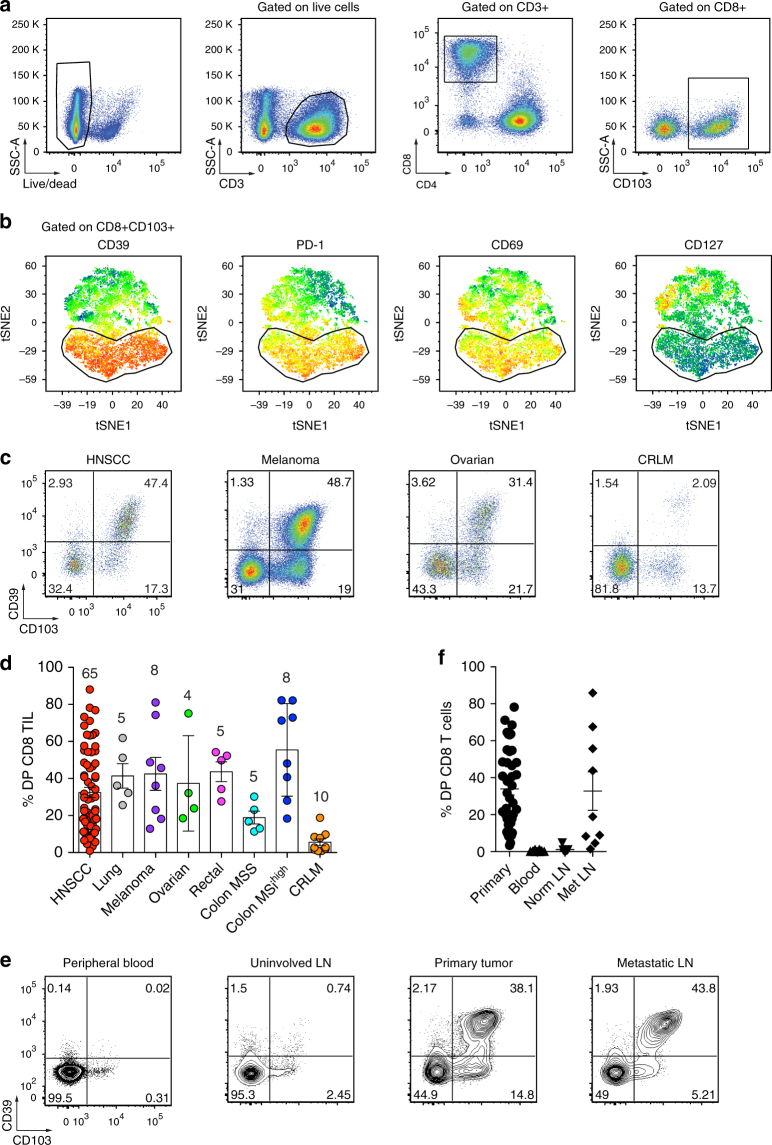
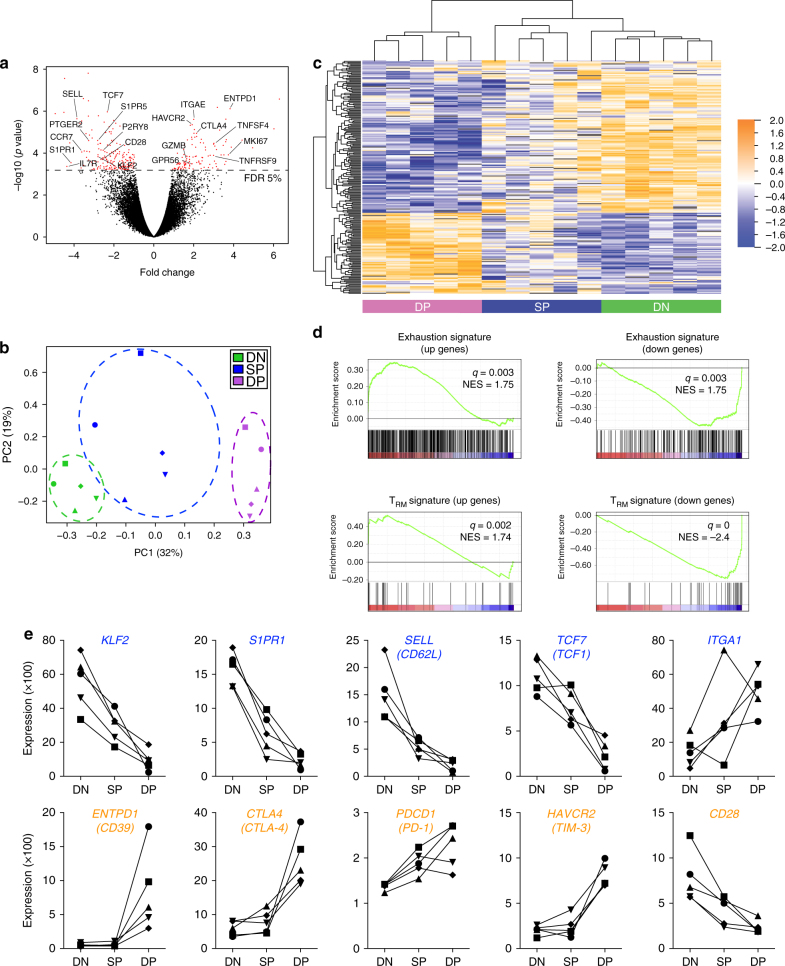
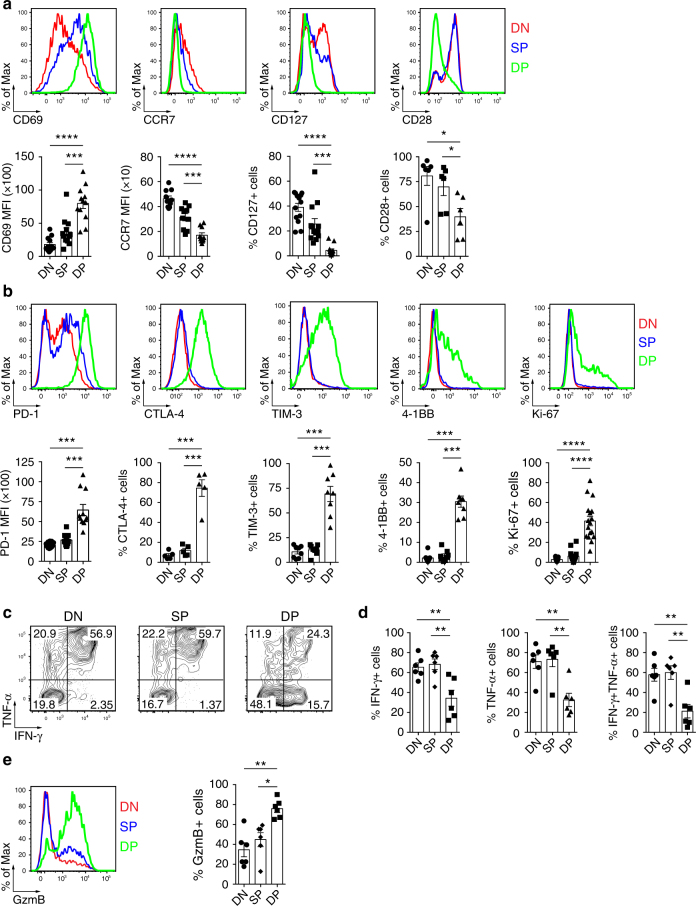
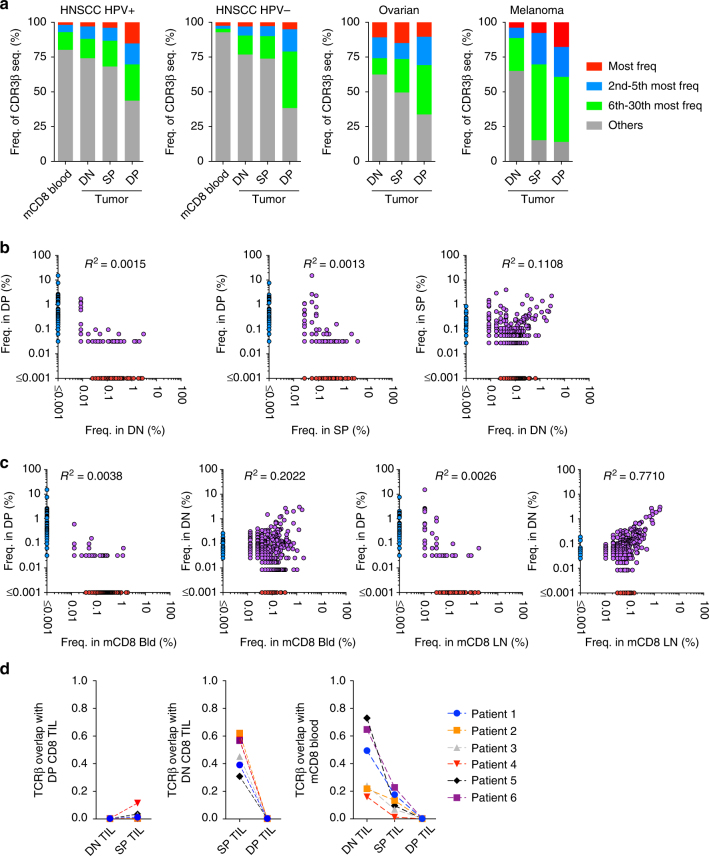
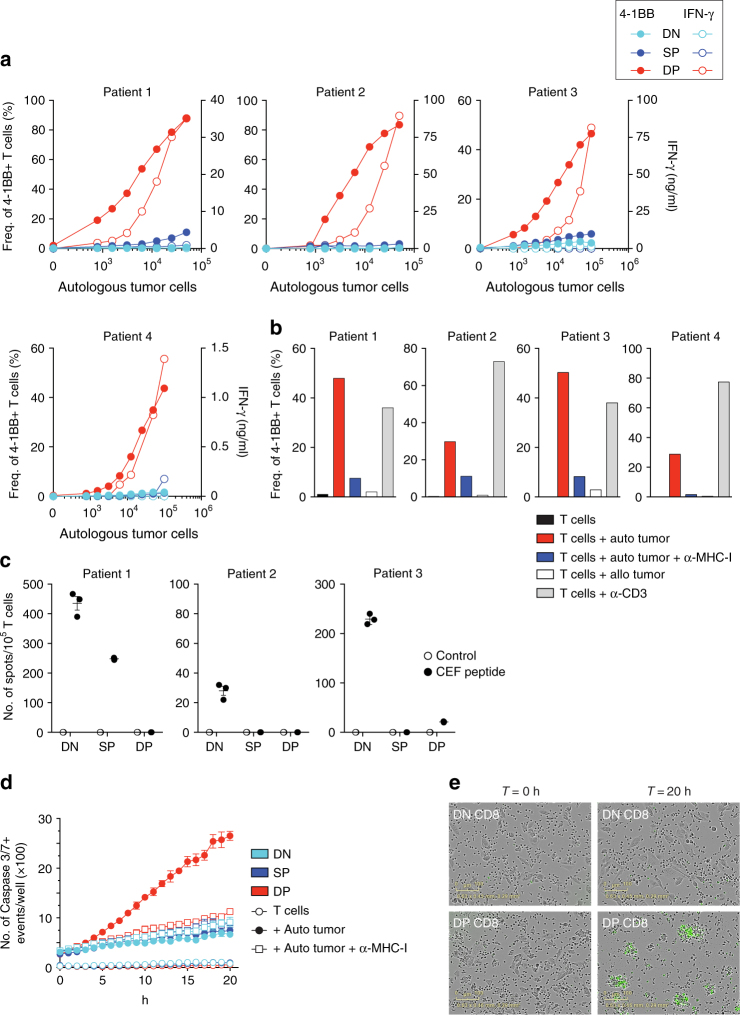
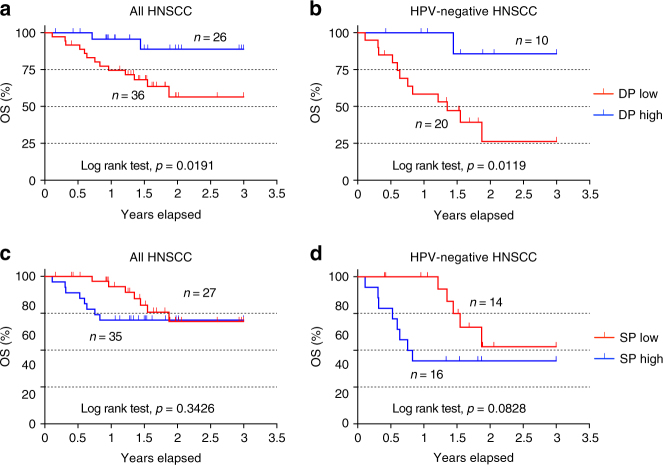
Identifying tumor antigen-specific T cells from cancer patients has important implications for immunotherapy diagnostics and therapeutics. Here, we show that CD103+CD39+ tumor-infiltrating CD8 T cells (CD8 TIL) are enriched for tumor-reactive cells both in primary and metastatic tumors. This CD8 TIL subset is found across six different malignancies and displays an exhausted tissue-resident memory phenotype. CD103+CD39+ CD8 TILs have a distinct T-cell receptor (TCR) repertoire, with T-cell clones expanded in the tumor but present at low frequencies in the periphery. CD103+CD39+ CD8 TILs also efficiently kill autologous tumor cells in a MHC-class I-dependent manner. Finally, higher frequencies of CD103+CD39+ CD8 TILs in patients with head and neck cancer are associated with better overall survival. Our data thus describe an approach for detecting tumor-reactive CD8 TILs that will help define mechanisms of existing immunotherapy treatments, and may lead to future adoptive T-cell cancer therapies.
Overview
The claims and statistics of this paper haven’t been checked yet.
Free: it reads the open-access text and checks the first 5 claims that cite a source we can check. Create a free account to check every claim.
Integrity signals
Registry
Cites
Statistics
Figures
Verification
Claims the paper makes
The claims and statistics of this paper haven’t been checked yet.
Free: it reads the open-access text and checks the first 5 claims that cite a source we can check. Create a free account to check every claim.
Claims other papers make about this one
Each is checked against this paper’s own text: does it say what the citing paper says it does?
In the citing paper
“Previous studies demonstrated that enhanced CD8+CD103+ TRM TILs correlate with improved survival in patients with early stage NSCLC18 and with other types of cancer19.”
From Neoadjuvant nivolumab or nivolumab plus ipilimumab in operable non-small cell lung cancer: the phase 2 randomized NEOSTAR trial (2021) · cites this paper as [19]
Self-check
Percentages, sums and reported differences re-computed from the paper’s own numbers.
The self-check needs the paper’s full text.
Citations
Cites
Subramanian, A., Tamayo, P., Mootha, V. K., Mukherjee, S., Ebert, B. L., Gillette, M. A., Paulovich, A., Pomeroy, S. L., Golub, T. R., Lander, E. S., et al. (2005) · Proceedings of the National Academy of Sciences · doi:10.1073/pnas.0506580102 · Cited by 53,625
limma powers differential expression analyses for RNA-sequencing and microarray studies
Ritchie, M. E., Phipson, B., Wu, D., Hu, Y., Law, C. W., Shi, W., & Smyth, G. K. (2015) · Nucleic Acids Research · doi:10.1093/nar/gkv007 · Cited by 40,458
PD-1 Blockade in Tumors with Mismatch-Repair Deficiency
Le, D. T., Uram, J. N., Wang, H., Bartlett, B. R., Kemberling, H., Eyring, A. D., Skora, A. D., Luber, B. S., Azad, N. S., Laheru, D., et al. (2015) · New England Journal of Medicine · doi:10.1056/nejmoa1500596 · Cited by 9,377
Mismatch repair deficiency predicts response of solid tumors to PD-1 blockade
Le, D. T., Durham, J. N., Smith, K. N., Wang, H., Bartlett, B. R., Aulakh, L. K., Lu, S., Kemberling, H., Wilt, C., Luber, B. S., et al. (2017) · Science · doi:10.1126/science.aan6733 · Cited by 6,645
Massagué, J. (2008) · Cell · doi:10.1016/j.cell.2008.07.001 · Cited by 3,907
Cancer Regression and Autoimmunity in Patients After Clonal Repopulation with Antitumor Lymphocytes
Dudley, M. E., Wunderlich, J. R., Robbins, P. F., Yang, J. C., Hwu, P., Schwartzentruber, D. J., Topalian, S. L., Sherry, R., Restifo, N. P., Hubicki, A. M., et al. (2002) · Science · doi:10.1126/science.1076514 · Cited by 2,823
Cancer regression in patients after transfer of genetically engineered lymphocytes
Morgan, R. A., Dudley, M. E., Wunderlich, J. R., Hughes, M. S., Yang, J. C., Sherry, R. M., Royal, R. E., Topalian, S. L., Kammula, U. S., Restifo, N. P., et al. (2006) · Science · doi:10.1126/science.1129003 · Cited by 2,603
Deaglio, S., Dwyer, K. M., Gao, W., Friedman, D., Usheva, A., Erat, A., Chen, J.-F., Enjyoji, K., Linden, J., Oukka, M., et al. (2007) · The Journal of Experimental Medicine · doi:10.1084/jem.20062512 · Cited by 2,470
Landon, M., Saam, J., Brown, K. L., Moyes, K., Evans, B., & Wenstrup, R. (2015) · Oncology · doi:10.1159/000430097 · Cited by 1,939
Ahmadzadeh, M., Johnson, L. A., Heemskerk, B., Wunderlich, J. R., Dudley, M. E., White, D. E., & Rosenberg, S. A. (2009) · Blood · doi:10.1182/blood-2008-12-195792 · Cited by 1,766
Cited by
Items 401–500 of 972
Anderson, K. G., Braun, D. A., Buqué, A., Gitto, S. B., Guerriero, J. L., Horton, B. L., Keenan, B. P., Kim, T. S., Overacre-Delgoffe, A. E., Ruella, M., et al. (2023) · Journal for ImmunoTherapy of Cancer · doi:10.1136/jitc-2022-006533 · Cited by 25
“44 Despite the functional heterogeneity of tumor-infiltrating CD8 + T cells, it is widely accepted that activated, antigen-specific T cells that infiltrate clinically detectable human tumors are generally dysfunctional and unable to prevent tumor progression without therapeutic intervention.”
Saux, O. L., Ardin, M., Berthet, J., Ghamry-Barrin, S., Bourhis, M., Cinier, J., Lounici, Y., Treilleux, I., Just, P., Bataillon, G., et al. (2024) · Nature Communications · doi:10.1038/s41467-024-47000-5 · Cited by 24
“This observation may seem counter-intuitive, as CD39 is a marker of tumor-reactive exhausted CD8 + T cells 46,47 and has been associated with response to ICI in lung cancer 48 .”
van Duijn, J., van Elsas, M. J., Benne, N., Depuydt, M. A. C., Wezel, A., Smeets, H. J., Bot, I., Jiskoot, W., Kuiper, J., & Slütter, B. (2019) · Atherosclerosis · doi:10.1016/j.atherosclerosis.2019.04.217 · Cited by 24
Murata, K., Nakatsugawa, M., Rahman, M. A., Nguyen, L. T., Millar, D. G., Mulder, D. T., Sugata, K., Saijo, H., Matsunaga, Y., Kagoya, Y., et al. (2020) · eLife · doi:10.7554/elife.53244 · Cited by 30
“It is well established that melanoma TILs contain antitumor T cells that are specific for both non-mutated and mutated antigens (Andersen et al., 2012; Bentzen et al., 2016; Duhen et al., 2018; Ye et al., 2014).”
BackgroundKim, K. H., Pyo, H., Lee, H., Oh, D., Noh, J. M., Ahn, Y. C., Yoon, H. I., Moon, H., Lee, J., Park, S., et al. (2022) · International Journal of Radiation Oncology*Biology*Physics · doi:10.1016/j.ijrobp.2022.02.003 · Cited by 25
Khazen, R., Müller, S., Lafouresse, F., Valitutti, S., & Cussat‐Blanc, S. (2019) · Scientific Reports · doi:10.1038/s41598-019-48711-2 · Cited by 23
Tsuji, T., Eng, K. H., Matsuzaki, J., Battaglia, S., Szender, J. B., Miliotto, A. J., Gnjatic, S., Bshara, W., Morrison, C. D., Lele, S., et al. (2020) · Oncotarget · doi:10.18632/oncotarget.27666 · Cited by 23
“In these studies, bystander CD8+ TILs were shown to lack CD39 expression [8], while tumor-specific T cells have been defined by expression of a variety markers including PD-1 [9], CD103 [10], CD39 [11] and CD137 [12].”
BackgroundSalas‐Benito, D., Conde, E., Tamayo, I., Mancheño, U., Elizalde, E., García-Ros, D., Aramendía, J. M., Muruzábal, J. C., Alcaide, J., Guillén‐Grima, F., et al. (2021) · British Journal of Cancer · doi:10.1038/s41416-020-01218-4 · Cited by 23
Matsuki, M., Hirohashi, Y., Nakatsugawa, M., Murai, A., Kubo, T., Hashimoto, S., Tokita, S., Murata, K., Kanaseki, T., Tsukahara, T., et al. (2021) · Cancer Immunology Immunotherapy · doi:10.1007/s00262-021-03048-6 · Cited by 23
Gitto, S., Natalini, A., Antonangeli, F., & Rosa, F. D. (2021) · Frontiers in Immunology · doi:10.3389/fimmu.2021.755304 · Cited by 23
“Similarly, high intratumoral frequency of CD103 CD39 CD8 T cells was associated with better overall survival in patients with head-and-neck squamous cell carcinoma, another type of epithelial cancer (78).”
BackgroundIsomoto, K., Haratani, K., Tsujikawa, T., Makutani, Y., Kawakami, H., Takeda, M., Yonesaka, K., Tanaka, K., Iwasa, T., Hayashi, H., et al. (2022) · Lung Cancer · doi:10.1016/j.lungcan.2022.10.012 · Cited by 23
Intratumoral antigen signaling traps CD8 + T cells to confine exhaustion to the tumor site
Takahashi, M., So, T. Y., Chamberlain-Evans, V., Hughes, R., Yam‐Puc, J. C., Kania, K., Ruhle, M., Mann, T., Schuijs, M. J., Coupland, P. G., et al. (2024) · Science Immunology · doi:10.1126/sciimmunol.ade2094 · Cited by 26
“These findings corroborate reports of exhausted T cells expressing CD103 (a key protein in T cell residency) (10, 11), and reports of tumor-reactive cells being largely confined to the tumor (12, 13).”
Functional Heterogeneity and Therapeutic Targeting of Tissue-Resident Memory T Cells
van der Gracht, E. T. I., Behr, F. M., & Arens, R. (2021) · Cells · doi:10.3390/cells10010164 · Cited by 25
“The co-expression of CD39 together with CD103 has been reported to identify tumor-reactive CD8+ T cells in solid human tumors [85].”
BackgroundNicotinamide Inhibits T Cell Exhaustion and Increases Differentiation of CD8 Effector T Cells
Alavi, S., Emran, A. A., Tseng, H., Tiffen, J. C., McGuire, H. M., & Hersey, P. (2022) · Cancers · doi:10.3390/cancers14020323 · Cited by 23
“CD39 was retained longer than PD1 in other studies using CD3/CD28 co stimulation [42].”
ResultImmune correlates and mechanisms of TIL therapy efficacy: current insights and knowledge gaps
Rodrigo, B. N., Ortiz-Miranda, Y., Corría-Osorio, J., Coukos, G., & Harari, A. (2025) · Trends in cancer · doi:10.1016/j.trecan.2025.08.002 · Cited by 23
Pfeifer, R., Henze, J., Wittich, K., Gosselink, A., Kinkhabwala, A., Gremse, F., Bleilevens, C., Bigott, K., Jungblut, M., Hardt, O., et al. (2022) · Theranostics · doi:10.7150/thno.68966 · Cited by 23
“Moreover, emerging data suggests that besides frequency and spatiality, also the functional phenotype of the intratumoral immune cells has a prognostic value and should thus be taken into consideration [36, 38].”
BackgroundGerhardt, L., Hong, M. M. Y., Yousefi, Y., Figueredo, R., & Vareki, S. M. (2023) · The Journal of Immunology · doi:10.4049/jimmunol.2200897 · Cited by 23
Non-immune cell components in tumor microenvironment influencing lung cancer Immunotherapy
Zhang, J., Liu, S., Chen, X., Xu, X., & Xu, F. (2023) · Biomedicine & Pharmacotherapy · doi:10.1016/j.biopha.2023.115336 · Cited by 22
Luo, H., Wang, W., Mai, J., Yin, R., Cai, X., & Li, Q. (2023) · Frontiers in Immunology · doi:10.3389/fimmu.2023.1267918 · Cited by 22
“Recent studies using single-cell transcriptomic pro fi ling and TCR repertoire sequencing have revealed that T cell in fi ltrates in TME are populated with tumor-reactive CD8 + T cells, but also with bystander CD8 + T cells recognizing viral antigens (91, 92).”
Jiang, F., Mao, M., Jiang, S., Jiao, Y., Cao, D., & Xiang, Y. (2023) · International Immunopharmacology · doi:10.1016/j.intimp.2023.111381 · Cited by 23
Reschke, R., Deitert, B., Enk, A., & Hassel, J. C. (2024) · Frontiers in Immunology · doi:10.3389/fimmu.2024.1385781 · Cited by 22
CD39 Is Expressed on Functional Effector and Tissue-resident Memory CD8+ T Cells
Isaacs, J. F., Degefu, H. N., Chen, T., Kleist, S. A., Musial, S. C., Ford, M. A., Searles, T. G., Lin, C., Skorput, A. G. J., Shirai, K., et al. (2024) · The Journal of Immunology · doi:10.4049/jimmunol.2400151 · Cited by 23
CD39: the potential target in small cell lung cancer
Chen, S., Wu, S., Zhang, L., Zhang, W., Liu, Y., Chen, B., Zhao, S., Li, W., Sun, C., Wang, L., et al. (2020) · Translational Lung Cancer Research · doi:10.21037/tlcr-20-798 · Cited by 24
“Evidence shows it may evaluate the immunotherapy effect because it distinguishes tumorrelated or unrelated CD8 + tumor-infiltrating lymphocytes (TILs) in human solid tumors and causes the failure of CD8 + TILs (19-22).”
BackgroundHolding our breath: the promise of tissue-resident memory T cells in lung cancer
Marceaux, C., Weeden, C. E., Gordon, C. L., & Asselin-Labat, M.-L. (2021) · Translational Lung Cancer Research · doi:10.21037/tlcr-20-819 · Cited by 23
“It is likely that current ICB therapies are effective both upon cancer-specific TRM and also by inducing the recruitment of T cells from the periphery (5,8,13,32,68).”
InfluentialTissue‐resident memory T cells in diseases and therapeutic strategies
Xie, D., Lu, G., Mai, G., Guo, Q., & Xu, G. (2025) · MedComm · doi:10.1002/mco2.70053 · Cited by 21
Tumor-Infiltrating Lymphocyte Therapy: A New Frontier
Tseng, D., & Lee, S. M. (2025) · Transplantation and Cellular Therapy · doi:10.1016/j.jtct.2024.11.014 · Cited by 21
Damei, I., Caidi, A., Auclin, É., Adam, J., Mella, S., Hasan, M., Tartour, É., Robert, C., Corgnac, S., & Mami‐Chouaib, F. (2025) · Nature Communications · doi:10.1038/s41467-025-60657-w · Cited by 24
“Expression of CD39, together with CD103, has been reported to identify tumour-speci fi c CD8 T cells in solid tumours 17 , and to distinguish tumour antigen-speci fi c CD8 T cells from viral antigen-speci fi c bystander T cells pre-sent in the tumour microenvironment 53 .”
Tumor infiltration therapy: from FDA approval to next-generation approaches
Shaik, R., Royyala, S. A., Inapanuri, B., Durgam, A., Khan, H., & Unnisa, A. Z. (2025) · Clinical and Experimental Medicine · doi:10.1007/s10238-025-01574-6 · Cited by 24
“T cell surface expression of immune checkpoint receptors (e.g., CTLA-4 and PD-1/ PD-L1) is the immune system's self-defence strategy [84].”
Ramaswamy, M., Kim, T. I., Jones, D. C., Ghadially, H., Mahmoud, T. I., Garcia, A., Browne, G. J., Ζήνωνος, Ζ., Puplampu-Dove, Y., Riggs, J. M., et al. (2021) · Cancer Immunology Research · doi:10.1158/2326-6066.cir-21-0218 · Cited by 22
Conde, E., Casares, N., Mancheño, U., Elizalde, E., Vercher, E., Capozzi, R., Santamaría, E., Rodríguez-Madoz, J. R., Prósper, F., Lasarte, J. J., et al. (2022) · Molecular Therapy · doi:10.1016/j.ymthe.2022.08.017 · Cited by 21
“59 Interestingly, Foxp3UP CD8 TILs also exhibited a gene signature resembling that of previously described tu-mor-in fi ltrating TRM. 32 Phenotypic FACS studies con fi rmed the co-existence of less-differentiated cells expressing CD103 and more-differentiated cells expressing KLRG1 within Foxp3UP CD8 TILs.”
Chen, X., Chen, Y., Xin, Z., Lin, M., Hao, Z., Chen, D., He, T., Zhao, L., Wu, D., Wu, P., et al. (2022) · European Journal of Immunology · doi:10.1002/eji.202149608 · Cited by 21
Losurdo, A., Muzio, A. D., Cianciotti, B. C., Dipasquale, A., Persico, P., Barigazzi, C., Bono, B., Feno, S., Pessina, F., Santoro, A., et al. (2024) · Cancers · doi:10.3390/cancers16030603 · Cited by 23
Hamid, M. A., Céspedes, P. F., Chen, J., Chen, J., Gileadi, U., Antoun, E., Liang, Z., Gao, F., Teague, R., Manoharan, N., et al. (2024) · Nature Immunology · doi:10.1038/s41590-024-01802-3 · Cited by 22
“…toward tumor control, we explored the possible clinical relevance of the CD61 + TILs on patients’ overall survival (OS) probability, in a cohort of patients with lung cancer (LC) and a cohort of patients with skin cutaneous melanoma (SCM) from The Cancer Genome Atlas (TCGA) database 12,22–24 .”
BackgroundMethodResultInfluentialHansen, U. K., Church, C. D., Simões, A. M. C., Svensson, M., Bentzen, A. K., Tvingsholm, S. A., Becker, J. C., Fling, S. P., Ramchurren, N., Topalian, S. L., et al. (2024) · Journal of Clinical Investigation · doi:10.1172/jci177082 · Cited by 21
“Other approaches to targeting multiple tumor Ags have been explored, such as adoptive transfer of TILs, where the cell product reflects the tumor infiltrations and may respond to a broad set of Ags.”
BackgroundThe SKI proto-oncogene restrains the resident CD103+CD8+ T cell response in viral clearance
Wu, B., Zhang, G., Guo, Z., Wang, G., Xu, X., Li, J., Whitmire, J. K., Zheng, J., & Wan, Y. Y. (2020) · Cellular and Molecular Immunology · doi:10.1038/s41423-020-0495-7 · Cited by 22
Chun, B., Pucilowska, J., Chang, S., Kim, I., Nikitin, B. M., Koguchi, Y., Redmond, W. L., Bernard, B. M., Rajamanickam, V., Polaske, N. W., et al. (2022) · Journal for ImmunoTherapy of Cancer · doi:10.1136/jitc-2021-004033 · Cited by 25
Self-citationDecoding Tissue-Residency: Programming and Potential of Frontline Memory T Cells
Park, S. L., & Mackay, L. K. (2021) · Cold Spring Harbor Perspectives in Biology · doi:10.1101/cshperspect.a037960 · Cited by 21
Distinct Immunosuppressive Tumor Microenvironment in Gastric Cancer With Peritoneal Metastasis
Kim, H.-S., Kwon, M., Lee, S. K., Son, S.-M., Lee, O., Yoon, S. M., Kim, H. K., Yang, Y., Lee, K. H., & Han, H. S. (2025) · Journal of the Korean Gastric Cancer Association · doi:10.5230/jgc.2025.25.e46 · Cited by 21
“Immunosuppressive Next, we analyzed the expression of CD39 and CD103, surrogate markers of tumor-reactive T cells [20], in both CD8 + and CD4 + T cells ( Supplementary Fig.”
Li, M., Li, Q., Dong, H., Zhao, S., Ning, J., Bai, X., Yue, X., & Xie, A. (2022) · International Journal of Biological Macromolecules · doi:10.1016/j.ijbiomac.2022.10.045 · Cited by 20
The role of dendritic cells in radiation-induced immune responses
Kaur, A. P., Alice, A. F., Crittenden, M. R., & Gough, M. J. (2023) · International review of cytology · doi:10.1016/bs.ircmb.2023.02.002 · Cited by 21
Preexisting Immunity Drives the Response to Neoadjuvant Chemotherapy in Esophageal Adenocarcinoma
Arbore, G., Albarello, L., Bucci, G., Punta, M., Cossu, A., Fanti, L., Maurizio, A., Mauro, F. D., Bilello, V., Arrigoni, G., et al. (2023) · Cancer Research · doi:10.1158/0008-5472.can-23-0356 · Cited by 20
Haratani, K., Nakamura, A., Mamesaya, N., Mitsuoka, S., Yoneshima, Y., Saito, R., Tanizaki, J., Fujisaka, Y., Hata, A., Tsuruno, K., et al. (2023) · Journal of Thoracic Oncology · doi:10.1016/j.jtho.2023.06.012 · Cited by 20
Ryu, H., Bi, T., Pulliam, T. H., Sarkar, K., Church, C. D., Kumar, N., Mayer-Blackwell, K., Jani, S., Ramchurren, N., Hansen, U. K., et al. (2024) · Cell Reports Medicine · doi:10.1016/j.xcrm.2023.101390 · Cited by 23
“CD103, a resident memory T cell marker that also mediates cell binding to epithelial and endothelial cells, has also been implicated as a marker for tumor reactivity in TILs 19,62,63 and in blood 64 in the context of other tumor types.”
BackgroundInfluentialShen, Y., Qiu, Y., Duan, Z., Li, Y.-X., Wang, Y., Zhang, Y., Zhu, B., Yu, X.-H., Tan, X., Chen, W., et al. (2024) · Pharmacological Research · doi:10.1016/j.phrs.2024.107122 · Cited by 20
Workel, H. H., van Rooij, N., Plat, A., Spierings, D. C. J., Fehrmann, R. S. N., Nijman, H. W., & de Bruyn, M. (2020) · International Journal of Molecular Sciences · doi:10.3390/ijms21113770 · Cited by 20
“A further specification of TRM cells in endometrial cancer might therefore be relevant, as CD39 and CD103 co-expression identifies tumor-resident, clonally expanded, tumor antigen-specific T cells with superior cytolytic capacity [19,20].”
BackgroundImmune Microenvironment: New Insight for Familial Adenomatous Polyposis
Yang, J. H., Wen, Z., Li, W., Sun, X., Ma, J., She, X., Zhang, H., Tu, C., Wang, B., Huang, D., et al. (2021) · Frontiers in Oncology · doi:10.3389/fonc.2021.570241 · Cited by 21
Bonnereau, J., Courau, T., Asesio, N., Salfati, D., Bouhidel, F. A., Corté, H., Hamoudi, S., Hammoudi, N., Lavolé, J., Vivier-Chicoteau, J., et al. (2022) · Gut · doi:10.1136/gutjnl-2021-326553 · Cited by 20
Tumor resident memory CD8 T cells and concomitant tumor immunity develop independently of CD4 help
Medler, T. R., Kramer, G. F., Bambina, S., Gunderson, A. J., Alice, A. F., Blair, T. C., Zebertavage, L., Duhen, T. M., Duhen, R., Young, K. H., et al. (2023) · Scientific Reports · doi:10.1038/s41598-023-33508-1 · Cited by 19
“While this is not an exhaustive profile, it matches the phenotype of tumor antigen-reactive T cells that accumulate in human tumors 7 .”
BackgroundSelf-citationYao, S., Huang, Z., Wei, C., Wang, Y., Xiao, H., Chen, S., & Huang, Z. (2023) · BMC Oral Health · doi:10.1186/s12903-023-02936-w · Cited by 19
“suggested that a higher frequency of CD103 CD39 tumor infiltration into CD8 T cells in patients with head and neck cancer predicted a better prognosis [22].”
BackgroundMolecular, metabolic, and functional CD4 T cell paralysis in the lymph node impedes tumor control
Guo, M., Abd-Rabbo, D., Bertol, B. C., Carew, M., Lukhele, S., Snell, L. M., Xu, W., Boukhaled, G. M., Elsaesser, H. J., Halaby, M. J., et al. (2023) · Cell Reports · doi:10.1016/j.celrep.2023.113047 · Cited by 20
van Eijs, M. J. M., Linde, J. J. M. T., Baars, M. J. D., Amini, M., Laclé, M. M., Brand, E. C., Delemarre, E. M., Drylewicz, J., Nierkens, S., Verheijden, R. J., et al. (2023) · iScience · doi:10.1016/j.isci.2023.107891 · Cited by 19
“TILs associated with tumors of other origin, includingmelanoma, also express ITGAE and ITGB7which can together form dimerized CD103.(41,42) Directly targeting aEb7 could negatively impact intra-tumoral retention of TILs and thus compromise antitumor immunity.”
BackgroundInfluentialAbdelaziz, M. O., Ossmann, S., Kaufmann, A. M., Leitner, J. M., Steinberger, P., Willimsky, G., Raftery, M. J., & Schönrich, G. (2019) · Frontiers in Immunology · doi:10.3389/fimmu.2019.01776 · Cited by 20
Aoki, H., Ueha, S., Shichino, S., Ogiwara, H., Shitara, K., Shimomura, M., Suzuki, T., Nakatsura, T., Yamashita, M., Kitano, S., et al. (2021) · Cancer Immunology Research · doi:10.1158/2326-6066.cir-20-0989 · Cited by 21
Blair, T. C., Alice, A. F., Zebertavage, L., Crittenden, M. R., & Gough, M. J. (2021) · Frontiers in Oncology · doi:10.3389/fonc.2021.653625 · Cited by 20
Self-citationDholakia, J., Scalise, C. B., Katre, A. A., Goldsberry, W. N., Meza‐Perez, S., Randall, T. D., Norian, L. A., Novak, L., & Arend, R. C. (2021) · Gynecologic Oncology · doi:10.1016/j.ygyno.2021.09.026 · Cited by 20
Li, S.-H., Yao, Z., Wang, H., Ecker, J. A., Omotoso, M. O., Lee, J. J., Kong, J., Feng, H., Chaisawangwong, W., Kang, S.-S., et al. (2024) · Science Advances · doi:10.1126/sciadv.adm7928 · Cited by 19
Sanders, C., Hamad, A. S. M., Ng, S. S., Hosni, R., Ellinger, J., Klümper, N., Ritter, M., Stephan, C., Jung, K., Hölzel, M., et al. (2022) · Cancers · doi:10.3390/cancers14061541 · Cited by 18
“An accumulation of tissue-resident memory CD103+ T-lymphocytes has been associated with a better prognosis in head and neck tumors [8] and lung cancer [9].”
BackgroundGarman, B., Jiang, C., Daouti, S., Kumar, S., Mehta, P., Jacques, M. K., Menard, L. C., Manjarrez‐Orduño, N., Dolfi, S. C., Mukherjee, P., et al. (2023) · Frontiers in Immunology · doi:10.3389/fimmu.2023.1151748 · Cited by 20
Lnc-CCNH-8 promotes immune escape by up-regulating PD-L1 in hepatocellular carcinoma
Zhao, B., Zheng, X., Wang, Y., Cheng, N., Zhong, Y., Zhou, Y., Huang, J., Wang, F., Qi, X., Zhuang, Q., et al. (2024) · Molecular Therapy — Nucleic Acids · doi:10.1016/j.omtn.2024.102125 · Cited by 19
Gorchs, L., Moro, C. F., Asplund, E., Oosthoek, M., Solders, M., Ghorbani, P., Sparrelid, E., Rangelova, E. B., Löhr, M. J., & Kaipe, H. (2024) · Cancer Research Communications · doi:10.1158/2767-9764.crc-23-0405 · Cited by 19
“Previous studies have shown that CD4 + CD39 + T cells (28) and CD8 + T cells double positive (DP) for CD39 and CD103 contain a high frequency of tumor-reactive T cells (26), but these subsets of T cells have not yet been studied in pancreatic cancer.”
BackgroundResultInfluentialDréno, B., Khammari, A., Fortun, A., Vignard, V., Saïagh, S., Beauvais, T., Jouand, N., Bercegay, S., Simon, S., Lang, F., et al. (2021) · Cancer Immunology Immunotherapy · doi:10.1007/s00262-021-02961-0 · Cited by 20
Ni, X., Wan, W., Ma, J., Liu, X., Zheng, B., He, Z., Yang, W., & Huang, L. (2021) · Frontiers in Genetics · doi:10.3389/fgene.2021.682503 · Cited by 18
“Meanwhile, the high CD39 expression group comprised a higher proportion of naïve B cells and CD4memory resting T cells that presented immunosuppressive phenotypes, so CD39 is actually an exhaustion marker of T cells (Duhen et al., 2018; Simoni et al., 2018; Thelen et al., 2018).”
BackgroundAbdeljaoued, S., Arfa, S., Kroemer, M., Khelil, M. B., Vienot, A., Heyd, B., Loyon, R., Doussot, A., & Borg, C. (2022) · Journal for ImmunoTherapy of Cancer · doi:10.1136/jitc-2021-003472 · Cited by 18
Bossio, S., Abrate, C., Tosello, J., Rodríguez, C., Canale, F. P., Ramello, M. C., Brunotto, V., Richer, W., Rocha, D., Sedlik, C., et al. (2023) · OncoImmunology · doi:10.1080/2162402x.2023.2246319 · Cited by 19
“16 Related to CD4 T cell compartment, it has been demonstrated that T-I PD-1 high CD39 + Tconv cells from head and neck, ovarian, and cervical cancer patients exhibit features of T cell exhaustion.”
BackgroundCell-Based Therapies for Solid Tumors: Challenges and Advances
Smolarska, A., Kokoszka, Z., Naliwajko, M., Strupczewska, J., Tondera, J., Wiater, M., & Orzechowska, R. (2025) · International Journal of Molecular Sciences · doi:10.3390/ijms26125524 · Cited by 18
“Clinical studies have shown that TIL therapy can effectively remodel the TME, shifting it toward a pro-inflammatory and immune-permissive state, thereby facilitating durable responses in checkpoint-refractory solid tumors [46–48].”
Massa, D., Tosi, A., Rosato, A., Guarneri, V., & Dieci, M. V. (2022) · Cancers · doi:10.3390/cancers14194885 · Cited by 18
Tissue-Resident Memory T Cell: Ontogenetic Cellular Mechanism and Clinical Translation
Xu, H., Zhou, R., & Chen, Z. (2023) · Clinical & Experimental Immunology · doi:10.1093/cei/uxad090 · Cited by 17
Jeon, S. H., You, G., Park, J., Chung, Y., Park, K., Kim, H., Jeon, J., Kim, Y., Son, W., Jeong, D. S., et al. (2024) · Clinical Cancer Research · doi:10.1158/1078-0432.ccr-23-2864 · Cited by 17
Skadborg, S. K., Maarup, S. B., Draghi, A., Borch, A., Hendriksen, S., Mundt, F., Pedersen, V., Mann, M., Christensen, I. J., Skjøth-Ramussen, J., et al. (2024) · Cancer Immunology Research · doi:10.1158/2326-6066.cir-23-0959 · Cited by 18
“CD39, when co-expressed with CD103, has previously been associated with extended survival in patients with head and neck cancer (53).”
BackgroundYang, L., Yang, H., Zhao, M., Yuan, H., Geng, J., Yan, Y., Li, W., Xing, L., Yu, J., & Sun, X. (2025) · npj Precision Oncology · doi:10.1038/s41698-025-00831-x · Cited by 17
Greenbaum, A. M., Fromm, J. R., Gopal, A. K., & Houghton, A. M. (2022) · Blood Research · doi:10.5045/br.2022.2021145 · Cited by 19
“Even if antigen presentation is occurring, the large T-cell activation may represent the “bystander” effect, in which non-tumor-reactive T-cells expand in response to an inflammatory environment caused by the tumor [43].”
BackgroundAttrill, G. H., Lee, H., Tasker, A. T., Adegoke, N. A., Ferguson, A. L., da Silva, I. P., Saw, R. P. M., Thompson, J. F., Palendira, U., Long, G. V., et al. (2022) · Frontiers in Immunology · doi:10.3389/fimmu.2022.979993 · Cited by 20
“Based on its phenotype, P2 is tumor-resident (CD103+) and potentially specific for tumor antigens (CD39+) (14, 15).”
BackgroundNesterenko, P. A., McLaughlin, J., Cheng, D., Bangayan, N. J., Sojo, G. B., Seet, C. S., Yu, Q., Mao, Z., Obusan, M. B., Phillips, J. W., et al. (2021) · Proceedings of the National Academy of Sciences · doi:10.1073/pnas.2021190118 · Cited by 33
“For example, antigenspecific tumor infiltrating lymphocytes (TILs) are found inside the CD39/CD103 compartment (64).”
Völzke, C., Ehrhardt, L., Fischer, L. E., Maul, P., Wenzel, C., Riabinska, A., Criado-Moronati, E., Dienstbier, M., Hassel, J. C., Zhang, D., et al. (2024) · Frontiers in Immunology · doi:10.3389/fimmu.2024.1483254 · Cited by 16
Chen, X., Zhao, Y., Wang, Y., Wang, X., Liu, Y., Liu, Z., & Li, Y. (2025) · Signal Transduction and Targeted Therapy · doi:10.1038/s41392-025-02446-x · Cited by 19
Neoadjuvant immunotherapy for resectable non-small cell lung cancer.
Xie, H., Shi, X., & Wang, G. (2021) · American Journal of Cancer Research · Cited by 17
Sharon, S., Daher-Ghanem, N., Zaid, D., Gough, M. J., & Kravchenko‐Balasha, N. (2023) · Frontiers in Oral Health · doi:10.3389/froh.2023.1180869 · Cited by 19
Zhang, Z., Zhu, X., Yang, F., Lai, N., Zhu, L., Cole, K., Hu, B., Li, T., Zhu, Y., Zhang, L.-M., et al. (2023) · Med · doi:10.1016/j.medj.2023.07.010 · Cited by 16
Tassi, E., Bergamini, A., Wignall, J., Sant’Angelo, M., Brunetto, E., Balestrieri, C., Redegalli, M., Potenza, A., Abbati, D., Manfredi, F., et al. (2023) · Frontiers in Immunology · doi:10.3389/fimmu.2023.1212444 · Cited by 16
Sundström, P., Dutta, N., Rodin, W. C. I., Hallqvist, A., Raghavan, S., & Quiding‐Järbrink, M. (2024) · OncoImmunology · doi:10.1080/2162402x.2024.2312631 · Cited by 16
“CD39 marks tumor-specific conventional CD8 + T cells, but is also expressed on terminally exhausted MAIT and conventional T cells together with PD-1, 12,18–20 suggesting that PD-1 might be regarded as a marker of progenitor exhausted or possibly activated cells in the circulating MAIT cells.”
BackgroundB7-H4 reduces the infiltration of CD8+T cells and induces their anti-tumor dysfunction in gliomas
Qi, Y., Hu, L., Ji, C., Yang, X., Yao, J., Chen, D., & Yao, Y. (2024) · Neoplasia · doi:10.1016/j.neo.2024.101007 · Cited by 16
“The CD137 + CD8 + TIL and CD103 + CD8 + TIL subsets are typically deficient among dysfunctional CD8 + TILs in tumor microenvironment [17,18].”
BackgroundMietz, J., Kaulfuß, M., Egli, L., Opitz, L., Münz, C., & Chijioke, O. (2024) · EBioMedicine · doi:10.1016/j.ebiom.2024.105240 · Cited by 17
“…the exhaustion marker CD39, which has been described as a marker of CD8 + T cells with enhanced tumour reactivity across different human cancers, 1,44 – 48 the activation marker HLA-DR as well as the activation and residency-related marker CD69, 49 while this cell subset also had the strongest…”
Aizaz, M. T., Khan, A. S., Khan, M., Musazade, E., & Yang, G. (2024) · Critical Reviews in Oncology/Hematology · doi:10.1016/j.critrevonc.2024.104471 · Cited by 16
Baek, S., Sung, E., Kim, G., Hong, M. H., Lee, C. Y., Shim, H. S., Park, S. Y., Kim, H. R., & Lee, I. (2025) · 癌症:英文版 · doi:10.1002/cac2.12658 · Cited by 17
“Given that ENTPD1 and ITGAE indicate tumor reactivity 29 , while NK receptors often indicate bystander T cells 30 , these results imply that these ′ exhausted ‵ CD8 + T cells in ALK-positive tumors became dysfunctional through noncanonical mechanisms.”
Xu, L., Ye, L., & Huang, Q. (2025) · MedComm · doi:10.1002/mco2.70132 · Cited by 18
“…presence of tumor-specific CD8 + T RM - like cells (CD39 + CD8 + T) has been associated with better overall survival in several solid tumors [24, 26, 142, 143], reinforcing the notion that targeting these specific immune populations could be a promising strategy for enhancing cancer immunotherapy.”
Gentzler, R. D., Riley, D., & Martin, L. W. (2020) · Current Oncology Reports · doi:10.1007/s11912-020-00969-w · Cited by 16
Zhang, C., Luo, Y., Zhang, Z., Zhang, Z., Zhang, G., Wang, F., Che, Y., Fang, L., Zhang, Y., Sun, N., et al. (2020) · Frontiers in Cell and Developmental Biology · doi:10.3389/fcell.2020.580005 · Cited by 17
The Emerging Role of Tissue-Resident Memory CD8+ T Lymphocytes in Human Digestive Tract Cancers
Mei, X., Li, H., Zhou, X., Cheng, M., & Cui, K. (2022) · Frontiers in Oncology · doi:10.3389/fonc.2021.819505 · Cited by 18
Promising immunotherapeutic targets in lung cancer based on single-cell RNA sequencing
Xue, Q., Peng, W., Zhang, S., Wei, X., Ye, L., Wang, Z., Xiang, X., Zhang, P., & Zhou, Q. (2023) · Frontiers in Immunology · doi:10.3389/fimmu.2023.1148061 · Cited by 16
Tissue-resident memory T cells in gastrointestinal tumors: turning immune desert into immune oasis
Liang, M., Wang, X., Cai, D., Guan, W., & Shen, X. (2023) · Frontiers in Immunology · doi:10.3389/fimmu.2023.1119383 · Cited by 16
CD83 expression characterizes precursor exhausted T cell population
Wu, Z., Yoshikawa, T., Inoue, S., Ito, Y., Kasuya, H., Nakashima, T., Zhang, H., Kotaka, S., Hosoda, W., Suzuki, S., et al. (2023) · Communications Biology · doi:10.1038/s42003-023-04631-6 · Cited by 17
Adoptive neoantigen-reactive T cell therapy: improvement strategies and current clinical researches
Huang, R., Bi, Z., Hu, S., Zhang, Q., Su, X., & Zhang, W. (2023) · Biomarker Research · doi:10.1186/s40364-023-00478-5 · Cited by 16
“High frequency of CD39 + tumor reactive T cells is relevant to better prognosis in cancer patients [82].”
BackgroundCd39 (Entpd1) in Tumors: A Potential Therapeutic Target and Prognostic Biomarker
Li, C., Zhang, L., Jin, Q., Jiang, H., & Wu, C. (2023) · Biomarkers in Medicine · doi:10.2217/bmm-2023-0202 · Cited by 15
Advances and prospects in tumor infiltrating lymphocyte therapy
Qiu, X., Li, S., Fan, T., Zhang, Y., Wang, B., Zhang, B., Zhang, M., & Zhang, L. (2024) · Discover Oncology · doi:10.1007/s12672-024-01410-5 · Cited by 15
Using Preclinical Data to Design Combination Clinical Trials of Radiation Therapy and Immunotherapy
Gough, M. J., Sharon, S., Crittenden, M. R., & Young, K. H. (2020) · Seminars in Radiation Oncology · doi:10.1016/j.semradonc.2019.12.002 · Cited by 16
Ectonucleotidase Modulation of Lymphocyte Function in Gut and Liver
Savio, L. E. B., Robson, S. C., & Longhi, M. S. (2021) · Frontiers in Cell and Developmental Biology · doi:10.3389/fcell.2020.621760 · Cited by 17
Qi, J., Liu, X., Yan, P., He, S., Lin, Y., Huang, Z., Zhang, S., Xie, S., Li, Y., Lü, X., et al. (2021) · Frontiers in Oncology · doi:10.3389/fonc.2021.724232 · Cited by 16
Rakké, Y. S., Carrascosa, L. C., van Beek, A. A., de Ruiter, V., van Gemerden, R. S., Doukas, M., Doornebosch, P. G., Vermaas, M., ter Borg, S., van der Harst, E., et al. (2022) · Cellular and Molecular Gastroenterology and Hepatology · doi:10.1016/j.jcmgh.2022.09.007 · Cited by 17
Luo, Y., Zong, Y., Hua, H., Gong, M., Peng, Q., Li, C., Neculai, D., & Zeng, X. (2022) · Frontiers in Immunology · doi:10.3389/fimmu.2022.1011590 · Cited by 17
“Previous studies revealed that co-expression of CD103 and CD39 identified a unique population of tumorreactive CD8 TILs in solid human tumors with an exhausted tissue-resident memory phenotype (44, 45).”
BackgroundResultInfluentialZhan, X., Feng, S., Zhou, X., Liao, W., Zhao, B., Yang, Q., Tan, Q., & Shen, J. (2022) · Frontiers in Genetics · doi:10.3389/fgene.2022.1047435 · Cited by 15
“Based on the cancer-immune cycle hypothesis, the antitumor effect involved many gradual processes (Duhen et al., 2018).”
Background
Metadata
- Authors
- Duhen, T., Duhen, R., Montler, R., Moses, J., Moudgil, T., de Miranda, N. F., Goodall, C. P., Blair, T. C., Fox, B. A., McDermott, J. E., Chang, S.-C., Grunkemeier, G., Leidner, R., Bell, R. B., & Weinberg, A. D.
- Affiliations
- Providence Portland Medical Center (US)
- Pacific Northwest National Laboratory (US)
- Corresponding author
- Duhen, Thomas
- Weinberg, Andrew D.
- ORCID
- Venue
- Nature Communications
- Published
- 2018-07-13
- Volume
- 9
- Issue
- 1
- Pages
- 2724-2724
- ISSN
- 2041-1723 (ISSN-L)
- PMC
- PMC6045647
- OpenAlex
- W2849303123
- Semantic Scholar
- 6ef850a94cc9de6931a8a014bd6b31b5aa68fc04
- Cited by
- 938
- References
- 52
- Citations by year
- 2026: 92 · 2025: 137 · 2024: 120 · 2023: 148 · 2022: 140 · 2021: 137 · 2020: 102 · 2019: 49 · 2018: 12
- FWCI
- 28.19
- Type
- journal article
- Language
- en
- Open access
- gold
- doi.org
- Licence
- cc-by
- creativecommons.org/licenses/by/4.0 (tdm)
- creativecommons.org/licenses/by/4.0 (vor)
- Locations
- Nature Communications (publishedVersion, cc-by)
- Europe PMC (PubMed Central) (publishedVersion, other-oa)
- PubMed Central (publishedVersion, cc-by)
- PubMed (publishedVersion)
- Leiden Repository (Leiden University) (submittedVersion)
- OSTI OAI (U.S. Department of Energy Office of Scientific and Technical Information) (submittedVersion)
- Data Archiving and Networked Services (DANS) (submittedVersion, other-oa)
- RePEc: Research Papers in Economics (submittedVersion)
- DOAJ (DOAJ: Directory of Open Access Journals) (submittedVersion, cc-by-sa)
- DOAJ (DOAJ: Directory of Open Access Journals) (submittedVersion)
- Funders
- AgonOx, Inc. Providence Medical Foundation
- Topics
- Health Sciences › Medicine › Oncology › Cancer Immunotherapy and Biomarkers
- Life Sciences › Immunology and Microbiology › Immunology › T-cell and B-cell Immunology
- Life Sciences › Immunology and Microbiology › Immunology › Immunotherapy and Immune Responses
- Keywords
- CD39, CD103, CD8+ T cells, tumor-infiltrating lymphocytes, tumor-reactive T cells, tissue-resident memory T cells, T cell exhaustion, T cell receptor repertoire, MHC class I restriction, head and neck cancer, metastatic cancer, adoptive T cell therapy, cancer immunotherapy, prognostic factors
- MeSH terms
- Adenocarcinoma of Lung, Squamous Cell Carcinoma of Head and Neck, Apyrase, Carcinoma, Squamous Cell, Female, Humans, Male, Melanoma, Ovarian Neoplasms, Antigens, CD, Survival Analysis, Immunophenotyping, Lymphocytes, Tumor-Infiltrating, Receptors, Antigen, T-Cell, alpha-beta, CD8 Antigens, CD8-Positive T-Lymphocytes, Integrin alpha Chains, Transcriptome
About these checks
Registry, retraction, Cites and statistics results are computed, not judged, with one exception: a printed reference that no index lists is read once by a model before it counts as a citation error. Claims are extracted by a model and kept only when their quote appears verbatim in the text; each cited source is then checked, with a model’s help, for whether it says what the claim relies on. Those verdicts can be wrong — read the claim’s quote and the cited source before relying on one.
Statistics and arithmetic are recomputed, not judged.
Confidence bands are shown only for fields calibrated on our annotated test set. None is calibrated yet, so no band is shown.
What counts as a claim ›How we measure confidence ›How we check this ›
Are you an author, or do you see a problem with this page? Request a review
Data sources
Bibliographic data: Semantic Scholar, OpenAlex, Crossref.
Contains information from the Semantic Scholar Academic Graph Datasets, made available under the ODC Attribution License (ODC-BY 1.0).
Semantic Scholar’s data is described in: Kinney, R., et al. (2023). The Semantic Scholar Open Data Platform. arXiv:2301.10140.
