

Co-expression of CD39 and CD103 identifies tumor-reactive CD8 T cells in human solid tumors
Open accessThe DOI matches its Crossref record; 52 of the 52 references it cites were found in a registry or an index.
Abstract
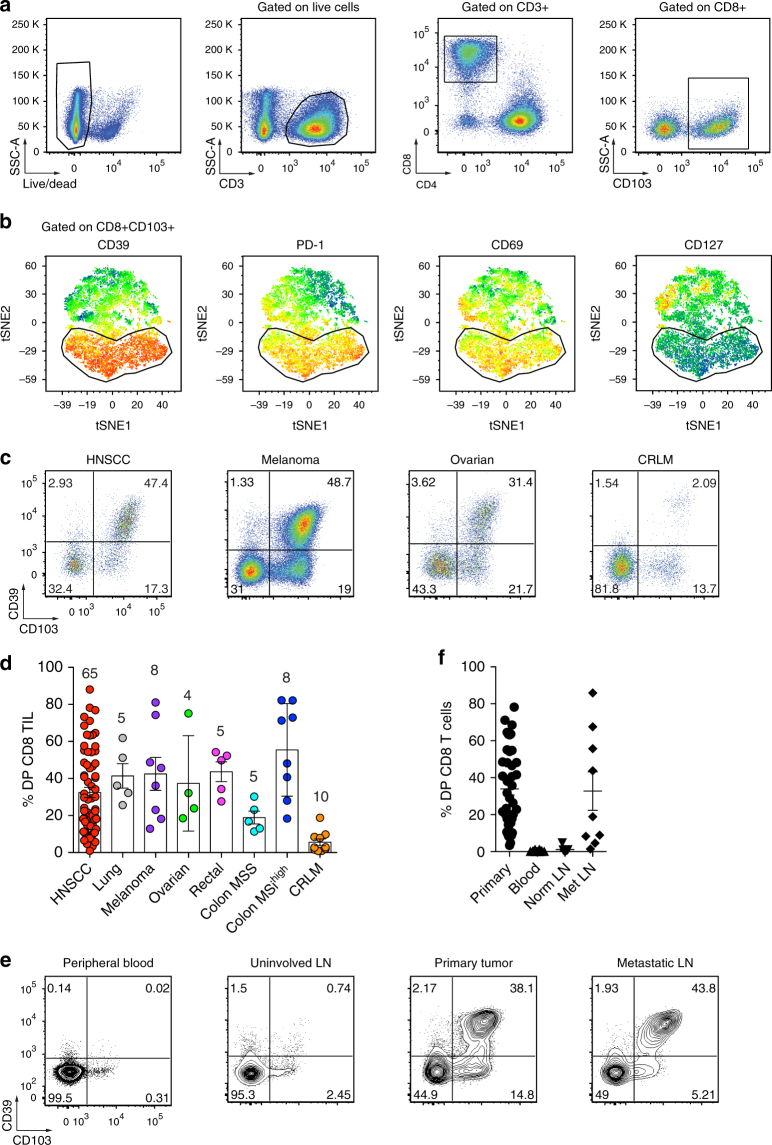
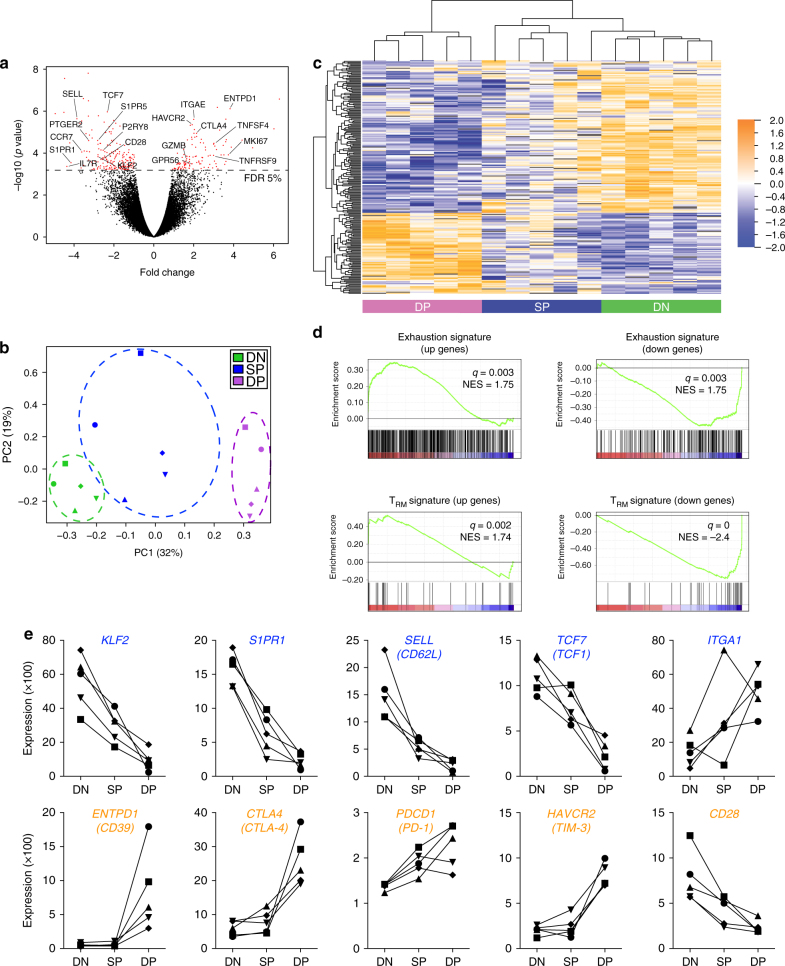
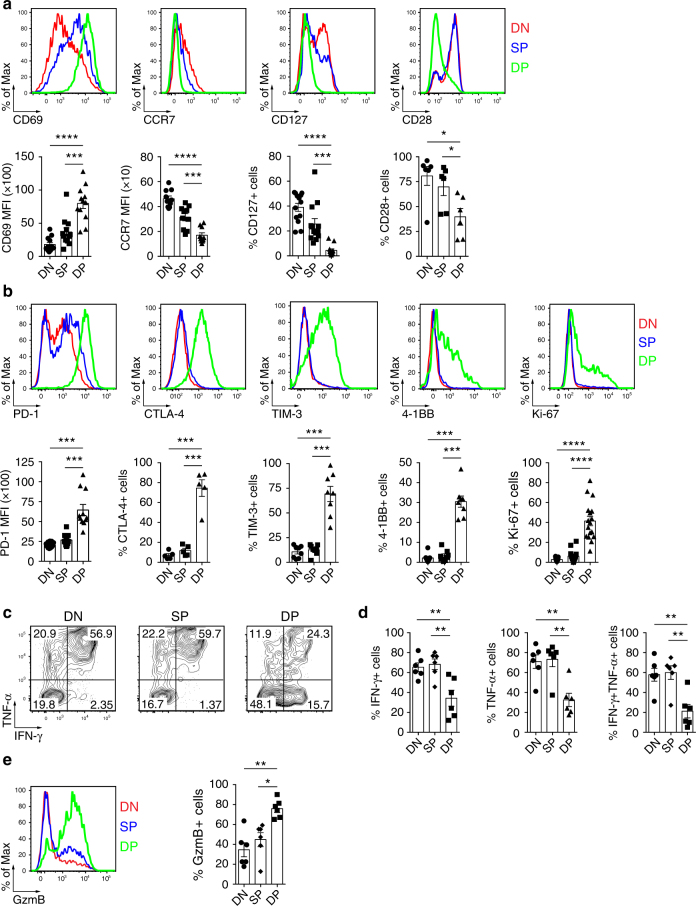
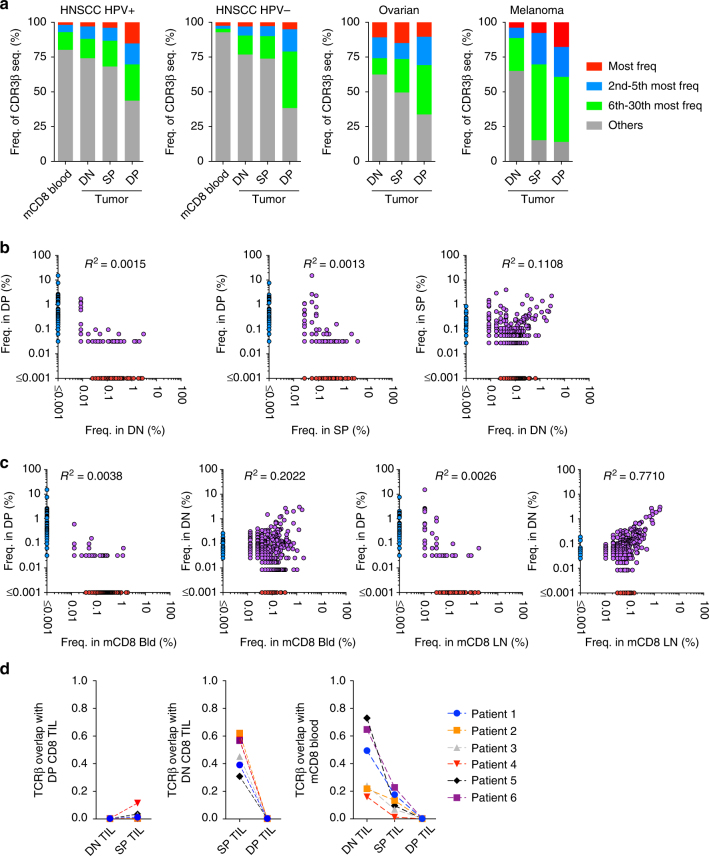
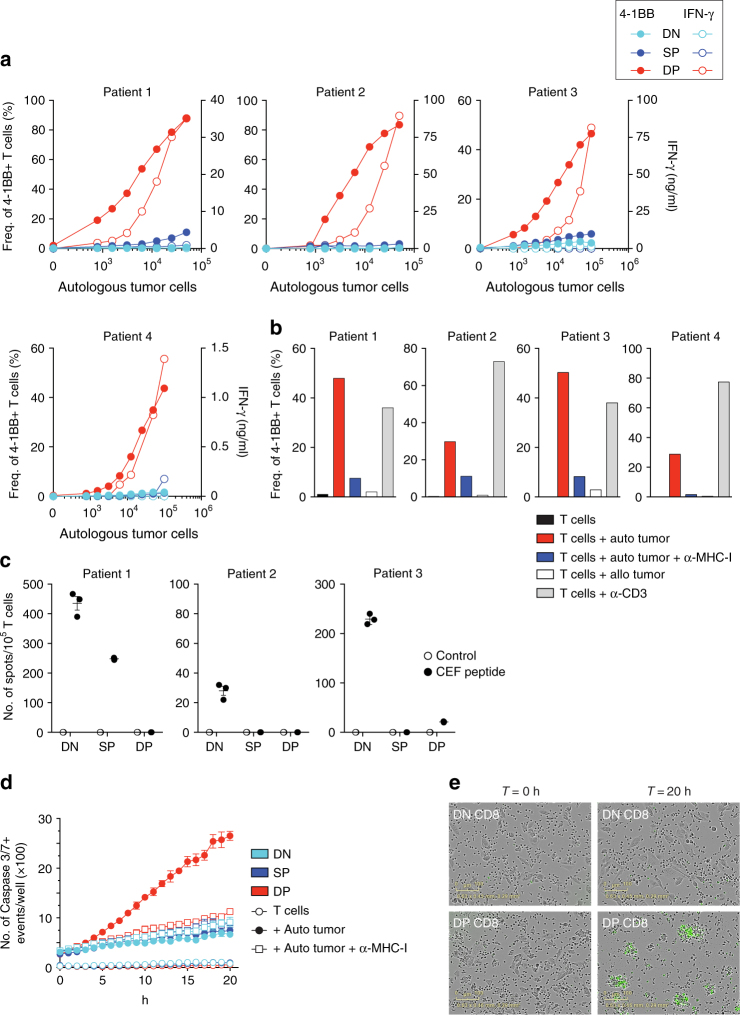
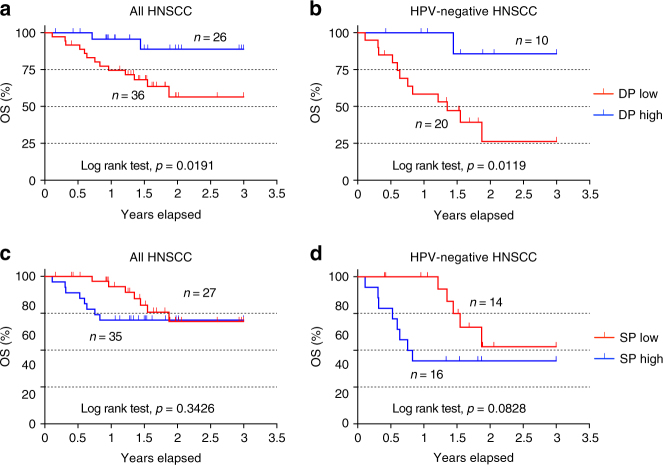
Identifying tumor antigen-specific T cells from cancer patients has important implications for immunotherapy diagnostics and therapeutics. Here, we show that CD103+CD39+ tumor-infiltrating CD8 T cells (CD8 TIL) are enriched for tumor-reactive cells both in primary and metastatic tumors. This CD8 TIL subset is found across six different malignancies and displays an exhausted tissue-resident memory phenotype. CD103+CD39+ CD8 TILs have a distinct T-cell receptor (TCR) repertoire, with T-cell clones expanded in the tumor but present at low frequencies in the periphery. CD103+CD39+ CD8 TILs also efficiently kill autologous tumor cells in a MHC-class I-dependent manner. Finally, higher frequencies of CD103+CD39+ CD8 TILs in patients with head and neck cancer are associated with better overall survival. Our data thus describe an approach for detecting tumor-reactive CD8 TILs that will help define mechanisms of existing immunotherapy treatments, and may lead to future adoptive T-cell cancer therapies.
Overview
The claims and statistics of this paper haven’t been checked yet.
Free: it reads the open-access text and checks the first 5 claims that cite a source we can check. Create a free account to check every claim.
Integrity signals
Registry
Cites
Statistics
Figures
Verification
Claims the paper makes
The claims and statistics of this paper haven’t been checked yet.
Free: it reads the open-access text and checks the first 5 claims that cite a source we can check. Create a free account to check every claim.
Claims other papers make about this one
Each is checked against this paper’s own text: does it say what the citing paper says it does?
In the citing paper
“Previous studies demonstrated that enhanced CD8+CD103+ TRM TILs correlate with improved survival in patients with early stage NSCLC18 and with other types of cancer19.”
From Neoadjuvant nivolumab or nivolumab plus ipilimumab in operable non-small cell lung cancer: the phase 2 randomized NEOSTAR trial (2021) · cites this paper as [19]
Self-check
Percentages, sums and reported differences re-computed from the paper’s own numbers.
The self-check needs the paper’s full text.
Citations
Cites
Subramanian, A., Tamayo, P., Mootha, V. K., Mukherjee, S., Ebert, B. L., Gillette, M. A., Paulovich, A., Pomeroy, S. L., Golub, T. R., Lander, E. S., et al. (2005) · Proceedings of the National Academy of Sciences · doi:10.1073/pnas.0506580102 · Cited by 53,625
limma powers differential expression analyses for RNA-sequencing and microarray studies
Ritchie, M. E., Phipson, B., Wu, D., Hu, Y., Law, C. W., Shi, W., & Smyth, G. K. (2015) · Nucleic Acids Research · doi:10.1093/nar/gkv007 · Cited by 40,458
PD-1 Blockade in Tumors with Mismatch-Repair Deficiency
Le, D. T., Uram, J. N., Wang, H., Bartlett, B. R., Kemberling, H., Eyring, A. D., Skora, A. D., Luber, B. S., Azad, N. S., Laheru, D., et al. (2015) · New England Journal of Medicine · doi:10.1056/nejmoa1500596 · Cited by 9,377
Mismatch repair deficiency predicts response of solid tumors to PD-1 blockade
Le, D. T., Durham, J. N., Smith, K. N., Wang, H., Bartlett, B. R., Aulakh, L. K., Lu, S., Kemberling, H., Wilt, C., Luber, B. S., et al. (2017) · Science · doi:10.1126/science.aan6733 · Cited by 6,645
Massagué, J. (2008) · Cell · doi:10.1016/j.cell.2008.07.001 · Cited by 3,907
Cancer Regression and Autoimmunity in Patients After Clonal Repopulation with Antitumor Lymphocytes
Dudley, M. E., Wunderlich, J. R., Robbins, P. F., Yang, J. C., Hwu, P., Schwartzentruber, D. J., Topalian, S. L., Sherry, R., Restifo, N. P., Hubicki, A. M., et al. (2002) · Science · doi:10.1126/science.1076514 · Cited by 2,823
Cancer regression in patients after transfer of genetically engineered lymphocytes
Morgan, R. A., Dudley, M. E., Wunderlich, J. R., Hughes, M. S., Yang, J. C., Sherry, R. M., Royal, R. E., Topalian, S. L., Kammula, U. S., Restifo, N. P., et al. (2006) · Science · doi:10.1126/science.1129003 · Cited by 2,603
Deaglio, S., Dwyer, K. M., Gao, W., Friedman, D., Usheva, A., Erat, A., Chen, J.-F., Enjyoji, K., Linden, J., Oukka, M., et al. (2007) · The Journal of Experimental Medicine · doi:10.1084/jem.20062512 · Cited by 2,470
Landon, M., Saam, J., Brown, K. L., Moyes, K., Evans, B., & Wenstrup, R. (2015) · Oncology · doi:10.1159/000430097 · Cited by 1,939
Ahmadzadeh, M., Johnson, L. A., Heemskerk, B., Wunderlich, J. R., Dudley, M. E., White, D. E., & Rosenberg, S. A. (2009) · Blood · doi:10.1182/blood-2008-12-195792 · Cited by 1,766
Cited by
Items 501–600 of 972
Alessi, J. V., Lindsay, J. R., Giobbie‐Hurder, A., Sharma, B., Felt, K. D., Kumari, P., Mazor, T., Cerami, E. G., Lotter, W. E., Altreuter, J., et al. (2025) · JCO Precision Oncology · doi:10.1200/po-25-00240 · Cited by 16
El‐Hajjar, M., Gerhardt, L., Hong, M. M. Y., Krishnamoorthy, M., Figueredo, R., Zheng, X., Koropatnick, J. D., & Vareki, S. M. (2022) · Molecular Therapy · doi:10.1016/j.ymthe.2022.08.025 · Cited by 16
Vlaming, M. R., Bilemjian, V., Freile, J. Á., Melo, V. A., Plat, A., Huls, G. A., Nijman, H. W., de Bruyn, M., & Bremer, E. (2022) · Frontiers in Immunology · doi:10.3389/fimmu.2022.1031746 · Cited by 15
“CXCL13/ CD103/CD8 triple-positive TILs have previously been identified with B cell recruitment, TLS formation, neo-antigen burden and cytolytic gene signatures in human tumors and TIM-3 expression has been identified on CD39/CD103 doublepositive tumor-reactive CD8-positive T cells (17, 25).”
BackgroundRegulation of T cell differentiation and function by long noncoding RNAs in homeostasis and cancer
Erber, J., & Herndler‐Brandstetter, D. (2023) · Frontiers in Immunology · doi:10.3389/fimmu.2023.1181499 · Cited by 16
Challenges and opportunities in the development of combination immunotherapy with OX40 agonists
Redmond, W. L. (2023) · Expert Opinion on Biological Therapy · doi:10.1080/14712598.2023.2249396 · Cited by 14
“Moreover, those patients identified as having an expansion of putative tumor-reactive CD39 + CD103 + CD8 + T cells within the tumor tissue did not develop recurrent disease up to 48 months post-treatment [69,146], suggesting that neoadjuvant aOX40 may help reduce recurrence in these patients.”
BackgroundTodd, K. L., Lai, J., Sek, K., Huang, Y., Newman, D. M., Derrick, E. B., Koay, H., Nguyen, D. Q., Hoang, T. X., Petley, E. V., et al. (2023) · Nature Communications · doi:10.1038/s41467-023-42734-0 · Cited by 14
“Notably, CD39 is also a recognized marker of tumor-reactive terminally differ-entiatedCD8 + Tcellsanditsexpressionlimitsanti-tumorimmunity 31 – 33 .”
BackgroundRoles of tissue-resident immune cells in immunotherapy of non-small cell lung cancer
Tang, R., Wang, H., & Tang, M. (2023) · Frontiers in Immunology · doi:10.3389/fimmu.2023.1332814 · Cited by 15
Zhu, J., Yuan, J., Arya, S., Zhi, D., Liu, X., & Jia, J. (2023) · Frontiers in Immunology · doi:10.3389/fimmu.2023.1265098 · Cited by 14
Sugita, Y., Muraoka, D., Demachi‐Okamura, A., Komuro, H., Masago, K., Sasaki, E., Fukushima, Y., Matsui, T., Shinohara, S., Takahashi, Y., et al. (2024) · OncoImmunology · doi:10.1080/2162402x.2024.2371556 · Cited by 15
Cha, J., Kim, C. G., Sim, N. S., Kim, G., Son, W., Kim, D., Jung, Y., Hong, H. J., Lee, H. B., Kim, J., et al. (2025) · Cell Reports Medicine · doi:10.1016/j.xcrm.2025.102408 · Cited by 19
Smith, J. D., Bellile, E. L., Ellsperman, S. E., Heft-Neal, M. E., Mann, J. E., Birkeland, A. C., Hoesli, R. C., Swiecicki, P. L., Worden, F. P., Schonewolf, C. A., et al. (2022) · Oral Oncology · doi:10.1016/j.oraloncology.2022.106226 · Cited by 14
Ichiki, Y., Fukuyama, T., Ueno, M., Kanasaki, Y., Goto, H., Takahashi, M., Mikami, S., Kobayashi, N., Nakanishi, K., Hayashi, S., et al. (2022) · Translational Lung Cancer Research · doi:10.21037/tlcr-22-421 · Cited by 14
“Duhen et al. reported that in head and neck cancer, CD103 + CD39 + CD8 + T cells killed cancer cells in an MHC class I-restricted manner, and that the prognosis was good if this population was high in intratumorally infiltrating lymphocytes (16).”
Witzleben, A. V., Fehn, A., Grages, A., Ezić, J., Jeske, S. S., Puntigam, L. K., Brunner, C., Kraus, J. M., Kestler, H. A., Doescher, J., et al. (2020) · International Journal of Cancer · doi:10.1002/ijc.33446 · Cited by 17
“The coexpression of CD39 and CD103 on CD8+ T cells has been reported to identify cancer-specific immunity.(38) Another recently published study also described that antigen-specific ICs are highly enriched among the CD39+ fraction of CD4+ or CD8+ T cells.”
BackgroundLegend of the Sentinels: Development of Lung Resident Memory T Cells and Their Roles in Diseases
Qian, Y., Zhu, Y., Li, Y., & Li, B. (2021) · Frontiers in Immunology · doi:10.3389/fimmu.2020.624411 · Cited by 18
Ferroptosis-armed dendritic cell vaccines for glioma immunotherapy
Saviuk, M. O., Turubanova, V. D., Brée, S. D., Lint, S. V., Maia, T. M., Devos, S., Efimova, I., Braet, J., Oudenhove, L. V., Boons, G., et al. (2026) · Nature Communications · doi:10.1038/s41467-026-72737-6 · Cited by 16
“Recent studies have shown that CD39 ⁺ CD8 ⁺ T cells can play a bene fi cial role in the anti-tumor immune responses by contributing to tumor growth con-trol and effectively killing autologous tumor cells 42,43 .”
Potential biomarkers: Identifying powerful tumor specific T cells in adoptive cellular therapy
Wu, G., Dong, Y., Deng, Y. L., Chen, L., Chen, J., Liu, M., Wu, J., Wang, W., & Ma, X. (2022) · Frontiers in Immunology · doi:10.3389/fimmu.2022.1003626 · Cited by 13
Tissue-resident memory T cells: decoding intra-organ diversity with a gut perspective
Murakami, M. (2024) · Inflammation and Regeneration · doi:10.1186/s41232-024-00333-6 · Cited by 14
“T RM express inflammatory cytokines, cytolytic proteins, and immune check-point molecules, indicating their antitumor role within the tumor [106–108].”
BackgroundMoser, L. M., Heim, C., Koschade, S. E., Wendel, P., Bozkurt, S., Harenkamp, S., Kreyenberg, H., Merker, M., Münch, C., Gradhand, E., et al. (2025) · Frontiers in Immunology · doi:10.3389/fimmu.2025.1485817 · Cited by 15
Mahuron, K. M., Shahid, O., Sao, P., Wu, C., Haugh, A. M., Huppert, L. A., Levine, L. S., Lowe, M. M., Alvarado, M., Micu, M., et al. (2025) · Cancer Research · doi:10.1158/0008-5472.can-23-3918 · Cited by 13
Wu, H., Fan, P.-W., Feng, Y.-N., Chang, C., Gui, T., Meng, J.-B., & Wang, R. (2025) · Scientific Reports · doi:10.1038/s41598-025-14409-x · Cited by 15
“Furthermore, Duhen et al. identified ENTPD1—which encodes the ectonucleotidase CD39—as one of the most differentially expressed genes between CD103 ⁺ and CD103 ⁻ CD8 ⁺ tumour-infiltrating lymphocytes (TILs) 21 .”
Bodogai, M., Park, B. S., Braikia, F.-Z., Naqing, F., Kumaraswami, K., Chen, C., Ragonnaud, E., Stack, S. M., Ormanns, S., Guenther, M., et al. (2025) · Nature Aging · doi:10.1038/s43587-025-00966-3 · Cited by 15
“…suppression of antitumor effector cells in tumors and draining lymph nodes (dLNs) 25 , CD39 + PD1 + CD8 + T cells in patients with resected breast cancer and CD39 + CD103 + CD8 + T cells in head and neck cancer are associated with delayed metastatic relapse and improved survival in patients 28,29 .”
Ager, C. R., Obradović, A., McCann, P., Chaimowitz, M. G., Wang, A. L. E., Shaikh, N., Shah, P., Pan, S. S., Laplaca, C. J., Virk, R. K., et al. (2026) · Cell Reports Medicine · doi:10.1016/j.xcrm.2026.102638 · Cited by 15
“38,39 We found the dual 4-1BB + CD39 + phenotype to also define a distinct subset of CD4 + FoxP3 (cid:0) conventional CD4 T cells (Tconv) that were uniquely present in some patients receiving ADT + anti-CTLA4-NF (Figures 5E–5H, S8H, and S8I).”
Explant Modeling of the Immune Environment of Head and Neck Cancer
Sharon, S., Duhen, T. M., Bambina, S., Baird, J. R., Leidner, R. S., Bell, B., Casap, N., Crittenden, M. R., Vasudevan, S., Jubran, M. R., et al. (2021) · Frontiers in Oncology · doi:10.3389/fonc.2021.611365 · Cited by 14
Self-citationThe Promise of Personalized TCR-Based Cellular Immunotherapy for Cancer Patients
Arnaud, M., Bobisse, S., Chiffelle, J., & Harari, A. (2021) · Frontiers in Immunology · doi:10.3389/fimmu.2021.701636 · Cited by 14
Archetypes of checkpoint-responsive immunity
Im, K. W., Combes, A. J., Spitzer, M. H., Satpathy, A. T., & Krummel, M. F. (2021) · Trends in Immunology · doi:10.1016/j.it.2021.09.007 · Cited by 15
Solid Tumor Microenvironment Can Harbor and Support Functional Properties of Memory T Cells
Sullivan, P. M., Reed, S. J., Kalia, V., & Sarkar, S. (2021) · Frontiers in Immunology · doi:10.3389/fimmu.2021.706150 · Cited by 13
“Multiple types of tumors have been shown to harbor bystander cells even when tumor antigen-specific cells are not detectable (20, 23, 24).”
BackgroundKong, D., Li, G., Yang, Z., Cheng, S., Zhang, W., Feng, L., & Zhang, K. (2022) · BMC Cancer · doi:10.1186/s12885-021-09165-w · Cited by 14
“CD103 + CD39+ CD8 TILs also efficiently killed autologous tumour cells in an MHC class I-dependent manner [8].”
Martínez-Gómez, C., Michelas, M., Scarlata, C., Salvioni, A., Gomez‐Roca, C., Sarradin, V., Lauzéral-Vizcaïno, F., Féliu, V., Dupret‐Bories, A., Ferron, G., et al. (2022) · Cancers · doi:10.3390/cancers14153679 · Cited by 14
“In cancer patients, CD39 is expressed at the tumor site by terminally exhausted tumor-Ag-specific CD8 T cells [4,18,19].”
BackgroundLee, H., Kim, K. H., Chung, J., Hossain, M., & Lee, H. J. (2023) · BioEssays · doi:10.1002/bies.202200204 · Cited by 13
Divergent local and systemic antitumor response in primary uveal melanomas
Lucibello, F., Lalanne, A. I., Gac, A. L., Soumare, A., Aflaki, S., Cyrta, J., Dubreuil, L., Mestdagh, M., Salou, M., Houy, A., et al. (2024) · The Journal of Experimental Medicine · doi:10.1084/jem.20232094 · Cited by 14
“S1 E), suggesting a tumor-Ag – specific immune response (Simoni et al., 2018; Duhen et al., 2018).”
BackgroundLi, X., Wang, M., & Xiang, R. (2019) · Signal Transduction and Targeted Therapy · doi:10.1038/s41392-019-0077-2 · Cited by 13
“The coexpression of CD39 (which is encoded by ENTPD1) and CD103 (which is encoded by ITGAE) is the hallmark of tumor-specific CD8+ T cells.(4) It was also suggested that clonally expanded TILs were highly correlated in cellular phenotype that was unaffected by PD-1 blockade based on the clustering analysis of TCR sequ…”
BackgroundAccumulation of CD103+ CD8+ T cells in a cutaneous melanoma micrometastasis
Hochheiser, K., Yeang, H. X. A., Wagner, T., Tutuka, C. S. A., Behren, A., Waithman, J. C., Angel, C. M., Neeson, P. J., Gebhardt, T., & Gyorki, D. E. (2019) · Clinical & Translational Immunology · doi:10.1002/cti2.1100 · Cited by 13
Kaira, K., Ichiki, Y., Imai, H., Kawasaki, T., Hashimoto, K., Kuji, I., & Kagamu, H. (2024) · Translational Lung Cancer Research · doi:10.21037/tlcr-24-142 · Cited by 13
CARD11 signaling regulates CD8+ T cell tumoricidal function
Hu, Y., Zhao, Q., Qin, Y., Mei, S., Wang, B., Zhou, H., Han, L., Zang, Y., Yao, L., He, Z., et al. (2025) · Nature Immunology · doi:10.1038/s41590-025-02192-w · Cited by 14
Faithful modeling of terminal CD8+T cell dysfunction and epigenetic stabilization in vitro
Yousif, A., Saadey, A. A., Lowin, A. M., Yousif, A. M., Saini, A., Allison, M. R., Ptak, K., Oltz, E. M., & Ghoneim, H. E. (2025) · JCI Insight · doi:10.1172/jci.insight.191220 · Cited by 12
“Notably, T Dysf cells showed elevated expression of CD103, a well-established downstream target gene of TGF-β 1 signaling that marks a terminally exhausted subset of human tumor-reactive CD8 + T cells (30–33) (Supplemental Figure 4D).”
Resident Memory T Cells in the Tumor Microenvironment
Williams, J. B., & Kupper, T. S. (2020) · Advances in experimental medicine and biology · doi:10.1007/978-3-030-49270-0_3 · Cited by 12
Immune-related gene ANGPT1 is an adverse biomarker for endometrial carcinoma
Nong, B., Su, T., Jin, M., Huang, J., Huang, A., Fang, D., & Wei, J. (2021) · Translational Cancer Research · doi:10.21037/tcr-21-671 · Cited by 12
“In the early stage, immune cells can identify and kill most tumor cells (3-5), but some cancer cells remain alive due to their ability to functionally sculpt their microenvironment via the secretion of various cytokines, chemokines, and other factors (6).”
BackgroundAdoptive cell therapies in thoracic malignancies
Lasvergnas, J., Naigeon, M., Chouahnia, K., Zelek, L. H., Chaput, N., & Duchemann, B. (2022) · Cancer Immunology Immunotherapy · doi:10.1007/s00262-022-03142-3 · Cited by 12
“Research is underway to rapidly identify and select the tumor-reactive cells before IL-2 expansion [63].”
BackgroundLow-Dose JAK3 Inhibition Improves Antitumor T-Cell Immunity and Immunotherapy Efficacy
Dammeijer, F. F., van Gulijk, M., Klaase, L., van Nimwegen, M., Bouzid, R., Hoogenboom, R., Joosse, M. E., Hendriks, R. W., van Hall, T., & Aerts, J. G. J. V. (2022) · Molecular Cancer Therapeutics · doi:10.1158/1535-7163.mct-21-0943 · Cited by 13
Rainey, M. A., Allen, C. T., & Craveiro, M. (2023) · Oral Oncology · doi:10.1016/j.oraloncology.2023.106570 · Cited by 12
Bredel, D., Tihic, E., Mouraud, S., Danlos, F., Susini, S., Aglave, M., Alfaro, A., Mohamed-Djalim, C., Rouanne, M., Halse, H. M., et al. (2023) · Journal of Experimental & Clinical Cancer Research · doi:10.1186/s13046-023-02897-6 · Cited by 12
Ali, A., Bari, M. F., Arshad, S., Wahid, M., Safdar, J., Anwar, K., & Farooqui, W. A. (2025) · BMC Cancer · doi:10.1186/s12885-025-13764-2 · Cited by 12
Jiang, J., Cao, Z., Li, X., Li, B., Yu, S., Yang, B., Liu, Y., Zhai, F., Wang, R., & Cheng, X. (2022) · Microbes and Infection · doi:10.1016/j.micinf.2022.105021 · Cited by 12
A2AR limits IL-15-induced generation of CD39+ NK cells with high cytotoxicity
Kang, G., Zhao, X., Sun, J., Cheng, C., Wang, C., Tao, L., Zong, L., Yin, W., Cong, J., Li, J., et al. (2022) · International Immunopharmacology · doi:10.1016/j.intimp.2022.109567 · Cited by 13
Non-hematopoietic Control of Peripheral Tissue T Cell Responses: Implications for Solid Tumors
Lane, R. S., & Lund, A. W. (2018) · Frontiers in Immunology · doi:10.3389/fimmu.2018.02662 · Cited by 12
“Consistent with this hypothesis, CD39 was recently identified as a marker to distinguish tumor antigenspecific CD8 T cells from bystander T cells across multiple tumor types (32, 107) and stratification of patients based on frequency of CD39CD103 double positive CD8 T cells associated with increased overall survival i…”
BackgroundGlass, D. R., Mayer-Blackwell, K., Ramchurren, N., Parks, K. R., Durán, G. E., Wright, A. K., Torres, A. N. B., Islas, L., Kim, Y. H., Fling, S. P., et al. (2024) · Cell Reports Medicine · doi:10.1016/j.xcrm.2024.101527 · Cited by 13
Ye, L., Ryu, H., Granadier, D., Nguyen, L., Simoni, Y., Dick, I. M., Firth, T., Rouse, E. J., Chiang, P., Lee, Y. C. G., et al. (2024) · Translational Lung Cancer Research · doi:10.21037/tlcr-24-284 · Cited by 11
Abdeljaoued, S., Doussot, A., Kroemer, M., Laloy, E., Pallandre, J., Kaddissi, A. E., Spehner, L., Khelil, M. B., Bouard, A., Mougey, V., et al. (2025) · OncoImmunology · doi:10.1080/2162402x.2025.2455176 · Cited by 11
Metoikidou, C., Карнаухов, В. К., Boeckx, B., Timperi, E., Bonté, P., Wang, L., Espenel, M., Albaud, B., Loirat, D., Wang, X., et al. (2025) · Cell Reports Medicine · doi:10.1016/j.xcrm.2025.101973 · Cited by 13
“50 Recent studies suggest that CXCL13 expression by CD8 + T cells, along with other markers such as ITGAE /CD103 and ENTPD1 /CD39, 46 is indicative of tumor-reactive T cells.”
T cell immunotherapy for solid tumors: limitations, progress, and future prospects
Wang, Y., Zhang, B., Wang, Y., Tan, Y., Hu, X., Che, X., & Feng, M. (2026) · Frontiers in Immunology · doi:10.3389/fimmu.2026.1755751 · Cited by 17
Adaptive resistance in cancer immunotherapy
Yang, K. E., Yang, C., Xiong, K., Hao, J., & Ye, L. (2026) · Cellular and Molecular Immunology · doi:10.1038/s41423-026-01424-9 · Cited by 13
Multilayered Immunity by Tissue-Resident Lymphocytes in Cancer
Li, M. O., Zhang, J., Xu, Z., Zhang, X., Li, P., & Cornish, A. E. (2024) · Annual Review of Immunology · doi:10.1146/annurev-immunol-083122-043836 · Cited by 11
Bai, K., Norberg, S. M., Sievers, C. M., Meyer, T. K., Friedman, J., Hinrichs, C. S., & Allen, C. T. (2022) · Head & Neck · doi:10.1002/hed.27144 · Cited by 11
Islam, S. M. R., Maeda, T., Tamaoki, N., Good, M. L., Kishton, R. J., Paria, B. C., Yu, Z., Bosch‐Marcé, M., Bedanova, N. M., Liu, C., et al. (2023) · Cancer Research Communications · doi:10.1158/2767-9764.crc-22-0265 · Cited by 11
Phenotypic and functional characterizations of CD8+ T cell populations in malignant pleural effusion
Zhang, Y., Li, W., Zhai, J., Jin, Y., Zhang, L., & Chen, C. (2022) · Experimental Cell Research · doi:10.1016/j.yexcr.2022.113212 · Cited by 11
Ceraolo, M. G., Leccese, M., Cassotta, A., Triolo, S., Bombaci, M., Coluccio, E. B., Prati, D., Ungaro, R., Abrignani, S., Bandera, A., et al. (2024) · European Journal of Immunology · doi:10.1002/eji.202451404 · Cited by 10
“Remarkable progress is being made in identifying human neoantigen-specific T cells isolated from tumor tissues [26–28] but the proposed markers have limited efficacy, especially for CD4 + T cells.”
Microsystem technologies for accelerating the discovery and translation of immunotherapies
Wang, Z., Liu, C. Y., Chen, K., Song, J. W., & Kelley, S. O. (2025) · Nature Reviews Drug Discovery · doi:10.1038/s41573-025-01268-4 · Cited by 12
“The phenotypes of immune cells are currently predicted by surface biomarkers, for example CD40 expression on B cells 75 or CD39 expression on intratu-moural T cells 76 .”
Lee, Y. J., Jeon, S. H., Yeo, J. H., Byeon, S., Jung, J. H., Nam, H., Jeon, M., Kim, E.-S., Jang, J. Y., Kim, C.-H., et al. (2025) · Cell Reports Medicine · doi:10.1016/j.xcrm.2025.102360 · Cited by 11
Wu, L. M., Yang, L., Sun, J., Zhao, M., Geng, J., Cao, F., Chen, Q., Yan, Y., Yang, H., Sun, X., et al. (2025) · Pathology & Oncology Research · doi:10.3389/pore.2025.1612229 · Cited by 10
Amhis, N., Carignan, J., & Tai, L. (2024) · Molecular Therapy Oncology · doi:10.1016/j.omton.2024.200825 · Cited by 11
Tissue-resident memory cells in antitumoral immunity and cancer immunotherapy
Min, D., Fiedler, J., & Anandasabapathy, N. (2024) · Current Opinion in Immunology · doi:10.1016/j.coi.2024.102499 · Cited by 11
Fehn, A., Witzleben, A. V., Grages, A., Kors, T. A., Ezić, J., Betzler, A. C., Brunner, C., Schuler, P. J., Theodoraki, M., Hoffmann, T. K., et al. (2024) · Neoplasia · doi:10.1016/j.neo.2024.101086 · Cited by 10
Jin, C., Ali, A., Iskantar, A., Fotaki, G., Wang, H., Essand, M., Karlsson‐Parra, A., & Yu, D. (2022) · OncoImmunology · doi:10.1080/2162402x.2022.2099642 · Cited by 10
“17,18 Furthermore, the frequency of CD8 + T cells with a potential tumor-reactive CD39 + CD103 + phenotype 19,20 was notably elevated in the combination group (Figure 4f, Supplementary Fig.”
Li, X., Gao, Z., Chen, J., Feng, S., Luo, X., Shi, Y., Tang, Z., Liu, W., Zhang, X., Huang, A., et al. (2023) · Frontiers in Oncology · doi:10.3389/fonc.2023.1099385 · Cited by 10
Rajamanickam, V., Ballesteros‐Merino, C., Samson, K. A., Ross, D., Bernard, B. M., Fox, B. A., Tran, E., Newell, P., & Duhen, T. M. (2021) · Cancer Immunology Research · doi:10.1158/2326-6066.cir-20-1024 · Cited by 9
“org Cancer Immunol Res; 9(6) June 2021 607”
BackgroundMethodSelf-citationToh, J. W. T., Ferguson, A. L., Spring, K. J., Mahajan, H., & Palendira, U. (2021) · World Journal of Clinical Oncology · doi:10.5306/wjco.v12.i4.238 · Cited by 11
Immune cell infiltrates in peritoneal metastases from colorectal cancer
Sundström, P., Hogg, S., Quiding‐Järbrink, M., & Lindskog, E. B. (2024) · Frontiers in Immunology · doi:10.3389/fimmu.2024.1347900 · Cited by 9
Immune Regulation and Immune Therapy in Melanoma: Review with Emphasis on CD155 Signalling
Wu, L., Park, S.-H., Jakobsson, H., Shackleton, M. J., & Möller, A. (2024) · Cancers · doi:10.3390/cancers16111950 · Cited by 10
“PD-1 expression relies on the persistence of antigen exposure to CD8 + T cells by its TCR stimulation [117,118].”
BackgroundTilsed, C. M., Brotman, J. J., O’Brien, S., Lee, B., Moon, E. K., & Albelda, S. (2025) · ImmunoHorizons · doi:10.1093/immhor/vlaf013 · Cited by 9
Liu, X., Song, B., Sun, C., Zhu, Q., Yue, J., Liang, Y.-J., He, J., Zeng, X.-L., Qin, Y.-C., Chen, Q., et al. (2025) · Cell Reports Medicine · doi:10.1016/j.xcrm.2025.102096 · Cited by 11
Wang, C., Yu, X., Teer, J. K., Yao, J., Du, D., Liu, X., Thompson, Z., Wang, M. H., Welsh, E. A., Memon, D., et al. (2025) · Nature Cancer · doi:10.1038/s43018-025-00946-x · Cited by 11
“IL-7R is linked to benefits from ICIs in NSCLC and TIL cell therapy in other epithelial cancers 39 .”
Ferroptosis in tumor associated immune cells: A double-edged sword against tumors
Hu, J., Cui, L., Hou, B., Ding, X., Liu, H., Sun, W., Mi, Y., Chen, Y., & Zou, Z. (2025) · Critical Reviews in Oncology/Hematology · doi:10.1016/j.critrevonc.2025.104818 · Cited by 10
van Duijvenvoorde, M., Derks, S., Bahce, I., Leemans, C. R., van de Ven, R., & Fransen, M. F. (2022) · Clinical & Translational Immunology · doi:10.1002/cti2.1363 · Cited by 9
“One of the most systematic evaluations performed single-cell RNA sequencing (scRNAseq) of seven ESCCs and identified that some ESCCs actually have high numbers of tumor-infiltrating T cells but that the majority of the proliferating immune cells are exhausted CD4/8 T cells and NK cells.24 The tumor-infiltrating, exhau…”
BackgroundLiu, M., Zhao, Y., Xiao, Z., Zhou, R., Chen, X., Cui, S., Cao, S., Huang, X., Chen, T., Huo, X., et al. (2023) · Cancers · doi:10.3390/cancers15041184 · Cited by 10
“Additionally, some studies have described CD39+CD8+ T cells as tumor antigen-specific responsive cells [27,28] and further attributed most of these multifunctional and protective effects to CD103 [29].”
BackgroundDu, B., Wang, J., Zheng, J., Huo, J., & Wang, P. (2023) · Scientific Reports · doi:10.1038/s41598-023-43732-4 · Cited by 9
Karlsson, J. W., Sah, V. R., Bagge, R. O., Kuznetsova, I., Iqba, M., Alsén, S., Stenqvist, S., Saxena, A., Ny, L., Nilsson, L. M., et al. (2024) · eLife · doi:10.7554/elife.91705 · Cited by 9
“…( Inozume et al., 2010 ; Gros et al., 2014 ; Zheng et al., 2022 ), CD39 ( Zheng et al., 2022 ; Simoni et al., 2018 ), and CD103 ( Webb et al., 2010 ; Duhen et al., 2018 ), or the specificity of a TCR for a melanoma-associated or melanoma-specific antigen ( Yee et al., 2002 ; Dudley et al., 2002 ).”
BackgroundBai, X., Attrill, G. H., Gide, T. N., Ferguson, P. M., Nahar, K. J., Shang, P., Vergara, I. A., Palendira, U., da Silva, I. P., Carlino, M. S., et al. (2024) · Nature Communications · doi:10.1038/s41467-024-47301-9 · Cited by 9
Brennan, M., DeBruin, D., Nwokolo, C., Hunt, K. S., Piening, A., Donlin, M. J., Ferris, S. T., Teague, R. M., DiPaolo, R. J., & Alspach, E. (2024) · Cancer Immunology Research · doi:10.1158/2326-6066.cir-23-0826 · Cited by 11
Sun, H., Han, X., Du, Z., Chen, G., Guo, T., Xie, F., Gu, W., & Shi, Z. (2024) · British Journal of Cancer · doi:10.1038/s41416-024-02737-0 · Cited by 10
“Due to the extensive investigation required to validate neoantigen reactivities, attempts have been made to develop more ef fi cient methods for detecting Neo T cells based on their expression of phenotypic markers [8 – 10].”
Fay, M., Sievers, C. M., Robbins, Y. L., Yang, X., Huynh, A. P., Redman, J. M., Hodge, J. W., Schlom, J., Gulley, J. L., Allen, C. T., et al. (2024) · iScience · doi:10.1016/j.isci.2024.110520 · Cited by 9
Zou, S., Zhang, L., Jiang, C., Li, F., Yang, Y., Deng, X., Zhang, J., Chen, H., Jiang, L., Cheng, X., et al. (2024) · Cancer Letters · doi:10.1016/j.canlet.2024.217134 · Cited by 10
Boral, B., Ballı, H. T., Sözütok, S., Pehlivan, U. A., & Aikimbaev, K. S. (2021) · Scandinavian Journal of Immunology · doi:10.1111/sji.13132 · Cited by 9
Lubbers, J. M., Ważyńska, M. A., van Rooij, N., Kol, A., Workel, H. H., Plat, A., Paijens, S. T., Vlaming, M. R., Spierings, D. C. J., Elsinga, P. H., et al. (2022) · Cancers · doi:10.3390/cancers14081924 · Cited by 9
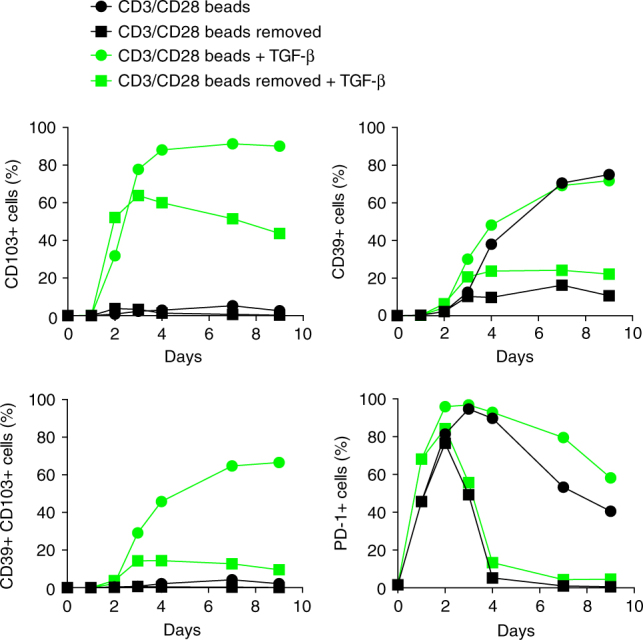
“Our findings are in line with a recent study showing a dissociated expression of CD39 and PD-1 where prolonged TCR stimulation gradually increases the percentage of CD39+ cells over time, and PD-1 expression peaked at 48 h of TCR stimulation and subsequently decreased upon prolonged stimulation [6].”
BackgroundResultInfluentialLiang, F., Nilsson, L. M., Byvald, F., Rezapour, A., Taflin, H. A., Nilsson, J. A., & Yrlid, U. (2022) · Cancers · doi:10.3390/cancers14122882 · Cited by 9
“Our subsequent shift of focus towards TRM cells within CRLM stems from recent reports proposing CD103+CD39+CD8+ TILs as tumor-reactive TILs in various tumors [11,12].”
BackgroundTissue-Resident Lymphocytes: Implications in Immunotherapy for Hepatocellular Carcinoma
Han, J. W., & Yoon, S. K. (2020) · International Journal of Molecular Sciences · doi:10.3390/ijms22010232 · Cited by 9
“In addition, a recent study has showed that CD103+ CD39+ CD8+ TILs kill autologous tumor cells in a MHC-class I-dependent manner [43].”
BackgroundMastrogiovanni, M., Donnadieu, E., Pathak, R., & Bartolo, V. D. (2024) · Biology · doi:10.3390/biology13110860 · Cited by 10
“Moreover, ECM stiffness is a significant marker of cancer progression and invasion, and it is associated with immune escape [113,319,320].”
Lee, S., Yun, J. S., Kim, Y. J., Jeong, S., Noh, J. E., Kim, H.-O., Cho, H.-J., Park, C., Oh, I., & Cho, J.-H. (2025) · Experimental & Molecular Medicine · doi:10.1038/s12276-025-01448-7 · Cited by 8
“However, since most, if not all, DN-Tem are likely to be tumor nonspeci fi c bystander cells 30,31,53 – 55 , we also postulated a process involving antigen-independent DN-Tem accumulation.”
Wang, X., Song, X., Li, Y. W., Ding, Y., Yin, C. C., Ren, T., & Zhang, W. (2025) · Journal for ImmunoTherapy of Cancer · doi:10.1136/jitc-2025-012029 · Cited by 8
An age-related decrease in leptin contributes to CD8+ T cell aging in the tumor microenvironment
Wang, F., Bao, R., Xu, S., Li, W., Huang, H., Li, R., Ding, X., Zhang, Y., Yu, X., Han, Q., et al. (2025) · Cell Reports Medicine · doi:10.1016/j.xcrm.2025.102310 · Cited by 12
Pruitt, M. R., Fabian, K. P., Lee, J., & Hodge, J. W. (2025) · Cancer Immunology Research · doi:10.1158/2326-6066.cir-25-0438 · Cited by 9
The science of tumor-infiltrating lymphocytes (TIL): perspectives from the SITC Surgery Committee
Coukos, G., Donia, M., Gastman, B., Goff, S. L., Gros, A., Harari, A., Hernandez, S., Ito, F., Maker, A. V., Mullinax, J. E., et al. (2025) · Journal for ImmunoTherapy of Cancer · doi:10.1136/jitc-2025-013420 · Cited by 8
“49–51 Some of these are being investigated in various cancer types (NCT05902520, NCT05902520).”
Wang, M., Sun, M., Dong, H., Zhang, X., Zhang, J., Zhang, Z., Ni, M., Li, L., Pei, Y., Chen, X., et al. (2026) · Advanced Science · doi:10.1002/advs.202511887 · Cited by 9
Peripheral blood biomarkers for predicting response to PD-1/PD-L1 inhibitors
Chen, S., Hu, Y., Cheng, H., Guo, S., Han, Y., & Li, K. (2026) · Biomarker Research · doi:10.1186/s40364-026-00892-5 · Cited by 8
“Co-expression of CD103 and CD39 has been demonstrated to identify tumor-reactive CD8+ T cells within the tumor microenvironment [106].”
Kol, A., Fan, X., Ważyńska, M. A., van Duijnhoven, S. M. J., Giesen, D., Plat, A., van Eenennaam, H., Elsinga, P. H., Nijman, H. W., & de Bruyn, M. (2022) · Journal for ImmunoTherapy of Cancer · doi:10.1136/jitc-2022-004877 · Cited by 8
“15 19 33 34 Accordingly, recent work has shown that in melanoma, lung and esophageal cancer patients, the number of CD103 + TILs was significantly increased during immunotherapy in responding lesions compared with lesions of treatment-naive patients and those not responding.”
Scholl, J. N., Weber, A. F., Dias, C. K., Pierdoná, V., Grün, L. K., Zambonin, D., Anzolin, E., Dias, W. W. D. S., Kus, W. P., Barbé‐Tuana, F. M., et al. (2023) · Purinergic Signalling · doi:10.1007/s11302-023-09931-4 · Cited by 10
“In contrast, some studies attribute CD39 + CD8 + TILs, mostly presenting CD103 co-expression, to an effector phenotype and better prognosis [61–63].”
Meng, J., Tan, J. Y., Joseph, C. R., Ye, J., Lim, J. C. T., Goh, D. L. M., Xue, Y., Lim, X., Koh, V. C. Y., Wee, F. Y. T., et al. (2023) · Laboratory Investigation · doi:10.1016/j.labinv.2023.100303 · Cited by 10
Wu, C., Yu, H., Liang, F., Huang, X., Jiang, B., Lou, Z., Liu, Y., Wu, Z., Wang, Q., Shen, H., et al. (2024) · Journal for ImmunoTherapy of Cancer · doi:10.1136/jitc-2024-008889 · Cited by 8
“By analyzing the clonal types of different clusters, we found that nTRMs had the richest clone types (figure 4I); and that tTRMs had the greatest number of clonal cells (figure 4J).”
BackgroundLiu, C., Zhang, X., Tu, W., Fan, K., Yan, X., He, Y., & Gao, D. (2024) · Nano Today · doi:10.1016/j.nantod.2024.102500 · Cited by 8
Pre-existing tumor host immunity characterization in resected non-small cell lung cancer
Rocha, P., Rodrigo‐Calvo, M. T., Moliner, L., Menéndez, S., Masfarré, L., Navarro, N., Rey-Vergara, R. D., Galindo-Campos, M. A., Taus, Á., Giner, M., et al. (2023) · Lung Cancer · doi:10.1016/j.lungcan.2023.107257 · Cited by 8
Cunha, D., Neves, M., Silva, D., Silvestre, A. R., Borralho, P., Arrobas, F., Ribot, J. C., Ferreira, F., Moita, L. F., Soares‐de‐Almeida, L., et al. (2024) · Cells · doi:10.3390/cells13110964 · Cited by 8
“Additionally, in non-cutaneous solid tumors and in human melanoma, a large fraction of CD8+ TILs were comprised of exhausted Trm cells (CD103+CD39+) that had effector phenotypes and possessed anti-tumor reactivity [99,100].”
Background
Metadata
- Authors
- Duhen, T., Duhen, R., Montler, R., Moses, J., Moudgil, T., de Miranda, N. F., Goodall, C. P., Blair, T. C., Fox, B. A., McDermott, J. E., Chang, S.-C., Grunkemeier, G., Leidner, R., Bell, R. B., & Weinberg, A. D.
- Affiliations
- Providence Portland Medical Center (US)
- Pacific Northwest National Laboratory (US)
- Corresponding author
- Duhen, Thomas
- Weinberg, Andrew D.
- ORCID
- Venue
- Nature Communications
- Published
- 2018-07-13
- Volume
- 9
- Issue
- 1
- Pages
- 2724-2724
- ISSN
- 2041-1723 (ISSN-L)
- PMC
- PMC6045647
- OpenAlex
- W2849303123
- Semantic Scholar
- 6ef850a94cc9de6931a8a014bd6b31b5aa68fc04
- Cited by
- 938
- References
- 52
- Citations by year
- 2026: 92 · 2025: 137 · 2024: 120 · 2023: 148 · 2022: 140 · 2021: 137 · 2020: 102 · 2019: 49 · 2018: 12
- FWCI
- 28.19
- Type
- journal article
- Language
- en
- Open access
- gold
- doi.org
- Licence
- cc-by
- creativecommons.org/licenses/by/4.0 (tdm)
- creativecommons.org/licenses/by/4.0 (vor)
- Locations
- Nature Communications (publishedVersion, cc-by)
- Europe PMC (PubMed Central) (publishedVersion, other-oa)
- PubMed Central (publishedVersion, cc-by)
- PubMed (publishedVersion)
- Leiden Repository (Leiden University) (submittedVersion)
- OSTI OAI (U.S. Department of Energy Office of Scientific and Technical Information) (submittedVersion)
- Data Archiving and Networked Services (DANS) (submittedVersion, other-oa)
- RePEc: Research Papers in Economics (submittedVersion)
- DOAJ (DOAJ: Directory of Open Access Journals) (submittedVersion, cc-by-sa)
- DOAJ (DOAJ: Directory of Open Access Journals) (submittedVersion)
- Funders
- AgonOx, Inc. Providence Medical Foundation
- Topics
- Health Sciences › Medicine › Oncology › Cancer Immunotherapy and Biomarkers
- Life Sciences › Immunology and Microbiology › Immunology › T-cell and B-cell Immunology
- Life Sciences › Immunology and Microbiology › Immunology › Immunotherapy and Immune Responses
- Keywords
- CD39, CD103, CD8+ T cells, tumor-infiltrating lymphocytes, tumor-reactive T cells, tissue-resident memory T cells, T cell exhaustion, T cell receptor repertoire, MHC class I restriction, head and neck cancer, metastatic cancer, adoptive T cell therapy, cancer immunotherapy, prognostic factors
- MeSH terms
- Adenocarcinoma of Lung, Squamous Cell Carcinoma of Head and Neck, Apyrase, Carcinoma, Squamous Cell, Female, Humans, Male, Melanoma, Ovarian Neoplasms, Antigens, CD, Survival Analysis, Immunophenotyping, Lymphocytes, Tumor-Infiltrating, Receptors, Antigen, T-Cell, alpha-beta, CD8 Antigens, CD8-Positive T-Lymphocytes, Integrin alpha Chains, Transcriptome
About these checks
Registry, retraction, Cites and statistics results are computed, not judged, with one exception: a printed reference that no index lists is read once by a model before it counts as a citation error. Claims are extracted by a model and kept only when their quote appears verbatim in the text; each cited source is then checked, with a model’s help, for whether it says what the claim relies on. Those verdicts can be wrong — read the claim’s quote and the cited source before relying on one.
Statistics and arithmetic are recomputed, not judged.
Confidence bands are shown only for fields calibrated on our annotated test set. None is calibrated yet, so no band is shown.
What counts as a claim ›How we measure confidence ›How we check this ›
Are you an author, or do you see a problem with this page? Request a review
Data sources
Bibliographic data: Semantic Scholar, OpenAlex, Crossref.
Contains information from the Semantic Scholar Academic Graph Datasets, made available under the ODC Attribution License (ODC-BY 1.0).
Semantic Scholar’s data is described in: Kinney, R., et al. (2023). The Semantic Scholar Open Data Platform. arXiv:2301.10140.
