

Co-expression of CD39 and CD103 identifies tumor-reactive CD8 T cells in human solid tumors
Open accessThe DOI matches its Crossref record; 52 of the 52 references it cites were found in a registry or an index.
Abstract
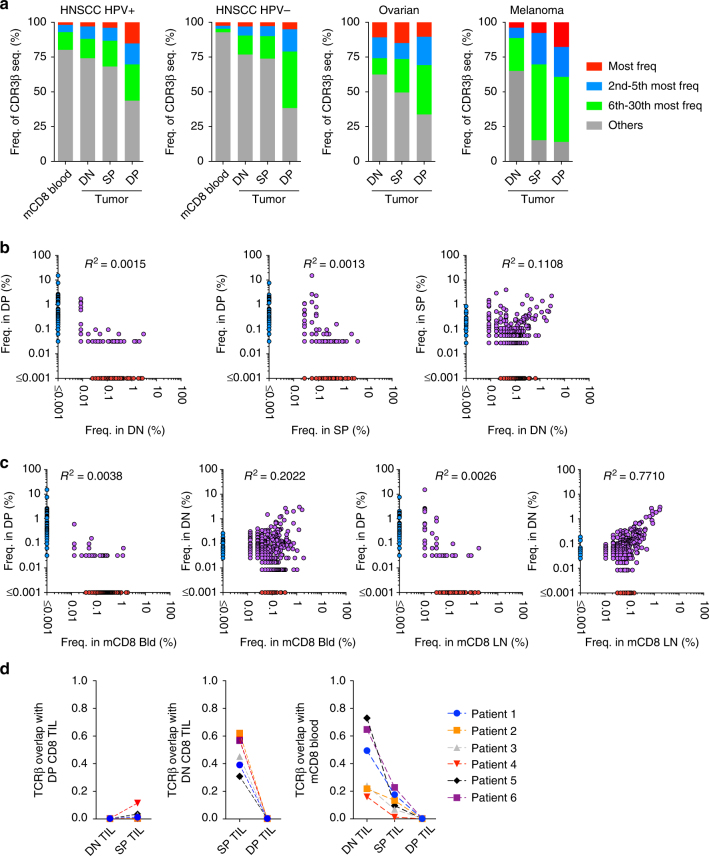
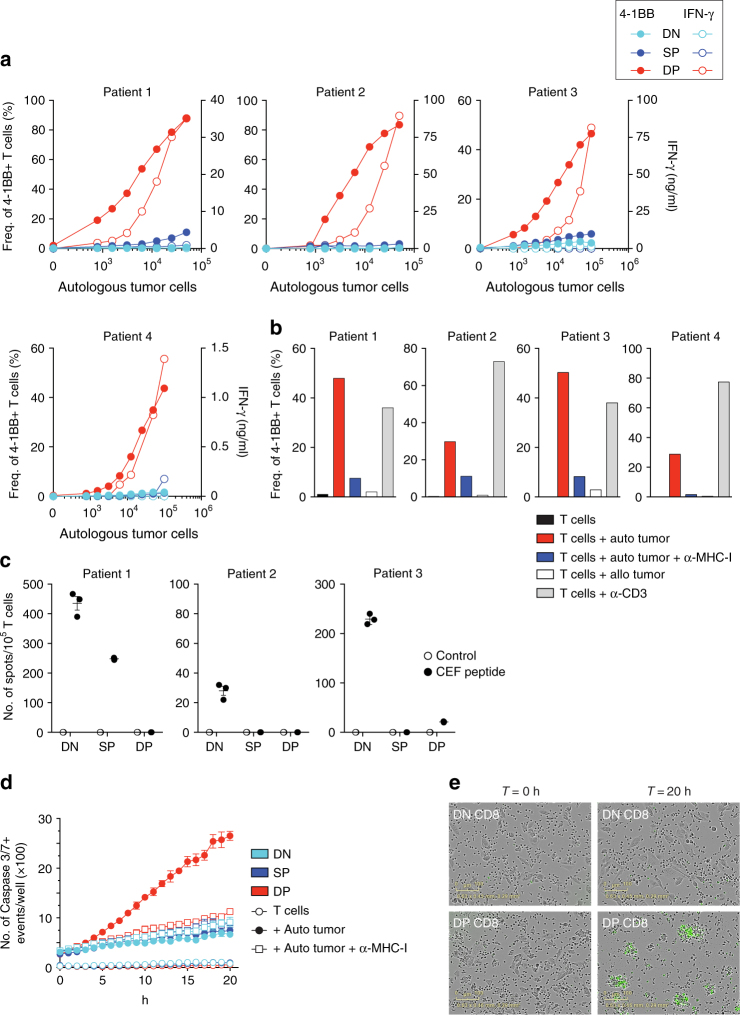
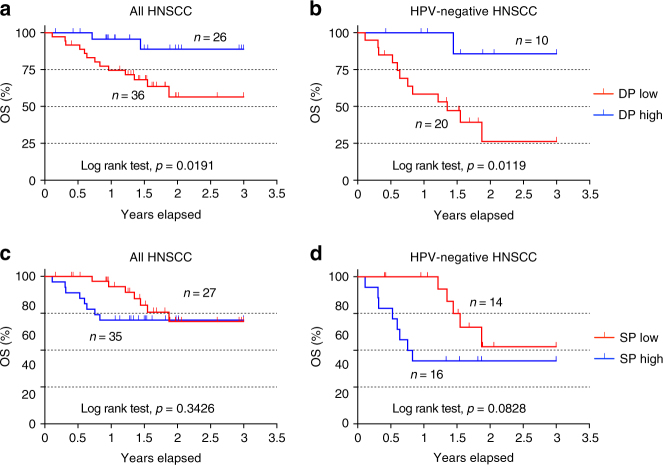
Identifying tumor antigen-specific T cells from cancer patients has important implications for immunotherapy diagnostics and therapeutics. Here, we show that CD103+CD39+ tumor-infiltrating CD8 T cells (CD8 TIL) are enriched for tumor-reactive cells both in primary and metastatic tumors. This CD8 TIL subset is found across six different malignancies and displays an exhausted tissue-resident memory phenotype. CD103+CD39+ CD8 TILs have a distinct T-cell receptor (TCR) repertoire, with T-cell clones expanded in the tumor but present at low frequencies in the periphery. CD103+CD39+ CD8 TILs also efficiently kill autologous tumor cells in a MHC-class I-dependent manner. Finally, higher frequencies of CD103+CD39+ CD8 TILs in patients with head and neck cancer are associated with better overall survival. Our data thus describe an approach for detecting tumor-reactive CD8 TILs that will help define mechanisms of existing immunotherapy treatments, and may lead to future adoptive T-cell cancer therapies.
Overview
The claims and statistics of this paper haven’t been checked yet.
Free: it reads the open-access text and checks the first 5 claims that cite a source we can check. Create a free account to check every claim.
Integrity signals
Registry
Cites
Statistics
Figures
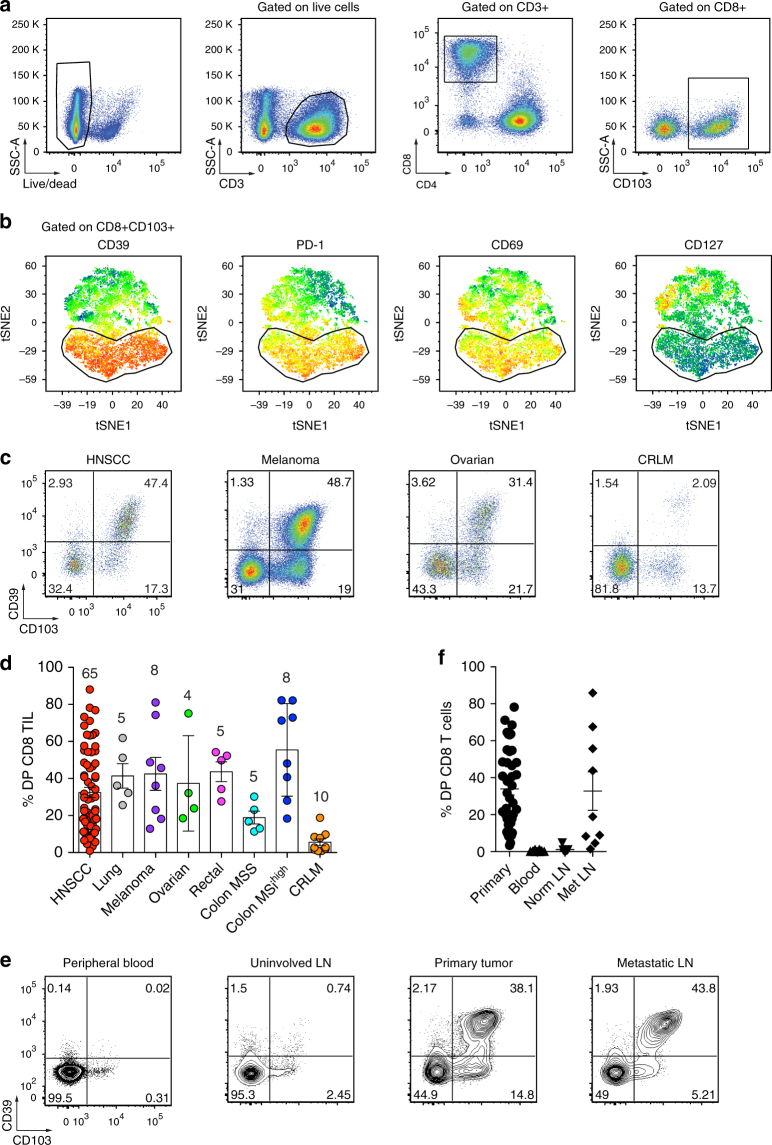
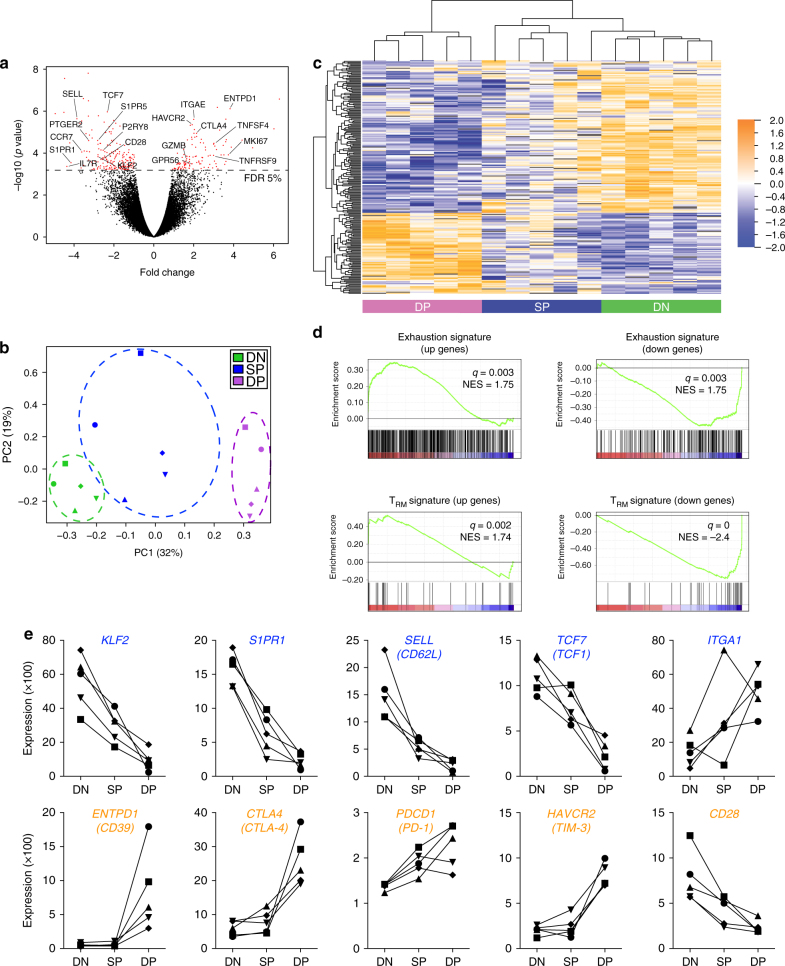
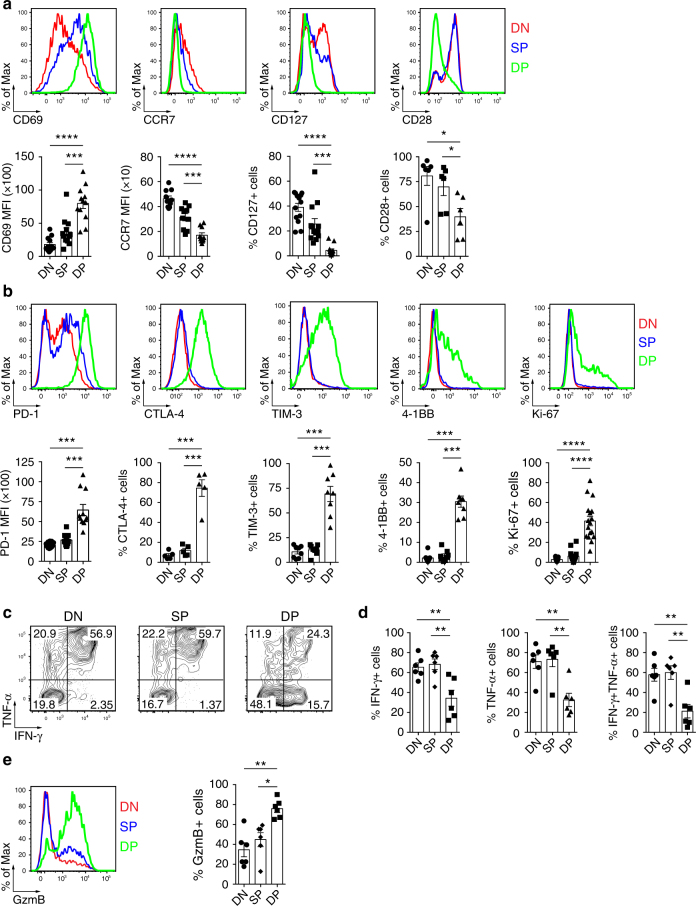
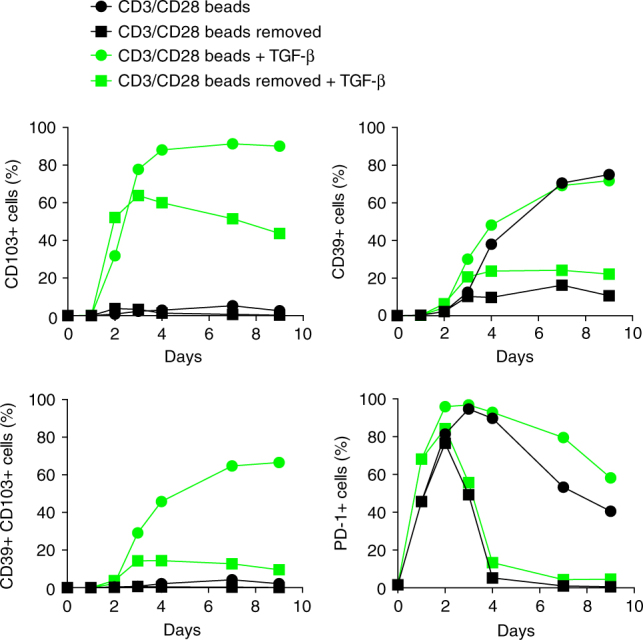
Verification
Claims the paper makes
The claims and statistics of this paper haven’t been checked yet.
Free: it reads the open-access text and checks the first 5 claims that cite a source we can check. Create a free account to check every claim.
Claims other papers make about this one
Each is checked against this paper’s own text: does it say what the citing paper says it does?
In the citing paper
“Previous studies demonstrated that enhanced CD8+CD103+ TRM TILs correlate with improved survival in patients with early stage NSCLC18 and with other types of cancer19.”
From Neoadjuvant nivolumab or nivolumab plus ipilimumab in operable non-small cell lung cancer: the phase 2 randomized NEOSTAR trial (2021) · cites this paper as [19]
Self-check
Percentages, sums and reported differences re-computed from the paper’s own numbers.
The self-check needs the paper’s full text.
Citations
Cites
Subramanian, A., Tamayo, P., Mootha, V. K., Mukherjee, S., Ebert, B. L., Gillette, M. A., Paulovich, A., Pomeroy, S. L., Golub, T. R., Lander, E. S., et al. (2005) · Proceedings of the National Academy of Sciences · doi:10.1073/pnas.0506580102 · Cited by 53,625
limma powers differential expression analyses for RNA-sequencing and microarray studies
Ritchie, M. E., Phipson, B., Wu, D., Hu, Y., Law, C. W., Shi, W., & Smyth, G. K. (2015) · Nucleic Acids Research · doi:10.1093/nar/gkv007 · Cited by 40,458
PD-1 Blockade in Tumors with Mismatch-Repair Deficiency
Le, D. T., Uram, J. N., Wang, H., Bartlett, B. R., Kemberling, H., Eyring, A. D., Skora, A. D., Luber, B. S., Azad, N. S., Laheru, D., et al. (2015) · New England Journal of Medicine · doi:10.1056/nejmoa1500596 · Cited by 9,377
Mismatch repair deficiency predicts response of solid tumors to PD-1 blockade
Le, D. T., Durham, J. N., Smith, K. N., Wang, H., Bartlett, B. R., Aulakh, L. K., Lu, S., Kemberling, H., Wilt, C., Luber, B. S., et al. (2017) · Science · doi:10.1126/science.aan6733 · Cited by 6,645
Massagué, J. (2008) · Cell · doi:10.1016/j.cell.2008.07.001 · Cited by 3,907
Cancer Regression and Autoimmunity in Patients After Clonal Repopulation with Antitumor Lymphocytes
Dudley, M. E., Wunderlich, J. R., Robbins, P. F., Yang, J. C., Hwu, P., Schwartzentruber, D. J., Topalian, S. L., Sherry, R., Restifo, N. P., Hubicki, A. M., et al. (2002) · Science · doi:10.1126/science.1076514 · Cited by 2,823
Cancer regression in patients after transfer of genetically engineered lymphocytes
Morgan, R. A., Dudley, M. E., Wunderlich, J. R., Hughes, M. S., Yang, J. C., Sherry, R. M., Royal, R. E., Topalian, S. L., Kammula, U. S., Restifo, N. P., et al. (2006) · Science · doi:10.1126/science.1129003 · Cited by 2,603
Deaglio, S., Dwyer, K. M., Gao, W., Friedman, D., Usheva, A., Erat, A., Chen, J.-F., Enjyoji, K., Linden, J., Oukka, M., et al. (2007) · The Journal of Experimental Medicine · doi:10.1084/jem.20062512 · Cited by 2,470
Landon, M., Saam, J., Brown, K. L., Moyes, K., Evans, B., & Wenstrup, R. (2015) · Oncology · doi:10.1159/000430097 · Cited by 1,939
Ahmadzadeh, M., Johnson, L. A., Heemskerk, B., Wunderlich, J. R., Dudley, M. E., White, D. E., & Rosenberg, S. A. (2009) · Blood · doi:10.1182/blood-2008-12-195792 · Cited by 1,766
Cited by
Items 101–200 of 972
Significance of bystander T cell activation in microbial infection
Lee, H., Jeong, S., & Shin, E.-C. (2022) · Nature Immunology · doi:10.1038/s41590-021-00985-3 · Cited by 134
Mowat, C., Mosley, S. R., Namdar, A., Schiller, D., & Baker, K. (2021) · Journal of Experimental Medicine · doi:10.1084/jem.20210108 · Cited by 133
“Numerous studies have shown that CD103+CD8+ T cells are particularly effective at cytotoxic tumor cell killing, but in most of these studies the origin of the CD103+ T cells was not identified (Duhen et al., 2018; Okła et al., 2021; Webb et al., 2014).”
BackgroundLi, H., van der Leun, A. M., Yofe, I., Lubling, Y., Gelbard-Solodkin, D., van Akkooi, A. C. J., van den Braber, M., Rozeman, E. A., Haanen, J. B. A. G., Blank, C. U., et al. (2020) · Cell · doi:10.1016/j.cell.2020.04.017 · Cited by 144
Oliveira, G., Egloff, A. M., Afeyan, A. B., Wolff, J. O., Zeng, Z., Chernock, R. D., Zhou, L., Messier, C. M., Lizotte, P. H., Pfaff, K. L., et al. (2023) · Science Immunology · doi:10.1126/sciimmunol.adf4968 · Cited by 134
Yang, R., Cheng, S., Luo, N., Gao, R., Yu, K., Kang, B., Wang, L., Zhang, Q., Fang, Q., Zhang, L., et al. (2020) · Genome Biology · doi:10.1186/s13059-019-1921-y · Cited by 131
Zhang, H., Zhan, X., & Li, B. (2021) · Nature Communications · doi:10.1038/s41467-021-25006-7 · Cited by 116
Human circulating and tissue-resident memory CD8+ T cells
Buggert, M., Price, D. A., Mackay, L. K., & Betts, M. R. (2023) · Nature Immunology · doi:10.1038/s41590-023-01538-6 · Cited by 132
“In line with this possibility, cytotoxic CD8 + T cells tend to infiltrate inflamed tissue sites in many autoimmune diseases, cancers, and chronic infections 67,68,69,70,71 .”
InfluentialZou, F., Tan, J., Liu, T., Liu, B., Tang, Y., Zhang, H., & Li, J. (2021) · Molecular Therapy · doi:10.1016/j.ymthe.2021.01.021 · Cited by 114
“Although some studies suggested that it was an inhibitor receptor like PD-1, our data in this report and other related works have demonstrated that CD39 could serve as an effector marker.(25,26,30,34) Importantly, Simoni et al.”
BackgroundResultThe emerging landscape of novel 4-1BB (CD137) agonistic drugs for cancer immunotherapy
Claus, C., Ferrara, C., & Klein, C. (2023) · mAbs · doi:10.1080/19420862.2023.2167189 · Cited by 127
de Vries, N. L., van Unen, V., Ijsselsteijn, M. E., Abdelaal, T., van der Breggen, R., Farina Sarasqueta, A., Mahfouz, A., Peeters, K. C. M. J., Höllt, T., Lelieveldt, B. P. F., et al. (2020) · Gut · doi:10.1136/gutjnl-2019-318672 · Cited by 121
Cancer cell-intrinsic mechanisms driving acquired immune tolerance
Ghorani, E., Swanton, C., & Quezada, S. A. (2023) · Immunity · doi:10.1016/j.immuni.2023.09.004 · Cited by 127
Alvisi, G., Termanini, A., Soldani, C., Portale, F., Carriero, R., Pilipow, K., Costa, G., Polidoro, M. A., Franceschini, B., Malenica, I., et al. (2022) · Journal of Hepatology · doi:10.1016/j.jhep.2022.05.043 · Cited by 122
Li, X., Jeon, Y., Kwon, N., Park, J.-G., Guo, T., Kim, H., Huang, J., Lee, D., & Yoon, J. (2020) · Biomaterials · doi:10.1016/j.biomaterials.2020.120430 · Cited by 112
Local heroes or villains: tissue-resident memory T cells in human health and disease
Sasson, S. C., Gordon, C. L., Christo, S. N., Klenerman, P., & Mackay, L. K. (2020) · Cellular & Molecular Immunology · doi:10.1038/s41423-019-0359-1 · Cited by 111
“Similarly, CD39CD103CD8 TRM-like TILs had the highest tumor reactivity in vitro in tumor specimens obtained from patients with melanoma, lung cancer, HNSCC, ovarian cancer, and rectal cancer.(154) A significant proportion of TILs may be TRM-like and potentially do not recirculate, which has implications for divergent…”
BackgroundResultTissue Resident CD8 Memory T Cell Responses in Cancer and Autoimmunity
Molodtsov, A., & Turk, M. J. (2018) · Frontiers in Immunology · doi:10.3389/fimmu.2018.02810 · Cited by 106
“In HNSCC patients, the CD103CD39 TIL population was found to be a better predictor of survival as compared with CD39 and/or CD103-negative CD8T cell subsets (103).”
BackgroundResultInfluentialKim, H., Park, S., Jeong, S., Lee, Y. J., Lee, H., Kim, C. G., Kim, K. H., Hong, S., Lee, J., Kim, S., et al. (2019) · Hepatology · doi:10.1002/hep.30881 · Cited by 116
New Insights into the Immune System Using Dirty Mice
Hamilton, S. E., Badovinac, V. P., Beura, L. K., Pierson, M. J., Jameson, S. C., Masopust, D., & Griffith, T. S. (2020) · The Journal of Immunology · doi:10.4049/jimmunol.2000171 · Cited by 119
Extricating human tumour immune alterations from tissue inflammation
Mair, F., Erickson, J. R., Frutoso, M., Konecny, A., Greene, E., Voillet, V., Maurice, N. J., Rongvaux, A., Dixon, D. R., Barber, B. R., et al. (2022) · Nature · doi:10.1038/s41586-022-04718-w · Cited by 115
Telarović, I., Yong, C. S. M., Kurz, L., Vetrugno, I., Reichl, S., Sánchez‐Fernández, A., Cheng, H., Winkler, R., Gückenberger, M., Kipar, A., et al. (2024) · Nature Communications · doi:10.1038/s41467-024-49873-y · Cited by 115
Darragh, L. B., Knitz, M. W., Hu, J., Clambey, E. T., Backus, J., Dumit, A., Samedi, V., Bubak, A. N., Greene, C. S., Waxweiler, T. V., et al. (2022) · Nature Cancer · doi:10.1038/s43018-022-00450-6 · Cited by 114
“CD103 + CD39 + CD8 + T cells may serve as tumor antigen-specific T cells and have been associated with improved response to immunotherapy in HPV-unrelated HNSCC 26,43 .”
Self-citationSupervised discovery of interpretable gene programs from single-cell data
Kunes, R., Walle, T., Land, M., Nawy, T., & Pe’er, D. (2023) · Nature Biotechnology · doi:10.1038/s41587-023-01940-3 · Cited by 116
The Identity of Human Tissue-Emigrant CD8+ T Cells
Buggert, M., Vella, L. A., Nguyen, S., Wu, V. H., Chen, Z., Sekine, T., Perez‐Potti, A., Maldini, C. R., Manne, S., Darko, S. W., et al. (2020) · Cell · doi:10.1016/j.cell.2020.11.019 · Cited by 121
CD39+PD-1+CD8+ T cells mediate metastatic dormancy in breast cancer
de Lara, P. T., Castañón, H., Vermeer, M., Núñez, N. G., Siliņa, K., Sobottka, B., Urdinez, J., Cecconi, V., Yagita∥, H., Attar, F. M., et al. (2021) · Nature Communications · doi:10.1038/s41467-021-21045-2 · Cited by 107
Laumont, C. M., Wouters, M. C. A., Smazynski, J., Gierc, N. S., Chavez, E. A., Chong, L. C., Thornton, S., Milne, K., Webb, J. R., Steidl, C., et al. (2021) · Clinical Cancer Research · doi:10.1158/1078-0432.ccr-20-4394 · Cited by 111
Resident memory T cells and cancer
Gavil, N. V., Cheng, K., & Masopust, D. (2024) · Immunity · doi:10.1016/j.immuni.2024.06.017 · Cited by 111
Tosi, A., Parisatto, B., Menegaldo, A., Spinato, G., Guido, M., Del Mistro, A., Bussani, R., Zanconati, F., Tofanelli, M., Tirelli, G., et al. (2022) · Journal of Experimental & Clinical Cancer Research · doi:10.1186/s13046-022-02481-4 · Cited by 104
Role of Methylation in Pro- and Anti-Cancer Immunity
Mehdi, A., & Rabbani, S. A. (2021) · Cancers · doi:10.3390/cancers13030545 · Cited by 112
Expression of PD-1 by T Cells in Malignant Glioma Patients Reflects Exhaustion and Activation
Davidson, T. B., Lee, A., Hsu, M. S., Sedighim, S., Orpilla, J. R., Treger, J. M., Mastall, M., Roesch, S., Rapp, C., Galvez, M., et al. (2018) · Clinical Cancer Research · doi:10.1158/1078-0432.ccr-18-1176 · Cited by 105
Gaudreau, P.-O., Negrao, M. V., Mitchell, K. G., Reuben, A., Corsini, E. M., Li, J., Karpinets, T. V., Wang, Q., Diao, L., Wang, J., et al. (2020) · Journal of Thoracic Oncology · doi:10.1016/j.jtho.2020.09.027 · Cited by 112
Tiberti, S., Catozzi, C., Croci, O., Ballerini, M., Cagnina, D., Soriani, C., Scirgolea, C., Gong, Z., He, J.-T., Macandog, A. D. G., et al. (2022) · Nature Communications · doi:10.1038/s41467-022-34467-3 · Cited by 107
Human lung tissue resident memory T cells in health and disease
Snyder, M. E., & Farber, D. L. (2019) · Current Opinion in Immunology · doi:10.1016/j.coi.2019.05.011 · Cited by 100
Mazet, J. M., Mahale, J. N., Tong, O., Watson, R. A., Lechuga‐Vieco, A. V., Pirgova, G., Lau, V. W. C., Attar, M., Koneva, L. A., Sansom, S. N., et al. (2023) · Nature Communications · doi:10.1038/s41467-023-35948-9 · Cited by 110
Kwon, M., Kim, G., Kim, R., Kim, K., Kim, S. T., Smith, S. A., Mortimer, P. G. S., Hong, J. Y., Loembé, A., Irurzun‐Arana, I., et al. (2022) · Journal for ImmunoTherapy of Cancer · doi:10.1136/jitc-2022-005041 · Cited by 105
The diversity of CD8+ T cell dysfunction in cancer and viral infection
Galluzzi, L., Smith, K. N., Liston, A., & Garg, A. D. (2025) · Nature reviews. Immunology · doi:10.1038/s41577-025-01161-6 · Cited by 106
“Both of these CD8 + T cell populations — which are enriched in the TME of neoplasms that respond to ICIs 69,258,259 — exhibit limited sensitivity to AICD compared with terminally exhausted CD8 + T cells 54,69,260,261 , most likely as they exist in an early stage of their developmental trajectory…”
Characteristics of TCR Repertoire Associated With Successful Immune Checkpoint Therapy Responses
Kidman, J., Principe, N., Watson, M. W., Lassmann, T., Holt, R. A., Nowak, A. K., Lesterhuis, W. J., Lake, R., & Chee, J. (2020) · Frontiers in Immunology · doi:10.3389/fimmu.2020.587014 · Cited by 102
HNSCC: Tumour Antigens and Their Targeting by Immunotherapy
Witzleben, A. V., Wang, C., Laban, S. A., Savelyeva, N., & Ottensmeier, C. H. H. (2020) · Cells · doi:10.3390/cells9092103 · Cited by 99
“While it is thought that HPV-reactive T cells dominate and are protective, tumour-infiltrating lymphocytes and circulating T cells targeting non-viral HNSCC antigens have been observed [28].”
BackgroundThe T cell differentiation landscape is shaped by tumour mutations in lung cancer
Ghorani, E., Reading, J. L., Henry, J. Y., Massy, M. R. D., Rosenthal, R., Turati, V., Joshi, K., Furness, A. J. S., Ben Aissa, A., Saini, S. K., et al. (2020) · Nature Cancer · doi:10.1038/s43018-020-0066-y · Cited by 96
Peng, Y., Xiao, L., Rong, H., Ou, Z., Cai, T., Liu, N., Li, B., Zhang, L., Wu, F., Lan, T., et al. (2021) · Oral Oncology · doi:10.1016/j.oraloncology.2021.105348 · Cited by 101
Meng, Q., Xie, S., Gray, G. K., Dezfulian, M. H., Gandarilla, O., Li, W., Huang, L., Akshinthala, D., Ferrer, E., Conahan, C., et al. (2021) · Journal for ImmunoTherapy of Cancer · doi:10.1136/jitc-2021-003213 · Cited by 99
Distinct CD8+ T cell dynamics associate with response to neoadjuvant cancer immunotherapies
Li, H., Zandberg, D. P., Kulkarni, A., Chiosea, S. I., Santos, P. M., Isett, B. R., Joy, M., Sica, G., Contrera, K. J., Tatsuoka, C. M., et al. (2025) · Cancer Cell · doi:10.1016/j.ccell.2025.02.026 · Cited by 106
Cancer-Associated Angiogenesis: The Endothelial Cell as a Checkpoint for Immunological Patrolling
Solimando, A. G., Summa, S. D., Vacca, A., & Ribatti, D. (2020) · Cancers · doi:10.3390/cancers12113380 · Cited by 98
“Contrariwise, T cells that have passed through the tumor and exited to the draining lymph nodes are not expressing markers of exhaustion and retain their ability to produce effector cytokines [151].”
BackgroundTargeting purine metabolism in ovarian cancer
Liu, J., Hong, S., Jiang, Y., Zhang, X., Wang, Y., Wang, H., Peng, J., & Hong, L. (2022) · Journal of Ovarian Research · doi:10.1186/s13048-022-01022-z · Cited by 103
“For instance, CD39 and ADA are involved in immune regulation [18, 58, 59, 83]; IMPDH carries out the function of a transcription factor [282]; SAM Domain And HD Domain-Containing Protein-1 assists in regulating the cell cycle [283] and phosphoribosylaminoimidazole succinocarboxamide synthetase is correlated with DNA d…”
BackgroundExhausted intratumoral Vδ2− γδ T cells in human kidney cancer retain effector function
Rancan, C., Arias-Badia, M., Dogra, P., Chen, B., Aran, D., Yang, H., Luong, D., Ilano, A., Li, J., Chang, H., et al. (2023) · Nature Immunology · doi:10.1038/s41590-023-01448-7 · Cited by 98
Poschke, I. C., Hassel, J. C., Rodriguez-Ehrenfried, A., Lindner, K. A. M., Heras‐Murillo, I., Appel, L. M., Lehmann, J., Lövgren, T., Wickström, S. L., Lauenstein, C., et al. (2020) · Clinical Cancer Research · doi:10.1158/1078-0432.ccr-19-3845 · Cited by 99
“For other cancer indications this evidence is more anecdotal (41-43) and also indicating that at least a fraction of the expanded clones is not tumorreactive and can be directed against pathogen-encoded antigens (44-46).”
BackgroundKim, K. H., Kim, H. K., Kim, H., Kim, C. G., Lee, H., Han, J. W., Choi, S. J., Jeong, S., Jeon, M., Kim, H., et al. (2020) · Cellular and Molecular Immunology · doi:10.1038/s41423-020-0427-6 · Cited by 104
Ge, Z., Zhou, G., Campos Carrascosa, L., Gausvik, E., Boor, P. P. C., Noordam, L., Doukas, M., Polak, W. G., Terkivatan, T., Pan, Q., et al. (2021) · Cellular and Molecular Gastroenterology and Hepatology · doi:10.1016/j.jcmgh.2021.03.003 · Cited by 87
“Co-expression of CD39 and CD103 identifies tumor-reactive CD8þ T cells in multiple human solid tumors.(34) Here we found a higher frequency of CD39þCD103þ cells in PD1 TIGITþ CD8þ TIL subset compared with other subsets (Figure 5G).”
ResultChuntova, P., Chow, F. E., Watchmaker, P. B., Galvez, M., Heimberger, A. B., Newell, E. W., Diaz, A. A., DePinho, R. A., Li, M. O., Wherry, E. J., et al. (2020) · Neuro-Oncology · doi:10.1093/neuonc/noaa277 · Cited by 98
Cellular and molecular waypoints along the path of T cell exhaustion
Lan, X., Zebley, C. C., & Youngblood, B. (2023) · Science Immunology · doi:10.1126/sciimmunol.adg3868 · Cited by 95
“Although many TILs infiltrate the TME in a bystander manner, studies have identified human tumor-reactive T cells by the expression of CD39 (159, 160).”
BackgroundInfluentialDNA Methylation: From Cancer Biology to Clinical Perspectives
Chen, C., Wang, Z., Ding, Y., Wang, L., Wang, S., Wang, H., & Qin, Y. (2022) · Frontiers in Bioscience-Landmark · doi:10.31083/j.fbl2712326 · Cited by 95
“Overall, aberrant DNA methylation at specific gene loci confers T cell exhaustion [54,63,71].”
BackgroundCirculating mucosal-associated invariant T cells identify patients responding to anti-PD-1 therapy
Biasi, S. D., Gibellini, L., Tartaro, D. L., Puccio, S., Rabacchi, C., Mazza, E. M. C., Brummelman, J., Williams, B., Kaihara, K. A., Forcato, M., et al. (2021) · Nature Communications · doi:10.1038/s41467-021-21928-4 · Cited by 100
Tissue-resident immune cells: from defining characteristics to roles in diseases
Li, J., Chu, X., Li, C., & He, J. (2025) · Signal Transduction and Targeted Therapy · doi:10.1038/s41392-024-02050-5 · Cited by 102
CD73's Potential as an Immunotherapy Target in Gastrointestinal Cancers
Harvey, J. B., Phan, L. H., Villarreal, O. E., & Bowser, J. L. (2020) · Frontiers in Immunology · doi:10.3389/fimmu.2020.00508 · Cited by 93
Epithelial–Mesenchymal Plasticity in Tumor Immune Evasion
Mullins, R. D. Z., Pal, A., Barrett, T. F., Neal, M. E. H., & Puram, S. V. (2022) · Cancer Research · doi:10.1158/0008-5472.can-21-4370 · Cited by 94
Exosomes: A potential tool for immunotherapy of ovarian cancer
Gong, X., Chi, H., Strohmer, D. F., Teichmann, A. T., Xia, Z., & Wang, Q. (2023) · Frontiers in Immunology · doi:10.3389/fimmu.2022.1089410 · Cited by 97
Yossef, R., Krishna, S., Sindiri, S., Lowery, F. J., Copeland, A. R., Gartner, J. J., Parkhurst, M. R., Parikh, N. B., Hitscherich, K. J., Levi, S. T., et al. (2023) · Cancer Cell · doi:10.1016/j.ccell.2023.11.005 · Cited by 89
Function of Human Tumor-Infiltrating Lymphocytes in Early-Stage Non–Small Cell Lung Cancer
O’Brien, S., Klampatsa, A., Thompson, J. C., Martinez, M. C., Hwang, W., Rao, A. S., Standalick, J. E., Kim, S., Cantu, E., Litzky, L. A., et al. (2019) · Cancer Immunology Research · doi:10.1158/2326-6066.cir-18-0713 · Cited by 92
“These factors, likely in addition to resulting chronic antigen stimulation, then trigger initiation of an exhaustion program characterized by (and possibly driven by) increased Eomes (23) and CD39 expression (8, 19).”
BackgroundInfluentialFehlings, M., Jhunjhunwala, S., Kowanetz, M., O’Gorman, W. E., Hegde, P. S., Sumatoh, H., Lee, B. H., Nardin, A., Becht, É., Flynn, S., et al. (2019) · Journal for ImmunoTherapy of Cancer · doi:10.1186/s40425-019-0695-9 · Cited by 92
Yeong, J., Suteja, L., Simoni, Y., Lau, K. W., Tan, A. C., Li, H. H., Lim, S., Loh, J. H., Wee, F. Y. T., Nerurkar, S. N., et al. (2021) · Journal of Thoracic Oncology · doi:10.1016/j.jtho.2021.04.016 · Cited by 83
Tissue patrol by resident memory CD8+ T cells in human skin
Dijkgraaf, F. E., Matos, T. R., Hoogenboezem, M., Toebes, M., Vredevoogd, D. W., Mertz, M., van den Broek, B., Song, J., Teunissen, M. B. M., Luiten, R. M., et al. (2019) · Nature Immunology · doi:10.1038/s41590-019-0404-3 · Cited by 87
Cellular kinetics: A clinical and computational review of CAR-T cell pharmacology
Qi, T., McGrath, K. V., Ranganathan, R., Dotti, G., & Cao, Y. (2022) · Advanced Drug Delivery Reviews · doi:10.1016/j.addr.2022.114421 · Cited by 86
Foord, E., Arruda, L. C. M., Gaballa, A., Klynning, C., & Uhlin, M. (2021) · Science Translational Medicine · doi:10.1126/scitranslmed.abb0192 · Cited by 88
“CD39 is being increasingly discussed in tumor immunology and its expression is induced in response to activation (49).”
BackgroundOdunsi, K. O., Qian, F., Lugade, A. A., Yu, H., Geller, M. A., Fling, S. P., Kaiser, J. C., Lacroix, A. M., D’Amico, L., Ramchurren, N., et al. (2022) · Science Translational Medicine · doi:10.1126/scitranslmed.abg8402 · Cited by 84
Han, H. S., Jeong, S., Kim, H., Kim, H., Kim, A. R., Kwon, M., Park, S., Woo, C. G., Kim, H. K., Lee, K. H., et al. (2020) · Cancer Letters · doi:10.1016/j.canlet.2020.11.035 · Cited by 88
Chen, S., Huang, C., Liao, G., Sun, H., Xie, Y., Wang, J., He, M., Hu, H., Dai, Z., Ren, X., et al. (2023) · Gut · doi:10.1136/gutjnl-2022-328428 · Cited by 84
“Thus, we identified and characterized the tumor-specific T cells by applying a TCR-based selection strategy based on two assumptions from published literature (Liu et al., 2022; Cohen et al., 2022; Duhen et al., 2018): 1) cells sharing TCRs with exhausted T cells; and 2) cells highly expressing the tumor-specific T ce…”
MethodWischnewski, V., Maas, R. R., Aruffo, P. G., Soukup, K., Galletti, G., Kornete, M., Galland, S., Fournier, N., Lilja, J., Wirapati, P., et al. (2023) · Nature Cancer · doi:10.1038/s43018-023-00566-3 · Cited by 83
Simon, S., Voillet, V., Vignard, V., Wu, Z., Dabrowski, C., Jouand, N., Beauvais, T., Khammari, A., Braudeau, C., Josien, R., et al. (2020) · Journal for ImmunoTherapy of Cancer · doi:10.1136/jitc-2020-001631 · Cited by 84
Malenica, I., Adam, J., Corgnac, S., Mezquita, L., Auclin, É., Damei, I., Grynszpan, L., Gros, G., de Montpréville, V., Planchard, D., et al. (2021) · Nature Communications · doi:10.1038/s41467-021-25322-y · Cited by 85
PD-1 and ICOS coexpression identifies tumor-reactive CD4+ T cells in human solid tumors
Duhen, R., Fesneau, O., Samson, K. A., Frye, A. K., Beymer, M., Rajamanickam, V., Ross, D., Tran, E., Bernard, B. M., Weinberg, A. D., et al. (2022) · Journal of Clinical Investigation · doi:10.1172/jci156821 · Cited by 81
“(17), we next sought to determine whether the DP CD4+ Th TILs influenced the biology of CD8+ TILs, in particular CD39+CD103+ (DP) CD8+ T cells, which are highly enriched for tumor-reactive cells (8, 11, 12).”
BackgroundSelf-citationGranhøj, J. S., Jensen, A. W. P., Presti, M., Met, Ö., Svane, I. M., & Donia, M. (2022) · Expert Opinion on Biological Therapy · doi:10.1080/14712598.2022.2064711 · Cited by 82
Wang, R., Singaraju, A., Marks, K. E., Shakib, L., Dunlap, G. S., Adejoorin, I., Greisen, S. R., Chen, L., Tirpack, A., Aude, C. A., et al. (2023) · Science Immunology · doi:10.1126/sciimmunol.add1591 · Cited by 81
“In addition, cluster 46 had high expression of CD39, which has been used as a marker of tumor-reactive CD8 T cells in melanoma (32, 33).”
Wang, Z., Ahmed, S. U., Labib, M., Wang, H., Hu, X., Wei, J., Yao, Y., Moffat, J., Sargent, E. H., & Kelley, S. O. (2022) · Nature Biomedical Engineering · doi:10.1038/s41551-021-00820-y · Cited by 76
Guillebon, É. D., Dardenne, A., Saldmann, A., Séguier, S., Tran, T., Paolini, L., Lebbé, C., & Tartour, É. (2020) · International Journal of Cancer · doi:10.1002/ijc.32889 · Cited by 78
Advances in CAR-T Cell Genetic Engineering Strategies to Overcome Hurdles in Solid Tumors Treatment
Andrea, A. E., Chiron, A., Mallah, S., Bessoles, S., Sarrabayrouse, G., & Hacein‐Bey‐Abina, S. (2022) · Frontiers in Immunology · doi:10.3389/fimmu.2022.830292 · Cited by 77
“Moreover, CD8+ TILs with a TRM phenotype expressing the adenosine producing ectonucleotidase CD39 and the CD103 integrin are a unique, specific tumor-reactive population found exclusively in the TME, both in primary and metastatic tumors, and whose frequencies are associated with overall survival (OS) in some cancer p…”
BackgroundLau, S. P., van Montfoort, N., Kinderman, P., Lukkes, M. M., Klaase, L., van Nimwegen, M., van Gulijk, M., Dumas, J., Mustafa, D. A. M., Lievense, S., et al. (2020) · Journal for ImmunoTherapy of Cancer · doi:10.1136/jitc-2020-000772 · Cited by 75
“Interestingly, cross-reactivity could also be found in vitro when B16F10 lysate was used to load DCs but not to non-loaded DCs (online supplementary figure S4), indicating the involvement of shared antigens (online supplementary table S1).”
SPP1 + macrophages cause exhaustion of tumor-specific T cells in liver metastases
Trehan, R., Huang, P., Zhu, X. B., Wang, X., Soliman, M., Strepay, D., Nur, A., Kedei, N., Arhin, M., Ghabra, S., et al. (2025) · Nature Communications · doi:10.1038/s41467-025-59529-0 · Cited by 74
“Consistent with previous studies, we found that tumor-reactive CD8 + T cells displayed a dysfunctional state within the liver TME in both murine models and human scRNA-seq data 20,21 .”
Muthuswamy, R., McGray, A. R., Battaglia, S., He, W., Miliotto, A. J., Eppolito, C., Matsuzaki, J., Tsuji, T., Koya, R. C., Chodon, T., et al. (2021) · Journal for ImmunoTherapy of Cancer · doi:10.1136/jitc-2021-003329 · Cited by 78
“3 5 In this regard, eliciting T-cell responses with durable memory attributes in tumors can lead to better clinical outcomes in patients with cancer.”
Kverneland, A. H., Chamberlain, C. A., Borch, T. H., Nielsen, M., Mørk, S. K., Kjeldsen, J. W., Lorentzen, C. L., Jørgensen, L. P., Riis, L. B., Yde, C. W., et al. (2021) · Journal for ImmunoTherapy of Cancer · doi:10.1136/jitc-2021-003499 · Cited by 77
Ishihara, M., Kitano, S., Kageyama, S., Miyahara, Y., Yamamoto, N., Kato, H., Mishima, H., Hattori, H., Funakoshi, T., Kojima, T., et al. (2022) · Journal for ImmunoTherapy of Cancer · doi:10.1136/jitc-2021-003811 · Cited by 77
Tumor-reactive T cell clonotype dynamics underlying clinical response to TIL therapy in melanoma
Chiffelle, J., Barras, D., Pétremand, R., Orcurto, A., Bobisse, S., Arnaud, M., Auger, A., Rodrigo, B. N., Ghisoni, E., Sauvage, C., et al. (2024) · Immunity · doi:10.1016/j.immuni.2024.08.014 · Cited by 77
Kraja, F., Jurišić, V., Hromić-Jahjefendić, A., Rossopoulou, N., Κάτσιλα, Θ., Martinović, K. M., Rivas, J. D. L., Diaconu, C. C., & Szöőr, Á. (2025) · Frontiers in Immunology · doi:10.3389/fimmu.2025.1601773 · Cited by 77
The Tumor Microenvironment in Colorectal Cancer Therapy
Pedrosa, L., Esposito, F., Thomson, T. M., & Maurel, J. (2019) · Cancers · doi:10.3390/cancers11081172 · Cited by 69
“A TGFB-rich environment, observed in Cluster 1, would also prime CD39 (ENCTD1)-dependent upregulation of CD8 TILS [92].”
BackgroundHuman mucosal tissue-resident memory T cells in health and disease
Lange, J., Rivera‐Ballesteros, O., & Buggert, M. (2021) · Mucosal Immunology · doi:10.1038/s41385-021-00467-7 · Cited by 77
Li, S., Simoni, Y., Becht, É., Loh, C. Y., Li, N., Lachance, D. M., Koo, S., Lim, T. P., Tan, E., Mathew, R., et al. (2020) · Cell Reports Medicine · doi:10.1016/j.xcrm.2020.100039 · Cited by 81
Palomero, J., Panisello, C., Lozano-Rabella, M., Tirtakasuma, R., Díaz-Gómez, J., Grases, D., Pasamar, H., Arregui, L., Duch, E. D., Guerra, E., et al. (2022) · Journal for ImmunoTherapy of Cancer · doi:10.1136/jitc-2022-005443 · Cited by 77
Zhang, Y., Hu, J., Ji, K., Jiang, S., Dong, Y., Sun, L., Wang, J., Hu, G., Chen, D., Chen, K., et al. (2023) · Cell Reports Medicine · doi:10.1016/j.xcrm.2023.101151 · Cited by 78
Leem, G., Park, J., Jeon, M., Kim, E.-S., Kim, S. W., Lee, Y. J., Choi, S. J., Choi, B., Park, S., Jung, I., et al. (2020) · Journal for ImmunoTherapy of Cancer · doi:10.1136/jitc-2020-001650 · Cited by 75
Zou, Q., Wang, X., Ren, D., Hu, B., Tang, G., Zhang, Y., Huang, M., Pai, R. K., Buchanan, D. D., Win, A. K., et al. (2021) · Journal for ImmunoTherapy of Cancer · doi:10.1136/jitc-2021-002671 · Cited by 74
Emerging role of bystander T cell activation in autoimmune diseases
Shim, C.-H., Cho, S., Shin, Y., & Choi, J. (2022) · BMB Reports · doi:10.5483/bmbrep.2022.55.2.183 · Cited by 75
“logical role of tumor-antigen non-related T cells (3, 33, 61, 62).”
BackgroundCancer Associated Fibroblasts - An Impediment to Effective Anti-Cancer T Cell Immunity
Koppensteiner, L., Mathieson, L., O’Connor, R. A., & Akram, A. R. (2022) · Frontiers in Immunology · doi:10.3389/fimmu.2022.887380 · Cited by 76
Pathogenetic Features and Current Management of Glioblastoma
Nguyen, H.-M., Guz-Montgomery, K., Lowe, D. B., & Saha, D. (2021) · Cancers · doi:10.3390/cancers13040856 · Cited by 71
“Ultimately, TILs that express CD39 (CD39+CD8+ T cells) are predominantly tumor-reactive [275,276] and these reports suggest that ACT strategies should incorporate CD39+CD8+ cells over bulk TILs also containing CD39-CD8+ cells.”
BackgroundChen, X., Zhao, J., Yue, S., Li, Z., Duan, X., Lin, Y., Yang, Y., He, J., Gao, L., Pan, Z., et al. (2024) · Nature Cancer · doi:10.1038/s43018-024-00760-x · Cited by 68
“Although virus-specific T BYS cells have been reported by accumulating evidence 6–15 , a detailed portrait of these specialized T cells, especially CD4 + T BYS cells, is lacking.”
Cho, J.-W., Park, S., Kim, G., Han, H., Shim, H. S., Shin, S., Bae, Y., Park, S. Y., Ha, S., Lee, I., et al. (2021) · Nature Communications · doi:10.1038/s41467-021-26362-0 · Cited by 75
Tumor-resident memory T cells as a biomarker of the response to cancer immunotherapy
Damei, I., Trickovic, T., Mami‐Chouaib, F., & Corgnac, S. (2023) · Frontiers in Immunology · doi:10.3389/fimmu.2023.1205984 · Cited by 71
Zhang, Q., Liu, Y., Wang, X., Zhang, C., Hou, M., & Liu, Y. (2023) · Frontiers in Immunology · doi:10.3389/fimmu.2023.1184167 · Cited by 68
Sun, R., Zhao, H., Gao, D. S., Ni, A., Li, H., Chen, L., Lu, X., Chen, K., & Lu, B. (2023) · Science Advances · doi:10.1126/sciadv.add7399 · Cited by 73
Rausch, L., & Kallies, A. (2025) · Annual Review of Immunology · doi:10.1146/annurev-immunol-082223-044122 · Cited by 70
Enhanced expression of CD39 and CD73 on T cells in the regulation of anti-tumor immune responses
Shevchenko, I., Mathes, A., Groth, C., Karakhanova, S., Müller, V. A., Utikal, J. S., Werner, J., Bazhin, A. V., & Umansky, V. (2020) · OncoImmunology · doi:10.1080/2162402x.2020.1744946 · Cited by 67
Lymph-node-derived stem-like but not tumor-tissue-resident CD8+ T cells fuel anticancer immunity
Wijesinghe, S. K. M., Rausch, L., Gabriel, S. S., Galletti, G., Luca, M. D., Qin, L., Wen, L., Tsui, C., Man, K., Heyden, L., et al. (2025) · Nature Immunology · doi:10.1038/s41590-025-02219-2 · Cited by 73
“T PEX cells and CD8 + T cells with T RM cell features have been implicated in tumor control and ICB response in both mice and humans 3,11–15, 29, 31– 36 .”
InfluentialP2X7 Receptor Activity Limits Accumulation of T Cells within Tumors
Romagnani, A., Rottoli, E., Mazza, E. M. C., Rezzonico-Jost, T., Conti, B. D. P., Proietti, M., Perotti, M., Civanelli, E., Perruzza, L., Catapano, A. L., et al. (2020) · Cancer Research · doi:10.1158/0008-5472.can-19-3807 · Cited by 68
Lu, Y., Zheng, Z., Lowery, F. J., Gartner, J. J., Prickett, T. D., Robbins, P. F., & Rosenberg, S. A. (2021) · Journal for ImmunoTherapy of Cancer · doi:10.1136/jitc-2021-002595 · Cited by 69
Metadata
- Authors
- Duhen, T., Duhen, R., Montler, R., Moses, J., Moudgil, T., de Miranda, N. F., Goodall, C. P., Blair, T. C., Fox, B. A., McDermott, J. E., Chang, S.-C., Grunkemeier, G., Leidner, R., Bell, R. B., & Weinberg, A. D.
- Affiliations
- Providence Portland Medical Center (US)
- Pacific Northwest National Laboratory (US)
- Corresponding author
- Duhen, Thomas
- Weinberg, Andrew D.
- ORCID
- Venue
- Nature Communications
- Published
- 2018-07-13
- Volume
- 9
- Issue
- 1
- Pages
- 2724-2724
- ISSN
- 2041-1723 (ISSN-L)
- PMC
- PMC6045647
- OpenAlex
- W2849303123
- Semantic Scholar
- 6ef850a94cc9de6931a8a014bd6b31b5aa68fc04
- Cited by
- 938
- References
- 52
- Citations by year
- 2026: 92 · 2025: 137 · 2024: 120 · 2023: 148 · 2022: 140 · 2021: 137 · 2020: 102 · 2019: 49 · 2018: 12
- FWCI
- 28.19
- Type
- journal article
- Language
- en
- Open access
- gold
- doi.org
- Licence
- cc-by
- creativecommons.org/licenses/by/4.0 (tdm)
- creativecommons.org/licenses/by/4.0 (vor)
- Locations
- Nature Communications (publishedVersion, cc-by)
- Europe PMC (PubMed Central) (publishedVersion, other-oa)
- PubMed Central (publishedVersion, cc-by)
- PubMed (publishedVersion)
- Leiden Repository (Leiden University) (submittedVersion)
- OSTI OAI (U.S. Department of Energy Office of Scientific and Technical Information) (submittedVersion)
- Data Archiving and Networked Services (DANS) (submittedVersion, other-oa)
- RePEc: Research Papers in Economics (submittedVersion)
- DOAJ (DOAJ: Directory of Open Access Journals) (submittedVersion, cc-by-sa)
- DOAJ (DOAJ: Directory of Open Access Journals) (submittedVersion)
- Funders
- AgonOx, Inc. Providence Medical Foundation
- Topics
- Health Sciences › Medicine › Oncology › Cancer Immunotherapy and Biomarkers
- Life Sciences › Immunology and Microbiology › Immunology › T-cell and B-cell Immunology
- Life Sciences › Immunology and Microbiology › Immunology › Immunotherapy and Immune Responses
- Keywords
- CD39, CD103, CD8+ T cells, tumor-infiltrating lymphocytes, tumor-reactive T cells, tissue-resident memory T cells, T cell exhaustion, T cell receptor repertoire, MHC class I restriction, head and neck cancer, metastatic cancer, adoptive T cell therapy, cancer immunotherapy, prognostic factors
- MeSH terms
- Adenocarcinoma of Lung, Squamous Cell Carcinoma of Head and Neck, Apyrase, Carcinoma, Squamous Cell, Female, Humans, Male, Melanoma, Ovarian Neoplasms, Antigens, CD, Survival Analysis, Immunophenotyping, Lymphocytes, Tumor-Infiltrating, Receptors, Antigen, T-Cell, alpha-beta, CD8 Antigens, CD8-Positive T-Lymphocytes, Integrin alpha Chains, Transcriptome
About these checks
Registry, retraction, Cites and statistics results are computed, not judged, with one exception: a printed reference that no index lists is read once by a model before it counts as a citation error. Claims are extracted by a model and kept only when their quote appears verbatim in the text; each cited source is then checked, with a model’s help, for whether it says what the claim relies on. Those verdicts can be wrong — read the claim’s quote and the cited source before relying on one.
Statistics and arithmetic are recomputed, not judged.
Confidence bands are shown only for fields calibrated on our annotated test set. None is calibrated yet, so no band is shown.
What counts as a claim ›How we measure confidence ›How we check this ›
Are you an author, or do you see a problem with this page? Request a review
Data sources
Bibliographic data: Semantic Scholar, OpenAlex, Crossref.
Contains information from the Semantic Scholar Academic Graph Datasets, made available under the ODC Attribution License (ODC-BY 1.0).
Semantic Scholar’s data is described in: Kinney, R., et al. (2023). The Semantic Scholar Open Data Platform. arXiv:2301.10140.
