

Gut microbiota associations with common diseases and prescription medications in a population-based cohort
Open accessThe DOI matches its Crossref record; 29 of the 30 references it cites were found in a registry or an index.
Abstract
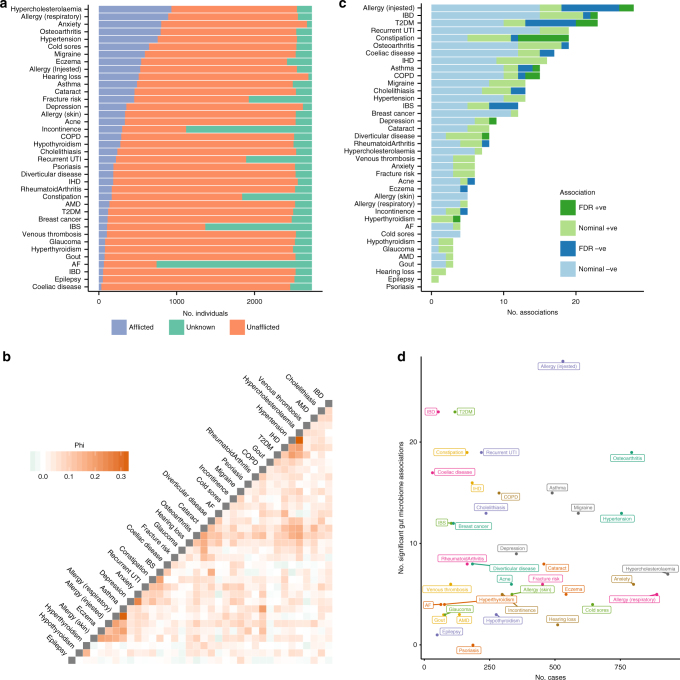
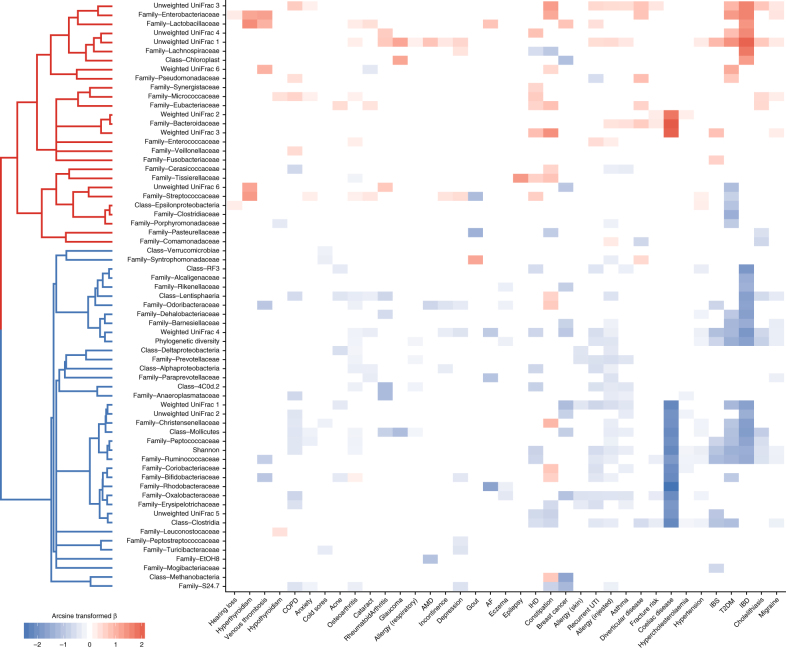
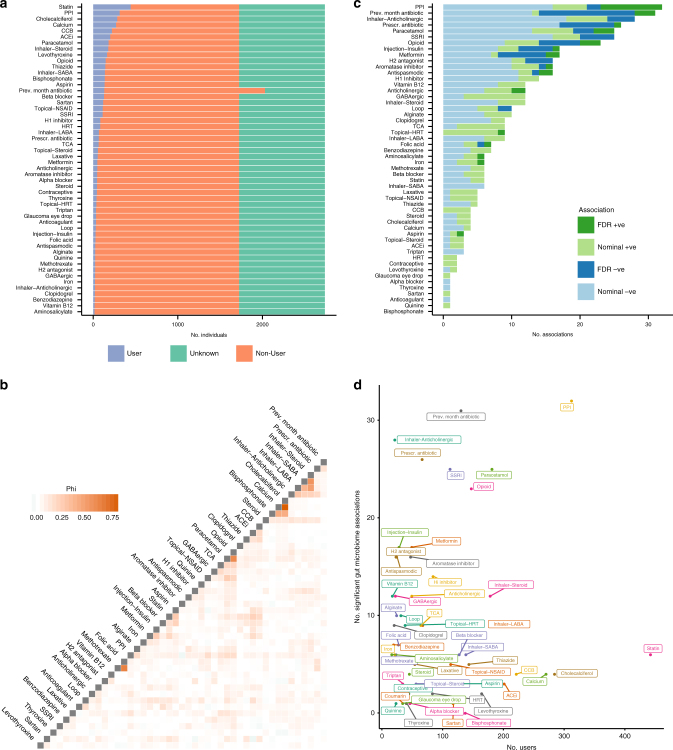
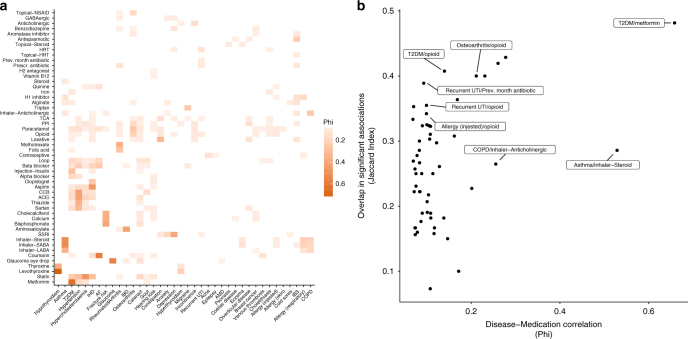
The human gut microbiome has been associated with many health factors but variability between studies limits exploration of effects between them. Gut microbiota profiles are available for >2700 members of the deeply phenotyped TwinsUK cohort, providing a uniform platform for such comparisons. Here, we present gut microbiota association analyses for 38 common diseases and 51 medications within the cohort. We describe several novel associations, highlight associations common across multiple diseases, and determine which diseases and medications have the greatest association with the gut microbiota. These results provide a reference for future studies of the gut microbiome and its role in human health.
Overview
The claims and statistics of this paper haven’t been checked yet.
Free: it reads the open-access text and checks the first 5 claims that cite a source we can check. Create a free account to check every claim.
Integrity signals
Registry
Cites
Statistics
Figures
Verification
Claims the paper makes
The claims and statistics of this paper haven’t been checked yet.
Free: it reads the open-access text and checks the first 5 claims that cite a source we can check. Create a free account to check every claim.
Claims other papers make about this one
Each is checked against this paper’s own text: does it say what the citing paper says it does?
The source backs part of the claim, not all of it — or backs it for a different population, condition or comparison.
In the citing paper
“Despite this, medication usage was a significant, albeit minor, contributor (R2 = 0.003) to microbial community composition, highlighting how xenobiotics can and do influence the gut microbiome (Jackson et al., 2018; Maier et al., 2018).”
From Gut microbiome stability and dynamics in healthy donors and patients with non-gastrointestinal cancers (2021) · cites this paper as Jackson et al., 2018
Experimental — accuracy not yet measured
Self-check
Percentages, sums and reported differences re-computed from the paper’s own numbers.
The self-check needs the paper’s full text.
Citations
Cites
QIIME allows analysis of high-throughput community sequencing data
Caporaso, J. G., Kuczynski, J., Stombaugh, J., Bittinger, K., Bushman, F. D., Costello, E. K., Fierer, N., Peña, A. G., Goodrich, J. K., Gordon, J. I., et al. (2010) · Nature Methods · doi:10.1038/nmeth.f.303 · Cited by 34,887
UCHIME improves sensitivity and speed of chimera detection
Edgar, R. C., Haas, B. J., Clemente, J. C., Quince, C., & Knight, R. (2011) · Bioinformatics · doi:10.1093/bioinformatics/btr381 · Cited by 15,114
VEGAN, a package of R functions for community ecology
Dixon, P. (2003) · Journal of Vegetation Science · doi:10.1111/j.1654-1103.2003.tb02228.x · Cited by 6,824
Linking long-term dietary patterns with gut microbial enterotypes
Wu, G. D., Chen, J., Hoffmann, C., Bittinger, K., Chen, Y.-Y., Keilbaugh, S. A., Bewtra, M., Knights, D., Walters, W. A., Knight, R., et al. (2011) · Science · doi:10.1126/science.1208344 · Cited by 6,513
The Treatment-Naive Microbiome in New-Onset Crohn’s Disease
Gevers, D., Kugathasan, S., Denson, L. A., Vázquez-Baeza, Y., Van Treuren, W., Ren, B., Schwager, E., Knights, D., Song, S. J., Yassour, M., et al. (2014) · Cell Host & Microbe · doi:10.1016/j.chom.2014.02.005 · Cited by 3,220
Human Genetics Shape the Gut Microbiome
Goodrich, J. K., Waters, J. L., Poole, A. C., Sutter, J. L., Koren, O., Blekhman, R., Beaumont, M., Van Treuren, W., Knight, R., Bell, J. T., et al. (2014) · Cell · doi:10.1016/j.cell.2014.09.053 · Cited by 3,164
Self-citationGut Microbiota in Human Adults with Type 2 Diabetes Differs from Non-Diabetic Adults
Larsen, N., Vogensen, F. K., van den Berg, F. W. J., Nielsen, D. S., Andreasen, A. S., Pedersen, B. K., Al-Soud, W. A., Sørensen, S. J., Hansen, L. H., & Jakobsen, M. (2010) · PLoS ONE · doi:10.1371/journal.pone.0009085 · Cited by 2,952
Environment dominates over host genetics in shaping human gut microbiota
Rothschild, D., Weissbrod, O., Barkan, E., Kurilshikov, A., Korem, T., Zeevi, D., Costea, P. I., Godneva, A., Kalka, I. N., Bar, N., et al. (2018) · Nature · doi:10.1038/nature25973 · Cited by 2,859
Pvclust: an R package for assessing the uncertainty in hierarchical clustering
Suzuki, R., & Shimodaira, H. (2006) · Bioinformatics · doi:10.1093/bioinformatics/btl117 · Cited by 2,451
Dethlefsen, L., & Relman, D. A. (2011) · Proceedings of the National Academy of Sciences · doi:10.1073/pnas.1000087107 · Cited by 2,421
Cited by
Items 301–400 of 619
Luan, B., Ge, F., Lu, X., Li, Z., Zhang, H., Wu, J., Yang, Q., Chen, L., Zhang, W., & Chen, W. (2024) · Clinical & Translational Oncology · doi:10.1007/s12094-023-03373-5 · Cited by 20
“…correlation with estrogen metabolism ( Shewanella putrefaciens and Erwinia amylovora ), species that produce the short-chain fatty acid (SCFAs) butyrate ( Roseburia inulinivorans ), and species with a faint negative correlation with tumor-infiltrating immune cells ( Actinomyces sp.HPA0247 ) [14].”
Helicobacter pylori Related Diseases and Osteoporotic Fractures (Narrative Review)
Fisher, L., Fisher, A., & Smith, P. N. (2020) · Journal of Clinical Medicine · doi:10.3390/jcm9103253 · Cited by 21
Gut microbiota health closely associates with PCB153-derived risk of host diseases
Min, L., Chi, Y., & Dong, S. (2020) · Ecotoxicology and Environmental Safety · doi:10.1016/j.ecoenv.2020.111041 · Cited by 19
Deng, R., Zhang, H., Li, Y., & Shi, Y. (2022) · Journal of Immunotherapy · doi:10.1097/cji.0000000000000442 · Cited by 24
Colard‐Thomas, J., Thomas, Q. D., & Viala, M. (2023) · Cancers · doi:10.3390/cancers15082276 · Cited by 22
“Major studies have reported drug-induced changes in microbiome constitution using large population-based cohorts in the Netherlands [37], the UK [38], or Belgium [39].”
Michaelis, L., Berg, L., & Maier, L. (2023) · Biological Psychiatry · doi:10.1016/j.biopsych.2023.06.004 · Cited by 22
“For instance, in the TwinsUK cohort (70), intake of selective serotonin reuptake inhibitors (SSRIs) was negatively associated with Turicibacteraceae abundance.”
Selection of microbial biomarkers with genetic algorithm and principal component analysis
Zhang, P., West, N. P., Chen, P.-Y., Thang, M. W. C., Price, G. R., Cripps, A. W., & Cox, A. J. (2019) · BMC Bioinformatics · doi:10.1186/s12859-019-3001-4 · Cited by 18
“Association between the human gut microbiome and a diverse range of health issues has been reported in a number of studies [1, 2].”
Meta-Apo improves accuracy of 16S-amplicon-based prediction of microbiome function
Jing, G., Zhang, Y., Cui, W., Liu, L., Xu, J., & Su, X. (2021) · BMC Genomics · doi:10.1186/s12864-020-07307-1 · Cited by 20
van Lier, Y. F., van den Brink, M. R. M., Hazenberg, M. D., & Markey, K. A. (2021) · Haematologica · doi:10.3324/haematol.2020.270835 · Cited by 20
Korsten, S. G. P. J., Hartog, M., Berends, A. J., Koenders, M. I., Popa, C. D., Vromans, H., Garssen, J., van den Ende, C. H. M., Vermeiden, J. P. W., & Willemsen, L. E. M. (2024) · Nutrients · doi:10.3390/nu16193384 · Cited by 19
Mattiola, I., & Diefenbach, A. (2023) · Seminars in Immunology · doi:10.1016/j.smim.2023.101724 · Cited by 19
Consistency across multi‐omics layers in a drug‐perturbed gut microbial community
Wuyts, S., Alves, R., Zimmermann‐Kogadeeva, M., Nishijima, S., Blasche, S., Driessen, M., Geyer, P. E., Hercog, R., Kartal, E., Maier, L., et al. (2023) · Molecular Systems Biology · doi:10.15252/msb.202311525 · Cited by 20
“This relationship is bidirectional, as drugs can influence microbiome composition (Jackson et al , 2018; Maier et al , 2018; Vich Vila et al , 2020; Vieira-Silva et al , 2020), while the gut microbiota can have an impact on a drug’s efficacy and toxicity by altering its chemical structure…”
Chaudhary, S., Kaur, P., Singh, T. A., Bano, K. S., Vyas, A., Mishra, A. K., Singh, P., & Mehdi, M. M. (2024) · Biogerontology · doi:10.1007/s10522-024-10146-2 · Cited by 22
“Furthermore, understanding the connections between the gut microbiome, diseases, and medications serves as a reference point for future investigations into the role of the gut microbiome in human health (Jackson et al. 2018).”
Precarious Symbiosis Between Host and Microbiome in Cardiovascular Health
Bartolomaeus, H., Markó, L., Wilck, N., Luft, F. C., Forslund, S. K., & Müller, D. N. (2019) · Hypertension · doi:10.1161/hypertensionaha.119.11786 · Cited by 19
Rennie, K., Witham, M. D., Bradley, P., Clegg, A. P., Connolly, S., Hancock, H. C., Hiu, S. K. W., Marsay, L., McDonald, C., Robertson, L., et al. (2022) · BMJ Open · doi:10.1136/bmjopen-2022-061823 · Cited by 17
Self-citationWu, Z., & Wang, H. X. (2018) · SN Comprehensive Clinical Medicine · doi:10.1007/s42399-018-0033-4 · Cited by 22
“Duvallet [113] found that a gut microbiota community can be associated with a variety of diseases, whether FMT treatment of a certain disease will affect other related diseases is an urgent problem to be solved in FMT safety evaluation.”
Qu, Q., Dou, Q., Xiang, Z., Yu, B., Chen, L., Fan, Z., Zhao, X., Yang, S., & Zeng, P. (2025) · npj Biofilms and Microbiomes · doi:10.1038/s41522-025-00661-6 · Cited by 17
The role of the intestinal microbiome in cognitive decline in patients with kidney disease
Wagner, C. A., Frey-Wagner, I. M., Ortíz, A., Unwin, R. J., Liabeuf, S., Suzumoto, Y., Iervolino, A., Stasi, A., Marzo, V. D., Gesualdo, L., et al. (2025) · Nephrology Dialysis Transplantation · doi:10.1093/ndt/gfae253 · Cited by 20
“These changes alter the bacterial metabolite output, and increase intestinal barrier permeability and systemic inflammation, which can exacerbate kidney damage [26 –28 ].”
Drugs Versus Microbiota: How Pharmacotherapy Affects Gut and Probiotic Bacteria
Zawistowska-Rojek, A., & Tyski, S. S. (2025) · Pharmaceuticals · doi:10.3390/ph18091372 · Cited by 17
“A meta-analysis also reported increased populations of Bifidobacterium dentium in the intestines of individuals using PPIs [92].”
Lin, Y., Lin, T., Hung, S., Liu, P., Hung, W., Tsai, W., Tsai, Y., Delicano, R. A., Chuang, Y., Wu, P., et al. (2021) · Journal of Personalized Medicine · doi:10.3390/jpm11030198 · Cited by 17
“Beyond the clinical effect of β-blockers in ESRD patients, they also have a potential impact on gut microbiota [7,16].”
Microbiota Composition in Diverticular Disease: Implications for Therapy
Tursi, A., Papa, V., Lopetuso, L. R., Settanni, C. R., Gasbarrini, A., & Papa, A. (2022) · International Journal of Molecular Sciences · doi:10.3390/ijms232314799 · Cited by 19
“Polypharmacy is linked with intestinal dysbiosis, mainly when drugs, such as opioids and neuroleptics, influence colonic motility [59,60].”
Lin, K., Zheng, W., Guo, M., Zhou, R., Zhang, M., & Liu, T. (2024) · Biochimica et Biophysica Acta (BBA) - Molecular Basis of Disease · doi:10.1016/j.bbadis.2024.167089 · Cited by 21
Fu, S., Lee, C., Hsieh, Y., Wu, P.-H., Lin, S., & Wang, H. (2022) · Frontiers in Cellular and Infection Microbiology · doi:10.3389/fcimb.2022.837019 · Cited by 19
PARASKEVAIDIS, I. A., Briasoulis, Α., & Tsougos, E. (2024) · International Journal of Molecular Sciences · doi:10.3390/ijms25031716 · Cited by 17
“This has been confirmed by others, although the responsible mechanisms are not clearly reported [81].”
Xue, K., Li, J., & Huang, R. (2024) · Frontiers in Cellular and Infection Microbiology · doi:10.3389/fcimb.2024.1411249 · Cited by 16
Gut Microbiome over a Lifetime and the Association with Hypertension
Yano, Y., & Niiranen, T. (2021) · Current Hypertension Reports · doi:10.1007/s11906-021-01133-w · Cited by 15
Storm-Larsen, C., Hande, L. N., Kummen, M., Thunhaug, H., Vestad, B., Hansen, S. H., Hovland, A., Trøseid, M., Lappegård, K. T., & Hov, J. R. (2022) · Scandinavian Journal of Clinical and Laboratory Investigation · doi:10.1080/00365513.2022.2102540 · Cited by 13
Yan, J., Li, J., Xue, Q., Xie, S., Jiang, J., Li, P., & Du, B. (2022) · Journal of Applied Microbiology · doi:10.1111/jam.15773 · Cited by 16
Sun, G., Xia, T., Wei, Q., Dong, Y., Zhao, C., Yang, X., Zhang, L., Wang, X., Sha, W., & Zhang, H. (2021) · Ecology and Evolution · doi:10.1002/ece3.7976 · Cited by 13
Reproducible microbiome composition signatures of anxiety and depressive symptoms
Kouraki, A., Kelly, A., Vijay, A., Gohir, S. A., Astbury, S., Georgopoulos, V., Millar, B., Walsh, D. A., Ferguson, E., Menni, C., et al. (2023) · Computational and Structural Biotechnology Journal · doi:10.1016/j.csbj.2023.10.035 · Cited by 14
Self-citationJain, H., Marsool, M. D. M., Goyal, A., Sulaiman, S. A., Fatima, L., Idrees, M., Sharma, B., Borra, V., Gupta, P., Nadeem, A., et al. (2023) · Current Problems in Cardiology · doi:10.1016/j.cpcardiol.2023.102179 · Cited by 15
Piacentino, D., Vizioli, C., Barb, J. J., Grant-Beurmann, S., Bouhlal, S., Battista, J. T., Jennings, O., Lee, M. R., Schwandt, M. L., Walter, P. J., et al. (2024) · PLoS ONE · doi:10.1371/journal.pone.0302195 · Cited by 15
Chen, Z., Wang, X., Teng, Z., Huang, J., Mo, J., Qu, C., Wu, Y., Liu, Z., Liu, F., & Xia, K. (2024) · EBioMedicine · doi:10.1016/j.ebiom.2024.105314 · Cited by 17
“Our analysis of FAERS database revealed that statins were associated with higher risks of ‘ Self esteem decreased ’ (ROR = 18.92 [14.09, 25.42]), ‘ Agitated depression ’ (ROR = 9.76 [4.54, 20.99]) compared with other drugs (eTable 8), which is consistent with the MR results.”
Influentialde Oliveira, M. T., de Oliveira, F. L., Salgaço, M. K., Mesa, V., Sartoratto, A., Duailibi, K., Raimundo, B. V. B., Ramos, W. S., & Sivieri, K. (2025) · Pharmaceuticals · doi:10.3390/ph18081132 · Cited by 14
“Regarding medications, SSRIs are among the drugs that have the greatest influence on gut microbiota composition [4].”
Doare, E., Héry-Arnaud, G., Devauchelle‐Pensec, V., & Alegria, G. C. (2021) · Frontiers in Immunology · doi:10.3389/fimmu.2021.699011 · Cited by 15
“Previous studies showed similar results (41, 42) with NSAIDS use.”
He, X., Li, Z., Li, X., Zhao, H., Hu, Y., Han, W., Wang, C., Yin, C., & Chen, Y. C. (2022) · Current Research in Translational Medicine · doi:10.1016/j.retram.2022.103354 · Cited by 16
Mesnage, R., Roy, C. I. L., Biserni, M., Salles, B., & Antoniou, M. N. (2019) · Food and Chemical Toxicology · doi:10.1016/j.fct.2019.05.055 · Cited by 15
Li, Y., Qin, J., Cheng, Y., Ai, Y., Han, Z., Li, M., Qi, Y., Zhao, Q., & Li, Z. (2021) · Foods · doi:10.3390/foods10102478 · Cited by 14
Gut Microbiome and Kidney Disease: Reconciling Optimism and Skepticism
Shankaranarayanan, D., & Raj, D. S. (2022) · Clinical Journal of the American Society of Nephrology · doi:10.2215/cjn.04480422 · Cited by 13
Microbiome-based approaches to personalized nutrition: from gut health to disease prevention
Nisa, P., Kirthi, A. V., & Sinha, P. (2025) · Folia Microbiologica · doi:10.1007/s12223-025-01337-6 · Cited by 20
“These tools aid in the identification of disease-related biomarkers, the prediction of responses to dietary modifications, and the correlation of microbial patterns with particular health outcomes (Jackson et al. 2018).”
Stone, S., McPherson, J. P., Kulkarni, R. P., & Young, A. (2025) · Nature reviews. Cancer · doi:10.1038/s41568-025-00890-z · Cited by 15
“Increased risk of Clostridium difficile infection, higher abundance of Streptococcaceae and Micrococcaceae, and reduced microbial diversity have also been observed following PPI use 140,152,153 .”
Evaluating the clinical relevance of the enterotypes in the Estonian microbiome cohort
Aasmets, O., Krigul, K. L., & Org, E. (2022) · Frontiers in Genetics · doi:10.3389/fgene.2022.917926 · Cited by 16
“Large-scale human microbiome studies have shown how the gut microbiome reflects our lifestyle and health (Zhernakova et al., 2016; Jackson et al., 2018; Gacesa et al., 2020; Aasmets et al., 2022).”
The role of gut microbiota and drug interactions in the development of colorectal cancer
Wu, J., Xia, C., Liu, C., Zhang, Q., & Xia, C. (2023) · Frontiers in Pharmacology · doi:10.3389/fphar.2023.1265136 · Cited by 12
“ACEI, ARB, and β -blockers significantly affect gut microbiota (Zhernakova et al., 2016; Jackson et al., 2018).”
The Role of the Gut Microbiome in Hematological Cancers
Hussein, N., Rajasuriar, R., Khan, A. M., Lim, Y. A. L., & Gan, G. G. (2023) · Molecular Cancer Research · doi:10.1158/1541-7786.mcr-23-0080 · Cited by 13
Ketel, J., Bruguera, M. B., Auchter, G., Cuntz, U., Zipfel, S., Enck, P., & Mack, I. (2024) · Nutrients · doi:10.3390/nu16060891 · Cited by 12
“They found that models adjusted for BMI and age were highly correlated with unadjusted analysis, indicating that BMI and age have little influence on the relationship between microbiota and common diseases [60].”
Diet Influences Immunotherapy Outcomes in Cancer Patients: A Literature Review
Kian, N., Behrouzieh, S., Razi, S., & Rezaei, N. (2022) · Nutrition and Cancer · doi:10.1080/01635581.2022.2133151 · Cited by 14
Guidelines for microbiome studies in renal physiology
Muralitharan, R. R., Snelson, M., Méric, G., Coughlan, M. T., & Marques, F. Z. (2023) · American Journal of Physiology-Renal Physiology · doi:10.1152/ajprenal.00072.2023 · Cited by 12
Mehmood, K., Moin, A., Hussain, T., Rizvi, S. M. D., Gowda, D., Shakil, S., & Kamal, M. (2021) · Folia Microbiologica · doi:10.1007/s12223-021-00926-5 · Cited by 12
New Personalized Medicine Model for Medication Management
Alagiakrishnan, K., Halverson, T., Olivares, D. V. F., & Sadowski, C. A. (2026) · Journal of Personalized Medicine · doi:10.3390/jpm16040182 · Cited by 10
Differential Gut Microbiota, Dietary Intakes in Constipation Patients with or without Hypertension
Li, J., Ma, G., Xie, J., Xu, K., Lai, H., Li, Y., He, Y., Yu, H., Liao, X., Wang, X., et al. (2023) · Molecular Nutrition & Food Research · doi:10.1002/mnfr.202300208 · Cited by 10
Gut microbiota-targeted therapies in pediatric chronic kidney disease: gaps and opportunities
Iyengar, A. A., Ramadass, B., Venkatesh, S., & MAK, R. H. K. (2025) · Pediatric Nephrology · doi:10.1007/s00467-025-06789-z · Cited by 11
“…improve gut microbiota balance include antidiabetic drugs (not typically used in children) such as metformin, acarbose, and SGLT2 inhibitors, which facilitate the growth of SCFA-producing bacteria like Lactobacillus , Akkermansia , and Bifidobacterium , potentially reducing ure-mic toxins [16].”
Kibble, M., Khan, S. A., Ammad-ud-din, M., Bollepalli, S., Palviainen, T., Kaprio, J. A., Pietiläinen, K. H., & Ollikainen, M. (2020) · Royal Society Open Science · doi:10.1098/rsos.200872 · Cited by 10
Searching for New Microbiome-Targeted Therapeutics through a Drug Repurposing Approach
Barone, M., Rampelli, S., Biagi, E., Bertozzi, S. M., Falchi, F., Cavalli, A., Armirotti, A., Brigidi, P., Turroni, S., & Candela, M. (2021) · Journal of Medicinal Chemistry · doi:10.1021/acs.jmedchem.1c01333 · Cited by 12
Leardini, D., Venturelli, F., Baccelli, F., Cerasi, S., Muratore, E., Brigidi, P., Pession, A., Prete, A., & Masetti, R. (2022) · International Journal of Molecular Sciences · doi:10.3390/ijms232315387 · Cited by 12
Lui, O., Dridi, L., González, E., Yasmine, S., Kubinski, R., Billings, H., Bohlmann, J., Withers, S. G., Maurice, C. F., & Castagner, B. (2023) · ACS Chemical Biology · doi:10.1021/acschembio.2c00791 · Cited by 13
Cheng, S., Yu, J., Cui, M., Su, H., & Cao, Y. (2024) · Journal of Orthopaedic Surgery and Research · doi:10.1186/s13018-023-04486-x · Cited by 14
“According to a large cross-sectional analysis, numerous gut microbiota features were associated with osteoarthritis (OA), the most common form of arthritis [24].”
The Microbiome Factor in Drug Discovery and Development
Nuzzo, A., & Brown, J. R. (2019) · Chemical Research in Toxicology · doi:10.1021/acs.chemrestox.9b00333 · Cited by 11
Seidel, M., Ehrlich, S., Breithaupt, L. E., Welch, E., Wiklund, C. A., Hübel, C., Thornton, L. M., Savva, A., Fundín, B. T., Pege, J., et al. (2020) · BMC Psychiatry · doi:10.1186/s12888-020-02903-7 · Cited by 18
Peripheral tolerance to insulin is encoded by mimicry in the microbiomePreprint
García, A. R., Paterou, A., Lee, M., Slawinski, H., Wicker, L. S., Todd, J. A., & Pękalski, M. Ł. (2019) · bioRxiv (Cold Spring Harbor Laboratory) · doi:10.1101/2019.12.18.881433 · Cited by 12
Arterial Hypertension: Novel Pharmacological Targets and Future Perspectives
Popa, I. P., Clim, A., Pînzariu, A. C., Lazăr, C. I., Popa, Ș., Tudorancea, I. M., Moscalu, M., Șerban, D. N., Șerban, I. L., Costache-Enache, I.-I., et al. (2024) · Journal of Clinical Medicine · doi:10.3390/jcm13195927 · Cited by 11
Xie, R., Yuen, S. K., Tsang, Z., Tai, W., & Yap, D. Y. H. (2024) · Clinical Nutrition ESPEN · doi:10.1016/j.clnesp.2024.11.035 · Cited by 10
Wei, P., Gao, S., & Han, G. (2025) · Biomedicines · doi:10.3390/biomedicines13030639 · Cited by 10
“A growing body of evidence suggests that the GM is associated with several eye diseases, including diabetic retinopathy, uveitis, and glaucoma [5,6].”
Fan, K., Hua, X., Wang, S., Efferth, T., Tan, S., & Wang, Z. (2025) · The FASEB Journal · doi:10.1096/fj.202403209r · Cited by 10
“101 105 Gut microbiota dysbiosis can cause the development of OP (Figure 4).”
Difference of egg ovalbumin sensitization between egg and duck eggs in BALB/c mice
Zhou, R., Zhang, L., Zhang, K., & Zhou, P. (2022) · European Food Research and Technology · doi:10.1007/s00217-021-03943-3 · Cited by 11
“A large twins cohort study (> 2,700 individuals) recently demonstrated that food allergies are one of the top three diseases most closely associated with changes in the microbiome [43].”
Ma, Y., He, J., Sieber, M., von Frieling, J., Bruchhaus, I., Baines, J. F., Bickmeyer, U., & Roeder, T. (2023) · Communications Biology · doi:10.1038/s42003-023-04671-y · Cited by 12
Shi, A., Dong, L., Wu, Y., Liu, X., Li, W., Wang, J., Ji, X., Lv, H., Zhang, Y., & Wang, S. (2023) · Journal of Functional Foods · doi:10.1016/j.jff.2023.105690 · Cited by 9
Rotem‐Kohavi, N., Keane, J., Clarke, G. A., Dinan, T. G., Cryan, J. F., McCarthy, F. P., Oberlander, T. F., & O’Mahony, S. M. (2021) · Springer eBooks · doi:10.1007/978-3-030-60159-1_8 · Cited by 9
Le, M. N., Kawada‐Matsuo, M., & Komatsuzawa, H. (2022) · Microbiology Spectrum · doi:10.1128/spectrum.01806-21 · Cited by 9
Exploring the Complex Relationship Between Microbiota and Systemic Lupus Erythematosus
Yu, L., Liu, Q., Li, Q., Zhao, C., Zhao, M., & Lu, Q. (2023) · Current Rheumatology Reports · doi:10.1007/s11926-023-01102-z · Cited by 10
Koeninger, L., Osbelt, L., Berscheid, A., Wendler, J., Berger, J., Hipp, K., Lesker, T. R., Pils, M. C., Malek, N. P., Jensen, B. A. H., et al. (2021) · Communications Biology · doi:10.1038/s42003-020-01582-0 · Cited by 11
Two Competing Guilds as a Core Microbiome Signature for Health RecoveryPreprint
Wu, G. G., Xu, T., Zhao, N., Lam, Y. Y., Ding, X., Wei, D., Fan, J., Shi, Y., Li, X., Li, M., et al. (2022) · bioRxiv (Cold Spring Harbor Laboratory) · doi:10.1101/2022.05.02.490290 · Cited by 9
Chen, Y., Xiao, J., Zhang, L., Mu, J., Wang, J., Yu, X., Li, L., Xiao, Z., & Liang, Y. (2025) · International Journal of Biological Macromolecules · doi:10.1016/j.ijbiomac.2025.142451 · Cited by 9
Liu, L., Kaur, G. I. J., Kumar, A., Kanwal, A., & Singh, S. P. (2024) · Cardiovascular & Hematological Agents in Medicinal Chemistry · doi:10.2174/0118715257273506231208045308 · Cited by 8
The Human Gut Microbiota: A Dynamic Biologic Factory
Minagar, A., & Jabbour, R. (2024) · Advances in biochemical engineering, biotechnology · doi:10.1007/10_2023_243 · Cited by 9
Desorcy‐Scherer, K., Zúñiga-Chaves, I., Reisner, M. A., Suen, G., & Hernandez, L. L. (2024) · Scientific Reports · doi:10.1038/s41598-024-62224-7 · Cited by 8
“At higher resolution, reductions in the Turicibacter genre have also been described 19 .”
Jama, H. A., Kaye, D. M., & Marques, F. Z. (2018) · Circulation Research · doi:10.1161/circresaha.118.313792 · Cited by 9
Gut Microbiota in Health and Diseases
Krga, I., & Glibetić, M. (2021) · Elsevier eBooks · doi:10.1016/b978-0-12-819265-8.00045-0 · Cited by 12
Deng, J.-W., Zhou, Y.-L., Zhang, Y., Zhou, C., & Fang, J. (2025) · British Journal of Cancer · doi:10.1038/s41416-025-03277-x · Cited by 10
“Emerging evidence further indicates that environmental factors are key determinants in shaping the composition and functionality of the gut microbiota, and gut microbiota may be essential in moderating the association between environmental risk factors and CRC pathogenesis [13, 14].”
Anwar, F., Al-Abbasi, F. A., Al-Bar, O. A., Verma, A., & Kumar, V. (2024) · Inflammopharmacology · doi:10.1007/s10787-024-01593-x · Cited by 8
“Metagenom-ics sequencing of 1135 stool samples of the patients taking CVS drugs in a cohort study conducted in the Netherlands and 2700 samples from a British cohort study revealed alterations in bacterial taxonomy with different medications (Jackson et al. 2018).”
Zhao, R., Yang, S., Li, D. X., Liu, L., Xing, Y., & Wu, M. (2021) · Evidence-based Complementary and Alternative Medicine · doi:10.1155/2021/8663022 · Cited by 11
Lin, T., Wu, C., Fan, Y., Chang, Y., Ho, H. J., & Chen, Y. (2022) · Annals of Allergy Asthma & Immunology · doi:10.1016/j.anai.2021.12.016 · Cited by 8
Ohlsson, L., Isaxon, C., Wrighton, S., Ouahidi, W. E., Fornell, L., Uller, L., Ansar, S., & Voss, U. (2022) · Physiological Reports · doi:10.14814/phy2.15249 · Cited by 7
Host—microbial interactions in metabolic diseases: from diet to immunity
Lee, J.-H., & Park, J. (2022) · The Journal of Microbiology · doi:10.1007/s12275-022-2087-y · Cited by 7
Wen, J., Geng, S., Zhu, L., Yao, X., Zhou, Y., Shen, F., Wang, Z., Ma, Y., Feng, Y., Huo, Z., et al. (2023) · Environmental Science and Pollution Research · doi:10.1007/s11356-023-28209-1 · Cited by 8
The gut-retina axis: Uncovering the role of autoimmunity in glaucoma development
Yang, Z., Tian, D., Zhao, X., Luo, Y., & Chen, Y. (2024) · Heliyon · doi:10.1016/j.heliyon.2024.e35516 · Cited by 10
Zhou, Y., Zhang, L., Lin, L., Liu, Y., Liu, Y., Zhao, Y., & Zhao, Y. (2025) · Journal of Hazardous Materials · doi:10.1016/j.jhazmat.2025.137250 · Cited by 8
Hisamatsu, D., Masuoka, H., Takeshige‐Amano, H., Kurokawa, R., Ogata, Y., Suda, W., Hatano, T., Asaoka, D., Mabuchi, Y., Naraoka, Y., et al. (2025) · iScience · doi:10.1016/j.isci.2025.112593 · Cited by 6
“Although population-based cohort studies have shown that the use of certain prescription drugs is associated with microbiome alterations, 7–9 no comparative study has evaluated the effects of medication and disease severity in patients with neurodegenerative diseases.”
Yi, J., Xu, J., Zeng, J., Song, Y., Zhang, Y.-N., Huang, C., Li, L., Ding, K., Zhu, Z., Yuan, D.-Z., et al. (2025) · Frontiers in Immunology · doi:10.3389/fimmu.2025.1680015 · Cited by 6
Gnatzy, L., Ismailos, G., Vertzoni, M., & Reppas, C. I. (2023) · European Journal of Pharmaceutical Sciences · doi:10.1016/j.ejps.2023.106510 · Cited by 8
Distinct characteristics of the gut virome in patients with osteoarthritis and gouty arthritis
Chen, C., Yan, Q., Guo, R., Tang, F., Wang, M., Yi, H., Huang, C., Liu, C., Wang, Q.-Y., Lan, W., et al. (2024) · Journal of Translational Medicine · doi:10.1186/s12967-024-05374-6 · Cited by 8
“Medications have been widely reported to have considerable influences on gut microbiota [38, 39].”
ELOVL5 and VLDLR synergistically affect n-3 PUFA deposition in eggs of different chicken breeds
Jiang, C., Shi, Y., Shi, X., Yan, J., Lin, X., Zhuang, L., Li, J., Xu, G., & Zheng, J. (2024) · Poultry Science · doi:10.1016/j.psj.2024.104016 · Cited by 9
Li, Y. I., Pagulayan, K. F., Rau, H., Hendrickson, R. C., & Schindler, A. G. (2024) · Neurotrauma Reports · doi:10.1089/neur.2024.0011 · Cited by 8
Jangra, B., Kulshreshtha, S., Goyal, A., & Jachak, S. M. (2025) · Phytomedicine Plus · doi:10.1016/j.phyplu.2025.100731 · Cited by 7
Human microbiota colonization and pancreatic ductal carcinoma
Yuan, F., Yang, G., Yang, J., Ren, J., You, L., & Zhao, Y. (2022) · Critical Reviews in Microbiology · doi:10.1080/1040841x.2022.2080526 · Cited by 6
Mukhopadhyay, S., Ray, P., & Aich, P. (2022) · Life Sciences · doi:10.1016/j.lfs.2022.121212 · Cited by 7
Ahmed, A. A., Otten, A. T., Gareb, B., Huijmans, J. E., Eissens, A. C., Rehman, A., Dijkstra, G. D. H., Kosterink, J. G. W., Frijlink, H. W., & Schellekens, R. C. A. (2023) · Pharmaceutics · doi:10.3390/pharmaceutics15051354 · Cited by 7
Zhao, S., Zhang, J., Ding, F., & Sun, S. (2023) · Frontiers in Nutrition · doi:10.3389/fnut.2023.1293170 · Cited by 8
Aryal, S., Manandhar, I., Mei, X., Yeoh, B. S., Tummala, R., Saha, P., Osman, I., Zubcevic, J. A., Durgan, D. J., Vijay–Kumar, M., et al. (2023) · Cambridge Prisms Precision Medicine · doi:10.1017/pcm.2023.13 · Cited by 9
Host genetic and environmental factors shape the human gut resistomePreprint
Roy, C. I. L., Bowyer, R. C. E., Carr, V. R., Costeira, R., Fernandez, J. C., Martin, T. C., Spector, T. D., Steves, C. J., Moyes, D. L., Forslund, S. K., et al. (2020) · bioRxiv (Cold Spring Harbor Laboratory) · doi:10.1101/2020.05.18.092973 · Cited by 6
Self-citationRen, L., Wang, Z., Yang, Z., Tian, R., Du, J., Dang, Z., Li, J., Guo, X., Yang, X., Cui, W., et al. (2026) · AMB Express · doi:10.1186/s13568-026-02023-7 · Cited by 7
“…to 38 common diseases and 51 medications, found that both paracetamol and opioids were significantly associated with a significant enrichment of Streptococcaceae , demonstrating how medications can markedly influence a characteristic taxonomic signature on the gut microbiome (Jackson et al. 2018).”
Metadata
- Authors
- Jackson, M. A., Verdi, S., Maxan, M.-E., Shin, C. M., Zierer, J., Bowyer, R. C. E., Martin, T., Williams, F. M. K., Menni, C., Bell, J. T., Spector, T. D., & Steves, C. J.
- Affiliations
- King's College London (GB)
- King's College Hospital NHS Foundation Trust (GB)
- Seoul National University (KR)
- Corresponding author
- Jackson, Matthew A.
- Steves, Claire J.
- ORCID
- Venue
- Nature Communications
- Published
- 2018-07-09
- Volume
- 9
- Issue
- 1
- Pages
- 2655-2655
- ISSN
- 2041-1723 (ISSN-L)
- PMC
- PMC6037668
- OpenAlex
- W2810208030
- Semantic Scholar
- b8cab9281df01621882cbb108ab57830cf7dffc3
- Cited by
- 616
- References
- 30
- Citations by year
- 2026: 46 · 2025: 50 · 2024: 85 · 2023: 109 · 2022: 73 · 2021: 106 · 2020: 86 · 2019: 48 · 2018: 12
- FWCI
- 22.59
- Type
- journal article
- Language
- en
- Open access
- gold
- doi.org
- Licence
- cc-by
- creativecommons.org/licenses/by/4.0 (tdm)
- creativecommons.org/licenses/by/4.0 (vor)
- Locations
- Nature Communications (publishedVersion, cc-by)
- Europe PMC (PubMed Central) (publishedVersion, cc-by)
- PubMed Central (publishedVersion, cc-by)
- PubMed (publishedVersion)
- Research Portal (King's College London) (submittedVersion, cc-by)
- RePEc: Research Papers in Economics (submittedVersion)
- Archivio Istituzionale della Ricerca (Universita Degli Studi Di Milano) (submittedVersion, other-oa)
- DOAJ (DOAJ: Directory of Open Access Journals) (submittedVersion)
- DOAJ (DOAJ: Directory of Open Access Journals) (submittedVersion, cc-by-sa)
- PuSH - Publication Server of Helmholtz Zentrum München (submittedVersion)
- Funders
- Wellcome Trust (MR/M016560/1, WT081878MA)
- Chronic Disease Research Foundation
- National Institute for Health and Care Research (NF-SI-0507-10228, MR/M016560/1, NF-SI-0514-10027)
- King's College London
- National Institutes of Health (1dp2od007444-01)
- Medical Research Council (MR/M016560/1, MR/N01183X/1)
- National Institute of Diabetes and Digestive and Kidney Diseases (R01DK093595)
- Topics
- Life Sciences › Biochemistry, Genetics and Molecular Biology › Molecular Biology › Gut microbiota and health
- Life Sciences › Biochemistry, Genetics and Molecular Biology › Genetics › Genetic Associations and Epidemiology
- Health Sciences › Dentistry › Periodontics › Oral microbiology and periodontitis research
- Keywords
- gut microbiota, human microbiome, common diseases, prescription drugs
- MeSH terms
- Gastrointestinal Microbiome, Aged, Bacteria, Cross-Sectional Studies, Disease, Drug Therapy, Feces, Female, Humans, Male, Middle Aged, Surveys and Questionnaires, RNA, Ribosomal, 16S, Cohort Studies, Gastrointestinal Tract
About these checks
Registry, retraction, Cites and statistics results are computed, not judged, with one exception: a printed reference that no index lists is read once by a model before it counts as a citation error. Claims are extracted by a model and kept only when their quote appears verbatim in the text; each cited source is then checked, with a model’s help, for whether it says what the claim relies on. Those verdicts can be wrong — read the claim’s quote and the cited source before relying on one.
Statistics and arithmetic are recomputed, not judged.
Confidence bands are shown only for fields calibrated on our annotated test set. None is calibrated yet, so no band is shown.
What counts as a claim ›How we measure confidence ›How we check this ›
Are you an author, or do you see a problem with this page? Request a review
Data sources
Bibliographic data: Semantic Scholar, OpenAlex, Crossref.
Contains information from the Semantic Scholar Academic Graph Datasets, made available under the ODC Attribution License (ODC-BY 1.0).
Semantic Scholar’s data is described in: Kinney, R., et al. (2023). The Semantic Scholar Open Data Platform. arXiv:2301.10140.
