

Gut microbiota associations with common diseases and prescription medications in a population-based cohort
Open accessThe DOI matches its Crossref record; 29 of the 30 references it cites were found in a registry or an index.
Abstract
The human gut microbiome has been associated with many health factors but variability between studies limits exploration of effects between them. Gut microbiota profiles are available for >2700 members of the deeply phenotyped TwinsUK cohort, providing a uniform platform for such comparisons. Here, we present gut microbiota association analyses for 38 common diseases and 51 medications within the cohort. We describe several novel associations, highlight associations common across multiple diseases, and determine which diseases and medications have the greatest association with the gut microbiota. These results provide a reference for future studies of the gut microbiome and its role in human health.
Overview
The claims and statistics of this paper haven’t been checked yet.
Free: it reads the open-access text and checks the first 5 claims that cite a source we can check. Create a free account to check every claim.
Integrity signals
Registry
Cites
Statistics
Figures
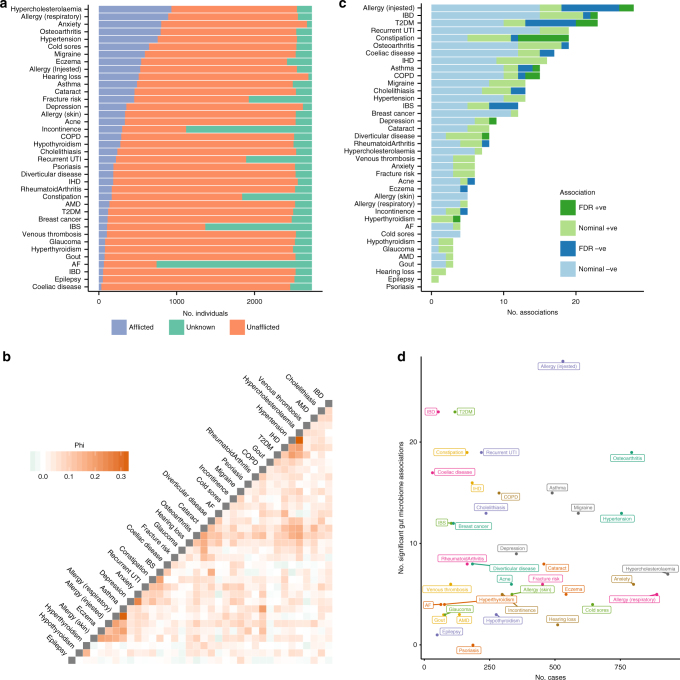
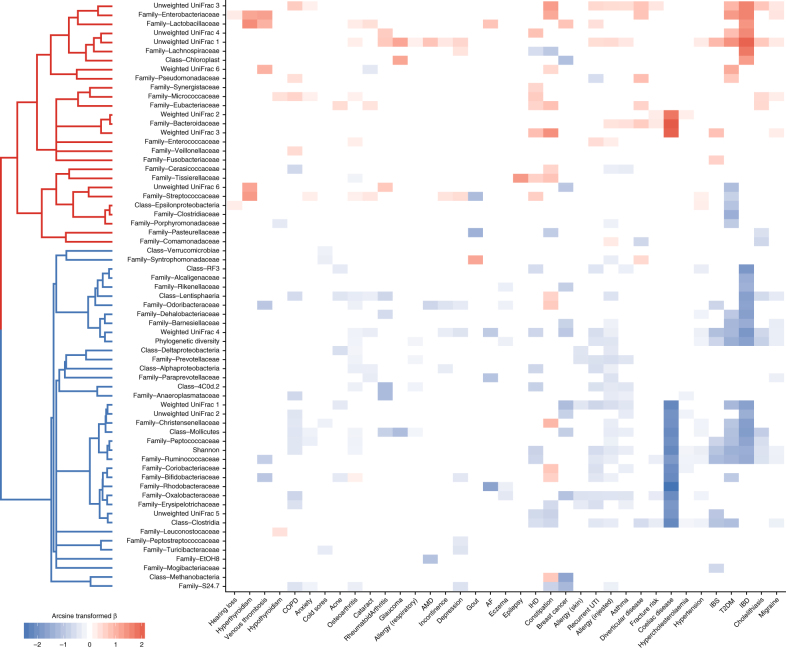
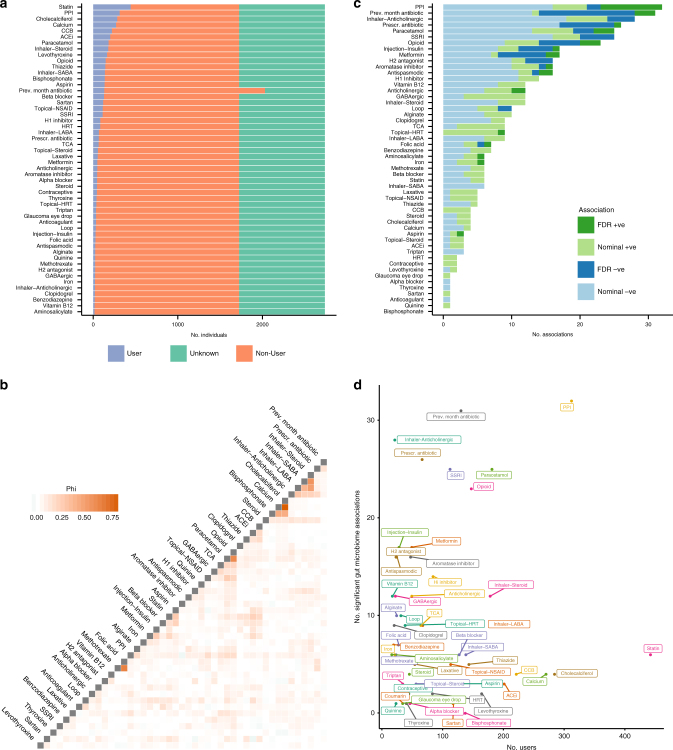
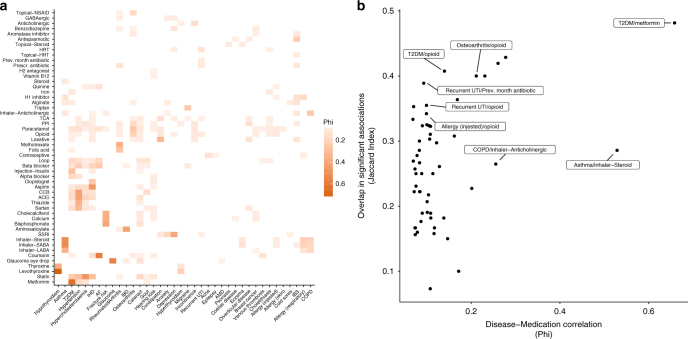
Verification
Claims the paper makes
The claims and statistics of this paper haven’t been checked yet.
Free: it reads the open-access text and checks the first 5 claims that cite a source we can check. Create a free account to check every claim.
Claims other papers make about this one
Each is checked against this paper’s own text: does it say what the citing paper says it does?
The source backs part of the claim, not all of it — or backs it for a different population, condition or comparison.
In the citing paper
“Despite this, medication usage was a significant, albeit minor, contributor (R2 = 0.003) to microbial community composition, highlighting how xenobiotics can and do influence the gut microbiome (Jackson et al., 2018; Maier et al., 2018).”
From Gut microbiome stability and dynamics in healthy donors and patients with non-gastrointestinal cancers (2021) · cites this paper as Jackson et al., 2018
Experimental — accuracy not yet measured
Self-check
Percentages, sums and reported differences re-computed from the paper’s own numbers.
The self-check needs the paper’s full text.
Citations
Cites
QIIME allows analysis of high-throughput community sequencing data
Caporaso, J. G., Kuczynski, J., Stombaugh, J., Bittinger, K., Bushman, F. D., Costello, E. K., Fierer, N., Peña, A. G., Goodrich, J. K., Gordon, J. I., et al. (2010) · Nature Methods · doi:10.1038/nmeth.f.303 · Cited by 34,887
UCHIME improves sensitivity and speed of chimera detection
Edgar, R. C., Haas, B. J., Clemente, J. C., Quince, C., & Knight, R. (2011) · Bioinformatics · doi:10.1093/bioinformatics/btr381 · Cited by 15,114
VEGAN, a package of R functions for community ecology
Dixon, P. (2003) · Journal of Vegetation Science · doi:10.1111/j.1654-1103.2003.tb02228.x · Cited by 6,824
Linking long-term dietary patterns with gut microbial enterotypes
Wu, G. D., Chen, J., Hoffmann, C., Bittinger, K., Chen, Y.-Y., Keilbaugh, S. A., Bewtra, M., Knights, D., Walters, W. A., Knight, R., et al. (2011) · Science · doi:10.1126/science.1208344 · Cited by 6,513
The Treatment-Naive Microbiome in New-Onset Crohn’s Disease
Gevers, D., Kugathasan, S., Denson, L. A., Vázquez-Baeza, Y., Van Treuren, W., Ren, B., Schwager, E., Knights, D., Song, S. J., Yassour, M., et al. (2014) · Cell Host & Microbe · doi:10.1016/j.chom.2014.02.005 · Cited by 3,220
Human Genetics Shape the Gut Microbiome
Goodrich, J. K., Waters, J. L., Poole, A. C., Sutter, J. L., Koren, O., Blekhman, R., Beaumont, M., Van Treuren, W., Knight, R., Bell, J. T., et al. (2014) · Cell · doi:10.1016/j.cell.2014.09.053 · Cited by 3,164
Self-citationGut Microbiota in Human Adults with Type 2 Diabetes Differs from Non-Diabetic Adults
Larsen, N., Vogensen, F. K., van den Berg, F. W. J., Nielsen, D. S., Andreasen, A. S., Pedersen, B. K., Al-Soud, W. A., Sørensen, S. J., Hansen, L. H., & Jakobsen, M. (2010) · PLoS ONE · doi:10.1371/journal.pone.0009085 · Cited by 2,952
Environment dominates over host genetics in shaping human gut microbiota
Rothschild, D., Weissbrod, O., Barkan, E., Kurilshikov, A., Korem, T., Zeevi, D., Costea, P. I., Godneva, A., Kalka, I. N., Bar, N., et al. (2018) · Nature · doi:10.1038/nature25973 · Cited by 2,859
Pvclust: an R package for assessing the uncertainty in hierarchical clustering
Suzuki, R., & Shimodaira, H. (2006) · Bioinformatics · doi:10.1093/bioinformatics/btl117 · Cited by 2,451
Dethlefsen, L., & Relman, D. A. (2011) · Proceedings of the National Academy of Sciences · doi:10.1073/pnas.1000087107 · Cited by 2,421
Cited by
Items 101–200 of 619
Underwood, M. A., Mukhopadhyay, S., Lakshminrusimha, S., & Bevins, C. L. (2020) · Journal of Perinatology · doi:10.1038/s41372-020-00829-2 · Cited by 103
The Implication of the Gut Microbiome in Heart Failure
Lupu, V. V., Răileanu, A. A., Mihai, C. M., Morariu, I. D., Lupu, A., Stârcea, I. M., Frăsinariu, O. E., Mocanu, A., Dragan, F., & Fotea, S. (2023) · Cells · doi:10.3390/cells12081158 · Cited by 98
Breuninger, T. A., Wawro, N., Breuninger, J., Reitmeier, S., Clavel, T., Six-Merker, J., Pestoni, G., Rohrmann, S., Rathmann, W., Peters, A., et al. (2021) · Microbiome · doi:10.1186/s40168-020-00969-9 · Cited by 93
Predicting drug-microbiome interactions with machine learning
McCoubrey, L. E., Gaisford, S., Orlu, M., & Basit, A. W. (2022) · Biotechnology Advances · doi:10.1016/j.biotechadv.2021.107797 · Cited by 79
Yu, D., Shu, X., Rivera, E. S., Zhang, X., Cai, Q., Calcutt, M. W., Xiang, Y., Li, H., Gao, Y., Wang, T. J., et al. (2019) · Journal of the American Heart Association · doi:10.1161/jaha.118.010606 · Cited by 85
“As discussed earlier, diabetes mellitus and antidiabetic medications can alter the gut microbiota, anddiabetesmellitus is an establishedCVD risk factor.(12,15) Thus, it is important to consider diabetes mellitus status and treatments while investigating microbial-related mechanisms in CVD.”
Tudela, H., Claus, S. P., & Saleh, M. (2021) · Frontiers in Cell and Developmental Biology · doi:10.3389/fcell.2021.719072 · Cited by 88
Antibacterial activity of nonantibiotics is orthogonal to standard antibiotics
Guillen, M. N., Li, C. G., Rosener, B., & Mitchell, A. (2024) · Science · doi:10.1126/science.adk7368 · Cited by 84
Morán‐Ramos, S., López-Contreras, B. E., Villarruel‐Vazquez, R., Ocampo‐Medina, E., Kauffer, L. R. M., Martínez-Medina, J. N., Villamil‐Ramírez, H., León‐Mimila, P., Del-Rio-Navarro, B. E., Ibarra‐González, I., et al. (2020) · Gut Microbes · doi:10.1080/19490976.2020.1712985 · Cited by 91
Li, H., Yang, T., Richards, E. M., Pepine, C. J., & Raizada, M. K. (2020) · Hypertension · doi:10.1161/hypertensionaha.120.14736 · Cited by 82
“Some of these associations were replicated in 2700 individuals in the British TwinUK study.(51) These alterations in gut microbiota may be acquired because of (1) captopril’s inhibitory effects on MBLs, an enzyme to hydrolyze most β-lactam antibiotics(22) and DapE, an exclusively bacterial enzyme for cell wall protein…”
Liu, X., Zhao, Y., Zhu, H., Wu, M., Zheng, Y., Yang, M., Cheng, Z., Ding, C., & Liu, W. (2021) · Food & Function · doi:10.1039/d1fo01349a · Cited by 82
Song, X., Dou, X., Chang, J., Zeng, X., Xu, Q., & Xu, C. (2024) · Gut Microbes · doi:10.1080/19490976.2024.2414805 · Cited by 90
TaxoNN: ensemble of neural networks on stratified microbiome data for disease prediction
Sharma, D., Paterson, A. D., & Xu, W. (2020) · Bioinformatics · doi:10.1093/bioinformatics/btaa542 · Cited by 75
Systematic review of gut microbiota and attention-deficit hyperactivity disorder (ADHD)
Sukmajaya, A. C., Lusida, M. I., Soetjipto, & Setiawati, Y. (2021) · Annals of General Psychiatry · doi:10.1186/s12991-021-00330-w · Cited by 74
“Given the example, decreased Ruminococcaceae is associated with irritable bowel syndrome [32].”
Gut microbiota mediated T cells regulation and autoimmune diseases
Bhutta, N. K., Xu, X., Jian, C., Wang, Y., Liu, Y., Sun, J., Han, B., Wu, S., & Javeed, A. (2024) · Frontiers in Microbiology · doi:10.3389/fmicb.2024.1477187 · Cited by 83
Microbiome as an immune regulator in health, disease, and therapeutics
Juarez, V. M., Montalbine, A. N., & Singh, A. K. (2022) · Advanced Drug Delivery Reviews · doi:10.1016/j.addr.2022.114400 · Cited by 79
The gut microbiome is a significant risk factor for future chronic lung disease
Liu, Y., Teo, S. M., Méric, G., Tang, H. H. F., Zhu, Q., Sanders, J. G., Vázquez‐Baeza, Y., Verspoor, K. M., Vartiainen, V. A., Jousilahti, P., et al. (2022) · Journal of Allergy and Clinical Immunology · doi:10.1016/j.jaci.2022.12.810 · Cited by 79
Role of the Gut Microbiome in the Development of Atherosclerotic Cardiovascular Disease
Samarraie, A. A., Pichette, M., & Rousseau, G. (2023) · International Journal of Molecular Sciences · doi:10.3390/ijms24065420 · Cited by 90
Hopkins, A. M., Kichenadasse, G., McKinnon, R. A., Abuhelwa, A. Y., Logan, J. M., Badaoui, S., Karapetis, C. S., Rowland, A., & Sorich, M. J. (2021) · British Journal of Cancer · doi:10.1038/s41416-021-01606-4 · Cited by 81
Hu, B., Ye, C., Leung, E. L., Zhu, L., Hu, H., Zhang, Z., Zheng, J., & Liu, H. (2020) · Pharmacological Research · doi:10.1016/j.phrs.2020.104942 · Cited by 74
Gut microbiome: A potential indicator for predicting treatment outcomes in major depressive disorder
Dong, Z., Shen, X., Hao, Y., Li, J., Xu, H., Li, Y., & Kuang, W. (2022) · Frontiers in Neuroscience · doi:10.3389/fnins.2022.813075 · Cited by 75
Wang, B., Chen, X., Chen, Z., Xiao, H., Dong, J., Li, Y., Zeng, X., Liu, J., Wan, G., Fan, S., et al. (2023) · Experimental & Molecular Medicine · doi:10.1038/s12276-022-00911-z · Cited by 77
Ma, C., Wasti, S., Huang, S. W., Zhang, Z., Mishra, R., Jiang, S., You, Z., Wu, Y., Chang, H., Wang, Y., et al. (2020) · Gut Microbes · doi:10.1080/19490976.2020.1785252 · Cited by 82
“The gut microbiome has long been considered a prospective target in the therapy for numerous diseases or general wellbeing.(2,3) A variety of studies have demonstrated the beneficial effects of probiotics on the phenotypical modulation of the host gut microbiome.”
The gut microbiota in pediatric multiple sclerosis and demyelinating syndromes
Tremlett, H. L., Zhu, F., Arnold, D. L., Bar‐Or, A., Bernstein, C. N., Bonner, C., Forbes, J. D., Graham, M., Hart, J., Knox, N., et al. (2021) · Annals of Clinical and Translational Neurology · doi:10.1002/acn3.51476 · Cited by 73
Gut microbiome and atrial fibrillation—results from a large population-based study
Palmu, J., Börschel, C. S., Ortega‐Alonso, A., Markó, L., Inouye, M., Jousilahti, P., Salido, R. A., Sanders, K., Brennan, C., Humphrey, G., et al. (2023) · EBioMedicine · doi:10.1016/j.ebiom.2023.104583 · Cited by 79
Longitudinal gut microbiome analyses and blooms of pathogenic strains during lupus disease flares
Azzouz, D. F., Chen, Z., Izmirly, P., Chen, L. A., Li, Z., Zhang, C., Mieles, D., Trujillo, K., Heguy, A., Pironti, A., et al. (2023) · Annals of the Rheumatic Diseases · doi:10.1136/ard-2023-223929 · Cited by 79
“45 As we sought to assess general composition of microbiota communities in each faecal sample, in the initial overview of this new total data set, we treated each data point in the longitudinal study as independent.”
Crosstalk between the Ketogenic Diet and Epilepsy: From the Perspective of Gut Microbiota
Fan, Y., Wang, H., Liu, X., Zhang, J., & Liu, G. (2019) · Mediators of Inflammation · doi:10.1155/2019/8373060 · Cited by 69
“Because microbiota are also strongly correlated with autoimmunity [13, 14], it is plausible that the specific composition of the gut microbiota population could influence both the individual’s susceptibility to epilepsy and the subsequent progression of the illness [15, 16].”
Gut Microbiota in NSAID Enteropathy: New Insights From Inside
Wang, X., Tang, Q., Hou, H., Zhang, W., Li, M., Chen, D., Gu, Y., Wang, B., Hou, J., Liu, Y., et al. (2021) · Frontiers in Cellular and Infection Microbiology · doi:10.3389/fcimb.2021.679396 · Cited by 86
Gut Microbiome in Anesthesiology and Pain Medicine
Minerbi, A., & Shen, S. (2022) · Anesthesiology · doi:10.1097/aln.0000000000004204 · Cited by 88
“In humans, most drugs have been shown to affect the composition of the gut microbiome, and for many, the clinical efficacy is determined by its composition.(49,50) At this point, only preclinical literature regarding animal models is available.”
The Gut Microbiome, Metformin, and Aging
Induri, S. N. R., Kansara, P., Thomas, S. C., Xu, F., Saxena, D. B., & Li, X. (2021) · The Annual Review of Pharmacology and Toxicology · doi:10.1146/annurev-pharmtox-051920-093829 · Cited by 71
Duan, Y., Chen, Z., Tan, L., Wang, X., Xue, Y., Wang, S., Wang, Q., Das, R., Lin, H., Hou, J., et al. (2020) · Science of The Total Environment · doi:10.1016/j.scitotenv.2019.135674 · Cited by 67
Xiao, X., Zhang, X., Wang, J., Liu, Y., Yan, H., Xing, X., & Yang, J. (2024) · Gut · doi:10.1136/gutjnl-2023-330883 · Cited by 79
Gut microbial changes of patients with psychotic and affective disorders: A systematic review
Vindegaard, N., Speyer, H., Nordentoft, M., Rasmussen, S., & Benros, M. E. (2021) · Schizophrenia Research · doi:10.1016/j.schres.2019.12.014 · Cited by 66
De Wolfe, T. J., Eggers, S., Barker, A. K., Kates, A. E., Dill-McFarland, K. A., Suen, G., & Safdar, N. (2018) · PLOS ONE · doi:10.1371/journal.pone.0204253 · Cited by 65
Gut Microbiota Variation With Short-Term Intake of Ginger Juice on Human Health
Wang, X., Zhang, D., Jiang, H., Zhang, S., Pang, X., Gao, S.-J., Zhang, H., Zhang, S., Xiao, Q., Chen, L., et al. (2021) · Frontiers in Microbiology · doi:10.3389/fmicb.2020.576061 · Cited by 70
Byrd, A. L., Liu, M., Fujimura, K. E., Lyalina, S., Nagarkar, D. R., Charbit, B., Bergstedt, J., Patin, E., Harrison, O. J., Quintana-Murci, L., et al. (2021) · Journal of Experimental Medicine · doi:10.1084/jem.20200606 · Cited by 63
“003) to microbial community composition, highlighting how xenobiotics can and do influence the gut microbiome (Jackson et al., 2018; Maier et al., 2018).”
InfluentialWang, Y., Li, Y., Bo, L., Zhou, E., Chen, Y., Naranmandakh, S., Xie, W., Ru, Q., Chen, L., Zhu, Z., et al. (2023) · Gut Microbes · doi:10.1080/19490976.2023.2263207 · Cited by 73
“115 And the abundance of intestinal streptococci is correlated with intensive knee pain and inflammation.”
The relationship between the gut microbiota and thyroid disorders
Ludgate, M., Masetti, G., & Soares, P. (2024) · Nature Reviews Endocrinology · doi:10.1038/s41574-024-01003-w · Cited by 80
“Medications 58 , including prescription 59 medicines, have an impact on gut microbiota composition.”
Duan, D., Wang, M., Han, J., Li, M., Wang, Z., Zhou, S., Xin, W., & Li, X. (2025) · Frontiers in Microbiology · doi:10.3389/fmicb.2024.1509117 · Cited by 94
Stability and dynamics of the human gut microbiome and its association with systemic immune traits
(2020) · doi:10.1101/2020.01.17.909853 · Cited by 63
Aasmets, O., Krigul, K. L., Lüll, K., Metspalu, A., & Org, E. (2022) · Nature Communications · doi:10.1038/s41467-022-28464-9 · Cited by 61
Causality of gut microbiome and hypertension: A bidirectional mendelian randomization study
Li, Y., Fu, R., Li, R., Zeng, J., Liu, T., Li, X., & Jiang, W. (2023) · Frontiers in Cardiovascular Medicine · doi:10.3389/fcvm.2023.1167346 · Cited by 65
“Bacteroides, Clostridiales, Oscillibacter, and Lactobacillaceae also show varying performances in diverse studies (10, 18, 21, 23, 52).”
Pellanda, P., Ghosh, T. S., & O’Toole, P. W. (2020) · Current Opinion in Biotechnology · doi:10.1016/j.copbio.2020.11.001 · Cited by 65
Ramsteijn, A. S., Jašarević, E., Houwing, D. J., Bale, T. L., & Olivier, J. D. (2020) · Gut Microbes · doi:10.1080/19490976.2019.1705728 · Cited by 74
‘RA and the microbiome: do host genetic factors provide the link?
Wells, P. M., Williams, F. M. K., Matey-Hernandez, M. L., Menni, C., & Steves, C. J. (2019) · Journal of Autoimmunity · doi:10.1016/j.jaut.2019.02.004 · Cited by 65
“Whilst lower gut microbiome diversity is known to be a generalised feature of disease [22], the taxonomic and bacterial gene associations with RA are of greater etiological interest.”
Self-citationde Oliveira, F. L., Salgaço, M. K., de Oliveira, M. T., Mesa, V., Sartoratto, A., da Silva, A. M. P., Ramos, W. S., & Sivieri, K. (2023) · Nutrients · doi:10.3390/nu15061521 · Cited by 68
Integrating the gut microbiome and pharmacology
Verdegaal, A. A., & Goodman, A. L. (2024) · Science Translational Medicine · doi:10.1126/scitranslmed.adg8357 · Cited by 72
“In addition, two separate studies investigated Dutch (LifeLines-DEEP) and UK (TwinsUK) cohorts for taxonomic and functional changes within the gut microbiota in response to commonly prescribed drugs and therapeutic agents ( 105 , 145 ).”
Sun, Z., Wu, S., Peng, Y., Wang, M., Jalalah, M., Al-Assiri, M. S., Harraz, F. A., Yang, J. A., & Li, G. (2020) · Chemical Engineering Journal · doi:10.1016/j.cej.2020.126707 · Cited by 58
The Gut Microbiome in Autism: Study-Site Effects and Longitudinal Analysis of Behavior Change
Fouquier, J., Huizar, N. M., Donnelly, J., Glickman, C. M., Kang, D., Maldonado, J., Jones, R. A., Johnson, K. A., Adams, J. B., Krajmalnik‐Brown, R., et al. (2021) · mSystems · doi:10.1128/msystems.00848-20 · Cited by 64
Impacts of dietary exposure to pesticides on faecal microbiome metabolism in adult twins
Mesnage, R., Bowyer, R. C. E., Balkhi, S. E., Saint‐Marcoux, F., Gardere, A., Ducarmon, Q. R., Geelen, A. R., Zwittink, R. D., Tsoukalas, D., Sarandi, E., et al. (2022) · Environmental Health · doi:10.1186/s12940-022-00860-0 · Cited by 64
“…approach (Singer et al. 2019), demographic differences (Rampelli et al. 2015), lifestyle changes such as the intake of prescription medications (Jackson et al. 2018), alcohol consumption frequency and bowel movement quality (Vujkovic-Cvijin et al. 2020), or even socioeconomic factors (Bowyer…”
Self-citationPharmacomicrobiomics: Exploiting the Drug-Microbiota Interactions in Antihypertensive Treatment
Chen, H., Gong, J.-Y., Xing, K., Liu, M.-Z., Ren, H., & Luo, J. (2022) · Frontiers in Medicine · doi:10.3389/fmed.2021.742394 · Cited by 61
Hopkins, A. M., Badaoui, S., Kichenadasse, G., Karapetis, C. S., McKinnon, R. A., Rowland, A., & Sorich, M. J. (2022) · Journal of Thoracic Oncology · doi:10.1016/j.jtho.2022.02.003 · Cited by 56
Ryan, P. M., Patterson, E., Carafa, I., Mandal, R., Wishart, D. S., Dinan, T. G., Cryan, J. F., Tuohy, K. M., Stanton, C., & Ross, R. P. (2019) · Canadian Journal of Diabetes · doi:10.1016/j.jcjd.2019.05.008 · Cited by 58
A data-driven approach for predicting the impact of drugs on the human microbiome
Algavi, Y. M., & Borenstein, E. (2023) · Nature Communications · doi:10.1038/s41467-023-39264-0 · Cited by 54
“Indeed, population-wide case-control studies in the UK and Netherlands have identi fi ed many commonly used drugs, including atypical anti-psychotics, NSAIDs, and statins, as in fl uential modulators of the intestinal microbiota 7 – 9 .”
Building community in the gut: a role for mucosal serotonin
Hoffman, J. M., & Margolis, K. G. (2019) · Nature Reviews Gastroenterology & Hepatology · doi:10.1038/s41575-019-0227-6 · Cited by 61
Kan, J., Wu, F., Wang, F., Zheng, J., Cheng, J., Li, Y., Yang, Y., & Du, J. C. (2022) · Frontiers in Nutrition · doi:10.3389/fnut.2022.960309 · Cited by 67
Gut microbiota changes in patients with hypertension: A systematic review and meta‐analysis
Cai, M., Lin, L., Jiang, F., Peng, Y., Li, S., Chen, L., & Lin, Y. (2023) · Journal of Clinical Hypertension · doi:10.1111/jch.14722 · Cited by 60
Antibiotic exposure across three generations from Chinese families and cumulative health risk
Zhang, J., Liu, X., Zhu, Y., Yang, L., Sun, L., Wei, R., Chen, G., Wang, Q., Sheng, J., Liu, A., et al. (2020) · Ecotoxicology and Environmental Safety · doi:10.1016/j.ecoenv.2020.110237 · Cited by 57
Machine Learning Uncovers Adverse Drug Effects on Intestinal Bacteria
McCoubrey, L. E., Elbadawi, M., Orlu, M., Gaisford, S., & Basit, A. W. (2021) · Pharmaceutics · doi:10.3390/pharmaceutics13071026 · Cited by 59
Association of distinct microbial signatures with premalignant colorectal adenomas
Lee, J. W. J., Plichta, D. R., Asher, S., Delsignore, M., Jeong, T., McGoldrick, J., Staller, K., Khalili, H., Xavier, R. J., & Chung, D. C. (2023) · Cell Host & Microbe · doi:10.1016/j.chom.2023.04.007 · Cited by 51
Gut microbiota short-chain fatty acids and their impact on the host thyroid function and diseases
Mendoza-León, M. J., Mangalam, A. K., Regaldiz, A., González-Madrid, E., Rangel-Ramírez, M. A., Álvarez-Mardones, O., Vallejos, O. P., Méndez, C., Bueno, S. M., Melo-González, F., et al. (2023) · Frontiers in Endocrinology · doi:10.3389/fendo.2023.1192216 · Cited by 63
Targeting Gut Microbiota to Treat Hypertension: A Systematic Review
Palmu, J., Lahti, L., & Niiranen, T. (2021) · International Journal of Environmental Research and Public Health · doi:10.3390/ijerph18031248 · Cited by 61
“In previous studies, the observed association between gut microbiota and hypertension was insignificant for British [50], African [1], Ghanaian [1], South Asian [1], and Turkish participants [1].”
Liu, F., Ren, T., Li, X., Zhai, Q., Xu, X., Zhang, N., Peng, J. C., Niu, Y., Lv, L., Shi, G., et al. (2021) · Frontiers in Immunology · doi:10.3389/fimmu.2021.626217 · Cited by 57
Yao, G., Zhang, W., Yang, M., Yang, H., Wang, J., Zhang, H., Wei, L., Xie, Z., & Li, W. (2020) · Genomics Proteomics & Bioinformatics · doi:10.1016/j.gpb.2020.11.001 · Cited by 54
“However, when the microbial content becomes abnormal or exogenous microbes infect the host, the balance of host microecology can be broken, which in turn can possibly cause various diseases [7,8].”
Canale, M. P., Noce, A., Lauro, M. D., Marrone, G., Cantelmo, M., Cardillo, C., Federici, M., Daniele, N. D., & Tesauro, M. (2021) · Nutrients · doi:10.3390/nu13041162 · Cited by 53
Minichino, A., Jackson, M. A., Francesconi, M., Steves, C. J., Menni, C., Burnet, P. W. J., & Lennox, B. (2021) · Molecular Psychiatry · doi:10.1038/s41380-021-01147-5 · Cited by 58
“microbiota profiles has also been described in detail previously [31].”
Self-citationLing, Z., Cheng, Y., Chen, F., Yan, X., Liu, X., Shao, L., Jin, G., Zhou, D., Jiang, G., Li, H., et al. (2022) · Frontiers in Immunology · doi:10.3389/fimmu.2022.964910 · Cited by 57
“reported that b-diversity distances were associated with symptoms of depression (39), while another study found no such association (40).”
Gut microbiome and microbial metabolites: a new system affecting metabolic disorders
Federici, M. (2019) · Journal of Endocrinological Investigation · doi:10.1007/s40618-019-01022-9 · Cited by 56
Shouval, R., Waters, N. R., Gomes, A. L. C., Brambilla, C. Z., Fei, T., Devlin, S. M., Nguyen, C. L., Markey, K. A., Dai, A., Slingerland, J. B., et al. (2022) · Clinical Cancer Research · doi:10.1158/1078-0432.ccr-22-1254 · Cited by 56
Gut Microbiota and Microbial Metabolism in Early Risk of Cardiometabolic Disease
Gabriel, C. L., & Ferguson, J. F. (2023) · Circulation Research · doi:10.1161/circresaha.123.322055 · Cited by 55
Diverticular Disease: a Gut Microbiota Perspective
Ticinesi, A., Nouvenne, A., Corrente, V., Tana, C., Mario, F. D., & Meschi, T. (2019) · Journal of Gastrointestinal and Liver Diseases · doi:10.15403/jgld-277 · Cited by 52
“, the presence of two or more chronic diseases, has been recently associated with fecal microbiota dysbiosis in two separate studies, performed in hospitalized older patients [94] and a cohort of community-dwelling twins [95], respectively.”
Brunkwall, L., Ericson, U., Nilsson, P. M., Orho‐Melander, M., & Ohlsson, B. (2020) · Journal of Gastroenterology and Hepatology · doi:10.1111/jgh.15104 · Cited by 49
The Spanish gut microbiome reveals links between microorganisms and Mediterranean diet
Latorre‐Pérez, A., Hernández, M., Iglesias, J. R., Morán, J., Pascual, J., Porcar, M., Vilanova, C., & Yurrita, L. C. (2021) · Scientific Reports · doi:10.1038/s41598-021-01002-1 · Cited by 48
Update on the gut microbiome in health and diseases
Salvadori, M., & Rosso, G. (2024) · World Journal of Methodology · doi:10.5662/wjm.v14.i1.89196 · Cited by 59
Yue, S., Li, Z., Hu, F., & Picimbon, J. (2020) · Scientific Reports · doi:10.1038/s41598-020-75207-1 · Cited by 57
Remodelling of the intestinal ecosystem during caloric restriction and fasting
Ducarmon, Q. R., Grundler, F., Maho, Y. L., de Toledo, F. W., Zeller, G., Habold, C., & Mesnage, R. (2023) · Trends in Microbiology · doi:10.1016/j.tim.2023.02.009 · Cited by 55
The role of the microbiota in glaucoma
Huang, L., Hong, Y., Fu, X., Tan, H., Chen, Y., Wang, Y., & Chen, D. (2023) · Molecular Aspects of Medicine · doi:10.1016/j.mam.2023.101221 · Cited by 54
Influential factors of saliva microbiota composition
Wells, P. M., Sprockett, D. D., Bowyer, R. C. E., Kurushima, Y., Relman, D. A., Williams, F. M. K., & Steves, C. J. (2022) · Scientific Reports · doi:10.1038/s41598-022-23266-x · Cited by 46
Self-citationGut Microbiota and Microbiota-Related Metabolites as Possible Biomarkers of Cognitive Aging
Ticinesi, A., Nouvenne, A., Tana, C., Prati, B., & Meschi, T. (2019) · Advances in experimental medicine and biology · doi:10.1007/978-3-030-25650-0_8 · Cited by 52
Exploring the impact of gut microbiota and diet on breast cancer risk and progression
Teng, N. M. Y., Price, C. A., McKee, A. M., Hall, L. J., & Robinson, S. D. (2021) · International Journal of Cancer · doi:10.1002/ijc.33496 · Cited by 51
Altered Gut Microbiota in Irritable Bowel Syndrome and Its Association with Food Components
Barandouzi, Z. A., Lee, J., Maas, K., Starkweather, A. R., & Cong, X. S. (2021) · Journal of Personalized Medicine · doi:10.3390/jpm11010035 · Cited by 42
Gut microbiota, microbiota‐derived metabolites, and graft‐versus‐host disease
Yue, X., Zhou, H., Wang, S., Chen, X., & Xiao, H. (2024) · Cancer Medicine · doi:10.1002/cam4.6799 · Cited by 46
“12–16 Recent development of new high-throughput sequencing technologies, including metagenomics, metabolomics, and metatranscriptomics, has facilitated new research on gut microbiota, the relationship between gut microbiota or microbiota-derived metabolites and GVHD. 17 Meanwhile, the GI tract is…”
Li, Y., Zafar, S., Ibrahim, R. M. S., Chi, H., Xiao, T., Xia, W., Li, H., & Kang, Y. (2021) · Life Sciences · doi:10.1016/j.lfs.2021.119097 · Cited by 44
Bacteriophage-mediated modulation of microbiota for diseases treatment
Zhang, Y., Li, C., & Zhang, X. (2021) · Advanced Drug Delivery Reviews · doi:10.1016/j.addr.2021.113856 · Cited by 46
Kenneth, M. J., Tsai, H., Fang, C., Hussain, B., Chiu, Y., & Hsu, B. (2022) · Journal of Advanced Research · doi:10.1016/j.jare.2022.12.015 · Cited by 45
“3], which cause chronic diseases [80].”
Impact of bariatric surgery on type 2 diabetes: contribution of inflammation and gut microbiome?
Debédat, J., Amouyal, C., Aron‐Wisnewsky, J., & Clément, K. (2019) · Seminars in Immunopathology · doi:10.1007/s00281-019-00738-3 · Cited by 48
Microbiome modulation to correct uremic toxins and to preserve kidney functions
Caggiano, G., Cosola, C., Leo, V. D., Gesualdo, M., & Gesualdo, L. (2019) · Current Opinion in Nephrology & Hypertension · doi:10.1097/mnh.0000000000000565 · Cited by 42
Artificial intelligence approaches to human-microbiome protein–protein interactions
Lim, H., Cankara, F., Tsai, C.-J., Keskin, O., Nussinov, R., & Gursoy, A. (2022) · Current Opinion in Structural Biology · doi:10.1016/j.sbi.2022.102328 · Cited by 39
Gut Enterobacteriaceae and uraemic toxins - Perpetrators for ageing
Boopathi, S., Kumar, R. M. S., Priya, P. S., Haridevamuthu, B., Nayak, S. P. R. R., Chulenbayeva, L., Kushugulova, A. R., & Arockiaraj, J. (2023) · Experimental Gerontology · doi:10.1016/j.exger.2023.112088 · Cited by 42
“Thus, translocation of Enterobacteriaceae across the body tissues is also strongly linked with multiorgan failure, age-related diseases, and high mortality (Jackson et al., 2018; Salosensaari et al., 2021).”
Yang, C., Huang, S., Lin, Z., Chen, H., Xu, C., Lin, Y., Sun, H., Huang, F., Dai, L., & Guo, F. (2022) · Food & Function · doi:10.1039/d2fo02079c · Cited by 40
The gut microbiome and melanoma: A review
Makaranka, S., Scutt, F., Frixou, M., Wensley, K. E., Sharma, R., & Greenhowe, J. (2022) · Experimental Dermatology · doi:10.1111/exd.14639 · Cited by 44
Zhang, L., Xinzhou, W., & Zhang, X. (2022) · Foods · doi:10.3390/foods11192961 · Cited by 40
Wang, Y., Hou, J., Tsui, J. C.-C., Wang, L., Zhou, J., Chan, U. K., Lo, C. J. Y., Siu, P. L. K., Loo, S. K. F., & Tsui, S. K. (2023) · International Journal of Molecular Sciences · doi:10.3390/ijms241612856 · Cited by 45
Borgiani, G., Possidente, C., Fabbri, C., Oliva, V., Bloemendaal, M., Vásquez, A. A., Dinan, T. G., Vieta, E., Menchetti, M., Ronchi, D. D., et al. (2024) · International Clinical Psychopharmacology · doi:10.1097/yic.0000000000000533 · Cited by 49
“…large observational study, examining the effects of 38 diseases and 51 medications on the gut microbiota, detected associations between SSRI use and lower abundance of many taxa, with the Turicibacteraceae family (belonging to the Firmicutes phylum) being the most affected (Jackson et al. , 2018).”
Lyso-Gb3 modulates the gut microbiota and decreases butyrate production
Aguilera-Correa, J. J., Madrazo-Clemente, P., Martínez‐Cuesta, M. C., Peláez, C., Ortíz, A., Sánchez-Niño, M. D., Esteban, J., & Requena, T. (2019) · Scientific Reports · doi:10.1038/s41598-019-48426-4 · Cited by 45
Lopetuso, L. R., Quagliariello, A., Schiavoni, M., Petito, V., Russo, A., Reddel, S., CHIERICO, F. D., Ianiro, G., Scaldaferri, F., Neri, M., et al. (2020) · Digestive and Liver Disease · doi:10.1016/j.dld.2020.05.020 · Cited by 42
The role of gut microbiota in tumorigenesis and treatment
Xu, J., Liu, M.-T., Tao, T., Zhu, X. M., & Fei, F. (2021) · Biomedicine & Pharmacotherapy · doi:10.1016/j.biopha.2021.111444 · Cited by 45
Short-chain fatty acids as a link between diet and cardiometabolic risk: a narrative review
Birkeland, E., Gharagozlian, S., Valeur, J., & Aas, A. (2023) · Lipids in Health and Disease · doi:10.1186/s12944-023-01803-5 · Cited by 52
Sun, W., Zhang, Y., Guo, R., Sha, S., Chen, C., Ullah, H., Zhang, Y., Ma, J., You, W., Meng, J., et al. (2024) · npj Biofilms and Microbiomes · doi:10.1038/s41522-024-00567-9 · Cited by 51
Gemikonakli, G., Mach, J., & Hilmer, S. N. (2020) · The Journals of Gerontology Series A · doi:10.1093/gerona/glaa047 · Cited by 44
Host Metabolic Disorders Induced by Alterations in Intestinal Flora under Dietary Pesticide Exposure
Liu, J., Zhao, F., Wang, T., Xu, Y., Qiu, J., & Qian, Y. (2021) · Journal of Agricultural and Food Chemistry · doi:10.1021/acs.jafc.1c00273 · Cited by 40
Metadata
- Authors
- Jackson, M. A., Verdi, S., Maxan, M.-E., Shin, C. M., Zierer, J., Bowyer, R. C. E., Martin, T., Williams, F. M. K., Menni, C., Bell, J. T., Spector, T. D., & Steves, C. J.
- Affiliations
- King's College London (GB)
- King's College Hospital NHS Foundation Trust (GB)
- Seoul National University (KR)
- Corresponding author
- Jackson, Matthew A.
- Steves, Claire J.
- ORCID
- Venue
- Nature Communications
- Published
- 2018-07-09
- Volume
- 9
- Issue
- 1
- Pages
- 2655-2655
- ISSN
- 2041-1723 (ISSN-L)
- PMC
- PMC6037668
- OpenAlex
- W2810208030
- Semantic Scholar
- b8cab9281df01621882cbb108ab57830cf7dffc3
- Cited by
- 616
- References
- 30
- Citations by year
- 2026: 46 · 2025: 50 · 2024: 85 · 2023: 109 · 2022: 73 · 2021: 106 · 2020: 86 · 2019: 48 · 2018: 12
- FWCI
- 22.59
- Type
- journal article
- Language
- en
- Open access
- gold
- doi.org
- Licence
- cc-by
- creativecommons.org/licenses/by/4.0 (tdm)
- creativecommons.org/licenses/by/4.0 (vor)
- Locations
- Nature Communications (publishedVersion, cc-by)
- Europe PMC (PubMed Central) (publishedVersion, cc-by)
- PubMed Central (publishedVersion, cc-by)
- PubMed (publishedVersion)
- Research Portal (King's College London) (submittedVersion, cc-by)
- RePEc: Research Papers in Economics (submittedVersion)
- Archivio Istituzionale della Ricerca (Universita Degli Studi Di Milano) (submittedVersion, other-oa)
- DOAJ (DOAJ: Directory of Open Access Journals) (submittedVersion)
- DOAJ (DOAJ: Directory of Open Access Journals) (submittedVersion, cc-by-sa)
- PuSH - Publication Server of Helmholtz Zentrum München (submittedVersion)
- Funders
- Wellcome Trust (MR/M016560/1, WT081878MA)
- Chronic Disease Research Foundation
- National Institute for Health and Care Research (NF-SI-0507-10228, MR/M016560/1, NF-SI-0514-10027)
- King's College London
- National Institutes of Health (1dp2od007444-01)
- Medical Research Council (MR/M016560/1, MR/N01183X/1)
- National Institute of Diabetes and Digestive and Kidney Diseases (R01DK093595)
- Topics
- Life Sciences › Biochemistry, Genetics and Molecular Biology › Molecular Biology › Gut microbiota and health
- Life Sciences › Biochemistry, Genetics and Molecular Biology › Genetics › Genetic Associations and Epidemiology
- Health Sciences › Dentistry › Periodontics › Oral microbiology and periodontitis research
- Keywords
- gut microbiota, human microbiome, common diseases, prescription drugs
- MeSH terms
- Gastrointestinal Microbiome, Aged, Bacteria, Cross-Sectional Studies, Disease, Drug Therapy, Feces, Female, Humans, Male, Middle Aged, Surveys and Questionnaires, RNA, Ribosomal, 16S, Cohort Studies, Gastrointestinal Tract
About these checks
Registry, retraction, Cites and statistics results are computed, not judged, with one exception: a printed reference that no index lists is read once by a model before it counts as a citation error. Claims are extracted by a model and kept only when their quote appears verbatim in the text; each cited source is then checked, with a model’s help, for whether it says what the claim relies on. Those verdicts can be wrong — read the claim’s quote and the cited source before relying on one.
Statistics and arithmetic are recomputed, not judged.
Confidence bands are shown only for fields calibrated on our annotated test set. None is calibrated yet, so no band is shown.
What counts as a claim ›How we measure confidence ›How we check this ›
Are you an author, or do you see a problem with this page? Request a review
Data sources
Bibliographic data: Semantic Scholar, OpenAlex, Crossref.
Contains information from the Semantic Scholar Academic Graph Datasets, made available under the ODC Attribution License (ODC-BY 1.0).
Semantic Scholar’s data is described in: Kinney, R., et al. (2023). The Semantic Scholar Open Data Platform. arXiv:2301.10140.
