

Gut microbiota associations with common diseases and prescription medications in a population-based cohort
Open accessThe DOI matches its Crossref record; 29 of the 30 references it cites were found in a registry or an index.
Abstract
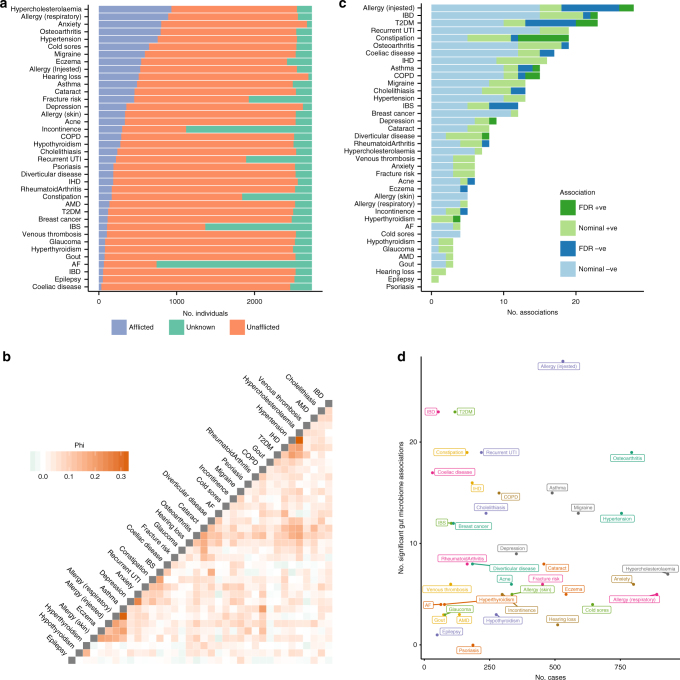
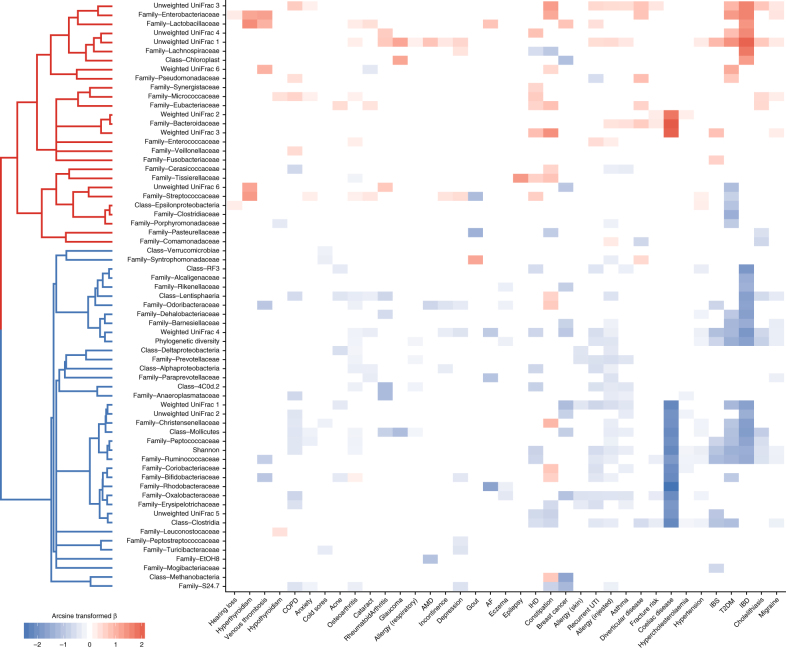
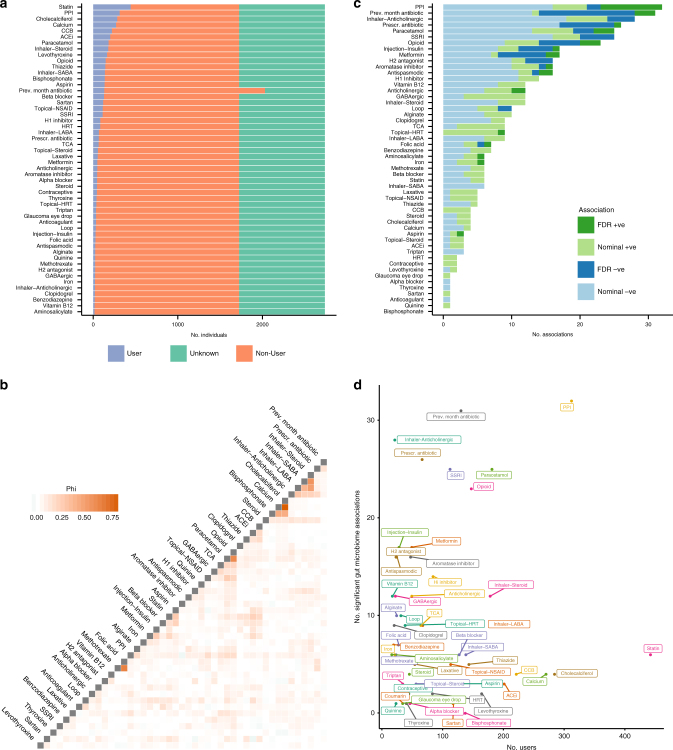
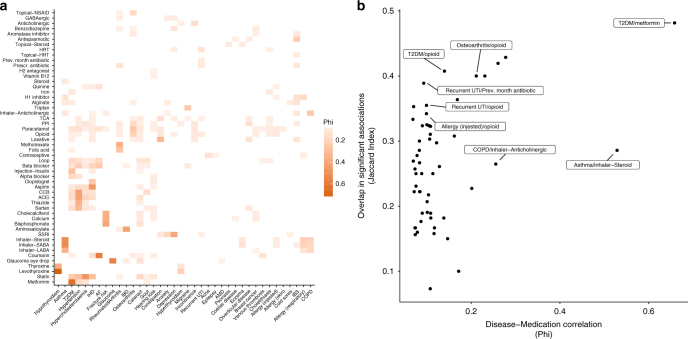
The human gut microbiome has been associated with many health factors but variability between studies limits exploration of effects between them. Gut microbiota profiles are available for >2700 members of the deeply phenotyped TwinsUK cohort, providing a uniform platform for such comparisons. Here, we present gut microbiota association analyses for 38 common diseases and 51 medications within the cohort. We describe several novel associations, highlight associations common across multiple diseases, and determine which diseases and medications have the greatest association with the gut microbiota. These results provide a reference for future studies of the gut microbiome and its role in human health.
Overview
The claims and statistics of this paper haven’t been checked yet.
Free: it reads the open-access text and checks the first 5 claims that cite a source we can check. Create a free account to check every claim.
Integrity signals
Registry
Cites
Statistics
Figures
Verification
Claims the paper makes
The claims and statistics of this paper haven’t been checked yet.
Free: it reads the open-access text and checks the first 5 claims that cite a source we can check. Create a free account to check every claim.
Claims other papers make about this one
Each is checked against this paper’s own text: does it say what the citing paper says it does?
The source backs part of the claim, not all of it — or backs it for a different population, condition or comparison.
In the citing paper
“Despite this, medication usage was a significant, albeit minor, contributor (R2 = 0.003) to microbial community composition, highlighting how xenobiotics can and do influence the gut microbiome (Jackson et al., 2018; Maier et al., 2018).”
From Gut microbiome stability and dynamics in healthy donors and patients with non-gastrointestinal cancers (2021) · cites this paper as Jackson et al., 2018
Experimental — accuracy not yet measured
Self-check
Percentages, sums and reported differences re-computed from the paper’s own numbers.
The self-check needs the paper’s full text.
Citations
Cites
QIIME allows analysis of high-throughput community sequencing data
Caporaso, J. G., Kuczynski, J., Stombaugh, J., Bittinger, K., Bushman, F. D., Costello, E. K., Fierer, N., Peña, A. G., Goodrich, J. K., Gordon, J. I., et al. (2010) · Nature Methods · doi:10.1038/nmeth.f.303 · Cited by 34,887
UCHIME improves sensitivity and speed of chimera detection
Edgar, R. C., Haas, B. J., Clemente, J. C., Quince, C., & Knight, R. (2011) · Bioinformatics · doi:10.1093/bioinformatics/btr381 · Cited by 15,114
VEGAN, a package of R functions for community ecology
Dixon, P. (2003) · Journal of Vegetation Science · doi:10.1111/j.1654-1103.2003.tb02228.x · Cited by 6,824
Linking long-term dietary patterns with gut microbial enterotypes
Wu, G. D., Chen, J., Hoffmann, C., Bittinger, K., Chen, Y.-Y., Keilbaugh, S. A., Bewtra, M., Knights, D., Walters, W. A., Knight, R., et al. (2011) · Science · doi:10.1126/science.1208344 · Cited by 6,513
The Treatment-Naive Microbiome in New-Onset Crohn’s Disease
Gevers, D., Kugathasan, S., Denson, L. A., Vázquez-Baeza, Y., Van Treuren, W., Ren, B., Schwager, E., Knights, D., Song, S. J., Yassour, M., et al. (2014) · Cell Host & Microbe · doi:10.1016/j.chom.2014.02.005 · Cited by 3,220
Human Genetics Shape the Gut Microbiome
Goodrich, J. K., Waters, J. L., Poole, A. C., Sutter, J. L., Koren, O., Blekhman, R., Beaumont, M., Van Treuren, W., Knight, R., Bell, J. T., et al. (2014) · Cell · doi:10.1016/j.cell.2014.09.053 · Cited by 3,164
Self-citationGut Microbiota in Human Adults with Type 2 Diabetes Differs from Non-Diabetic Adults
Larsen, N., Vogensen, F. K., van den Berg, F. W. J., Nielsen, D. S., Andreasen, A. S., Pedersen, B. K., Al-Soud, W. A., Sørensen, S. J., Hansen, L. H., & Jakobsen, M. (2010) · PLoS ONE · doi:10.1371/journal.pone.0009085 · Cited by 2,952
Environment dominates over host genetics in shaping human gut microbiota
Rothschild, D., Weissbrod, O., Barkan, E., Kurilshikov, A., Korem, T., Zeevi, D., Costea, P. I., Godneva, A., Kalka, I. N., Bar, N., et al. (2018) · Nature · doi:10.1038/nature25973 · Cited by 2,859
Pvclust: an R package for assessing the uncertainty in hierarchical clustering
Suzuki, R., & Shimodaira, H. (2006) · Bioinformatics · doi:10.1093/bioinformatics/btl117 · Cited by 2,451
Dethlefsen, L., & Relman, D. A. (2011) · Proceedings of the National Academy of Sciences · doi:10.1073/pnas.1000087107 · Cited by 2,421
Cited by
Items 201–300 of 619
García‐Santisteban, I., Cilleros‐Portet, A., Moyua-Ormazabal, E., Kurilshikov, A., Zhernakova, A., García‐Etxebarria, K., Fernández‐Jiménez, N., & Bilbao, J. R. (2020) · Nutrients · doi:10.3390/nu12051420 · Cited by 36
“Specific genetic variations have been linked to a vast array of medical conditions [12], including CeD.”
Mousa, S., Sarfraz, M., & Mousa, W. K. (2023) · Metabolites · doi:10.3390/metabo13050674 · Cited by 41
Identification of intestinal and fecal microbial biomarkers using a porcine social stress model
Nguyen, T. Q., Martínez-Álvaro, M., Lima, J., Auffret, M. D., Rutherford, K., Simm, G., Dewhurst, R. J., Baima, E. T., & Roehe, R. (2023) · Frontiers in Microbiology · doi:10.3389/fmicb.2023.1197371 · Cited by 40
Correcting index databases improves metagenomic studies
Méric, G., Wick, R. R., Watts, S. C., Holt, K. E., & Inouye, M. (2019) · doi:10.1101/712166 · Cited by 34
“251 252 Alpha diversity (within-sample diversity), which has been associated with various phenotypes in 253 different microbiomes [6, 31-33], is estimated directly from taxonomic composition data and 254 therefore showed significant differences between indices.”
DeClercq, V., Nearing, J. T., & Langille, M. G. I. (2021) · PLoS ONE · doi:10.1371/journal.pone.0261032 · Cited by 40
“However, more recent research across multiple cohorts suggests that in addition to antibiotics, PPIs and metformin, multiple commonly prescribed medications such as anticholinergic inhalers, paracetabol, selective serotonin reuptake inhibitors (SSRI), laxatives, and opioids are associated with the gut microbiota compo…”
The gut microbiome in systemic lupus erythematosus: lessons from rheumatic fever
Silverman, G. J., Azzouz, D. F., Gisch, N., & Amarnani, A. (2024) · Nature Reviews Rheumatology · doi:10.1038/s41584-023-01071-8 · Cited by 41
“…gut microbial ecosystem, and will help to define how the stability and balance of microbiota composition responds to insults from antibiotics 156–158 and dietary influences 153,159 , including food-preservatives and other additives in processed foods, which have been barely studied for their…”
Manipulating effects of fruits and vegetables on gut microbiota – a critical review
Luo, J., Xian, L., Bordiga, M., Brennan, C. S., & Xu, B. (2021) · International Journal of Food Science & Technology · doi:10.1111/ijfs.14927 · Cited by 41
Gut bacteria formation and influencing factors
Yang, J., Wu, J., Li, Y., Zhang, Y., Cho, W. C. S., Ju, X., van Schothorst, E. M., & Zheng, Y. (2021) · FEMS Microbiology Ecology · doi:10.1093/femsec/fiab043 · Cited by 37
The Role of Gut Microbiota in Hypertension Pathogenesis and the Efficacy of Antihypertensive Drugs
Xiong, Y., Xiong, Y., Zhu, P., Wang, Y., Yang, H., Zhou, R., Shu, Y., Zhou, H., & Li, Q. (2021) · Current Hypertension Reports · doi:10.1007/s11906-021-01157-2 · Cited by 37
Age-related diseases, therapies and gut microbiome: A new frontier for healthy aging
Barone, M., D’Amico, F., Rampelli, S., Brigidi, P., & Turroni, S. (2022) · Mechanisms of Ageing and Development · doi:10.1016/j.mad.2022.111711 · Cited by 35
Gut Microbiota and Lung Cancer: A Mendelian Randomization Study
Zhou, H., Liu, J., Shen, J., Fang, W., & Zhang, L. (2020) · JTO Clinical and Research Reports · doi:10.1016/j.jtocrr.2020.100042 · Cited by 36
Interplay Between Drug-Induced Liver Injury and Gut Microbiota: A Comprehensive Overview
Li, G., Hou, Y., Zhang, C., Zhou, X., Bao, F., Yang, Y. H., Chen, L., & Yu, D. (2024) · Cellular and Molecular Gastroenterology and Hepatology · doi:10.1016/j.jcmgh.2024.05.003 · Cited by 41
“54,57 It is important to acknowledge that these associations between drugs and microbes were evaluated predominantly for individual drugs.”
Unveiling the gut-eye axis: how microbial metabolites influence ocular health and disease
Nguyen, Y., Manis, J. R. Z., Ronczkowski, N. M., Bui, T., Oxenrider, A., Jadeja, R. N., & Thounaojam, M. C. (2024) · Frontiers in Medicine · doi:10.3389/fmed.2024.1377186 · Cited by 48
The Route to Palatable Fecal Microbiota Transplantation
Fadda, H. M. (2020) · AAPS PharmSciTech · doi:10.1208/s12249-020-1637-z · Cited by 37
Osteoarthritis: Prognosis and emerging therapeutic approach for disease management
Kumar, A., Palit, P., Thomas, S., Gupta, G., Ghosh, P., Goswami, R. P., Maity, T. K., & Choudhury, M. D. (2020) · Drug Development Research · doi:10.1002/ddr.21741 · Cited by 37
“Lentispherea had shown them to be negatively associated with the onset of OA and rheumatoid arthritis (Jackson et al., 2018).”
Rosener, B., Sayin, S., Oluoch, P. O., García-González, A. P., Mori, H., Walhout, A. J. M., & Mitchell, A. (2020) · eLife · doi:10.7554/elife.59831 · Cited by 32
Intestinal Microbiota in Common Chronic Inflammatory Disorders Affecting Children
Torun, A., Hupalowska, A., Trzonkowski, P., Kierkuś, J., & Pyrzyńska, B. (2021) · Frontiers in Immunology · doi:10.3389/fimmu.2021.642166 · Cited by 42
Oral microbial signatures associated with age and frailty in Canadian adults
DeClercq, V., Wright, R., Nearing, J. T., & Langille, M. G. I. (2024) · Scientific Reports · doi:10.1038/s41598-024-60409-8 · Cited by 37
“For instance, many of the health deficits that contribute to frailty (e.g. chronic disease, physical strength/muscle mass, and mental health conditions) have been associated with reduce diversity 49–54 .”
Elkrief, A., Routy, B., Derosa, L., Bolte, L. A., Wargo, J. A., McQuade, J. L., & Zitvogel, L. (2025) · American Society of Clinical Oncology Educational Book · doi:10.1200/edbk-25-472902 · Cited by 43
Shi, J., Yang, Y., Xu, W., Cai, H., Wu, J., Long, J., Cai, Q., Zheng, W., Flynn, C. R., Shu, X., et al. (2021) · Microorganisms · doi:10.3390/microorganisms9102118 · Cited by 34
Pharma[e]cology: How the Gut Microbiome Contributes to Variations in Drug Response
Trepka, K. R., Olson, C. A., Upadhyay, V., Zhang, C., & Turnbaugh, P. J. (2024) · The Annual Review of Pharmacology and Toxicology · doi:10.1146/annurev-pharmtox-022724-100847 · Cited by 36
“Fluoxetine treatment is also associated with decreased levels of Turicibacter in mice and human subjects (99, 100), providing initial support for the clinical relevance of the off-target effect of this medication.”
Genomic Determinants of Hypertension With a Focus on Metabolomics and the Gut Microbiome
Louca, P., Menni, C., & Padmanabhan, S. (2020) · American Journal of Hypertension · doi:10.1093/ajh/hpaa022 · Cited by 37
Self-citationMethod development for cross-study microbiome data mining: Challenges and opportunities
Su, X., Jing, G., Zhang, Y., & Wu, S. (2020) · Computational and Structural Biotechnology Journal · doi:10.1016/j.csbj.2020.07.020 · Cited by 32
“In addition, the same bio-markers can be associated with multiple different diseases, which may also result in errors in multiple disease classification [82].”
Alterations of Gut Microbiome, Metabolome, and Lipidome in Takayasu Arteritis
Fan, L., Chen, J., Pan, L., Xin, X., Geng, B., Yang, L., Wang, Q., Ma, W., Lou, Y., Bian, J., et al. (2022) · Arthritis & Rheumatology · doi:10.1002/art.42331 · Cited by 33
Intestinal microbiota: A promising therapeutic target for hypertension
Sun, D., Xiang, H., Yan, J., & He, L. (2022) · Frontiers in Cardiovascular Medicine · doi:10.3389/fcvm.2022.970036 · Cited by 31
Shannon, E., Conlon, M. A., & Hayes, M. (2022) · Nutrients · doi:10.3390/nu14102163 · Cited by 32
Liu, Q., Hao, H., Li, J., Zheng, T., Yao, Y., Tian, X., Zhang, Z., & Yi, H. (2023) · Nutrients · doi:10.3390/nu15030747 · Cited by 31
“In a population-based cohort, OA was found to be associated with a large number of gut microbiota features, and the abundance of gut microbes was negatively associated with the prevalence of OA [23].”
Zhang, P., Huang, P., Li, Y., Du, J., Luo, N., He, Y., Liu, J., He, G., Cui, S., Zhang, W., et al. (2024) · Aging and disease · doi:10.14336/ad.2023.0518 · Cited by 30
Orally Administered Drugs and Their Complicated Relationship with Our Gastrointestinal Tract
Bashiardes, S., & Christodoulou, C. (2024) · Microorganisms · doi:10.3390/microorganisms12020242 · Cited by 38
“The list does not end here as there are numerous additional examples of identifiable microbiome alterations brought on by drug use, such as in the case of laxatives, opioids, and paracetamol [70].”
A hidden confounder for microbiome studies: medications used years before sample collection
Aasmets, O., Taba, N., Krigul, K. L., Andreson, R., Estonian Biobank Research Team, Org, E., Metspalu, M., Metspalu, A., Milani, L., & Esko, T. (2025) · mSystems · doi:10.1128/msystems.00541-25 · Cited by 30
“Altogether, these observations are concordant with previous research and support the notion of drug usage as a significant factor in explaining inter-individual microbiome variability (5, 12, 18, 19).”
Metabolic Dependencies Underlie Interaction Patterns of Gut Microbiota During Enteropathogenesis
Dai, D., Wang, T., Wu, S., Gao, N., & Chen, W. (2019) · Frontiers in Microbiology · doi:10.3389/fmicb.2019.01205 · Cited by 30
“In recent decades, increasing evidence has strongly suggested that gut bacteria play an important role in human health and disease (Selber-Hnatiw et al., 2017; Jackson et al., 2018).”
The gut microbiome in solid organ transplantation
Arassi, M. B., Zeller, G., Karcher, N., Zimmermann, M., & Tönshoff, B. (2020) · Pediatric Transplantation · doi:10.1111/petr.13866 · Cited by 27
Brenner, L. A., Stamper, C. E., Hoisington, A. J., Stearns‐Yoder, K. A., Stanislawksi, M. A., Brostow, D. P., Hoffmire, C. A., Forster, J. E., Schneider, A. L., Postolache, T. T., et al. (2020) · Journal of Head Trauma Rehabilitation · doi:10.1097/htr.0000000000000615 · Cited by 30
Rocks, T., West, M. L., Hockey, M., Aslam, H., Lane, M. M., Loughman, A., Jacka, F. N., & Ruusunen, A. A. (2020) · Progress in Neuro-Psychopharmacology and Biological Psychiatry · doi:10.1016/j.pnpbp.2020.110201 · Cited by 31
Chen, Z., Maqbool, J., Sajid, F., Hussain, G., & Sun, T. (2020) · Microbial Pathogenesis · doi:10.1016/j.micpath.2020.104675 · Cited by 28
Towards multi-label classification: Next step of machine learning for microbiome research
Wu, S., Chen, Y., Li, Z., Li, J., Zhao, F., & Su, X. (2021) · Computational and Structural Biotechnology Journal · doi:10.1016/j.csbj.2021.04.054 · Cited by 34
Li, Y., Ibrahim, R. M. S., Chi, H., Xiao, T., Xia, W., Li, H., & Kang, Y. (2021) · Molecular Nutrition & Food Research · doi:10.1002/mnfr.202000885 · Cited by 30
Lapauw, L., Rutten, A., Dupont, J., Amini, N., Vercauteren, L., Derrien, M., Raes, J., & Gielen, E. (2024) · Journal of Cachexia Sarcopenia and Muscle · doi:10.1002/jcsm.13569 · Cited by 56
How the early life microbiome shapes immune programming in childhood asthma and allergies
Hoskinson, C., Petersen, C., & Turvey, S. E. (2024) · Mucosal Immunology · doi:10.1016/j.mucimm.2024.12.005 · Cited by 30
Alobaidi, S. A. (2025) · Frontiers in Medicine · doi:10.3389/fmed.2025.1675458 · Cited by 39
Sick Individuals and Sick (Microbial) Populations: Challenges in Epidemiology and the Microbiome
Renson, A., Herd, P., & Dowd, J. B. (2019) · Annual Review of Public Health · doi:10.1146/annurev-publhealth-040119-094423 · Cited by 34
Erber, A. C., Çetin, H., Berry, D., & Schernhammer, E. S. (2019) · International Journal of Neuroscience · doi:10.1080/00207454.2019.1702549 · Cited by 33
“gies, acne and irritable bowel syndrome [6,7], making”
Zünd, J. N., Plüss, S., Mujezinovic, D., Menzi, C., von Bieberstein, P. R., de Wouters, T., Lacroix, C., Leventhal, G. E., & Pugin, B. (2024) · ISME Communications · doi:10.1093/ismeco/ycae035 · Cited by 35
“Many commonly used medications have been shown to disrupt gut microbial communities [6, 72].”
A comprehensive review for gut microbes: technologies, interventions, metabolites and diseases
Qi, C., Wang, P., Fu, T., Lu, M., Cai, Y., Chen, X., & Cheng, L. (2021) · Briefings in Functional Genomics · doi:10.1093/bfgp/elaa029 · Cited by 29
Grahnemo, L., Nethander, M., Coward, E., Gabrielsen, M. E., Sree, S., Billod, J., Sjögren, K., Engstrand, L. G., Dekkers, K. F., Fall, T., et al. (2023) · Nature Communications · doi:10.1038/s41467-023-37978-9 · Cited by 34
“Confounders – age, sex, diet, smoking, medications, comorbidities, alcohol intake, and bowel movement quality – can in fl uence the GM composition and hence interfere with GM associations; therefore, adjusting for confounders is essential 20,21 .”
The Microbial Perspective: A Systematic Literature Review on Hypertension and Gut Microbiota
Tsiavos, A., Antza, C., Trakatelli, C., & Kotsis, V. (2024) · Nutrients · doi:10.3390/nu16213698 · Cited by 34
Obesity Measures and Dietary Parameters as Predictors of Gut Microbiota Phyla in Healthy Individuals
Bezek, K., Petelin, A., Pražnikar, J., Nova, E., Redondo, N., Marcos, A., & Pražnikar, Z. J. (2020) · Nutrients · doi:10.3390/nu12092695 · Cited by 29
Zyoud, S. H., Shakhshir, M. H., Abushanab, A. S., Al‐Jabi, S. W., Koni, A. A., Shahwan, M. J., Jairoun, A. A., & Taha, A. A. (2022) · World Journal of Gastroenterology · doi:10.3748/wjg.v28.i25.2981 · Cited by 28
Therapeutic applications of gut microbes in cardiometabolic diseases: current state and perspectives
Yuan, L., Li, Y., Chen, M., Xue, L., Wang, J., Ding, Y., Gu, Q., Zhang, J., Zhao, H., Xie, X., et al. (2024) · Applied Microbiology and Biotechnology · doi:10.1007/s00253-024-13007-7 · Cited by 31
“Most studies have found that the gut microbiota of patients with hypertension was identified a reduced alpha diversity (De la Cuesta-Zuluaga et al. 2018; Jackson et al. 2018; Sun et al. 2019; Verhaar et al. 2020).”
The Parkinson’s disease drug entacapone disrupts gut microbiome homeostasis via iron sequestration
Pereira, F. C., Ge, X., Kristensen, J. M., Kirkegaard, R. H., Maritsch, K., Szamosvári, D., Imminger, S., Seki, D., Shazzad, J. B., Zhu, Y., et al. (2024) · Nature Microbiology · doi:10.1038/s41564-024-01853-0 · Cited by 30
Novel cross-feeding human gut microbes metabolizing tryptophan to indole-3-propionate
Zünd, J. N., Mujezinovic, D., Reichlin, M., Plüss, S., Caflisch, M., Robinson, S. L., Lacroix, C., & Pugin, B. (2025) · Gut Microbes · doi:10.1080/19490976.2025.2501195 · Cited by 37
“5,16– 18 In turn, decreased indoles have been associated with inflammatory bowel diseases 19,20 as well as type 2 diabetes, 21 colon cancer 22 and multiple sclerosis, 23 among others.”
Nutrient competition predicts gut microbiome restructuring under drug perturbations
Shi, H., Newton, D., Nguyen, T. H., Estrela, S., Sánchez, J. M., Tu, M., Ho, P.-Y., Zeng, Q., DeFelice, B. C., Sonnenburg, J. L., et al. (2025) · Cell · doi:10.1016/j.cell.2025.10.038 · Cited by 32
Amedei, A., Capasso, C., Nannini, G., & Supuran, C. T. (2021) · Mediators of Inflammation · doi:10.1155/2021/6926082 · Cited by 29
“A recent clinical trial highlights the depletion of vancomycin-sensitive bacteria resulting in boosted radiotherapy’s antitumor immune response and inhibition of tumor growth [83].”
Yuan, Y., Xiong, R., Wu, Y., Ha, J. J., Wang, W., Han, X., & He, M. (2022) · EClinicalMedicine · doi:10.1016/j.eclinm.2022.101364 · Cited by 30
SAÚDE PÚBLICA: EPIDEMIOLOGIA, CLÍNICA E ESTRATÉGIAS DE TRATAMENTO
Oliveira, C. P. D. C., da Silva, A. A., Filho, P. S. D. P. S., & Mota, L. P. (2023) · Paulo Sérgio da Paz Silva Filho eBooks · doi:10.56161/sci.ed.20230128 · Cited by 24
Aboushaala, K. A., Chee, A., Adnan, D., Toro, S. J., Singh, H., Savoia, A., Dhillon, E. S., Yuh, C., Dourdourekas, J., Patel, I. K., et al. (2024) · JOR Spine · doi:10.1002/jsp2.70005 · Cited by 26
Self-citationLi, L., Wang, Q., Gao, Y., Liu, L., Duan, Y., Mao, D., & Luo, Y. (2020) · The Science of The Total Environment · doi:10.1016/j.scitotenv.2020.141415 · Cited by 28
Longitudinal analysis of the impact of oral contraceptive use on the gut microbiome
Hua, X., Cao, Y., Morgan, D. M., Miller, K. C., Chin, S. M., Bellavance, D. R., & Khalili, H. (2022) · Journal of Medical Microbiology · doi:10.1099/jmm.0.001512 · Cited by 28
“This pathway is particularly enriched in Gram- positive Enterococci, including Enterococcus faecium and Enterococcus hirae.”
InfluentialMicrobiome and Graves’ Orbitopathy
Masetti, G., & Ludgate, M. (2020) · European Thyroid Journal · doi:10.1159/000512255 · Cited by 27
Multiple-Disease Detection and Classification across Cohorts via Microbiome Search
Su, X., Jing, G., Sun, Z., Liu, L., Xu, Z. Z., McDonald, D. T., Wang, Z., Wang, H., Gonzalez, A., Zhang, Y., et al. (2020) · mSystems · doi:10.1128/msystems.00150-20 · Cited by 29
Biomarkers of Parkinson’s Disease: From Basic Research to Clinical Practice
Ma, Z.-L., Wang, Z., Zhang, F., Liu, H. P., Mao, L.-H., & Yuan, L. (2023) · Aging and Disease · doi:10.14336/ad.2023.1005 · Cited by 42
“However, the efficacy of intestinal markers can be affected by many confounding variables, and the related results are highly skewed [173].”
Hu, D., Yang, W., Mao, P., & Cheng, M. (2020) · Nutrition and Cancer · doi:10.1080/01635581.2020.1767166 · Cited by 26
Sun, L., Jiang, J., Zeng, Y., Zhu, J., Wang, S., Huang, D., & Cao, C. (2024) · Journal of Agricultural and Food Chemistry · doi:10.1021/acs.jafc.4c06030 · Cited by 25
Specific gut microbiota alterations in essential tremor and its difference from Parkinson’s disease
Zhang, P., Huang, P., Du, J., He, Y., Liu, J., He, G., Cui, S., Zhang, W., Li, G., & Chen, S. (2022) · npj Parkinson s Disease · doi:10.1038/s41531-022-00359-y · Cited by 26
Quorum sensing-based interactions among drugs, microbes, and diseases
Wu, S., Yang, S., Wang, M., Song, N., Feng, J., Wu, H., Yang, A., Liu, C., Li, Y., Guo, F., et al. (2022) · Science China Life Sciences · doi:10.1007/s11427-021-2121-0 · Cited by 24
“For example, the gut microbiome can directly affect the metabolism of a specific drug by altering the structure of an enzymatic transforming drug and changing its bioavailability, bioactivity, or toxicity (Jackson et al., 2018).”
Fu, L., Qian, Y., Shang, Z., Sun, X., Kong, X., & Gao, Y. (2022) · Frontiers in Medicine · doi:10.3389/fmed.2022.972518 · Cited by 29
Karim, M. R., Iqbal, S., Mohammad, S., Lee, J. H., Jung, D.-H., Mathiyalagan, R., Yang, D., Yang, D. U., & Kang, S. C. (2023) · Microbiological Research · doi:10.1016/j.micres.2023.127346 · Cited by 31
Anti-Acid Drug Treatment Induces Changes in the Gut Microbiome Composition of Hemodialysis Patients
Lin, Y.-T., Lin, T.-Y., Hung, S.-C., Liu, P.-Y., Wu, P.-H., Chuang, Y.-S., Hung, W.-C., Chiu, Y.-W., Kuo, M.-C., & Wu, C.-Y. (2021) · Microorganisms · doi:10.3390/microorganisms9020286 · Cited by 22
“Moreover, commonly used medications are associated with distinct gut microbiota signatures [2].”
The gut microbiome and ageing trajectories: mechanisms and clinical implications
Ticinesi, A., Maggi, S., Nouvenne, A., Zuliani, G., & Franceschi, C. (2026) · Nature Reviews Endocrinology · doi:10.1038/s41574-026-01236-x · Cited by 29
“Many cross-sectional or case–control studies conducted in humans show associations between specific gut microbiome traits and diseases 20,32,33 .”
Mucosa-Associated Microbial Profile Is Altered in Small Intestinal Bacterial Overgrowth
Li, J., Zhang, R., Ma, J., Tang, S., Li, Y., Li, Y., & Wan, J. (2021) · Frontiers in Microbiology · doi:10.3389/fmicb.2021.710940 · Cited by 28
Sun, Y., Ling, C.-J., Liu, L., Zhang, J., Wang, J., Tong, X., Hidayat, K., Chen, M., Chen, X., Zhou, H., et al. (2022) · Nutrients · doi:10.3390/nu14214540 · Cited by 27
Glaucoma Patients Have a Lower Abundance of Butyrate-Producing Taxa in the Gut
Vergroesen, J. E., Jarrar, Z. A., Weiß, S., Frost, F., Ansari, A. S., Nguyen, P., Kraaij, R., Medina‐Gómez, C., Völzke, H., Tost, F., et al. (2024) · Investigative Ophthalmology & Visual Science · doi:10.1167/iovs.65.2.7 · Cited by 25
Associations between gut microbiota and incident fractures in the FINRISK cohort
Grahnemo, L., Kambur, O., Lahti, L., Jousilahti, P., Niiranen, T., Knight, R. D., Salomaa, V. V., Havulinna, A. S., & Ohlsson, C. (2024) · npj Biofilms and Microbiomes · doi:10.1038/s41522-024-00530-8 · Cited by 23
“Several medications are known to affect the gut microbiota 50 .”
Stanislawski, M. A., Stamper, C. E., Stearns‐Yoder, K. A., Hoisington, A. J., Brostow, D. P., Forster, J. E., Postolache, T. T., Lowry, C. A., & Brenner, L. A. (2021) · Brain Behavior & Immunity - Health · doi:10.1016/j.bbih.2021.100346 · Cited by 25
“Our results confirm those of other studies that diabetes medications are associated with alterations in the overall gut microbiota (Jackson et al., 2018; Vallianou et al., 2019).”
InfluentialImpacts of early-life paraquat exposure on gut microbiota and body weight in adult mice
Li, Y., Zuo, Z., Zhang, B., Huan, L., Song, B., Zhou, Z., & Chang, X. (2021) · Chemosphere · doi:10.1016/j.chemosphere.2021.133135 · Cited by 22
Yin, J., Elias, R. M., Peng, L., Levonyak, N. S., Asokan, A., Christie, A. L., Kubiliun, N. M., Brugarolas, J., & Hammers, H. J. (2022) · Clinical Genitourinary Cancer · doi:10.1016/j.clgc.2022.01.017 · Cited by 24
Gut microbiome associated dysbiosis: Limited regimens and expanding horizons of phage therapy
Singha, B., Rawat, B. S., Venkataraman, R., Nair, T., Rosenn, E. H., & Soni, V. (2023) · Aspects of Molecular Medicine · doi:10.1016/j.amolm.2023.100029 · Cited by 26
Kidney transplantation and gut microbiota
Chen, Z. W., Chang, X., Ye, Q., Gao, Y., & Deng, R. (2024) · Clinical Kidney Journal · doi:10.1093/ckj/sfae214 · Cited by 30
Impact of curcumin on gut microbiome
Balaji, S., Jeyaraman, N., Jeyaraman, M., Ramasubramanian, S., Muthu, S., Santos, G. S., da Fonseca, L. F., & Lana, J. F. (2025) · World Journal of Experimental Medicine · doi:10.5493/wjem.v15.i1.100275 · Cited by 28
Microbes and medicines: interrelationships between pharmaceuticals and the gut microbiome
Al-Btoosh, S., Donnelly, R. F., & KELLY, S. C. (2025) · Gut Microbes · doi:10.1080/19490976.2025.2604867 · Cited by 28
Vuong, H. E., Coley, E. J. L., Kazantsev, M., Cooke, M. E., Rendon, T. K., Paramo, J., & Hsiao, E. Y. (2021) · Behavioural Brain Research · doi:10.1016/j.bbr.2021.113353 · Cited by 22
Oh, H., Min, U.-G., Jang, H.-J., Kim, N., Lim, J., Chalita, M., & Chun, J. (2022) · The Journal of Microbiology · doi:10.1007/s12275-022-1526-0 · Cited by 23
“The commonly used probiotic Lactobacillus has been clustered with disease-related microbial markers in previous studies on humans (Jackson et al., 2018).”
Toward understanding links between the microbiome and neurotransmitters
Lynch, J. B., & Hsiao, E. Y. (2023) · Annals of the New York Academy of Sciences · doi:10.1111/nyas.14993 · Cited by 22
Exploring the human gut microbiota targets in relation to the use of contemporary antidepressants
Lin, S.-K. K., Chen, H., Chen, C.-H., Chen, I., Lu, M., Hsu, C., Chiu, Y.-H., Wang, T.-Y., Chen, H., Chung, Y.-C. E., et al. (2023) · Journal of Affective Disorders · doi:10.1016/j.jad.2023.10.016 · Cited by 24
Ibrahim, K. S., Craft, J. A., Biswas, L., Spencer, J., & Shu, X. (2020) · Biochemical Pharmacology · doi:10.1016/j.bcp.2020.114151 · Cited by 23
Metformin to treat Huntington disease: A pleiotropic drug against a multi-system disorder
Trujillo-Del Río, C., Tortajada-Pérez, J., Gómez-Escribano, A. P., Casterá, F., Peiró, C., Millán, J. M., Herrero, M. J., & Vázquez-Manrique, R. P. (2022) · Mechanisms of Ageing and Development · doi:10.1016/j.mad.2022.111670 · Cited by 19
Larsson, A. H., Ericson, U., Jönsson, D., Miari, M., Athanasiadis, P., Baldanzi, G., Brunkwall, L., Hellstrand, S., Klinge, B., Melander, O., et al. (2024) · Scientific Reports · doi:10.1038/s41598-024-71571-4 · Cited by 27
“All other SSRI associated species in our study belong to Clostridia , and two of them belong to Clostri-diaceae family, which associated with SSRI use in an earlier study 11 .”
Medication use is associated with distinct microbial features in anxiety and depression
Dilmore, A. H., Kuplicki, R., McDonald, D. L., Kumar, M., Estaki, M., Youngblut, N. D., Tyakht, A., Ackermann, G. L., Blach, C., MahmoudianDehkordi, S., et al. (2025) · Molecular Psychiatry · doi:10.1038/s41380-024-02857-2 · Cited by 23
“Another study reported a decrease in Turicibacteraceae abundance in SSRI-users, which was also supported by a mouse study in which mice were given fl uoxetine [8, 9].”
Rassy, E., Dalban, C., Colomba, É., Derosa, L., Silva, C. A. C., Négrier, S., Chevreau, C., Gravis, G., Oudard, S. M., Laguerre, B., et al. (2022) · Clinical Genitourinary Cancer · doi:10.1016/j.clgc.2022.07.003 · Cited by 20
Han, M., Liao, W., Dong, Y., Bai, C., & Gai, Z. (2023) · Frontiers in Nutrition · doi:10.3389/fnut.2022.1081778 · Cited by 22
Interactions of Nanomaterials with Gut Microbiota and Their Applications in Cancer Therapy
Li, X., Wei, H., Qi, J., Ma, K., Luo, Y.-C., & Weng, L. (2023) · Sensors · doi:10.3390/s23094428 · Cited by 22
Wei, M., Hu, Z., Zhao, S., Wang, W., Lian, W., Lu, P., & Shi, T. (2024) · Heliyon · doi:10.1016/j.heliyon.2024.e31784 · Cited by 25
The Gut Microbiota: A Clinically Impactful Factor in Patient Health and Disease
Rodriguez, D. A., Peña-Vélez, R., Monjaráz, E. M. T., Mayans, J. R., & Ryan, P. M. (2018) · SN Comprehensive Clinical Medicine · doi:10.1007/s42399-018-0036-1 · Cited by 24
A Triple Threat? The Role of Diet, Nutrition, and the Microbiota in T1D Pathogenesis
Hamilton‐Williams, E. E., Lorca, G. L., Norris, J. M., & Dunne, J. L. (2021) · Frontiers in Nutrition · doi:10.3389/fnut.2021.600756 · Cited by 23
Schmid‐Hempel, P. (2021) · Oxford University Press eBooks · doi:10.1093/oso/9780198832140.003.0005 · Cited by 19
Beura, S., Kundu, P., Das, A. K., & Ghosh, A. (2024) · Scientific Reports · doi:10.1038/s41598-024-63718-0 · Cited by 19
Influence of Drugs and Toxins on Decomposition Dynamics: Forensic Implications
Li, S., Hu, Z., Shao, Y., Zhang, G., Wang, Z., Guo, Y., Wang, Y., Cui, W., Wang, Y., & Ren, L. (2024) · Molecules · doi:10.3390/molecules29225221 · Cited by 25
Mobeen, F., Sharma, V., & Prakash, T. (2020) · 3 Biotech · doi:10.1007/s13205-020-02376-1 · Cited by 24
The comparison of microbial communities in thyroid tissues from thyroid carcinoma patients
Liu, C., Chen, S., Zhang, S.-Y., Wang, J., Tang, X., Yang, K., & Li, X. (2021) · The Journal of Microbiology · doi:10.1007/s12275-021-1271-9 · Cited by 21
Role of the gut microbiome in cardiovascular drug response: The potential for clinical application
Steiner, H. E., Gee, K., Giles, J. B., Knight, H., Hurwitz, B. L., & Karnes, J. H. (2021) · Pharmacotherapy The Journal of Human Pharmacology and Drug Therapy · doi:10.1002/phar.2650 · Cited by 22
Metadata
- Authors
- Jackson, M. A., Verdi, S., Maxan, M.-E., Shin, C. M., Zierer, J., Bowyer, R. C. E., Martin, T., Williams, F. M. K., Menni, C., Bell, J. T., Spector, T. D., & Steves, C. J.
- Affiliations
- King's College London (GB)
- King's College Hospital NHS Foundation Trust (GB)
- Seoul National University (KR)
- Corresponding author
- Jackson, Matthew A.
- Steves, Claire J.
- ORCID
- Venue
- Nature Communications
- Published
- 2018-07-09
- Volume
- 9
- Issue
- 1
- Pages
- 2655-2655
- ISSN
- 2041-1723 (ISSN-L)
- PMC
- PMC6037668
- OpenAlex
- W2810208030
- Semantic Scholar
- b8cab9281df01621882cbb108ab57830cf7dffc3
- Cited by
- 616
- References
- 30
- Citations by year
- 2026: 46 · 2025: 50 · 2024: 85 · 2023: 109 · 2022: 73 · 2021: 106 · 2020: 86 · 2019: 48 · 2018: 12
- FWCI
- 22.59
- Type
- journal article
- Language
- en
- Open access
- gold
- doi.org
- Licence
- cc-by
- creativecommons.org/licenses/by/4.0 (tdm)
- creativecommons.org/licenses/by/4.0 (vor)
- Locations
- Nature Communications (publishedVersion, cc-by)
- Europe PMC (PubMed Central) (publishedVersion, cc-by)
- PubMed Central (publishedVersion, cc-by)
- PubMed (publishedVersion)
- Research Portal (King's College London) (submittedVersion, cc-by)
- RePEc: Research Papers in Economics (submittedVersion)
- Archivio Istituzionale della Ricerca (Universita Degli Studi Di Milano) (submittedVersion, other-oa)
- DOAJ (DOAJ: Directory of Open Access Journals) (submittedVersion)
- DOAJ (DOAJ: Directory of Open Access Journals) (submittedVersion, cc-by-sa)
- PuSH - Publication Server of Helmholtz Zentrum München (submittedVersion)
- Funders
- Wellcome Trust (MR/M016560/1, WT081878MA)
- Chronic Disease Research Foundation
- National Institute for Health and Care Research (NF-SI-0507-10228, MR/M016560/1, NF-SI-0514-10027)
- King's College London
- National Institutes of Health (1dp2od007444-01)
- Medical Research Council (MR/M016560/1, MR/N01183X/1)
- National Institute of Diabetes and Digestive and Kidney Diseases (R01DK093595)
- Topics
- Life Sciences › Biochemistry, Genetics and Molecular Biology › Molecular Biology › Gut microbiota and health
- Life Sciences › Biochemistry, Genetics and Molecular Biology › Genetics › Genetic Associations and Epidemiology
- Health Sciences › Dentistry › Periodontics › Oral microbiology and periodontitis research
- Keywords
- gut microbiota, human microbiome, common diseases, prescription drugs
- MeSH terms
- Gastrointestinal Microbiome, Aged, Bacteria, Cross-Sectional Studies, Disease, Drug Therapy, Feces, Female, Humans, Male, Middle Aged, Surveys and Questionnaires, RNA, Ribosomal, 16S, Cohort Studies, Gastrointestinal Tract
About these checks
Registry, retraction, Cites and statistics results are computed, not judged, with one exception: a printed reference that no index lists is read once by a model before it counts as a citation error. Claims are extracted by a model and kept only when their quote appears verbatim in the text; each cited source is then checked, with a model’s help, for whether it says what the claim relies on. Those verdicts can be wrong — read the claim’s quote and the cited source before relying on one.
Statistics and arithmetic are recomputed, not judged.
Confidence bands are shown only for fields calibrated on our annotated test set. None is calibrated yet, so no band is shown.
What counts as a claim ›How we measure confidence ›How we check this ›
Are you an author, or do you see a problem with this page? Request a review
Data sources
Bibliographic data: Semantic Scholar, OpenAlex, Crossref.
Contains information from the Semantic Scholar Academic Graph Datasets, made available under the ODC Attribution License (ODC-BY 1.0).
Semantic Scholar’s data is described in: Kinney, R., et al. (2023). The Semantic Scholar Open Data Platform. arXiv:2301.10140.
