

Gut microbiota associations with common diseases and prescription medications in a population-based cohort
Open accessThe DOI matches its Crossref record; 29 of the 30 references it cites were found in a registry or an index.
Abstract
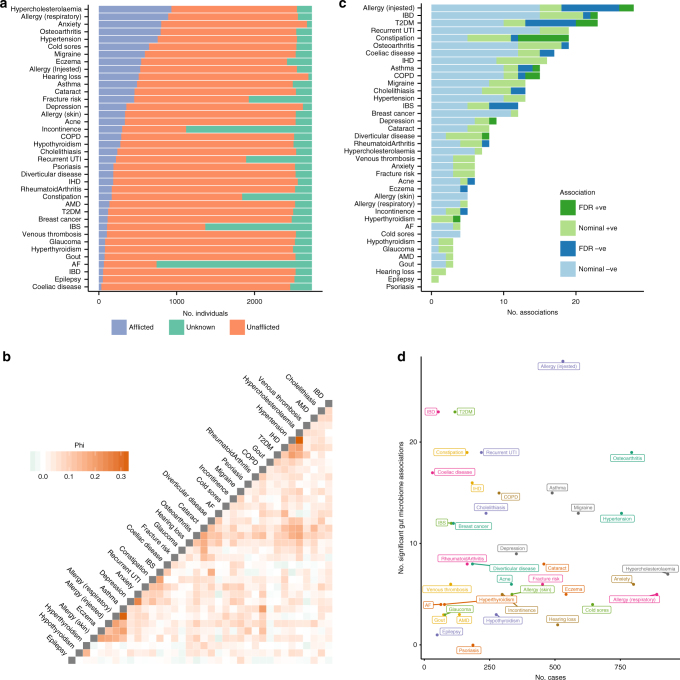
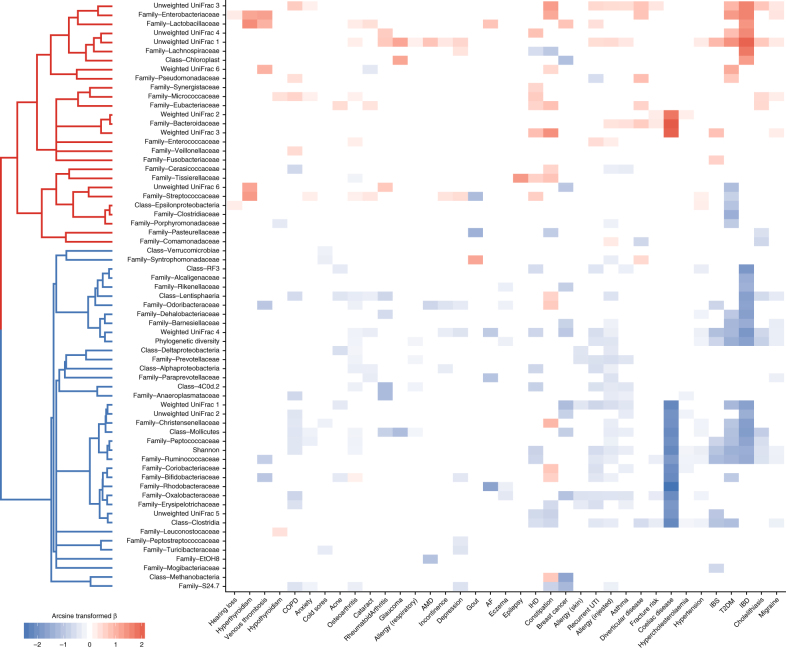
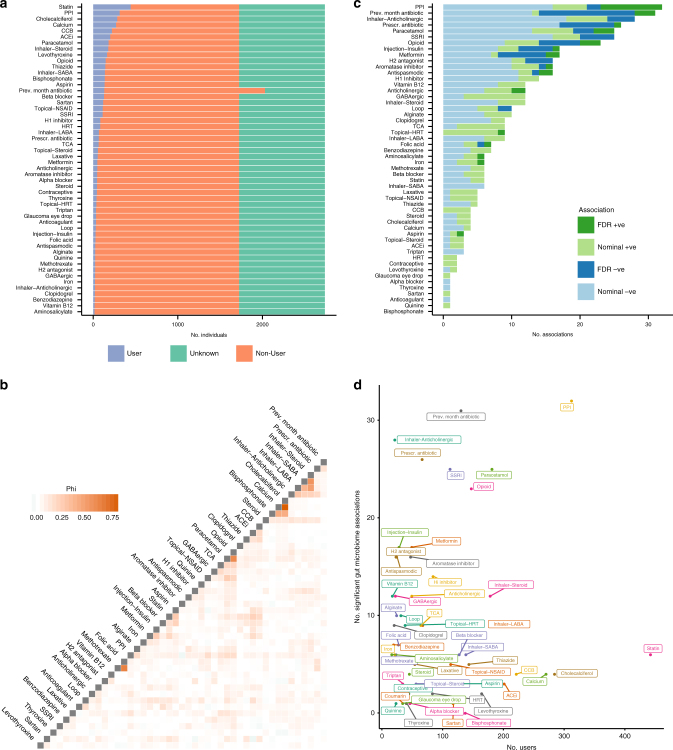
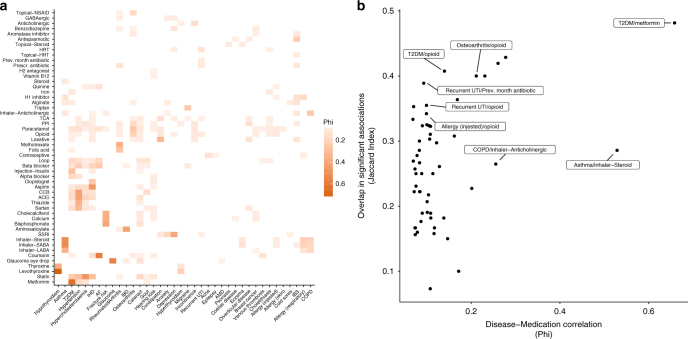
The human gut microbiome has been associated with many health factors but variability between studies limits exploration of effects between them. Gut microbiota profiles are available for >2700 members of the deeply phenotyped TwinsUK cohort, providing a uniform platform for such comparisons. Here, we present gut microbiota association analyses for 38 common diseases and 51 medications within the cohort. We describe several novel associations, highlight associations common across multiple diseases, and determine which diseases and medications have the greatest association with the gut microbiota. These results provide a reference for future studies of the gut microbiome and its role in human health.
Overview
The claims and statistics of this paper haven’t been checked yet.
Free: it reads the open-access text and checks the first 5 claims that cite a source we can check. Create a free account to check every claim.
Integrity signals
Registry
Cites
Statistics
Figures
Verification
Claims the paper makes
The claims and statistics of this paper haven’t been checked yet.
Free: it reads the open-access text and checks the first 5 claims that cite a source we can check. Create a free account to check every claim.
Claims other papers make about this one
Each is checked against this paper’s own text: does it say what the citing paper says it does?
The source backs part of the claim, not all of it — or backs it for a different population, condition or comparison.
In the citing paper
“Despite this, medication usage was a significant, albeit minor, contributor (R2 = 0.003) to microbial community composition, highlighting how xenobiotics can and do influence the gut microbiome (Jackson et al., 2018; Maier et al., 2018).”
From Gut microbiome stability and dynamics in healthy donors and patients with non-gastrointestinal cancers (2021) · cites this paper as Jackson et al., 2018
Experimental — accuracy not yet measured
Self-check
Percentages, sums and reported differences re-computed from the paper’s own numbers.
The self-check needs the paper’s full text.
Citations
Cites
QIIME allows analysis of high-throughput community sequencing data
Caporaso, J. G., Kuczynski, J., Stombaugh, J., Bittinger, K., Bushman, F. D., Costello, E. K., Fierer, N., Peña, A. G., Goodrich, J. K., Gordon, J. I., et al. (2010) · Nature Methods · doi:10.1038/nmeth.f.303 · Cited by 34,887
UCHIME improves sensitivity and speed of chimera detection
Edgar, R. C., Haas, B. J., Clemente, J. C., Quince, C., & Knight, R. (2011) · Bioinformatics · doi:10.1093/bioinformatics/btr381 · Cited by 15,114
VEGAN, a package of R functions for community ecology
Dixon, P. (2003) · Journal of Vegetation Science · doi:10.1111/j.1654-1103.2003.tb02228.x · Cited by 6,824
Linking long-term dietary patterns with gut microbial enterotypes
Wu, G. D., Chen, J., Hoffmann, C., Bittinger, K., Chen, Y.-Y., Keilbaugh, S. A., Bewtra, M., Knights, D., Walters, W. A., Knight, R., et al. (2011) · Science · doi:10.1126/science.1208344 · Cited by 6,513
The Treatment-Naive Microbiome in New-Onset Crohn’s Disease
Gevers, D., Kugathasan, S., Denson, L. A., Vázquez-Baeza, Y., Van Treuren, W., Ren, B., Schwager, E., Knights, D., Song, S. J., Yassour, M., et al. (2014) · Cell Host & Microbe · doi:10.1016/j.chom.2014.02.005 · Cited by 3,220
Human Genetics Shape the Gut Microbiome
Goodrich, J. K., Waters, J. L., Poole, A. C., Sutter, J. L., Koren, O., Blekhman, R., Beaumont, M., Van Treuren, W., Knight, R., Bell, J. T., et al. (2014) · Cell · doi:10.1016/j.cell.2014.09.053 · Cited by 3,164
Self-citationGut Microbiota in Human Adults with Type 2 Diabetes Differs from Non-Diabetic Adults
Larsen, N., Vogensen, F. K., van den Berg, F. W. J., Nielsen, D. S., Andreasen, A. S., Pedersen, B. K., Al-Soud, W. A., Sørensen, S. J., Hansen, L. H., & Jakobsen, M. (2010) · PLoS ONE · doi:10.1371/journal.pone.0009085 · Cited by 2,952
Environment dominates over host genetics in shaping human gut microbiota
Rothschild, D., Weissbrod, O., Barkan, E., Kurilshikov, A., Korem, T., Zeevi, D., Costea, P. I., Godneva, A., Kalka, I. N., Bar, N., et al. (2018) · Nature · doi:10.1038/nature25973 · Cited by 2,859
Pvclust: an R package for assessing the uncertainty in hierarchical clustering
Suzuki, R., & Shimodaira, H. (2006) · Bioinformatics · doi:10.1093/bioinformatics/btl117 · Cited by 2,451
Dethlefsen, L., & Relman, D. A. (2011) · Proceedings of the National Academy of Sciences · doi:10.1073/pnas.1000087107 · Cited by 2,421
Cited by
Items 601–619 of 619
Radder, J. E., Li, K., Saul, M., Nouraie, M., Gentry, H., Patel, A., Kessinger, C. J., Fitch, A. C., Dunlap, D. G., Kitsios, G. D., et al. (2026) · Frontiers in Public Health · doi:10.3389/fpubh.2026.1847540
Ni, M., Wang, Q., Ye, T., Lei, H., Wang, Y., & Yuan, Y. (2026) · Journal of Ovarian Research · doi:10.1186/s13048-026-02164-0
“…multi-omics integration (metagenomics, metabolomics, single-cell transcriptomics) should map “microbiota-metabolite-host tissue” interaction networks to systematically elucidate how key molecules like SCFAs and BAs remotely regulate ovarian microenvironments and hypothalamic function [182].”
Natasha, E. E., Mulder, D., Fehse, L., Winter, N. R., Fisch, L., Welzel, M., Bang, C., Meinert, S., Flinkenflügel, K., Borgers, T., et al. (2026) · Communications Medicine · doi:10.1038/s43856-026-01782-5 · Cited by 2
“Forexample,populationstudieshaveexaminedtheeffectsofanti-depressantsonthegutmicrobiomewithoutconsideringdiseasestatus 12,13 .”
InfluentialMengoli, M., Boccia, F., Barone, M., Mele, F., Bertolino, L., Ratta, E. D., Feo, M. D., Durante‐Mangoni, E., Turroni, S., Brigidi, P., et al. (2026) · Microbiology Spectrum · doi:10.1128/spectrum.01908-25
Mental health and gut-brain crosstalk: implications for depression and Alzheimer's disease
Skourti, K., Katsaitis, F., Pavlidi, P., Anesti, M., Balla, J., Emvalomatis, A., Kokras, N., Dalla, C., & Sotiropoulos, I. (2026) · Neuroscience Applied · doi:10.1016/j.nsa.2026.107023
“…provokes specific taxa alterations depended on the studied population, such as a positive association with Eubacterium ramulus abundance and a negative correlation with Turici-bacteraceae family levels, in Dutch and TwinsUK cohorts, respectively (Jackson et al., 2018; Vich Vila et al., 2020).”
Li, T., Chang, Y., Tang, S., Chen, Y., Li, X., & Wang, Y. (2026) · Brain Research Bulletin · doi:10.1016/j.brainresbull.2026.112062
The impact of climatic extreme temperatures on gut microbiome-mediated cardio-metabolic health
Shukla, A., Rughwani, D., Aditya, A. K., & Ray, A. K. (2026) · Environmental Pollution · doi:10.1016/j.envpol.2026.128877
Beyond the Lungs: ICU Oral Care and Gut Resilience—A Hypothesis-Generating Narrative Review
Sun, X., Jin, T., Zhao, X., & Zhang, J. (2026) · Microorganisms · doi:10.3390/microorganisms14081772
“There is a marked increase in facultative anaerobes typically enriched in the upper gastrointestinal tract and oral cavity, such as Enterococcus , Streptococcus , Staphylococcus , and Escherichia coli [30–34,94 ].”
Diversity of the Gastrointestinal Microbiome
Himani, K. M., Mishra, S. K., Kar, S., & Shaik, R. (2026) · IGI Global eBooks · doi:10.4018/979-8-3373-3079-2.ch002
Thanatomicrobiome analysis to estimate postmortem time interval (PMI)
Medina-Paz, F., Kryvorutsky, E., & Zapico, S. C. (2026) · Elsevier eBooks · doi:10.1016/b978-0-443-40634-8.00026-x
Gut microbiota on sleep disorders throughout the lifespan
Zhang, Z., Li, Q., Wang, X., Wang, W., & Zhang, F. (2026) · Microbiological Research · doi:10.1016/j.micres.2026.128724 · Cited by 1
Gut, Oral, and Fungal Microbiota in Hypertension: A Multi-Compartment Systematic Review
Carini, F., Sorce, A., Ciuppa, M. E., David, S., Giammanco, M., Carlo, P. D., Evola, S., Tomasello, G., Mulè, G., & Carollo, C. (2026) · International Journal of Molecular Sciences · doi:10.3390/ijms27188029
“…in the corpus adjusts for medication at the level of pharmacological class (Table S4)—a concern given that population-based analyses relating gut microbiota to prescription drug use identify antihypertensive classes among the medications most strongly associated with compositional differences [66].”
Porwal, M., Malviya, R., Chandra, P., Sridhar, S. B., Shareef, J., Wadhwa, T., Tripathy, D. B., & Arockiam, D. (2026) · Journal of Neuroimmunology · doi:10.1016/j.jneuroim.2026.579099
Drug–microbiome–host interactions: antimicrobial effects of non-antibiotic compounds
de la Cuesta‐Zuluaga, J., Patil, K. R., & Maier, L. (2026) · Nature Reviews Gastroenterology & Hepatology · doi:10.1038/s41575-026-01258-w
Gupta, K. H., Israni, A. K., & Onyeaghala, G. C. (2026) · Current Opinion in Organ Transplantation · doi:10.1097/mot.0000000000001314
Wang, X., Huang, M., & Xu, X. (2026) · Pharmaceuticals · doi:10.3390/ph19091487
“A growing number of studies have demonstrated that hypertension is accompanied by significant gut microbiota dysbiosis, including shifts in short-chain-fatty-acid-producing bacterial populations [13].”
Çapaş, M., Bedir, E. Y., Ergan, K., Gedik, B. A., Dener, B., & Ağagündüz, D. (2026) · Frontiers in Nutrition · doi:10.3389/fnut.2026.1913324
Huang, Z., Zhang, Y., Wu, Q., & Meng, S. (2026) · Frontiers in Nutrition · doi:10.3389/fnut.2026.1969024
Han, D., 翁嘉翎, Han, M., Miao, L., Ding, H., Sun, H., & Li, M. (2026) · Food Wellness · doi:10.1016/j.foodw.2026.100075
Metadata
- Authors
- Jackson, M. A., Verdi, S., Maxan, M.-E., Shin, C. M., Zierer, J., Bowyer, R. C. E., Martin, T., Williams, F. M. K., Menni, C., Bell, J. T., Spector, T. D., & Steves, C. J.
- Affiliations
- King's College London (GB)
- King's College Hospital NHS Foundation Trust (GB)
- Seoul National University (KR)
- Corresponding author
- Jackson, Matthew A.
- Steves, Claire J.
- ORCID
- Venue
- Nature Communications
- Published
- 2018-07-09
- Volume
- 9
- Issue
- 1
- Pages
- 2655-2655
- ISSN
- 2041-1723 (ISSN-L)
- PMC
- PMC6037668
- OpenAlex
- W2810208030
- Semantic Scholar
- b8cab9281df01621882cbb108ab57830cf7dffc3
- Cited by
- 616
- References
- 30
- Citations by year
- 2026: 46 · 2025: 50 · 2024: 85 · 2023: 109 · 2022: 73 · 2021: 106 · 2020: 86 · 2019: 48 · 2018: 12
- FWCI
- 22.59
- Type
- journal article
- Language
- en
- Open access
- gold
- doi.org
- Licence
- cc-by
- creativecommons.org/licenses/by/4.0 (tdm)
- creativecommons.org/licenses/by/4.0 (vor)
- Locations
- Nature Communications (publishedVersion, cc-by)
- Europe PMC (PubMed Central) (publishedVersion, cc-by)
- PubMed Central (publishedVersion, cc-by)
- PubMed (publishedVersion)
- Research Portal (King's College London) (submittedVersion, cc-by)
- RePEc: Research Papers in Economics (submittedVersion)
- Archivio Istituzionale della Ricerca (Universita Degli Studi Di Milano) (submittedVersion, other-oa)
- DOAJ (DOAJ: Directory of Open Access Journals) (submittedVersion)
- DOAJ (DOAJ: Directory of Open Access Journals) (submittedVersion, cc-by-sa)
- PuSH - Publication Server of Helmholtz Zentrum München (submittedVersion)
- Funders
- Wellcome Trust (MR/M016560/1, WT081878MA)
- Chronic Disease Research Foundation
- National Institute for Health and Care Research (NF-SI-0507-10228, MR/M016560/1, NF-SI-0514-10027)
- King's College London
- National Institutes of Health (1dp2od007444-01)
- Medical Research Council (MR/M016560/1, MR/N01183X/1)
- National Institute of Diabetes and Digestive and Kidney Diseases (R01DK093595)
- Topics
- Life Sciences › Biochemistry, Genetics and Molecular Biology › Molecular Biology › Gut microbiota and health
- Life Sciences › Biochemistry, Genetics and Molecular Biology › Genetics › Genetic Associations and Epidemiology
- Health Sciences › Dentistry › Periodontics › Oral microbiology and periodontitis research
- Keywords
- gut microbiota, human microbiome, common diseases, prescription drugs
- MeSH terms
- Gastrointestinal Microbiome, Aged, Bacteria, Cross-Sectional Studies, Disease, Drug Therapy, Feces, Female, Humans, Male, Middle Aged, Surveys and Questionnaires, RNA, Ribosomal, 16S, Cohort Studies, Gastrointestinal Tract
About these checks
Registry, retraction, Cites and statistics results are computed, not judged, with one exception: a printed reference that no index lists is read once by a model before it counts as a citation error. Claims are extracted by a model and kept only when their quote appears verbatim in the text; each cited source is then checked, with a model’s help, for whether it says what the claim relies on. Those verdicts can be wrong — read the claim’s quote and the cited source before relying on one.
Statistics and arithmetic are recomputed, not judged.
Confidence bands are shown only for fields calibrated on our annotated test set. None is calibrated yet, so no band is shown.
What counts as a claim ›How we measure confidence ›How we check this ›
Are you an author, or do you see a problem with this page? Request a review
Data sources
Bibliographic data: Semantic Scholar, OpenAlex, Crossref.
Contains information from the Semantic Scholar Academic Graph Datasets, made available under the ODC Attribution License (ODC-BY 1.0).
Semantic Scholar’s data is described in: Kinney, R., et al. (2023). The Semantic Scholar Open Data Platform. arXiv:2301.10140.
