

The DOI matches its Crossref record; 94 of the 94 references it cites were found in a registry or an index.
Role of VTA dopamine neurons and neuroligin 3 in sociability traits related to nonfamiliar conspecific interaction
Open accessPublished version of a preprint
Abstract
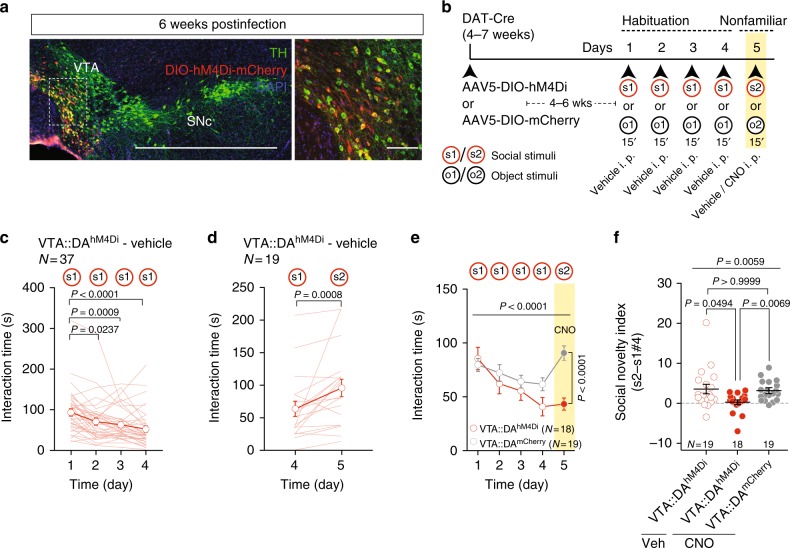
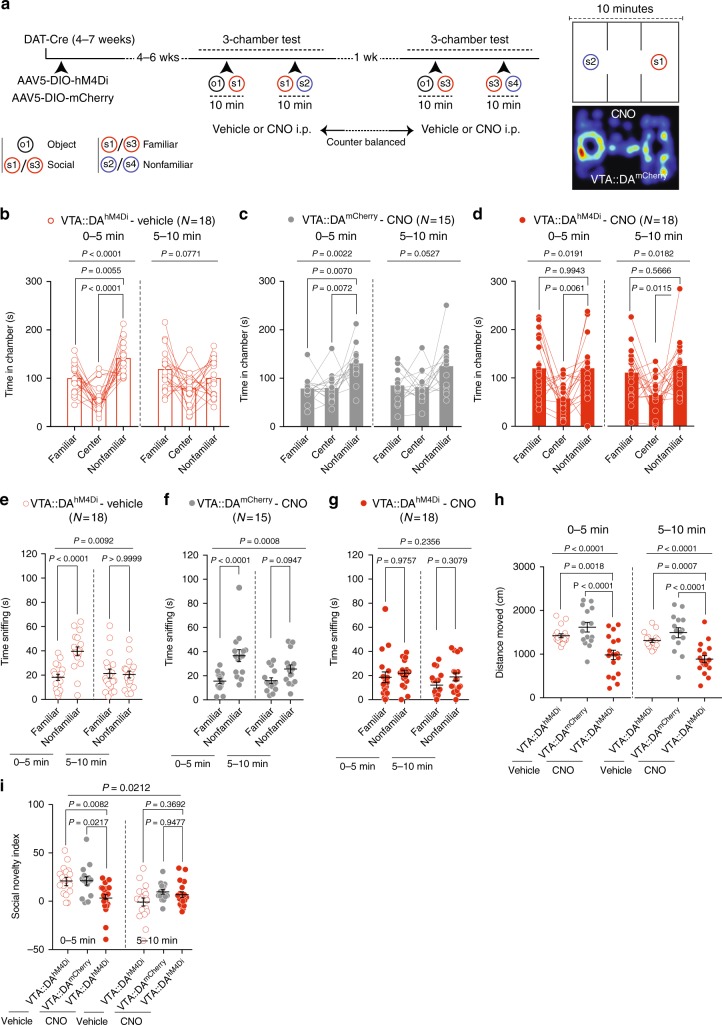
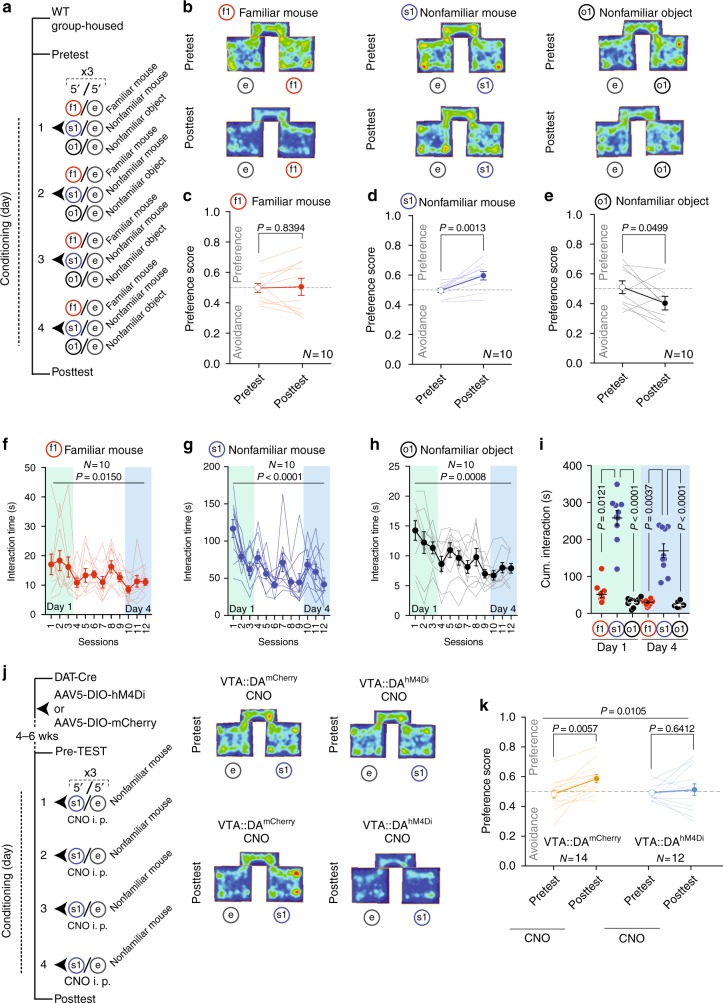
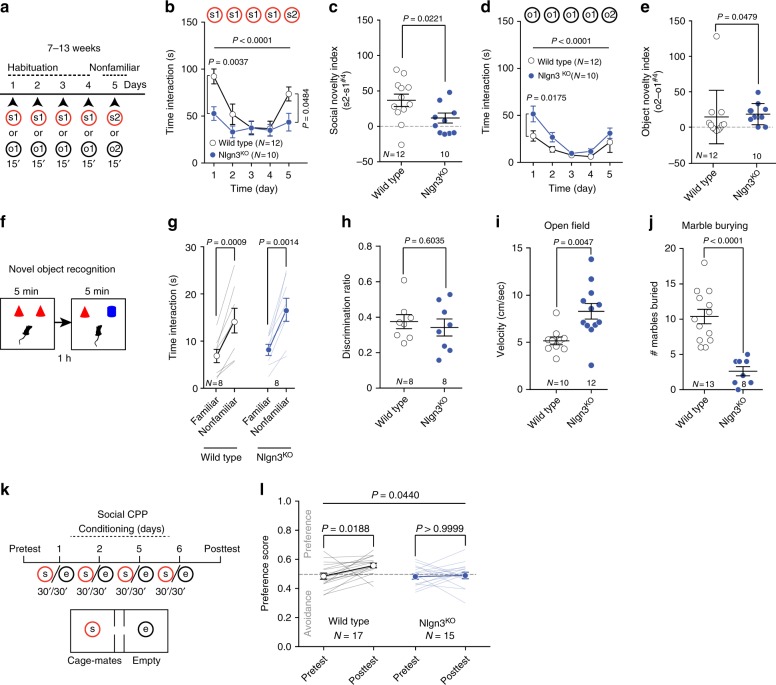
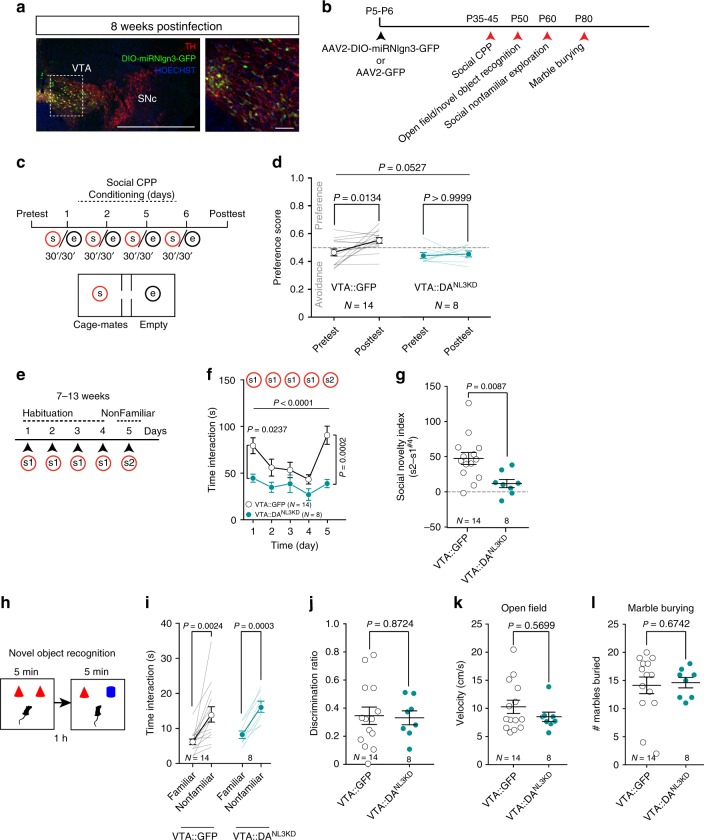
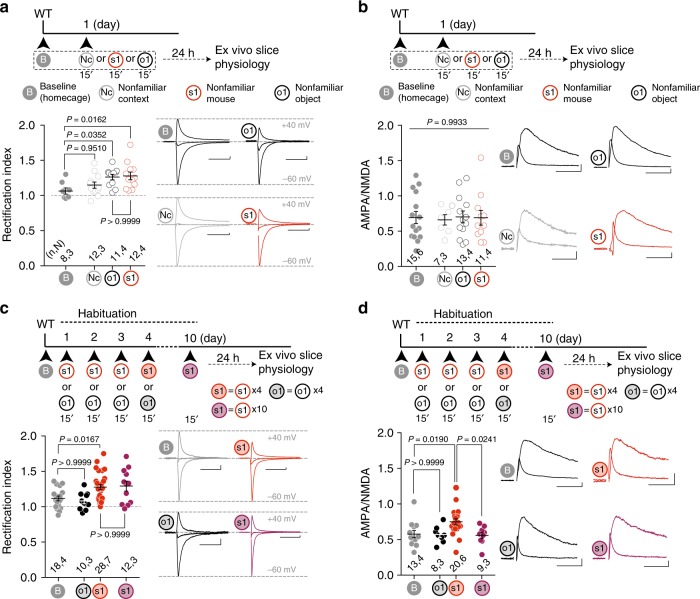
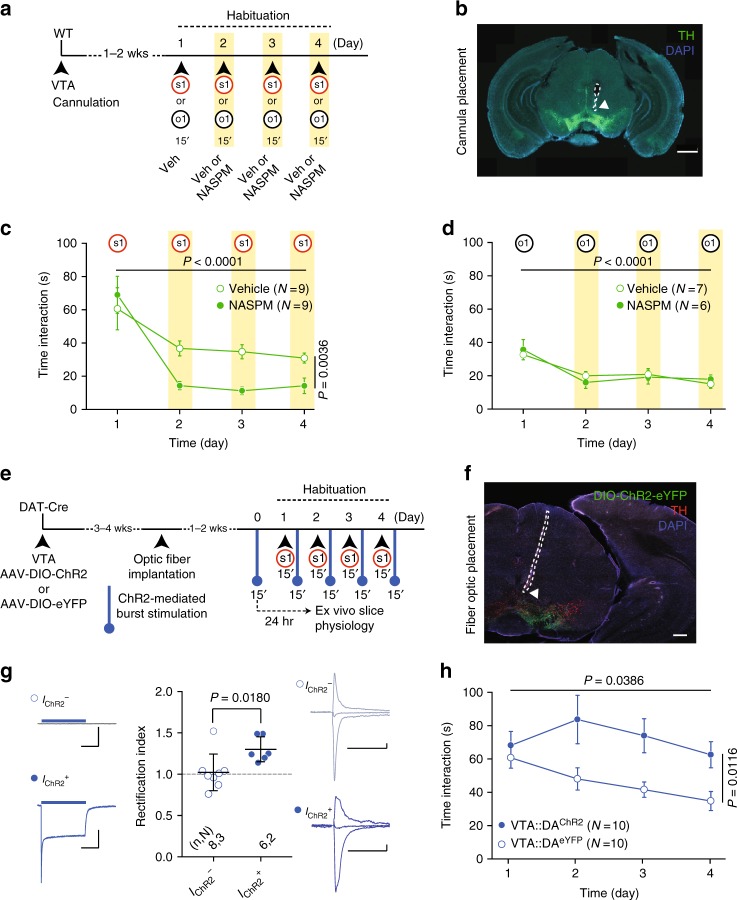
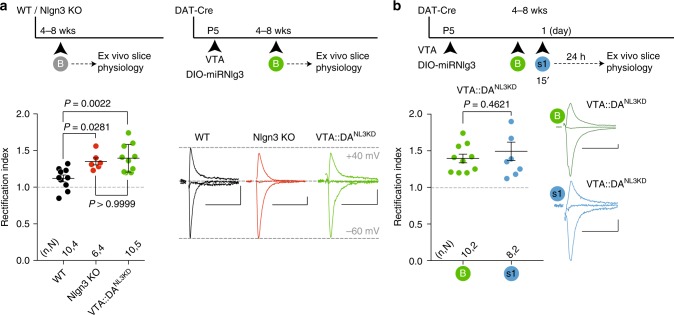
Atypical habituation and aberrant exploration of novel stimuli have been related to the severity of autism spectrum disorders (ASDs), but the underlying neuronal circuits are unknown. Here we show that chemogenetic inhibition of dopamine (DA) neurons of the ventral tegmental area (VTA) attenuates exploration toward nonfamiliar conspecifics and interferes with the reinforcing properties of nonfamiliar conspecific interaction in mice. Exploration of nonfamiliar stimuli is associated with the insertion of GluA2-lacking AMPA receptors at excitatory synapses on VTA DA neurons. These synaptic adaptations persist upon repeated exposure to social stimuli and sustain conspecific interaction. Global or VTA DA neuron-specific loss of the ASD-associated synaptic adhesion molecule neuroligin 3 alters the behavioral response toward nonfamiliar conspecifics and the reinforcing properties of conspecific interaction. These behavioral deficits are accompanied by an aberrant expression of AMPA receptors and an occlusion of synaptic plasticity. Altogether, these findings link impaired exploration of nonfamiliar conspecifics to VTA DA neuron dysfunction in mice.
Overview
The claims and statistics of this paper haven’t been checked yet.
Run the check — free, no account needed. It reads the open-access text and checks the sources it cites.
Integrity signals
Registry
Cites
Statistics
Figures
Verification
Claims the paper makes
The claims and statistics of this paper haven’t been checked yet.
Run the check — free, no account needed. It reads the open-access text and checks the sources it cites.
Claims other papers make about this one
Each is checked against this paper’s own text: does it say what the citing paper says it does?
The source backs part of the claim, not all of it — or backs it for a different population, condition or comparison.
In the citing paper
“Specifically, research has demonstrated that VTA dopaminergic neurons become activated in rodents engaged in conspecific interactions, and increased activity in these neurons promotes social reinforcement learning (Bariselli et al., 2018; D ¨ olen et al., 2013; Soli ´ e et al., 2022).”
From Convergence of oxytocin and dopamine signalling in neuronal circuits: Insights into the neurobiology of social interactions across species (2024) · cites this paper as Bariselli et al., 2018
Experimental — accuracy not yet measuredThe source backs part of the claim, not all of it — or backs it for a different population, condition or comparison.
In the citing paper
“Dopaminergic neurons of the VTA, which extend their projections to the nucleus accumbens (NAc), play a pivotal role in regulating both social cues and reward processing in both humans and rodents (Bariselli et al., 2018; Gunaydin et al., 2014, 2014; Kawamichi et al., 2016).”
From Convergence of oxytocin and dopamine signalling in neuronal circuits: Insights into the neurobiology of social interactions across species (2024) · cites this paper as Bariselli et al., 2018
Experimental — accuracy not yet measuredThe cited source says what the claim attributes to it.
In the citing paper
“Specifically, research has demonstrated that VTA dopaminergic neurons become activated in rodents engaged in conspecific interactions, and increased activity in these neurons promotes social reinforcement learning (Bariselli et al., 2018; D ¨ olen et al., 2013; Soli ´ e et al., 2022).”
From Convergence of oxytocin and dopamine signalling in neuronal circuits: Insights into the neurobiology of social interactions across species (2024) · cites this paper as Bariselli et al., 2018
In the citing paper
“Previous studies have indicated the role of DA neurons in the VTA in social behavior (Gunaydin et al., 2014; Bariselli et al., 2018; Bariselli et al., 2016b) and shown that chronic isolation alters DA levels in the NAc (Hall et al., 1998; ).”
From Oxytocin neurons mediate the effect of social isolation via the VTA circuits (2022) · cites this paper as Bariselli et al., 2018
Self-check
Percentages, sums and reported differences re-computed from the paper’s own numbers.
The self-check needs the paper’s full text.
Citations
Cites
A neural substrate of prediction and reward
Schultz, W., Dayan, P., & Montague, P. R. (1997) · Science · doi:10.1126/science.275.5306.1593 · Cited by 9,388
Shrestha, S., & Offer, S. M. (2016) · Medical Epigenetics · doi:10.1159/000444713 · Cited by 8,951
Predictive reward signal of dopamine neurons
Schultz, W. (1998) · Journal of Neurophysiology · doi:10.1152/jn.1998.80.1.1 · Cited by 4,564
The social motivation theory of autism
Chevallier, C., Kohls, G., Troiani, V., Brodkin, E. S., & Schultz, R. T. (2012) · Trends in Cognitive Sciences · doi:10.1016/j.tics.2012.02.007 · Cited by 2,072
Armbruster, B. N., Li, X., Pausch, M. H., Herlitze, S., & Roth, B. L. (2007) · Proceedings of the National Academy of Sciences · doi:10.1073/pnas.0700293104 · Cited by 2,046
Mutations of the X-linked genes encoding neuroligins NLGN3 and NLGN4 are associated with autism
Study, P. A. R. I. S., Jamain, S., Quach, H., Betancur, C., Råstam, M., Colineaux, C., Gillberg, I. C., Soderstrom, H., Giros, B., Leboyer, M., et al. (2003) · Nature Genetics · doi:10.1038/ng1136 · Cited by 1,851
Moy, S. S., Nadler, J. J., Perez, A., Barbaro, R. P., Johns, J. M., Magnuson, T. R., Piven, J., & Crawley, J. N. (2004) · Genes, Brain and Behavior · doi:10.1111/j.1601-1848.2004.00076.x · Cited by 1,522
Natural neural projection dynamics underlying social behavior
Gunaydin, L. A., Grosenick, L., Finkelstein, J. C., Kauvar, I. V., Fenno, L. E., Adhikari, A., Lammel, S., Mirzabekov, J. J., Airan, R. D., Zalocusky, K. A., et al. (2014) · Cell · doi:10.1016/j.cell.2014.05.017 · Cited by 1,389
Neuron-type-specific signals for reward and punishment in the ventral tegmental area
Cohen, J. Y., Haesler, S., Vong, L., Lowell, B. B., & Uchida, N. (2012) · Nature · doi:10.1038/nature10754 · Cited by 1,318
Input-specific control of reward and aversion in the ventral tegmental area
Lammel, S., Lim, B. K., Ran, C., Huang, K. W., Betley, M. J., Tye, K. M., Deisseroth, K., & Malenka, R. C. (2012) · Nature · doi:10.1038/nature11527 · Cited by 1,300
Cited by
Sorted by citations
Dissecting the contribution of host genetics and the microbiome in complex behaviors
Buffington, S. A., Dooling, S. W., Sgritta, M., Noecker, C. A., Murillo, O. D., Felice, D., Turnbaugh, P. J., & Costa‐Mattioli, M. (2021) · Cell · doi:10.1016/j.cell.2021.02.009 · Cited by 214
Solié, C., Girard, B., Righetti, B., Tapparel, M., & Bellone, C. (2022) · Nature Neuroscience · doi:10.1038/s41593-021-00972-9 · Cited by 186
Self-citationResponses and functions of dopamine in nucleus accumbens core during social behaviors
Dai, B., Sun, F., Tong, X., Ding, Y., Kuang, A., Osakada, T., Li, Y., & Lin, D. (2022) · Cell Reports · doi:10.1016/j.celrep.2022.111246 · Cited by 187
Dopamine neurons projecting to medial shell of the nucleus accumbens drive heroin reinforcement
Corre, J., van Zessen, R., Loureiro, M., Patriarchi, T., Tian, L., Pascoli, V., & Lüscher, C. (2018) · eLife · doi:10.7554/elife.39945 · Cited by 178
Bermudez-Martin, P., Becker, J. A. J., Caramello, N., Fernández, S. P., Campos, R. C., Canaguier, J., Barbosa, S., Martínez-Gili, L., Myridakis, A., Dumas, M., et al. (2021) · Microbiome · doi:10.1186/s40168-021-01103-z · Cited by 166
Rescue of oxytocin response and social behaviour in a mouse model of autism
Hörnberg, H., Pérez-Garci, E., Schreiner, D., Hatstatt-Burklé, L., Magara, F., Baudouin, S., Matter, A., Nacro, K., Pecho-Vrieseling, E., & Scheiffele, P. (2020) · Nature · doi:10.1038/s41586-020-2563-7 · Cited by 154
Self-citationSacai, H., Sakoori, K., Konno, K., Nagahama, K., Suzuki, H., Watanabe, T., Watanabe, M., Uesaka, N., & Kano, M. (2020) · Nature Communications · doi:10.1038/s41467-020-18861-3 · Cited by 148
Qi, G., Zhang, P., Li, T., Li, M., Zhang, Q., He, F., Zhang, L., Cai, H., Lv, X., Qiao, H., et al. (2022) · Nature Communications · doi:10.1038/s41467-022-28190-2 · Cited by 151
5-HT modulation of a medial septal circuit tunes social memory stability
Wu, X., Morishita, W., Beier, K. T., Heifets, B. D., & Malenka, R. C. (2021) · Nature · doi:10.1038/s41586-021-03956-8 · Cited by 116
Park, G., Ryu, C., Kim, S., Jeong, S. J., Koo, J. W., Lee, Y., & Kim, S. J. (2021) · Cell Reports · doi:10.1016/j.celrep.2021.109104 · Cited by 109
Adolescent sleep shapes social novelty preference in mice
Bian, W.-J., Brewer, C. L., Kauer, J. A., & de Lecea, L. (2022) · Nature Neuroscience · doi:10.1038/s41593-022-01076-8 · Cited by 99
Dual action of ketamine confines addiction liability
Simmler, L. D., Li, Y., Hadjas, L. C., Hiver, A., van Zessen, R., & Lüscher, C. (2022) · Nature · doi:10.1038/s41586-022-04993-7 · Cited by 95
Cerebellar dopamine D2 receptors regulate social behaviors
Cutando, L., Puighermanal, E., Castell, L., Tarot, P., Belle, M., Bertaso, F., Arango-Lievano, M., Ango, F., Rubinstein, M., Quintana, A., et al. (2022) · Nature Neuroscience · doi:10.1038/s41593-022-01092-8 · Cited by 78
Uchigashima, M., Cheung, A., & Futai, K. (2021) · Frontiers in Molecular Neuroscience · doi:10.3389/fnmol.2021.749164 · Cited by 95
Touch neurons underlying dopaminergic pleasurable touch and sexual receptivity
Elias, L. J., Succi, I. K., Schaffler, M. D., Foster, W., Gradwell, M. A., Bohic, M., Fushiki, A., Upadhyay, A., Ejoh, L. L., Schwark, R., et al. (2023) · Cell · doi:10.1016/j.cell.2022.12.034 · Cited by 85
Hypothalamic control of innate social behaviors
Mei, L., Osakada, T., & Lin, D. (2023) · Science · doi:10.1126/science.adh8489 · Cited by 94
The Dopamine Hypothesis of Autism Spectrum Disorder Revisited: Current Status and Future Prospects
Pavăl, D., & Micluția, I. (2021) · Developmental Neuroscience · doi:10.1159/000515751 · Cited by 81
Oxytocin neurons mediate the effect of social isolation via the VTA circuits
Musardo, S., Contestabile, A., Knoop, M., Baud, O., & Bellone, C. (2022) · eLife · doi:10.7554/elife.73421 · Cited by 77
Self-citationDopamine Circuit Mechanisms of Addiction-Like Behaviors
Poisson, C. L., Engel, L., & Saunders, B. T. (2021) · Frontiers in Neural Circuits · doi:10.3389/fncir.2021.752420 · Cited by 75
Gesù, C. M. D., Matz, L. M., Bolding, I. J., Fultz, R., Hoffman, K. L., Marino, A., Petrosino, J. F., & Buffington, S. A. (2022) · Cell Reports · doi:10.1016/j.celrep.2022.111461 · Cited by 74
McDiarmid, T. A., Belmadani, M., Liang, J., Meili, F., Mathews, E., Mullen, G. P., Hendi, A., Wong, W.-R., Rand, J. B., Mizumoto, K., et al. (2019) · Proceedings of the National Academy of Sciences · doi:10.1073/pnas.1912049116 · Cited by 69
Midbrain circuits of novelty processing
Tapper, A. R., & Molas, S. (2020) · Neurobiology of Learning and Memory · doi:10.1016/j.nlm.2020.107323 · Cited by 74
Solié, C., Contestabile, A., Espinosa, P., Musardo, S., Bariselli, S., Huber, C., Carleton, A., & Bellone, C. (2022) · Nature Communications · doi:10.1038/s41467-022-28512-4 · Cited by 58
Self-citationA Systematic Review of Brainstem Contributions to Autism Spectrum Disorder
Seif, A., Shea, C., Schmid, S., & Stevenson, R. A. (2021) · Frontiers in Integrative Neuroscience · doi:10.3389/fnint.2021.760116 · Cited by 56
Hong, N., Kim, H. J., Kang, K., Park, J. O., Mun, S., Kim, H., Kang, B. H., Chung, P., Lee, M. Y., & Ahn, J. (2023) · Cell & Bioscience · doi:10.1186/s13578-022-00949-6 · Cited by 52
Rappeneau, V., & Castillo Díaz, F. (2024) · Neuroscience & Biobehavioral Reviews · doi:10.1016/j.neubiorev.2024.105675 · Cited by 51
“Dopaminergic neurons of the VTA, which extend their projections to the nucleus accumbens (NAc), play a pivotal role in regulating both social cues and reward processing in both humans and rodents (Bariselli et al., 2018; Gunaydin et al., 2014, 2014; Kawamichi et al., 2016).”
BackgroundMechanisms Underlying Circuit Dysfunction in Neurodevelopmental Disorders
Exposito-Alonso, D., & Rico, B. (2022) · Annual Review of Genetics · doi:10.1146/annurev-genet-072820-023642 · Cited by 49
Modi, B., Pimpinella, D., Pazienti, A., Zacchi, P., Cherubini, E., & Griguoli, M. (2019) · Frontiers in Psychiatry · doi:10.3389/fpsyt.2019.00513 · Cited by 57
Post-weaning social isolation of mice: A putative animal model of developmental disorders
Matsumoto, K., Fujiwara, H., Araki, R., & Yabe, T. (2019) · Journal of Pharmacological Sciences · doi:10.1016/j.jphs.2019.10.002 · Cited by 48
Tzanoulinou, S., Musardo, S., Contestabile, A., Bariselli, S., Casarotto, G., Magrinelli, E., Jiang, Y., Jabaudon, D., & Bellone, C. (2022) · Molecular Psychiatry · doi:10.1038/s41380-021-01427-0 · Cited by 43
Self-citationTaylor, S. C., Ferri, S. L., Grewal, M., Smernoff, Z., Bućan, M., Weiner, J. A., Abel, T. G., & Brodkin, E. S. (2020) · Biological Psychiatry · doi:10.1016/j.biopsych.2020.02.012 · Cited by 45
Overlapping representations of food and social stimuli in mouse VTA dopamine neurons
Willmore, L., Minerva, A. R., Engelhard, B., Murugan, M., McMannon, B., Oak, N., Thiberge, S. Y., Peña, C. J., & Witten, I. B. (2023) · Neuron · doi:10.1016/j.neuron.2023.08.003 · Cited by 45
Bordes, J., Miranda, L., Müller‐Myhsok, B., & Schmidt, M. V. (2023) · Neuroscience & Biobehavioral Reviews · doi:10.1016/j.neubiorev.2023.105243 · Cited by 45
Deconstructing the contribution of sensory cues in social approach
Contestabile, A., Casarotto, G., Girard, B. J. T., Tzanoulinou, S., & Bellone, C. (2021) · European Journal of Neuroscience · doi:10.1111/ejn.15179 · Cited by 36
Self-citationThe neurochemistry of social reward during development: What have we learned from rodent models?
Manduca, A., Carbone, E., Schiavi, S., Cacchione, C., Buzzelli, V., Campolongo, P., & Trezza, V. (2021) · Journal of Neurochemistry · doi:10.1111/jnc.15321 · Cited by 34
Risi, M. D., Tufano, M., Alvino, F. G., Ferraro, M. G., Torromino, G., Gigante, Y., Monfregola, J., Marrocco, E., Pulcrano, S., Tunisi, L., et al. (2021) · Nature Communications · doi:10.1038/s41467-021-23903-5 · Cited by 34
Cao, W., Li, J., Shen, L., Xia, Q.-Q., Du, Y.-L., Yang, Q., Ye, Y.-Z., Zeng, L., Li, X., Xu, J., et al. (2022) · Cell Reports · doi:10.1016/j.celrep.2022.111771 · Cited by 31
Kim, K., Shin, W., Kang, M., Lee, S., Kim, D., Kang, R., Jung, Y., Cho, Y., Yang, E., Kim, H., et al. (2020) · eLife · doi:10.7554/elife.54224 · Cited by 29
Chohan, M. O., Esses, S., Haft, J., Ahmari, S. E., & Veenstra-VanderWeele, J. M. (2020) · Psychopharmacology · doi:10.1007/s00213-020-05635-4 · Cited by 30
Kaiser, F. M. P., Gruenbacher, S., Oyaga, M. R., Nio, E., Jaritz, M., Sun, Q., van der Zwaag, W., Kreidl, E., Zopf, L. M., Dalm, V. A. S. H., et al. (2022) · The Journal of Experimental Medicine · doi:10.1084/jem.20220498 · Cited by 31
Dopamine control of social novelty preference is constrained by an interpeduncular-tegmentum circuit
Molas, S., Freels, T. G., Zhao-Shea, R., Lee, T., Giménez‐Gómez, P., Barbini, M., Martin, G. E., & Tapper, A. R. (2024) · Nature Communications · doi:10.1038/s41467-024-47255-y · Cited by 31
Dooling, S. W., Sgritta, M., Wang, I.-C., Duque, A. L. R. F., & Costa‐Mattioli, M. (2022) · mSystems · doi:10.1128/msystems.00358-22 · Cited by 30
Bariselli, S., Contestabile, A., Tzanoulinou, S., Musardo, S., & Bellone, C. (2018) · Frontiers in Molecular Neuroscience · doi:10.3389/fnmol.2018.00360 · Cited by 28
Self-citationAbreu, J. A. G., Rosenberg, A. E., Fricker, B. A., Wallace, K. J., Seifert, A. W., & Kelly, A. M. (2022) · iScience · doi:10.1016/j.isci.2022.104230 · Cited by 26
Shan, Q., Tian, Y., Chen, H., Lin, X., & Tian, Y. (2023) · Communications Biology · doi:10.1038/s42003-023-05571-x · Cited by 25
Postpartum changes in affect-related behavior and VTA dopamine neuron activity in rats
Rincón‐Cortés, M., & Grace, A. A. (2019) · Progress in Neuro-Psychopharmacology and Biological Psychiatry · doi:10.1016/j.pnpbp.2019.109768 · Cited by 26
Interconnected neural circuits mediating social reward
Isaac, J., & Murugan, M. (2024) · Trends in Neurosciences · doi:10.1016/j.tins.2024.10.004 · Cited by 26
Morphine reduces the interest for natural rewards
Piccin, A., Courtand, G., & Contarino, A. (2022) · Psychopharmacology · doi:10.1007/s00213-022-06131-7 · Cited by 27
Sgritta, M., Vignoli, B., Pimpinella, D., Griguoli, M., Santi, S., Bialowas, A., Wiera, G., Zacchi, P., Malerba, F., Marchetti, C., et al. (2022) · iScience · doi:10.1016/j.isci.2022.105728 · Cited by 24
Autism-associated mutations in K V 7 channels induce gating pore current
El-Din, T. M. G., Lantin, T., Tschumi, C. W., Juarez, B., Quinlan, M. A., Hayano, J. H., Li, J., Zweifel, L. S., & Catterall, W. A. (2021) · Proceedings of the National Academy of Sciences · doi:10.1073/pnas.2112666118 · Cited by 22
Choi, J. E., Choi, D. I., Lee, J., Kim, J., Kim, M. J., Hong, I., Jung, H., Sung, Y., Kim, J., Kim, T., et al. (2022) · Science Advances · doi:10.1126/sciadv.abo7527 · Cited by 23
Pharmacology profile of F17464, a dopamine D3 receptor preferential antagonist
Cosi, C., Martel, J., Auclair, A. L., Collo, G., Cavalleri, L., Heusler, P., Leriche, L., Gaudoux, F., Sokoloff, P., Moser, P. C., et al. (2020) · European Journal of Pharmacology · doi:10.1016/j.ejphar.2020.173635 · Cited by 23
Representation of sex-specific social memory in ventral CA1 neurons
Watarai, A., Tao, K., & Okuyama, T. (2025) · Science · doi:10.1126/science.adp3814 · Cited by 25
Genetics, molecular control and clinical relevance of habituation learning
Blok, L. E. R., Boon, M., van Reijmersdal, B., Höffler, K. D., Fencková, M., & Schenck, A. (2022) · Neuroscience & Biobehavioral Reviews · doi:10.1016/j.neubiorev.2022.104883 · Cited by 23
Ueda, D., Yonemochi, N., Kamata, T., Shibasaki, M., Kamei, J., Waddington, J. L., & Ikeda, H. (2020) · British Journal of Pharmacology · doi:10.1111/bph.15326 · Cited by 21
Role of dopamine neurons in familiarity
Fleury, S., Kolaric, R., Espera, J., Ha, Q. H., Tomaio, J. N., Gether, U., Sørensen, A. T., & Mingote, S. (2024) · European Journal of Neuroscience · doi:10.1111/ejn.16326 · Cited by 21
Emmons, R., Sadok, T., Rovero, N. G., Belnap, M. A., Henderson, H. J. M., Quan, A., Toro, N. J. D., & Halladay, L. R. (2020) · Journal of Neuroscience Research · doi:10.1002/jnr.24644 · Cited by 21
Chhabra, S., Nardi, L., Leukel, P., Sommer, C. J., & Schmeißer, M. J. (2023) · Frontiers in Psychiatry · doi:10.3389/fpsyt.2023.1110525 · Cited by 23
A ventral hippocampal-lateral septum pathway regulates social novelty preference
Rashid, M., Thomas, S., Isaac, J., Karkare, S. C., Klein, H., & Murugan, M. (2024) · eLife · doi:10.7554/elife.97259.2 · Cited by 24
Gioia, R., Seri, T., Diamanti, T., Fimmanò, S., Vitale, M., Ahlenius, H., Kokaia, Z., Tirone, F., Micheli, L., Biagioni, S., et al. (2022) · Journal of Neurochemistry · doi:10.1111/jnc.15753 · Cited by 20
Molas, S., Zhao-Shea, R., Freels, T. G., & Tapper, A. R. (2023) · eNeuro · doi:10.1523/eneuro.0282-22.2022 · Cited by 26
Modeling the mechanics of growing epithelia with a bilayer plate theory
Ackermann, J., Qu, P.-Q., LeGoff, L., & Amar, M. B. (2021) · The European Physical Journal Plus · doi:10.1140/epjp/s13360-021-02205-1 · Cited by 19
Drug-Evoked Synaptic Plasticity of Excitatory Transmission in the Ventral Tegmental AreaPreprint
Bellone, C., Loureiro, M., & Lüscher, C. (2020) · Cold Spring Harbor Perspectives in Medicine · doi:10.1101/cshperspect.a039701 · Cited by 18
Self-citationKim, Y., Noh, Y. W., Kim, K., Yang, E., Kim, H., & Kim, E. (2020) · Frontiers in Cellular Neuroscience · doi:10.3389/fncel.2020.00023 · Cited by 18
Hearing, touching, and multisensory integration during mate choice
Lenschow, C., Mendes, A. R. P., & Lima, S. Q. (2022) · Frontiers in Neural Circuits · doi:10.3389/fncir.2022.943888 · Cited by 17
Mignogna, M. L., Musardo, S., Ranieri, G., Gelmini, S., Espinosa, P., Marra, P., Belloli, S., Murtaj, V., Moresco, R. M., Bellone, C., et al. (2021) · Molecular Psychiatry · doi:10.1038/s41380-021-01155-5 · Cited by 19
Self-citationŚledziowska, M., Galloway, J., & Baudouin, S. J. (2019) · Neuroscience · doi:10.1016/j.neuroscience.2019.10.011 · Cited by 16
Dopamine, Psychosis, and Symptom Fluctuation: A Narrative Review
Novak, G., & Seeman, M. (2022) · Healthcare · doi:10.3390/healthcare10091713 · Cited by 17
Chen, Y., Kuang, J., Niu, Y., Zhu, H., Chen, X., So, K., Xu, A., & Shi, L. (2023) · Neural Regeneration Research · doi:10.4103/1673-5374.378203 · Cited by 14
Prefrontal cortical circuits in social behaviors: an overview
Cao, W., Li, H., & Luo, J. (2024) · Journal of Zhejiang University SCIENCE B · doi:10.1631/jzus.b2300743 · Cited by 14
Control of Behavioral Arousal and Defense by a Glutamatergic Midbrain-Amygdala Pathway in Mice
Chen, S.-Y., Yao, J., Hu, Y., Chen, H., Liu, P.-C., Wang, W., Zeng, Y.-H., Zhuang, C.-W., Zeng, S.-X., Li, Y., et al. (2022) · Frontiers in Neuroscience · doi:10.3389/fnins.2022.850193 · Cited by 14
The emergence of electrical activity in human brain organoids
Mancinelli, S., Bariselli, S., & Lodato, S. (2025) · Stem Cell Reports · doi:10.1016/j.stemcr.2025.102632 · Cited by 16
Self-citationPohl, T. T., & Hörnberg, H. (2022) · Neuronal Signaling · doi:10.1042/ns20210030 · Cited by 13
Self-citationZárate-López, D., Garzón‐Partida, A. P., González-Pérez, Ó., & Gálvez‐Contreras, A. Y. (2024) · Developmental Psychobiology · doi:10.1002/dev.22469 · Cited by 12
Zhao, X., Chae, Y. C., Smith, D., Chen, V., DeFelipe, D., Sokol, J. W., Sadangi, A., & Tschida, K. (2024) · eLife · doi:10.7554/elife.94924.3 · Cited by 13
Cai, H., Zhang, P., Qi, G., Zhang, L., Li, T., Li, M., Lv, X., Lei, J., Ming, J., & Tian, B. (2021) · Molecular Neurobiology · doi:10.1007/s12035-021-02614-4 · Cited by 12
A glutamatergic basal forebrain to midbrain circuit mediates wakefulness and defensive behavior
Cai, P., Chen, H., Tang, W.-T., Hu, Y., Chen, S.-Y., Lu, J., Lin, Z., Huang, S., Hu, L., Su, W.-K., et al. (2022) · Neuropharmacology · doi:10.1016/j.neuropharm.2022.108979 · Cited by 15
The PFC-LH-VTA pathway contributes to social deficits in IRSp53-mutant mice
Noh, Y. W., Kim, Y., Lee, S., Kim, Y., Shin, J. J., Kang, H., Kim, I. H., & Kim, E. (2023) · Molecular Psychiatry · doi:10.1038/s41380-023-02257-y · Cited by 11
Dudas, A., Nakahara, T. S., Pellissier, L. P., & Chamero, P. (2024) · Neuroscience & Biobehavioral Reviews · doi:10.1016/j.neubiorev.2024.105686 · Cited by 11
Śledziowska, M., Kalbassi, S., & Baudouin, S. J. (2020) · eNeuro · doi:10.1523/eneuro.0124-20.2020 · Cited by 10
Reynolds, L. M., Gulmez, A., Fayad, S. L., Campos, R. C., Rigoni, D., Nguyen, C., Le Borgne, T., Topilko, T., Rajot, D., Franco, C., et al. (2024) · Nature Communications · doi:10.1038/s41467-024-53327-w · Cited by 10
“Totestthispossibility, weused a chemogenetic approachto exclusively decrease the excitability of VTA DA neurons of mice exposed to NIC in adolescence 49 , by expressing an inhibitory DREADD (hM4D(G i )) in a projection-and neurotransmitter-speci fi c manner (Fig.”
BackgroundAdiletta, A., Pross, A., Taricco, N., & Sgadó, P. (2022) · Frontiers in Integrative Neuroscience · doi:10.3389/fnint.2022.804881 · Cited by 9
Bermudez-Martin, P., Becker, J. A. J., Caramello, N., Fernandez, S. P., Campos, R. C., Canaguier, J., Barbosa, S., Martinez-Gili, L., Myridakis, A., Dumas, M., et al. (2020) · bioRxiv (Cold Spring Harbor Laboratory) · doi:10.1101/2020.05.18.101147 · Cited by 10
Identification of touch neurons underlying dopaminergic pleasurable touch and sexual receptivityPreprint
Elias, L. J., Schaffler, M. D., Succi, I., Foster, W., Gradwell, M. A., Bohic, M., Ejoh, L. L., Abraira, V. E., & Abdus-Saboor, I. (2021) · bioRxiv (Cold Spring Harbor Laboratory) · doi:10.1101/2021.09.22.461355 · Cited by 10
Ramírez-Mejía, G., Gil-Lievana, E., Urrego-Morales, O., Gálvez-Márquez, D. K., Hernández-Ortiz, E., Carrillo-Lorenzo, J. A., & Bermúdez‐Rattoni, F. (2023) · Neuropharmacology · doi:10.1016/j.neuropharm.2023.109464 · Cited by 9
AST-001 Improves Social Deficits and Restores Dopamine Neuron Activity in a Mouse Model of Autism
Um, K. B., Kwak, S., Cheon, S.-H., Kim, J., & Hwang, S. (2023) · Biomedicines · doi:10.3390/biomedicines11123283 · Cited by 9
VTA multifaceted modulation of CA1 local circuits
Adeyelu, T. T., & Ogundele, O. M. (2023) · Neurobiology of Learning and Memory · doi:10.1016/j.nlm.2023.107760 · Cited by 10
Rojek-Sito, K., Meyza, K. Z., Ziegart-Sadowska, K., Nazaruk, K., Puścian, A., Hamed, A., Kiełbiński, M., Solecki, W., & Knapska, E. (2023) · PLoS Biology · doi:10.1371/journal.pbio.3002343 · Cited by 12
Bye, C. R., Penna, V., de Luzy, I. R., Gantner, C. W., Hunt, C. J., Thompson, L. H., & Parish, C. L. (2019) · Stem Cell Reports · doi:10.1016/j.stemcr.2019.10.001 · Cited by 9
Couto-Ovejero, S., Ye, J., Kind, P. C., Till, S. M., & Watson, T. C. (2023) · Frontiers in Systems Neuroscience · doi:10.3389/fnsys.2023.1229627 · Cited by 10
Roles of AMPA receptors in social behaviors
Xu, Q. W., Larosa, A., & Wong, T. P. (2024) · Frontiers in Synaptic Neuroscience · doi:10.3389/fnsyn.2024.1405510 · Cited by 6
Wang, Q., Wang, Y., Tian, Y., Li, Y., Han, J., Tai, F., & Jia, R. (2023) · Behavioural Brain Research · doi:10.1016/j.bbr.2023.114687 · Cited by 10
Muellerleile, J., Vnencak, M., Ippolito, A., Krueger‐Burg, D., Jungenitz, T., Schwarzacher, S. W., & Jedlička, P. (2021) · Molecular Neurobiology · doi:10.1007/s12035-021-02663-9 · Cited by 8
Bian, W.-J., Gonzalez, O. C., & de Lecea, L. (2023) · SLEEP · doi:10.1093/sleep/zsad131 · Cited by 9
Circuits underlying social function and dysfunction
Wang, Z., Yueh, H., Chau, M., Veenstra-VanderWeele, J. M., & O’Reilly, K. C. (2023) · Autism Research · doi:10.1002/aur.2978 · Cited by 9
Yost, R. T., Scott, A. M., Kurbaj, J. M., Walshe‐Roussel, B., Dukas, R., & Simon, A. F. (2024) · Royal Society Open Science · doi:10.1098/rsos.240604 · Cited by 10
Zhou, P., Peng, S., Wen, S., Lan, Q., Zhuang, Y., Li, X., Shi, M., & Zhang, C. (2024) · Neuropsychiatric Disease and Treatment · doi:10.2147/ndt.s485487 · Cited by 7
Oxytocin and dopamine in psychostimulant-induced changes in social behaviour
Díaz, F. C., Neumann, I. D., & Rappeneau, V. (2025) · Frontiers in Neuroendocrinology · doi:10.1016/j.yfrne.2025.101200 · Cited by 8
Henderson, H. J. M., Etem, G., Bjorni, M., Belnap, M. A., Rosellini, B., & Halladay, L. R. (2021) · Behavioural Brain Research · doi:10.1016/j.bbr.2021.113241 · Cited by 6
Ye, H., Cao, T., Shu, Q., Chen, Y., Lu, Y., He, Z., & Li, Z. (2023) · Psychoneuroendocrinology · doi:10.1016/j.psyneuen.2023.106080 · Cited by 7
Metadata
- Authors
- Bariselli, S., Hörnberg, H., Prévost-Solié, C., Musardo, S., Hatstatt-Burklé, L., Scheiffele, P., & Bellone, C.
- Affiliations
- University of Geneva (CH)
- University of Basel (CH)
- Corresponding author
- Bellone, Camilla
- Venue
- Nature Communications
- Published
- 2018-08-09
- Volume
- 9
- Issue
- 1
- Pages
- 3173-3173
- ISSN
- 2041-1723 (ISSN-L)
- PMC
- PMC6085391
- OpenAlex
- W2886986075
- Cited by
- 171
- References
- 94
- Citations by year
- 2026: 12 · 2025: 20 · 2024: 27 · 2023: 27 · 2022: 31 · 2021: 23 · 2020: 18 · 2019: 9 · 2018: 3
- FWCI
- 6.04
- Type
- journal article
- Language
- en
- Open access
- gold
- doi.org
- Locations
- Nature Communications (publishedVersion, cc-by)
- bioRxiv (Cold Spring Harbor Laboratory) (acceptedVersion)
- Europe PMC (PubMed Central) (publishedVersion, cc-by)
- PubMed Central (publishedVersion, cc-by)
- PubMed (publishedVersion)
- Archive ouverte UNIGE (University of Geneva) (publishedVersion, other-oa)
- MDC Repository (Max-Delbrueck-Center for Molecular Medicine) (acceptedVersion)
- RePEc: Research Papers in Economics (submittedVersion)
- DOAJ (DOAJ: Directory of Open Access Journals) (submittedVersion, cc-by-sa)
- DOAJ (DOAJ: Directory of Open Access Journals) (submittedVersion)
- edoc (University of Basel) (submittedVersion)
- Archive ouverte UNIGE (University of Geneva) (submittedVersion, cc-by)
- Funders
- National Science Foundation
- Schweizerischer Nationalfonds zur Förderung der Wissenschaftlichen Forschung (150704)
- Fondation Pierre Mercier
- Topics
- Life Sciences › Neuroscience › Cellular and Molecular Neuroscience › Neuroscience and Neuropharmacology Research
- Life Sciences › Neuroscience › Cognitive Neuroscience › Autism Spectrum Disorder Research
- Life Sciences › Neuroscience › Cellular and Molecular Neuroscience › Neurotransmitter Receptor Influence on Behavior
- Keywords
- ventral tegmental area, dopaminergic neurons, neuroligin-3, autism spectrum disorder, sociability, habituation, synaptic plasticity, chemogenetic inhibition, social reinforcement, synaptic adhesion molecules
- MeSH terms
- Animals, Behavior, Animal, Female, Male, Membrane Proteins, Mice, Inbred C57BL, Mice, Transgenic, Nerve Tissue Proteins, Neuronal Plasticity, Neurons, Social Behavior, Synapses, Cell Adhesion Molecules, Neuronal, Ventral Tegmental Area, Receptors, AMPA, Mice, Dopaminergic Neurons
About these checks
Registry, retraction, Cites and statistics results are computed, not judged, with one exception: a printed reference that no index lists is read once by a model before it counts as a citation error. Claims are extracted by a model and kept only when their quote appears verbatim in the text; each cited source is then checked, with a model’s help, for whether it says what the claim relies on. Those verdicts can be wrong — read the claim’s quote and the cited source before relying on one.
Statistics and arithmetic are recomputed, not judged.
Confidence bands are shown only for fields calibrated on our annotated test set. None is calibrated yet, so no band is shown.
What counts as a claim ›How we measure confidence ›How we check this ›
Are you an author, or do you see a problem with this page? Request a review
