

The DOI matches its Crossref record; 94 of the 94 references it cites were found in a registry or an index.
Role of VTA dopamine neurons and neuroligin 3 in sociability traits related to nonfamiliar conspecific interaction
Open accessPublished version of a preprint
Abstract
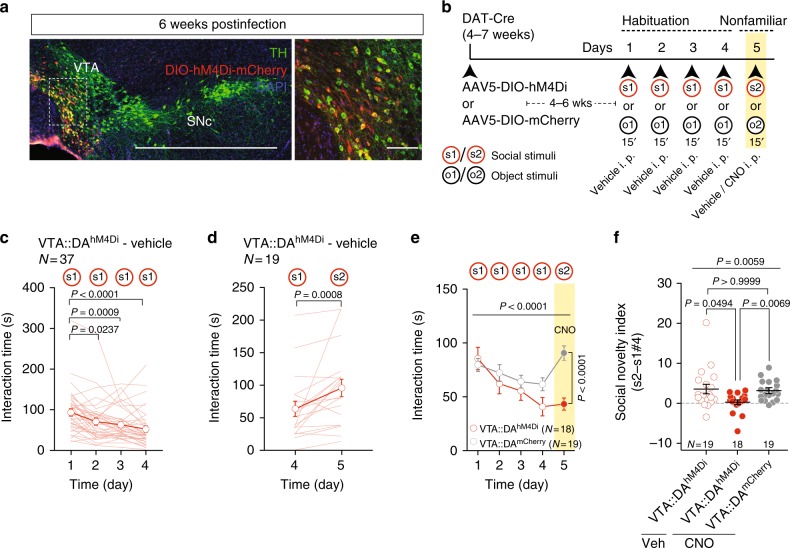
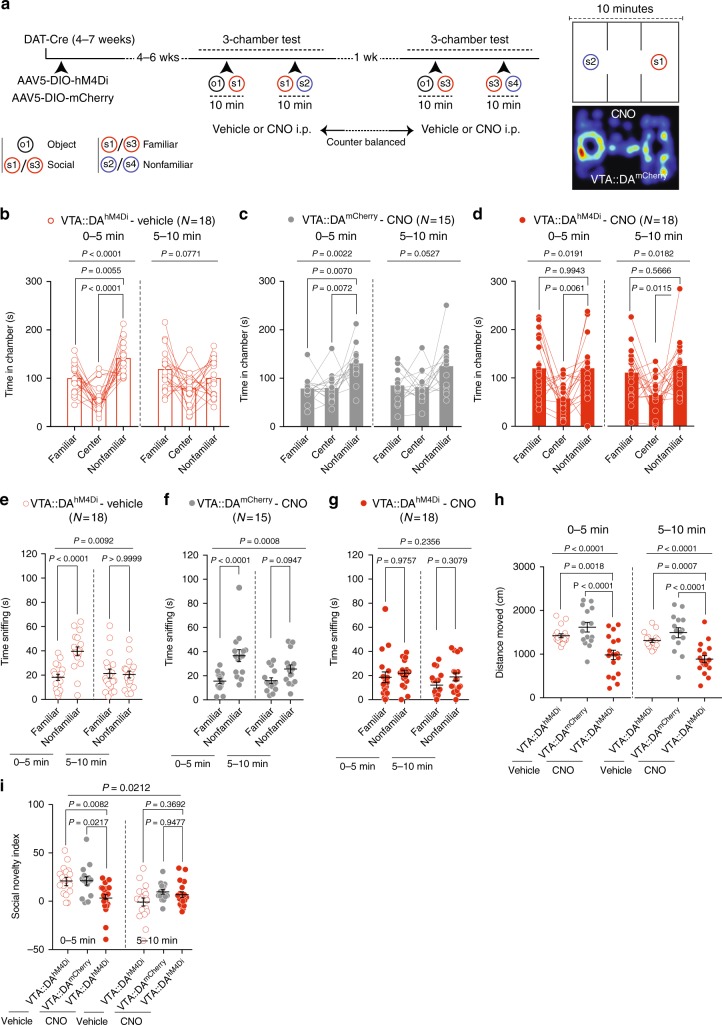
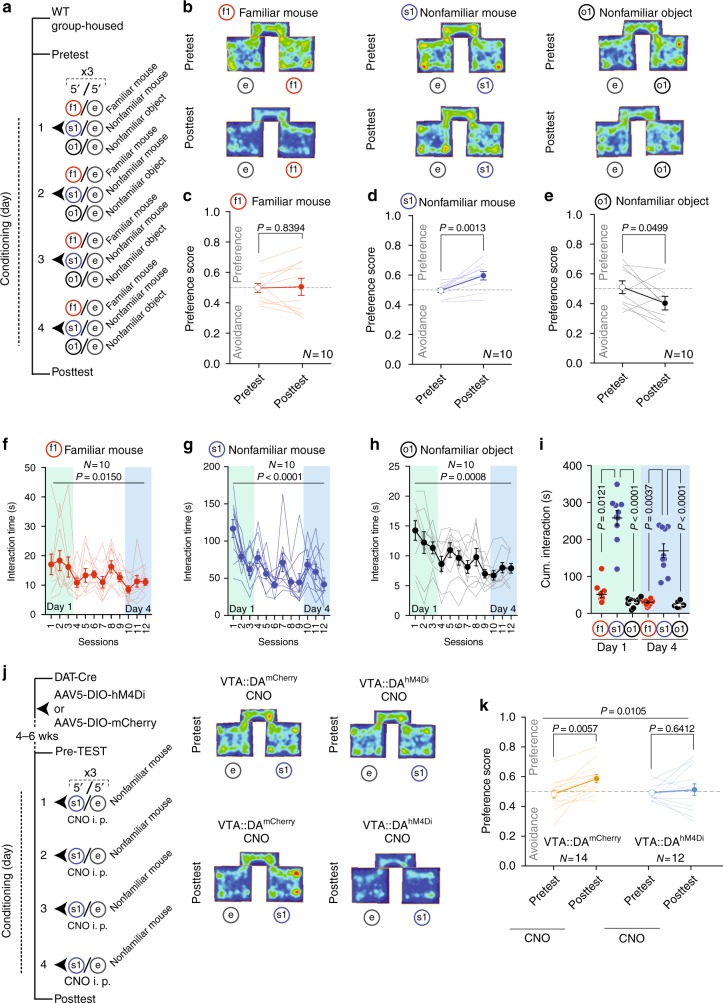
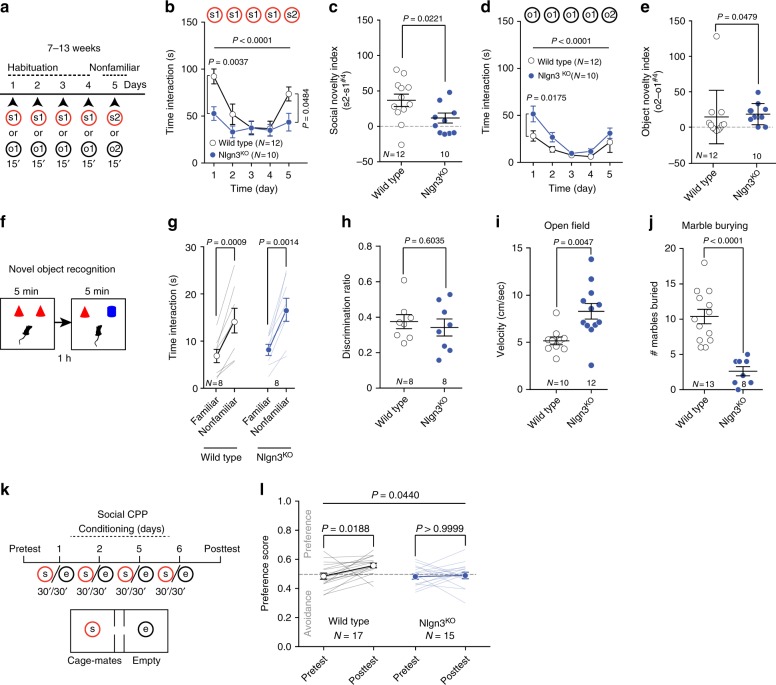
Atypical habituation and aberrant exploration of novel stimuli have been related to the severity of autism spectrum disorders (ASDs), but the underlying neuronal circuits are unknown. Here we show that chemogenetic inhibition of dopamine (DA) neurons of the ventral tegmental area (VTA) attenuates exploration toward nonfamiliar conspecifics and interferes with the reinforcing properties of nonfamiliar conspecific interaction in mice. Exploration of nonfamiliar stimuli is associated with the insertion of GluA2-lacking AMPA receptors at excitatory synapses on VTA DA neurons. These synaptic adaptations persist upon repeated exposure to social stimuli and sustain conspecific interaction. Global or VTA DA neuron-specific loss of the ASD-associated synaptic adhesion molecule neuroligin 3 alters the behavioral response toward nonfamiliar conspecifics and the reinforcing properties of conspecific interaction. These behavioral deficits are accompanied by an aberrant expression of AMPA receptors and an occlusion of synaptic plasticity. Altogether, these findings link impaired exploration of nonfamiliar conspecifics to VTA DA neuron dysfunction in mice.
Overview
The claims and statistics of this paper haven’t been checked yet.
Run the check — free, no account needed. It reads the open-access text and checks the sources it cites.
Integrity signals
Registry
Cites
Statistics
Figures
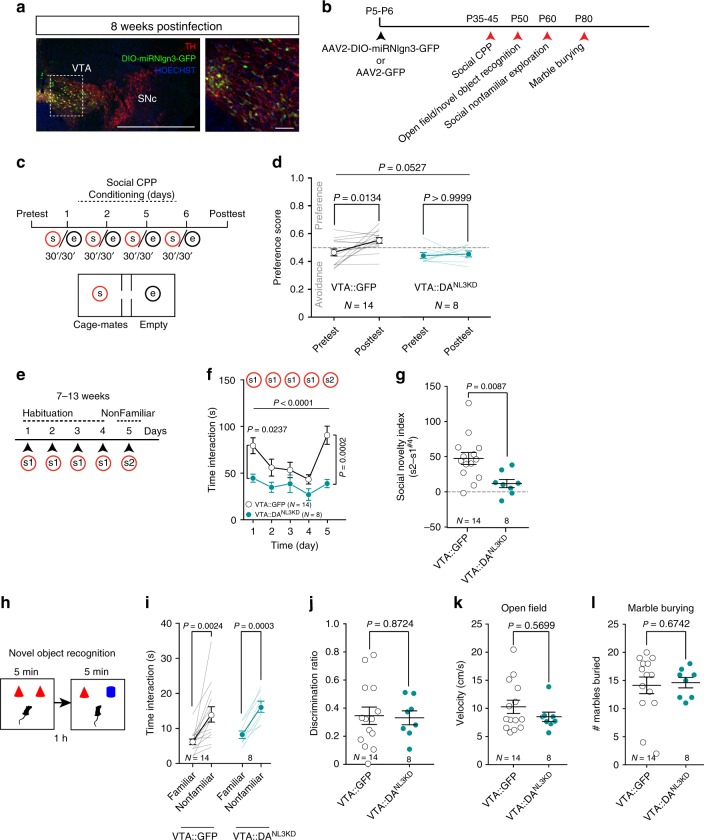
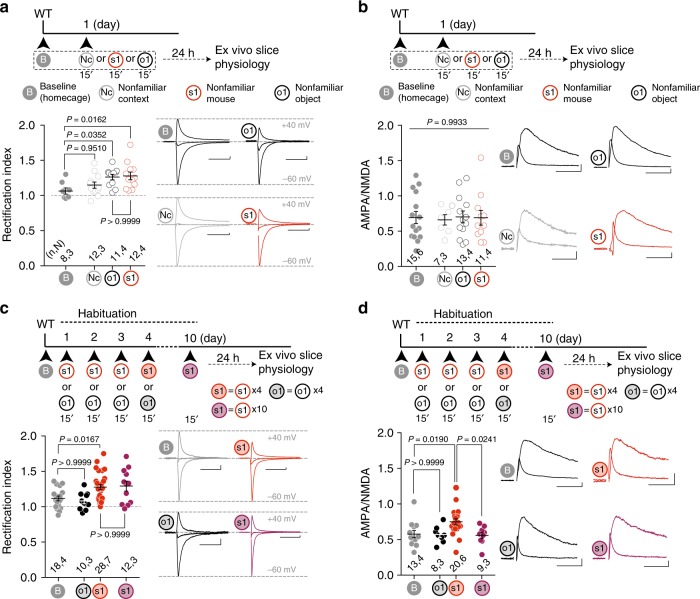
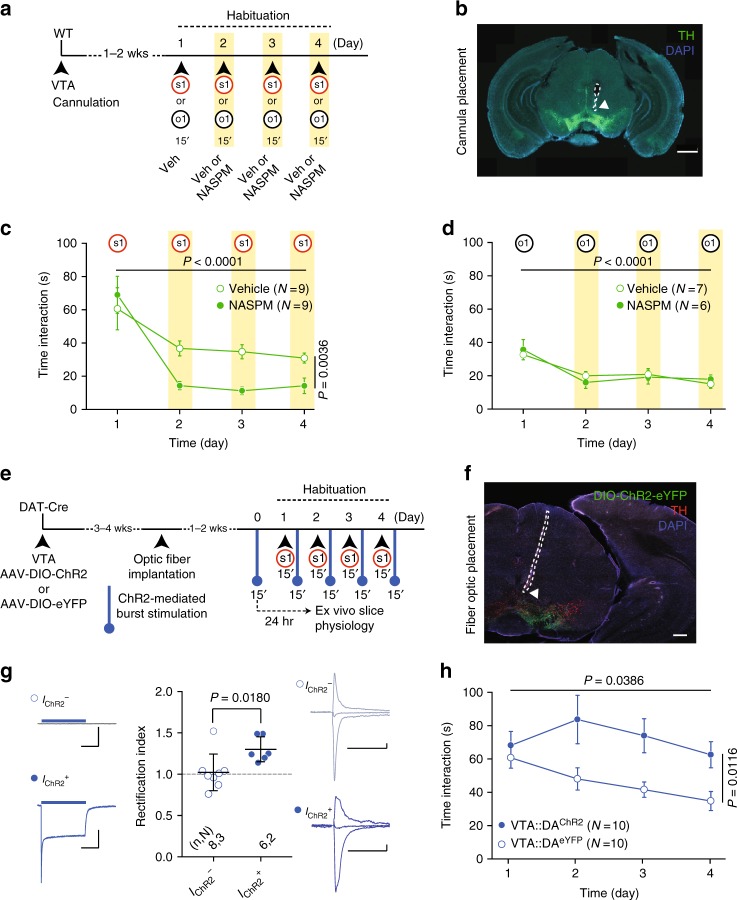
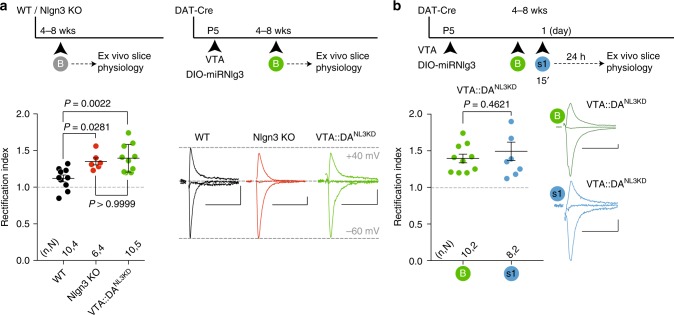
Verification
Claims the paper makes
The claims and statistics of this paper haven’t been checked yet.
Run the check — free, no account needed. It reads the open-access text and checks the sources it cites.
Claims other papers make about this one
Each is checked against this paper’s own text: does it say what the citing paper says it does?
The source backs part of the claim, not all of it — or backs it for a different population, condition or comparison.
In the citing paper
“Specifically, research has demonstrated that VTA dopaminergic neurons become activated in rodents engaged in conspecific interactions, and increased activity in these neurons promotes social reinforcement learning (Bariselli et al., 2018; D ¨ olen et al., 2013; Soli ´ e et al., 2022).”
From Convergence of oxytocin and dopamine signalling in neuronal circuits: Insights into the neurobiology of social interactions across species (2024) · cites this paper as Bariselli et al., 2018
Experimental — accuracy not yet measuredThe source backs part of the claim, not all of it — or backs it for a different population, condition or comparison.
In the citing paper
“Dopaminergic neurons of the VTA, which extend their projections to the nucleus accumbens (NAc), play a pivotal role in regulating both social cues and reward processing in both humans and rodents (Bariselli et al., 2018; Gunaydin et al., 2014, 2014; Kawamichi et al., 2016).”
From Convergence of oxytocin and dopamine signalling in neuronal circuits: Insights into the neurobiology of social interactions across species (2024) · cites this paper as Bariselli et al., 2018
Experimental — accuracy not yet measuredThe cited source says what the claim attributes to it.
In the citing paper
“Specifically, research has demonstrated that VTA dopaminergic neurons become activated in rodents engaged in conspecific interactions, and increased activity in these neurons promotes social reinforcement learning (Bariselli et al., 2018; D ¨ olen et al., 2013; Soli ´ e et al., 2022).”
From Convergence of oxytocin and dopamine signalling in neuronal circuits: Insights into the neurobiology of social interactions across species (2024) · cites this paper as Bariselli et al., 2018
In the citing paper
“Previous studies have indicated the role of DA neurons in the VTA in social behavior (Gunaydin et al., 2014; Bariselli et al., 2018; Bariselli et al., 2016b) and shown that chronic isolation alters DA levels in the NAc (Hall et al., 1998; ).”
From Oxytocin neurons mediate the effect of social isolation via the VTA circuits (2022) · cites this paper as Bariselli et al., 2018
Self-check
Percentages, sums and reported differences re-computed from the paper’s own numbers.
The self-check needs the paper’s full text.
Citations
Cites
A neural substrate of prediction and reward
Schultz, W., Dayan, P., & Montague, P. R. (1997) · Science · doi:10.1126/science.275.5306.1593 · Cited by 9,388
Shrestha, S., & Offer, S. M. (2016) · Medical Epigenetics · doi:10.1159/000444713 · Cited by 8,951
Predictive reward signal of dopamine neurons
Schultz, W. (1998) · Journal of Neurophysiology · doi:10.1152/jn.1998.80.1.1 · Cited by 4,564
The social motivation theory of autism
Chevallier, C., Kohls, G., Troiani, V., Brodkin, E. S., & Schultz, R. T. (2012) · Trends in Cognitive Sciences · doi:10.1016/j.tics.2012.02.007 · Cited by 2,072
Armbruster, B. N., Li, X., Pausch, M. H., Herlitze, S., & Roth, B. L. (2007) · Proceedings of the National Academy of Sciences · doi:10.1073/pnas.0700293104 · Cited by 2,046
Mutations of the X-linked genes encoding neuroligins NLGN3 and NLGN4 are associated with autism
Study, P. A. R. I. S., Jamain, S., Quach, H., Betancur, C., Råstam, M., Colineaux, C., Gillberg, I. C., Soderstrom, H., Giros, B., Leboyer, M., et al. (2003) · Nature Genetics · doi:10.1038/ng1136 · Cited by 1,851
Moy, S. S., Nadler, J. J., Perez, A., Barbaro, R. P., Johns, J. M., Magnuson, T. R., Piven, J., & Crawley, J. N. (2004) · Genes, Brain and Behavior · doi:10.1111/j.1601-1848.2004.00076.x · Cited by 1,522
Natural neural projection dynamics underlying social behavior
Gunaydin, L. A., Grosenick, L., Finkelstein, J. C., Kauvar, I. V., Fenno, L. E., Adhikari, A., Lammel, S., Mirzabekov, J. J., Airan, R. D., Zalocusky, K. A., et al. (2014) · Cell · doi:10.1016/j.cell.2014.05.017 · Cited by 1,389
Neuron-type-specific signals for reward and punishment in the ventral tegmental area
Cohen, J. Y., Haesler, S., Vong, L., Lowell, B. B., & Uchida, N. (2012) · Nature · doi:10.1038/nature10754 · Cited by 1,318
Input-specific control of reward and aversion in the ventral tegmental area
Lammel, S., Lim, B. K., Ran, C., Huang, K. W., Betley, M. J., Tye, K. M., Deisseroth, K., & Malenka, R. C. (2012) · Nature · doi:10.1038/nature11527 · Cited by 1,300
Cited by
Sorted by citations
Items 101–170 of 170
Socha, J., Grochecki, P., Smaga, I., Jastrzębska, J., Wronikowska‐Denysiuk, O., Marszałek‐Grabska, M., Słowik, T., Kotlinski, R., Filip, M., Lübec, G., et al. (2024) · International Journal of Molecular Sciences · doi:10.3390/ijms25021041 · Cited by 8
Insulin-like growth factor 2 (IGF-2) rescues social deficits in NLG3–/y mouse model of ASDs
Pizzarelli, R., Pimpinella, D., Jacobs, C., Tartacca, A., Kullolli, U., Monyer, H., Alberini, C. M., & Griguoli, M. (2024) · Frontiers in Cellular Neuroscience · doi:10.3389/fncel.2023.1332179 · Cited by 8
The Autism Palette: Combinations of Impairments Explain the Heterogeneity in ASD
Fóthi, Á., Lörincz, A., & Soorya, L. V. (2020) · Frontiers in Psychiatry · doi:10.3389/fpsyt.2020.503462 · Cited by 9
Ibrahim, M. K., Aboelsaad, M., Tony, F., & Sayed, M. (2021) · SN Applied Sciences · doi:10.1007/s42452-021-04902-z · Cited by 7
Li, L., Huang, Q. Q., Hu, J., Jin, M., Zhuo, Y., Wei, K., He, Q., Xiao, Y., Zhang, X., Wang, W., et al. (2025) · Neuron · doi:10.1016/j.neuron.2025.06.003 · Cited by 10
Wang, A., Chao, O. Y.-H., Nikolaus, S., Lamounier‐Zepter, V., Hollenberg, C. P., Lübec, G., Trossbach, S. V., Korth, C., & Huston, J. P. (2022) · Neuroscience · doi:10.1016/j.neuroscience.2022.04.013 · Cited by 6
Brandner, D. D., Retzlaff, C. L., Kocharian, A., Stieve, B. J., Mashal, M. A., Mermelstein, P. G., & Rothwell, P. E. (2022) · Addiction Biology · doi:10.1111/adb.13247 · Cited by 6
Li, L., Imai, A., Izumi, H., Inoue, R., Koshidaka, Y., Takao, K., Mori, H., & Yoshida, T. (2024) · Molecular Brain · doi:10.1186/s13041-024-01087-5 · Cited by 6
The inhibition of NCS-1 binding to Ric8a rescues fragile X syndrome mice model phenotypes
Cogram, P., Fernández-Beltrán, L. C., Casarejos, M. J., Sánchez-Yepes, S., Rodríguez‐Martín, E., García‐Rubia, A., Sánchez-Barrena, M. J., Gil, C., Martı́nez, A., & Mansilla, A. (2022) · Frontiers in Neuroscience · doi:10.3389/fnins.2022.1007531 · Cited by 6
Bugs R Us: Restoring sociability with microbiota in autism
Bellone, C., & Lüscher, C. (2021) · Cell Reports Medicine · doi:10.1016/j.xcrm.2021.100256 · Cited by 5
Self-citationSuperior Colliculus to VTA pathway controls orienting response to conspecific stimuliPreprint
Solié, C., Contestabile, A., Espinosa, P., Musardo, S., Bariselli, S., Huber, C., Carleton, A., & Bellone, C. (2019) · bioRxiv (Cold Spring Harbor Laboratory) · doi:10.1101/735340 · Cited by 4
Self-citationOverlapping representations of food and social stimuli in VTA dopamine neuronsPreprint
Willmore, L., Minerva, A. R., Engelhard, B., Murugan, M., McMannon, B., Oak, N., Thiberge, S. Y., Peña, C. J., & Witten, I. B. (2023) · bioRxiv (Cold Spring Harbor Laboratory) · doi:10.1101/2023.05.17.541104 · Cited by 5
Brain Gene Regulatory Networks Coordinate Nest Construction in Birds
Fang, Y., Kuo, H., Chen, C., Chou, S., Lu, C., & Hung, C. (2024) · Molecular Biology and Evolution · doi:10.1093/molbev/msae125 · Cited by 7
State-dependent coupling of hippocampal oscillations
Modi, B., Guardamagna, M., Stella, F., Griguoli, M., Cherubini, E., & Battaglia, F. P. (2023) · eLife · doi:10.7554/elife.80263 · Cited by 4
Kılınç, K., Türkoğlu, S., Kocabaş, R., Güler, H. A., Yılmaz, Ç., & Büyükateş, A. (2025) · Progress in Neuro-Psychopharmacology and Biological Psychiatry · doi:10.1016/j.pnpbp.2025.111275 · Cited by 3
Рожкова, И. Н., Okotrub, S. V., Brusentsev, E. Y., Uldanova, K. E., Chuyko, E. А., Напримеров, В. А., Lipina, T. V., Amstislavskaya, T. G., & Amstislavsky, S. Y. (2023) · Vavilov Journal of Genetics and Breeding · doi:10.18699/vjgb-23-14 · Cited by 3
The Dopaminergic Cells in the Median Raphe Region Regulate Social Behavior in Male Mice
Chaves, T., Török, B., Fazekas, C. L., Correia, P., Sipos, E., Várkonyi, D., Tóth, Z., Dóra, F., Dobolyi, Á., & Zelena, D. (2024) · International Journal of Molecular Sciences · doi:10.3390/ijms25084315 · Cited by 3
Zheng, Q., Zhao, Y., Cheng, Q., Wang, H., Liu, F., Lai, J., Liu, Y., Zhang, X., Kang, Y., Li, Z., et al. (2025) · Journal of Neuroscience · doi:10.1523/jneurosci.0382-25.2025 · Cited by 3
Dopaminergic mechanisms of dynamical social specialization
Solié, C., Nicolson, A., Justo, R., Layadi, Y., Morin, B., Batifol, C., Reynolds, L. M., Borgne, T. L., Fayad, S. L., Gulmez, A., et al. (2026) · Nature · doi:10.1038/s41586-026-10301-4 · Cited by 4
Establishment and characterization of adap1 ‐deficient zebrafish
Kawahara, A., Yasojima, S., Koiwa, J., Fujimaki, S., Ito, H., Yamada, M., Kosaki, K., & Nishimura, Y. (2025) · Development Growth & Differentiation · doi:10.1111/dgd.70004 · Cited by 2
Activation of orexin receptor 2 plays anxiolytic effect in male mice
Chen, L., Tian, R., Wei, S., Yang, H., Zhu, C., & Li, Z. (2025) · Brain Research · doi:10.1016/j.brainres.2025.149646 · Cited by 2
Li, S., May, C., Pang, T. Y., Churilov, L. P., Hannan, A. J., Johnson, K. A., & Burrows, E. L. (2024) · Psychopharmacology · doi:10.1007/s00213-023-06520-6 · Cited by 2
Cerebellar dopamine D2 receptors regulate preference for social noveltyPreprint
Cutando, L., Puighermanal, E., Castell, L., Tarot, P., Belle, M., Bertaso, F., Arango-Lievano, M., Ango, F., Rubinstein, M., Chédotal, A., et al. (2019) · bioRxiv · doi:10.1101/2019.12.20.884288 · Cited by 2
Zhao, X., Chae, Y. C., Smith, D., Chen, V., DeFelipe, D., Sokol, J. W., Sadangi, A., & Tschida, K. (2024) · eLife · doi:10.7554/elife.94924.1 · Cited by 2
A ventral hippocampal-lateral septum pathway regulates social novelty preferencePreprint
Rashid, M., Thomas, S., Isaac, J., Karkare, S. C., Klein, H., & Murugan, M. (2024) · eLife · doi:10.7554/elife.97259.1 · Cited by 5
Paris, J. R., Whiting, J. R., Ferrer, J., Hughes, K. A., & Fraser, B. A. (2026) · Philosophical Transactions of the Royal Society B Biological Sciences · doi:10.1098/rstb.2025.0174 · Cited by 1
Lv, C., Song, D., Ni, J., Qing, H., & Quan, Z. (2026) · Progress in Neurobiology · doi:10.1016/j.pneurobio.2026.102892 · Cited by 2
Schreiner, D., & Scheiffele, P. (2020) · Elsevier eBooks · doi:10.1016/b978-0-12-823672-7.00008-9 · Cited by 1
Self-citationYu, M., Sun, F., Xiang, G., Zhang, Y., Wang, X., Liu, X., Huang, B., Li, X., & Zhang, D. (2024) · Frontiers in Molecular Neuroscience · doi:10.3389/fnmol.2024.1289476 · Cited by 1
Sex differences in morphine sensitivity of neuroligin-3 knockout mice
Brandner, D. D., Mashal, M. A., Grissom, N. M., & Rothwell, P. E. (2024) · Psychopharmacology · doi:10.1007/s00213-024-06660-3 · Cited by 1
Dopaminergic mechanisms of dynamical social specialization in mouse microsocietiesPreprint
Solié, C., Nicolson, A., Justo, R., Layadi, Y., Morin, B., Batifol, C., Reynolds, L. M., Borgne, T. L., Fayad, S. L., Gulmez, A., et al. (2025) · bioRxiv (Cold Spring Harbor Laboratory) · doi:10.1101/2025.02.10.637303 · Cited by 1
Sigurðardottir, J. N., Tournier, J., Batallé, D., Bonthrone, A. F., Christiaens, D., Hutter, J. M., Cordero‐Grande, L., Chew, A. T. M., Nosarti, C., Hajnal, J. V., et al. (2025) · bioRxiv (Cold Spring Harbor Laboratory) · doi:10.1101/2025.02.28.640038 · Cited by 1
Understanding and promoting the functional integration of neural transplants in Parkinson’s disease
Penna, V. (2019) · Minerva Access (University of Melbourne)
Tolve, M., Ulusoy, A., Islam, K. U. S., Bodea, G. O., Öztürk, E., Broske, B., Mentani, A., Wagener, A., van Loo, K. M. J., Britsch, S., et al. (2020) · bioRxiv (Cold Spring Harbor Laboratory) · doi:10.1101/2020.10.06.327940
Śledziowska, M. (2020) · ORCA Online Research @Cardiff (Cardiff University)
Cazadores de imágenes: Los ojos pioneros del documental Español
Sevilla, J. D. L. P. (2011) · Academia: Revista del Cine Español
Brandner, D. D., Retzlaff, C. L., Kocharian, A., Stieve, B. J., Mashal, M. A., Mermelstein, P. G., & Rothwell, P. E. (2022) · bioRxiv (Cold Spring Harbor Laboratory) · doi:10.1101/2022.03.14.484267
Muellerleile, J. (2022) · Publication Server of Goethe University Frankfurt am Main (Goethe University Frankfurt) · doi:10.21248/gups.68693
Interaction of nicotine and social reward in group-reared male adolescent rats
Cortés‐Patiño, D. M., Neira, V. M., Ballesteros-Acosta, H., Bustos-Rangel, A., & Lamprea, M. R. (2023) · Behavioural Brain Research · doi:10.1016/j.bbr.2023.114432
Nicotine in adolescence freezes dopamine circuits in an immature statePreprint
Reynolds, L. M., Gulmez, A., Fayad, S. L., Campos, R. C., Rigoni, D., Nguyen, C., Borgne, T. L., Topilko, T., Rajot, D., Franco, C., et al. (2023) · bioRxiv (Cold Spring Harbor Laboratory) · doi:10.1101/2023.10.28.564518
Neurobiological mechanisms of social recognition memory
Park, G., & Lee, Y. (2024) · Elsevier eBooks · doi:10.1016/b978-0-443-15754-7.00027-4
Circulating extracellular vesicle microRNAs mediate immune modulation of social behavior in micePreprint
Matoba, K., Dohi, E., Garcia, P. A., de Oliveira, J. F., Mirramezanializamini, M., Berkiks, I., Anguiano, F., Badrani, J. H., Fatoba, O., Choi, E. Y., et al. (2024) · bioRxiv (Cold Spring Harbor Laboratory) · doi:10.1101/2024.08.12.605506
Balaban, P. M., & Grigoryan, G. A. (2024) · Успехи физиологических наук · doi:10.31857/s0301179824020063
Zhao, X., Chae, Y. C., Smith, D., Chen, V., DeFelipe, D., Sokol, J. W., Sadangi, A., & Tschida, K. (2025) · eLife · doi:10.7554/elife.94924.2
The Neuroscience of Philanthropic Behavior
Tudor, M. C., Sooter, N. M., & Ugazio, G. (2025) · Routledge eBooks · doi:10.4324/9781003546986-8
Whole-Brain Monosynaptic Inputs to Parasubthalamic Calretinin Neurons in Mice
Guo, H., Zhang, M., Huang, J., Zhou, H., Zhang, M., Wang, H., Xu, X., Liu, X., Qu, W., & Huang, Z. (2025) · Molecular Neurobiology · doi:10.1007/s12035-025-05087-x
Dissimilarities in volume and function of social brain regions in autism
Knudsen, L. V., Sheldrick, A. J., Vafaee, M. S., & Michel, T. M. (2025) · Journal of Neural Transmission · doi:10.1007/s00702-025-02934-y
Comparative gene editing reduces dopamine receptor levels across rodent speciesPreprint
Karkare, S. C., Aspesi, D., Garner, K. M., Schut, E. H. S., Albers, H. E., Meye, F. J., Murugan, M., & Boender, A. J. (2025) · bioRxiv (Cold Spring Harbor Laboratory) · doi:10.1101/2025.10.21.683401
Clayton, W., Courtney, M. Y., Craig, L. E., Moniz, H. E., Gibbons, A. B., Valentine, A. A., Singh, A. K., Gearinger, D. R., Nestler, E. J., & Been, L. E. (2025) · bioRxiv (Cold Spring Harbor Laboratory) · doi:10.1101/2025.10.21.683778
Lyle, T. T., Elbeh, K. M., Chambers, D., Vieira, H., & Verpeut, J. L. (2025) · Molecular Psychiatry · doi:10.1038/s41380-025-03404-3 · Cited by 1
Linyu, L., Imai, A., Izumi, H., Inoue, R., Koshidaka, Y., Takao, K., Mori, H., & Yoshida, T. (2024) · Figshare · doi:10.6084/m9.figshare.26692369
Linyu, L., Imai, A., Izumi, H., Inoue, R., Koshidaka, Y., Takao, K., Mori, H., & Yoshida, T. (2024) · Figshare · doi:10.6084/m9.figshare.26692372
Bermudez-Martin, P., Becker, J. A. J., Caramello, N., Fernández, S. P., Campos, R. C., Canaguier, J., Barbosa, S., Martínez-Gili, L., Myridakis, A., Dumas, M., et al. (2021) · Figshare · doi:10.6084/m9.figshare.14936553
Hong, N., Kim, H. J., Kang, K., Park, J. O., Mun, S., Kim, H.-G., Kang, B. H., Chung, P.-S., Lee, M. Y., & Ahn, J.-C. (2023) · Figshare · doi:10.6084/m9.figshare.22610494
Ocytocine versus dopamine : l’équilibre délicat entre lien social et addiction
Rappeneau, V., & Díaz, F. C. (2025) · Biologie Aujourd hui · doi:10.1051/jbio/2025012
Autism associated mutation in Cacna1d causes perseverative behavioral phenotype in micePreprint
Otsuka, S., Xu, J., & Contractor, A. (2026) · bioRxiv (Cold Spring Harbor Laboratory) · doi:10.64898/2026.01.13.699343
VTA-forebrain connectivity moderates adaptive behavior
Sinza, S. I., Choi, K., Lim, I. E., Williams, M. A., & Ogundele, O. M. (2026) · Brain Structure and Function · doi:10.1007/s00429-026-03071-2 · Cited by 1
Matoba, K., Dohi, E., Garcia, P. A., de Oliveira, J. F., Alizamini, M. M., Berkiks, I., Anguiano, F., Badrani, J., Fatoba, O., Choi, E. Y., et al. (2026) · Nature Communications · doi:10.1038/s41467-026-70469-1 · Cited by 1
Bermudez-Martin, P. (2020) · theses.fr (ABES) · doi:10.70675/d0d223ffzbc0ez44d9z8475z153f265e94f5
Role of the endocannabinoid system in exercise motivation
Redon, B. (2021) · theses.fr (ABES) · doi:10.70675/844c9d99zd3c6z4550z97a6zebab239b226c
Vielle, C. (2022) · theses.fr (ABES) · doi:10.70675/1d0b6118z0cadz4beeza6bdzd9557f045747
Clayton, W., Courtney, M. Y., Craig, L. E., Moniz, H. E., Gibbons, A. B., Valentine, A. A., Singh, A. K., Gearinger, D. R., Nestler, E. J., & Been, L. E. (2026) · Genes Brain & Behavior · doi:10.1111/gbb.70051
Neurocircuitry of social reward and interactions
Dören, J., & Kalenscher, T. (2026) · Current Opinion in Physiology · doi:10.1016/j.cophys.2026.100975
Inhibition tunes prefrontal circuit dynamics to promote sociosexual behavior in female micePreprint
Amadei, E. A., Aceituno, P. V., Loidl, R., Boehringer, R., Morsch, E. S., Ehret, B., & Grewe, B. F. (2026) · eLife · doi:10.7554/elife.112102.1
Inhibition tunes prefrontal circuit dynamics to promote sociosexual behavior in female micePreprint
Amadei, E. A., Aceituno, P. V., Loidl, R., Boehringer, R., Morsch, E. S., Ehret, B., & Grewe, B. F. (2026) · eLife · doi:10.7554/elife.112102
Ohnishi, Y. H., Ohnishi, Y. N., Kawahara, Y., & Nishi, A. (2026) · Progress in Neuro-Psychopharmacology and Biological Psychiatry · doi:10.1016/j.pnpbp.2026.111951
The role of oxytocin receptors in social conditioned place preference
Stall, J., & Leong, K.-C. (2026) · Pharmacology Biochemistry and Behavior · doi:10.1016/j.pbb.2026.174279
Metadata
- Authors
- Bariselli, S., Hörnberg, H., Prévost-Solié, C., Musardo, S., Hatstatt-Burklé, L., Scheiffele, P., & Bellone, C.
- Affiliations
- University of Geneva (CH)
- University of Basel (CH)
- Corresponding author
- Bellone, Camilla
- Venue
- Nature Communications
- Published
- 2018-08-09
- Volume
- 9
- Issue
- 1
- Pages
- 3173-3173
- ISSN
- 2041-1723 (ISSN-L)
- PMC
- PMC6085391
- OpenAlex
- W2886986075
- Cited by
- 171
- References
- 94
- Citations by year
- 2026: 12 · 2025: 20 · 2024: 27 · 2023: 27 · 2022: 31 · 2021: 23 · 2020: 18 · 2019: 9 · 2018: 3
- FWCI
- 6.04
- Type
- journal article
- Language
- en
- Open access
- gold
- doi.org
- Locations
- Nature Communications (publishedVersion, cc-by)
- bioRxiv (Cold Spring Harbor Laboratory) (acceptedVersion)
- Europe PMC (PubMed Central) (publishedVersion, cc-by)
- PubMed Central (publishedVersion, cc-by)
- PubMed (publishedVersion)
- Archive ouverte UNIGE (University of Geneva) (publishedVersion, other-oa)
- MDC Repository (Max-Delbrueck-Center for Molecular Medicine) (acceptedVersion)
- RePEc: Research Papers in Economics (submittedVersion)
- DOAJ (DOAJ: Directory of Open Access Journals) (submittedVersion, cc-by-sa)
- DOAJ (DOAJ: Directory of Open Access Journals) (submittedVersion)
- edoc (University of Basel) (submittedVersion)
- Archive ouverte UNIGE (University of Geneva) (submittedVersion, cc-by)
- Funders
- National Science Foundation
- Schweizerischer Nationalfonds zur Förderung der Wissenschaftlichen Forschung (150704)
- Fondation Pierre Mercier
- Topics
- Life Sciences › Neuroscience › Cellular and Molecular Neuroscience › Neuroscience and Neuropharmacology Research
- Life Sciences › Neuroscience › Cognitive Neuroscience › Autism Spectrum Disorder Research
- Life Sciences › Neuroscience › Cellular and Molecular Neuroscience › Neurotransmitter Receptor Influence on Behavior
- Keywords
- ventral tegmental area, dopaminergic neurons, neuroligin-3, autism spectrum disorder, sociability, habituation, synaptic plasticity, chemogenetic inhibition, social reinforcement, synaptic adhesion molecules
- MeSH terms
- Animals, Behavior, Animal, Female, Male, Membrane Proteins, Mice, Inbred C57BL, Mice, Transgenic, Nerve Tissue Proteins, Neuronal Plasticity, Neurons, Social Behavior, Synapses, Cell Adhesion Molecules, Neuronal, Ventral Tegmental Area, Receptors, AMPA, Mice, Dopaminergic Neurons
About these checks
Registry, retraction, Cites and statistics results are computed, not judged, with one exception: a printed reference that no index lists is read once by a model before it counts as a citation error. Claims are extracted by a model and kept only when their quote appears verbatim in the text; each cited source is then checked, with a model’s help, for whether it says what the claim relies on. Those verdicts can be wrong — read the claim’s quote and the cited source before relying on one.
Statistics and arithmetic are recomputed, not judged.
Confidence bands are shown only for fields calibrated on our annotated test set. None is calibrated yet, so no band is shown.
What counts as a claim ›How we measure confidence ›How we check this ›
Are you an author, or do you see a problem with this page? Request a review
