

Antigen-selective modulation of AAV immunogenicity with tolerogenic rapamycin nanoparticles enables successful vector re-administration
Open accessThe DOI matches its Crossref record; 60 of the 60 references it cites were found in a registry or an index.
Abstract
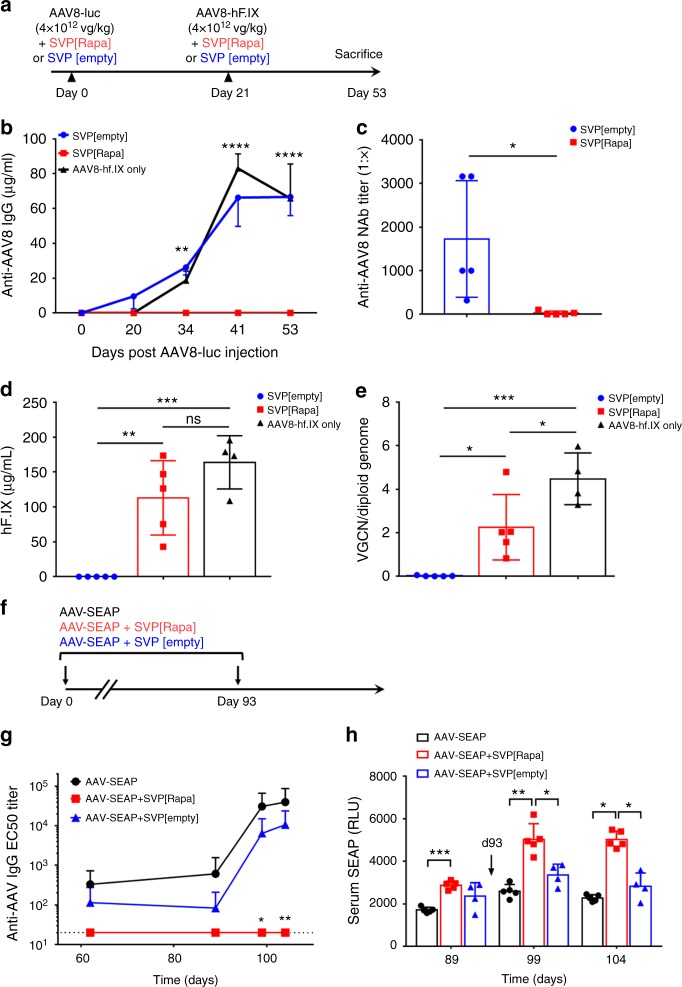
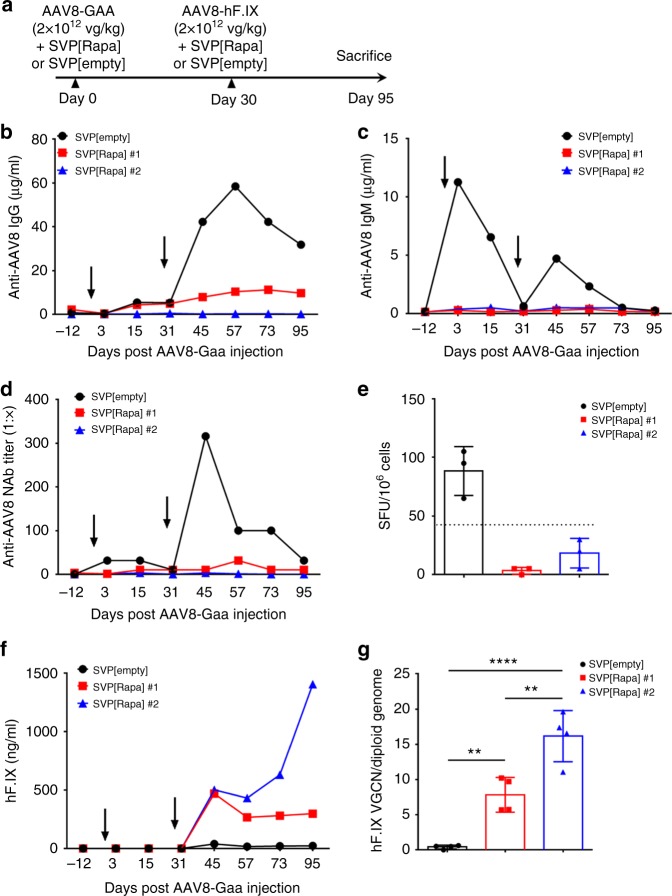
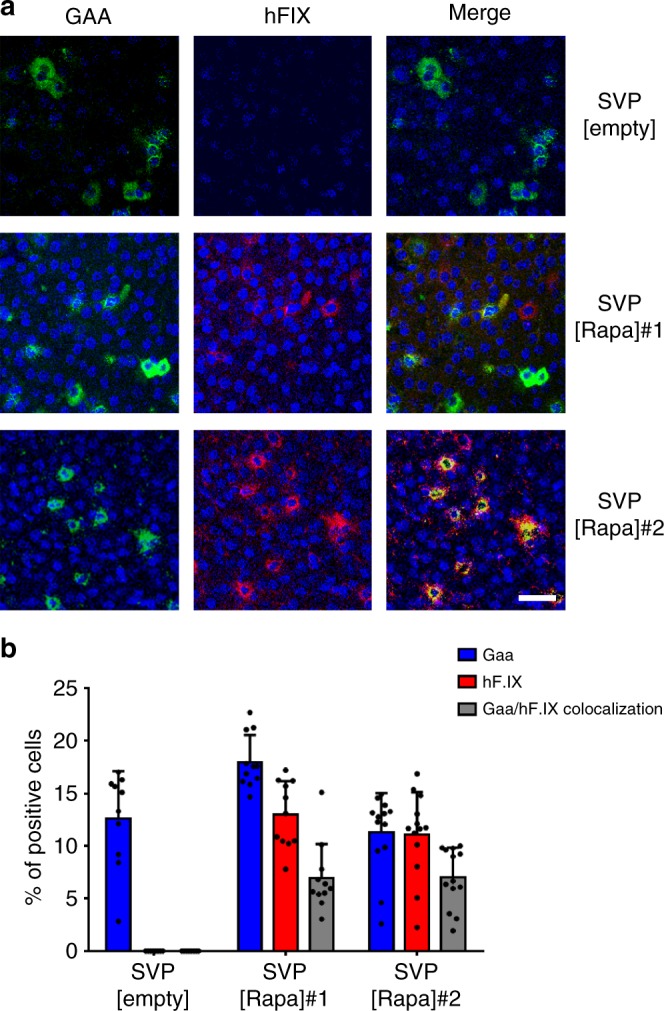
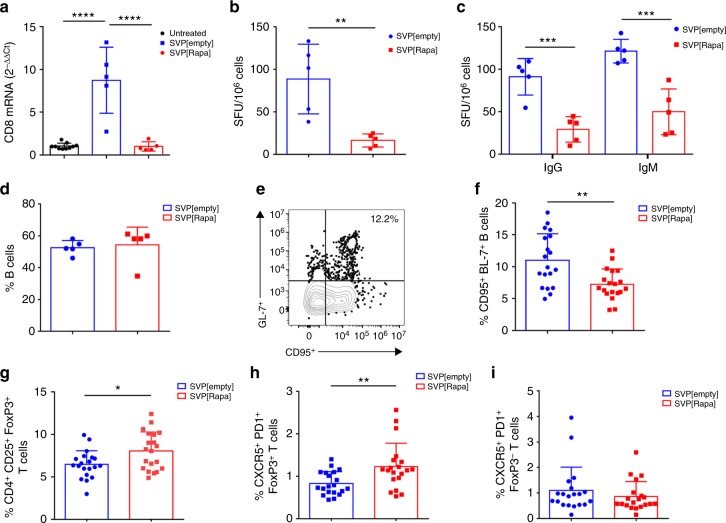
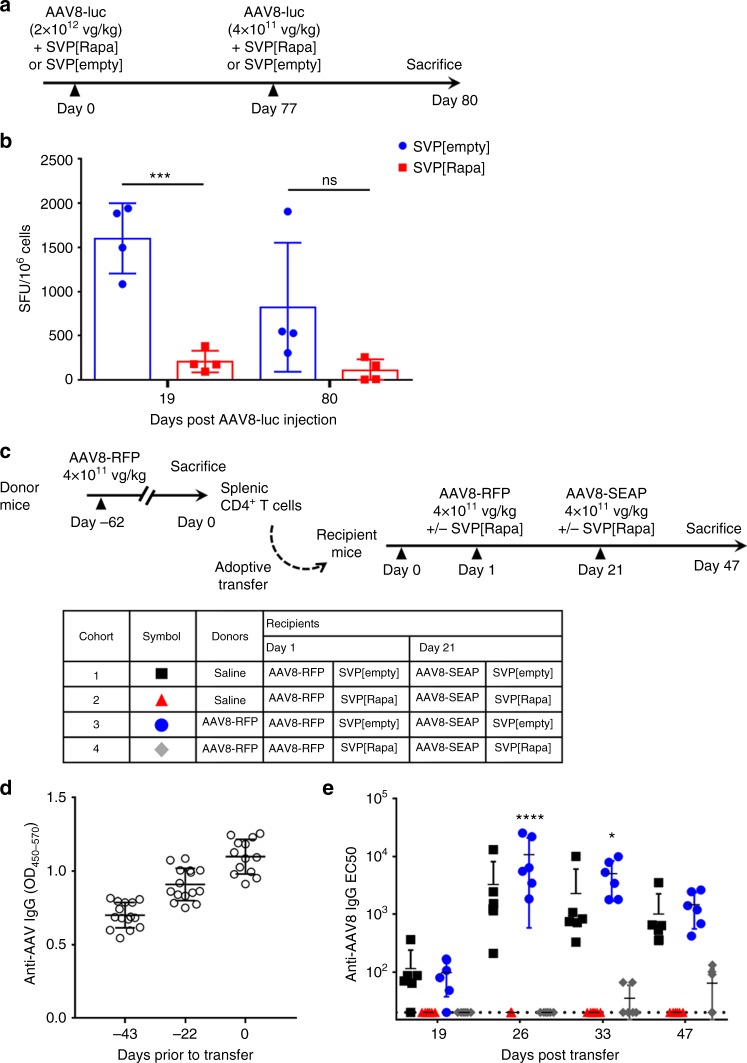
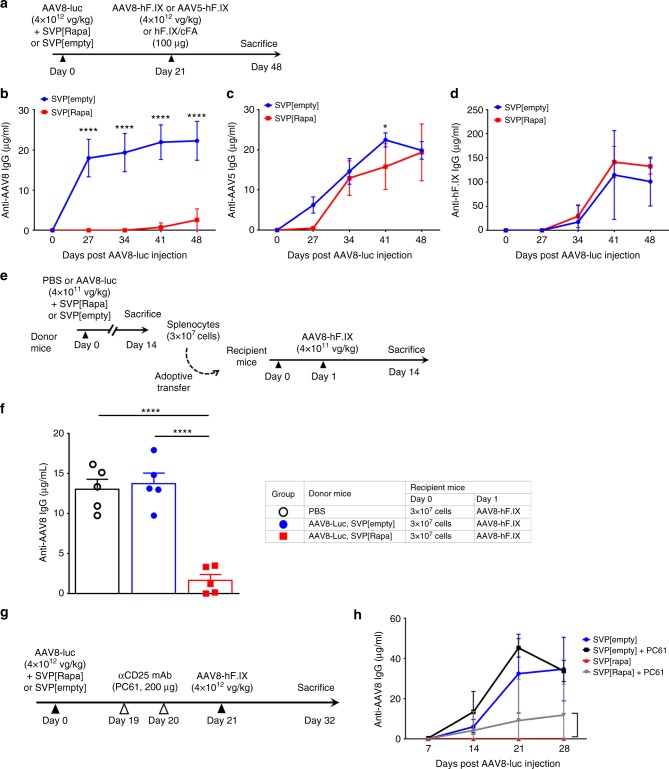
Gene therapy mediated by recombinant adeno-associated virus (AAV) vectors is a promising treatment for systemic monogenic diseases. However, vector immunogenicity represents a major limitation to gene transfer with AAV vectors, particularly for vector re-administration. Here, we demonstrate that synthetic vaccine particles encapsulating rapamycin (SVP[Rapa]), co-administered with AAV vectors, prevents the induction of anti-capsid humoral and cell-mediated responses. This allows successful vector re-administration in mice and nonhuman primates. SVP[Rapa] dosed with AAV vectors reduces B and T cell activation in an antigen-selective manner, inhibits CD8+ T cell infiltration in the liver, and efficiently blocks memory T cell responses. SVP[Rapa] immunomodulatory effects can be transferred from treated to naive mice by adoptive transfer of splenocytes, and is inhibited by depletion of CD25+ T cells, suggesting a role for regulatory T cells. Co-administration of SVP[Rapa] with AAV vector represents a powerful strategy to modulate vector immunogenicity and enable effective vector re-administration.
Overview
The claims and statistics of this paper haven’t been checked yet.
Free: it reads the open-access text and checks the first 5 claims that cite a source we can check. Create a free account to check every claim.
Integrity signals
Registry
Cites
Statistics
Figures
Verification
Claims the paper makes
The claims and statistics of this paper haven’t been checked yet.
Free: it reads the open-access text and checks the first 5 claims that cite a source we can check. Create a free account to check every claim.
Claims other papers make about this one
Each is checked against this paper’s own text: does it say what the citing paper says it does?
The source backs part of the claim, not all of it — or backs it for a different population, condition or comparison.
In the citing paper
“Combined systemic administration of rapamycin with AAV induces targeted suppression of APC maturation and anti-AAV cell-mediated and humoral immune responses (Meliani et al., 2018).”
From Gene Therapy-Associated Uveitis (GTAU): Understanding and mitigating the adverse immune response in retinal gene therapy (2025) · cites this paper as Meliani et al., 2018
Experimental — accuracy not yet measuredThe source backs part of the claim, not all of it — or backs it for a different population, condition or comparison.
In the citing paper
“Moreover, immunization of mice with AAV or adenoviruses expressing VP1 capsid protein resulted in induction of capsid-specific T cells [102, 103].”
From Immunogenicity of Recombinant Adeno-Associated Virus (AAV) Vectors for Gene Transfer (2023) · cites this paper as [103]
Experimental — accuracy not yet measuredThe source backs part of the claim, not all of it — or backs it for a different population, condition or comparison.
In the citing paper
“SVP-rapamycin also inhibited expansion of antigen-speci fi c B cells.”
From A versatile toolkit for overcoming AAV immunity (2022) · cites this paper as [41]
Experimental — accuracy not yet measuredThe source backs part of the claim, not all of it — or backs it for a different population, condition or comparison.
In the citing paper
“Additionally, co-administrating AAV vectors with rapamycin encapsulated in synthetic vaccine particles (SVP[Rapa]) enabled re-dosing of AAV8 at 4 × 10¹²vg/kg in mice and NHP (39).”
From Immunomodulation in Administration of RAAV: Preclinical and Clinical Adjuvant Pharmacotherapies (2021) · cites this paper as [39]
Experimental — accuracy not yet measuredThe cited source says what the claim attributes to it.
In the citing paper
“ImmTOR treatment resulted in inhibition of AAV-specific antibody formation and reduced B- and T-cell activation [103, 174].”
From Immunogenicity of Recombinant Adeno-Associated Virus (AAV) Vectors for Gene Transfer (2023) · cites this paper as [103]
3 more claims about this paper
Create a free account to see every claim other papers make about this one.
Self-check
Percentages, sums and reported differences re-computed from the paper’s own numbers.
The self-check needs the paper’s full text.
Citations
Cites
Single-Dose Gene-Replacement Therapy for Spinal Muscular Atrophy
Mendell, J. R., Al-Zaidy, S., Shell, R., Arnold, W. D., Rodino-Klapac, L. R., Prior, T. W., Lowes, L., Alfano, L., Berry, K., Church, K., et al. (2017) · New England Journal of Medicine · doi:10.1056/nejmoa1706198 · Cited by 2,381
Manno, C. S., Pierce, G. F., Arruda, V. R., Glader, B., Ragni, M., Rasko, J. J. E., Ozelo, M. C., Hoots, K., Blatt, P., Konkle, B., et al. (2006) · Nature Medicine · doi:10.1038/nm1358 · Cited by 2,163
Self-citationRussell, S., Bennett, J., Wellman, J. A., Chung, D. C., Yu, Z.-F., Tillman, A., Wittes, J., Pappas, J., Elci, O., McCague, S., et al. (2017) · The Lancet · doi:10.1016/s0140-6736(17)31868-8 · Cited by 1,952
How to calculate sample size in animal studies?
Charan, J., & Kantharia, N. D. (2013) · Journal of Pharmacology and Pharmacotherapeutics · doi:10.4103/0976-500x.119726 · Cited by 1,881
Adenovirus-Associated Virus Vector–Mediated Gene Transfer in Hemophilia B
Nathwani, A. C., Tuddenham, E. G. D., Rangarajan, S., Rosales, C., McIntosh, J., Linch, D. C., Chowdary, P., Riddell, A., Pie, A. J., Harrington, C., et al. (2011) · New England Journal of Medicine · doi:10.1056/nejmoa1108046 · Cited by 1,864
Self-citationLong-Term Safety and Efficacy of Factor IX Gene Therapy in Hemophilia B
Nathwani, A. C., Reiss, U. M., Tuddenham, E. G. D., Rosales, C., Chowdary, P., McIntosh, J., Della Peruta, M., Lheriteau, E., Patel, N., Raj, D., et al. (2014) · New England Journal of Medicine · doi:10.1056/nejmoa1407309 · Cited by 1,273
Self-citationBoutin, S., Monteilhet, V., Veron, P., Leborgne, C., Benveniste, O., Montus, M. F., & Masurier, C. (2010) · Human Gene Therapy · doi:10.1089/hum.2009.182 · Cited by 970
Self-citationTherapeutic in vivo gene transfer for genetic disease using AAV: Progress and challenges
Mingozzi, F., & High, K. A. (2011) · Nature Reviews Genetics · doi:10.1038/nrg2988 · Cited by 893
Self-citationHinderer, C., Katz, N., Buza, E. L., Dyer, C., Goode, T., Bell, P., Richman, L. K., & Wilson, J. M. (2018) · Human Gene Therapy · doi:10.1089/hum.2018.015 · Cited by 814
Hemophilia B Gene Therapy with a High-Specific-Activity Factor IX Variant
George, L. A., Sullivan, S. K., Giermasz, A., Rasko, J. E. J., Samelson-Jones, B. J., Ducore, J., Cuker, A., Sullivan, L. M., Majumdar, S., Teitel, J., et al. (2017) · New England Journal of Medicine · doi:10.1056/nejmoa1708538 · Cited by 762
Cited by
Items 101–200 of 281
Tang, S., Chen, X., Tong, X., & Zhu, L. (2025) · International Journal of Medical Sciences · doi:10.7150/ijms.112724 · Cited by 34
Gene therapy: Practical aspects of implementation
Pipe, S. W., Reddy, K. R., & Chowdary, P. (2022) · Haemophilia · doi:10.1111/hae.14545 · Cited by 34
Yang, X., Bui, T. A., Mei, H., Aksoy, Y. A., Deng, F., Hutvágner, G., & Deng, W. (2024) · Advanced Functional Materials · doi:10.1002/adfm.202402630 · Cited by 33
Progress in Respiratory Gene Therapy
McLachlan, G., Alton, E. W. F. W., Boyd, A., Clarke, N. K., Davies, J. C., Gill, D. R., Griesenbach, U., Hickmott, J. W., Hyde, S. C., Miah, K. M., et al. (2022) · Human Gene Therapy · doi:10.1089/hum.2022.172 · Cited by 33
The deLIVERed promises of gene therapy: Past, present, and future of liver-directed gene therapy
Puzzo, F., & Kay, M. A. (2025) · Molecular Therapy · doi:10.1016/j.ymthe.2025.03.041 · Cited by 31
Manipulating antigen presentation for antigen-specific immunotherapy of autoimmune diseases
Streeter, H. B., & Wraith, D. C. (2021) · Current Opinion in Immunology · doi:10.1016/j.coi.2021.03.019 · Cited by 31
Pabinger, I., Ayash‐Rashkovsky, M., Escobar, M. A., Konkle, B. A., Mingot‐Castellano, M. E., Mullins, E. S., Négrier, C., Pan, L., Rajavel, K. S., Yan, B., et al. (2024) · Gene Therapy · doi:10.1038/s41434-024-00441-5 · Cited by 31
Preventing packaging of translatable P5-associated DNA contaminants in recombinant AAV vector preps
Brimble, M. A., Cheng, P.-H., Winston, S. M., Reeves, I. L., Souquette, A., Spence, Y., Zhou, J., Wang, Y.-D., Morton, C. L., Valentine, M., et al. (2022) · Molecular Therapy - Methods & Clinical Development · doi:10.1016/j.omtm.2022.01.008 · Cited by 30
Ginocchio, V. M., Ferla, R., Auricchio, A., & Brunetti‐Pierri, N. (2019) · Human Gene Therapy · doi:10.1089/hum.2019.151 · Cited by 30
Enhancement of the Tolerogenic Phenotype in the Liver by ImmTOR Nanoparticles
Ilyinskii, P. O., Roy, C. J., LePrevost, J., Rizzo, G. L., & Kishimoto, T. (2021) · Frontiers in Immunology · doi:10.3389/fimmu.2021.637469 · Cited by 30
Self-citationPoupiot, J., Costa Verdera, H., Hardet, R., Colella, P., Collaud, F., Bartolo, L., Davoust, J., Sanatine, P., Mingozzi, F., Richard, I., et al. (2019) · Molecular Therapy - Methods & Clinical Development · doi:10.1016/j.omtm.2019.08.012 · Cited by 24
Self-citationThe immune response to the fVIII gene therapy in preclinical models
Patel, S. R., Lundgren, T. S., Spencer, H. T., & Doering, C. B. (2020) · Frontiers in Immunology · doi:10.3389/fimmu.2020.00494 · Cited by 29
Nanomedicine, a valuable tool for skeletal muscle disorders: Challenges, promises, and limitations
Colapicchioni, V., Millozzi, F., Parolini, O., & Palacios, D. (2022) · Wiley Interdisciplinary Reviews Nanomedicine and Nanobiotechnology · doi:10.1002/wnan.1777 · Cited by 29
Tolerogenic Nano-/Microparticle Vaccines for Immunotherapy
Liu, Q., Chen, G., Liu, X., Tao, L., Fan, Y., & Xia, T. (2024) · ACS Nano · doi:10.1021/acsnano.3c11647 · Cited by 31
Biswas, M., Palaschak, B., Kumar, S. R. P., Rana, J., & Markusic, D. M. (2020) · Frontiers in Immunology · doi:10.3389/fimmu.2020.01293 · Cited by 28
“Both rapamycin encapsulated in poly(lactic acid) nanoparticles or rapamycin + anti-CD20 combination therapy are currently being evaluated in various pre-clinical models and human clinical trials for immunomodulation to permit vector re-administration (50, 51, 59).”
BackgroundCurrent Progress in the Development of Zika Virus Vaccines
Zhou, K., Li, C., Shi, W., Hu, X., Nandakumar, K. S., Jiang, S., & Zhang, N. (2021) · Vaccines · doi:10.3390/vaccines9091004 · Cited by 28
Bartolo, L., Li Chung Tong, S., Chappert, P., Urbain, D., Collaud, F., Colella, P., Richard, I., Ronzitti, G., Demengeot, J., Gross, D. A., et al. (2019) · JCI Insight · doi:10.1172/jci.insight.127008 · Cited by 23
Self-citationKashiwakura, Y., Baatartsogt, N., Yamazaki, S., Nagao, A., Amano, K., Suzuki, N., Matsushita, T., Sawada, A., Higasa, S., Yamasaki, N., et al. (2022) · Molecular Therapy — Methods & Clinical Development · doi:10.1016/j.omtm.2022.10.014 · Cited by 27
Weber, N. D., Odriozola, L., Ros‐Gañán, I., García-Porrero, G., Salas, D., Argemí, J., Combal, J. P., Kishimoto, T., & González‐Aseguinolaza, G. (2023) · JHEP Reports · doi:10.1016/j.jhepr.2023.100713 · Cited by 27
Self-citationRescue of Advanced Pompe Disease in Mice with Hepatic Expression of Secretable Acid α-Glucosidase
Cagin, U., Puzzo, F., Gómez, M. J., Moya‐Nilges, M., Sellier, P., Abad, C., van Wittenberghe, L., Danièle, N., Guerchet, N., Gjata, B., et al. (2020) · Molecular Therapy · doi:10.1016/j.ymthe.2020.05.025 · Cited by 28
Self-citationCharcot–Marie–Tooth neuropathies: Current gene therapy advances and the route toward translation
Stavrou, M., Kagiava, A., Sargiannidou, I., Georgiou, E., & Kleopa, K. A. (2023) · Journal of the Peripheral Nervous System · doi:10.1111/jns.12543 · Cited by 27
B cell focused transient immune suppression protocol for efficient AAV readministration to the liver
Rana, J., Herzog, R. W., Muñoz-Melero, M., Yamada, K., Kumar, S. R. P., Lam, A. K., Markusic, D. M., Duan, D., Terhorst, C., Byrne, B. J., et al. (2024) · Molecular Therapy - Methods & Clinical Development · doi:10.1016/j.omtm.2024.101216 · Cited by 26
Neonatal gene therapy achieves sustained disease rescue of maple syrup urine disease in mice
Pontoizeau, C., Sola, M. S., Gaborit, C., Nguyen, V., Rotaru, I., Tual, N., Colella, P., Girard, M., Biferi, M. G., Arnoux, J., et al. (2022) · Nature Communications · doi:10.1038/s41467-022-30880-w · Cited by 26
Self-citationThe Landscape of Early Clinical Gene Therapies outside of Oncology
Rittié, L., Athanasopoulos, T., Calero-Garcia, M., Davies, M. L., Dow, D. J., Howe, S. J., Morrison, A., Ricciardelli, I., Saudemont, A., Jespers, L. S., et al. (2019) · Molecular Therapy · doi:10.1016/j.ymthe.2019.09.002 · Cited by 26
Yang Zhou, J., Suwan, K., & Hajitou, A. (2020) · Journal of Clinical Medicine · doi:10.3390/jcm9051498 · Cited by 24
Sabbata, G. D., Boisgérault, F., Guarnaccia, C., Iaconcig, A., Bortolussi, G., Collaud, F., Ronzitti, G., Sola, M. S., Vidal, P., Rouillon, J., et al. (2020) · Molecular Therapy — Methods & Clinical Development · doi:10.1016/j.omtm.2020.11.005 · Cited by 26
Self-citationBiosafety Studies of a Clinically Applicable Lentiviral Vector for the Gene Therapy of Artemis-SCID
Charrier, S., Lagresle‐Peyrou, C., Poletti, V., Rothe, M., Cédrone, G., Gjata, B., Mavilio, F., Fischer, A., Schambach, A., de Villartay, J., et al. (2019) · Molecular Therapy — Methods & Clinical Development · doi:10.1016/j.omtm.2019.08.014 · Cited by 26
Westhaus, A., Cabanes‐Creus, M., Dilworth, K. L., Zhu, E., Gómez, D. S., Navarro, R. G., Amaya, A. K., Scott, S., Kwiatek, M., McCorkindale, A. L., et al. (2023) · Human Gene Therapy · doi:10.1089/hum.2022.188 · Cited by 25
Guest Editor: G. Castaman GENE THERAPY FOR HEMOPHILIA: FACTS AND QUANDARIES IN THE 21ST CENTURY
Doshi, B. S., Arruda, V. R., & Arruda, V. R. (2020) · Mediterranean Journal of Hematology and Infectious Diseases · doi:10.4084/mjhid.2020.069 · Cited by 25
Purdy, R., John, M., Bray, A., Clare, A. J., Copland, D. A., Chan, Y. K., Henderson, R. H., Nerinckx, F., Leroy, B. P., Yang, P., et al. (2025) · Progress in Retinal and Eye Research · doi:10.1016/j.preteyeres.2025.101354 · Cited by 24
“Combined systemic administration of rapamycin with AAV induces targeted suppression of APC maturation and anti-AAV cell-mediated and humoral immune responses (Meliani et al., 2018).”
Shi, X., Aronson, S. J., ten Bloemendaal, L., Duijst, S., Bakker, R. S., de Waart, D. R., Bortolussi, G., Collaud, F., Elferink, R. P. J. O., Muro, A. F., et al. (2020) · Molecular Therapy — Methods & Clinical Development · doi:10.1016/j.omtm.2020.11.016 · Cited by 24
Self-citationBaatartsogt, N., Kashiwakura, Y., Hiramoto, T., Hayakawa, M., Kamoshita, N., & Ohmori, T. (2023) · The Journal of Gene Medicine · doi:10.1002/jgm.3505 · Cited by 23
The role of small molecules in cell and gene therapy
Brayshaw, L. L., Martinez-Fleites, C., Athanasopoulos, T., Southgate, T. D., Jespers, L. S., & Herring, C. (2021) · RSC Medicinal Chemistry · doi:10.1039/d0md00221f · Cited by 23
Ilyinskii, P. O., Roy, C. J., Michaud, A. M., Rizzo, G. L., Capela, T., Leung, S. S., & Kishimoto, T. (2023) · PNAS Nexus · doi:10.1093/pnasnexus/pgad394 · Cited by 22
Self-citationTreatment of infantile-onset Pompe disease in a rat model with muscle-directed AAV gene therapy
MUÑOZ, S. A., Bertolin, J., Jiménez, V., Jaén, M. L., García, M., Pujol, A., Vilà, L., Sacristan, V., Barbon, E., Ronzitti, G., et al. (2024) · Molecular Metabolism · doi:10.1016/j.molmet.2024.101899 · Cited by 22
Self-citationBuscara, L., Gross, D., & Danièle, N. (2020) · Journal of Personalized Medicine · doi:10.3390/jpm10040258 · Cited by 23
Longo, M., Paolini, E., Meroni, M., & Dongiovanni, P. (2022) · Biomedicines · doi:10.3390/biomedicines10030648 · Cited by 22
A comprehensive overview of tolerogenic vaccine adjuvants and their modes of action
Arve-Butler, S., & Moorman, C. D. (2024) · Frontiers in Immunology · doi:10.3389/fimmu.2024.1494499 · Cited by 21
Stone, D., Kenkel, E. J., Loprieno, M. A., Tanaka, M., Feelixge, H. S. D. S., Kumar, A. J., Stensland, L., Obenza, W., Wangari, S., Ahrens, C. Y., et al. (2021) · Human Gene Therapy · doi:10.1089/hum.2020.113 · Cited by 21
Cell type-selective targeted delivery of a recombinant lysosomal enzyme for enzyme therapies
Baik, A. D., Calafati, P., Zhang, X., Aaron, N. A., Mehra, A., Møller-Tank, S., Miloscio, L., Praggastis, M., Giovannone, N., Pan, C., et al. (2021) · Molecular Therapy · doi:10.1016/j.ymthe.2021.08.020 · Cited by 21
Egorova, T. V., Starikova, A. V., & Polikarpova, A. V. (2025) · Pharmaceutics · doi:10.3390/pharmaceutics17111492 · Cited by 20
Chen, M., Kim, B., Jarvis, M., Fleury, S., Deng, S., Nouraein, S., Butler, S. S., Lee, S., Chambers, C., Hodges, H. C., et al. (2022) · Gene Therapy · doi:10.1038/s41434-022-00371-0 · Cited by 20
Horiuchi, M., Hinderer, C. J., Shankle, H. N., Hayashi, P. M., Chichester, J. A., Kissel, C. L., Bell, P. L., Dyer, C., & Wilson, J. M. (2023) · Human Gene Therapy · doi:10.1089/hum.2022.216 · Cited by 20
Engineered nanoparticles promote cardiac tropism of AAV vectors
Switala, L. E., Di, L., Gao, H., Asase, C., Klos, M., Palanivel, R., Fedyukina, D. V., & Maiseyeu, A. (2024) · Journal of Nanobiotechnology · doi:10.1186/s12951-024-02485-6 · Cited by 19
Mokhtari, T., Taheri, M. N., Akhlaghi, S., Aryannejad, A., Xiang, Y., Mahajan, V., Kamyar Keshavarz, F., Kiani, A., Yang, S., LoPresti, S. T., et al. (2026) · ACS Synthetic Biology · doi:10.1021/acssynbio.5c00188 · Cited by 19
Spadarella, G., Minno, A. D., Brunetti‐Pierri, N., Mahlangu, J. N., & Minno, G. D. (2020) · Blood Reviews · doi:10.1016/j.blre.2020.100737 · Cited by 19
Viral and nonviral nanocarriers for in vivo CRISPR-based gene editing
Guo, Z., Zhu, A. T., Fang, R. H., & Zhang, L. (2024) · Nano Research · doi:10.1007/s12274-024-6748-5 · Cited by 18
Frentsch, M., Japp, A. S., Dingeldey, M., Matzmohr, N., Thiel, A., Scheiflinger, F., Reipert, B. M., & de la Rosa, M. (2020) · Journal of Thrombosis and Haemostasis · doi:10.1111/jth.14757 · Cited by 17
Current and Emerging Issues in Adeno-Associated Virus Vector-Mediated Liver-Directed Gene Therapy
Piccolo, P., & Brunetti‐Pierri, N. (2025) · Human Gene Therapy · doi:10.1089/hum.2024.179 · Cited by 17
Gene Therapy: Paving New Roads in the Treatment of Hemophilia
Yamaguti-Hayakawa, G. G., & Ozelo, M. C. (2019) · Seminars in Thrombosis and Hemostasis · doi:10.1055/s-0039-1688445 · Cited by 17
AAV Vectored Immunoprophylaxis for Filovirus Infections
Rghei, A. D., van Lieshout, L. P., Santry, L. A., Guilleman, M. M., Thomas, S. P., Susta, L., Karimi, K., Bridle, B. W., & Wootton, S. K. (2020) · Tropical Medicine and Infectious Disease · doi:10.3390/tropicalmed5040169 · Cited by 17
In vivo Gene Therapy to the Liver and Nervous System: Promises and Challenges
Cantore, A., Fraldi, A., Meneghini, V., & Gritti, A. (2022) · Frontiers in Medicine · doi:10.3389/fmed.2021.774618 · Cited by 17
Zhukouskaya, V. V., Jauze, L., Charles, S., Leborgne, C., Hilliquin, S., Sadoine, J., Slimani, L., Baroukh, B., van Wittenberghe, L., Danièle, N., et al. (2021) · Science Advances · doi:10.1126/sciadv.abj5018 · Cited by 16
Self-citationNano-Immunomodulation: A New Strategy for Skeletal Muscle Diseases and Aging?
Millozzi, F., Papait, A., Bouché, M., Parolini, O., & Palacios, D. (2023) · International Journal of Molecular Sciences · doi:10.3390/ijms24021175 · Cited by 16
A Chromatin-Mimetic Nanomedicine for Therapeutic Tolerance Induction
Li, B., Yuan, Z., McMullen, P., Xie, J., Jain, P. R., Hung, H., Xu, S., Zhang, P., Lin, X., Wu, K., et al. (2018) · ACS Nano · doi:10.1021/acsnano.8b04314 · Cited by 16
Liver-directed gene-based therapies for inborn errors of metabolism
Piccolo, P., Rossi, A., & Brunetti‐Pierri, N. (2020) · Expert Opinion on Biological Therapy · doi:10.1080/14712598.2020.1817375 · Cited by 16
Hahn, P. A., & Martins, M. A. (2023) · Journal of Virus Eradication · doi:10.1016/j.jve.2023.100316 · Cited by 15
Lopes, J. A., Rghei, A. D., Thompson, B., Susta, L., Khursigara, C. M., & Wootton, S. K. (2022) · Biomedicines · doi:10.3390/biomedicines10123162 · Cited by 15
Integrative approaches to enhance adeno-associated viral gene delivery
Duncan, G. A. (2021) · Journal of Controlled Release · doi:10.1016/j.jconrel.2021.11.013 · Cited by 15
Gene Therapy for Acquired and Genetic Cholestasis
Martínez-García, J., Molina, A., González‐Aseguinolaza, G., Weber, N. D., & Smerdou, C. (2022) · Biomedicines · doi:10.3390/biomedicines10061238 · Cited by 15
Nanotechnology Approaches for Mitigating Biologic Immunogenicity: A Literature Review
Alanazi, J. S., Aleanizy, F. S., & Alqahtani, F. Y. (2025) · Pharmaceutics · doi:10.3390/pharmaceutics17070888 · Cited by 14
Choi, S. J., Yi, J. S., Lim, J., Tedder, T. F., Koeberl, D. D., Jeck, W. R., Desai, A. K., Rosenberg, A. S., Sun, B., & Kishnani, P. S. (2023) · The Journal of Gene Medicine · doi:10.1002/jgm.3509 · Cited by 14
Gene transfer and genome editing for familial hypercholesterolemia
Canepari, C., & Cantore, A. (2023) · Frontiers in Molecular Medicine · doi:10.3389/fmmed.2023.1140997 · Cited by 14
Muñoz-Melero, M., & Biswas, M. (2024) · Human Gene Therapy · doi:10.1089/hum.2023.227 · Cited by 14
Liver gene transfer for metabolite detoxification in inherited metabolic diseases
D’Alessio, A. M., Boffa, I., Stefano, L. D., Soria, L. R., & Brunetti‐Pierri, N. (2024) · FEBS Letters · doi:10.1002/1873-3468.14957 · Cited by 14
Kistner, A., Chichester, J. A., Wang, L., Calcedo, R., Greig, J. A., Cardwell, L. N., Wright, M. C., Couthouis, J., Sethi, S., McIntosh, B. E., et al. (2023) · Gene Therapy · doi:10.1038/s41434-023-00423-z · Cited by 13
Da Rocha, S., Bigot, J., Onodi, F., Cosette, J., Corre, G., Poupiot, J., Fenard, D., Gjata, B., Galy, A., & Neildez-Nguyen, T. M. A. (2019) · Molecular Therapy - Methods & Clinical Development · doi:10.1016/j.omtm.2019.06.011 · Cited by 12
Treatment of metabolic disorders using genomic technologies: Lessons from methylmalonic acidemia
Venturoni, L. E., & Venditti, C. P. (2022) · Journal of Inherited Metabolic Disease · doi:10.1002/jimd.12534 · Cited by 12
Barriers in Heart Failure Gene Therapy and Approaches to Overcome Them
Ravichandran, A. J., Romeo, F. J., Mazurek, R., & Ishikawa, K. (2023) · Heart Lung and Circulation · doi:10.1016/j.hlc.2023.02.011 · Cited by 12
Minno, G. D., Castaman, G., CRISTOFARO, R. D., Brunetti‐Pierri, N., Pastore, L., Castaldo, G., Trama, U., & Minno, M. N. D. D. (2022) · Blood Reviews · doi:10.1016/j.blre.2022.101011 · Cited by 12
Haar, J., Blazevic, D., Strobel, B., Kreuz, S., & Michelfelder, S. (2022) · Molecular Therapy - Methods & Clinical Development · doi:10.1016/j.omtm.2022.04.008 · Cited by 11
Synergism of dual AAV gene therapy and rapamycin rescues GSDIII phenotype in muscle and liver
Jauze, L., Vie, M., Miagoux, Q., Rossiaud, L., Vidal, P., Montalvo-Romeral, V., Saliba, H., Jarrige, M., Polvèche, H., Nozi, J., et al. (2024) · JCI Insight · doi:10.1172/jci.insight.172614 · Cited by 11
Self-citationGene Therapy: Will the Promise of Optimizing Lung Allografts Become Reality?
Gao, Q., DeLaura, I. F., Anwar, I. J., Kesseli, S. J., Kahan, R., Abraham, N., Asokan, A., Barbas, A. S., & Hartwig, M. G. (2022) · Frontiers in Immunology · doi:10.3389/fimmu.2022.931524 · Cited by 12
Simmons, E. M., Wen, Y., Li, J., Qian, Y., Wong, L. C., Konrad, R. J., & Bivi, N. (2022) · Journal of Immunological Methods · doi:10.1016/j.jim.2022.113397 · Cited by 11
10 th European immunogenicity platform open symposium on immunogenicity of biopharmaceuticals
Tourdot, S., Abdolzade‐Bavil, A., Bessa, J., Broët, P., Fogdell‐Hahn, A., Giorgi, M., Jawa, V., Kuranda, K., Legrand, N., Pattijn, S., et al. (2020) · mAbs · doi:10.1080/19420862.2020.1725369 · Cited by 11
Shi, X., Bortolussi, G., Collaud, F., Le Brun, P.-R., Bloemendaal, L. T., Guerchet, N., Rudi de Waart, D., Sellier, P., Duijst, S., Veron, P., et al. (2024) · Molecular Therapy - Methods & Clinical Development · doi:10.1016/j.omtm.2024.101363 · Cited by 10
Self-citationFuchs, S. P., Mondragon, P. G., Zabizhin, R., Tomer, S., Wang, L., Cook, E., Dudley, D. M., Weisgrau, K. L., Furlott, J. R., Coonen, J., et al. (2025) · Nature Communications · doi:10.1038/s41467-025-63970-6 · Cited by 10
AAV9 Gene Therapy in Type II GM1 Gangliosidosis — A Phase 1–2 Trial
Lewis, C. J., D’Souza, P., Johnston, J. M., Acosta, M. T., Farmer, C., Baker, E. H., Crowell, A., Algarin, Y. M., Ashraf, S., Joseph, L. A., et al. (2026) · New England Journal of Medicine · doi:10.1056/nejmoa2510935 · Cited by 10
Dual role of autophagy for advancements from conventional to new delivery systems in cancer
Mehta, P., & Shende, P. K. (2023) · Biochimica et Biophysica Acta (BBA) - General Subjects · doi:10.1016/j.bbagen.2023.130430 · Cited by 10
Circumventing B Cell Responses to Allow for Redosing of Adeno-Associated Virus Vectors
Ertl, H. C. J. (2024) · Human Gene Therapy · doi:10.1089/hum.2023.162 · Cited by 10
Pekrun, K., Stephens, C. J., Gonzalez‐Sandoval, A., Goswami, A., Zhang, F., Tarantal, A. F., Blouse, G. E., & Kay, M. A. (2024) · Molecular Therapy · doi:10.1016/j.ymthe.2024.05.005 · Cited by 10
Vitale, F., Ortolan, J., Volpe, B. T., Marambaud, P., Giliberto, L., & d’Abramo, C. (2020) · Acta Neuropathologica Communications · doi:10.1186/s40478-020-01003-7 · Cited by 10
Biochemical Correction of GM2 Ganglioside Accumulation in AB-Variant GM2 Gangliosidosis
Deschenes, N. M., Cheng, C., Ryckman, A. E., Quinville, B. M., Khanal, P., Mitchell, M., Chen, Z., Sangrar, W., Gray, S. J., & Walia, J. S. (2023) · International Journal of Molecular Sciences · doi:10.3390/ijms24119217 · Cited by 10
Recent Advancements in AAV-Vectored Immunoprophylaxis in the Nonhuman Primate Model
Campbell, E. S. B., Goens, M. M., Cao, W., Thompson, B., Susta, L., Banadyga, L., & Wootton, S. K. (2023) · Biomedicines · doi:10.3390/biomedicines11082223 · Cited by 10
Lisjak, M., Iaconcig, A., Guarnaccia, C., Vicidomini, A., Moretti, L., Collaud, F., Ronzitti, G., Zentilin, L., & Muro, A. F. (2023) · Molecular Therapy — Methods & Clinical Development · doi:10.1016/j.omtm.2023.08.022 · Cited by 10
Self-citationCharting the next century of insulin replacement with cell and gene therapies
Lau, H. H., Gan, S. U., Lickert, H., Shapiro, A. M. J., Lee, K., & Teo, A. K. K. (2021) · Med · doi:10.1016/j.medj.2021.09.001 · Cited by 10
Nonclinical strategies and considerations to enable the redosing of gene therapies
Moffit, J. S., Alatsis, K. R., Blanset, D. L., Buss, N. A. P. S., & Rana, P. (2025) · Molecular Therapy — Methods & Clinical Development · doi:10.1016/j.omtm.2025.101520 · Cited by 10
Understanding Hepatic Porphyrias: Symptoms, Treatments, and Unmet Needs
Balogun, O., & Nejak‐Bowen, K. N. (2024) · Seminars in Liver Disease · doi:10.1055/s-0044-1787076 · Cited by 9
Kang, M. H., Thomas, S. P., Westley, C., Blouin, T., Xu, L., Chan, Y., Lisk, E., Allen, S., Vadivel, A., Nangle, K., et al. (2025) · American Journal of Respiratory Cell and Molecular Biology · doi:10.1165/rcmb.2024-0247oc · Cited by 9
Use of CD19-targeted immune modulation to eradicate AAV-neutralizing antibodies
Doshi, B. S., Markmann, C., Novak, N. C., Rojas, S. J., Davidson, R. J., Chau, J. Q., Wang, W., Carrig, S., Rus, C. M., Samelson‐Jones, B. J., et al. (2025) · Molecular Therapy · doi:10.1016/j.ymthe.2025.03.003 · Cited by 9
Characteristics of BAY 2599023 in the Current Treatment Landscape of Hemophilia A Gene Therapy
Pipe, S. W., Arruda, V. R., Lange, C., Kitchen, S., Eichler, H., & Wadsworth, S. C. (2022) · Current Gene Therapy · doi:10.2174/1566523222666220914105729 · Cited by 9
Viral vectors in neurodegenerative diseases: immune responses and therapeutic applications
Wang, Y., Mu, S., & Liu, F. (2025) · Frontiers in Neurology · doi:10.3389/fneur.2025.1603125 · Cited by 7
Gan, C., Leng, M., Liu, Y., Zheng, Z., He, S., Qiao, W., Lin, X., Xiao, Y., Ye, J., Zhou, L., et al. (2024) · Molecular Therapy — Methods & Clinical Development · doi:10.1016/j.omtm.2024.101399 · Cited by 7
Teal, C. J., Ho, M. T., Huo, L., Harada, H., Bahlmann, L. C., Léveillard, T., Monnier, P. P., Ramachandran, A., & Shoichet, M. S. (2023) · Acta Biomaterialia · doi:10.1016/j.actbio.2023.03.003 · Cited by 7
Reactivation of γ-globin expression using a minicircle DNA system to treat β-thalassemia
Ma, S., Gao, X.-X., Zhou, G., Zhang, H., Yang, J.-M., Wang, W., Song, X., Chen, H., & Lu, D. (2022) · Gene · doi:10.1016/j.gene.2022.146289 · Cited by 7
On the road to in vivo CAR-T success: Comparing promising viral and non-viral vectors
de la Mota, S., Suchet, L., van Wijk, M., Stibbs, D. J., Couto, P. S., & Rafiq, Q. A. (2026) · Biotechnology Advances · doi:10.1016/j.biotechadv.2026.108907 · Cited by 6
Meng, J., Moore, M., Counsell, J. R., Muntoni, F., Popplewell, L. J., & Morgan, J. E. (2022) · Molecular Therapy — Methods & Clinical Development · doi:10.1016/j.omtm.2022.04.015 · Cited by 6
Mayer-Hamblett, N., Kerper, N. R., Clancy, J. P., Davies, J. C., Taylor‐Cousar, J. L., Donaldson, S. H., Bell, S. C., Jain, R., Simmonds, N. J., Mall, M. A., et al. (2025) · The Lancet Respiratory Medicine · doi:10.1016/s2213-2600(25)00206-1 · Cited by 5
Lyu, L., Beibei, Q. I. E., He, Y., Chen, F., & Liu, B. C. (2025) · Journal of Translational Medicine · doi:10.1186/s12967-025-07420-3 · Cited by 5
Assessment of Immune Responses Against AAV Encoded Transgene Products
Gorovits, B., Azadeh, M., Fiscella, M., Harrison, T., Hofer, M., Janetzki, S., Jawa, V., Long, B. R., Lu, Y., Mahnke, Y. D., et al. (2026) · The AAPS Journal · doi:10.1208/s12248-025-01192-w · Cited by 5
Metadata
- Authors
- Meliani, A., Boisgerault, F., Hardet, R., Marmier, S., Collaud, F., Ronzitti, G., Leborgne, C., Costa Verdera, H., Simon Sola, M., Charles, S., Vignaud, A., van Wittenberghe, L., Manni, G., Christophe, O., Fallarino, F., Roy, C., Michaud, A., Ilyinskii, P., Kishimoto, T. K., & Mingozzi, F.
- Affiliations
- Inserm (FR)
- University of Perugia (IT)
- Université Paris-Sud (FR)
- Selecta Biosciences (United States) (US)
- Corresponding author
- Mingozzi, Federico
- ORCID
- Venue
- Nature Communications
- Published
- 2018-10-05
- Volume
- 9
- Issue
- 1
- Pages
- 4098-4098
- ISSN
- 2041-1723 (ISSN-L)
- PMC
- PMC6173722
- OpenAlex
- W2894600652
- Semantic Scholar
- 7da58f4a9d23e245afadd724780d7a2600fb141e
- Cited by
- 265
- References
- 60
- Citations by year
- 2026: 27 · 2025: 24 · 2024: 30 · 2023: 33 · 2022: 44 · 2021: 32 · 2020: 40 · 2019: 30 · 2018: 4
- FWCI
- 16.25
- Type
- journal article
- Language
- en
- Open access
- gold
- doi.org
- Licence
- cc-by
- creativecommons.org/licenses/by/4.0 (tdm)
- creativecommons.org/licenses/by/4.0 (vor)
- Locations
- Nature Communications (publishedVersion, cc-by)
- Europe PMC (PubMed Central) (publishedVersion, other-oa)
- PubMed Central (publishedVersion, cc-by)
- PubMed (publishedVersion)
- HAL (submittedVersion, other-oa)
- HAL (submittedVersion)
- RePEc: Research Papers in Economics (submittedVersion)
- DOAJ (DOAJ: Directory of Open Access Journals) (submittedVersion)
- DOAJ (DOAJ: Directory of Open Access Journals) (submittedVersion, cc-by-sa)
- Funders
- E-Rare
- European Commission (667751, FP7-PEOPLE-2012-CIG, 333628, 617432)
- FP7 People: Marie-Curie Actions (FP7-PEOPLE-2012-CIG)
- Topics
- Life Sciences › Biochemistry, Genetics and Molecular Biology › Genetics › Virus-based gene therapy research
- Life Sciences › Biochemistry, Genetics and Molecular Biology › Molecular Biology › RNA Interference and Gene Delivery
- Life Sciences › Immunology and Microbiology › Immunology › Immunotherapy and Immune Responses
- Keywords
- adeno-associated virus vectors, rapamycin, regulatory T cells, memory T cells, adoptive transfer, CD25+ T cells, gene therapy
- MeSH terms
- Dependovirus, Animals, Drug Evaluation, Preclinical, Genetic Vectors, Immunity, Cellular, Immunosuppressive Agents, Macaca fascicularis, Male, Mice, Inbred C57BL, T-Lymphocytes, Genetic Therapy, Sirolimus, Nanoparticles, Immunity, Humoral
About these checks
Registry, retraction, Cites and statistics results are computed, not judged, with one exception: a printed reference that no index lists is read once by a model before it counts as a citation error. Claims are extracted by a model and kept only when their quote appears verbatim in the text; each cited source is then checked, with a model’s help, for whether it says what the claim relies on. Those verdicts can be wrong — read the claim’s quote and the cited source before relying on one.
Statistics and arithmetic are recomputed, not judged.
Confidence bands are shown only for fields calibrated on our annotated test set. None is calibrated yet, so no band is shown.
What counts as a claim ›How we measure confidence ›How we check this ›
Are you an author, or do you see a problem with this page? Request a review
Data sources
Bibliographic data: Semantic Scholar, OpenAlex, Crossref.
Contains information from the Semantic Scholar Academic Graph Datasets, made available under the ODC Attribution License (ODC-BY 1.0).
Semantic Scholar’s data is described in: Kinney, R., et al. (2023). The Semantic Scholar Open Data Platform. arXiv:2301.10140.
