

TGF-β-associated extracellular matrix genes link cancer-associated fibroblasts to immune evasion and immunotherapy failure
Open accessThe DOI matches its Crossref record; 48 of the 48 references it cites were found in a registry or an index.
Abstract
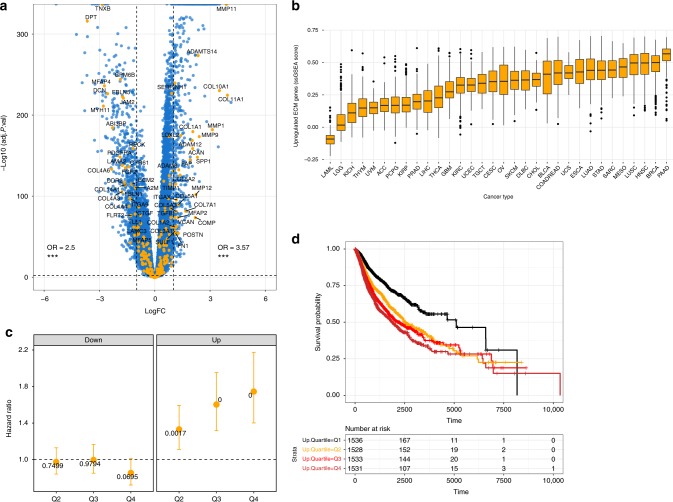
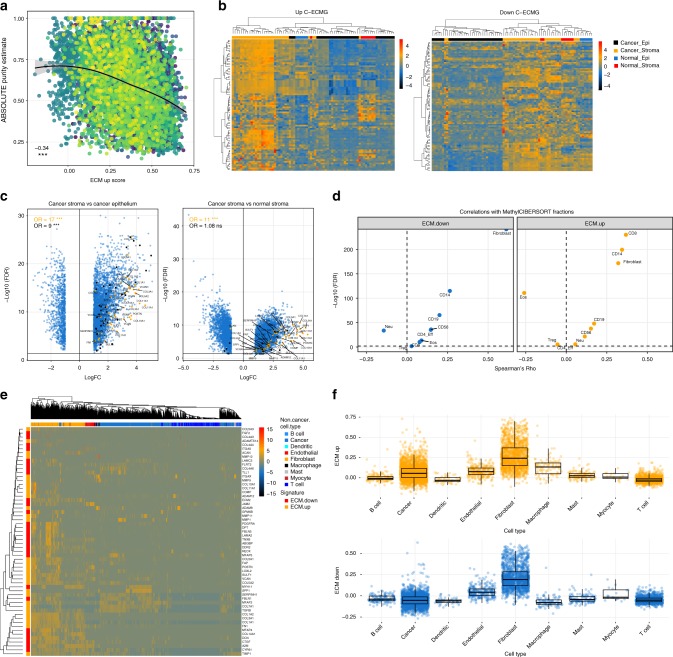
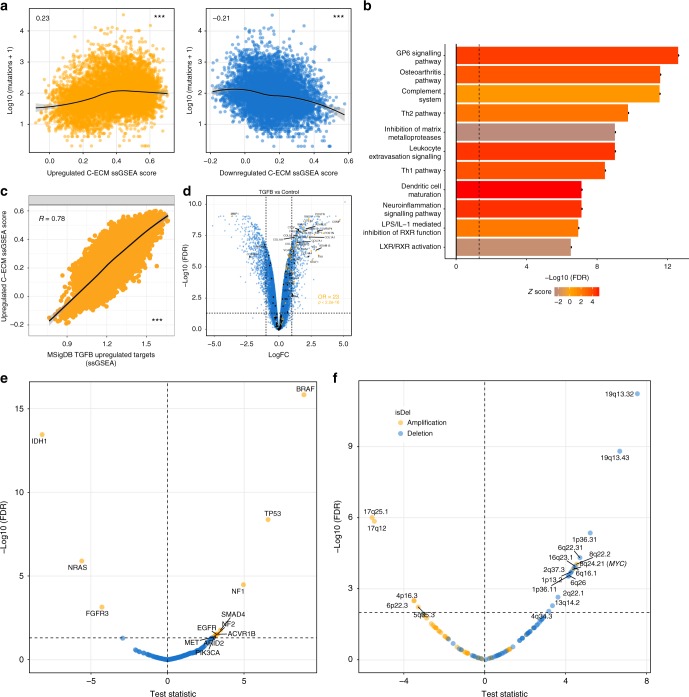
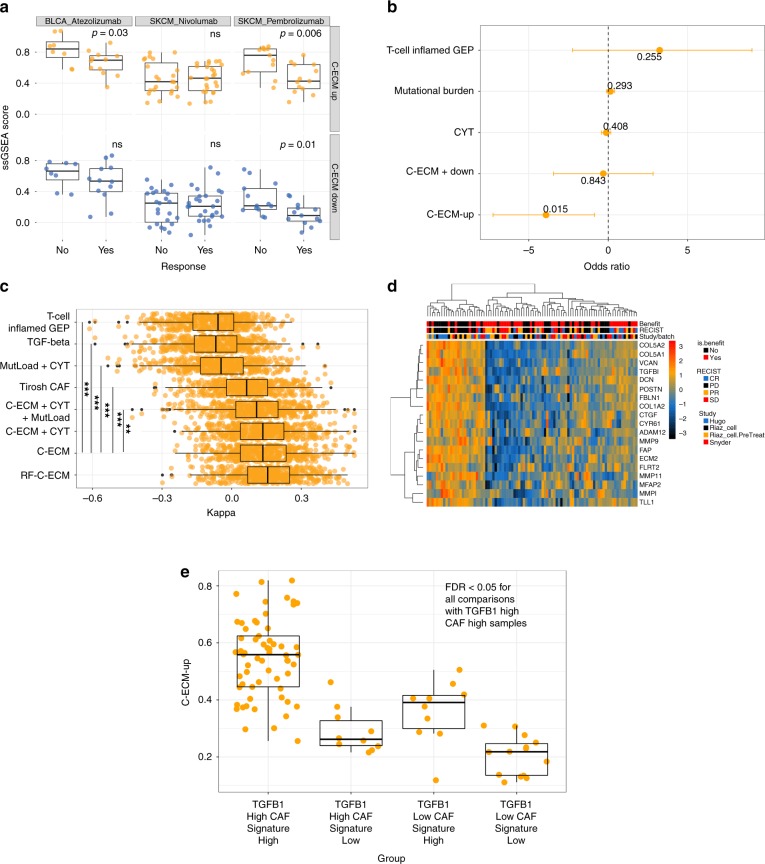
The extracellular matrix (ECM) is a key determinant of cancer progression and prognosis. Here we report findings from one of the largest pan-cancer analyses of ECM gene dysregulation in cancer. We define a distinct set of ECM genes upregulated in cancer (C-ECM) and linked to worse prognosis. We found that the C-ECM transcriptional programme dysregulation is correlated with the activation of TGF-β signalling in cancer-associated fibroblasts and is linked to immunosuppression in otherwise immunologically active tumours. Cancers that activate this programme carry distinct genomic profiles, such as BRAF, SMAD4 and TP53 mutations and MYC amplification. Finally, we show that this signature is a predictor of the failure of PD-1 blockade and outperforms previously-proposed biomarkers. Thus, our findings identify a distinct transcriptional pattern of ECM genes in operation across cancers that may be potentially targeted, pending preclinical validation, using TGF-β blockade to enhance responses to immune-checkpoint blockade.
Overview
The claims and statistics of this paper haven’t been checked yet.
Free: it reads the open-access text and checks the first 5 claims that cite a source we can check. Create a free account to check every claim.
Integrity signals
Registry
Cites
Statistics
Figures
Verification
Claims the paper makes
The claims and statistics of this paper haven’t been checked yet.
Free: it reads the open-access text and checks the first 5 claims that cite a source we can check. Create a free account to check every claim.
Claims other papers make about this one
Each is checked against this paper’s own text: does it say what the citing paper says it does?
In the citing paper
“genetic signatures linked to TGFb signaling and stromal remodeling are associated with poor disease outcome and immunotherapy failure across multiple human cancers”
From Immunomodulation by targeted anticancer agents (2021) · cites this paper as Chakravarthy et al., 2018
In the citing paper
“This signature was enriched in immunologically “hot” tumors across different cancer types within TCGA (Chakravarthy et al., 2018).”
From Hallmarks of response, resistance, and toxicity to immune checkpoint blockade (2021) · cites this paper as Chakravarthy et al., 2018
In the citing paper
“CAF-derived transforming growth factor beta (TGFβ) signaling in the tumor microenvironment was associated with dysregulation of the ECM genes resulting in a distinct signature that correlated with higher CD8+ T cells and M1:M2 macrophage ratio.”
From Hallmarks of response, resistance, and toxicity to immune checkpoint blockade (2021) · cites this paper as Chakravarthy et al., 2018
Self-check
Percentages, sums and reported differences re-computed from the paper’s own numbers.
The self-check needs the paper’s full text.
Citations
Cites
Hallmarks of Cancer: The Next Generation
Hanahan, D., & Weinberg, R. A. (2011) · Cell · doi:10.1016/j.cell.2011.02.013 · Cited by 66,590
GSVA: gene set variation analysis for microarray and RNA-Seq data
Hänzelmann, S., Castelo, R., & Guinney, J. (2013) · BMC Bioinformatics · doi:10.1186/1471-2105-14-7 · Cited by 15,440
Robust enumeration of cell subsets from tissue expression profiles
Newman, A. M., Liu, C. L., Green, M. R., Gentles, A. J., Feng, W., Xu, Y., Hoang, C. D., Diehn, M., & Alizadeh, A. A. (2015) · Nature Methods · doi:10.1038/nmeth.3337 · Cited by 13,224
Mismatch repair deficiency predicts response of solid tumors to PD-1 blockade
Le, D. T., Durham, J. N., Smith, K. N., Wang, H., Bartlett, B. R., Aulakh, L. K., Lu, S., Kemberling, H., Wilt, C., Luber, B. S., et al. (2017) · Science · doi:10.1126/science.aan6733 · Cited by 6,645
PD-1 blockade induces responses by inhibiting adaptive immune resistance
Tumeh, P. C., Harview, C. L., Yearley, J. H., Shintaku, I. P., Taylor, E. J. M., Robert, L., Chmielowski, B., Spasic, M., Henry, G., Ciobanu, V., et al. (2014) · Nature · doi:10.1038/nature13954 · Cited by 6,609
voom: precision weights unlock linear model analysis tools for RNA-seq read counts
Law, C. W., Chen, Y., Shi, W., & Smyth, G. K. (2014) · Genome Biology · doi:10.1186/gb-2014-15-2-r29 · Cited by 6,155
Charoentong, P., Finotello, F., Angelova, M., Mayer, C., Efremova, M., Rieder, D., Hackl, H., & Trajanoski, Z. (2017) · Cell Reports · doi:10.1016/j.celrep.2016.12.019 · Cited by 5,041
Dissecting the multicellular ecosystem of metastatic melanoma by single-cell RNA-seq
Tirosh, I., Izar, B., Prakadan, S. M., Wadsworth, M. H., Treacy, D., Trombetta, J. J., Rotem, A., Rodman, C., Lian, C., Murphy, G., et al. (2016) · Science · doi:10.1126/science.aad0501 · Cited by 4,944
Genetic Basis for Clinical Response to CTLA-4 Blockade in Melanoma
Snyder, A., Makarov, V., Merghoub, T., Yuan, J., Zaretsky, J. M., Desrichard, A., Walsh, L. A., Postow, M. A., Wong, P., Ho, T. S., et al. (2014) · New England Journal of Medicine · doi:10.1056/nejmoa1406498 · Cited by 4,286
Systematic RNA interference reveals that oncogenic KRAS-driven cancers require TBK1
Barbie, D. A., Tamayo, P., Boehm, J. S., Kim, S. Y., Moody, S. E., Dunn, I. F., Schinzel, A. C., Sandy, P., Meylan, E., Scholl, C., et al. (2009) · Nature · doi:10.1038/nature08460 · Cited by 3,890
Cited by
Items 301–400 of 733
Unfolding innate mechanisms in the cancer microenvironment: The emerging role of the mesenchyme
Koliaraki, V., Henriques, A. R., Prados, A., & Kollias, G. A. (2020) · The Journal of Experimental Medicine · doi:10.1084/jem.20190457 · Cited by 22
Single‐cell advances in stromal‐leukocyte interactions in cancer
Wu, S. Z., & Swarbrick, A. (2021) · Immunological Reviews · doi:10.1111/imr.12976 · Cited by 22
Immune Microenvironment in Oral Potentially Malignant Disorders and Oral Cancer: A Narrative Review
Ali, A. A., Molska, G. R., Yeo, H.-L., Esfandiari, N., Jeong, W., Huang, M. Y., & Magalhães, M. A. O. (2025) · International Journal of Molecular Sciences · doi:10.3390/ijms26146650 · Cited by 21
“Their presence is associated with resistance to immunotherapy and correlates with poorer disease-free survival outcomes in patients [70,71].”
Wu, Z., Luo, M., Hu, H., Jiang, Z., Lu, Y., & Xiao, Z. (2025) · Journal of Translational Medicine · doi:10.1186/s12967-025-06791-x · Cited by 21
“TGFβ-related genes expressed in the TME and increased infiltration of myofibroblastic CAFs (myoCAFs) in solid tumors correlate with reduced T cell infiltration and resistance to immunotherapy [71, 72].”
Burley, A., Rullan, A., & Wilkins, A. C. (2022) · Frontiers in Oncology · doi:10.3389/fonc.2022.1000888 · Cited by 21
“Such functions can be driven by the physical properties of CAFs for example the sequestration or trapping of immune cells in the matrix or by secretion of immunomodulatory chemokines for example TGFb (41, 42).”
BackgroundMigratory Engineering of T Cells for Cancer Therapy
Michaelides, S., Obeck, H., Kechur, D., Endres, S., & Kobold, S. (2022) · Vaccines · doi:10.3390/vaccines10111845 · Cited by 21
Huang, Y., Xiao-yang, X., Lu, Y., Sun, Q., Zhang, L., Shao, J., Chen, D., Chang, Y., Sun, X., Zhuo, W., et al. (2024) · The FASEB Journal · doi:10.1096/fj.202301524r · Cited by 21
Chen, J. L., Liu, Y., Lan, J., Liu, H., Tang, Q., Li, Z., Qiu, X., Hu, W., Xie, J., Feng, Y., et al. (2024) · CNS Neuroscience & Therapeutics · doi:10.1111/cns.14802 · Cited by 21
“22,23 In GBM, complex interactions among tumor cells, normal brain cells (neurons and astrocytes), and the ECM contribute to persistent tumor infiltration and treatment failure.”
BackgroundSinkarevs, S., Štrumfs, B., Volkova, S., & Štrumfa, I. (2024) · Cells · doi:10.3390/cells13121057 · Cited by 22
Viral Hepatitides, Inflammation and Tumour Microenvironment
Timperi, E., & Barnaba, V. (2020) · Advances in experimental medicine and biology · doi:10.1007/978-3-030-44518-8_3 · Cited by 21
Gao, H., Tian, Q., Zhu, L., Feng, J., Yan, Z., & Yang, J. (2021) · Frontiers in Oncology · doi:10.3389/fonc.2021.764204 · Cited by 21
Artificial Tumor Microenvironments in Neuroblastoma
Quinn, C. H., Beierle, A. M., & Beierle, E. A. (2021) · Cancers · doi:10.3390/cancers13071629 · Cited by 21
Tonic signaling in CAR-T therapy: the lever long enough to move the planet
Huang, Y., & Wang, H. (2025) · Frontiers of Medicine · doi:10.1007/s11684-025-1130-x · Cited by 20
Woo, A. M., & Sontheimer, H. W. (2023) · Frontiers in Molecular Medicine · doi:10.3389/fmmed.2023.1198021 · Cited by 21
“Although well associated with neuroinflammation and epilepsy as covered previously, TGF-β is also known to be crucial in a number of peripheral nervous system disorders wherein tissue straining, stiffening, or scarring plays a role, including obstructive lung diseases and numerous cancers (Hinz, 2015; Chakravarthy et…”
BackgroundFSTL3 is associated with prognosis and immune cell infiltration in lung adenocarcinoma
Meng, X., Zhao, X., Zhou, B., Song, W., Liang, Y., Liang, M., Du, M., Shi, J., & Gao, Y. (2024) · Journal of Cancer Research and Clinical Oncology · doi:10.1007/s00432-023-05553-w · Cited by 20
“…patient OS; D impact of KRT17 gene expression on patient OS; E impact of SNORA12 gene expression on patient OS; and F impact of KRT81 gene expression on patient OS ◂ Page 12 of 15 understanding tumor pathogenesis and the effectiveness of immunotherapy (Chakravarthy et al. 2018; Henke et al. 2019).”
BackgroundRoles of X-box binding protein 1 in liver pathogenesis
Tak, J., Kim, Y. S., & Kim, S. G. (2024) · Clinical and Molecular Hepatology · doi:10.3350/cmh.2024.0441 · Cited by 20
Chen, Y., Ye, Y., Fan, Y., Lü, W., Wei, Y., Wu, J., Ruan, B., Wan, Z., Zhao, Y., Xie, K., et al. (2025) · Biomaterials · doi:10.1016/j.biomaterials.2025.123497 · Cited by 19
Minini, M., Avveduto, G., Becharef, S., Meunier--Thaens, M., Lekbaby, B., Pérez-Lanzón, M., Machado, A., Guilbert, T., Lesieur, J., Renault, G., et al. (2025) · Hepatology · doi:10.1097/hep.0000000000001545 · Cited by 19
Restoring extracellular matrix synthesis in senescent stem cells
Rong, N., Mistriotis, P., Wang, X., Tseropoulos, G., Rajabian, N., Zhang, Y., Wang, J., Liu, S., & Andreadis, S. T. (2019) · The FASEB Journal · doi:10.1096/fj.201900377r · Cited by 19
CMTM6 mediates the Warburg effect and promotes the liver metastasis of colorectal cancer
Shaha, A., Wang, Y., Wang, X., Wang, D., Guinovart, D., Liu, B., & Kang, N. (2024) · Experimental & Molecular Medicine · doi:10.1038/s12276-024-01303-1 · Cited by 19
Li, T., Chen, H., Guo, Y., Huang, M. N., Liu, P., Aikemu, A., Mohammadtursun, N., Pan, X. H., & Yang, X. (2025) · Journal of Agricultural and Food Chemistry · doi:10.1021/acs.jafc.4c08844 · Cited by 20
Sylvestre, M., Tarte, K., & Roulois, D. (2019) · Epigenomics · doi:10.2217/epi-2019-0165 · Cited by 19
Shakiba, D., Genin, G. M., & Zustiak, S. P. (2023) · Advanced Drug Delivery Reviews · doi:10.1016/j.addr.2023.114771 · Cited by 19
Reprogramming the tumor microenvironment to improve the efficacy of cancer immunotherapies
Faraj, J. A., Al-Athari, A. J. H., Mohie, S. E. D., Kadhim, I. K., Jawad, N. M., Abbas, W. J., & Jalil, A. T. (2022) · Medical Oncology · doi:10.1007/s12032-022-01842-5 · Cited by 19
“Highlighting the clinical importance of immunodeficient TME, another therapeutic strategy is the stroma-based immunotherapy such as targeting CXCL12-CXCR4 signaling [37], and TGF-β signaling or release [38], of note, combined with ICB to better control tumor growth.”
BackgroundZhang, Y., & Liu, Z. (2025) · Advanced Science · doi:10.1002/advs.202508692 · Cited by 18
Kirschstein, E., Harder, O. E., Krull, J. E., Sikorski, M., Khanal, S., Mack, M., Ware, C. F., Evans, E. E., Gough, M. J., Ma, Q., et al. (2026) · Cancer Cell · doi:10.1016/j.ccell.2026.03.004 · Cited by 19
Yang, H., Xu, D., Zhang, Y., Yao, F., Zhao, H., Schmid, R. A., & Peng, R. (2020) · Cancers · doi:10.3390/cancers12082310 · Cited by 18
“The gene list was curated based on previous studies across different cancer lineages [16,17].”
BackgroundEpigenetic regulation of pancreatic adenocarcinoma in the era of cancer immunotherapy
Kawakubo, K., Castillo, C. F.-D., & Liss, A. S. (2022) · Journal of Gastroenterology · doi:10.1007/s00535-022-01915-2 · Cited by 18
Li, Z., Wang, F., Dang, J., Cheng, F., & Zheng, F. (2022) · Translational Cancer Research · doi:10.21037/tcr-22-292 · Cited by 18
Huang, B., Chen, Q., Ye, Z., Zeng, L., Huang, C., Xie, Y., Zhang, R., & Shen, H. (2023) · International Journal of Molecular Sciences · doi:10.3390/ijms241713175 · Cited by 18
CCDC113 promotes colorectal cancer tumorigenesis and metastasis via TGF-β signaling pathway
Hou, C., Yang, Y., Wang, P., Xie, H., Jin, S., Zhao, L., Wu, G., Xing, H., Chen, H., Liu, B., et al. (2024) · Cell Death and Disease · doi:10.1038/s41419-024-07036-3 · Cited by 18
Cancer-associated fibroblasts in breast cancer in the single-cell era: Opportunities and challenges
Yang, J., Xin, B., Wang, X., & Wan, Y. (2025) · Biochimica et Biophysica Acta (BBA) - Reviews on Cancer · doi:10.1016/j.bbcan.2025.189291 · Cited by 18
Tamsulosin attenuates high glucose- induced injury in glomerular endothelial cells
Sun, L., Sun, C., Zhou, S., Zhang, L., & Hu, W. (2021) · Bioengineered · doi:10.1080/21655979.2021.1955527 · Cited by 18
Prieto-Fernández, L., Montoro-Jiménez, I., de Luxán‐Delgado, B., Otero‐Rosales, M., Rodrigo, J. P., Calvo, F., Garcia-Pedrero, J. M., & Álvarez–Teijeiro, S. (2023) · Biomedicine & Pharmacotherapy · doi:10.1016/j.biopha.2023.114502 · Cited by 18
Li, Q., Yuan, H., Zhao, G., Zhang, J., Li, S., Gong, D., Feng, T., Kou, Q., Wang, Q., Wang, G., et al. (2023) · The FASEB Journal · doi:10.1096/fj.202201801r · Cited by 18
Li, Z., Cao, T., Li, Q., Zhang, J., Du, J., Chen, J., Bai, Y., Hao, J., Zhu, Z., Qiao, H., et al. (2023) · Clinical Immunology · doi:10.1016/j.clim.2023.109742 · Cited by 18
TGFβ and activin A in the tumor microenvironment in colorectal cancer
Zessner‐Spitzenberg, J., Thomas, A. L., Krett, N. L., & Jung, B. H. (2019) · Gene Reports · doi:10.1016/j.genrep.2019.100501 · Cited by 18
“Another report showed that dysregulation of the ECM through TGFβ overexpression in ‘immunogenically hot’ tumors predicted failure of treatment with PD-1 inhibitors, again implying TGFβ to be a pivotal modulator of the adaptive immunity, and substantiating the rationale of dual targeting of TGFβ and PD-1/PD-L1 (54).”
BackgroundJiang, J., Ding, Y., Chen, Y., Lü, J., Chen, Y., Wu, G., Xu, N., Wang, H., & Teng, L. (2021) · Cancer Medicine · doi:10.1002/cam4.4456 · Cited by 18
Epidermal stem cells: Interplay with the skin microenvironment during wound healing
Hur, Y. H. (2024) · Molecules and Cells · doi:10.1016/j.mocell.2024.100138 · Cited by 18
Ren, R., Zhang, S., Peng, Z., Ji, X., Song, H., Wang, Q., Sun, X., Wang, H., & Dong, Y. (2025) · Cell Death and Disease · doi:10.1038/s41419-025-07842-3 · Cited by 17
Hildebrand, K. M., Singla, A. K., McNeil, R., Marritt, K., Hildebrand, K., Zemp, F. J., Rajwani, J., Itani, D. M., Bose, P., Mahoney, D. J., et al. (2021) · PLoS ONE · doi:10.1371/journal.pone.0253864 · Cited by 18
Self-citationYou, S., Han, X., Xu, Y., Sui, L., Song, K., & Yao, Q. (2024) · Cancer Medicine · doi:10.1002/cam4.7217 · Cited by 17
“…of the disease, under pathological conditions, overexpression of TGF-β will promote epithelial interstitial transformation (EMT), 41 extracellular matrix deposition (ECM), 42 and the formation of cancer-associated fibroblasts (CAFs), 43 leading to the formation of fibrotic diseases and cancer.”
BackgroundBravo, G. M., Thongon, N., Rodríguez‐Sevilla, J. J., Ma, F., Gañán‐Gómez, I., Yang, H., Kim, Y. J., Ademà, V., Wildeman, B., Tanaka, T. N., et al. (2024) · Cell Reports Medicine · doi:10.1016/j.xcrm.2024.101585 · Cited by 17
Monteagudo, M., Calsina, B., Salazar-Hidalgo, M. E., Martínez‐Montes, Á. M., Piñeiro-Yáñez, E., Caleiras, E. J., Martín, M. C., Rodríguez, S., Letón, R., Gil, E., et al. (2024) · Best Practice & Research Clinical Endocrinology & Metabolism · doi:10.1016/j.beem.2024.101931 · Cited by 18
Zhou, L., Zhang, W., Hu, X., Wang, D., & Tang, D. (2024) · Clinical Medicine Insights Oncology · doi:10.1177/11795549241287058 · Cited by 17
“Fibroblast activation protein, the most popular surface marker for CAFs, enhances the toxic effects of CD8 + T-cells and Zhou et al 9 promotes tumor necrosis factor (TNF)- α and interferon (IFN)- γ -mediated immune responses through targeted therapies, including tumor vaccines and T-cell therapy, thereby eliminating F…”
BackgroundInfluentialWu, M., Ma, W., Lv, G., Wang, X., Li, C., Chen, X., Peng, X., Tang, C., Pan, Z., Liu, R., et al. (2024) · npj Precision Oncology · doi:10.1038/s41698-024-00743-2 · Cited by 17
Gargalionis, A. N., Papavassiliou, K. A., Basdra, E. K., & Papavassiliou, A. G. (2024) · Journal of Experimental & Clinical Cancer Research · doi:10.1186/s13046-024-03242-1 · Cited by 17
Chen, Y., Xue, Y., Yan, C., Jin, J., Liu, Y., Li, J., Han, S., & Liu, J. (2025) · Advanced Healthcare Materials · doi:10.1002/adhm.202404642 · Cited by 17
von der Heyde, B., & Hallmann, A. (2020) · The Plant Journal · doi:10.1111/tpj.14901 · Cited by 17
Targeting Pancreatic Ductal Adenocarcinoma (PDAC)
Parrasia, S., Zoratti, M., Szabó, I., & Biasutto, L. (2020) · Cellular Physiology and Biochemistry · doi:10.33594/000000326 · Cited by 17
Zawawi, S. S. A., & Musa, M. (2022) · Biology · doi:10.3390/biology11071014 · Cited by 17
Avsharian, L. C., Loganathan, S., Ebelt, N. D., Shalamzari, A. F., Muñoz, I. R., & Manuel, E. R. (2024) · Biomolecules · doi:10.3390/biom14111458 · Cited by 16
“Although we did not see an increased macrophage infiltration following BL21-TAN treatment, collagen and hyaluronan promote therapeutic resistance in solid tumors through signaling pathways and receptors, such as TGF-β , LAIR-1, and CD44 [7,66,67].”
Epigenome-Driven Strategies for Personalized Cancer Immunotherapy
Rocha, G. I. Y., Gomes, J. E. M., Leite, M. L., da Cunha, N. B., & Costa, F. F. (2023) · Cancer Management and Research · doi:10.2147/cmar.s272031 · Cited by 16
“98 Treatment of tumors with DNMTis induces tumor cells to enter a previously mentioned “viral mimicry” state, in which their metabolism is programmed as if a viral invasion had successfully occurred, triggering the activation of the interferon pathway and considerably increasing the effectiveness…”
BackgroundInfluentialTian, L., Li, X., Guo, L., Huang, L., Wu, X., & Gao, W. (2024) · Coordination Chemistry Reviews · doi:10.1016/j.ccr.2024.216027 · Cited by 16
Liu, Y., Yang, Z., Pu, J. J., Zhong, J., Khoo, U., Su, Y., & Zhang, G. (2025) · Clinical and Translational Medicine · doi:10.1002/ctm2.70261 · Cited by 16
“118 Therefore, our study highlights the significance of ECM reorgani-sation, TGF-β signalling activation, and cell cycle dysregulation in shaping the immunosuppressive microenvironment of LNM, presenting potential targets for novel therapeutic strategies.”
Shi, Z., Hu, C., Li, H., & Sun, C. (2025) · International Journal of Molecular Sciences · doi:10.3390/ijms26073234 · Cited by 16
“CAFs are not a uniform population of cells, but rather consist of distinct subpopulations with different origins, functions, and molecular characteristics.”
Datar, U. V., Kale, A. D., Angadi, P. V., Hallikerimath, S. R., Mane, D. R., & Desai, K. M. (2022) · Journal of Clinical and Translational Research · doi:10.18053/jctres.08.202201.007 · Cited by 16
“When present, CAFs are associated with resistance to immunotherapy and poor disease-free survival in OSCC [4,14-16].”
BackgroundHan, B., Fang, T., Wang, Y., Zhang, Y., & Xue, Y. (2022) · Frontiers in Genetics · doi:10.3389/fgene.2022.808041 · Cited by 16
“…in STAD using multiple methods, including CIBERSORT, MCPcounter, TIMER, ssGSEA and quanTIseq algorithms, and immune cells for each STAD patient were calculated as described previously (Becht et al., 2016; Charoentong et al., 2017; Li et al., 2017; Chen et al., 2018; Finotello et al., 2019).”
MethodWu, Y., Yu, S., & Qiao, H. (2022) · Frontiers in Pharmacology · doi:10.3389/fphar.2022.990445 · Cited by 16
Harikrishnan, K., Prabhu, S. S., & Balasubramanian, N. (2022) · PLoS ONE · doi:10.1371/journal.pone.0270063 · Cited by 16
“Analysis of 12 cancer types (lung, pancreas, prostate, kidney, stomach, colon, ovary, breast, liver, bladder and skin) shows that tumour matrisome index (TMI) is associated with disease progression and poor clinical outcome [17].”
BackgroundDevelopment of skeletal muscle fibrosis in a rodent model of cancer cachexia
Washington, T. A., Schrems, E. R., Haynie, W. S., Rosa‐Caldwell, M. E., Brown, J. L., Saling, L. W., Lim, S., Perry, R. A., Brown, L. A., Lee, D. E., et al. (2023) · Cell Biochemistry and Function · doi:10.1002/cbf.3797 · Cited by 16
Torricelli, F., Donati, B., Reggiani, F., Manicardi, V., Piana, S., Valli, R., Lococo, F., & Ciarrocchi, A. (2023) · Molecular Cancer · doi:10.1186/s12943-023-01816-9 · Cited by 17
Isoform specific anti-TGFβ therapy enhances antitumor efficacy in mouse models of cancer
Gupta, A., Budhu, S., Fitzgerald, K., Giese, R., Michel, A. O., Holland, A., Campesato, L. F., Snick, J. V., Uyttenhove, C., Ritter, G., et al. (2021) · Communications Biology · doi:10.1038/s42003-021-02773-z · Cited by 16
Rodriguez, B. L., Huang, J., Gibson, L., Fradette, J. J., Chen, H.-I. H., Koyano, K., Cortez, C. A., Li, B., Ho, C., Ashique, A. M., et al. (2024) · Molecular Cancer Therapeutics · doi:10.1158/1535-7163.mct-23-0866 · Cited by 16
Hernando‐Calvo, A., Han, M., Ayodele, O., Wang, B. X., Bruce, J. P., Aghababazadeh, F. A., Vila-Casadesús, M., Sanz‐García, E., Yang, S. Y. C., Berman, H. K., et al. (2024) · Clinical Colorectal Cancer · doi:10.1016/j.clcc.2024.05.002 · Cited by 16
IQGAP3 signalling mediates intratumoral functional heterogeneity to enhance malignant growth
Shimura, M., Matsuo, J., Pang, S., Jangphattananont, N., Hussain, A., Rahmat, M. B. B., Lee, J.-W., Douchi, D., Tong, J. J. L., Myint, K. N., et al. (2024) · Gut · doi:10.1136/gutjnl-2023-330390 · Cited by 15
“33 41–44 There are a few reports on the relationship between IQGAP3 and EMT.”
Qiu, Z., Zhong, Y., Lu, Z., Zhang, K., Li, Z., Nie, J., & Cheng, H. B. (2024) · Advanced Functional Materials · doi:10.1002/adfm.202414847 · Cited by 15
Role of exosomes in transforming growth factor-β-mediated cancer cell plasticity and drug resistance
Ruksha, T. G., & Palkina, N. V. (2025) · Exploration of Targeted Anti-tumor Therapy · doi:10.37349/etat.2025.1002322 · Cited by 16
Hernando‐Calvo, A., Carvajal, R. D., Paik, P. K., Morris, V. K., Zandberg, D. P., Kaczmar, J. M., Bohr, D. N., Reiners, R. D., Gharakhani, E., Salazar, R. L., et al. (2025) · Clinical Cancer Research · doi:10.1158/1078-0432.ccr-25-0100 · Cited by 15
“Furthermore, TGF-β has been shown to polarize tumor-associated macrophages and enhance immunosuppression of tumor-associated fibroblasts and myeloid-derived suppressor cells within the tumor microenvironment (20, 21).”
Yu, C., You, M., Zhang, P., Zhang, S., Yin, Y., & Zhang, X. (2021) · Cancer Medicine · doi:10.1002/cam4.3986 · Cited by 15
Yang, H., Berezowska, S., Dorn, P., Zens, P., Chen, P., Peng, R., Marti, T. M., Kocher, G. J., Schmid, R. A., & Hall, S. R. R. (2021) · Theranostics · doi:10.7150/thno.61209 · Cited by 15
“In a large pan-cancer analysis, TGF-β signaling from cancer-associated fibroblasts (CAFs) positively correlated with a dysregulated extracellular matrix (ECM) transcriptional signature that was linked to immunosuppression and was a better predictor of failure to immune checkpoint blockade (ICB) targeting programmed de…”
BackgroundMethodResultInfluentialKim, N., Lee, J., Kim, S. H., Kang, S.-H., Bae, S., Yu, C.-H., Seo, J., & Kim, H.-T. (2024) · Cancer Immunology Immunotherapy · doi:10.1007/s00262-024-03777-4 · Cited by 15
A Comprehensive Benchmark of Transcriptomic Biomarkers for Immune Checkpoint Blockades
Kang, H., Zhu, X., Cui, Y., Xiong, Z., Zong, W., Bào, Y., & Jia, P. (2023) · Cancers · doi:10.3390/cancers15164094 · Cited by 14
“The C-ECM score is defined as the NES of a set of 58 cancer-associated ECM genes (C-ECM), which is associated with the activity of TGF-beta and the presence of cancer associated fibroblast (CAFs) [41].”
BackgroundFerreira, G. A., Thomé, C. H., Izumi, C., Grassi, M. L., Lanfredi, G. P., Smolka, M. B., Faça, V. M., & dos Reis, F. J. C. (2023) · Journal of Ovarian Research · doi:10.1186/s13048-023-01304-0 · Cited by 14
“The ECM of tumors is recognized as a significant barrier to effective cancer treatment [24, 25].”
BackgroundZeng, S., Chen, L.-X., Tian, J., Liu, Z., Liu, X., Tang, H.-B., Wu, H., & Liu, C. (2024) · npj Precision Oncology · doi:10.1038/s41698-024-00703-w · Cited by 14
Heterogeneity in Pancreatic Cancer Fibroblasts—TGFβ as a Master Regulator?
Watt, D. M., & Morton, J. P. (2021) · Cancers · doi:10.3390/cancers13194984 · Cited by 14
Peritumoral CD90+CD73+ cells possess immunosuppressive features in human non-small cell lung cancer
Wang, L., Yang, H., Dorn, P., Berezowska, S., Blank, F., Wotzkow, C., Marti, T. M., Peng, R., Harrer, N. E., Sommergruber, W., et al. (2021) · EBioMedicine · doi:10.1016/j.ebiom.2021.103664 · Cited by 15
“Here, we curated a core set of genes defining an immune activation (IA) CD8+ T effector cell signature [22 24] to explore the relationship with a curated ECM/stromal signature expressed by mesenchymal cells, including but not limited to CAFs, within the TME across various solid tumours [15,17,19] using molecular analy…”
BackgroundMethodInfluentialWu, G., Chen, B., Jiang, J., Chen, Y., Chen, Y., & Wang, H. (2022) · Cancer Medicine · doi:10.1002/cam4.5178 · Cited by 14
Manickavasagam, G., Saaid, M., & Lim, V. (2024) · Journal of Food Science · doi:10.1111/1750-3841.16903 · Cited by 14
Wu, Z., Boen, J., Jindal, S., Basu, S., Bieniosek, M. F., He, S., LaPelusa, M. B., Mayer, A. T., Kaseb, A. O., Zou, J., et al. (2025) · bioRxiv (Cold Spring Harbor Laboratory) · doi:10.1101/2025.06.11.656869 · Cited by 14
Titmarsh, H. F., von Kriegsheim, A., Wills, J. C., O’Connor, R. A., Dhaliwal, K., Frame, M. C., Pattle, S. B., Dorward, D. A., Byron, A., & Akram, A. R. (2023) · Frontiers in Oncology · doi:10.3389/fonc.2023.1194515 · Cited by 13
“, 2014); for example, ECM dysregulation is associated with suppression of anti-tumour immunity and immunotherapy resistance, including in lung cancer (Chakravarthy et al., 2018; Peng et al., 2020).”
BackgroundDai, G., Sun, Y., Wei, R., & Xi, L. (2023) · Current Issues in Molecular Biology · doi:10.3390/cimb45070386 · Cited by 13
Spatial-transcriptomic profiling: a new lens for understanding myelofibrosis pathophysiology
Peroni, E., Calistri, E., Amato, R., Gottardi, M., & Rosato, A. (2024) · Cell Communication and Signaling · doi:10.1186/s12964-024-01877-3 · Cited by 14
“The upregulation of TGF-β further stimulates fibroblast activation [30].”
BackgroundZhao, H., Gao, Y., Ma, S., Si, X., Li, J., Qi, Y., Huang, Z., Zhang, Y., Sun, T., Li, L., et al. (2025) · Nano Research · doi:10.26599/nr.2025.94907359 · Cited by 13
Roznovan, C. N., Marutescu, L. G., & Pîrcălăbioru, G. G. (2025) · International Journal of Molecular Sciences · doi:10.3390/ijms26136177 · Cited by 14
“Notably, this signature holds promise both a therapeutic target and as a stratification tool for stratifying for precision immunotherapy [32].”
Emerging strategies in colorectal cancer immunotherapy: enhancing efficacy and survival
Zhang, Y., Guan, H., Feng, X., Liu, M., Shao, J., Liu, M., He, J., Jin, Y., Zhu, J., & Zheng, C. (2025) · Frontiers in Immunology · doi:10.3389/fimmu.2025.1616414 · Cited by 13
Lin, A., Fang, X., Zhang, P., Zhang, N., Liu, Z., Cheng, Q., Zhang, J., Tang, B., & Luo, P. (2025) · Journal of the National Cancer Center · doi:10.1016/j.jncc.2025.09.007 · Cited by 13
“172 , 173 Studies demonstrate that activation of REV-ERB 𝛼 impedes TGF-𝛽 signaling in the liver and potentially slows fibrosis progression.”
Yang, G., Yoon, S., Lee, J., Leem, S., & Choi, Y. H. (2025) · Genes & Genomics · doi:10.1007/s13258-025-01710-2 · Cited by 14
“(Chakravarthy et al. 2018; Holmgaard et al. 2018; Paller et al. 2019; Wong et al. 2024; Wu et al. 2021a) TGF-β, CAFs, ECM Reverses immune exclusion, reduces stiffness Galunisertib (TGF-βRI inhibitor) TAMReprogramming (Escamilla et al. 2015; Guan et al. 2021; Leblond et al. 2020; Liu et al. 2024;…”
Notch signaling in the tumor microenvironment: recent advances and targeted therapeutics
Chen, D., Gu, X., Liu, J., Xu, L., Ye, Z., Gao, P., Li, H., Jiao, H., Liu, P., Li, G., et al. (2026) · Molecular Cancer · doi:10.1186/s12943-025-02555-9 · Cited by 15
Zhao, S., Qu, R., Dai, Z., Jiang, X., & Zhen, X. (2026) · BMEMat · doi:10.1002/bmm2.70062 · Cited by 13
Cellular architecture and neighborhood-informed virtual spatial tumor profiling from histopathology
Li, Y. J., Li, Z., Quinton, R. J., Ji, Y., Zhang, X., Xiang, J., Wang, X., Yang, S., Eweje, F. R., Chen, Y. M., et al. (2026) · Cell · doi:10.1016/j.cell.2026.05.031 · Cited by 15
Sliker, B. H., & Campbell, P. M. (2021) · Vaccines · doi:10.3390/vaccines9060634 · Cited by 13
Implications of TGFβ Signaling and CDK Inhibition for the Treatment of Breast Cancer
Decker, J. T., Ma, J. A., Shea, L. D., & Jeruss, J. S. (2021) · Cancers · doi:10.3390/cancers13215343 · Cited by 13
Miyashita, N., Enokido, T., Horie, M., Fukuda, K., Urushiyama, H., Strell, C., Brunnström, H., Micke, P., Saito, A., & Nagase, T. (2021) · Scientific Reports · doi:10.1038/s41598-021-01799-x · Cited by 13
Marritt, K., Hildebrand, K. M., Hildebrand, K., Singla, A. K., Zemp, F. J., Mahoney, D. J., Jirik, F. R., & Monument, M. J. (2023) · Frontiers in Immunology · doi:10.3389/fimmu.2022.1087991 · Cited by 13
Yi, J., Gao, H., Wei, X., Wang, M., Xu, W., Yu, D. N., Zhao, M., Zhao, M., Wang, Z., Wei, W., et al. (2024) · International Journal of Biological Macromolecules · doi:10.1016/j.ijbiomac.2024.130052 · Cited by 13
Meng, L., Lv, H., Kong, Q., Li, S., Jiang, N., Yu, C., Duan, Z., Xiao, Y., & Liu, Y. (2024) · European Journal of Pharmacology · doi:10.1016/j.ejphar.2024.176917 · Cited by 13
Qian, F., & Han, B. (2020) · Chinese Medical Journal · doi:10.1097/cm9.0000000000001124 · Cited by 13
Immunological characterization of hepatocellular carcinoma
Wang, S. Z., Lee, S. D., Sarkar, D., Lee, H. M., Khan, A. A., Bhati, C. S., Sharma, A., Kumaran, V., Bruno, D., COTTERELL, A. H., et al. (2021) · Hepatoma Research · doi:10.20517/2394-5079.2020.113 · Cited by 14
“However, it has been shown that activation of CAFs by TGF-β leads to dysregulated extracellular matrix (ECM) architecture and excess fibrosis, both of which favor tumor progression([104]).”
BackgroundIdentification of immune-related subtypes of colorectal cancer to improve antitumor immunotherapy
Zheng, X., Gao, Y., Yu, C., Fan, G., Li, P., Zhang, M., Yu, J., & Xu, M. (2021) · Scientific Reports · doi:10.1038/s41598-021-98966-x · Cited by 14
Metadata
- Authors
- Chakravarthy, A., Khan, L., Bensler, N. P., Bose, P., & De Carvalho, D. D.
- Affiliations
- University Health Network (CA)
- University of Calgary (CA)
- Corresponding author
- Bose, Pinaki
- Venue
- Nature Communications
- Published
- 2018-11-08
- Volume
- 9
- Issue
- 1
- Pages
- 4692-4692
- ISSN
- 2041-1723 (ISSN-L)
- PMC
- PMC6224529
- OpenAlex
- W2899204048
- Cited by
- 656
- References
- 48
- Citations by year
- 2026: 65 · 2025: 96 · 2024: 123 · 2023: 107 · 2022: 86 · 2021: 89 · 2020: 66 · 2019: 24
- FWCI
- 16.01
- Type
- journal article
- Language
- en
- Open access
- gold
- doi.org
- Licence
- cc-by
- creativecommons.org/licenses/by/4.0 (tdm)
- creativecommons.org/licenses/by/4.0 (vor)
- Locations
- Nature Communications (publishedVersion, cc-by)
- Europe PMC (PubMed Central) (publishedVersion, other-oa)
- PubMed Central (publishedVersion, cc-by)
- PubMed (publishedVersion)
- RePEc: Research Papers in Economics (submittedVersion)
- DOAJ (DOAJ: Directory of Open Access Journals) (submittedVersion, cc-by-sa)
- DOAJ (DOAJ: Directory of Open Access Journals) (submittedVersion)
- Funders
- University of Calgary
- Cancer Research Society
- Princess Margaret Cancer Foundation (950-231346)
- J.P. Bickell Foundation
- Canadian Institutes of Health Research (148430_1, 201512MSH-360794-228629, 148430, 201512MSH‐)
- Canadian Cancer Society Research Institute
- Natural Sciences and Engineering Research Council of Canada (489073)
- Topics
- Life Sciences › Biochemistry, Genetics and Molecular Biology › Molecular Biology › TGF-β signaling in diseases
- Health Sciences › Medicine › Oncology › Cancer Immunotherapy and Biomarkers
- Health Sciences › Medicine › Oncology › Cancer Cells and Metastasis
- Keywords
- extracellular matrix genes, cancer-associated fibroblasts, TGF-beta signaling, immune evasion, immunotherapy resistance, anti-PD-1 therapy, prognostic signature, pan-cancer analysis, immunosuppression, TGF-beta blockade, BRAF mutation, SMAD4 mutation, TP53 mutation, MYC amplification, immune checkpoint molecules
- MeSH terms
- Cancer-Associated Fibroblasts, Extracellular Matrix, Humans, Immunotherapy, Prognosis, Transcription, Genetic, Gene Expression Regulation, Neoplastic, Transforming Growth Factor beta, Stromal Cells, Immune Evasion, Programmed Cell Death 1 Receptor, Carcinogenesis
About these checks
Registry, retraction, Cites and statistics results are computed, not judged, with one exception: a printed reference that no index lists is read once by a model before it counts as a citation error. Claims are extracted by a model and kept only when their quote appears verbatim in the text; each cited source is then checked, with a model’s help, for whether it says what the claim relies on. Those verdicts can be wrong — read the claim’s quote and the cited source before relying on one.
Statistics and arithmetic are recomputed, not judged.
Confidence bands are shown only for fields calibrated on our annotated test set. None is calibrated yet, so no band is shown.
What counts as a claim ›How we measure confidence ›How we check this ›
Are you an author, or do you see a problem with this page? Request a review
Data sources
Bibliographic data: Semantic Scholar, OpenAlex, Crossref.
Contains information from the Semantic Scholar Academic Graph Datasets, made available under the ODC Attribution License (ODC-BY 1.0).
Semantic Scholar’s data is described in: Kinney, R., et al. (2023). The Semantic Scholar Open Data Platform. arXiv:2301.10140.
