

The DOI matches its Crossref record; 67 of the 67 references it cites were found in a registry or an index.
Candida albicans gains azole resistance by altering sphingolipid composition
Open accessAbstract
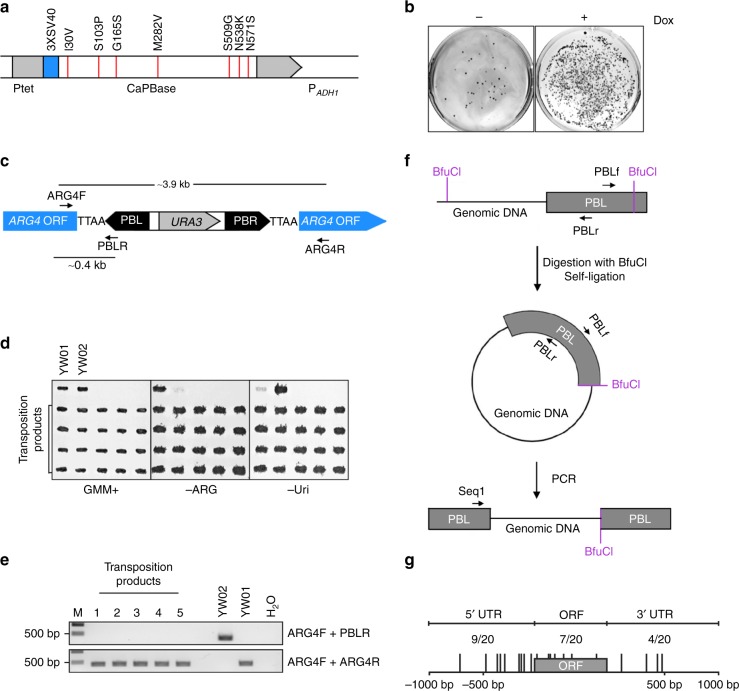
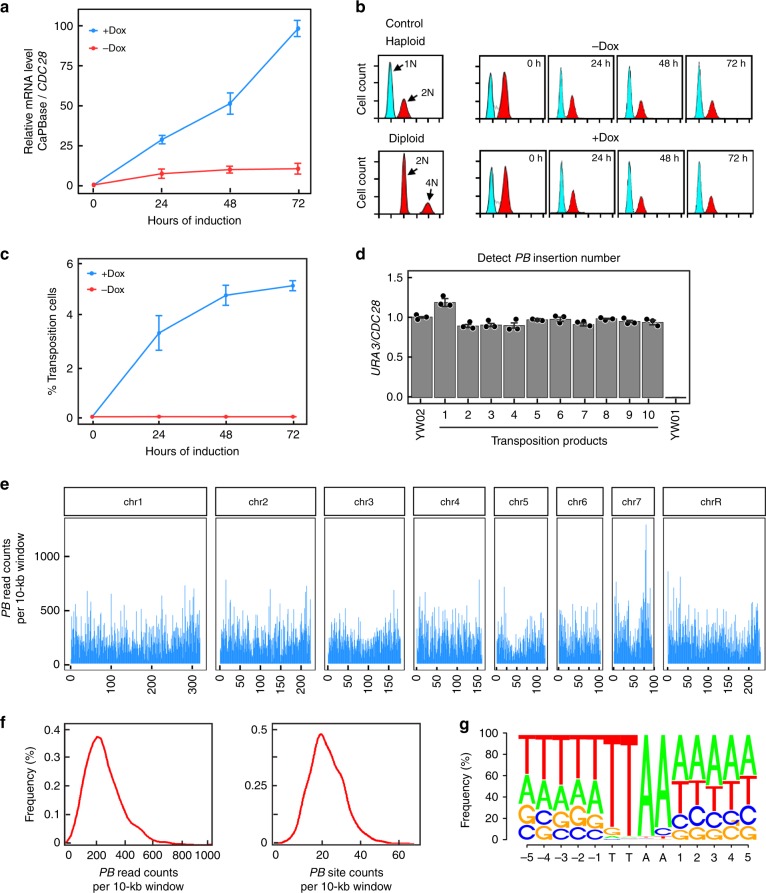
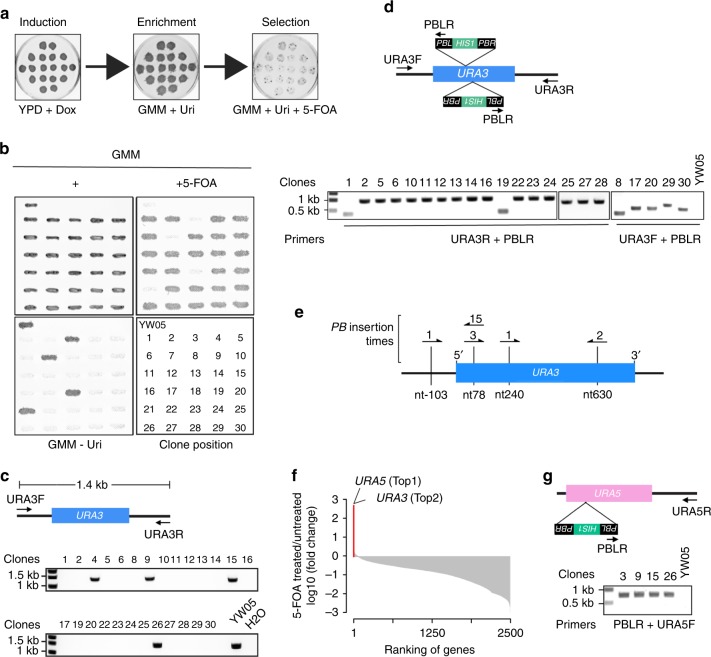
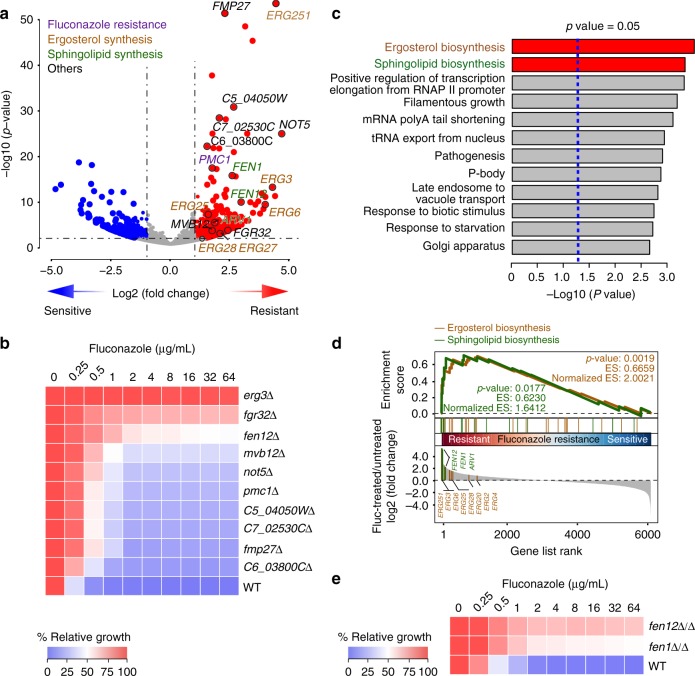
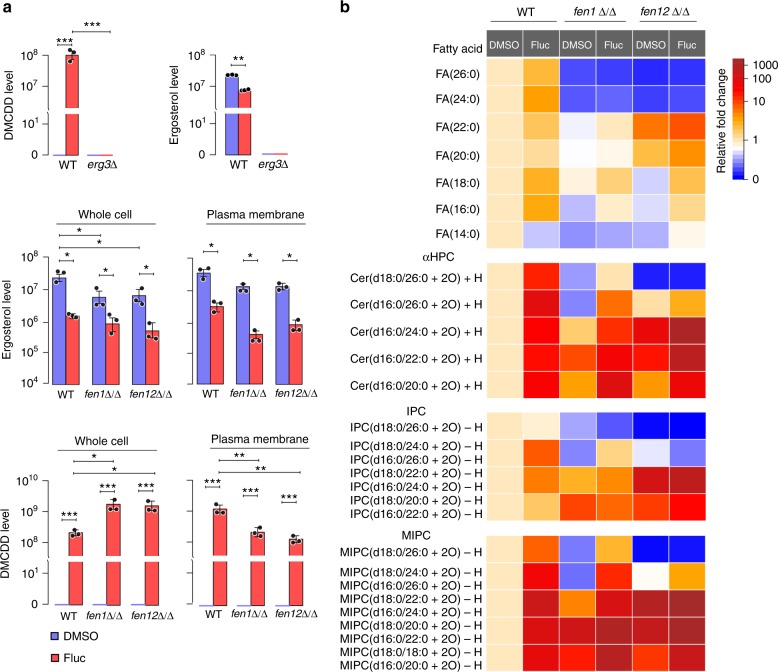
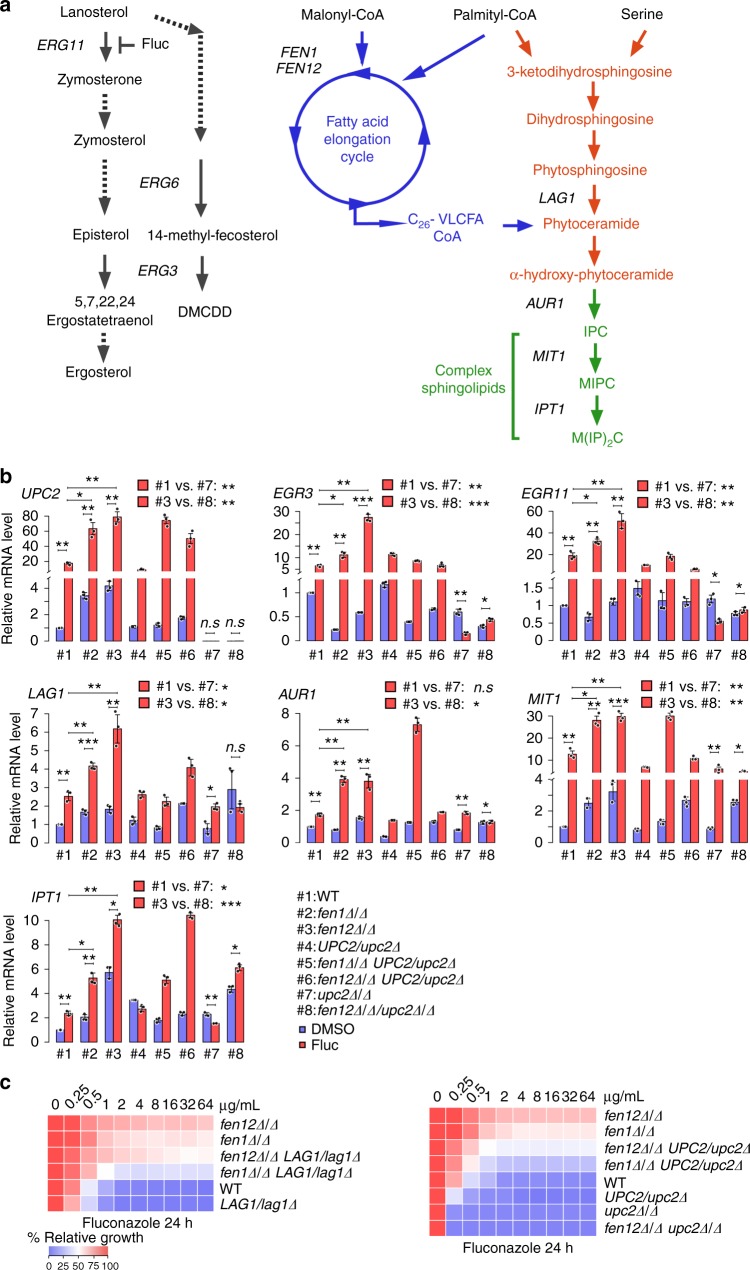
Fungal infections by drug-resistant Candida albicans pose a global public health threat. However, the pathogen's diploid genome greatly hinders genome-wide investigations of resistance mechanisms. Here, we develop an efficient piggyBac transposon-mediated mutagenesis system using stable haploid C. albicans to conduct genome-wide genetic screens. We find that null mutants in either gene FEN1 or FEN12 (encoding enzymes for the synthesis of very-long-chain fatty acids as precursors of sphingolipids) exhibit resistance to fluconazole, a first-line antifungal drug. Mass-spectrometry analyses demonstrate changes in cellular sphingolipid composition in both mutants, including substantially increased levels of several mannosylinositolphosphoceramides with shorter fatty-acid chains. Treatment with fluconazole induces similar changes in wild-type cells, suggesting a natural response mechanism. Furthermore, the resistance relies on a robust upregulation of sphingolipid biosynthesis genes. Our results shed light into the mechanisms underlying azole resistance, and the new transposon-mediated mutagenesis system should facilitate future genome-wide studies of C. albicans.
Overview
The claims and statistics of this paper haven’t been checked yet.
Run the check — free, no account needed. It reads the open-access text and checks the sources it cites.
Integrity signals
Registry
Cites
Statistics
Figures
Verification
Claims the paper makes
The claims and statistics of this paper haven’t been checked yet.
Run the check — free, no account needed. It reads the open-access text and checks the sources it cites.
Claims other papers make about this one
Each is checked against this paper’s own text: does it say what the citing paper says it does?
In the citing paper
“transposon-based mutagenesis and disruption of the C. albicans genome in a haploid strain identified a number of potential genes involved in drug stress response through Gene Set Enrichment Analysis”
From Molecular and genetic basis of azole antifungal resistance in the opportunistic pathogenic fungus Candida albicans (2020) · cites this paper as [195]
Self-check
Percentages, sums and reported differences re-computed from the paper’s own numbers.
The self-check needs the paper’s full text.
Citations
Cites
Analysis of Relative Gene Expression Data Using Real-Time Quantitative PCR and the 2−ΔΔCT Method
Livak, K. J., & Schmittgen, T. D. (2001) · Methods · doi:10.1006/meth.2001.1262 · Cited by 180,860
A RAPID METHOD OF TOTAL LIPID EXTRACTION AND PURIFICATION
Bligh, E. G., & Dyer, W. J. (1959) · Canadian Journal of Biochemistry and Physiology · doi:10.1139/o59-099 · Cited by 54,751
Functional rafts in cell membranes
Simons, K., & Ikonen, E. (1997) · Nature · doi:10.1038/42408 · Cited by 9,757
Lipid rafts as a membrane-organizing principle
Lingwood, D., & Simons, K. (2010) · Science · doi:10.1126/science.1174621 · Cited by 4,417
Functional profiling of the Saccharomyces cerevisiae genome
Giaever, G., Chu, A. M., Ni, L., Connelly, C., Riles, L., Véronneau, S., Dow, S., Lucau-Danila, A., Anderson, K., André, B., et al. (2002) · Nature · doi:10.1038/nature00935 · Cited by 4,316
Epidemiology of Invasive Candidiasis: a Persistent Public Health Problem
Pfaller, M. A., & Diekema, D. J. (2007) · Clinical Microbiology Reviews · doi:10.1128/cmr.00029-06 · Cited by 4,174
Boeke, J. D., Lacroute, F., & Fink, G. R. (1984) · Molecular and General Genetics MGG · doi:10.1007/bf00330984 · Cited by 2,354
Yuan, M., Breitkopf, S. B., Yang, X., & Asara, J. M. (2012) · Nature Protocols · doi:10.1038/nprot.2012.024 · Cited by 1,122
Efficient transposition of the piggyBac (PB) transposon in mammalian cells and mice
Ding, S., Wu, X., Li, G., Han, M., Zhuang, Y., & Xu, T. (2005) · Cell · doi:10.1016/j.cell.2005.07.013 · Cited by 1,009
Suppression of Hyphal Formation in Candida albicans by Mutation of a STE12 Homolog
Liu, H., Köhler, J. R., & Fink, G. R. (1994) · Science · doi:10.1126/science.7992058 · Cited by 788
Self-citation
Research works printed but not linked: 2
- Jones, E. W. & Fink, G. R. Regulation of amino acid and nucleotide biosynthesis in yeast. In The Molecular Biology of the Yeast Saccharomyces: Metabolism and Gene Expression (eds Strathern, J. N. et al.) 181–299 (Cold Spring Harbor Laboratory Press, Cold Spring Harbor, NY, 1982).
- Rex, J. H. et al. Clinical and Laboratory Standards Institute (CLSI). Reference Method for Broth Dilution Antifungal Susceptibility Testing of Yeasts, Approved Standard-Third Edition, CLSI document M27-A3 (ISBN 1-56238-666-2) (Clinical and Laboratory Standards Institute, 940 West Valley Road, Suite 1400, Wayne, Pennsylvania 19087-1898, USA, 2008).
Cited by
Sorted by citations
Resistance of Candida to azoles and echinocandins worldwide
Pristov, K. E., & Ghannoum, M. A. (2019) · Clinical Microbiology and Infection · doi:10.1016/j.cmi.2019.03.028 · Cited by 706
Drug resistance and tolerance in fungi.
Berman, J., & Krysan, D. J. (2020) · Nature Reviews Microbiology · doi:10.1038/s41579-019-0322-2 · Cited by 642
Pathogenesis and virulence of Candida albicans
Lopes, J. P., & Lionakis, M. S. (2021) · Virulence · doi:10.1080/21505594.2021.2019950 · Cited by 549
(BIOHAZ), E. P. O. B. H., Koutsoumanis, K., Allende, A., Álvarez‐Ordóñez, A., Bolton, D., Bover‐Cid, S., Chemaly, M., Davies, R., Cesare, A. D., Hilbert, F., et al. (2021) · EFSA Journal · doi:10.2903/j.efsa.2021.6377 · Cited by 446
The Oral Microbiota: Community Composition, Influencing Factors, Pathogenesis, and Interventions
Li, X., Liu, Y., Yang, X., Li, C., & Song, Z. (2022) · Frontiers in Microbiology · doi:10.3389/fmicb.2022.895537 · Cited by 365
The importance of antimicrobial resistance in medical mycology
Gow, N. A. R., Johnson, C., Berman, J. G., Coste, A. T., Cuomo, C. A., Perlin, D. S., Bicanic, T. A., Harrison, T. S., Wiederhold, N. P., Bromley, M., et al. (2022) · Nature Communications · doi:10.1038/s41467-022-32249-5 · Cited by 232
Candida albicans and Candida glabrata : global priority pathogens
Katsipoulaki, M., Stappers, M. H. T., Malavia-Jones, D., Brunke, S., Hube, B., & Gow, N. A. R. (2024) · Microbiology and Molecular Biology Reviews · doi:10.1128/mmbr.00021-23 · Cited by 180
From Jekyll to Hyde: The Yeast–Hyphal Transition of Candida albicans
Chow, E. W. L., Pang, L. M., & Wang, Y. (2021) · Pathogens · doi:10.3390/pathogens10070859 · Cited by 154
Self-citationNishimoto, A. T., Sharma, C., & Rogers, P. D. (2020) · Journal of Antimicrobial Chemotherapy · doi:10.1093/jac/dkz400 · Cited by 102
Facilitators of adaptation and antifungal resistance mechanisms in clinically relevant fungi
Hokken, M., Zwaan, B. J., Melchers, W. J. G., & Verweij, P. E. (2019) · Fungal Genetics and Biology · doi:10.1016/j.fgb.2019.103254 · Cited by 98
What do we know about the biology of the emerging fungal pathogen of humans Candida auris?
Ruiz, G. B., & Lorenz, A. (2020) · Microbiological Research · doi:10.1016/j.micres.2020.126621 · Cited by 85
LncRNA DINOR is a virulence factor and global regulator of stress responses in Candida auris
Gao, J., Chow, E. W. L., Wang, H., Xu, X., Cai, C., Song, Y., Wang, J., & Wang, Y. (2021) · Nature Microbiology · doi:10.1038/s41564-021-00915-x · Cited by 75
Self-citationA CRISPR Interference Platform for Efficient Genetic Repression in Candida albicans
Wensing, L. F., Sharma, J., Uthayakumar, D., Proteau, Y., Chavez, A., & Shapiro, R. S. (2019) · mSphere · doi:10.1128/msphere.00002-19 · Cited by 71
Fungal Extracellular Vesicles as Potential Targets for Immune Interventions
Freitas, M. S., Bonato, V. L. D., Pessoni, A. M., Rodrigues, M. L., Casadevall, A., & Almeida, F. B. D. R. (2019) · mSphere · doi:10.1128/msphere.00747-19 · Cited by 69
Wang, W., Lei, X., Ai, H., Bai, X., Li, J., He, J., Li, Z.-H., Zheng, Y., Feng, T., & Liu, J. (2019) · Organic Letters · doi:10.1021/acs.orglett.9b00015 · Cited by 67
Self-citationSatish, S., Jiménez-Ortigosa, C., Zhao, Y., Lee, M. H., Dolgov, E., Krüger, T., Park, S., Denning, D. W., Kniemeyer, O., Brakhage, A. A., et al. (2019) · mBio · doi:10.1128/mbio.00779-19 · Cited by 64
Plasmid-Based CRISPR-Cas9 Gene Editing in Multiple Candida Species
Lombardi, L., Oliveira-Pacheco, J., & Butler, G. (2019) · mSphere · doi:10.1128/msphere.00125-19 · Cited by 67
Fernandes, C. M., & Poeta, M. D. (2020) · Expert Review of Anti-infective Therapy · doi:10.1080/14787210.2020.1792288 · Cited by 61
Living Bacterial Microneedles for Fungal Infection Treatment
Wang, F., Zhang, X., Chen, G., & Zhao, Y. (2020) · Research · doi:10.34133/2020/2760594 · Cited by 59
Gale, A. N., Sakhawala, R. M., Levitan, A., Sharan, R., Berman, J., Timp, W., & Cunningham, K. W. (2020) · G3 Genes|Genomes|Genetics · doi:10.1534/g3.120.401595 · Cited by 56
Padovan, A. C. B., Rocha, W. P. D. S., Toti, A. C. D. M., de Jesus, D. F. F., Chaves, G. M., & Colombo, A. L. (2019) · Fungal Genetics and Biology · doi:10.1016/j.fgb.2019.103267 · Cited by 55
Azole resistance in Candida auris: mechanisms and combinatorial therapy
Jangir, P., Kalra, S., Tanwar, S., & Bari, V. K. (2023) · Apmis · doi:10.1111/apm.13336 · Cited by 54
Recent advances in understanding Candida albicans hyphal growth
Arkowitz, R. A., & Bassilana, M. (2019) · F1000Research · doi:10.12688/f1000research.18546.1 · Cited by 51
Pais, P., Galocha, M., Viana, R., Cavalheiro, M., Pereira, D., & Teixeira, M. C. (2019) · Microbial Cell · doi:10.15698/mic2019.03.670 · Cited by 54
Revie, N. M., Iyer, K. R., Maxson, M. E., Zhang, J., Yan, S., Fernandes, C. M., Meyer, K. J., Chen, X., Skulska, I., Fogal, M., et al. (2022) · Nature Communications · doi:10.1038/s41467-022-31308-1 · Cited by 48
Regulation of Ergosterol Biosynthesis in Pathogenic Fungi: Opportunities for Therapeutic Development
Song, L., Wang, S., Zou, H., Yi, X., Jia, S., Li, R., & Song, J. (2025) · Microorganisms · doi:10.3390/microorganisms13040862 · Cited by 52
Sphingolipids: Regulators of azole drug resistance and fungal pathogenicity
Song, J., Xiao, L., & Li, R. (2020) · Molecular Microbiology · doi:10.1111/mmi.14586 · Cited by 38
Pultar, F., Hansen, M. E., Wolfrum, S., Böselt, L., Fróis-Martins, R., Bloch, S., Kravina, A. G., Pehlivanoglu, D., Schäffer, C., LeibundGut‐Landmann, S., et al. (2021) · Journal of the American Chemical Society · doi:10.1021/jacs.1c04825 · Cited by 40
Engineering microbial cell morphology and membrane homeostasis toward industrial applications
Guo, L., Pang, Z., Gao, C., Chen, X., & Liu, L. (2020) · Current Opinion in Biotechnology · doi:10.1016/j.copbio.2020.05.004 · Cited by 35
Kumar, M., Singh, A., Kumari, S., Kumar, P., Wasi, M., Mondal, A. K., Rudramurthy, S. M., Chakrabarti, A., Gaur, N. A., Gow, N. A. R., et al. (2020) · Biochimica et Biophysica Acta (BBA) - Molecular and Cell Biology of Lipids · doi:10.1016/j.bbalip.2020.158815 · Cited by 33
Lu, H., Li, W., Whiteway, M., Wang, H., Zhu, S., Ji, Z., Feng, Y., Yan, L., Fang, T., Li, L., et al. (2023) · mBio · doi:10.1128/mbio.02639-22 · Cited by 30
Self-citationViana, R., Dias, Ó., Lagoa, D., Galocha, M., Rocha, I., & Teixeira, M. C. (2020) · Journal of Fungi · doi:10.3390/jof6030171 · Cited by 32
Wang, H., Ji, Z., Feng, Y., Yan, T., Cao, Y., Lu, H., & Jiang, Y. (2022) · Frontiers in Pharmacology · doi:10.3389/fphar.2022.1101553 · Cited by 27
Self-citationGutierrez-Perez, C., & Cramer, R. A. (2025) · npj Antimicrobials and Resistance · doi:10.1038/s44259-025-00093-4 · Cited by 35
A detailed lipidomic study of human pathogenic fungi Candida auris
Shahi, G., Kumar, M., Kumari, S., Rudramurthy, S. M., Chakrabarti, A., Gaur, N. A., Singh, A., & Prasad, R. (2020) · FEMS Yeast Research · doi:10.1093/femsyr/foaa045 · Cited by 29
The progress and future of the treatment of Candida albicans infections based on nanotechnology
Gao, Y., Cao, Q., Xiao, Y., Wu, Y., Ding, L., Huang, H., Li, Y., Yang, J., & Meng, L. (2024) · Journal of Nanobiotechnology · doi:10.1186/s12951-024-02841-6 · Cited by 27
Urbanek, A. K., Muraszko, J., Derkacz, D., Łukaszewicz, M., Bernat, P., & Krasowska, A. (2022) · International Journal of Molecular Sciences · doi:10.3390/ijms23179975 · Cited by 26
Monroy-Pérez, E., Rodríguez-Bedolla, R. M., Garzón, J., Vaca-Paniagua, F., Arturo-Rojas Jiménez, E., & Paniagua-Contreras, G. L. (2020) · Microbial Pathogenesis · doi:10.1016/j.micpath.2020.104436 · Cited by 25
Identification and characterization of mediators of fluconazole tolerance in Candida albicans
Delarze, E., Brandt, L., Trachsel, E., Patxot, M., Pralong, C., Maranzano, F., Chauvel, M., Legrand, M., Znaidi, S., Bougnoux, M.-E., et al. (2020) · Frontiers in Microbiology · doi:10.3389/fmicb.2020.591140 · Cited by 25
Levitan, A., Gale, A. N., Dallon, E., Kozan, D. W., Cunningham, K. W., Sharan, R., & Berman, J. G. (2020) · Current Genetics · doi:10.1007/s00294-020-01096-6 · Cited by 25
Insights into the Multi-Azole Resistance Profile in Candida haemulonii Species Complex
Silva, L. N., Ramos, L. S., de Oliveira, S. S. C., Magalhães, L. B., Squizani, E. D., Kmetzsch, L., Vainstein, M. H., Branquinha, M. H., & dos Santos, A. L. S. (2020) · Journal of Fungi · doi:10.3390/jof6040215 · Cited by 27
The Effect of Honokiol on Ergosterol Biosynthesis and Vacuole Function inCandida albicans
Sun, L., & Liao, K. (2020) · Journal of Microbiology and Biotechnology · doi:10.4014/jmb.2008.08019 · Cited by 24
Signalling mechanisms involved in stress response to antifungal drugs
Víglaš, J., & Olejníková, P. (2020) · Research in Microbiology · doi:10.1016/j.resmic.2020.10.001 · Cited by 23
Zande, P. V., Gautier, C., Kawar, N., Maufrais, C., Metzner, K., Wash, E., Beach, A. K., Bracken, R., Maciel, E. I., de Sá, N. P., et al. (2024) · PLoS Pathogens · doi:10.1371/journal.ppat.1012497 · Cited by 21
Zhang, M., Dong, P., Eldesouky, H. E., Zhan, Y., Lin, H., Wang, Z., Salama, E. A., Jusuf, S., Zong, C., Chen, Z., et al. (2023) · Analytical Chemistry · doi:10.1021/acs.analchem.3c00900 · Cited by 19
A Histoplasma capsulatum Lipid Metabolic Map Identifies Antifungal Targets
Zamith‐Miranda, D., Heyman, H. M., Burnet, M., Couvillion, S., Zheng, X., Munoz, N., Nelson, W. C., Kyle, J. E., Zink, E. M., Weitz, K. K., et al. (2021) · mBio · doi:10.1128/mbio.02972-21 · Cited by 20
Li, Z., Wang, H., Cai, C., Wong, A. H., Wang, J., Gao, J., & Wang, Y. (2020) · Nature Protocols · doi:10.1038/s41596-020-0351-3 · Cited by 18
Self-citationMüller-Sepúlveda, A., Chevecich, C. C., Jara, J. A., Belmar, C., Sandoval, P., Santander, R., Quijada, R., Moura, S., López‐Muñoz, R., Díaz‐Dosque, M., et al. (2020) · Planta Medica · doi:10.1055/a-1201-3375 · Cited by 22
Billmyre, R. B., Craig, C. J., Lyon, J. W., Reichardt, C., Kuhn, A. M., Eickbush, M. T., & Zanders, S. E. (2025) · PLoS Biology · doi:10.1371/journal.pbio.3003184 · Cited by 28
Regulation of heme utilization and homeostasis in Candida albicans
Andrawes, N., Weissman, Z., Pinsky, M., Moshe, S., Berman, J., & Kornitzer, D. (2022) · PLOS Genetics · doi:10.1371/journal.pgen.1010390 · Cited by 17
Sphingolipid diversity in Candida auris: unraveling interclade and drug resistance fingerprints
Ali, B., Kumar, M., Kumar, P., Chauhan, A., Usmani, S. A., Rudramurthy, S. M., Meis, J. F. G. M., Chakrabarti, A., Singh, A., Gaur, N. A., et al. (2024) · FEMS Yeast Research · doi:10.1093/femsyr/foae008 · Cited by 17
Zhang, N., Zhong, Z., Wang, Y., Li, Y., Wu, F., Peng, C. Y., Huang, W., & He, G. (2019) · Aging · doi:10.18632/aging.102483 · Cited by 19
Self-citationChallenges in Antifungal Therapy in Diabetes Mellitus
Lim, S. M. S., Sinnollareddy, M., & Sime, F. B. (2020) · Journal of Clinical Medicine · doi:10.3390/jcm9092878 · Cited by 17
Rolo, J., Faria-Gonçalves, P., Barata, T. S., Costa‐de‐Oliveira, S., Gaspar, C., Ferreira, S. S., Palmeira‐de‐Oliveira, R., Martinez‐de‐Oliveira, J., Costa‐de‐Oliveira, S., & Palmeira‐de‐Oliveira, A. (2021) · Microbial Drug Resistance · doi:10.1089/mdr.2020.0139 · Cited by 16
Zhou, X., Hilk, A. L., Solis, N. V., de Sá, N. P., Hogan, B. M., Bierbaum, T. A., Poeta, M. D., Filler, S. G., Burrack, L. S., & Selmecki, A. M. (2024) · PLoS Pathogens · doi:10.1371/journal.ppat.1012389 · Cited by 18
Advances in Molecular Tools and In Vivo Models for the Study of Human Fungal Pathogenesis
Malavia, D., Gow, N. A. R., & Usher, J. (2020) · Microorganisms · doi:10.3390/microorganisms8060803 · Cited by 15
Chow, E. W. L., Song, Y., Chen, J., Xu, X., Wang, J., Chen, K., Gao, J., & Wang, Y. (2023) · mBio · doi:10.1128/mbio.02688-23 · Cited by 18
Self-citationMicrodomain Protein Nce102 Is a Local Sensor of Plasma Membrane Sphingolipid Balance
Zahumenský, J., Fernandes, C. M., Veselá, P., Poeta, M. D., Konopka, J. B., & Malínský, J. (2022) · Microbiology Spectrum · doi:10.1128/spectrum.01961-22 · Cited by 15
Taylor, M. B., Skophammer, R. G., Warwick, A. R., Geck, R. C., Boyer, J. M., Students, Y., Walson, M., Large, C. R. L., Hickey, A. S.-M., Rowley, P. A., et al. (2022) · G3 Genes Genomes Genetics · doi:10.1093/g3journal/jkac246 · Cited by 14
Yau, K. P. S., Weerasinghe, H., Olivier, F. A. B., Lo, T. L., Powell, D., Koch, B., Beilharz, T. H., & Traven, A. (2023) · PLoS Pathogens · doi:10.1371/journal.ppat.1011338 · Cited by 16
Engineering microorganisms for enhanced tolerance to toxic end-products and intermediates
Wang, X., Wu, J., Li, X., Hu, G., & Liu, L. (2025) · FEMS Microbiology Reviews · doi:10.1093/femsre/fuaf053 · Cited by 14
SAturated Transposon Analysis in Yeast (SATAY) for Deep Functional Mapping of Yeast Genomes
Michel, A. H., & Kornmann, B. (2022) · Methods in molecular biology · doi:10.1007/978-1-0716-2257-5_20 · Cited by 14
Yang, M., Pan, L., Tian, H., Zhou, T., Xin, H., Feng, Y., Zou, X., Lv, Z., Xu, Y., Jin, X., et al. (2024) · ACS Biomaterials Science & Engineering · doi:10.1021/acsbiomaterials.4c00305 · Cited by 13
Sdd3 regulates the biofilm formation of Candida albicans via the Rho1-PKC-MAPK pathway
Pang, L. M., Zeng, G., Chow, E. W. L., Xu, X., Li, N., Kok, Y. J., Chong, S. C., Bi, X., Gao, J., Seneviratne, C. J., et al. (2024) · mBio · doi:10.1128/mbio.03283-24 · Cited by 15
Self-citationBauer, K., Rafael, B., Vágó, B., Kiss-Vetráb, S., Molnár, A., Szebenyi, C., Varga, M., Szekeres, A., Vágvölgyi, C., Papp, T., et al. (2023) · Microbiology Spectrum · doi:10.1128/spectrum.00315-23 · Cited by 13
Bencova, A., Goffa, E., Morvová, M., Valachovič, M., Griač, P., Hervay, N. T., & Gbelská, Y. (2020) · Mycopathologia · doi:10.1007/s11046-020-00459-4 · Cited by 12
The sphingolipid inhibitor myriocin increases Candida auris susceptibility to amphotericin B
Stieber, H., Junghanns, L., Wilhelm, H., Batliner, M., Aldejohann, A. M., Kurzai, O., & Martin, R. (2024) · Mycoses · doi:10.1111/myc.13723 · Cited by 12
Zeng, G., Xu, X., Kok, Y. J., Deng, F.-S., Chow, E. W. L., Gao, J., Bi, X., & Wang, Y. (2023) · Cell Reports · doi:10.1016/j.celrep.2023.113473 · Cited by 12
Self-citationIn vitro interactions of proton pump inhibitors and azoles against pathogenic fungi
Gao, L., Xia, X., Gong, X., Zhang, H., & Sun, Y. (2024) · Frontiers in Cellular and Infection Microbiology · doi:10.3389/fcimb.2024.1296151 · Cited by 12
Park, J., Kim, H., Kang, H., Choi, M., & Park, Y. (2022) · Journal of Fungi · doi:10.3390/jof8090901 · Cited by 10
Sahoo, B., Goyal, R., Dutta, S., Joshi, P., & Sanyal, K. (2025) · ACS Infectious Diseases · doi:10.1021/acsinfecdis.5c00079 · Cited by 13
Ding, Y., Zhang, K., Yin, Y., & Wu, J. (2021) · Biochimica et Biophysica Acta (BBA) - General Subjects · doi:10.1016/j.bbagen.2021.130050 · Cited by 10
Ploidy changes in human fungal pathogens: Going beyond sexual reproduction
Du, H., Zheng, Q., Bennett, R. J., & Huang, G. (2022) · PLoS Pathogens · doi:10.1371/journal.ppat.1010954 · Cited by 9
Chow, E. W. L., Song, Y., Wang, H., Xu, X., Gao, J., & Wang, J. (2024) · Molecular Microbiology · doi:10.1111/mmi.15229 · Cited by 8
Self-citationA data library of Candida albicans functional genomic screens
Gervais, N. C., Halder, V., & Shapiro, R. S. (2021) · FEMS Yeast Research · doi:10.1093/femsyr/foab060 · Cited by 8
FungAMR: A comprehensive portrait of antimicrobial resistance mutations in fungiPreprint
Bédard, C., Pageau, A., Fijarczyk, A., Mendoza-Salido, D., Alcañiz, A. J., Després, P. C., Durand, R., Plante, S., Alexander, E. M. M., Rouleau, F. D., et al. (2024) · bioRxiv (Cold Spring Harbor Laboratory) · doi:10.1101/2024.10.07.617009 · Cited by 9
Liu, H., Yuan, W., Zhou, P., Liang, G., Gao, C., Guo, L., Hu, G., Song, W., Wu, J., Chen, X., et al. (2021) · Biotechnology and Bioengineering · doi:10.1002/bit.27973 · Cited by 8
Self-citationKumari, S., Kumar, M., Esquivel, B. D., Wasi, M., Pandey, A. K., Khandelwal, N., Mondal, A. K., White, T. C., Prasad, R., & Gaur, N. A. (2022) · mBio · doi:10.1128/mbio.03545-21 · Cited by 8
Insights into the role of sphingolipids in antifungal drug resistance
Kalra, S., Tanwar, S., & Bari, V. K. (2023) · Fungal Biology Reviews · doi:10.1016/j.fbr.2023.100342 · Cited by 7
Ascorbic Acid Enhances the Inhibitory Effect of Theasaponins against Candida albicans
Chen, Y., Gao, Y., & Yin, J. (2024) · International Journal of Molecular Sciences · doi:10.3390/ijms251910661 · Cited by 7
A Comprehensive Analysis of the Lipidomic Signatures in Rhizopus delemar
Ali, B., Chauhan, A., Kumar, M., Kumar, P., Carolus, H., Romero, C. L., Vergauwen, R., Singh, A., Banerjee, A., Prakash, A., et al. (2024) · Journal of Fungi · doi:10.3390/jof10110760 · Cited by 7
Candida auris vacuolar calcium pump mediates fluconazole efflux and resistance evolution
Song, Y., Chen, J., Wan, J., Zhang, J., Liu, Q., Sun, F., Zhang, H., Guo, Y., Chow, E. W. L., Chen, Y., et al. (2026) · Nature Microbiology · doi:10.1038/s41564-026-02270-1 · Cited by 7
Self-citationApplication of the Mutant Libraries for Candida albicans Functional Genomics
Wang, R., Liu, J., Liu, Y., Lv, Q., & Yan, L. (2022) · International Journal of Molecular Sciences · doi:10.3390/ijms232012307 · Cited by 10
Characterization of the Candida glabrata Transcription Factor CgMar1: Role in Azole Susceptibility
Pais, P., Galocha, M., Califórnia, R., Viana, R., Ola, M., Okamoto, M., Chibana, H., Butler, G., & Teixeira, M. C. (2022) · Journal of Fungi · doi:10.3390/jof8010061 · Cited by 7
Hijacking Transposable Elements for Saturation Mutagenesis in Fungi
Schrevens, S., & Sanglard, D. (2021) · Frontiers in Fungal Biology · doi:10.3389/ffunb.2021.633876 · Cited by 7
Zeng, G., Xu, X., Gao, J., Dantas, A. D. S., Gow, N. A. R., & Wang, Y. (2021) · The Cell Surface · doi:10.1016/j.tcsw.2021.100057 · Cited by 8
Self-citationNew approaches to tackle a rising problem: Large-scale methods to study antifungal resistance
Després, P. C., Shapiro, R. S., & Cuomo, C. A. (2024) · PLoS Pathogens · doi:10.1371/journal.ppat.1012478 · Cited by 6
Druseikis, M. E., Mottola, A., & Berman, J. G. (2023) · Current Clinical Microbiology Reports · doi:10.1007/s40588-023-00189-3 · Cited by 5
O’Connor-Moneley, J., Fletcher, J., Bean, C., Parker, J. E., Kelly, S. L., Moran, G. P., & Sullivan, D. J. (2024) · PLoS ONE · doi:10.1371/journal.pone.0308665 · Cited by 6
Bacteriophages in Therapeutics
Bhardwaj, S. B. (2021) · IntechOpen eBooks · doi:10.5772/intechopen.90988 · Cited by 5
Current and emerging therapies for fungal biofilms and systemic infections
Elgammal, Y., Martinez, R. I. G., Requejo, A., & Martinez, L. R. (2025) · Critical Reviews in Microbiology · doi:10.1080/1040841x.2025.2570185 · Cited by 4
Kamradgi, S., Suhasini, A., Babanagare, S., & Vidyasagar, G. M. (2021) · Indian Journal of Pharmaceutical Sciences · doi:10.36468/pharmaceutical-sciences.800 · Cited by 4
da Silva, W., Bispo, M. D. L. F., & Orsato, A. (2022) · Revista Virtual de Química · doi:10.21577/1984-6835.20220018 · Cited by 3
Lee, A. J., Hammond, J., Sheridan, J., Swift, S., Munkacsi, A. B., & Villas-Bôas, S. G. (2024) · Journal of Fungi · doi:10.3390/jof10090597 · Cited by 4
Taylor, M. B., Skophammer, R. G., Warwick, A. R., Boyer, J. M., Students, Y., Walson, M., Large, C. R. L., Hickey, A. S.-M., Rowley, P. A., & Dunham, M. J. (2021) · bioRxiv (Cold Spring Harbor Laboratory) · doi:10.1101/2021.05.02.442375 · Cited by 3
Genetic landscape of an in vivo protein interactomePreprint
Besse, S., Sakaguchi, T., Gauthier, L., Sahaf, Z., Péloquin, O., González, L., Castellanos-Girouard, X., Kocatuğ, N., Matta, C., Hussin, J., et al. (2023) · bioRxiv (Cold Spring Harbor Laboratory) · doi:10.1101/2023.12.14.571726 · Cited by 3
Asif, N., Li, L., Shen, Z.-F., Bao, J., Yan, J.-Y., Lv, H., Wu, H., Wang, J., Liu, X., Lin, F., et al. (2025) · Journal of Agricultural and Food Chemistry · doi:10.1021/acs.jafc.5c08718 · Cited by 2
Self-citationShowkat, S., & Kumar, T. S. (2025) · Pharmacological Research - Natural Products · doi:10.1016/j.prenap.2025.100442 · Cited by 2
Fungal Sphingolipids: Biosynthesis Pathways, Structural Features and Biological Functions
Xue, Z., Wang, L., & Du, C. (2026) · Journal of Fungi · doi:10.3390/jof12020113 · Cited by 3
Lara, V. S., da Silva, R. A., Ferrari, T. P., Santos, C. F., & Oliveira, S. H. P. (2023) · Assay and Drug Development Technologies · doi:10.1089/adt.2023.013 · Cited by 2
Metadata
- Authors
- Gao, J., Wang, H., Li, Z., Wong, A. H.-H., Wang, Y.-Z., Guo, Y., Lin, X., Zeng, G., Liu, H., Wang, Y., & Wang, J.
- Affiliations
- University of California, Irvine (US)
- Agency for Science, Technology and Research (SG)
- Tsinghua University (CN)
- University of Macau (MO)
- Center for Life Sciences (CN)
- Corresponding author
- Wang, Yi-Zheng
- Wang, Yue
- Wang, Jianbin
- ORCID
- Venue
- Nature Communications
- Published
- 2018-10-29
- Volume
- 9
- Issue
- 1
- Pages
- 4495-4495
- ISSN
- 2041-1723 (ISSN-L)
- PMC
- PMC6206040
- OpenAlex
- W2896788073
- Cited by
- 130
- References
- 67
- Citations by year
- 2026: 13 · 2025: 14 · 2024: 21 · 2023: 14 · 2022: 18 · 2021: 16 · 2020: 21 · 2019: 13
- FWCI
- 9.46
- Type
- journal article
- Language
- en
- Update notices
- correction (2019-01-15)
- Open access
- gold
- doi.org
- Locations
- Nature Communications (publishedVersion, cc-by)
- Europe PMC (PubMed Central) (publishedVersion, other-oa)
- PubMed Central (publishedVersion, cc-by)
- PubMed (publishedVersion)
- National University of Singapore (submittedVersion, cc-by)
- RePEc: Research Papers in Economics (submittedVersion)
- DOAJ (DOAJ: Directory of Open Access Journals) (submittedVersion)
- DOAJ (DOAJ: Directory of Open Access Journals) (submittedVersion, cc-by-sa)
- Funders
- National Natural Science Foundation of China (21675098, 2016YFC0900103)
- National Institutes of Health
- Biomedical Research Council
- National Institute of General Medical Sciences (R01GM117111)
- National Institute of Allergy and Infectious Diseases (R01AI099190)
- Topics
- Health Sciences › Medicine › Infectious Diseases › Antifungal resistance and susceptibility
- Life Sciences › Biochemistry, Genetics and Molecular Biology › Molecular Biology › Fungal and yeast genetics research
- Life Sciences › Biochemistry, Genetics and Molecular Biology › Molecular Biology › Sphingolipid Metabolism and Signaling
- Keywords
- Candida albicans, azole resistance, fluconazole resistance, sphingolipid biosynthesis, very long chain fatty acids, FEN1, haploid yeast, genome-wide screen, antifungal resistance, fungal infection
- MeSH terms
- Azoles, Base Sequence, Candida albicans, DNA Transposable Elements, Genes, Fungal, Genetic Testing, Haploidy, Mutation, Sphingolipids, Sterols, Mutagenesis, Drug Resistance, Fungal
About these checks
Registry, retraction, Cites and statistics results are computed, not judged, with one exception: a printed reference that no index lists is read once by a model before it counts as a citation error. Claims are extracted by a model and kept only when their quote appears verbatim in the text; each cited source is then checked, with a model’s help, for whether it says what the claim relies on. Those verdicts can be wrong — read the claim’s quote and the cited source before relying on one.
Statistics and arithmetic are recomputed, not judged.
Confidence bands are shown only for fields calibrated on our annotated test set. None is calibrated yet, so no band is shown.
What counts as a claim ›How we measure confidence ›How we check this ›
Are you an author, or do you see a problem with this page? Request a review
