

Tissue-resident memory T cells populate the human brain
Open accessThe DOI matches its Crossref record; 69 of the 69 references it cites were found in a registry or an index.
Abstract
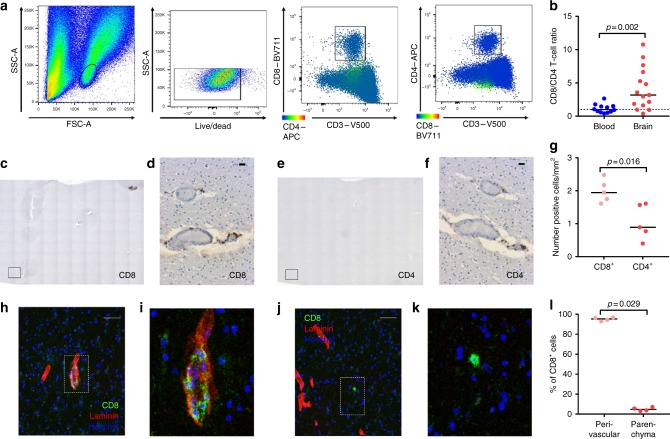
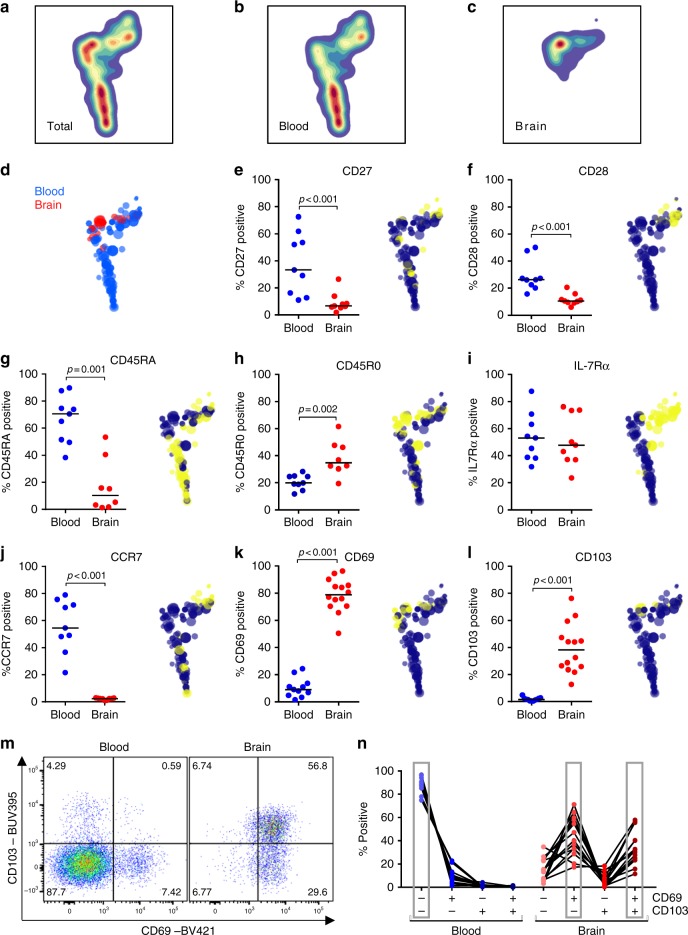
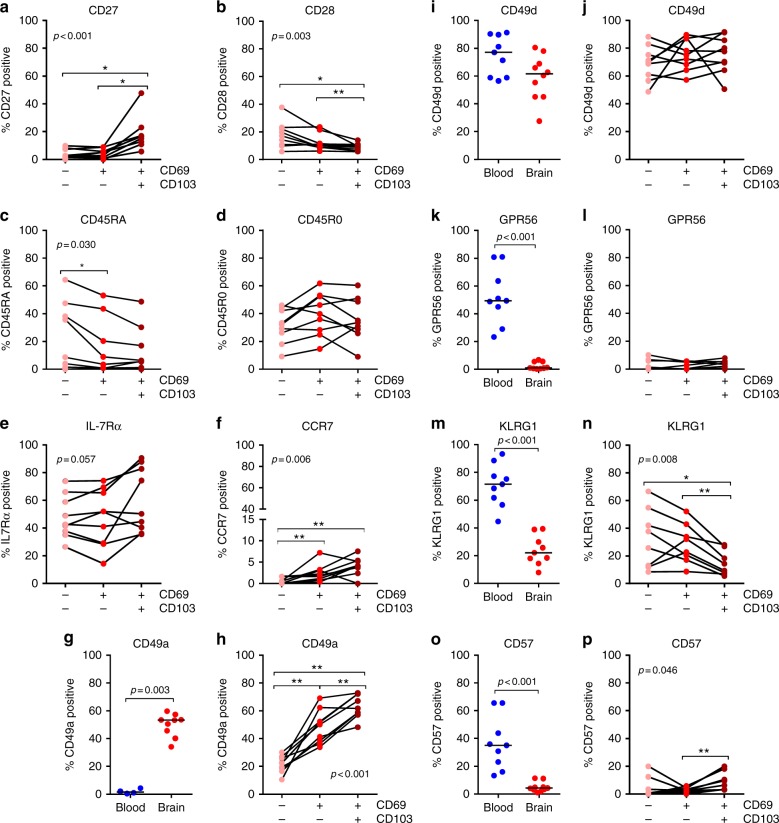
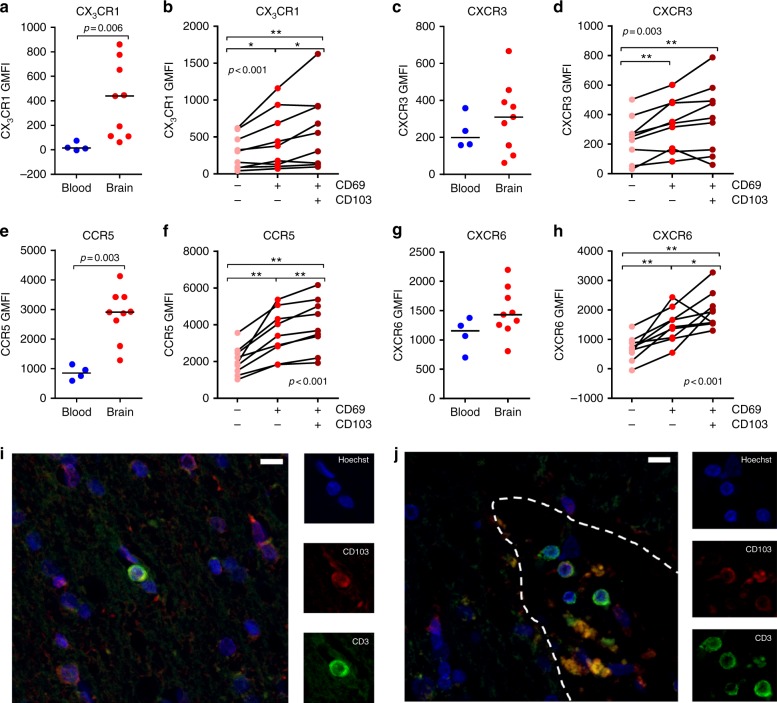
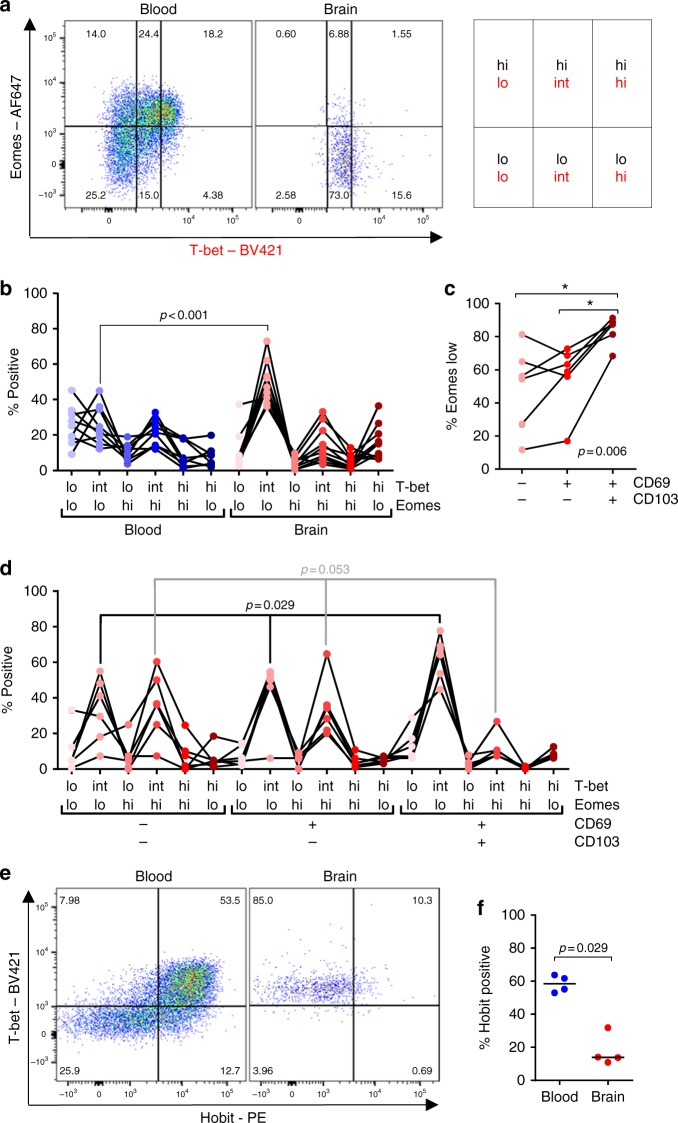
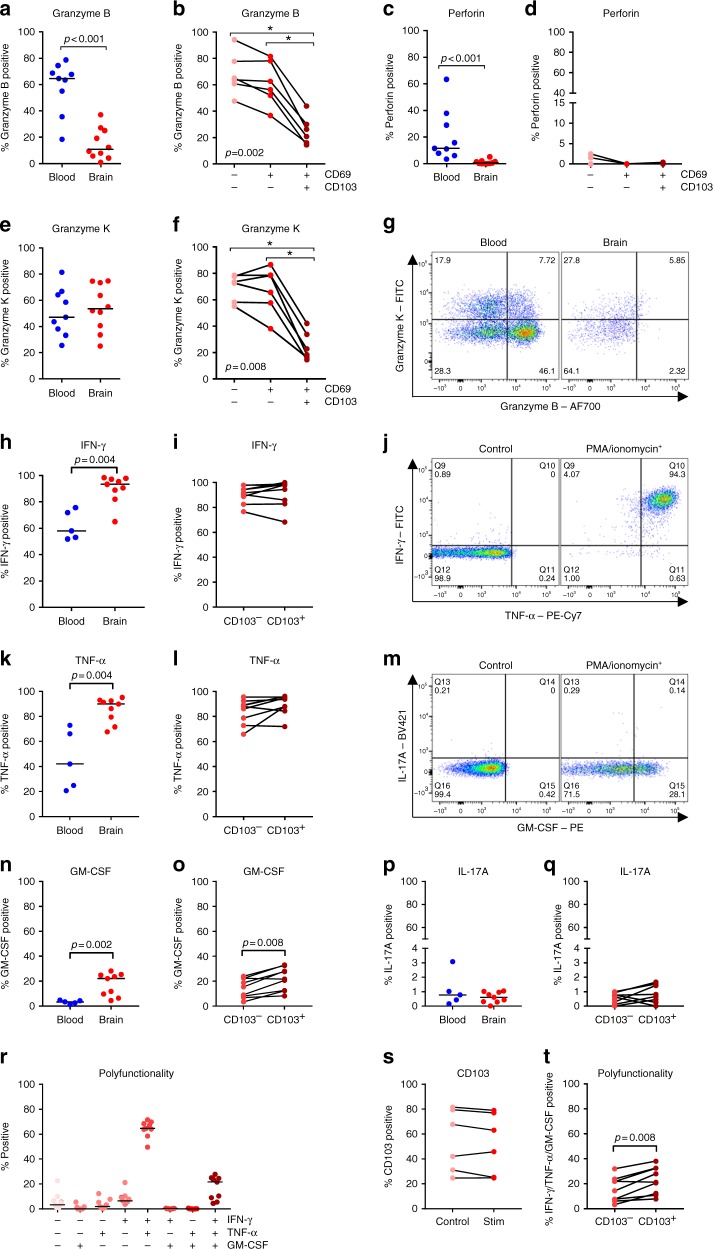
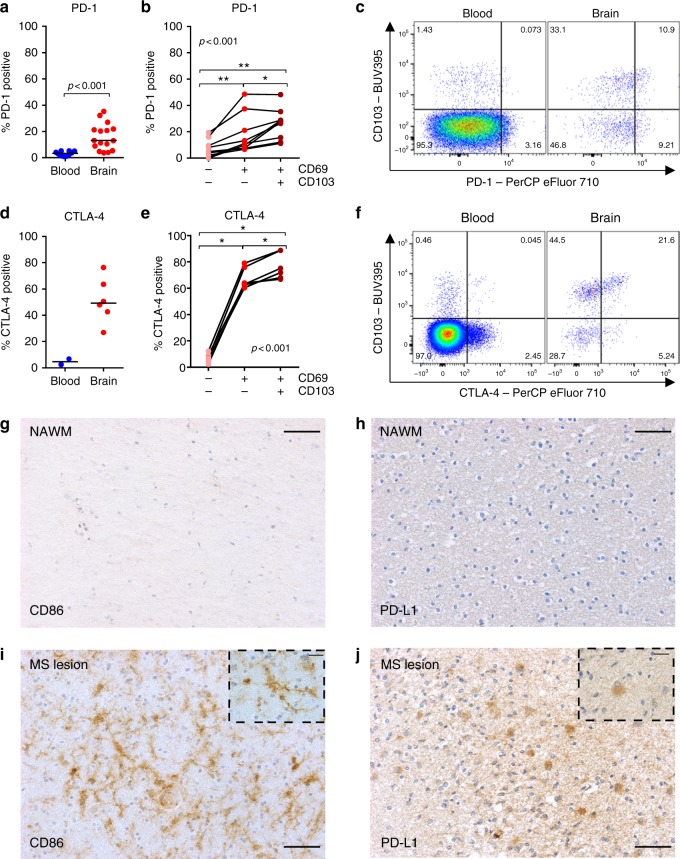
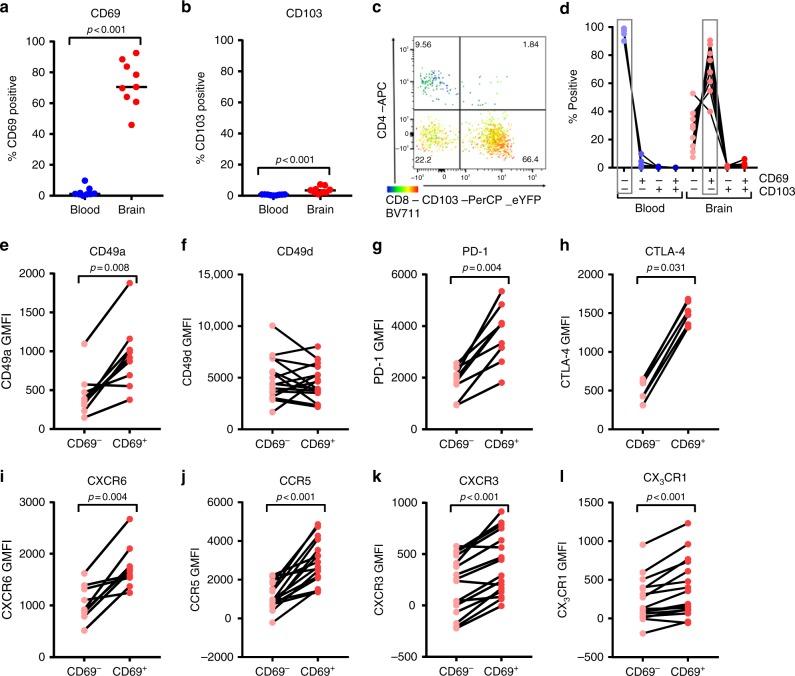
Most tissues are populated by tissue-resident memory T cells (T RM cells), which are adapted to their niche and appear to be indispensable for local protection against pathogens. Here we show that human white matter-derived brain CD8+ T cells can be subsetted into CD103−CD69+ and CD103+CD69+ T cells both with a phenotypic and transcription factor profile consistent with T RM cells. Specifically, CD103 expression in brain CD8+ T cells correlates with reduced expression of differentiation markers, increased expression of tissue-homing chemokine receptors, intermediate and low expression of the transcription factors T-bet and eomes, increased expression of PD-1 and CTLA-4, and low expression of cytolytic enzymes with preserved polyfunctionality upon activation. Brain CD4+ T cells also display T RM cell-associated markers but have low CD103 expression. We conclude that the human brain is surveilled by T RM cells, providing protection against neurotropic virus reactivation, whilst being under tight control of key immune checkpoint molecules.
Overview
The claims and statistics of this paper haven’t been checked yet.
Free: it reads the open-access text and checks the first 5 claims that cite a source we can check. Create a free account to check every claim.
Integrity signals
Registry
Cites
Statistics
Figures
Verification
Claims the paper makes
The claims and statistics of this paper haven’t been checked yet.
Free: it reads the open-access text and checks the first 5 claims that cite a source we can check. Create a free account to check every claim.
Claims other papers make about this one
Each is checked against this paper’s own text: does it say what the citing paper says it does?
The source backs part of the claim, not all of it — or backs it for a different population, condition or comparison.
In the citing paper
“Trm do not express other putative activation markers, such as CD25, CD137, CD38, or HLA-DR [244, 253, 258, 264].”
From Guidelines for the use of flow cytometry and cell sorting in immunological studies (third edition) (2021) · cites this paper as [258]
Experimental — accuracy not yet measuredThe source backs part of the claim, not all of it — or backs it for a different population, condition or comparison.
In the citing paper
“Moreover, in other organs than the heart, T RM cells have been incriminated as key drivers of autoimmune diseases including psoriasis, vitiligo, type 1 diabetes, idiopathic arthritis, Alzheimer disease, and multiple sclerosis. 294,302-310”
From Autoimmune Myocarditis, Old Dogs and New Tricks. (2024) · cites this paper as [309]
Experimental — accuracy not yet measuredThe cited source says what the claim attributes to it.
In the citing paper
“Both CD8+ and CD4+ Trm have been identified in the human skin, lung, intestines, salivary glands, bone marrow, brain, spleen, tonsils, and lymph nodes [241, 244, 246, 253-259].”
From Guidelines for the use of flow cytometry and cell sorting in immunological studies (third edition) (2021) · cites this paper as [258]
The cited source says what the claim attributes to it.
In the citing paper
“Trm that co-express CD69 and CD103 are mainly found in the skin, lung, salivary glands, brain, and intestines [241, 256-258].”
From Guidelines for the use of flow cytometry and cell sorting in immunological studies (third edition) (2021) · cites this paper as [258]
Self-check
Percentages, sums and reported differences re-computed from the paper’s own numbers.
The self-check needs the paper’s full text.
Citations
Cites
Fiji: an open-source platform for biological-image analysis
Schindelin, J., Arganda-Carreras, I., Frise, E., Kaynig, V., Longair, M., Pietzsch, T., Preibisch, S., Rueden, C., Saalfeld, S., Schmid, B., et al. (2012) · Nature Methods · doi:10.1038/nmeth.2019 · Cited by 66,890
ImageJ2: ImageJ for the next generation of scientific image data
Rueden, C. T., Schindelin, J., Hiner, M. C., DeZonia, B. E., Walter, A. E., Arena, E. T., & Eliceiri, K. W. (2017) · BMC Bioinformatics · doi:10.1186/s12859-017-1934-z · Cited by 5,980
Prevention of experimental autoimmune encephalomyelitis by antibodies against α4βl integrin
Yednock, T. A., Cannon, C., Fritz, L. C., Sanchez-Madrid, F., Steinman, L., & Karin, N. (1992) · Nature · doi:10.1038/356063a0 · Cited by 1,737 · cited 2×
“…of the integrin CD49d (α 4 β 1 integrin), which circulating CD8 + T cells employ to cross the blood brain barrier and enter the perivascular space, 28 was slightly lower by brain when compared to blood CD8 + T cells, and equal on brain CD8 + T cells irrespective of the expression of CD69 and…”
Transcriptional control of effector and memory CD8+ T cell differentiation
Kaech, S. M., & Cui, W. (2012) · Nature Reviews Immunology · doi:10.1038/nri3307 · Cited by 1,628
Phenotypic and functional separation of memory and effector human CD8+ T cells
Hamann, D., Baars, P. A., Rep, M. H. G., Hooibrink, B., Kerkhof-Garde, S. R., Klein, M. R., & Lier, R. A. W. V. (1997) · The Journal of Experimental Medicine · doi:10.1084/jem.186.9.1407 · Cited by 1,366
Self-citationThe developmental pathway for CD103+CD8+ tissue-resident memory T cells of skin
Mackay, L. K., Rahimpour, A., Ma, J. Z., Collins, N., Stock, A. T., Hafon, M.-L., Vega-Ramos, J., Lauzurica, P., Mueller, S. N., Stefanovic, T., et al. (2013) · Nature Immunology · doi:10.1038/ni.2744 · Cited by 1,331
Kumar, B. V., Ma, W., Miron, M., Granot, T., Guyer, R. S., Carpenter, D. J., Senda, T., Sun, X., Ho, S.-H., Lerner, H., et al. (2017) · Cell Reports · doi:10.1016/j.celrep.2017.08.078 · Cited by 1,068 · cited 8×
“Expression of KLRG1 (killer cell lectin-like receptor subfamily G member 1) and CD57, two molecules found on terminally differentiated/senescent cells with low expression on CD8 + T RM cells, 27,30 was low in brain-compared to blood-derived CD8 + T cells ( Figure 3m–p ).”
InfluentialTissue-Resident Memory T Cells
Schenkel, J. M., & Masopust, D. (2014) · Immunity · doi:10.1016/j.immuni.2014.12.007 · Cited by 1,059
Hobit and Blimp1 instruct a universal transcriptional program of tissue residency in lymphocytes
Mackay, L. K., Minnich, M., Kragten, N. A. M., Liao, Y., Nota, B., Seillet, C., Zaid, A., Man, K., Preston, S., Freestone, D., et al. (2016) · Science · doi:10.1126/science.aad2035 · Cited by 1,010 · cited 1×
“Hobit (homolog of Blimp-1 in T cells), which is a critical component of murine T RM -cell transcriptional program, 33 yet absent in human lung T RM cells, 34 is not expressed by brain CD8 + T cells ( Figure 5e,f ).”
Tissue-resident memory T cells: local specialists in immune defence
Mueller, S. N., & Mackay, L. K. (2016) · Nature Reviews Immunology · doi:10.1038/nri.2015.3 · Cited by 1,006
Cited by
Items 301–400 of 428
Salve, B. G., Sharma, S., & Vijay, N. (2024) · Immunogenetics · doi:10.1007/s00251-024-01357-5 · Cited by 3
“…CXCR6 as being expressed on T RM cells and play a crucial role in their residency within tissues such as the lung, liver, skin, brain, and intestinal lamina propria (Sato et al. 2005; Tse et al. 2014; Chea et al. 2015; Zaid et al. 2017; Smolders et al. 2018; Wein et al. 2019; Rosen et al. 2022).”
Jackson, L. R., Erickson, A., Camphausen, K. A., & Krauze, A. V. (2024) · Current Oncology · doi:10.3390/curroncol32010016 · Cited by 3
Mapping CD4+ T cell diversity in CSF to identify endophenotypes of multiple sclerosis
Crowley, T., Chen, J., Rosiewicz, K. S., Jopp‐Saile, L., Herold, G., Biese, C., Fischer, C., Kerkering, J., Alisch, M., Paul, F., et al. (2025) · Brain Communications · doi:10.1093/braincomms/fcaf231 · Cited by 3
“Over the last year, numerous single-cell studies have underlined the diagnostic potential of in-depth T cell phenotyping not only in MS. 12,13 These data demonstrate the accumulation of tissue-resident memory T cells (TRMs) with characteristic gene expression profiles, 13 which were also suggestive…”
Reconstitution of human microglia and resident T cells in the brain of humanized DRAGA mice
Roy, S. G., Karim, A. F., Brumeanu, T., & Casares, S. A. (2024) · Frontiers in Cellular and Infection Microbiology · doi:10.3389/fcimb.2024.1367566 · Cited by 3
Peripheral control of psychiatric disorders: Focus on OCD. Are we there yet?
D’Acquisto, F., D’Addario, C., Cooper, D., Pallanti, S., & Blacksell, I. A. (2023) · Comprehensive Psychiatry · doi:10.1016/j.comppsych.2023.152388 · Cited by 3
Long-‘Trm’ protection of the CNS
Kovacs, M. A., & Harris, T. H. (2020) · Nature Immunology · doi:10.1038/s41590-020-0716-3 · Cited by 3
Corbin-Stein, N. J., Childers, G. M., Webster, J. M., Zane, A., Yang, Y., Ali, M. A., Sandoval, I. M., Manfredsson, F. P., Kordower, J. H., Tyrrell, D. J., et al. (2024) · bioRxiv (Cold Spring Harbor Laboratory) · doi:10.1101/2024.06.02.597035 · Cited by 3
Ali, M. A., Siam, M. H. B., Vardaman, D., Bolding, C., Brazell, J. N., Whatley, A. D., Risley, C. A., Tidwell, H., Hossain, S. N., Samal, J., et al. (2025) · bioRxiv (Cold Spring Harbor Laboratory) · doi:10.64898/2025.12.10.693494 · Cited by 3
Reijm, S., Marques, A. M., Rip, J., Corsten, C. E. A., Wierenga‐Wolf, A. F., de Wit, H., Melief, M., van Hasselt, Y., van Langelaar, J., Neuteboom, R. F., et al. (2026) · iScience · doi:10.1016/j.isci.2026.115744 · Cited by 3
Self-citationRecent Development of Immunotherapy for Treating Glioblastoma With a Focus on CAR-T Cells
Soltys, G., Moctezuma, M., Pham, P., & Wang, Y. (2025) · Discovery Medicine · doi:10.24976/discov.med.202537199.125 · Cited by 2
α4 Integrin blockade impairs CD8+ T cell neuroimmune surveillance following SIV infection
Pal, P. B., Elizaldi, S. R., Diniz, G. B., Rai, R. P., Lakshmanappa, Y. S., Verma, A., Rossmiller, D., Kaufman, J. M., Srivastava, R., Ott, S. P., et al. (2026) · Journal of Clinical Investigation · doi:10.1172/jci198730 · Cited by 2
“They reside in brain parenchyma and drain through dural lymphatics to cervical lymph nodes (1-3).”
Protocol for isolating viable human central nervous system T cells
Engelenburg, H. J., Smolders, J., Huitinga, I., Hamann, J., & Hsiao, C. (2026) · STAR Protocols · doi:10.1016/j.xpro.2026.104464 · Cited by 3
Self-citationThe Impact of Antigen Presentation on BBB Disruption and Neuroinflammation
Maynes, M. A., & Johnson, A. J. (2026) · Physiology · doi:10.1152/physiol.00041.2025 · Cited by 2
Calderazzo, S. M., Butler, M. L. M. D., Breen, K., Kanner, H., Tripodis, Y., Stein, T. D., Holtzman, D. M., Cherry, J. D., Huber, B. R., & McKee, A. C. (2026) · Acta Neuropathologica Communications · doi:10.1186/s40478-026-02285-z · Cited by 2
Wang, K., Han, K., & Wang, Y. (2026) · Journal of Neuroinflammation · doi:10.1186/s12974-026-03918-9 · Cited by 2
“Smolders et al. showed that tissue-resident-memory-like CD8 + T cells populated the human brain across neurological diseases, including PD, but their antigen specificity remained unresolved [70].”
The neuroimmune system and cognition
Klein, R. S. (2026) · Nature Immunology · doi:10.1038/s41590-026-02560-0 · Cited by 3
“Brains of patients without known neurologic disease also contain sizable populations of CD103 − CD69 + and CD103 + CD69 + CD8 + T RM cells 87 .”
A bioluminescence reporter mouse model for visualizing and quantifying CD8+ T cells in vivo
Bettano, K. A., Zielstorff, M., Sevilla, R. S., Yang, R., Zhou, H. H., Rosahl, T. W., Zhang-Hoover, J., Moy, L. Y., & Zhang, W. (2022) · Neoplasia · doi:10.1016/j.neo.2022.100781 · Cited by 2
Betjes, M. G. H., Prevoo, F., van den Bosch, T. P. P., Klepper, M., & Litjens, N. H. R. (2022) · Cells · doi:10.3390/cells11142233 · Cited by 2
“Kidney T cells were considered resident T cells when expressing CD69 and/or CD103 on their cell surface, markers which are rarely expressed on freshly isolated circulating T cells [29].”
BackgroundNMOSD: Innate Immunology Revisited
Yanagimura, F., Nakajima, A., Saji, E., & Kawachi, I. (2025) · Clinical and Experimental Neuroimmunology · doi:10.1111/cen3.70019 · Cited by 2
Tissue-resident CD8+ memory T cells in multiple sclerosis
Hohlfeld, R., Beltrán, E., Gerdes, L. A., & Dornmair, K. (2020) · Brain · doi:10.1093/brain/awaa352 · Cited by 2
Immune cells impede repair of old neurons
Gaudenzio, N., & Liblau, R. (2022) · Science · doi:10.1126/science.abp9878 · Cited by 2
Unveiling the enigma of Brain-resident immune cellsPreprint
Hwang, S., Jang, J., Park, K., & Yim, Y. S. (2023) · bioRxiv (Cold Spring Harbor Laboratory) · doi:10.1101/2023.09.26.559602 · Cited by 2
Farris, T., Ochoa, S. G., Mohammed, M. A., Rajakaruna, H., Tonello, J. M., Kanagasabai, T., Korolkova, O. Y., Shimamoto, A., Ivanova, A. V., & Shanker, A. (2024) · International Journal of Molecular Sciences · doi:10.3390/ijms25137406 · Cited by 1
Berger, J. N., Rosales, A., Heiden, D. L., Merrick, C., Monogue, B., Beckham, J. D., & Berg, L. J. (2026) · The Journal of Immunology · doi:10.1093/jimmun/vkag102 · Cited by 1
Incorporating meningeal immunity into vaccine development
Menon, M., Haile, C. N., & Dowling, D. J. (2025) · Nature Communications · doi:10.1038/s41467-025-64476-x · Cited by 1
“…from skull bone marrow mobilized following CNS injury 6 , IgA+ plasma cells at dural sinuses defending CNS against fungal infections 8 and meningeal CD4 T cells producing IL-4 to promote memory and cognition 9 , to name a few – can be harnessed to generate immune response following vaccination.”
Mukherjee, K., & Bhattacharyya, S. N. (2026) · Frontiers in Immunology · doi:10.3389/fimmu.2026.1708031 · Cited by 1
Song, C., Lee, Y., & Kim, M. S. (2026) · Frontiers in Immunology · doi:10.3389/fimmu.2026.1813048 · Cited by 1
“However, recent studies have demonstrated that small populations of T cells, including CD8+ T cells, can be detected in postmortem human brain tissue, particularly in the perivascular spaces and cerebrospinal fl uid (CSF) (38, 39).”
Jiang, J., Hong, J., Yang, H., Yang, H., Chen, Y., Wei, Y., Deng, C., Peng, L., & Wang, J. (2026) · The Journal of Immunology · doi:10.1093/jimmun/vkag117 · Cited by 1
Espinoza, D. A., Zrzavy, T., Bréville, G., Thebault, S., Marefi, A., Mexhitaj, I., Yamashita, L. D., Kan, M., Bacchus, M., Legaspi, J., et al. (2026) · EBioMedicine · doi:10.1016/j.ebiom.2025.106088 · Cited by 1
“Most parenchymal T cells in human brain (across health and disease states) appear to be CD8+ rather than CD4+, and express tissue residency markers, 36 consistent with the above phenomenon observed in CD8+ but not CD4+ T cells.”
APOE, Inflammation, and T Cells in Translational Disease Models and Clinical Medicine
Adlimoghaddam, A., Cervantes, D., & Wheeler, C. J. (2026) · Springer eBooks · doi:10.1007/978-3-031-52641-1_35-1 · Cited by 1
van Puijfelik, F., Kuiper, K. L., Rip, J., Smolders, J., & van Luijn, M. M. (2026) · Journal of Autoimmunity · doi:10.1016/j.jaut.2026.103535 · Cited by 1
Self-citationLayered neuroimmune interfaces at CNS borders: Stress reshapes CNS immunity
Matsubara, K., Prinz, M., & Masuda, T. (2026) · Neuroscience Research · doi:10.1016/j.neures.2026.105063 · Cited by 1
APOE, Inflammation, and T Cells in Translational Disease Models and Clinical Medicine
Adlimoghaddam, A., Cervantes, D., & Wheeler, C. J. (2026) · Springer eBooks · doi:10.1007/978-3-031-96089-5_35 · Cited by 1
Zhao, J., Liang, H., & Bi, Y. (2026) · Brain Research Bulletin · doi:10.1016/j.brainresbull.2026.111990 · Cited by 1
MASH-Associated T Cell Activation and Neuroinflammation: Evidence for a Hepatosystemic Immune Axis
Cartee, B. S., Diniz, F., Rai, R. P., Pal, P. B., Srivastava, R., Rossmiller, D., Raeman, R., & Iyer, S. S. (2026) · Seminars in Liver Disease · doi:10.1055/a-2908-1230 · Cited by 1
“78,138,139 Among CD4 T cells, T follicular helper designation requires CXCR5 and B cell lymphoma-6, not PD-1 alone, 140,141 and T-bet þ T h 1, ROR γ t þ T h 17, and T h 1/T h 17 subsets must be resolved given their distinct effector programs and roles in neuroin fl ammation.”
Gut-brain-immune interactions in neonatal hypoxic–ischemic brain injury
Herz, J., Bendix, I., Orywal, F., Härtel, C., & Felderhoff‐Müser, U. (2026) · Molecular and Cellular Pediatrics · doi:10.1186/s40348-026-00252-1 · Cited by 1
Jasak, P., Wesołowska, A., Żółtowska, M., Alster, P., & Madetko‐Alster, N. (2026) · Parkinsonism & Related Disorders · doi:10.1016/j.parkreldis.2026.108917 · Cited by 1
Bo, Y., Tang, C., Wang, X., Deng, J., & Luan, G. (2026) · Autoimmunity Reviews · doi:10.1016/j.autrev.2026.104165 · Cited by 1
Memory Lymphocyte Clusters in Genital Immunity: Role of Tissue-Resident Memory T Cells (TRM)
Iijima, N. (2020) · Current topics in microbiology and immunology · doi:10.1007/82_2020_213 · Cited by 1
Pathophysiological Bases of Autoimmune-Initiated/Mediated Neurodegeneration
Lassmann, H. (2021) · Neuromethods · doi:10.1007/978-1-0716-1213-2_1 · Cited by 1
Cholesterol promotes IFNG mRNA expression in CD4 + effector/memory cells by SGK1 activation
Hanin, A., Comi, M., Sumida, T. S., & Hafler, D. A. (2024) · Life Science Alliance · doi:10.26508/lsa.202402890 · Cited by 1
“However, the speci fi c mechanisms through which lipids might affect CNS Th1/ IFN γ functions remain elusive and warrant further investigation.”
InfluentialSmolders, J., Hamann, J., & Huitinga, I. (2024) · Handbook of clinical neurology · doi:10.1016/b978-0-323-90242-7.00016-x · Cited by 1
Self-citationChurch, K. A., Cardona, A. E., & Hopp, S. C. (2024) · Advances in neurobiology · doi:10.1007/978-3-031-55529-9_15 · Cited by 1
Advances and challenges in CAR-T therapy for glioblastoma
Ryou, H., Jung, S.-E., & Seo, H. (2025) · Seminars in Hematology · doi:10.1053/j.seminhematol.2025.12.001 · Cited by 1
Knowns and unknowns of tissue‐resident memory T cells
Altmann, D. M. (2019) · Immunology · doi:10.1111/imm.13062 · Cited by 1
Brain-Resident CD8 + T Cells Regulate Neuronal Activity and Behavior via Interferon-GammaPreprint
Park, K., Jang, J., Jeon, S., Hwang, S., Choi, K., cox, T., Ngiow, S. F., flores, J., Harrison, C. F., Liu, S., et al. (2026) · bioRxiv (Cold Spring Harbor Laboratory) · doi:10.64898/2026.08.24.746768 · Cited by 1
Top ten discoveries of the year: Neuroinflammation
Lassmann, H. (2020) · Free Neuropathology · doi:10.17879/fnp-2020-2612
“…however, were difficult to harmonize with previous observations that the majority of T-cells in the normal human brain and in the CNS of patients with neurodegenerative disease are CD8+ MHC class I restricted T-cells, displaying the phenotype of tissue resident memory cells (Smolders et al 2018).”
ResultConnecting the dots: Peripheral and central immune changes in mood disorders
Snijders, G. J. L. J. (2020) · Utrecht University Repository (Utrecht University)
Zbesko, J. C. (2020) · UA Campus Repository (The University of Arizona)
Lung localized protective responses to heterosubtypic influenza challenge
Paik, D. H. (2020) · Columbia Academic Commons (Columbia University) · doi:10.7916/d8-ff60-9c21
Ageing Mucosal Immunity and Its Consequences for Infectious Diseases in the Aged; A First Glance
van der Heiden, M., & van Baarle, D. (2021) · Healthy ageing and longevity · doi:10.1007/978-3-030-87532-9_6
Griffiths, M. (2021) · Open Access Victoria University of Wellington | Te Herenga Waka (Figshare) · doi:10.26686/wgtn.17009102.v1
Geladaris, A. (2022) · eDiss (Georg-August-Universität Göttingen) · doi:10.53846/goediss-9057
Impact of sepsis on pathogen-specific circulating and resident memory CD8 T cell subsets
Moioffer, S. J., Legge, K. L., Badovinac, V. P., & Harty, J. T. (2021) · doi:10.17077/etd.006314
Han, P., & Hamlett, E. D. (2023) · Current Alzheimer Research · doi:10.2174/1567205020666230904151011
T-Cell Aspects of Some Neurological Diseases
Kvichansky, A. A., & Bolshakov, A. P. (2023) · Neurochemical Journal · doi:10.1134/s1819712423040153
Study of the immunopathogenesis of narcolepsy type-1 using original mouse models
Frieser, D. (2022) · theses.fr (ABES) · doi:10.70675/02b7c749z929fz4542za4c5z956b592bf2e1
T-Cell Aspects of Some Neurological Diseases
Kvichansky, A. A., & Bolshakov, A. P. (2023) · Нейрохимия · doi:10.31857/s1027813323040155
Overview of Mechanisms Underlying Neuroimmune Diseases
Sonar, S. A., & Lal, G. (2024) · Springer eBooks · doi:10.1007/978-3-031-24297-7_1-1
Overview of Mechanisms Underlying Neuroimmune Diseases
Sonar, S. A., & Lal, G. (2024) · Springer eBooks · doi:10.1007/978-3-031-60006-7_1
Multiple sclerosis patient’s lymphocytes induce smoldering lesions in mouse spinal cord
Perrot, O. (2024) · theses.fr (ABES) · doi:10.70675/f8b99ad6z7b2dz40dfza6f2z37b8d74c4e94
Study of the diversity and reactivity of glial and immune cells during neonatal inflammation
Olya, A. H. (2024) · theses.fr (ABES) · doi:10.70675/e997bea7z8cd6z4a03z9affzd43c7ca78fe7
Liblau, R. (2025) · Bulletin de l Académie Nationale de Médecine · doi:10.1016/j.banm.2024.11.026
Applications and prospects of synthetic receptors for therapeutic protein delivery
Zhou, D., Chen, Y., Jin, H., Zhang, Q., Jiang, Z., & Yang, G. (2025) · European Journal of Pharmaceutics and Biopharmaceutics · doi:10.1016/j.ejpb.2025.114789
Peripheral infection wires T cells in the brain
Johnson, A. M., & Lukens, J. R. (2025) · Nature Immunology · doi:10.1038/s41590-025-02200-z
T cells fast-track gut signals to the brain
Pasciuto, E., & Liston, A. (2025) · Nature Immunology · doi:10.1038/s41590-025-02237-0
Villar-Vesga, J., Clément, P., Hove, H. V., Meuffels, E., Bugada, V., Kim, J., Greis, D., Jorba-Adolff, P., Mayoux, M., Lasne, A., et al. (2025) · bioRxiv (Cold Spring Harbor Laboratory) · doi:10.1101/2025.08.15.670462
Self-citationMolecular determinants of brain-resident CD8 + T cell formation and functionPreprint
Elmzzahi, T., Su, C.-H., Shakiba, M. H., Hamada, D., Malko, D., Köhne, M., Frolov, A., Mason, T., Scholz, R., Li, Y., et al. (2025) · bioRxiv (Cold Spring Harbor Laboratory) · doi:10.1101/2025.08.26.672425
Kalia, V., Ahmed, R., & Sarkar, S. (2025) · Elsevier eBooks · doi:10.1016/b978-0-12-824465-4.00292-1
Fettig, N. M., Popple, S., Portas, M., Sharon, A. J., Sawhney, A., Worthington, T., Hardman, B. K., Coburn, M., Eyo, U. B., Siracusa, M. C., et al. (2026) · The Journal of Immunology · doi:10.1093/jimmun/vkag141.841
The Role of T Cells in Alzheimer's Disease
Lin, Y., Zhao, H., Meng, D., & Wang, M. (2025) · Critical Reviews in Immunology · doi:10.1615/critrevimmunol.2025061107
Perrot, O., Nordbeck, M., Bachelin, C., Luong, A., Roussel, D., Akbar, D., Sarrazin, N., Tenenhaus, A., Louapre, C., & Zujovic, V. (2025) · bioRxiv (Cold Spring Harbor Laboratory) · doi:10.1101/2025.09.16.676229
RNA virus and DNA virus initiations of autoimmune diseases and/or dementias
Roe, K. (2025) · Drug Discovery Today · doi:10.1016/j.drudis.2025.104481
Vitantonio, A. T., Dimovasili, C., Liu, Y., Ye, B., Lee, J. R., Hartigan, M., Bouchard, B., Ray, M. H., Conner, B., Vaughan, K. L., et al. (2025) · Aging Cell · doi:10.1111/acel.70298
“%) co-clustered with microglia but uniquely expressed T cell-specific genes and CNS homing markers ITGAL , ITGA4 (Glatigny et al. 2015; Smolders et al. 2018), while lacking CCR7 expression, a marker of naïve, peripheral T Cells (Larbi and Fulop 2014) (Figure S3a–c) suggesting these are…”
The role of T cells in the chronic phase after stroke
Ricci, A. (2024) · doi:10.5282/edoc.34003
Wu, W., Alexander, J. S., Booth, J. L., Miller, C., Metcalf, J. P., & Drevets, D. A. (2024) · Figshare · doi:10.6084/m9.figshare.26737458
Wu, W., Alexander, J. S., Booth, J. L., Miller, C., Metcalf, J. P., & Drevets, D. A. (2024) · Figshare · doi:10.6084/m9.figshare.26082625
Unger, P. A., Oja, A. E., Khemai-Mehraban, T., Ouwendijk, W. J. D., Hombrink, P., & Verjans, G. M. G. M. (2022) · Figshare · doi:10.6084/m9.figshare.21293472
Self-citationDashwood, A. (2024) · Apollo (University of Cambridge) · doi:10.17863/cam.119126
Unger, P. A., Oja, A. E., Khemai-Mehraban, T., Ouwendijk, W. J. D., Hombrink, P., & Verjans, G. M. G. M. (2022) · Figshare · doi:10.6084/m9.figshare.21293475
Self-citationHawes, C. E., Elizaldi, S. R., Beckman, D., Diniz, G. B., Shaan Lakshmanappa, Y., Ott, S. P., Durbin-Johnson, B. P., Dinasarapu, A. R., Gompers, A., Morrison, J. H., et al. (2022) · Figshare · doi:10.6084/m9.figshare.21293526
Wu, W., Alexander, J. S., Booth, J. L., Miller, C., Metcalf, J. P., & Drevets, D. A. (2024) · Figshare · doi:10.6084/m9.figshare.26737455
Wu, W., Alexander, J. S., Booth, J. L., Miller, C., Metcalf, J. P., & Drevets, D. A. (2024) · Figshare · doi:10.6084/m9.figshare.26737452
Wu, W., Alexander, J. S., Booth, J. L., Miller, C., Metcalf, J. P., & Drevets, D. A. (2024) · Figshare · doi:10.6084/m9.figshare.26082696
Yeapuri, P., Machhi, J., Lu, Y., Abdelmoaty, M. M., Kadry, R., Patel, M., Bhattarai, S., Lu, E., Namminga, K. L., Olson, K. E., et al. (2023) · Figshare · doi:10.6084/m9.figshare.24864141
Ahdab, N. E. (2021) · eScholarship@McGill (McGill) · doi:10.82308/52253
Interactions between B cells and CD8+ T cells in multiple sclerosis
Rezk, A. (2020) · eScholarship@McGill (McGill) · doi:10.82308/17304
Armitage, E. (2021) · The Sydney eScholarship Repository (The University of Sydney)
Blacksell, I. (2023) · Queen Mary Research Online (Queen Mary University of London)
A lipid-laden macrophage niche drives immunosuppression in primary central nervous system lymphomaPreprint
Hong, L., Joshi, S., Liu, M., Sridhar, S., Revuelta, M. V., Ong, Z. Y. C., Tay, N. S. C., Lai, W. X. C., Tipgomut, C., Jaynes, P. W., et al. (2026) · bioRxiv (Cold Spring Harbor Laboratory) · doi:10.64898/2026.02.19.705289
Characterization of Effector-Memory CD8+ T cells and their Association with Human Cognitive Function
Esgalhado, A. J. (2026) · Portuguese National Funding Agency for Science, Research and Technology (RCAAP Project by FCT)
Human Intelligence Versus AI MachinePreprint
Garcia-Sandoval, R. (2026) · Preprints.org · doi:10.20944/preprints202603.1503.v1
Acquisition and regulation of effector T cell functions in Crohn’s disease
Bottois, H. (2019) · theses.fr (ABES) · doi:10.70675/5f587a4azaf7ez4b0dz8e72z4739bce7ff73
Transcriptional profiling of pathogenic T cells in narcolepsy type I
Khajavi, L. (2021) · theses.fr (ABES) · doi:10.70675/f234fa80z434ez49bbzb4ffzc1e89f5519b3
Hammoudi, N. (2021) · theses.fr (ABES) · doi:10.70675/4595a58dzcce7z43f2zbd07z10eb7653d7c5
Metadata
- Authors
- Smolders, J., Heutinck, K. M., Fransen, N. L., Remmerswaal, E. B. M., Hombrink, P., ten Berge, I. J. M., van Lier, R. A. W., Huitinga, I., & Hamann, J.
- Affiliations
- Netherlands Institute for Neuroscience (NL)
- Amsterdam University Medical Centers (NL)
- Amsterdam UMC Location University of Amsterdam (NL)
- Sanquin (NL)
- Corresponding author
- Smolders, Joost
- Hamann, Jörg
- ORCID
- Venue
- Nature Communications
- Published
- 2018-11-02
- Volume
- 9
- Issue
- 1
- Pages
- 4593-4593
- ISSN
- 2041-1723 (ISSN-L)
- PMC
- PMC6214977
- OpenAlex
- W2899073628
- Cited by
- 406
- References
- 69
- Citations by year
- 2026: 55 · 2025: 55 · 2024: 52 · 2023: 50 · 2022: 64 · 2021: 59 · 2020: 46 · 2019: 25
- FWCI
- 13.97
- Type
- journal article
- Language
- en
- Open access
- gold
- doi.org
- Licence
- cc-by
- creativecommons.org/licenses/by/4.0 (tdm)
- creativecommons.org/licenses/by/4.0 (vor)
- Locations
- Nature Communications (publishedVersion, cc-by)
- Europe PMC (PubMed Central) (publishedVersion, other-oa)
- PubMed Central (publishedVersion, cc-by)
- PubMed (publishedVersion)
- KNAW Research Portal (The Royal Netherlands Academy of Arts and Sciences) (publishedVersion, other-oa)
- Pure Amsterdam UMC (acceptedVersion, cc-by)
- Data Archiving and Networked Services (DANS) (submittedVersion, other-oa)
- RePEc: Research Papers in Economics (submittedVersion)
- DOAJ (DOAJ: Directory of Open Access Journals) (submittedVersion, cc-by-sa)
- DOAJ (DOAJ: Directory of Open Access Journals) (submittedVersion)
- Topics
- Life Sciences › Immunology and Microbiology › Immunology › T-cell and B-cell Immunology
- Life Sciences › Neuroscience › Neurology › Neuroinflammation and Neurodegeneration Mechanisms
- Health Sciences › Medicine › Oncology › Cancer Immunotherapy and Biomarkers
- Keywords
- tissue-resident memory T cells, CD103, CD69, white matter, CD4+ T cells, immune checkpoint molecules, PD-1, CTLA-4, T-bet, Eomes, chemokine receptors, T cell polyfunctionality
- MeSH terms
- Aged, Aged, 80 and over, Brain, Female, Humans, Immunologic Memory, Male, Middle Aged, Organ Specificity, T-Lymphocytes, Transcription Factors, Biomarkers, CD4-Positive T-Lymphocytes, Antigens, CD, CD8-Positive T-Lymphocytes, Integrin alpha Chains, CTLA-4 Antigen, Programmed Cell Death 1 Receptor, White Matter
About these checks
Registry, retraction, Cites and statistics results are computed, not judged, with one exception: a printed reference that no index lists is read once by a model before it counts as a citation error. Claims are extracted by a model and kept only when their quote appears verbatim in the text; each cited source is then checked, with a model’s help, for whether it says what the claim relies on. Those verdicts can be wrong — read the claim’s quote and the cited source before relying on one.
Statistics and arithmetic are recomputed, not judged.
Confidence bands are shown only for fields calibrated on our annotated test set. None is calibrated yet, so no band is shown.
What counts as a claim ›How we measure confidence ›How we check this ›
Are you an author, or do you see a problem with this page? Request a review
Data sources
Bibliographic data: Semantic Scholar, OpenAlex, Crossref.
Contains information from the Semantic Scholar Academic Graph Datasets, made available under the ODC Attribution License (ODC-BY 1.0).
Semantic Scholar’s data is described in: Kinney, R., et al. (2023). The Semantic Scholar Open Data Platform. arXiv:2301.10140.
