

Tissue-resident memory T cells populate the human brain
Open accessThe DOI matches its Crossref record; 69 of the 69 references it cites were found in a registry or an index.
Abstract
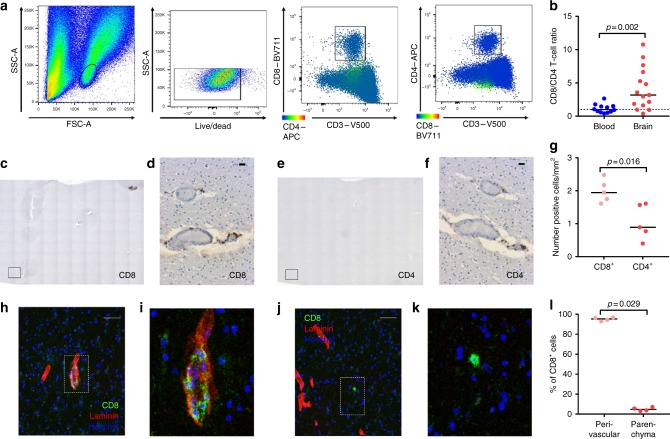
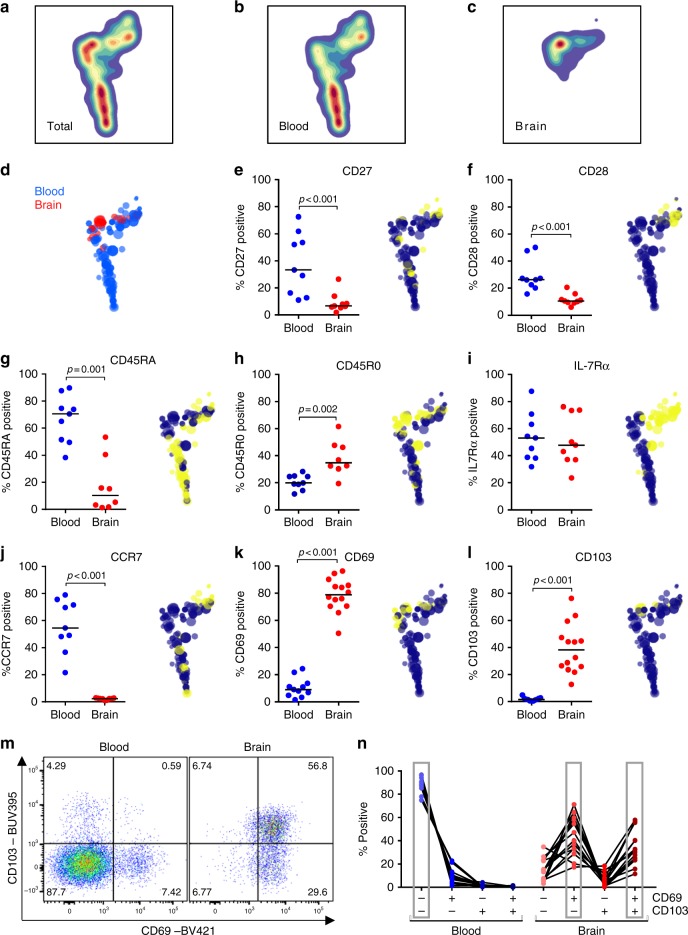
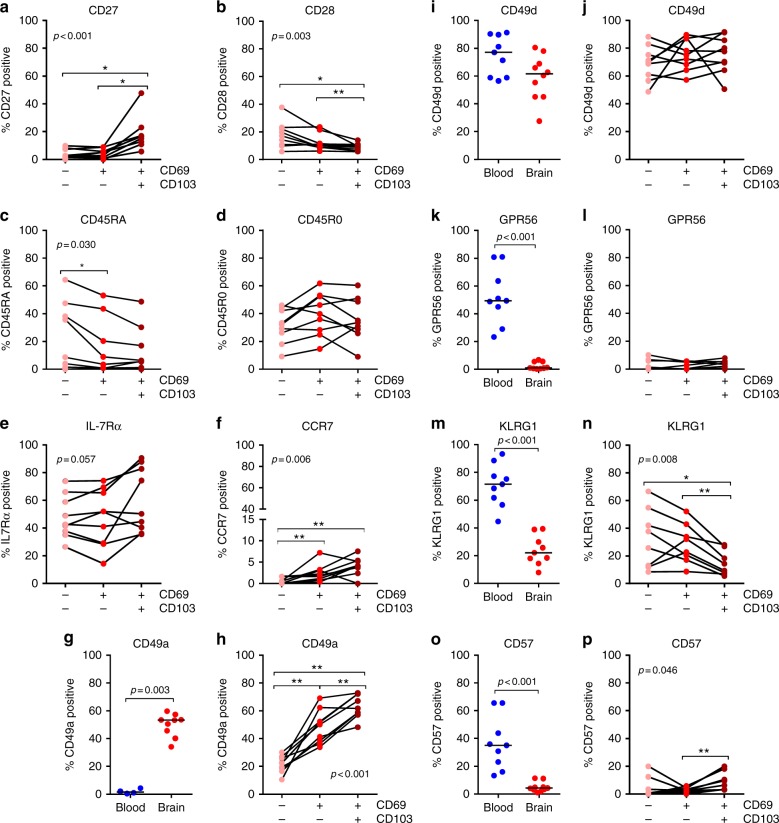
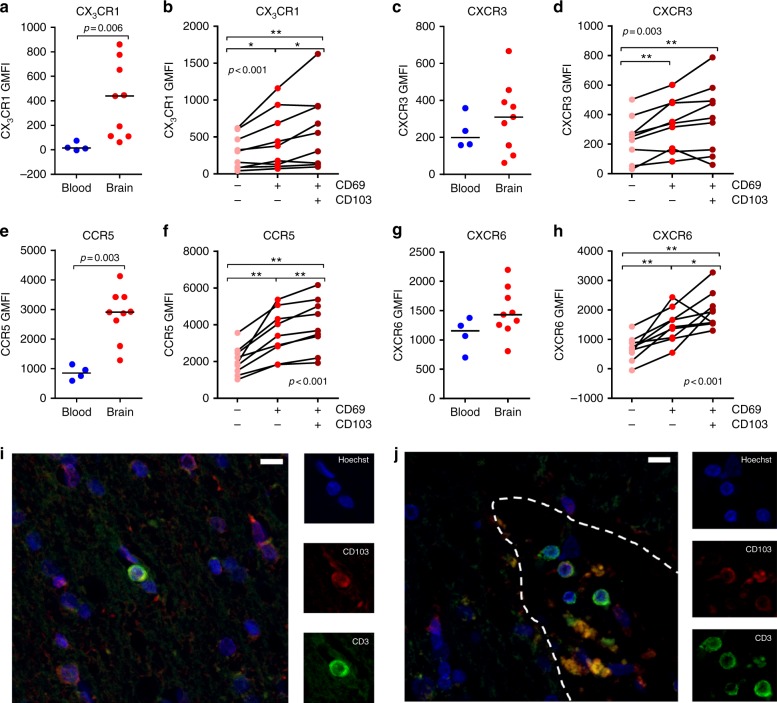
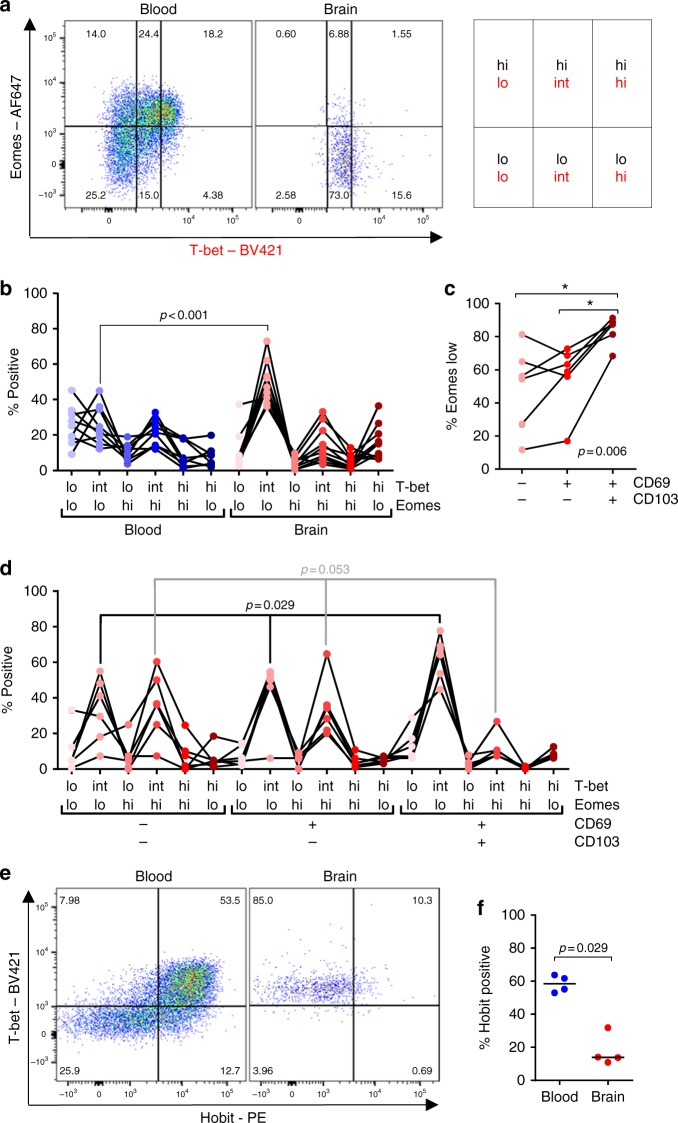
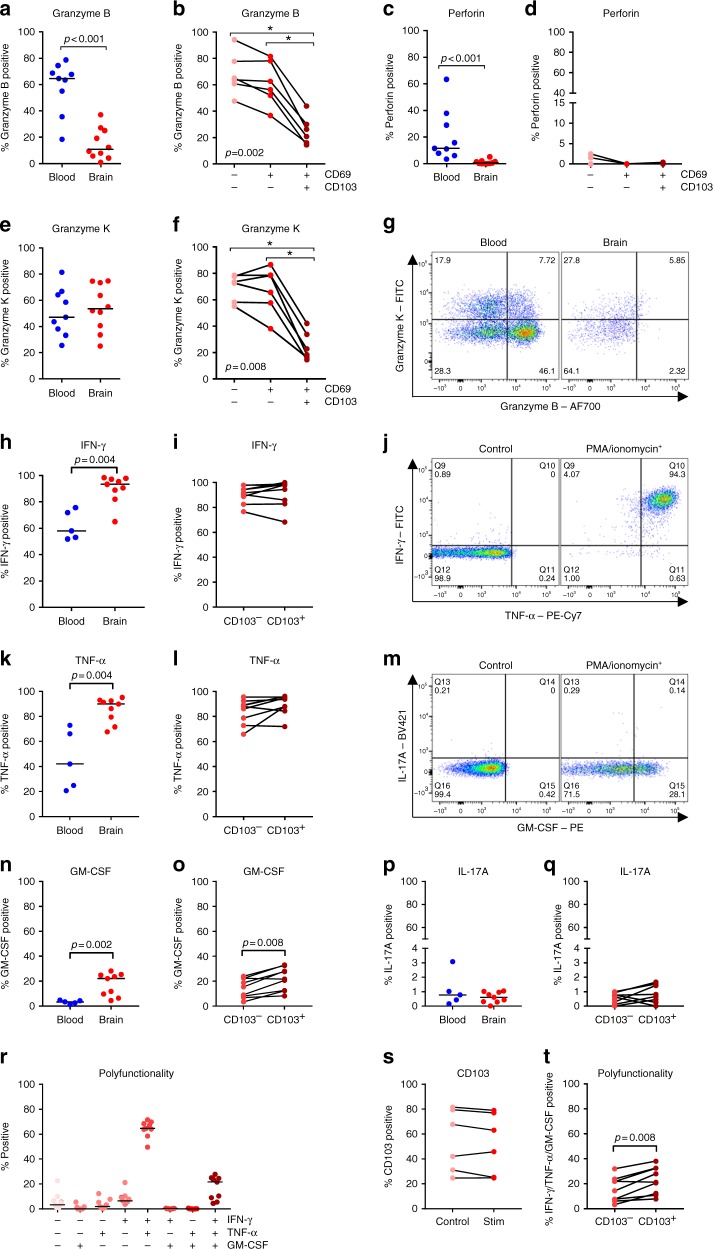
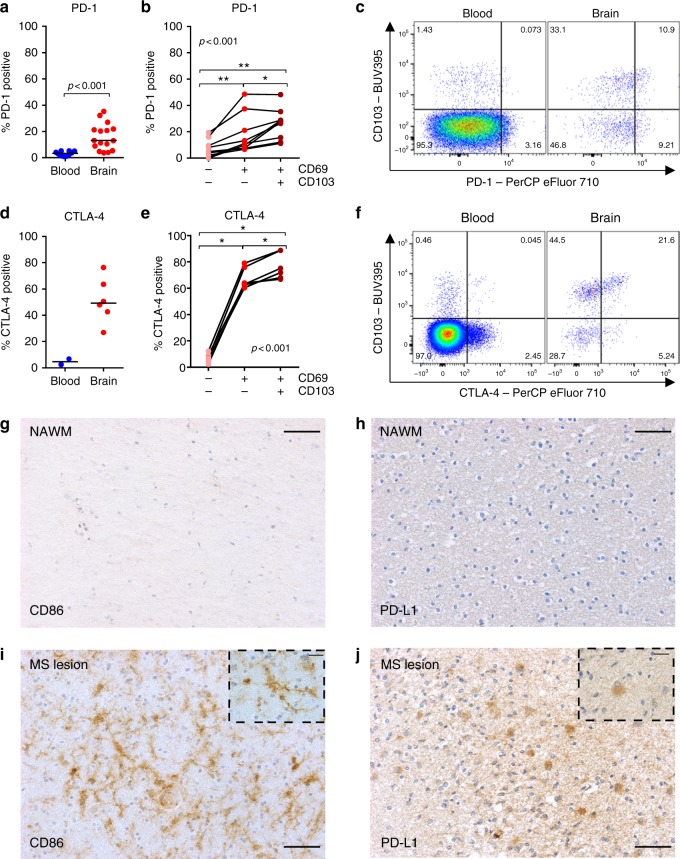
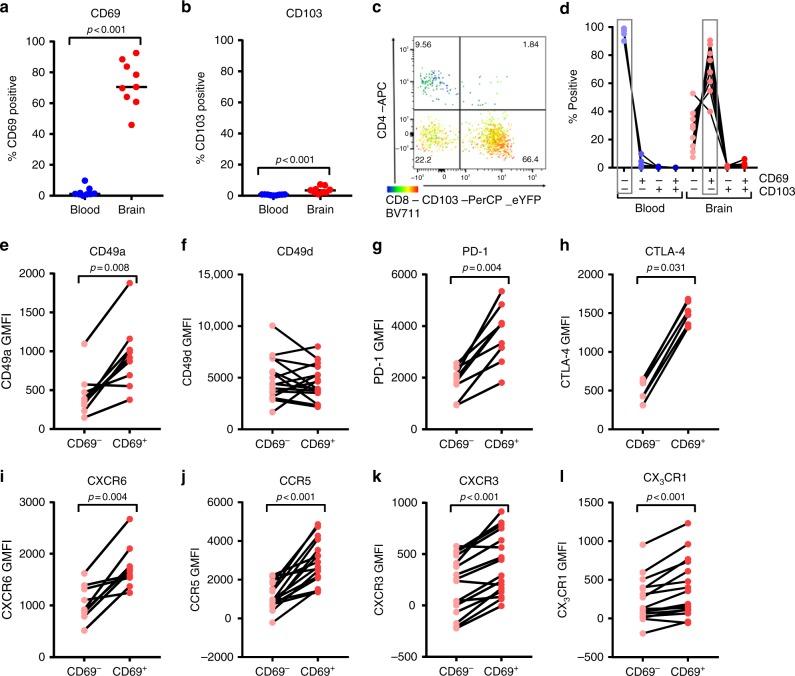
Most tissues are populated by tissue-resident memory T cells (T RM cells), which are adapted to their niche and appear to be indispensable for local protection against pathogens. Here we show that human white matter-derived brain CD8+ T cells can be subsetted into CD103−CD69+ and CD103+CD69+ T cells both with a phenotypic and transcription factor profile consistent with T RM cells. Specifically, CD103 expression in brain CD8+ T cells correlates with reduced expression of differentiation markers, increased expression of tissue-homing chemokine receptors, intermediate and low expression of the transcription factors T-bet and eomes, increased expression of PD-1 and CTLA-4, and low expression of cytolytic enzymes with preserved polyfunctionality upon activation. Brain CD4+ T cells also display T RM cell-associated markers but have low CD103 expression. We conclude that the human brain is surveilled by T RM cells, providing protection against neurotropic virus reactivation, whilst being under tight control of key immune checkpoint molecules.
Overview
The claims and statistics of this paper haven’t been checked yet.
Free: it reads the open-access text and checks the first 5 claims that cite a source we can check. Create a free account to check every claim.
Integrity signals
Registry
Cites
Statistics
Figures
Verification
Claims the paper makes
The claims and statistics of this paper haven’t been checked yet.
Free: it reads the open-access text and checks the first 5 claims that cite a source we can check. Create a free account to check every claim.
Claims other papers make about this one
Each is checked against this paper’s own text: does it say what the citing paper says it does?
The source backs part of the claim, not all of it — or backs it for a different population, condition or comparison.
In the citing paper
“Trm do not express other putative activation markers, such as CD25, CD137, CD38, or HLA-DR [244, 253, 258, 264].”
From Guidelines for the use of flow cytometry and cell sorting in immunological studies (third edition) (2021) · cites this paper as [258]
Experimental — accuracy not yet measuredThe source backs part of the claim, not all of it — or backs it for a different population, condition or comparison.
In the citing paper
“Moreover, in other organs than the heart, T RM cells have been incriminated as key drivers of autoimmune diseases including psoriasis, vitiligo, type 1 diabetes, idiopathic arthritis, Alzheimer disease, and multiple sclerosis. 294,302-310”
From Autoimmune Myocarditis, Old Dogs and New Tricks. (2024) · cites this paper as [309]
Experimental — accuracy not yet measuredThe cited source says what the claim attributes to it.
In the citing paper
“Both CD8+ and CD4+ Trm have been identified in the human skin, lung, intestines, salivary glands, bone marrow, brain, spleen, tonsils, and lymph nodes [241, 244, 246, 253-259].”
From Guidelines for the use of flow cytometry and cell sorting in immunological studies (third edition) (2021) · cites this paper as [258]
The cited source says what the claim attributes to it.
In the citing paper
“Trm that co-express CD69 and CD103 are mainly found in the skin, lung, salivary glands, brain, and intestines [241, 256-258].”
From Guidelines for the use of flow cytometry and cell sorting in immunological studies (third edition) (2021) · cites this paper as [258]
Self-check
Percentages, sums and reported differences re-computed from the paper’s own numbers.
The self-check needs the paper’s full text.
Citations
Cites
Fiji: an open-source platform for biological-image analysis
Schindelin, J., Arganda-Carreras, I., Frise, E., Kaynig, V., Longair, M., Pietzsch, T., Preibisch, S., Rueden, C., Saalfeld, S., Schmid, B., et al. (2012) · Nature Methods · doi:10.1038/nmeth.2019 · Cited by 66,890
ImageJ2: ImageJ for the next generation of scientific image data
Rueden, C. T., Schindelin, J., Hiner, M. C., DeZonia, B. E., Walter, A. E., Arena, E. T., & Eliceiri, K. W. (2017) · BMC Bioinformatics · doi:10.1186/s12859-017-1934-z · Cited by 5,980
Prevention of experimental autoimmune encephalomyelitis by antibodies against α4βl integrin
Yednock, T. A., Cannon, C., Fritz, L. C., Sanchez-Madrid, F., Steinman, L., & Karin, N. (1992) · Nature · doi:10.1038/356063a0 · Cited by 1,737 · cited 2×
“…of the integrin CD49d (α 4 β 1 integrin), which circulating CD8 + T cells employ to cross the blood brain barrier and enter the perivascular space, 28 was slightly lower by brain when compared to blood CD8 + T cells, and equal on brain CD8 + T cells irrespective of the expression of CD69 and…”
Transcriptional control of effector and memory CD8+ T cell differentiation
Kaech, S. M., & Cui, W. (2012) · Nature Reviews Immunology · doi:10.1038/nri3307 · Cited by 1,628
Phenotypic and functional separation of memory and effector human CD8+ T cells
Hamann, D., Baars, P. A., Rep, M. H. G., Hooibrink, B., Kerkhof-Garde, S. R., Klein, M. R., & Lier, R. A. W. V. (1997) · The Journal of Experimental Medicine · doi:10.1084/jem.186.9.1407 · Cited by 1,366
Self-citationThe developmental pathway for CD103+CD8+ tissue-resident memory T cells of skin
Mackay, L. K., Rahimpour, A., Ma, J. Z., Collins, N., Stock, A. T., Hafon, M.-L., Vega-Ramos, J., Lauzurica, P., Mueller, S. N., Stefanovic, T., et al. (2013) · Nature Immunology · doi:10.1038/ni.2744 · Cited by 1,331
Kumar, B. V., Ma, W., Miron, M., Granot, T., Guyer, R. S., Carpenter, D. J., Senda, T., Sun, X., Ho, S.-H., Lerner, H., et al. (2017) · Cell Reports · doi:10.1016/j.celrep.2017.08.078 · Cited by 1,068 · cited 8×
“Expression of KLRG1 (killer cell lectin-like receptor subfamily G member 1) and CD57, two molecules found on terminally differentiated/senescent cells with low expression on CD8 + T RM cells, 27,30 was low in brain-compared to blood-derived CD8 + T cells ( Figure 3m–p ).”
InfluentialTissue-Resident Memory T Cells
Schenkel, J. M., & Masopust, D. (2014) · Immunity · doi:10.1016/j.immuni.2014.12.007 · Cited by 1,059
Hobit and Blimp1 instruct a universal transcriptional program of tissue residency in lymphocytes
Mackay, L. K., Minnich, M., Kragten, N. A. M., Liao, Y., Nota, B., Seillet, C., Zaid, A., Man, K., Preston, S., Freestone, D., et al. (2016) · Science · doi:10.1126/science.aad2035 · Cited by 1,010 · cited 1×
“Hobit (homolog of Blimp-1 in T cells), which is a critical component of murine T RM -cell transcriptional program, 33 yet absent in human lung T RM cells, 34 is not expressed by brain CD8 + T cells ( Figure 5e,f ).”
Tissue-resident memory T cells: local specialists in immune defence
Mueller, S. N., & Mackay, L. K. (2016) · Nature Reviews Immunology · doi:10.1038/nri.2015.3 · Cited by 1,006
Cited by
Items 101–200 of 428
Dementia-associated changes of immune cell composition within the cerebrospinal fluid
Busse, S., Hoffmann, J., Michler, E., Hartig, R., Frodl, T., & Busse, M. (2021) · Brain Behavior & Immunity - Health · doi:10.1016/j.bbih.2021.100218 · Cited by 42
Glia as antigen-presenting cells in the central nervous system
Sutter, P. A., & Crocker, S. J. (2022) · Current Opinion in Neurobiology · doi:10.1016/j.conb.2022.102646 · Cited by 41
T cell aging and Alzheimer’s disease
Guo, L., Li, X., Gould, T. M., Wang, Z., & Cao, W. (2023) · Frontiers in Immunology · doi:10.3389/fimmu.2023.1154699 · Cited by 41
“CD8 T cells from human brains (including AD patients) lack CD27 and CD28 expression, which are characteristics of TEMRA cells (78).”
BackgroundGut microbiota and brain-resident CD4+ T cells shape behavioral outcomes in autism spectrum disorder
Park, J. C., Sim, M.-A., Lee, C., Park, H.-E., Lee, J., Choi, S. Y., Byun, S., Ko, H., Lee, H., Kim, S. W., et al. (2025) · Nature Communications · doi:10.1038/s41467-025-61544-0 · Cited by 43
Update on T cells in the virally infected brain: friends and foes
Ai, S., & Klein, R. S. (2020) · Current Opinion in Neurology · doi:10.1097/wco.0000000000000825 · Cited by 40
“…original lymphocytes, which is observed in both murine and human [30]. bTrm have been often reported to express CD103 and CD69, which is usually involved in the downregulation of sphingosine-1-phosphate receptor (S1PR1) to prevent tissue egress and to promote retention in lymphoid organs [24 31,32”
BackgroundLi, W., Luo, Y. M., Xu, J., Ma, Q., & Yao, Q. Z. (2021) · Journal of International Medical Research · doi:10.1177/0300060521998471 · Cited by 40
T-cell surveillance of the human brain in health and multiple sclerosis
Smolders, J., van Luijn, M. M., Hsiao, C., & Hamann, J. (2022) · Seminars in Immunopathology · doi:10.1007/s00281-022-00926-8 · Cited by 42
“CD103 presence on about half of all CD8 + T cells correlated with increased expression of the tissue-homing receptors CD49a (α 1 β 1 ), CCR5, CXCR5, CXCR6, and CX 3 CR1, intermediate and low expression of the transcription factors T-bet and Eomes, increased expression of inhibitory molecules PD-1 and CTLA-4, and reduc…”
InfluentialSelf-citationProteomics in Multiple Sclerosis: The Perspective of the Clinician
Sandi, D., Kokas, Z., Biernacki, T., Bencsik, K., Klivènyi, P., & Vécsei, L. (2022) · International Journal of Molecular Sciences · doi:10.3390/ijms23095162 · Cited by 40
TREGking From Gut to Brain: The Control of Regulatory T Cells Along the Gut-Brain Axis
Choi, J., Kim, B., Akuzum, B., Chang, L., Lee, J., & Kwon, H. (2022) · Frontiers in Immunology · doi:10.3389/fimmu.2022.916066 · Cited by 40
“Post-mortem human studies also identified T cells in the pathological (93) and healthy”
BackgroundThorny ground, rocky soil: Tissue-specific mechanisms of tumor dormancy and relapse
Lim, A. R., & Ghajar, C. M. (2021) · Seminars in Cancer Biology · doi:10.1016/j.semcancer.2021.05.007 · Cited by 40
Terrabuio, E., Pietronigro, E. C., Bani, A., Bianca, V. D., Laudanna, C., Rossi, B., Finotti, G., Santos-Lima, B., Zenaro, E., Turano, E., et al. (2025) · Nature Communications · doi:10.1038/s41467-025-62405-6 · Cited by 38
“In a heterogeneous group of subjects, GrK was more abundant in brain CD103 – CD69 + CD8 + T cells than CD103 + CD69 + CD8 + cells populations, but most brain donors had no neurological disease or were patients with MS or Parkinson ’ s diseases and no data could be correlated with AD 16 .”
Cellular and Molecular Effects of SARS-CoV-2 Linking Lung Infection to the Brain
Francistiová, L., Klepe, A., Curley, G., Gulya, K., Dinnyés, A., & Filkor, K. (2021) · Frontiers in Immunology · doi:10.3389/fimmu.2021.730088 · Cited by 38
“9 (1-91) 53 (36-66) 47 (all ages) https://www.”
Post‐mortem multiple sclerosis lesion pathology is influenced by single nucleotide polymorphisms
Fransen, N. L., Crusius, J. B. A., Smolders, J., Mizee, M. R., van Eden, C. G., Luchetti, S., Remmerswaal, E. B. M., Hamann, J., Mason, M. R. J., & Huitinga, I. (2020) · Brain Pathology · doi:10.1111/bpa.12760 · Cited by 37
“CTLA4 is abundantly expressed by T cells in human normal white matter (56).”
BackgroundMethodSelf-citationThe gut-immune-brain axis in neurodevelopment and neurological disorders
Park, J. C., & Im, S. (2022) · Microbiome Research Reports · doi:10.20517/mrr.2022.11 · Cited by 40
The Role of Tissue Resident Memory CD4 T Cells in Herpes Simplex Viral and HIV Infection
O’Neil, T. R., Hu, K., Truong, N. R., Arshad, S., Shacklett, B. L., Cunningham, A. L., & Nasr, N. (2021) · Viruses · doi:10.3390/v13030359 · Cited by 37
“CXCR3 is upregulated on brain derived CD69 CD4 T cells [55].”
BackgroundSpecificity of Adaptive Immune Responses in Central Nervous System Health, Aging and Diseases
Rickenbach, C., & Gericke, C. (2022) · Frontiers in Neuroscience · doi:10.3389/fnins.2021.806260 · Cited by 38
Alzheimer’s disease: The role of T lymphocytes in neuroinflammation and neurodegeneration
Asamu, M. O., Oladipo, O. O., Abayomi, O. A., & Adebayo, A. A. (2023) · Brain Research · doi:10.1016/j.brainres.2023.148589 · Cited by 37
Schmassmann, P., Roux, J., Dettling, S., Hogan, S. A., Shekarian, T., Martins, T. A., Ritz, M., Herter, S., Bacac, M., & Hütter, G. (2023) · eLife · doi:10.7554/elife.92678 · Cited by 37
Area under Immunosurveillance: Dedicated Roles of Memory CD8 T-Cell Subsets
Vidal, L. P., & van Gisbergen, K. P. J. M. (2020) · Cold Spring Harbor Perspectives in Biology · doi:10.1101/cshperspect.a037796 · Cited by 36
Tissue-Resident Memory T Cells in Mice and Humans: Towards a Quantitative Ecology
Morris, S. E., Färber, D. L., & Yates, A. J. (2019) · The Journal of Immunology · doi:10.4049/jimmunol.1900767 · Cited by 36
Two sides of the same coin: Protective versus pathogenic CD4 + resident memory T cells
Oja, A. E., van Lier, R. A. W., & Hombrink, P. (2022) · Science Immunology · doi:10.1126/sciimmunol.abf9393 · Cited by 35
“T-BET −/+ mRNA/protein Differentiation effector cells (26, 28, 39)”
BackgroundSelf-citationFransen, N. L., de Jong, B. A., Heß, K., Kuhlmann, T., Vincenten, M. C. J., Hamann, J., Huitinga, I., & Smolders, J. (2021) · Neurology Neuroimmunology & Neuroinflammation · doi:10.1212/nxi.0000000000000955 · Cited by 36
“InMS lesions, these reactivated TRM cells are often encountered in clusters in the perivascular space together with B cells,(17,37) suggesting that antigen presentation and reactivation of TRM cells induced by B cells potentially occur at this location.(17,18,38) This illustrates that besides IgG production, B cells m…”
BackgroundSelf-citationParkinson’s Disease: Can Targeting Inflammation Be an Effective Neuroprotective Strategy?
Gundersen, V. (2021) · Frontiers in Neuroscience · doi:10.3389/fnins.2020.580311 · Cited by 33
“TCR recognition of such peptide/MHCII complexes primes naı̄ve CD4+ Tcells to differentiate into specific subtypes depending on e.g. the cytokine repertoire secreted by the APC.”
BackgroundInfluentialDornieden, T., Sattler, A., Reguant, A. P., Ruhm, A. H., Thiel, L. G., Bergmann, Y., Thole, L. M. L., Köhler, R., Kühl, A. A., Hauser, A. E., et al. (2021) · Journal of the American Society of Nephrology · doi:10.1681/asn.2020101528 · Cited by 33
Tissue-Resident Memory T Cells in Skin Diseases: A Systematic Review
Emmanuel, T., Mistegård, J., Bregnhøj, A., Johansen, C., & Iversen, L. (2021) · International Journal of Molecular Sciences · doi:10.3390/ijms22169004 · Cited by 33
CD8+ T cells exacerbate AD-like symptoms in mouse model of amyloidosis
Wang, X., Campbell, B., Bodogai, M., McDevitt, R. A., Patrikeev, A., Gusev, F. E., Ragonnaud, E., Kumaraswami, K., Shirenova, S. D., Vardy, K., et al. (2024) · Brain Behavior and Immunity · doi:10.1016/j.bbi.2024.08.045 · Cited by 32
Characterising Distinct Migratory Profiles of Infiltrating T-Cell Subsets in Human Glioblastoma
Kollis, P. M., Ebert, L. M., Toubia, J., Bastow, C. R., Ormsby, R. J., Poonnoose, S. I., Lenin, S., Tea, M. N., Pitson, S. M., Gomez, G. A., et al. (2022) · Frontiers in Immunology · doi:10.3389/fimmu.2022.850226 · Cited by 32
“CD49a is a type IV collagen receptor, a marker of T-cell tissue residency, and CD49a Trm cells have been observed to populate the human brain (18).”
BackgroundInfluentialPignata, A., Frieser, D., Gonzalez-Fierro, C., Hsiao, C., Engelenburg, H. J., Alis, M., Fijalkow, I., Cazaentre, V., Nozeran, L., Miranda-Capet, R., et al. (2025) · Science Translational Medicine · doi:10.1126/scitranslmed.adp8109 · Cited by 32
Self-citationHsiao, C., Engelenburg, H. J., Jongejan, A., Zhu, J. K., Zhang, B., Mingueneau, M., Moerland, P. D., Huitinga, I., Smolders, J., & Hamann, J. (2022) · iScience · doi:10.1016/j.isci.2022.105785 · Cited by 33
“8,9 To explore regional differences, we isolated CD8 + T cells from subcortical WM, corpus callosum WM, and medulla WM/GM of n = 3–5 deceased human brain donors and processed sorted CD69 + CD8 + T cells for bulk RNA sequencing (Figure 4A).”
InfluentialSelf-citationAxes of heterogeneity in human tissue‐resident memory T cells
Szabo, P. A. (2023) · Immunological Reviews · doi:10.1111/imr.13210 · Cited by 31
CD8+ Tissue-Resident Memory T Cells: Versatile Guardians of the Tissue
Tovar, G. M., Gallen, C., & Bergsbaken, T. (2024) · The Journal of Immunology · doi:10.4049/jimmunol.2300399 · Cited by 32
Merkler, D., Vincenti, I., Masson, F., & Liblau, R. S. (2022) · Current Opinion in Immunology · doi:10.1016/j.coi.2022.102211 · Cited by 30
Resident Memory T Cells and Their Effect on Cancer
Craig, D. J., Creeden, J. F., Einloth, K. R., Gillman, C. E., Stanbery, L., Hamouda, D., Edelman, G. M., Dworkin, L. D., & Nemunaitis, J. J. (2020) · Vaccines · doi:10.3390/vaccines8040562 · Cited by 30
A transcriptomic microglia taxonomy across mouse and human pathologies
Chhatbar, C., Sankowski, R., Schulz, M., Shimizu, T., Schwabenland, M., Staszewski, O., Scheiwe, C. F., Nessler, S., Borst, K., Dumas, A. A., et al. (2026) · Nature Immunology · doi:10.1038/s41590-026-02472-z · Cited by 31
CD8 and CD4 T Cell Populations in Human Kidneys
van der Putten, C., Remmerswaal, E. B. M., Terpstra, M. L., van der Bom‐Baylon, N. D., Kers, J., ten Berge, I. J. M., Geerlings, S. E., van Lier, R. A. W., Bemelman, F. J., & van Aalderen, M. C. (2021) · Cells · doi:10.3390/cells10020288 · Cited by 29
“As we and others have shown that also human lung-, brain-, and skin-derived TRM [25,26,35,36], as well as kidney-derived tissue resident MAIT cells [6,7] are low in their granzyme B content, while often expressing substantial amounts of T-bet and Eomes, this might be a common trait of (human) TRM.”
BackgroundSelf-citationCell Clearing Systems Bridging Neuro-Immunity and Synaptic Plasticity
Limanaqi, F., Biagioni, F., Busceti, C. L., Ryskalin, L., Soldani, P., Frati, A., & Fornai, F. (2019) · International Journal of Molecular Sciences · doi:10.3390/ijms20092197 · Cited by 29
“The circulation of T-lymphocytes in the brain occurs physiologically, since the early development, and persists during adulthood, to guarantee synaptic plasticity [8,207,208].”
BackgroundFunctionally Competent, PD-1+ CD8+ Trm Cells Populate the Brain Following Local Antigen Encounter
Schøller, A. S., Nazerai, L., Christensen, J. P., & Thomsen, A. R. (2021) · Frontiers in Immunology · doi:10.3389/fimmu.2020.595707 · Cited by 28
The Role of NKT Cells in Glioblastoma
Brettschneider, E. E. S., & Terabe, M. (2021) · Cells · doi:10.3390/cells10071641 · Cited by 28
“Human postmortem brain samples from patients with and without CNS diseases were also shown to harbor CD69+ TRM cells, which appeared to be localized to the perivascular spaces [39].”
BackgroundBasic principles of neuroimmunology
Yoshida, T. M., Wang, A., & Hafler, D. A. (2022) · Seminars in Immunopathology · doi:10.1007/s00281-022-00951-7 · Cited by 29
Serafini, B., Rosicarelli, B., Veroni, C., & Aloisi, F. (2023) · Journal of Neuroimmunology · doi:10.1016/j.jneuroim.2023.578036 · Cited by 30
An Efficient and Flexible Method for Deconvoluting Bulk RNA-Seq Data with Single-Cell RNA-Seq Data
Sun, X., Sun, S., & Yang, S. (2019) · Cells · doi:10.3390/cells8101161 · Cited by 28
“For example, immune cells, such as CD8+ T cells, often proliferate in special tissues surrounding various types of tumors, mediating the immune response against tumor progression [4].”
BackgroundReversing Epigenetic Gene Silencing to Overcome Immune Evasion in CNS Malignancies
Ratnam, N. M., Sonnemann, H. M., Frederico, S. C., Chen, H. A., Hutchinson, M.-K. N. D., Dowdy, T., Reid, C. M., Jung, J., Zhang, W., Song, H., et al. (2021) · Frontiers in Oncology · doi:10.3389/fonc.2021.719091 · Cited by 28
“In addition, recent studies have also pointed out to the existence of tissue residentmemory T cells in the healthy human brain with a primary immune surveillance function alongside a prominent role in the development of fetal to adult brain together with microglia (6, 7).”
BackgroundCassidy, B. R., Zhang, M., Sonntag, W. E., & Drevets, D. A. (2020) · Journal of Neuroinflammation · doi:10.1186/s12974-020-01929-8 · Cited by 27
Mechanisms of viral persistence in the brain and therapeutic approaches
Nath, A., & Johnson, T. P. (2021) · FEBS Journal · doi:10.1111/febs.15871 · Cited by 27
Targeting Impaired Antimicrobial Immunity in the Brain for the Treatment of Alzheimer’s Disease
Fülöp, T., Tripathi, S., Rodrigues, S., Desroches, M., Bunt, T., Eiser, A. R., Bernier, F., Beauregard, P. B., Barron, A. E., Khalil, A., et al. (2021) · Neuropsychiatric Disease and Treatment · doi:10.2147/ndt.s264910 · Cited by 28
Serafini, B., Benincasa, L., Rosicarelli, B., & Aloisi, F. (2024) · Journal of Neuroimmunology · doi:10.1016/j.jneuroim.2024.578314 · Cited by 26
“…T cells documented in this study is consistent with studies showing expression of PD-1 on CD8 + T cells, including tissue resident memory T cells, in brain lesions and in the CSF of patients with MS (van Nierop et al., 2017; Smolders et al., 2018; Fransen et al., 2020; Serafini et al., 2023).”
ResultOrchestration of antiviral responses within the infected central nervous system
Pavlou, A., Mulenge, F., Gern, O. L., Busker, L. M., Greimel, E., Waltl, I., & Kalinke, U. (2024) · Cellular and Molecular Immunology · doi:10.1038/s41423-024-01181-7 · Cited by 26
“Such brain memory T cells can also be found in the human brain [178].”
BackgroundTerpstra, M. L., Remmerswaal, E. B. M., van der Bom‐Baylon, N. D., Sinnige, M. J., Kers, J., van Aalderen, M. C., Geerlings, S. E., & Bemelman, F. J. (2020) · European Journal of Immunology · doi:10.1002/eji.202048644 · Cited by 26
Self-citationHuang, X., Liu, L., Xu, C., Peng, X., Li, D., Wang, L., & Du, M. (2020) · American Journal of Reproductive Immunology · doi:10.1111/aji.13254 · Cited by 26
Pangrazzi, L., Cerilli, E., Balasco, L., Khurshid, C. A., Tobia, C., Dall‘O’, G. M., Chelini, G., Perini, S., Filosi, M., Barbieri, A., et al. (2025) · Brain Behavior and Immunity · doi:10.1016/j.bbi.2025.02.030 · Cited by 25
“IFN � is mainly expressed by T cells, which infiltrate the brain and are maintained there as tissue-resident cells (23).”
Functional Heterogeneity and Therapeutic Targeting of Tissue-Resident Memory T Cells
van der Gracht, E. T. I., Behr, F. M., & Arens, R. (2021) · Cells · doi:10.3390/cells10010164 · Cited by 25
“In the human brain, CD8+ TRM cells expressing PD-1 provide protection against neurotropic virus reactivation [92].”
BackgroundAcquisition of residency programs by T cells entering the human brain
Hsiao, C., Engelenburg, H. J., Rip, J., Wierenga‐Wolf, A. F., van Puijfelik, F., van Luijn, M. M., Huitinga, I., Hamann, J., & Smolders, J. (2025) · Cell Reports · doi:10.1016/j.celrep.2025.115960 · Cited by 25
Self-citationKeeping T cell memories in mind
Mix, M. R., & Harty, J. T. (2022) · Trends in Immunology · doi:10.1016/j.it.2022.10.001 · Cited by 24
Bystanders or not? Microglia and lymphocytes in aging and stroke
Chauhan, A., & Nguyen, J. (2022) · Neural Regeneration Research · doi:10.4103/1673-5374.360345 · Cited by 24
“…microglia and leads to impaired microglia functions and cell death (Streit et al., 2014; Safaiyan et al., 2016; Burns et al., NEURAL REGENERATION RESEARCH|Vol 18|No. 7|July 2023|1399 Tissue-resident memory T cells are seen in human and rodent brains (Ritzel et al., 2016; Smolders et al., 2018).”
BackgroundJanoschka, C., Lindner, M., Koppers, N., Starost, L. J., Liebmann, M., Eschborn, M., Schneider‐Hohendorf, T., Windener, F., Schafflick, D., Fleck, A.-K., et al. (2022) · Proceedings of the National Academy of Sciences · doi:10.1073/pnas.2209944120 · Cited by 24
“…into the CNS, illustrated by upregulation of gene transcripts for molecules associated with migration/homing/ tissue residency [e.g., CCR4, KLRB1 (CD161), CXCR6, ITGAE ] (4, 24, 27, 45–47), effector function, and chemoattraction of other immune cells (e.g., IFNG, CCL5, CCL20, CCL4 ) (20, 27, 48).”
Tan, L. Y., Cunliffe, G., Hogan, M. P., Yeo, X. Y., Oh, C., Jin, B., Kang, J., Park, J., Kwon, M., Kim, M., et al. (2024) · Frontiers in Immunology · doi:10.3389/fimmu.2024.1380063 · Cited by 26
Perivascular tissue resident memory T cells as therapeutic target in multiple sclerosis
Smolders, J., Fransen, N. L., Hsiao, C., Hamann, J., & Huitinga, I. (2020) · Expert Review of Neurotherapeutics · doi:10.1080/14737175.2020.1776609 · Cited by 25
“Furthermore, production of cytokines is well possible, since human brain CD4 and CD8 TRM cells rapidly make IFNγ, granulocyte-macrophage colonystimulating factor (GM-CSF), and TNF upon stimulation in vitro[42].”
BackgroundResultSelf-citationNeuroinflammation in neurodegenerative diseases: Focusing on the mediation of T lymphocytes
Li, K., Chen, R., Wang, R., Fan, W., Zhao, N., Yang, Z., & Yan, J. (2025) · Neural Regeneration Research · doi:10.4103/nrr.nrr-d-24-01539 · Cited by 24
“Additionally, the peripheral blood of PD patients shows an increase in γδ T cells that produce IL-17, indicating they have an activated immunological response to the disease (Diener et al., 2023).”
Immune checkpoint inhibition perturbs neuro-immune homeostasis and impairs cognitive function
Ifejeokwu, O. V., Do, A. H., El-Khatib, S. M., Ho, N., Zavala, A., Othy, S., & Acharya, M. M. (2025) · Journal of Experimental & Clinical Cancer Research · doi:10.1186/s13046-025-03442-3 · Cited by 24
“In addition to disrupting glial PD1 axis, PD1 blockade could unleash tissue resident memory T (T RM ) cells, which usually express high levels of PD1 [54–56], and these αPD1-unleashed T cells in turn dys-regulate neuro-immune homeostasis [33, 57].”
Immunity in Alzheimer’s disease: From mechanisms to therapies
Chen, X., Holtzman, D. M., & Colonna, M. (2026) · Immunity · doi:10.1016/j.immuni.2026.02.004 · Cited by 23
Mucosal Immunity against SARS-CoV-2 in the Respiratory Tract
Noh, H. E., & Rha, M. (2024) · Pathogens · doi:10.3390/pathogens13020113 · Cited by 23
“T RM cells are found in almost all peripheral tissues, including the skin [48], lung [49,50], gut [51], brain [52,53], and genital tract [54].”
BackgroundUnraveling the dual nature of brain CD8+ T cells in Alzheimer’s disease
Hu, D., & Weiner, H. L. (2024) · Molecular Neurodegeneration · doi:10.1186/s13024-024-00706-y · Cited by 23
“It is known that both mouse and human brain CD8 + T cells exhibit tissue-resident memory T cell signatures, express PD-1, and are enriched for tissue-homing associated chemokine receptors, including CXCR6 [2, 12].”
BackgroundCD39 Is Expressed on Functional Effector and Tissue-resident Memory CD8+ T Cells
Isaacs, J. F., Degefu, H. N., Chen, T., Kleist, S. A., Musial, S. C., Ford, M. A., Searles, T. G., Lin, C., Skorput, A. G. J., Shirai, K., et al. (2024) · The Journal of Immunology · doi:10.4049/jimmunol.2400151 · Cited by 23
Clinical correlates for immune checkpoint therapy: significance for CNS malignancies
Ratnam, N. M., Frederico, S. C., Gonzalez, J., & Gilbert, M. R. (2020) · Neuro-Oncology Advances · doi:10.1093/noajnl/vdaa161 · Cited by 23
T-cells in human trigeminal ganglia express canonical tissue-resident memory T-cell markers
Unger, P. A., Oja, A. E., Khemai-Mehraban, T., Ouwendijk, W. J. D., Hombrink, P., & Verjans, G. M. G. M. (2022) · Journal of Neuroinflammation · doi:10.1186/s12974-022-02611-x · Cited by 23
“2) [8], TG contained relatively high frequencies of PD1+ T-cells.”
BackgroundResultSelf-citationTension at the gate: sensing mechanical forces at the blood–brain barrier in health and disease
Hansen, C. E., Hollaus, D., Kamermans, A., & de Vries, H. E. (2024) · Journal of Neuroinflammation · doi:10.1186/s12974-024-03321-2 · Cited by 22
The meningeal lymphatic vasculature in neuroinflammation
Olate‐Briones, A., Escalona, E., Salazar, C., Herrada, M. J., Liu, C., Herrada, A. A., & Escobedo, N. (2022) · The FASEB Journal · doi:10.1096/fj.202101574rr · Cited by 22
The role of T-lymphocytes in central nervous system diseases
Shen, J., Bian, N., Zhao, L., & Wei, J. (2024) · Brain Research Bulletin · doi:10.1016/j.brainresbull.2024.110904 · Cited by 22
“Subsets of CD8 + T cells that produce interleukin-17 have also been detected in the peripheral blood of AD patients (Smolders et al., 2018).”
BackgroundTissue‐resident memory T cells in diseases and therapeutic strategies
Xie, D., Lu, G., Mai, G., Guo, Q., & Xu, G. (2025) · MedComm · doi:10.1002/mco2.70053 · Cited by 21
CD8 T cells as drivers of blood–brain barrier disruption
Seady, M., & Johnson, A. J. (2025) · Trends in Neurosciences · doi:10.1016/j.tins.2025.05.008 · Cited by 18
Immune outposts in the adventitia: One foot in sea and one on shore
Cautivo, K. M., Steer, C. A., & Molofsky, A. B. (2020) · Current Opinion in Immunology · doi:10.1016/j.coi.2020.03.005 · Cited by 20
“In human brain, both CD4 and CD8 TRMs were found in close proximity to blood vessels, and immunofluorescence staining with laminin revealed they predominantly reside in the perivascular space [59].”
BackgroundIacono, D., Koga, S., Peng, H. C., Manavalan, A., Daiker, J., Castanedes‐Casey, M., Martin, N. B., Herdt, A. R., Gelb, M. H., Dickson, D. W., et al. (2022) · Neurobiology of Disease · doi:10.1016/j.nbd.2022.105862 · Cited by 20
Chronic and delayed neurological manifestations of persistent infections
Pandya, D., & Johnson, T. P. (2023) · Current Opinion in Neurology · doi:10.1097/wco.0000000000001154 · Cited by 20
Mittra, S., Harding, S. M., & Kaech, S. M. (2023) · The Journal of Immunology · doi:10.4049/jimmunol.2300049 · Cited by 21
CD8 + CD103 + PD1 + TIM3 + T cells in glioblastoma microenvironment correlate with prognosis
Romagnoli, G., D’Alessandris, Q. G., Capone, I., Tavilla, A., Canini, I., Lapenta, C., Buccarelli, M., Giordano, M., Tirelli, V., Sanchez, M., et al. (2023) · Immunology · doi:10.1111/imm.13710 · Cited by 20
“CD8 + CD103 + Trm populate the human brain, playing a key role in immune surveillance [14], and have also been implicated in the response to neo-adjuvant vaccination of GB patients [15].”
BackgroundInfluentialEngelenburg, H. J., van den Bosch, A. M. R., Chen, J. Q. A., Hsiao, C., Melief, M., Harroud, A., Huitinga, I., Hamann, J., & Smolders, J. (2025) · iScience · doi:10.1016/j.isci.2025.112430 · Cited by 21
Self-citationTissue-resident memory-like ILCs: innate counterparts of TRM cells
Wang, X., Tian, Z., & Peng, H. C. (2019) · Protein & Cell · doi:10.1007/s13238-019-0647-7 · Cited by 20
Kessler, W., Thomas, C., & Kuhlmann, T. (2023) · Acta Neuropathologica · doi:10.1007/s00401-023-02645-2 · Cited by 19
“Higher numbers of microglia and T cells in normal appearing white matter (NAWM) compared to control tissue samples as well as an increase in microglia numbers in NAWM of patients with SPMS compared to RRMS have been reported [20, 27, 44, 46, 52].”
ResultNiche-specific therapeutic targeting of myeloid cells in the central nervous system
Frosch, M., & Prinz, M. (2025) · Immunity · doi:10.1016/j.immuni.2025.03.016 · Cited by 20
Advancements in the characterization of tissue resident memory T cells in skin disease
Li, L., Liu, P., Chen, C., Yan, B., Chen, X. '., Li, J., & Peng, C. (2022) · Clinical Immunology · doi:10.1016/j.clim.2022.109183 · Cited by 19
Oxidative stress and neuroimmune proteins in a mouse model of autism
Uddin, M. N., Mondal, T. K., Yao, Y., MANLEY, K. M., & Lawrence, D. A. (2023) · Cell Stress and Chaperones · doi:10.1007/s12192-023-01331-2 · Cited by 20
Follicle on the Roof: Tertiary Lymphoid Structures in Central Nervous System Autoimmunity
Zuo, M., Wang, A. A., & Gommerman, J. L. (2025) · Immunological Reviews · doi:10.1111/imr.70045 · Cited by 18
Tissue-resident immune cells in the pathogenesis of multiple sclerosis
Tian, J., Jiang, L., Chen, Z.-X., Yuan, Q., Liu, C., He, L., Jiang, F., & Rui, K. (2022) · Inflammation Research · doi:10.1007/s00011-022-01677-w · Cited by 18
“Some other findings suggest that CTLA-4 and PD-1 may provide important inhibitory signals to brain CD8+ T cells in inflammatory conditions [28].”
BackgroundMix, M. R., van de Wall, S., Heidarian, M., Escue, E. A., Fain, C. E., Pewe, L. L., Hancox, L. S., Arumugam, S. A., Sievers, C. M., Badovinac, V. P., et al. (2025) · Cell Reports · doi:10.1016/j.celrep.2025.115247 · Cited by 17
Capturing T Lymphocytes’ Dynamic Interactions With Human Neural Cells Using Time-Lapse Microscopy
Lemaître, F., Moratalla, A. C., Farzam‐kia, N., Solorio, Y. C., Tastet, O., Cleret‐Buhot, A., Guimond, J. V., Haddad, É., & Arbour, N. (2021) · Frontiers in Immunology · doi:10.3389/fimmu.2021.668483 · Cited by 18
“interferon gamma) acting on neural cells and increasing the expression of MHC class I as well as other key molecules (52, 53).”
BackgroundThe Role of Immunity in Alzheimer's Disease
McManus, R. M. (2022) · Advanced Biology · doi:10.1002/adbi.202101166 · Cited by 18
Abdeljaoued, S., Arfa, S., Kroemer, M., Khelil, M. B., Vienot, A., Heyd, B., Loyon, R., Doussot, A., & Borg, C. (2022) · Journal for ImmunoTherapy of Cancer · doi:10.1136/jitc-2021-003472 · Cited by 18
Fernando, N., Gopalakrishnan, J., Behensky, A. A., Reich, L. N., Liu, C., Bass, V., Bono, M., Montgomery, W., Pace, R. D., Mattapallil, M. J., et al. (2023) · bioRxiv (Cold Spring Harbor Laboratory) · doi:10.1101/2023.03.18.533293 · Cited by 18
HIV-1 Tat Upregulates TREM1 Expression in Human Microglia
Campbell, G. R., Rawat, P., To, R. K., & Spector, S. A. (2023) · The Journal of Immunology · doi:10.4049/jimmunol.2300152 · Cited by 17
Xu, L., Ye, L., & Huang, Q. (2025) · MedComm · doi:10.1002/mco2.70132 · Cited by 18
IL-21 in Homeostasis of Resident Memory and Exhausted CD8 T Cells during Persistent Infection
Ren, H. M., & Lukacher, A. E. (2020) · International Journal of Molecular Sciences · doi:10.3390/ijms21186966 · Cited by 17
“T cells isolated from 26 post-mortem brains from patients who died of non-CNS disease showed that both PD-1 and CTLA-4 are expressed by human brain CD8 T cells, but not CD8 T cells in blood [67].”
BackgroundDistinct Effector Programs of Brain-Homing CD8+ T Cells in Multiple Sclerosis
Koetzier, S. C., van Langelaar, J., Melief, M., Wierenga‐Wolf, A. F., Corsten, C. E. A., Blok, K. M., Hoeks, C., Broux, B., Wokke, B. H. A., van Luijn, M. M., et al. (2022) · Cells · doi:10.3390/cells11101634 · Cited by 17
“However, in contrast to peripheral blood, CD8+ memory T cells localized within human brain white matter produce a limited amount of GZMB, but high levels of GZMK [4,5].”
BackgroundResultSelf-citationRecall Responses from Brain-Resident Memory CD8+ T Cells (bTRM) Induce Reactive Gliosis
Prasad, S., Hu, S., Sheng, W. S., Chauhan, P., & Lokensgard, J. R. (2019) · iScience · doi:10.1016/j.isci.2019.10.005 · Cited by 17
“In addition to CD103, CD8+ TRM in non-lymphoid tissue, including human brain, are defined by the CD69 marker (Khan et al., 2016; Smolders et al., 2018).”
Tong, O., Duette, G., O’Neil, T. R., Royle, C. M., Rana, H., Johnson, B., Popovic, N. L., Dervish, S., Brouwer, M. A. E., Baharlou, H., et al. (2021) · PLoS Pathogens · doi:10.1371/journal.ppat.1009522 · Cited by 18
“However, CXCR3 showed a minor non-significant downregulation on CD69 cells in anogenital tissues while being upregulated on TEM in cocultures, similar to the upregulation seen on CD69 CD4 T cells derived from brain [46].”
ResultGWAS highlights the neuronal contribution to multiple sclerosis susceptibilityPreprint
Zeng, L., Khan, A., Lama, T. D., Chitnis, T., Weiner, H. L., Wang, G., Fujita, M., Zipp, F., Taga, M. F., Kiryluk, K., et al. (2024) · medRxiv · doi:10.1101/2024.12.04.24318500 · Cited by 16
“The role of the adaptive immune system is well established in MS, while CD8 + T cells are most abundant in the white matter of MS brain ( 84 ).”
Mix, M. R., Kreitlow, B. L., Berton, R. R., Xu, J., Fain, C. E., van de Wall, S., Pewe, L. L., Hancox, L. S., Hassert, M., Kannan, S. K., et al. (2025) · Nature Immunology · doi:10.1038/s41590-025-02174-y · Cited by 16
“…microbial exposure could produce conserved changes illuminating, a major knowledge gap persists: human populations, who may not experience overt neurotropic infection, neuroautoimmune disease or neurodegeneration in their lifetime, still acquire T RM and T CIRCM cells in brain compartments 2,5 .”
Recent advances in Alzheimer’s disease: From molecular mechanisms to therapeutic strategies
Rudman, M. D., Ulrich, J. D., & Holtzman, D. M. (2026) · Cell · doi:10.1016/j.cell.2026.06.006 · Cited by 20
Will cellular immunotherapies end neurodegenerative diseases?
Boskovic, P., Gao, W., & Kipnis, J. (2024) · Trends in Immunology · doi:10.1016/j.it.2024.03.006 · Cited by 16
Multiple Sclerosis: Immune Cells, Histopathology, and Therapeutics
Patil, M. S., Lin, L. Y., Marsh‐Wakefield, F., James, E. J., Palendira, M., Hawke, S. H., & Grau, G. E. (2024) · Sclerosis · doi:10.3390/sclerosis2030009 · Cited by 16
Priya, R., & Brutkiewicz, R. R. (2021) · ImmunoHorizons · doi:10.4049/immunohorizons.2100003 · Cited by 17
Metadata
- Authors
- Smolders, J., Heutinck, K. M., Fransen, N. L., Remmerswaal, E. B. M., Hombrink, P., ten Berge, I. J. M., van Lier, R. A. W., Huitinga, I., & Hamann, J.
- Affiliations
- Netherlands Institute for Neuroscience (NL)
- Amsterdam University Medical Centers (NL)
- Amsterdam UMC Location University of Amsterdam (NL)
- Sanquin (NL)
- Corresponding author
- Smolders, Joost
- Hamann, Jörg
- ORCID
- Venue
- Nature Communications
- Published
- 2018-11-02
- Volume
- 9
- Issue
- 1
- Pages
- 4593-4593
- ISSN
- 2041-1723 (ISSN-L)
- PMC
- PMC6214977
- OpenAlex
- W2899073628
- Cited by
- 406
- References
- 69
- Citations by year
- 2026: 55 · 2025: 55 · 2024: 52 · 2023: 50 · 2022: 64 · 2021: 59 · 2020: 46 · 2019: 25
- FWCI
- 13.97
- Type
- journal article
- Language
- en
- Open access
- gold
- doi.org
- Licence
- cc-by
- creativecommons.org/licenses/by/4.0 (tdm)
- creativecommons.org/licenses/by/4.0 (vor)
- Locations
- Nature Communications (publishedVersion, cc-by)
- Europe PMC (PubMed Central) (publishedVersion, other-oa)
- PubMed Central (publishedVersion, cc-by)
- PubMed (publishedVersion)
- KNAW Research Portal (The Royal Netherlands Academy of Arts and Sciences) (publishedVersion, other-oa)
- Pure Amsterdam UMC (acceptedVersion, cc-by)
- Data Archiving and Networked Services (DANS) (submittedVersion, other-oa)
- RePEc: Research Papers in Economics (submittedVersion)
- DOAJ (DOAJ: Directory of Open Access Journals) (submittedVersion, cc-by-sa)
- DOAJ (DOAJ: Directory of Open Access Journals) (submittedVersion)
- Topics
- Life Sciences › Immunology and Microbiology › Immunology › T-cell and B-cell Immunology
- Life Sciences › Neuroscience › Neurology › Neuroinflammation and Neurodegeneration Mechanisms
- Health Sciences › Medicine › Oncology › Cancer Immunotherapy and Biomarkers
- Keywords
- tissue-resident memory T cells, CD103, CD69, white matter, CD4+ T cells, immune checkpoint molecules, PD-1, CTLA-4, T-bet, Eomes, chemokine receptors, T cell polyfunctionality
- MeSH terms
- Aged, Aged, 80 and over, Brain, Female, Humans, Immunologic Memory, Male, Middle Aged, Organ Specificity, T-Lymphocytes, Transcription Factors, Biomarkers, CD4-Positive T-Lymphocytes, Antigens, CD, CD8-Positive T-Lymphocytes, Integrin alpha Chains, CTLA-4 Antigen, Programmed Cell Death 1 Receptor, White Matter
About these checks
Registry, retraction, Cites and statistics results are computed, not judged, with one exception: a printed reference that no index lists is read once by a model before it counts as a citation error. Claims are extracted by a model and kept only when their quote appears verbatim in the text; each cited source is then checked, with a model’s help, for whether it says what the claim relies on. Those verdicts can be wrong — read the claim’s quote and the cited source before relying on one.
Statistics and arithmetic are recomputed, not judged.
Confidence bands are shown only for fields calibrated on our annotated test set. None is calibrated yet, so no band is shown.
What counts as a claim ›How we measure confidence ›How we check this ›
Are you an author, or do you see a problem with this page? Request a review
Data sources
Bibliographic data: Semantic Scholar, OpenAlex, Crossref.
Contains information from the Semantic Scholar Academic Graph Datasets, made available under the ODC Attribution License (ODC-BY 1.0).
Semantic Scholar’s data is described in: Kinney, R., et al. (2023). The Semantic Scholar Open Data Platform. arXiv:2301.10140.
