

The DOI matches its Crossref record; 70 of the 70 references it cites were found in a registry or an index.
Competitive repopulation of an empty microglial niche yields functionally distinct subsets of microglia-like cells
Open accessAbstract
Circulating monocytes can compete for virtually any tissue macrophage niche and become long-lived replacements that are phenotypically indistinguishable from their embryonic counterparts. As the factors regulating this process are incompletely understood, we studied niche competition in the brain by depleting microglia with >95% efficiency using Cx3cr1 CreER/+ R26 DTA/+ mice and monitored long-term repopulation. Here we show that the microglial niche is repopulated within weeks by a combination of local proliferation of CX3CR1 + F4/80 low Clec12a – microglia and infiltration of CX3CR1 + F4/80 hi Clec12a + macrophages that arise directly from Ly6C hi monocytes. This colonization is independent of blood brain barrier breakdown, paralleled by vascular activation, and regulated by type I interferon. Ly6C hi monocytes upregulate microglia gene expression and adopt microglia DNA methylation signatures, but retain a distinct gene signature from proliferating microglia, displaying altered surface marker expression, phagocytic capacity and cytokine production. Our results demonstrate that monocytes are imprinted by the CNS microenvironment but remain transcriptionally, epigenetically and functionally distinct.
Overview
The claims and statistics of this paper haven’t been checked yet.
Run the check — free, no account needed. It reads the open-access text and checks the sources it cites.
Integrity signals
Registry
Cites
Statistics
Figures
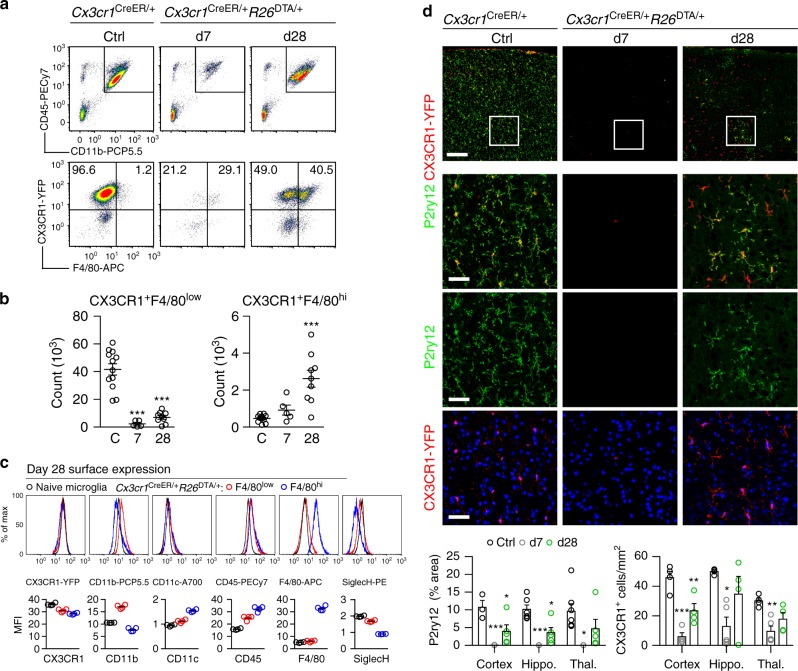
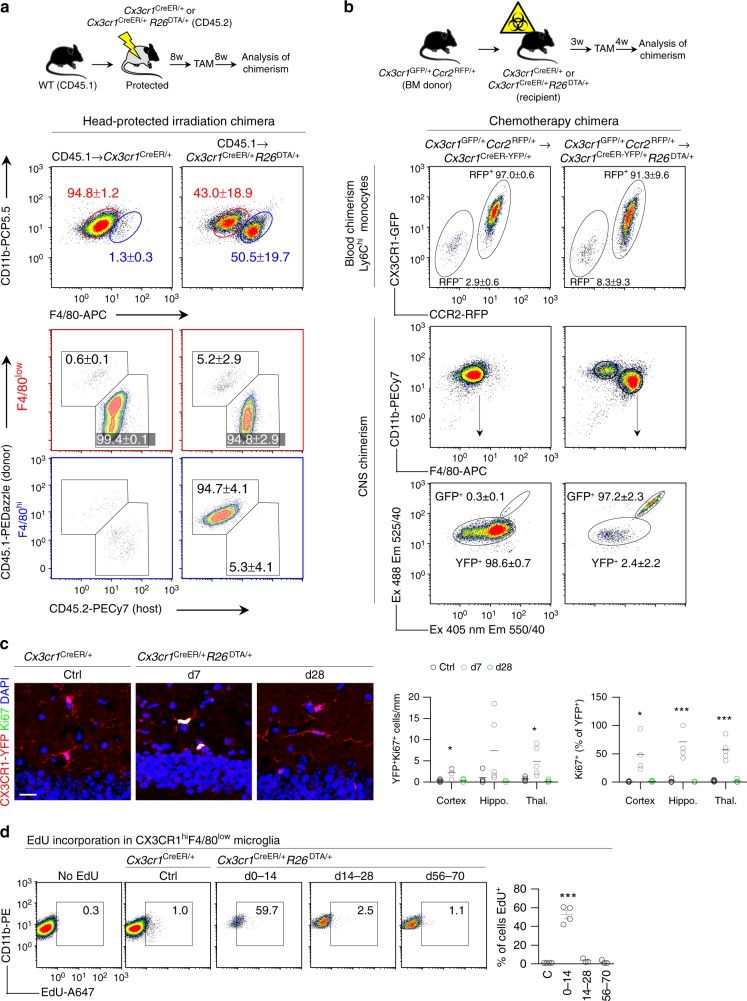
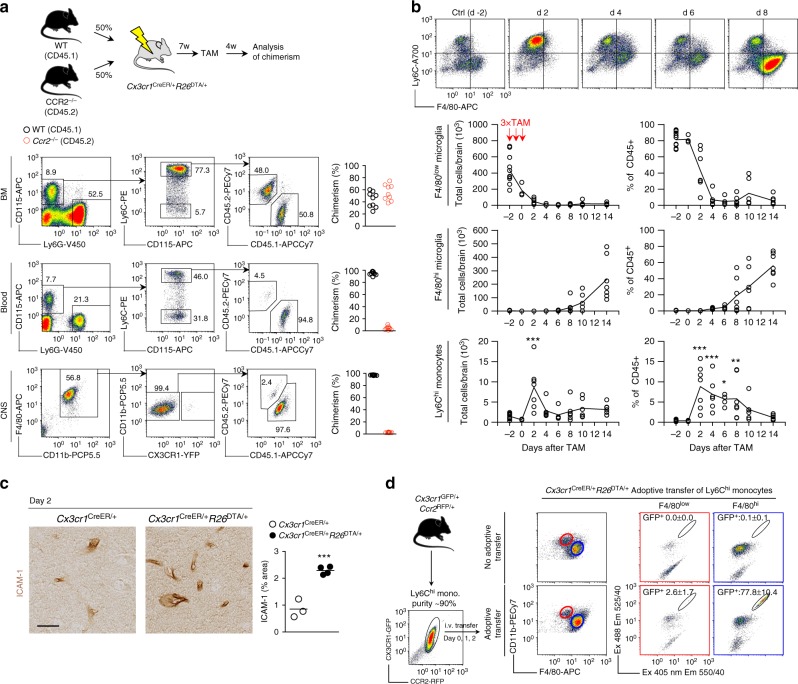
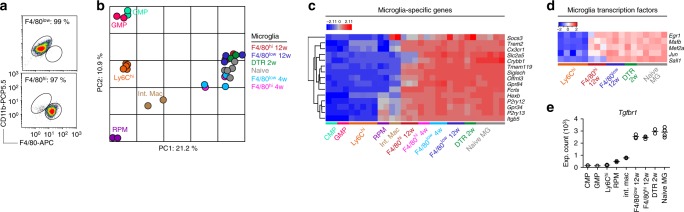
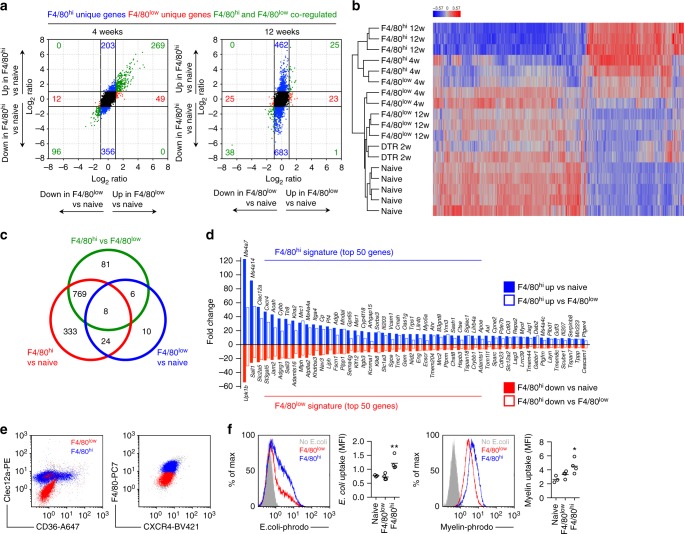
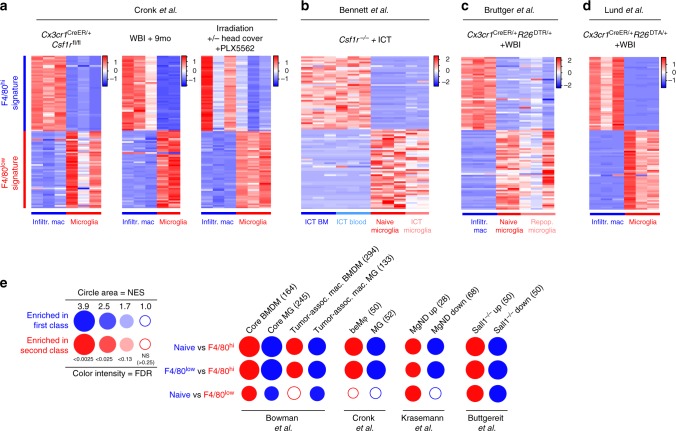
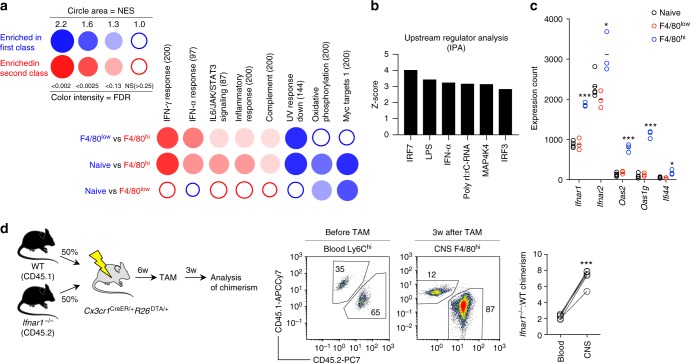
Verification
Claims the paper makes
The claims and statistics of this paper haven’t been checked yet.
Run the check — free, no account needed. It reads the open-access text and checks the sources it cites.
Claims other papers make about this one
Each is checked against this paper’s own text: does it say what the citing paper says it does?
The cited source doesn’t support the claim as written.
In the citing paper
“Moreover, recent studies have reported that during aging or neurodegeneration, bone marrow-derived blood monocytes can infiltrate the brain through a disrupted blood-brain barrier (BBB) and differentiate into microglia-like cells, exhibiting transcriptional and functional similarity to brain-resident microglia13–15.”
From Somatic cancer variants enriched in Alzheimer’s disease microglia-like cells drive inflammatory and proliferative states (2026) · cites this paper as [13]
Checked by a reasoning model — may be wrong.
Experimental — accuracy not yet measuredThe cited source doesn’t support the claim as written.
In the citing paper
“Interestingly, MoMg and to a lesser extend HSC-M F displayed expression of Sall1 , as compared to leptomeningeal M F ( Fig. 4f ), suggesting that also engrafted cells in BM chimeras can acquire this proposed 'microglia signature' marker 14,18,19 .”
From Clonal hematopoiesis-associated motoric deficits caused by monocyte-derived microglia accumulating in aging mice (2025) · cites this paper as [19]
Checked by a reasoning model — may be wrong.
Experimental — accuracy not yet measuredThe cited source says what the claim attributes to it.
In the citing paper
“Marrow-derived cells may have an ameliorative effect on neurodegenerative phenotypes in mice33,34, possibly due to their superior phagocytic capacity35.”
From Clonal hematopoiesis is associated with protection from Alzheimer’s disease (2023) · cites this paper as [35]
The cited source says what the claim attributes to it.
In the citing paper
“This includes, for instance, lack of expression of the transcriptional repressor Spalt Like Transcription Factor 1 (Sall1), a proposed hallmark of microglia identity 14,18,19 .”
From Clonal hematopoiesis-associated motoric deficits caused by monocyte-derived microglia accumulating in aging mice (2025) · cites this paper as [19]
Self-check
Percentages, sums and reported differences re-computed from the paper’s own numbers.
The self-check needs the paper’s full text.
Citations
Cites
1 retracted
Microglia-dependent synapse loss in type I interferon-mediated lupus
Bialas, A. R., Presumey, J., Das, A., van der Poel, C. E., Lapchak, P. H., Mesin, L., Victora, G., Tsokos, G. C., Mawrin, C., Herbst, R., et al. (2017) · Nature · doi:10.1038/nature22821 · Cited by 197
RetractedThe Molecular Signatures Database Hallmark Gene Set Collection
Liberzon, A., Birger, C., Thorvaldsdóttir, H., Ghandi, M., Mesirov, J. P., & Tamayo, P. (2015) · Cell Systems · doi:10.1016/j.cels.2015.12.004 · Cited by 13,807
Fate Mapping Analysis Reveals That Adult Microglia Derive from Primitive Macrophages
Ginhoux, F., Greter, M., Leboeuf, M., Nandi, S., See, P., Gokhan, S., Mehler, M. F., Conway, S. J., Ng, L. G., Stanley, E. R., et al. (2010) · Science · doi:10.1126/science.1194637 · Cited by 5,175
Fate Mapping Reveals Origins and Dynamics of Monocytes and Tissue Macrophages under Homeostasis
Yona, S., Kim, K.-W., Wolf, Y., Mildner, A., Varol, D., Breker, M., Strauss-Ayali, D., Viukov, S., Guilliams, M., Misharin, A., et al. (2013) · Immunity · doi:10.1016/j.immuni.2012.12.001 · Cited by 3,245
Krasemann, S., Madore, C., Cialic, R., Baufeld, C., Calcagno, N., El Fatimy, R., Beckers, L., O’Loughlin, E., Xu, Y., Fanek, Z., et al. (2017) · Immunity · doi:10.1016/j.immuni.2017.08.008 · Cited by 2,979
Self-citationMicroglia promote learning-dependent synapse formation through brain-derived neurotrophic factor
Parkhurst, C. N., Yang, G., Ninan, I., Savas, J. N., Yates, J. R., Lafaille, J. J., Hempstead, B. L., Littman, D. R., & Gan, W.-B. (2013) · Cell · doi:10.1016/j.cell.2013.11.030 · Cited by 2,599
A Lineage of Myeloid Cells Independent of Myb and Hematopoietic Stem Cells
Schulz, C., Perdiguero, E. G., Chorro, L., Szabo-Rogers, H., Cagnard, N., Kierdorf, K., Prinz, M., Wu, B., Jacobsen, S. E. W., Pollard, J. W., et al. (2012) · Science · doi:10.1126/science.1219179 · Cited by 2,578
Identification of a unique TGF-β–dependent molecular and functional signature in microglia
Butovsky, O., Jedrychowski, M. P., Moore, C. S., Cialic, R., Lanser, A. J., Gabriely, G., Koeglsperger, T., Dake, B., Wu, P. M., Doykan, C. E., et al. (2014) · Nature Neuroscience · doi:10.1038/nn.3599 · Cited by 2,543
Self-citationTissue-resident macrophages originate from yolk-sac-derived erythro-myeloid progenitors
Gomez Perdiguero, E., Klapproth, K., Schulz, C., Busch, K., Azzoni, E., Crozet, L., Garner, H., Trouillet, C., de Bruijn, M. F., Geissmann, F., et al. (2015) · Nature · doi:10.1038/nature13989 · Cited by 2,339
Hashimoto, D., Chow, A., Noizat, C., Teo, P., Beasley, M. B., Leboeuf, M., Becker, C. D., See, P., Price, J., Lucas, D., et al. (2013) · Immunity · doi:10.1016/j.immuni.2013.04.004 · Cited by 2,311
Tissue-Resident Macrophage Enhancer Landscapes Are Shaped by the Local Microenvironment
Lavin, Y., Winter, D., Blecher-Gonen, R., David, E., Keren-Shaul, H., Merad, M., Jung, S., & Amit, I. (2014) · Cell · doi:10.1016/j.cell.2014.11.018 · Cited by 2,167
Elmore, M. R. P., Najafi, A. R., Koike, M. A., Dagher, N. N., Spangenberg, E. E., Rice, R. A., Kitazawa, M., Matusow, B., Nguyen, H., West, B. L., et al. (2014) · Neuron · doi:10.1016/j.neuron.2014.02.040 · Cited by 1,968
Dendritic cells, monocytes and macrophages: a unified nomenclature based on ontogeny
Guilliams, M., Ginhoux, F., Jakubzick, C., Naik, S. H., Onai, N., Schraml, B. U., Segura, É., Tussiwand, R., & Yona, S. (2014) · Nature reviews. Immunology · doi:10.1038/nri3712 · Cited by 1,923
Tissue-Resident Macrophage Ontogeny and Homeostasis
Ginhoux, F., & Guilliams, M. (2016) · Immunity · doi:10.1016/j.immuni.2016.02.024 · Cited by 1,884
Serbina, N. V., & Pamer, E. G. (2006) · Nature Immunology · doi:10.1038/ni1309 · Cited by 1,658
Gosselin, D., Link, V. M., Romanoski, C. E., Fonseca, G. J., Eichenfield, D. Z., Spann, N. J., Stender, J. D., Chun, H. B., Garner, H., Geissmann, F., et al. (2014) · Cell · doi:10.1016/j.cell.2014.11.023 · Cited by 1,307
Origin, fate and dynamics of macrophages at central nervous system interfaces
Goldmann, T., Wieghofer, P., Jordão, M. J. C., Prutek, F., Hagemeyer, N., Frenzel, K., Amann, L., Staszewski, O., Kierdorf, K., Krueger, M., et al. (2016) · Nature Immunology · doi:10.1038/ni.3423 · Cited by 1,209
Microglia development follows a stepwise program to regulate brain homeostasis
Matcovitch-Natan, O., Winter, D. R., Giladi, A., Vargas Aguilar, S., Spinrad, A., Sarrazin, S., Ben-Yehuda, H., David, E., Zelada González, F., Perrin, P., et al. (2016) · Science · doi:10.1126/science.aad8670 · Cited by 1,180
Bain, C. C., Bravo-Blas, A., Scott, C. L., Gomez Perdiguero, E., Geissmann, F., Henri, S., Malissen, B., Osborne, L. C., Artis, D., & Mowat, A. M. (2014) · Nature Immunology · doi:10.1038/ni.2967 · Cited by 1,178
Hoeffel, G., Chen, J., Lavin, Y., Low, D., Almeida, F. F., See, P., Beaudin, A. E., Lum, J., Low, I., Forsberg, E. C., et al. (2015) · Immunity · doi:10.1016/j.immuni.2015.03.011 · Cited by 1,135
van Furth, R., Cohn, Z. A., Jg, H., Humphrey, J., Spector, W. G., & Langevoort, H. L. (1972) · PubMed Central · Cited by 1,133
Microglia in the adult brain arise from Ly-6ChiCCR2+ monocytes only under defined host conditions
Mildner, A., Schmidt, H., Nitsche, M., Merkler, D., Hanisch, U.-K., Mack, M., Heikenwalder, M., Brück, W., Priller, J., & Prinz, M. (2007) · Nature Neuroscience · doi:10.1038/nn2015 · Cited by 1,089
Infiltrating monocytes trigger EAE progression, but do not contribute to the resident microglia pool
Ajami, B., Bennett, J. L., Krieger, C., McNagny, K. M., & Rossi, F. M. V. (2011) · Nature Neuroscience · doi:10.1038/nn.2887 · Cited by 1,061
Specification of tissue-resident macrophages during organogenesis
Mass, E., Ballesteros, I., Farlik, M., Halbritter, F., Günther, P., Crozet, L., Jacome-Galarza, C. E., Händler, K., Klughammer, J., Kobayashi, Y., et al. (2016) · Science · doi:10.1126/science.aaf4238 · Cited by 891
Okabe, Y., & Medzhitov, R. (2014) · Cell · doi:10.1016/j.cell.2014.04.016 · Cited by 884
Bone marrow-derived monocytes give rise to self-renewing and fully differentiated Kupffer cells
Scott, C. L., Zheng, F., De Baetselier, P., Martens, L., Saeys, Y., De Prijck, S., Lippens, S., Abels, C., Schoonooghe, S., Raes, G., et al. (2016) · Nature Communications · doi:10.1038/ncomms10321 · Cited by 860
Tamoutounour, S., Guilliams, M., Montanana Sanchis, F., Liu, H., Terhorst, D., Malosse, C., Pollet, E., Ardouin, L., Luche, H., Sanchez, C., et al. (2013) · Immunity · doi:10.1016/j.immuni.2013.10.004 · Cited by 783
Microbiome Influences Prenatal and Adult Microglia in a Sex-Specific Manner
Thion, M. S., Low, D., Silvin, A., Chen, J., Grisel, P., Schulte-Schrepping, J., Blecher, R., Ulas, T., Squarzoni, P., Hoeffel, G., et al. (2018) · Cell · doi:10.1016/j.cell.2017.11.042 · Cited by 779
Beers, D. R., Henkel, J. S., Xiao, Q., Zhao, W., Wang, J., Yen, A. A., Siklos, L., McKercher, S. R., & Appel, S. H. (2006) · Proceedings of the National Academy of Sciences · doi:10.1073/pnas.0607423103 · Cited by 733
Coupled Proliferation and Apoptosis Maintain the Rapid Turnover of Microglia in the Adult Brain
Askew, K., Li, K., Olmos-Alonso, A., Garcia-Moreno, F., Liang, Y., Richardson, P., Tipton, T., Chapman, M. A., Riecken, K., Beccari, S., et al. (2017) · Cell Reports · doi:10.1016/j.celrep.2016.12.041 · Cited by 726
Origin of monocytes and macrophages in a committed progenitor
Hettinger, J., Richards, D. M., Hansson, J., Barra, M. M., Joschko, A.-C., Krijgsveld, J., & Feuerer, M. (2013) · Nature Immunology · doi:10.1038/ni.2638 · Cited by 706
van de Laar, L., Saelens, W., Prijck, S. D., Martens, L., Scott, C. L., Isterdael, G. V., Hoffmann, E., Beyaert, R., Saeys, Y., Lambrecht, B. N., et al. (2016) · Immunity · doi:10.1016/j.immuni.2016.02.017 · Cited by 665
Chiu, I. M., Morimoto, E. T. A., Goodarzi, H., Liao, J. T., O’Keeffe, S., Phatnani, H. P., Muratet, M., Carroll, M. C., Levy, S., Tavazoie, S., et al. (2013) · Cell Reports · doi:10.1016/j.celrep.2013.06.018 · Cited by 651
Macrophage Ontogeny Underlies Differences in Tumor-Specific Education in Brain Malignancies
Bowman, R. L., Klemm, F., Akkari, L., Pyonteck, S. M., Sevenich, L., Quail, D. F., Dhara, S., Simpson, K., Gardner, E. E., Iacobuzio–Donahue, C. A., et al. (2016) · Cell Reports · doi:10.1016/j.celrep.2016.10.052 · Cited by 644
Comprehensive methylome map of lineage commitment from haematopoietic progenitors
Ji, H., Ehrlich, L. I. R., Seita, J., Murakami, P. N., Doi, A., Lindau, P., Lee, H.-J., Aryee, M. J., Irizarry, R. A., Kim, K., et al. (2010) · Nature · doi:10.1038/nature09367 · Cited by 636
Bruttger, J., Karram, K., Wörtge, S., Regen, T., Marini, F., Hoppmann, N., Klein, M., Blank, T., Yona, S., Wolf, Y., et al. (2015) · Immunity · doi:10.1016/j.immuni.2015.06.012 · Cited by 634
Holtman, I. R., Raj, D. D., Miller, J. A., Schaafsma, W., Yin, Z., Brouwer, N., Wes, P. D., Möller, T., Orre, M., Kamphuis, W., et al. (2015) · Acta Neuropathologica Communications · doi:10.1186/s40478-015-0203-5 · Cited by 619
Heidt, T., Courties, G., Dutta, P., Sager, H. B., Sebas, M., Iwamoto, Y., Sun, Y., Da Silva, N., Panizzi, P., van der Laan, A. M., et al. (2014) · Circulation Research · doi:10.1161/circresaha.115.303567 · Cited by 607
A new fate mapping system reveals context-dependent random or clonal expansion of microglia
Tay, T. L., Mai, D., Dautzenberg, J., Fernández-Klett, F., Lin, G., Sagar, Datta, M., Drougard, A., Stempfl, T., Ardura-Fabregat, A., et al. (2017) · Nature Neuroscience · doi:10.1038/nn.4547 · Cited by 597
Sall1 is a transcriptional regulator defining microglia identity and function
Buttgereit, A., Lelios, I., Yu, X., Vrohlings, M., Krakoski, N. R., Gautier, E. L., Nishinakamura, R., Becher, B., & Greter, M. (2016) · Nature Immunology · doi:10.1038/ni.3585 · Cited by 570
Huang, Y., Xu, Z., Xiong, S., Sun, F., Qin, G., Hu, G., Wang, J., Zhao, L., Liang, Y.-X., Wu, T., et al. (2018) · Nature Neuroscience · doi:10.1038/s41593-018-0090-8 · Cited by 560
A combination of ontogeny and CNS environment establishes microglial identity
Bennett, F. C., Bennett, M. L., Yaqoob, F., Mulinyawe, S. B., Grant, G. A., Hayden Gephart, M., Plowey, E. D., & Barres, B. A. (2018) · Neuron · doi:10.1016/j.neuron.2018.05.014 · Cited by 524
Progressive replacement of embryo-derived cardiac macrophages with age
Molawi, K., Wolf, Y., Kandalla, P. K., Favret, J., Hagemeyer, N., Frenzel, K., Pinto, A. R., Klapproth, K., Henri, S., Malissen, B., et al. (2014) · Journal of Experimental Medicine · doi:10.1084/jem.20140639 · Cited by 513
Blériot, C., Dupuis, T., Jouvion, G., Eberl, G., Disson, O., & Lecuit, M. (2015) · Immunity · doi:10.1016/j.immuni.2014.12.020 · Cited by 471
Heme-mediated SPI-C induction promotes monocyte differentiation into iron-recycling macrophages
Haldar, M., Kohyama, M., So, A. Y.-L., KC, W., Wu, X., Briseño, C. G., Satpathy, A. T., Kretzer, N. M., Arase, H., Rajasekaran, N. S., et al. (2014) · Cell · doi:10.1016/j.cell.2014.01.069 · Cited by 431
Cronk, J. C., Filiano, A. J., Louveau, A., Marin, I., Marsh, R., Ji, E., Goldman, D. H., Smirnov, I., Geraci, N., Acton, S., et al. (2018) · Journal of Experimental Medicine · doi:10.1084/jem.20180247 · Cited by 412
Does niche competition determine the origin of tissue-resident macrophages?
Guilliams, M., & Scott, C. L. (2017) · Nature Reviews Immunology · doi:10.1038/nri.2017.42 · Cited by 409
The Transcription Factor Gata6 Links Tissue Macrophage Phenotype and Proliferative Renewal
Rosas, M., Davies, L. C., Giles, P. J., Liao, C., Kharfan, B., Stone, T., O’Donnell, V. B., Fraser, D. J., Jones, S. A., & Taylor, P. R. (2014) · Science · doi:10.1126/science.1251414 · Cited by 393
Prinz, M., Schmidt, H., Mildner, A., Knobeloch, K., Hanisch, U., Raasch, J., Merkler, D., Detje, C. N., Gutcher, I., Mages, J., et al. (2008) · Immunity · doi:10.1016/j.immuni.2008.03.011 · Cited by 387
Takata, K., Kozaki, T., Lee, C., Thion, M. S., Otsuka, M., Lim, S. H., Utami, K. H., Fidan, K., Park, D. S., Malleret, B., et al. (2017) · Immunity · doi:10.1016/j.immuni.2017.06.017 · Cited by 360
Microglial Physiology and Pathophysiology: Insights from Genome-wide Transcriptional Profiling
Crotti, A., & Ransohoff, R. M. (2016) · Immunity · doi:10.1016/j.immuni.2016.02.013 · Cited by 323
Machiels, B., Dourcy, M., Xiao, X., Javaux, J., Mesnil, C., Sabatel, C. M., Desmecht, D. J.-M., Lallemand, F., Martinive, P., Hammad, H., et al. (2017) · Nature Immunology · doi:10.1038/ni.3857 · Cited by 258
Microglial repopulation model reveals a robust homeostatic process for replacing CNS myeloid cells
Varvel, N. H., Grathwohl, S. A., Baumann, F., Liebig, C., Bosch, A., Brawek, B., Thal, D. R., Charo, I. F., Heppner, F. L., Aguzzi, A., et al. (2012) · Proceedings of the National Academy of Sciences · doi:10.1073/pnas.1210150109 · Cited by 245
Wu, S., Wu, Y.-Y., & Capecchi, M. (2006) · Development · doi:10.1242/dev.02236 · Cited by 206
CCR2 mediates hematopoietic stem and progenitor cell trafficking to sites of inflammation in mice
Si, Y. C., Tsou, C.-L., Croft, K., & Charo, I. F. (2010) · Journal of Clinical Investigation · doi:10.1172/jci40310 · Cited by 194
Developmental origin and maintenance of distinct testicular macrophage populations
Mossadegh‐Keller, N., Gentek, R., Gimenez, G., Bigot, S., Mailfert, S., & Sieweke, M. H. (2017) · The Journal of Experimental Medicine · doi:10.1084/jem.20170829 · Cited by 194
Homeostasis of Microglia in the Adult Brain: Review of Novel Microglia Depletion Systems
Waisman, A., Ginhoux, F., Greter, M., & Bruttger, J. (2015) · Trends in Immunology · doi:10.1016/j.it.2015.08.005 · Cited by 183
Wes, P. D., Holtman, I. R., Boddeke, E. W. G. M., Möller, T., & Eggen, B. J. L. (2016) · Glia · doi:10.1002/glia.22866 · Cited by 167
The role of microglia in human disease: therapeutic tool or target?
Cartier, N., Lewis, C. B., Zhang, R., & Rossi, F. M. V. (2014) · Acta Neuropathologica · doi:10.1007/s00401-014-1330-y · Cited by 142
Dual extra-retinal origins of microglia in the model of retinal microglia repopulation
Huang, Y., Xu, Z., Xiong, S., Qin, G., Sun, F., Yang, J. F., Yuan, T., Zhao, L., Wang, K., Liang, Y.-X., et al. (2018) · Cell Discovery · doi:10.1038/s41421-018-0011-8 · Cited by 134
Impact of peripheral myeloid cells on amyloid-β pathology in Alzheimer’s disease–like mice
Prokop, S., Miller, K. R., Drost, N., Handrick, S., Mathur, V., Luo, J., Wegner, A., Wyss-Coray, T., & Heppner, F. L. (2015) · Journal of Experimental Medicine · doi:10.1084/jem.20150479 · Cited by 116
Spinelli, L., Carpentier, S., Montañana-Sanchis, F., Dalod, M., & Manh, T. V. (2015) · BMC Genomics · doi:10.1186/s12864-015-2012-4 · Cited by 97
Developmental control of macrophage function
Bonnardel, J., & Guilliams, M. (2017) · Current Opinion in Immunology · doi:10.1016/j.coi.2017.12.001 · Cited by 87
Lund, H., Pieber, M., Parsa, R., Grommisch, D., Ewing, E., Kular, L., Han, J., Zhu, K., Nijssen, J., Hedlund, E., et al. (2018) · Nature Immunology · doi:10.1038/s41590-018-0091-5 · Cited by 86
Self-citationLampron, A., Lessard, M., & Rivest, S. (2012) · Cell Transplantation · doi:10.3727/096368911x593154 · Cited by 65
Bone marrow drives central nervous system regeneration after radiation injury
Dietrich, J., Baryawno, N., Nayyar, N., Valtis, Y. K., Yang, B., Ly, I., Besnard, A., Sévère, N., Gustafsson, K. U., Andronesi, O. C., et al. (2017) · Journal of Clinical Investigation · doi:10.1172/jci90647 · Cited by 51
Lee, J. C., Seong, J., Kim, S. H., Lee, S. J., Cho, Y. J., An, J., Nam, D., Joo, K. M., & Ik, C. (2012) · Biochemical and Biophysical Research Communications · doi:10.1016/j.bbrc.2012.01.026 · Cited by 41
Exploring the utility of human DNA methylation arrays for profiling mouse genomic DNA
Wong, N. C., Ng, J., Hall, N. E., Lunke, S., Salmanidis, M., Brumatti, G., Ekert, P. G., Craig, J. M., & Saffery, R. (2013) · Genomics · doi:10.1016/j.ygeno.2013.04.014 · Cited by 36
Usability of human Infinium MethylationEPIC BeadChip for mouse DNA methylation studies
Needhamsen, M., Ewing, E., Lund, H., Gómez-Cabrero, D., Harris, R. A., Kular, L., & Jagodic, M. (2017) · BMC Bioinformatics · doi:10.1186/s12859-017-1870-y · Cited by 28
Self-citationLewis, C. B., Manning, J., Barr, C., Peake, K., Humphries, R. K., Rossi, F. M. V., & Krieger, C. (2013) · PLoS ONE · doi:10.1371/journal.pone.0060661 · Cited by 23
Cited by
Sorted by citations
Microglia Biology: One Century of Evolving Concepts
Prinz, M., Jung, S., & Priller, J. (2019) · Cell · doi:10.1016/j.cell.2019.08.053 · Cited by 1,525
Macrophages in health and disease
Park, M. D., Silvin, A., Ginhoux, F., & Merad, M. (2022) · Cell · doi:10.1016/j.cell.2022.10.007 · Cited by 644
Glial Cells: Role of the Immune Response in Ischemic Stroke
Xu, S., Lü, J., Shao, A., Zhang, J. H., & Zhang, J. (2020) · Frontiers in Immunology · doi:10.3389/fimmu.2020.00294 · Cited by 626
Establishment and Maintenance of the Macrophage Niche
Guilliams, M., Thierry, G. R., Bonnardel, J., & Bajenoff, M. (2020) · Immunity · doi:10.1016/j.immuni.2020.02.015 · Cited by 512
Silvin, A., Uderhardt, S., Piot, C., Da Mesquita, S., Yang, K., Geirsdottir, L., Mulder, K., Eyal, D., Liu, Z., Bridlance, C., et al. (2022) · Immunity · doi:10.1016/j.immuni.2022.07.004 · Cited by 368
Self-citation
Metadata
- Authors
- Lund, H., Pieber, M., Parsa, R., Han, J., Grommisch, D., Ewing, E., Kular, L., Needhamsen, M., Espinosa, A., Nilsson, E., Överby, A. K., Butovsky, O., Jagodic, M., Zhang, X.-M., & Harris, R. A.
- Affiliations
- Karolinska University Hospital (SE)
- Umeå University (SE)
- Brigham and Women's Hospital (US)
- Corresponding author
- Harris, Robert A.
- ORCID
- Venue
- Nature Communications
- Published
- 2018-11-19
- Volume
- 9
- Issue
- 1
- Pages
- 4845-4845
- ISSN
- 2041-1723 (ISSN-L)
- PMC
- PMC6242869
- OpenAlex
- W2901905540
- Cited by
- 249
- References
- 70
- Citations by year
- 2026: 23 · 2025: 36 · 2024: 39 · 2023: 33 · 2022: 36 · 2021: 26 · 2020: 39 · 2019: 17
- FWCI
- 9.20
- Type
- journal article
- Language
- en
- Open access
- gold
- doi.org
- Locations
- Nature Communications (publishedVersion, cc-by)
- Europe PMC (PubMed Central) (publishedVersion, other-oa)
- PubMed Central (publishedVersion, cc-by)
- PubMed (publishedVersion)
- KTH Publication Database DiVA (KTH Royal Institute of Technology) (submittedVersion, other-oa)
- RePEc: Research Papers in Economics (submittedVersion)
- DOAJ (DOAJ: Directory of Open Access Journals) (submittedVersion, cc-by-sa)
- DOAJ (DOAJ: Directory of Open Access Journals) (submittedVersion)
- Funders
- Hjärnfonden
- Karolinska Institutet
- Vetenskapsrådet
- Alzheimerfonden
- Science for Life Laboratory
- Servier
- National Institute of Neurological Disorders and Stroke (R01NS088137)
- Topics
- Life Sciences › Neuroscience › Neurology › Neuroinflammation and Neurodegeneration Mechanisms
- Life Sciences › Neuroscience › Developmental Neuroscience › Neurogenesis and neuroplasticity mechanisms
- Life Sciences › Neuroscience › Neurology › Barrier Structure and Function Studies
- Keywords
- microglia, niche competition, CX3CR1, CLEC12A, Ly6Chi monocytes, microglia-like cells, type I interferon, DNA methylation, epigenetic imprinting, phagocytosis, microglial proliferation, brain macrophages, vascular activation, blood-brain barrier
- MeSH terms
- CX3C Chemokine Receptor 1, Animals, Antigens, Differentiation, Antigens, Ly, Bacterial Proteins, Bone Marrow Cells, Brain, Gene Expression Regulation, Interferon Type I, Luminescent Proteins, Macrophages, Mice, Transgenic, Monocytes, Phagocytosis, Receptors, Mitogen, Whole-Body Irradiation, Signal Transduction, Microglia, Genes, Reporter, Transplantation Chimera, Cell Lineage, DNA Methylation, Adoptive Transfer, Lectins, C-Type, Cell Proliferation, Green Fluorescent Proteins, Mice
About these checks
Registry, retraction, Cites and statistics results are computed, not judged, with one exception: a printed reference that no index lists is read once by a model before it counts as a citation error. Claims are extracted by a model and kept only when their quote appears verbatim in the text; each cited source is then checked, with a model’s help, for whether it says what the claim relies on. Those verdicts can be wrong — read the claim’s quote and the cited source before relying on one.
Statistics and arithmetic are recomputed, not judged.
Confidence bands are shown only for fields calibrated on our annotated test set. None is calibrated yet, so no band is shown.
What counts as a claim ›How we measure confidence ›How we check this ›
Are you an author, or do you see a problem with this page? Request a review
