

Spike-timing-dependent plasticity learning of coincidence detection with passively integrated memristive circuits
Open accessThe DOI matches its Crossref record; 45 of the 45 references it cites were found in a registry or an index.
Abstract
Spiking neural networks, the most realistic artificial representation of biological nervous systems, are promising due to their inherent local training rules that enable low-overhead online learning, and energy-efficient information encoding. Their downside is more demanding functionality of the artificial synapses, notably including spike-timing-dependent plasticity, which makes their compact efficient hardware implementation challenging with conventional device technologies. Recent work showed that memristors are excellent candidates for artificial synapses, although reports of even simple neuromorphic systems are still very rare. In this study, we experimentally demonstrate coincidence detection using a spiking neural network, implemented with passively integrated metal-oxide memristive synapses connected to an analogue leaky-integrate-and-fire silicon neuron. By employing spike-timing-dependent plasticity learning, the network is able to robustly detect the coincidence by selectively increasing the synaptic efficacies corresponding to the synchronized inputs. Not surprisingly, our results indicate that device-to-device variation is the main challenge towards realization of more complex spiking networks.
Overview
The claims and statistics of this paper haven’t been checked yet.
Free: it reads the open-access text and checks the first 5 claims that cite a source we can check. Create a free account to check every claim.
Integrity signals
Registry
Cites
Statistics
Figures
Verification
Claims the paper makes
The claims and statistics of this paper haven’t been checked yet.
Free: it reads the open-access text and checks the first 5 claims that cite a source we can check. Create a free account to check every claim.
Claims other papers make about this one
Each is checked against this paper’s own text: does it say what the citing paper says it does?
The source backs part of the claim, not all of it — or backs it for a different population, condition or comparison.
In the citing paper
“Crossbar arrays of two-terminal metal/insulator/metal (MIM) memristive devices can be fabricated easily using standard lithography and deposition techniques; this has been readily achieved by multiple groups57,64,68–70,85,93,105,216,217.”
From Hardware implementation of memristor-based artificial neural networks (2024) · cites this paper as [216]
Experimental — accuracy not yet measured
Self-check
Percentages, sums and reported differences re-computed from the paper’s own numbers.
The self-check needs the paper’s full text.
Citations
Cites
Bi, G.-Q., & Poo, M.-M. (1998) · The Journal of Neuroscience · doi:10.1523/jneurosci.18-24-10464.1998 · Cited by 4,744
Nanoscale Memristor Device as Synapse in Neuromorphic Systems
Jo, S. H., Chang, T., Ebong, I., Bhadviya, B. B., Mazumder, P., & Lu, W. (2010) · Nano Letters · doi:10.1021/nl904092h · Cited by 4,174
A million spiking-neuron integrated circuit with a scalable communication network and interface
Merolla, P. A., Arthur, J. V., Alvarez-Icaza, R., Cassidy, A. S., Sawada, J., Akopyan, F., Jackson, B. L., Imam, N., Guo, C., Nakamura, Y., et al. (2014) · Science · doi:10.1126/science.1254642 · Cited by 4,147
Memristive devices for computing
Yang, J. J., Strukov, D. B., & Stewart, D. R. (2013) · Nature Nanotechnology · doi:10.1038/nnano.2012.240 · Cited by 3,885
Self-citationNetworks of spiking neurons: The third generation of neural network models
Maass, W. (1997) · Neural Networks · doi:10.1016/s0893-6080(97)00011-7 · Cited by 3,481
Spiking Neuron Models: Single Neurons, Populations, Plasticity
Gerstner, W., & Kistler, W. M. (2002) · Cambridge University Press eBooks · doi:10.1017/cbo9780511815706 · Cited by 3,080
Training and operation of an integrated neuromorphic network based on metal-oxide memristors
Prezioso, M., Merrikh-Bayat, F., Hoskins, B. D., Adam, G. C., Likharev, K. K., & Strukov, D. B. (2015) · Nature · doi:10.1038/nature14441 · Cited by 3,001
Self-citationMemristors with diffusive dynamics as synaptic emulators for neuromorphic computing
Wang, Z., Joshi, S., Savel’ev, S. E., Jiang, H., Midya, R., Lin, P., Hu, M., Ge, N., Strachan, J. P., Li, Z., et al. (2017) · Nature Materials · doi:10.1038/nmat4756 · Cited by 2,358
Spike Timing–Dependent Plasticity: A Hebbian Learning Rule
Caporale, N., & Dan, Y. (2008) · Annual Review of Neuroscience · doi:10.1146/annurev.neuro.31.060407.125639 · Cited by 1,997
Reliability of spike timing in neocortical neurons
Mainen, Z. F., & Sejnowski, T. J. (1995) · Science · doi:10.1126/science.7770778 · Cited by 1,950
Cited by
Neuromorphic nanoelectronic materials
Sangwan, V. K., & Hersam, M. C. (2020) · Nature Nanotechnology · doi:10.1038/s41565-020-0647-z · Cited by 890
Neuro-inspired computing chips
Zhang, W., Gao, B., Tang, J., Yao, P., Yu, S., Chang, M.-F., Yoo, H.-J., Qian, H., & Wu, H. (2020) · Nature Electronics · doi:10.1038/s41928-020-0435-7 · Cited by 892
“NVM devices also have the potential to be scaled down to sub-2-nm size 42 and integrated into ultrahigh-density three-dimensional (3D) array 43 , as well as the capability to emulate bio-plausible behaviors 44 .”
BackgroundEmbedded Devices for Neuromorphic Time-Series Assessment
Mazumder, A. N., Hosseini, M., & Mohsenin, T. (2022) · Research Explorer (The University of Manchester) · doi:10.13016/m2ksy0-wxr3 · Cited by 652
Hardware implementation of memristor-based artificial neural networks
Aguirre, F., Sebastian, A., Le Gallo, M., Song, W., Wang, T., Yang, J. J., Lu, W., Chang, M.-F., Ielmini, D., Yang, Y., et al. (2024) · Nature Communications · doi:10.1038/s41467-024-45670-9 · Cited by 564
An artificial spiking afferent nerve based on Mott memristors for neurorobotics
Zhang, X., Zhuo, Y., Luo, Q., Wu, Z., Midya, R., Wang, Z., Song, W., Wang, R., Upadhyay, N. K., Fang, Y., et al. (2020) · Nature Communications · doi:10.1038/s41467-019-13827-6 · Cited by 387
Semiconductor Quantum Dots for Memories and Neuromorphic Computing Systems
Lv, Z., Wang, Y., Chen, J., Wang, J., Zhou, Y., & Han, S.-T. (2020) · Chemical Reviews · doi:10.1021/acs.chemrev.9b00730 · Cited by 364
Neuromorphic Engineering: From Biological to Spike‐Based Hardware Nervous Systems
Yang, J., Wang, R., Ren, Y., Mao, J., Wang, Z., Zhou, Y., & Han, S. (2020) · Advanced Materials · doi:10.1002/adma.202003610 · Cited by 350
Ielmini, D., & Ambrogio, S. (2020) · Nanotechnology · doi:10.1088/1361-6528/ab554b · Cited by 321
Neuro-inspired electronic skin for robots
Liu, F., Deswal, S., Christou, A., Sandamirskaya, Y., Kaboli, M., & Dahiya, R. (2022) · Science Robotics · doi:10.1126/scirobotics.abl7344 · Cited by 300
“Contrary to ANN, the SNN is more biologically plausible as it operates the synaptic devices using a pair of pulses (pre- and post-) following various biological learning rules, for example, STDP (Figure 2A) (112-116).”
MethodZhu, M., He, T., & Lee, C. (2020) · Applied Physics Reviews · doi:10.1063/5.0016485 · Cited by 287
Exploring Neuromorphic Computing Based on Spiking Neural Networks: Algorithms to Hardware
Rathi, N., Chakraborty, I., Kosta, A., Sengupta, A., Ankit, A., Panda, P., & Roy, K. (2023) · ACM Computing Surveys · doi:10.1145/3571155 · Cited by 267
Volatile and Nonvolatile Memristive Devices for Neuromorphic Computing
Zhou, G., Wang, Z., Sun, B., Zhou, F., Sun, L., Zhao, H., Hu, X., Peng, X., Yan, J., Wang, H., et al. (2022) · Advanced Electronic Materials · doi:10.1002/aelm.202101127 · Cited by 243
Low-power linear computation using nonlinear ferroelectric tunnel junction memristors
Berdan, R., Marukame, T., Ota, K., Yamaguchi, M., Saitoh, M., Fujii, S., Deguchi, J., & Nishi, Y. (2020) · Nature Electronics · doi:10.1038/s41928-020-0405-0 · Cited by 238
Leaky integrate-and-fire neurons based on perovskite memristor for spiking neural networks
Yang, J.-Q., Wang, R., Wang, Z.-P., Ma, Q.-Y., Mao, J.-Y., Ren, Y., Yang, X., Zhou, Y., & Han, S.-T. (2020) · Nano Energy · doi:10.1016/j.nanoen.2020.104828 · Cited by 220
Hardware Implementation of Neuromorphic Computing Using Large‐Scale Memristor Crossbar Arrays
Li, Y., & Ang, K.-W. (2021) · Advanced Intelligent Systems · doi:10.1002/aisy.202000137 · Cited by 220
A Review of Resistive Switching Devices: Performance Improvement, Characterization, and Applications
Shi, T., Wang, R., Wu, Z., Sun, Y., An, J., & Liu, Q. (2021) · Small Structures · doi:10.1002/sstr.202000109 · Cited by 200
Seo, D.-G., Lee, Y., Go, G.-T., Pei, M., Jung, S., Jeong, Y. H., Lee, W., Park, H.-L., Kim, S.-W., Yang, H., et al. (2019) · Nano Energy · doi:10.1016/j.nanoen.2019.104035 · Cited by 187
Chen, S., Zhang, T., Tappertzhofen, S., Yang, Y., & Valov, I. (2023) · Advanced Materials · doi:10.1002/adma.202301924 · Cited by 177
Adaptive Extreme Edge Computing for Wearable Devices
Covi, E., Donati, E., Liang, X., Kappel, D., Heidari, H., Payvand, M., & Wang, W. (2021) · Frontiers in Neuroscience · doi:10.3389/fnins.2021.611300 · Cited by 177
“Spatial spiking pattern recognition ( 232 ), spiking co-incidence detection ( 233,234 ), and spatial-temporal correlation ( 223,235 ) has been reported recently.”
BackgroundZhou, H., Li, S., Ang, K., & Zhang, Y. (2024) · Nano-Micro Letters · doi:10.1007/s40820-024-01335-2 · Cited by 210
“Additionally, memristive devices enable new computing paradigms that are difficult to emulate using traditional architectures, such as the spiking neural network [12].”
BackgroundEmerging Opportunities for 2D Semiconductor/Ferroelectric Transistor‐Structure Devices
Luo, Z., Yang, M., Liu, Y., & Alexe, M. (2021) · Advanced Materials · doi:10.1002/adma.202005620 · Cited by 162
Simultaneous emulation of synaptic and intrinsic plasticity using a memristive synapse
Sung, S. H., Kim, T. J., Shin, H., Im, T. H., & Lee, K. J. (2022) · Nature Communications · doi:10.1038/s41467-022-30432-2 · Cited by 146
“Both short-and long-term synaptic plasticity have been successfully emulated by nonvolatile memristors, owing to the strong resemblance of resistive switching behavior to synaptic plasticity 12 – 15 .”
BackgroundEssential Characteristics of Memristors for Neuromorphic Computing
Chen, W., Song, L., Wang, S., Zhang, Z., Wang, G., Hu, G., & Gao, S. (2022) · Advanced Electronic Materials · doi:10.1002/aelm.202200833 · Cited by 165
Demin, V. A., Nekhaev, D., Surazhevsky, I. A., Nikiruy, K. E., Emelyanov, A. V., Nikolaev, S. N., Rylkov, V. V., & Kovalchuk, M. V. (2020) · Neural Networks · doi:10.1016/j.neunet.2020.11.005 · Cited by 143
Memristive and CMOS Devices for Neuromorphic Computing
Milo, V., Malavena, G., Compagnoni, C. M., & Ielmini, D. (2020) · Materials · doi:10.3390/ma13010166 · Cited by 159
“Taking inspiration from this approach based on overlapping spikes across memristive device, more recently other significant STDP demonstrations were achieved in individual two-terminal memristive devices, thus enabling unsupervised learning in small-scale memristive SNNs [145-149].”
MethodNoise-assisted persistence and recovery of memory state in a memristive spiking neuromorphic network
Surazhevsky, I. A., Demin, V. A., Ilyasov, A. I., Emelyanov, A. V., Nikiruy, K. E., Rylkov, V. V., Shchanikov, S., Bordanov, I., Gerasimova, S. A., Guseinov, D. V., et al. (2021) · Chaos Solitons & Fractals · doi:10.1016/j.chaos.2021.110890 · Cited by 141
Roadmap to neuromorphic computing with emerging technologies
Mehonić, A., Ielmini, D., Roy, K., Mutlu, O., Kvatinsky, S., Serrano‐Gotarredona, T., Linares-Barranco, B., Spiga, S., Savel'ev, S. E., Balanov, A. G., et al. (2024) · APL Materials · doi:10.1063/5.0179424 · Cited by 201
Self-citationMemristor‐Based Intelligent Human‐Like Neural Computing
Wang, S., Song, L., Chen, W., Wang, G., Hao, E., Li, C., Hu, Y., Pan, Y., Nathan, A., Hu, G., et al. (2022) · Advanced Electronic Materials · doi:10.1002/aelm.202200877 · Cited by 133
A high-performance MoS 2 synaptic device with floating gate engineering for neuromorphic computing
Paul, T., Ahmed, T., Tiwari, K. K., Thakur, C. S., & Ghosh, A. (2019) · 2D Materials · doi:10.1088/2053-1583/ab23ba · Cited by 125
In-Memory Computing with Resistive Memory Circuits: Status and Outlook
Pedretti, G., & Ielmini, D. (2021) · Electronics · doi:10.3390/electronics10091063 · Cited by 113
“…of a variety of data-intensive applications that can be accelerated by IMC acceleration, such as neural network training and inference [40–43], neuromorphic computing [15,16,44,45], image processing [18,46], optimization problems [47–50] and the iterative solution of linear equations [26,27].”
BackgroundSynaptic plasticity in self-powered artificial striate cortex for binocular orientation selectivity
Ren, Y., Bu, X., Wang, M., Gong, Y., Wang, J., Yang, Y., Li, G., Zhang, M., Zhou, Y., & Han, S. (2022) · Nature Communications · doi:10.1038/s41467-022-33393-8 · Cited by 109
Integration and Co-design of Memristive Devices and Algorithms for Artificial Intelligence
Wang, W., Song, W., Yao, P., Li, Y., Van Nostrand, J., Qiu, Q., Ielmini, D., & Yang, J. J. (2020) · iScience · doi:10.1016/j.isci.2020.101809 · Cited by 84
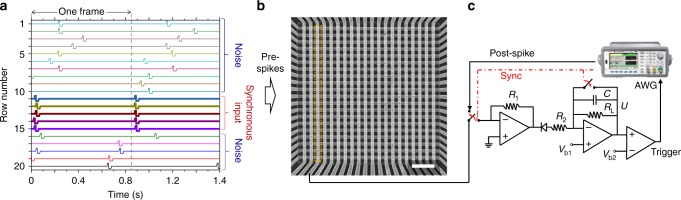
“Based on a similar methodology, the detection of the coincidence of simultaneous spikes representing an image among noise was developed (Sebastian et al., 2017; Prezioso et al., 2018) (Figure 5A).”
MethodSelf-adaptive STDP-based learning of a spiking neuron with nanocomposite memristive weights
Emelyanov, A. V., Nikiruy, K. E., Serenko, A., Ситников, А. В., Presnyakov, M. Y., Борисович, Р. Р., Sboev, A. G., Rylkov, V. V., Kashkarov, P. K., Kovalchuk, M. V., et al. (2019) · Nanotechnology · doi:10.1088/1361-6528/ab4a6d · Cited by 85
A Perovskite Memristor with Large Dynamic Space for Analog-Encoded Image Recognition
Yang, J., Zhang, F., Xiao, H.-M., Wang, Z., Xie, P., Feng, Z., Wang, J., Mao, J., Zhou, Y., & Han, S. (2022) · ACS Nano · doi:10.1021/acsnano.2c09569 · Cited by 89
Artificial Neural Networks Based on Memristive Devices: From Device to System
Huang, H.-M., Wang, Z., Wang, T., Xiao, Y., & Guo, X. (2020) · Advanced Intelligent Systems · doi:10.1002/aisy.202000149 · Cited by 82
Applications and Techniques for Fast Machine Learning in Science
Deiana, A. M., Tran, N., Agar, J., Blott, M., Di Guglielmo, G., Duarte, J., Harris, P., Hauck, S., Liu, M., Neubauer, M. S., et al. (2022) · Frontiers in Big Data · doi:10.3389/fdata.2022.787421 · Cited by 63
Self-citationUnsupervised Learning on Resistive Memory Array Based Spiking Neural Networks
Guo, Y., Wu, H., Gao, B., & Qian, H. (2019) · Frontiers in Neuroscience · doi:10.3389/fnins.2019.00812 · Cited by 85
“Similar structures on STDP implementation have been proposed for 1R (RRAM without any transistor, also known as 0T1R) devices (Yu et al., 2011b; Wu and Saxena, 2017; Prezioso et al., 2018), while for 1T1R devices, additional control on Gate nodes is required.”
BackgroundYao, J. Q., Wang, Q., Zhang, Y., Teng, Y., Li, J., Zhao, P., Zhao, C., Hu, Z., Shen, Z., Liu, L., et al. (2024) · Nature Communications · doi:10.1038/s41467-024-50490-y · Cited by 93
“The low energy consumption of the constructed spiking neural network is determined bya combination of the leaky integrate and fi re (LIF) model, neural circuit policies (NCP), and spiking-timing-dependent plasticity (STDP) weight update rules 60 .”
Interfacial Ion‐Trapping Electrolyte‐Gated Transistors for High‐Fidelity Neuromorphic Computing
Jin, M., Lee, H., Im, C., Na, H., Lee, J., Lee, W. H., Han, J., Lee, E., Park, J., & Kim, Y. S. (2022) · Advanced Functional Materials · doi:10.1002/adfm.202201048 · Cited by 75
Emerging memristive neurons for neuromorphic computing and sensing
Li, Z., Tang, W., Zhang, B., Yang, R., & Miao, X. (2023) · Science and Technology of Advanced Materials · doi:10.1080/14686996.2023.2188878 · Cited by 77
Nanoscale memristor devices: materials, fabrication, and artificial intelligence
Yu, Y., Xiao, M., Fieser, D., Zhou, W., & Hu, A. (2024) · Journal of Materials Chemistry C · doi:10.1039/d3tc04510b · Cited by 79
John, R. A., Acharya, J., Zhu, C., Surendran, A., Bose, S. K., Chaturvedi, A., Tiwari, N., Gao, Y., He, Y., Zhang, K. K., et al. (2020) · Nature Communications · doi:10.1038/s41467-020-16985-0 · Cited by 68
Konar, D., Sarma, A. D., Bhandary, S., Bhattacharyya, S., Cangi, A., & Aggarwal, V. (2023) · Applied Soft Computing · doi:10.1016/j.asoc.2023.110099 · Cited by 79
Spike timing-dependent plasticity and memory
Debanne, D., & Inglebert, Y. (2023) · Current Opinion in Neurobiology · doi:10.1016/j.conb.2023.102707 · Cited by 84
Matsukatova, A. N., Prudnikov, N. V., Kulagin, V. A., Battistoni, S., Minnekhanov, A. A., Trofimov, A. D., Несмелов, А. А., Zavyalov, S. A., Malakhova, Y. N., Parmeggiani, M., et al. (2023) · Advanced Intelligent Systems · doi:10.1002/aisy.202200407 · Cited by 73
Kim, S., Park, J., Kim, T., Hong, K., Hwang, Y., Park, B., & Kim, H. (2022) · Advanced Intelligent Systems · doi:10.1002/aisy.202100273 · Cited by 66
Self-citationLead‐Free Perovskites and Metal Halides for Resistive Switching Memory and Artificial Synapse
Zhang, B., Lin, C., Nirantar, S., Han, E., Zhang, Y., Wang, Z., Lyu, M., & Wang, L. (2024) · Small Structures · doi:10.1002/sstr.202300524 · Cited by 69
EqSpike: Spike-driven equilibrium propagation for neuromorphic implementations
Martin, E., Ernoult, M., Laydevant, J., Li, S., Querlioz, D., Petrisor, T., & Grollier, J. (2021) · iScience · doi:10.1016/j.isci.2021.102222 · Cited by 90
Dopamine-like STDP modulation in nanocomposite memristors
Nikiruy, K. E., Emelyanov, A. V., Demin, V. A., Ситников, А. В., Minnekhanov, A. A., Rylkov, V. V., Kashkarov, P. K., & Kovalchuk, M. V. (2019) · AIP Advances · doi:10.1063/1.5111083 · Cited by 59
Progress and Benchmark of Spiking Neuron Devices and Circuits
Liang, F.-X., Wang, I., & Hou, T. (2021) · Advanced Intelligent Systems · doi:10.1002/aisy.202100007 · Cited by 61
Discretized locally active memristor and application in logarithmic map
Li, H., Li, C., & Du, J. (2022) · Nonlinear Dynamics · doi:10.1007/s11071-022-07955-w · Cited by 57
Bou, A., & Bisquert, J. (2021) · The Journal of Physical Chemistry B · doi:10.1021/acs.jpcb.1c03905 · Cited by 56
Kim, S., Kim, T., Kim, H., & Park, B. (2020) · Applied Physics Letters · doi:10.1063/5.0027757 · Cited by 55
Self-citationA self-adaptive hardware with resistive switching synapses for experience-based neurocomputing
Bianchi, S., Muñoz-Martín, I., Covi, E., Bricalli, A., Piccolboni, G., Regev, A., Molas, G., Nodin, J. F., Andrieu, F., & Ielmini, D. (2023) · Nature Communications · doi:10.1038/s41467-023-37097-5 · Cited by 58
Mossad, O., Nent, E., Woltemate, S., Folschweiller, S., Buescher, J. M., Schnepf, D., Erny, D., Staeheli, P., Bartos, M., Szalay, A., et al. (2021) · Nature Aging · doi:10.1038/s43587-021-00141-4 · Cited by 55
Toward Reflective Spiking Neural Networks Exploiting Memristive Devices
Makarov, V. A., Lobov, S. A., Shchanikov, S., Mikhaylov, A. N., & Kazantsev, V. (2022) · Frontiers in Computational Neuroscience · doi:10.3389/fncom.2022.859874 · Cited by 51
“Although memristor-based SNNs have already been developed and even tested in crossbars (Ankit et al., 2017; Prezioso et al., 2018; Demin et al., 2021), they roughly simulate STDP to implement local learning rules.”
MethodReset-voltage-dependent precise tuning operation of TiOx/Al2O3 memristive crossbar array
Kim, T., Nili, H., Kim, M., Min, K. K., Park, B., & Kim, H. (2020) · Applied Physics Letters · doi:10.1063/5.0021626 · Cited by 47
Self-citationSpiking neural networks based on two-dimensional materials
Roldán, J. B., Maldonado, D., Aguilera-Pedregosa, C., Moreno, E., Aguirre, F. L., Romero‐Zaliz, R., García-Vico, Á. M., Shen, Y., & Lanza, M. (2022) · npj 2D Materials and Applications · doi:10.1038/s41699-022-00341-5 · Cited by 50
“SNNs have been studied making use of memristive devices (without 2D materials) 22,23 .”
BackgroundMemory and Synaptic Devices Based on Emerging 2D Ferroelectricity
Joo, Y., Hwang, E., Hong, H., Cho, S., & Yang, H. (2023) · Advanced Electronic Materials · doi:10.1002/aelm.202300211 · Cited by 48
Kwon, D., Lim, S., Bae, J., Lee, S., Kim, H., Seo, Y.-T., Oh, S., Kim, J., Yeom, K., Park, B., et al. (2020) · Frontiers in Neuroscience · doi:10.3389/fnins.2020.00423 · Cited by 55
“SNNs using unsupervised STDP have been reported to be implemented with synaptic devices, such as RRAM or Flash devices (Pedretti et al., 2017; Kim C.-H. et al., 2018; Prezioso et al., 2018).”
MethodSelf-citationKhan, S. A., Lee, G. H., Mahata, C., Ismail, M., Kim, H., & Kim, S. (2021) · Nanomaterials · doi:10.3390/nano11020315 · Cited by 46
Self-citationJang, J. T., Min, J., Hwang, Y., Choi, S., Kim, D. M., Kim, H., & Kim, D. H. (2020) · IEEE Access · doi:10.1109/access.2020.3032188 · Cited by 46
Self-citationA Configurable Artificial Neuron Based on a Threshold-Tunable TiN/NbOₓ/Pt Memristor
Wang, Y., Xu, H., Wang, W., Zhang, X., Wu, Z., Gu, R., Li, Q., & Liu, Q. (2022) · IEEE Electron Device Letters · doi:10.1109/led.2022.3150034 · Cited by 42
Transport Properties of Magnetic Nanogranular Composites with Dispersed Ions in an Insulating Matrix
Rylkov, V. V., Emelyanov, A. V., Nikolaev, S. N., Nikiruy, K. E., Ситников, А. В., Fadeev, E. A., Demin, V. A., & Granovsky, A. B. (2020) · Journal of Experimental and Theoretical Physics · doi:10.1134/s1063776120070109 · Cited by 43
Li, M., Hong, Q., & Wang, X. (2021) · Neural Computing and Applications · doi:10.1007/s00521-021-06361-4 · Cited by 44
Capacitor-Based Synaptic Devices for Hardware Spiking Neural Networks
Hwang, S., Yu, J., Lee, G. H., Song, M. S., Chang, J., Min, K. K., Jang, T., Lee, J., Park, B., & Kim, H. (2022) · IEEE Electron Device Letters · doi:10.1109/led.2022.3149029 · Cited by 40
Self-citationDing, Y., Zhang, Y., Zhang, X., Chen, P., Zhang, Z., Yang, Y., Cheng, L., Mu, C., Wang, M., Xiang, D., et al. (2022) · Frontiers in Neuroscience · doi:10.3389/fnins.2021.786694 · Cited by 44
“Artificial synapses connect pre-and post-neurons and store weight values that determine the conveyed information intensity (Werner et al., 2016; Zhang et al., 2017; Prezioso et al., 2018; Kurenkov et al., 2019).”
BackgroundMeta-learning spiking neural networks with surrogate gradient descent
Stewart, K. M., & Neftci, E. (2022) · Neuromorphic Computing and Engineering · doi:10.1088/2634-4386/ac8828 · Cited by 49
“Programming synaptic plasticity is important for mixed-signal neuromorphic hardware implementation of synaptic plasticity because such circuits are prone to mismatch [4, 49].”
BackgroundComprehensive Compact Phenomenological Modeling of Integrated Metal-Oxide Memristors
Nili, H., Vincent, A. F., Prezesio, M., Mahmoodi, M. R., Kataeva, I., & Strukov, D. B. (2020) · IEEE Transactions on Nanotechnology · doi:10.1109/tnano.2020.2982128 · Cited by 38
“The proposed model is particularly useful for applications with ex-situ tuning such as neuromorphic inferences or PUFs [22], [23].”
MethodSelf-citationMemory-centric neuromorphic computing for unstructured data processing
Sung, S. H., Kim, T., Shin, H., Namkung, H., Im, T. H., Wang, H. S., & Lee, K. J. (2021) · Nano Research · doi:10.1007/s12274-021-3452-6 · Cited by 36
Iliasov, A. I., Matsukatova, A. N., Emelyanov, A. V., Slepov, P. S., Nikiruy, K. E., & Rylkov, V. V. (2024) · Nanoscale Horizons · doi:10.1039/d3nh00421j · Cited by 34
Bisquert, J. (2024) · Advanced Energy Materials · doi:10.1002/aenm.202400442 · Cited by 36
Associative STDP-like learning of neuromorphic circuits based on polyaniline memristive microdevices
Prudnikov, N. V., Lapkin, D. A., Emelyanov, A. V., Minnekhanov, A. A., Malakhova, Y. N., Чвалун, С. Н., Demin, V. A., & Erokhin, V. V. (2020) · Journal of Physics D Applied Physics · doi:10.1088/1361-6463/ab9262 · Cited by 34
“Bipolar rectangular voltage pulses were used in this experiment, since they allow to get more stable and reproducible STDP windows [52].”
MethodOn-Chip Error-Triggered Learning of Multi-Layer Memristive Spiking Neural Networks
Payvand, M., Fouda, M. E., Kurdahi, F. J., Eltawil, A. M., & Neftci, E. (2020) · IEEE Journal on Emerging and Selected Topics in Circuits and Systems · doi:10.1109/jetcas.2020.3040248 · Cited by 38
“Consequently, many existing on-chip learning approaches focus on their implementation in the forms of unsupervised and semi-supervised learning [19]– [23].”
BackgroundOptimization strategy of the emerging memristors: From material preparation to device applications
Gou, K., Li, Y., Song, H., Lu, R., & Jiang, J. (2024) · iScience · doi:10.1016/j.isci.2024.111327 · Cited by 39
Forgetting memristor based STDP learning circuit for neural networks
Zhou, W., Wen, S., Liu, Y., Liu, L., Liu, X., & Chen, L. (2022) · Neural Networks · doi:10.1016/j.neunet.2022.11.023 · Cited by 33
Bisquert, J. (2023) · Physical Review Applied · doi:10.1103/physrevapplied.20.044022 · Cited by 37
Wang, J., Zhuge, X., & Zhuge, F. (2021) · Science and Technology of Advanced Materials · doi:10.1080/14686996.2021.1911277 · Cited by 35
Resistance transient dynamics in switchable perovskite memristors
Bisquert, J., Bou, A., Guerrero, A., & Balaguera, E. H. (2023) · APL Machine Learning · doi:10.1063/5.0153289 · Cited by 34
Peng, L., Li, X., Bi, D., Xie, X., & Xie, Y. (2020) · IEEE Transactions on Systems Man and Cybernetics Systems · doi:10.1109/tsmc.2020.3011120 · Cited by 31
Combinatorial optimization by weight annealing in memristive hopfield networks
Fahimi, Z., Mahmoodi, M. R., Nili, H., Polishchuk, V., & Strukov, D. B. (2021) · Scientific Reports · doi:10.1038/s41598-020-78944-5 · Cited by 39
Self-citationAdaptive Hodgkin–Huxley Neuron for Retina‐Inspired Perception
Xu, Y., Gao, S., Li, Z., Yang, R., & Miao, X. (2022) · Advanced Intelligent Systems · doi:10.1002/aisy.202200210 · Cited by 33
Effect of Program Error in Memristive Neural Network With Weight Quantization
Kim, T., Kim, S., Hong, K., Park, J., Youn, S., Lee, J., Park, B., & Kim, H. (2022) · IEEE Transactions on Electron Devices · doi:10.1109/ted.2022.3169112 · Cited by 31
Self-citationKhan, M. U., Kim, J., Chougale, M. Y., Furqan, C. M., Saqib, Q. M., Shaukat, R. A., Kobayashi, N. P., Mohammad, B. S., Bae, J., & Kwok, H. S. (2022) · Microsystems & Nanoengineering · doi:10.1038/s41378-022-00390-2 · Cited by 31
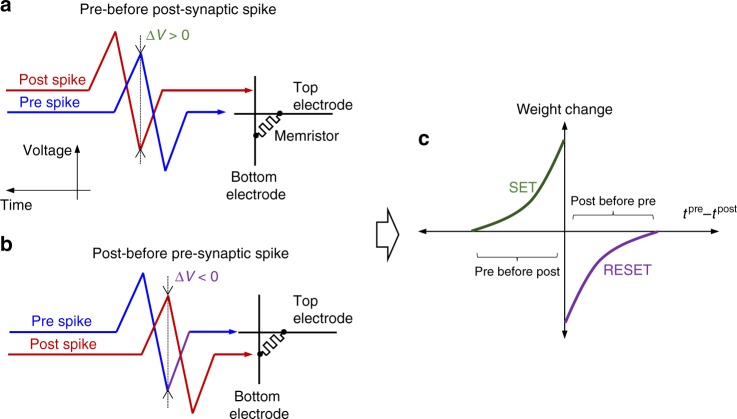
“During Δ t > 0, prespike proceeds postspike, which results in potentiation, and conversely, for Δ t 0, synaptic weight decreases (depression) due to postspike proceeds pre-spike 49,50 .”
BackgroundTrofimov, A. D., Emelyanov, A. V., Matsukatova, A. N., Несмелов, А. А., Zavyalov, S. A., Patsaev, T. D., Форш, П. А., Liu, G., Rylkov, V. V., & Demin, V. A. (2025) · Nanoscale · doi:10.1039/d5nr00456j · Cited by 29
Bisquert, J. (2024) · Advanced Physics Research · doi:10.1002/apxr.202400029 · Cited by 29
Chen, Z., Zhang, J., Wen, S., Li, Y., & Hong, Q. (2021) · IEEE Transactions on Very Large Scale Integration (VLSI) Systems · doi:10.1109/tvlsi.2021.3069221 · Cited by 28
“In the works [40]–[43], researchers realized a competitive neural network circuit by simulating memristor cross array.”
BackgroundPark, S., Jang, J. T., Hwang, Y., Lee, H., Choi, W. S., Kang, D., Kim, C., Kim, H., & Kim, D. H. (2021) · ACS Applied Electronic Materials · doi:10.1021/acsaelm.1c00517 · Cited by 25
Self-citationDevice physics recipe to make spiking neurons
Bisquert, J. (2023) · Chemical Physics Reviews · doi:10.1063/5.0145391 · Cited by 26
Zhu, Y., Wan, X., Yan, J., Zhu, L. Q., Li, R., Tan, C., Yu, Z., Sun, L., Yan, S., Xu, Y., et al. (2024) · Advanced Electronic Materials · doi:10.1002/aelm.202300565 · Cited by 27
Memory-inspired spiking hyperdimensional network for robust online learning
Zou, Z., Alimohamadi, H., Zakeri, A., Imani, F., Kim, Y., Najafi, M. H., & Imani, M. (2022) · Scientific Reports · doi:10.1038/s41598-022-11073-3 · Cited by 54
“Several existing hardware solutions have focused on their implementation in the forms of unsupervised and semi-supervised learning 83,84 .”
BackgroundAn Analog Neuro-Optimizer with Adaptable Annealing Based on 64×64 0T1R Crossbar Circuit
Mahmoodi, M. R., Kim, H., Fahimi, Z., Nili, H., Sedov, L., Polishchuk, V., & Strukov, D. B. (2019) · Technical digest - International Electron Devices Meeting/Technical digest · doi:10.1109/iedm19573.2019.8993442 · Cited by 23
Self-citationElectrode-dependent electrical switching characteristics of InGaZnO memristor
Choi, W. S., Kim, D., Yang, T. J., Chae, I., Kim, C., Kim, H., & Kim, D. H. (2022) · Chaos Solitons & Fractals · doi:10.1016/j.chaos.2022.112106 · Cited by 23
Self-citationWu, L., Wang, Z., Wang, B., Chen, Q., Bao, L., Yu, Z., Yang, Y., Ling, Y., Qin, Y., Tang, K., et al. (2020) · Nanoscale · doi:10.1039/d0nr08012h · Cited by 24
Influence of Al2O3 layer on InGaZnO memristor crossbar array for neuromorphic applications
Choi, W. S., Jang, J. T., Kim, D., Yang, T. J., Kim, C., Kim, H., & Kim, D. H. (2022) · Chaos Solitons & Fractals · doi:10.1016/j.chaos.2022.111813 · Cited by 26
Self-citationHan, Y.-M., Seo, J., Lee, D. H., & Yoo, H. (2025) · Micromachines · doi:10.3390/mi16020118 · Cited by 29
“The weight of the synapse is determined according to the occurrence time and interval of the spike signal during the signal transmission process between the presynaptic neuron and the postsynaptic neuron, and this mechanism is called spike-timing dependent plasticity (STDP) [113–115].”
Introduction to neuromorphic functions of memristors: The inductive nature of synapse potentiation
Kim, S., Zhang, H., Rivera‐Sierra, G., Fenollosa, R., Rubio‐Magnieto, J., & Bisquert, J. (2025) · Journal of Applied Physics · doi:10.1063/5.0257462 · Cited by 25
Synaptic Function in Memristor Devices for Neuromorphic Circuit Applications
Bisquert, J., Shim, W., Kim, S., & Linares-Barranco, B. (2025) · Advanced Electronic Materials · doi:10.1002/aelm.202400903 · Cited by 31
Anwer, S., Abbas, Y., Ravaux, F., Anjum, D. H., Rezeq, M., Mohammad, B. S., Dongale, T. D., Liao, K., Cantwell, W. J., Gan, D., et al. (2022) · Applied Materials Today · doi:10.1016/j.apmt.2022.101691 · Cited by 23
Yan, X., Niu, J., Fang, Z., Xu, J., Chen, C., Zhang, Y., Sun, Y., Tong, L., Sun, J., Yin, S., et al. (2024) · Materials Today · doi:10.1016/j.mattod.2024.09.016 · Cited by 23
Metadata
- Authors
- Prezioso, M., Mahmoodi, M. R., Bayat, F. M., Nili, H., Kim, H., Vincent, A., & Strukov, D. B.
- Affiliations
- University of California, Santa Barbara (US)
- Corresponding author
- Strukov, D. B.
- Venue
- Nature Communications
- Published
- 2018-12-14
- Volume
- 9
- Issue
- 1
- Pages
- 5311-5311
- ISSN
- 2041-1723 (ISSN-L)
- PMC
- PMC6294012
- OpenAlex
- W2904302621
- Cited by
- 215
- References
- 45
- Citations by year
- 2026: 12 · 2025: 25 · 2024: 26 · 2023: 23 · 2022: 44 · 2021: 34 · 2020: 34 · 2019: 17
- FWCI
- 8.13
- Type
- journal article
- Language
- en
- Open access
- gold
- doi.org
- Licence
- cc-by
- creativecommons.org/licenses/by/4.0 (tdm)
- creativecommons.org/licenses/by/4.0 (vor)
- Locations
- Nature Communications (publishedVersion, cc-by)
- Europe PMC (PubMed Central) (publishedVersion, other-oa)
- PubMed Central (publishedVersion, cc-by)
- PubMed (publishedVersion)
- HAL (submittedVersion, cc-by)
- RePEc: Research Papers in Economics (submittedVersion)
- DOAJ (DOAJ: Directory of Open Access Journals) (submittedVersion)
- DOAJ (DOAJ: Directory of Open Access Journals) (submittedVersion, cc-by-sa)
- eScholarship (California Digital Library) (submittedVersion)
- eScholarship (California Digital Library) (submittedVersion, cc-by)
- Funders
- Defense Advanced Research Projects Agency (HR0011-13-C-0051UPSIDE)
- Army Research Office
- Topics
- Physical Sciences › Engineering › Electrical and Electronic Engineering › Advanced Memory and Neural Computing
- Life Sciences › Neuroscience › Cognitive Neuroscience › Neural dynamics and brain function
- Physical Sciences › Computer Science › Artificial Intelligence › Neural Networks and Reservoir Computing
- Keywords
- spike-timing-dependent plasticity, coincidence detection, spiking neural networks, memristors, artificial synapses, neuromorphic hardware, leaky integrate-and-fire neurons, metal-oxide memristors, device-to-device variation, synaptic plasticity
About these checks
Registry, retraction, Cites and statistics results are computed, not judged, with one exception: a printed reference that no index lists is read once by a model before it counts as a citation error. Claims are extracted by a model and kept only when their quote appears verbatim in the text; each cited source is then checked, with a model’s help, for whether it says what the claim relies on. Those verdicts can be wrong — read the claim’s quote and the cited source before relying on one.
Statistics and arithmetic are recomputed, not judged.
Confidence bands are shown only for fields calibrated on our annotated test set. None is calibrated yet, so no band is shown.
What counts as a claim ›How we measure confidence ›How we check this ›
Are you an author, or do you see a problem with this page? Request a review
Data sources
Bibliographic data: Semantic Scholar, OpenAlex, Crossref.
Contains information from the Semantic Scholar Academic Graph Datasets, made available under the ODC Attribution License (ODC-BY 1.0).
Semantic Scholar’s data is described in: Kinney, R., et al. (2023). The Semantic Scholar Open Data Platform. arXiv:2301.10140.
