

Microglia and amyloid precursor protein coordinate control of transient Candida cerebritis with memory deficits
Open accessThe DOI matches its Crossref record; 68 of the 69 references it cites were found in a registry or an index.
Abstract
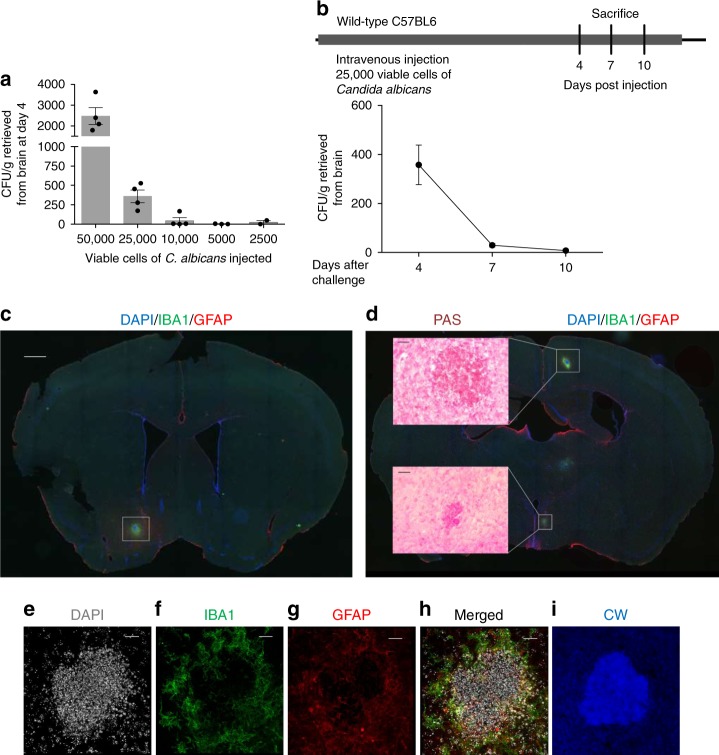
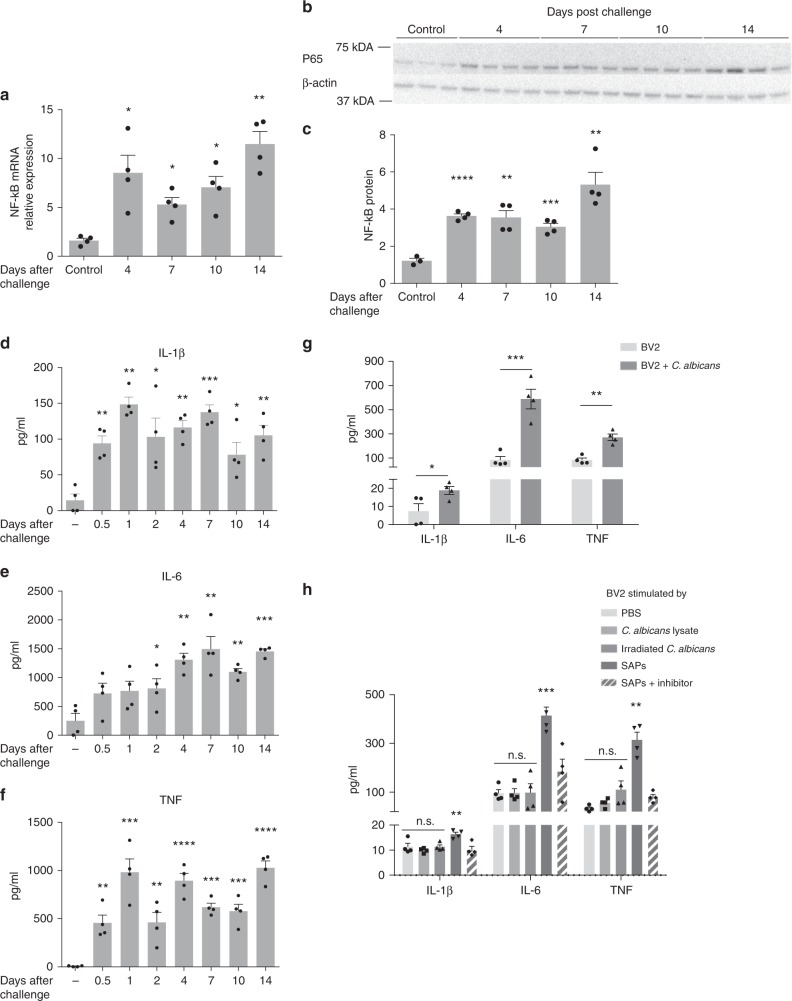
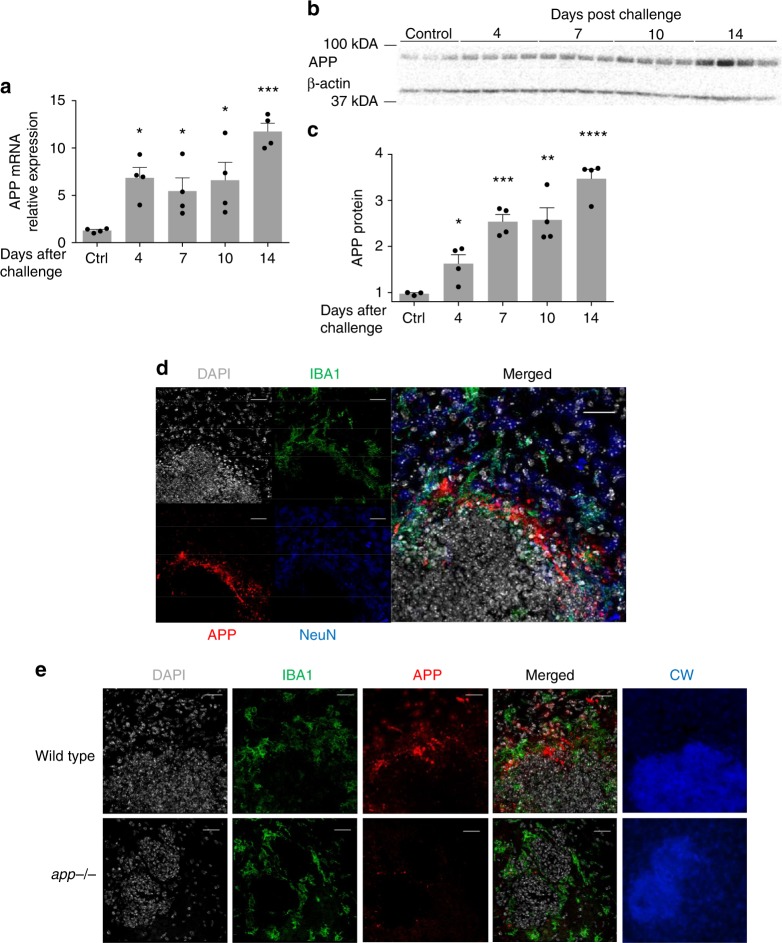
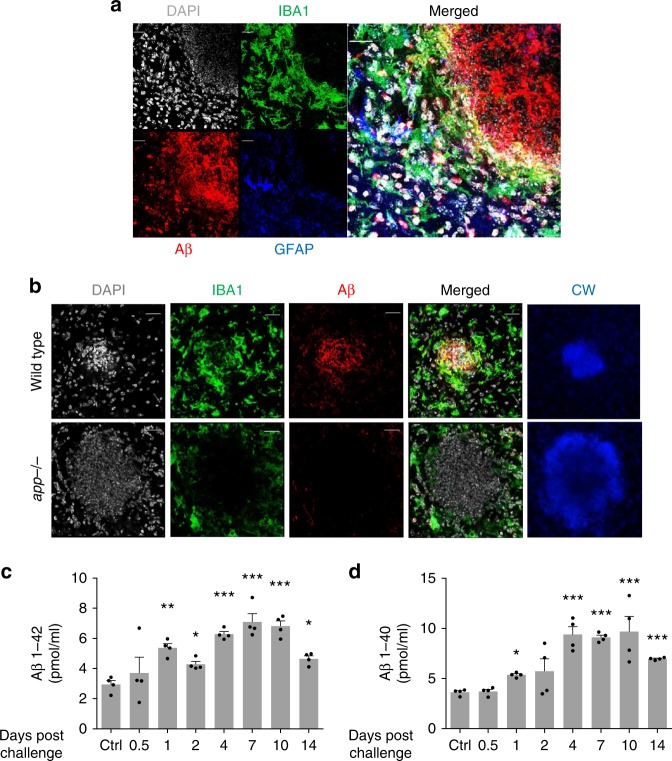
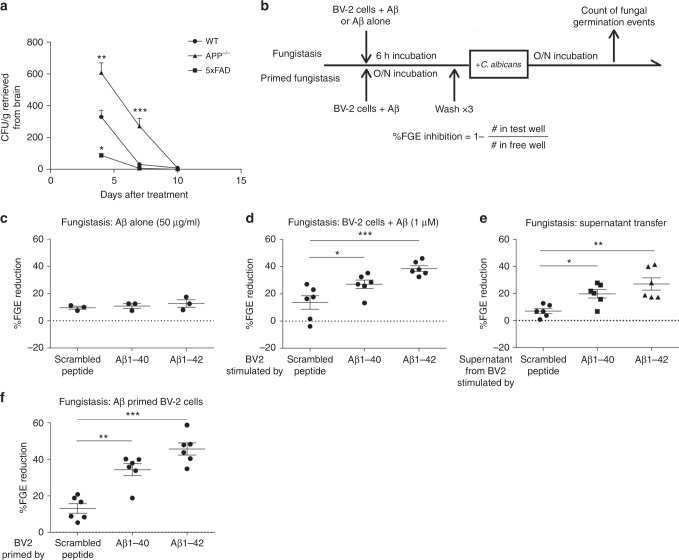
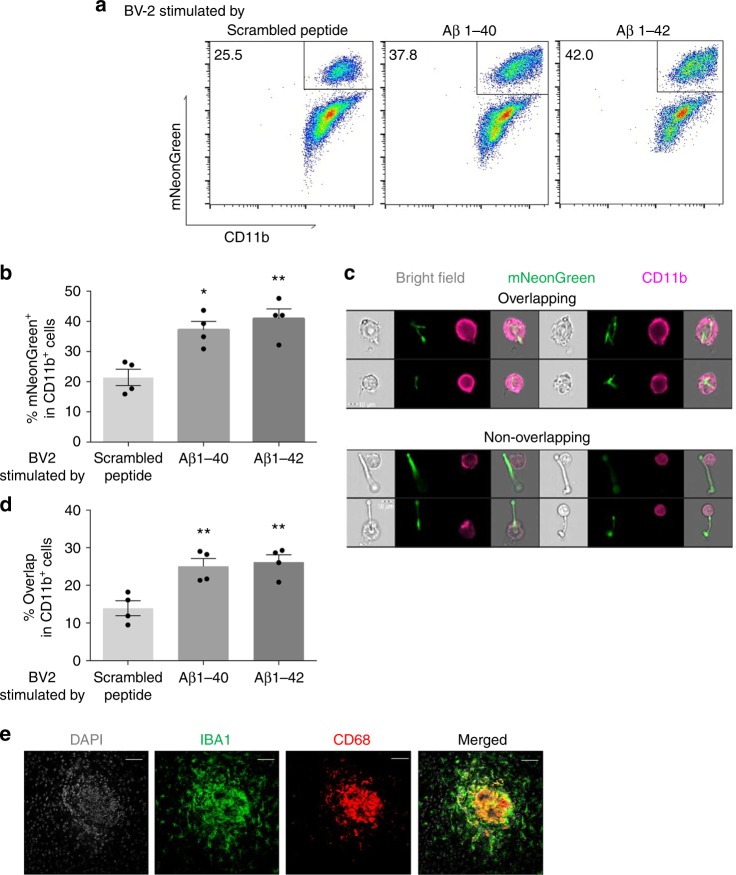
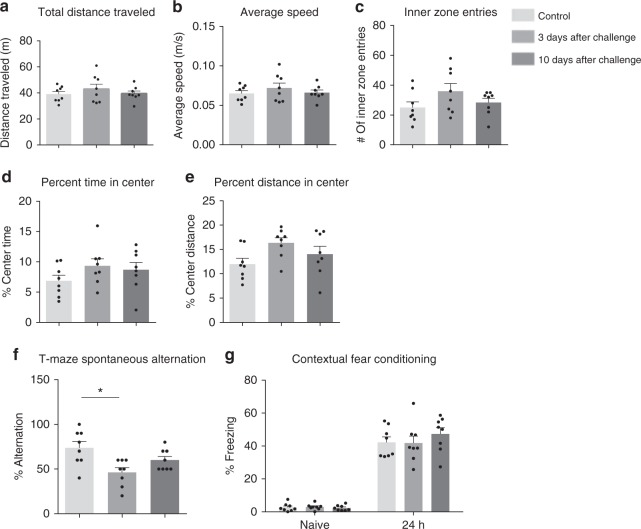
Bloodborne infections with Candida albicans are an increasingly recognized complication of modern medicine. Here, we present a mouse model of low-grade candidemia to determine the effect of disseminated infection on cerebral function and relevant immune determinants. We show that intravenous injection of 25,000 C. albicans cells causes a highly localized cerebritis marked by the accumulation of activated microglial and astroglial cells around yeast aggregates, forming fungal-induced glial granulomas. Amyloid precursor protein accumulates within the periphery of these granulomas, while cleaved amyloid beta (Aβ) peptides accumulate around the yeast cells. CNS-localized C. albicans further activate the transcription factor NF-κB and induce production of interleukin-1β (IL-1β), IL-6, and tumor necrosis factor (TNF), and Aβ peptides enhance both phagocytic and antifungal activity from BV-2 cells. Mice infected with C. albicans display mild memory impairment that resolves with fungal clearance. Our results warrant additional studies to understand the effect of chronic cerebritis on cognitive and immune function.
Overview
The claims and statistics of this paper haven’t been checked yet.
Free: it reads the open-access text and checks the first 5 claims that cite a source we can check. Create a free account to check every claim.
Integrity signals
Registry
Cites
Statistics
Figures
Verification
Claims the paper makes
The claims and statistics of this paper haven’t been checked yet.
Free: it reads the open-access text and checks the first 5 claims that cite a source we can check. Create a free account to check every claim.
Claims other papers make about this one
Each is checked against this paper’s own text: does it say what the citing paper says it does?
The source backs part of the claim, not all of it — or backs it for a different population, condition or comparison.
In the citing paper
“Furthermore, C. albicans induce the production of cytokines that enhance Aβ production which may ultimately contribute to the formation of amyloid plaques and memory decline [90].”
From What would it take to prove that a chronic infection is a causal agent in Alzheimer’s disease? (2025) · cites this paper as [90]
Experimental — accuracy not yet measuredThe cited source says what the claim attributes to it.
In the citing paper
“Notably, in cerebral candidiasis, yeast forms and occasional hyphal forms are surrounded by glial nodules [89], which were later found to be composed of reactive microglia and astrocytes in rodent models of subclinical cerebral candidiasis [90].”
From What would it take to prove that a chronic infection is a causal agent in Alzheimer’s disease? (2025) · cites this paper as [90]
In the citing paper
“familial AD mutations accelerated the clearance of C. albicans from brains in mice.408”
From Amyloid β-based therapy for Alzheimer’s disease: Challenges, successes and future (2023) · cites this paper as [408]
Self-check
Percentages, sums and reported differences re-computed from the paper’s own numbers.
The self-check needs the paper’s full text.
Citations
Cites
The Amyloid Hypothesis of Alzheimer’s Disease: Progress and Problems on the Road to Therapeutics
Hardy, J., & Selkoe, D. J. (2002) · Science · doi:10.1126/science.1072994 · Cited by 13,864
Amyloid oligomers exacerbate tau pathology in a mouse model of tauopathy
Selenica, M.-L. B., Brownlow, M., Jimenez, J. P., Lee, D. C., Pena, G., Dickey, C. A., Gordon, M. N., & Morgan, D. (2013) · Neurodegenerative Diseases · doi:10.1159/000337230 · Cited by 10,359
Diet rapidly and reproducibly alters the human gut microbiome
David, L. A., Maurice, C. F., Carmody, R. N., Gootenberg, D. B., Button, J. E., Wolfe, B. E., Ling, A. V., Devlin, A. S., Varma, Y., Fischbach, M. A., et al. (2014) · Nature · doi:10.1038/nature12820 · Cited by 10,100
A Unique Microglia Type Associated with Restricting Development of Alzheimer’s Disease
Keren-Shaul, H., Spinrad, A., Weiner, A., Matcovitch-Natan, O., Dvir-Szternfeld, R., Ulland, T. K., David, E., Baruch, K., Lara-Astaiso, D., Toth, B., et al. (2017) · Cell · doi:10.1016/j.cell.2017.05.018 · Cited by 5,493
Inflammation and Alzheimer’s disease
Akiyama, H. (2000) · Neurobiology of Aging · doi:10.1016/s0197-4580(00)00124-x · Cited by 4,514
Hidden Killers: Human Fungal Infections
Brown, G. D., Denning, D. W., Gow, N. A. R., Levitz, S. M., Netea, M. G., & White, T. C. (2012) · Science Translational Medicine · doi:10.1126/scitranslmed.3004404 · Cited by 4,284
NF-κB: a key role in inflammatory diseases
Tak, P. P., & Firestein, G. S. (2001) · Journal of Clinical Investigation · doi:10.1172/jci11830 · Cited by 3,918
Krasemann, S., Madore, C., Cialic, R., Baufeld, C., Calcagno, N., El Fatimy, R., Beckers, L., O’Loughlin, E., Xu, Y., Fanek, Z., et al. (2017) · Immunity · doi:10.1016/j.immuni.2017.08.008 · Cited by 2,979
Nonfilamentous C. albicans Mutants Are Avirulent
Lo, H.-J., Köhler, J. R., DiDomenico, B., Loebenberg, D., Cacciapuoti, A., & Fink, G. R. (1997) · Cell · doi:10.1016/s0092-8674(00)80358-x · Cited by 1,809
Microglia-specific localisation of a novel calcium binding protein, Iba1
Ito, D., Imai, Y., Ohsawa, K., Nakajima, K., Fukuuchi, Y., & Kohsaka, S. (1998) · Molecular Brain Research · doi:10.1016/s0169-328x(98)00040-0 · Cited by 1,476
Research works printed but not linked: 1
- Porter PC Necessary and sufficient role for T helper cells to prevent fungal dissemination in allergic lung disease Infect. Immun. 2011 79 4459 4471 10.1128/IAI.05209-11 21875960 PMC3257943 · DOI
Cited by
Items 101–151 of 151
Park, G., Chakrabarty, P., Efron, P. A., & Nagpal, R. (2025) · Essays in Biochemistry · doi:10.1042/ebc20253055 · Cited by 4
Blair, B. A., Bragdon, E., Dhillon, G. K., Baker, N., Stasiak, L. A., Muthig, M., Miramón, P., Lorenz, M. C., & Wheeler, R. T. (2025) · mBio · doi:10.1128/mbio.00529-25 · Cited by 4
Self-citationMultiple brain abscesses in a neonate: a rare case report along with review of literature
Mehta, A., Yadav, M., Gupta, B., Thapa, B., Rai, J., Thapa, S. B., Yadav, S., Yadav, D., & Sharma, M. R. (2024) · Annals of Medicine and Surgery · doi:10.1097/ms9.0000000000002155 · Cited by 4
What would it take to prove that a chronic infection is a causal agent in Alzheimer’s disease?
Brutkiewicz, R. R., Cao, W., Morgan, D., Reis, R. S. D., Suryadevara, V., Willette, A. A., Willette, S. A., Wyatt-Johnson, S. K., & Duggan, M. R. (2025) · Trends in Neurosciences · doi:10.1016/j.tins.2025.05.009 · Cited by 3
Zaongo, S. D., Harypursat, V., Rashid, F., Dahourou, D. L., Ouédraogo, A., & Chen, Y. (2023) · Frontiers in Behavioral Neuroscience · doi:10.3389/fnbeh.2023.1261784 · Cited by 3
The aggregation of amyloid-β: from condensation, nucleation, and conformation to targeting therapy
Chen, B., Chen, T., Sun, Z., Liu, L., Jia, Y., Ji, Y., Wang, J., Sun, F., & Huang, Y. (2026) · Life Sciences · doi:10.1016/j.lfs.2026.124397 · Cited by 3
Identification of Microbiota within Aβ Plaque in APP/PS1 Transgenic Mouse
Cao, J., Wang, M., Gong, C., Amakye, W. K., Sun, X., & Ren, J. (2020) · Journal of Molecular Neuroscience · doi:10.1007/s12031-020-01715-4 · Cited by 3
Калебина, Т. С., Rekstina, V. V., Gorkovskiy, A., Korolev, A., Ereshchenko, M., Motorin, N. A., Morenkov, O., & Inozemtsev, N. (2021) · Immunopathology Allergology Infectology · doi:10.14427/jipai.2021.3.86 · Cited by 3
Fungal Forces in Mental Health: Microbial Meddlers or Function Fixers?
Severance, E. G. (2022) · Current topics in behavioral neurosciences · doi:10.1007/7854_2022_364 · Cited by 2
Li, M., Ai, J., Li, S., Chen, J., Jin, H., Zhang, Z., & Yu, X. M. (2025) · Journal of Innovative Optical Health Sciences · doi:10.1142/s1793545825500221 · Cited by 2
Nonaka, S., Katsuta, Y., Kanetsuki, S., Yamada, M., Higashino, S., Okayama, R., Hama, S., Nagaosa, K., Shiratsuchi, A., & Nakanishi, H. (2025) · BPB Reports · doi:10.1248/bpbreports.8.6_227 · Cited by 2
Yan, K., He, Q., Tang, J., Peng, W., Dou, B., Chen, H., & Bei, W. (2025) · Microbial Pathogenesis · doi:10.1016/j.micpath.2025.107559 · Cited by 2
Carvalho, I. C. S., Simões, F. D. S. S., de Andrade, V. M., Tada, D. B., Heras, M., Bardají, E., Lopes‐Ferreira, M., Castanho, M. A. R. B., & Conceição, K. (2024) · International Journal of Peptide Research and Therapeutics · doi:10.1007/s10989-024-10598-7 · Cited by 2
Pathogens Association with Alzheimer Disease: Emerging Concepts and New Perspectives
Agarwal, U., Tonk, R. K., & Verma, S. K. (2025) · Current Gene Therapy · doi:10.2174/0115665232389348250722073721 · Cited by 1
Recent advances in antifungal immunity
Drummond, R. A. (2025) · Advances in immunology · doi:10.1016/bs.ai.2025.04.003 · Cited by 1
Landekic, M., Angers, I., Li, Y., Guiot, M., Déry, M.-A. C., Beauchamp, A., Roussel, L., Boisvert, A., Zhou, W. B., Gavino, C., et al. (2025) · JCI Insight · doi:10.1172/jci.insight.176676 · Cited by 1
Self-citationChronic invasive candidiasis in murine CARD9-deficiency
Landekic, M. (2021) · eScholarship@McGill (McGill) · doi:10.82308/17175 · Cited by 1
Zeng, B., Maitikuerban, M., Chen, L., Wang, D.-K., Li, J., Yang, L., Lao, X., Zhang, S., Liao, G., & Liang, Y. (2026) · Journal of Oral Microbiology · doi:10.1080/20002297.2026.2684137 · Cited by 1
Angebault, C., & Botterel, F. (2024) · Revue Francophone des Laboratoires · doi:10.1016/s1773-035x(24)76114-0 · Cited by 1
In Vitro Synergistic Effects of Hinokitiol and Fluconazole Against Candida albicans
Yoshimatsu, H., Kano, K., Yamamoto, T., & Kanda, R. (2026) · Applied Sciences · doi:10.3390/app16042126 · Cited by 1
Kobro‐Flatmoen, A., Hussan, J. R., Hunter, P. J., & Omholt, S. W. (2026) · PLoS Computational Biology · doi:10.1371/journal.pcbi.1014532
Organ-specific phenotypes of Candida albicans: implications for immunity and pathogenesis
Morris, E., Sheriff, L., & Drummond, R. A. (2026) · Current Opinion in Microbiology · doi:10.1016/j.mib.2026.102817
Hemonnot-Girard, A.-L. (2021) · theses.fr (ABES) · doi:10.70675/9c8a4775zd774z494ez9bbazf7566faefa8f
Infectious vs. Sterile Neuroinflammation: Differential Consequences on Neuronal CircuitryPreprint
Talero-López, D. (2026) · Qeios · doi:10.32388/1h63qt.3
A mechanistic framework linking the oral microbiome to Alzheimer's disease through neuroinflammation
Evers, M. J. A. P., Krom, B. P., & de Jongh, C. A. (2026) · Journal of Alzheimer s Disease · doi:10.1177/13872877261456324
Cryo-electron microscopy study of translation initiation complexes from Staphylococcus aureus
Belinite, M. (2019) · theses.fr (ABES) · doi:10.70675/dc842455ze752z4223zb7e3ze13bddb9544c
Hughes, T. R., Webberley, T. S., John, D., Thomas, S., Kerry-Smith, J., Michael, D. R., Bevan, R. J., Morgan, J. E., & Plummer, S. F. (2026) · Frontiers in Neuroscience · doi:10.3389/fnins.2026.1791299
Microbial Influence on Alzheimer's Disease
Hamby, A. (2021) · The Cardinal Edge · doi:10.18297/tce/vol1/iss1/22
Long Covid, the Gut, and Autoimmune Skin Diseases: A Novel Therapeutic Approach
Chambers, P. W., & Chambers, S. E. (2024) · Neuroscience and Neurological Surgery · doi:10.31579/2578-8868/297
Long Covid, the Gut, and Autoimmune Skin Diseases: A Novel Therapeutic ApproachPreprint
Chambers, P. W. (2023) · Qeios · doi:10.32388/zqy8pg
Long Covid, the Gut, and Autoimmune Skin Diseases: A Novel Therapeutic ApproachPreprint
Chambers, P. W. (2024) · Qeios · doi:10.32388/zqy8pg.2
Xiaoou, H., Zhou, J., & Liu, G. (2021) · European Journal of Neurology · doi:10.1111/ene.15063
Drummond, R. A. (2025) · The Conversation · doi:10.64628/ab.nmyvpvm9x
Zhu, H., Wang, X., & Shao, J. (2026) · Biochimie · doi:10.1016/j.biochi.2026.09.004
Adli, D. E. H., Kahloula, K., Kourat, D., Brahmi, M., Souidi, S. W., Naar, A., & Slimani, M. (2021) · Bulletin of University of Agricultural Sciences and Veterinary Medicine Cluj-Napoca Veterinary Medicine · doi:10.15835/buasvmcn-vm:2020.0048
New Evidence of Altered Gut Microbiota in Autism Spectrum Disorders through Metagenomic AnalysisPreprint
Xing, P., Li, Z., Xiong, Z., Ma, Y., Sun, M., & Bào, Y. (2025) · bioRxiv (Cold Spring Harbor Laboratory) · doi:10.1101/2025.09.11.675541
Studies on the immunological mechanisms leading to protection or pathology during malaria infection
McGuire, D. (2019) · DR-NTU (Nanyang Technological University) · doi:10.32657/10356/139653
Navarro-Mendoza, M. I., Arques, C. P., Choi, Y., Cao, E., Chang, Z., Xu, Z., Bahn, Y., Moseman, E. A., & Heitman, J. (2026) · bioRxiv (Cold Spring Harbor Laboratory) · doi:10.64898/2026.10.23.761329
Candida and Long CovidPreprint
Chambers, P. W. (2024) · Qeios · doi:10.32388/je31eo
Candida and Long CovidPreprint
Chambers, P. W. (2024) · Qeios · doi:10.32388/je31eo.2
Candida and Long CovidPreprint
Chambers, P. W. (2024) · Qeios · doi:10.32388/je31eo.3
Research progress on the relationship between cognitive impairment and oral health
Siyao Zhang, J. L. (2022) · Frontiers in Medical Science Research · doi:10.25236/fmsr.2022.041102
Decoding the Gut-Brain Axis: Implications for Neurodegenerative Disease Therapies
Holsinger, R. M. D. (2026) · Frontiers research topics · doi:10.3389/978-2-8325-8753-9
Wang, X., Zhu, H., Li, S., Zhan, L., & Li, J. (2025) · Journal of Clinical and Nursing Research · doi:10.26689/jcnr.v9i6.10962
de Silva, P. N. (2020) · Neurology and Neurobiology · doi:10.31487/j.nnb.2020.03.08
Kanagawa, H., Kawahara, A., Mikawa, N., Sugihara, K., Ueda, M., Nitta, A., Egi, M., Oda, R., Nonaka, S., Tozaki‐Saitoh, H., et al. (2026) · International Journal of Molecular Sciences · doi:10.3390/ijms27156614
Parker, A., James, S. A., Purse, C., Brion, A., Goldson, A., Telatin, A., Baker, D., & Carding, S. R. (2022) · doi:10.3389/fnagi.2022.828429.s001
Qin, L., Zhou, H., Yang, Y., 杨建业, Hu, Q., Yang, L., Yang, S., Li, F., Jing, M., Zhao, L., et al. (2026) · Genes & Diseases · doi:10.1016/j.gendis.2026.102501
An investigation into the relationship between oral health and cognitive function in older adults
Стрижакова, В. А. (2025) · Electronic scientific archive of UrFU (Ural Federal University)
de Jongh, C. A. (2026) · VU Research Portal
Inmunopatogénesis temprana en el cerebro durante la candidosis diseminada neonatal murina
Enríquez-Bañuelos, J. F. (2021) · El Repositorio Academico Digital de la UANL (Universidad Autónoma de Nuevo León)
Metadata
- Authors
- Wu, Y., Du, S., Johnson, J. L., Tung, H.-Y., Landers, C. T., Liu, Y., Seman, B. G., Wheeler, R. T., Costa-Mattioli, M., Kheradmand, F., Zheng, H., & Corry, D. B.
- Affiliations
- Baylor College of Medicine (US)
- University of Maine (US)
- Michael E. DeBakey VA Medical Center (US)
- Corresponding author
- Corry, David B.
- ORCID
- Venue
- Nature Communications
- Published
- 2019-01-04
- Volume
- 10
- Issue
- 1
- Pages
- 58-58
- ISSN
- 2041-1723 (ISSN-L)
- PMC
- PMC6320369
- OpenAlex
- W2908394910
- Cited by
- 143
- References
- 69
- Citations by year
- 2026: 11 · 2025: 28 · 2024: 20 · 2023: 18 · 2022: 14 · 2021: 19 · 2020: 16 · 2019: 17
- FWCI
- 9.82
- Type
- journal article
- Language
- en
- Open access
- gold
- doi.org
- Licence
- cc-by
- creativecommons.org/licenses/by/4.0 (tdm)
- creativecommons.org/licenses/by/4.0 (vor)
- Locations
- Nature Communications (publishedVersion, cc-by)
- Europe PMC (PubMed Central) (publishedVersion, other-oa)
- PubMed Central (publishedVersion, cc-by)
- PubMed (publishedVersion)
- RePEc: Research Papers in Economics (submittedVersion)
- DOAJ (DOAJ: Directory of Open Access Journals) (submittedVersion, cc-by-sa)
- DOAJ (DOAJ: Directory of Open Access Journals) (submittedVersion)
- Funders
- U.S. Department of Veterans Affairs (I01 BX002221)
- Office of Research and Development (RR024574)
- National Heart, Lung, and Blood Institute (R01HL117181)
- National Cancer Institute (P30CA125123)
- National Institute of Allergy and Infectious Diseases (P30AI036211, R01AI135803, R15AI133415, T32AI053831)
- National Center for Research Resources (S10RR024574)
- Topics
- Health Sciences › Medicine › Infectious Diseases › Antifungal resistance and susceptibility
- Life Sciences › Neuroscience › Neurology › Neuroinflammation and Neurodegeneration Mechanisms
- Health Sciences › Medicine › Infectious Diseases › Fungal Infections and Studies
- Keywords
- Candida albicans, candidemia, cerebritis, microglia, amyloid precursor protein, amyloid-beta, astrocytes, NF-κB, IL-1β, TNF-α, interleukin-6, BV-2 cells, phagocytosis, antifungal immunity, memory impairment, fungal infection, mouse model
- MeSH terms
- Animals, Astrocytes, Candida albicans, Memory Disorders, Tumor Necrosis Factor-alpha, Amyloid beta-Peptides, NF-kappa B, Amyloid beta-Protein Precursor, Microglia, Mice, Interleukin-1beta, Cerebrum, Candidemia
About these checks
Registry, retraction, Cites and statistics results are computed, not judged, with one exception: a printed reference that no index lists is read once by a model before it counts as a citation error. Claims are extracted by a model and kept only when their quote appears verbatim in the text; each cited source is then checked, with a model’s help, for whether it says what the claim relies on. Those verdicts can be wrong — read the claim’s quote and the cited source before relying on one.
Statistics and arithmetic are recomputed, not judged.
Confidence bands are shown only for fields calibrated on our annotated test set. None is calibrated yet, so no band is shown.
What counts as a claim ›How we measure confidence ›How we check this ›
Are you an author, or do you see a problem with this page? Request a review
Data sources
Bibliographic data: Semantic Scholar, OpenAlex, Crossref.
Contains information from the Semantic Scholar Academic Graph Datasets, made available under the ODC Attribution License (ODC-BY 1.0).
Semantic Scholar’s data is described in: Kinney, R., et al. (2023). The Semantic Scholar Open Data Platform. arXiv:2301.10140.
