

Microglia and amyloid precursor protein coordinate control of transient Candida cerebritis with memory deficits
Open accessThe DOI matches its Crossref record; 68 of the 69 references it cites were found in a registry or an index.
Abstract
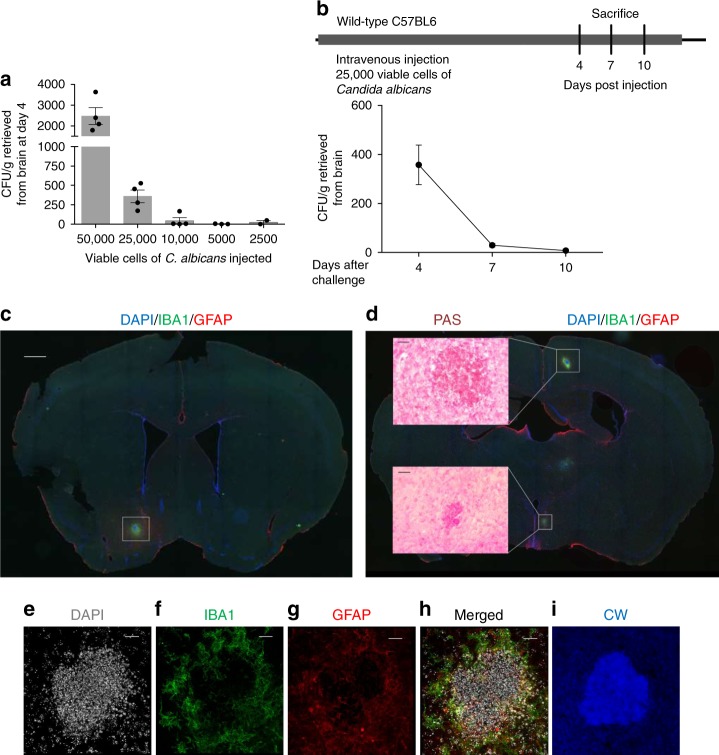
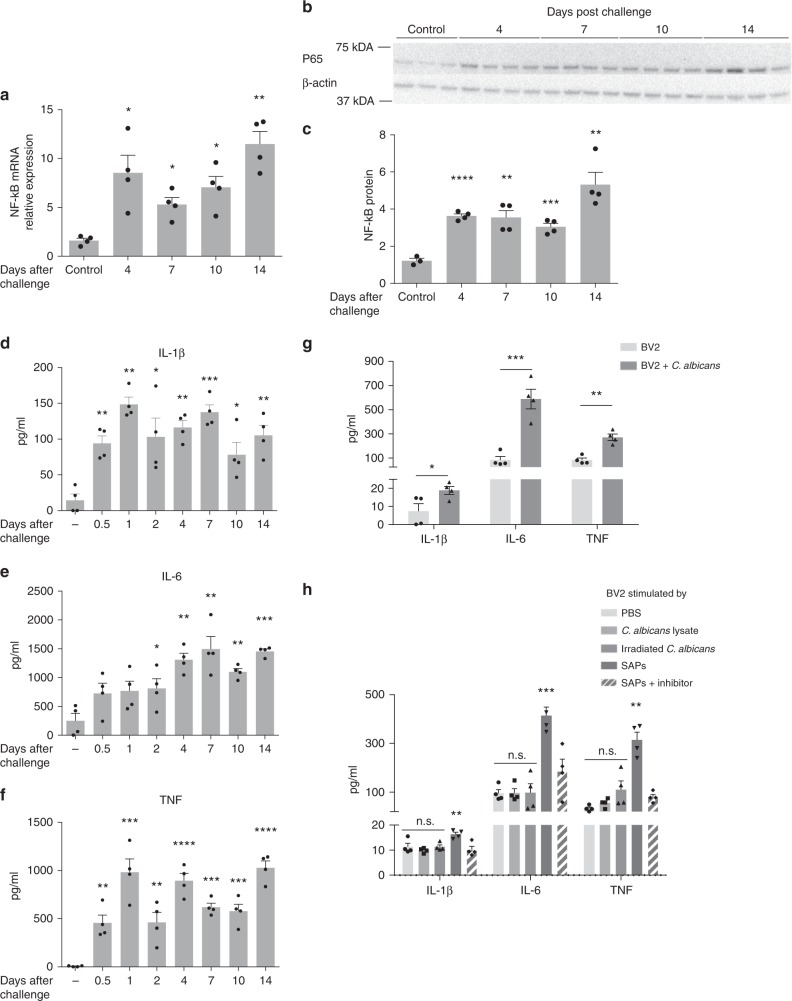
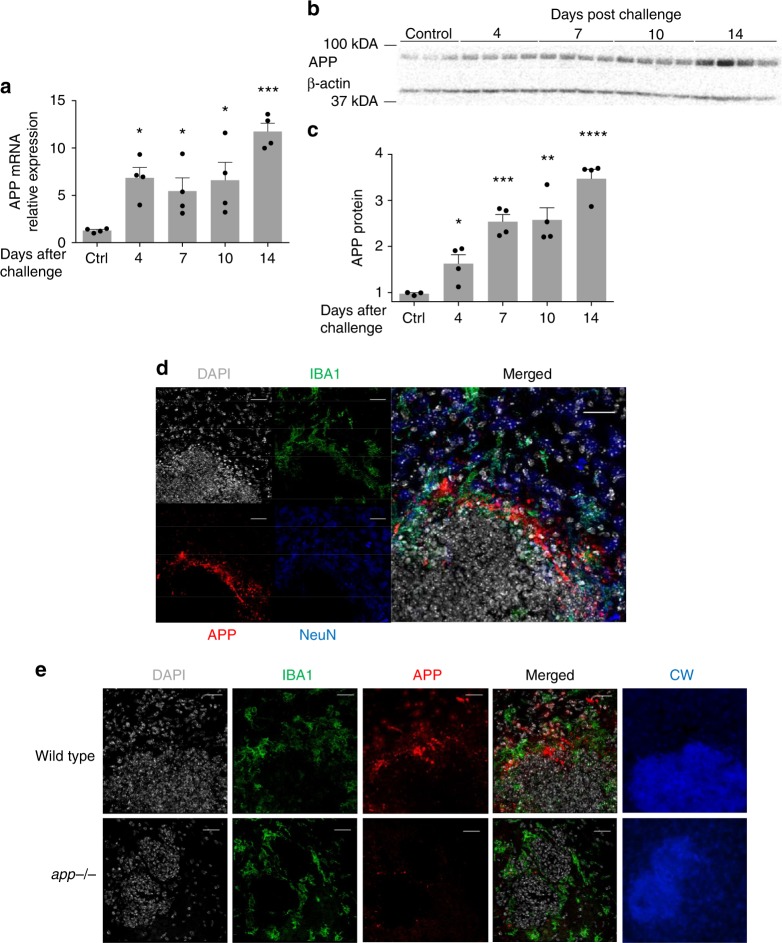
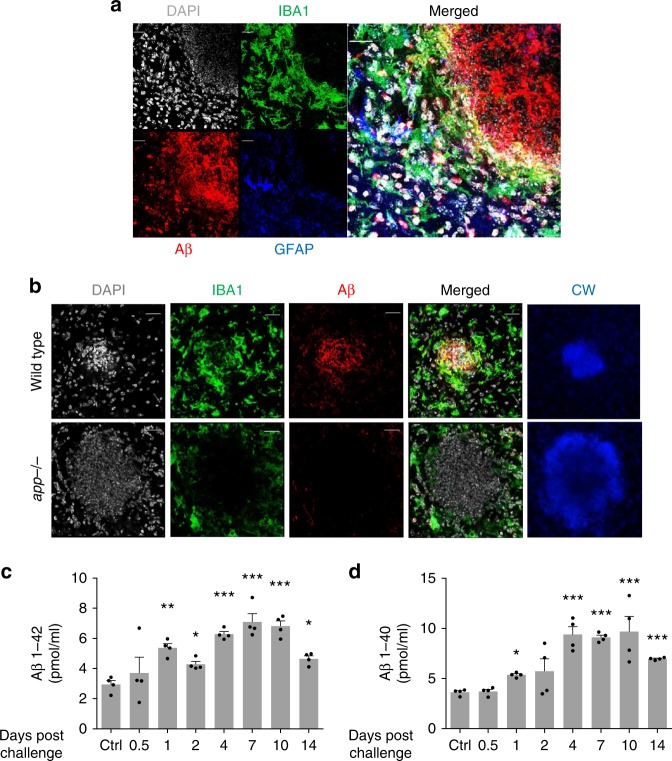
Bloodborne infections with Candida albicans are an increasingly recognized complication of modern medicine. Here, we present a mouse model of low-grade candidemia to determine the effect of disseminated infection on cerebral function and relevant immune determinants. We show that intravenous injection of 25,000 C. albicans cells causes a highly localized cerebritis marked by the accumulation of activated microglial and astroglial cells around yeast aggregates, forming fungal-induced glial granulomas. Amyloid precursor protein accumulates within the periphery of these granulomas, while cleaved amyloid beta (Aβ) peptides accumulate around the yeast cells. CNS-localized C. albicans further activate the transcription factor NF-κB and induce production of interleukin-1β (IL-1β), IL-6, and tumor necrosis factor (TNF), and Aβ peptides enhance both phagocytic and antifungal activity from BV-2 cells. Mice infected with C. albicans display mild memory impairment that resolves with fungal clearance. Our results warrant additional studies to understand the effect of chronic cerebritis on cognitive and immune function.
Overview
The claims and statistics of this paper haven’t been checked yet.
Free: it reads the open-access text and checks the first 5 claims that cite a source we can check. Create a free account to check every claim.
Integrity signals
Registry
Cites
Statistics
Figures
Verification
Claims the paper makes
The claims and statistics of this paper haven’t been checked yet.
Free: it reads the open-access text and checks the first 5 claims that cite a source we can check. Create a free account to check every claim.
Claims other papers make about this one
Each is checked against this paper’s own text: does it say what the citing paper says it does?
The source backs part of the claim, not all of it — or backs it for a different population, condition or comparison.
In the citing paper
“Furthermore, C. albicans induce the production of cytokines that enhance Aβ production which may ultimately contribute to the formation of amyloid plaques and memory decline [90].”
From What would it take to prove that a chronic infection is a causal agent in Alzheimer’s disease? (2025) · cites this paper as [90]
Experimental — accuracy not yet measuredThe cited source says what the claim attributes to it.
In the citing paper
“Notably, in cerebral candidiasis, yeast forms and occasional hyphal forms are surrounded by glial nodules [89], which were later found to be composed of reactive microglia and astrocytes in rodent models of subclinical cerebral candidiasis [90].”
From What would it take to prove that a chronic infection is a causal agent in Alzheimer’s disease? (2025) · cites this paper as [90]
In the citing paper
“familial AD mutations accelerated the clearance of C. albicans from brains in mice.408”
From Amyloid β-based therapy for Alzheimer’s disease: Challenges, successes and future (2023) · cites this paper as [408]
Self-check
Percentages, sums and reported differences re-computed from the paper’s own numbers.
The self-check needs the paper’s full text.
Citations
Cites
The Amyloid Hypothesis of Alzheimer’s Disease: Progress and Problems on the Road to Therapeutics
Hardy, J., & Selkoe, D. J. (2002) · Science · doi:10.1126/science.1072994 · Cited by 13,864
Amyloid oligomers exacerbate tau pathology in a mouse model of tauopathy
Selenica, M.-L. B., Brownlow, M., Jimenez, J. P., Lee, D. C., Pena, G., Dickey, C. A., Gordon, M. N., & Morgan, D. (2013) · Neurodegenerative Diseases · doi:10.1159/000337230 · Cited by 10,359
Diet rapidly and reproducibly alters the human gut microbiome
David, L. A., Maurice, C. F., Carmody, R. N., Gootenberg, D. B., Button, J. E., Wolfe, B. E., Ling, A. V., Devlin, A. S., Varma, Y., Fischbach, M. A., et al. (2014) · Nature · doi:10.1038/nature12820 · Cited by 10,100
A Unique Microglia Type Associated with Restricting Development of Alzheimer’s Disease
Keren-Shaul, H., Spinrad, A., Weiner, A., Matcovitch-Natan, O., Dvir-Szternfeld, R., Ulland, T. K., David, E., Baruch, K., Lara-Astaiso, D., Toth, B., et al. (2017) · Cell · doi:10.1016/j.cell.2017.05.018 · Cited by 5,493
Inflammation and Alzheimer’s disease
Akiyama, H. (2000) · Neurobiology of Aging · doi:10.1016/s0197-4580(00)00124-x · Cited by 4,514
Hidden Killers: Human Fungal Infections
Brown, G. D., Denning, D. W., Gow, N. A. R., Levitz, S. M., Netea, M. G., & White, T. C. (2012) · Science Translational Medicine · doi:10.1126/scitranslmed.3004404 · Cited by 4,284
NF-κB: a key role in inflammatory diseases
Tak, P. P., & Firestein, G. S. (2001) · Journal of Clinical Investigation · doi:10.1172/jci11830 · Cited by 3,918
Krasemann, S., Madore, C., Cialic, R., Baufeld, C., Calcagno, N., El Fatimy, R., Beckers, L., O’Loughlin, E., Xu, Y., Fanek, Z., et al. (2017) · Immunity · doi:10.1016/j.immuni.2017.08.008 · Cited by 2,979
Nonfilamentous C. albicans Mutants Are Avirulent
Lo, H.-J., Köhler, J. R., DiDomenico, B., Loebenberg, D., Cacciapuoti, A., & Fink, G. R. (1997) · Cell · doi:10.1016/s0092-8674(00)80358-x · Cited by 1,809
Microglia-specific localisation of a novel calcium binding protein, Iba1
Ito, D., Imai, Y., Ohsawa, K., Nakajima, K., Fukuuchi, Y., & Kohsaka, S. (1998) · Molecular Brain Research · doi:10.1016/s0169-328x(98)00040-0 · Cited by 1,476
Research works printed but not linked: 1
- Porter PC Necessary and sufficient role for T helper cells to prevent fungal dissemination in allergic lung disease Infect. Immun. 2011 79 4459 4471 10.1128/IAI.05209-11 21875960 PMC3257943 · DOI
Cited by
Amyloid β-based therapy for Alzheimer’s disease: Challenges, successes and future
Zhang, Y., Chen, H., Li, R., Sterling, K., & Song, W. (2023) · Signal Transduction and Targeted Therapy · doi:10.1038/s41392-023-01484-7 · Cited by 988
“albicans from brains in mice.(408) Together, the underlying mechanisms of Aβ peptides exerting their anti-microbial activity including interation with membranes and disruption of membrane integrity; stimulation of phagocytosis by inducing cytokines or altering microorganisms’ conformation.”
BackgroundNew Insights Into the Pathogenesis of Alzheimer's Disease
Fan, L., Mao, C., Hu, X., Zhang, S., Yang, Z., Hu, Z., Sun, H., Fan, Y., Dong, Y., Yang, J., et al. (2020) · Frontiers in Neurology · doi:10.3389/fneur.2019.01312 · Cited by 344
Han, E., Choi, S., Lee, Y., Park, J., Hong, S., & Lee, H. (2019) · The FASEB Journal · doi:10.1096/fj.201901575r · Cited by 240
“There is some evidence that oral pathogens implicated in neuroinflammatory diseases can be localized in the brain (13, 42), but how thesemicrobes cross theBBB isdebatable.”
BackgroundCurrent understanding of the Alzheimer’s disease-associated microbiome and therapeutic strategies
Seo, D.-O., & Holtzman, D. M. (2024) · Experimental & Molecular Medicine · doi:10.1038/s12276-023-01146-2 · Cited by 230
“…injection of Candida albicans , which is an opportunistic pathogenic yeast that is commonly found in the human GI tract, can establish a transient cerebritis that is marked by focal gliosis surrounding fungal cells and the deposition of both amyloid precursor protein (APP) and A β peptides 34 .”
BackgroundXu, Y., Propson, N. E., Du, S., Xiong, W., & Zheng, H. (2021) · Proceedings of the National Academy of Sciences · doi:10.1073/pnas.2023418118 · Cited by 171
“BV2 cell line maintenance was described as previously (57).”
BackgroundSelf-citationMicrobial involvement in Alzheimer disease development and progression
Bulgart, H. R., Neczypor, E. W., Wold, L. E., & Mackos, A. R. (2020) · Molecular Neurodegeneration · doi:10.1186/s13024-020-00378-4 · Cited by 116
The life and times of yeasts in traditional food fermentations
Tofalo, R., Fusco, V., Böhnlein, C., Kabisch, J., Logrieco, A. F., Habermann, D., Cho, G., Benomar, N., Abriouel, H., Schmidt‐Heydt, M., et al. (2019) · Critical Reviews in Food Science and Nutrition · doi:10.1080/10408398.2019.1677553 · Cited by 116
Seo, D.-O., & Holtzman, D. M. (2020) · The Journals of Gerontology: Series A · doi:10.1093/gerona/glz262 · Cited by 106
Noteworthy perspectives on microglia in neuropsychiatric disorders
Zhu, H., Guan, A., Liu, J., Li, P., Zhang, Z., & Wang, S. (2023) · Journal of Neuroinflammation · doi:10.1186/s12974-023-02901-y · Cited by 105
Wu, Y., Zeng, Z., Guo, Y., Song, L., Weatherhead, J. E., Huang, X., Zeng, Y., Bimler, L. H., Chang, C.-Y., Knight, J. M., et al. (2021) · Immunity · doi:10.1016/j.immuni.2021.08.009 · Cited by 103
Self-citationHa, J. Y., Choi, S.-Y., Lee, J. H., Hong, S.-H., & Lee, H.-J. (2020) · Frontiers in Molecular Biosciences · doi:10.3389/fmolb.2020.596366 · Cited by 102
Accelerated Amyloid Beta Pathogenesis by Bacterial Amyloid FapC
Javed, I., Zhang, Z., Adamčík, J., Andrikopoulos, N., Li, Y., Otzen, D. E., Lin, S., Mezzenga, R., Davis, T. P., Ding, F., et al. (2020) · Advanced Science · doi:10.1002/advs.202001299 · Cited by 93
Vojtechova, I., Machacek, T., Kristofikova, Z., Stuchlik, A., & Petrasek, T. (2022) · PLOS Pathogens · doi:10.1371/journal.ppat.1010929 · Cited by 92
Chronic periodontitis induces microbiota-gut-brain axis disorders and cognitive impairment in mice
Li, X., Zou, X., Yang, X., Peng, F., Yu, D., & Du, J. (2020) · Experimental Neurology · doi:10.1016/j.expneurol.2020.113176 · Cited by 91
Neuroinflammation in neurodegeneration via microbial infections
Tran, V. T. A., Lee, L. P., & Cho, H. (2022) · Frontiers in Immunology · doi:10.3389/fimmu.2022.907804 · Cited by 81
Can infections trigger alpha-synucleinopathies?
Tulisiak, C. T., Mercado, G., Peelaerts, W., Brundin, L., & Brundin, P. (2019) · Progress in molecular biology and translational science · doi:10.1016/bs.pmbts.2019.06.002 · Cited by 80
OʼShea, T. M., Wollenberg, A. L., Kim, J. H., Ao, Y., Deming, T. J., & Sofroniew, M. V. (2020) · Nature Communications · doi:10.1038/s41467-020-19906-3 · Cited by 70
AIEgen-based smart system for fungal-infected wound monitoring and on-demand photodynamic therapy
Zhou, K., Wang, S., Xu, L., Li, H., Wang, Y., Qiu, Z., Zhang, G., Zhao, Z., & Tang, B. Z. (2023) · Matter · doi:10.1016/j.matt.2023.06.028 · Cited by 68
Wu, Y., Du, S., Bimler, L. H., Mauk, K. E., Lortal, L., Kichik, N., Griffiths, J. S., Osicka, R., Song, L., Polsky, K., et al. (2023) · Cell Reports · doi:10.1016/j.celrep.2023.113240 · Cited by 67
Self-citationXin, Y.-R., Jiang, J.-X., Hu, Y., Pan, J.-P., Mi, X.-N., Gao, Q., Xiao, F., Zhang, W., & Luo, H.-M. (2019) · Frontiers in Aging Neuroscience · doi:10.3389/fnagi.2019.00279 · Cited by 60
Nara, P. L., Sindelar, D., Penn, M. S., Potempa, J., & Griffin, W. S. T. (2021) · Journal of Alzheimer's Disease · doi:10.3233/jad-210448 · Cited by 59
Yan, C., Wang, C., Shao, X., Teng, Y., Chen, P., Hu, X., Guan, P., & Wu, H. Y. (2022) · ACS Applied Materials & Interfaces · doi:10.1021/acsami.2c14118 · Cited by 58
Chen, P., Chen, F., Lei, J., Wang, G., & Zhou, B. (2021) · Frontiers in Pharmacology · doi:10.3389/fphar.2021.768097 · Cited by 57
Yan, C., Wang, C., Shao, X., Shu, Q., Hu, X., Guan, P., Teng, Y., & Cheng, Y. (2021) · Materials Today Bio · doi:10.1016/j.mtbio.2021.100167 · Cited by 52
González-Sanmiguel, J., Schuh, C. M. A. P., Muñoz-Montesino, C., Contreras‐Kallens, P., Aguayo, L. G., & Aguayo, S. D. (2020) · Cells · doi:10.3390/cells9112476 · Cited by 51
Airway mycosis in allergic airway disease
Li, E., Knight, J. M., Wu, Y., Luong, A., Rodríguez, A., Kheradmand, F., & Corry, D. B. (2019) · Advances in immunology · doi:10.1016/bs.ai.2019.05.002 · Cited by 51
Self-citationAdvances in amyloid beta oligomer detection applications in Alzheimer's disease
Jamerlan, A., An, S. S. A., & Hulme, J. (2020) · TrAC Trends in Analytical Chemistry · doi:10.1016/j.trac.2020.115919 · Cited by 46
A closer look at the mycobiome in Alzheimer’s disease: Fungal species, pathogenesis and transmission
Phuna, Z. X., & Madhavan, P. (2022) · European Journal of Neuroscience · doi:10.1111/ejn.15599 · Cited by 41
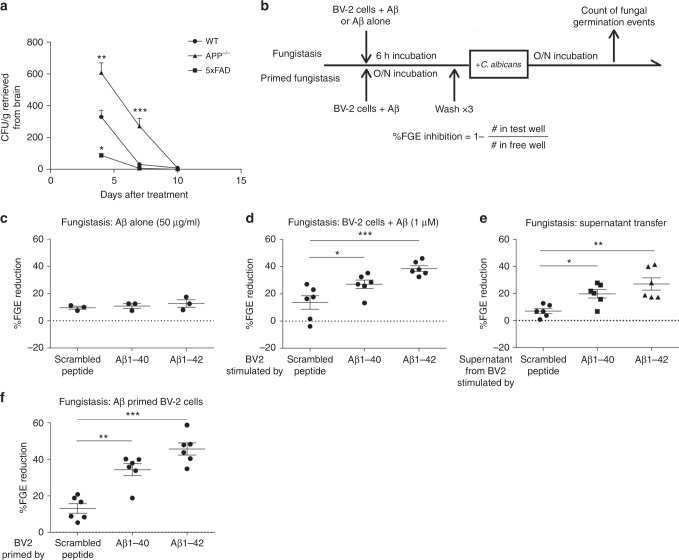
“Both were absent in app / mice (adapted with permission from Wu et al., 2019) reduction of C–”
BackgroundInfluentialMorphogenic plasticity: the pathogenic attribute of Candida albicans
Prasad, P., & Tippana, M. (2023) · Current Genetics · doi:10.1007/s00294-023-01263-5 · Cited by 41
Ye, T., Yuan, S., Kong, Y., Yang, H., Wei, H., Zhang, Y., Jin, H., Yu, Q., Liu, J., Chen, S., et al. (2022) · Journal of Agricultural and Food Chemistry · doi:10.1021/acs.jafc.2c03142 · Cited by 41
Li, F., Hearn, M., & Bennett, L. E. (2021) · Critical Reviews in Microbiology · doi:10.1080/1040841x.2021.1876630 · Cited by 39
Mei, B., Xu, X., Weng, J., Yang, Y., Wang, P., Qiu, G., Zhang, C., Zhang, Q., Lu, Y., & Liu, X. (2024) · Brain Behavior and Immunity · doi:10.1016/j.bbi.2024.02.005 · Cited by 39
Gossypetin ameliorates 5xFAD spatial learning and memory through enhanced phagocytosis against Aβ
Jo, K. W., Lee, D., Cha, D. G., Oh, E.-J., Choi, Y. H., Kim, S., Park, E. S., Kim, J. K., & Kim, K. (2022) · Alzheimer s Research & Therapy · doi:10.1186/s13195-022-01096-3 · Cited by 37
What is strain in neurodegenerative diseases?
Tian, Y., Meng, L., & Zhang, Z. (2019) · Cellular and Molecular Life Sciences · doi:10.1007/s00018-019-03298-9 · Cited by 37
It’s all in your head: antifungal immunity in the brain
Snarr, B. D., Drummond, R. A., & Lionakis, M. S. (2020) · Current Opinion in Microbiology · doi:10.1016/j.mib.2020.07.011 · Cited by 36
Association between adverse oral conditions and cognitive impairment: A literature review
Wei, T., Du, Y., Hou, T., Zhai, C., Li, Y., Xiao, W. L., & Liu, K. (2023) · Frontiers in Public Health · doi:10.3389/fpubh.2023.1147026 · Cited by 36
Age-related oral microbiota dysbiosis and systemic diseases
Deng, L., Guan, G., Cannon, R. D., & Mei, L. (2025) · Microbial Pathogenesis · doi:10.1016/j.micpath.2025.107717 · Cited by 35
Jones, L., Kumar, J., Mistry, A., Sankar Chittoor Mana, T., Perry, G., Reddy, V. P., & Obrenovich, M. (2019) · Biomedicines · doi:10.3390/biomedicines7020024 · Cited by 34
“, causesalterations in the oral fungal mycobiome between HIV positive and negative individuals as well asstudies involving the lung mycobiome between healthy and transplant patients [25].”
BackgroundThe role of the gut microbiome in mediating neurotoxic outcomes to PCB exposure
Rude, K. M., Keogh, C. E., & Gareau, M. G. (2019) · NeuroToxicology · doi:10.1016/j.neuro.2019.08.010 · Cited by 34
The roles of fungus in CNS autoimmune and neurodegeneration disorders
Wu, C., Jiang, M., Jiang, R., Pang, T., & Zhang, C. (2023) · Frontiers in Immunology · doi:10.3389/fimmu.2022.1077335 · Cited by 34
Rationale for the development of an Alzheimer’s disease vaccine
Kwan, P., Konno, H., Chan, K. Y., & Baum, L. (2020) · Human Vaccines & Immunotherapeutics · doi:10.1080/21645515.2019.1665453 · Cited by 33
Contribution of CNS and extra-CNS infections to neurodegeneration: a narrative review
Kettunen, P., Koıstınaho, J., & Rõlova, T. (2024) · Journal of Neuroinflammation · doi:10.1186/s12974-024-03139-y · Cited by 33
Ji, Q., Deng, Q., Li, B. J., Li, B., & Shen, Y. (2019) · European Journal of Medicinal Chemistry · doi:10.1016/j.ejmech.2019.07.035 · Cited by 33
Ali, S. A., & Datusalia, A. K. (2024) · Journal of Ethnopharmacology · doi:10.1016/j.jep.2023.117700 · Cited by 32
Transforming Polyethylene into Water-Soluble Antifungal Polymers
Yeung, C. W. S., Periayah, M. H., Teo, J. Y. Q., Goh, E. T. L., Chee, P. L., Loh, W. W., Loh, X. J., Lakshminarayanan, R., & Lim, J. Y. C. (2023) · Macromolecules · doi:10.1021/acs.macromol.2c01944 · Cited by 32
Sun, B., Dong, Y., An, Y., Liu, M., Han, J., Zhao, L., & Liu, X. (2020) · European Journal of Medicinal Chemistry · doi:10.1016/j.ejmech.2020.112645 · Cited by 30
Accumulation of Innate Amyloid Beta Peptide in Glioblastoma Tumors
Kucheryavykh, L. Y., Ortiz-Rivera, J., Kucheryavykh, Y. V., Zayas‐Santiago, A., Díaz-García, A., & Inyushin, M. Y. (2019) · International Journal of Molecular Sciences · doi:10.3390/ijms20102482 · Cited by 26
Lu, J., Zhang, X., Zhang, X., Wang, L., Zhao, R., Liu, X. Y., Liu, X., Zhuang, W.-Y., Chen, L., Cai, L., et al. (2022) · Molecular Ecology · doi:10.1111/mec.16534 · Cited by 26
Fungal Translocation: A Driving Force Behind the Occurrence of Non-AIDS Events?
Hoenigl, M. (2019) · Clinical Infectious Diseases · doi:10.1093/cid/ciz215 · Cited by 25
(2023) · Jordan Journal of Biological Sciences · doi:10.54319/jjbs/160418 · Cited by 25
The Gut Microbiome and Alzheimer’s Disease: A Growing Relationship
Zerdan, M. B., Hebbo, E., Hijazi, A., Gemayel, M. E., Nasr, J., Nasr, D., Yaghi, M., Bouferraa, Y., & Nagarajan, A. (2022) · Current Alzheimer Research · doi:10.2174/1567205020666221227090125 · Cited by 24
Li, B., Shen, Y., Wu, H., Wu, X., Yuan, L., & Ji, Q. (2020) · European Journal of Medicinal Chemistry · doi:10.1016/j.ejmech.2020.112278 · Cited by 24
Host immune responses in the central nervous system during fungal infections
Reyes, E. Y., & Shinohara, M. L. (2022) · Immunological Reviews · doi:10.1111/imr.13101 · Cited by 23
Pseudomonas Synergizes with Fluconazole against Candida during Treatment of Polymicrobial Infection
Hattab, S., Dagher, A.-M., & Wheeler, R. T. (2022) · Infection and Immunity · doi:10.1128/iai.00626-21 · Cited by 22
Self-citationHIV-associated neurocognitive disorder: key implications of the microbiota-gut-brain axis
Hu, A., Zaongo, S. D., Harypursat, V., Wang, X., Ouyang, J., & Chen, Y. (2024) · Frontiers in Microbiology · doi:10.3389/fmicb.2024.1428239 · Cited by 19
Immunomodulatory responses of differentially polarized macrophages to fungal infections
Xie, Y., Zhou, X., Zhang, J., Yu, H. B., & Song, Z. (2022) · International Immunopharmacology · doi:10.1016/j.intimp.2022.109089 · Cited by 19
Chen, P., Chen, F., Lei, J., Wang, G., & Zhou, B. (2021) · Research Square · doi:10.21203/rs.3.rs-824416/v1 · Cited by 18
Ennerfelt, H. E., Holliday, C., Shapiro, D. A., Zengeler, K. E., Bolte, A. C., Ulland, T. K., & Lukens, J. R. (2023) · Proceedings of the National Academy of Sciences · doi:10.1073/pnas.2303760120 · Cited by 17
Neuroinflammation and nutrition in Alzheimer’s disease
Park, H., Ni, M., & Le, Y. (2025) · Frontiers in Neurology · doi:10.3389/fneur.2025.1622571 · Cited by 17
From conifers to cognition: Microbes, brain and behavior
Lathe, R., & Clair, D. S. (2020) · Genes Brain & Behavior · doi:10.1111/gbb.12680 · Cited by 16
Antifungal and anti-biofilm activity of designed derivatives from kyotorphin
de Andrade, V. M., Bardají, E., Heras, M., Ramu, V. G., Junqueira, J. C., dos Santos, J. D., Castanho, M. A. R. B., & Conceição, K. (2019) · Fungal Biology · doi:10.1016/j.funbio.2019.12.002 · Cited by 16
Sensory Dysfunction, Microbial Infections, and Host Responses in Alzheimer's Disease
Bathini, P., Brai, E., Balin, B. J., Bimler, L. H., Corry, D. B., Devanand, D. P., Doty, R. L., Ehrlich, G. D., Eimer, W. A., Fülöp, T., et al. (2024) · The Journal of Infectious Diseases · doi:10.1093/infdis/jiae328 · Cited by 15
Self-citationMicrobial extracellular RNAs and their roles in human diseases
Lee, H. (2020) · Experimental Biology and Medicine · doi:10.1177/1535370220923585 · Cited by 15
The association between oral diseases and neurodegenerative disorders
Soiniemi, L., Solje, E., Suominen, A. L., Kanninen, K. M., & Kullaa, A. M. (2024) · Journal of Alzheimer s Disease · doi:10.1177/13872877241289548 · Cited by 14
The Candida Covid Connection: Preexisting Candida Overgrowth and Gut Dysbiosis Drives Long Covid
Chambers, P. W. (2023) · Neuroscience and Neurological Surgery · doi:10.31579/2578-8868/283 · Cited by 14
Gao, D., Zhao, H., Yin, Z., Chen, H., Wang, Y., Luo, G., & Gao, X. (2021) · Frontiers in Pharmacology · doi:10.3389/fphar.2021.766120 · Cited by 13
Reyes, E. Y., Yong, J., DiPalma, D. T., Messerschmidt, J. L., Lumbreras, M., Hendi, H. H., Mukhamedyarova, D. R., Troutman, E. C., Wert, E. J., & Shinohara, M. L. (2025) · Cell Host & Microbe · doi:10.1016/j.chom.2025.11.008 · Cited by 13
Norins, L. C. (2019) · Medical Hypotheses · doi:10.1016/j.mehy.2019.04.019 · Cited by 13
Cui, M., Shan, X., Yan, Y., Zhao, T., Sun, Y., Hao, W., Wang, Z., Chang, Y.-F., Xie, Y., & Wei, B. (2023) · Arabian Journal of Chemistry · doi:10.1016/j.arabjc.2023.104688 · Cited by 12
Mauk, K. E., Miramón, P., Lorenz, M. C., Lortal, L., Naglik, J. R., Hube, B., Bimler, L. H., Kheradmand, F., & Corry, D. B. (2025) · Microbiology Spectrum · doi:10.1128/spectrum.00567-25 · Cited by 11
Self-citationThe yeast protein Ure2p triggers Tau pathology in a mouse model of tauopathy
Meng, L., Liu, C., Liu, M., Chen, J., Liu, C., Zhang, Z., Chen, G., & Zhang, Z. (2023) · Cell Reports · doi:10.1016/j.celrep.2023.113342 · Cited by 11
Kim, H. S., Jung, H., Park, Y., Heo, S., Kim, S., & Moon, M. (2024) · Aging and Disease · doi:10.14336/ad.2024.0406 · Cited by 10
Health Potential of Clery Strawberries: Enzymatic Inhibition and Anti-Candida Activity Evaluation
Cairone, F., Simonetti, G., Орехова, А. В., Casadei, M. A., Zengin, G., & Cesa, S. (2021) · Molecules · doi:10.3390/molecules26061731 · Cited by 10
Parker, A., James, S. A., Purse, C., Brion, A., Goldson, A. J., Telatin, A., Baker, D., & Carding, S. R. (2022) · Frontiers in Aging Neuroscience · doi:10.3389/fnagi.2022.828429 · Cited by 9
The Emerging Role of Microbial Extracellular Vesicles in Neuroinflammation and Neurodegeneration
Estrada‐Valbuena, J. J., Li, C., Parra‐Giraldo, C. M., & Martínez‐López, R. (2026) · Medicine Bulletin · doi:10.1002/mdb2.70031 · Cited by 9
Targeting Alzheimer's pathophysiology with carbon dots: from mechanisms to therapy
Tripathi, S., Singh, R., Jaiswal, S., Sethi, M., Rana, R., Mishra, K., & Chourasia, M. K. (2026) · Journal of Materials Chemistry B · doi:10.1039/d5tb02134k · Cited by 8
Synthetic macromolecules with biological activity
Racoviță, Ș., Popa, M., Atanase, L. I., & Vasiliu, S. (2021) · Elsevier eBooks · doi:10.1016/b978-0-323-85759-8.00014-2 · Cited by 8
Wei, Y., Gao, J., Xu, F., Shi, J., Yu, C., & Gong, Q. (2021) · Ibrain · doi:10.1002/j.2769-2795.2021.tb00080.x · Cited by 8
The fungal gut microbiota in pediatric-onset multiple sclerosis
Mok, N., Knox, N., Zhu, F., Arnold, D. L., Bar‐Or, A., Bernstein, C. N., Bonner, C., Forbes, J. D., Graham, M., Marrie, R. A., et al. (2024) · Frontiers in Microbiology · doi:10.3389/fmicb.2024.1258978 · Cited by 8
Hatch, K., Murphy, E. K., Cordero, R. J. B., & Iacono, D. (2025) · Biomolecules · doi:10.3390/biom16010061 · Cited by 7
Yuan, Z., Wang, F., Wei, H., Li, X., Wei, W., Luo, S., Zhang, Y., Wei, X., Wang, G., Liang, H., et al. (2025) · Virulence · doi:10.1080/21505594.2025.2580102 · Cited by 7
Isotonic medium treatment limits burn wound microbial colonisation and improves tissue repair
Horn, A. J., Wagner, A. S., Hou, Y., Zajac, J. C., Fister, A. M., Chen, Z., Pashaj, J., Junak, M., Soto, N. M. M., Gibson, A. L. F., et al. (2024) · Wound Repair and Regeneration · doi:10.1111/wrr.13242 · Cited by 7
Elshazly, A. M., Sinanian, M. M., Elimam, D. M., & Zakaria, S. (2023) · Neuroglia · doi:10.3390/neuroglia4030014 · Cited by 6
Neuroinflammation in fungal infections: from pathogen recognition to pathological manifestations
Dangarembizi, R., Awala, A. N., & de Lange, A. (2025) · Disease Models & Mechanisms · doi:10.1242/dmm.052344 · Cited by 6
Neuroinflammation-mediated relationship between oral microbiome and neurodegenerative diseases
Kong, Z., Hu, S., Lei, X., Yang, H., Liu, Y., Wang, Y., & Deng, S. (2025) · Critical Reviews in Microbiology · doi:10.1080/1040841x.2025.2479533 · Cited by 6
Self-citationTan, X., Li, C., Zhang, H., Han, Y., & Wu, J. (2021) · Hellenic Journal of Cardiology · doi:10.1016/j.hjc.2021.06.003 · Cited by 6
Interactions between Streptococcus agalactiae and Candida albicans affect persistence and virulence
Patenaude, K. E., Bossow, C., Lane, A., St-Pierre, M., Wheeler, R. T., & Neely, M. N. (2026) · Infection and Immunity · doi:10.1128/iai.00528-25 · Cited by 6
Self-citationPeixoto-Rodrigues, M. C., da Costa, G. L., Pinto, T. N., Adesse, D., Oliveira, M. M. E., & Hauser‐Davis, R. A. (2023) · BMC Microbiology · doi:10.1186/s12866-023-03128-w · Cited by 5
APP as an innate injury-response molecule
Olmsted, Z. T., & Sofroniew, M. V. (2026) · Neurobiology of Disease · doi:10.1016/j.nbd.2026.107361 · Cited by 5
Soto, N. M. M., Horn, A. J., Keller, N. P., Huttenlocher, A., & Wagner, A. S. (2025) · mBio · doi:10.1128/mbio.03480-24 · Cited by 5
Gervasi, T., Ginestra, G., Mancuso, F., Barreca, D., Luca, L. D., & Mandalari, G. (2021) · Microorganisms · doi:10.3390/microorganisms9102070 · Cited by 5
Hao, X., Ding, N., Zhang, Y., Wu, M., Tao, Y., & Li, Z. (2025) · Neuropsychiatric Disease and Treatment · doi:10.2147/ndt.s499224 · Cited by 5
The amyloid-beta wave hypothesis of Alzheimer’s disease
Miller, S., Logan, R., Zhang, C. M., & Hafler, B. P. (2025) · Frontiers in Cellular and Infection Microbiology · doi:10.3389/fcimb.2025.1723095 · Cited by 4
Microbial links to Alzheimer’s disease
Cornitius, C. P., Perez, E. K., & Lee, S. C. (2025) · PLoS Pathogens · doi:10.1371/journal.ppat.1013599 · Cited by 4
Barron, A. E., Lin, J. S., Ryder, M. I., & Bergman, P. N. (2025) · Journal of Internal Medicine · doi:10.1111/joim.70060 · Cited by 4
No evidence of Alzheimer’s disease pathology in mice infected with Toxocara canis
Vosála, O., Šmídová, B., Novák, J., Svoboda, J., Petrásek, T., Vojtěchová, I., & Macháček, T. (2025) · Parasite · doi:10.1051/parasite/2025019 · Cited by 4
Justen, C. E., Chitolina, A. B. D. M., Finamor, I., Pavanato, M. A., Maurente, M. M., Vieira, I. M., da Veiga, M. L., Saab, E., Tamiosso, R. T., & Baldissera, M. D. (2025) · Journal of Toxicology and Environmental Health · doi:10.1080/15287394.2025.2538591 · Cited by 4
Yeast Prions: Discovery, Nature, Cellular Manipulation and Implication
Son, M. (2025) · Journal of Microbiology and Biotechnology · doi:10.4014/jmb.2503.03046 · Cited by 4
Repeat Ascaris challenge reduces worm intensity through gastric cellular reprograming
Wu, Y., Suarez-Reyes, C., Tang, N. L., Kneubehl, A. R., & Weatherhead, J. E. (2025) · PLoS neglected tropical diseases · doi:10.1371/journal.pntd.0013141 · Cited by 4
Self-citationNew insights into CNS development from multiomics approaches
Solanelles-Farré, L., & Telley, L. (2020) · Current Opinion in Neurobiology · doi:10.1016/j.conb.2020.09.010 · Cited by 4
Metadata
- Authors
- Wu, Y., Du, S., Johnson, J. L., Tung, H.-Y., Landers, C. T., Liu, Y., Seman, B. G., Wheeler, R. T., Costa-Mattioli, M., Kheradmand, F., Zheng, H., & Corry, D. B.
- Affiliations
- Baylor College of Medicine (US)
- University of Maine (US)
- Michael E. DeBakey VA Medical Center (US)
- Corresponding author
- Corry, David B.
- ORCID
- Venue
- Nature Communications
- Published
- 2019-01-04
- Volume
- 10
- Issue
- 1
- Pages
- 58-58
- ISSN
- 2041-1723 (ISSN-L)
- PMC
- PMC6320369
- OpenAlex
- W2908394910
- Cited by
- 143
- References
- 69
- Citations by year
- 2026: 11 · 2025: 28 · 2024: 20 · 2023: 18 · 2022: 14 · 2021: 19 · 2020: 16 · 2019: 17
- FWCI
- 9.82
- Type
- journal article
- Language
- en
- Open access
- gold
- doi.org
- Licence
- cc-by
- creativecommons.org/licenses/by/4.0 (tdm)
- creativecommons.org/licenses/by/4.0 (vor)
- Locations
- Nature Communications (publishedVersion, cc-by)
- Europe PMC (PubMed Central) (publishedVersion, other-oa)
- PubMed Central (publishedVersion, cc-by)
- PubMed (publishedVersion)
- RePEc: Research Papers in Economics (submittedVersion)
- DOAJ (DOAJ: Directory of Open Access Journals) (submittedVersion, cc-by-sa)
- DOAJ (DOAJ: Directory of Open Access Journals) (submittedVersion)
- Funders
- U.S. Department of Veterans Affairs (I01 BX002221)
- Office of Research and Development (RR024574)
- National Heart, Lung, and Blood Institute (R01HL117181)
- National Cancer Institute (P30CA125123)
- National Institute of Allergy and Infectious Diseases (P30AI036211, R01AI135803, R15AI133415, T32AI053831)
- National Center for Research Resources (S10RR024574)
- Topics
- Health Sciences › Medicine › Infectious Diseases › Antifungal resistance and susceptibility
- Life Sciences › Neuroscience › Neurology › Neuroinflammation and Neurodegeneration Mechanisms
- Health Sciences › Medicine › Infectious Diseases › Fungal Infections and Studies
- Keywords
- Candida albicans, candidemia, cerebritis, microglia, amyloid precursor protein, amyloid-beta, astrocytes, NF-κB, IL-1β, TNF-α, interleukin-6, BV-2 cells, phagocytosis, antifungal immunity, memory impairment, fungal infection, mouse model
- MeSH terms
- Animals, Astrocytes, Candida albicans, Memory Disorders, Tumor Necrosis Factor-alpha, Amyloid beta-Peptides, NF-kappa B, Amyloid beta-Protein Precursor, Microglia, Mice, Interleukin-1beta, Cerebrum, Candidemia
About these checks
Registry, retraction, Cites and statistics results are computed, not judged, with one exception: a printed reference that no index lists is read once by a model before it counts as a citation error. Claims are extracted by a model and kept only when their quote appears verbatim in the text; each cited source is then checked, with a model’s help, for whether it says what the claim relies on. Those verdicts can be wrong — read the claim’s quote and the cited source before relying on one.
Statistics and arithmetic are recomputed, not judged.
Confidence bands are shown only for fields calibrated on our annotated test set. None is calibrated yet, so no band is shown.
What counts as a claim ›How we measure confidence ›How we check this ›
Are you an author, or do you see a problem with this page? Request a review
Data sources
Bibliographic data: Semantic Scholar, OpenAlex, Crossref.
Contains information from the Semantic Scholar Academic Graph Datasets, made available under the ODC Attribution License (ODC-BY 1.0).
Semantic Scholar’s data is described in: Kinney, R., et al. (2023). The Semantic Scholar Open Data Platform. arXiv:2301.10140.
