

Fecal pollution can explain antibiotic resistance gene abundances in anthropogenically impacted environments
Open accessPublished version of a preprint
The DOI matches its Crossref record; 76 of the 77 references it cites were found in a registry or an index.
Abstract
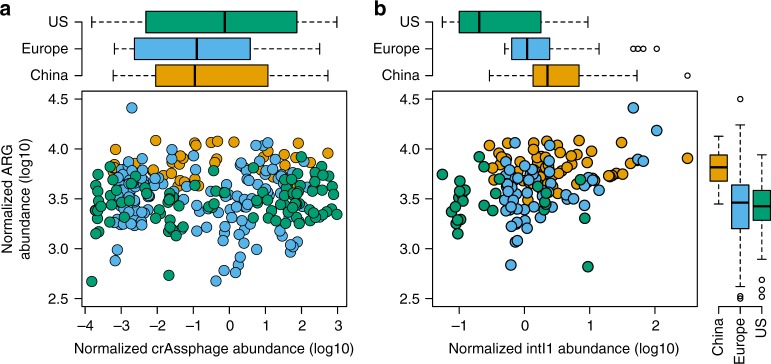
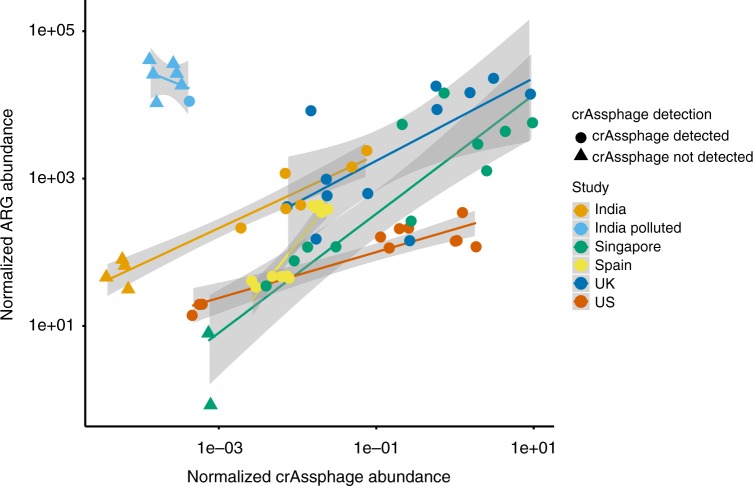
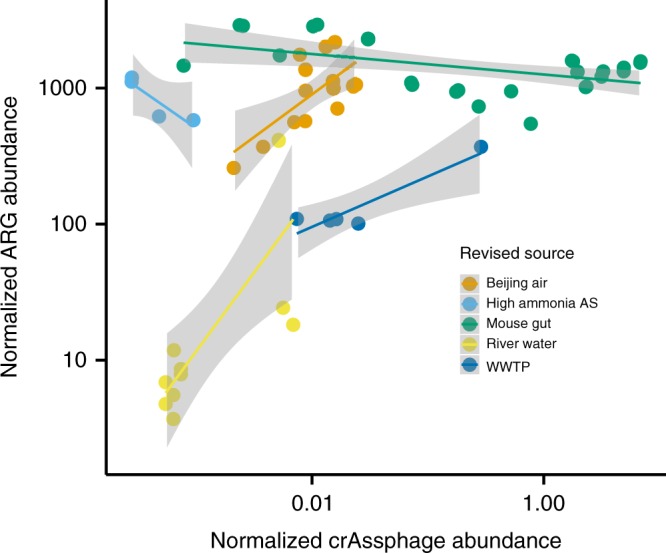
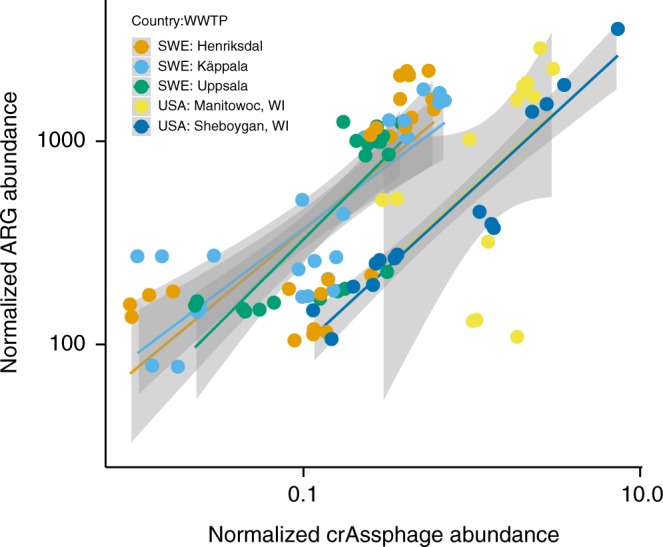
Discharge of treated sewage leads to release of antibiotic resistant bacteria, resistance genes and antibiotic residues to the environment. However, it is unclear whether increased abundance of antibiotic resistance genes in sewage and sewage-impacted environments is due to on-site selection pressure by residual antibiotics, or is simply a result of fecal contamination with resistant bacteria. Here we analyze relative resistance gene abundance and accompanying extent of fecal pollution in publicly available metagenomic data, using crAssphage sequences as a marker of human fecal contamination (crAssphage is a bacteriophage that is exceptionally abundant in, and specific to, human feces). We find that the presence of resistance genes can largely be explained by fecal pollution, with no clear signs of selection in the environment, with the exception of environments polluted by very high levels of antibiotics from manufacturing, where selection is evident. Our results demonstrate the necessity to take into account fecal pollution levels to avoid making erroneous assumptions regarding environmental selection of antibiotic resistance.
Overview
The claims and statistics of this paper haven’t been checked yet.
Free: it reads the open-access text and checks the first 5 claims that cite a source we can check. Create a free account to check every claim.
Integrity signals
Registry
Cites
Statistics
Figures
Verification
Claims the paper makes
The claims and statistics of this paper haven’t been checked yet.
Free: it reads the open-access text and checks the first 5 claims that cite a source we can check. Create a free account to check every claim.
Claims other papers make about this one
Each is checked against this paper’s own text: does it say what the citing paper says it does?
The cited source says what the claim attributes to it.
In the citing paper
“Recent metagenomic surveys have shown that human fecal pollution increases the abundance of antimicrobial resistance genes in the environment 88 , and that sewage microbial communities contain a diversity of AMR genes and resistant gut commensals that can potentially”
From Urban informal settlements as hotspots of antimicrobial resistance and the need to curb environmental transmission. (2020) · cites this paper as [88]
Self-check
Percentages, sums and reported differences re-computed from the paper’s own numbers.
The self-check needs the paper’s full text.
Citations
Cites
R: A Language and Environment for Statistical Computing
R Core Team (2025) · doi:10.32614/r.manuals · Cited by 352,181
The Sequence Alignment/Map format and SAMtools
Li, H., Handsaker, B., Wysoker, A., Fennell, T., Ruan, J., Homer, N., Marth, G., Abecasis, G., Durbin, R., & 1000 Genome Project Data Processing Subgroup (2009) · Bioinformatics · doi:10.1093/bioinformatics/btp352 · Cited by 62,041
Fast gapped-read alignment with Bowtie 2
Langmead, B., & Salzberg, S. L. (2012) · Nature Methods · doi:10.1038/nmeth.1923 · Cited by 56,400
ggplot2: Elegant Graphics for Data Analysis
Wickham, H. (2009) · doi:10.1007/978-0-387-98141-3 · Cited by 14,447
Fast and sensitive protein alignment using DIAMOND
Buchfink, B., Xie, C., & Huson, D. H. (2015) · Nature Methods · doi:10.1038/nmeth.3176 · Cited by 14,201
Identification of acquired antimicrobial resistance genes
Zankari, E., Hasman, H., Cosentino, S., Vestergaard, M., Rasmussen, S., Lund, O., Aarestrup, F. M., & Larsen, M. V. (2012) · Journal of Antimicrobial Chemotherapy · doi:10.1093/jac/dks261 · Cited by 4,980
Rizzo, L., Manaia, C., Merlin, C., Schwartz, T., Dagot, C., Ploy, M. C., Michael, I., & Fatta-Kassinos, D. (2013) · Science of The Total Environment · doi:10.1016/j.scitotenv.2013.01.032 · Cited by 2,493
Tackling antibiotic resistance: the environmental framework
Berendonk, T. U., Manaia, C. M., Merlin, C., Fatta-Kassinos, D., Cytryn, E., Walsh, F., Bürgmann, H., Sørum, H., Norström, M., Pons, M.-N., et al. (2015) · Nature Reviews Microbiology · doi:10.1038/nrmicro3439 · Cited by 2,338
Environmental pollution by antibiotics and by antibiotic resistance determinants
Martinez, J. L. (2009) · Environmental Pollution · doi:10.1016/j.envpol.2009.05.051 · Cited by 1,912
Antibiotics and Antibiotic Resistance Genes in Natural Environments
Martínez, J. L. (2008) · Science · doi:10.1126/science.1159483 · Cited by 1,795
Cited by
Items 301–400 of 629
Fang, P., Xiao, P., Tan, F., Mo, Y., Chen, H., Klümper, U., Berendonk, T. U., & Yang, J. (2022) · Microbiology Spectrum · doi:10.1128/spectrum.00406-22 · Cited by 20
“most likely related to the local clinical patterns of antibiotic prescriptions and human activities, including fecal pollution (27, 34, 35).”
BackgroundThe gut microbiome: an emerging epicenter of antimicrobial resistance?
Deshpande, S. V., Sujith, S., Jobby, R., Rajasekharan, S. K., Ravichandran, V., & Solomon, A. P. (2025) · Frontiers in Microbiology · doi:10.3389/fmicb.2025.1593065 · Cited by 22
Yang, X., Yan, L., Yang, Y., Zhou, H., Cao, Y., Wang, S., Xue, B., Li, C., Chen, Z., Zhang, X., et al. (2022) · Frontiers in Environmental Science · doi:10.3389/fenvs.2022.840428 · Cited by 17
“, 2012), waterborne endemic fluorosis, and arsenic poisoning (Boelee et al., 2019; Karkman et al., 2019).”
BackgroundGlacier-Fed Stream Biofilms Harbor Diverse Resistomes and Biosynthetic Gene Clusters
Busi, S. B., de Nies, L., Pramateftaki, P. V., Bourquin, M., Ezzat, L., Kohler, T. J., Fodelianakis, S., Michoud, G., Peter, H., Styllas, M. N., et al. (2023) · Microbiology Spectrum · doi:10.1128/spectrum.04069-22 · Cited by 19
“Studies delving into the origins of AMR have reported that fecal pollution may explain ARG abundances in anthropogenically impacted environments (44).”
Drivers of Antibiotic Resistance Gene Abundance in an Urban River
Morina, J. C., & Franklin, R. B. (2023) · Antibiotics · doi:10.3390/antibiotics12081270 · Cited by 21
Monteiro, S., & Santos, R. (2020) · Journal of Water and Health · doi:10.2166/wh.2020.020 · Cited by 18
Evaluation of CrAssphage Marker for Tracking Fecal Contamination in River Water in Nepal
Ward, L. M., Shrestha, R. G., Tandukar, S., Sherchand, J. B., Haramoto, E., & Sherchan, S. P. (2020) · Water Air & Soil Pollution · doi:10.1007/s11270-020-04648-1 · Cited by 17
“…2018a) in animal samples. crAssphage has the potential to serve as a more specific indicator for human fecal contamination (Stachler and Bibby 2014) and has also been utilized as an indicator for the presence of antibiotic resistance genes in water polluted with human waste (Karkman et al. 2019).”
BackgroundHung, W.-C., Rugh, M., Feraud, M., Avasarala, S., Kurylo, J., Gutierrez, M., Jimenez, K., Truong, N., Holden, P. A., Grant, S. B., et al. (2022) · Journal of Hazardous Materials · doi:10.1016/j.jhazmat.2021.127469 · Cited by 17
Wang, L., Gu, X., Hui, K., Yu, T., Yuan, Y., Chen, G., & Tan, W. (2025) · Emerging contaminants · doi:10.1016/j.emcon.2025.100578 · Cited by 29
Huang, B., Lv, X., Zheng, H., Yu, H., Zhang, Y., Zhang, C., & Wang, J. (2023) · Environmental Research · doi:10.1016/j.envres.2023.117718 · Cited by 17
Hsiao, S.-S., Hsu, C.-Y., Ananthakrishnan, B., Hsu, M.-H., Chien, Y., Wang, L. P., & Tung, H.-H. (2023) · Sustainable Environment Research · doi:10.1186/s42834-023-00203-9 · Cited by 18
“This makes wastewater a hot spot for the emergence and spread of antibiotic resistance [19].”
BackgroundYan, W., Bai, R., Zhang, Q., Jiang, Y., Chen, G., Zhang, Y., Wu, Y., Guo, X., Xiao, Y., & Zhao, F. (2024) · Environment International · doi:10.1016/j.envint.2024.108946 · Cited by 19
Niestępski, S., Harnisz, M., Korzeniewska, E., & Osińska, A. (2020) · International Journal of Environmental Research and Public Health · doi:10.3390/ijerph17197137 · Cited by 15
“contamination with indicator bacteria [73,74].”
BackgroundCurran, J. F., Zaggia, L., & Quero, G. M. (2022) · Water · doi:10.3390/w14071161 · Cited by 18
Velázquez-Meza, M. E., Galarde-López, M., Cornejo‐Juárez, P., Bobadilla-del-Valle, M., Godoy-Lozano, E. E., Aguilar-Vera, E., Carrillo-Quiroz, B. A., Ponce‐de‐León, A., Velázquez-Acosta, C., & Alpuche-Aranda, C. M. (2025) · International Journal of Molecular Sciences · doi:10.3390/ijms26052051 · Cited by 15
Chen, M., Wang, G., Ma, B., Musat, N., Shen, P., Wei, Z., Wei, Y., Richnow, H. H., & Zhang, J. (2025) · Environment International · doi:10.1016/j.envint.2025.109584 · Cited by 18
A bibliometric analysis of microplastic pollution in aquatic environments from 2013 to 2023
Yang, S., Li, P., Jiao, Y., Li, Z., Ruan, Y., & Yang, Q. (2025) · Sustainable Environment Research · doi:10.1186/s42834-025-00257-x · Cited by 17
“However, with the global population growing and the increasing consumption of resources and generation of waste, we face severe water pollution issues such as eutrophication [3], heavy metals [4], antibiotics [5], and plastics [6].”
Kneis, D., Barrón, M. D. L. C., Konyali, D., Westphal, V., Schröder, P., Westphal-Settele, K., Schönfeld, J., Jungmann, D., Berendonk, T. U., & Klümper, U. (2025) · The ISME Journal · doi:10.1093/ismejo/wraf172 · Cited by 19
“The presence of plasmid-borne resistance in environmental settings typically reflects pollution scenarios where both antibiotics and pathogens with a history of exposure are released simultaneously (e.g. through wastewater disposal [60] or organic fertilization [61]).”
Planetary microbiome structure and generalist-driven gene flow across disparate habitats
Kim, C. Y., Podlesny, D., Schiller, J., Khedkar, S., Fullam, A., Orakov, A. N., Schudoma, C., Robbani, S. M., Grekova, A., Kuhn, M., et al. (2026) · Cell · doi:10.1016/j.cell.2025.12.051 · Cited by 28
Luan, X., Han, Z., Shen, Y., Yang, M., & Zhang, Y. (2021) · The Science of The Total Environment · doi:10.1016/j.scitotenv.2021.146329 · Cited by 15
Xiong, W., Yang, J., Zeng, J., Xiao, D., Tong, C., & Zeng, Z. (2023) · Ecotoxicology and Environmental Safety · doi:10.1016/j.ecoenv.2023.115191 · Cited by 17
Assessment of crAssphage as a human fecal source tracking marker in the lower Great Lakes
Li, E., Saleem, F., Edge, T. A., & Schellhorn, H. E. (2023) · The Science of The Total Environment · doi:10.1016/j.scitotenv.2023.168840 · Cited by 15
Tian, Y., Han, Z., Su, D., Luan, X., Yu, L., Tian, Z., Zhang, Y., & Yang, M. (2023) · Environmental Pollution · doi:10.1016/j.envpol.2023.123075 · Cited by 15
Elimination of Trace Tetracycline with Alkyl Modified MIL‐101 in Water
Li, Y., Peng, H., Li, H., Ma, Q., Zhang, X., Chen, Q., & Li, J. (2024) · Small · doi:10.1002/smll.202405436 · Cited by 27
Prevalence of antibiotic resistance genes in mining-impacted farmland environments
Zou, H., Gao, F.-Z., He, L.-Y., Zhang, M., Liu, Y., Qi, J., & Ying, G. (2025) · Ecotoxicology and Environmental Safety · doi:10.1016/j.ecoenv.2024.117651 · Cited by 17
Green, H., Wilder, M. L., Wiedmann, M., & Weller, D. L. (2021) · Frontiers in Microbiology · doi:10.3389/fmicb.2021.684533 · Cited by 15
“, 2003), antimicrobials (Chee-Sanford et al., 2009; Karkman et al., 2019), and hormones (Boxall et al.”
BackgroundPhytostabilization mitigates antibiotic resistance gene enrichment in a copper mine tailings pond
Yi, X., Wen, P., Liang, J., Jia, P., Yang, T., Feng, S., Liao, B., Shu, W., & Li, J. (2022) · Journal of Hazardous Materials · doi:10.1016/j.jhazmat.2022.130255 · Cited by 15
Aquatic environments in the One Health context: modulating the antimicrobial resistance phenomenon
Resende, J. A., da Silva, V. L., & Diniz, C. G. (2020) · Acta Limnologica Brasiliensia · doi:10.1590/s2179-975x4719 · Cited by 24
Cadamuro, R. D., Elois, M. A., Pilati, G. V. T., Savi, B. P., Pessi, L., JEMPIERRE, Y. F. S. H., Rodríguez-Làzaro, D., & Fongaro, G. (2025) · Foods · doi:10.3390/foods14071082 · Cited by 16
“These studies suggest that poultry feces are possible reservoirs of ARGs, which can be influenced by the administration of antimicrobials [51,52].”
Light, E., Baker‐Austin, C., Card, R. M., Ryder, D., Alves, M. T., Al-Sarawi, H. A., Abdulla, K. H., Stahl, H. J., AL-Ghabshi, A., Alghoribi, M. F., et al. (2022) · Environmental Advances · doi:10.1016/j.envadv.2022.100268 · Cited by 15
Günther, T., Kramer‐Schadt, S., Fuhrmann, M., & Belik, V. (2022) · Frontiers in Veterinary Science · doi:10.3389/fvets.2022.980554 · Cited by 18
“Therefore, environments characterized by livestock farming and densely populated areas are often more predisposed to be contaminated by antimicrobial-resistant bacteria and antimicrobial substances, increasing the exposure of wildlife species living in proximity to these areas, such as wild boar (7, 11, 15, 19, 20).”
BackgroundIrfan, M., Almotiri, A., & AlZeyadi, Z. A. (2023) · Antibiotics · doi:10.3390/antibiotics12040653 · Cited by 18
Liu, D., Wang, Z., Liu, K., Zhang, S., Yang, F., Li, J., Liu, F., Bao, D., & Che, R. (2023) · Journal of Soils and Sediments · doi:10.1007/s11368-023-03690-w · Cited by 14
“On the other hand, dung deposition triggers changes in soil properties and leads to increased antibiotic pollution, resulting in the extinction of many microbial species (Billet et al. 2022; Karkman et al. 2019; Shawver et al. 2021; Sun et al. 2020; Veresoglou et al. 2015).”
Liang, F., Chen, C., Zhang, H., Zeng, Y., Li, T., Gao, R., Li, J., Ren, Y., Wu, Z., Bi, F., et al. (2025) · Emerging contaminants · doi:10.1016/j.emcon.2025.100514 · Cited by 14
Jofre, J. T., Lucena, F., & Blanch, A. R. (2021) · Water · doi:10.3390/w13081110 · Cited by 14
“Fecal pollution is a major factor responsible for the abundance of antibiotic resistance genes in anthropogenically impacted environments [34].”
BackgroundZhang, M., Liang, C., Li, B., Jiang, F., Song, P., Gu, H., Gao, H., Cai, Z., & Zhang, T. (2025) · Communications Biology · doi:10.1038/s42003-025-08185-7 · Cited by 16
“Previous studies have shown that anthropogenic antibiotic pollution is a major driver of antibiotic resistance acquisition in wildlife 62,63 , and the abundance of antibiotic resistance genes (ARGs) in wild animal micro-biomes may re fl ect the extent of such contamination 64 .”
Jacques, K. J., Xiang, Q., Hao, Y., Sun, A., Lu, C., & Chen, Q. (2025) · Journal of Hazardous Materials · doi:10.1016/j.jhazmat.2025.139025 · Cited by 15
Presence of virulent Edwardsiella tarda in farmed nile tilapia and striped catfish
Okasha, L. A., Farag, E., Sayed-ElAhl, R. M. H., & Sherif, A. H. (2025) · BMC Microbiology · doi:10.1186/s12866-025-04232-9 · Cited by 13
Xiao, K., Abbt‐Braun, G., Borowska, E., Thomagkini, X., & Horn, H. (2022) · ACS ES&T Engineering · doi:10.1021/acsestengg.1c00402 · Cited by 13
Zhang, L., Ju, Z., Su, Z. G., Fu, Y. W., Zhao, B., Song, Y., Wen, D., Zhao, Y., & Cui, J. (2022) · The Science of The Total Environment · doi:10.1016/j.scitotenv.2022.158530 · Cited by 13
Sources and Drivers of ARGs in Urban Streams in Atlanta, Georgia, USA
Sowah, R. A., Molina, M., Georgacopoulos, O., Snyder, B., & Cyterski, M. (2022) · Microorganisms · doi:10.3390/microorganisms10091804 · Cited by 16
“These findings are in line with a recent metadata study that found that the presence of resistance genes in the environment can largely be explained by fecal pollution, except in environments polluted by very high levels of antibiotics, where selection pressure dominates [22].”
MethodResultda Costa, W. F., Paranhos, R., Mello, M. P., Picão, R. C., & Laport, M. S. (2023) · Environmental Microbiology · doi:10.1111/1462-2920.16435 · Cited by 13
Cuetero-Martínez, Y., Villamizar-Ojeda, K. N., Hernández-Santiago, M. J., Cobos‐Vasconcelos, D. D. L., Garrido, J. F. A., López‐Vidal, Y., & Noyola, A. (2023) · The Science of The Total Environment · doi:10.1016/j.scitotenv.2023.165984 · Cited by 15
Yang, J., Xu, Z., Wan, D., Wang, X., Zhang, X., Zhu, Y., & Guo, J. (2024) · Environmental Research · doi:10.1016/j.envres.2024.119701 · Cited by 13
Chen, W.-Y., Lee, C.-P., Pavlović, J., Pangallo, D., & Wu, J. (2024) · Heliyon · doi:10.1016/j.heliyon.2024.e38723 · Cited by 18
Barrantes, K., Lejzerowicz, F., Tran, T. T., Calderón-Osorno, M., Rivera-Montero, L., Rodríguez, C., Wikmark, O.-G., Eiler, A., Grossart, H., Arias-Andrés, M., et al. (2025) · Water Research · doi:10.1016/j.watres.2025.123553 · Cited by 15
Yang, J., Xiao, D.-Y., Zhang, L., Chen, H., Zheng, X.-R., Xu, X.-L., & Jiang, H. (2023) · The Science of The Total Environment · doi:10.1016/j.scitotenv.2023.163511 · Cited by 16
Silver Nanoparticles in Wound Infections: Present Status and Future Prospects
Dahm, H. (2020) · Springer eBooks · doi:10.1007/978-3-030-35147-2_9 · Cited by 22
Zhou, M., Xu, Y., Ouyang, P., Ling, J., Cai, Q., Du, Q., & Zheng, L. (2020) · The Science of The Total Environment · doi:10.1016/j.scitotenv.2020.138693 · Cited by 14
Zhang, H.-H., Wang, F., Yu, S., Mao, D., Wang, X., & Luo, Y. (2025) · Environmental Science & Technology · doi:10.1021/acs.est.5c02241 · Cited by 14
Ahmad, I., Siddiqui, S. A., Samreen, S., Suman, K., & Qais, F. A. (2022) · Springer eBooks · doi:10.1007/978-981-16-9097-6_15 · Cited by 15
Chukwu, K. B., Abafe, O. A., Amoako, D. G., Ismail, A., Essack, S. Y., & Abia, A. L. K. (2023) · Microorganisms · doi:10.3390/microorganisms11092265 · Cited by 14
Du, J., Huang, W., Pan, Y., Xu, S., Li, H., & Liu, Q. (2024) · Drug and Chemical Toxicology · doi:10.1080/01480545.2024.2362890 · Cited by 12
Tang, Y., Wang, X., Ng, H. Y., Huang, S., Bi, X., Zheng, X., & Zhou, X. (2024) · Journal of Hazardous Materials · doi:10.1016/j.jhazmat.2024.136253 · Cited by 12
Chen, M., Xing, L., Gao, S., Guo, Y., Qiu, T., Wang, X., & Gao, M. (2025) · Environment International · doi:10.1016/j.envint.2025.109569 · Cited by 12
KPC-3-, GES-5-, and VIM-1-Producing Enterobacterales Isolated from Urban Ponds
Teixeira, P., Pinto, N., Henriques, I. S., & Tacão, M. (2022) · International Journal of Environmental Research and Public Health · doi:10.3390/ijerph19105848 · Cited by 14
Cuetero-Martínez, Y., Cobos‐Vasconcelos, D. D. L., Garrido, J. F. A., López‐Vidal, Y., & Noyola, A. (2022) · Current Medicinal Chemistry · doi:10.2174/0929867329666220802093415 · Cited by 14
Photo-induced degradation of norfloxacin by nanosilver modified two-dimensional black phosphorus
Chen, P., Guo, Z. H., Cui, K., Guo, W., Li, X., Chen, Y., Kuang, K., Ding, W., & Ding, Y. (2020) · Solid State Sciences · doi:10.1016/j.solidstatesciences.2020.106188 · Cited by 12
Atterby, C., Nykvist, M., Lustig, U., Andersson, D. I., Järhult, J. D., & Sandegren, L. (2020) · Antimicrobial Agents and Chemotherapy · doi:10.1128/aac.01858-20 · Cited by 13
“by human feces (48), our results imply that selection of antibiotic-resistant bacteria”
Yuan, Q., Chen, Y., Zhang, Y., Wang, N., Ying, G., Ren, H., & Luo, Y. (2025) · Environmental Science & Technology · doi:10.1021/acs.est.5c07273 · Cited by 11
Jantharadej, K., Kongprajug, A., Mhuantong, W., Limpiyakorn, T., Suwannasilp, B. B., Mongkolsuk, S., & Sirikanchana, K. (2022) · The Science of The Total Environment · doi:10.1016/j.scitotenv.2022.157652 · Cited by 11
Ding, X., Lan, W., Li, J., Deng, M., Li, Y., Katayama, Y., & Gu, J. (2024) · The Science of The Total Environment · doi:10.1016/j.scitotenv.2024.170402 · Cited by 14
Callejas, I. A., Kong, Y., Osborn, K., Hung, W.-C., Cira, M., Cason, T., Sloane, A., Shenkiryk, A., Masikip, A., Singh, A., et al. (2024) · The Science of The Total Environment · doi:10.1016/j.scitotenv.2024.177577 · Cited by 13
Niavol, K. P., Andaluri, G., Achary, M. P., & Suri, R. (2025) · Journal of Environmental Management · doi:10.1016/j.jenvman.2025.124619 · Cited by 13
Nguyen, L. P., Pinto, N. A., Vu, T. N., Mai, H., Pham, A. H., Lee, H.-S., Cho, Y. L., Byun, J., D’Souza, R., & Yong, D. (2019) · Pathogens · doi:10.3390/pathogens8040212 · Cited by 13
Zhang, Y., Xu, S., Yang, Y., Chou, S., & He, J. (2021) · Environmental Microbiology · doi:10.1111/1462-2920.15795 · Cited by 14
Yapıcıer, Ö. Ş., KANDIR, E. H., & Öztürk, D. (2022) · PubMed Central · doi:10.22092/ari.2021.356322.1823 · Cited by 11
Nguyen, K. H., Smith, S. M., Roundtree, A. V., Feistel, D. J., Kirby, A. E., Lévy, K., & Mattioli, M. C. M. (2022) · Frontiers in Microbiology · doi:10.3389/fmicb.2022.1029176 · Cited by 15
“Besides enteric viruses, bacteria, and other pathogens of concern, urban runoff and treated wastewater effluent can introduce antibiotic resistant organisms (AROs) and antibiotic resistance genes (ARGs) into receiving water bodies (Sanderson et al., 2016; Almakki et al., 2019; Karkman et al., 2019).”
BackgroundXu, F., Sun, G., Du, W., Ai, F., Yin, Y., & Guo, H. (2022) · Bulletin of Environmental Contamination and Toxicology · doi:10.1007/s00128-022-03642-z · Cited by 11
“Applying organic fertilizer is an important way of antibiotic-resistant bacteria and antibiotic-resistance genes (ARGs) spread in agricultural media (Karkman et al., 2019; Zhu et al., 2013).”
BackgroundTilahun, H. E., & Efa, D. A. (2026) · Poultry Science · doi:10.1016/j.psj.2026.106752 · Cited by 11
“…et al., 2019; Koch et al., 2021; Zhou et al., 2021) Wildlife species, including migratory birds and insect vectors such as filth flies, may further contribute to the spread of antimicrobial-resistant bacteria across eco-systems (Endale et al., 2023; Karkman et al., 2019; Onwugamba et al., 2018).”
Remesh, A. T., & Viswanathan, R. (2024) · Food and Environmental Virology · doi:10.1007/s12560-024-09584-5 · Cited by 10
“In contrast, using crAss-like phage sequences as a marker of human fecal contamination, Karkman et al. (2019) observed a lack of correlation between them and the quantity of ARG in the fecal metagenomes.”
Mills, M. C., Davis, A., Lancaster, E., Choi, B., Martin, J. F., Winston, R. J., & Lee, J. (2024) · Water Research · doi:10.1016/j.watres.2024.121873 · Cited by 13
Sewerage surveillance tracking characteristics of human antibiotic resistance genes in sewer system
Dong, Q., Sun, B., Liu, Y., & Huang, X. (2024) · The Science of The Total Environment · doi:10.1016/j.scitotenv.2024.175850 · Cited by 11
Gupta, S. A., Wu, X., Pruden, A. J., Zhang, L., & Vikesland, P. J. (2024) · Nature Water · doi:10.1038/s44221-024-00310-w · Cited by 14
Guo, H., Li, R., Su, Y., Xue, S., Li, N., Chen, F., Zhangsun, X., Zhang, H., Liu, X., & Huang, T. (2024) · Journal of Hazardous Materials · doi:10.1016/j.jhazmat.2024.136734 · Cited by 11
Gao, F.-Z., Hu, L., Liu, Y., He, L.-Y., Bai, H., Qiao, L.-K., Chen, Z., Li, P., Ju, F., Guo, J., et al. (2025) · Environment International · doi:10.1016/j.envint.2025.109769 · Cited by 11
What High-Income States Should Do to Address Industrial Antibiotic Pollution
Malmqvist, E., & Munthe, C. (2020) · Public Health Ethics · doi:10.1093/phe/phaa020 · Cited by 10
Jałowiecki, Ł., Hubeny, J., Harnisz, M., & Płaza, G. A. (2021) · International Journal of Environmental Research and Public Health · doi:10.3390/ijerph19010336 · Cited by 13
“[40], future research should examine whether WHO pathogens persist in downstream environments and urban water.”
Contrasting dynamics of manure-borne antibiotic resistance genes in different soils
Zhang, H., Ling, H., Zhou, R., Tang, J., Hua, R., & Wu, X. (2022) · Ecotoxicology and Environmental Safety · doi:10.1016/j.ecoenv.2022.114162 · Cited by 13
Burch, T. R., Stokdyk, J. P., Durso, L. M., & Borchardt, M. A. (2024) · Applied and Environmental Microbiology · doi:10.1128/aem.01629-23 · Cited by 13
“However, these genes represent the fundamental biological basis for antibiotic resistance, are present in a wide variety of environments, and can be transferred among pathogens and non-pathogens via horizontal gene transfer (3, 34, 52).”
BackgroundWani, A. K., Mir, T. U. G., Akhtar, N., Chopra, C., Bashir, S. M., Hassan, S., Kumar, V., Singh, R., & Américo‐Pinheiro, J. H. P. (2024) · Current Microbiology · doi:10.1007/s00284-024-03631-x · Cited by 10
HNPCC-Lynch syndrome and idiopathic inflammatory bowel disease. A hypothesis on sharing of genes.
Caruso, M. L., Cristofaro, G., & Lynch, H. T. (1997) · PubMed · Cited by 12
Zhang, Y., Li, K., Wu, Y., Liu, Y., Wu, R., Zhong, Y., Xiao, S., Mao, H., Li, G., Wang, Y., et al. (2022) · Environmental Pollution · doi:10.1016/j.envpol.2022.120101 · Cited by 9
Yang, Q., Shi, J. M., Wei, J., li, S., & He, Y. (2024) · Optical Materials · doi:10.1016/j.optmat.2024.115905 · Cited by 9
Lin, J., Zeng, Y., Zhan, X., Xu, J., Wang, X., Hong, B., Peng, X., Li, J., Chen, H., & Xia, Y. (2024) · Journal of environmental chemical engineering · doi:10.1016/j.jece.2024.114898 · Cited by 9
Liu, S., Lioe, T. S., Sun, L., Adriaenssens, E. M., McCarthy, A. J., & Sekar, R. (2024) · Environmental Pollution · doi:10.1016/j.envpol.2024.125403 · Cited by 9
Liao, H., Wang, Y., Duan, C.-S., Zhu, Y., & Su, J. (2025) · Communications Earth & Environment · doi:10.1038/s43247-025-02610-9 · Cited by 11
“6,7 .”
Coertze, R. D., & Bezuidenhout, C. C. (2020) · Water Science & Technology Water Supply · doi:10.2166/ws.2020.085 · Cited by 9
Antibiotic Resistance in Black Sea Microbial Communities
Prekrasna-Kviatkovska, Y., Pavlovska, M., Dzhulai, A., Dykyi, E., Alygizakis, ., & Slobodník, J. (2022) · Frontiers in Environmental Science · doi:10.3389/fenvs.2022.823172 · Cited by 12
“…of the studies imply antibiotic resistant testing or ARG profiling of bacteria isolated from fish farms, marine biota, seawater and freshwater from the Danube river (Kayis et al., 2009; Kittinger et al., 2016a; Kittinger et al., 2016b; Türe and Alp, 2016; Terzi and Isler, 2019; Kayis et al., 2021).”
BackgroundLi, Y., Zhang, C.-M., Mou, X., Zhang, P., Liang, J., & Wang, Z. (2022) · Water Science & Technology · doi:10.2166/wst.2022.018 · Cited by 10
Wu, D., Su, Y., Wang, P., Zhao, J., Xie, J., & Xie, B. (2022) · National Science Open · doi:10.1360/nso/20220012 · Cited by 9
Lin, Y., Zhang, L., Wu, J., & Yang, K. (2022) · Environmental Research · doi:10.1016/j.envres.2022.114566 · Cited by 12
Zhang, L., Bai, J., Zhang, K., Wei, Z., Wang, Y., Liu, H., Xiao, R., & Jorquera, M. A. (2022) · Frontiers in Microbiology · doi:10.3389/fmicb.2022.1092854 · Cited by 8
“, 2012) and exert selective pressure on microorganisms (Gong et al., 2012; Karkman et al., 2019).”
BackgroundZhang, M., Zhou, Y., Cui, X., & Zhu, L. (2024) · Microorganisms · doi:10.3390/microorganisms12040713 · Cited by 11
“Moreover, keystone species analyses suggest that phage communities may be crucial in the steady state and interactions between gut bacteria and phages in captive giant pandas (GPCA and GPYA) compared to gut bacterial communities.”
BackgroundMorales-Cortés, S., Sala‐Comorera, L., Gómez-Gómez, C., Muniesa, M., & García‐Aljaro, C. (2024) · Environmental Pollution · doi:10.1016/j.envpol.2024.124713 · Cited by 9
“The same study described a high correlation between ARGs and crAssphage in environments with high fecal pollution from anthropogenic origin, suggesting that ARG abundance is primarily due to human fecal contamination, for which crAssphage is a good indicator (Karkman et al., 2019).”
InfluentialFang, X., Li, J., Wang, N., Zhang, T., & Yu, L. (2024) · Environmental Research · doi:10.1016/j.envres.2024.119788 · Cited by 8
Leopold, M., Kolm, C., Linke, R. B., Schachner-Groehs, I., Koller, M. T., Kandler, W., Kittinger, C., Zarfel, G., Farnleitner, A. H., & Kirschner, A. K. T. (2025) · Journal of Hazardous Materials · doi:10.1016/j.jhazmat.2025.137343 · Cited by 8
Zheng, Y., Yao, Y., Xu, Q., He, X., Zhou, X., & Wang, H. (2025) · Communications Biology · doi:10.1038/s42003-025-08270-x · Cited by 9
Yang, Q., Shi, J. M., Wei, J., li, S., & He, Y. (2025) · Optical Materials · doi:10.1016/j.optmat.2025.117326 · Cited by 8
Choi, J., Kim, J., Seo, S., Ko, H., Lee, S., Joung, S., Kim, M., & Lee, H. (2025) · Chemical Engineering Journal · doi:10.1016/j.cej.2025.166363 · Cited by 8
Metadata
- Authors
- Karkman, A., Pärnänen, K., & Larsson, D. G. J.
- Affiliations
- University of Helsinki (FI)
- University of Gothenburg (SE)
- Corresponding author
- Karkman, Antti
- Venue
- Nature Communications
- Published
- 2019-01-08
- Volume
- 10
- Issue
- 1
- Pages
- 80-80
- ISSN
- 2041-1723 (ISSN-L)
- PMC
- PMC6325112
- OpenAlex
- W2949973543
- Cited by
- 628
- References
- 77
- Citations by year
- 2026: 64 · 2025: 85 · 2024: 87 · 2023: 88 · 2022: 95 · 2021: 98 · 2020: 68 · 2019: 38
- FWCI
- 22.47
- Type
- journal article
- Language
- en
- Open access
- gold
- doi.org
- Licence
- cc-by
- creativecommons.org/licenses/by/4.0 (tdm)
- creativecommons.org/licenses/by/4.0 (vor)
- Locations
- Nature Communications (publishedVersion, cc-by)
- bioRxiv (Cold Spring Harbor Laboratory) (acceptedVersion, cc-by-nc-nd)
- Europe PMC (PubMed Central) (publishedVersion, other-oa)
- PubMed Central (publishedVersion, cc-by)
- PubMed (publishedVersion)
- RePEc: Research Papers in Economics (submittedVersion)
- DOAJ (DOAJ: Directory of Open Access Journals) (submittedVersion)
- DOAJ (DOAJ: Directory of Open Access Journals) (submittedVersion, cc-by-sa)
- Työväentutkimus Vuosikirja (submittedVersion)
- Funders
- Svenska Forskningsrådet Formas (942-2015-750, 942-2015, 2015-750)
- Vetenskapsrådet (2015-02492)
- Göteborgs Universitet
- Centre for Antibiotic Resistance Research, University of Gothenburg
- Topics
- Physical Sciences › Environmental Science › Pollution › Pharmaceutical and Antibiotic Environmental Impacts
- Health Sciences › Medicine › Microbiology (medical) › Antibiotic Resistance in Bacteria
- Health Sciences › Medicine › Infectious Diseases › Antibiotic Use and Resistance
- Keywords
- antibiotic resistance genes, fecal contamination, crAssphage, human fecal contamination, wastewater discharge, antibiotic residues, selection pressure, metagenomics
- MeSH terms
- Anti-Bacterial Agents, Bacteria, Bacteriophages, DNA, Viral, Drug Resistance, Microbial, Feces, Humans, Sewage, Water Microbiology, Water Pollution, Metagenomics, Water Quality
About these checks
Registry, retraction, Cites and statistics results are computed, not judged, with one exception: a printed reference that no index lists is read once by a model before it counts as a citation error. Claims are extracted by a model and kept only when their quote appears verbatim in the text; each cited source is then checked, with a model’s help, for whether it says what the claim relies on. Those verdicts can be wrong — read the claim’s quote and the cited source before relying on one.
Statistics and arithmetic are recomputed, not judged.
Confidence bands are shown only for fields calibrated on our annotated test set. None is calibrated yet, so no band is shown.
What counts as a claim ›How we measure confidence ›How we check this ›
Are you an author, or do you see a problem with this page? Request a review
Data sources
Bibliographic data: Semantic Scholar, OpenAlex, Crossref.
Contains information from the Semantic Scholar Academic Graph Datasets, made available under the ODC Attribution License (ODC-BY 1.0).
Semantic Scholar’s data is described in: Kinney, R., et al. (2023). The Semantic Scholar Open Data Platform. arXiv:2301.10140.
