

Fecal pollution can explain antibiotic resistance gene abundances in anthropogenically impacted environments
Open accessPublished version of a preprint
The DOI matches its Crossref record; 76 of the 77 references it cites were found in a registry or an index.
Abstract
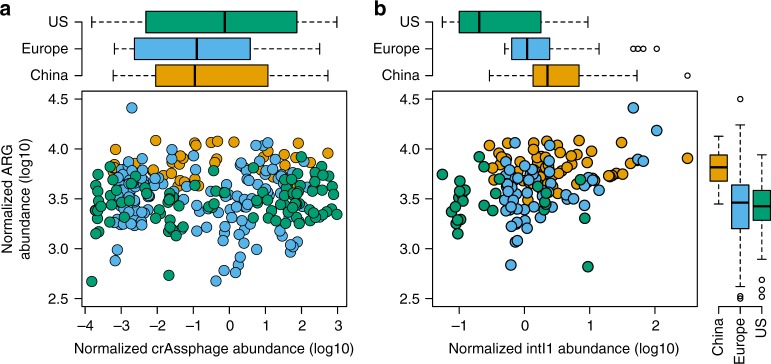
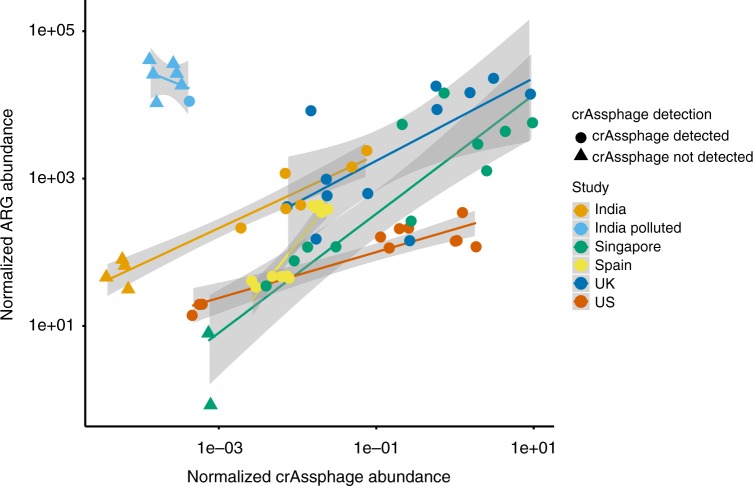
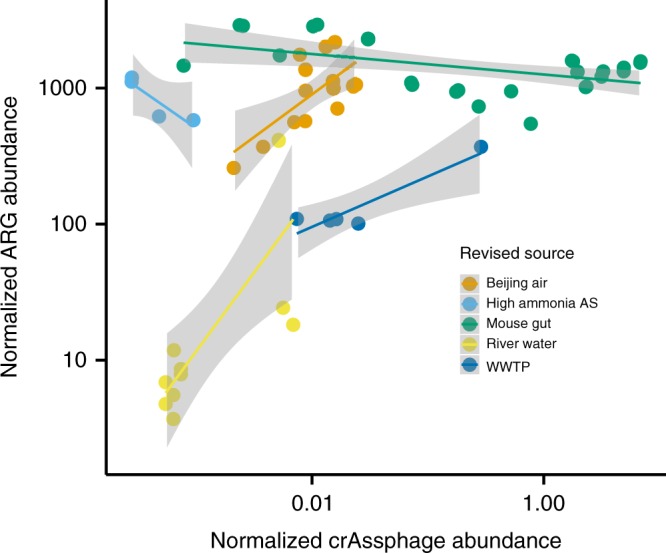
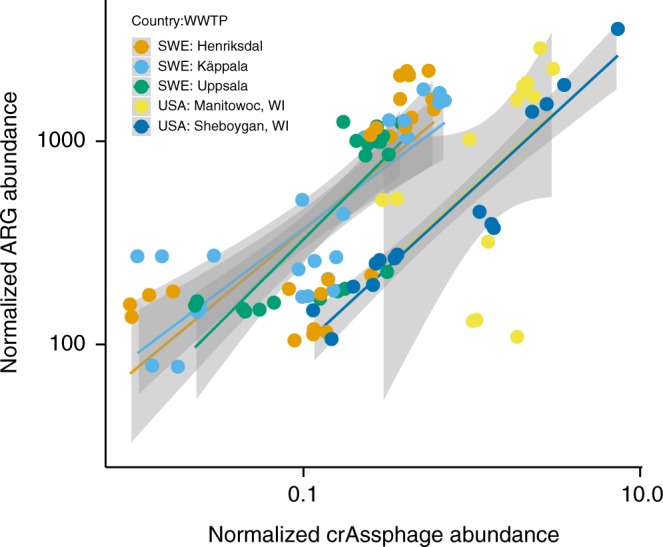
Discharge of treated sewage leads to release of antibiotic resistant bacteria, resistance genes and antibiotic residues to the environment. However, it is unclear whether increased abundance of antibiotic resistance genes in sewage and sewage-impacted environments is due to on-site selection pressure by residual antibiotics, or is simply a result of fecal contamination with resistant bacteria. Here we analyze relative resistance gene abundance and accompanying extent of fecal pollution in publicly available metagenomic data, using crAssphage sequences as a marker of human fecal contamination (crAssphage is a bacteriophage that is exceptionally abundant in, and specific to, human feces). We find that the presence of resistance genes can largely be explained by fecal pollution, with no clear signs of selection in the environment, with the exception of environments polluted by very high levels of antibiotics from manufacturing, where selection is evident. Our results demonstrate the necessity to take into account fecal pollution levels to avoid making erroneous assumptions regarding environmental selection of antibiotic resistance.
Overview
The claims and statistics of this paper haven’t been checked yet.
Free: it reads the open-access text and checks the first 5 claims that cite a source we can check. Create a free account to check every claim.
Integrity signals
Registry
Cites
Statistics
Figures
Verification
Claims the paper makes
The claims and statistics of this paper haven’t been checked yet.
Free: it reads the open-access text and checks the first 5 claims that cite a source we can check. Create a free account to check every claim.
Claims other papers make about this one
Each is checked against this paper’s own text: does it say what the citing paper says it does?
The cited source says what the claim attributes to it.
In the citing paper
“Recent metagenomic surveys have shown that human fecal pollution increases the abundance of antimicrobial resistance genes in the environment 88 , and that sewage microbial communities contain a diversity of AMR genes and resistant gut commensals that can potentially”
From Urban informal settlements as hotspots of antimicrobial resistance and the need to curb environmental transmission. (2020) · cites this paper as [88]
Self-check
Percentages, sums and reported differences re-computed from the paper’s own numbers.
The self-check needs the paper’s full text.
Citations
Cites
R: A Language and Environment for Statistical Computing
R Core Team (2025) · doi:10.32614/r.manuals · Cited by 352,181
The Sequence Alignment/Map format and SAMtools
Li, H., Handsaker, B., Wysoker, A., Fennell, T., Ruan, J., Homer, N., Marth, G., Abecasis, G., Durbin, R., & 1000 Genome Project Data Processing Subgroup (2009) · Bioinformatics · doi:10.1093/bioinformatics/btp352 · Cited by 62,041
Fast gapped-read alignment with Bowtie 2
Langmead, B., & Salzberg, S. L. (2012) · Nature Methods · doi:10.1038/nmeth.1923 · Cited by 56,400
ggplot2: Elegant Graphics for Data Analysis
Wickham, H. (2009) · doi:10.1007/978-0-387-98141-3 · Cited by 14,447
Fast and sensitive protein alignment using DIAMOND
Buchfink, B., Xie, C., & Huson, D. H. (2015) · Nature Methods · doi:10.1038/nmeth.3176 · Cited by 14,201
Identification of acquired antimicrobial resistance genes
Zankari, E., Hasman, H., Cosentino, S., Vestergaard, M., Rasmussen, S., Lund, O., Aarestrup, F. M., & Larsen, M. V. (2012) · Journal of Antimicrobial Chemotherapy · doi:10.1093/jac/dks261 · Cited by 4,980
Rizzo, L., Manaia, C., Merlin, C., Schwartz, T., Dagot, C., Ploy, M. C., Michael, I., & Fatta-Kassinos, D. (2013) · Science of The Total Environment · doi:10.1016/j.scitotenv.2013.01.032 · Cited by 2,493
Tackling antibiotic resistance: the environmental framework
Berendonk, T. U., Manaia, C. M., Merlin, C., Fatta-Kassinos, D., Cytryn, E., Walsh, F., Bürgmann, H., Sørum, H., Norström, M., Pons, M.-N., et al. (2015) · Nature Reviews Microbiology · doi:10.1038/nrmicro3439 · Cited by 2,338
Environmental pollution by antibiotics and by antibiotic resistance determinants
Martinez, J. L. (2009) · Environmental Pollution · doi:10.1016/j.envpol.2009.05.051 · Cited by 1,912
Antibiotics and Antibiotic Resistance Genes in Natural Environments
Martínez, J. L. (2008) · Science · doi:10.1126/science.1159483 · Cited by 1,795
Cited by
Items 201–300 of 629
Fagerström, A., Mölling, P., Khan, F. A., Sundqvist, M., Jaß, J., & Söderquist, B. (2019) · PLoS ONE · doi:10.1371/journal.pone.0224861 · Cited by 40
“The levels of antibiotic resistant bacteria and resistance genes in environments receiving treated wastewater have been shown to be largely explained by fecal pollution rather than selection in the environment [38].”
BackgroundOnline searching platform for the antibiotic resistome in bacterial tree of life and global habitats
Zhang, A., Hou, C.-J., Negi, M., Li, L.-G., & Zhang, T. (2020) · FEMS Microbiology Ecology · doi:10.1093/femsec/fiaa107 · Cited by 35
Berendes, D. M., Kirby, A. E., Brown, J. M., & Wester, A. L. (2020) · The Lancet Planetary Health · doi:10.1016/s2542-5196(20)30099-1 · Cited by 34
Harnessing biotechnology for penicillin production: Opportunities and environmental considerations
Haque, M. A., Nath, N. D., Johnston, T. V., Haruna, S. I., Ahn, J., Ovissipour, R., & Ku, S. (2024) · The Science of The Total Environment · doi:10.1016/j.scitotenv.2024.174236 · Cited by 43
Antibiotic Resistance in the Farming Environment
Karwowska, E. (2024) · Applied Sciences · doi:10.3390/app14135776 · Cited by 40
Sources, dissemination, and risk assessment of antibiotic resistance in surface waters: A review
Liu, N., Zhang, L., Xue, H., Yang, Z., & Meng, F. (2024) · Emerging contaminants · doi:10.1016/j.emcon.2024.100455 · Cited by 41
Assessing antimicrobial resistance connectivity across One Health sectors
Li, L., Li, B. J., Yin, X., Xia, Y., Yang, Y., Xu, X., Lam, T. T., Leung, K., Xu, F., Zhang, X., et al. (2025) · Nature Water · doi:10.1038/s44221-025-00514-8 · Cited by 41
“Considering that faecal pollution is a major driver of widespread ARG transmission in most environments 93 , we propose that connectivity studies start through analysis of E. coli isolates in various compartments.”
InfluentialWen, X., Xu, J., Xiang, G., Cao, Z., Yan, Q., Mi, J., Ma, B., Zou, Y., Zhang, N., Liao, X., et al. (2021) · Ecotoxicology and Environmental Safety · doi:10.1016/j.ecoenv.2021.112815 · Cited by 32
Dong, H., Fu, Y., Wang, P., Jiang, W., Gao, G., & Zhang, X. (2022) · Environmental Pollution · doi:10.1016/j.envpol.2022.119031 · Cited by 32
Ekundayo, T. C., & Okoh, A. I. (2019) · Environmental Pollution · doi:10.1016/j.envpol.2019.113493 · Cited by 33
Chakraborty, J., Sapkale, V., Rajput, V., Shah, M., Kamble, S. P., & Dharne, M. S. (2020) · Ecotoxicology and Environmental Safety · doi:10.1016/j.ecoenv.2020.110443 · Cited by 34
Agramont, J., Gutiérrez-Cortez, S., Joffré, E., Sjöling, Å., & Toledo, C. C. (2020) · Microorganisms · doi:10.3390/microorganisms8081122 · Cited by 38
“Levels of fecal pollution are not frequently considered in the analysis of the selection and dissemination of ARGs [18].”
BackgroundResultInfluentialGrevskott, D. H., Ghavidel, F. Z., Svanevik, C. S., & Marathe, N. P. (2021) · Ecotoxicology and Environmental Safety · doi:10.1016/j.ecoenv.2021.112788 · Cited by 33
Bagra, K., Kneis, D., Padfield, D., Szekeres, E., Teban-Man, A., Coman, C., Singh, G., Berendonk, T. U., & Klümper, U. (2024) · mSphere · doi:10.1128/msphere.00573-23 · Cited by 33
“Among the nine invasion indicator markers, the identified ARGs are well known to be associated with anthropogenic activities and WWTPs (13, 64, 65) and were also observed in our wastewater sample at far elevated abundance compared to the original biofilms.”
BackgroundInfluentialCity-scale monitoring of antibiotic resistance genes by digital PCR and metagenomics
Maestre‐Carballa, L., Navarro‐López, V., & Martínez‐García, M. (2024) · Environmental Microbiome · doi:10.1186/s40793-024-00557-6 · Cited by 38
“Among the ones that could be classified, we found many bacteria related to faecal contamination (i.e. Escherichia coli , Enterococcus faecium , C ampylobacter coli ), a factor which could largely explain the ARG abundance in polluted sewage environments [18].”
BackgroundOccurrence and distribution of antibiotic resistance genes in various rural environmental media
Cheng, J., Tang, X., & Liu, C. (2020) · Environmental Science and Pollution Research · doi:10.1007/s11356-020-09287-x · Cited by 33
“…contributed most of the fecal bacteria (i.e., total coliform and Escherichia coli) load to the Linshan River system (Xue et al. 2018), as it was very likely that these human fecal bacteria were the major transporters of ARGs in the river network (SidrachCardona et al. 2014; Karkman et al. 2019).”
BackgroundQuillaguamán, J., Guzmán, D., Campero, M., Hoepfner, C., Relos, L., Mendieta, D., Higdon, S. M., Rodríguez, D. E., & Fernández, C. E. (2021) · Environmental Pollution · doi:10.1016/j.envpol.2021.116488 · Cited by 36
Study on Bacteria Isolates and Antimicrobial Resistance in Wildlife in Sicily, Southern Italy
Gambino, D., Vicari, D., Vitale, M., Schirò, G., Mira, F., Giglia, M. L., Riccardi, A., Gentile, A., Giardina, S., Carrozzo, A., et al. (2021) · Microorganisms · doi:10.3390/microorganisms9010203 · Cited by 45
Anthony, E., Ojemaye, M. O., Okoh, A. I., & Okoh, O. O. (2021) · Journal of Water Process Engineering · doi:10.1016/j.jwpe.2021.101919 · Cited by 33
Microbial source tracking using metagenomics and other new technologies
Raza, S., Kim, J., Sadowsky, M. J., & Unno, T. (2021) · The Journal of Microbiology · doi:10.1007/s12275-021-0668-9 · Cited by 35
Man, Y. M., Li, W., Wang, J., Tam, N. F. Y., Tai, Y., Tao, R., & Yang, Y. (2022) · The Science of The Total Environment · doi:10.1016/j.scitotenv.2022.153977 · Cited by 31
Bagra, K., Bellanger, X., Merlin, C., Singh, G., Berendonk, T. U., & Klümper, U. (2023) · The Science of The Total Environment · doi:10.1016/j.scitotenv.2023.166661 · Cited by 43
Li, S., Zhang, Q., Chen, M., Strokal, M., Kroeze, C., Ma, L., Zhang, F. S., Chen, X., Chen, X., & Hofstra, N. (2025) · Environmental Science & Technology · doi:10.1021/acs.est.5c00740 · Cited by 33
Herrig, I., Fleischmann, S., Regnery, J., Wesp, J., Reifferscheid, G., & Manz, W. (2020) · PLoS ONE · doi:10.1371/journal.pone.0232289 · Cited by 32
Brumfield, K. D., Cotruvo, J. A., Shanks, O. C., Sivaganesan, M., Hey, J., Hasan, N. A., Huq, A., Colwell, R. R., & Leddy, M. B. (2021) · Frontiers in Water · doi:10.3389/frwa.2021.626849 · Cited by 40
“WMS has been used to explore AR trends in anthropogenically impacted environments (Karkman et al., 2019) and to detect wastewater-associated enteric pathogens (Stamps et al.”
MethodChen, H., Liu, C., Li, Y., & Teng, Y. (2021) · Environmental Science & Technology · doi:10.1021/acs.est.1c00071 · Cited by 29
Scott, L. C., Wilson, M. J., Esser, S. M., Lee, N. L., Wheeler, M. E., Aubee, A., & Aw, T. G. (2021) · The Science of The Total Environment · doi:10.1016/j.scitotenv.2021.147122 · Cited by 32
Subirats, J., Sharpe, H., Tai, V., Fruci, M., & Topp, E. (2023) · Applied and Environmental Microbiology · doi:10.1128/aem.01047-23 · Cited by 32
“In fecally polluted environments, the observed increase in ARGs can be adequately explained by the introduction of enteric bacteria, rather than an impact of (co)-selecting chemicals on environmental bacteria (32).”
BackgroundMassive expansion of the pig gut virome based on global metagenomic mining
Mi, J., Jing, X., Ma, C., Yang, Y., Li, Y., Zhang, Y., Long, R., & Zheng, H. (2024) · npj Biofilms and Microbiomes · doi:10.1038/s41522-024-00554-0 · Cited by 31
Rana, C., Vikas, V., Awasthi, S., Gautam, D., Vats, A., Rajput, S., Behera, M., Ludri, A., Berwal, A., Singh, D., et al. (2024) · Chemosphere · doi:10.1016/j.chemosphere.2024.143808 · Cited by 32
Cheung, C., NAUGHTON, P. J., Dooley, J. S. G., Corcionivoschi, N., & Brooks, C. (2025) · Environmental Monitoring and Assessment · doi:10.1007/s10661-025-13860-7 · Cited by 42
“Antibiotics consumed by animals and humans, along with antibiotic-resistant gut microbes are excreted into the environment via faeces and urine (Karkman et al., 2019).”
Miller, E. A., Ponder, J. B., Willette, M. M., Johnson, T. J., & VanderWaal, K. L. (2020) · Applied and Environmental Microbiology · doi:10.1128/aem.00571-20 · Cited by 40
Schwermer, C. U., & Uhl, W. (2021) · Journal of Environmental Management · doi:10.1016/j.jenvman.2021.112445 · Cited by 68
Biofilms can act as plasmid reserves in the absence of plasmid specific selection
Røder, H. L., Trivedi, U., Russel, J., Kragh, K. N., Herschend, J., Thalsø-Madsen, I., Tolker-Nielsen, T., Bjarnsholt, T., Burmølle, M., & Madsen, J. S. (2021) · npj Biofilms and Microbiomes · doi:10.1038/s41522-021-00249-w · Cited by 31
Dey, D., Chowdhury, S., & Sen, R. (2023) · Journal of Water Process Engineering · doi:10.1016/j.jwpe.2023.103535 · Cited by 30
Luo, W., Liu, M., Jiao, R., Wang, Y., Li, J., Zhu, Z., Liang, W., Sun, H., & Li, A. (2023) · Chemical Engineering Journal · doi:10.1016/j.cej.2023.146226 · Cited by 29
Bougnom, B. P., McNally, A., Etoa, F.-X., & Piddock, L. J. V. (2019) · Environmental Pollution · doi:10.1016/j.envpol.2019.04.056 · Cited by 28
Aguilar-Salazar, A., Martínez-Vázquez, A. V., Aguilera‐Arreola, M. G., de Luna-Santillana, E. D. J., Cruz-Hernández, M. A., Escobedo-Bonilla, C. M., Lara-Ramirez, E. E., Sánchez-Sánchez, M., Guerrero, A., Rivera, G., et al. (2023) · Water · doi:10.3390/w15183200 · Cited by 36
Recent development and fighting strategies for lincosamide antibiotic resistance
Yang, Y., Xie, S., He, F.-J., Xu, Y., Wang, Z., Ihsan, A., & Wang, X. (2024) · Clinical Microbiology Reviews · doi:10.1128/cmr.00161-23 · Cited by 35
“For instance, antimicrobials consumed by people are discharged into the environment in pee and fecal material, which are present in treated wastewater and sludge applied to the land (354).”
BackgroundThe Phenomenon of Antibiotic Resistance in the Polar Regions: An Overview of the Global Problem
Depta, J., & Niedźwiedzka‐Rystwej, P. (2023) · Infection and Drug Resistance · doi:10.2147/idr.s369023 · Cited by 34
Li, X., Wang, S., Ye, D., Wen, W., Li, H., Ma, Z., Li, G., Fu, W., & Fu, M. (2024) · ACS Applied Nano Materials · doi:10.1021/acsanm.3c04508 · Cited by 26
Burch, T. R., Newton, R. J., Kimbell, L. K., LaMartina, E. L., O'Malley, K., Thomson, S. M., Marshall, C. W., & McNamara, P. J. (2022) · Environmental Science: Water Research & Technology · doi:10.1039/d2ew00087c · Cited by 26
Javvadi, Y., & Mohan, S. V. (2023) · The Science of The Total Environment · doi:10.1016/j.scitotenv.2023.161419 · Cited by 27
Tiwari, G., Devi, R. R., Mahanta, S. P., Raul, P. K., Chatterjee, S., & Kamboj, D. V. (2023) · Inorganic Chemistry Communications · doi:10.1016/j.inoche.2023.110687 · Cited by 29
Trimethoprim resistance in surface and wastewater is mediated by contrasting variants of thedfrBgene
Kneis, D., Lemay-St-Denis, C., Cellier-Goetghebeur, S., Elena, A., Berendonk, T. U., Pelletier, J. N., & Heß, S. (2023) · The ISME Journal · doi:10.1038/s41396-023-01460-7 · Cited by 27
Xu, H., Lu, G., & Xue, C. (2020) · International Journal of Environmental Research and Public Health · doi:10.3390/ijerph17061822 · Cited by 28
“Antibiotics can cause phylogenetic structure alterations and ecological function disturbances in micro-ecosystems [41,42].”
BackgroundTeixeira, A. M., Vaz‐Moreira, I., Calderón-Franco, D., Weissbrodt, D. G., Purkrtová, S., Gajdoš, S., Dottorini, G., Nielsen, P. H., Khalifa, L., Cytryn, E. J., et al. (2023) · Water Research · doi:10.1016/j.watres.2023.120761 · Cited by 28
Schachner-Groehs, I., Koller, M. T., Leopold, M., Kolm, C., Linke, R. B., Jakwerth, S., Kolarević, S., Kračun‐Kolarević, M., Kandler, W., Sulyok, M., et al. (2024) · Water Research · doi:10.1016/j.watres.2024.121244 · Cited by 33
Malik, S. S., Loganathachetti, D. S., Khan, M. A., Sadaiappan, B., & Mundra, S. (2024) · Bioresource Technology Reports · doi:10.1016/j.biteb.2024.101814 · Cited by 25
Regulatory mechanisms of sub-inhibitory levels antibiotics agent in bacterial virulence
Liu, B., Zhang, X., Ding, X., Wang, Y., & Zhu, G. (2021) · Applied Microbiology and Biotechnology · doi:10.1007/s00253-021-11291-1 · Cited by 31
“At the same time, medical products used by patients contain a small number of antibiotic residues and discharged into the environment (Karkman et al. 2019).”
BackgroundBerendes, D. M., Knee, J., Sumner, T., Capone, D., Lai, A., Wood, A. R., Patel, S., Nalá, R., Cumming, O., & Brown, J. M. (2019) · PLoS ONE · doi:10.1371/journal.pone.0225464 · Cited by 28
Khalid, M., Liu, X., Zheng, B.-X., Su, L., Kotze, D. J., Setälä, H. M., Ali, M., Rehman, A. U., Rahman, S.-U., & Hui, N. (2023) · Journal of Cleaner Production · doi:10.1016/j.jclepro.2023.137275 · Cited by 25
The Occurrence of Antibiotic Resistance Genes in an Urban River in Nepal
Thakali, O., Tandukar, S., Brooks, J. P., Sherchan, S. P., Sherchand, J. B., & Haramoto, E. (2020) · Water · doi:10.3390/w12020450 · Cited by 26
“Fecal pollution resulting from sewage discharge has been found to be the major factor determining the abundance of ARGs [25].”
BackgroundNaidoo, Y., Valverde, Á., Cason, E. D., Pierneef, R., & Cowan, D. A. (2020) · The Science of The Total Environment · doi:10.1016/j.scitotenv.2020.137497 · Cited by 25
Mbanga, J., Abia, A. L. K., Amoako, D. G., & Essack, S. Y. (2021) · Microbial Drug Resistance · doi:10.1089/mdr.2020.0380 · Cited by 27
“3 WWTPs favor the dissemination of ARB and ARGs into the natural ecosystem through the release of raw or poorly treated (and sometimes, even treated) effluent, 4–6 and allow for bacteria from different environments and sources to intermingle and exchange ARGs.”
Hospital and urban wastewaters shape the matrix and active resistome of environmental biofilms
Buelow, E., Dauga, C., Carrion, C., Mathé‐Hubert, H., Achaibou, S., Gaschet, M., Jové, T., Chesneau, O., Kennedy, S., Ploy, M.-C., et al. (2023) · Water Research · doi:10.1016/j.watres.2023.120408 · Cited by 31
Popoola, B. M., Adeyemi, O. A., & Samson, O. J. (2025) · The Microbe · doi:10.1016/j.microb.2025.100457 · Cited by 33
Lassen, S. B., Ahsan, M. E., Islam, S. R., Zhou, X., Razzak, M. A., Su, J., & Brandt, K. K. (2021) · The Science of The Total Environment · doi:10.1016/j.scitotenv.2021.151915 · Cited by 27
Hou, L., Li, J., Wang, H., Chen, Q., Su, J., Gad, M. A., Ahmed, W., Yu, C., & Hu, A. (2022) · Environment International · doi:10.1016/j.envint.2022.107457 · Cited by 26
Chu, K., Liu, Y., Hua, Z., Lü, Y., & Ye, F. (2023) · Journal of Environmental Management · doi:10.1016/j.jenvman.2023.119232 · Cited by 25
Li, R., Sun, F., Liu, Z., Shi, Y., He, S., & Chen, J. (2024) · Journal of environmental chemical engineering · doi:10.1016/j.jece.2024.113944 · Cited by 34
Ashrafun, N., Md., A. I., Sobur, M. A., Md., J. H., Sumaiya, B. Z., Rahman, M. B., S., M. L. K., & Md., T. R. (2019) · African Journal of Microbiology Research · doi:10.5897/ajmr2019.9156 · Cited by 23
“Only fairly recently, acknowledge has been made on the role of the environment as a source and dissemination route for antibiotic resistance (Karkman et al., 2019).”
BackgroundGrevskott, D. H., Salvà‐Serra, F., Moore, E. R. B., & Marathe, N. P. (2020) · BMC Microbiology · doi:10.1186/s12866-020-01821-8 · Cited by 27
A Practical Framework for Environmental Antibiotic Resistance Monitoring in Freshwater Ecosystems
de Heredia, I. B., Alkorta, I., Garbisu, C., & Ruíz-Romera, E. (2025) · Antibiotics · doi:10.3390/antibiotics14080840 · Cited by 26
“In recent years, the connection between faecal contamination in aquatic environments and ARG abundances in human-impacted ecosystems has gained increasing attention [115,116].”
Tracking Bacterial Pollution at a Marine Wastewater Outfall Site – a Case Study from Norway
Bagi, A., & Skogerbø, G. (2021) · The Science of The Total Environment · doi:10.1016/j.scitotenv.2022.154257 · Cited by 22
Williams, N. L. R., Siboni, N., Potts, J., Campey, M., Johnson, C., Rao, S., Bramucci, A. R., Scanes, P., & Seymour, J. R. (2022) · Water Research · doi:10.1016/j.watres.2022.118534 · Cited by 23
Biogeography and diversity patterns of antibiotic resistome in the sediments of global lakes
Liu, C., Chen, J., Yang, Y., Teng, Y., & Chen, H. (2022) · Journal of Environmental Sciences · doi:10.1016/j.jes.2022.06.024 · Cited by 35
Zhao, N., Ma, Q., Zhang, B., Liu, D., Wei, Y., Li, M., Yu, T., Li, H., Shen, Y., & Yuan, P. (2023) · Separation and Purification Technology · doi:10.1016/j.seppur.2023.124950 · Cited by 23
Siri, Y., Sresung, M., Paisantham, P., Mongkolsuk, S., Sirikanchana, K., Honda, R., Precha, N., & Makkaew, P. (2024) · Environmental Pollution · doi:10.1016/j.envpol.2024.124771 · Cited by 21
Metagenomic insights into resistome, mobilome and virulome in different fecal waste
Su, Z. G., Cui, S., Wen, D., & Chen, L. (2024) · Environmental Research · doi:10.1016/j.envres.2024.119861 · Cited by 23
Revealing antibiotic resistance’s ancient roots: insights from pristine ecosystems
Agudo, R., & Reche-Sainz, P. (2024) · Frontiers in Microbiology · doi:10.3389/fmicb.2024.1445155 · Cited by 28
“The acquisition and dissemination of ARGs among pathogenic bacteria poses a serious challenge to the effective treatment of bacterial infections in humans and domestic animals (Karkman et al., 2019; Zhu et al., 2019).”
BackgroundThe hospital sink drain microbiome as a melting pot for AMR transmission to nosocomial pathogens
McCallum, G. E., & Hall, J. P. J. (2025) · npj Antimicrobials and Resistance · doi:10.1038/s44259-025-00137-9 · Cited by 31
“The contribution of hospital ARGs to global environmental ARG load is likely to be relatively small compared with contributions from agricultural and community inputs 20,21 .”
Ma, D., Chen, H., Feng, Q., Zhang, X., Wu, D., Feng, J., Cheng, S., Wang, D., Liu, Z., Zhong, Q., et al. (2023) · Journal of Environmental Management · doi:10.1016/j.jenvman.2023.117439 · Cited by 23
He, B., Li, W., Li, W., Huang, C., Tang, Z., Guo, W., Xi, B., & Zhang, H. (2022) · Chemical Engineering Journal · doi:10.1016/j.cej.2023.143143 · Cited by 23
Presence and Persistence of ESKAPEE Bacteria before and after Hospital Wastewater Treatment
Galarde-López, M., Velázquez-Meza, M. E., Godoy-Lozano, E. E., Carrillo-Quiroz, B. A., Cornejo‐Juárez, P., Sassoé-González, A., Ponce‐de‐León, A., Saturno-Hernández, P. J., & Alpuche-Aranda, C. M. (2024) · Microorganisms · doi:10.3390/microorganisms12061231 · Cited by 22
Ecology of Pathogens and Antibiotic-resistant Bacteria in Environments: Challenges and Opportunities
Ishii, S. (2019) · Microbes and Environments · doi:10.1264/jsme2.me3401rh · Cited by 24
“A metagenomic approach is also useful for detecting ARGs (2, 26, 27).”
MethodZhou, M., Xu, Y., Ouyang, P., Ling, J., Cai, Q., Huang, L., Zhou, X. W., & Zheng, L. (2019) · Chemosphere · doi:10.1016/j.chemosphere.2019.125549 · Cited by 21
Sepúlveda-Correa, A., Daza-Giraldo, L. V., Polanía, J., Arenas, N. E., Muñoz-García, A., Sandoval-Figueredo, A. V., & Vanegas, J. (2021) · Marine Pollution Bulletin · doi:10.1016/j.marpolbul.2021.112740 · Cited by 22
Nguyen, N. T., Liu, M., Katayama, H., Takemura, T., & Kasuga, I. (2020) · Letters in Applied Microbiology · doi:10.1111/lam.13421 · Cited by 20
“The high correlation between ARG and crAssphage levels is in accordance with previous findings (Karkman et al. 2019; Stachler et al. 2019).”
ResultChacón, L., Reyes, L., Rivera-Montero, L., & Barrantes, K. (2022) · Elsevier eBooks · doi:10.1016/b978-0-323-85160-2.00020-2 · Cited by 26
Antimicrobial Resistance in New Zealand—A One Health Perspective
Pattis, I., Weaver, L., Burgess, S. A., Ussher, J. E., & Dyet, K. H. (2022) · Antibiotics · doi:10.3390/antibiotics11060778 · Cited by 27
“wastewater-polluted environments relates to faecal pollution levels and not necessarily to the selection pressure occurring in these environments [80].”
BackgroundTracking Sources and Dissemination of Indicator Antibiotic Resistance Genes at a Watershed Scale
Tarek, M. H., Hubbart, J. A., & Garner, E. (2024) · ACS ES&T Water · doi:10.1021/acsestwater.3c00394 · Cited by 23
Revealing antimicrobial resistance in stormwater with MinION
Białasek, M., & Miłobędzka, A. (2020) · Chemosphere · doi:10.1016/j.chemosphere.2020.127392 · Cited by 24
Suwono, B., Eckmanns, T., Kaspar, H., Merle, R., Zacher, B., Kollas, C., Weiser, A. A., Noll, I., Feig, M., & Tenhagen, B. (2021) · PLoS ONE · doi:10.1371/journal.pone.0244413 · Cited by 27
“In order to tackle the increase in AR coming from numerous sectors, a multi-disciplinary approach is necessary, as humans, animals and the environment share similar resistance genes (7-12).”
BackgroundYitayew, B., Woldeamanuel, Y., Asrat, D., Rahman, A., Mihret, A., Aseffa, A., Olsson, P., & Jaß, J. (2022) · Environmental Science and Pollution Research · doi:10.1007/s11356-022-20684-2 · Cited by 19
Diversity of antibiotic resistance genes in soils with four different fertilization treatments
Wang, Z., Zhang, N., Li, C., & Shao, L. (2023) · Frontiers in Microbiology · doi:10.3389/fmicb.2023.1291599 · Cited by 29
“Antibiotics in the environment can put stronger selection pressure on indigenous microorganisms, leading to the development of antibiotic resistance (Karkman et al., 2019; Xu et al., 2022).”
BackgroundVargas-Villalobos, S., Hernández, F. J., Fabregat‐Safont, D., Salas-González, D., Quesada-Alvarado, F., Botero-Coy, A. M., Esperón, F., Martín‐Maldonado, B., Monrós, J. S., Ruepert, C., et al. (2023) · Environmental Research · doi:10.1016/j.envres.2023.117665 · Cited by 23
Shi, K., Su, H., Liu, K., Zhang, Y., & Zhu, J. (2024) · Separation and Purification Technology · doi:10.1016/j.seppur.2024.130155 · Cited by 19
Brągoszewska, E., Biedroń, I., & Hryb, W. (2020) · Microorganisms · doi:10.3390/microorganisms8020202 · Cited by 21
“Growing concern over the threat posed by antibiotic-resistant bacteria present in the air has turned attention also to the environmental dimensions of the problem, and the receiving environments form another possible hotspot for antibiotic resistance dissemination when bacteria originating from a WSP come in contact w…”
BackgroundTertiary hospital sewage as reservoir of bacteria expressing MDR phenotype in Brazil
Zagui, G. S., Tonani, K. A. D. A., Fregonesi, B. M., Machado, G. P., Silva, T. V., Andrade, L. N., de Andrade, D., & Segura-Muñoz, S. I. (2021) · Brazilian Journal of Biology · doi:10.1590/1519-6984.234471 · Cited by 18
“…that has more than 23,000 patients’ internments annually, so it is necessary disinfection of sewage from large hospitals before the release into municipal sewage systems in Brazil, since the occurrence of resistant bacteria in municipal sewage is inherent to fecal pollution (Karkman et al., 2019).”
BackgroundHenriot, C. P., Martak, D., Genet, S., Bornette, G., & Hocquet, D. (2022) · The Science of The Total Environment · doi:10.1016/j.scitotenv.2022.155353 · Cited by 24
Wang, L., Yan, X., Zhu, L., Wang, J., Xing, B., Kim, Y. M., & Wang, J. (2022) · The Science of The Total Environment · doi:10.1016/j.scitotenv.2022.158756 · Cited by 19
Chukwu, K. B., Abafe, O. A., Amoako, D. G., Essack, S. Y., & Abia, A. L. K. (2023) · The Science of The Total Environment · doi:10.1016/j.scitotenv.2023.165721 · Cited by 19
Roadmap to tackle antibiotic resistance in the environment under the One Health framework
Li, L., & Zhang, T. (2023) · mLife · doi:10.1002/mlf2.12078 · Cited by 19
“In many cases, different levels of ARGs in the environment can be simply attributed to fecal pollution, rather than on ‐ site selection by the antibiotic residues 20 .”
BackgroundGrevskott, D. H., Radisic, V., Salvà‐Serra, F., Moore, E. R. B., Akervold, K., Victor, M. P., & Marathe, N. P. (2024) · Journal of Hospital Infection · doi:10.1016/j.jhin.2023.12.020 · Cited by 19
Kang, Y., Wang, J., Wang, Y., & Li, Z. (2024) · The Science of The Total Environment · doi:10.1016/j.scitotenv.2024.171766 · Cited by 19
Wen, X., Xu, J., Worrich, A., Li, X., Yuan, X., Ma, B., Zou, Y., Wang, Y., Liao, X., & Wu, Y. (2024) · Environment International · doi:10.1016/j.envint.2024.108732 · Cited by 20
Singh, C. K., & Sodhi, K. K. (2024) · Critical Reviews in Microbiology · doi:10.1080/1040841x.2024.2429603 · Cited by 20
Zhang, X., Ma, C., Zhang, W., Li, W., Yu, J., Xue, D., Wu, X., & Deng, G. (2020) · Microbial Biotechnology · doi:10.1111/1751-7915.13551 · Cited by 20
“High concentrations of antibiotics and ARGs have been found in livestock faeces (Cheng et al., 2014; Karkman et al., 2019).”
BackgroundTeixeira, P., Tacão, M., & Henriques, I. S. (2022) · Environmental Pollution · doi:10.1016/j.envpol.2022.118958 · Cited by 20
Metadata
- Authors
- Karkman, A., Pärnänen, K., & Larsson, D. G. J.
- Affiliations
- University of Helsinki (FI)
- University of Gothenburg (SE)
- Corresponding author
- Karkman, Antti
- Venue
- Nature Communications
- Published
- 2019-01-08
- Volume
- 10
- Issue
- 1
- Pages
- 80-80
- ISSN
- 2041-1723 (ISSN-L)
- PMC
- PMC6325112
- OpenAlex
- W2949973543
- Cited by
- 628
- References
- 77
- Citations by year
- 2026: 64 · 2025: 85 · 2024: 87 · 2023: 88 · 2022: 95 · 2021: 98 · 2020: 68 · 2019: 38
- FWCI
- 22.47
- Type
- journal article
- Language
- en
- Open access
- gold
- doi.org
- Licence
- cc-by
- creativecommons.org/licenses/by/4.0 (tdm)
- creativecommons.org/licenses/by/4.0 (vor)
- Locations
- Nature Communications (publishedVersion, cc-by)
- bioRxiv (Cold Spring Harbor Laboratory) (acceptedVersion, cc-by-nc-nd)
- Europe PMC (PubMed Central) (publishedVersion, other-oa)
- PubMed Central (publishedVersion, cc-by)
- PubMed (publishedVersion)
- RePEc: Research Papers in Economics (submittedVersion)
- DOAJ (DOAJ: Directory of Open Access Journals) (submittedVersion)
- DOAJ (DOAJ: Directory of Open Access Journals) (submittedVersion, cc-by-sa)
- Työväentutkimus Vuosikirja (submittedVersion)
- Funders
- Svenska Forskningsrådet Formas (942-2015-750, 942-2015, 2015-750)
- Vetenskapsrådet (2015-02492)
- Göteborgs Universitet
- Centre for Antibiotic Resistance Research, University of Gothenburg
- Topics
- Physical Sciences › Environmental Science › Pollution › Pharmaceutical and Antibiotic Environmental Impacts
- Health Sciences › Medicine › Microbiology (medical) › Antibiotic Resistance in Bacteria
- Health Sciences › Medicine › Infectious Diseases › Antibiotic Use and Resistance
- Keywords
- antibiotic resistance genes, fecal contamination, crAssphage, human fecal contamination, wastewater discharge, antibiotic residues, selection pressure, metagenomics
- MeSH terms
- Anti-Bacterial Agents, Bacteria, Bacteriophages, DNA, Viral, Drug Resistance, Microbial, Feces, Humans, Sewage, Water Microbiology, Water Pollution, Metagenomics, Water Quality
About these checks
Registry, retraction, Cites and statistics results are computed, not judged, with one exception: a printed reference that no index lists is read once by a model before it counts as a citation error. Claims are extracted by a model and kept only when their quote appears verbatim in the text; each cited source is then checked, with a model’s help, for whether it says what the claim relies on. Those verdicts can be wrong — read the claim’s quote and the cited source before relying on one.
Statistics and arithmetic are recomputed, not judged.
Confidence bands are shown only for fields calibrated on our annotated test set. None is calibrated yet, so no band is shown.
What counts as a claim ›How we measure confidence ›How we check this ›
Are you an author, or do you see a problem with this page? Request a review
Data sources
Bibliographic data: Semantic Scholar, OpenAlex, Crossref.
Contains information from the Semantic Scholar Academic Graph Datasets, made available under the ODC Attribution License (ODC-BY 1.0).
Semantic Scholar’s data is described in: Kinney, R., et al. (2023). The Semantic Scholar Open Data Platform. arXiv:2301.10140.
