

Fecal pollution can explain antibiotic resistance gene abundances in anthropogenically impacted environments
Open accessPublished version of a preprint
The DOI matches its Crossref record; 76 of the 77 references it cites were found in a registry or an index.
Abstract
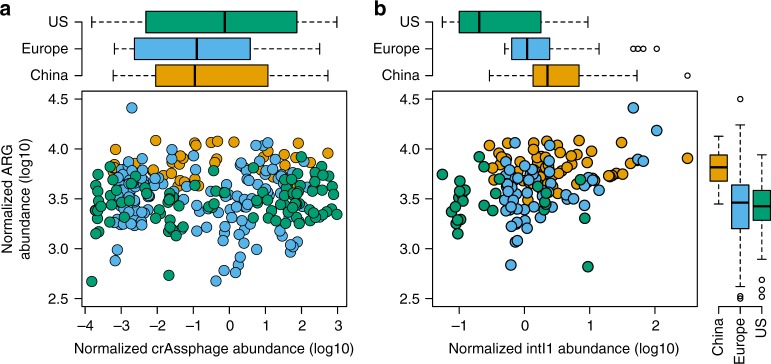
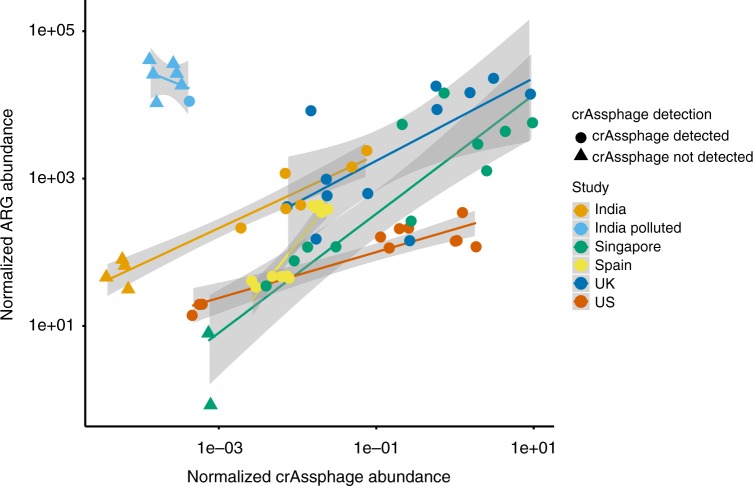
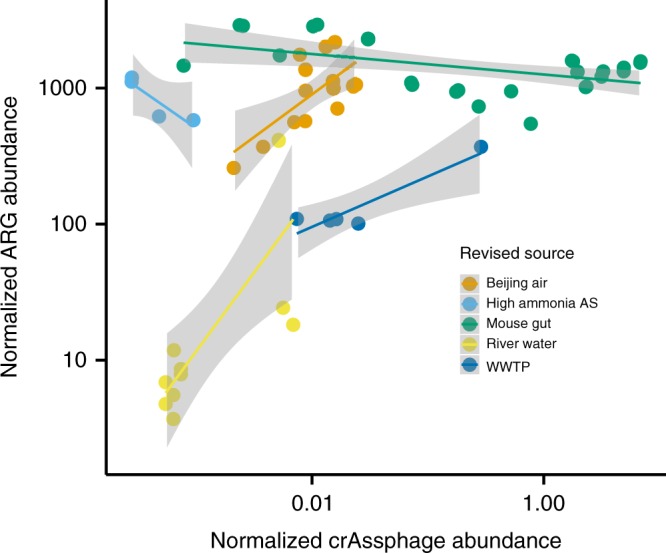
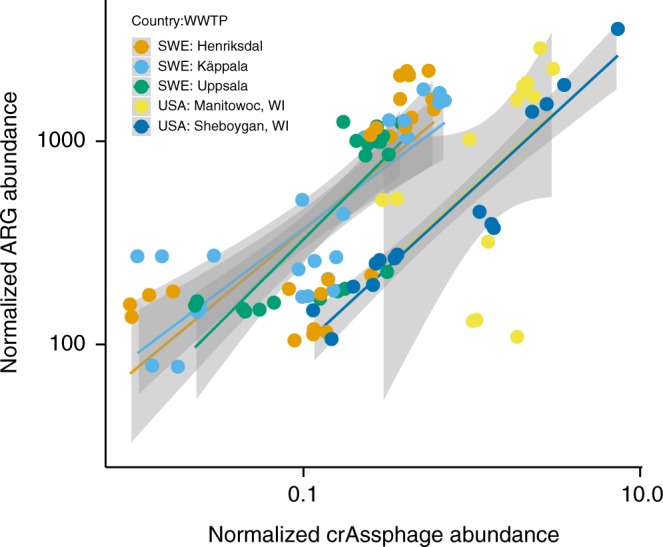
Discharge of treated sewage leads to release of antibiotic resistant bacteria, resistance genes and antibiotic residues to the environment. However, it is unclear whether increased abundance of antibiotic resistance genes in sewage and sewage-impacted environments is due to on-site selection pressure by residual antibiotics, or is simply a result of fecal contamination with resistant bacteria. Here we analyze relative resistance gene abundance and accompanying extent of fecal pollution in publicly available metagenomic data, using crAssphage sequences as a marker of human fecal contamination (crAssphage is a bacteriophage that is exceptionally abundant in, and specific to, human feces). We find that the presence of resistance genes can largely be explained by fecal pollution, with no clear signs of selection in the environment, with the exception of environments polluted by very high levels of antibiotics from manufacturing, where selection is evident. Our results demonstrate the necessity to take into account fecal pollution levels to avoid making erroneous assumptions regarding environmental selection of antibiotic resistance.
Overview
The claims and statistics of this paper haven’t been checked yet.
Free: it reads the open-access text and checks the first 5 claims that cite a source we can check. Create a free account to check every claim.
Integrity signals
Registry
Cites
Statistics
Figures
Verification
Claims the paper makes
The claims and statistics of this paper haven’t been checked yet.
Free: it reads the open-access text and checks the first 5 claims that cite a source we can check. Create a free account to check every claim.
Claims other papers make about this one
Each is checked against this paper’s own text: does it say what the citing paper says it does?
The cited source says what the claim attributes to it.
In the citing paper
“Recent metagenomic surveys have shown that human fecal pollution increases the abundance of antimicrobial resistance genes in the environment 88 , and that sewage microbial communities contain a diversity of AMR genes and resistant gut commensals that can potentially”
From Urban informal settlements as hotspots of antimicrobial resistance and the need to curb environmental transmission. (2020) · cites this paper as [88]
Self-check
Percentages, sums and reported differences re-computed from the paper’s own numbers.
The self-check needs the paper’s full text.
Citations
Cites
R: A Language and Environment for Statistical Computing
R Core Team (2025) · doi:10.32614/r.manuals · Cited by 352,181
The Sequence Alignment/Map format and SAMtools
Li, H., Handsaker, B., Wysoker, A., Fennell, T., Ruan, J., Homer, N., Marth, G., Abecasis, G., Durbin, R., & 1000 Genome Project Data Processing Subgroup (2009) · Bioinformatics · doi:10.1093/bioinformatics/btp352 · Cited by 62,041
Fast gapped-read alignment with Bowtie 2
Langmead, B., & Salzberg, S. L. (2012) · Nature Methods · doi:10.1038/nmeth.1923 · Cited by 56,400
ggplot2: Elegant Graphics for Data Analysis
Wickham, H. (2009) · doi:10.1007/978-0-387-98141-3 · Cited by 14,447
Fast and sensitive protein alignment using DIAMOND
Buchfink, B., Xie, C., & Huson, D. H. (2015) · Nature Methods · doi:10.1038/nmeth.3176 · Cited by 14,201
Identification of acquired antimicrobial resistance genes
Zankari, E., Hasman, H., Cosentino, S., Vestergaard, M., Rasmussen, S., Lund, O., Aarestrup, F. M., & Larsen, M. V. (2012) · Journal of Antimicrobial Chemotherapy · doi:10.1093/jac/dks261 · Cited by 4,980
Rizzo, L., Manaia, C., Merlin, C., Schwartz, T., Dagot, C., Ploy, M. C., Michael, I., & Fatta-Kassinos, D. (2013) · Science of The Total Environment · doi:10.1016/j.scitotenv.2013.01.032 · Cited by 2,493
Tackling antibiotic resistance: the environmental framework
Berendonk, T. U., Manaia, C. M., Merlin, C., Fatta-Kassinos, D., Cytryn, E., Walsh, F., Bürgmann, H., Sørum, H., Norström, M., Pons, M.-N., et al. (2015) · Nature Reviews Microbiology · doi:10.1038/nrmicro3439 · Cited by 2,338
Environmental pollution by antibiotics and by antibiotic resistance determinants
Martinez, J. L. (2009) · Environmental Pollution · doi:10.1016/j.envpol.2009.05.051 · Cited by 1,912
Antibiotics and Antibiotic Resistance Genes in Natural Environments
Martínez, J. L. (2008) · Science · doi:10.1126/science.1159483 · Cited by 1,795
Cited by
Antibiotic resistance in the environment
Larsson, D. G. J., & Flach, C.-F. (2022) · Nature Reviews Microbiology · doi:10.1038/s41579-021-00649-x · Cited by 3,164
Self-citationDefining and combating antibiotic resistance from One Health and Global Health perspectives
Hernando-Amado, S., Coque, T. M., Baquero, F., & Martínez, J. L. (2019) · Nature Microbiology · doi:10.1038/s41564-019-0503-9 · Cited by 1,224
Amarasiri, M., Sano, D., & Suzuki, S. (2020) · Critical Reviews in Environmental Science and Technology · doi:10.1080/10643389.2019.1692611 · Cited by 655
“Karkman et al. (2019) analyzed the correlations between crAssphage levels with ARG abundance levels in sewage (Karkman, P€arn€anen, & Larsson, 2019).”
BackgroundEmerging contaminants: A One Health perspective
Wang, F., Xiang, L., Sze-Yin Leung, K., Elsner, M., Zhang, Y., Guo, Y., Pan, B., Sun, H., An, T., Ying, G., et al. (2024) · The Innovation · doi:10.1016/j.xinn.2024.100612 · Cited by 639
Antibiotic Resistance: One Health One World Outlook
Aslam, B., Khurshid, M., Arshad, M. I., Muzammil, S., Rasool, M., Yasmeen, N., Shah, T., Chaudhry, T. H., Rasool, M. H., Shahid, A., et al. (2021) · Frontiers in Cellular and Infection Microbiology · doi:10.3389/fcimb.2021.771510 · Cited by 609
“Different studies have shown that the pattern of ABR genes present in wastewater treatment plants is similar to clinical settings (Pärnänen et al., 2019).”
Antimicrobial pharmaceuticals in the aquatic environment - occurrence and environmental implications
Felis, E., Kalka, J., Sochacki, A., Kowalska, K., Bajkacz, S., Harnisz, M., & Korzeniewska, E. (2020) · European Journal of Pharmacology · doi:10.1016/j.ejphar.2019.172813 · Cited by 437
Antibiotic resistance genes in bacteria: Occurrence, spread, and control
Jian, Z., Zeng, L., Xu, T., Sun, S., Yan, S., Yang, L., Huang, Y., Jia, J., & Dou, T. (2021) · Journal of Basic Microbiology · doi:10.1002/jobm.202100201 · Cited by 416
“[97] analyzed the relative abundance of resistance genes and the accompanying extent of fecal pollution in publicly available metagenomic data, using crAssphage sequences as a marker of human fecal contamination (crAssphage is exceptionally abundant in, and specific to, human feces).”
BackgroundPlasmids, a molecular cornerstone of antimicrobial resistance in the One Health era
Castañeda-Barba, S., Top, E. M., & Stalder, T. (2024) · Nature Reviews Microbiology · doi:10.1038/s41579-023-00926-x · Cited by 379
“In certain areas with regular inputs of bacteria carrying ARGs, such as faecal pollution, it can be difficult to tease apart the fraction of AMR that emerged by selection versus migration 127 .”
BackgroundThe Ecology and Evolution of Pangenomes
Brockhurst, M. A., Harrison, E., Hall, J. P. J., Richards, T., McNally, A., & MacLean, C. (2019) · Current Biology · doi:10.1016/j.cub.2019.08.012 · Cited by 385
Genomic surveillance for antimicrobial resistance — a One Health perspective
Djordjevic, S. P., Jarocki, V. M., Seemann, T., Cummins, M. L., Watt, A. E., Drigo, B., Wyrsch, E. R., Reid, C. J., Donner, E., & Howden, B. P. (2024) · Nature Reviews Genetics · doi:10.1038/s41576-023-00649-y · Cited by 342
“Many microbes cannot be cultured, and a significant benefit of metagenomics is that it allows One Health AMR”
Kim, D.-W., & Cha, C.-J. (2021) · Experimental & Molecular Medicine · doi:10.1038/s12276-021-00569-z · Cited by 355
(BIOHAZ), E. P. O. B. H., Koutsoumanis, K., Allende, A., Álvarez‐Ordóñez, A., Bolton, D., Bover‐Cid, S., Chemaly, M., Davies, R., De Cesare, A., Herman, L., et al. (2021) · EFSA Journal · doi:10.2903/j.efsa.2021.6651 · Cited by 309
Endale, H., Mathewos, M., & Abdeta, D. (2023) · Infection and Drug Resistance · doi:10.2147/idr.s428837 · Cited by 296
“35 For instance, an investigation by Nepal et al 34 demonstrated that the presence of resistance genes in crAssphage , a bacteriophage that’s uncommonly plenteous in and particular to human feces without clear signs of selection within the environment through the crAssphage arrangements is an…”
BackgroundMethodInfluentialAntibiotic resistome in the livestock and aquaculture industries: Status and solutions
Zhao, Y., Yang, Q. E., Zhou, X., Wang, F.-H., Muurinen, J., Virta, M. P., Brandt, K. K., & Zhu, Y.-G. (2021) · Critical Reviews in Environmental Science and Technology · doi:10.1080/10643389.2020.1777815 · Cited by 299
“Recent studies suggest that the dispersal of ARGs/ARBs from hotspots including animal farms is the more significant contributor to the environmental dissemination of ARGs than the in situ environmental selection (Brandt et al., 2015; Karkman et al., 2019; Zhu et al., 2017).”
BackgroundInfluentialShi, X., Xia, Y., Wei, W., & Ni, B.-J. (2022) · Water Research · doi:10.1016/j.watres.2022.119060 · Cited by 290
Mutuku, C., Gazdag, Z., & Melegh, S. (2022) · World Journal of Microbiology and Biotechnology · doi:10.1007/s11274-022-03334-0 · Cited by 280
“Human excreta-containing habitats such as wastewater treatment plants (WWTPs) and compost toilets, together with animal farms and aquaculture, are thought to be reservoirs for the emergence and propagation of resistant bacteria (Korzeniewska and Harnisz 2018; Zhou et al. 2018; Karkman et al. 2019).”
BackgroundGlobal biogeography and projection of soil antibiotic resistance genes
Zheng, D., Yin, G., Liu, M., Hou, L., Yang, Y., Van Boeckel, T. P., Zheng, Y., & Li, Y. (2022) · Science Advances · doi:10.1126/sciadv.abq8015 · Cited by 266
“Sequencing-based approaches, such as metagenomics, are strong alternatives that align all the sequenced DNA segments against reference databases to detect ARGs (11, 21).”
BackgroundAntibiotic pollution and associated antimicrobial resistance in the environment
Barathe, P., Kaur, K., Reddy, S., Shriram, V., & Kumar, V. (2024) · Journal of Hazardous Materials Letters · doi:10.1016/j.hazl.2024.100105 · Cited by 257
Twenty-year trends in antimicrobial resistance from aquaculture and fisheries in Asia
Schar, D., Zhao, C., Wang, Y., Larsson, D. G. J., Gilbert, M., & Van Boeckel, T. P. (2021) · Nature Communications · doi:10.1038/s41467-021-25655-8 · Cited by 251
Self-citationDifferential Drivers of Antimicrobial Resistance across the World
Vikesland, P., Garner, E., Gupta, S., Kang, S., Maile-Moskowitz, A., & Zhu, N. (2019) · Accounts of Chemical Research · doi:10.1021/acs.accounts.8b00643 · Cited by 254
Antibiotic resistance: turning evolutionary principles into clinical reality
Andersson, D. I., Balaban, N. Q., Baquero, F., Courvalin, P., Glaser, P., Gophna, U., Kishony, R., Molin, S., & Tønjum, T. (2020) · FEMS Microbiology Reviews · doi:10.1093/femsre/fuaa001 · Cited by 238
A conceptual framework for the environmental surveillance of antibiotics and antibiotic resistance
Huijbers, P. M. C., Flach, C.-F., & Larsson, D. G. J. (2019) · Environment International · doi:10.1016/j.envint.2019.05.074 · Cited by 236
Self-citationRobles-Jimenez, L. E., Aranda-Aguirre, E., Castelan-Ortega, O. A., Shettino-Bermudez, B. S., Ortiz-Salinas, R., Miranda, M., Li, X., Angeles-Hernandez, J. C., Vargas-Bello-Pérez, E., & Gonzalez-Ronquillo, M. (2021) · Animals · doi:10.3390/ani12010060 · Cited by 230
“It has been shown through molecular markers that the main cause of antibiotic residues in the environment is due to livestock feces as doses much higher than those prescribed are applied to the human population, as demonstrated in animal excrement in the United States, where values exceeded 100 times more than those f…”
BackgroundNadimpalli, M. L., Marks, S. J., Montealegre, M. C., Gilman, R. H., Pajuelo, M. J., Saito, M., Tsukayama, P., Njenga, S. M., Kiiru, J., Swarthout, J., et al. (2020) · Nature microbiology · doi:10.1038/s41564-020-0722-0 · Cited by 223
Water and health: From environmental pressures to integrated responses
Boelee, E., Geerling, G., van der Zaan, B., Blauw, A., & Vethaak, A. D. (2019) · Acta Tropica · doi:10.1016/j.actatropica.2019.03.011 · Cited by 216
Anjum, M. F., Schmitt, H., Börjesson, S., Berendonk, T. U., Donner, E., Stehling, E. G., Boerlin, P., Topp, E., Jardine, C., Li, X., et al. (2021) · Current Opinion in Microbiology · doi:10.1016/j.mib.2021.09.011 · Cited by 190
Haenni, M., Dagot, C., Chesneau, O., Bibbal, D., Labanowski, J., Vialette, M., Bouchard, D., Martin-Laurent, F., Calsat, L., Nazaret, S., et al. (2022) · Environment International · doi:10.1016/j.envint.2021.107047 · Cited by 192
Dai, D., Brown, C., Bürgmann, H., Larsson, D. G. J., Nambi, I., Zhang, T., Flach, C.-F., Pruden, A., & Vikesland, P. J. (2022) · Microbiome · doi:10.1186/s40168-021-01216-5 · Cited by 190
“Their relative abundance in the influent ARB population is consistent with the expectation that fecal bacteria are a primary contributor of ARBs in sewage [72].”
ResultSelf-citationBengtsson-Palme, J., Abramova, A., Berendonk, T. U., Coelho, L. P., Forslund, S. K., Gschwind, R., Heikinheimo, A., Jarquín-Díaz, V. H., Khan, A. A., Klümper, U., et al. (2023) · Environment International · doi:10.1016/j.envint.2023.108089 · Cited by 188
Understanding drivers of antibiotic resistance genes in High Arctic soil ecosystems
McCann, C. M., Christgen, B., Roberts, J. A., Su, J.-Q., Arnold, K. E., Gray, N. D., Zhu, Y.-G., & Graham, D. W. (2019) · Environment International · doi:10.1016/j.envint.2019.01.034 · Cited by 184
Wang, Z., Wang, H., Zeng, Z., Zeng, G., Xu, P., Xiao, R., Huang, D., Chen, X., He, L., Zhou, C., et al. (2020) · Applied Catalysis B: Environmental · doi:10.1016/j.apcatb.2020.118700 · Cited by 180
Ye, H., Liu, S., Yu, D., Zhou, X., Qin, L., Lai, C., Qin, F., Zhang, M., Chen, W., Chen, W., et al. (2022) · Coordination Chemistry Reviews · doi:10.1016/j.ccr.2021.214253 · Cited by 167
The global distribution and environmental drivers of the soil antibiotic resistome
Delgado-Baquerizo, M., Hu, H.-W., Maestre, F. T., Guerra, C. A., Eisenhauer, N., Eldridge, D. J., Zhu, Y.-G., Chen, Q.-L., Trivedi, P., Du, S., et al. (2022) · Microbiome · doi:10.1186/s40168-022-01405-w · Cited by 159
“The 120 accumulation of ARGs in soils has emerged as a public health concern due to their high 121 sequence similarity to ARGs in human pathogens [7] and the potential of soil ARGs to 122 reduce the effectiveness of antibiotics [9-10].”
BackgroundYuan, Q., Sun, R., Yu, P., Cheng, Y., Wu, W., Bao, J., & Alvarez, P. J. J. (2021) · Journal of Hazardous Materials · doi:10.1016/j.jhazmat.2021.127895 · Cited by 161
“…was then collected after 4-h rinsing for subsequent experiments and characterized by excitation-emission-matrix (EEM) fluorescence spectroscopy, FTIR, and gas chromatography mass spectrometry (GC-MS, Agilent 7890A-5975 C, USA) (Capolupo et al., 2020; Chen et al., 2019; Larrieu et al., 2005).”
MethodYi, X., Liang, J., Su, J., Jia, P., Lu, J., Zheng, J. H., Wang, Z., Feng, S., Luo, Z., Ai, H., et al. (2022) · The ISME Journal · doi:10.1038/s41396-022-01258-z · Cited by 166
“3A–C), ruled out the possibility that fecal contamination was a major source of the ARGs [79].”
BackgroundMobile resistome of human gut and pathogen drives anthropogenic bloom of antibiotic resistance
Lee, K., Kim, D., Lee, D.-H., Kim, Y.-S., Bu, J.-H., Cha, J.-H., Thawng, C. N., Hwang, E., Seong, H. J., Sul, W. J., et al. (2020) · Microbiome · doi:10.1186/s40168-019-0774-7 · Cited by 169
“To evaluate how much fecal pollution as a measure of human influence was associated with the increase in ARGs downstream, we compared the relative abundances of the representative fecal operational taxonomic units (OTUs) and fecal indicator crAssphage [19] between upstream and downstream regions.”
BackgroundResultInfluentialRosa, M. C. L., Maugeri, A., Favara, G., Mastra, C. L., Lio, R. M. S., Barchitta, M., & Agodi, A. (2025) · Antibiotics · doi:10.3390/antibiotics14020131 · Cited by 173
“…and microbial evolution presents a significant challenge to public health and environmental safety, as these facilities and environments create conditions that promote the proliferation and spread of antibiotic-resistant microorganisms, intensifying the broader public health crisis [13–15].”
Wildlife and Antibiotic Resistance
Laborda, P., Sanz‐García, F., Ochoa-Sánchez, L. E., Gil‐Gil, T., Hernando‐Amado, S., & Martínez, J. L. (2022) · Frontiers in Cellular and Infection Microbiology · doi:10.3389/fcimb.2022.873989 · Cited by 174
Waseem, H., Jameel, S., Ali, J., Rehman, H. S. U., Tauseef, I., Farooq, U., Jamal, A., & Ali, M. (2019) · Molecules · doi:10.3390/molecules24010163 · Cited by 162
Chen, H., Jing, L., Yao, Z., Meng, F., & Teng, Y. (2019) · Environment International · doi:10.1016/j.envint.2019.03.048 · Cited by 147
Hernando‐Amado, S., Coque, T. M., Baquero, F., & Martínez, J. L. (2020) · Frontiers in Microbiology · doi:10.3389/fmicb.2020.01914 · Cited by 166
Antimicrobial Resistance in Rivers: A Review of the Genes Detected and New Challenges
Grenni, P. (2022) · Environmental Toxicology and Chemistry · doi:10.1002/etc.5289 · Cited by 159
Chen, H., Li, Y., Sun, W., Song, L., Zuo, R., & Teng, Y. (2020) · Environment International · doi:10.1016/j.envint.2020.105538 · Cited by 146
Tang, Y., Li, W., Muhammad, Y., Jiang, S., Huang, M., Zhang, H., Zhao, Z., & Zhao, Z. (2021) · Chemical Engineering Journal · doi:10.1016/j.cej.2021.129743 · Cited by 132
Miłobędzka, A., Ferreira, C., Vaz‐Moreira, I., Calderón-Franco, D., Gόrecki, A., Purkrtová, S., Bartáček, J., Dziewit, Ł., Singleton, C. M., Nielsen, P. H., et al. (2021) · Journal of Hazardous Materials · doi:10.1016/j.jhazmat.2021.127407 · Cited by 153
Khan, F. A., Söderquist, B., & Jaß, J. (2019) · Frontiers in Microbiology · doi:10.3389/fmicb.2019.00688 · Cited by 147
Ramey, A. M., & Ahlstrom, C. A. (2019) · Journal of Wildlife Diseases · doi:10.7589/2019-04-099 · Cited by 163
“…has become extensive, resulting from activities such as agricultural production (Sengeløv et al. 2003; Peak et al. 2007; Chee-Sanford et al. 2009), solid waste disposal (Wu et al. 2015; Song et al. 2016), and wastewater management (Bouki et al. 2013; Rizzo et al. 2013; Karkman et al. 2019).”
BackgroundWang, G., Zhou, S., Han, X., Zhang, L., Ding, S., Li, Y., Zhang, D., & Zarin, K. (2020) · Journal of Hazardous Materials · doi:10.1016/j.jhazmat.2020.122110 · Cited by 139
Biological Indicators for Fecal Pollution Detection and Source Tracking: A Review
Li, E., Saleem, F., Edge, T. A., & Schellhorn, H. E. (2021) · Processes · doi:10.3390/pr9112058 · Cited by 178
“First, it is ubiquitous and abundant in human feces and sewage (5.28–7.28 log10 copies/100 mL) [194]; it is rarely detected in environments free of human fecal pollution [56]; and it has concentrations strongly correlated with sewage ARGs [2], pathogenic viruses [198,202] and conventional FIB [197].”
BackgroundInfluentialWu, D., Jin, L. N., Xie, J., Liu, H., Zhao, J., Ye, D., & Li, X. D. (2022) · Microbiome · doi:10.1186/s40168-021-01197-5 · Cited by 138
Electrospun Functional Nanofiber Membrane for Antibiotic Removal in Water: Review
Zhao, K., Kang, S., Yang, Y., & Yu, D. (2021) · Polymers · doi:10.3390/polym13020226 · Cited by 137
“The antibiotics consumed by humans and animals cannot be fully absorbed by the body [20], and approximately 10–90% are discharged into the environment in the form of parent compounds or biodegradable metabolites [21].”
BackgroundBombaywala, S., Mandpe, A., Paliya, S., & Kumar, S. (2021) · Environmental Science and Pollution Research · doi:10.1007/s11356-021-13143-x · Cited by 130
Metagenomic Approaches to Analyze Antimicrobial Resistance: An Overview
de Abreu, V. A. C., Perdigão, J., & de Almeida, S. S. (2021) · Frontiers in Genetics · doi:10.3389/fgene.2020.575592 · Cited by 145
Sabar, M. A., Honda, R., & Haramoto, E. (2022) · Water Research · doi:10.1016/j.watres.2022.118827 · Cited by 122
Zhang, H., Zhang, Q., Song, J., Zhang, Z., Chen, S., Long, Z., Wang, M., Yu, Y., & Fang, H. (2020) · Journal of Hazardous Materials · doi:10.1016/j.jhazmat.2020.122618 · Cited by 112
Han, M., Zhang, L., Zhang, N., Mao, Y., Peng, Z., Huang, B., Zhang, Y., & Wang, Z. (2021) · Journal of Hazardous Materials · doi:10.1016/j.jhazmat.2021.127745 · Cited by 108
He, P., Wu, Y. H., Huang, W., Wu, X., Lv, J., Liu, P., Bu, L., Bai, Z., Chen, S., Feng, W., et al. (2020) · Environment International · doi:10.1016/j.envint.2020.105625 · Cited by 115
Riquelme, M. V., Garner, E., Gupta, S., Metch, J., Zhu, N. J., Blair, M. F., Arango-Argoty, G., Maile-Moskowitz, A., Li, A., Flach, C., et al. (2022) · Environmental Science & Technology · doi:10.1021/acs.est.1c08673 · Cited by 116
Self-citationZhao, K., Lu, Z., Zhao, P., Kang, S., Yang, Y., & Yu, D. (2021) · Chemical Engineering Journal · doi:10.1016/j.cej.2021.131455 · Cited by 102
Evidence for wastewaters as environments where mobile antibiotic resistance genes emerge
Berglund, F., Ebmeyer, S., Kristiansson, E., & Larsson, D. G. J. (2023) · Communications Biology · doi:10.1038/s42003-023-04676-7 · Cited by 123
Self-citationRecent advances on the spherical metal oxides for sustainable degradation of antibiotics
Zhu, K., Li, X., Chen, Y., Huang, Y., Yang, Z., Guan, G., & Yan, K. (2024) · Coordination Chemistry Reviews · doi:10.1016/j.ccr.2024.215813 · Cited by 109
Ng, C., Tan, B., Jiang, X., Gu, X., Chen, H., Schmitz, B. W., Haller, L., Charles, F. R., Zhang, T., & Gin, K. Y. (2019) · Frontiers in Microbiology · doi:10.3389/fmicb.2019.00172 · Cited by 111
Zhang, K., Xin, R., Zhao, Z., Li, W., Wang, Y., Wang, Q., Niu, Z., & Zhang, Y. (2020) · Journal of Hazardous Materials · doi:10.1016/j.jhazmat.2020.123271 · Cited by 108
Wastewater treatment plants, an “escape gate” for ESCAPE pathogens
Marutescu, L. G., Popa, M., Gheorghe-Barbu, I., Barbu, I. C., Rodríguez-Molina, D., Berglund, F., Blaak, H., Flach, C., Kemper, M., Spießberger, B., et al. (2023) · Frontiers in Microbiology · doi:10.3389/fmicb.2023.1193907 · Cited by 112
Self-citationArsand, J. B., Hoff, R. B., Jank, L., Bussamara, R., Dallegrave, A., Bento, F. M., Kmetzsch, L., Falção, D. A., Peralba, M. D. C. R., Gomes, A. A., et al. (2020) · The Science of The Total Environment · doi:10.1016/j.scitotenv.2020.139781 · Cited by 134
Liu, Z., Huang, J., Shao, B., Zhong, H., Liang, Q., He, Q., Wu, T., Pan, Y., Peng, Z., Yuan, X., et al. (2021) · Chemical Engineering Journal · doi:10.1016/j.cej.2021.130767 · Cited by 100
Zhao, C.-Y., Ru, S., Cui, P., Qi, X., Kurade, M. B., Patil, S. M., Jeon, B., & Xiong, J.-Q. (2021) · Water Research · doi:10.1016/j.watres.2021.117413 · Cited by 99
Zhang, Y., Shen, G., Hu, S., He, Y., Li, P., & Zhang, B. (2020) · Journal of Hazardous Materials · doi:10.1016/j.jhazmat.2020.124552 · Cited by 99
Chen, H., Bai, X., Li, Y., Jing, L., Chen, R., & Teng, Y. (2019) · Water Research · doi:10.1016/j.watres.2019.115098 · Cited by 104
Yang, J., Xiang, J., Xie, Y., Yu, K., Gin, K. Y., Zhang, B., & He, Y. (2022) · Water Research · doi:10.1016/j.watres.2022.118841 · Cited by 90
Klümper, U., Gionchetta, G., Catão, E. C. P., Bellanger, X., Dielacher, I., Elena, A., Fang, P., Galazka, S., Goryluk-Salmonowicz, A., Kneis, D., et al. (2024) · Communications Biology · doi:10.1038/s42003-024-06338-8 · Cited by 106
“In addition, the 16 S rRNA gene and the anthropogenic fecal pollution indicator crAssphage 32,33 were quanti fi ed.”
Buelow, E., Rico, A., Gaschet, M., Lourenço, J., Kennedy, S., Wiest, L., Ploy, M.-C., & Dagot, C. (2020) · Water Research X · doi:10.1016/j.wroa.2020.100045 · Cited by 109
A global baseline for qPCR-determined antimicrobial resistance gene prevalence across environments
Abramova, A., Berendonk, T. U., & Bengtsson‐Palme, J. (2023) · Environment International · doi:10.1016/j.envint.2023.108084 · Cited by 105
Jara-Moreno, D., Bello‐Toledo, H., Domínguez, M., Cigarroa, C., Fernández, P., Vergara-González, L., Quezada-Aguiluz, M., Opazo-Capurro, A., Lima, C. A., & González-Rocha, G. E. (2020) · Scientific Reports · doi:10.1038/s41598-020-60035-0 · Cited by 100
Sun, X., He, W., Yang, T., Ji, H., Liu, W., Lei, J., Liu, Y., & Cai, Z. (2021) · Chemical Engineering Journal · doi:10.1016/j.cej.2021.128679 · Cited by 87
Kayani, M. U. R., Kan, Y., Qiu, Y., Shen, Y., Gao, C., Feng, R., Zeng, X., Wang, W., Chen, L., & Su, H. L. (2021) · Environmental Pollution · doi:10.1016/j.envpol.2021.116760 · Cited by 96
Jampani, M., Mateo‐Sagasta, J., Chandrasekar, A., Fatta‐Kassinos, D., Graham, D. W., Gothwal, R., Moodley, A., Chadag, V. M., Wiberg, D. A., & Langan, S. (2023) · Journal of Hazardous Materials · doi:10.1016/j.jhazmat.2023.132527 · Cited by 100
Soil type shapes the antibiotic resistome profiles of long-term manured soil
Zhang, Y., Cheng, D., Zhang, Y., Xie, J., Xiong, H., Wan, Y., Zhang, Y., Chen, X., & Shi, X. (2021) · The Science of The Total Environment · doi:10.1016/j.scitotenv.2021.147361 · Cited by 87
Li, R., Zhu, L., Li, C., & Zhu, Y. (2022) · Environment International · doi:10.1016/j.envint.2022.107146 · Cited by 91
Zhang, H., Khanal, S. K., Jia, Y., Song, S., & Lü, H. (2019) · Chemical Engineering Journal · doi:10.1016/j.cej.2019.122103 · Cited by 86
A global multinational survey of cefotaxime-resistant coliforms in urban wastewater treatment plants
Marano, R., Fernandes, T., Manaia, C. M., Nunes, O. C., Morrison, D., Berendonk, T. U., Kreuzinger, N., Tenson, T., Corno, G., Fatta‐Kassinos, D., et al. (2020) · Environment International · doi:10.1016/j.envint.2020.106035 · Cited by 85
Microbiome Analysis for Wastewater Surveillance during COVID-19
Brumfield, K. D., Leddy, M. B., Usmani, M., Cotruvo, J. A., Tien, C.-T., Dorsey, S., Graubics, K., Fanelli, B. C., Zhou, I., Registe, N., et al. (2022) · mBio · doi:10.1128/mbio.00591-22 · Cited by 94
“Metagenomic sequencing has been used to explore AMR trends in anthropogenically impacted environments (41) and to detect wastewater associated enteric pathogens (36, 95).”
MethodSu, S., Li, C., Yang, J., Xu, Q., Qiu, Z., Xue, B., Wang, S., Chen, Z., Xiao, Z.-H., Wang, J., et al. (2020) · International Journal of Environmental Research and Public Health · doi:10.3390/ijerph17020552 · Cited by 85
“primarily suggested that high levels of clinically relevant ARGs come from selection pressure caused by antibiotic pollution [2], but the latest research shows that the existence of resistance genes can be largely explained by fecal contamination, not the selective pressure previously thought [3].”
BackgroundNie, M., Li, Y., Li, L., He, J., Hong, P., Zhang, K., Cai, X., Kong, L., & Liu, J. (2020) · Applied Surface Science · doi:10.1016/j.apsusc.2020.147655 · Cited by 78
Zhang, S.-Z., Chen, S., & Jiang, H. T. (2022) · Water Research · doi:10.1016/j.watres.2022.118908 · Cited by 81
The Role of Water as a Reservoir for Antibiotic-Resistant Bacteria
Meradji, S., Basher, N. S., Sassi, A., Ibrahim, N. A., Idres, T., & Touati, A. (2025) · Antibiotics · doi:10.3390/antibiotics14080763 · Cited by 108
“…indicates that antibiotic residues, heavy metals, and other pollutants discharged from municipal, hospital, and industrial sources persist in rivers, lakes, and even drinking water systems, creating selective pressures that favor ARB and facilitate horizontal gene transfer of ARGs [139,140].”
Sanz‐García, F., Gil‐Gil, T., Laborda, P., Ochoa-Sánchez, L. E., Martínez, J. L., & Hernando‐Amado, S. (2021) · International Journal of Molecular Sciences · doi:10.3390/ijms22158080 · Cited by 87
Janas, A., & Przybylski, P. (2019) · European Journal of Medicinal Chemistry · doi:10.1016/j.ejmech.2019.111662 · Cited by 75
Antibiotic resistance genes in bioaerosols: Emerging, non-ignorable and pernicious pollutants
Chen, P., Guo, X., & Li, F. (2022) · Journal of Cleaner Production · doi:10.1016/j.jclepro.2022.131094 · Cited by 74
Li, L.-G., & Zhang, T. (2023) · The Science of The Total Environment · doi:10.1016/j.scitotenv.2023.163870 · Cited by 89
Mao, K., Zhang, H., Ran, F., Cao, H., Feng, R., Du, W., Li, X., & Yang, Z. (2023) · Journal of Hazardous Materials · doi:10.1016/j.jhazmat.2023.132793 · Cited by 72
Zheng, H., Feng, N., Yang, T., Shi, M., Wang, X., Zhang, Q., Zhao, J. L., Li, F., Sun, K., & Xing, B. (2021) · The Science of The Total Environment · doi:10.1016/j.scitotenv.2021.148962 · Cited by 75
Cong, Y., Chen, X., Zheng, Q., Zhang, Y., & Lv, S. (2022) · Environmental Research · doi:10.1016/j.envres.2022.114414 · Cited by 66
Chen, H., Bai, X., Jing, L., Chen, R., & Teng, Y. (2018) · The Science of The Total Environment · doi:10.1016/j.scitotenv.2018.11.052 · Cited by 73
Qian, X., Gunturu, S., Sun, W., Cole, J. R., Norby, B., Gu, J., & Tiedje, J. M. (2021) · Proceedings of the National Academy of Sciences · doi:10.1073/pnas.2024464118 · Cited by 79
“The long-term presence of antibiotics in animal manure imposes selection on microbes, which likely means functional antibiotic resistance and higher risk of horizontal gene transfer (HGT) compared to other contexts (14).”
BackgroundBuelow, E., Ploy, M.-C., & Dagot, C. (2021) · Current Opinion in Microbiology · doi:10.1016/j.mib.2021.10.005 · Cited by 91
Chen, J., Yang, Y., Jiang, X., Ke, Y., He, T., & Xie, S. (2021) · Journal of Environmental Sciences · doi:10.1016/j.jes.2021.06.026 · Cited by 71
Duan, Y., Chen, Z., Tan, L., Wang, X., Xue, Y., Wang, S., Wang, Q., Das, R., Lin, H., Hou, J., et al. (2020) · Science of The Total Environment · doi:10.1016/j.scitotenv.2019.135674 · Cited by 67
Martak, D., Henriot, C. P., & Hocquet, D. (2024) · Infectious Diseases Now · doi:10.1016/j.idnow.2024.104895 · Cited by 92
MetaCompare 2.0: differential ranking of ecological and human health resistome risks
Rumi, M. A., Oh, M., Davis, B. C., Brown, C., Juvekar, A. S., Vikesland, P. J., Pruden, A. J., & Zhang, L. (2024) · FEMS Microbiology Ecology · doi:10.1093/femsec/fiae155 · Cited by 75
Metadata
- Authors
- Karkman, A., Pärnänen, K., & Larsson, D. G. J.
- Affiliations
- University of Helsinki (FI)
- University of Gothenburg (SE)
- Corresponding author
- Karkman, Antti
- Venue
- Nature Communications
- Published
- 2019-01-08
- Volume
- 10
- Issue
- 1
- Pages
- 80-80
- ISSN
- 2041-1723 (ISSN-L)
- PMC
- PMC6325112
- OpenAlex
- W2949973543
- Cited by
- 628
- References
- 77
- Citations by year
- 2026: 64 · 2025: 85 · 2024: 87 · 2023: 88 · 2022: 95 · 2021: 98 · 2020: 68 · 2019: 38
- FWCI
- 22.47
- Type
- journal article
- Language
- en
- Open access
- gold
- doi.org
- Licence
- cc-by
- creativecommons.org/licenses/by/4.0 (tdm)
- creativecommons.org/licenses/by/4.0 (vor)
- Locations
- Nature Communications (publishedVersion, cc-by)
- bioRxiv (Cold Spring Harbor Laboratory) (acceptedVersion, cc-by-nc-nd)
- Europe PMC (PubMed Central) (publishedVersion, other-oa)
- PubMed Central (publishedVersion, cc-by)
- PubMed (publishedVersion)
- RePEc: Research Papers in Economics (submittedVersion)
- DOAJ (DOAJ: Directory of Open Access Journals) (submittedVersion)
- DOAJ (DOAJ: Directory of Open Access Journals) (submittedVersion, cc-by-sa)
- Työväentutkimus Vuosikirja (submittedVersion)
- Funders
- Svenska Forskningsrådet Formas (942-2015-750, 942-2015, 2015-750)
- Vetenskapsrådet (2015-02492)
- Göteborgs Universitet
- Centre for Antibiotic Resistance Research, University of Gothenburg
- Topics
- Physical Sciences › Environmental Science › Pollution › Pharmaceutical and Antibiotic Environmental Impacts
- Health Sciences › Medicine › Microbiology (medical) › Antibiotic Resistance in Bacteria
- Health Sciences › Medicine › Infectious Diseases › Antibiotic Use and Resistance
- Keywords
- antibiotic resistance genes, fecal contamination, crAssphage, human fecal contamination, wastewater discharge, antibiotic residues, selection pressure, metagenomics
- MeSH terms
- Anti-Bacterial Agents, Bacteria, Bacteriophages, DNA, Viral, Drug Resistance, Microbial, Feces, Humans, Sewage, Water Microbiology, Water Pollution, Metagenomics, Water Quality
About these checks
Registry, retraction, Cites and statistics results are computed, not judged, with one exception: a printed reference that no index lists is read once by a model before it counts as a citation error. Claims are extracted by a model and kept only when their quote appears verbatim in the text; each cited source is then checked, with a model’s help, for whether it says what the claim relies on. Those verdicts can be wrong — read the claim’s quote and the cited source before relying on one.
Statistics and arithmetic are recomputed, not judged.
Confidence bands are shown only for fields calibrated on our annotated test set. None is calibrated yet, so no band is shown.
What counts as a claim ›How we measure confidence ›How we check this ›
Are you an author, or do you see a problem with this page? Request a review
Data sources
Bibliographic data: Semantic Scholar, OpenAlex, Crossref.
Contains information from the Semantic Scholar Academic Graph Datasets, made available under the ODC Attribution License (ODC-BY 1.0).
Semantic Scholar’s data is described in: Kinney, R., et al. (2023). The Semantic Scholar Open Data Platform. arXiv:2301.10140.
