

Fecal pollution can explain antibiotic resistance gene abundances in anthropogenically impacted environments
Open accessPublished version of a preprint
The DOI matches its Crossref record; 76 of the 77 references it cites were found in a registry or an index.
Abstract
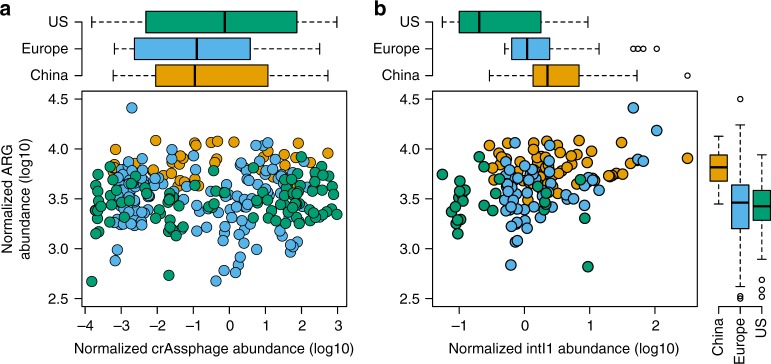
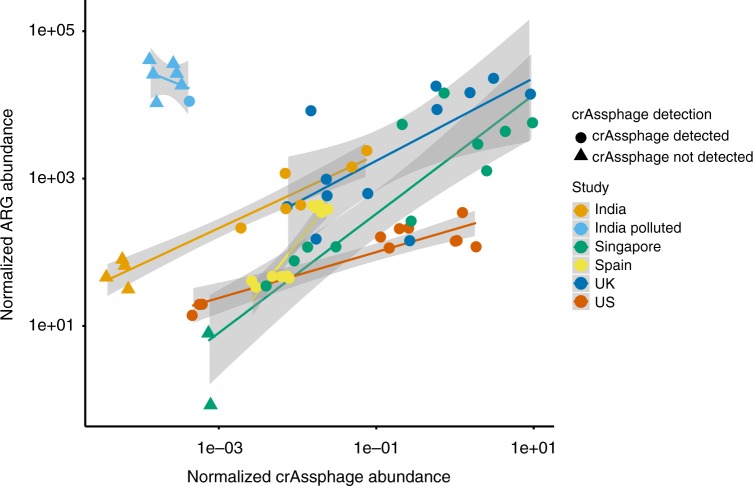
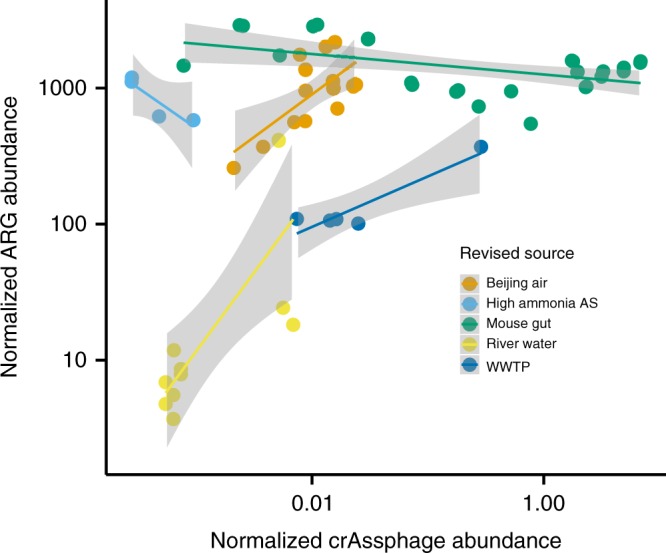
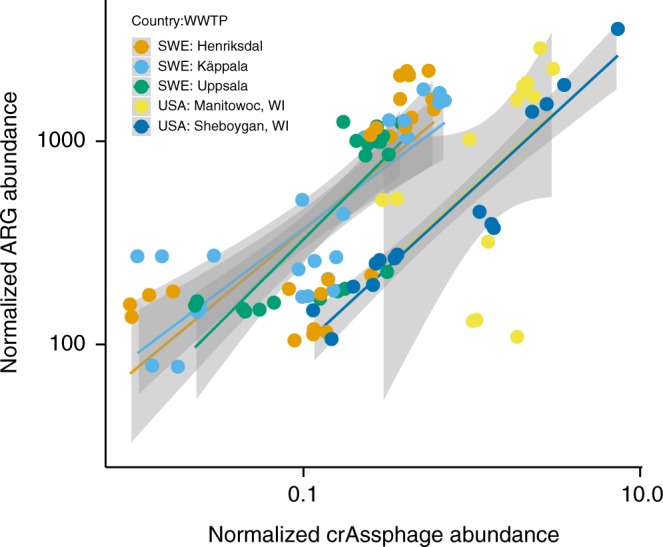
Discharge of treated sewage leads to release of antibiotic resistant bacteria, resistance genes and antibiotic residues to the environment. However, it is unclear whether increased abundance of antibiotic resistance genes in sewage and sewage-impacted environments is due to on-site selection pressure by residual antibiotics, or is simply a result of fecal contamination with resistant bacteria. Here we analyze relative resistance gene abundance and accompanying extent of fecal pollution in publicly available metagenomic data, using crAssphage sequences as a marker of human fecal contamination (crAssphage is a bacteriophage that is exceptionally abundant in, and specific to, human feces). We find that the presence of resistance genes can largely be explained by fecal pollution, with no clear signs of selection in the environment, with the exception of environments polluted by very high levels of antibiotics from manufacturing, where selection is evident. Our results demonstrate the necessity to take into account fecal pollution levels to avoid making erroneous assumptions regarding environmental selection of antibiotic resistance.
Overview
The claims and statistics of this paper haven’t been checked yet.
Free: it reads the open-access text and checks the first 5 claims that cite a source we can check. Create a free account to check every claim.
Integrity signals
Registry
Cites
Statistics
Figures
Verification
Claims the paper makes
The claims and statistics of this paper haven’t been checked yet.
Free: it reads the open-access text and checks the first 5 claims that cite a source we can check. Create a free account to check every claim.
Claims other papers make about this one
Each is checked against this paper’s own text: does it say what the citing paper says it does?
The cited source says what the claim attributes to it.
In the citing paper
“Recent metagenomic surveys have shown that human fecal pollution increases the abundance of antimicrobial resistance genes in the environment 88 , and that sewage microbial communities contain a diversity of AMR genes and resistant gut commensals that can potentially”
From Urban informal settlements as hotspots of antimicrobial resistance and the need to curb environmental transmission. (2020) · cites this paper as [88]
Self-check
Percentages, sums and reported differences re-computed from the paper’s own numbers.
The self-check needs the paper’s full text.
Citations
Cites
R: A Language and Environment for Statistical Computing
R Core Team (2025) · doi:10.32614/r.manuals · Cited by 352,181
The Sequence Alignment/Map format and SAMtools
Li, H., Handsaker, B., Wysoker, A., Fennell, T., Ruan, J., Homer, N., Marth, G., Abecasis, G., Durbin, R., & 1000 Genome Project Data Processing Subgroup (2009) · Bioinformatics · doi:10.1093/bioinformatics/btp352 · Cited by 62,041
Fast gapped-read alignment with Bowtie 2
Langmead, B., & Salzberg, S. L. (2012) · Nature Methods · doi:10.1038/nmeth.1923 · Cited by 56,400
ggplot2: Elegant Graphics for Data Analysis
Wickham, H. (2009) · doi:10.1007/978-0-387-98141-3 · Cited by 14,447
Fast and sensitive protein alignment using DIAMOND
Buchfink, B., Xie, C., & Huson, D. H. (2015) · Nature Methods · doi:10.1038/nmeth.3176 · Cited by 14,201
Identification of acquired antimicrobial resistance genes
Zankari, E., Hasman, H., Cosentino, S., Vestergaard, M., Rasmussen, S., Lund, O., Aarestrup, F. M., & Larsen, M. V. (2012) · Journal of Antimicrobial Chemotherapy · doi:10.1093/jac/dks261 · Cited by 4,980
Rizzo, L., Manaia, C., Merlin, C., Schwartz, T., Dagot, C., Ploy, M. C., Michael, I., & Fatta-Kassinos, D. (2013) · Science of The Total Environment · doi:10.1016/j.scitotenv.2013.01.032 · Cited by 2,493
Tackling antibiotic resistance: the environmental framework
Berendonk, T. U., Manaia, C. M., Merlin, C., Fatta-Kassinos, D., Cytryn, E., Walsh, F., Bürgmann, H., Sørum, H., Norström, M., Pons, M.-N., et al. (2015) · Nature Reviews Microbiology · doi:10.1038/nrmicro3439 · Cited by 2,338
Environmental pollution by antibiotics and by antibiotic resistance determinants
Martinez, J. L. (2009) · Environmental Pollution · doi:10.1016/j.envpol.2009.05.051 · Cited by 1,912
Antibiotics and Antibiotic Resistance Genes in Natural Environments
Martínez, J. L. (2008) · Science · doi:10.1126/science.1159483 · Cited by 1,795
Cited by
Items 501–600 of 629
Siri, Y., Sthapit, N., Malla, B., & Haramoto, E. (2025) · Total Environment Microbiology · doi:10.1016/j.temicr.2025.100049 · Cited by 2
Castro-Flores, F., Galván-Romero, V. S., Zamora-Mendoza, B. N., Macías, A. A., Garcia-Grimaldo, J. A., Medellín-Castillo, N. A., Vallejo-Pérez, M. R., & Flores‐Ramírez, R. (2025) · Microchemical Journal · doi:10.1016/j.microc.2025.116643 · Cited by 3
Li, N., Jiang, X., Wang, T. C., Han, H., & Ma, Z. (2025) · Colloids and Surfaces A Physicochemical and Engineering Aspects · doi:10.1016/j.colsurfa.2025.138559 · Cited by 2
Gómez-Martínez, D., Ngou, J. S., Ugolini, V., Lai, F. Y., Nilsson, R. H., Kristiansson, E., & Corcoll, N. (2026) · FEMS Microbiology Ecology · doi:10.1093/femsec/fiag007 · Cited by 3
“All metagenomes were scanned for crAssphage presence as an indicator of human faecal pollution following Karkman et al. ( 2019 ).”
Li, S., Gao, Z., Da, Y., Zhang, Y., Huang, Z., Yuan, G., Wu, C., Huang, T., Sun, Q., & Zhou, G. (2026) · Journal of Contaminant Hydrology · doi:10.1016/j.jconhyd.2026.104922 · Cited by 3
Du, M., Xue, P., Minasny, B., Jang, H. J., & McBratney, A. B. (2026) · The ISME Journal · doi:10.1093/ismejo/wrag079 · Cited by 3
“Many soil-borne resistance genes exhibit high sequence homology with those identified in human pathogens [6].”
Aleluia, A., Barboza, L. G. A., Novais, C., Antunes, P., Freitas, A. R., & Prata, J. C. (2026) · Environments · doi:10.3390/environments13050283 · Cited by 2
“ARGs in European freshwaters are increasingly recognised as both a public health issue and an ecological marker of anthropogenic pressure [92,93].”
Yan, M., Xu, J., Li, X., Feng, Y., Jiang, J., & Chen, Y. (2024) · International Journal of Environmental Research · doi:10.1007/s41742-024-00601-w · Cited by 2
“The extensive application of antibiotics has resulted in the spread of antibiotic resistance genes into the environment, making them recognized as emerging pollutants and a potential danger to human health (Karkman et al. 2019; He et al. 2020; Wang et al. 2023a, b).”
Exploring Global Antibiotic Use: A Focus on Seafood
Singh, A. S., Devi, M. S., & Nongthomba, U. (2025) · Springer eBooks · doi:10.1007/978-981-96-4640-1_1 · Cited by 2
What lies beneath: microbial quality of rural groundwater explored by shotgun metagenomics
Mattar, M.-A. M., Eraqi, W. A., Zaki, M., Elkashlan, A. M., Abouzid, K. A. M., Aziz, R. K., Yassin, A. S., & Elbehery, A. H. A. (2025) · Annals of Microbiology · doi:10.1186/s13213-025-01801-1 · Cited by 3
“Pump 2 is the most susceptible to contamination due to the combined impact of inadequate sewage disposal and potential agricultural runoff from adjacent fields, both of which have been strongly linked to elevated AMR abundance and diversity (Karkman et al. 2019; Fernanda et al. 2022).”
Silva, C. S., de Oliveira, S. D., Proenca, A. M., Abati, E. V., Marconatto, L., Moura, C. S., & Medina‐Silva, R. (2025) · Environmental Microbiology · doi:10.1111/1462-2920.70115 · Cited by 1
“…2021), it is already reported that the spread of faecal material (via sewage effluents and animal waste) has contributed to the contamination of most ecosystems around the planet with antibiotic-resistant bacteria and resistance genes (Chow et al. 2021; Karkman et al. 2019; Williams et al. 2022).”
Multi-sectorial research is paramount for preventing and controlling emerging infectious diseases
Turnier, P. L., Leport, C., Martin, P., Jadand, C., Hoen, B., & Guégan, J. (2019) · Revue d Épidémiologie et de Santé Publique · doi:10.1016/j.respe.2019.09.009 · Cited by 2
“Some projections suggest that notably highly resistant bacterial (HRB) strains could represent a major cause of global mortality by 2050 [4].”
Covid terror and government appeals to public interest for Eid in the village
Hassan, D., Vera, A., & Visconte, A. (2023) · Journal Markcount Finance · doi:10.55849/jmf.v1i1.55 · Cited by 9
Agramont, J., Gutiérrez-Cortez, S., Joffré, E., Sjöling, Å., & Toledo, C. C. (2020) · bioRxiv (Cold Spring Harbor Laboratory) · doi:10.1101/2020.03.23.003350 · Cited by 2
Suwono, B., Eckmanns, T., Kaspar, H., Merle, R., Zacher, B., Kollas, C., Weiser, A. A., Noll, I., Feig, M., & Tenhagen, B. (2020) · Research Square · doi:10.21203/rs.3.rs-30292/v2 · Cited by 2
Suwono, B., Eckmanns, T., Kaspar, H., Merle, R., Zacher, B., Kollas, C., Weiser, A. A., Noll, I., Feig, M., & Tenhagen, B. (2020) · Research Square · doi:10.21203/rs.3.rs-30292/v1 · Cited by 2
Antibiotic Residues:Status, Hotspots and TrendsPreprint
Sun, G., Wu, S., Shou, B., Tan, X., Fang, H., Zhang, Y., Dong, Z., & Wan, Y. (2024) · SSRN Electronic Journal · doi:10.2139/ssrn.4882844 · Cited by 2
Bagra, K., Singh, H., Klümper, U., & Singh, G. (2024) · bioRxiv (Cold Spring Harbor Laboratory) · doi:10.1101/2024.10.31.621109 · Cited by 2
Kneis, D., Barrón, M. D. L. C., Konyali, D., Westphal, V., Schröder, P., Westphal-Settele, K., Schönfeld, J., Jungmann, D., Berendonk, T. U., & Klümper, U. (2025) · bioRxiv (Cold Spring Harbor Laboratory) · doi:10.1101/2025.04.04.647007 · Cited by 2
Mapping the underlying drivers of resistome risk across diverse environmentsPreprint
Rumi, M. A., Nguyen, L., Davis, B. C., Brown, C., Pruden, A. J., & Zhang, L. (2025) · Research Square · doi:10.21203/rs.3.rs-7085902/v1 · Cited by 2
“CrAssphage and sul1 gene abundance was measured using the methods from Karkman et al. [21].”
Zhang, L., Lin, Y., Xiao, Y., Wu, J., & Yang, K. (2022) · Journal of Environmental Engineering · doi:10.1061/(asce)ee.1943-7870.0002067 · Cited by 1
One Health: Urban birds peck up resistant pathogens
Derrick, E., & Shapiro, B. J. (2024) · Current Biology · doi:10.1016/j.cub.2024.07.075 · Cited by 1
Determination of Antibiotic Resistance Genes in the Interior Bay of Puno‐Peru, Lake Titicaca
Ferro, P., Bernedo, L. J. R., Ferró-Gonzáles, A. L., Rojas, E. M., Chayña, E. T., Guerrero, R. I. G., & Córdova-Rojas, L. M. (2025) · Scientifica · doi:10.1155/sci5/5571355 · Cited by 3
“…concern which should be shared by the Puno authorities to avoid contamination of the bay by sewage from the Puno city, as they may be playing a role in the dispersal and dissemination of ARGs in the lake [27, 58], since its abundance could also be explained by levels of fecal contamination [57].”
Molecular mechanisms of antimicrobial defense strategy of bacterial cell
Lutsenko, A. V., Yasenyavskaya, A. L., & Самотруева, М. А. (2025) · I P Pavlov Russian Medical Biological Herald · doi:10.17816/pavlovj569343 · Cited by 3
Chen, J., Liu, P., Chen, X., Ke, C., Wu, Y., Zhang, Y., Zhang, Y., & Wu, R. (2025) · Ocean & Coastal Management · doi:10.1016/j.ocecoaman.2025.107911 · Cited by 1
Arriagada, G., Canales, L., Flores, F., Reyes‐Quinteros, N., Maldonado, I., Lapierre, L., & Galarce, N. (2025) · Frontiers in Veterinary Science · doi:10.3389/fvets.2025.1625423 · Cited by 1
“…previous research that has identified fecal pollution as a key driver of antimicrobial resistance in anthropogenically impacted environments (49, 78), and particularly in aquaculture settings where an increased risk of detecting resistant E. coli was found for samples with E. coli…”
Yan, Z., Xie, J., Jin, L. N., He, T., Zhang, X., & Li, X. D. (2025) · Environment & Health · doi:10.1021/envhealth.5c00374 · Cited by 2
Phan, D., Bhattacharjee, A. S., Schmidt, M. P., Ibekwe, A. M., Skaggs, T. H., & Ashworth, D. J. (2025) · Journal of Water Process Engineering · doi:10.1016/j.jwpe.2025.109262 · Cited by 2
Kaur, H., Wang, B., Ruehling, K., Collins, S. M., Tajani, A. G., & Bisha, B. (2026) · Journal of Water and Health · doi:10.2166/wh.2026.091 · Cited by 1
Antibiotic resistance genes in seawater and sediments along the Antarctic Peninsula
Roscales, G., Marquez-Puchol, N., Àvila, C., & Ballesté, E. (2026) · Marine Pollution Bulletin · doi:10.1016/j.marpolbul.2026.119571 · Cited by 1
Pal, S., Ahammad, S. Z., Chakrabortty, S., & Pal, P. (2026) · The Canadian Journal of Chemical Engineering · doi:10.1002/cjce.70380 · Cited by 1
Persistence of environmental and wastewater-associated antibiotic resistance in river water
Sanchez-Cid, C., Dehon, E., Schweikart, C., Vogel, T. M., Tiehm, A., & Stange, C. (2026) · Environmental Monitoring and Assessment · doi:10.1007/s10661-026-15246-9 · Cited by 1
Touati, A., Boufahja, F., Mairi, A., Khezami, L., Idres, T., & Grenni, P. (2026) · Water Biology and Security · doi:10.1016/j.watbs.2026.100660 · Cited by 2
Bagra, K., Singh, H., Klümper, U., & Singh, G. (2026) · Environmental Pollution · doi:10.1016/j.envpol.2026.128468 · Cited by 2
Beyond the gut microbe: Rethinking infection, microbiome harmony, and the one-health continuum
Rai, S., & Panda, P. K. (2026) · World Journal of Gastrointestinal Pharmacology and Therapeutics · doi:10.4292/wjgpt.119031 · Cited by 1
Grudlewska‐Buda, K., Wiktorczyk-Kapischke, N., Sędzicka, A., Soboń, S., Budzyńska, A., Czuba, J., & Skowron, K. (2026) · Biology · doi:10.3390/biology15131056 · Cited by 1
“Enterococci also serve as practical fecal pollution indicators in water quality assessments, with ecological models demonstrating that sewage intrusion is a primary driver of elevated enterococcal counts in recreational waters (climate-and flow-based predictive modeling) [14–17].”
Wavindu, M., Tamnou, E. B. M., Kamwira, I. S., Nana, P. A., Bricheux, G., Nyegue, M. A., Sime‐Ngando, T., & Nola, M. (2023) · Microbial Science Archives · doi:10.47587/msa.2023.3401 · Cited by 2
Zhang, H., Xu, J., Zhang, X., Zhu, L., Ran, L., Zheng, Y., & Zhou, L. (2024) · Sustainable materials and technologies · doi:10.1016/j.susmat.2024.e01054 · Cited by 1
Dixit, S., Jayavignesh, V., Singh, H., Nambi, I. M., Renganathan, T., Ravikrishna, R., & Singh, G. (2025) · Environmental Science Water Research & Technology · doi:10.1039/d4ew00875h · Cited by 5
Suttner, B., Johnston, E. R., Orellana, L. H., Rodriguez‐R, L. M., Hatt, J. K., Carychao, D. K., Carter, M. Q., Cooley, M. B., & Konstantinidis, K. T. (2019) · bioRxiv (Cold Spring Harbor Laboratory) · doi:10.1101/737759 · Cited by 1
Antibiotics and antibiotic resistance genes in wastewater: occurrence and removal technologies
Sabri, N. '. (2020) · doi:10.18174/524759 · Cited by 4
Grube, A. (2021) · Carolina Digital Repository (University of North Carolina at Chapel Hill) · doi:10.17615/m6ka-mh67 · Cited by 1
Dong, H., Fu, Y., Wang, P., Jiang, W., Gao, G., Zhao, R., & Zhang, X. (2021) · SSRN Electronic Journal · doi:10.2139/ssrn.3978865 · Cited by 1
Lin, Y., Zhang, L., Wu, J., & Yang, K. (2022) · SSRN Electronic Journal · doi:10.2139/ssrn.4170061 · Cited by 1
Macrolide-Selective Electrochemical Sensor Built from Dual-Functional Molecularly Imprinted PolymerPreprint
Nguyen, V. B. C., Ayankojo, A. G., Reut, J., Rappich, J., Furchner, A., Hinrichs, K., & Syritski, V. (2022) · SSRN Electronic Journal · doi:10.2139/ssrn.4184565 · Cited by 1
Antimicrobial resistance and the environment
Giménez, M., Azpiroz, F., Vera, J., & Batista, S. B. (2023) · Elsevier eBooks · doi:10.1016/b978-0-12-824315-2.00987-8 · Cited by 1
Tradeoffs of increasing temperatures for the spread of antimicrobial resistance in river biofilmsPreprint
Bagra, K., Kneis, D., Padfield, D., Szekeres, E., Teban-Man, A., Coman, C., Singh, G., Berendonk, T. U., & Klümper, U. (2023) · bioRxiv (Cold Spring Harbor Laboratory) · doi:10.1101/2023.09.08.556853 · Cited by 1
Chen, M.-I., Shih, Y.-T., Hsu, Y., & Chen, Y.-H. (2025) · medRxiv · doi:10.1101/2025.04.25.25326423 · Cited by 1
“The combination of prolonged and inappropriate antibiotic prescribing practices [3, 4], combined with antibiotic contamination in water and soil as well as antibiotic use in agriculture, have accelerated the spread of resistance genes [5].”
Dental calculus as a record of Pleistocene reindeer oral, digestive and dietary floraPreprint
Kellner, F. L., Brealey, J. C., Vogel, N. A., Bieker, V. C., Martin, S. L. F., Seiler, M., Philippsen, B., Veiberg, V., Pedersen, M. W., Guschanski, K., et al. (2025) · bioRxiv (Cold Spring Harbor Laboratory) · doi:10.1101/2025.08.02.668267 · Cited by 2
Miłobędzka, A. (2020) · Water Science & Technology · doi:10.2166/wst.2020.469
Characterization of Antibiotic Resistant Genes in Two Unique City Sewer Systems
Keppers, A. (2020) · University of Minnesota Digital Conservancy (University of Minnesota)
Li, B. (2020) · ScholarSpace (University of Hawaii at Manoa) · Cited by 1
Effects of pulsed in-feed antimicrobials on chicken fecal resistomePreprint
Chen, S., Yang, J., Zeng, J., Hao, J., Zhao, R., Zeng, Z., & Xiong, W. (2019) · doi:10.21203/rs.2.18210/v1
“Enormous quantity of antimicrobial resistance genes harbored by animal fecal microflora can be transported into the environment settings via land application [10], leakage [11], fecal pollution [12].”
BackgroundGlacier-fed stream biofilms harbour diverse resistomes and biosynthetic gene clustersPreprint
Busi, S. B., de Nies, L., Pramateftaki, P. V., Bourquin, M., Ezzat, L., Kohler, T. J., Fodelianakis, S., Michoud, G., Peter, H., Styllas, M. N., et al. (2021) · bioRxiv (Cold Spring Harbor Laboratory) · doi:10.1101/2021.11.18.469141
刘健松 (2010) · 河北企业
Migura‐García, L., LeJeune, J. T., Pearl, D. L., & Cerdà‐Cuéllar, M. (2023) · Elsevier eBooks · doi:10.1016/b978-0-323-85125-1.00144-7
Hospital and urban wastewaters shape the structure and active resistome of environmental biofilmsPreprint
Buelow, E., Dauga, C., Carrion, C., Mathé‐Hubert, H., Achaibou, S., Gaschet, M., Jové, T., Chesneau, O., Kennedy, S., Ploy, M.-C., et al. (2023) · Research Square · doi:10.21203/rs.3.rs-2560755/v1
Green Iron Nanoparticles for Nanoremediation
Silva, C. S., Delgado, V. M. S., Lourenço, V. D. O., Tonelli, F. C. P., Prote, L. C. S., Ferreira, C. J. T. B., Ferreira, D. R. C., Arantes, A. P. R., da Paixão, B., Thomaz, E., et al. (2023) · Springer eBooks · doi:10.1007/978-3-031-30558-0_10
Duarte, D. J. (2023) · Radboud University Press eBooks · doi:10.54195/9789493296145
Yang, Q., Shi, J., Wei, J., li, S., & He, Y. (2024) · SSRN Electronic Journal · doi:10.2139/ssrn.4799716
Yang, Q., Shi, J., Wei, J., li, S., & He, Y. (2024) · SSRN Electronic Journal · doi:10.2139/ssrn.4811220
Bhanushali, S., Pärnänen, K. M. M., Mongad, D., Dhotre, D. P., & Lahti, L. (2024) · medRxiv · doi:10.1101/2024.05.31.24308262
“With its rapid spread, AMR is not only confined to clinical settings but has become prevalent across natural ecosystems, agricultural settings, and urban infrastructures, covering the three key elements of One Health (Lebov et al., 2017, Karkman et al., 2019).”
BackgroundMethodSelf-citationSun, S., Wang, C., Liu, Y., Gu, J., Wang, X., Qian, X., Hu, T., Sun, W., & Song, Z. (2024) · SSRN Electronic Journal · doi:10.2139/ssrn.4852880
Conditions of total coliform in the Aur River, Palembang City, South Sumatra, Indonesia
Matolisi, E., Damiri, N., Imanudin, M. S., & Hasyim, H. (2024) · Journal of Degraded and Mining Lands Management · doi:10.15243/jdmlm.2024.114.6267 · Cited by 2
Radisic, V., Victor, M. P., Grevskott, D. H., & Marathe, N. P. (2024) · medRxiv · doi:10.1101/2024.09.23.24313887
“The hospital effluent, in particular, is an important source of clinically relevant pathogens, ARGs and residues of antibiotics reaching the receiving environment (Karkman et al., 2019; Khan et al., 2021; Marathe et al., 2019).”
BackgroundKassab, M. M. S. (2024) · Research Square · doi:10.21203/rs.3.rs-4992801/v1
Xu, F., Xiang, Q., Xu, M., Carter, L., Du, W., Zhu, C., Ai, F., Yin, Y., Ji, R., & Guo, H. (2024) · Environmental Research · doi:10.1016/j.envres.2024.120416
Ramanathan, J. (2025) · Springer eBooks · doi:10.1007/978-3-031-80029-0_2
Seasonal patterns of viromes in urban aquatic environments of Manitoba
Francis, J., Yanaç, K., & Uyaguari, M. (2025) · Applied and Environmental Microbiology · doi:10.1128/aem.00408-24 · Cited by 1
Urbanization homogenized soil viral communities across three climate zones
Liao, H., Sun, X., Duan, C.-S., Shangguan, H., Yao, H., Qiao, Z., Cui, H., Xie, A., O’Connor, P., & Su, J. (2025) · Journal of Hazardous Materials · doi:10.1016/j.jhazmat.2025.139954
Henríquez, T., & Marvasi, M. (2025) · Springer eBooks · doi:10.1007/978-3-031-89071-0_11
Impact of yak excreta on soil bacterial community in alpine marsh under warming conditions
Guo, X., Yang, C., Fu, Q., Li, H., Fang, J., & Zheng, R. (2025) · Applied and Environmental Microbiology · doi:10.1128/aem.01493-25
“In addition, dung deposition led to the demise of numerous microbial species due to escalating antibiotic pollution (31, 32).”
Zhang, H., Sun, H., Pan, X., Wu, D., Liang, H., Tang, J., Hua, F., & Wu, X. (2025) · Journal of Hazardous Materials · doi:10.1016/j.jhazmat.2025.140322
Maurya, S., Shukla, A. K., Reddy, B., Singh, A. K., Singh, V. K., & Tripathi, M. (2026) · Environmental Science and Pollution Research · doi:10.1007/s11356-026-37806-9
“Further, studies related to livestock and hygiene centers critically impacted the occurrence of ARGs in the river water due to the co-selection pressure of disseminated antibiotics utilized in animals and humans (Bai et al. 2019; Tang et al. 2021) and fecal pollution (Karkman et al. 2019).”
Stocker, M., Gutierrez, A., Smith, J. E., Gabriel, E., Sharma, M., & Pachepsky, Y. A. (2025) · Environmental Monitoring and Assessment · doi:10.1007/s10661-025-14825-6 · Cited by 1
“The efficacy of this approach appears to be study-and gene-specific (Karkman et al., 2019; Teixeira et al., 2022); however, the positive associations between ARG, ARB, and fecal bacteria observed in our work appear to support the use of indicator bacteria to assess AMR.”
Li, E., Saleem, F., Bello, S., Edge, T. A., Gupta, R. S., & Schellhorn, H. E. (2025) · Environments · doi:10.3390/environments12120495
Delgado‐Baquerizo, M., Hu, H., Maestre, F. T., Guerra, C. A., Eisenhauer, N., Eldridge, D. J., Zhu, Y., Chen, Q.-L., Trivedi, P., Du, S., et al. (2024) · Figshare · doi:10.6084/m9.figshare.26552963
Lemieux, J., Rossi, F., Veillette, M., Létourneau, V., Dumais, C., Leclerc, S., Larios, A. D., Godbout, S., Turgeon, N., & Duchaine, C. (2026) · Aerosol Science and Technology · doi:10.1080/02786826.2026.2616401
“Common reservoirs that may contribute to dissemination and transmission of AMR such as feces, wastewater and soil (manure spreading) have been extensively studied and characterized (Karkman et al. 2019; Meier et al. 2022).”
Otero, M. C. B., Barcinas, V. F. D., Miguel, R. M., Mundo, D. M. N. D., Jaraula, C. M. B., Rallos, L. E. E., Baja, E. S., & Murao, L. A. E. (2026) · Tropical Medicine & International Health · doi:10.1111/tmi.70098
Emerging contaminants in rural drinking water: Evidence from small communities in Boyacá, Colombia
Parra, Y. J. R. , Sánchez-Quitian, Z. A., León, K. D. P., Díaz‐Gómez, J., & Suárez, A. (2026) · Results in Engineering · doi:10.1016/j.rineng.2026.109790
Hu, T., Yang, W., 巩路, Wang, K., Yang, X., Ye, H., Shangguan, Z., Zheng, B., & Liu, W. (2026) · Environmental Research · doi:10.1016/j.envres.2026.124394
Volk, A., Mills, M. C., Chae, S.-R., & Lee, J. (2026) · Environmental Science and Pollution Research · doi:10.1007/s11356-026-37644-9
“Previous work shows fecal pollution and nitrate to increase ARG abundance, supporting a general relationship between poor water quality, cyanoHABs, and AR (Hoorman et al. 2008; Karkman et al. 2019; Steffen et al. 2014a, b; Wang et al. 2024; Zhang et al. 2025).”
Olowu, B. I., Zakariya, M. E., Idris, N. O., Azeez, A. O., Ogunmodede, T. R., Olojede, A.-A. A., Abdulkareem, A. A., Al-Awal, A. A., & Muhammad, H. I. (2026) · Bacteria · doi:10.3390/bacteria5020020 · Cited by 2
“These anthropogenic inputs generate intense selective pressures that accelerate bacterial adaptation and horizontal gene transfer within environmental microbial communities [81–84].”
Characterization of antibiotic resistance genes in microbiomes from different ecosystems
Sanchez-Cid, C. (2021) · theses.fr (ABES) · doi:10.70675/38962415z5438z47d4zb704z365aa03926ff
Echanges de gènes de résistance entre bactéries de différents biotopes
Pot, M. (2021) · theses.fr (ABES) · doi:10.70675/2e93bd41z65f9z4c7fz8c72z8da0076e32dc · Cited by 2
Yang, Q., Wei, J., Yu, X., & Zhang, Q. (2026) · Journal of Materials Science · doi:10.1007/s10853-026-12743-7
Iyer, A., Upadhyay, R., Ashokkumar, P., & Sevanan, M. (2026) · Frontiers in Bacteriology · doi:10.3389/fbrio.2026.1822309
Li, J., Ren, Q., Zhang, Y., Xu, W., Zeng, Z., Sun, W., Xu, Q., Li, N., Li, H., Chen, D., et al. (2026) · Separation and Purification Technology · doi:10.1016/j.seppur.2026.138315
Li, H., Liu, R., Dai, T., Wang, K., Zhang, H., Lin, D., & Li, Q. (2026) · Journal of Water Process Engineering · doi:10.1016/j.jwpe.2026.110241
Ecological Context Shapes Resistance Selection Under Antibiotic Pollution
Durão, P., Cardoso, L. L., & Martins, L. O. (2026) · Environmental Microbiology · doi:10.1111/1462-2920.70333
Pi, N., He, X., Zhang, J., Zhu, L., Wu, X., Yang, L., Li, Y., Xiang, R., & Wu, X. (2026) · Frontiers in Microbiology · doi:10.3389/fmicb.2026.1868218
Olowo‐okere, A., Skiebe, E., & Wilharm, G. (2026) · Scientific Reports · doi:10.1038/s41598-026-54394-3
Paonessa, M., Laratta, E., Hussein, H. A., Soggiù, A., Procopio, A. C., & Roncada, P. (2026) · One Health Microbiology & Infection · doi:10.66585/ohmi.2026.2.0016 · Cited by 2
Srivastava, A., Kant, P., Parsai, S., Choure, K., & Vishvakarma, R. (2026) · International Journal of Environmental Research · doi:10.1007/s41742-026-01150-0
“Recent studies have linked the widespread occurrence of resistant genes primarily to fecal contamination (Karkman et al. 2019 ).”
Ju, X., Gai, W., Yan, Z., Wu, Y., Sun, Y., Wang, H., Cheng, H., Tao, Y., Shi, G., Mao, X., et al. (2026) · Biocontaminant · doi:10.48130/biocontam-0026-0008
Yao, X., Otieno, D., Geng, Q., Brown, K. M., Zhang, L., McKay, R. M. L., & Lawal, O. U. (2026) · bioRxiv (Cold Spring Harbor Laboratory) · doi:10.64898/2026.06.26.734869
“Because blaKPC stayed below detection or near zero for most weeks, the year-round correlation was dominated by a long low-signal baseline, and the few spring pulse weeks carried little weight in the stretches (Karkman et al., 2019).”
Metadata
- Authors
- Karkman, A., Pärnänen, K., & Larsson, D. G. J.
- Affiliations
- University of Helsinki (FI)
- University of Gothenburg (SE)
- Corresponding author
- Karkman, Antti
- Venue
- Nature Communications
- Published
- 2019-01-08
- Volume
- 10
- Issue
- 1
- Pages
- 80-80
- ISSN
- 2041-1723 (ISSN-L)
- PMC
- PMC6325112
- OpenAlex
- W2949973543
- Cited by
- 628
- References
- 77
- Citations by year
- 2026: 64 · 2025: 85 · 2024: 87 · 2023: 88 · 2022: 95 · 2021: 98 · 2020: 68 · 2019: 38
- FWCI
- 22.47
- Type
- journal article
- Language
- en
- Open access
- gold
- doi.org
- Licence
- cc-by
- creativecommons.org/licenses/by/4.0 (tdm)
- creativecommons.org/licenses/by/4.0 (vor)
- Locations
- Nature Communications (publishedVersion, cc-by)
- bioRxiv (Cold Spring Harbor Laboratory) (acceptedVersion, cc-by-nc-nd)
- Europe PMC (PubMed Central) (publishedVersion, other-oa)
- PubMed Central (publishedVersion, cc-by)
- PubMed (publishedVersion)
- RePEc: Research Papers in Economics (submittedVersion)
- DOAJ (DOAJ: Directory of Open Access Journals) (submittedVersion)
- DOAJ (DOAJ: Directory of Open Access Journals) (submittedVersion, cc-by-sa)
- Työväentutkimus Vuosikirja (submittedVersion)
- Funders
- Svenska Forskningsrådet Formas (942-2015-750, 942-2015, 2015-750)
- Vetenskapsrådet (2015-02492)
- Göteborgs Universitet
- Centre for Antibiotic Resistance Research, University of Gothenburg
- Topics
- Physical Sciences › Environmental Science › Pollution › Pharmaceutical and Antibiotic Environmental Impacts
- Health Sciences › Medicine › Microbiology (medical) › Antibiotic Resistance in Bacteria
- Health Sciences › Medicine › Infectious Diseases › Antibiotic Use and Resistance
- Keywords
- antibiotic resistance genes, fecal contamination, crAssphage, human fecal contamination, wastewater discharge, antibiotic residues, selection pressure, metagenomics
- MeSH terms
- Anti-Bacterial Agents, Bacteria, Bacteriophages, DNA, Viral, Drug Resistance, Microbial, Feces, Humans, Sewage, Water Microbiology, Water Pollution, Metagenomics, Water Quality
About these checks
Registry, retraction, Cites and statistics results are computed, not judged, with one exception: a printed reference that no index lists is read once by a model before it counts as a citation error. Claims are extracted by a model and kept only when their quote appears verbatim in the text; each cited source is then checked, with a model’s help, for whether it says what the claim relies on. Those verdicts can be wrong — read the claim’s quote and the cited source before relying on one.
Statistics and arithmetic are recomputed, not judged.
Confidence bands are shown only for fields calibrated on our annotated test set. None is calibrated yet, so no band is shown.
What counts as a claim ›How we measure confidence ›How we check this ›
Are you an author, or do you see a problem with this page? Request a review
Data sources
Bibliographic data: Semantic Scholar, OpenAlex, Crossref.
Contains information from the Semantic Scholar Academic Graph Datasets, made available under the ODC Attribution License (ODC-BY 1.0).
Semantic Scholar’s data is described in: Kinney, R., et al. (2023). The Semantic Scholar Open Data Platform. arXiv:2301.10140.
