

Tyrosyl phosphorylation of KRAS stalls GTPase cycle via alteration of switch I and II conformation
Open accessThe DOI matches its Crossref record; 68 of the 68 references it cites were found in a registry or an index.
Abstract
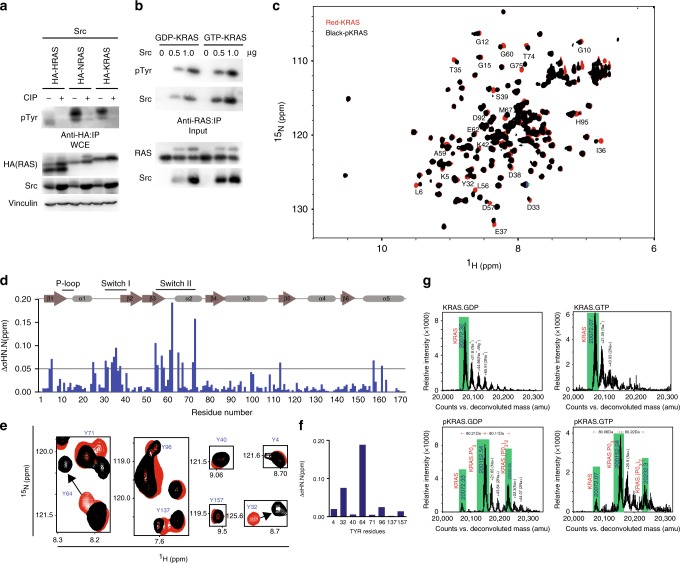
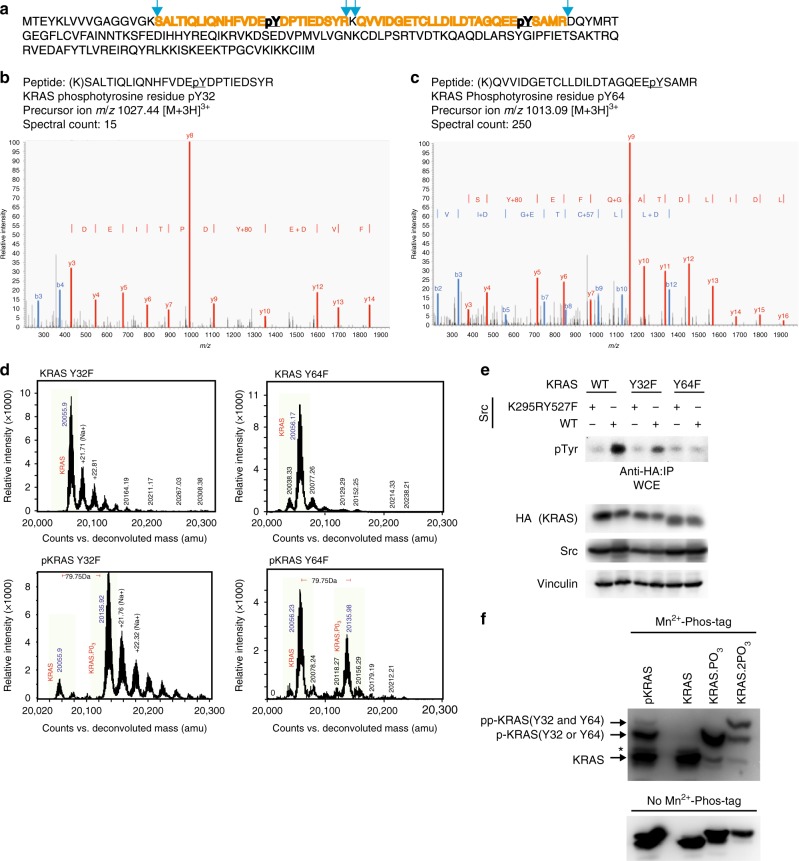
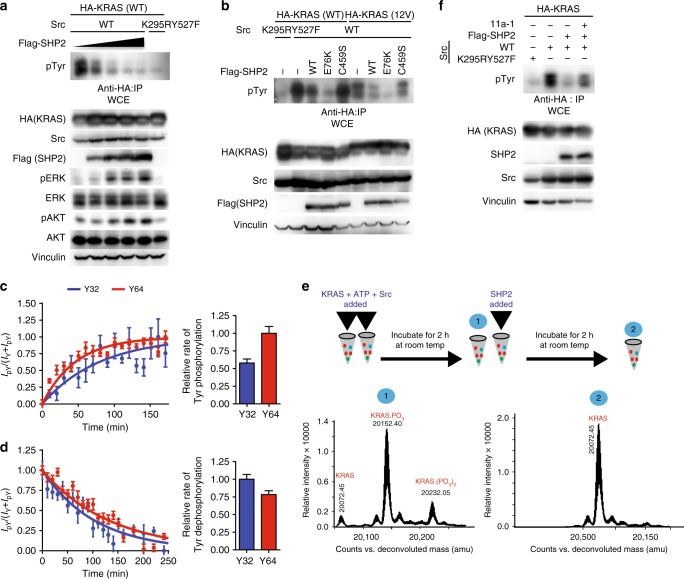
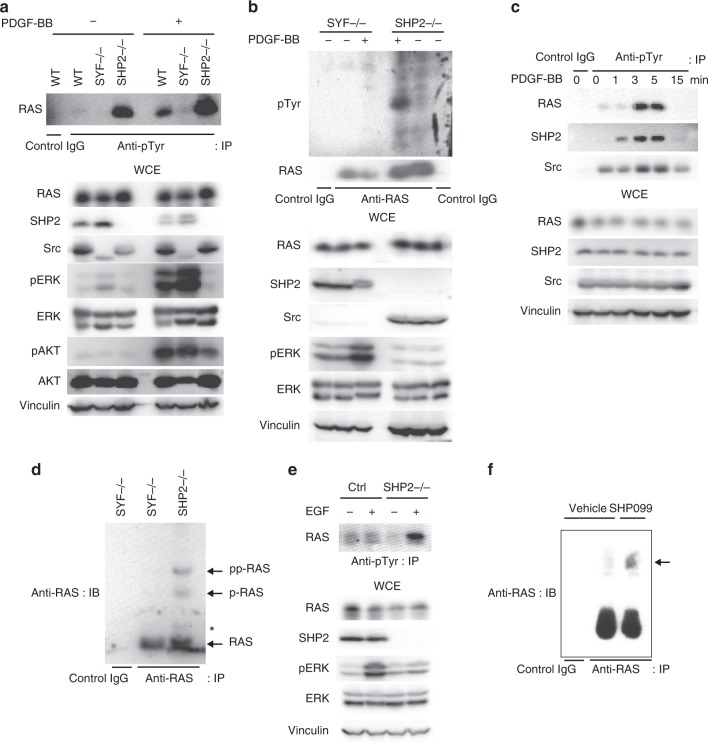
Deregulation of the RAS GTPase cycle due to mutations in the three RAS genes is commonly associated with cancer development. Protein tyrosine phosphatase SHP2 promotes RAF-to-MAPK signaling pathway and is an essential factor in RAS-driven oncogenesis. Despite the emergence of SHP2 inhibitors for the treatment of cancers harbouring mutant KRAS, the mechanism underlying SHP2 activation of KRAS signaling remains unclear. Here we report tyrosyl-phosphorylation of endogenous RAS and demonstrate that KRAS phosphorylation via Src on Tyr32 and Tyr64 alters the conformation of switch I and II regions, which stalls multiple steps of the GTPase cycle and impairs binding to effectors. In contrast, SHP2 dephosphorylates KRAS, a process that is required to maintain dynamic canonical KRAS GTPase cycle. Notably, Src- and SHP2-mediated regulation of KRAS activity extends to oncogenic KRAS and the inhibition of SHP2 disrupts the phosphorylation cycle, shifting the equilibrium of the GTPase cycle towards the stalled ‘dark state’.
Overview
The claims and statistics of this paper haven’t been checked yet.
Free: it reads the open-access text and checks the first 5 claims that cite a source we can check. Create a free account to check every claim.
Integrity signals
Registry
Cites
Statistics
Figures
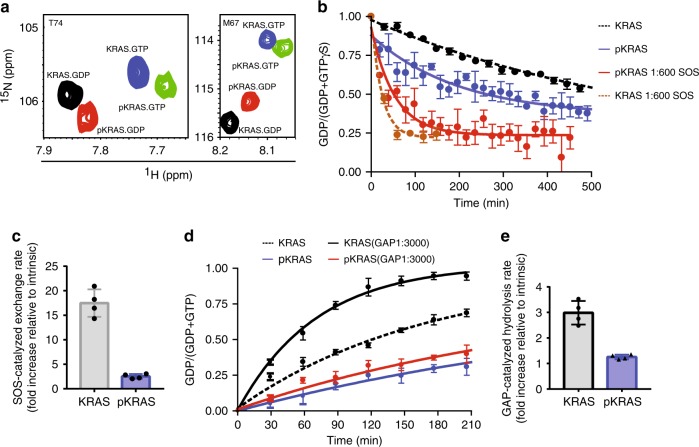
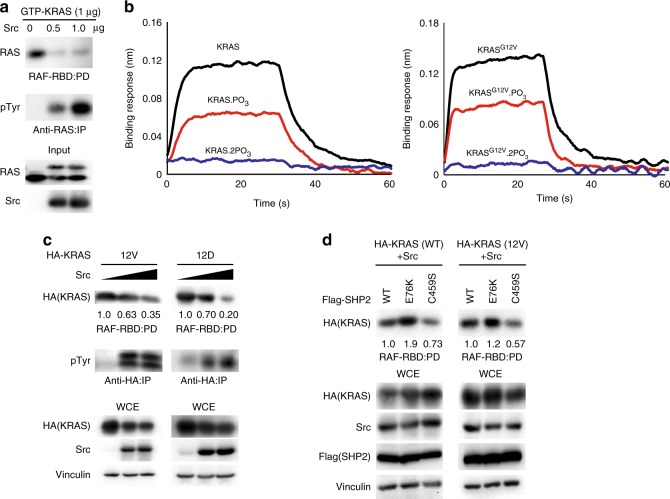
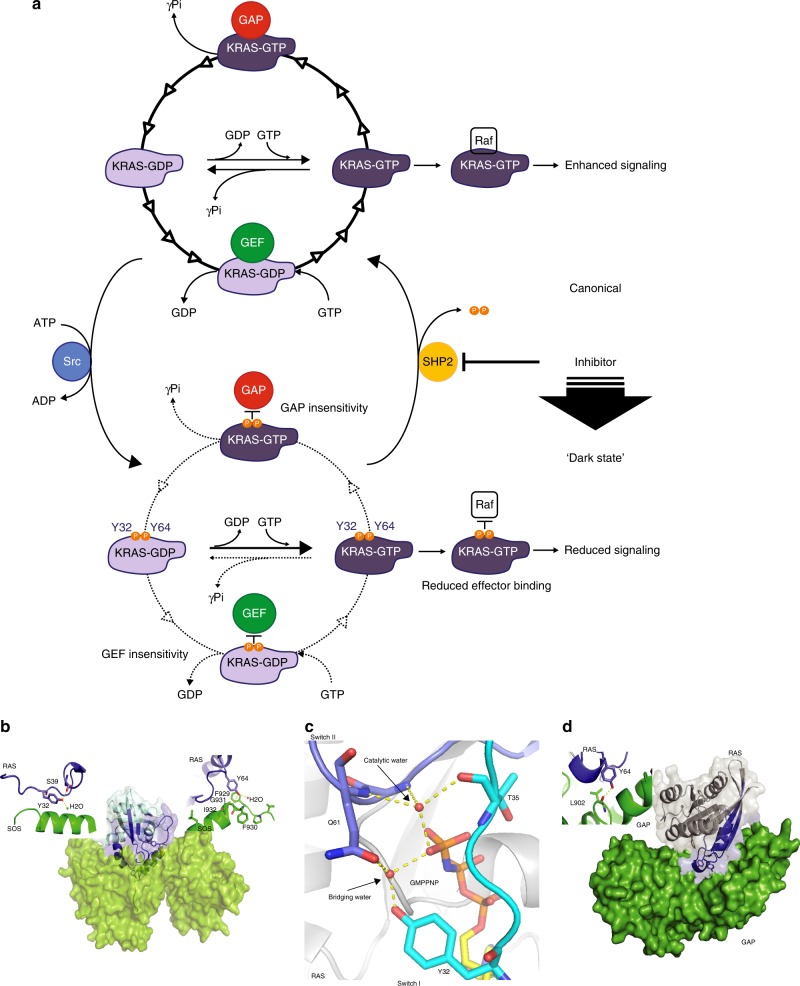
Verification
Claims the paper makes
The claims and statistics of this paper haven’t been checked yet.
Free: it reads the open-access text and checks the first 5 claims that cite a source we can check. Create a free account to check every claim.
Claims other papers make about this one
Each is checked against this paper’s own text: does it say what the citing paper says it does?
The source backs part of the claim, not all of it — or backs it for a different population, condition or comparison.
In the citing paper
“Blocking SHP2 prevents the loading of GTP into the RAS, and it is aimed to provide anticancer activity in this way [68,69].”
From RAS Mutations in Advanced Colorectal Cancer: Mechanisms, Clinical Implications, and Novel Therapeutic Approaches (2025) · cites this paper as [69]
Experimental — accuracy not yet measuredThe cited source says what the claim attributes to it.
In the citing paper
“SHP2 is a protein tyrosine phosphatase that promotes RAS signaling through multiple mechanisms, including facilitation of SOS1-mediated nucleotide exchange and regulation of KRAS conformational dynamics through dephosphorylation of Tyr32 and Tyr64 [8,9].”
From Precision Targeting of KRAS-Mutant Cancers: Beyond G12C Toward G12D and Pan-RAS Therapeutic Strategies (2026) · cites this paper as [8]
In the citing paper
“Src homology region 2 domain-containing phosphatase 2 (SHP2) is a receptor-free protein-tyrosine phosphatase and regulates proliferation by activating the RAS–MAPK–ERK signaling pathway.”
From RAS Mutations in Advanced Colorectal Cancer: Mechanisms, Clinical Implications, and Novel Therapeutic Approaches (2025) · cites this paper as [69]
Self-check
Percentages, sums and reported differences re-computed from the paper’s own numbers.
The self-check needs the paper’s full text.
Citations
Cites
NMRPipe: A multidimensional spectral processing system based on UNIX pipes
Delaglio, F., Grzesiek, S., Vuister, G., Zhu, G., Pfeifer, J., & Bax, A. (1995) · Journal of Biomolecular NMR · doi:10.1007/bf00197809 · Cited by 15,965
Barbacid, M. (1987) · Annual Review of Biochemistry · doi:10.1146/annurev.bi.56.070187.004023 · Cited by 3,885
Moffitt, R. A., Marayati, R., Flate, E. L., Volmar, K. E., Loeza, S. G. H., Hoadley, K. A., Rashid, N. U., Williams, L. A., Eaton, S. C., Chung, A. H., et al. (2015) · Nature Genetics · doi:10.1038/ng.3398 · Cited by 2,194
Self-citationOrganoid models of human and mouse ductal pancreatic cancer
Boj, S. F., Hwang, C.-I., Baker, L. A., Chio, I. I. C., Engle, D. D., Corbo, V., Jager, M., Ponz-Sarvise, M., Tiriac, H., Spector, M. S., et al. (2015) · Cell · doi:10.1016/j.cell.2014.12.021 · Cited by 2,150
NMRFAM-SPARKY: enhanced software for biomolecular NMR spectroscopy
Lee, W., Tonelli, M., & Markley, J. L. (2015) · Bioinformatics · doi:10.1093/bioinformatics/btu830 · Cited by 2,045
Drugging the undruggable RAS: Mission Possible?
Cox, A. D., Fesik, S. W., Kimmelman, A. C., Luo, J., & Der, C. J. (2014) · Nature Reviews Drug Discovery · doi:10.1038/nrd4389 · Cited by 1,997
The Ras-RasGAP Complex: Structural Basis for GTPase Activation and Its Loss in Oncogenic Ras Mutants
Scheffzek, K., Ahmadian, M. R., Kabsch, W., Wiesmüller, L., Lautwein, A., Schmitz, F., & Wittinghofer, A. (1997) · Science · doi:10.1126/science.277.5324.333 · Cited by 1,543
Increasing complexity of Ras signaling
Campbell, S. L., Khosravi-Far, R., Rossman, K. L., Clark, G. J., & Der, C. J. (1998) · Oncogene · doi:10.1038/sj.onc.1202174 · Cited by 1,079
Pai, E. F., Krengel, U., Petsko, G. A., Goody, R. S., Kabsch, W., & Wittinghofer, A. (1990) · The EMBO Journal · doi:10.1002/j.1460-2075.1990.tb07409.x · Cited by 1,074
Allosteric inhibition of SHP2 phosphatase inhibits cancers driven by receptor tyrosine kinases
Chen, Y.-N. P., LaMarche, M. J., Chan, H. M., Fekkes, P., Garcia-Fortanet, J., Acker, M. G., Antonakos, B., Chen, C. H.-T., Chen, Z., Cooke, V. G., et al. (2016) · Nature · doi:10.1038/nature18621 · Cited by 925
Cited by
Pan-KRAS Inhibitor Disables Oncogenic Signalling and Tumour Growth
Kim, D., Herdeis, L., Rudolph, D., Zhao, Y., Böttcher, J., Vides, A., Ayala-Santos, C. I., Pourfarjam, Y., Cuevas-Navarro, A., Xue, J. Y., et al. (2023) · Nature · doi:10.1038/s41586-023-06123-3 · Cited by 534
The current understanding of KRAS protein structure and dynamics
Pantsar, T. (2020) · Computational and Structural Biotechnology Journal · doi:10.1016/j.csbj.2019.12.004 · Cited by 282
“The tyrosine residues Y32 and Y64, in switch-I and switch-II, respectively, can be phosphorylated via c-Src [80].”
BackgroundApplication of Fragment-Based Drug Discovery to Versatile Targets
Li, Q. (2020) · Frontiers in Molecular Biosciences · doi:10.3389/fmolb.2020.00180 · Cited by 198
Therapeutic targeting of RAS: New hope for drugging the “undruggable”
Khan, I., Rhett, J. M., & O'Bryan, J. P. (2020) · Biochimica et Biophysica Acta (BBA) - Molecular Cell Research · doi:10.1016/j.bbamcr.2019.118570 · Cited by 110
“In a recent study, Src was shown to directly phosphorylate KRAS on Tyr32 and Tyr64, altering the conformations of SW1 and SW2, respectively [47].”
BackgroundVainonen, J. P., Momeny, M., & Westermarck, J. (2021) · Science Translational Medicine · doi:10.1126/scitranslmed.abe2967 · Cited by 104
Dynamic regulation of RAS and RAS signaling
Kölch, W., Berta, D., & Rosta, E. (2023) · Biochemical Journal · doi:10.1042/bcj20220234 · Cited by 106
Targeting small GTPases: emerging grasps on previously untamable targets, pioneered by KRAS
Yin, G., Huang, J., Petela, J., Jiang, H., Zhang, Y., Gong, S., Wu, J., Liu, B., Shi, J., & Gao, Y. (2023) · Signal Transduction and Targeted Therapy · doi:10.1038/s41392-023-01441-4 · Cited by 82
MYC and KRAS cooperation: from historical challenges to therapeutic opportunities in cancer
Casacuberta‐Serra, S., González-Larreategui, Í., Capitán-Leo, D., & Soucek, L. (2024) · Signal Transduction and Targeted Therapy · doi:10.1038/s41392-024-01907-z · Cited by 100
“56 The Src-induced phosphorylation of KRAS can in turn be reverted by the Src homology 2-containing protein tyrosine phosphatase 2 (SHP2) to rapidly activate KRAS and maintain the dynamic KRAS GTPase cycle.”
BackgroundObesity and Pancreatic Cancer: Insight into Mechanisms
Eibl, G., & Rozengurt, E. (2021) · Cancers · doi:10.3390/cancers13205067 · Cited by 80
“However, these considerations were based on pull down assays of Kras-GTP that do not take into account the effect of Kras tyrosine phosphorylation on the affinity for the Ras-binding domain of RAF [59].”
BackgroundPost-translational modification of RAS proteins
Campbell, S. L., & Philips, M. R. (2021) · Current Opinion in Structural Biology · doi:10.1016/j.sbi.2021.06.015 · Cited by 72
Wang, Y., Ji, D., Lei, C., Chen, Y.-F., Qiu, Y., Li, X.-Y., Li, M.-Y., Ni, D., Pu, J., Zhang, J., et al. (2021) · Computational and Structural Biotechnology Journal · doi:10.1016/j.csbj.2021.01.044 · Cited by 60
“These factors collectively resulted in the impairment of GTP hydrolysis activity and the accelerated GDP disassociation rate for phosphorylated K-Ras4B, in accordance with previous experimental conclusions [34].”
BackgroundResultInfluentialStopping the beating heart of cancer: KRAS reviewed
Herdeis, L., Gerlach, D., McConnell, D. B., & Kessler, D. (2021) · Current Opinion in Structural Biology · doi:10.1016/j.sbi.2021.06.013 · Cited by 62
Valencia-Sama, I., Ladumor, Y., Kee, L., Adderley, T., Christopher, G., Robinson, C. M., Kano, Y., Ohh, M., & Irwin, M. S. (2020) · Cancer Research · doi:10.1158/0008-5472.can-19-3822 · Cited by 62
Self-citationThe Ins and Outs of RAS Effector Complexes
Kiel, C., Matallanas, D., & Kölch, W. (2021) · Biomolecules · doi:10.3390/biom11020236 · Cited by 63
“SRC family kinases preferentially bind to the activated forms of all three RAS family members and phosphorylate them on tyrosines 32 and 64 located in the switch I and II regions, respectively [81,82] (Figure 5E).”
BackgroundPost-translational modification of KRAS: potential targets for cancer therapy
Wang, W., Yuan, T., Qian, M., Yan, F., Yang, L., He, Q., Yang, B., Lu, J., & Zhu, H. (2020) · Acta Pharmacologica Sinica · doi:10.1038/s41401-020-00542-y · Cited by 60
Gebregiworgis, T., Kano, Y., St-Germain, J., Radulovich, N., Udaskin, M. L., Mentes, A., Huang, R., Poon, B. P. K., He, W., Valencia-Sama, I., et al. (2021) · Nature Communications · doi:10.1038/s41467-021-26526-y · Cited by 49
“RAS/RAF binding was assessed using the RAS activation assay kit from Millipore (17-218).”
MethodSelf-citationStructural impact of GTP binding on downstream KRAS signaling
Menyhárd, D. K., Pálfy, G., Orgován, Z., Vida, I., Keserű, G. M., & Perczel, A. (2020) · Chemical Science · doi:10.1039/d0sc03441j · Cited by 58
Annual review of KRAS inhibitors in 2022
Wang, H., Chi, L., Yu, F., Dai, H., Gao, C., Si, X., Wang, Z., Liu, L., Zheng, J., Shan, L., et al. (2023) · European Journal of Medicinal Chemistry · doi:10.1016/j.ejmech.2023.115124 · Cited by 57
Recent advances in the discovery of protein tyrosine phosphatase SHP2 inhibitors
Kong, J., & Long, Y. (2022) · RSC Medicinal Chemistry · doi:10.1039/d1md00386k · Cited by 47
Pancreatic cancer: molecular pathogenesis and emerging therapeutic strategies
Rozengurt, E., & Eibl, G. (2026) · Signal Transduction and Targeted Therapy · doi:10.1038/s41392-025-02499-y · Cited by 66
“215,220 In this context, SFK inhibitors can induce RAS hyperactivation, thereby leading to enhanced RAF/MEK/ERK signaling in PDAC cells.”
Khaled, M., Gorfe, A. A., & Sayyed–Ahmad, A. (2019) · The Journal of Physical Chemistry B · doi:10.1021/acs.jpcb.9b05768 · Cited by 45
Targeting mutated GTPase KRAS in tumor therapies
Fan, G., Lou, L., Song, Z., Zhang, X., & Xiong, X. (2021) · European Journal of Medicinal Chemistry · doi:10.1016/j.ejmech.2021.113816 · Cited by 48
An Emerging Role for the Unfolded Protein Response in Pancreatic Cancer
Robinson, C. M., Talty, A., Logue, S. E., Mnich, K., Gorman, A. M., & Samali, A. (2021) · Cancers · doi:10.3390/cancers13020261 · Cited by 47
“Small molecule inhibitors that directly target KRASG12C, as well as the development of inhibitors of Src homology-2 domain-containing protein tyrosine phosphatase-2 (SHP2), a non-receptor protein tyrosine phosphatase that modulates RAS activity [10,11], have yielded promising pre-clinical results, although their clini…”
BackgroundAdams, L. M., DeHart, C. J., Drown, B., Anderson, L. C., Bocik, W., Boja, E. S., Hiltke, T., Hendrickson, C. L., Rodriguez, H., Caldwell, M. A., et al. (2022) · Journal of Biological Chemistry · doi:10.1016/j.jbc.2022.102768 · Cited by 37
Phosphorylation of Rab GTPases in the regulation of membrane trafficking
Waschbüsch, D., & Khan, A. R. (2020) · Traffic · doi:10.1111/tra.12765 · Cited by 38
“In a strikingly similar scenario, phosphorylation of two tyrosine residues of K-Ras by Src kinase stalls several steps in the GTP/GDP cycle.(9) The post-translational modification of K-Ras occurs adjacent to switches 1 and 2, altering the confor-”
BackgroundTargeting RAS phosphorylation in cancer therapy: Mechanisms and modulators
Qiu, Y., Wang, Y., Chai, Z., Ni, D., Li, X., Pu, J., Chen, J., Zhang, J., Lu, S., Lv, C., et al. (2021) · Acta Pharmaceutica Sinica B · doi:10.1016/j.apsb.2021.02.014 · Cited by 41
Targeting RAS mutants in malignancies: successes, failures, and reasons for hope
Yang, H. S., Zhou, X., Fu, D., Le, C., Wang, J., Zhou, Q., Liu, X., Yuan, Y., Ding, K., & Xiao, Q. (2022) · 癌症:英文版 · doi:10.1002/cac2.12377 · Cited by 39
“SHP2 can dephosphorylate tyrosine in RAS, thus restoring the downstream signaling and GTPase cycling [79, 80].”
BackgroundChen, J., Wang, J., Yang, W., Zhao, L., Zhao, J., & Hu, G. (2024) · Molecules · doi:10.3390/molecules29102317 · Cited by 36
“The work of Kano et al. veri fi ed that KRAS phosphorylation via Src on Y32 and Y64 alters the conformation of the SW1 and SW2 and impairs binding to e ff ectors, supporting our current fi ndings [39].”
BackgroundResultInfluentialTyrosine phosphatase PTPN11/SHP2 in solid tumors - bull’s eye for targeted therapy?
Chen, X., Keller, S. J., Hafner, P., Alrawashdeh, A. Y., Avery, T. Y., Norona, J., Zhou, J., & Ruess, D. A. (2024) · Frontiers in Immunology · doi:10.3389/fimmu.2024.1340726 · Cited by 52
“Moreover, SRC and SHP2 dynamically regulate a tyrosine phosphorylation of KRAS at Tyr32 and Tyr64, contributing to the molecular switching role of RAS and in fl uencing GEF-mediated nucleotide exchange (28, 29).”
BackgroundGrant, B., Enomoto, M., Ikura, M., & Marshall, C. B. (2020) · International Journal of Molecular Sciences · doi:10.3390/ijms21082751 · Cited by 29
“Other RAS GEFs are also regulated by Ca2+: RAS protein-specific guanine nucleotide-releasing factors (RAS-GRFs) contain “IQ” CaM binding motifs and are regulated by Ca2+-CaM, while some of the RAS guanyl-releasing proteins (RAS-GRPs) have EF hands and are regulated directly by Ca2+ [97,98].”
BackgroundInfluentialSelf-citationNovel regulation of Ras proteins by direct tyrosine phosphorylation and dephosphorylation
Buday, L., & Vas, V. (2020) · Cancer and Metastasis Reviews · doi:10.1007/s10555-020-09918-2 · Cited by 31
Rozengurt, E., & Eibl, G. (2021) · Cancers · doi:10.3390/cancers13205126 · Cited by 30
“Firstly, as a tyrosine phosphatase that directly acts on RAS family members, favoring the dephosphorylated (active) form of RAS [56,60] and secondly, as a scaffold that facilitates the recruitment of GRB2-SOS to phosphorylated tyrosine residues in receptors and/or scaffolds at the plasma membrane, thereby promoting SO…”
BackgroundInfluentialBiology, pathology, and therapeutic targeting of RAS
Rhett, J. M., Khan, I., & O’Bryan, J. P. (2020) · Advances in cancer research · doi:10.1016/bs.acr.2020.05.002 · Cited by 31
“A uthor M anuscript A uthor M anuscript A uthor M anuscript A uthor M anuscript Src phosphorylates all RAS isoforms on Tyr32 and Tyr64 in the SW1 and SW2 regions, respectively (Bunda et al., 2014; Kano et al., 2019).”
BackgroundGrant, B., Enomoto, M., Back, S.-I., Lee, K., Gebregiworgis, T., Ishiyama, N., Ikura, M., & Marshall, C. B. (2020) · Science Signaling · doi:10.1126/scisignal.aaz0344 · Cited by 28
Self-citationHuang, Z., Liu, M., Li, D., Tan, Y., Zhang, R., Xia, Z., Wang, P., Jiao, B., Liu, P., & Ren, R. (2020) · Journal of Biological Chemistry · doi:10.1074/jbc.ra119.011060 · Cited by 32
“Inhibition of SHP2 promotes accumulation of phosphorylated KRAS and subsequently suppressing KRAS-RAFMAPK signaling (32).”
BackgroundComputer-Aided Drug Design Boosts RAS Inhibitor Discovery
Wang, G., Bai, Y., Cui, J., Zong, Z., Gao, Y., & Zheng, Z. (2022) · Molecules · doi:10.3390/molecules27175710 · Cited by 29
Liu, Y., Zhang, W., Jang, H., & Nussinov, R. (2023) · Cellular and Molecular Life Sciences · doi:10.1007/s00018-023-05052-8 · Cited by 29
RASopathies: The musculoskeletal consequences and their etiology and pathogenesis
Fowlkes, J. L., Thrailkill, K. M., & Bunn, R. C. (2021) · Bone · doi:10.1016/j.bone.2021.116060 · Cited by 29
Quo Vadis Biomolecular NMR Spectroscopy?
Selenko, P. (2019) · International Journal of Molecular Sciences · doi:10.3390/ijms20061278 · Cited by 28
Adariani, S. R., Jasemi, N. S. K., Bazgir, F., Wittich, C., Amin, E., Seidel, C. A. M., Dvorský, R., & Ahmadian, M. R. (2021) · Journal of Biological Chemistry · doi:10.1016/j.jbc.2021.100626 · Cited by 25
“In contrast, Y32 and Y64 phosphorylation by SRC alters the conformation of switch I and II regions, markedly reduces RAS binding to CRAF, and concomitantly increases binding to RASGAPs and the rate of GTP hydrolysis (87, 88).”
BackgroundFluorescent Biosensor for Measuring Ras Activity in Living Cells
Weeks, R., Zhou, X., Yuan, T. L., & Zhang, J. (2022) · Journal of the American Chemical Society · doi:10.1021/jacs.2c05203 · Cited by 24
Direct GDP-KRAS G12C inhibitors and mechanisms of resistance: the tip of the iceberg
Rosen, J. C., Sacher, A. G., & Tsao, M. (2023) · Therapeutic Advances in Medical Oncology · doi:10.1177/17588359231160141 · Cited by 24
Self-citationZheng, W., Yang, Z., Song, P., Sun, Y., Liu, P., Yue, L., Lv, K., Wang, X., Shen, Y., Si, J., et al. (2023) · Cancer Letters · doi:10.1016/j.canlet.2022.216029 · Cited by 21
Regulation of GTPase function by autophosphorylation
Johnson, C. W., Seo, H., Terrell, E. M., Yang, M.-H., KleinJan, F., Gebregiworgis, T., Gasmi-Seabrook, G. M. C., Geffken, E. A., Lakhani, J., Song, K., et al. (2022) · Molecular Cell · doi:10.1016/j.molcel.2022.02.011 · Cited by 22
Self-citationFunctional profiling of serine, threonine and tyrosine sites
Li, Y., Xu, T., Ma, H., Yue, D., Lamao, Q., Liu, Y., Zhou, Z. L., & Wei, W. (2024) · Nature Chemical Biology · doi:10.1038/s41589-024-01731-0 · Cited by 25
“…for maintaining KRAS function in the canonical guanosine triphosphatase cycle and the alteration of Y71 increases the affinity with its downstream factor RAF, thereby activating the KRAS-mediated mitogen-activated protein kinase (MAPK) signaling pathway and conferring survival advantages 17,18 .”
Tumor Microenvironment‐Responsive Polymer‐Based RNA Delivery Systems for Cancer Treatment
Zhang, Y., Zhang, M., Song, H., Dai, Q., & Liu, C. (2024) · Small Methods · doi:10.1002/smtd.202400278 · Cited by 23
KRAS-Driven Tumorigenesis and KRAS-Driven Therapy in Pancreatic Adenocarcinoma
Than, M. T., O’Hara, M. H., Stanger, B. Z., & Reiss, K. A. (2024) · Molecular Cancer Therapeutics · doi:10.1158/1535-7163.mct-23-0519 · Cited by 23
High-risk neuroblastoma with NF1 loss of function is targetable using SHP2 inhibition
Cai, J., Jacob, S., Kurupi, R., Dalton, K. M., Coon, C. M., Greninger, P., Egan, R. K., Stein, G. T., Murchie, E., McClanaghan, J., et al. (2022) · Cell Reports · doi:10.1016/j.celrep.2022.111095 · Cited by 19
“…RAS-GAP recruitment to RTK complexes (Montagner et al., 2005) via direct recruitment of Grb2 (Ran et al., 2016), dephosphorylation of RAS on a conserved Tyr32 residue increasing RAS-RAF association and subsequent MEK/ERK signaling (Kano et al., 2019), or via its effect on SRC (Zhang et al., 2004).”
Chinigò, G., Grolez, G. P., Audero, M. M., Bokhobza, A., Bernardini, M., Cicero, J., Toillon, R., Bailleul, Q., Visentin, L., Ruffinatti, F. A., et al. (2022) · Cancers · doi:10.3390/cancers14092261 · Cited by 18
“Consistently, c-Src was found to phosphorylate H/N/KRAS on conserved Tyr32, thus stalling their GTPase cycle in the GTP-bound state and affecting the binding to Raf effector as well as the downstream signaling [91,92].”
BackgroundStrategic Insight into the Combination Therapies for Metastatic Colorectal Cancer
Kano, Y., Suenaga, M., & Uetake, H. (2023) · Current Oncology · doi:10.3390/curroncol30070480 · Cited by 18
“Another novel strategy is a combination with the inhibition of protein tyrosine phosphatase SHP2 that promotes the MAPK signaling pathway and is an essential factor in RAS-driven oncogenesis [64,73,74].”
BackgroundSelf-citationRegulation of Ras Signaling by S-Nitrosylation
Simão, S., Agostinho, R. R., Martínez-Ruiz, A., & Araújo, I. M. (2023) · Antioxidants · doi:10.3390/antiox12081562 · Cited by 18
NMR in integrated biophysical drug discovery for RAS: past, present, and future
Marshall, C. B., KleinJan, F., Gebregiworgis, T., Lee, K., Fang, Z., Eves, B. J., Liu, N. F., Gasmi-Seabrook, G. M. C., Enomoto, M., & Ikura, M. (2020) · Journal of Biomolecular NMR · doi:10.1007/s10858-020-00338-6 · Cited by 16
“While patients initially responded well to vemurafenib and other first-generation BRAF inhibitors, resistance quickly developed due to these inhibitors allosterically enhancing heterodimerization with wildtype CRAF, thus promoting MEK activation.”
BackgroundInfluentialSelf-citationSinnett‐Smith, J. W., Anwar, T., Reed, E. F., Teper, Y., Eibl, G., & Rozengurt, E. (2022) · Molecular Cancer Therapeutics · doi:10.1158/1535-7163.mct-21-0964 · Cited by 18
Zeke, A., Takács, T., Sok, P., Németh, K., Kirsch, K., Egri, P., Póti, Á., Bento, I., Tusnády, G., & Reményi, A. (2022) · Nature Communications · doi:10.1038/s41467-022-32918-5 · Cited by 17
Zhang, G., Zhang, C., Cai, M., Luo, C., Zhu, F., & Liang, Z. T. (2024) · International Journal of Biological Macromolecules · doi:10.1016/j.ijbiomac.2024.131180 · Cited by 17
GLOBAL AND TARGETED PROFILING OF GTP‐BINDING PROTEINS IN BIOLOGICAL SAMPLES BY MASS SPECTROMETRY
Huang, M., & Wang, Y. (2020) · Mass Spectrometry Reviews · doi:10.1002/mas.21637 · Cited by 12
Noji, R., Tohyama, K., Nakamura, S., Naito, T., Oikawa, Y., Kuroshima, T., Tomioka, H., Michi, Y., Ikeda, S., Asakage, T., et al. (2024) · International Journal of Molecular Sciences · doi:10.3390/ijms26010235 · Cited by 11
“BRAF mutations, especially those that activate the MAPK pathway [20,21], can increase tumor immunogenicity and enhance T-cell infiltration, potentially sensitizing tumors to ICIs [22].”
Self-citationNew Directions for Advanced Targeting Strategies of EGFR Signaling in Cancer
Zhou, Y., Takahashi, J., & Sakurai, H. (2024) · Biological and Pharmaceutical Bulletin · doi:10.1248/bpb.b23-00924 · Cited by 13
Sütcüoğlu, O., Yıldırım, H. Ç., Almuradova, E., Günenç, D., & Yalçın, Ş. (2025) · Medicina · doi:10.3390/medicina61071202 · Cited by 10
“Blocking SHP2 prevents the loading of GTP into the RAS, and it is aimed to provide anticancer activity in this way [68,69].”
The fitness cost of spurious phosphorylation
Bradley, D., Hogrebe, A., Dandage, R., Dubé, A. K., Leutert, M., Dionne, U., Chang, A., Villén, J., & Landry, C. R. (2024) · The EMBO Journal · doi:10.1038/s44318-024-00200-7 · Cited by 10
“Spuriously phosphorylated sites include positions homologous to pY32 and pY64 in human KRAS, which have inhibitory effects on RAS signalling (Kano et al, 2019; Wang et al, 2021), and are found here at pY37 for yeast Ypt1 and pY71 for yeast Rho1, proteins that have functions related to membrane traf…”
Luo, L., Zheng, T., Wang, Q., Liao, Y., Zheng, X., Zhong, A., Huang, Z., & Luo, H. (2022) · Pharmaceuticals · doi:10.3390/ph15050584 · Cited by 10
Structures of RGL1 RAS-Association Domain in Complex with KRAS and the Oncogenic G12V Mutant
Eves, B. J., Gebregiworgis, T., Gasmi-Seabrook, G. M. C., Kuntz, D. A., Privé, G. G., Marshall, C. B., & Ikura, M. (2022) · Journal of Molecular Biology · doi:10.1016/j.jmb.2022.167527 · Cited by 11
“40 Briefly, the assay was performed using 96-well plates at 25 (cid”
MethodSelf-citationKoester, A. M., Tao, K. X., Szczepaniak, M., Rames, M. J., & Nan, X. (2022) · Biomolecules · doi:10.3390/biom12081033 · Cited by 11
“Among the possibilities, KRas phosphorylation [52,53] or other types of post-translational modifications could impact its association with PS across the whole cell membrane.”
BackgroundJiang, H., Zu, S., Lu, Y., Sun, Z., Adeerjiang, A., Guo, Q., Zhang, H., Chen, D., Wu, Q., Ding, H., et al. (2023) · Journal of Structural Biology · doi:10.1016/j.jsb.2023.107942 · Cited by 12
Wang, P., Sun, X., He, X., Kang, D., Liu, X., Liu, D., Li, A., Yang, G., Lin, Y., Li, S., et al. (2025) · Cancer Research Communications · doi:10.1158/2767-9764.crc-25-0001 · Cited by 9
“Considering the role of SHP2 to activate the RAS pathway through multiple modes of action, including the dephosphorylation of RAS and promoting SOS1 activity (31, 32), there is also strong rationale for the combination of KRAS G12C and SHP2 inhibitors.”
Pourjafar‐Dehkordi, D., Vieweg, S., Itzen, A., & Zacharias, M. (2019) · Biochemistry · doi:10.1021/acs.biochem.9b00516 · Cited by 9
Ilter, M., Kaşmer, R., Jalalypour, F., Atılgan, C., Topcu, O., Karakaş, N., & Şensoy, Ö. (2022) · eLife · doi:10.7554/elife.79747 · Cited by 7
Posttranslational modifications remodel proteome-wide ligandability
Li, W., Wei, Q., Llanos, M. A., Gathmann, C., Governa, P., Chiu, T.-Y., Wozniak, J. M., Jadhav, A. M., Holcomb, M., Cravatt, J. B., et al. (2026) · Nature Chemical Biology · doi:10.1038/s41589-026-02216-y · Cited by 16
Combination mTOR and SHP2 inhibitor treatment of lymphatic malformation endothelial cells
Wolter, J. K., Valencia-Sama, I., Osborn, A. J., Propst, E. J., Irwin, M. S., Papsin, B. C., & Wolter, N. E. (2022) · Microvascular Research · doi:10.1016/j.mvr.2022.104397 · Cited by 9
Self-citationRegulation of Ras-GTPase Signaling and Localization by Post-Translational Modifications
Nair, A., & Saha, B. (2023) · Kinases and Phosphatases · doi:10.3390/kinasesphosphatases1020007 · Cited by 9
“This results in the accumulation of phosphorylated-KRas-GTP, which is insensitive to further activation or activating downstream Raf and is termed the ‘dark state’ [66].”
BackgroundSHP2–EGFR States in Dephosphorylation Can Inform Selective SHP2 Inhibitors, Dampening RasGAP Action
Liu, Y., Jang, H., & Nussinov, R. (2024) · The Journal of Physical Chemistry B · doi:10.1021/acs.jpcb.4c00873 · Cited by 7
GAP mimetic activity of pan-Ras TCI daraxonrasib synergizes with K-Ras Switch-II pocket inhibition
Pfaff, P., & Shokat, K. M. (2026) · Biological Chemistry · doi:10.1515/hsz-2025-0249 · Cited by 5
“…been observed that phosphorylation of Ras Tyr32 leads to RAF dissocation and RasGAP association, driven by electrostatic repulsion between the γ -phosphate and pTyr32 (Bunda et al. 2014; Kano et al. 2019); in line with the obligate open conformation of Switch-I required for Arg-fi nger GAP activity.”
Zhang, J., Liu, Z., Zhao, W., Yin, X., Zheng, X., Liu, C., Wang, J., & Wang, E. (2022) · Frontiers in Pharmacology · doi:10.3389/fphar.2021.797821 · Cited by 6
“, 2010), and phosphorylating tyrosine residues Y32 in switch 1 and Y64 in switch 2 induced the equilibrium towards an “open conformation” (Kano et al., 2019).”
BackgroundStrohbehn, G. W., Sankar, K. N., Qin, A., & Kalemkerian, G. P. (2022) · Expert Opinion on Pharmacotherapy · doi:10.1080/14656566.2022.2134777 · Cited by 5
“SHP2, on the other hand, dephosphorylates these critical tyrosine residues, disinhibiting GTP-bound KRAS and promoting downstream RAF signaling [3].”
BackgroundShan, W., Zhang, S., Assaraf, Y. G., & Tam, K. Y. (2025) · Biochimica et Biophysica Acta (BBA) - Molecular Basis of Disease · doi:10.1016/j.bbadis.2025.167859 · Cited by 4
Genetically encodable biosensors for Ras activity
Weeks, R., Mehta, S., & Zhang, J. (2024) · RSC Chemical Biology · doi:10.1039/d3cb00185g · Cited by 5
“To investigate whether the mechanism of Src-mediated inhibition involves direct phosphorylation of Ras, as proposed previously, 53,54 we coexpressed RasAR with an HRas Y32,64F double mutant that lacks both putative Src phosphorylation sites, and found that Src inhibitor pretreatment no longer had…”
Far-reaching effects of tyrosine64 phosphorylation on Ras revealed with BeF3– complexes
Baumann, P., & Jin, Y. (2024) · Communications Chemistry · doi:10.1038/s42004-024-01105-6 · Cited by 4
“This observation offers another plausible rationale for the observed three-fold reduction in intrinsic hydrolysis rate 7 .”
BackgroundMethodResultInfluentialBiochemical and biophysical characterization of the RAS family small GTPase protein DiRAS3
SAITOH, T., Kim, H.-N., Narita, R., Ohtsuka, I., Mo, W., Lee, K., Enomoto, M., Gasmi-Seabrook, G. M. C., Marshall, C. B., & Ikura, M. (2023) · Protein Expression and Purification · doi:10.1016/j.pep.2023.106361 · Cited by 3
Self-citationLui, K., Huang, Y. K., Sheikh, M. S., Cheung, K., Tam, W. Y., Sun, K.-T., Cheng, K. M., Ng, W. W. M., & Loh, A. W.-K. (2023) · Journal of Cancer · doi:10.7150/jca.84267 · Cited by 4
Fink, J. C., Landry, D., & Webb, L. J. (2024) · Biochemistry · doi:10.1021/acs.biochem.4c00075 · Cited by 3
Prevalence of K-RAS mutations and CA125 tumor marker in patients with ovarian carcinoma.
Bagherlou, N., Farajnia, S., Zahri, S., Tabrizi, A. D., & Nazari, A. (2020) · PubMed Central · doi:10.22088/cjim.11.1.75 · Cited by 4
“The GTPase cycles between their active state when binding to GTP and the inactive state when binding to GDP (7, 8).”
BackgroundA chemoproteomic atlas of the human purine interactome for regioselective ligand discovery
Li, Z., Tsai, H.-K., Libby, A. H., Founds, M. W., Murtagh, O. L., Ware, M. L., Leace, D. M., 5, Gingrich, P. W., Al‐Lazikani, B., et al. (2026) · Nature Communications · doi:10.1038/s41467-026-73407-3 · Cited by 3
Proteomic Perspectives on KRAS-Driven Cancers and Emerging Therapeutic Approaches
Karki, R., Chen, R., & Pan, S. (2025) · Current Oncology · doi:10.3390/curroncol32110614 · Cited by 3
“…associated with individual KRAS mutants is further supported by the findings that WT and KRAS G12V/D are sensitive to SHP2 inhibitors, while KRAS G13D and KRAS Q61H are resistant to SHP2 [49], encoded by gene PTPN11 , which dephosphorylates the tyrosine phosphorylation of KRAS at Y32 and Y64 [50].”
Mechanistic insights on spatiotemporal control of Ras-signaling
Charrier, C., Mrachacz, S., Schulze, S., & Lammers, M. (2026) · Biological Chemistry · doi:10.1515/hsz-2025-0243 · Cited by 2
“In the open conformation, the Tyr32 side chain is more fl exible and is therefore accessible for phosphorylation by various kinases (Bunda et al. 2014; Kano et al. 2019).”
InfluentialSarıca, Z., Sungur, F. A., & Kürkçüoğlu, Ö. (2026) · Journal of Chemical Information and Modeling · doi:10.1021/acs.jcim.6c00004 · Cited by 3
Novel paradigms in KRAS targeting: Unveiling strategies to combat drug resistance
Luo, X., Zhou, F., Tang, Y., Liu, X., Xiao, R., Gu, M., Bai, J., Jiang, D., Yang, G., You, L., et al. (2025) · Chinese Medical Journal · doi:10.1097/cm9.0000000000003776 · Cited by 2
“[20,21] When GTP binds to KRAS, it leads to conformational changes in the Switch I and II regions and promotes downstream signaling pathways.”
Sindi, I. A., Abu-Elsaoud, A. M., Almars, A. I., Ghouth, N. M., Shaheen, S. Y., Basri, A. M., Hakami, Z. H., Juraybi, T. N., Alqasem, A. A., Abumansour, I. S., et al. (2025) · Lung Cancer · doi:10.1016/j.lungcan.2025.108848 · Cited by 1
Skhoun, H., Fessikh, M. E., Khattab, M., Mchich, B., Agadr, A., Abilkassem, R., Dakka, N., Flatters, D., Camproux, A., Ouzzif, Z., et al. (2024) · Biochemical Genetics · doi:10.1007/s10528-024-10968-2 · Cited by 1
“Destruction of the intensely controlled RAS cycling promotes its constitutive activity, hence tumorigenesis (Kano et al. 2019; Parker and Mattos 2018).”
Wang, Y., Zhang, Y., Chen, H., Zhang, X., Wang, C., & Sun, F. (2025) · Journal of Chemical Information and Modeling · doi:10.1021/acs.jcim.5c00643 · Cited by 1
Shekhtman, A. G., & Burz, D. S. (2020) · MDPI eBooks · doi:10.3390/books978-3-03928-255-5 · Cited by 1
Ilter, M., Kaşmer, R., Jalalypour, F., Atılgan, C., Topcu, O., Karakaş, N., & Şensoy, Ö. (2022) · bioRxiv (Cold Spring Harbor Laboratory) · doi:10.1101/2022.04.24.489309 · Cited by 1
“The RAS gene family translates into four proteins, namely HRAS, NRAS, KRAS4A, and KRAS4B, that control mitogen-activated protein kinase (MAPK), phosphatidylinositol 3-kinase (PI3K), and Ras-like (RAL) pathways Barbacid (1987); Malumbres and Barbacid (2003); Lu et al. (2016a); Khan et al. (2019); Duffy and Crown (2021)…”
BackgroundInfluentialKano, Y. (2026) · International Journal of Molecular Sciences · doi:10.3390/ijms27135796
“Src-mediated Src-mediated phosphorylation of Tyr32 and Tyr64 alters switch-region dynamics and promotes formation of a signaling-impaired “dark-state” KRAS conformation, whereas SHP2-mediated dephosphorylation restores canonical signaling activity [8].”
Self-citationGebregiworgis, T., & Marshall, C. B. (2019) · Springer eBooks · doi:10.1007/978-3-642-35943-9_10076-1
Self-citationSinnett‐Smith, J. W., Anwar, T., Reed, E. F., Teper, Y., Eibl, G., & Rozengurt, E. (2023) · doi:10.1158/1535-7163.c.6543589
Mechanism of SC targeting RhoA regulation and its potential value in gastric cancer therapy
Ma, H., Jiang, P., Ma, R., Zhao, J., Wang, Q., Xing, Y., Cao, C., & Su, Z. (2025) · Biochemistry and Biophysics Reports · doi:10.1016/j.bbrep.2025.102158 · Cited by 1
“This dual engagement defines a two-pronged inhibitory mechanism: Switch I occupancy sterically blocks GTPase effector recruitment [23], while α 5 helix interaction induces structural destabilization, priming RhoA for ubiquitin-proteasome degradation [24].”
TRP channels functional role in prostate cancer angiogenesis and invasion
Chinigò, G. (2022) · theses.fr (ABES) · doi:10.70675/d329cfb4zc018z4dbbz94e1zd44bbaefe49b
MAPK pathway modulation and its implications in KRAS mutant lung adenocarcinoma
Román, S. D. H. (2023) · theses.fr (ABES) · doi:10.70675/8eaccae1ze96bz4279zb69fzaafa5e50c341
Posttranslational modifications of RAS: few pockets but many bumps
Fissore-O'Leary, M., & Philips, M. R. (2026) · Biological Chemistry · doi:10.1515/hsz-2026-0102 · Cited by 1
“The authors argue that phosphorylation or Y32 and Y64 by SRC keeps RAS in a “ dark state ” that is reversed by SHP2 (Kano et al. 2019).”
SAIMSARA (2026) · SAIMSARA Journal · doi:10.62487/saimsaradc4d1e0f
The Role of KRAS in Non-Small Cell Lung Cancer: From Molecular Background to Precision Medicine
Gaździcka, J., & Gołąbek, K. (2026) · International Journal of Molecular Sciences · doi:10.3390/ijms27188194
“Consequently, phosphorylated KRAS displayed reduced affinity for downstream effector proteins, including RAF [116].”
Metadata
- Authors
- Kano, Y., Gebregiworgis, T., Marshall, C. B., Radulovich, N., Poon, B. P. K., St-Germain, J., Cook, J. D., Valencia-Sama, I., Grant, B. M. M., Herrera, S. G., Miao, J., Raught, B., Irwin, M. S., Lee, J. E., Yeh, J. J., Zhang, Z.-Y., Tsao, M.-S., Ikura, M., & Ohh, M.
- Affiliations
- University of Toronto (CA)
- University Health Network (CA)
- University of North Carolina at Chapel Hill (US)
- Purdue University West Lafayette (US)
- Hospital for Sick Children (CA)
- Corresponding author
- Ohh, Michael
- ORCID
- Venue
- Nature Communications
- Published
- 2019-01-15
- Volume
- 10
- Issue
- 1
- Pages
- 224-224
- ISSN
- 2041-1723 (ISSN-L)
- PMC
- PMC6333830
- OpenAlex
- W2909726024
- Cited by
- 103
- References
- 68
- Citations by year
- 2026: 12 · 2025: 8 · 2024: 16 · 2023: 14 · 2022: 20 · 2021: 13 · 2020: 14 · 2019: 6
- FWCI
- 4.38
- Type
- journal article
- Language
- en
- Open access
- gold
- doi.org
- Licence
- cc-by
- creativecommons.org/licenses/by/4.0 (tdm)
- creativecommons.org/licenses/by/4.0 (vor)
- Locations
- Nature Communications (publishedVersion, cc-by)
- Europe PMC (PubMed Central) (publishedVersion, other-oa)
- PubMed Central (publishedVersion, cc-by)
- PubMed (publishedVersion)
- Carolina Digital Repository (University of North Carolina at Chapel Hill) (submittedVersion)
- RePEc: Research Papers in Economics (submittedVersion)
- DOAJ (DOAJ: Directory of Open Access Journals) (submittedVersion, cc-by-sa)
- DOAJ (DOAJ: Directory of Open Access Journals) (submittedVersion)
- UNC Libraries
- Funders
- Cancer Research Society
- University of Toronto
- National Institutes of Health (RO1 CA207288)
- Canadian Institutes of Health Research (FDN‐1542284)
- Canadian Cancer Society Research Institute (703209)
- Japan Society for the Promotion of Science
- National Cancer Institute (R01CA207288, R01CA199064)
- Topics
- Life Sciences › Biochemistry, Genetics and Molecular Biology › Molecular Biology › Protein Kinase Regulation and GTPase Signaling
- Life Sciences › Biochemistry, Genetics and Molecular Biology › Molecular Biology › Protein Tyrosine Phosphatases
- Life Sciences › Biochemistry, Genetics and Molecular Biology › Cell Biology › Cellular transport and secretion
- Keywords
- KRAS, tyrosine phosphorylation, SHP2, Src kinase, oncogenic KRAS, SHP2 inhibitors, dark states, MAPK signaling
- MeSH terms
- Animals, Antineoplastic Agents, Humans, Male, Pancreatic Neoplasms, Proto-Oncogene Proteins p21(ras), Mice, SCID, GTP Phosphohydrolases, Carcinoma, Pancreatic Ductal, Xenograft Model Antitumor Assays, raf Kinases, Protein Tyrosine Phosphatase, Non-Receptor Type 11, HEK293 Cells
About these checks
Registry, retraction, Cites and statistics results are computed, not judged, with one exception: a printed reference that no index lists is read once by a model before it counts as a citation error. Claims are extracted by a model and kept only when their quote appears verbatim in the text; each cited source is then checked, with a model’s help, for whether it says what the claim relies on. Those verdicts can be wrong — read the claim’s quote and the cited source before relying on one.
Statistics and arithmetic are recomputed, not judged.
Confidence bands are shown only for fields calibrated on our annotated test set. None is calibrated yet, so no band is shown.
What counts as a claim ›How we measure confidence ›How we check this ›
Are you an author, or do you see a problem with this page? Request a review
Data sources
Bibliographic data: Semantic Scholar, OpenAlex, Crossref.
Contains information from the Semantic Scholar Academic Graph Datasets, made available under the ODC Attribution License (ODC-BY 1.0).
Semantic Scholar’s data is described in: Kinney, R., et al. (2023). The Semantic Scholar Open Data Platform. arXiv:2301.10140.
