

Tyrosyl phosphorylation of KRAS stalls GTPase cycle via alteration of switch I and II conformation
Open accessThe DOI matches its Crossref record; 68 of the 68 references it cites were found in a registry or an index.
Abstract
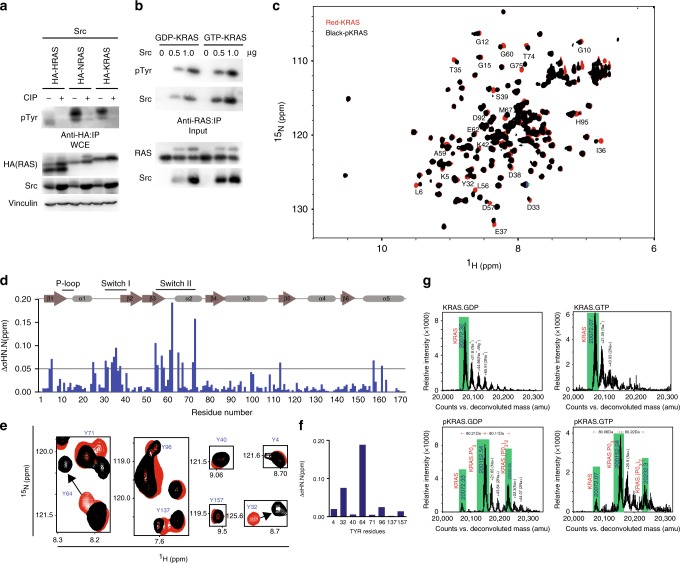
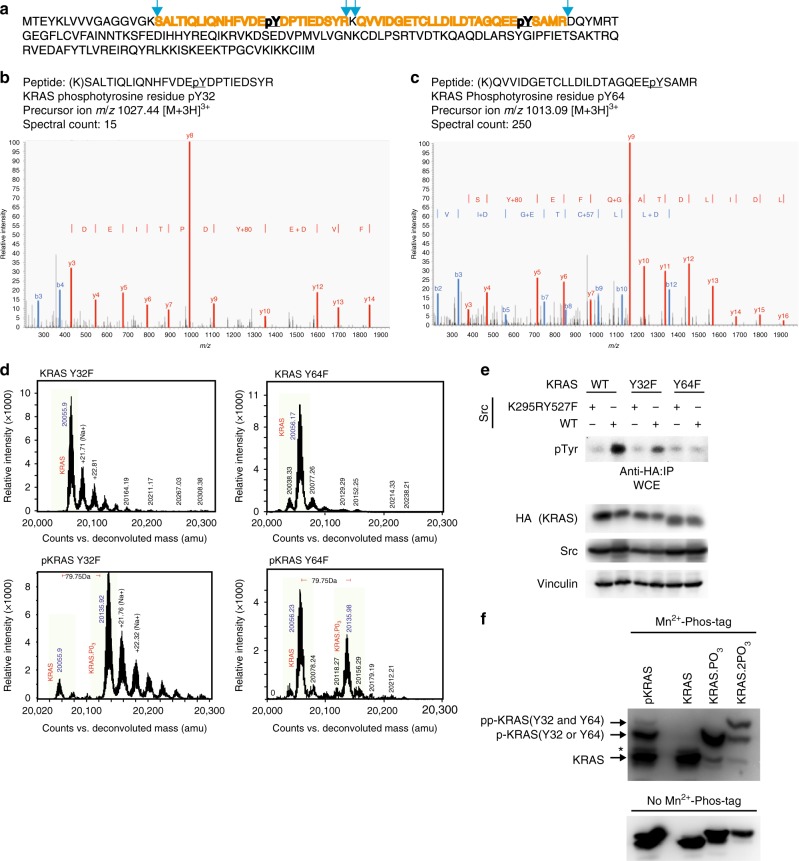
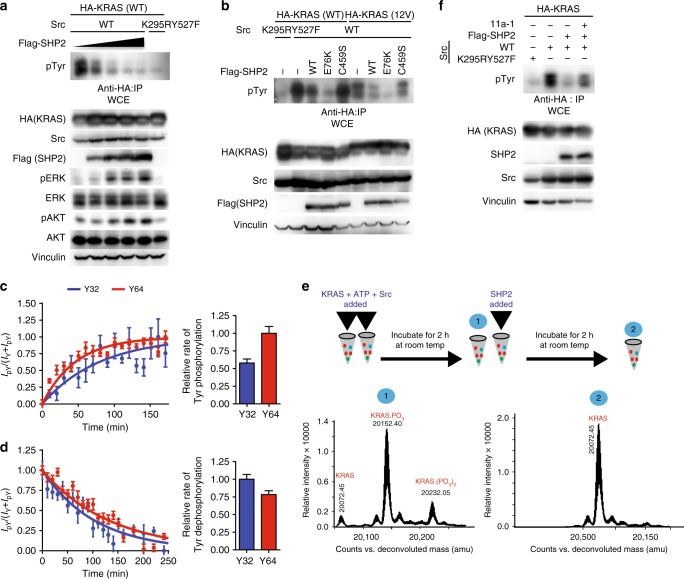
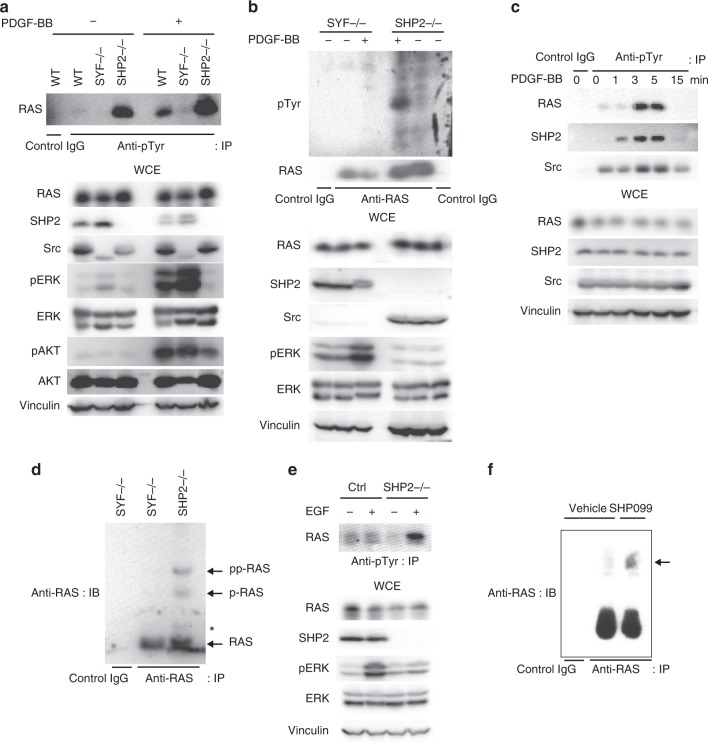
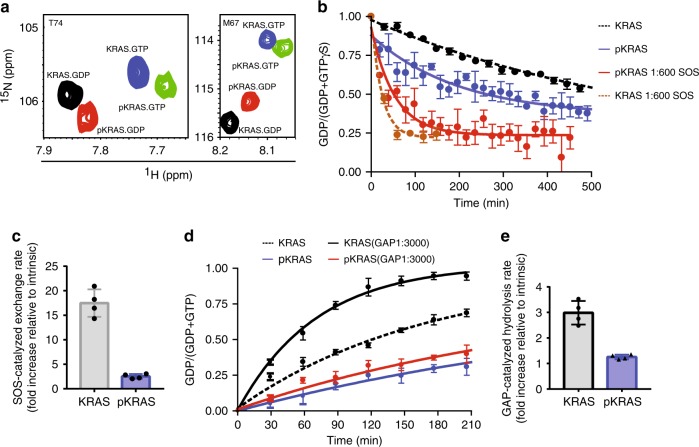
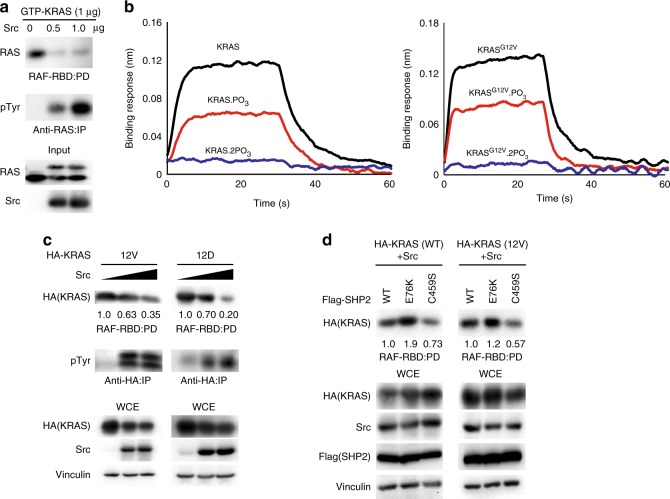
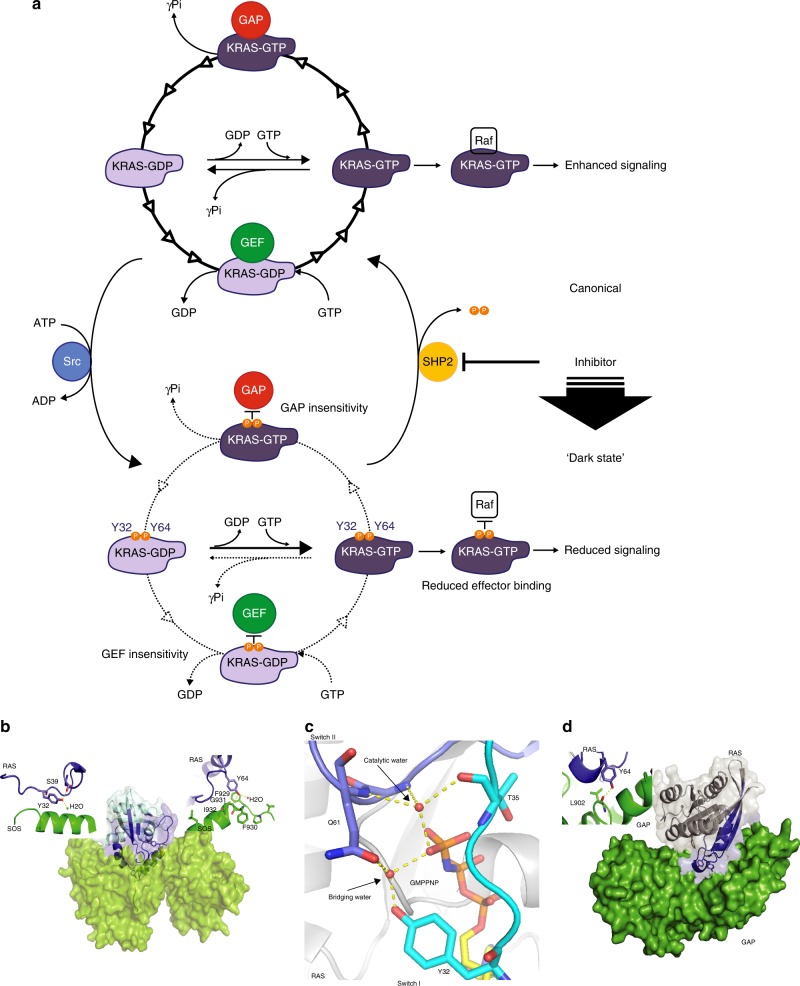
Deregulation of the RAS GTPase cycle due to mutations in the three RAS genes is commonly associated with cancer development. Protein tyrosine phosphatase SHP2 promotes RAF-to-MAPK signaling pathway and is an essential factor in RAS-driven oncogenesis. Despite the emergence of SHP2 inhibitors for the treatment of cancers harbouring mutant KRAS, the mechanism underlying SHP2 activation of KRAS signaling remains unclear. Here we report tyrosyl-phosphorylation of endogenous RAS and demonstrate that KRAS phosphorylation via Src on Tyr32 and Tyr64 alters the conformation of switch I and II regions, which stalls multiple steps of the GTPase cycle and impairs binding to effectors. In contrast, SHP2 dephosphorylates KRAS, a process that is required to maintain dynamic canonical KRAS GTPase cycle. Notably, Src- and SHP2-mediated regulation of KRAS activity extends to oncogenic KRAS and the inhibition of SHP2 disrupts the phosphorylation cycle, shifting the equilibrium of the GTPase cycle towards the stalled ‘dark state’.
Overview
The claims and statistics of this paper haven’t been checked yet.
Free: it reads the open-access text and checks the first 5 claims that cite a source we can check. Create a free account to check every claim.
Integrity signals
Registry
Cites
Statistics
Figures
Verification
Claims the paper makes
The claims and statistics of this paper haven’t been checked yet.
Free: it reads the open-access text and checks the first 5 claims that cite a source we can check. Create a free account to check every claim.
Claims other papers make about this one
Each is checked against this paper’s own text: does it say what the citing paper says it does?
The source backs part of the claim, not all of it — or backs it for a different population, condition or comparison.
In the citing paper
“Blocking SHP2 prevents the loading of GTP into the RAS, and it is aimed to provide anticancer activity in this way [68,69].”
From RAS Mutations in Advanced Colorectal Cancer: Mechanisms, Clinical Implications, and Novel Therapeutic Approaches (2025) · cites this paper as [69]
Experimental — accuracy not yet measuredThe cited source says what the claim attributes to it.
In the citing paper
“SHP2 is a protein tyrosine phosphatase that promotes RAS signaling through multiple mechanisms, including facilitation of SOS1-mediated nucleotide exchange and regulation of KRAS conformational dynamics through dephosphorylation of Tyr32 and Tyr64 [8,9].”
From Precision Targeting of KRAS-Mutant Cancers: Beyond G12C Toward G12D and Pan-RAS Therapeutic Strategies (2026) · cites this paper as [8]
In the citing paper
“Src homology region 2 domain-containing phosphatase 2 (SHP2) is a receptor-free protein-tyrosine phosphatase and regulates proliferation by activating the RAS–MAPK–ERK signaling pathway.”
From RAS Mutations in Advanced Colorectal Cancer: Mechanisms, Clinical Implications, and Novel Therapeutic Approaches (2025) · cites this paper as [69]
Self-check
Percentages, sums and reported differences re-computed from the paper’s own numbers.
The self-check needs the paper’s full text.
Citations
Cites
NMRPipe: A multidimensional spectral processing system based on UNIX pipes
Delaglio, F., Grzesiek, S., Vuister, G., Zhu, G., Pfeifer, J., & Bax, A. (1995) · Journal of Biomolecular NMR · doi:10.1007/bf00197809 · Cited by 15,965
Barbacid, M. (1987) · Annual Review of Biochemistry · doi:10.1146/annurev.bi.56.070187.004023 · Cited by 3,885
Moffitt, R. A., Marayati, R., Flate, E. L., Volmar, K. E., Loeza, S. G. H., Hoadley, K. A., Rashid, N. U., Williams, L. A., Eaton, S. C., Chung, A. H., et al. (2015) · Nature Genetics · doi:10.1038/ng.3398 · Cited by 2,194
Self-citationOrganoid models of human and mouse ductal pancreatic cancer
Boj, S. F., Hwang, C.-I., Baker, L. A., Chio, I. I. C., Engle, D. D., Corbo, V., Jager, M., Ponz-Sarvise, M., Tiriac, H., Spector, M. S., et al. (2015) · Cell · doi:10.1016/j.cell.2014.12.021 · Cited by 2,150
NMRFAM-SPARKY: enhanced software for biomolecular NMR spectroscopy
Lee, W., Tonelli, M., & Markley, J. L. (2015) · Bioinformatics · doi:10.1093/bioinformatics/btu830 · Cited by 2,045
Drugging the undruggable RAS: Mission Possible?
Cox, A. D., Fesik, S. W., Kimmelman, A. C., Luo, J., & Der, C. J. (2014) · Nature Reviews Drug Discovery · doi:10.1038/nrd4389 · Cited by 1,997
The Ras-RasGAP Complex: Structural Basis for GTPase Activation and Its Loss in Oncogenic Ras Mutants
Scheffzek, K., Ahmadian, M. R., Kabsch, W., Wiesmüller, L., Lautwein, A., Schmitz, F., & Wittinghofer, A. (1997) · Science · doi:10.1126/science.277.5324.333 · Cited by 1,543
Increasing complexity of Ras signaling
Campbell, S. L., Khosravi-Far, R., Rossman, K. L., Clark, G. J., & Der, C. J. (1998) · Oncogene · doi:10.1038/sj.onc.1202174 · Cited by 1,079
Pai, E. F., Krengel, U., Petsko, G. A., Goody, R. S., Kabsch, W., & Wittinghofer, A. (1990) · The EMBO Journal · doi:10.1002/j.1460-2075.1990.tb07409.x · Cited by 1,074
Allosteric inhibition of SHP2 phosphatase inhibits cancers driven by receptor tyrosine kinases
Chen, Y.-N. P., LaMarche, M. J., Chan, H. M., Fekkes, P., Garcia-Fortanet, J., Acker, M. G., Antonakos, B., Chen, C. H.-T., Chen, Z., Cooke, V. G., et al. (2016) · Nature · doi:10.1038/nature18621 · Cited by 925
Ras superfamily GEFs and GAPs: validated and tractable targets for cancer therapy?
Vigil, D., Cherfils, J., Rossman, K. L., & Der, C. J. (2010) · Nature Reviews Cancer · doi:10.1038/nrc2960 · Cited by 819
The structural basis of the activation of Ras by Sos
Boriack-Sjodin, P. A., Margarit, S. M., Bar-Sagi, D., & Kuriyan, J. (1998) · Nature · doi:10.1038/28548 · Cited by 799
Biochemical and Structural Analysis of Common Cancer-Associated KRAS Mutations
Hunter, J. C., Manandhar, A., Carrasco, M. A., Gurbani, D., Gondi, S., & Westover, K. D. (2015) · Molecular Cancer Research · doi:10.1158/1541-7786.mcr-15-0203 · Cited by 786
A new function for a phosphotyrosine phosphatase: linking GRB2-Sos to a receptor tyrosine kinase.
Li, W., Nishimura, R., Kashishian, A., Batzer, A. G., Kim, W. J., Cooper, J. A., & Schlessinger, J. (1994) · Molecular and Cellular Biology · doi:10.1128/mcb.14.1.509 · Cited by 481 · cited 1×
“Phosphorylated SHP2 can recruit GRB2 and SOS to phosphorylated receptor tyrosine kinases, and the docking of SHP2 SH2 domains to substrates may promote the catalytic function of the PTP domain 27,28 .”
BackgroundNichols, R. J., Haderk, F., Stahlhut, C., Schulze, C. J., Hemmati, G., Wildes, D., Tzitzilonis, C., Mordec, K., Marquez, A., Romero, J., et al. (2018) · Nature Cell Biology · doi:10.1038/s41556-018-0169-1 · Cited by 415
Protein-tyrosine-phosphatase SHPTP2 couples platelet-derived growth factor receptor beta to Ras.
Bennett, A. M., Tang, T. L., Sugimoto, S., Walsh, C. T., & Neel, B. G. (1994) · Proceedings of the National Academy of Sciences · doi:10.1073/pnas.91.15.7335 · Cited by 397
Separation and detection of large phosphoproteins using Phos-tag SDS-PAGE
Kinoshita, E., Kinoshita-Kikuta, E., & Koike, T. (2009) · Nature Protocols · doi:10.1038/nprot.2009.154 · Cited by 386
Mutant KRAS-driven cancers depend on PTPN11/SHP2 phosphatase
Ruess, D. A., Heynen, G. J., Ciecielski, K. J., Ai, J., Berninger, A., Kabacaoglu, D., Görgülü, K., Dantes, Z., Wörmann, S. M., Diakopoulos, K. N., et al. (2018) · Nature Medicine · doi:10.1038/s41591-018-0024-8 · Cited by 370
The molecular functions of Shp2 in the Ras/Mitogen-activated protein kinase (ERK1/2) pathway
Dance, M., Montagner, A., Salles, J.-P., Yart, A., & Raynal, P. (2008) · Cellular Signalling · doi:10.1016/j.cellsig.2007.10.002 · Cited by 361
SHP2 is required for growth of KRAS-mutant non-small-cell lung cancer in vivo
Mainardi, S., Mulero-Sánchez, A., Prahallad, A., Germano, G., Bosma, A., Krimpenfort, P., Lieftink, C., Steinberg, J. D., de Wit, N., Gonçalves-Ribeiro, S., et al. (2018) · Nature Medicine · doi:10.1038/s41591-018-0023-9 · Cited by 320
Targeting Src family kinases in anti-cancer therapies: turning promise into triumph
Zhang, S., & Yu, D. (2012) · Trends in Pharmacological Sciences · doi:10.1016/j.tips.2011.11.002 · Cited by 319
SHP2 inhibition prevents adaptive resistance to MEK inhibitors in multiple cancer models
Fedele, C., Ran, H., Diskin, B., Wei, W., Jen, J., Geer, M. J., Araki, K., Ozerdem, U., Simeone, D. M., Miller, G., et al. (2018) · Cancer Discovery · doi:10.1158/2159-8290.cd-18-0444 · Cited by 315
Structural Analysis of Autoinhibition in the Ras Activator Son of Sevenless
Sondermann, H., Soisson, S. M., Boykevisch, S., Yang, S.-S., Bar-Sagi, D., & Kuriyan, J. (2004) · Cell · doi:10.1016/j.cell.2004.10.005 · Cited by 311
Molecular mechanism for a role of SHP2 in epidermal growth factor receptor signaling
Agazie, Y. M., & Hayman, M. J. (2003) · Molecular and Cellular Biology · doi:10.1128/mcb.23.21.7875-7886.2003 · Cited by 306
The role of Shp2 (PTPN11) in cancer
Mohi, M. G., & Neel, B. G. (2007) · Current Opinion in Genetics & Development · doi:10.1016/j.gde.2006.12.011 · Cited by 274
Targeting wild-type KRAS-amplified gastroesophageal cancer through combined MEK and SHP2 inhibition
Wong, G. S., Zhou, J., Liu, J. B., Wu, Z., Xu, X., Li, T., Xu, D., Schumacher, S. E., Puschhof, J., McFarland, J., et al. (2018) · Nature Medicine · doi:10.1038/s41591-018-0022-x · Cited by 266
Zheng, J., Huang, X., Tan, W., Yu, D., Du, Z., Chang, J., Wei, L., Han, Y., Wang, C., Che, X., et al. (2016) · Nature Genetics · doi:10.1038/ng.3568 · Cited by 264
NMR-based functional profiling of RASopathies and oncogenic RAS mutations
Smith, M. J., Neel, B. G., & Ikura, M. (2013) · Proceedings of the National Academy of Sciences · doi:10.1073/pnas.1218173110 · Cited by 257
Self-citationInhibition of SHP2-mediated dephosphorylation of Ras suppresses oncogenesis
Bunda, S., Burrell, K., Heir, P., Zeng, L., Alamsahebpour, A., Kano, Y., Raught, B., Zhang, Z.-Y., Zadeh, G., & Ohh, M. (2015) · Nature Communications · doi:10.1038/ncomms9859 · Cited by 249
Self-citationAllosteric modulation of Ras positions Q61 for a direct role in catalysis
Buhrman, G., Holzapfel, G., Fetics, S., & Mattos, C. (2010) · Proceedings of the National Academy of Sciences · doi:10.1073/pnas.0912226107 · Cited by 245
Allosteric Effects of the Oncogenic RasQ61L Mutant on Raf-RBD
Fetics, S. K., Guterres, H., Kearney, B. M., Buhrman, G., Ma, B., Nussinov, R., & Mattos, C. (2015) · Structure · doi:10.1016/j.str.2014.12.017 · Cited by 229
High yield bacterial expression of active c‐Abl and c‐Src tyrosine kinases
Seeliger, M. A., Young, M., Henderson, M. N., Pellicena, P., King, D. S., Falick, A. M., & Kuriyan, J. (2005) · Protein Science · doi:10.1110/ps.051750905 · Cited by 219
A Novel Role for Gab1 and SHP2 in Epidermal Growth Factor-induced Ras Activation
Montagner, A., Yart, A., Dance, M., Perret, B., Salles, J.-P., & Raynal, P. (2005) · Journal of Biological Chemistry · doi:10.1074/jbc.m410012200 · Cited by 204
Cell signaling, post-translational protein modifications and NMR spectroscopy
Theillet, F.-X., Smet-Nocca, C., Liokatis, S., Thongwichian, R., Kosten, J., Yoon, M.-K., Kriwacki, R. W., Landrieu, I., Lippens, G., & Selenko, P. (2012) · Journal of Biomolecular NMR · doi:10.1007/s10858-012-9674-x · Cited by 189
Hanafusa, H., Torii, S., Yasunaga, T., Matsumoto, K., & Nishida, E. (2004) · Journal of Biological Chemistry · doi:10.1074/jbc.m312498200 · Cited by 174
The structural basis for the transition from Ras-GTP to Ras-GDP
Hall, B. E., Bar-Sagi, D., & Nassar, N. (2002) · Proceedings of the National Academy of Sciences · doi:10.1073/pnas.192453199 · Cited by 162
Toc34 is a preprotein receptor regulated by GTP and phosphorylation
Sveshnikova, N., Soll, J., & Schleiff, E. (2000) · Proceedings of the National Academy of Sciences · doi:10.1073/pnas.080491597 · Cited by 145
Role of Glutamine-61 in the Hydrolysis of GTP by p21H-ras: An Experimental and Theoretical Study
Frech, M., Darden, T. A., Pedersen, L. G., Foley, C. K., Charifson, P. S., Anderson, M. W., & Wittinghofer, A. (1994) · Biochemistry · doi:10.1021/bi00177a014 · Cited by 141
Therapeutic Potential of Targeting the Oncogenic SHP2 Phosphatase
Zeng, L.-F., Zhang, R.-Y., Yu, Z.-H., Li, S., Wu, L., Gunawan, A. M., Lane, B. S., Mali, R. S., Li, X., Chan, R. J., et al. (2014) · Journal of Medicinal Chemistry · doi:10.1021/jm5006176 · Cited by 130
Self-citationHall, B. E., Yang, S. S., Boriack-Sjodin, P. A., Kuriyan, J., & Bar-Sagi, D. (2001) · Journal of Biological Chemistry · doi:10.1074/jbc.m101727200 · Cited by 129
Tyrosine phosphorylation of G protein alpha subunits by pp60c-src.
Hausdorff, W. P., Pitcher, J. A., Luttrell, D. K., Linder, M. E., Kurose, H., Parsons, S. J., Caron, M. G., & Lefkowitz, R. J. (1992) · Proceedings of the National Academy of Sciences · doi:10.1073/pnas.89.13.5720 · Cited by 125
Targeted Inhibition of Src Kinase Signaling Attenuates Pancreatic Tumorigenesis
Nagathihalli, N. S., Smith, J. J., Revetta, F. L., Washington, M. K., & Merchant, N. B. (2010) · Molecular Cancer Therapeutics · doi:10.1158/1535-7163.mct-09-1212 · Cited by 116
Epidermal Growth Factor-dependent Regulation of Cdc42 Is Mediated by the Src Tyrosine Kinase
Tu, S., Wu, W. J., Wang, J., & Cerione, R. A. (2003) · Journal of Biological Chemistry · doi:10.1074/jbc.m307021200 · Cited by 113
Src promotes GTPase activity of Ras via tyrosine 32 phosphorylation
Bunda, S., Heir, P., Srikumar, T., Cook, J. D., Burrell, K., Kano, Y., Lee, J. E., Zadeh, G., Raught, B., & Ohh, M. (2014) · Proceedings of the National Academy of Sciences · doi:10.1073/pnas.1406559111 · Cited by 100
Self-citationIntegrated RAS signaling defined by parallel NMR detection of effectors and regulators
Smith, M. J., & Ikura, M. (2014) · Nature Chemical Biology · doi:10.1038/nchembio.1435 · Cited by 87
Self-citationThe Chloroplast Import Receptor Toc34 Functions as Preprotein-Regulated GTPase
Jelic, M., Sveshnikova, N., Motzkus, M., Hörth, P., Soll, J., & Schleiff, E. (2002) · Biological Chemistry · doi:10.1515/bc.2002.211 · Cited by 84
Characterization of the Intrinsic and TSC2-GAP–Regulated GTPase Activity of Rheb by Real-Time NMR
Marshall, C. B., Ho, J., Buerger, C., Plevin, M. J., Li, G.-Y., Li, Z., Ikura, M., & Stambolic, V. (2009) · Science Signaling · doi:10.1126/scisignal.2000029 · Cited by 68
Self-citationA HIF-Regulated VHL-PTP1B-Src Signaling Axis Identifies a Therapeutic Target in Renal Cell Carcinoma
Suwaki, N., Vanhecke, E., Atkins, K. M., Graf, M., Swabey, K., Huang, P., Schraml, P., Moch, H., Cassidy, A. M., Brewer, D., et al. (2011) · Science Translational Medicine · doi:10.1126/scitranslmed.3002004 · Cited by 66
Activated Src Oncogene Phosphorylates R-Ras and Suppresses Integrin Activity
Zou, J. X., Liu, Y., Pasquale, E. B., & Ruoslahti, E. (2002) · Journal of Biological Chemistry · doi:10.1074/jbc.m103133200 · Cited by 65
Chen, Y., Guggisberg, N., Jorda, M., Gonzalez-Angulo, A., Hennessy, B., Mills, G. B., Tan, C.-K., & Slingerland, J. M. (2009) · Clinical Cancer Research · doi:10.1158/1078-0432.ccr-08-3127 · Cited by 65
Arcaroli, J. J., Touban, B. M., Tan, A. C., Varella-Garcia, M., Powell, R. W., Eckhardt, S. G., Elvin, P., Gao, D., & Messersmith, W. A. (2010) · Clinical Cancer Research · doi:10.1158/1078-0432.ccr-10-0066 · Cited by 64
Okamoto, W., Okamoto, I., Yoshida, T., Okamoto, K., Takezawa, K., Hatashita, E., Yamada, Y., Kuwata, K., Arao, T., Yanagihara, K., et al. (2010) · Molecular Cancer Therapeutics · doi:10.1158/1535-7163.mct-10-0002 · Cited by 64
Structure of a Transient Intermediate for GTP Hydrolysis by Ras
Ford, B. A., Horn̆ák, V., Kleinman, H., & Nassar, N. N. (2006) · Structure · doi:10.1016/j.str.2005.12.010 · Cited by 59
Differential Regulation of RasGAPs in Cancer
Grewal, T., Köse, M., Tebar, F., & Enrich, C. (2011) · Genes & Cancer · doi:10.1177/1947601911407330 · Cited by 56
SHP2 phosphatase as a novel therapeutic target for melanoma treatment
Zhang, R.-Y., Yu, Z.-H., Zeng, L., Zhang, S., Bai, Y., Miao, J., Chen, L., Xie, J., & Zhang, Z.-Y. (2016) · Oncotarget · doi:10.18632/oncotarget.12074 · Cited by 55
Self-citationCombined Src and ER blockade impairs human breast cancer proliferation in vitro and in vivo
Chen, Y., Alvarez, E. A., Azzam, D., Wander, S. A., Guggisberg, N., Jordà, M., Ju, Z., Hennessy, B. T., & Slingerland, J. M. (2011) · Breast Cancer Research and Treatment · doi:10.1007/s10549-010-1024-7 · Cited by 54
Nur-E-Kamal, M. S., Sizeland, A., D'Abaco, G., & Maruta, H. (1992) · Journal of Biological Chemistry · doi:10.1016/s0021-9258(18)45958-3 · Cited by 53
Naing, A., Cohen, R. B., Dy, G. K., Hong, D. S., Dyster, L. M., Hangauer, D. G., Kwan, R., Fetterly, G. J., Kurzrock, R., & Adjei, A. A. (2013) · Investigational New Drugs · doi:10.1007/s10637-013-9929-8 · Cited by 53
Tyrosine phosphorylation of the Rab24 GTPase in cultured mammalian cells
Ding, J., Soule, G., Overmeyer, J. H., & Maltese, W. A. (2003) · Biochemical and Biophysical Research Communications · doi:10.1016/j.bbrc.2003.10.171 · Cited by 52
Tyrosine phosphorylation of RAS by ABL allosterically enhances effector binding
Ting, P. Y., Johnson, C. W., Fang, C., Cao, X., Graeber, T. G., Mattos, C., & Colicelli, J. (2015) · The FASEB Journal · doi:10.1096/fj.15-271510 · Cited by 46
Probing the GTPase cycle with real-time NMR: GAP and GEF activities in cell extracts
Marshall, C. B., Meiri, D., Smith, M. J., Mazhab-Jafari, M. T., Gasmi-Seabrook, G. M. C., Rottapel, R., Stambolic, V., & Ikura, M. (2012) · Methods · doi:10.1016/j.ymeth.2012.06.014 · Cited by 46
Self-citationNew structural and functional insight into the regulation of Ras
Kano, Y., Cook, J. D., Lee, J. E., & Ohh, M. (2016) · Seminars in Cell & Developmental Biology · doi:10.1016/j.semcdb.2016.06.006 · Cited by 38
Self-citationAhn, J., & Lee, M. (2011) · Cancer Letters · doi:10.1016/j.canlet.2011.06.034 · Cited by 38
Yamasaki, K., Shirouzu, M., Muto, Y., Fujita‐Yoshigaki, J., Koide, H., Ito, Y., Kawai, G., Hattori, S., & Yokoyama, S. (1994) · Biochemistry · doi:10.1021/bi00167a009 · Cited by 36
Inhibition of SRC Corrects GM-CSF Hypersensitivity That Underlies Juvenile Myelomonocytic Leukemia
Bunda, S., Kang, M. W., Sybingco, S. S., Weng, J., Favre, H., Shin, D. H., Irwin, M. S., Loh, M. L., & Ohh, M. (2013) · Cancer Research · doi:10.1158/0008-5472.can-12-3425 · Cited by 32
Self-citationUezu, A., Okada, H., Murakoshi, H., del Vescovo, C. D., Yasuda, R., Diviani, D., & Soderling, S. H. (2012) · Proceedings of the National Academy of Sciences · doi:10.1073/pnas.1207358109 · Cited by 31
Tyr39 of Ran Preserves the Ran·GTP Gradient by Inhibiting GTP Hydrolysis
Brucker, S., Gerwert, K. B., & Kötting, C. (2010) · Journal of Molecular Biology · doi:10.1016/j.jmb.2010.05.068 · Cited by 26
Expression and prognosis value of SHP2 in patients with pancreatic ductal adenocarcinoma
Zheng, J., Huang, S., Huang, Y.-F., Li, S., Yin, Y., Kong, W., Chen, X., & Ouyang, X. (2015) · Tumor Biology · doi:10.1007/s13277-015-4675-5 · Cited by 24
Cited by
Pan-KRAS Inhibitor Disables Oncogenic Signalling and Tumour Growth
Kim, D., Herdeis, L., Rudolph, D., Zhao, Y., Böttcher, J., Vides, A., Ayala-Santos, C. I., Pourfarjam, Y., Cuevas-Navarro, A., Xue, J. Y., et al. (2023) · Nature · doi:10.1038/s41586-023-06123-3 · Cited by 534
The current understanding of KRAS protein structure and dynamics
Pantsar, T. (2020) · Computational and Structural Biotechnology Journal · doi:10.1016/j.csbj.2019.12.004 · Cited by 282
“The tyrosine residues Y32 and Y64, in switch-I and switch-II, respectively, can be phosphorylated via c-Src [80].”
BackgroundApplication of Fragment-Based Drug Discovery to Versatile Targets
Li, Q. (2020) · Frontiers in Molecular Biosciences · doi:10.3389/fmolb.2020.00180 · Cited by 198
Therapeutic targeting of RAS: New hope for drugging the “undruggable”
Khan, I., Rhett, J. M., & O'Bryan, J. P. (2020) · Biochimica et Biophysica Acta (BBA) - Molecular Cell Research · doi:10.1016/j.bbamcr.2019.118570 · Cited by 110
“In a recent study, Src was shown to directly phosphorylate KRAS on Tyr32 and Tyr64, altering the conformations of SW1 and SW2, respectively [47].”
BackgroundVainonen, J. P., Momeny, M., & Westermarck, J. (2021) · Science Translational Medicine · doi:10.1126/scitranslmed.abe2967 · Cited by 104
Metadata
- Authors
- Kano, Y., Gebregiworgis, T., Marshall, C. B., Radulovich, N., Poon, B. P. K., St-Germain, J., Cook, J. D., Valencia-Sama, I., Grant, B. M. M., Herrera, S. G., Miao, J., Raught, B., Irwin, M. S., Lee, J. E., Yeh, J. J., Zhang, Z.-Y., Tsao, M.-S., Ikura, M., & Ohh, M.
- Affiliations
- University of Toronto (CA)
- University Health Network (CA)
- University of North Carolina at Chapel Hill (US)
- Purdue University West Lafayette (US)
- Hospital for Sick Children (CA)
- Corresponding author
- Ohh, Michael
- ORCID
- Venue
- Nature Communications
- Published
- 2019-01-15
- Volume
- 10
- Issue
- 1
- Pages
- 224-224
- ISSN
- 2041-1723 (ISSN-L)
- PMC
- PMC6333830
- OpenAlex
- W2909726024
- Cited by
- 103
- References
- 68
- Citations by year
- 2026: 12 · 2025: 8 · 2024: 16 · 2023: 14 · 2022: 20 · 2021: 13 · 2020: 14 · 2019: 6
- FWCI
- 4.38
- Type
- journal article
- Language
- en
- Open access
- gold
- doi.org
- Licence
- cc-by
- creativecommons.org/licenses/by/4.0 (tdm)
- creativecommons.org/licenses/by/4.0 (vor)
- Locations
- Nature Communications (publishedVersion, cc-by)
- Europe PMC (PubMed Central) (publishedVersion, other-oa)
- PubMed Central (publishedVersion, cc-by)
- PubMed (publishedVersion)
- Carolina Digital Repository (University of North Carolina at Chapel Hill) (submittedVersion)
- RePEc: Research Papers in Economics (submittedVersion)
- DOAJ (DOAJ: Directory of Open Access Journals) (submittedVersion, cc-by-sa)
- DOAJ (DOAJ: Directory of Open Access Journals) (submittedVersion)
- UNC Libraries
- Funders
- Cancer Research Society
- University of Toronto
- National Institutes of Health (RO1 CA207288)
- Canadian Institutes of Health Research (FDN‐1542284)
- Canadian Cancer Society Research Institute (703209)
- Japan Society for the Promotion of Science
- National Cancer Institute (R01CA207288, R01CA199064)
- Topics
- Life Sciences › Biochemistry, Genetics and Molecular Biology › Molecular Biology › Protein Kinase Regulation and GTPase Signaling
- Life Sciences › Biochemistry, Genetics and Molecular Biology › Molecular Biology › Protein Tyrosine Phosphatases
- Life Sciences › Biochemistry, Genetics and Molecular Biology › Cell Biology › Cellular transport and secretion
- Keywords
- KRAS, tyrosine phosphorylation, SHP2, Src kinase, oncogenic KRAS, SHP2 inhibitors, dark states, MAPK signaling
- MeSH terms
- Animals, Antineoplastic Agents, Humans, Male, Pancreatic Neoplasms, Proto-Oncogene Proteins p21(ras), Mice, SCID, GTP Phosphohydrolases, Carcinoma, Pancreatic Ductal, Xenograft Model Antitumor Assays, raf Kinases, Protein Tyrosine Phosphatase, Non-Receptor Type 11, HEK293 Cells
About these checks
Registry, retraction, Cites and statistics results are computed, not judged, with one exception: a printed reference that no index lists is read once by a model before it counts as a citation error. Claims are extracted by a model and kept only when their quote appears verbatim in the text; each cited source is then checked, with a model’s help, for whether it says what the claim relies on. Those verdicts can be wrong — read the claim’s quote and the cited source before relying on one.
Statistics and arithmetic are recomputed, not judged.
Confidence bands are shown only for fields calibrated on our annotated test set. None is calibrated yet, so no band is shown.
What counts as a claim ›How we measure confidence ›How we check this ›
Are you an author, or do you see a problem with this page? Request a review
Data sources
Bibliographic data: Semantic Scholar, OpenAlex, Crossref.
Contains information from the Semantic Scholar Academic Graph Datasets, made available under the ODC Attribution License (ODC-BY 1.0).
Semantic Scholar’s data is described in: Kinney, R., et al. (2023). The Semantic Scholar Open Data Platform. arXiv:2301.10140.
