

Barcoding reveals complex clonal behavior in patient-derived xenografts of metastatic triple negative breast cancer
Open accessThe DOI matches its Crossref record; 55 of the 56 references it cites were found in a registry or an index.
Abstract
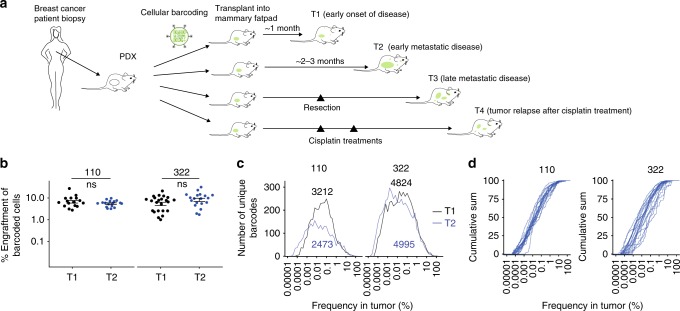
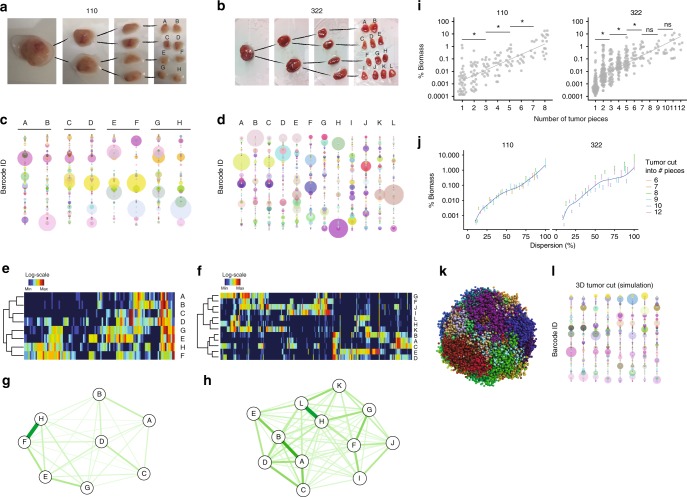
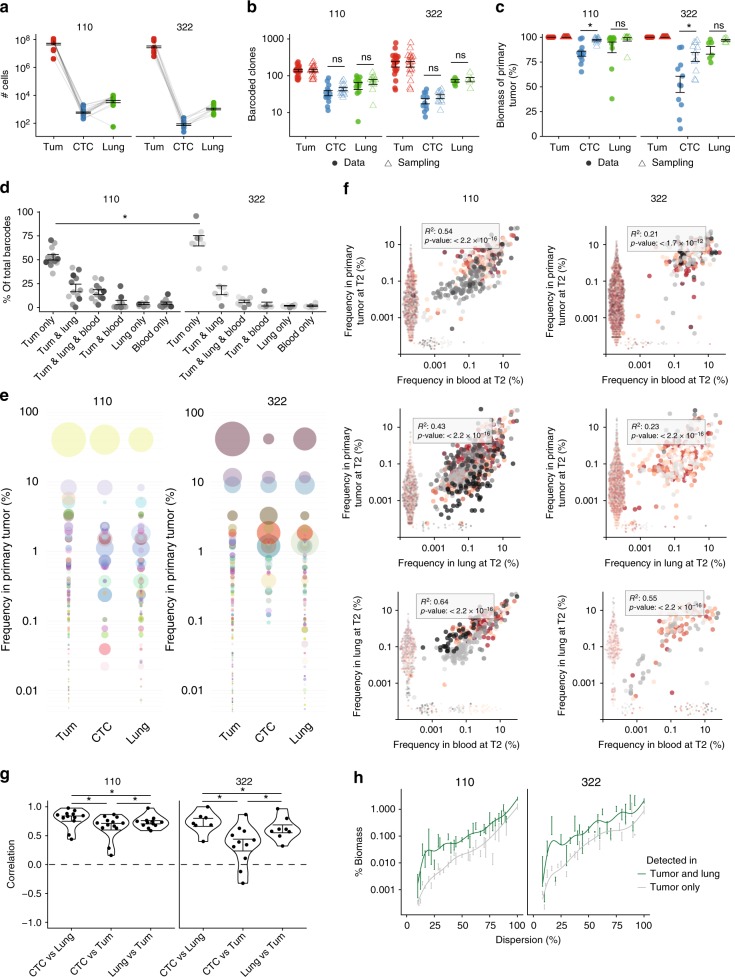
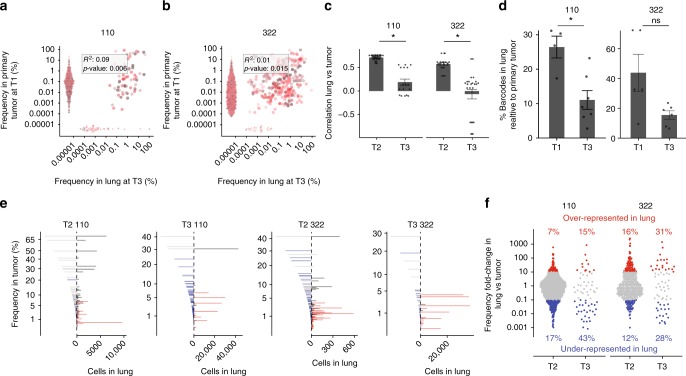
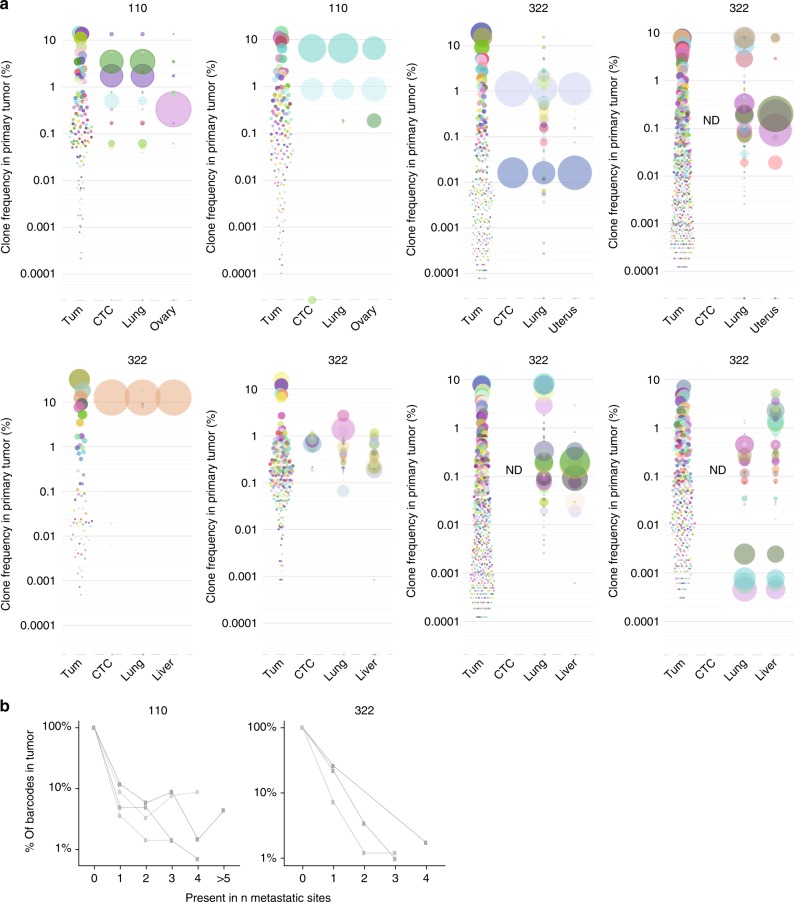
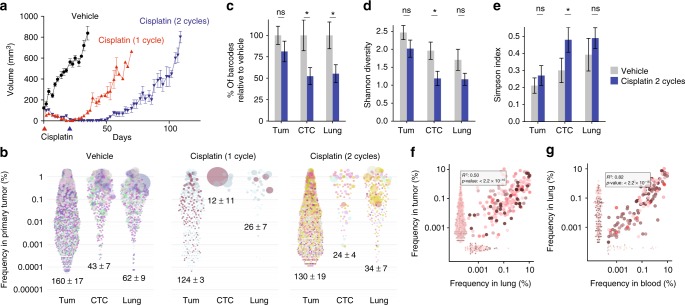
Primary triple negative breast cancers (TNBC) are prone to dissemination but sub-clonal relationships between tumors and resulting metastases are poorly understood. Here we use cellular barcoding of two treatment-naïve TNBC patient-derived xenografts (PDXs) to track the spatio-temporal fate of thousands of barcoded clones in primary tumors, and their metastases. Tumor resection had a major impact on reducing clonal diversity in secondary sites, indicating that most disseminated tumor cells lacked the capacity to ‘seed’, hence originated from ‘shedders’ that did not persist. The few clones that continued to grow after resection i.e. ‘seeders’, did not correlate in frequency with their parental clones in primary tumors. Cisplatin treatment of one BRCA1-mutated PDX model to non-palpable levels had a surprisingly minor impact on clonal diversity in the relapsed tumor yet purged 50% of distal clones. Therefore, clonal features of shedding, seeding and drug resistance are important factors to consider for the design of therapeutic strategies.
Overview
The claims and statistics of this paper haven’t been checked yet.
Free: it reads the open-access text and checks the first 5 claims that cite a source we can check. Create a free account to check every claim.
Integrity signals
Registry
Cites
Statistics
Figures
Verification
Claims the paper makes
The claims and statistics of this paper haven’t been checked yet.
Free: it reads the open-access text and checks the first 5 claims that cite a source we can check. Create a free account to check every claim.
Claims other papers make about this one
Each is checked against this paper’s own text: does it say what the citing paper says it does?
The cited source says what the claim attributes to it.
In the citing paper
“Recent significant advances in single-cell technologies, especially the single-cell RNA sequencing (scRNA-seq) technology, have enabled the analysis of intercellular heterogeneity at a very fine resolution8,9 and helped us to have many breakthroughs in understanding disease mechanisms10, such as breast cancer11, liver cancer12 and COVID-1913.”
From ASGARD is a single-cell guided pipeline to aid repurposing of drugs (2023) · cites this paper as [11]
Self-check
Percentages, sums and reported differences re-computed from the paper’s own numbers.
The self-check needs the paper’s full text.
Citations
Cites
Robinson, M. D., McCarthy, D. J., & Smyth, G. K. (2010) · Bioinformatics · doi:10.1093/bioinformatics/btp616 · Cited by 41,364
Self-citationPD-1 and PD-L1 Immune Checkpoint Blockade to Treat Breast Cancer
Hartkopf, A. D., Taran, F.-A., Wallwiener, M., Walter, C. B., Krämer, B., Grischke, E.-M., & Brucker, S. Y. (2016) · Breast Care · doi:10.1159/000453569 · Cited by 30,845
Molecular portraits of human breast tumours
Perou, C. M., Sørlie, T., Eisen, M. B., van de Rijn, M., Jeffrey, S. S., Rees, C. A., Pollack, J. R., Ross, D. T., Johnsen, H., Akslen, L. A., et al. (2000) · Nature · doi:10.1038/35021093 · Cited by 16,261
ggplot2: Elegant Graphics for Data Analysis
Wickham, H. (2009) · doi:10.1007/978-0-387-98141-3 · Cited by 14,447
Nishimura, R., Osako, T., Nishiyama, Y., Tashima, R., Nakano, M., Fujisue, M., Toyozumi, Y., & Arima, N. (2013) · Oncology · doi:10.1159/000353099 · Cited by 13,166
Intratumor Heterogeneity and Branched Evolution Revealed by Multiregion Sequencing
Gerlinger, M., Rowan, A. J., Horswell, S., Larkin, J., Endesfelder, D., Gronroos, E., Martinez, P., Matthews, N., Stewart, A., Tarpey, P., et al. (2012) · New England Journal of Medicine · doi:10.1056/nejmoa1113205 · Cited by 7,774
The genomic and transcriptomic architecture of 2,000 breast tumours reveals novel subgroups
METABRIC Group, Curtis, C., Shah, S. P., Chin, S.-F., Turashvili, G., Rueda, O. M., Dunning, M. J., Speed, D., Lynch, A. G., Samarajiwa, S., et al. (2012) · Nature · doi:10.1038/nature10983 · Cited by 6,097
Single-cell RNA-seq highlights intratumoral heterogeneity in primary glioblastoma
Patel, A. P., Tirosh, I., Trombetta, J. J., Shalek, A. K., Gillespie, S. M., Wakimoto, H., Cahill, D. P., Nahed, B. V., Curry, W. T., Martuza, R. L., et al. (2014) · Science · doi:10.1126/science.1254257 · Cited by 5,063
Elkablawy, M. A., Albasri, A. M., Mohammed, R. A., Hussainy, A. S., Nouh, M. M., & Alhujaily, A. S. (2016) · Saudi Medical Journal · doi:10.15537/smj.2016.2.12285 · Cited by 4,382
Tumour evolution inferred by single-cell sequencing
Navin, N., Kendall, J., Troge, J., Andrews, P., Rodgers, L., McIndoo, J., Cook, K., Stepansky, A., Levy, D., Esposito, D., et al. (2011) · Nature · doi:10.1038/nature09807 · Cited by 2,598
Cited by
Items 101–142 of 142
Aalam, S. M. M., Tang, X., Song, J., Ray, U., Russell, S. J., Weroha, S. J., Bakkum-Gamez, J. N., Shridhar, V., Sherman, M. E., Eaves, C. J., et al. (2022) · NAR Cancer · doi:10.1093/narcan/zcac022 · Cited by 7
“Several ‘proof-of-concept’ studies have already shown the ability of this technology to delineate at a clonal level, the heterogeneity of normal stem cell (5,10–12) and cancer cell growth properties (3,4,13–18) and resistance of the latter to defined therapeutics (7,8,13,14,19).”
BackgroundLineage Tracing Reveals Clone-Specific Responses to Doxorubicin in Triple-Negative Breast CancerPreprint
Morgan, D., Gardner, A. L., & Brock, A. (2025) · bioRxiv (Cold Spring Harbor Laboratory) · doi:10.1101/2025.03.18.643980 · Cited by 7
“However, recent advancements in lineage-tracing technologies [10–12] and single-cell RNA sequencing (scRNA-seq) [13–17] now enable the tracking and characterization of clonal responses to treatment with high granularity.”
Nowlan, B., Futrega, K., Williams, E. D., & Doran, M. R. (2021) · Stem Cell Research & Therapy · doi:10.1186/s13287-021-02297-7 · Cited by 6
“Viral bar coding of cells, to facilitate clonal tracking, is increasingly feasible [48], but remains costly.”
BackgroundLan, W., Gou, X., Wu, Y., Liu, N., Lu, L., Cheng, P., & Shi, W. (2024) · Angewandte Chemie · doi:10.1002/ange.202401766 · Cited by 7
In Vivo Tracking of Hematopoietic Stem and Progenitor Cell Ontogeny by Cellular Barcoding
Tak, T., Eisele, A. S., & Perié, L. (2021) · Methods in molecular biology · doi:10.1007/978-1-0716-1425-9_21 · Cited by 5
Inclusion of temporal information in single cell transcriptomics
Olivares‐Chauvet, P., & Junker, J. P. (2020) · The International Journal of Biochemistry & Cell Biology · doi:10.1016/j.biocel.2020.105745 · Cited by 5
Hesin, A., Kumar, S., Gahramanov, V., Becker, M., Vilenchik, M., Alexandrov, I. M., Yaglom, J. A., & Sherman, M. Y. (2022) · Cancers · doi:10.3390/cancers14061381 · Cited by 4
“This problem was encountered, for example, in a published study of the effects of cisplatin in a PDX model measured by standard barcoding [20].”
BackgroundVafaizadeh, V., Peuhu, E., Mikkola, M. L., Khaled, W. T., Bentires‐Alj, M., & Koledova, Z. S. (2019) · Journal of Mammary Gland Biology and Neoplasia · doi:10.1007/s10911-019-09436-0 · Cited by 4
Hernández‐Guerrero, T., Baños, N., Nevado, L. D. P., Mahíllo, I., De-Speville, B. D., Calvo, E., Wick, M. J., García‐Foncillas, J., & Moreno, V. (2023) · Cancers · doi:10.3390/cancers15225402 · Cited by 3
“For example, in triple-negative breast cancer, engraftment has resulted to be significantly higher than HER2 positive and luminal cancers, in line with tumor grade and hormonal environment influencing final engraftment rates [18,26,39,41].”
BackgroundResultInfluentialEstrogen receptor positive breast cancer patient–derived xenograft models in translational research
Chia, K., Freelander, A., Kumar, S. S., Parker, A., Segara, D., Portman, N., & Lim, E. (2020) · Current Opinion in Endocrine and Metabolic Research · doi:10.1016/j.coemr.2020.10.004 · Cited by 3
Benchmarking of lightweight-mapping based single-cell RNA-seq pre-processingPreprint
Booeshaghi, A. S., & Pachter, L. S. (2021) · bioRxiv (Cold Spring Harbor Laboratory) · doi:10.1101/2021.01.25.428188 · Cited by 4
Circulating Tumor Cells: Pathological, Molecular and Functional Characteristics
Grzybowska, E. A. (2024) · International Journal of Molecular Sciences · doi:10.3390/ijms25158198 · Cited by 3
“It has been observed that metastatic disease can vary considerably from primary tumors [16]; molecular studies on CTCs can provide information on the current state of tumor cells in a specific patient, which could be a big step towards their use in personalized medicine.”
BackgroundElms, M. L., Jenks, A. D., Chowdhury, A., Krásný, L., Chadha, M., Low, K., Harrison, P. T., Kerrison, W. G. J., Jones, R. L., & Huang, P. H. (2025) · Communications Biology · doi:10.1038/s42003-025-08652-1 · Cited by 3
Komljenovic, D., Bäuerle, T. D., Alves-de-Lima, J., Trigueros, L., Dietz, C., Winter, Z., Araceli, T., Strotzer, Q., Wendl, C. M., Brendel, M., et al. (2026) · Molecular Cancer · doi:10.1186/s12943-026-02574-0 · Cited by 2
“…experimental setup—where tumor cells are injected directly into the brain—these secondary lesions could not have originated from primary tumor–derived metastasis-initiating cells (primMICs), as previously proposed [14], but instead must arise from pre-existing cerebral metastatic lesions (secMICs).”
Serrano, A., Weber, T. S., Berthelet, J., Ftouni, S., El-Saafin, F., Wimmer, V. C., Rogers, K. L., Lim, E., Charafe‐Jauffret, E., Ginestier, C., et al. (2026) · Molecular Systems Biology · doi:10.1038/s44320-026-00194-w · Cited by 2
“Mimicking the number of clones detected in previous cellular barcoding experiments (Merino et al, 2019), simulations of fat pad transplantation experiments were initiated in silico with a starting number of two hundred cells, where each cell was given a unique identity (using a virtual tag stored…”
InfluentialSelf-citationLake, K. E., Colonnetta, M. M., Smith, C., Martinez-Algarin, K., Saunders, K., Mohta, S., Pena, J., McArthur, H. L., Reddy, S. M., Torres, E. T. R., et al. (2024) · Frontiers in Cell and Developmental Biology · doi:10.3389/fcell.2024.1358583 · Cited by 2
Breast Cancer Heterogeneity and Its Implication in Precision Therapy
Candanedo-González, F., Remírez-Castellanos, A. L., Salazar-Gomez, U., Valenzuela-Gonzalez, W., Chavira-Macias, C., & Gamboa‐Domínguez, A. (2025) · IntechOpen eBooks · doi:10.5772/intechopen.1007503 · Cited by 3
Recording Lineage History with Cellular Barcodes in the Mammary Epithelium and in Breast Cancer
Merle, C., & Fré, S. (2025) · Advances in experimental medicine and biology · doi:10.1007/978-3-031-70875-6_5 · Cited by 2
Limitations and optimizations of cellular lineages tracking
Leibovich, N., & Goyal, S. (2025) · PLoS Computational Biology · doi:10.1371/journal.pcbi.1012880 · Cited by 2
Barcodes based on nucleic acid sequences: Applications and challenges (Review)
Wei, Y., & Lin, F. (2025) · Molecular Medicine Reports · doi:10.3892/mmr.2025.13552 · Cited by 4
“In addition, Merino et al (20) aimed to uncover the subclonal relationship between primary triple‑negative breast cancer and its metastasis.”
InfluentialBerthelet, J., Foroutan, M., Bhuva, D. D., Whitfield, H. J., El-Saafin, F., Cursons, J., Serrano, A., Merdas, M., Lim, E., Charafe‐Jauffret, E., et al. (2022) · Cancers · doi:10.3390/cancers14102404 · Cited by 2
“While the predictive signature we present for cisplatin does not itself contain BRCA-1 or -2, it would be interesting to extend predictive models to take several -omics analyses into consideration and evaluate the fitness of resistant clones under treatment pressure [69,70].”
BackgroundSelf-citationExpanding the single-cell genomics toolkit
Minkina, A., & Shendure, J. (2019) · Nature Genetics · doi:10.1038/s41588-019-0429-4 · Cited by 2
Commentary on statistical mechanical models of cancer
Zhu, G., & Lin, Z. (2021) · Physica A Statistical Mechanics and its Applications · doi:10.1016/j.physa.2021.125877 · Cited by 2
A human commons cell atlas reveals cell type specificity for OAS1 isoformsPreprint
Gálvez-Merchán, Á., Booeshaghi, A. S., & Pachter, L. S. (2024) · bioRxiv (Cold Spring Harbor Laboratory) · doi:10.1101/2024.03.23.586412 · Cited by 5
Su, W., Huang, X., Ji, X., Shi, X., Song, Y., Ma, L., Zhu, W., Wang, X., Lin, S., Ma, Y., et al. (2025) · Bioorganic Chemistry · doi:10.1016/j.bioorg.2025.109032 · Cited by 1
The evolution of hematopoietic models through a clonal lens
Tomei, S., Weber, T., & Naik, S. H. (2026) · Blood · doi:10.1182/blood.2024028189 · Cited by 1
Self-citationTranslational insights and clinical challenges of targeting cancer stem cells
Ahmed, M., Al-Haidari, A., Agarwal, S., Sun, J., Hammarlund, E. U., Rönnstrand, L., Pienta, K. J., Tatlı, Ö., & Kazi, J. U. (2026) · Signal Transduction and Targeted Therapy · doi:10.1038/s41392-026-02887-y · Cited by 2
“56,134 137 In human samples, naturally occurring mitochondrial mutations captured in single-cell datasets can serve as intrinsic lineage marks, enabling retrospective lineage inference without experimental labeling.”
Nonepithelial cancer dissemination: specificities and challenges
Diazzi, S., & Ablain, J. (2023) · Trends in cancer · doi:10.1016/j.trecan.2023.11.006 · Cited by 1
Clonal dynamics of surface-driven growing tissues
Mukhamadiarov, R. I., Ciarchi, M., Olmeda, F., & Rulands, S. (2024) · Physical review. E · doi:10.1103/physreve.109.064407 · Cited by 1
Cell barcoding with tandem fluorescent proteins enables high-throughput signaling dynamics analysisPreprint
Wu, J.-W., Yang, J.-M., Wang, S., Chen, Y., & Huang, C. (2025) · bioRxiv (Cold Spring Harbor Laboratory) · doi:10.1101/2025.06.17.660155 · Cited by 2
“For example, barcodes enable the tracing of cell lineages and simultaneous evaluation of multiple genetic modifications to accelerate the discovery of functional gene targets [5–9].”
Self-citationThe attack of the “seeding” clones
Montero, J. (2019) · Science Translational Medicine · doi:10.1126/scitranslmed.aax0872
Hemodynamic forces control circulating tumor cells dissemination
Follain, G. (2019) · theses.fr (ABES) · doi:10.70675/21fbeeb7zec60z4d52z8434zd8eb3e54cc98
Nowlan, B. (2021) · Queensland University of Technology · doi:10.5204/thesis.eprints.225947 · Cited by 1
Monterosso, M. E. (2022) · Queensland University of Technology · doi:10.5204/thesis.eprints.236375
Analysis of cancer cells with stem cell-like properties using gene expression profiling
Nimura, K. (2024) · SEIBUTSU BUTSURI KAGAKU · doi:10.2198/electroph.68.91
Modelling phenotypic heterogeneity and cell-state transitions during cancer progression
Gopalan, V., Goyal, S., & Rehman, S. K. (2025) · Oxford University Press eBooks · doi:10.1093/med/9780192867636.003.0010
Mechanical phenotyping of cancer stemness in colorectal cancer
Conti, S. (2023) · Dipòsit Digital de la Universitat de Barcelona (Universitat de Barcelona)
Chemotherapy reshapes cellular clonal landscape via persister programs in breast cancer xenograftsPreprint
Kronheim, S., Wang, J. C. M., Chen, J. Y., Guerrero-Romero, D., Chin, S., Lerda, G., Lui, A. J. W., Rueda, O. M., Gaiti, F., Caldas, C., et al. (2026) · bioRxiv (Cold Spring Harbor Laboratory) · doi:10.64898/2026.04.02.716097
“The approach enables characterizing how distinct cell clones emerge, expand or decline within a complex heterogeneous tumor 6–9 .”
Yang, Y., Yang, J., Liang, Y., & Yang, Q. (2026) · Molecular and Digital Medicine · doi:10.1016/j.mdmed.2026.100004 · Cited by 5
Li, C., Wang, Z., Sun, M., Yang, J., Qu, H., Xue, Y., & Hu, Y. (2026) · Journal of Applied Biomaterials & Functional Materials · doi:10.1177/22808000261489164
Perticari, G., DeMartino, J., Fumagalli, A., Ayyildiz, D., Doulkeridou, S., Kester, L. A., Kooiman, J., Margaritis, T., & Drost, J. (2026) · bioRxiv (Cold Spring Harbor Laboratory) · doi:10.64898/2026.11.03.761870
Metadata
- Authors
- Merino, D., Weber, T. S., Serrano, A., Vaillant, F., Liu, K., Pal, B., Di Stefano, L., Schreuder, J., Lin, D., Chen, Y., Asselin-Labat, M. L., Schumacher, T. N., Cameron, D., Smyth, G. K., Papenfuss, A. T., Lindeman, G. J., Visvader, J. E., & Naik, S. H.
- Affiliations
- The University of Melbourne (AU)
- The Netherlands Cancer Institute (NL)
- Walter and Eliza Hall Institute of Medical Research (AU)
- The Royal Melbourne Hospital (AU)
- Corresponding author
- Visvader, J. E.
- Naik, S. H.
- ORCID
- Venue
- Nature Communications
- Published
- 2019-02-15
- Volume
- 10
- Issue
- 1
- Pages
- 766-766
- ISSN
- 2041-1723 (ISSN-L)
- PMC
- PMC6377663
- OpenAlex
- W2912649747
- Cited by
- 145
- References
- 56
- Citations by year
- 2026: 7 · 2025: 18 · 2024: 22 · 2023: 21 · 2022: 23 · 2021: 28 · 2020: 16 · 2019: 10
- FWCI
- 6.07
- Type
- journal article
- Language
- en
- Update notices
- correction (2019-04-24)
- Open access
- gold
- doi.org
- Licence
- cc-by
- creativecommons.org/licenses/by/4.0 (tdm)
- creativecommons.org/licenses/by/4.0 (vor)
- Locations
- Nature Communications (publishedVersion, cc-by)
- Europe PMC (PubMed Central) (publishedVersion, cc-by)
- PubMed Central (publishedVersion, cc-by)
- PubMed (publishedVersion)
- Minerva Access (University of Melbourne) (submittedVersion, cc-by)
- RePEc: Research Papers in Economics (submittedVersion)
- DOAJ (DOAJ: Directory of Open Access Journals) (submittedVersion, cc-by-sa)
- DOAJ (DOAJ: Directory of Open Access Journals) (submittedVersion)
- Funders
- Australian Cancer Research Foundation
- National Breast Cancer Foundation
- Medical Research Council (1016701)
- National Health and Medical Research Council (1116955, 1102742, 1054618, 1086727, 1058892, 1040978, 1016701, 1101378, 1124812, 1037230, 1078730, 1062820)
- Topics
- Life Sciences › Biochemistry, Genetics and Molecular Biology › Cancer Research › Cancer Genomics and Diagnostics
- Health Sciences › Medicine › Oncology › Cancer Cells and Metastasis
- Life Sciences › Biochemistry, Genetics and Molecular Biology › Cancer Research › Breast Cancer Treatment Studies
- Keywords
- triple-negative breast cancer, patient-derived xenografts, cellular barcoding, clonal evolution, metastasis, disseminated tumor cells, tumor seeding, tumor resection, cisplatin, BRCA1 mutation, drug resistance, clonal diversity
- MeSH terms
- Animals, Cisplatin, Clone Cells, Disease Models, Animal, Female, Humans, Mutation, Neoplasm Recurrence, Local, Gene Expression Regulation, Neoplastic, BRCA1 Protein, Xenograft Model Antitumor Assays, Cell Line, Tumor, Mice, Triple Negative Breast Neoplasms
About these checks
Registry, retraction, Cites and statistics results are computed, not judged, with one exception: a printed reference that no index lists is read once by a model before it counts as a citation error. Claims are extracted by a model and kept only when their quote appears verbatim in the text; each cited source is then checked, with a model’s help, for whether it says what the claim relies on. Those verdicts can be wrong — read the claim’s quote and the cited source before relying on one.
Statistics and arithmetic are recomputed, not judged.
Confidence bands are shown only for fields calibrated on our annotated test set. None is calibrated yet, so no band is shown.
What counts as a claim ›How we measure confidence ›How we check this ›
Are you an author, or do you see a problem with this page? Request a review
Data sources
Bibliographic data: Semantic Scholar, OpenAlex, Crossref.
Contains information from the Semantic Scholar Academic Graph Datasets, made available under the ODC Attribution License (ODC-BY 1.0).
Semantic Scholar’s data is described in: Kinney, R., et al. (2023). The Semantic Scholar Open Data Platform. arXiv:2301.10140.
