

Barcoding reveals complex clonal behavior in patient-derived xenografts of metastatic triple negative breast cancer
Open accessThe DOI matches its Crossref record; 55 of the 56 references it cites were found in a registry or an index.
Abstract
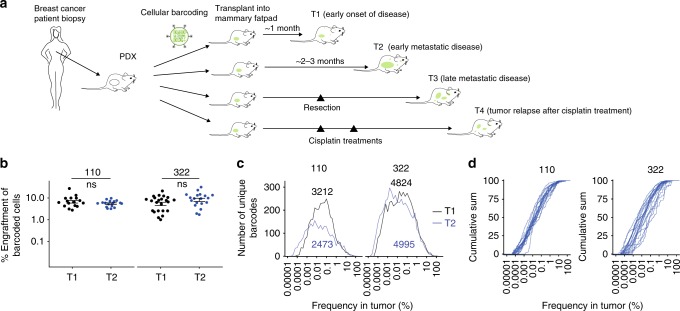
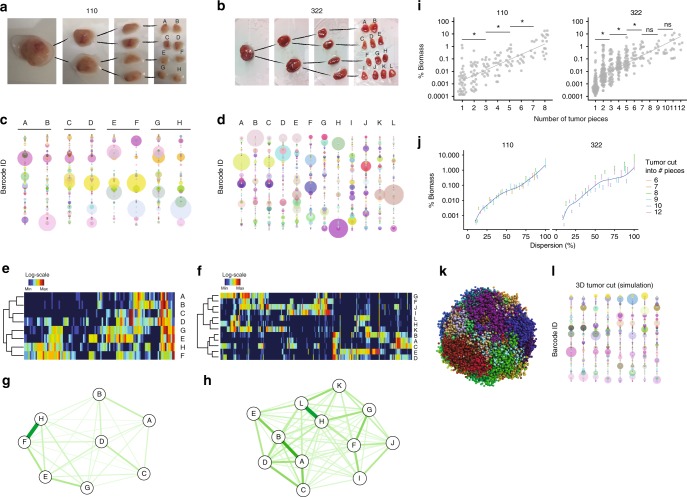
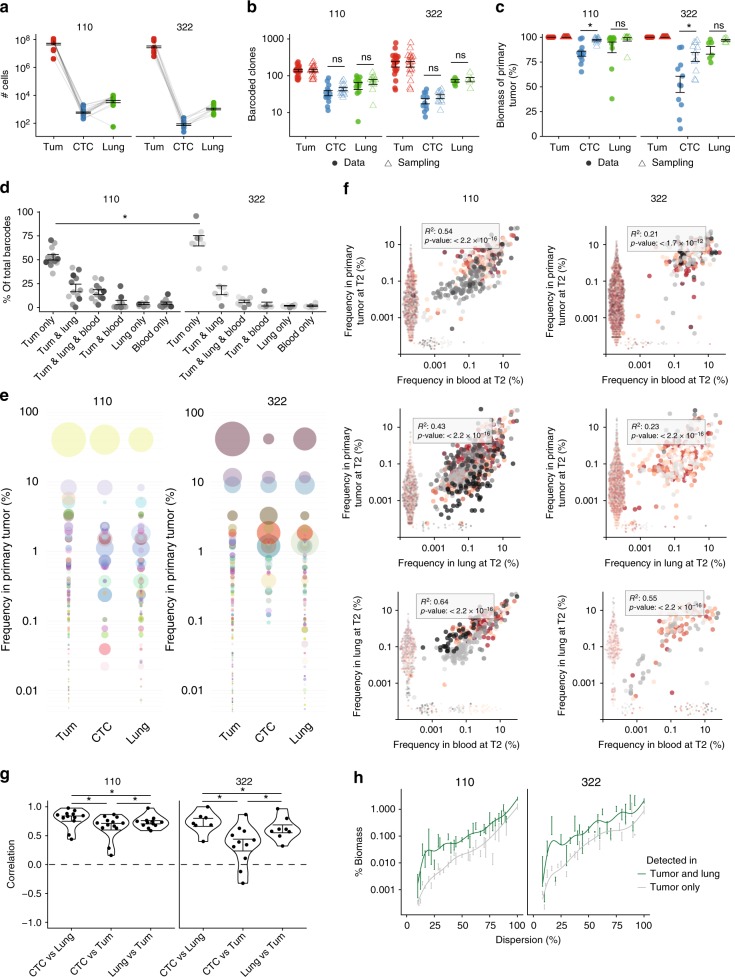
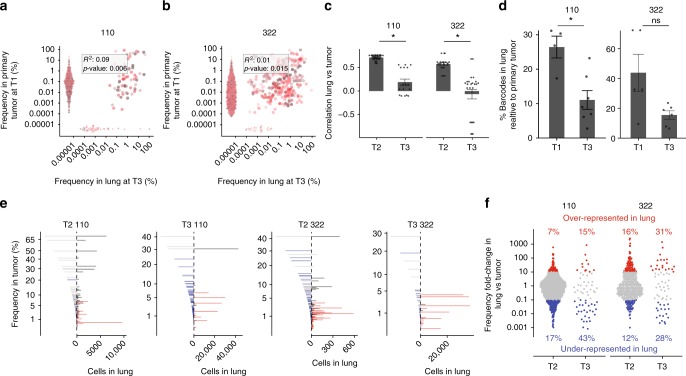
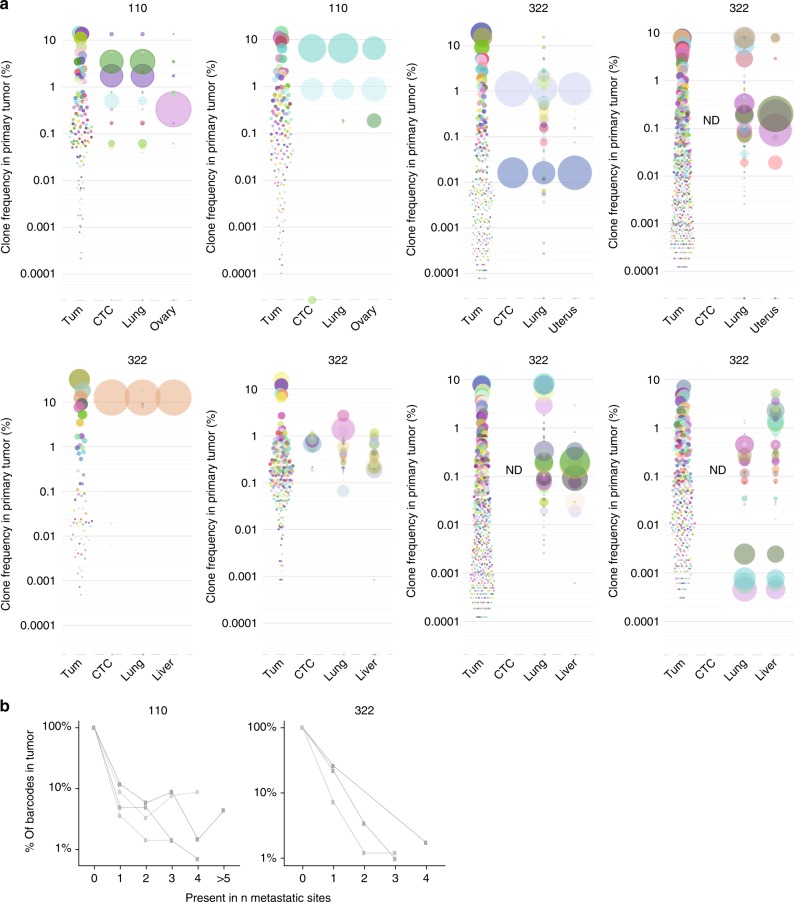
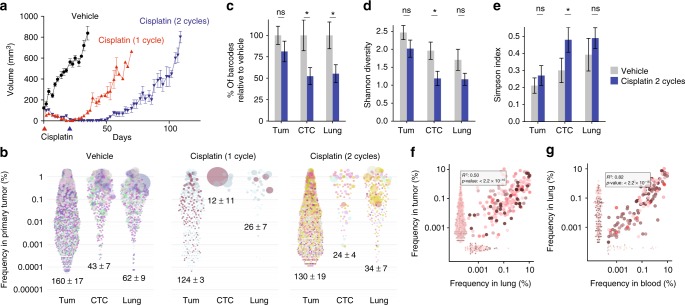
Primary triple negative breast cancers (TNBC) are prone to dissemination but sub-clonal relationships between tumors and resulting metastases are poorly understood. Here we use cellular barcoding of two treatment-naïve TNBC patient-derived xenografts (PDXs) to track the spatio-temporal fate of thousands of barcoded clones in primary tumors, and their metastases. Tumor resection had a major impact on reducing clonal diversity in secondary sites, indicating that most disseminated tumor cells lacked the capacity to ‘seed’, hence originated from ‘shedders’ that did not persist. The few clones that continued to grow after resection i.e. ‘seeders’, did not correlate in frequency with their parental clones in primary tumors. Cisplatin treatment of one BRCA1-mutated PDX model to non-palpable levels had a surprisingly minor impact on clonal diversity in the relapsed tumor yet purged 50% of distal clones. Therefore, clonal features of shedding, seeding and drug resistance are important factors to consider for the design of therapeutic strategies.
Overview
The claims and statistics of this paper haven’t been checked yet.
Free: it reads the open-access text and checks the first 5 claims that cite a source we can check. Create a free account to check every claim.
Integrity signals
Registry
Cites
Statistics
Figures
Verification
Claims the paper makes
The claims and statistics of this paper haven’t been checked yet.
Free: it reads the open-access text and checks the first 5 claims that cite a source we can check. Create a free account to check every claim.
Claims other papers make about this one
Each is checked against this paper’s own text: does it say what the citing paper says it does?
The cited source says what the claim attributes to it.
In the citing paper
“Recent significant advances in single-cell technologies, especially the single-cell RNA sequencing (scRNA-seq) technology, have enabled the analysis of intercellular heterogeneity at a very fine resolution8,9 and helped us to have many breakthroughs in understanding disease mechanisms10, such as breast cancer11, liver cancer12 and COVID-1913.”
From ASGARD is a single-cell guided pipeline to aid repurposing of drugs (2023) · cites this paper as [11]
Self-check
Percentages, sums and reported differences re-computed from the paper’s own numbers.
The self-check needs the paper’s full text.
Citations
Cites
Robinson, M. D., McCarthy, D. J., & Smyth, G. K. (2010) · Bioinformatics · doi:10.1093/bioinformatics/btp616 · Cited by 41,364
Self-citationPD-1 and PD-L1 Immune Checkpoint Blockade to Treat Breast Cancer
Hartkopf, A. D., Taran, F.-A., Wallwiener, M., Walter, C. B., Krämer, B., Grischke, E.-M., & Brucker, S. Y. (2016) · Breast Care · doi:10.1159/000453569 · Cited by 30,845
Molecular portraits of human breast tumours
Perou, C. M., Sørlie, T., Eisen, M. B., van de Rijn, M., Jeffrey, S. S., Rees, C. A., Pollack, J. R., Ross, D. T., Johnsen, H., Akslen, L. A., et al. (2000) · Nature · doi:10.1038/35021093 · Cited by 16,261
ggplot2: Elegant Graphics for Data Analysis
Wickham, H. (2009) · doi:10.1007/978-0-387-98141-3 · Cited by 14,447
Nishimura, R., Osako, T., Nishiyama, Y., Tashima, R., Nakano, M., Fujisue, M., Toyozumi, Y., & Arima, N. (2013) · Oncology · doi:10.1159/000353099 · Cited by 13,166
Intratumor Heterogeneity and Branched Evolution Revealed by Multiregion Sequencing
Gerlinger, M., Rowan, A. J., Horswell, S., Larkin, J., Endesfelder, D., Gronroos, E., Martinez, P., Matthews, N., Stewart, A., Tarpey, P., et al. (2012) · New England Journal of Medicine · doi:10.1056/nejmoa1113205 · Cited by 7,774
The genomic and transcriptomic architecture of 2,000 breast tumours reveals novel subgroups
METABRIC Group, Curtis, C., Shah, S. P., Chin, S.-F., Turashvili, G., Rueda, O. M., Dunning, M. J., Speed, D., Lynch, A. G., Samarajiwa, S., et al. (2012) · Nature · doi:10.1038/nature10983 · Cited by 6,097
Single-cell RNA-seq highlights intratumoral heterogeneity in primary glioblastoma
Patel, A. P., Tirosh, I., Trombetta, J. J., Shalek, A. K., Gillespie, S. M., Wakimoto, H., Cahill, D. P., Nahed, B. V., Curry, W. T., Martuza, R. L., et al. (2014) · Science · doi:10.1126/science.1254257 · Cited by 5,063
Elkablawy, M. A., Albasri, A. M., Mohammed, R. A., Hussainy, A. S., Nouh, M. M., & Alhujaily, A. S. (2016) · Saudi Medical Journal · doi:10.15537/smj.2016.2.12285 · Cited by 4,382
Tumour evolution inferred by single-cell sequencing
Navin, N., Kendall, J., Troge, J., Andrews, P., Rodgers, L., McIndoo, J., Cook, K., Stepansky, A., Levy, D., Esposito, D., et al. (2011) · Nature · doi:10.1038/nature09807 · Cited by 2,598
Evolution of the Cancer Stem Cell Model
Kreso, A., & Dick, J. E. (2014) · Cell Stem Cell · doi:10.1016/j.stem.2014.02.006 · Cited by 2,224
Metastatic colonization by circulating tumour cells
Massagué, J., & Obenauf, A. C. (2016) · Nature · doi:10.1038/nature17038 · Cited by 2,062
The clonal and mutational evolution spectrum of primary triple-negative breast cancers
Shah, S. P., Roth, A., Goya, R., Oloumi, A., Ha, G., Zhao, Y., Turashvili, G., Ding, J., Tse, K., Haffari, G., et al. (2012) · Nature · doi:10.1038/nature10933 · Cited by 1,967
Rare cell variability and drug-induced reprogramming as a mode of cancer drug resistance
Shaffer, S. M., Dunagin, M. C., Torborg, S. R., Torre, E. A., Emert, B., Krepler, C., Beqiri, M., Sproesser, K., Brafford, P. A., Xiao, M., et al. (2017) · Nature · doi:10.1038/nature22794 · Cited by 1,218
Systemic Spread Is an Early Step in Breast Cancer
Hüsemann, Y., Geigl, J. B., Schubert, F., Musiani, P., Meyer, M., Burghart, E., Forni, G., Eils, R., Fehm, T., Riethmüller, G., et al. (2008) · Cancer Cell · doi:10.1016/j.ccr.2007.12.003 · Cited by 1,188
Genome remodelling in a basal-like breast cancer metastasis and xenograft
Ding, L., Ellis, M. J., Li, S., Larson, D. E., Chen, K., Wallis, J. W., Harris, C. C., McLellan, M. D., Fulton, R. S., Fulton, L. L., et al. (2010) · Nature · doi:10.1038/nature08989 · Cited by 1,139
Parallel progression of primary tumours and metastases
Klein, C. A. (2009) · Nature Reviews Cancer · doi:10.1038/nrc2627 · Cited by 1,133
Spatial and temporal diversity in genomic instability processes defines lung cancer evolution
de Bruin, E. C., McGranahan, N., Mitter, R., Salm, M., Wedge, D. C., Yates, L., Jamal-Hanjani, M., Shafi, S., Murugaesu, N., Rowan, A. J., et al. (2014) · Science · doi:10.1126/science.1253462 · Cited by 1,117
Chemoresistance Evolution in Triple-Negative Breast Cancer Delineated by Single-Cell Sequencing
Kim, C., Gao, R., Sei, E., Brandt, R., Hartman, J., Hatschek, T., Crosetto, N., Foukakis, T., & Navin, N. E. (2018) · Cell · doi:10.1016/j.cell.2018.03.041 · Cited by 1,104
Mutational evolution in a lobular breast tumour profiled at single nucleotide resolution
Shah, S. P., Morin, R. D., Khattra, J., Prentice, L., Pugh, T., Burleigh, A., Delaney, A., Gelmon, K., Guliany, R., Senz, J., et al. (2009) · Nature · doi:10.1038/nature08489 · Cited by 1,069
Single-cell analysis reveals a stem-cell program in human metastatic breast cancer cells
Lawson, D. A., Bhakta, N. R., Kessenbrock, K., Prummel, K. D., Yu, Y., Takai, K., Zhou, A., Eyob, H., Balakrishnan, S., Wang, C.-Y., et al. (2015) · Nature · doi:10.1038/nature15260 · Cited by 893
Subclonal diversification of primary breast cancer revealed by multiregion sequencing
Yates, L. R., Gerstung, M., Knappskog, S., Desmedt, C., Gundem, G., Van Loo, P., Aas, T., Alexandrov, L. B., Larsimont, D., Davies, H., et al. (2015) · Nature Medicine · doi:10.1038/nm.3886 · Cited by 816
Variable Clonal Repopulation Dynamics Influence Chemotherapy Response in Colorectal Cancer
Kreso, A., O'Brien, C. A., van Galen, P., Gan, O. I., Notta, F., Brown, A. M. K., Ng, K., Ma, J., Wienholds, E., Dunant, C., et al. (2013) · Science · doi:10.1126/science.1227670 · Cited by 744
Qian, B., Deng, Y., Im, J. H., Muschel, R. J., Zou, Y., Li, J., Lang, R. A., & Pollard, J. W. (2009) · PLoS ONE · doi:10.1371/journal.pone.0006562 · Cited by 664
Li, S., Shen, D., Shao, J., Crowder, R., Liu, W., Prat, A., He, X., Liu, S., Hoog, J., Lu, C., et al. (2013) · Cell Reports · doi:10.1016/j.celrep.2013.08.022 · Cited by 626
Circulating and disseminated tumour cells — mechanisms of immune surveillance and escape
Mohme, M., Riethdorf, S., & Pantel, K. (2017) · Nature Reviews Clinical Oncology · doi:10.1038/nrclinonc.2016.144 · Cited by 602
Dynamics of genomic clones in breast cancer patient xenografts at single-cell resolution
Eirew, P., Steif, A., Khattra, J., Ha, G., Yap, D., Farahani, H., Gelmon, K., Chia, S., Mar, C., Wan, A., et al. (2015) · Nature · doi:10.1038/nature13952 · Cited by 598
Self-citationStudying clonal dynamics in response to cancer therapy using high-complexity barcoding
Bhang, H.-E. C., Ruddy, D. A., Krishnamurthy Radhakrishna, V., Caushi, J. X., Zhao, R., Hims, M. M., Singh, A. P., Kao, I., Rakiec, D., Shaw, P., et al. (2015) · Nature Medicine · doi:10.1038/nm.3841 · Cited by 507
A spatial model predicts that dispersal and cell turnover limit intratumour heterogeneity
Waclaw, B., Bozic, I., Pittman, M. E., Hruban, R. H., Vogelstein, B., & Nowak, M. A. (2015) · Nature · doi:10.1038/nature14971 · Cited by 486
Genetic heterogeneity of single disseminated tumour cells in minimal residual cancer
Klein, C. A., Blankenstein, T. J., Schmidt-Kittler, O., Petronio, M., Polzer, B., Stoecklein, N. H., & Riethmüller, G. (2002) · The Lancet · doi:10.1016/s0140-6736(02)09838-0 · Cited by 479
Bruna, A., Rueda, O. M., Greenwood, W., Batra, A. S., Callari, M., Batra, R. N., Pogrebniak, K., Sandoval, J., Cassidy, J. W., Tufegdzic-Vidakovic, A., et al. (2016) · Cell · doi:10.1016/j.cell.2016.08.041 · Cited by 448
A conduit to metastasis: circulating tumor cell biology
Micalizzi, D. S., Maheswaran, S., & Haber, D. A. (2017) · Genes & Development · doi:10.1101/gad.305805.117 · Cited by 446
A model of breast cancer heterogeneity reveals vascular mimicry as a driver of metastasis
Wagenblast, E., Soto, M., Gutiérrez-Ángel, S., Hartl, C. A., Gable, A. L., Maceli, A. R., Erard, N., Williams, A. M., Kim, S. Y., Dickopf, S., et al. (2015) · Nature · doi:10.1038/nature14403 · Cited by 433
Diverse and heritable lineage imprinting of early haematopoietic progenitors
Naik, S. H., Perié, L., Swart, E., Gerlach, C., van Rooij, N., de Boer, R. J., & Schumacher, T. N. (2013) · Nature · doi:10.1038/nature12013 · Cited by 408
Self-citationFate mapping of human glioblastoma reveals an invariant stem cell hierarchy
Lan, X., Jörg, D. J., Cavalli, F. M. G., Richards, L. M., Nguyen, L. V., Vanner, R. J., Guilhamon, P., Lee, L., Kushida, M. M., Pellacani, D., et al. (2017) · Nature · doi:10.1038/nature23666 · Cited by 405
RANK ligand as a potential target for breast cancer prevention in BRCA1-mutation carriers
Nolan, E., Vaillant, F., Branstetter, D., Pal, B., Giner, G., Whitehead, L., Lok, S. W., Mann, G. B., Kathleen Cuningham Foundation Consortium for Research into Familial Breast Cancer (kConFab), Rohrbach, K., et al. (2016) · Nature Medicine · doi:10.1038/nm.4118 · Cited by 309
Self-citationPatient-derived xenograft models of breast cancer and their predictive power
Whittle, J. R., Lewis, M. T., Lindeman, G. J., & Visvader, J. E. (2015) · Breast Cancer Research · doi:10.1186/s13058-015-0523-1 · Cited by 282
Self-citationTargeting BCL-2 with the BH3 Mimetic ABT-199 in Estrogen Receptor-Positive Breast Cancer
Vaillant, F., Merino, D., Lee, L., Breslin, K., Pal, B., Ritchie, M. E., Smyth, G. K., Christie, M., Phillipson, L. J., Burns, C. J., et al. (2013) · Cancer Cell · doi:10.1016/j.ccr.2013.06.002 · Cited by 276
Self-citationSelection and adaptation during metastatic cancer progression
Klein, C. A. (2013) · Nature · doi:10.1038/nature12628 · Cited by 273
Patient-derived xenograft (PDX) models in basic and translational breast cancer research
Dobrolecki, L. E., Airhart, S. D., Alferez, D. G., Aparicio, S., Behbod, F., Bentires-Alj, M., Brisken, C., Bult, C. J., Cai, S., Clarke, R. B., et al. (2016) · Cancer and Metastasis Reviews · doi:10.1007/s10555-016-9653-x · Cited by 267
Self-citationGenomic analysis identifies unique signatures predictive of brain, lung, and liver relapse
Harrell, J. C., Prat, A., Parker, J. S., Fan, C., He, X., Carey, L., Anders, C., Ewend, M., & Perou, C. M. (2012) · Breast Cancer Research and Treatment · doi:10.1007/s10549-011-1619-7 · Cited by 227
Ritsma, L., Steller, E. J. A., Beerling, E., Loomans, C. J. M., Zomer, A., Gerlach, C., Vrisekoop, N., Seinstra, D., van Gurp, L., Schäfer, R., et al. (2012) · Science Translational Medicine · doi:10.1126/scitranslmed.3004394 · Cited by 208
Self-citationPal, B., Chen, Y., Vaillant, F., Jamieson, P., Gordon, L., Rios, A. C., Wilcox, S., Fu, N., Liu, K. H., Jackling, F. C., et al. (2017) · Nature Communications · doi:10.1038/s41467-017-01560-x · Cited by 197
Self-citationMerino, D., Whittle, J. R., Vaillant, F., Serrano, A., Gong, J.-N., Giner, G., Maragno, A. L., Chanrion, M., Schneider, E., Pal, B., et al. (2017) · Science Translational Medicine · doi:10.1126/scitranslmed.aam7049 · Cited by 185
Self-citationImaging hallmarks of cancer in living mice
Ellenbroek, S. I. J., & van Rheenen, J. (2014) · Nature Reviews Cancer · doi:10.1038/nrc3742 · Cited by 181
Barcoding reveals complex clonal dynamics of de novo transformed human mammary cells
Nguyen, L. V., Pellacani, D., Lefort, S., Kannan, N., Osako, T., Makarem, M., Cox, C. L., Kennedy, W., Beer, P. A., Carles, A., et al. (2015) · Nature · doi:10.1038/nature15742 · Cited by 130
Intra‐tumour heterogeneity – going beyond genetics
Caiado, F., Silva‐Santos, B., & Norell, H. (2016) · FEBS Journal · doi:10.1111/febs.13705 · Cited by 107
Nguyen, L. V., Cox, C. L., Eirew, P., Knapp, D. J. H. F., Pellacani, D., Kannan, N., Carles, A., Moksa, M., Balani, S., Shah, S., et al. (2014) · Nature Communications · doi:10.1038/ncomms6871 · Cited by 105
Hoadley, K. A., Siegel, M. B., Kanchi, K. L., Miller, C. A., Ding, L., Zhao, W., He, X., Parker, J. S., Wendl, M. C., Fulton, R. S., et al. (2016) · PLOS Medicine · doi:10.1371/journal.pmed.1002174 · Cited by 95
Single‐cell sequencing and tumorigenesis: improved understanding of tumor evolution and metastasis
Ellsworth, D. L., Blackburn, H. L., Shriver, C. D., Rabizadeh, S., Soon‐Shiong, P., & Ellsworth, R. E. (2017) · Clinical and Translational Medicine · doi:10.1186/s40169-017-0145-6 · Cited by 84
Cellular barcoding: A technical appraisal
Naik, S. H., Schumacher, T. N., & Perié, L. (2014) · Experimental Hematology · doi:10.1016/j.exphem.2014.05.003 · Cited by 83
Self-citationRe-Evaluating Clonal Dominance in Cancer Evolution
Burrell, R. A., & Swanton, C. (2016) · Trends in cancer · doi:10.1016/j.trecan.2016.04.002 · Cited by 58
Lin, D. S., Kan, A., Gao, J., Crampin, E. J., Hodgkin, P. D., & Naik, S. H. (2018) · Cell Reports · doi:10.1016/j.celrep.2018.02.046 · Cited by 43
Self-citationDeciphering Genetic Intratumor Heterogeneity and Its Impact on Cancer Evolution
Rosenthal, R., McGranahan, N., Herrero, J., & Swanton, C. (2016) · Annual Review of Cancer Biology · doi:10.1146/annurev-cancerbio-042516-011348 · Cited by 35
The molecular pathology of cancer: from pan‐genomics to post‐genomics
Huntsman, D. D., & Ladanyi, M. (2018) · The Journal of Pathology · doi:10.1002/path.5057 · Cited by 28
Cited by
Spatial omics and multiplexed imaging to explore cancer biology
Lewis, S. M., Asselin-Labat, M.-L., Nguyen, Q., Berthelet, J., Tan, X., Wimmer, V. C., Merino, D., Rogers, K. L., & Naik, S. H. (2021) · Nature Methods · doi:10.1038/s41592-021-01203-6 · Cited by 619
Self-citationThe dormant cancer cell life cycle
Phan, T. G., & Croucher, P. I. (2020) · Nature Reviews Cancer · doi:10.1038/s41568-020-0263-0 · Cited by 576
Unravelling tumour heterogeneity by single-cell profiling of circulating tumour cells
Keller, L., & Pantel, K. (2019) · Nature Reviews Cancer · doi:10.1038/s41568-019-0180-2 · Cited by 544
Modular, efficient and constant-memory single-cell RNA-seq preprocessing
Melsted, P., Booeshaghi, A. S., Liu, L., Gao, F., Lu, L., Min, K. H., da Veiga Beltrame, E., Hjörleifsson, K. E., Gehring, J., & Pachter, L. (2021) · Nature Biotechnology · doi:10.1038/s41587-021-00870-2 · Cited by 510
Colorectal Cancer Cells Enter a Diapause-like DTP State to Survive Chemotherapy
Rehman, S. K., Haynes, J., Collignon, E., Brown, K. R., Wang, Y., Nixon, A. M. L., Bruce, J. P., Wintersinger, J. A., Singh Mer, A., Lo, E. B. L., et al. (2021) · Cell · doi:10.1016/j.cell.2020.11.018 · Cited by 495
“However, if DTPs were driven by a stochastic process, we expected distinct barcoded populations to emerge in independent tumor replicates (Bhang et al., 2015; Merino et al., 2019; Seth et al., 2019).”
Background
Metadata
- Authors
- Merino, D., Weber, T. S., Serrano, A., Vaillant, F., Liu, K., Pal, B., Di Stefano, L., Schreuder, J., Lin, D., Chen, Y., Asselin-Labat, M. L., Schumacher, T. N., Cameron, D., Smyth, G. K., Papenfuss, A. T., Lindeman, G. J., Visvader, J. E., & Naik, S. H.
- Affiliations
- The University of Melbourne (AU)
- The Netherlands Cancer Institute (NL)
- Walter and Eliza Hall Institute of Medical Research (AU)
- The Royal Melbourne Hospital (AU)
- Corresponding author
- Visvader, J. E.
- Naik, S. H.
- ORCID
- Venue
- Nature Communications
- Published
- 2019-02-15
- Volume
- 10
- Issue
- 1
- Pages
- 766-766
- ISSN
- 2041-1723 (ISSN-L)
- PMC
- PMC6377663
- OpenAlex
- W2912649747
- Cited by
- 145
- References
- 56
- Citations by year
- 2026: 7 · 2025: 18 · 2024: 22 · 2023: 21 · 2022: 23 · 2021: 28 · 2020: 16 · 2019: 10
- FWCI
- 6.07
- Type
- journal article
- Language
- en
- Update notices
- correction (2019-04-24)
- Open access
- gold
- doi.org
- Licence
- cc-by
- creativecommons.org/licenses/by/4.0 (tdm)
- creativecommons.org/licenses/by/4.0 (vor)
- Locations
- Nature Communications (publishedVersion, cc-by)
- Europe PMC (PubMed Central) (publishedVersion, cc-by)
- PubMed Central (publishedVersion, cc-by)
- PubMed (publishedVersion)
- Minerva Access (University of Melbourne) (submittedVersion, cc-by)
- RePEc: Research Papers in Economics (submittedVersion)
- DOAJ (DOAJ: Directory of Open Access Journals) (submittedVersion, cc-by-sa)
- DOAJ (DOAJ: Directory of Open Access Journals) (submittedVersion)
- Funders
- Australian Cancer Research Foundation
- National Breast Cancer Foundation
- Medical Research Council (1016701)
- National Health and Medical Research Council (1116955, 1102742, 1054618, 1086727, 1058892, 1040978, 1016701, 1101378, 1124812, 1037230, 1078730, 1062820)
- Topics
- Life Sciences › Biochemistry, Genetics and Molecular Biology › Cancer Research › Cancer Genomics and Diagnostics
- Health Sciences › Medicine › Oncology › Cancer Cells and Metastasis
- Life Sciences › Biochemistry, Genetics and Molecular Biology › Cancer Research › Breast Cancer Treatment Studies
- Keywords
- triple-negative breast cancer, patient-derived xenografts, cellular barcoding, clonal evolution, metastasis, disseminated tumor cells, tumor seeding, tumor resection, cisplatin, BRCA1 mutation, drug resistance, clonal diversity
- MeSH terms
- Animals, Cisplatin, Clone Cells, Disease Models, Animal, Female, Humans, Mutation, Neoplasm Recurrence, Local, Gene Expression Regulation, Neoplastic, BRCA1 Protein, Xenograft Model Antitumor Assays, Cell Line, Tumor, Mice, Triple Negative Breast Neoplasms
About these checks
Registry, retraction, Cites and statistics results are computed, not judged, with one exception: a printed reference that no index lists is read once by a model before it counts as a citation error. Claims are extracted by a model and kept only when their quote appears verbatim in the text; each cited source is then checked, with a model’s help, for whether it says what the claim relies on. Those verdicts can be wrong — read the claim’s quote and the cited source before relying on one.
Statistics and arithmetic are recomputed, not judged.
Confidence bands are shown only for fields calibrated on our annotated test set. None is calibrated yet, so no band is shown.
What counts as a claim ›How we measure confidence ›How we check this ›
Are you an author, or do you see a problem with this page? Request a review
Data sources
Bibliographic data: Semantic Scholar, OpenAlex, Crossref.
Contains information from the Semantic Scholar Academic Graph Datasets, made available under the ODC Attribution License (ODC-BY 1.0).
Semantic Scholar’s data is described in: Kinney, R., et al. (2023). The Semantic Scholar Open Data Platform. arXiv:2301.10140.
