

Barcoding reveals complex clonal behavior in patient-derived xenografts of metastatic triple negative breast cancer
Open accessThe DOI matches its Crossref record; 55 of the 56 references it cites were found in a registry or an index.
Abstract
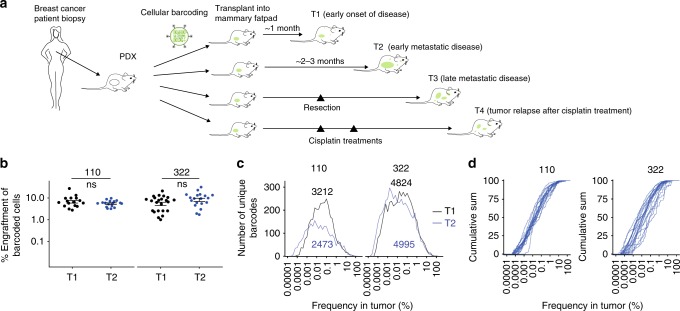
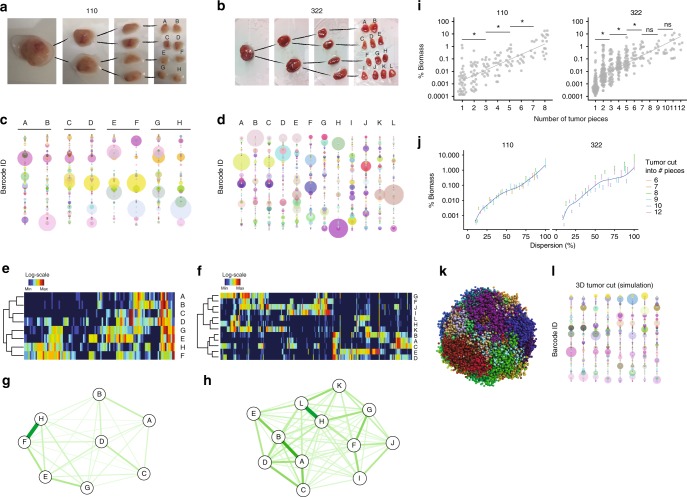
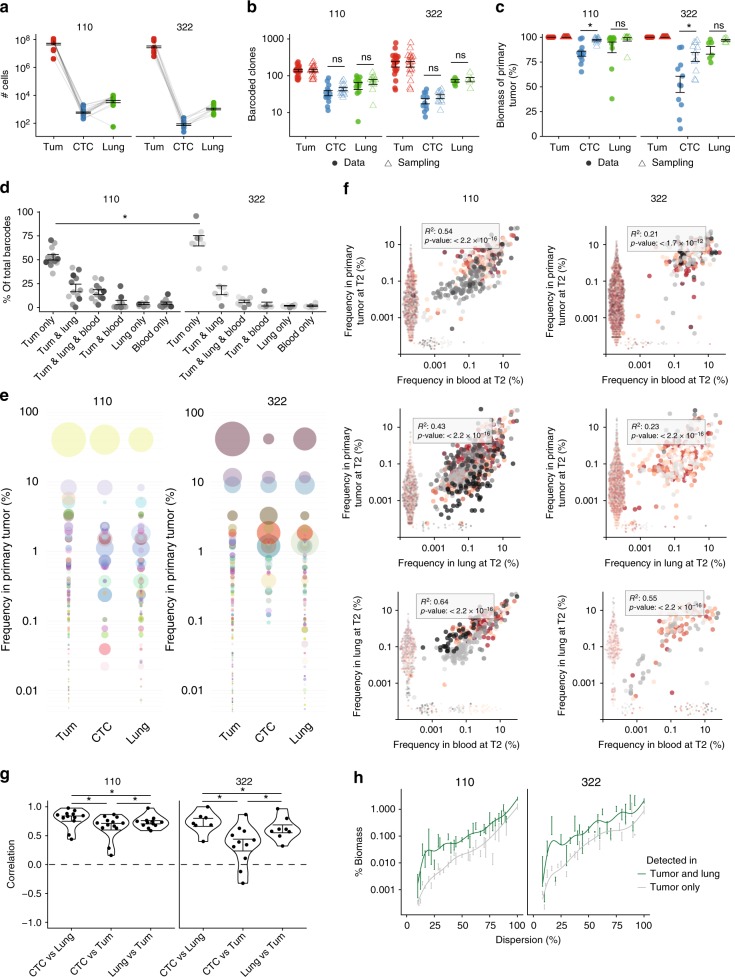
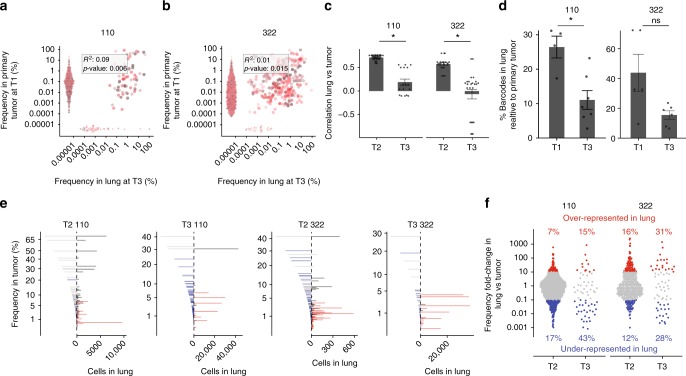
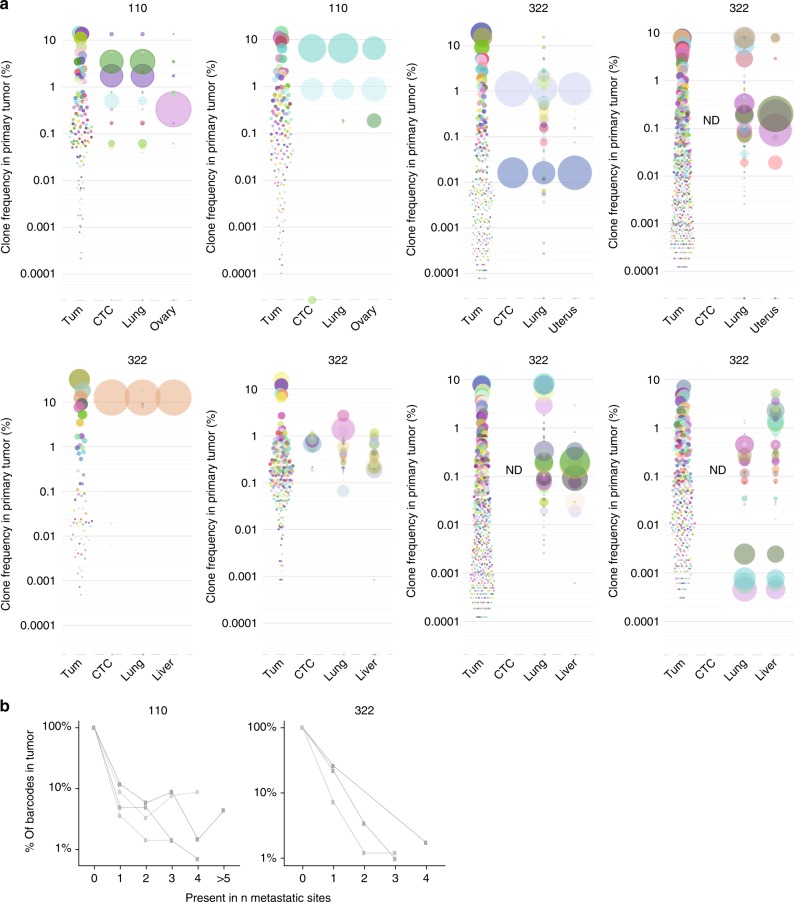
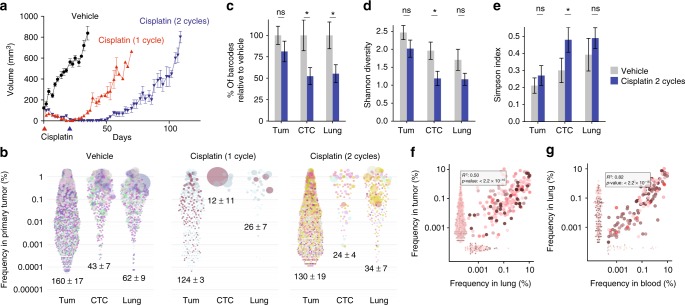
Primary triple negative breast cancers (TNBC) are prone to dissemination but sub-clonal relationships between tumors and resulting metastases are poorly understood. Here we use cellular barcoding of two treatment-naïve TNBC patient-derived xenografts (PDXs) to track the spatio-temporal fate of thousands of barcoded clones in primary tumors, and their metastases. Tumor resection had a major impact on reducing clonal diversity in secondary sites, indicating that most disseminated tumor cells lacked the capacity to ‘seed’, hence originated from ‘shedders’ that did not persist. The few clones that continued to grow after resection i.e. ‘seeders’, did not correlate in frequency with their parental clones in primary tumors. Cisplatin treatment of one BRCA1-mutated PDX model to non-palpable levels had a surprisingly minor impact on clonal diversity in the relapsed tumor yet purged 50% of distal clones. Therefore, clonal features of shedding, seeding and drug resistance are important factors to consider for the design of therapeutic strategies.
Overview
The claims and statistics of this paper haven’t been checked yet.
Free: it reads the open-access text and checks the first 5 claims that cite a source we can check. Create a free account to check every claim.
Integrity signals
Registry
Cites
Statistics
Figures
Verification
Claims the paper makes
The claims and statistics of this paper haven’t been checked yet.
Free: it reads the open-access text and checks the first 5 claims that cite a source we can check. Create a free account to check every claim.
Claims other papers make about this one
Each is checked against this paper’s own text: does it say what the citing paper says it does?
The cited source says what the claim attributes to it.
In the citing paper
“Recent significant advances in single-cell technologies, especially the single-cell RNA sequencing (scRNA-seq) technology, have enabled the analysis of intercellular heterogeneity at a very fine resolution8,9 and helped us to have many breakthroughs in understanding disease mechanisms10, such as breast cancer11, liver cancer12 and COVID-1913.”
From ASGARD is a single-cell guided pipeline to aid repurposing of drugs (2023) · cites this paper as [11]
Self-check
Percentages, sums and reported differences re-computed from the paper’s own numbers.
The self-check needs the paper’s full text.
Citations
Cites
Robinson, M. D., McCarthy, D. J., & Smyth, G. K. (2010) · Bioinformatics · doi:10.1093/bioinformatics/btp616 · Cited by 41,364
Self-citationPD-1 and PD-L1 Immune Checkpoint Blockade to Treat Breast Cancer
Hartkopf, A. D., Taran, F.-A., Wallwiener, M., Walter, C. B., Krämer, B., Grischke, E.-M., & Brucker, S. Y. (2016) · Breast Care · doi:10.1159/000453569 · Cited by 30,845
Molecular portraits of human breast tumours
Perou, C. M., Sørlie, T., Eisen, M. B., van de Rijn, M., Jeffrey, S. S., Rees, C. A., Pollack, J. R., Ross, D. T., Johnsen, H., Akslen, L. A., et al. (2000) · Nature · doi:10.1038/35021093 · Cited by 16,261
ggplot2: Elegant Graphics for Data Analysis
Wickham, H. (2009) · doi:10.1007/978-0-387-98141-3 · Cited by 14,447
Nishimura, R., Osako, T., Nishiyama, Y., Tashima, R., Nakano, M., Fujisue, M., Toyozumi, Y., & Arima, N. (2013) · Oncology · doi:10.1159/000353099 · Cited by 13,166
Intratumor Heterogeneity and Branched Evolution Revealed by Multiregion Sequencing
Gerlinger, M., Rowan, A. J., Horswell, S., Larkin, J., Endesfelder, D., Gronroos, E., Martinez, P., Matthews, N., Stewart, A., Tarpey, P., et al. (2012) · New England Journal of Medicine · doi:10.1056/nejmoa1113205 · Cited by 7,774
The genomic and transcriptomic architecture of 2,000 breast tumours reveals novel subgroups
METABRIC Group, Curtis, C., Shah, S. P., Chin, S.-F., Turashvili, G., Rueda, O. M., Dunning, M. J., Speed, D., Lynch, A. G., Samarajiwa, S., et al. (2012) · Nature · doi:10.1038/nature10983 · Cited by 6,097
Single-cell RNA-seq highlights intratumoral heterogeneity in primary glioblastoma
Patel, A. P., Tirosh, I., Trombetta, J. J., Shalek, A. K., Gillespie, S. M., Wakimoto, H., Cahill, D. P., Nahed, B. V., Curry, W. T., Martuza, R. L., et al. (2014) · Science · doi:10.1126/science.1254257 · Cited by 5,063
Elkablawy, M. A., Albasri, A. M., Mohammed, R. A., Hussainy, A. S., Nouh, M. M., & Alhujaily, A. S. (2016) · Saudi Medical Journal · doi:10.15537/smj.2016.2.12285 · Cited by 4,382
Tumour evolution inferred by single-cell sequencing
Navin, N., Kendall, J., Troge, J., Andrews, P., Rodgers, L., McIndoo, J., Cook, K., Stepansky, A., Levy, D., Esposito, D., et al. (2011) · Nature · doi:10.1038/nature09807 · Cited by 2,598
Cited by
Spatial omics and multiplexed imaging to explore cancer biology
Lewis, S. M., Asselin-Labat, M.-L., Nguyen, Q., Berthelet, J., Tan, X., Wimmer, V. C., Merino, D., Rogers, K. L., & Naik, S. H. (2021) · Nature Methods · doi:10.1038/s41592-021-01203-6 · Cited by 619
Self-citationThe dormant cancer cell life cycle
Phan, T. G., & Croucher, P. I. (2020) · Nature Reviews Cancer · doi:10.1038/s41568-020-0263-0 · Cited by 576
Unravelling tumour heterogeneity by single-cell profiling of circulating tumour cells
Keller, L., & Pantel, K. (2019) · Nature Reviews Cancer · doi:10.1038/s41568-019-0180-2 · Cited by 544
Modular, efficient and constant-memory single-cell RNA-seq preprocessing
Melsted, P., Booeshaghi, A. S., Liu, L., Gao, F., Lu, L., Min, K. H., da Veiga Beltrame, E., Hjörleifsson, K. E., Gehring, J., & Pachter, L. (2021) · Nature Biotechnology · doi:10.1038/s41587-021-00870-2 · Cited by 510
Colorectal Cancer Cells Enter a Diapause-like DTP State to Survive Chemotherapy
Rehman, S. K., Haynes, J., Collignon, E., Brown, K. R., Wang, Y., Nixon, A. M. L., Bruce, J. P., Wintersinger, J. A., Singh Mer, A., Lo, E. B. L., et al. (2021) · Cell · doi:10.1016/j.cell.2020.11.018 · Cited by 495
“However, if DTPs were driven by a stochastic process, we expected distinct barcoded populations to emerge in independent tumor replicates (Bhang et al., 2015; Merino et al., 2019; Seth et al., 2019).”
BackgroundLüönd, F., Tiede, S., & Christofori, G. (2021) · British Journal of Cancer · doi:10.1038/s41416-021-01328-7 · Cited by 427
“Barcoding experiments have also revealed that the dominant clones of primary tumours do not necessarily contribute to tumour metastasis, distinguishing the cells that are shed from primary tumours but that do not yet form metastasis (shedders) from actual metastasisseeding cells (seeders), indicating that therapeutic…”
BackgroundTracking cancer progression: from circulating tumor cells to metastasis
Castro-Giner, F., & Aceto, N. (2020) · Genome Medicine · doi:10.1186/s13073-020-00728-3 · Cited by 363
Biology, vulnerabilities and clinical applications of circulating tumour cells
Ring, A., Nguyen-Sträuli, B. D., Wicki, A., & Aceto, N. (2023) · Nature Reviews Cancer · doi:10.1038/s41568-022-00536-4 · Cited by 327
Breast Cancer: A Molecularly Heterogenous Disease Needing Subtype-Specific Treatments
Testa, U., Castelli, G., & Pelosi, E. (2020) · Medical Sciences · doi:10.3390/medsci8010018 · Cited by 214
Cell–matrix interface regulates dormancy in human colon cancer stem cells
Ohta, Y., Fujii, M., Takahashi, S., Takano, A., Nanki, K., Matano, M., Hanyu, H., Saito, M., Shimokawa, M., Nishikori, S., et al. (2022) · Nature · doi:10.1038/s41586-022-05043-y · Cited by 207
Feng, B., Niu, Z., Hou, B., Zhou, L., Li, Y., & Yu, H. (2020) · Advanced Functional Materials · doi:10.1002/adfm.201906605 · Cited by 215
Cancer drug-tolerant persister cells: from biological questions to clinical opportunities
Russo, M., Chen, M., Mariella, E., Peng, H., Rehman, S. K., Sancho, E., Sogari, A., Toh, T. S., Balaban, N. Q., Batlle, E., et al. (2024) · Nature Reviews Cancer · doi:10.1038/s41568-024-00737-z · Cited by 210
“Elegant bar-code studies demonstrated no discernible alterations in genetic heterogeneity highlighting the equipotent nature of tumour cells to enter the DTP state, akin to embryonic stem cells entering and exiting diapause in response to environmental conditions 39,45–47 .”
Circulating tumor cells: from new biological insights to clinical practice
Gu, X., Wei, S., & Lv, X. (2024) · Signal Transduction and Targeted Therapy · doi:10.1038/s41392-024-01938-6 · Cited by 182
“74 This raises an important question: what characteristics allow CTCs to metastasize successfully?”
BackgroundCancer Stem Cells and Epithelial-to-Mesenchymal Transition in Cancer Metastasis
Celià-Terrassa, T., & Jolly, M. K. (2020) · Cold Spring Harbor Perspectives in Medicine · doi:10.1101/cshperspect.a036905 · Cited by 163
“Indeed, a recent study using barcoding sequencing in triple-negative breast cancer suggests that the invasive trailblazer cells —suggestive of EMT-like cells—do not persist in the metastatic site and other cells seed the successful metastasis (Merino et al. 2019).”
BackgroundPatient-Derived Xenograft Models of Breast Cancer and Their Application
Murayama, T., & Gotoh, N. (2019) · Cells · doi:10.3390/cells8060621 · Cited by 156
“Pillai and collegues NOD/SCID primary triple negative (3), luminal (2) orthotopic [58]”
BackgroundHow important is EMT for cancer metastasis?
Celià-Terrassa, T., & Kang, Y. (2024) · PLoS Biology · doi:10.1371/journal.pbio.3002487 · Cited by 143
Circulating tumor cells: Blood-based detection, molecular biology, and clinical applications
Dai, C. S., Mishra, A., Edd, J., Toner, M., Maheswaran, S., & Haber, D. A. (2025) · Cancer Cell · doi:10.1016/j.ccell.2025.07.008 · Cited by 129
3D printed in vitro tumor tissue model of colorectal cancer
Chen, H., Cheng, Y., Wang, X., Wang, J., Shi, X., Li, X., Tan, W., & Tan, Z. (2020) · Theranostics · doi:10.7150/thno.52450 · Cited by 95
“xenografts (PDXs), have been developed which have contributed significantly to cancer research [14].”
BackgroundPhylodynamics for cell biologists
Stadler, T., Pybus, O. G., & Stumpf, M. P. H. (2021) · Science · doi:10.1126/science.aah6266 · Cited by 95
“Alternatively, phylogenetically informative genetic markers can be based on lentivirus delivery (62, 84, 85), a recombination locus (86, 87), or transposons (16, 88).”
BackgroundEvolution of metastasis: new tools and insights
Gui, P., & Bivona, T. G. (2021) · Trends in cancer · doi:10.1016/j.trecan.2021.11.002 · Cited by 93
Biology-inspired data-driven quality control for scientific discovery in single-cell transcriptomics
Subramanian, A., Alperovich, M., Yang, Y., & Li, B. (2022) · Genome Biology · doi:10.1186/s13059-022-02820-w · Cited by 76
Spatial multi-omics at subcellular resolution via high-throughput in situ pairwise sequencing
Wu, X., Xu, W., Deng, L., Li, Y., Wang, Z., Sun, L., Gao, A., Wang, H., Yang, X., Wu, C., et al. (2024) · Nature Biomedical Engineering · doi:10.1038/s41551-024-01205-7 · Cited by 84
Self-citationASGARD is a single-cell guided pipeline to aid repurposing of drugs
He, B., Xiao, Y., Liang, H., Huang, Q., Du, Y., Li, Y., Garmire, D., Sun, D., & Garmire, L. X. (2023) · Nature Communications · doi:10.1038/s41467-023-36637-3 · Cited by 57
Tumor stem cells fuse with monocytes to form highly invasive tumor-hybrid cells
Aguirre, L. A., Montalbán-Hernández, K. M., Ortiz, J. A., Marín, E., Lozano‐Rodríguez, R., Toledano, V., Sánchez-Maroto, L., Terrón, V., Valentín, J., Pulido, E., et al. (2020) · OncoImmunology · doi:10.1080/2162402x.2020.1773204 · Cited by 62
Subclonal heterogeneity and evolution in breast cancer
Mavrommati, I., Johnson, F., Echeverria, G. V., & Natrajan, R. (2021) · npj Breast Cancer · doi:10.1038/s41523-021-00363-0 · Cited by 65
Lan, W., Gou, X., Wu, Y., Liu, N., Lu, L., Cheng, P., & Shi, W. (2024) · Angewandte Chemie International Edition · doi:10.1002/anie.202401766 · Cited by 57
Mastering the use of cellular barcoding to explore cancer heterogeneity
Serrano, A., Berthelet, J., Naik, S. H., & Mérino, D. (2022) · Nature reviews. Cancer · doi:10.1038/s41568-022-00500-2 · Cited by 59
Self-citationAdaptation and selection shape clonal evolution of tumors during residual disease and recurrence
Walens, A., Lin, J., Damrauer, J. S., McKinney, B. J., Lupo, R., Newcomb, R., Fox, D. B., Mabe, N. W., Gresham, J. S., Sheng, Z., et al. (2020) · Nature Communications · doi:10.1038/s41467-020-18730-z · Cited by 57
Modeling metastasis in mice: a closer look
Giacobbe, A., & Abate-Shen, C. T. (2021) · Trends in cancer · doi:10.1016/j.trecan.2021.06.010 · Cited by 54
Genetically Engineered Pigs to Study Cancer
Kalla, D., Kind, A., & Schnieke, A. (2020) · International Journal of Molecular Sciences · doi:10.3390/ijms21020488 · Cited by 56
Engineering nanoparticles boost TNBC therapy by CD24 blockade and mitochondrial dynamics regulation
Zhao, M. F., Li, J., Chen, F., Han, Y., Chen, D., & Hu, H. (2023) · Journal of Controlled Release · doi:10.1016/j.jconrel.2023.01.075 · Cited by 48
Codelivery of Shikonin and siTGF-β for enhanced triple negative breast cancer chemo-immunotherapy
Li, J., Zhao, M. F., Liang, W., Wu, S., Wang, Z., & Wang, D. (2022) · Journal of Controlled Release · doi:10.1016/j.jconrel.2022.01.015 · Cited by 46
Fang, L., Zhao, Z., Wang, J., Xiao, P., Sun, X., Ding, Y., Zhang, P., Wang, D., & Li, Y. (2021) · Acta Pharmaceutica Sinica B · doi:10.1016/j.apsb.2021.06.006 · Cited by 45
Rajan, S., Ringwalt, E. M., McAloney, C. A., Vetter, T. A., Cam, M., Gross, A. C., Taslim, C., Wang, M., Cannon, M. V., Oles, A. R., et al. (2023) · BMC Biology · doi:10.1186/s12915-023-01593-3 · Cited by 45
Berthelet, J., Wimmer, V. C., Whitfield, H. J., Serrano, A., Boudier, T., Mangiola, S., Merdas, M., El-Saafin, F., Baloyan, D., Wilcox, J., et al. (2021) · Science Advances · doi:10.1126/sciadv.abf4408 · Cited by 47
Self-citationClonal tracking using embedded viral barcoding and high-throughput sequencing
Bramlett, C. S., Du, J., Nogalska, A., Eerdeng, J., Contreras, J. L., & Lu, R. (2020) · Nature Protocols · doi:10.1038/s41596-019-0290-z · Cited by 53
Clonal multi-omics reveals Bcor as a negative regulator of emergency dendritic cell development
Tian, L., Tomei, S., Schreuder, J., Weber, T. S., Amann-Zalcenstein, D., Lin, D. S., Tran, J., Audiger, C., Chu, M., Jarratt, A., et al. (2021) · Immunity · doi:10.1016/j.immuni.2021.03.012 · Cited by 42
Self-citationTutorial: design and execution of CRISPR in vivo screens
Braun, C. J., Adames, A. C., Saur, D., & Rad, R. (2022) · Nature Protocols · doi:10.1038/s41596-022-00700-y · Cited by 41
Clinical management and biology of tumor dormancy in breast cancer
Werner, S., Heidrich, I., & Pantel, K. (2021) · Seminars in Cancer Biology · doi:10.1016/j.semcancer.2021.02.001 · Cited by 41
The Complexities of Metastasis
Juan, B. P. S., García-León, M. J., Rangel, L., Goetz, J. G., & Chaffer, C. L. (2019) · Cancers · doi:10.3390/cancers11101575 · Cited by 36
“Hence, once the primary tumor is removed, clonal heterogeneity in secondary organs is dramatically reduced [18].”
BackgroundFlexiplex: a versatile demultiplexer and search tool for omics data
Cheng, O., Ling, M. H., Wang, C., Wu, S., Ritchie, M. E., Göke, J., Amin, N., & Davidson, N. (2024) · Bioinformatics · doi:10.1093/bioinformatics/btae102 · Cited by 34
“…Unified Molecular Identifiers (UMIs), are added for a range of purposes, such as pooling samples to save sequencing cost, measuring clonal expansion, labeling reads from individual cells, or individual molecules (Smith et al. 2010, Merino et al. 2019, Bramlett et al. 2020, Philpott et al. 2021).”
BackgroundNadalin, F., Marzi, M. J., Piscazzi, M. P., Fuentes-Bravo, P., Procaccia, S., Climent, M., Bonetti, P., Rubolino, C., Giuliani, B., Papatheodorou, I., et al. (2024) · Nature Communications · doi:10.1038/s41467-024-51424-4 · Cited by 38
Early clonal extinction in glioblastoma progression revealed by genetic barcoding
Ceresa, D., Alessandrini, F., Lucchini, S., Marubbi, D., Piaggio, F., Vera, J. M. M., Ceccherini, I., Reverberi, D., Appolloni, I., & Malatesta, P. (2023) · Cancer Cell · doi:10.1016/j.ccell.2023.07.001 · Cited by 35
Rab13 Sustains Breast Cancer Stem Cells by Supporting Tumor–Stroma Cross-talk
Wang, H., Xu, H., Chen, W., Cheng, M., Zou, L., Yang, Q., Chan, C. B., Zhu, H., Chen, C., Nie, J., et al. (2022) · Cancer Research · doi:10.1158/0008-5472.can-21-4097 · Cited by 36
Contreras-Trujillo, H., Eerdeng, J., Akre, S., Du, J., Contreras, J., Gala, B., Vergel-Rodriguez, M., Lee, Y., Jorapur, A., Andreasian, A., et al. (2021) · Nature Communications · doi:10.1038/s41467-021-26771-1 · Cited by 35
Patwardhan, G. A., Marczyk, M., Wali, V. B., Stern, D. F., Pusztai, L., & Hatzis, C. (2021) · npj Breast Cancer · doi:10.1038/s41523-021-00270-4 · Cited by 33
Methods and applications of in vivo CRISPR screening
Santinha, A. J., Strano, A., & Platt, R. J. (2025) · Nature Reviews Genetics · doi:10.1038/s41576-025-00873-8 · Cited by 34
Sprouffske, K., Kerr, G., Li, C., Prahallad, A., Rebmann, R., Waehle, V., Naumann, U., Bitter, H., Jensen, M. R., Hofmann, F., et al. (2020) · Computational and Structural Biotechnology Journal · doi:10.1016/j.csbj.2020.01.008 · Cited by 31
Li, C., Jin, B., Sun, H., Wang, Y., Zhao, H., Sang, X., Yang, H., & Mao, Y. (2022) · Frontiers in Immunology · doi:10.3389/fimmu.2022.941289 · Cited by 30
Li, X., Ji, Q., Yan, C., Zhu, Z., Yan, Z., Chen, P., Wang, Y., & Song, L. (2022) · Nanoscale Research Letters · doi:10.1186/s11671-022-03738-9 · Cited by 28
“Chemotherapy and surgical resection are still the major intervention approach in clinical for tumor therapy nowadays [2, 3].”
BackgroundClinical applications of circulating tumor cells in metastasis and therapy
Yang, C., Liu, C., Xia, C., & Fu, L. (2025) · Journal of Hematology & Oncology · doi:10.1186/s13045-025-01733-y · Cited by 32
“Shedding of tumor cells from the primary site is a common event, yet only a small fraction of CTCs successfully complete metastasis due to various unfavorable conditions in the blood environment [204, 205].”
Heterogeneous Circulating Tumor Cells in Sarcoma: Implication for Clinical Practice
Agnoletto, C., Caruso, C., & Garofalo, C. (2021) · Cancers · doi:10.3390/cancers13092189 · Cited by 29
“Recently, a sub-set of metastasis-initiating cells (MICs) has been described among CTCs [56,125,126], Thus CTCs with a hybrid epithelial/mesenchymal phenotype present also stemness traits [61,77,127,128], which”
BackgroundPatient-Specific Multi-Omics Models and the Application in Personalized Combination Therapy
John, A. J., Qin, B., Kalari, K. R., Wang, L., & Yu, J. (2020) · Future Oncology · doi:10.2217/fon-2020-0119 · Cited by 31
Guo, S., Guan, T., Ke, Y., Lin, Y., Tai, R., Ye, J., Deng, Z., Deng, S., & Ou, C. (2024) · Biomaterials · doi:10.1016/j.biomaterials.2024.122905 · Cited by 25
Zheng, S., Fu, W., Huang, Q., Zhou, J., Lu, K., Gu, J., Ma, R., & Guo, G. (2023) · Clinical and Experimental Pharmacology and Physiology · doi:10.1111/1440-1681.13758 · Cited by 25
“8% of the population of breast cancer.(2,3) Chemotherapy is the most common treatment for most breast cancer patients, especially those with TNBC and advanced breast cancer.”
BackgroundBaldwin, L. A., Bartoniček, N., Yang, J., Wu, S. Z., Deng, N., Roden, D. L., Chan, C., Al‐Eryani, G., Zanker, D. J., Parker, B. S., et al. (2022) · Nature Communications · doi:10.1038/s41467-022-34041-x · Cited by 27
Morphologic and Genomic Heterogeneity in the Evolution and Progression of Breast Cancer
Kutasovic, J. R., Reed, A. E. M., Sokolova, A., Lakhani, S. R., & Simpson, P. T. (2020) · Cancers · doi:10.3390/cancers12040848 · Cited by 27
“The application of single cell analysis technologies to PDX models has shown that CTCs are continuously released by the primary tumour, however only a proportion of clones have the capacity to seed a metastatic deposit, and as such the utility of CTCs in predicting the characteristics of subsequent metastases may be l…”
Pedde, A., Kim, H., Donakonda, S., Baumann, T., Bayerl, F., Meiser, P., Hirschberger, A., Klement, C., Grassmann, S. A., Öllinger, R., et al. (2024) · Cell Reports · doi:10.1016/j.celrep.2024.114855 · Cited by 27
New Tools for Lineage Tracing in Cancer In Vivo
Jones, M. G., Yang, D., & Weissman, J. S. (2023) · Annual Review of Cancer Biology · doi:10.1146/annurev-cancerbio-061421-123301 · Cited by 24
Tachtsidis, A., Le, A. V.-P., Blick, T., Gunasinghe, D., de Sousa, E., Waltham, M. C., Dobrovic, A., & Thompson, E. W. (2019) · Clinical & Experimental Metastasis · doi:10.1007/s10585-019-09977-y · Cited by 23
Experimental and spontaneous metastasis assays can result in divergence in clonal architecture
Serrano, A., Weber, T., Berthelet, J., El-Saafin, F., Gadipally, S., Charafe‐Jauffret, E., Ginestier, C., Mariadason, J. M., Oakes, S. R., Britt, K. L., et al. (2023) · Communications Biology · doi:10.1038/s42003-023-05167-5 · Cited by 25
“Indeed, some of the barcoded cells detected in lungs and blood might be ‘ shedders ’ , whose clonal frequency often correlates between primary and secondary sites 32 , rather than ‘ seeders ’ that are able to generate macro-metastases.”
BackgroundMethodResultInfluentialSelf-citationRe-defining synthetic lethality by phenotypic profiling for precision oncology
Akimov, Y. A., & Aittokallio, T. A. (2021) · Cell chemical biology · doi:10.1016/j.chembiol.2021.01.026 · Cited by 22
Mukherjee, P., Park, S. H., Pathak, N., Patino, C. A., Bao, G., & Espinosa, H. D. (2022) · ACS Nano · doi:10.1021/acsnano.2c05494 · Cited by 21
“60 − 62 Moreover, cells have been engineered to express molecular barcodes that enable tracking of clonal lineages in disease progression 1,63 and reconstitution of therapeutic cells in vivo .”
BackgroundImproved detection of differentially represented DNA barcodes for high‐throughput clonal phenomics
Akimov, Y. A., Bulanova, D. R., Timonen, S., Wennerberg, K., & Aittokallio, T. A. (2020) · Molecular Systems Biology · doi:10.15252/msb.20199195 · Cited by 20
Optimization of CRISPR–Cas system for clinical cancer therapy
Meng, X. L., Wu, T., Lou, Q., Niu, K., Jiang, L., Xiao, Q., Xu, T., & Zhang, L. (2022) · Bioengineering & Translational Medicine · doi:10.1002/btm2.10474 · Cited by 20
“found that chemotherapy only temporarily reduced the number of harmful cells and did not permanently eliminate them.(116) Such findings significantly improved our understanding of the mechanisms of”
BackgroundAn expanded view of cell competition
Khandekar, A., & Ellis, S. J. (2024) · Development · doi:10.1242/dev.204212 · Cited by 18
Interrogation of clonal tracking data using barcodetrackR
Espinoza, D. A., Mortlock, R. D., Koelle, S., Wu, C., & Dunbar, C. E. (2021) · Nature Computational Science · doi:10.1038/s43588-021-00057-4 · Cited by 18
Intermetastatic and Intrametastatic Heterogeneity Shapes Adaptive Therapy Cycling Dynamics
Gallaher, J. A., Strobl, M. A. R., West, J., Zhang, J., Gatenby, R., Robertson‐Tessi, M., & Anderson, A. R. A. (2023) · Cancer Research · doi:10.1158/0008-5472.can-22-2558 · Cited by 18
Preclinical In Vivo Modeling of Pediatric Sarcoma—Promises and Limitations
Imle, R., Kommoss, F. K. F., & Banito, A. (2021) · Journal of Clinical Medicine · doi:10.3390/jcm10081578 · Cited by 18
Advances in chimeric antigen receptor T cells therapy in the treatment of breast cancer
He, Q., Hu, H., Yang, F., Song, D. E., Zhang, X., & Dai, X. (2023) · Biomedicine & Pharmacotherapy · doi:10.1016/j.biopha.2023.114609 · Cited by 16
Howland, K. K., & Brock, A. (2023) · Trends in cancer · doi:10.1016/j.trecan.2023.03.008 · Cited by 18
Wen, M., Sun, J., Miao, Y., Zhang, X., Wang, Y., Zhou, W., Shi, Y., Huang, Y., Li, N., & Chen, L. (2023) · Journal of Medicinal Chemistry · doi:10.1021/acs.jmedchem.3c00954 · Cited by 15
Gao, M., Barile, M., Chabra, S., Haltalli, M. L. R., Calderbank, E. F., Chao, Y., Zheng, W., Wilson, N. K., Laurenti, E., Göttgens, B., et al. (2025) · Nature Communications · doi:10.1038/s41467-025-63150-6 · Cited by 19
“…25,26 LARRY 22 , which has been recently employed, for example, to predict clonal fate bias in hematopoiesis 22 and mouse brain formation 27,28 , unveiling new regulators/markers involved in reprogramming 29 , cell differentiation 30 , and identifying pathways relevant to cancer progression 31,32 .”
Fabisiewicz, A., Szostakowska-Rodzoś, M., & Grzybowska, E. A. (2024) · International Journal of Molecular Sciences · doi:10.3390/ijms251910612 · Cited by 14
“Our current understanding of the metastatic cascade assigns the role of ‘metastatic seeds’ to CTCs, but this is true only for a very small fraction of these cells (0.01%, [33,34]).”
BackgroundInfluentialThakur, S., Haider, S., & Natrajan, R. (2023) · The Journal of Pathology · doi:10.1002/path.6158 · Cited by 16
“These methods offer an opportunity to integrate complementary information about both cell lineage and cell state during the course of tumour evolution and have been applied to study both therapy response and clonal dynamics of metastasis in TNBC [111,117,166,167].”
MethodRoda, N., Cossa, A., Hillje, R., Tirelli, A., Ruscitto, F., Cheloni, S., Priami, C., Dalmasso, A., Gambino, V., Blandano, G., et al. (2023) · Cancer Research · doi:10.1158/0008-5472.can-22-2717 · Cited by 13
Meléndez-Flórez, M. P., Ortega‐Recalde, O., Rangel, N., & Rondón‐Lagos, M. (2025) · Cancers · doi:10.3390/cancers17071222 · Cited by 13
“In line with this, the complex CH within BC tumors has also been demonstrated using DNA barcoding and high-throughput sequencing of samples from xenograft transplantation mouse models of human BC [67,68].”
Patient-Derived Tumor Organoids to Model Cancer Cell Plasticity and Overcome Therapeutic Resistance
Coppo, R., & Inoue, M. (2025) · Cells · doi:10.3390/cells14181464 · Cited by 13
Monterosso, M., Futrega, K., Lott, W. B., Vela, I., Williams, E., & Doran, M. (2021) · Scientific Reports · doi:10.1038/s41598-021-84154-4 · Cited by 9
Accurate determination of CRISPR-mediated gene fitness in transplantable tumours
Eirew, P. D., O’Flanagan, C. H., Ting, J., Salehi, S., Brimhall, J., Wang, B., Biele, J., de Algara, T. R., Lee, S. R., Hoang, C., et al. (2022) · Nature Communications · doi:10.1038/s41467-022-31830-2 · Cited by 13
A Literature-Derived Knowledge Graph Augments the Interpretation of Single Cell RNA-seq Datasets
Doddahonnaiah, D., Lenehan, P. J., Hughes, T. K., Zemmour, D., Garcia-Rivera, E., Venkatakrishnan, A., Chilaka, R., Khare, A., Kasaraneni, A., Garg, A., et al. (2021) · Genes · doi:10.3390/genes12060898 · Cited by 11
Applications of high-resolution clone tracking technologies in cancer
Morgan, D., Jost, T. A., Santiago, C. D., & Brock, A. (2021) · Current Opinion in Biomedical Engineering · doi:10.1016/j.cobme.2021.100317 · Cited by 12
Shembrey, C., Smith, J., Grandin, M., Williams, N., Cho, H., Mølck, C., Behrenbruch, C., Thomson, B. N. J., Heriot, A. G., Mérino, D., et al. (2022) · Cancers · doi:10.3390/cancers14030581 · Cited by 11
“Studies using genetic barcoding in PDX models of triple-negative breast cancer (TNBC) demonstrated that a small proportion of subclones present in the primary tumour were the major contributors of metastases [48,49].”
TP53 mutation is enriched in colorectal cancer liver metastasis in the context of polyclonal seeding
Sun, W., Sun, Q., Zhong, A., Lyne, A.-M., Huang, D., Han, F., Lai, M., & Zhang, H. (2022) · Pathology - Research and Practice · doi:10.1016/j.prp.2022.153958 · Cited by 11
The Power and Promise of Patient-Derived Xenografts of Human Breast Cancer
Lewis, M. T., & Caldas, C. (2023) · Cold Spring Harbor Perspectives in Medicine · doi:10.1101/cshperspect.a041329 · Cited by 12
Yalçın, G. D., Yilmaz, K. C., Dilber, T., & Acar, A. (2023) · PLoS ONE · doi:10.1371/journal.pone.0291942 · Cited by 11
“In comparison to conventional NGS methods, cellular barcoding technology provides in-depth resolution to detect and track clonal evolution in in vitro and in vivo model systems, with the ultimate goal of understanding the underlying mechanisms of cancer progression in growing populations and drug-induced selection for…”
Baek, M. L., Chang, J. T., & Echeverria, G. V. (2020) · Journal of Mammary Gland Biology and Neoplasia · doi:10.1007/s10911-020-09470-3 · Cited by 11
“Similarly, in vivo barcoding of PDX models with a lower-complexity library revealed that while chemotherapy had little impact on ITH, metastasis imparted a selective bottleneck [83].”
BackgroundAdvancements in prospective single-cell lineage barcoding and their applications in research
Zhang, X., Huang, Y., Yang, Y., Wang, Q., & Li, L. (2024) · Genome Research · doi:10.1101/gr.278944.124 · Cited by 14
Extracting, filtering and simulating cellular barcodes using CellBarcode tools
Sun, W., Perkins, M., Huyghe, M., Faraldo, M. M., Fré, S., Perié, L., & Lyne, A.-M. (2024) · Nature Computational Science · doi:10.1038/s43588-024-00595-7 · Cited by 9
Metabolic Reprogramming and Adaption in Breast Cancer Progression and Metastasis
Zuo, Q., & Kang, Y. (2025) · Advances in experimental medicine and biology · doi:10.1007/978-3-031-70875-6_17 · Cited by 12
Kuiken, H. J., Dhakal, S., Selfors, L. M., Friend, C. M., Zhang, T., Callari, M., Schackmann, R. C. J., Gray, G. K., Crowdis, J. P., Bhang, H.-E. C., et al. (2021) · Oncogene · doi:10.1038/s41388-021-02075-y · Cited by 11
Clonal barcoding with qPCR detection enables live cell functional analyses for cancer research
Guo, Q., Spasić, M. R., Maynard, A. G., Goreczny, G. J., Bizuayehu, A., Olive, J. F., van Galen, P., & McAllister, S. S. (2022) · Nature Communications · doi:10.1038/s41467-022-31536-5 · Cited by 10
Clonal tracking in cancer and metastasis
Aalam, S. M. M., Nguyen, L. V., Ritting, M. L., & Kannan, N. (2023) · Cancer and Metastasis Reviews · doi:10.1007/s10555-023-10149-4 · Cited by 9
“By examining barcodes from circulating tumor cells in a breast cancer xenograft model, it was found that while the clonal composition of circulating cells reflected that of the engrafted primary tumor, the majority of these were not capable of distant metastatic spread [126].”
Hung, H., Mao, T., Fan, M.-H., Huang, G.-Z., Minhalina, A. P., Chen, C., & Liu, C.-L. (2024) · Journal of Cancer · doi:10.7150/jca.87494 · Cited by 8
“However, a significant disparity with the original cancer cells makes it almost impossible to replicate identical cultures [16].”
BackgroundFood nutrition and toxicology targeting on specific organs in the era ofsingle-cell sequencing
Wang, X., Cheng, X., Liu, H., Mu, X., & Zheng, H. (2023) · Food Science and Human Wellness · doi:10.26599/fshw.2022.9250006 · Cited by 11
Breast cancer organoids: Advancements and applications in precision medicine
Leung, D. T. H., Kaur, J., Richardson, G. E., & Jardé, T. (2025) · Critical Reviews in Oncology/Hematology · doi:10.1016/j.critrevonc.2025.104914 · Cited by 10
Fitness and transcriptional plasticity of human breast cancer single-cell-derived clones
Nguyen, L. V., Lubling, Y., Guerrero-Romero, D., Kronheim, S., Chin, S., García, R. M., Sammut, S., Lerda, G., Lui, A. J. W., Bardwell, H. A., et al. (2025) · Cell Reports · doi:10.1016/j.celrep.2025.115699 · Cited by 9
Umeki, Y., Ogawa, N., Uegaki, Y., Saga, K., Kaneda, Y., & Nimura, K. (2022) · Cellular and Molecular Life Sciences · doi:10.1007/s00018-022-04640-4 · Cited by 8
“However, anticancer drugs do not always select specific clonal populations [24].”
BackgroundLi, D., Jiang, L., Zhou, W., Huang, Y., Yang, Y., Li, J., Yang, J., Wang, F., Li, J., Zhang, Y., et al. (2023) · Human Gene Therapy · doi:10.1089/hum.2023.144 · Cited by 7
“7,36 In this study, we developed a model that sub-cutaneous tumors were surgically resected to model advanced metastatic disease.”
Li, A., Li, M., Fei, R., Mallik, S., Hu, B., & Yu, Y. (2024) · Interdisciplinary Sciences Computational Life Sciences · doi:10.1007/s12539-024-00667-2 · Cited by 7
“Therefore, we downloaded two scRNA-seq data-sets of triple-negative breast cancer patients [31].”
Metadata
- Authors
- Merino, D., Weber, T. S., Serrano, A., Vaillant, F., Liu, K., Pal, B., Di Stefano, L., Schreuder, J., Lin, D., Chen, Y., Asselin-Labat, M. L., Schumacher, T. N., Cameron, D., Smyth, G. K., Papenfuss, A. T., Lindeman, G. J., Visvader, J. E., & Naik, S. H.
- Affiliations
- The University of Melbourne (AU)
- The Netherlands Cancer Institute (NL)
- Walter and Eliza Hall Institute of Medical Research (AU)
- The Royal Melbourne Hospital (AU)
- Corresponding author
- Visvader, J. E.
- Naik, S. H.
- ORCID
- Venue
- Nature Communications
- Published
- 2019-02-15
- Volume
- 10
- Issue
- 1
- Pages
- 766-766
- ISSN
- 2041-1723 (ISSN-L)
- PMC
- PMC6377663
- OpenAlex
- W2912649747
- Cited by
- 145
- References
- 56
- Citations by year
- 2026: 7 · 2025: 18 · 2024: 22 · 2023: 21 · 2022: 23 · 2021: 28 · 2020: 16 · 2019: 10
- FWCI
- 6.07
- Type
- journal article
- Language
- en
- Update notices
- correction (2019-04-24)
- Open access
- gold
- doi.org
- Licence
- cc-by
- creativecommons.org/licenses/by/4.0 (tdm)
- creativecommons.org/licenses/by/4.0 (vor)
- Locations
- Nature Communications (publishedVersion, cc-by)
- Europe PMC (PubMed Central) (publishedVersion, cc-by)
- PubMed Central (publishedVersion, cc-by)
- PubMed (publishedVersion)
- Minerva Access (University of Melbourne) (submittedVersion, cc-by)
- RePEc: Research Papers in Economics (submittedVersion)
- DOAJ (DOAJ: Directory of Open Access Journals) (submittedVersion, cc-by-sa)
- DOAJ (DOAJ: Directory of Open Access Journals) (submittedVersion)
- Funders
- Australian Cancer Research Foundation
- National Breast Cancer Foundation
- Medical Research Council (1016701)
- National Health and Medical Research Council (1116955, 1102742, 1054618, 1086727, 1058892, 1040978, 1016701, 1101378, 1124812, 1037230, 1078730, 1062820)
- Topics
- Life Sciences › Biochemistry, Genetics and Molecular Biology › Cancer Research › Cancer Genomics and Diagnostics
- Health Sciences › Medicine › Oncology › Cancer Cells and Metastasis
- Life Sciences › Biochemistry, Genetics and Molecular Biology › Cancer Research › Breast Cancer Treatment Studies
- Keywords
- triple-negative breast cancer, patient-derived xenografts, cellular barcoding, clonal evolution, metastasis, disseminated tumor cells, tumor seeding, tumor resection, cisplatin, BRCA1 mutation, drug resistance, clonal diversity
- MeSH terms
- Animals, Cisplatin, Clone Cells, Disease Models, Animal, Female, Humans, Mutation, Neoplasm Recurrence, Local, Gene Expression Regulation, Neoplastic, BRCA1 Protein, Xenograft Model Antitumor Assays, Cell Line, Tumor, Mice, Triple Negative Breast Neoplasms
About these checks
Registry, retraction, Cites and statistics results are computed, not judged, with one exception: a printed reference that no index lists is read once by a model before it counts as a citation error. Claims are extracted by a model and kept only when their quote appears verbatim in the text; each cited source is then checked, with a model’s help, for whether it says what the claim relies on. Those verdicts can be wrong — read the claim’s quote and the cited source before relying on one.
Statistics and arithmetic are recomputed, not judged.
Confidence bands are shown only for fields calibrated on our annotated test set. None is calibrated yet, so no band is shown.
What counts as a claim ›How we measure confidence ›How we check this ›
Are you an author, or do you see a problem with this page? Request a review
Data sources
Bibliographic data: Semantic Scholar, OpenAlex, Crossref.
Contains information from the Semantic Scholar Academic Graph Datasets, made available under the ODC Attribution License (ODC-BY 1.0).
Semantic Scholar’s data is described in: Kinney, R., et al. (2023). The Semantic Scholar Open Data Platform. arXiv:2301.10140.
