

Scale-free networks are rare
Open accessThe DOI matches its Crossref record; 69 of the 69 references it cites were found in a registry or an index.
Abstract
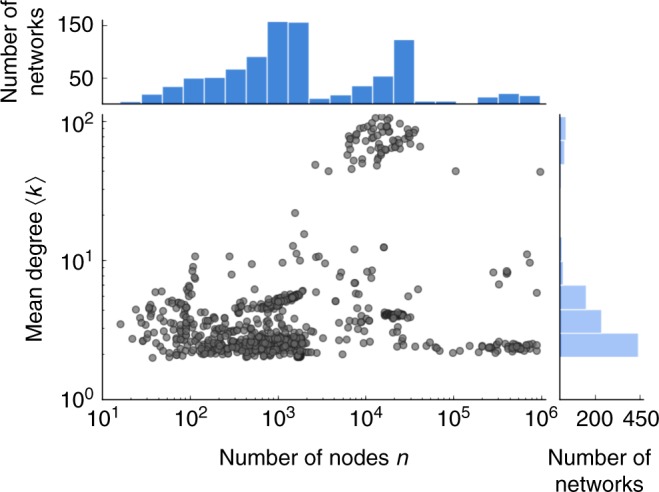
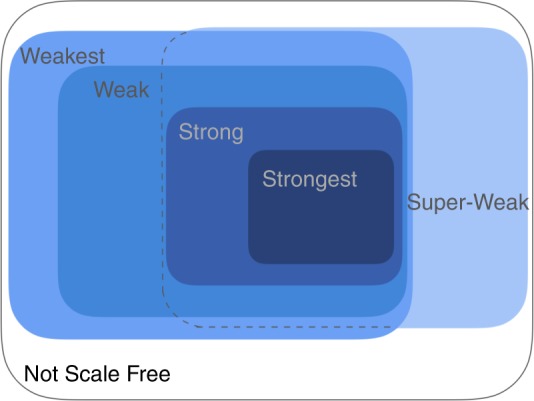
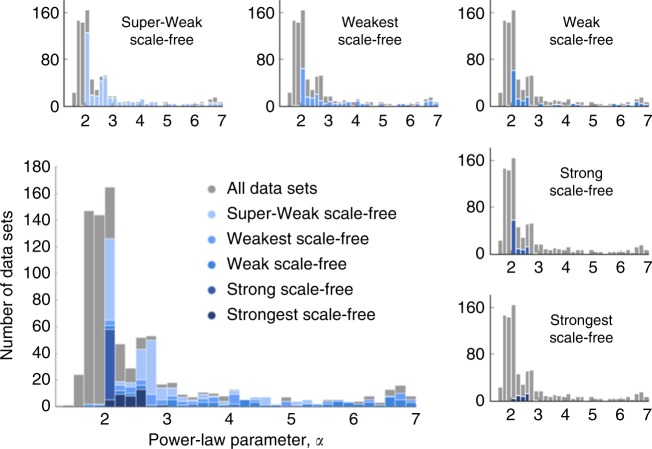
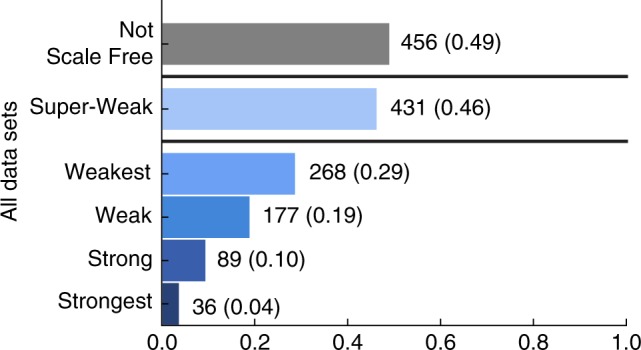
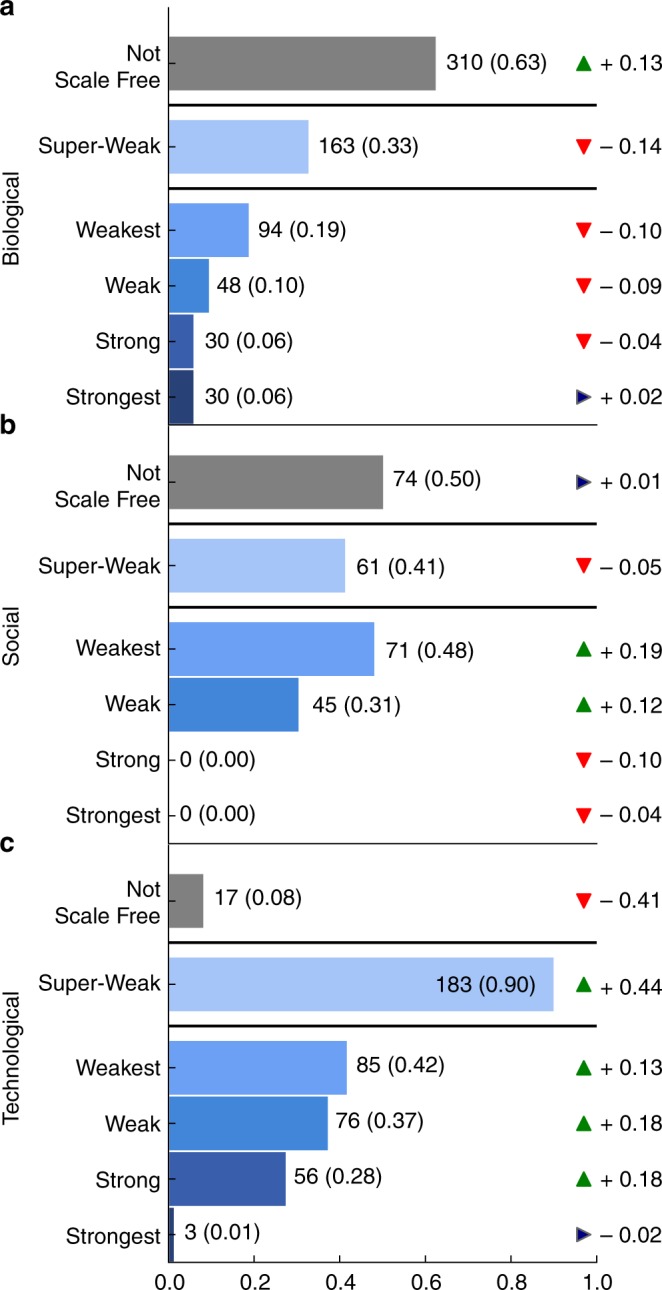
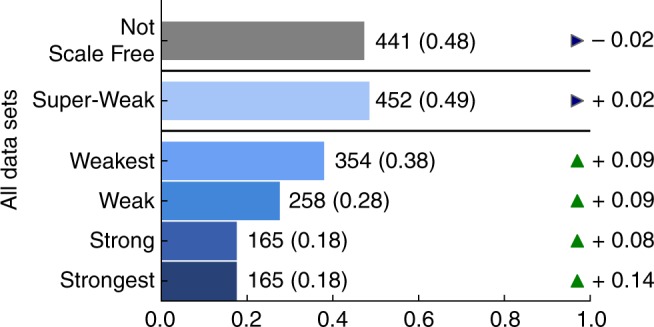
Real-world networks are often claimed to be scale free, meaning that the fraction of nodes with degree k follows a power law k − α , a pattern with broad implications for the structure and dynamics of complex systems. However, the universality of scale-free networks remains controversial. Here, we organize different definitions of scale-free networks and construct a severe test of their empirical prevalence using state-of-the-art statistical tools applied to nearly 1000 social, biological, technological, transportation, and information networks. Across these networks, we find robust evidence that strongly scale-free structure is empirically rare, while for most networks, log-normal distributions fit the data as well or better than power laws. Furthermore, social networks are at best weakly scale free, while a handful of technological and biological networks appear strongly scale free. These findings highlight the structural diversity of real-world networks and the need for new theoretical explanations of these non-scale-free patterns.
Overview
The claims and statistics of this paper haven’t been checked yet.
Free: it reads the open-access text and checks the first 5 claims that cite a source we can check. Create a free account to check every claim.
Integrity signals
Registry
Cites
Statistics
Figures
Verification
Claims the paper makes
The claims and statistics of this paper haven’t been checked yet.
Free: it reads the open-access text and checks the first 5 claims that cite a source we can check. Create a free account to check every claim.
Claims other papers make about this one
Each is checked against this paper’s own text: does it say what the citing paper says it does?
The cited source says what the claim attributes to it.
In the citing paper
“A power law connectivity degree distribution is the defining feature of a scale-free network46,47”
From Descending networks transform command signals into population motor control (2024) · cites this paper as [47]
In the citing paper
“meanwhile, serious criticisms [47,48] regarding the statistical significance and mechanistic interpretation of purported scaling laws in a variety of contexts not limited to biochemistry have also been raised.”
From Prebiotic Reaction Networks in Water (2020) · cites this paper as [48]
Self-check
Percentages, sums and reported differences re-computed from the paper’s own numbers.
The self-check needs the paper’s full text.
Citations
Cites
Collective dynamics of ‘small-world’ networks
Watts, D. J., & Strogatz, S. H. (1998) · Nature · doi:10.1038/30918 · Cited by 43,060
Emergence of Scaling in Random Networks
Barabási, A.-L., & Albert, R. (1999) · Science · doi:10.1126/science.286.5439.509 · Cited by 36,135
Community structure in social and biological networks
Girvan, M., & Newman, M. E. J. (2002) · Proceedings of the National Academy of Sciences · doi:10.1073/pnas.122653799 · Cited by 15,502
Power-Law Distributions in Empirical Data
Clauset, A., Shalizi, C. R., & Newman, M. E. J. (2009) · SIAM Review · doi:10.1137/070710111 · Cited by 8,019
Self-citationError and attack tolerance of complex networks
Albert, R., Jeong, H., & Barabási, A.-L. (2000) · Nature · doi:10.1038/35019019 · Cited by 7,534
Likelihood Ratio Tests for Model Selection and Non-Nested Hypotheses
Vuong, Q. H. (1989) · Econometrica · doi:10.2307/1912557 · Cited by 5,929
Newman (2005) · doi:10.1080/00107510500052444 · Cited by 5,749
Epidemic Spreading in Scale-Free Networks
Pastor-Satorras, R., & Vespignani, A. (2001) · Physical Review Letters · doi:10.1103/physrevlett.86.3200 · Cited by 5,731
Lethality and centrality in protein networks
Jeong, H., Mason, S. P., Barabási, A.-L., & Oltvai, Z. N. (2001) · Nature · doi:10.1038/35075138 · Cited by 5,287
Diameter of the World-Wide Web
Albert, R., Jeong, H., & Barabási, A.-L. (1999) · Nature · doi:10.1038/43601 · Cited by 4,260
Research works printed but not linked: 9
- Willinger W Alderson D Doyle JC Mathematics and the internet: a source of enormous confusion and great potential Not. AMS 2009 56 586 599
- Newman, M. Networks: An Introduction (Oxford Univerity Press, Oxford, 2010).
- Gamermann, D., Triana, J. & Jaime, R. A comprehensive statistical study of metabolic and protein-protein interaction network properties. https://arxiv.org/abs/1712.07683 (2017). · arXiv
- A. Barabasi, Network Science (Cambridge University Press, Cambridge, UK, 2016).
- Eikmeier, N. & Gleich, D. F. Proc. 23rd ACM SIGKDD Internat. Conference on Knowledge Discovery and Data Mining (KDD). 817–826 (Halifax, NS, Canada, 2017).
- Mayo, D. G. Error and the Growth of Experimental Knowledge (Science and Its Conceptual Foundations series) (University of Chicago Press, Chicago, IL,1996).
- Lee SH Fricker MD Porter MA Mesoscale analyses of fungal networks as an approach for quantifying phenotypic traits J. Complex Netw. 2017 5 145 159
- Pastor-Satorras R Vespignani A Epidemic dynamics in finite size scale-free networks Phys. Rev. E 2002 65 1 4 11909143
- Easley, D. & Kleinberg, J. Networks, Crowds, and Markets: Reasoning about a Highly Connected World (Cambridge University Press, Cambridge, UK, 2010). · DOI · Paper page
Cited by
Robustness and resilience of complex networks
Artime, O., Grassia, M., De Domenico, M., Gleeson, J. P., Makse, H. A., Mangioni, G., Perc, M., & Radicchi, F. (2024) · Nature Reviews Physics · doi:10.1038/s42254-023-00676-y · Cited by 672
The fractal dimension of complex networks: A review
Wen, T., & Cheong, K. H. (2021) · Information Fusion · doi:10.1016/j.inffus.2021.02.001 · Cited by 213
More is different in real-world multilayer networks
De Domenico, M. (2023) · Nature Physics · doi:10.1038/s41567-023-02132-1 · Cited by 204
Voitalov, I., van der Hoorn, P., van der Hofstad, R., & Krioukov, D. (2019) · Physical Review Research · doi:10.1103/physrevresearch.1.033034 · Cited by 162
“We also juxtapose these validation results against the performance of the PLFit algorithm from [18, 19].”
BackgroundResultInfluentialMetrics for graph comparison: A practitioner’s guide
Wills, P., & Meyer, F. G. (2020) · PLOS ONE · doi:10.1371/journal.pone.0228728 · Cited by 196
Akbar, R., Robert, P. A., Pavlović, M., Jeliazkov, J. R., Snapkov, I., Slabodkin, A., Weber, C. R., Scheffer, L., Miho, E., Haff, I. H., et al. (2021) · Cell Reports · doi:10.1016/j.celrep.2021.108856 · Cited by 172
Statistical physics approaches to the complex Earth system
Fan, J., Meng, J., Ludescher, J., Chen, X., Ashkenazy, Y., Kurths, J., Havlin, S., & Schellnhuber, H. J. (2021) · Physics Reports · doi:10.1016/j.physrep.2020.09.005 · Cited by 172
“Values in the range 2 ≤ λ ≤ 3 are typical, although values slightly outside this range are possible and are observed occasionally [79].”
Analysis of the air cargo transport network using a complex network theory perspective
Bombelli, A., Santos, B. F., & Tavasszy, L. (2020) · Transportation Research Part E: Logistics and Transportation Review · doi:10.1016/j.tre.2020.101959 · Cited by 162
“The large number of works addressing air networks from the passenger perspective can be appreciated in Burghouwt and Redondi (2013), where eight different models are compared.”
BackgroundIsmail, L. E., & Karwowski, W. (2020) · IEEE Access · doi:10.1109/access.2020.3018995 · Cited by 172
“A scale-free network is unique due to its extremely short path length [136], [158], [159], and strikes a balance between global and local communications [160] with a power-law degree distribution.”
BackgroundMapping global variation in human mobility
Kraemer, M. U. G., Sadilek, A., Zhang, Q., Marchal, N., Tuli, G., Cohn, E. L., Hswen, Y., Perkins, T. A., Smith, D. L., Reiner, R. C., et al. (2020) · Nature Human Behaviour · doi:10.1038/s41562-020-0875-0 · Cited by 162
The effectiveness of backward contact tracing in networks
Kojaku, S., Hébert‐Dufresne, L., Mones, E., Lehmann, S., & Ahn, Y. (2021) · Nature Physics · doi:10.1038/s41567-021-01187-2 · Cited by 142
Extreme events in dynamical systems and random walkers: A review
Chowdhury, S. N., Ray, A., Dana, S. K., & Ghosh, D. (2022) · Physics Reports · doi:10.1016/j.physrep.2022.04.001 · Cited by 145
“The topology of this network may be taken as (i) random [354, 355], (ii) small-world [139] and (iii) scale-free [356, 357].”
BackgroundOta, K., Oisi, Y., Suzuki, T., Ikeda, M., Ito, Y., Ito, T., Uwamori, H., Kobayashi, K., Kobayashi, M., Odagawa, M., et al. (2021) · Neuron · doi:10.1016/j.neuron.2021.03.032 · Cited by 143
Network Complexity and Stability of Microbes Enhanced by Microplastic Diversity
Wu, H., Gao, T., Hu, A., & Wang, J. (2024) · Environmental Science & Technology · doi:10.1021/acs.est.3c08704 · Cited by 167
Knowledge graphs and their applications in drug discovery
MacLean, F. (2021) · Expert Opinion on Drug Discovery · doi:10.1080/17460441.2021.1910673 · Cited by 105
Visual misinformation on Facebook
Yang, Y., Davis, T., & Hindman, M. (2023) · Journal of Communication · doi:10.1093/joc/jqac051 · Cited by 101
Disentangling Decentralized Finance (DeFi) Compositions
Kitzler, S., Victor, F., Saggese, P., & Haslhofer, B. (2022) · ACM Transactions on the Web · doi:10.1145/3532857 · Cited by 133
“[4].”
Adversarial Attack on Community Detection by Hiding Individuals
Li, J., Zhang, H., Han, Z., Rong, Y., Cheng, H., & Huang, J. (2020) · International World Wide Web Conference (WWW) · doi:10.1145/3366423.3380171 · Cited by 112
“However, maintaining the power-law distribution is neither necessary nor sufficient as a recent study [3] has found real-world networks with a power-law distribution are very rare.”
BackgroundInfluentialMinimal physicalism as a scale-free substrate for cognition and consciousness
Fields, C., Glazebrook, J. F., & Levin, M. (2021) · Neuroscience of Consciousness · doi:10.1093/nc/niab013 · Cited by 90
“We term this description “minimal physicalism” (MP) as it makes no assumptions about classical computational architecture, in particular, no assumptions about network architecture (Broido and Clauset 2019), and no physical assumptions beyond those of quantum information theory (Nielsen and Chuang 2000 provide a standa…”
BackgroundKrenn, M., Buffoni, L., Coutinho, B., Eppel, S., Foster, J. G., Gritsevskiy, A., Lee, H., Lu, Y., Moutinho, J. P., Sanjabi, N., et al. (2023) · Nature Machine Intelligence · doi:10.1038/s42256-023-00735-0 · Cited by 91
“A recent work [27] empirically showed that log-normal distributions fit most real-world networks as well as or better than power laws, and confirmed that pure “scale-free networks are rare”.”
BackgroundComplex Systems: A Communication Networks Perspective Towards 6G
Sergiou, C., Lestas, M., Antoniou, P., Liaskos, C., & Pitsillides, A. (2020) · IEEE Access · doi:10.1109/access.2020.2993527 · Cited by 96
“Another work that reinforces the statement above is presented in [58].”
BackgroundTrue scale-free networks hidden by finite size effects
Serafino, M., Cimini, G., Maritan, A., Rinaldo, A., Suweis, S. S., Banavar, J. R., & Caldarelli, G. (2020) · Proceedings of the National Academy of Sciences · doi:10.1073/pnas.2013825118 · Cited by 119
“These are the datasets used by Broido & Clauset [19] and Voitalov et al.”
BackgroundMethodResultInfluentialMapping child–computer interaction research through co-word analysis
Giannakos, M. N., Papamitsiou, Z. K., Markopoulos, P., Read, J. C., & Hourcade, J. P. (2020) · International Journal of Child-Computer Interaction · doi:10.1016/j.ijcci.2020.100165 · Cited by 115
“Across domains (social, biological, technological, and informational sources), scale-free networks are rare [41].”
BackgroundEvolutionary process of household waste separation behavior based on social networks
Zheng, J., Ma, G., Wei, J., Wei, W., He, Y., Jiao, Y., & Han, X. (2020) · Resources Conservation and Recycling · doi:10.1016/j.resconrec.2020.105009 · Cited by 91
The Network Turn: Changing Perspectives in the Humanities
Ahnert, R., Ahnert, S. E., Coleman, C., & Weingart, S. (2020) · Cambridge University Press eBooks · doi:10.1017/9781108866804 · Cited by 178
Haluszczynski, A., & Rath, C. W. (2019) · Chaos An Interdisciplinary Journal of Nonlinear Science · doi:10.1063/1.5118725 · Cited by 110
“Rather, more complex networks like scale-free, small world or intermediate forms of networks 14,15 with intriguing new properties are most often found in real world applications.”
BackgroundThe fractal brain: scale-invariance in structure and dynamics
Grosu, G. F., Hopp, A. V., Moca, V. V., Bârzan, H., Ciuparu, A., Ercsey-Ravasz, M., Winkel, M., Linde, H., & Muresan, R. C. (2022) · Cerebral Cortex · doi:10.1093/cercor/bhac363 · Cited by 101
“Several rigorous experimental and mathematical methods exist to characterize, quantize, and critically analyze scale-free systems, either via the characteristic power-law distribution (Clauset et al. 2009; Wijnants et al. 2013; Broido and Clauset 2019; Newberry and Savage 2019) or via wavelet type approaches (Mukli et…”
BackgroundMethodMultitissue Multiomics Systems Biology to Dissect Complex Diseases
Yang, X. (2020) · Trends in Molecular Medicine · doi:10.1016/j.molmed.2020.04.006 · Cited by 90
Ecological network complexity scales with area
Galiana, N., Lurgi, M., Bastazini, V. A. G., Bosch, J., Cagnolo, L., Cazelles, K., López, B. C., Emer, C., Fortin, M., Graß, I., et al. (2022) · Nature Ecology & Evolution · doi:10.1038/s41559-021-01644-4 · Cited by 87
Fast unfolding of communities in large networks: 15 years later
Blondel, V. D., Guillaume, J., & Lambiotte, R. (2024) · Journal of Statistical Mechanics Theory and Experiment · doi:10.1088/1742-5468/ad6139 · Cited by 103
Multiscale structural complexity of natural patterns
Bagrov, A. A., Iakovlev, I. A., Iliasov, A. A., Katsnelson, M. I., & Mazurenko, V. V. (2020) · Proceedings of the National Academy of Sciences · doi:10.1073/pnas.2004976117 · Cited by 88
“Coexistence of essentially differ-ent structural levels and competing constraints at these levels is also of crucial importance in biology [7] and s social sciences [22].”
BackgroundIntegrative study of the upper and lower airway microbiome and transcriptome in asthma
Chun, Y., Do, A., Grishina, G. T., Grishin, A. V., Fang, G., Rose, S., Spencer, C., Vicencio, A. G., Schadt, E. E., & Bunyavanich, S. (2020) · JCI Insight · doi:10.1172/jci.insight.133707 · Cited by 77
“Although the bronchial microbiome network did not follow a scalefree structure typically observed with biological networks, recent studies support that many biological networks are often not scale free (30), including microbial networks (31, 32).”
BackgroundMultiplex networks in resilience modeling of critical infrastructure systems: A systematic review
Wang, Y., Zhao, O., & Zhang, L. (2024) · Reliability Engineering & System Safety · doi:10.1016/j.ress.2024.110300 · Cited by 66
Personal Networks: Classic Readings and New Directions in Egocentric Analysis
Pescosolido, B. A., & Smith, E. B. (2021) · Cambridge University Press eBooks · doi:10.1017/9781108878296 · Cited by 129
An artificial bee colony algorithm search guided by scale-free networks
Ji, J., Song, S., Tang, C. C., Gao, S., Tang, Z., & Todo, Y. (2018) · Information Sciences · doi:10.1016/j.ins.2018.09.034 · Cited by 67
Ebadi, M., Bafort, Q., Mizrachi, E., Audenaert, P., Simoens, P., MONTAGU, M. V., Bonte, D., & de Peer, Y. V. (2023) · Proceedings of the National Academy of Sciences · doi:10.1073/pnas.2307289120 · Cited by 72
Adapting to Sea‐Level Rise: Centralization or Decentralization in Polycentric Governance Systems?
Lubell, M. N., & Robbins, M. (2021) · Policy Studies Journal · doi:10.1111/psj.12430 · Cited by 73
Zhou, B., Meng, X., & Stanley, E. (2020) · Proceedings of the National Academy of Sciences · doi:10.1073/pnas.1918901117 · Cited by 70
“34.”
BackgroundInfluentialSCNIC: Sparse correlation network investigation for compositional data
Shaffer, M., Thurimella, K., Sterrett, J. D., & Lozupone, C. (2022) · Molecular Ecology Resources · doi:10.1111/1755-0998.13704 · Cited by 77
“Second, the primary method WGCNA uses to pick modules assumes the correlation network will have a scale-free topology that may not be relevant to microbiome data (Broido & Clauset, 2019).”
Criticality, Connectivity, and Neural Disorder: A Multifaceted Approach to Neural Computation
Heiney, K., Ramstad, O. H., Fiskum, V., Christiansen, N., Sandvig, A., Nichele, S., & Sandvig, I. (2021) · Frontiers in Computational Neuroscience · doi:10.3389/fncom.2021.611183 · Cited by 62
“…of rich-club topology in the brain (Griffa and Van den Heuvel, 2018; Kim and Min, 2020) the presence of scale-free topology (Bonifazi et al., 2009) is still somewhat controversial, but it provides important insight in modeling studies of dynamics on network topology (Broido and Clauset, 2019).”
BackgroundA network perspective of comovement and structural change: Evidence from the Chinese stock market
Huang, C., Deng, Y., Yang, X., Cao, J., & Yang, X. (2021) · International Review of Financial Analysis · doi:10.1016/j.irfa.2021.101782 · Cited by 58
Assessing evolutionary and developmental transcriptome dynamics in homologous cell types
Feregrino, C., & Tschopp, P. (2021) · Developmental Dynamics · doi:10.1002/dvdy.384 · Cited by 62
BiFlowLISA: Measuring spatial association for bivariate flow data
Tao, R., & Thill, J. (2020) · Computers Environment and Urban Systems · doi:10.1016/j.compenvurbsys.2020.101519 · Cited by 52
Descending networks transform command signals into population motor control
Braun, J., Hurtak, F., Wang-Chen, S., & Ramdya, P. (2024) · Nature · doi:10.1038/s41586-024-07523-9 · Cited by 51
“A power law connectivity degree distribution is the defining feature of a scale-free network 46,47 and hints that DNs may be linked via well-connected ‘hub’ neurons.”
Influential Factors of Intercity Patient Mobility and its Network Structure in China
Ding, J., Yang, C., Wang, Y., Li, P., Wang, F., Kang, Y., Wang, H., Liang, Z., Zhang, J., Han, P., et al. (2022) · Cities · doi:10.1016/j.cities.2022.103975 · Cited by 54
Topîrceanu, A., Udrescu, M., & Mărculescu, R. (2018) · Scientific Reports · doi:10.1038/s41598-018-29224-w · Cited by 54
“∑ = − ≠ ∈ APL n n d v v 1 ( 1) ( , ) (3) i j G i j”
Networks from culture: Mechanisms of tie-formation follow institutionalized rules in social fields
Fuhse, J., & Gondal, N. (2022) · Social Networks · doi:10.1016/j.socnet.2021.12.005 · Cited by 73
Networked Knowledge and Complex Networks: An Engineering View
Lü, J., Wen, G., Lu, R., Wang, Y., & Zhang, S. (2022) · IEEE/CAA Journal of Automatica Sinica · doi:10.1109/jas.2022.105737 · Cited by 55
Testing Statistical Laws in Complex Systems
Gerlach, M., & Altmann, E. G. (2019) · Physical Review Letters · doi:10.1103/physrevlett.122.168301 · Cited by 63
Ferrari, C., Shivhare, D., Hansen, B. O., Winter, N., Pasha, A., Esteban, E., Provart, N. J., Kragler, F., Fernie, A., Tohge, T., et al. (2020) · The Plant Cell · doi:10.1105/tpc.19.00780 · Cited by 53
“While only a small portion of real-world networks are scale-free (Broido and Clauset, 2019), coexpression networks tend to show scale-free topology (Mutwil et al.”
BackgroundNetwork analysis of swine movements in a multi-site pig production system in Iowa, USA
Passafaro, T. L., Fernandes, A., Valente, B. D., Williams, N. H., & Rosa, G. J. M. (2019) · Preventive Veterinary Medicine · doi:10.1016/j.prevetmed.2019.104856 · Cited by 54
Government as Network Catalyst: Accelerating Self-Organization in a Strategic Industry
Whetsell, T. A., Siciliano, M. D., Witkowski, K. G. K., & Leiblein, M. J. (2020) · Journal of Public Administration Research and Theory · doi:10.1093/jopart/muaa002 · Cited by 63
Detecting different topologies immanent in scale-free networks with the same degree distribution
Tsiotas, D. (2019) · Proceedings of the National Academy of Sciences · doi:10.1073/pnas.1816842116 · Cited by 49
Structural Holes Capstone, Cautions, and Enthusiasms
Burt, R. S. (2021) · Cambridge University Press eBooks · doi:10.1017/9781108878296.029 · Cited by 58
Exponential random graph model parameter estimation for very large directed networks
Stivala, A. D., Robins, G. L., & Lomi, A. (2020) · PLoS ONE · doi:10.1371/journal.pone.0227804 · Cited by 58
Chen, L., & Gao, M. (2021) · Resources Conservation and Recycling · doi:10.1016/j.resconrec.2021.105445 · Cited by 50
The Theoretical and Statistical Ising Model: A Practical Guide in R
Finnemann, A., Borsboom, D., Epskamp, S., & van der Maas, H. L. J. (2021) · Psych · doi:10.3390/psych3040039 · Cited by 56
“[26] discusses commonly found network structures in physics, biology, and social science.”
BackgroundRevealing the component structure of the world air transportation network
Diop, I. M., Cherifi, C., Diallo, C., & Cherifi, H. (2021) · Applied Network Science · doi:10.1007/s41109-021-00430-2 · Cited by 51
“The power law assertion for the degree distribution is controversial (Broido and Clauset 2019; Voitalov et al.”
BackgroundWen, J., Gabryś, B., & Musiał, K. (2022) · IEEE Access · doi:10.1109/access.2022.3184801 · Cited by 58
“structure is empirically rare in social networks [163], while a principle-based simulator based on cumulative effects of triadic closure and homophily is able to reveal social network dynamics [149].”
BackgroundMethodCryptocurrencies activity as a complex network: Analysis of transactions graphs
Serena, L., Ferretti, S., & D’Angelo, G. (2021) · Peer-to-Peer Networking and Applications · doi:10.1007/s12083-021-01220-4 · Cited by 58
Network biology to uncover functional and structural properties of the plant immune system
Mishra, B., Kumar, N., & Mukhtar, M. S. (2021) · Current Opinion in Plant Biology · doi:10.1016/j.pbi.2021.102057 · Cited by 50
Satellite-Based Photonic Quantum Networks Are Small-World
Brito, S., Canabarro, A., Cavalcanti, D., & Chaves, R. (2021) · PRX Quantum · doi:10.1103/prxquantum.2.010304 · Cited by 51
“Recent works have shown robust evidences, however, that strongly scale-free structure is empirically rare: for most networks the log-normal distributions fit the data as well or better than power-laws [35].”
BackgroundLi, Q., Wang, Z., Wu, B., & Xiao, Y. (2019) · IEEE Transactions on Computational Social Systems · doi:10.1109/tcss.2019.2909269 · Cited by 41
“Scale-Free Network: we generate a scale-free network containing two different topological layers, where each layer comprises 5000 nodes following power-law degree distributions [40] with exponent 2.”
MethodWhat Can Network Science Tell Us About Phonology and Language Processing?
Vitevitch, M. S. (2021) · Topics in Cognitive Science · doi:10.1111/tops.12532 · Cited by 44
“Further, work by Broido and Clauset (2019) suggests that scale-free networks/power-law degree distributions may not be as common as previously thought. The deviation of the degree distribution in the phonological networks from a power law is interesting because work by Amaral, Scala, Barthélémy, and Stanley (2000) sug…”
BackgroundResolving the Rules of Robustness and Resilience in Biology Across Scales
Crespi, E. J., Burnap, R. L., Chen, J., Das, M., Gassman, N. R., Rosa, E., Simmons, R. B., Wada, H., Wang, Z. Q., Xiao, J., et al. (2021) · Integrative and Comparative Biology · doi:10.1093/icb/icab183 · Cited by 50
A detailed characterization of complex networks using Information Theory
Freitas, C. G. S., Aquino, A. L. L., Ramos, H. S., Frery, A. C., & Rosso, O. A. (2019) · Scientific Reports · doi:10.1038/s41598-019-53167-5 · Cited by 47
Wein, S., Deco, G., Tomé, A. M., Goldhacker, M., Malloni, W. M., Greenlee, M. W., & Lang, E. W. (2021) · Computational Intelligence and Neuroscience · doi:10.1155/2021/5573740 · Cited by 46
Prominent in vivo influence of single interneurons in the developing barrel cortex
Bollmann, Y., Mòdol, L., Tressard, T., Vorobyev, A., Dard, R. F., Brustlein, S., Sims, R. R., Bendifallah, I., Leprince, E., de Sars, V., et al. (2023) · Nature Neuroscience · doi:10.1038/s41593-023-01405-5 · Cited by 45
Quantitative geography III: Future challenges and challenging futures
Wolf, L. J., Fox, S., Harris, R., Johnston, R. J., Jones, K., Manley, D., Tranos, E., & Wang, W. W. (2020) · Progress in Human Geography · doi:10.1177/0309132520924722 · Cited by 42
The Ising model celebrates a century of interdisciplinary contributions
Macy, M. W., Szymanski, B. K., & Hołyst, J. A. (2024) · npj Complexity · doi:10.1038/s44260-024-00012-0 · Cited by 48
“Twitter approximates a scale-free network, as do collaboration networks, although these extreme degree distributions are relatively infrequent in social systems 57 .”
Zhu, Y., & Wang, K. (2024) · Journal of Environmental Management · doi:10.1016/j.jenvman.2024.123389 · Cited by 36
Mao, J., Liang, Z., Cao, Y., & Li, G. (2020) · Journal of Informetrics · doi:10.1016/j.joi.2020.101092 · Cited by 36
Monofractal analysis of functional magnetic resonance imaging: An introductory review
Campbell, O., & Weber, A. M. (2022) · Human Brain Mapping · doi:10.1002/hbm.25801 · Cited by 37
Growing networks with communities: A distributive link model
Shang, K.-K., Yang, B., Moore, J. M., Ji, Q., & SMALL, M. P. (2020) · Chaos An Interdisciplinary Journal of Nonlinear Science · doi:10.1063/5.0007422 · Cited by 36
Quantile normalization of single-cell RNA-seq read counts without unique molecular identifiers
Townes, F. W., & Irizarry, R. A. (2020) · Genome biology · doi:10.1186/s13059-020-02078-0 · Cited by 45
“A recent survey of a wide variety of datasets found that ostensible power law relationships are better described by lognormal distributions [23].”
BackgroundModularity and Dynamics on Complex Networks
Lambiotte, R., & Schaub, M. T. (2021) · Cambridge University Press eBooks · doi:10.1017/9781108774116 · Cited by 63
BottleNet: Hiding Network Bottlenecks Using SDN-Based Topology Deception
Kim, J., Nam, J., Lee, S., Yegneswaran, V., Porras, P. A., & Shin, S. (2021) · IEEE Transactions on Information Forensics and Security · doi:10.1109/tifs.2021.3075845 · Cited by 41
“Although the existence of the scale-free networks has been debated by researchers since its emergence [42], we focus on the fact that this structure allows us to make biased distributions of link densities, which can synthesize arbitrary bottlenecks.”
BackgroundWu, B., Yuan, T., Qi, Y., & Dong, M. (2021) · Complex System Modeling and Simulation · doi:10.23919/csms.2021.0008 · Cited by 35
Neal, Z. P., Domagalski, R., & Sagan, B. E. (2021) · Scientific Reports · doi:10.1038/s41598-021-03238-3 · Cited by 43
Giabbanelli, P. J., Rice, K., Galgoczy, M. C., Nataraj, N., Brown, M. M., Harper, C. R., Nguyen, M. D., & Foy, R. (2022) · Social Network Analysis and Mining · doi:10.1007/s13278-022-00886-9 · Cited by 42
Radiolysis Generates a Complex Organosynthetic Chemical Network
Adam, Z., Fahrenbach, A. C., Jacobson, S. M., Kacar, B., & Zubarev, D. Y. (2019) · doi:10.26434/chemrxiv.10148684 · Cited by 34
Zhang, L., Fan, S., Vera, J., & Lai, X. (2022) · Computational and Structural Biotechnology Journal · doi:10.1016/j.csbj.2022.11.037 · Cited by 40
“This scale-free property is widely found in biological networks [51], and most of biological networks have weakly scale free structures [52].”
BackgroundRadiolysis generates a complex organosynthetic chemical network
Adam, Z. R., Fahrenbach, A. C., Jacobson, S. M., Kaçar, B., & Zubarev, D. Y. (2021) · Scientific Reports · doi:10.1038/s41598-021-81293-6 · Cited by 37
Percolation on feature-enriched interconnected systems
Artime, O., & Domenico, M. D. (2021) · Nature Communications · doi:10.1038/s41467-021-22721-z · Cited by 46
“the resulting curves (dashed lines), used to calculate the degree-feature joint distribution (21).”
InfluentialApples to Apples: A Taxonomy of Networks in Public Management and Policy
Nowell, B. L., & Milward, H. B. (2022) · Cambridge University Press eBooks · doi:10.1017/9781108987646 · Cited by 53
Zhang, C., Feng, Y., Tam, C., Wang, N., & Feng, Y. (2021) · Frontiers in Immunology · doi:10.3389/fimmu.2021.733171 · Cited by 37
“Measuring adjacency-related similarity in a scale-free network from heterogeneous samples may make the results more biologically signi fi cant, since real-world networks are often claimed to be scale free (25).”
BackgroundPrebiotic Reaction Networks in Water
Tran, Q. P., Adam, Z. R., & Fahrenbach, A. C. (2020) · Life · doi:10.3390/life10120352 · Cited by 32
“Whether such scaling laws also characterised the prebiotic reaction networks responsible for life’s origins remains unknown; meanwhile, serious criticisms [47,48] regarding the statistical significance and mechanistic interpretation of purported scaling laws in a variety of contexts not limited to biochemistry have al…”
BackgroundNetwork Origins of the Global Economy: East vs. West in a Complex Systems Perspective
Root, H. L. (2020) · Cambridge University Press eBooks · doi:10.1017/9781108773607 · Cited by 45
How rare are power-law networks really?
Artico, I., Smolyarenko, I. E., Vinciotti, V., & Wit, E. C. (2020) · Proceedings of the Royal Society A Mathematical Physical and Engineering Sciences · doi:10.1098/rspa.2019.0742 · Cited by 45
“Another critique was levied in a recent paper by Broido & Clauset [17], who use a likelihood ratio test within a nested testing procedure, suggesting that the evidence for power-law distribution is often weak.”
BackgroundMethodInfluentialMultifractality distinguishes reactive from proactive cascades in postural control
Kelty‐Stephen, D. G., Furmanek, M. P., & Mangalam, M. (2020) · Chaos Solitons & Fractals · doi:10.1016/j.chaos.2020.110471 · Cited by 36
Scale‐free dynamics of core‐periphery topography
Klar, P., Çatal, Y., Langner, R., Huang, Z., & Northoff, G. (2022) · Human Brain Mapping · doi:10.1002/hbm.26187 · Cited by 37
“Rather than following a power-law, Broido and Clauset (2019) suggest that the data may better be describable by a log-normal or a heavy-tailed distribution that decays more slowly than an exponential.”
BackgroundZhang, L., Ma, K., Yang, H., Zhang, C., Ma, H., & Liu, Q. (2022) · IEEE Transactions on Computational Social Systems · doi:10.1109/tcss.2022.3189036 · Cited by 31
“Broido and Clauset [38] studied and analyzed 1000 real-world networks and concluded that only one-third of the networks have a degree distribution that can be reasonably described by the power-law distribution.”
BackgroundMethodHypothetical control of postural sway
Mangalam, M., & Kelty‐Stephen, D. G. (2021) · Journal of The Royal Society Interface · doi:10.1098/rsif.2020.0951 · Cited by 38
Liu, L., Shen, M., Da, S., Yan, X., & Hu, S. (2022) · Physica A Statistical Mechanics and its Applications · doi:10.1016/j.physa.2022.127579 · Cited by 40
Stožer, A., Šterk, M., Leitgeb, E. P., Markovič, R., Klemen, M. S., Ellis, C. E., Bombek, L. K., Dolenšek, J., MacDonald, P. E., & Gosak, M. (2022) · Frontiers in Endocrinology · doi:10.3389/fendo.2022.922640 · Cited by 43
“, a cell cannot be functionally connected to more cells than there are in a tissue, and consequently, they are not as ubiquitous in real world as is often presumed (14).”
BackgroundUniversal transient behavior in large dynamical systems on networks
Tarnowski, W., Neri, I., & Vivo, P. (2020) · Physical Review Research · doi:10.1103/physrevresearch.2.023333 · Cited by 31
“[16, 60–63].”
Hartmann, B., & Sugár, V. (2021) · Scientific Reports · doi:10.1038/s41598-021-86103-7 · Cited by 33
“Influential papers include the ones published by Clauset, Shalizi and Newman [23] and Broido and Clauset [24] claiming that technological networks exhibit very weak or no evidence of scale-free structure.”
BackgroundNetworks with growth and preferential attachment: modelling and applications
Piva, G. G., Ribeiro, F. L., & da Mata, A. S. (2021) · Journal of Complex Networks · doi:10.1093/comnet/cnab008 · Cited by 42
The role of spatial scale in drought monitoring and early warning systems: a review
Mardian, J. (2022) · Environmental Reviews · doi:10.1139/er-2021-0102 · Cited by 33
Metabolic Physiological Networks: The Impact of Age
Barajas‐Martínez, A., Easton, J. F., Rivera, A. L., Martinez-Tapia, R. J., de la Cruz, L., Robles-Cabrera, A., & Stephens, C. R. (2020) · Frontiers in Physiology · doi:10.3389/fphys.2020.587994 · Cited by 36
Metadata
- Authors
- Broido, A. D., & Clauset, A.
- Affiliations
- University of Colorado Boulder (US)
- Santa Fe Institute (US)
- Corresponding author
- Broido, Anna D.
- Clauset, Aaron
- ORCID
- Clauset, Aaron
- Venue
- Nature Communications
- Published
- 2019-03-04
- Volume
- 10
- Issue
- 1
- Pages
- 1017-1017
- ISSN
- 2041-1723 (ISSN-L)
- PMC
- PMC6399239
- OpenAlex
- W2784007581
- Cited by
- 875
- References
- 65
- Citations by year
- 2026: 67 · 2025: 113 · 2024: 109 · 2023: 103 · 2022: 131 · 2021: 190 · 2020: 117 · 2019: 37
- FWCI
- 54.97
- Type
- journal article
- Language
- en
- Open access
- gold
- doi.org
- Licence
- cc-by
- creativecommons.org/licenses/by/4.0 (tdm)
- creativecommons.org/licenses/by/4.0 (vor)
- Locations
- Nature Communications (publishedVersion, cc-by)
- Europe PMC (PubMed Central) (publishedVersion, cc-by)
- PubMed Central (publishedVersion, cc-by)
- PubMed (publishedVersion)
- arXiv (Cornell University) (submittedVersion)
- CU Scholar (University of Colorado Boulder) (submittedVersion, cc-by)
- DOAJ (DOAJ: Directory of Open Access Journals) (submittedVersion, cc-by-sa)
- DOAJ (DOAJ: Directory of Open Access Journals) (submittedVersion)
- arXiv (Cornell University)
- Funders
- National Science Foundation (1452718)
- National Institutes of Health (1s10od012300-01)
- University of Colorado Boulder
- Topics
- Physical Sciences › Physics and Astronomy › Statistical and Nonlinear Physics › Complex Network Analysis Techniques
- Social Sciences › Economics, Econometrics and Finance › Economics and Econometrics › Complex Systems and Time Series Analysis
- Physical Sciences › Physics and Astronomy › Condensed Matter Physics › Theoretical and Computational Physics
- Keywords
- scale-free networks, power-law degree distribution, lognormal distribution, degree distribution, social networks, technological networks, biological networks, transportation networks, information networks, complex networks
- MeSH terms
- Computer Simulation, Humans, Information Services, Models, Biological, Models, Theoretical, Models, Statistical, Social Networking
About these checks
Registry, retraction, Cites and statistics results are computed, not judged, with one exception: a printed reference that no index lists is read once by a model before it counts as a citation error. Claims are extracted by a model and kept only when their quote appears verbatim in the text; each cited source is then checked, with a model’s help, for whether it says what the claim relies on. Those verdicts can be wrong — read the claim’s quote and the cited source before relying on one.
Statistics and arithmetic are recomputed, not judged.
Confidence bands are shown only for fields calibrated on our annotated test set. None is calibrated yet, so no band is shown.
What counts as a claim ›How we measure confidence ›How we check this ›
Are you an author, or do you see a problem with this page? Request a review
Data sources
Bibliographic data: Semantic Scholar, OpenAlex, Crossref.
Contains information from the Semantic Scholar Academic Graph Datasets, made available under the ODC Attribution License (ODC-BY 1.0).
Semantic Scholar’s data is described in: Kinney, R., et al. (2023). The Semantic Scholar Open Data Platform. arXiv:2301.10140.
