

Autophagy regulates lipid metabolism through selective turnover of NCoR1
Open accessThe DOI matches its Crossref record; 70 of the 70 references it cites were found in a registry or an index.
Abstract
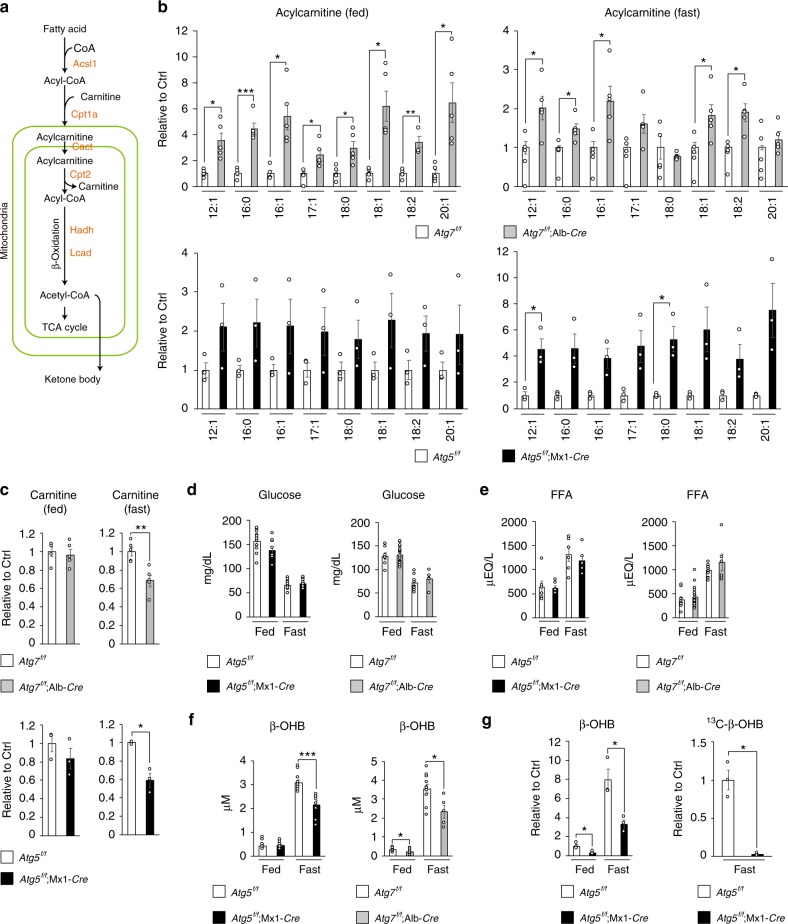
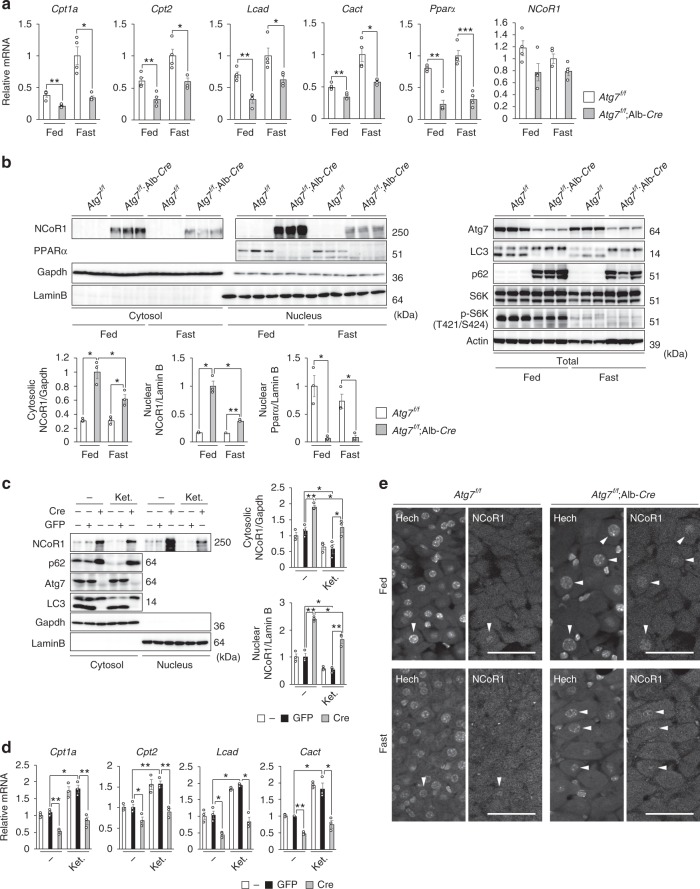
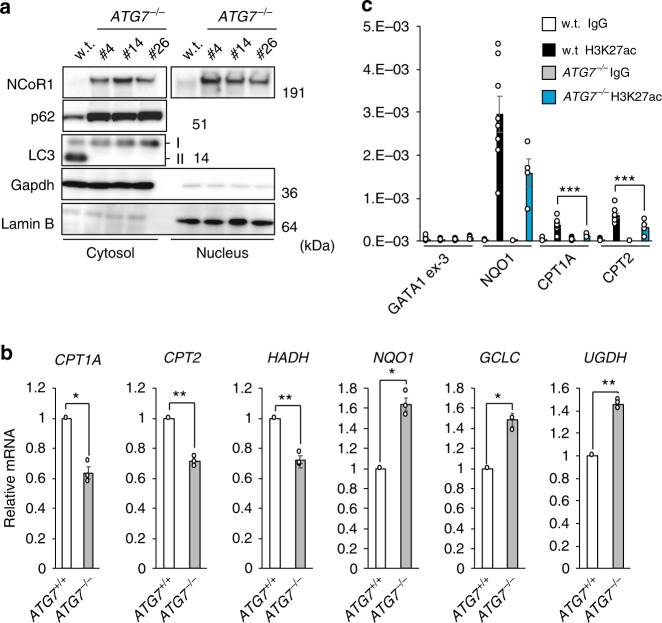
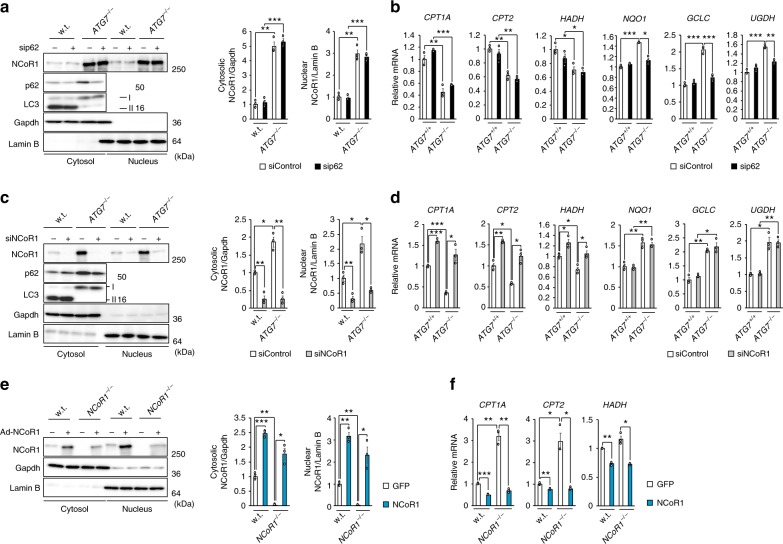
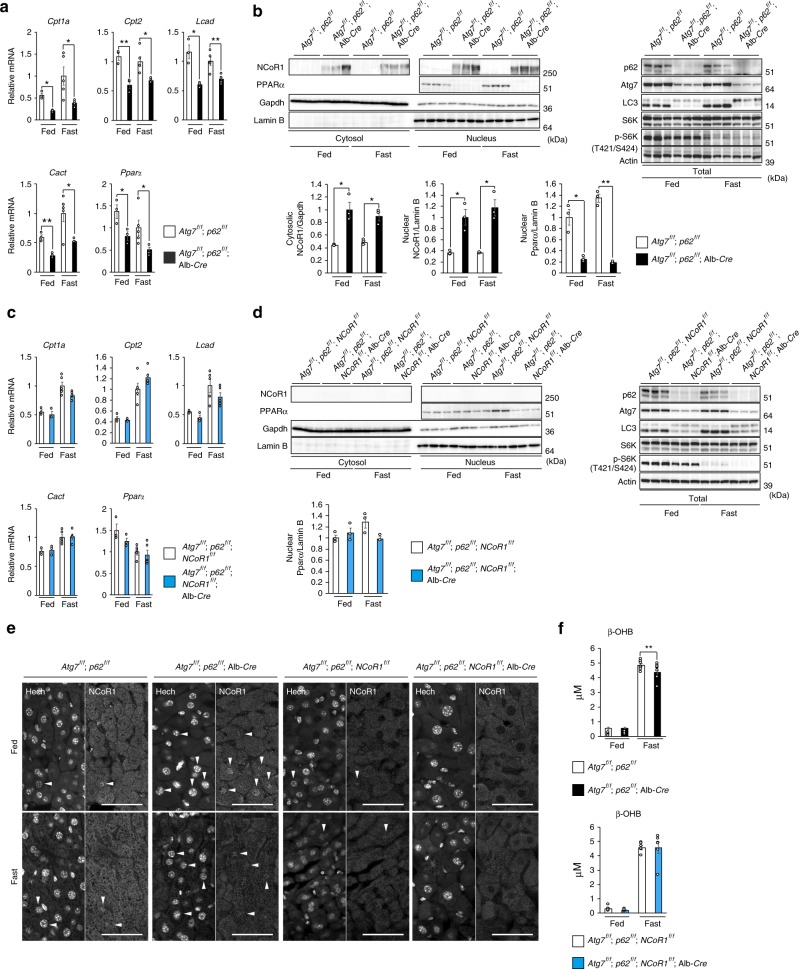
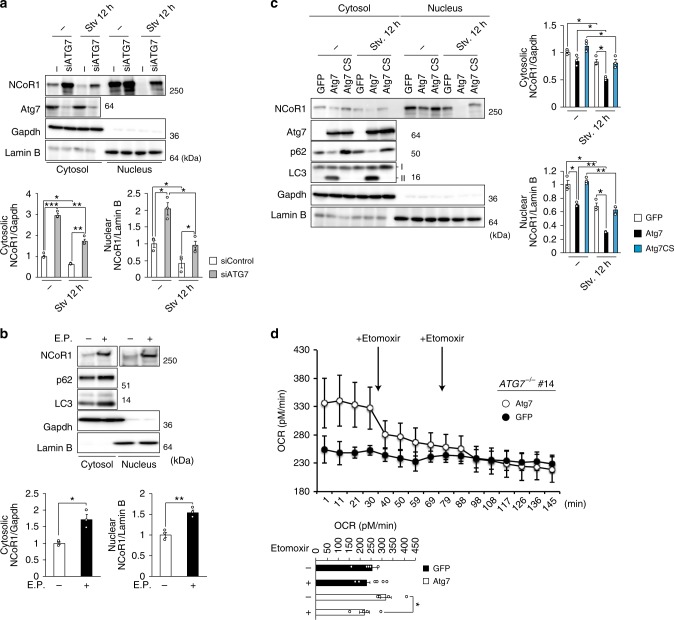
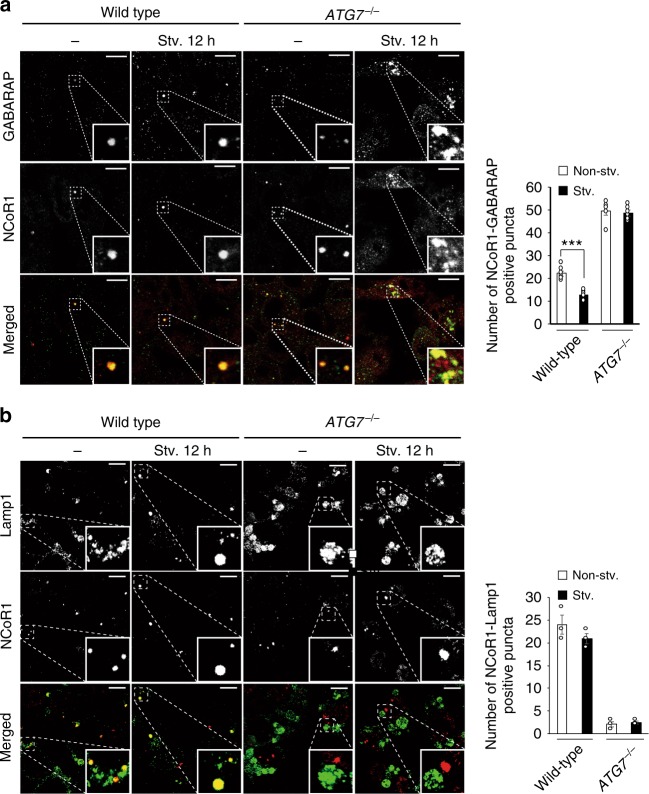
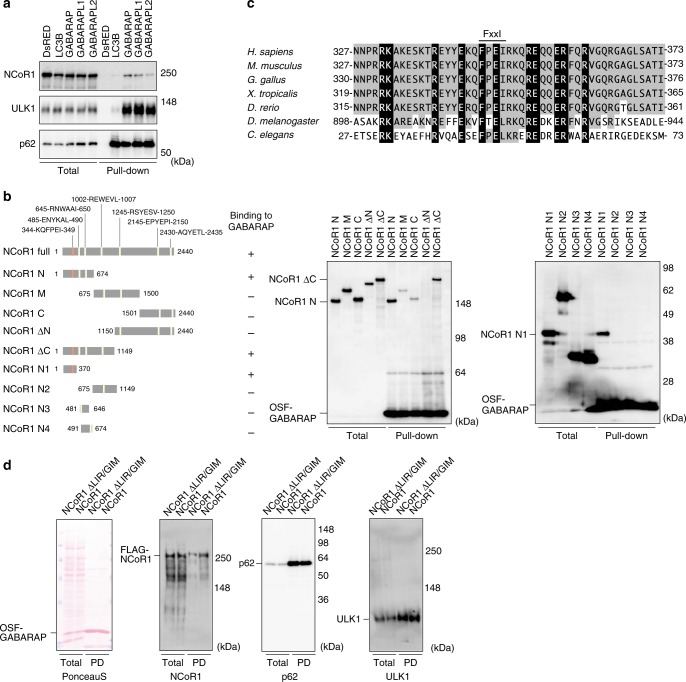
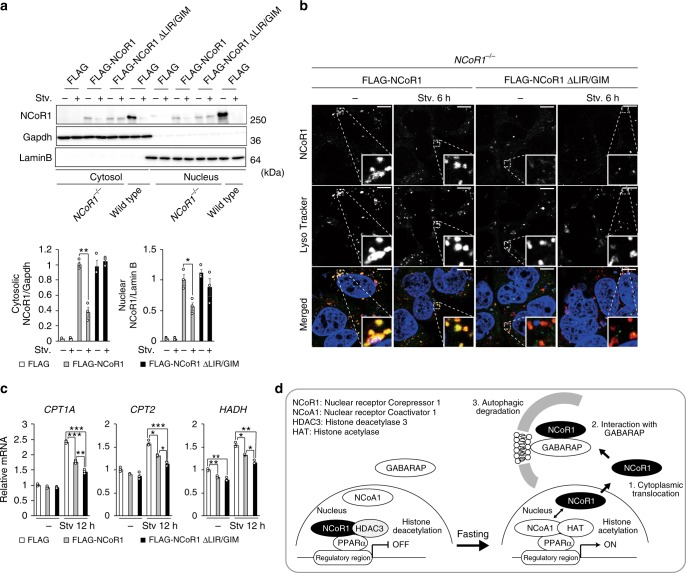
Selective autophagy ensures the removal of specific soluble proteins, protein aggregates, damaged mitochondria, and invasive bacteria from cells. Defective autophagy has been directly linked to metabolic disorders. However how selective autophagy regulates metabolism remains largely uncharacterized. Here we show that a deficiency in selective autophagy is associated with suppression of lipid oxidation. Hepatic loss of Atg7 or Atg5 significantly impairs the production of ketone bodies upon fasting, due to decreased expression of enzymes involved in β-oxidation following suppression of transactivation by PPARα. Mechanistically, nuclear receptor co-repressor 1 (NCoR1), which interacts with PPARα to suppress its transactivation, binds to the autophagosomal GABARAP family proteins and is degraded by autophagy. Consequently, loss of autophagy causes accumulation of NCoR1, suppressing PPARα activity and resulting in impaired lipid oxidation. These results suggest that autophagy contributes to PPARα activation upon fasting by promoting degradation of NCoR1 and thus regulates β-oxidation and ketone bodies production.
Overview
The claims and statistics of this paper haven’t been checked yet.
Free: it reads the open-access text and checks the first 5 claims that cite a source we can check. Create a free account to check every claim.
Integrity signals
Registry
Cites
Statistics
Figures
Verification
Claims the paper makes
The claims and statistics of this paper haven’t been checked yet.
Free: it reads the open-access text and checks the first 5 claims that cite a source we can check. Create a free account to check every claim.
Claims other papers make about this one
Each is checked against this paper’s own text: does it say what the citing paper says it does?
The cited source says what the claim attributes to it.
In the citing paper
“and the suppression of hepatic autophagy correlates with defective ketogenesis linked to the accumulation of the autophagy substrate NCOR1 (nuclear receptor co‐repressor 1), which suppresses the PPARA‐dependent transcriptional program of free FA oxidation (Iershov et al, 2019; Saito et al, 2019).”
From Autophagy in major human diseases (2021) · cites this paper as Saito et al, 2019
In the citing paper
“Hepatocyte‐specific deletion of Atg7 | Marked increase in liver size, linked to increased lipid accumulation and impaired FA oxidation | Singh et al (2009a), Saito et al (2019)”
From Autophagy in major human diseases (2021) · cites this paper as Saito et al (2019)
Self-check
Percentages, sums and reported differences re-computed from the paper’s own numbers.
The self-check needs the paper’s full text.
Citations
Cites
A RAPID METHOD OF TOTAL LIPID EXTRACTION AND PURIFICATION
Bligh, E. G., & Dyer, W. J. (1959) · Canadian Journal of Biochemistry and Physiology · doi:10.1139/o59-099 · Cited by 54,751
Autophagy: Renovation of Cells and Tissues
Mizushima, N., & Komatsu, M. (2011) · Cell · doi:10.1016/j.cell.2011.10.026 · Cited by 6,418
Self-citationPankiv, S., Clausen, T. H., Lamark, T., Brech, A., Bruun, J.-A., Outzen, H., Øvervatn, A., Bjørkøy, G., & Johansen, T. (2007) · Journal of Biological Chemistry · doi:10.1074/jbc.m702824200 · Cited by 4,578
Autophagy regulates lipid metabolism
Singh, R., Kaushik, S., Wang, Y., Xiang, Y., Novak, I., Komatsu, M., Tanaka, K., Cuervo, A. M., & Czaja, M. J. (2009) · Nature · doi:10.1038/nature07976 · Cited by 3,975
Self-citationSuppression of basal autophagy in neural cells causes neurodegenerative disease in mice
Hara, T., Nakamura, K., Matsui, M., Yamamoto, A., Nakahara, Y., Suzuki-Migishima, R., Yokoyama, M., Mishima, K., Saito, I., Okano, H., et al. (2006) · Nature · doi:10.1038/nature04724 · Cited by 3,882
Self-citationLoss of autophagy in the central nervous system causes neurodegeneration in mice
Komatsu, M., Waguri, S., Chiba, T., Murata, S., Iwata, J.-I., Tanida, I., Ueno, T., Koike, M., Uchiyama, Y., Kominami, E., et al. (2006) · Nature · doi:10.1038/nature04723 · Cited by 3,500
Self-citationBjørkøy, G., Lamark, T., Brech, A., Outzen, H., Perander, M., Øvervatn, A., Stenmark, H., & Johansen, T. (2005) · The Journal of Cell Biology · doi:10.1083/jcb.200507002 · Cited by 3,276
The role of autophagy during the early neonatal starvation period
Kuma, A., Hatano, M., Matsui, M., Yamamoto, A., Nakaya, H., Yoshimori, T., Ohsumi, Y., Tokuhisa, T., & Mizushima, N. (2004) · Nature · doi:10.1038/nature03029 · Cited by 2,865
Self-citationThe ubiquitin kinase PINK1 recruits autophagy receptors to induce mitophagy
Lazarou, M., Sliter, D. A., Kane, L. A., Sarraf, S. A., Wang, C., Burman, J. L., Sideris, D. P., Fogel, A. I., & Youle, R. J. (2015) · Nature · doi:10.1038/nature14893 · Cited by 2,774
Impairment of starvation-induced and constitutive autophagy in Atg7 -deficient mice
Komatsu, M., Waguri, S., Ueno, T., Iwata, J., Murata, S., Tanida, I., Ezaki, J., Mizushima, N., Ohsumi, Y., Uchiyama, Y., et al. (2005) · The Journal of Cell Biology · doi:10.1083/jcb.200412022 · Cited by 2,331
Self-citation
Cited by
Guidelines for the use and interpretation of assays for monitoring autophagy (4th edition) 1
Klionsky, D. J., Abdel-Aziz, A. K., Abdelfatah, S., Abdellatif, M., Abdoli, A., Abel, S., Abeliovich, H., Abildgaard, M. H., Abudu, Y. P., Acevedo-Arozena, A., et al. (2021) · Autophagy · doi:10.1080/15548627.2020.1797280 · Cited by 2,897
Self-citationAutophagy in major human diseases
Klionsky, D. J., Petroni, G., Amaravadi, R. K., Baehrecke, E. H., Ballabio, A., Boya, P., Bravo‐San Pedro, J. M., Cadwell, K., Cecconi, F., Choi, A. M. K., et al. (2021) · The EMBO Journal · doi:10.15252/embj.2021108863 · Cited by 1,585
Self-citationAdipose tissue and insulin resistance in obese
Ahmed, B., Sultana, R., & Greene, M. W. (2021) · Biomedicine & Pharmacotherapy · doi:10.1016/j.biopha.2021.111315 · Cited by 1,047
A Diversity of Selective Autophagy Receptors Determines the Specificity of the Autophagy Pathway
Kirkin, V., & Rogov, V. V. (2019) · Molecular Cell · doi:10.1016/j.molcel.2019.09.005 · Cited by 529
Diverse Cellular Roles of Autophagy
Morishita, H., & Mizushima, N. (2019) · Annual Review of Cell and Developmental Biology · doi:10.1146/annurev-cellbio-100818-125300 · Cited by 376
Self-citationAutophagy in liver diseases: A review
Qian, H., Chao, X., Williams, J., Fulte, S., Li, T., Yang, L., & Ding, W.-X. (2021) · Molecular Aspects of Medicine · doi:10.1016/j.mam.2021.100973 · Cited by 373
The AMPK pathway in fatty liver disease
Fang, C., Pan, J., Qu, N., Lei, Y., Han, J., Zhang, J., & Han, D. (2022) · Frontiers in Physiology · doi:10.3389/fphys.2022.970292 · Cited by 364
“On the contrary, if autophagy in adipocytes is impaired, it can lead to cellular lipid accumulation, causing obesity, dyslipidemia, fatty liver and other diseases (Singh et al., 2009; Zechner et al., 2017; Saito et al., 2019).”
BackgroundNutrition, longevity and disease: From molecular mechanisms to interventions
Longo, V. D., & Anderson, R. M. (2022) · Cell · doi:10.1016/j.cell.2022.04.002 · Cited by 335
Zhang, S., Peng, X., Yang, S., Li, X., Huang, M., Wei, S., Liu, J., He, G., Zheng, H., Yang, L., et al. (2022) · Cell Death & Disease · doi:10.1038/s41419-022-04593-3 · Cited by 306
“This illustrates the role of autophagy in regulating β-oxidation and ketone body production [17].”
BackgroundPatikorn, C., Roubal, K., Veettil, S. K., Chandran, V., Pham, T., Lee, Y. Y., Giovannucci, E. L., Varady, K. A., & Chaiyakunapruk, N. (2021) · JAMA Network Open · doi:10.1001/jamanetworkopen.2021.39558 · Cited by 298
Robichaud, S., Fairman, G., Vijithakumar, V., Mak, E., Cook, D. P., Pelletier, A. R., Huard, S., Vanderhyden, B. C., Figeys, D., Lavallée-Adam, M., et al. (2021) · Autophagy · doi:10.1080/15548627.2021.1886839 · Cited by 227
“Other examples of indirect regulation of lipid mobilization by autophagy independent of lipophagy include a role for autophagy in the selective clearance of NCOR1 (nuclear receptor co-repressor 1), which suppresses PPARA/ PPARα (peroxisome proliferator activated receptor alpha) activation and thus impairs lipid oxidat…”
BackgroundThe role of autophagy in viral infections
Chen, T., Tu, S., Ding, L., Jin, M., Chen, H., & Zhou, H. (2023) · Journal of Biomedical Science · doi:10.1186/s12929-023-00899-2 · Cited by 221
Association of the insulin resistance marker TyG index with the severity and mortality of COVID-19
Ren, H., Yang, Y., Wang, F., Yan, Y., Shi, X., Dong, K., Yu, X., & Zhang, S. (2020) · Cardiovascular Diabetology · doi:10.1186/s12933-020-01035-2 · Cited by 200
Yan, L.-S., Zhang, S.-F., Luo, G., Cheng, B. C.-Y., Zhang, C., Wang, Y.-W., Qiu, X.-Y., Zhou, X.-H., Wang, Q.-G., Song, X.-L., et al. (2022) · Metabolism · doi:10.1016/j.metabol.2022.155200 · Cited by 179
Dietary regulation in health and disease
Wu, Q., Gao, Z.-J., Yu, X., & Wang, P. (2022) · Signal Transduction and Targeted Therapy · doi:10.1038/s41392-022-01104-w · Cited by 176
“In the adrenal glands, CR amplifies the neuroprotective effects of glucocorticoids.320 CR has been found to inhibit hormone secretion in mammary glands and ovulation in females to perturb signal transduction between the pituitary gland and gonads.321 Likewise, testosterone levels are elevated in men by CR.322 Fasting…”
BackgroundInfluentialLi, Z.-L., Zhang, H.-L., Huang, Y., Huang, J.-H., Sun, P., Zhou, N.-N., Chen, Y.-H., Mai, J., Wang, Y., Yu, Y., et al. (2020) · Nature Communications · doi:10.1038/s41467-020-17395-y · Cited by 163
History of the Selective Autophagy Research: How Did It Begin and Where Does It Stand Today?
Kirkin, V. (2020) · Journal of Molecular Biology · doi:10.1016/j.jmb.2019.05.010 · Cited by 142
Dysfunction of autophagy in high-fat diet-induced non-alcoholic fatty liver disease
Ren, Q., Sun, Q., & Fu, J. (2023) · Autophagy · doi:10.1080/15548627.2023.2254191 · Cited by 163
“…hepatocytic autophagic activity (up or down). may have a negative impact on adaptive lipid metabolism pathways, such as the NR1H3 (nuclear receptor subfamily 1 group H member 3)-mediated lipogenesis and the PPARA (peroxisome proliferator activated receptor alpha)-mediated lipid oxidation [112,113].”
BackgroundBalancing nutrient and energy demand and supply via autophagy
He, C. (2022) · Current Biology · doi:10.1016/j.cub.2022.04.071 · Cited by 154
Johari, M. I., Yusoff, K., Haron, J., Nadarajan, C., Ibrahim, K. N., Wong, M. S., Hafidz, M. I. A., Chua, B. E., Hamid, N., Arifin, W. N., et al. (2019) · Scientific Reports · doi:10.1038/s41598-019-47763-8 · Cited by 128
Glucose Metabolism in Pancreatic Cancer
Liang, Y., Raj, P. S., Yao, W., & Ying, H. (2019) · Cancers · doi:10.3390/cancers11101460 · Cited by 145
Pleiotropic Effects of mTOR and Autophagy During Development and Aging
Schmeisser, K., & Parker, J. A. (2019) · Frontiers in Cell and Developmental Biology · doi:10.3389/fcell.2019.00192 · Cited by 122
“Given the number of remarkable new findings regarding autophagy that are being published continuously (Ezcurra et al., 2018; Saito et al., 2019), the future will show whether the link between mTOR-mediated autophagy and pleiotropic autophagy will be sustained.”
BackgroundLipophagy and Lipolysis Status in Lipid Storage and Lipid Metabolism Diseases
Kłoska, A., Węsierska, M., Malinowska, M., Gabig‐Cimińska, M., & Jakóbkiewicz‐Banecka, J. (2020) · International Journal of Molecular Sciences · doi:10.3390/ijms21176113 · Cited by 128
“However, a recent study demonstrated that autophagy regulates lipid metabolism by participating in regulation of PPARα activity through the degradation of nuclear receptor co-repressor 1 (NCoR1) [60].”
BackgroundInfluentialThe Beneficial and Adverse Effects of Autophagic Response to Caloric Restriction and Fasting
Shabkhizan, R., Haiaty, S., Moslehian, M. S., Bazmani, A., Sadeghsoltani, F., Bagheri, H. S., Rahbarghazi, R., & Sakhinia, E. (2023) · Advances in Nutrition · doi:10.1016/j.advnut.2023.07.006 · Cited by 129
Rare ATG7 genetic variants predispose patients to severe fatty liver disease
Baselli, G. A., Jamialahmadi, O., Pelusi, S., Ciociola, E., Malvestiti, F., Saracino, M., Santoro, L., Cherubini, A., Dongiovanni, P., Maggioni, M., et al. (2022) · Journal of Hepatology · doi:10.1016/j.jhep.2022.03.031 · Cited by 97
“In keeping with this result, while ATG7 transcript levels correlated with fat oxidation 36 and suppression of TNF a signaling, this latter pathway was upregulated in p.V471A variant carriers, concomitantly with an increased frequency of non-parenchymal TNF a - positive cells.”
Targeting AMP-Activated Protein Kinase in Aging-Related Cardiovascular Diseases
Li, T. X., Mu, N., Yin, Y., Yu, L., & Ma, H. (2020) · Aging and Disease · doi:10.14336/ad.2019.0901 · Cited by 94
“Autophagy is a life process of lysosome-mediated misfolded protein and aging damaged organelle degradation that plays a crucial role in the maintenance of cellular homeostasis and the recycling of material and energy [35-37].”
BackgroundNutrient-sensing AgRP neurons relay control of liver autophagy during energy deprivation
Chen, W., Mehlkop, O., Scharn, A., Nolte, H., Klemm, P., Henschke, S., Steuernagel, L., Sotelo-Hitschfeld, T., Kaya, E., Wunderlich, C. M., et al. (2023) · Cell Metabolism · doi:10.1016/j.cmet.2023.03.019 · Cited by 73
“Moreover, autophagy-mediated degradation of the nuclear corepressor (NCoR1) promotes PPARa activation in the control of hepatic lipid homeostasis, and peroxisome proliferator-activated receptor alpha (PPARa) activation in turn has been shown to promote autophagy.(18) Thus, intense bi-directional interactions of autoph…”
BackgroundThe functions of Atg8-family proteins in autophagy and cancer: linked or unrelated?
Jacquet, M., Boyer‐Guittaut, M., Fraîchard, A., & Despouy, G. (2020) · Autophagy · doi:10.1080/15548627.2020.1749367 · Cited by 78
“starvation, a condition usually encountered in the tumor microenvironment [136].”
BackgroundLack of VMP1 impairs hepatic lipoprotein secretion and promotes non-alcoholic steatohepatitis
Jiang, X., Fulte, S., Deng, F., Chen, S., Xie, Y., Chao, X., He, X. C., Zhang, Y., Li, T., Li, F., et al. (2022) · Journal of Hepatology · doi:10.1016/j.jhep.2022.04.010 · Cited by 81
Crosstalk between metabolism and cell death in tumorigenesis
Yang, S., Hu, C., Chen, X., Tang, Y., Li, J., Yang, H., Yang, Y., Ying, B., Xiao, X., Li, S., et al. (2024) · Molecular Cancer · doi:10.1186/s12943-024-01977-1 · Cited by 77
TORC1 inactivation stimulates autophagy of nucleoporin and nuclear pore complexes
Tomioka, Y., Kotani, T., Kirisako, H., Oikawa, Y., Kimura, Y., Hirano, H., Ohsumi, Y., & Nakatogawa, H. (2020) · The Journal of Cell Biology · doi:10.1083/jcb.201910063 · Cited by 73
Meçe, O., Houbaert, D., Sassano, M. L., Durré, T., Maes, H., Schaaf, M. B. E., More, S., Ganne, M., García‐Caballero, M., Borri, M., et al. (2022) · Nature Communications · doi:10.1038/s41467-022-30490-6 · Cited by 73
Das, C. K., Banerjee, I., & Mandal, M. (2019) · Seminars in Cancer Biology · doi:10.1016/j.semcancer.2019.08.020 · Cited by 73
Zhao, J., Hu, Y., & Peng, J. (2021) · Cellular & Molecular Biology Letters · doi:10.1186/s11658-021-00254-z · Cited by 69
“Their function is to recover and reuse unwanted cellular proteins [75, 76], carbohydrates [77] and lipids [78].”
BackgroundAutophagy and cancer cell metabolism
(2019) · International Review of Cell and Molecular Biology · doi:10.1016/bs.ircmb.2019.06.002 · Cited by 63
“As a result, autophagy inhibition as a result of Atg5 or Atg7 knockout causes NCoR1 to accumulate and PPARα to be inhibited, resulting in impaired lipid oxidation (Saito et al., 2019).”
BackgroundElorza, Á. A., & Soffia, J. P. (2021) · Frontiers in Cell and Developmental Biology · doi:10.3389/fcell.2021.625020 · Cited by 69
“Arrested mitophagy will cause its accumulation and downstream effects (Saito et al., 2019).”
BackgroundCrosstalk between autophagy and insulin resistance: evidence from different tissues
Sadeghi, A., Niknam, M., Momeni‐Moghaddam, M. A., Shabani, M., Aria, H., Bastin, A., Teimouri, M., Meshkani, R., & Akbari, H. (2023) · European journal of medical research · doi:10.1186/s40001-023-01424-9 · Cited by 78
“In addition to TG, studies have documented that autophagy is implicated in lipogenesis, cholesterol efflux, ketogenesis, and oxidation of fatty acids [144].”
BackgroundHealth effects of alternate-day fasting in adults: a systematic review and meta-analysis
Cui, Y., Cai, T., Zhou, Z., Mu, Y., Lu, Y., Gao, Z., Wu, J., & Zhang, Y. (2020) · Frontiers in Nutrition · doi:10.3389/fnut.2020.586036 · Cited by 60
“However, the exact molecular mechanisms that underlie fasting and liver autophagy need to be further studied and established (45).”
BackgroundYang, T., Qu, X., Wang, X., Xu, D., Sheng, M., Lin, Y., Ke, M., Song, C., Xia, Q., Jiang, L., et al. (2023) · Hepatology · doi:10.1097/hep.0000000000000638 · Cited by 65
“[5,7] Although much remains unknown, lipophagy appears to regulate intra-cellular lipid storage, [8] whereas loss of lipophagy or selective autophagy damages lipid oxidation, [9] leading to excessive lipid accumulation and initiating lipotoxicity-induced tissue injury, such as NASH.”
Sen, K., Pati, R., Jha, A., Mishra, G. P., Prusty, S., Chaudhary, S., Swetalika, S., Podder, S., Sen, A., Swain, M., et al. (2022) · Redox Biology · doi:10.1016/j.redox.2022.102575 · Cited by 61
Hepatic Lipid Catabolism via PPARα-Lysosomal Crosstalk
Sinha, R. A., Rajak, S., Singh, B. K., & Yen, P. M. (2020) · International Journal of Molecular Sciences · doi:10.3390/ijms21072391 · Cited by 60
“Additionally, proper lysosomal function was itself determining PPARα transcriptional activity by regulating the stability of its cofactor, peroxisome proliferator-activated receptor gamma coactivator 1alpha (PGC-1α) [8] and nuclear receptor co-repressor 1 (NCoR1) [9].”
InfluentialLee, T.-Y., Lu, W., Changou, C. A., Hsiung, Y.-C., Trang, N. T. T., Lee, C., Chang, T., Jayakumar, T., Hsieh, C., Yang, C., et al. (2021) · Autophagy · doi:10.1080/15548627.2021.1904495 · Cited by 58
Autophagy and hepatic lipid metabolism: mechanistic insight and therapeutic potential for MASLD
Raza, S., Rajak, S., Yen, P. M., & Sinha, R. A. (2024) · npj Metabolic Health and Disease · doi:10.1038/s44324-024-00022-5 · Cited by 61
“Since, PPAR α binds to the pro-moterofseveralFAOgenesandincludingitsowngenepromoter,thereforeloss ofNCOR1increasedhepaticlipidcatabolismunderfastingcondition. concurrently,lossofautophagyinhibitedfasting-inducedFAOviarepressed PPAR α signaling 61 (Fig.”
BackgroundFougerat, A., Bruse, J., Polizzi, A., Montagner, A., Guillou, H., & Wahli, W. (2024) · Progress in Lipid Research · doi:10.1016/j.plipres.2024.101303 · Cited by 59
“Reciprocally, the autophagy – lysosomal pathway downregulates PPAR α activity by increasing the stability of the PPAR α corepressor nuclear receptor corepressor 1 (NCoR1) [94,104], and decreasing the stability of the PPAR α coactivator PGC1 α [105].”
Ren, H., Wang, D., Zhang, L., Kang, X., Li, Y., Zhou, X., & Yuan, G. (2019) · Aging · doi:10.18632/aging.102396 · Cited by 56
“Accumulating evidence indicates that autophagy is necessary for maintaining lipid metabolism homeostasis [12, 13].”
BackgroundCurrent Understanding on the Role of Lipids in Macrophages and Associated Diseases
Florance, I., & Seenivasan, R. (2022) · International Journal of Molecular Sciences · doi:10.3390/ijms24010589 · Cited by 54
Foam Cell Macrophages in Tuberculosis
Agarwal, P., Gordon, S., & Martínez, F. O. (2021) · Frontiers in Immunology · doi:10.3389/fimmu.2021.775326 · Cited by 54
“Lipophagy degrades particles by various hydrolases into basic components such as amino acids, glucose, nucleotides and free fatty acids (12, 13).”
BackgroundVeluswamy, P., Wacker, M., Scherner, M. P., & Wippermann, J. (2020) · International Journal of Molecular Sciences · doi:10.3390/ijms21218159 · Cited by 52
“Nevertheless, a severely altered lipid metabolism causes an accumulation and surplus of intracellular lipid pool leading to a dysfunction in mitochondria and an impairment in autophagy induction (waste recycling intracellular machinery evolved to monitor abnormal fluctuations in key metabolic parameters) that further…”
BackgroundEmerging Roles of Impaired Autophagy in Fatty Liver Disease and Hepatocellular Carcinoma
Niture, S. K., Lin, M., Ríos-Colón, L., Qi, Q., Moore, J. T., & Kumar, D. (2021) · International Journal of Hepatology · doi:10.1155/2021/6675762 · Cited by 48
“Furthermore, hepatic knockout of Atg7 or Atg5 genes upregulated the production of ketone bodies in fasting mice [44].”
BackgroundInfluentialChen, K., & Sun, Z. (2019) · Journal of Molecular Medicine · doi:10.1007/s00109-019-01841-6 · Cited by 46
Zhou, F., Ding, M., Gu, Y., Fan, G., Liu, C., Li, Y., Sun, R., Wu, J., Li, J., Xue, X., et al. (2022) · Frontiers in Pharmacology · doi:10.3389/fphar.2021.826628 · Cited by 49
Gull, N., Arshad, F., Naikoo, G. A., Hassan, I. U., Pedram, M. Z., Ahmad, A., Aljabali, A. A. A., Mishra, V. K., Satija, S., Charbe, N. B., et al. (2022) · Journal of Gastrointestinal Cancer · doi:10.1007/s12029-022-00809-z · Cited by 57
Physiological Stress Response by Selective Autophagy
Sánchez‐Martín, P., & Komatsu, M. (2019) · Journal of Molecular Biology · doi:10.1016/j.jmb.2019.06.013 · Cited by 42
Self-citationAutophagy in Hepatic Steatosis: A Structured Review
Ramos, V. D. M., Kowaltowski, A. J., & Kakimoto, P. A. (2021) · Frontiers in Cell and Developmental Biology · doi:10.3389/fcell.2021.657389 · Cited by 47
Autophagy targets Hd1 for vacuolar degradation to regulate rice flowering
Hu, Z., Yang, Z., Zhang, Y., Zhang, A., Lu, Q., Fang, Y. R., & Lu, C. (2022) · Molecular Plant · doi:10.1016/j.molp.2022.05.006 · Cited by 38
The role of lipids in autophagy and its implication in neurodegeneration
Hernández-Díaz, S., & Soukup, S. (2020) · Cell Stress · doi:10.15698/cst2020.07.225 · Cited by 42
“In this context, autophagy has gained particular interest, since it can degrade cytosolic organelles and compartments [18–21] and has functional roles in lipid metabolism [22].”
BackgroundZhang, Y., Li, K., Kong, A., Zhou, Y., Chen, D., Gu, J., & Shi, H. (2021) · Ecotoxicology and Environmental Safety · doi:10.1016/j.ecoenv.2021.112256 · Cited by 44
Targeting PPARs for therapy of atherosclerosis: A review
Miao, M., Wang, X., Liu, T., Li, Y., Yu, W., Yang, T.-M., & Guo, S. (2023) · International Journal of Biological Macromolecules · doi:10.1016/j.ijbiomac.2023.125008 · Cited by 45
Chaudhary, R., Liu, B., Bensalem, J., Sargeant, T. J., Page, A. J., Wittert, G., Hutchison, A. T., & Heilbronn, L. K. (2022) · Nutrition · doi:10.1016/j.nut.2022.111662 · Cited by 45
Autophagy compensates for defects in mitochondrial dynamics
Haeussler, S., Köhler, F., Witting, M. A., Premm, M. F., Rolland, S. G. M., Fischer, C. A., Chauve, L., Casanueva, O., & Conradt, B. (2020) · PLoS Genetics · doi:10.1371/journal.pgen.1008638 · Cited by 38
“More recently, autophagy has also been shown to directly affect the levels of enzymes involved in β -oxidation by causing the degradation of the co-repressor of PPAR α , a master regulator of lipid metabolism [88].”
PPARα and NCOR/SMRT corepressor network in liver metabolic regulation
Kang, Z., & Fan, R. (2020) · The FASEB Journal · doi:10.1096/fj.202000055rr · Cited by 44
Liao, Z., Zhang, X., Song, C., Lin, W., Cheng, Y., Xie, Z., Chen, S., Nie, Y., Li, A., Zhang, H., et al. (2020) · Cell Death and Disease · doi:10.1038/s41419-020-02841-y · Cited by 40
Lipid-mediated regulation of the cancer-immune crosstalk
Ma, Y., Zhang, S., Jin, Z., & Shi, M. (2020) · Pharmacological Research · doi:10.1016/j.phrs.2020.105131 · Cited by 38
Niture, S. K., Gadi, S. V., Lin, M., Qi, Q., Niture, S. S., Moore, J. T., Bodnar, W. M., Fernando, R. A., Levine, K. E., & Kumar, D. (2023) · Environmental Toxicology · doi:10.1002/tox.23731 · Cited by 37
“In NAFLD, autophagy (normal autophagy and in some reports defective autophagy) has been reported to play a role in lipid metabolism, particularly in lipogenic and lipolytic mechanisms,(67) and studies indicate that a high concentration of Cd induces cell steatosis and autophagy that result in lipid metabolism.(68,69)…”
BackgroundEmerging mechanistic insights of selective autophagy in hepatic diseases
Al‐Bari, M. A. A., Ito, Y., Thomes, P. G., Menon, M. B., Macia, M. G., Fadel, R. A., Stadlin, A., Peake, N., Faris, M. E., Eid, N. A. S., et al. (2023) · Frontiers in Pharmacology · doi:10.3389/fphar.2023.1149809 · Cited by 42
“Defective autophagy causes NCOR1 accumulation and inhibition of PPARA activity resulting in impaired β-oxidation (Saito et al., 2019; Kloska et al., 2020).”
Liu, Q., Cheng, L., Wang, M., Shen, L., Zhang, C., Mu, J., Hu, Y., Yang, Y., He, K., Yan, H., et al. (2024) · Journal of Animal Science and Biotechnology/Journal of animal science and biotechnology · doi:10.1186/s40104-024-01009-4 · Cited by 37
The Complex Role of Autophagy in Melanoma Evolution: New Perspectives From Mouse Models
Leo, L. D., Bodemeyer, V., & Zio, D. D. (2020) · Frontiers in Oncology · doi:10.3389/fonc.2019.01506 · Cited by 38
“Indeed, recent evidence demonstrated a tight interplay between autophagy and lipid metabolism, proposing autophagy as a mechanism regulating both β-oxidation and production of ketone bodies (63).”
BackgroundLoss of autophagy impairs physiological steatosis by accumulation of NCoR1
Takahashi, S.-S., Sou, Y., Saito, T., Kuma, A., Yabe, T., Sugiura, Y., Lee, H., Suematsu, M., Yokomizo, T., Koike, M., et al. (2019) · Life Science Alliance · doi:10.26508/lsa.201900513 · Cited by 40
Self-citationStructure and Dynamics in the ATG8 Family From Experimental to Computational Techniques
Sora, V., Kumar, M., Maiani, E., Lambrughi, M., Tiberti, M., & Papaleo, E. (2020) · Frontiers in Cell and Developmental Biology · doi:10.3389/fcell.2020.00420 · Cited by 37
The p53 Family: A Role in Lipid and Iron Metabolism
Laubach, K., Zhang, J., & Chen, X. (2021) · Frontiers in Cell and Developmental Biology · doi:10.3389/fcell.2021.715974 · Cited by 37
Lipid metabolism orchestrates liver regeneration: an integrated metabolic network
Duan, L., Chang, Y., Dai, J., Lu, H., Zhao, W., Shen, Y., Lin, J., & Cai, X. (2025) · Journal of Translational Medicine · doi:10.1186/s12967-025-07232-5 · Cited by 40
“This mechanism reduces ketogenesis during fasting, revealing lipophagy’s regulatory role in β-oxidation and ketogenesis [119].”
Cortini, M., Armirotti, A., Columbaro, M., Longo, D. L., Pompo, G. D., Cannas, E., Maresca, A., Errani, C., Longhi, A., Righi, A., et al. (2021) · Cancers · doi:10.3390/cancers13020311 · Cited by 36
“, lipophagy, that is partially responsible for the sequestration of LD to form autolipophagosomes [40,65].”
Irinotecan-Induced Steatohepatitis: Current Insights
Han, J., Zhang, J., & Zhang, C. (2021) · Frontiers in Oncology · doi:10.3389/fonc.2021.754891 · Cited by 31
“It also regulates the lipid metabolism by metabolizing intracellular lipid droplets (triglycerides), which are the main form of lipid storage in the cell (38).”
BackgroundGuan, L., Guo, L., Zhang, H., Liu, H., Qiao, Y., Zhou, W., Zhai, Y., Men, X., Cheng, D., Men, X., et al. (2023) · Molecular Nutrition & Food Research · doi:10.1002/mnfr.202200812 · Cited by 30
Intermittent fasting and neurodegenerative diseases: Molecular mechanisms and therapeutic potential
Lv, R., Liu, B., Jiang, Z., Zhou, R., Liu, X., Lu, T., Bao, Y., Huang, C., Zou, G., Zhang, Z., et al. (2024) · Metabolism · doi:10.1016/j.metabol.2024.156104 · Cited by 37
Role and mechanisms of autophagy in lung metabolism and repair
Li, X., Zhao, F., Wang, A., Cheng, P., & Chen, H. (2021) · Cellular and Molecular Life Sciences · doi:10.1007/s00018-021-03841-7 · Cited by 34
Unfolding the role of autophagy in the cancer metabolism
Pandey, A., Yadav, P., & Shukla, S. (2021) · Biochemistry and Biophysics Reports · doi:10.1016/j.bbrep.2021.101158 · Cited by 35
p21-activated kinase 4 suppresses fatty acid β-oxidation and ketogenesis by phosphorylating NCoR1
Shi, M. Y., Yu, H. C., Han, C. Y., Bang, I. H., Park, H. S., Jang, K. Y., Lee, S., Son, J. B., Kim, N. D., Park, B., et al. (2023) · Nature Communications · doi:10.1038/s41467-023-40597-z · Cited by 32
“Phosphorylation of NCoR1 was analyzed by immunoblotting of NCoR1 after immunoprecipitation with a p-Ser/Thr antibody. b Recombinant NCoR1 was incubated with activePAK4and[ 32 P]ATPfor30minat31°C. Proteinsinthemixturewereresolved by SDS-PAGE and visualized by autoradiography.”
Cadena-Cruz, J. E., Guamán‐Ortiz, L. M., Romero-Benavides, J. C., Bailón-Moscoso, N., Murillo-Sotomayor, K. E., Ortiz-Guamán, N. V., & Heredia‐Moya, J. (2021) · BMC Chemistry · doi:10.1186/s13065-021-00765-y · Cited by 28
“LC3 I is converted into its active form LC3 II at the beginning of the autophagy, while p62 is degraded in the last phase of this cell death pathway [34].”
BackgroundHydrogen Sulfide and Liver Health: Insights into Liver Diseases
Nguyen, T. T. P., Nguyen, P. L., Park, S., Jung, C. H., & Jeon, T. (2024) · Antioxidants and Redox Signaling · doi:10.1089/ars.2023.0404 · Cited by 28
“…due to knockout of key proteins lysosomal associated membrane protein 2A (LAMP2A) and autophagy-related protein 7 (ATG7), respectively, developed hepatic steatosis in association with abnormalities in the glucose and lipid metabolism (Lim et al., 2014; Saito et al., 2019; Schneider et al., 2014).”
Multifarious roles of lipid droplets in autophagy – Target, product, and what else?
Ogasawara, Y., Tsuji, T., & Fujimoto, T. (2020) · Seminars in Cell and Developmental Biology · doi:10.1016/j.semcdb.2020.02.013 · Cited by 29
ATG7/GAPLINC/IRF3 axis plays a critical role in regulating pathogenesis of influenza A virus
Chen, B., Guo, G., Wang, G., Zhu, Q., Wang, L., Shi, W., Wang, S., Chen, Y. D., Chi, X., Wen, F., et al. (2024) · PLoS Pathogens · doi:10.1371/journal.ppat.1011958 · Cited by 27
The impact of aging on liver health and the development of liver diseases
Williams, S. N., & Ding, W. (2025) · Hepatology Communications · doi:10.1097/hc9.0000000000000808 · Cited by 35
“[135] This change in fatty acid metabolism was linked to increased lipid accumulation and the subsequent development of fatty liver in aged mice.”
GIMAP6 regulates autophagy, immune competence, and inflammation in mice and humans
Yao, Y., Jiang, P. D., Chao, B. N., Cağdaş, D. N., Kubo, S., Balasubramaniyam, A., Zhang, Y., Shadur, B., NaserEddin, A., Folio, L. R., et al. (2022) · The Journal of Experimental Medicine · doi:10.1084/jem.20201405 · Cited by 26
“GIMAP6 deficiency changes global metabolism and lipid profiles Lipids and metabolic processes regulate autophagy, and, conversely, autophagy defects affect lipid and basic metabolic circuits (Dall’Armi et al., 2013; Lahiri et al., 2019; Saito et al., 2019; Xie et al., 2020).”
BackgroundPeng, Y., Tao, Y., Liu, L., Zhang, J., & Wei, B. (2023) · Aging and Disease · doi:10.14336/ad.2023.0823-4 · Cited by 36
“The inhibition of autophagic flux can lead to the accumulation of nuclear receptor co-repressor 1 (NCoR1) and inhibition of peroxisome proliferator-activated receptor alpha (PPARα) activity, leading to impaired lipid oxidation [100].”
BackgroundAutophagy, Metabolism, and Alcohol-Related Liver Disease: Novel Modulators and Functions
Yan, S., Khambu, B., Hong, H., Liu, G., Huda, N., & Yin, X. (2019) · International Journal of Molecular Sciences · doi:10.3390/ijms20205029 · Cited by 26
“They also found that both NCoR1 and HDAC3 bound with GABA type A receptor-associated protein (GABARAP) and LC3 with higher affinities to GABARAP [45].”
BackgroundResultInfluentialCabrera-Reyes, F., Parra-Ruiz, C., Yuseff, M. I., & Zanlungo, S. (2021) · Frontiers in Cell and Developmental Biology · doi:10.3389/fcell.2021.790568 · Cited by 24
“Additionally, autophagy regulates lipid metabolism including FAs oxidation, lipolysis, lipogenesis, ketogenesis, and cholesterol efflux (Martinez-Lopez and Singh 2015; Saito et al., 2019).”
BackgroundEmergence of Lipid Droplets in the Mechanisms of Carcinogenesis and Therapeutic Responses
Delmas, D., Cotte, A. K., Connat, J., Hermetet, F., Bouyer, F., & Aires, V. (2023) · Cancers · doi:10.3390/cancers15164100 · Cited by 26
“LD lipolysis can also be mediated by a form of autophagy called lipophagy [42,43].”
BackgroundRubicon in Metabolic Diseases and Ageing
Minami, S., Nakamura, S., & Yoshimori, T. (2022) · Frontiers in Cell and Developmental Biology · doi:10.3389/fcell.2021.816829 · Cited by 28
“On the other hand, Rubicon suppression might ameliorate NAFLD via selective degradation of nuclear receptor co-repressor 1 (NCoR1), repressor of PPARα, which is recently identified as a selective substrate of autophagy (Saito et al., 2019).”
BackgroundLekka, E., Kokanovic, A., Mosole, S., Civenni, G., Schmidli, S., Łaski, A., Ghidini, A., Iyer, P. S., Berk, C., Behera, A. K., et al. (2022) · Nature Communications · doi:10.1038/s41467-022-35481-1 · Cited by 26
Dong, Z., Xie, X., Sun, Y., Wu, H., & Dai, M. (2020) · European Journal of Pharmacology · doi:10.1016/j.ejphar.2020.173145 · Cited by 25
Autophagy-mediated NCOR1 degradation is required for brown fat maturation and thermogenesis
Sabaté-Pérez, A., Romero, M., Sànchez‐Fernàndez‐de‐Landa, P., Carobbio, S., Mouratidis, M., Sala, D., Engel, P., Martínez-Cristóbal, P., Villena, J. A., Virtue, S., et al. (2022) · Autophagy · doi:10.1080/15548627.2022.2111081 · Cited by 25
“NCOR1 has recently reported to be a substrate of autophagy [29,30], and TP53INP2 participates in this process [17,19].”
BackgroundMethodResultInfluentialZuo, Q., Park, N. H., Lee, J. K., Casiano, A. S., & Madak‐Erdogan, Z. (2023) · Steroids · doi:10.1016/j.steroids.2023.109330 · Cited by 27
Absence of Atg7 in the liver disturbed hepatic regeneration after liver injury
Römermann, D., Ansari, N., Moreira, A. R. S., Michael, A., Marhenke, S., Hardtke‐Wolenski, M., Longerich, T., Manns, M. P., Wedemeyer, H. H., Vogel, A., et al. (2020) · Liver International · doi:10.1111/liv.14425 · Cited by 28
Lipidome Alterations following Mild Traumatic Brain Injury in the Rat
Gier, E. C., Pulliam, A. N., Gaul, D. A., Moore, S. G., LaPlaca, M. C., & Fernández, F. M. (2022) · Metabolites · doi:10.3390/metabo12020150 · Cited by 22
“Autophagy is the process of lysosomal degradation of macromolecular substances that is invariably linked to lipid metabolism through the synthesis and degradation of lipids such as TG and PL [41,42].”
BackgroundDeciphering the Role Played by Autophagy in Leishmania Infection
Veras, P. S. T., de Menezes, J. P. B., & Dias, B. (2019) · Frontiers in Immunology · doi:10.3389/fimmu.2019.02523 · Cited by 24
“It has been demonstrated that regardless of Leishmania infection, autophagic induction can modulate lipid metabolism in mammalian cells (120, 121).”
BackgroundChoi, Y., Yun, S. H., Yu, J., Mun, Y., Lee, W., Park, C. J., Han, B. W., & Lee, B. (2023) · Molecular Metabolism · doi:10.1016/j.molmet.2023.101784 · Cited by 19
“Macroautophagy inhibition caused by ATG7 genetic ablation is accompanied by the accumulation of NCoR1 and defective fatty acid oxidation [29].”
BackgroundDi (2-ethylhexyl) phthalate induced lipophagy-related renal ferroptosis in quail (Coturnix japonica)
Zhu, Y., Ma, X., Cui, L.-G., Xu, Y., Li, C., Talukder, M., Li, X., & Li, J. (2024) · The Science of The Total Environment · doi:10.1016/j.scitotenv.2024.170724 · Cited by 22
Lian, C.-Y., Wei, S., Li, Z., Zhang, S., Wang, Z., & Wang, L. (2023) · Environmental Pollution · doi:10.1016/j.envpol.2023.121394 · Cited by 22
Chen, J., Zhao, H. W., Liu, M., & Chen, L. (2023) · Molecular and Cellular Biochemistry · doi:10.1007/s11010-023-04800-5 · Cited by 20
“PCM1 also promotes GABARAP/WIPI2/p62-positive autophagosome formation and flux but negatively impacts the formation of LC3B-positive autophagosomes [78, 79].”
Metadata
- Authors
- Saito, T., Kuma, A., Sugiura, Y., Ichimura, Y., Obata, M., Kitamura, H., Okuda, S., Lee, H.-C., Ikeda, K., Kanegae, Y., Saito, I., Auwerx, J., Motohashi, H., Suematsu, M., Soga, T., Yokomizo, T., Waguri, S., Mizushima, N., & Komatsu, M.
- Affiliations
- Niigata University (JP)
- Japan Science and Technology Agency (JP)
- Keio University (JP)
- Tohoku University (JP)
- Juntendo University (JP)
- RIKEN Center for Integrative Medical Sciences (JP)
- Jikei University School of Medicine (JP)
- Institute of Medical Science, The University of Tokyo (JP)
- École Polytechnique Fédérale de Lausanne (CH)
- Institute for Advanced Biosciences, Keio University (JP)
- Fukushima Medical University (JP)
- The University of Tokyo (JP)
- Corresponding author
- Komatsu, Masaaki
- ORCID
- Venue
- Nature Communications
- Published
- 2019-04-05
- Volume
- 10
- Issue
- 1
- Pages
- 1567-1567
- ISSN
- 2041-1723 (ISSN-L)
- PMC
- PMC6450892
- OpenAlex
- W2931270080
- Cited by
- 193
- References
- 70
- Citations by year
- 2026: 15 · 2025: 20 · 2024: 21 · 2023: 29 · 2022: 36 · 2021: 30 · 2020: 27 · 2019: 15
- FWCI
- 20.54
- Type
- journal article
- Language
- en
- Open access
- gold
- doi.org
- Licence
- cc-by
- creativecommons.org/licenses/by/4.0 (tdm)
- creativecommons.org/licenses/by/4.0 (vor)
- Locations
- Nature Communications (publishedVersion, cc-by)
- Europe PMC (PubMed Central) (publishedVersion, cc-by)
- PubMed Central (publishedVersion, cc-by)
- PubMed (publishedVersion)
- RePEc: Research Papers in Economics (submittedVersion)
- DOAJ (DOAJ: Directory of Open Access Journals) (submittedVersion, cc-by-sa)
- DOAJ (DOAJ: Directory of Open Access Journals) (submittedVersion)
- Infoscience (Ecole Polytechnique Fédérale de Lausanne) (submittedVersion, cc-by-nc-nd)
- Funders
- National Science Foundation
- Takeda Science Foundation (15H05904)
- Keio University
- École Polytechnique Fédérale de Lausanne
- Schweizerischer Nationalfonds zur Förderung der Wissenschaftlichen Forschung (140780, 31003A)
- Yonsei University
- University of Tokyo
- Japan Society for the Promotion of Science (18H04794, 19K07379, 15H06600, 18H02611, 17J05623, 15H04708, 15H05879, JP25111006, 18H02621, 16H06276, 18F18099, 15H05904, 15H05897)
- Precursory Research for Embryonic Science and Technology
- Topics
- Life Sciences › Biochemistry, Genetics and Molecular Biology › Cell Biology › Autophagy in Disease and Therapy
- Life Sciences › Biochemistry, Genetics and Molecular Biology › Molecular Biology › Peroxisome Proliferator-Activated Receptors
- Life Sciences › Biochemistry, Genetics and Molecular Biology › Biochemistry › Lipid metabolism and biosynthesis
- Keywords
- selective autophagy, NCOR1, PPARα, lipid oxidation, fatty acid beta-oxidation, ketone synthesis, fasting, ATG7, ATG5, hepatic metabolism, nuclear receptor corepressor, protein degradation
- MeSH terms
- Autophagy-Related Protein 5, Autophagy-Related Protein 7, Animals, Autophagy, Fasting, Ketone Bodies, Liver, Oxidation-Reduction, PPAR alpha, Lipid Metabolism, Mice, Nuclear Receptor Co-Repressor 1
About these checks
Registry, retraction, Cites and statistics results are computed, not judged, with one exception: a printed reference that no index lists is read once by a model before it counts as a citation error. Claims are extracted by a model and kept only when their quote appears verbatim in the text; each cited source is then checked, with a model’s help, for whether it says what the claim relies on. Those verdicts can be wrong — read the claim’s quote and the cited source before relying on one.
Statistics and arithmetic are recomputed, not judged.
Confidence bands are shown only for fields calibrated on our annotated test set. None is calibrated yet, so no band is shown.
What counts as a claim ›How we measure confidence ›How we check this ›
Are you an author, or do you see a problem with this page? Request a review
Data sources
Bibliographic data: Semantic Scholar, OpenAlex, Crossref.
Contains information from the Semantic Scholar Academic Graph Datasets, made available under the ODC Attribution License (ODC-BY 1.0).
Semantic Scholar’s data is described in: Kinney, R., et al. (2023). The Semantic Scholar Open Data Platform. arXiv:2301.10140.
