

The negative emission potential of alkaline materials
Open accessThe DOI matches its Crossref record; 55 of the 55 references it cites were found in a registry or an index.
Abstract
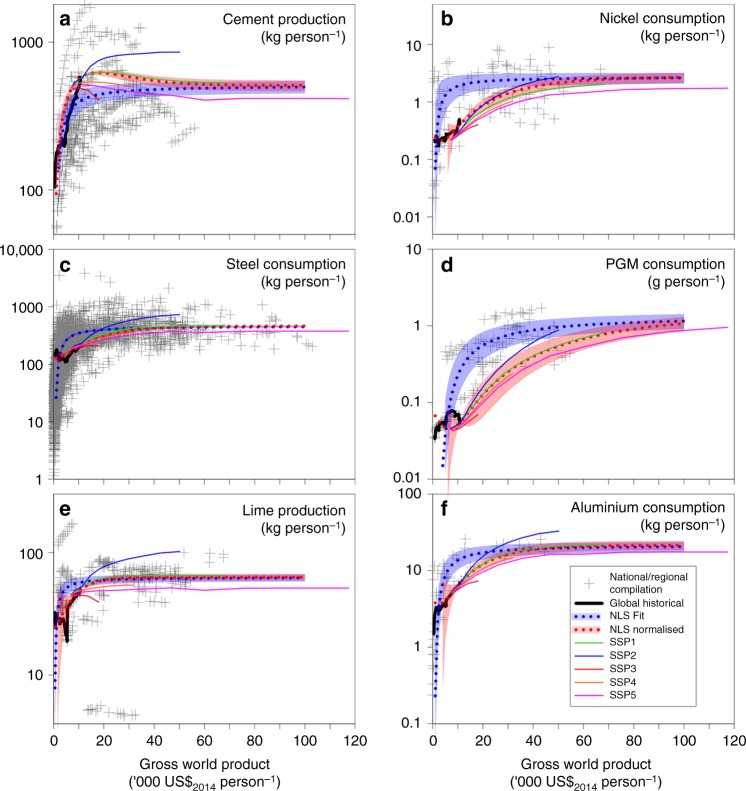
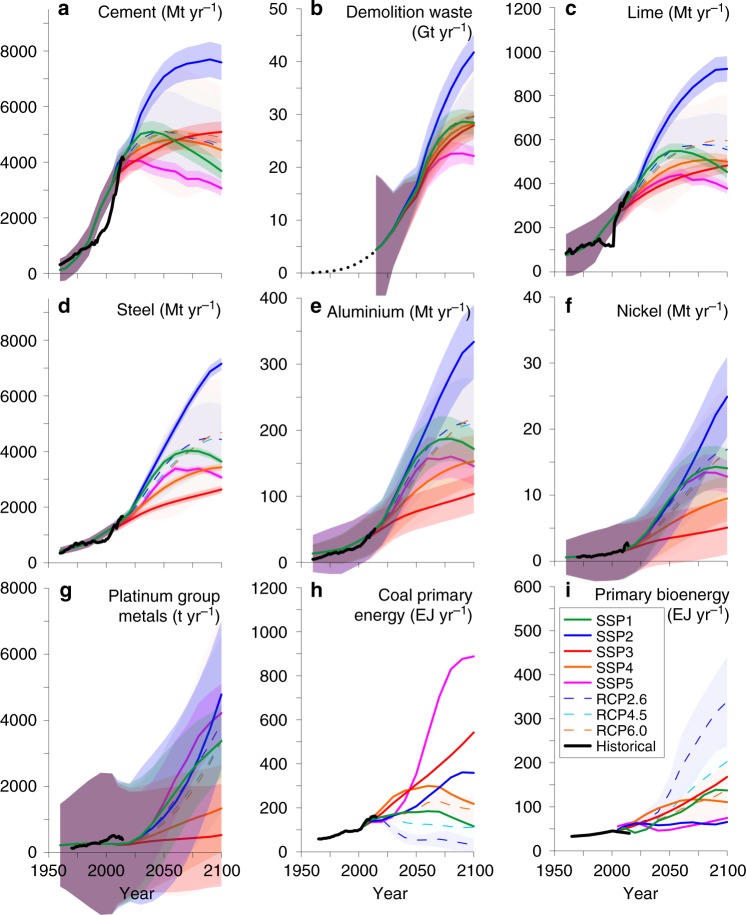
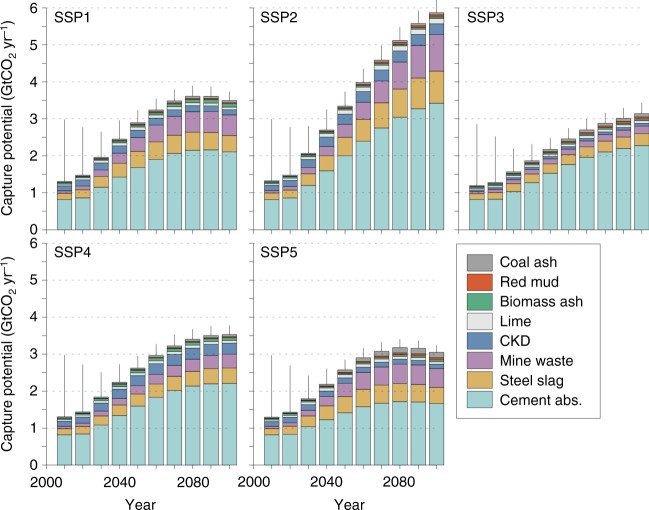
7 billion tonnes of alkaline materials are produced globally each year as a product or by-product of industrial activity. The aqueous dissolution of these materials creates high pH solutions that dissolves CO 2 to store carbon in the form of solid carbonate minerals or dissolved bicarbonate ions. Here we show that these materials have a carbon dioxide storage potential of 2.9–8.5 billion tonnes per year by 2100, and may contribute a substantial proportion of the negative emissions required to limit global temperature change to <2 °C.
Overview
The claims and statistics of this paper haven’t been checked yet.
Free: it reads the open-access text and checks the first 5 claims that cite a source we can check. Create a free account to check every claim.
Integrity signals
Registry
Cites
Statistics
Figures
Verification
Claims the paper makes
The claims and statistics of this paper haven’t been checked yet.
Free: it reads the open-access text and checks the first 5 claims that cite a source we can check. Create a free account to check every claim.
Claims other papers make about this one
Each is checked against this paper’s own text: does it say what the citing paper says it does?
The source backs part of the claim, not all of it — or backs it for a different population, condition or comparison.
In the citing paper
“In parallel, up to 3.5 Gt/year of ultrabasic mine wastes will be generated at nickel and PGM mines like Stillwater [16].”
From Carbon Mineralization with North American PGM Mine Tailings—Characterization and Reactivity Analysis (2021) · cites this paper as [16]
Experimental — accuracy not yet measuredThe cited source says what the claim attributes to it.
In the citing paper
“Requirement for mining may be further reduced by utilizing artificial silicate by-products from industrial processes 37,38 , including calcium-rich silicates produced by iron and steel manufacturing (slags) with a long history of agricultural usage 4,39 .”
From Potential for large-scale CO2 removal via enhanced rock weathering with croplands (2020) · cites this paper as [38]
The cited source says what the claim attributes to it.
In the citing paper
“forecasts project these values to increase to 25 Mt and 5 kt per year by 2100, which would result in the co-production of up to 3.5 Gt/year of ultrabasic mine tailings [16].”
From Carbon Mineralization with North American PGM Mine Tailings—Characterization and Reactivity Analysis (2021) · cites this paper as [16]
In the citing paper
“China and India dominate with above-average per capita cement consumption compared to the global average, and substantially larger populations than the USA and Brazil 38 .”
From Potential for large-scale CO2 removal via enhanced rock weathering with croplands (2020) · cites this paper as [38]
Self-check
Percentages, sums and reported differences re-computed from the paper’s own numbers.
The self-check needs the paper’s full text.
Citations
Cites
The representative concentration pathways: an overview
van Vuuren, D. P., Edmonds, J., Kainuma, M., Riahi, K., Thomson, A., Hibbard, K., Hurtt, G. C., Kram, T., Krey, V., Lamarque, J.-F., et al. (2011) · Climatic Change · doi:10.1007/s10584-011-0148-z · Cited by 7,741
Riahi, K., van Vuuren, D. P., Kriegler, E., Edmonds, J., O’Neill, B. C., Fujimori, S., Bauer, N., Calvin, K., Dellink, R., Fricko, O., et al. (2017) · Global Environmental Change · doi:10.1016/j.gloenvcha.2016.05.009 · Cited by 6,607
IPCC (2022) · Cambridge University Press eBooks · doi:10.1017/9781009157940 · Cited by 1,482
Dai, S., Ren, D., Chou, C.-L., Finkelman, R. B., Seredin, V. V., & Zhou, Y. (2012) · International Journal of Coal Geology · doi:10.1016/j.coal.2011.02.003 · Cited by 1,184
Fuss, S., Canadell, J. G., Peters, G. P., Tavoni, M., Andrew, R. M., Ciais, P., Jackson, R. B., Jones, C. D., Kraxner, F., Nakicenovic, N., et al. (2014) · Nature Climate Change · doi:10.1038/nclimate2392 · Cited by 1,114
FERNANDEZBERTOS, M., SIMONS, S., HILLS, C., & CAREY, P. (2004) · Journal of Hazardous Materials · doi:10.1016/j.jhazmat.2004.04.019 · Cited by 1,079
Vassilev, S. V., Baxter, D., Andersen, L. K., & Vassileva, C. G. (2013) · Fuel · doi:10.1016/j.fuel.2012.09.041 · Cited by 1,031
Carbon dioxide disposal in carbonate minerals
Lackner, K. S., Wendt, C. H., Butt, D. P., Joyce, E. L., & Sharp, D. H. (1995) · Energy · doi:10.1016/0360-5442(95)00071-n · Cited by 1,021
Negative emissions—Part 1: Research landscape and synthesis
Minx, J. C., Lamb, W. F., Callaghan, M. W., Fuss, S., Hilaire, J., Creutzig, F., Amann, T., Beringer, T., de Oliveira Garcia, W., Hartmann, J., et al. (2018) · Environmental Research Letters · doi:10.1088/1748-9326/aabf9b · Cited by 865
Mineral CO 2 Sequestration by Steel Slag Carbonation
Huijgen, W. J. J., Witkamp, G.-J., & Comans, R. N. J. (2005) · Environmental Science & Technology · doi:10.1021/es050795f · Cited by 858
Cited by
Items 201–300 of 400
Wehrung, Q., Bernasconi, D., Michel, F., Destefanis, E., Caviglia, C., Curetti, N., Mezni, M., Pavese, A., & Pastero, L. (2025) · Clean Technologies · doi:10.3390/cleantechnol7030058 · Cited by 15
“…contribution of each oxide, such as in a waste incineration residues; α = β = 1; γ = − 1; δ = − 2 appear to be reasonable choices based on waste incineration residues alkalinity [84]; m CO 2 = mass of CO 2 inherently present as CaCO 3 , quantified using XRPD Rietveld refinement or calcimetry.”
A fuzzy optimization model for planning integrated terrestrial carbon management networks
Belmonte, B. A., Aviso, K. B., Benjamin, M. F. D., & Tan, R. R. (2021) · Clean Technologies and Environmental Policy · doi:10.1007/s10098-021-02119-7 · Cited by 13
“, slag) are also potentially suitable for enhanced weathering (Renforth 2019).”
BackgroundNoviani, L. E., Haryono, E., Supartono, W., Sahali, I., & Juliani, F. E. (2023) · IOP Conference Series Earth and Environmental Science · doi:10.1088/1755-1315/1190/1/012003 · Cited by 19
“One technology that can be an alternative scenario to reduce CO2 emissions, which is the most significant contribution to the potential impact of global warming potential (GWP), is a carbon recycling system using mineral carbonation [16].”
BackgroundHarnessing enhanced rock weathering for carbon neutrality: potential and challenges in China
Cong, L., Lu, S., Jiang, P., Zheng, T., Zhang, Y., Lü, X., Yu, Z., & Xu, T. (2025) · Earth-Science Reviews · doi:10.1016/j.earscirev.2025.105309 · Cited by 14
He, Y., Pan, J., Huang, D., Sanford, R. A., Peng, S., Wei, N., Sun, W., Shi, L., Jiang, Z., Jiang, Y., et al. (2023) · Environment International · doi:10.1016/j.envint.2023.108067 · Cited by 13
Influence of Iron Substitution and Solution Composition on Brucite Carbonation
Vessey, C. J., Raudsepp, M. J., Patel, A. S., Wilson, S., Harrison, A. L., Chen, N., & Chen, W. (2024) · Environmental Science & Technology · doi:10.1021/acs.est.3c08708 · Cited by 12
Liu, J., Chen, H., & Zhang, M. (2024) · Journal of environmental chemical engineering · doi:10.1016/j.jece.2024.113613 · Cited by 12
Wastewater alkalinity enhancement for carbon emission reduction and marine CO2 removal
Li, M., Chen, Y., Doyle, R., Testa, J. M., Gagnon, A., Bott, C. B., & Cai, W. (2025) · Environmental Research Letters · doi:10.1088/1748-9326/adc1e3 · Cited by 12
“Among various marine carbon dioxide removal (mCDR) technologies, ocean alkalinity enhancement (OAE) is an approach that seeks to decrease sea surface p CO 2 via the addition of alkaline materials and promote CO 2 uptake from the atmosphere [2, 3].”
Vorrath, M.-E., Amann, T., zu Drewer, J. M., Hagemann, N., Aldrich, C., Börker, J., Seedtke, M., Becker, J. N., Hagens, M., Eschenbach, A., et al. (2025) · Frontiers in Climate · doi:10.3389/fclim.2025.1592454 · Cited by 16
Catalogue of South African mine tailings for geochemical carbon dioxide removal purposes
Bullock, L. A., Nkosi, Z. H., Vele, M., & Amponsah-Dacosta, M. (2023) · International journal of greenhouse gas control · doi:10.1016/j.ijggc.2023.103844 · Cited by 11
Abdalqadir, M. O., Gomari, S. R., Hughes, D. J., Sidiq, A., & Shifa, F. (2023) · Journal of Cleaner Production · doi:10.1016/j.jclepro.2023.138914 · Cited by 16
Moras, C. A., Joannes‐Boyau, R., Bach, L. T., Cyronak, T. J., & Schulz, K. G. (2024) · Frontiers in Climate · doi:10.3389/fclim.2024.1396487 · Cited by 15
“Similarly, modeling global steel production into the future for various shared socioeconomic pathways (Renforth, 2019), up to 22 Gt of cumulative CO 2 capture could be realized until 2,100 (Figure 4).”
InfluentialZhang, R., Zhao, H. F., Lv, G., Ma, X., & Jiang, X. (2025) · Renewable and Sustainable Energy Reviews · doi:10.1016/j.rser.2025.115763 · Cited by 13
The Carbon Dioxide Emissions Reduction Potential of Carbon-Dioxide-Cured Alternative Binder Concrete
Mäkikouri, S., Vares, S., Korpijärvi, K., & Papakonstantinou, N. (2021) · Recent Progress in Materials · doi:10.21926/rpm.2102018 · Cited by 13
Tan, R. R., Aviso, K. B., Bandyopadhyay, S. K., Foo, D. C. Y., & Klemeš, J. J. (2021) · Resources Conservation and Recycling · doi:10.1016/j.resconrec.2021.106029 · Cited by 10
Li, P., Li, X., Guo, H., Yan, B., Chen, D., Zhao, W., & Seetharaman, S. (2022) · International Journal of Hydrogen Energy · doi:10.1016/j.ijhydene.2022.04.209 · Cited by 10
Zhang, Y., Li, Z., Aviso, K. B., Tan, R. R., Wang, F., & Jia, X. (2022) · Resources Conservation and Recycling · doi:10.1016/j.resconrec.2022.106766 · Cited by 12
Kravchenko, E., & Besklubova, S. (2024) · Sustainable Production and Consumption · doi:10.1016/j.spc.2024.03.004 · Cited by 11
Metal bioaccumulation and effects of olivine sand exposure on benthic marine invertebrates
Jankowska, E., Montserrat, F., Romaniello, S. J., Walworth, N. G., & Andrews, M. G. (2024) · Chemosphere · doi:10.1016/j.chemosphere.2024.142195 · Cited by 16
Medeiros, F. P., Theodoro, S. H., de Carvalho, A. M. X., de Oliveira, V. S., Oliveira, L. C., Almeida, R. M. P., Viana, M. B., & Gomide, C. S. (2024) · Journal of South American Earth Sciences · doi:10.1016/j.jsames.2024.105254 · Cited by 12
Triwigati, P. T., Noh, S., Sim, G., Lee, J., Kim, E., Moon, S., & Park, Y. (2024) · Journal of Industrial and Engineering Chemistry · doi:10.1016/j.jiec.2024.12.057 · Cited by 12
In-situ mineral carbonation of ultramafic tailings for carbon dioxide removal: A critical review
Lu, X., Xu, L., Li, X., Hou, Y., Chen, Q., & Li, Q. (2025) · Process Safety and Environmental Protection · doi:10.1016/j.psep.2025.108046 · Cited by 11
Weathering without realizing inorganic CO 2 removal revealed through base cation monitoring
Vienne, A., Frings, P. J., Rijnders, J., Suhrhoff, T. J., Reershemius, T., Poetra, R. P., Hartmann, J., Niron, H., Estrada, M. P., Steinwidder, L., et al. (2026) · SOIL · doi:10.5194/soil-12-421-2026 · Cited by 23
“7 mol CO 2 mol − 1 TA, assumed for oceans) (Renforth, 2012, 2019; Renforth and Henderson, 2017).”
InfluentialThe mechanisms and drivers of lithification in slag‐dominated artificial ground
MacDonald, J., Brolly, C., Slaymark, C., Spruženiece, L., Wilson, C., & Hilderman, R. X. (2023) · The Depositional Record · doi:10.1002/dep2.230 · Cited by 10
“They are a voluminous and widespread type of artificial ground— ca 0.5 Gt of steelmaking slag is produced globally every year (USGS, 2018), which could reach ca 2 Gt year −1 by the end of the century (Renforth, 2019).”
BackgroundInfluentialZhang, J., Cai, Y., & Duan, L. (2024) · The Science of The Total Environment · doi:10.1016/j.scitotenv.2024.171640 · Cited by 8
Evaluating CO2 sequestration through Technosol constructed from coal mining waste
Weiler, J., & Tassinari, C. C. G. (2024) · Minerals Engineering · doi:10.1016/j.mineng.2024.109032 · Cited by 12
Suitability of rocks, minerals, and cement waste for CO2 removal via enhanced rock weathering
Danczyk, M., & Oze, C. (2024) · Communications Chemistry · doi:10.1038/s42004-024-01361-6 · Cited by 9
Carbon capture potential and environmental impact of concrete weathering in soil
Hopkins, B. M., Lal, R., Lyons, W. B., & Welch, S. A. (2024) · The Science of The Total Environment · doi:10.1016/j.scitotenv.2024.177692 · Cited by 10
Bio-accelerated weathering of ultramafic minerals with Gluconobacter oxydans
Lee, J. J., Plante, L., Pian, B., Marecos, S., Medin, S. A., Klug, J. D., Reid, M. C., Gadikota, G., Gazel, E., & Barstow, B. (2025) · Scientific Reports · doi:10.1038/s41598-025-99655-9 · Cited by 15
Cho, S., Lee, N., & Kim, M. O. (2025) · Case Studies in Construction Materials · doi:10.1016/j.cscm.2025.e05265 · Cited by 29
Ahmad, M., Gebretsadik, H. T., Siddiqui, N. A., Adam, M., Ali, S. A., & Orakzai, A. U. (2025) · Energy & Fuels · doi:10.1021/acs.energyfuels.5c04200 · Cited by 8
RetractedAssessing the impact of carbon dioxide removal on the power system
Prado, A., Chiquier, S., Fajardy, M., & Dowell, N. M. (2023) · iScience · doi:10.1016/j.isci.2023.106303 · Cited by 8
MacDonald, J., Khudhur, F. W. K., Carter, R., Plomer, B., Wilson, C., & Slaymark, C. (2023) · Applied Geochemistry · doi:10.1016/j.apgeochem.2023.105649 · Cited by 13
India’s biogeochemical capacity to attain food security and remediate climate
Mir, I. A., Goreau, T. J. F., Campe, J., & Jerden, J. L. (2023) · Environmental Geochemistry and Health · doi:10.1007/s10653-023-01827-x · Cited by 14
“As with ERW, these bicarbonate ions would contribute to ocean alkalinity, possibly reducing some of the effects of ocean acidification, and stay in solution for around 100,000 years in the ocean (Renforth, 2019).”
Geochemical Drivers of Enhanced Rock Weathering in Soils
Dupla, X., Brantley, S. L., Paulo, C., Möller, B., Power, I., & Grand, S. (2025) · Wiley eBooks · doi:10.1002/9781394204847.ch13 · Cited by 18
He, Y., Zhuo, S., Gao, D., Pan, Y., Li, M., Pan, J., Jiang, Y., Hu, Y., Guo, J., Lin, Q., et al. (2024) · Applied and Environmental Microbiology · doi:10.1128/aem.00850-24 · Cited by 7
“Alkaline ferrous steel slags are the byproducts of various stages of steelmaking, and their disposal has been one of the most significant environmental problems worldwide (62).”
Current rates of CO2 removal due to rock weathering in the UK
Harrington, K., Henderson, G. M., & Hilton, R. G. (2024) · The Science of The Total Environment · doi:10.1016/j.scitotenv.2024.177458 · Cited by 9
zu Drewer, J. M., Vorrath, M.-E., Amann, T., Hartmann, J., Arranz, J. M. D. L. R., Möllmer, J., Pérez-Dalí, S. M., Meredith, W., Uguna, C. N., Snape, C. E., et al. (2025) · Frontiers in Climate · doi:10.3389/fclim.2025.1631368 · Cited by 8
Quan, H., & Ji, P. (2025) · Process Safety and Environmental Protection · doi:10.1016/j.psep.2025.108121 · Cited by 13
Bartels, M. F., Miller, Q. R. S., Li, X., Stanfield, C. H., Cao, R., Marcial, J., Nienhuis, E. T., Fillion, M., Rush, R., Sauvé, M., et al. (2026) · Environmental Science & Technology Letters · doi:10.1021/acs.estlett.5c01088 · Cited by 8
Wehrung, Q., Bernasconi, D., Cotellucci, A., Destefanis, E., Caviglia, C., Bruno, M., Bicchi, E., Pavese, A., & Pastero, L. (2024) · Journal of environmental chemical engineering · doi:10.1016/j.jece.2024.115272 · Cited by 10
“4) [72]: where CaO, MgO, SO 3 and P 2 O 5 (wt”
InfluentialKhudhur, F. W. K., MacDonald, J., Daly, L., Macente, A., Spruženiece, L., Griffin, S., & Wilson, C. (2023) · Micron · doi:10.1016/j.micron.2023.103532 · Cited by 10
Microbial Catalysis for CO2Sequestration: A Geobiological Approach
Berghe, M. V. D., Walworth, N. G., Dalvie, N. C., Dupont, C. L., Springer, M., Andrews, M. G., Romaniello, S. J., Hutchins, D. A., Montserrat, F., Silver, P. A., et al. (2023) · Cold Spring Harbor Perspectives in Biology · doi:10.1101/cshperspect.a041673 · Cited by 8
Evaluating the carbon capture potential of industrial waste as a feedstock for enhanced weathering
Xu, P., & Reinhard, C. T. (2025) · Environmental Research Letters · doi:10.1088/1748-9326/adc020 · Cited by 11
“These are generally lesser material sources of EW feedstock compared with steel slag and cement waste, but also contribute to the total carbon capture of silicate waste in the aggregate (Renforth 2019, Jia et al 2022).”
InfluentialBächle, V., Hegde, C., Voigt, A., Sundmacher, K., & Gleiß, M. (2025) · Industrial & Engineering Chemistry Research · doi:10.1021/acs.iecr.5c00797 · Cited by 7
Li, B., Long, K., Cheng, W., Fu, X., Ma, J., & Zhang, S. (2025) · International journal of greenhouse gas control · doi:10.1016/j.ijggc.2025.104494 · Cited by 7
Laurent, A., Wang, B., Atamanchuk, D., Rakshit, S., Azetsu‐Scott, K., Algar, C. K., & Fennel, K. (2026) · Biogeosciences · doi:10.5194/bg-23-115-2026 · Cited by 7
Mineral carbonation in seawater desalination brine: Review and future perspective
Suu, L., Lim, J., Choi, J.-S., & Choi, Y. (2026) · Desalination · doi:10.1016/j.desal.2026.120112 · Cited by 6
Soil Carbon Sequestration and the Role of Earthworms in an Enhanced Weathering Mesocosm ExperimentPreprint
Vienne, A., Frings, P. J., Poblador, S., Steinwidder, L., Rijnders, J., Schoelynck, J., Vindušková, O., & Vicca, S. (2023) · SSRN Electronic Journal · doi:10.2139/ssrn.4449286 · Cited by 8
Semi‐Continuous Ex Situ Carbon Dioxide Mineralization in Produced Water for Calcite Production
Bennett, Q., Wolfe, K. D., Kasick, A., Shaffer, R., Nyamekye, E., Movil‐Cabrera, O., Thackery, M., Oza, S., & Trembly, J. (2025) · Energy Science & Engineering · doi:10.1002/ese3.70125 · Cited by 7
“While mine tailings have high potential for carbonation [21], the process of redissolving mine tailings is slow and costly, as the dissolution of the ground rock tends to limit the rate of reaction [6].”
Radfarnia, H. R., Staneva, K., Shafeen, A., Zanganeh, K. E., Patarachao, B., Huertas, S. V., Zborowski, A., Kung, J., Kenari, S. L. D., Mosadeghsedghi, S., et al. (2025) · ACS Omega · doi:10.1021/acsomega.5c05128 · Cited by 9
Valorisation of mine waste as carbon mineralisation feedstock
Gazzetti, E., Bandstra, J. Z., & Diedrich, T. (2023) · Mine closure · doi:10.36487/acg_repo/2315_094 · Cited by 8
Experimental investigation of multiple industrial wastes for carbon dioxide removal strategies
Bullock, L. A., Fernández-Turiel, J. L., & Benavente, D. (2023) · International journal of greenhouse gas control · doi:10.1016/j.ijggc.2023.103990 · Cited by 5
“…(Campbell et al., 2022; Ebrahimi et al., 2018; Huijgen et al., 2005; Mustafa et al., 2020; Rausis et al., 2021; Reddy et al., 2009; Renforth, 2012; 2019; Reynolds et al., 2014; Wang et al., 2022), over natural rocks for CDR purposes is that they are typically available in fine grain sizes as part…”
BackgroundInfluentialJiang, L., Zhao, X., & Wang, H. (2025) · Buildings · doi:10.3390/buildings15091426 · Cited by 7
Hicks, A., Dholabhai, P. P., Ali, A., & Santos, R. M. (2022) · iScience · doi:10.1016/j.isci.2022.105556 · Cited by 8
Katish, M., Ke, X., & Renforth, P. (2024) · Cleaner Environmental Systems · doi:10.1016/j.cesys.2024.100237 · Cited by 11
Self-citationPhysical and Chemo/Mechanical behaviors of fly ash and silica fume belite cement pastes- Part I
Darweesh, H. H. M. (2021) · NanoNEXT · doi:10.34256/nnxt2121 · Cited by 6
“87 tons of CO2 into the atmosphere [3], that produces from the decomposition and burning of limestone and fuel.”
BackgroundWu, Z., Su, C., Gao, M., Kang, R., Goll, D. S., Meng, Y., Tai, Z., Wang, A., Wang, Q., & Fang, Y. (2025) · Forest Ecology and Management · doi:10.1016/j.foreco.2025.123135 · Cited by 4
Wu, X., Chen, H., Liu, H., & SenGupta, A. K. (2026) · Carbon Capture Science & Technology · doi:10.1016/j.ccst.2026.100584 · Cited by 6
Wang, B., Zeyen, N., Wilson, S., Funk, R., & Turvey, C. (2025) · American Mineralogist · doi:10.2138/am-2023-9103 · Cited by 3
Enhancing the performance of iron-based binders with seawater and CO2 sequestration
Chandralega, V., Shanmugasundaram, M., & Stone, D. A. (2025) · Case Studies in Construction Materials · doi:10.1016/j.cscm.2025.e04367 · Cited by 11
Ocean liming can help achieve the Paris climate target
Strefler, J., Kowalczyk, K., Hofbauer, V., Dorndorf, T., & Baumstark, L. (2025) · Environmental Research Letters · doi:10.1088/1748-9326/adf12c · Cited by 8
“Using quicklime (ocean liming, OL) is one of the most promising options to enhance alkalinity from a technological point of view (Renforth 2019, Foteinis et al 2022, Kowalczyk et al 2024), mainly because quicklime readily dissolves in water and its production process is already scaled to gigatons…”
Kroeger, J., Zhang, B., Planavsky, N. J., & Yao, Y. (2026) · Environmental Science & Technology · doi:10.1021/acs.est.5c14334 · Cited by 8
Atmospheric Carbon Dioxide Removal: A Physical Science Perspective
Taylor, W., Marston, B., Rosner, R., & Wurtele, J. S. (2025) · PRX Energy · doi:10.1103/prxenergy.4.017001 · Cited by 8
Mayes, W. M., Hull, S., & Gomes, H. I. (2021) · Elsevier eBooks · doi:10.1016/b978-0-12-819817-9.00009-0 · Cited by 6
Li, J., Li, J., Zhang, Y., Jiao, M., Li, A., Liu, Z., Shen, Z., Xue, S., Liu, L., & Mao, Y. (2025) · Aquaculture International · doi:10.1007/s10499-025-02159-6 · Cited by 4
“…enhancement using minerals such as olivine may have unforeseen ecological consequences, including the formation of secondary precipitates and the release of trace metals that may pose risks to marine eco-systems (Montserrat et al. 2017; Hutchins et al. 2023; Renforth 2019; Fuhr et al. 2022).”
Madankan, M., Kantzas, E. P., Espinosa, R. M. E., Vetter, S. H., Koh, L. S. C., Smith, P., Beerling, D. J., & Renforth, P. (2025) · Communications Earth & Environment · doi:10.1038/s43247-025-02656-9 · Cited by 4
Self-citationHuang, L., Li, B., Zhu, X., Li, N., & Zhang, X. (2025) · Carbon Capture Science & Technology · doi:10.1016/j.ccst.2025.100490 · Cited by 15
Incorporating enhanced rock weathering into sustainable forest management
Guo, M., Power, I., Watmough, S. A., Gorgolewski, A., Wallisch, L. M. M., Spence, J., & Wilson, S. (2025) · Journal of Environmental Management · doi:10.1016/j.jenvman.2025.127335 · Cited by 5
Agroforestry and enhanced rock weathering: A dual strategy for sustainable cacao
Steeley, I. L., França, E. D. S., Epihov, D. Z., Planavsky, N. J., & Beerling, D. J. (2025) · Plants People Planet · doi:10.1002/ppp3.70097 · Cited by 5
“…weathering with carbonate precipitation is unlikely to occur in acidic tropical soils but instead occurs over a 10,000-year timescale, leading to a carbon sequestration ratio of 1 mol CO 2 /mol divalent cations and the transfer of carbon from the atmosphere to the geologic record (Renforth, 2019).”
Banatheth, L. M., Mendoza, A. E. P., Burkhardt, U., Antonyshyn, I., & Andronescu, C. (2025) · Small Methods · doi:10.1002/smtd.202501880 · Cited by 4
Life Cycle Perspective-Based Modeling Assessment of Ocean Alkalinity Enhancement
Yang, C., & Feng, E. Y. (2026) · Environmental Science & Technology · doi:10.1021/acs.est.5c13054 · Cited by 4
Alkaline solid waste for carbon dioxide mineralization: a review
Hu, K., Lyu, S., Gui, L., Zhang, N., Gao, X., Zuo, J., Duan, H., & Yang, J. (2026) · Environmental Chemistry Letters · doi:10.1007/s10311-026-01899-y · Cited by 3
Sandhu, H., Garg, S., & Yadav, S. (2026) · Chemical Engineering Science · doi:10.1016/j.ces.2026.123770 · Cited by 5
Chang, C., Guo, J., Liu, S., & Kang, Z. (2026) · Minerals Engineering · doi:10.1016/j.mineng.2026.110294 · Cited by 3
Comparison of Technologies and Practices for Removing Carbon Dioxide from the Atmosphere
Fuss, S. (2022) · Royal Society of Chemistry eBooks · doi:10.1039/9781839165245-00351 · Cited by 5
Watjanatepin, P., Steinwidder, L., de Schutter, A., Granata, G., Vicca, S., Gerven, T. V., & Acker, K. V. (2023) · International Conference on Raw Materials and Circular Economy (RawMat) · doi:10.3390/materproc2023015036 · Cited by 6
“In this context, mineral carbonation or enhanced weathering of the steel slags can fulfil the role of valorizing the two streams simultaneously [6].”
BackgroundPolicy mechanisms to decarbonize cement production: through the lens of California
Busch, P., Kim, A., Murphy, C. W., & Miller, S. A. (2025) · Environmental Research Infrastructure and Sustainability · doi:10.1088/2634-4505/adbc1a · Cited by 4
“Additionally, it has been argued that use of magnesium or calcium compounds, which can be wastes of industrial processes [38] or present in seawater [ 39], can support mineralizing CO 2 into carbonate minerals that can then be used in cement-based materials[40].”
Enhanced rock weathering — A nature-based solution for climate mitigation
Manning, D. A. C. (2025) · Green Energy and Sustainability · doi:10.47248/ges2505020003 · Cited by 8
Li, M. H., Li, R., Guo, Y., Testa, J. M., Cai, W., Shen, C., Chen, Y., & Kaushal, S. S. (2025) · AGU Advances · doi:10.1029/2024av001350 · Cited by 9
“Due to light limitation in the upper Bay and nutrient limitation in the lower Bay, most of the eutrophication effects on phytoplankton production are manifested in the mesohaline region or the mid‐Bay (Harding et al., 2016, 2019).”
Four colours of carbon sinks in terrestrial ecosystems
Wang, A., Liu, Z., Kang, R., Lu, X. L., Liang, Y., Quan, Z., Su, C., Wang, Y., Wang, J., Li, F., et al. (2025) · The Innovation Geoscience · doi:10.59717/j.xinn-geo.2025.100162 · Cited by 5
Interaction of ions and surfactants at the seawater–air interface
Gholami, S., Buttersack, T., Richter, C., Trinter, F., Dupuy, R., Cablitz, L., Zhou, Q., Nicolas, C., Shavorskiy, A., Diaman, D., et al. (2025) · Environmental Science Atmospheres · doi:10.1039/d4ea00151f · Cited by 3
Material diets for Climate-Neutral BuildingsPreprint
Carcassi, O. B., Habert, G., Malighetti, L. E., & Pittau, F. (2021) · Research Square · doi:10.21203/rs.3.rs-113216/v1 · Cited by 3
Vienne, A., Frings, P. J., Poblador, S., Steinwidder, L., Rijnders, J., Schoelynck, J., Vindušková, O., & Vicca, S. (2023) · SSRN Electronic Journal · doi:10.2139/ssrn.4624901 · Cited by 3
Renforth, P. (2023) · Quarterly Journal of Engineering Geology and Hydrogeology · doi:10.1144/qjegh2023-053 · Cited by 1
Self-citationMcBride, A. L., Skov, K., Wade, P., Betz, J., Stubbs, A. R., Bierowiec, T., Albahri, T., Cazzagon, G., Chen, C., Frew, A., et al. (2025) · Frontiers in Climate · doi:10.3389/fclim.2025.1606574 · Cited by 6
Tańczyk, M., Jaschik, J., Kołodziej, A., Pawlaczyk-Kurek, A., Janusz-Cygan, A., & Hamryszak, Ł. (2025) · Energies · doi:10.3390/en18195059 · Cited by 2
Zhu, X., Li, S., & Wang, W. (2025) · Biogeosciences · doi:10.5194/bg-22-7293-2025 · Cited by 5
Sustainability analysis of basalt enhanced weathering in China under the carbon neutrality pathway
Chen, X., Wang, X., Jia, X., Wang, S., Tan, R. R., Wang, B., & Wang, F. (2026) · Environmental Impact Assessment Review · doi:10.1016/j.eiar.2026.108396 · Cited by 2
Cosgun, E., Campbell, J., McBride, A., Wade, P., van der Spek, M. W., & Renforth, P. (2026) · Applied Geochemistry · doi:10.1016/j.apgeochem.2026.106863 · Cited by 2
Self-citationzu Drewer, J. M., Vorrath, M.-E., Amann, T., Hartmann, J., Ansari, M., Pérez, M. C., & Hagemann, N. (2026) · Frontiers in Climate · doi:10.3389/fclim.2026.1853116 · Cited by 3
Su, P., Jiao, L., Zhang, J., Zhou, H., Meng, S., Zhang, C., Wang, Q., Xiong, H., Wang, J., & Fei, X. (2026) · Renewable and Sustainable Energy Reviews · doi:10.1016/j.rser.2026.117268 · Cited by 2
Hilderman, R. X., MacDonald, J., Griffin, S., Slaymark, C., Einsle, J. F., & Monaghan, A. (2024) · Sedimentologika · doi:10.57035/journals/sdk.2024.e21.1318 · Cited by 3
“We present new insight into the influences that natural weathering processes and various water sources have on the lithification of artificial ground, informing repurposing strategies like atmospheric CO 2 storage (Renforth, 2019).”
BackgroundMacDonald, J., Taylor, G., Lewis, E. R., Wilson, C., Spruženiece, L., Slaymark, C., Brown, D. J., & Owen, A. (2025) · Earth Science Systems and Society · doi:10.1144/esss2024-010 · Cited by 4
Zhao, Y., Wang, M., Xuan, J., Chang, D., Li, Z., Wang, S., Ou, Y., Wang, X., & Xing, L. (2025) · Carbon Capture Science & Technology · doi:10.1016/j.ccst.2025.100363 · Cited by 2
Zhou, R., Jiang, C., Gieleciak, R. M., Pillari, L. K., & Bichler, L. (2025) · Carbon Capture Science & Technology · doi:10.1016/j.ccst.2025.100489 · Cited by 6
Savage, R., Pearce, S., Mueller, S. H., Barnes, A., Renforth, P., & Sapsford, D. (2019) · Mine closure · doi:10.36487/acg_rep/1915_86_savage · Cited by 3
“Various published studies have shown the potential emissions offset that passive mineral carbonation may have on net mine operation emissions in locations where ore geology promotes carbonation (e.g. Li et al. 2018; Wilson et al. 2009; Renforth 2019).”
BackgroundMethodSelf-citationCunningham, P. R., Wang, L., Kane, S., Kim, A., Jenkins, B. M., & Miller, S. A. (2025) · Biomass and Bioenergy · doi:10.1016/j.biombioe.2025.107772 · Cited by 3
Janssens, I., Servotte, T., Calogiuri, T., Mortier, S., Niron, H., Corbett, T. D. W., Poetra, R. P., Rieder, L., Tendeloo, M. V., Singh, A., et al. (2025) · Open Research Europe · doi:10.12688/openreseurope.19252.2 · Cited by 1
“EW could exploit significant quantities of waste rock streams (Renforth, 2019) and may have agricultural co-benefits (Beerling et al. , 2018).”
Triwigati, P. T., Jeon, S., Son, Y., & Park, Y. (2025) · ACS Sustainable Resource Management · doi:10.1021/acssusresmgt.5c00284 · Cited by 1
Metadata
- Authors
- Renforth, P.
- Affiliations
- Heriot-Watt University (GB)
- Corresponding author
- Renforth, Phil
- ORCID
- Renforth, Phil
- Venue
- Nature Communications
- Published
- 2019-03-28
- Volume
- 10
- Issue
- 1
- Pages
- 1401-1401
- ISSN
- 2041-1723 (ISSN-L)
- PMC
- PMC6438983
- OpenAlex
- W2923823446
- Cited by
- 403
- References
- 54
- Citations by year
- 2026: 65 · 2025: 74 · 2024: 71 · 2023: 74 · 2022: 60 · 2021: 37 · 2020: 16 · 2019: 6
- FWCI
- 12.61
- Type
- journal article
- Language
- en
- Open access
- gold
- doi.org
- Licence
- cc-by
- creativecommons.org/licenses/by/4.0 (tdm)
- creativecommons.org/licenses/by/4.0 (vor)
- Locations
- Nature Communications (publishedVersion, cc-by)
- Europe PMC (PubMed Central) (publishedVersion, cc-by)
- PubMed Central (publishedVersion, cc-by)
- PubMed (publishedVersion)
- RePEc: Research Papers in Economics (submittedVersion)
- DOAJ (DOAJ: Directory of Open Access Journals) (submittedVersion)
- DOAJ (DOAJ: Directory of Open Access Journals) (submittedVersion, cc-by-sa)
- Funders
- Engineering and Physical Sciences Research Council
- Natural Environment Research Council (NE/P019943/1, NE/P019943/2)
- Topics
- Physical Sciences › Environmental Science › Environmental Engineering › CO2 Sequestration and Geologic Interactions
- Physical Sciences › Chemical Engineering › Filtration and Separation › Carbon Dioxide Capture Technologies
- Physical Sciences › Engineering › Civil and Structural Engineering › Concrete and Cement Materials Research
- Keywords
- carbon dioxide removal, alkaline materials, CO2 sequestration, alkaline dissolution, carbonate formation, bicarbonate, CO2 capture, 2°C target, industrial by-products
About these checks
Registry, retraction, Cites and statistics results are computed, not judged, with one exception: a printed reference that no index lists is read once by a model before it counts as a citation error. Claims are extracted by a model and kept only when their quote appears verbatim in the text; each cited source is then checked, with a model’s help, for whether it says what the claim relies on. Those verdicts can be wrong — read the claim’s quote and the cited source before relying on one.
Statistics and arithmetic are recomputed, not judged.
Confidence bands are shown only for fields calibrated on our annotated test set. None is calibrated yet, so no band is shown.
What counts as a claim ›How we measure confidence ›How we check this ›
Are you an author, or do you see a problem with this page? Request a review
Data sources
Bibliographic data: Semantic Scholar, OpenAlex, Crossref.
Contains information from the Semantic Scholar Academic Graph Datasets, made available under the ODC Attribution License (ODC-BY 1.0).
Semantic Scholar’s data is described in: Kinney, R., et al. (2023). The Semantic Scholar Open Data Platform. arXiv:2301.10140.
