

The negative emission potential of alkaline materials
Open accessThe DOI matches its Crossref record; 55 of the 55 references it cites were found in a registry or an index.
Abstract
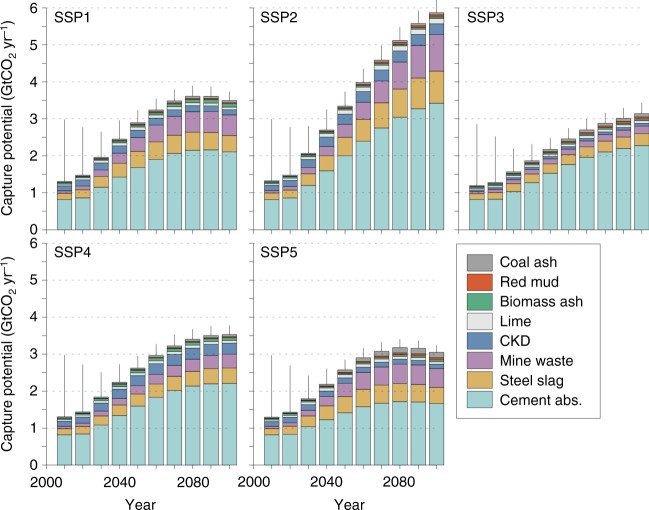
7 billion tonnes of alkaline materials are produced globally each year as a product or by-product of industrial activity. The aqueous dissolution of these materials creates high pH solutions that dissolves CO 2 to store carbon in the form of solid carbonate minerals or dissolved bicarbonate ions. Here we show that these materials have a carbon dioxide storage potential of 2.9–8.5 billion tonnes per year by 2100, and may contribute a substantial proportion of the negative emissions required to limit global temperature change to <2 °C.
Overview
The claims and statistics of this paper haven’t been checked yet.
Free: it reads the open-access text and checks the first 5 claims that cite a source we can check. Create a free account to check every claim.
Integrity signals
Registry
Cites
Statistics
Figures
Verification
Claims the paper makes
The claims and statistics of this paper haven’t been checked yet.
Free: it reads the open-access text and checks the first 5 claims that cite a source we can check. Create a free account to check every claim.
Claims other papers make about this one
Each is checked against this paper’s own text: does it say what the citing paper says it does?
The source backs part of the claim, not all of it — or backs it for a different population, condition or comparison.
In the citing paper
“In parallel, up to 3.5 Gt/year of ultrabasic mine wastes will be generated at nickel and PGM mines like Stillwater [16].”
From Carbon Mineralization with North American PGM Mine Tailings—Characterization and Reactivity Analysis (2021) · cites this paper as [16]
Experimental — accuracy not yet measuredThe cited source says what the claim attributes to it.
In the citing paper
“Requirement for mining may be further reduced by utilizing artificial silicate by-products from industrial processes 37,38 , including calcium-rich silicates produced by iron and steel manufacturing (slags) with a long history of agricultural usage 4,39 .”
From Potential for large-scale CO2 removal via enhanced rock weathering with croplands (2020) · cites this paper as [38]
The cited source says what the claim attributes to it.
In the citing paper
“forecasts project these values to increase to 25 Mt and 5 kt per year by 2100, which would result in the co-production of up to 3.5 Gt/year of ultrabasic mine tailings [16].”
From Carbon Mineralization with North American PGM Mine Tailings—Characterization and Reactivity Analysis (2021) · cites this paper as [16]
In the citing paper
“China and India dominate with above-average per capita cement consumption compared to the global average, and substantially larger populations than the USA and Brazil 38 .”
From Potential for large-scale CO2 removal via enhanced rock weathering with croplands (2020) · cites this paper as [38]
Self-check
Percentages, sums and reported differences re-computed from the paper’s own numbers.
The self-check needs the paper’s full text.
Citations
Cites
The representative concentration pathways: an overview
van Vuuren, D. P., Edmonds, J., Kainuma, M., Riahi, K., Thomson, A., Hibbard, K., Hurtt, G. C., Kram, T., Krey, V., Lamarque, J.-F., et al. (2011) · Climatic Change · doi:10.1007/s10584-011-0148-z · Cited by 7,741
Riahi, K., van Vuuren, D. P., Kriegler, E., Edmonds, J., O’Neill, B. C., Fujimori, S., Bauer, N., Calvin, K., Dellink, R., Fricko, O., et al. (2017) · Global Environmental Change · doi:10.1016/j.gloenvcha.2016.05.009 · Cited by 6,607
IPCC (2022) · Cambridge University Press eBooks · doi:10.1017/9781009157940 · Cited by 1,482
Dai, S., Ren, D., Chou, C.-L., Finkelman, R. B., Seredin, V. V., & Zhou, Y. (2012) · International Journal of Coal Geology · doi:10.1016/j.coal.2011.02.003 · Cited by 1,184
Fuss, S., Canadell, J. G., Peters, G. P., Tavoni, M., Andrew, R. M., Ciais, P., Jackson, R. B., Jones, C. D., Kraxner, F., Nakicenovic, N., et al. (2014) · Nature Climate Change · doi:10.1038/nclimate2392 · Cited by 1,114
FERNANDEZBERTOS, M., SIMONS, S., HILLS, C., & CAREY, P. (2004) · Journal of Hazardous Materials · doi:10.1016/j.jhazmat.2004.04.019 · Cited by 1,079
Vassilev, S. V., Baxter, D., Andersen, L. K., & Vassileva, C. G. (2013) · Fuel · doi:10.1016/j.fuel.2012.09.041 · Cited by 1,031
Carbon dioxide disposal in carbonate minerals
Lackner, K. S., Wendt, C. H., Butt, D. P., Joyce, E. L., & Sharp, D. H. (1995) · Energy · doi:10.1016/0360-5442(95)00071-n · Cited by 1,021
Negative emissions—Part 1: Research landscape and synthesis
Minx, J. C., Lamb, W. F., Callaghan, M. W., Fuss, S., Hilaire, J., Creutzig, F., Amann, T., Beringer, T., de Oliveira Garcia, W., Hartmann, J., et al. (2018) · Environmental Research Letters · doi:10.1088/1748-9326/aabf9b · Cited by 865
Mineral CO 2 Sequestration by Steel Slag Carbonation
Huijgen, W. J. J., Witkamp, G.-J., & Comans, R. N. J. (2005) · Environmental Science & Technology · doi:10.1021/es050795f · Cited by 858
Cited by
Environmental impacts and decarbonization strategies in the cement and concrete industries
Habert, G., Miller, S. A., John, V. M., Provis, J. L., Favier, A., Horvath, A., & Scrivener, K. L. (2020) · Nature Reviews Earth & Environment · doi:10.1038/s43017-020-0093-3 · Cited by 1,572
Strategies for mitigation of climate change: a review
Fawzy, S., Osman, A. I., Doran, J., & Rooney, D. W. (2020) · Environmental Chemistry Letters · doi:10.1007/s10311-020-01059-w · Cited by 1,522
“Potential materials include wastes from mining operations, cement, steel, aluminium, and coal or biomass combustion activities (Renforth 2019).”
BackgroundPotential for large-scale CO2 removal via enhanced rock weathering with croplands
Beerling, D. J., Kantzas, E. P., Lomas, M. R., Wade, P., Eufrasio, R. M., Renforth, P., Sarkar, B., Andrews, M. G., James, R. H., Pearce, C. R., et al. (2020) · Nature · doi:10.1038/s41586-020-2448-9 · Cited by 700
Self-citationBach, L. T., Gill, S. J., Rickaby, R. E. M., Gore, S., & Renforth, P. (2019) · Frontiers in Climate · doi:10.3389/fclim.2019.00007 · Cited by 445
“Furthermore, a suite of anthropogenic materials (e.g., slag from the production of steel, or mining residuals) could be used for EW (Renforth, 2019).”
BackgroundMethodSelf-citationGeopolymer foams: An overview of recent advancements
Novais, R. M., Pullar, R. C., & Labrincha, J. A. (2020) · Progress in Materials Science · doi:10.1016/j.pmatsci.2019.100621 · Cited by 303
Kelemen, P. B., McQueen, N., Wilcox, J., Renforth, P., Dipple, G., & Vankeuren, A. P. (2020) · Chemical Geology · doi:10.1016/j.chemgeo.2020.119628 · Cited by 258
“If production of ultramafic tailings increases from 420 Mt to 1–3 Gt/yr by 2100 (Renforth, 2019), then this upper bound for annual CO2 uptake in tailings would also increase by a factor of five to fifteen.”
BackgroundInfluentialSelf-citationCircular Economy strategies for concrete: implementation and integration
Marsh, A. T. M., Velenturf, A. P. M., & Bernal, S. A. (2022) · Journal of Cleaner Production · doi:10.1016/j.jclepro.2022.132486 · Cited by 209
Ambient weathering of magnesium oxide for CO2 removal from air
McQueen, N., Kelemen, P., Dipple, G., Renforth, P., & Wilcox, J. (2020) · Nature Communications · doi:10.1038/s41467-020-16510-3 · Cited by 208
Self-citationDiverse carbon dioxide removal approaches could reduce impacts on the energy–water–land system
Fuhrman, J., Bergero, C., Weber, M., Monteith, S., Wang, F. M., Clarens, A. F., Doney, S. C., Shobe, W., & McJeon, H. (2023) · Nature Climate Change · doi:10.1038/s41558-023-01604-9 · Cited by 201
Belite cements and their activation
Cuesta, A., Ayuela, A., & Aranda, M. A. G. (2021) · Cement and Concrete Research · doi:10.1016/j.cemconres.2020.106319 · Cited by 195
Izumi, Y., Iizuka, A., & Ho, H.-J. (2021) · Journal of Cleaner Production · doi:10.1016/j.jclepro.2021.127618 · Cited by 191
Development of low-carbon cement: Carbonation of compounded C2S by β-C2S and γ-C2S
Jiang, T., Cui, K., & Chang, J. (2023) · Cement and Concrete Composites · doi:10.1016/j.cemconcomp.2023.105071 · Cited by 172
Application of red mud in carbon capture, utilization and storage (CCUS) technology
Liu, X., Liu, X., & Zhang, Z. (2024) · Renewable and Sustainable Energy Reviews · doi:10.1016/j.rser.2024.114683 · Cited by 162
Ho, H., Iizuka, A., Shibata, E., Tomita, H., Takanо, K., & Endo, T. (2020) · ACS Omega · doi:10.1021/acsomega.0c00985 · Cited by 152
Silveira, N. C. G., Martins, M. L. F., Bezerra, A. C. D. S., & Araújo, F. G. S. (2021) · Sustainability · doi:10.3390/su132212741 · Cited by 144
Goren, A. Y., Erdemir, D., & Dinçer, İ. (2023) · Environmental Research · doi:10.1016/j.envres.2023.117503 · Cited by 159
Wang, J., Liu, X., Zhang, Z., & Liu, Y. (2024) · Journal of Environmental Management · doi:10.1016/j.jenvman.2024.121255 · Cited by 134
Complete re-utilization of waste concretes–Valorisation pathways and research needs
Zaccardi, Y. V., Marsh, A., Sosa, M. E., Zega, C. J., Belie, N. D., & Bernal, S. A. (2021) · Resources Conservation and Recycling · doi:10.1016/j.resconrec.2021.105955 · Cited by 145
Vienne, A., Poblador, S., Portillo‐Estrada, M., Hartmann, J., Ijiehon, S., Wade, P., & Vicca, S. (2022) · Frontiers in Climate · doi:10.3389/fclim.2022.869456 · Cited by 165
“inorganic carbon precipitates) or enhanced weathering (EW; all inorganic carbon is rinsed out of the system as dissolved C), respectively (Renforth, 2019) (see also Section 1.”
BackgroundInfluentialMineral carbonation using seawater for CO2 sequestration and utilization: A review
Ho, H., & Iizuka, A. (2022) · Separation and Purification Technology · doi:10.1016/j.seppur.2022.122855 · Cited by 123
Building materials could store more than 16 billion tonnes of CO 2 annually
Van Roijen, E., Miller, S. A., & Davis, S. J. (2025) · Science · doi:10.1126/science.adq8594 · Cited by 112
Towards a business case for CO2 mineralisation in the cement industry
Strunge, T., Renforth, P., & Van der Spek, M. (2022) · Communications Earth & Environment · doi:10.1038/s43247-022-00390-0 · Cited by 109
Self-citationEnvironmental assessment of CO2 mineralisation for sustainable construction materials
Di Maria, A., Snellings, R., Alaerts, L., Quaghebeur, M., & Van Acker, K. (2020) · International Journal of Greenhouse Gas Control · doi:10.1016/j.ijggc.2019.102882 · Cited by 108
“The use of alkaline industrial residues for mineral carbonation is especially promising since their estimated global carbonation potential may increase to 3.3 GtCO2/y−1 in 2100, which could represent between the 5% and 12% of the 2100 global CO2 emissions (Renforth, 2019).”
BackgroundInfluentialPotential of Maritime Transport for Ocean Liming and Atmospheric CO2 Removal
Caserini, S., Pagano, D., Campo, F., Abbà, A., De Marco, S., Righi, D., Renforth, P., & Grosso, M. (2021) · Frontiers in Climate · doi:10.3389/fclim.2021.575900 · Cited by 105
“Current global lime production is ∼360 Mt/year, which may increase to >500 Mt/year by 2100 and produces approximately an equivalent mass of CO2 (Renforth, 2019).”
BackgroundSelf-citationA comparative analysis of the efficiency, timing, and permanence of CO 2 removal pathways
Chiquier, S., Patrizio, P., Bui, M., Sunny, N., & Dowell, N. M. (2022) · Energy & Environmental Science · doi:10.1039/d2ee01021f · Cited by 114
Rosa, L., Becattini, V., Gabrielli, P., Andreotti, A., & Mazzotti, M. (2022) · Resources Conservation and Recycling · doi:10.1016/j.resconrec.2022.106436 · Cited by 111
Rinder, T., & von Hagke, C. (2021) · Journal of Cleaner Production · doi:10.1016/j.jclepro.2021.128178 · Cited by 124
Kim, J. J., Lee, S. S., Fenter, P., Myneni, S. C. B., Nikitin, V., & Peters, C. A. (2023) · Environmental Science & Technology · doi:10.1021/acs.est.2c07678 · Cited by 104
Life Cycle Assessment of Coastal Enhanced Weathering for Carbon Dioxide Removal from Air
Foteinis, S., Campbell, J. S., & Renforth, P. (2023) · Environmental Science & Technology · doi:10.1021/acs.est.2c08633 · Cited by 95
“4 There, carbon remains safely stored for up to hundreds of thousands of years 5 and eventually precipitates, typically forming carbonate minerals.”
Self-citationAccelerated CO2 mineralization technology using fly ash as raw material: Recent research advances
Wang, C., Jiang, H., Miao, E., Wang, Y., Zhang, T., Xiao, Y., Liu, Z., Ma, J., Xiong, Z., Zhao, Y., et al. (2024) · Chemical Engineering Journal · doi:10.1016/j.cej.2024.150676 · Cited by 152
Bashmakov, I., Nilsson, L. J., Acquaye, A. A., Bataille, C., Cullen, J. M., du Can, S. D. L. R., Fischedick, M., Geng, Y., & Tanaka, K. (2022) · Lawrence Berkeley National Laboratory · doi:10.2172/1973106 · Cited by 163
Global decarbonization potential of CO 2 mineralization in concrete materials
Driver, J. G., Bernard, E., Patrizio, P., Fennell, P. S., Scrivener, K. L., & Myers, R. J. (2024) · Proceedings of the National Academy of Sciences · doi:10.1073/pnas.2313475121 · Cited by 113
“Renforth (27) and Pan et al. (30) estimated that CO 2 mineralization could have reduced CO 2 emissions by up to 1.5 to 3.4 Gt in 2020 [i.e., comparable to the total CO 2 - eq. emissions footprint of the European Union (27), 3.23 Gt in 2020 (31)] considering supply - side factors only, i.e., CO 2…”
InfluentialCan bioenergy with carbon capture and storage result in carbon negative steel?
Tanzer, S. E., Blok, K., & Ramírez, A. (2020) · International journal of greenhouse gas control · doi:10.1016/j.ijggc.2020.103104 · Cited by 101
Carbon mineralization with concurrent critical metal recovery from olivine
Wang, F., & Dreisinger, D. B. (2022) · Proceedings of the National Academy of Sciences · doi:10.1073/pnas.2203937119 · Cited by 105
Improved net carbon budgets in the US Midwest through direct measured impacts of enhanced weathering
Kantola, I. B., Blanc‐Betes, E., Masters, M. D., Chang, E., Marklein, A., Moore, C. E., von Haden, A. C., Bernacchi, C. J., Wolf, A., Epihov, D. Z., et al. (2023) · Global Change Biology · doi:10.1111/gcb.16903 · Cited by 122
“…associated with mining and transportation of rock dust may be fairly small, particularly if the material is sourced from an existing industry (Moosdorf et al., 2014 ; Renforth, 2018; Renforth et al., 2011 ), and estimated costs are likely lower than other CDR strategies (Beerling et al., 2020 ).”
BackgroundWang, F., & Dreisinger, D. B. (2022) · Chemical Engineering Journal · doi:10.1016/j.cej.2022.139002 · Cited by 88
Nano- to Global-Scale Uncertainties in Terrestrial Enhanced Weathering
Calabrese, S., Wild, B., Bertagni, M. B., Bourg, I. C., White, C. E., Aburto, F. A., Cipolla, G., Noto, L., & Porporato, A. M. (2022) · Environmental Science & Technology · doi:10.1021/acs.est.2c03163 · Cited by 99
Low, S., Baum, C. M., & Sovacool, B. K. (2022) · Energy Research & Social Science · doi:10.1016/j.erss.2022.102594 · Cited by 99
Response surface methodology for the optimization of CO2 uptake using waste concrete powder
Kaliyavaradhan, S. K., Li, L., & Ling, T. (2022) · Construction and Building Materials · doi:10.1016/j.conbuildmat.2022.127758 · Cited by 90
Electrolytic Seawater Mineralization and the Mass Balances That Demonstrate Carbon Dioxide Removal
Plante, E. C. L., Chen, X., Bustillos, S., Bouissonnié, A., Traynor, T., Jassby, D., Corsini, L., Simonetti, D., & Sant, G. (2023) · ACS ES&T Engineering · doi:10.1021/acsestengg.3c00004 · Cited by 86
Protonated amines mediated CO2 mineralization of coal fly ash and polymorph selection of CaCO3
Huang, Y., Zheng, X., Wei, Y., He, Q., Yan, S., & Ji, L. (2022) · Chemical Engineering Journal · doi:10.1016/j.cej.2022.138121 · Cited by 78
Global Carbon Dioxide Removal Potential of Waste Materials From Metal and Diamond Mining
Bullock, L. A., James, R. H., Matter, J., Renforth, P., & Teagle, D. A. H. (2021) · Frontiers in Climate · doi:10.3389/fclim.2021.694175 · Cited by 90
“Weathering of S-and P-bearing minerals reduces the CDR potential ( γ = − 1, δ = − 1.5) of ores because oxidative weathering acts to produce CO 2 in the presence of carbonates (Torres et al., 2014; Renforth, 2019; Bufe et al., 2021).”
BackgroundMethodResultInfluentialSelf-citationJi, L., Zheng, X., Zhang, L., Feng, L., Li, K., Yu, H. B., & Yan, S. (2021) · Chemical Engineering Journal · doi:10.1016/j.cej.2021.133118 · Cited by 75
A climate-optimal supply chain for CO2 capture, utilization, and storage by mineralization
Ostovari, H., Müller, L. J., Mayer, F., & Bardow, A. (2022) · Journal of Cleaner Production · doi:10.1016/j.jclepro.2022.131750 · Cited by 83
Wang, Y., Wen, Z., Xu, M., & Kosajan, V. (2024) · Applied Energy · doi:10.1016/j.apenergy.2024.122991 · Cited by 75
The Science, Engineering, and Validation of Marine Carbon Dioxide Removal and Storage
Doney, S. C., Wolfe, W. H., McKee, D. C., & Fuhrman, J. (2024) · Annual Review of Marine Science · doi:10.1146/annurev-marine-040523-014702 · Cited by 112
Extra CO2 capture and storage by carbonation of biomass ashes
Vassilev, S. V., & Vassileva, C. G. (2019) · Energy Conversion and Management · doi:10.1016/j.enconman.2019.112331 · Cited by 73
Natural and enhanced carbonation of lime in its different applications: a review
Campo, F. P., Tua, C., Biganzoli, L., Pantini, S., & Grosso, M. (2021) · Environmental Technology Reviews · doi:10.1080/21622515.2021.1982023 · Cited by 83
“Renforth [31] studied the potential of the different alkaline materials currently produced worldwide to achieve negative emissions through the carbon dioxide removal process called Ocean Liming (OL), an enhanced weathering process.”
BackgroundKhudhur, F. W. K., MacDonald, J., Macente, A., & Daly, L. (2022) · The Science of The Total Environment · doi:10.1016/j.scitotenv.2022.153553 · Cited by 75
Geochemical Negative Emissions Technologies: Part I. Review
Campbell, J. S., Foteinis, S., Furey, V., Hawrot, O., Pike, D., Aeschlimann, S., Maesano, C. N., Reginato, P. L., Goodwin, D. R., Looger, L. L., et al. (2022) · Frontiers in Climate · doi:10.3389/fclim.2022.879133 · Cited by 70
“In OAE alkaline materials, such as natural or artificial minerals and industrial waste/by-products (Renforth, 2019), are used to increase the oceans’ alkalinity, thereby adding to its natural capacity as a carbon sink, i.”
BackgroundInfluentialSelf-citationZhang, N., Zhang, D., Zuo, J., Miller, T. R., Duan, H., & Schiller, G. (2022) · Renewable and Sustainable Energy Reviews · doi:10.1016/j.rser.2022.112920 · Cited by 75
Eufrasio, R. M., Kantzas, E. P., Edwards, N. R., Holden, P. B., Pollitt, H., Mercure, J.-F., Koh, S. C. L., & Beerling, D. J. (2022) · Communications Earth & Environment · doi:10.1038/s43247-022-00436-3 · Cited by 92
Climate targets, carbon dioxide removal, and the potential role of ocean alkalinity enhancement
Oschlies, A., Bach, L. T., Rickaby, R. E. M., Satterfield, T., Webb, R., & Gattuso, J.-P. (2023) · State of the Planet · doi:10.5194/sp-2-oae2023-1-2023 · Cited by 71
A review of measurement for quantification of carbon dioxide removal by enhanced weathering in soil
Clarkson, M. O., Larkin, C. S., Swoboda, P., Reershemius, T., Suhrhoff, T. J., Maesano, C. N., & Campbell, J. S. (2024) · Frontiers in Climate · doi:10.3389/fclim.2024.1345224 · Cited by 94
“…based on localized factors (e.g., climatic, geologic and agricultural; Cipolla et al., 2021, 2022), analogous to controls on natural weathering rates (West et al., 2005; Brantley et al., 2023), as well as rock type (mineralogy, particle size and surface area; Taylor et al., 2016; Renforth, 2019).”
BackgroundMethodInfluentialXu, T., Yuan, Z., Vicca, S., Goll, D. S., Li, G., Lin, L., Chen, H., Bi, B., Chen, Q., Li, C., et al. (2024) · Global Change Biology · doi:10.1111/gcb.17464 · Cited by 99
“In agreement with Renforth (2019) we do not consider degassing through carbonate formation from monovalent cations.”
Plante, E. C. L., Mehdipour, I., Shortt, I., Yang, K., Simonetti, D., Bauchy, M., & Sant, G. (2021) · ACS Sustainable Chemistry & Engineering · doi:10.1021/acssuschemeng.1c00838 · Cited by 70
Soil core study indicates limited CO2 removal by enhanced weathering in dry croplands in the UK
Buckingham, F., Henderson, G. M., Holdship, P., & Renforth, P. (2022) · Applied Geochemistry · doi:10.1016/j.apgeochem.2022.105482 · Cited by 74
Self-citationMaterial Diets for Climate-Neutral Construction
Carcassi, O. B., Habert, G., Malighetti, L. E., & Pittau, F. (2022) · Environmental Science & Technology · doi:10.1021/acs.est.1c05895 · Cited by 82
Microbial ecosystem responses to alkalinity enhancement in the North Atlantic Subtropical Gyre
Subhas, A. V., Marx, L., Reynolds, S., Flohr, A., Mawji, E. W., Brown, P. J., & Cael, B. B. (2022) · Frontiers in Climate · doi:10.3389/fclim.2022.784997 · Cited by 65
“OAE is based on a geochemical earth-system feedback in which increasing atmospheric CO2 drives chemical weathering and dissolution of calcium carbonate, silicate, and oxide minerals on land (Hartmann et al., 2013; Renforth and Henderson, 2017; Renforth, 2019).”
BackgroundAtmospheric Carbon Capture Performance of Legacy Iron and Steel Waste
Pullin, H., Bray, A. W., Burke, I. T., Muir, D., Sapsford, D., Mayes, W. M., & Renforth, P. (2019) · Environmental Science & Technology · doi:10.1021/acs.est.9b01265 · Cited by 75
Self-citationThe efficacy of enhancing carbonate weathering for carbon dioxide sequestration
Knapp, W. J., & Tipper, E. T. (2022) · Frontiers in Climate · doi:10.3389/fclim.2022.928215 · Cited by 77
“Industrially produced cement, blast furnace slag, kiln dust, and slaked lime could all be used for enhancing weathering (Renforth, 2019).”
BackgroundThe additionality problem of ocean alkalinity enhancement
Bach, L. T. (2024) · Biogeosciences · doi:10.5194/bg-21-261-2024 · Cited by 63
De-risking Renewable Energy Investments in Developing Countries: A Multilateral Guarantee Mechanism
Matthäus, D., & Mehling, M. (2020) · Joule · doi:10.1016/j.joule.2020.10.011 · Cited by 79
Electrochemical Capture and Storage of CO2 as Calcium Carbonate
Oloye, O., & O'Mullane, A. P. (2021) · ChemSusChem · doi:10.1002/cssc.202100134 · Cited by 63
Fakhraee, M., Li, Z., Planavsky, N. J., & Reinhard, C. T. (2023) · Environmental Research Letters · doi:10.1088/1748-9326/acc9d4 · Cited by 59
“Although some CaO could be sourced from steel slag and concrete waste [46, 62], extensive deployment of limestone-derived CaO in ocean alkalinity enhancement would very likely require that calcination—the production of CaO from carbonate minerals—to be coupled to carbon capture and storage [63, 64].”
BackgroundMineralization of alkaline waste for CCUS
Walker, I., Bell, R., & Rippy, K. C. (2024) · npj Materials Sustainability · doi:10.1038/s44296-024-00031-x · Cited by 72
Can arbuscular mycorrhizal fungi speed up carbon sequestration by enhanced weathering?
Verbruggen, E., Struyf, E., & Vicca, S. (2021) · Plants People Planet · doi:10.1002/ppp3.10179 · Cited by 71
“According to Renforth (2019), 7 Gt alkaline materials are produced globally each year as a (by-)product of industrial activity.”
BackgroundEvaluating feedstocks for carbon dioxide removal by enhanced rock weathering and CO2 mineralization
Paulo, C., Power, I., Stubbs, A. R., Wang, B., Zeyen, N., & Wilson, S. (2021) · Applied Geochemistry · doi:10.1016/j.apgeochem.2021.104955 · Cited by 69
Yan, D., Lu, J., Sun, Y., Wang, T., Meng, T., Zeng, Q., & Liu, Y. (2021) · ACS Sustainable Chemistry & Engineering · doi:10.1021/acssuschemeng.1c00001 · Cited by 61
Marple, M. A. T., Koroglu, B., Morrison, K., Crowhurst, J., Balachandra, A., Soroushian, P., & Mason, H. E. (2022) · Cement and Concrete Research · doi:10.1016/j.cemconres.2022.106760 · Cited by 57
An air CO 2 capture system based on the passive carbonation of large Ca(OH) 2 structures
Abánades, J. C., Criado, Y. A., & Fernández, J. R. (2020) · Sustainable Energy & Fuels · doi:10.1039/d0se00094a · Cited by 64
The Carbon-Capture Efficiency of Natural Water Alkalinization: Implications For Enhanced weathering
Bertagni, M. B., & Porporato, A. M. (2022) · The Science of The Total Environment · doi:10.1016/j.scitotenv.2022.156524 · Cited by 63
Quantifying global carbon dioxide removal deployment
Powis, C. M., Smith, S. M., Minx, J. C., & Gasser, T. (2023) · Environmental Research Letters · doi:10.1088/1748-9326/acb450 · Cited by 75
Wang, Y., Lei, H., Lu, S., Yang, Z., Xu, B. B., Xing, L., & Liu, X. (2021) · Applied Catalysis B: Environmental · doi:10.1016/j.apcatb.2021.121022 · Cited by 57
Sustainable scale-up of negative emissions technologies and practices: where to focus
Cobo, S., Negri, V., Valente, A., Reiner, D. M., Hamelin, L., Dowell, N. M., & Guillén‐Gosálbez, G. (2023) · Environmental Research Letters · doi:10.1088/1748-9326/acacb3 · Cited by 58
“Alternatively, alkaline wastes could be used (Renforth 2019).”
BackgroundInfluentialMineral Carbonation of Biomass Ashes in Relation to Their CO2 Capture and Storage Potential
Vassilev, S. V., Vassileva, C. G., & Petrova, N. (2021) · ACS Omega · doi:10.1021/acsomega.1c01730 · Cited by 60
Jin, F., Zhao, M., Xu, M., & Mo, L. (2024) · npj Materials Sustainability · doi:10.1038/s44296-024-00005-z · Cited by 64
Buss, W., Hasemer, H., Sokol, N. W., Rohling, E. J., & Borevitz, J. (2024) · Communications Earth & Environment · doi:10.1038/s43247-024-01771-3 · Cited by 66
“Based on the rock mineral composition, theoretical CDR from reaction of minerals with carbonic acid (and,thusthecarbondioxideboundwithin)canbecalculated 27,36 .”
Legacy iron and steel wastes in the UK: Extent, resource potential, and management futures
Riley, A. L., MacDonald, J., Burke, I. T., Renforth, P., Jarvis, A. P., Hudson-Edwards, K. A., McKie, J., & Mayes, W. M. (2020) · Journal of Geochemical Exploration · doi:10.1016/j.gexplo.2020.106630 · Cited by 67
“This is timely given (1) the recent technological developments in valorisation of slags to encompass bulk reuse alongside CRM recovery and carbon capture, and (2) the generally poor inventories of legacy waste composition and volume in many jurisdictions (Renforth, 2019; Blasenbauer et al., 2020).”
BackgroundSelf-citationKinetics-informed global assessment of mine tailings for CO2 removal
Bullock, L. A., Yang, A., & Darton, R. C. (2021) · The Science of The Total Environment · doi:10.1016/j.scitotenv.2021.152111 · Cited by 57
Galán‐Martín, Á., Contreras, M. D. M., Romero, I., Ruiz, E., Bueno, S., Eliche‐Quesada, D., & Castro-Galiano, E. (2022) · Renewable and Sustainable Energy Reviews · doi:10.1016/j.rser.2022.112609 · Cited by 64
Ragipani, R., Sreenivasan, K., Anex, R. P., Zhai, H., & Wang, B. (2022) · ACS Sustainable Chemistry & Engineering · doi:10.1021/acssuschemeng.1c07867 · Cited by 59
Guo, J. A., Strzepek, R. F., Swadling, K. M., Townsend, A. T., & Bach, L. T. (2024) · Biogeosciences · doi:10.5194/bg-21-2335-2024 · Cited by 48
Mineral carbonation using alkaline waste and byproducts to reduce CO2 emissions in Taiwan
Ho, H., Iizuka, A., Lee, C., & Chen, W. (2022) · Environmental Chemistry Letters · doi:10.1007/s10311-022-01518-6 · Cited by 49
Enhanced CO2 mineralization and selective critical metal extraction from olivine and laterites
Wang, F., & Dreisinger, D. B. (2023) · Separation and Purification Technology · doi:10.1016/j.seppur.2023.124268 · Cited by 52
An investigation of the global uptake of CO 2 by lime from 1930 to 2020
Bing, L., Ma, M., Liu, L., Wang, J., Niu, L., & Xi, F. (2023) · Earth system science data · doi:10.5194/essd-15-2431-2023 · Cited by 56
“Renforth (2019) estimated the global potential of CO2 uptake through carbonation of lime and related alkaline materials up to the year 2100 (approximately 2.9–8.5 Gt of CO2 per year) and indicated that this process can substantially mitigate CO2 emissions during manufacturing of the associated…”
BackgroundInfluentialLi, C., Liu, B., Zheng, Q., Li, Y., Zhu, X., Fang, Y., Zhao, Q., Jiang, Z., & Li, J. (2024) · Cement and Concrete Research · doi:10.1016/j.cemconres.2024.107653 · Cited by 50
Perspectives and challenges of marine carbon dioxide removal
Oschlies, A., Bach, L. T., Fennel, K., Gattuso, J., & Mengis, N. (2025) · Frontiers in Climate · doi:10.3389/fclim.2024.1506181 · Cited by 68
“…of pulverized silicate or carbonate rocks, anthropogenic rock material such as concrete or steel slag, or their dissolution products has been proposed to enhance the alkalinity of the surface ocean (Rau and Caldeira, 1999; Caldeira and Rau, 2000; Renforth and Henderson, 2017; Renforth, 2019).”
Geerts, L. J. J., Hylén, A., & Meysman, F. J. R. (2025) · Biogeosciences · doi:10.5194/bg-22-355-2025 · Cited by 46
“…2022; Renforth and Henderson, 2017) Moreover, OAE has the important benefit of counteracting ocean acidification, which is not the case for other CDR techniques that only target CO 2 sinking, such as reforestation on land, or blue carbon and ocean fertilization in the marine environment (Campbell”
Optimal CO2 intake in metastable water film in mesoporous materials
Li, G., Tao, Y. M., Zhu, X., Gao, Y., Shen, P., Yin, B., Dupuis, R., Ioannidou, K., Pellenq, R. J. ‐., & Poon, C. S. (2024) · Nature Communications · doi:10.1038/s41467-024-55125-w · Cited by 51
Wastewater alkalinity addition as a novel approach for ocean negative carbon emissions
Cai, W., & Jiao, N. (2022) · The Innovation · doi:10.1016/j.xinn.2022.100272 · Cited by 44
“(2) Most ocean waters are supersaturated with respect to CaCO3 minerals and are dissolution unfavorable to silicate minerals no matter how finely they are pulverized.”
BackgroundSustainable electro-enrichment recovery of valuable metals from typical bulk tailings
Lan, J., Sun, Y., Yin, H., Hou, H., & Dai, J. (2025) · Water Research · doi:10.1016/j.watres.2025.123895 · Cited by 45
Carbonation Rates of Dry Ca(OH) 2 Mortars for CO 2 Capture Applications at Ambient Temperatures
Criado, Y. A., & Abánades, J. C. (2022) · Industrial & Engineering Chemistry Research · doi:10.1021/acs.iecr.2c01675 · Cited by 42
Ilahi, K., Debbarma, S., Mathew, G., & Inyang, H. I. (2024) · Journal of Cleaner Production · doi:10.1016/j.jclepro.2024.143458 · Cited by 52
Fuhr, M., Ghasemizadeh, A., Geisler, T., & Kersten, M. (2022) · Frontiers in Climate · doi:10.3389/fclim.2022.827698 · Cited by 39
“The possible maximum carbon dioxide capture potential (enhanced weathering potential EWp, kgCO2 per ton) of the olivine used in this experiment has been calculated using the modified Steinour equation (see Renforth, 2019).”
MethodSelf-citationVandeginste, V., Lim, C., & Ji, Y. (2024) · Minerals · doi:10.3390/min14010075 · Cited by 51
New estimates of the storage permanence and ocean co-benefits of enhanced rock weathering
Kanzaki, Y., Planavsky, N. J., & Reinhard, C. T. (2023) · PNAS Nexus · doi:10.1093/pnasnexus/pgad059 · Cited by 53
“For instance, previous estimates based on thermodynamic considerations suggested that up to 30% of the initial carbon captured during this process could be lost during marine CO 2 evasion (34).”
Direct evidence for atmospheric carbon dioxide removal via enhanced weathering in cropland soil
Holzer, I., Nocco, M. A., & Houlton, B. Z. (2023) · Environmental Research Communications · doi:10.1088/2515-7620/acfd89 · Cited by 52
The Mining Industry’s Role in Enhanced Weathering and Mineralization for CO2 Removal
Power, I., Paulo, C., & Rausis, K. (2023) · Environmental Science & Technology · doi:10.1021/acs.est.3c05081 · Cited by 48
Abdalqadir, M. O., Hughes, D. J., Gomari, S. R., & Rafiq, U. (2024) · Environmental Science and Pollution Research · doi:10.1007/s11356-024-32498-5 · Cited by 53
“By the year 2100, it is estimated that EW using non-hazardous industrial byproducts could result in a CDR capacity ranging from 2.9 to 8.5 gigatons of CO 2 /year (Renforth 2019).”
Influential
Metadata
- Authors
- Renforth, P.
- Affiliations
- Heriot-Watt University (GB)
- Corresponding author
- Renforth, Phil
- ORCID
- Renforth, Phil
- Venue
- Nature Communications
- Published
- 2019-03-28
- Volume
- 10
- Issue
- 1
- Pages
- 1401-1401
- ISSN
- 2041-1723 (ISSN-L)
- PMC
- PMC6438983
- OpenAlex
- W2923823446
- Semantic Scholar
- 528e1eaa9dbf05ab79a8040a5c4614bdc7ff917e
- Cited by
- 403
- References
- 54
- Citations by year
- 2026: 65 · 2025: 74 · 2024: 71 · 2023: 74 · 2022: 60 · 2021: 37 · 2020: 16 · 2019: 6
- FWCI
- 12.61
- Type
- journal article
- Language
- en
- Open access
- gold
- doi.org
- Licence
- cc-by
- creativecommons.org/licenses/by/4.0 (tdm)
- creativecommons.org/licenses/by/4.0 (vor)
- Locations
- Nature Communications (publishedVersion, cc-by)
- Europe PMC (PubMed Central) (publishedVersion, cc-by)
- PubMed Central (publishedVersion, cc-by)
- PubMed (publishedVersion)
- RePEc: Research Papers in Economics (submittedVersion)
- DOAJ (DOAJ: Directory of Open Access Journals) (submittedVersion)
- DOAJ (DOAJ: Directory of Open Access Journals) (submittedVersion, cc-by-sa)
- Funders
- Engineering and Physical Sciences Research Council
- Natural Environment Research Council (NE/P019943/1, NE/P019943/2)
- Topics
- Physical Sciences › Environmental Science › Environmental Engineering › CO2 Sequestration and Geologic Interactions
- Physical Sciences › Chemical Engineering › Filtration and Separation › Carbon Dioxide Capture Technologies
- Physical Sciences › Engineering › Civil and Structural Engineering › Concrete and Cement Materials Research
- Keywords
- carbon dioxide removal, alkaline materials, CO2 sequestration, alkaline dissolution, carbonate formation, bicarbonate, CO2 capture, 2°C target, industrial by-products
About these checks
Registry, retraction, Cites and statistics results are computed, not judged, with one exception: a printed reference that no index lists is read once by a model before it counts as a citation error. Claims are extracted by a model and kept only when their quote appears verbatim in the text; each cited source is then checked, with a model’s help, for whether it says what the claim relies on. Those verdicts can be wrong — read the claim’s quote and the cited source before relying on one.
Statistics and arithmetic are recomputed, not judged.
Confidence bands are shown only for fields calibrated on our annotated test set. None is calibrated yet, so no band is shown.
What counts as a claim ›How we measure confidence ›How we check this ›
Are you an author, or do you see a problem with this page? Request a review
Data sources
Bibliographic data: Semantic Scholar, OpenAlex, Crossref.
Contains information from the Semantic Scholar Academic Graph Datasets, made available under the ODC Attribution License (ODC-BY 1.0).
Semantic Scholar’s data is described in: Kinney, R., et al. (2023). The Semantic Scholar Open Data Platform. arXiv:2301.10140.
