

The negative emission potential of alkaline materials
Open accessThe DOI matches its Crossref record; 55 of the 55 references it cites were found in a registry or an index.
Abstract
7 billion tonnes of alkaline materials are produced globally each year as a product or by-product of industrial activity. The aqueous dissolution of these materials creates high pH solutions that dissolves CO 2 to store carbon in the form of solid carbonate minerals or dissolved bicarbonate ions. Here we show that these materials have a carbon dioxide storage potential of 2.9–8.5 billion tonnes per year by 2100, and may contribute a substantial proportion of the negative emissions required to limit global temperature change to <2 °C.
Overview
The claims and statistics of this paper haven’t been checked yet.
Free: it reads the open-access text and checks the first 5 claims that cite a source we can check. Create a free account to check every claim.
Integrity signals
Registry
Cites
Statistics
Figures
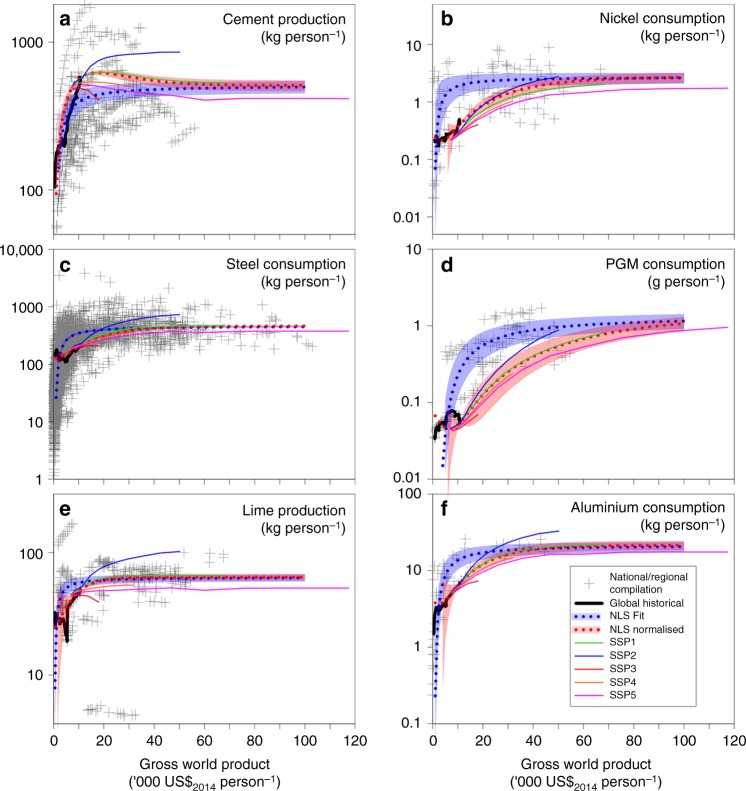
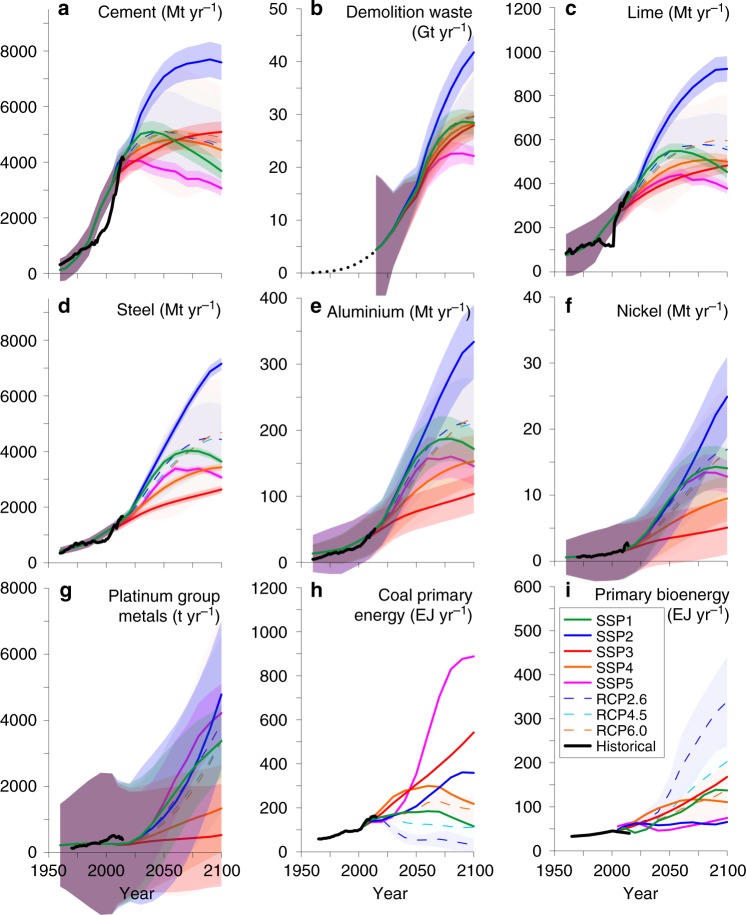
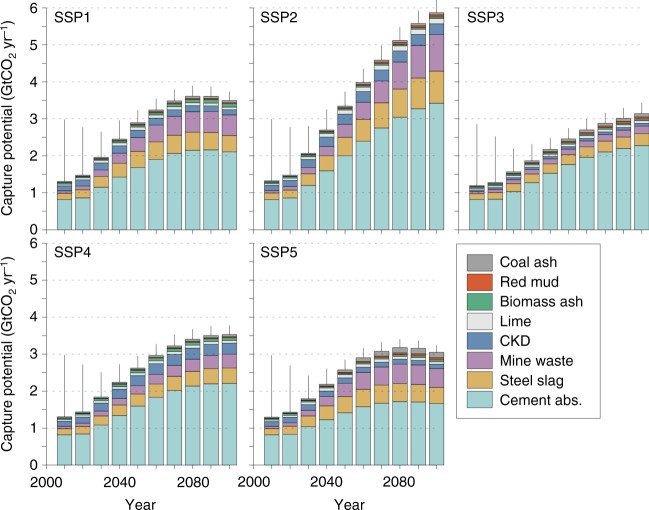
Verification
Claims the paper makes
The claims and statistics of this paper haven’t been checked yet.
Free: it reads the open-access text and checks the first 5 claims that cite a source we can check. Create a free account to check every claim.
Claims other papers make about this one
Each is checked against this paper’s own text: does it say what the citing paper says it does?
The source backs part of the claim, not all of it — or backs it for a different population, condition or comparison.
In the citing paper
“In parallel, up to 3.5 Gt/year of ultrabasic mine wastes will be generated at nickel and PGM mines like Stillwater [16].”
From Carbon Mineralization with North American PGM Mine Tailings—Characterization and Reactivity Analysis (2021) · cites this paper as [16]
Experimental — accuracy not yet measuredThe cited source says what the claim attributes to it.
In the citing paper
“Requirement for mining may be further reduced by utilizing artificial silicate by-products from industrial processes 37,38 , including calcium-rich silicates produced by iron and steel manufacturing (slags) with a long history of agricultural usage 4,39 .”
From Potential for large-scale CO2 removal via enhanced rock weathering with croplands (2020) · cites this paper as [38]
The cited source says what the claim attributes to it.
In the citing paper
“forecasts project these values to increase to 25 Mt and 5 kt per year by 2100, which would result in the co-production of up to 3.5 Gt/year of ultrabasic mine tailings [16].”
From Carbon Mineralization with North American PGM Mine Tailings—Characterization and Reactivity Analysis (2021) · cites this paper as [16]
In the citing paper
“China and India dominate with above-average per capita cement consumption compared to the global average, and substantially larger populations than the USA and Brazil 38 .”
From Potential for large-scale CO2 removal via enhanced rock weathering with croplands (2020) · cites this paper as [38]
Self-check
Percentages, sums and reported differences re-computed from the paper’s own numbers.
The self-check needs the paper’s full text.
Citations
Cites
The representative concentration pathways: an overview
van Vuuren, D. P., Edmonds, J., Kainuma, M., Riahi, K., Thomson, A., Hibbard, K., Hurtt, G. C., Kram, T., Krey, V., Lamarque, J.-F., et al. (2011) · Climatic Change · doi:10.1007/s10584-011-0148-z · Cited by 7,741
Riahi, K., van Vuuren, D. P., Kriegler, E., Edmonds, J., O’Neill, B. C., Fujimori, S., Bauer, N., Calvin, K., Dellink, R., Fricko, O., et al. (2017) · Global Environmental Change · doi:10.1016/j.gloenvcha.2016.05.009 · Cited by 6,607
IPCC (2022) · Cambridge University Press eBooks · doi:10.1017/9781009157940 · Cited by 1,482
Dai, S., Ren, D., Chou, C.-L., Finkelman, R. B., Seredin, V. V., & Zhou, Y. (2012) · International Journal of Coal Geology · doi:10.1016/j.coal.2011.02.003 · Cited by 1,184
Fuss, S., Canadell, J. G., Peters, G. P., Tavoni, M., Andrew, R. M., Ciais, P., Jackson, R. B., Jones, C. D., Kraxner, F., Nakicenovic, N., et al. (2014) · Nature Climate Change · doi:10.1038/nclimate2392 · Cited by 1,114
FERNANDEZBERTOS, M., SIMONS, S., HILLS, C., & CAREY, P. (2004) · Journal of Hazardous Materials · doi:10.1016/j.jhazmat.2004.04.019 · Cited by 1,079
Vassilev, S. V., Baxter, D., Andersen, L. K., & Vassileva, C. G. (2013) · Fuel · doi:10.1016/j.fuel.2012.09.041 · Cited by 1,031
Carbon dioxide disposal in carbonate minerals
Lackner, K. S., Wendt, C. H., Butt, D. P., Joyce, E. L., & Sharp, D. H. (1995) · Energy · doi:10.1016/0360-5442(95)00071-n · Cited by 1,021
Negative emissions—Part 1: Research landscape and synthesis
Minx, J. C., Lamb, W. F., Callaghan, M. W., Fuss, S., Hilaire, J., Creutzig, F., Amann, T., Beringer, T., de Oliveira Garcia, W., Hartmann, J., et al. (2018) · Environmental Research Letters · doi:10.1088/1748-9326/aabf9b · Cited by 865
Mineral CO 2 Sequestration by Steel Slag Carbonation
Huijgen, W. J. J., Witkamp, G.-J., & Comans, R. N. J. (2005) · Environmental Science & Technology · doi:10.1021/es050795f · Cited by 858
Cited by
Items 101–200 of 400
A thorough assessment of mineral carbonation of steel slag and refractory waste
Capelo, S., de Oliveira, R. T., Stampino, I. I. G., Gispert‐Guirado, F., Casals-Terré, A., Giancola, S., & Galán‐Mascarós, J. R. (2024) · Journal of CO2 Utilization · doi:10.1016/j.jcou.2024.102770 · Cited by 47
Chai, K., & Xu, S. (2022) · Advanced Powder Technology · doi:10.1016/j.apt.2022.103776 · Cited by 37
Fizzy ore processing sequesters CO 2 while supplying critical metals
Wilson, S., & Hamilton, J. (2022) · Proceedings of the National Academy of Sciences · doi:10.1073/pnas.2212424119 · Cited by 41
“The magnesium-rich ultramafic rocks that are mined for nickel and cobalt are also among the best feedstocks for carbon mineralization (also called mineral carbonation), a CCUS technology that traps and stores CO2 in highly stable carbonate minerals (5, 6).”
BackgroundQuantifying CO2 Removal at Enhanced Weathering Sites: a Multiproxy Approach
Knapp, W. J., Stevenson, E., Renforth, P., Ascough, P. L., Knight, A. C. G., Bridgestock, L., Bickle, M. J., Lin, Y., Riley, A. L., Mayes, W. M., et al. (2023) · Environmental Science & Technology · doi:10.1021/acs.est.3c03757 · Cited by 50
Self-citationZhang, B., Kroeger, J., Planavsky, N. J., & Yao, Y. (2023) · Environmental Science & Technology · doi:10.1021/acs.est.3c01658 · Cited by 55
Greenhouse gas emissions from advanced nitrogen-removal onsite wastewater treatment systems
Ross, B. N., Lancellotti, B. V., Brannon, E., Loomis, G. W., & Amador, J. A. (2020) · The Science of The Total Environment · doi:10.1016/j.scitotenv.2020.140399 · Cited by 39
“38) in these systems, which promotes the dissolution of atmospheric CO2 in water (Renforth, 2019).”
BackgroundInfluentialMoyo, A., Parbhakar-Fox, A. K., Meffre, S., & Cooke, D. R. (2023) · Environmental Pollution · doi:10.1016/j.envpol.2023.121292 · Cited by 40
Guo, F., Sun, H., Yang, J., Zhang, L., Mu, Y., Wang, Y., & Wu, F. (2023) · The Science of The Total Environment · doi:10.1016/j.scitotenv.2023.166118 · Cited by 47
Galina, N. R., Arce, G. L. A. F., Maroto‐Valer, M. M., & Ávila, I. (2023) · Energies · doi:10.3390/en16052449 · Cited by 37
“Alkaline materials rich in silicate and hydroxide minerals from industrial activities will have stored from 2.9 to 8.5 billion tons of CO 2 yearly by 2100 in the form of solid carbonate minerals [2].”
BackgroundMethodInfluentialZhai, H., Chen, Q., Yilmaz, M., & Wang, B. (2023) · Environmental Science & Technology · doi:10.1021/acs.est.3c03942 · Cited by 36
Skevi, L., Baki, V. A., Feng, Y., Valderrabano, M., & Ke, X. (2022) · Materials · doi:10.3390/ma15238357 · Cited by 37
Regional carbon drawdown with enhanced weathering of non-hazardous industrial wastes
Jia, X., Zhang, Z., Wang, F., Li, Z., Wang, Y., Aviso, K. B., Foo, D. C. Y., Nair, P. N. S. B., Tan, R. R., & Wang, F. (2021) · Resources Conservation and Recycling · doi:10.1016/j.resconrec.2021.105910 · Cited by 39
Li, L., Yu, H. B., Zhou, S., Dao, V. T. N., Chen, M., Ji, L., & Benhelal, E. (2023) · Materials Today Sustainability · doi:10.1016/j.mtsust.2023.100530 · Cited by 47
Are enhanced rock weathering rates overestimated? A few geochemical and mineralogical pitfalls
Power, I., Hatten, V. N. J., Guo, M., Schaffer, Z. R., Rausis, K., & Klyn-Hesselink, H. (2025) · Frontiers in Climate · doi:10.3389/fclim.2024.1510747 · Cited by 43
“For example, the wollastonite skarn has a CDR capacity of 409–464 kg CO 2 /t using the Steinour equation (Supplementary Table S1; Steinour, 1959; Renforth, 2012, 2019).”
InfluentialEffects of ocean alkalinity enhancement on plankton in the Equatorial Pacific
Guo, J. A., Strzepek, R. F., Yuan, Z., Swadling, K. M., Townsend, A. T., Achterberg, E. P., Browning, T. J., & Bach, L. T. (2025) · Communications Earth & Environment · doi:10.1038/s43247-025-02248-7 · Cited by 31
Coprecipitation of Heavy Metals in Calcium Carbonate from Coal Fly Ash Leachate
Hunter, H. A., Ling, F. T., & Peters, C. A. (2020) · ACS ES&T Water · doi:10.1021/acsestwater.0c00109 · Cited by 34
Zhu, B., Wilson, S., Zeyen, N., Raudsepp, M. J., Zolfaghari, A., Wang, B., Rostron, B. J., Snihur, K. N., von Gunten, K., Harrison, A. L., et al. (2022) · Applied Geochemistry · doi:10.1016/j.apgeochem.2022.105345 · Cited by 32
Geochemical carbon dioxide removal potential of Spain
Bullock, L. A., Alcalde, J., Tornos, F., & Fernández-Turiel, J. L. (2022) · The Science of The Total Environment · doi:10.1016/j.scitotenv.2022.161287 · Cited by 33
“%) oxides, M x is the molecular mass of those oxides, and η is molar ratio of CO 2 to cation sequestered during weathering (here, η = 1.5 to account for buffering in the seawater carbonate system; Renforth and Henderson, 2017; Renforth, 2019; Bullock et al., 2021).”
InfluentialChai, Y. E., Miller, Q. R. S., Schaef, H. T., Barpaga, D., Bakhshoodeh, R., Bodor, M., Van Gerven, T., & Santos, R. M. (2021) · The Journal of Supercritical Fluids · doi:10.1016/j.supflu.2021.105191 · Cited by 29
Wei, X., Li, J., Shi, H., Cao, Y., & Liu, G. (2024) · Construction and Building Materials · doi:10.1016/j.conbuildmat.2024.138043 · Cited by 30
Uliasz-Bocheńczyk, A. (2024) · Energies · doi:10.3390/en17225605 · Cited by 44
Implications of the Riverine Response to Enhanced Weathering for CO2 removal in the UK
Harrington, K., Hilton, R. G., & Henderson, G. M. (2023) · Applied Geochemistry · doi:10.1016/j.apgeochem.2023.105643 · Cited by 36
Migo-Sumagang, M. V., Tan, R. R., & Aviso, K. B. (2023) · Energy · doi:10.1016/j.energy.2023.127445 · Cited by 33
Adun, H. H., Ampah, J. D., Bamisile, O., Ozsahin, D. U., & Staffell, I. (2024) · Sustainable Production and Consumption · doi:10.1016/j.spc.2024.04.003 · Cited by 32
Kusin, F. M., Hasan, S. N. M. S., Molahid, V. L. M., & Soomro, M. H. (2024) · Sustainable Production and Consumption · doi:10.1016/j.spc.2024.05.012 · Cited by 35
Du, Z., Yang, E., & Unluer, C. (2024) · Cement and Concrete Composites · doi:10.1016/j.cemconcomp.2024.105658 · Cited by 30
Vienne, A., Frings, P. J., Poblador, S., Steinwidder, L., Rijnders, J., Schoelynck, J., Vindušková, O., & Vicca, S. (2024) · Soil Biology and Biochemistry · doi:10.1016/j.soilbio.2024.109596 · Cited by 37
Removal of atmospheric CO2 by engineered soils in infrastructure projects
Jorat, M. E., Kraavi, K. E., & Manning, D. A. C. (2022) · Journal of Environmental Management · doi:10.1016/j.jenvman.2022.115016 · Cited by 27
Cox, E., Spence, E., & Pidgeon, N. (2022) · Public Understanding of Science · doi:10.1177/09636625221112190 · Cited by 31
“However, field trials generally use waste rock resource, and there is a possibility that this might represent a more viable route for the technique (Renforth, 2019).”
BackgroundMorrow, D. R., Apeaning, R. W., & Guard, G. (2023) · Geoscientific model development · doi:10.5194/gmd-16-1105-2023 · Cited by 31
“For instance, some researchers have proposed using alkaline industrial waste (Renforth, 2019) or more reactive minerals, such as dunite or olivine (Strefler et al., 2018).”
BackgroundManning, D. A. C., de Azevedo, A. C., Zani, C. F., & Barneze, A. S. (2024) · European Journal of Soil Science · doi:10.1111/ejss.13534 · Cited by 32
“TABLE 2 Recalculation of dolerite analyses to estimate CO 2 removal, based on charge balance and (last line) using the modified Steinour equation from Renforth (2019).”
InfluentialFeng, D., & Hicks, A. (2023) · Journal of Cleaner Production · doi:10.1016/j.jclepro.2023.137625 · Cited by 28
Phytoplankton response to increased nickel in the context of ocean alkalinity enhancement
Xin, X., Faucher, G., & Riebesell, U. (2024) · Biogeosciences · doi:10.5194/bg-21-761-2024 · Cited by 37
“Natural alkaline minerals, as well as by-products from industrial activity, are potential candidates for EW and OAE (Taylor et al., 2016; Renforth, 2019).”
BackgroundInfluentialBuckingham, F., & Henderson, G. M. (2023) · The Science of The Total Environment · doi:10.1016/j.scitotenv.2023.167701 · Cited by 36
Membrane Distillation–Crystallization for Sustainable Carbon Utilization and Storage
Christie, K. S. S., McGaughey, A. L., McBride, S. A., Xu, X., Priestley, R. D., & Ren, Z. J. (2023) · Environmental Science & Technology · doi:10.1021/acs.est.3c04450 · Cited by 25
Mühlbauer, A., Keiner, D., & Breyer, C. (2024) · Energy & Environmental Science · doi:10.1039/d4ee03166k · Cited by 29
Sun, Z., He, X., & Duan, L. (2025) · Advanced Functional Materials · doi:10.1002/adfm.202424549 · Cited by 28
Effect of alumina on the carbonation reactivity of calcium aluminosilicate glasses
Li, C., Zheng, Q., Liu, B., Li, J., Zhu, W., Fang, Y., Peng, K., Zhang, Z., & Jiang, Z. (2025) · Cement and Concrete Research · doi:10.1016/j.cemconres.2025.108023 · Cited by 25
On life-cycle sustainability optimization of enhanced weathering systems
Tan, R. R., & Aviso, K. B. (2021) · Journal of Cleaner Production · doi:10.1016/j.jclepro.2021.125836 · Cited by 28
Carbon Mineralization with North American PGM Mine Tailings—Characterization and Reactivity Analysis
Woodall, C. M., Lu, X., Dipple, G., & Wilcox, J. (2021) · Minerals · doi:10.3390/min11080844 · Cited by 23
“5 Gt/year of ultrabasic mine wastes will be generated at nickel and PGM mines like Stillwater [16].”
BackgroundLuo, J., Huang, R., Wang, J., & Zhang, Y. (2024) · Materials · doi:10.3390/ma17205020 · Cited by 33
Xin, X., Goldenberg, S. U., Taucher, J., Stuhr, A., Arístegui, J., & Riebesell, U. (2024) · Environmental Science & Technology · doi:10.1021/acs.est.4c09838 · Cited by 30
Lei, K., Bucka, F. B., Teixeira, P. P. D. C., Buegger, F., Just, C., & Kögel‐Knabner, I. (2025) · Global Change Biology · doi:10.1111/gcb.70186 · Cited by 31
Challenges and opportunities in scaling enhanced weathering for carbon dioxide removal
Beerling, D. J., Reinhard, C. T., James, R. H., Khan, A., Pidgeon, N., & Planavsky, N. J. (2025) · Nature Reviews Earth & Environment · doi:10.1038/s43017-025-00713-7 · Cited by 48
Quantitative analysis of CO2 uptake by alkaline solid wastes in China
Ma, M., Guo, R., Bing, L., Wang, J., Yin, Y. B., Zhang, W., Niu, L., Liu, Z., & Xi, F. (2022) · Journal of Cleaner Production · doi:10.1016/j.jclepro.2022.132454 · Cited by 24
Utilization of CO2 into recycled construction materials: A systematic literature review
Zhang, N., Xi, B., Li, J., Liu, L., & Song, G. (2022) · Journal of Material Cycles and Waste Management · doi:10.1007/s10163-022-01489-4 · Cited by 27
“[21] × 77–110 kg CO2 per tonne C&D waste – After the service life of cement-based structures Global”
BackgroundAssessing the carbon capture capacity of South Wales’ legacy iron and steel slag
Chukwuma, J. S., Pullin, H., & Renforth, P. (2021) · Minerals Engineering · doi:10.1016/j.mineng.2021.107232 · Cited by 28
Self-citationMcDermott, F. P., Bryson, M., Magee, R., & van Acken, D. (2024) · Applied Geochemistry · doi:10.1016/j.apgeochem.2024.106056 · Cited by 27
Enhancing CO2 storage and marine carbon sink based on seawater mineral carbonation
Liu, S. S., Song, J. M., Li, X., Yuan, H., Duan, L. Q., Li, S. C., Wang, Z., & Ma, J. (2024) · Marine Pollution Bulletin · doi:10.1016/j.marpolbul.2024.116685 · Cited by 24
Chiquier, S., Gurgel, A., Morris, J., Chen, Y.-H. H., & Paltsev, S. (2025) · Environmental Research Letters · doi:10.1088/1748-9326/ada4c0 · Cited by 34
Mineral stabilities in soils: how minerals can feed the world and mitigate climate change
Manning, D. A. C. (2022) · Clay Minerals · doi:10.1180/clm.2022.17 · Cited by 25
“The calculation of CO2 removal through ERW is discussed in detail by Hartmann et al. (2013), involving use of the Steinour formula (Renforth, 2019).”
BackgroundMethodInfluentialCountercurrent moving bed carbonator for CO2 capture in decoupled calcium looping systems
Abánades, J. C., Criado, Y. A., & García, R. (2023) · Chemical Engineering Journal · doi:10.1016/j.cej.2023.141956 · Cited by 24
Emerging Technologies for Resilient Infrastructure: Conspectus and Roadmap
Taha, M. R., Ayyub, B. M., Soga, K., Daghash, S. M., Murcia, D. H., Moreu, F., & Soliman, E. (2021) · ASCE-ASME Journal of Risk and Uncertainty in Engineering Systems Part A Civil Engineering · doi:10.1061/ajrua6.0001134 · Cited by 30
Beyond Inorganic C: Soil Organic C as a Key Pathway for Carbon Sequestration in Enhanced Weathering
Steinwidder, L., Boito, L., Frings, P. J., Niron, H., Rijnders, J., de Schutter, A., Vienne, A., & Vicca, S. (2025) · Global Change Biology · doi:10.1111/gcb.70340 · Cited by 35
Accelerated carbonation of municipal waste fly ash for carbon sequestration: a review
Alptekin, F. M., Zanoletti, A., Depero, L. E., & Bontempi, E. (2025) · Environmental Chemistry Letters · doi:10.1007/s10311-025-01866-z · Cited by 25
“The formula was modified by Renforth to also consider phosphorous oxides [80].”
Baciocchi, R., & Costa, G. (2021) · Frontiers in Energy Research · doi:10.3389/fenrg.2021.592600 · Cited by 25
“, 2018) and was estimated that may provide in the next decades an increasing capture capacity from hundreds of Mton CO2/y to over 1 Gton CO2/y, depending on the socioeconomic scenario considered (Renforth, 2019).”
BackgroundInfluentialPinch-based planning of terrestrial carbon management networks
Tan, R. R., Aviso, K. B., & Bandyopadhyay, S. K. (2021) · Cleaner Engineering and Technology · doi:10.1016/j.clet.2021.100141 · Cited by 21
Pak, J., Han, S., & Wee, J. (2021) · Chemical Engineering Journal · doi:10.1016/j.cej.2021.131669 · Cited by 21
Opportunities and challenges for engineering construction materials as carbon sinks
Miller, S. A., Roijen, E. C. V., Cunningham, P. R., & Kim, A. (2021) · RILEM Technical Letters · doi:10.21809/rilemtechlett.2021.146 · Cited by 25
“While use-phase CO2 uptake is limited, end-of-life treatments such as decreasing crushed concrete particle size or waste pile sizes, could theoretically lead to sequestering 63-80% of the CO2 released from limestone decarbonation during production [48,59].”
BackgroundZhu, B., Wilson, S., Raudsepp, M. J., Vessey, C. J., Zeyen, N., Safari, S., Snihur, K. N., Wang, B., Riechelmann, S., Paulo, C., et al. (2022) · Applied Geochemistry · doi:10.1016/j.apgeochem.2022.105380 · Cited by 20
Abdul, F., Iizuka, A., Ho, H., Adachi, K., & Shibata, E. (2023) · Environmental Science and Pollution Research · doi:10.1007/s11356-023-27898-y · Cited by 21
“1995; Renforth 2019).”
BackgroundAlkali-activated organogeopolymers with volumetric superhydrophobicity
Wang, D., He, L., Wu, Y., Li, Y., Hu, W., Ma, T., Luo, S., Song, J., Sun, W., & Zhang, G. (2023) · Cement and Concrete Composites · doi:10.1016/j.cemconcomp.2023.105336 · Cited by 20
Jerden, J. L., Mejbel, M., Filho, A. N. Z., Carroll, M., & Campe, J. (2024) · Applied Geochemistry · doi:10.1016/j.apgeochem.2024.106002 · Cited by 24
“…2014; Taylor et al., 2016; Edwards et al., 2017; Kantola et al., 2017; Meysman and Montserrat, 2017; Taylor et al., 2017; Strefler et al., 2018; Renforth, 2019; Lefebvre et al., 2019; Lehmann and Possinger, 2020; Beerling et al., 2020; Kelland et al., 2020; Goll et al., 2021; Vakilifard et…”
BackgroundMethodInfluentialWang, F., & Dreisinger, D. B. (2024) · Minerals · doi:10.3390/min14080766 · Cited by 24
Hasemer, H., Borevitz, J., & Buss, W. (2024) · Frontiers in Climate · doi:10.3389/fclim.2024.1352825 · Cited by 29
Microwave roasting of blast furnace slag for carbon dioxide mineralization and energy analysis
Han, Z., Gao, J., Yuan, X., Zhong, Y., Ma, X., Chen, Z., Luo, D., & Wang, Y. (2020) · RSC Advances · doi:10.1039/d0ra02846k · Cited by 18
Environmental impacts and carbon capture potential of ocean alkalinity enhancementPreprint
Fakhraee, M., Li, Z., Planavsky, N. J., & Reinhard, C. T. (2022) · Research Square · doi:10.21203/rs.3.rs-1475007/v1 · Cited by 18
Veetil, S. P., & Hitch, M. (2021) · Environmental Science and Pollution Research · doi:10.1007/s11356-021-12481-0 · Cited by 17
Janssens, I. A., Roobroeck, D., Sardans, J., Obersteiner, M. H., Peñuelas, J., Richter, A. A., Smith, P., Verbruggen, E., & Vicca, S. (2022) · Frontiers in Climate · doi:10.3389/fclim.2022.928403 · Cited by 19
“The billion tons of alkaline silicates that accumulate next to mines globally, and which are often pulverized, offer an obvious pool of substrates (Renforth et al., 2011; Renforth, 2019).”
BackgroundHonvault, N., Tiouchichine, M.-L., Sauze, J., Piel, C., Landais, D., Devidal, S., Gritti, E., Bosch, D., & Milcu, A. (2024) · Applied Geochemistry · doi:10.1016/j.apgeochem.2024.106054 · Cited by 22
Renforth, P., Campbell, J., Foteinis, S., Cosgun, E., Young, J., Strunge, T., Riley, A. L., Mayes, W. M., & van der Spek, M. W. (2024) · Journal of Cleaner Production · doi:10.1016/j.jclepro.2024.142987 · Cited by 21
Self-citationWehrung, Q., Pastero, L., Bernasconi, D., Cotellucci, A., Bruno, M., Cavagna, S., Destefanis, E., Caviglia, C., & Pavese, A. (2024) · Energy & Fuels · doi:10.1021/acs.energyfuels.4c02455 · Cited by 19
Breunig, H. M., Fox, P. M., Domen, J. K., Kumar, R., Alves, R. E., Zhalnina, K., Voigtländer, A., Deng, H., Arora, B., & Nico, P. (2024) · Journal of Cleaner Production · doi:10.1016/j.jclepro.2024.143757 · Cited by 24
Srivastava, S., Snellings, R., Nielsen, P., & Cool, P. (2022) · Journal of environmental chemical engineering · doi:10.1016/j.jece.2022.107338 · Cited by 17
Biocement from the ocean: Hybrid microbial-electrochemical mineralization of CO2
Kludze, A., Solanki, D., Lejeune, M., Yanagi, R., Ishii, M., Raychaudhuri, N., Anastas, P. T., Boyle, N. R., & Hu, S. (2022) · iScience · doi:10.1016/j.isci.2022.105156 · Cited by 18
“(Campbell et al., 2022; Renforth, 2019).”
BackgroundInfluentialVibbert, H. B., & Park, A. A. (2022) · Frontiers in Energy Research · doi:10.3389/fenrg.2022.999307 · Cited by 16
“waste-to-energy ashes, iron and steel slag, and waste concrete (Renforth, 2019; Bui Viet et al., 2020; Gadikota, 2021; Hong et al., 2021; Rim et al., 2021).”
BackgroundLi, S., Feng, Q., Liu, J., He, Y., Shi, L., Boyanov, M. I., O’Loughlin, E. J., Kemner, K., Sanford, R. A., Shao, H., et al. (2022) · Environmental Science & Technology · doi:10.1021/acs.est.2c03843 · Cited by 18
Triwigati, P. T., Sim, G., Seo, D., & Park, Y. (2024) · Industrial & Engineering Chemistry Research · doi:10.1021/acs.iecr.4c00608 · Cited by 16
Fuzzy optimization model for enhanced weathering networks using industrial waste
Aviso, K. B., Lee, J., Ubando, A. T., & Tan, R. R. (2021) · Clean Technologies and Environmental Policy · doi:10.1007/s10098-021-02053-8 · Cited by 18
“Use of industrial waste for EW can take advantage of large amounts of material which currently 1 3 presents disposal problems (Renforth 2019).”
BackgroundInfluentialBülbül, F., & Courard, L. (2025) · Materials · doi:10.3390/ma18040834 · Cited by 21
“Under specific conditions, CO 2 can be absorbed and stabilized in alkaline solid waste, such as BA, in the form of carbonate minerals or dissolved carbonate ions, depending on the alkalinity and reactivity of the waste [112,175,176].”
Nanoconfinement matters in humidified CO 2 interaction with metal silicates
Zare, S., Uddin, K. M. S., Funk, A., Miller, Q. R. S., & Qomi, M. J. A. (2022) · Environmental Science Nano · doi:10.1039/d2en00148a · Cited by 24
Classification and progress of extraction technologies for nonferrous metal resources
Cheng, F., Zhou, N., Nouman, N. M., Li, C., & Yin, C. (2024) · Science China Chemistry · doi:10.1007/s11426-024-2196-x · Cited by 15
Activation methods for enhancing CO2 mineralization via mine tailings—A critical review
Norouzpour, M., Santos, R. M., & Chiang, Y. W. (2025) · Carbon Capture Science & Technology · doi:10.1016/j.ccst.2025.100430 · Cited by 35
Uncertainties of enhanced rock weathering for climate-change mitigation
Schiedung, M., Harrington, K., Dupla, X., Möller, B., Facq, E., Sweere, T., Don, A., Hilton, R. G., Döetterl, S., & Hemingway, J. (2026) · Nature Reviews Earth & Environment · doi:10.1038/s43017-026-00761-7 · Cited by 32
Talus, K., & Maddahi, R. (2024) · The Journal of World Energy Law & Business · doi:10.1093/jwelb/jwae009 · Cited by 14
Vassilev, S. V., Vassileva, C. G., & Petrova, N. (2022) · Fuel · doi:10.1016/j.fuel.2022.124010 · Cited by 15
The Verification Challenge of Marine Carbon Dioxide Removal
Fennel, K. (2026) · Annual Review of Marine Science · doi:10.1146/annurev-marine-032123-025717 · Cited by 13
Liu, J., Zheng, W., Li, Z., Xie, G., Cheng, L., & Zhang, W. (2025) · Construction and Building Materials · doi:10.1016/j.conbuildmat.2025.143777 · Cited by 17
Maciel, A. D. O., Christakopoulos, P., Rova, U., & Antonopoulou, I. (2024) · RSC Advances · doi:10.1039/d3ra06927c · Cited by 13
Weiler, J., Tassinari, C. C. G., de Aquino, T. F., Bonetti, B., & Viola, V. O. (2024) · International Journal of Mining Reclamation and Environment · doi:10.1080/17480930.2024.2318132 · Cited by 14
“Another recent study by Renforth 2019 [44], based on future projections of the production of ultrabasic mine tailings, indicates a capture potential of around 1487 ± 609 Mt CO 2 yr −1 by the year 2100.”
BackgroundWoodall, C. M., Gomes, K. V., Voigt, A., Sundmacher, K., & Wilcox, J. L. (2024) · RSC Sustainability · doi:10.1039/d4su00443d · Cited by 14
Wehrung, Q., Bernasconi, D., Destefanis, E., Caviglia, C., Curetti, N., Felice, S. D., Bicchi, E., Pavese, A., & Pastero, L. (2024) · Minerals · doi:10.3390/min14121269 · Cited by 13
“Thus, the carbonation capacity of MSWIr and other alkaline waste can typically range from 0 to 400 gCO 2 /kg, depending on the Ca and Mg content that is not already bound to carbonates, sulfates, or phosphates [79].”
Circular economy landfills for temporary storage and treatment of mineral-rich wastes
Sapsford, D., Stewart, D. I., Sinnett, D., Burke, I. T., Cleall, P. J., Harbottle, M., Mayes, W. M., Owen, N. E., Sardo, A. M., & Weightman, A. J. (2023) · Proceedings of the Institution of Civil Engineers - Waste and Resource Management · doi:10.1680/jwarm.22.00008 · Cited by 19
Reynaert, S., Vienne, A., Boeck, H. J. D., D’Hose, T., Janssens, I. A., Nijs, I., Portillo‐Estrada, M., Verbruggen, E., Vicca, S., & Poblador, S. (2023) · Agricultural and Forest Meteorology · doi:10.1016/j.agrformet.2023.109610 · Cited by 18
Net zero emission buildings: a review of academic literature and national roadmaps
Þórólfsdóttir, E., Árnadóttir, Á., & Heinonen, J. T. (2023) · Environmental Research Infrastructure and Sustainability · doi:10.1088/2634-4505/ad0e80 · Cited by 26
An inventory of UK mineral resources suitable for enhanced rock weathering
Madankan, M., & Renforth, P. (2023) · International journal of greenhouse gas control · doi:10.1016/j.ijggc.2023.104010 · Cited by 16
“These materials are found to have a large global CDR potential of 2.9 – 8.5 GtCO 2 per year by 2100 (Renforth 2019).”
BackgroundMethodInfluentialSelf-citationCarbon dioxide removal via weathering of sugarcane mill ash under different soil conditions
Green, H., Larsen, P. L., Liu, Y., & Nelson, P. N. (2024) · Applied Geochemistry · doi:10.1016/j.apgeochem.2024.105940 · Cited by 13
Suhrhoff, T. J., Reershemius, T., Wang, J., Jordan, J. S., Reinhard, C. T., & Planavsky, N. J. (2024) · Frontiers in Climate · doi:10.3389/fclim.2024.1346117 · Cited by 23
“In this context, maximizing Δ [ j ] through feedstock selection may already be in the interest of the EW supplier, because the concentration of mobile elements in feedstocks linearly scales with their CDR potential (Renforth, 2012, 2019; Supplementary Figure S34).”
BackgroundYadav, S. K., & Ramanathan, A. (2025) · The Science of The Total Environment · doi:10.1016/j.scitotenv.2025.178564 · Cited by 13
Ho, H., Iizuka, A., & Kubo, H. (2025) · International Journal of Minerals Metallurgy and Materials · doi:10.1007/s12613-024-3054-x · Cited by 15
Metadata
- Authors
- Renforth, P.
- Affiliations
- Heriot-Watt University (GB)
- Corresponding author
- Renforth, Phil
- ORCID
- Renforth, Phil
- Venue
- Nature Communications
- Published
- 2019-03-28
- Volume
- 10
- Issue
- 1
- Pages
- 1401-1401
- ISSN
- 2041-1723 (ISSN-L)
- PMC
- PMC6438983
- OpenAlex
- W2923823446
- Semantic Scholar
- 528e1eaa9dbf05ab79a8040a5c4614bdc7ff917e
- Cited by
- 403
- References
- 54
- Citations by year
- 2026: 65 · 2025: 74 · 2024: 71 · 2023: 74 · 2022: 60 · 2021: 37 · 2020: 16 · 2019: 6
- FWCI
- 12.61
- Type
- journal article
- Language
- en
- Open access
- gold
- doi.org
- Licence
- cc-by
- creativecommons.org/licenses/by/4.0 (tdm)
- creativecommons.org/licenses/by/4.0 (vor)
- Locations
- Nature Communications (publishedVersion, cc-by)
- Europe PMC (PubMed Central) (publishedVersion, cc-by)
- PubMed Central (publishedVersion, cc-by)
- PubMed (publishedVersion)
- RePEc: Research Papers in Economics (submittedVersion)
- DOAJ (DOAJ: Directory of Open Access Journals) (submittedVersion)
- DOAJ (DOAJ: Directory of Open Access Journals) (submittedVersion, cc-by-sa)
- Funders
- Engineering and Physical Sciences Research Council
- Natural Environment Research Council (NE/P019943/1, NE/P019943/2)
- Topics
- Physical Sciences › Environmental Science › Environmental Engineering › CO2 Sequestration and Geologic Interactions
- Physical Sciences › Chemical Engineering › Filtration and Separation › Carbon Dioxide Capture Technologies
- Physical Sciences › Engineering › Civil and Structural Engineering › Concrete and Cement Materials Research
- Keywords
- carbon dioxide removal, alkaline materials, CO2 sequestration, alkaline dissolution, carbonate formation, bicarbonate, CO2 capture, 2°C target, industrial by-products
About these checks
Registry, retraction, Cites and statistics results are computed, not judged, with one exception: a printed reference that no index lists is read once by a model before it counts as a citation error. Claims are extracted by a model and kept only when their quote appears verbatim in the text; each cited source is then checked, with a model’s help, for whether it says what the claim relies on. Those verdicts can be wrong — read the claim’s quote and the cited source before relying on one.
Statistics and arithmetic are recomputed, not judged.
Confidence bands are shown only for fields calibrated on our annotated test set. None is calibrated yet, so no band is shown.
What counts as a claim ›How we measure confidence ›How we check this ›
Are you an author, or do you see a problem with this page? Request a review
Data sources
Bibliographic data: Semantic Scholar, OpenAlex, Crossref.
Contains information from the Semantic Scholar Academic Graph Datasets, made available under the ODC Attribution License (ODC-BY 1.0).
Semantic Scholar’s data is described in: Kinney, R., et al. (2023). The Semantic Scholar Open Data Platform. arXiv:2301.10140.
