

Lower synaptic density is associated with depression severity and network alterations
Open accessThe DOI matches its Crossref record; 79 of the 79 references it cites were found in a registry or an index.
Abstract
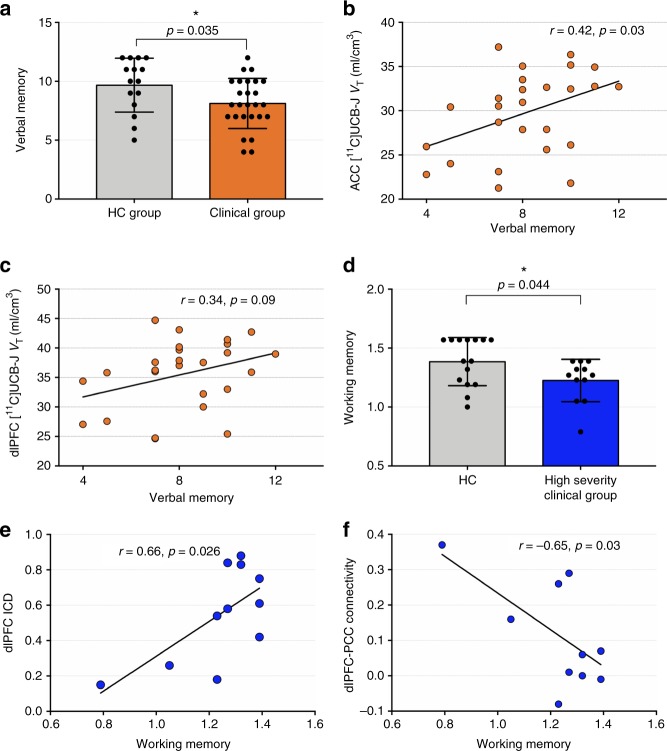
Synaptic loss and deficits in functional connectivity are hypothesized to contribute to symptoms associated with major depressive disorder (MDD) and post-traumatic stress disorder (PTSD). The synaptic vesicle glycoprotein 2A (SV2A) can be used to index the number of nerve terminals, an indirect estimate of synaptic density. Here, we used positron emission tomography (PET) with the SV2A radioligand [ 11 C]UCB-J to examine synaptic density in n = 26 unmedicated individuals with MDD, PTSD, or comorbid MDD/PTSD. The severity of depressive symptoms was inversely correlated with SV2A density, and individuals with high levels of depression showing lower SV2A density compared to healthy controls ( n = 21). SV2A density was also associated with aberrant network function, as measured by magnetic resonance imaging (MRI) functional connectivity. This is the first in vivo evidence linking lower synaptic density to network alterations and symptoms of depression. Our findings provide further incentive to evaluate interventions that restore synaptic connections to treat depression.
Overview
The claims and statistics of this paper haven’t been checked yet.
Free: it reads the open-access text and checks the first 5 claims that cite a source we can check. Create a free account to check every claim.
Integrity signals
Registry
Cites
Statistics
Figures
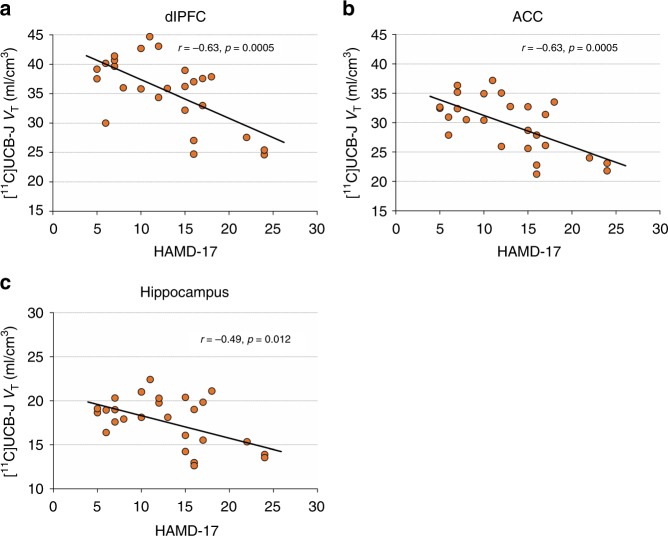
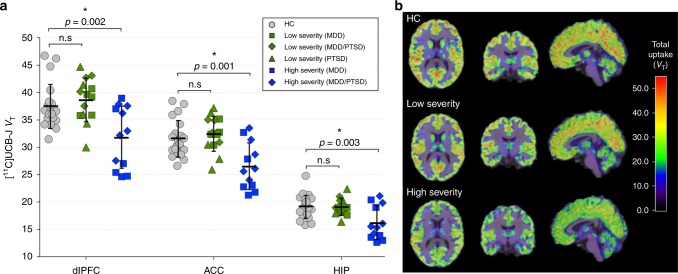
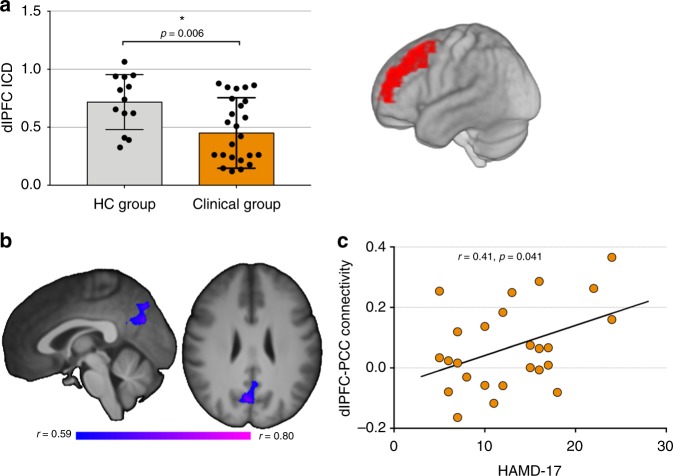
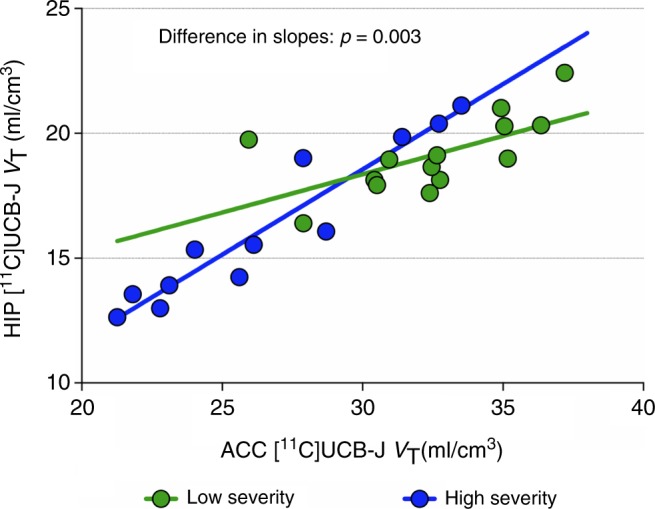
Verification
Claims the paper makes
The claims and statistics of this paper haven’t been checked yet.
Free: it reads the open-access text and checks the first 5 claims that cite a source we can check. Create a free account to check every claim.
Claims other papers make about this one
Each is checked against this paper’s own text: does it say what the citing paper says it does?
The cited source doesn’t support the claim as written.
In the citing paper
“It was found that the dlPFC-posterior cingulate cortex connection was inversely negatively linked to the severity of depression symptoms and connected with synapse activity in the dlPFC, indicating that synaptic loss may impair antagonistism within the centers of both networks, which are typically at odds. 474”
From Major depressive disorder: hypothesis, mechanism, prevention and treatment (2024) · cites this paper as [474]
Checked by a reasoning model — may be wrong.
Experimental — accuracy not yet measuredThe source backs part of the claim, not all of it — or backs it for a different population, condition or comparison.
In the citing paper
“Additionally, it was shown that compared with healthy subjects, subjects with MDD had reduced dlPFC resting-state connectivity throughout the brain.”
From Major depressive disorder: hypothesis, mechanism, prevention and treatment (2024) · cites this paper as [474]
Experimental — accuracy not yet measuredThe source backs part of the claim, not all of it — or backs it for a different population, condition or comparison.
In the citing paper
“They reported lower distribution volumes (VT, representing specific and unspecific binding) of 11C-UCB-J in the depressed group within the hippocampus, anterior cingulate cortex and dorsolateral prefrontal cortex, as well as other regions not assessed in their primary analysis: occipital cortex, parietal cortex, temporal cortex, cerebellum, putamen.”
From Preliminary evidence for preserved synaptic density in late-life depression (2024) · cites this paper as [22]
Experimental — accuracy not yet measuredThe source backs part of the claim, not all of it — or backs it for a different population, condition or comparison.
In the citing paper
“The only other study that has investigated 11C-UCB-J in depression focused on unmedicated depressed MDD/PTSD adults under the age of 60 [22].”
From Preliminary evidence for preserved synaptic density in late-life depression (2024) · cites this paper as [22]
Experimental — accuracy not yet measuredThe source backs part of the claim, not all of it — or backs it for a different population, condition or comparison.
In the citing paper
“PET studies on several neuropsychiatric disorders linked to synaptic dysfunction, including depression, have found lower cerebral SV2A density in patients compared to healthy individuals [17–22].”
From Effects of escitalopram on synaptic density in the healthy human brain: a randomized controlled trial (2023) · cites this paper as [20]
Experimental — accuracy not yet measured
22 more claims about this paper
Create a free account to see every claim other papers make about this one.
Self-check
Percentages, sums and reported differences re-computed from the paper’s own numbers.
The self-check needs the paper’s full text.
Citations
Cites
Diagnostic and Statistical Manual of Mental Disorders
American Psychiatric Association (2013) · doi:10.1176/appi.books.9780890425596 · Cited by 116,369
Kessler, R. C., Berglund, P., Demler, O., Jin, R., Merikangas, K. R., & Walters, E. E. (2005) · Archives of General Psychiatry · doi:10.1001/archpsyc.62.6.593 · Cited by 20,391
A new depression scale designed to be sensitive to change
Montgomery, S. A., & Åsberg, M. (1979) · British Journal of Psychiatry · doi:10.1192/bjp.134.4.382 · Cited by 13,962
The human brain is intrinsically organized into dynamic, anticorrelated functional networks
Fox, M. D., Snyder, A. Z., Vincent, J. L., Corbetta, M., Van Essen, D. C., & Raichle, M. E. (2005) · Proceedings of the National Academy of Sciences · doi:10.1073/pnas.0504136102 · Cited by 8,553
Molecular Mechanisms of Depression: Perspectives on New Treatment Strategies
Lang, U. E., & Borgwardt, S. (2013) · Cellular Physiology and Biochemistry · doi:10.1159/000350094 · Cited by 8,475
Development of a Rating Scale for Primary Depressive Illness
HAMILTON, M. (1967) · British Journal of Social and Clinical Psychology · doi:10.1111/j.2044-8260.1967.tb00530.x · Cited by 8,410
mTOR-Dependent Synapse Formation Underlies the Rapid Antidepressant Effects of NMDA Antagonists
Li, N., Lee, B., Liu, R.-J., Banasr, M., Dwyer, J. M., Iwata, M., Li, X.-Y., Aghajanian, G., & Duman, R. S. (2010) · Science · doi:10.1126/science.1190287 · Cited by 2,881
Self-citationSüdhof, T. C. (2004) · Annual Review of Neuroscience · doi:10.1146/annurev.neuro.26.041002.131412 · Cited by 2,547
Tononi, G., & Cirelli, C. (2014) · Neuron · doi:10.1016/j.neuron.2013.12.025 · Cited by 2,356
Neurodegenerative Diseases Target Large-Scale Human Brain Networks
Seeley, W. W., Crawford, R. K., Zhou, J., Miller, B. L., & Greicius, M. D. (2009) · Neuron · doi:10.1016/j.neuron.2009.03.024 · Cited by 2,350
Research works printed but not linked: 1
- Scheinost D., et al. Multimodal investigation of network level effects using intrinsic functional connectivity, anatomical covariance, and structure-to-function correlations in unmedicated major depressive disorder. Neuropsychopharmacology43, 1119–1127 (2018). PMC5854800 28944772 · DOI · Paper page
Cited by
Items 401–500 of 520
Yun, J., & Kim, Y. (2022) · Neuromethods · doi:10.1007/978-1-0716-2083-0_14 · Cited by 1
Tiger, M., & Lundberg, J. (2022) · Neuromethods · doi:10.1007/978-1-0716-2083-0_11 · Cited by 1
Memudu, A. E. (2022) · NIgerian Journal of Neuroscience · doi:10.47081/njn2022.13.3/004 · Cited by 1
Abebe, E. C., Mengstie, M. A., Seid, M. A., & Dejenie, T. A. (2022) · Frontiers in Psychiatry · doi:10.3389/fpsyt.2022.1051235 · Cited by 1
In vivo neuropil density from anatomical MRI and machine learning
Akif, A., Staib, L. H., Hermán, P., Rothman, D. L., Yu, Y., & Hyder, F. (2024) · Cerebral Cortex · doi:10.1093/cercor/bhae200 · Cited by 1
A Review of the Effects of Major Depressive Disorder
He, A. (2024) · Journal of Student Research · doi:10.47611/jsrhs.v13i2.6786 · Cited by 1
Wang, S., Zhang, X., Kong, G., Lin, Y., Zhu, T., Qian, Z.-Y., Xu, L.-H., Cui, H.-R., Wang, J.-J., Li, H., et al. (2025) · Depression and Anxiety · doi:10.1155/da/1749444 · Cited by 1
Stasi, A. M. D., Martín, J. Z. D. S., Soto, N. N., Aguirre, A., Olusakin, J., Lourenço, J., Gaspar, P., & Bacci, A. (2025) · Journal of Neuroscience · doi:10.1523/jneurosci.2393-23.2024 · Cited by 1
Zhang, C., Li, B., Ng, K. P., Huang, G., Wang, X., Kong, M., & Ba, M. (2025) · Frontiers in Aging Neuroscience · doi:10.3389/fnagi.2025.1547394 · Cited by 2
“…decline before MDD sets in. Emerging evidence suggests that depressive symptoms, including SSD, are linked to cytoarchitectural changes and neuronal injury, which may play a role in cognitive impairment (Csabai et al., 2018; Holmes et al., 2019; Williams et al., 2019; Banasr et al., 2021).”
Gonçalves, A. J., Alotaibi, M., Carlin, A., Chen, Y., Wong, C., Djoukhadar, I., Krokos, G., Jackson, A., Coope, D. J., & Asselin, M. (2021) · Journal of Cerebral Blood Flow & Metabolism · doi:10.1177/0271678x211061050 · Cited by 1
Atasoy-Rodriguez, I. L., Johnson, K. W., Patel, K., Arain, H., Zaidi, S., Herold, K. F., Milner, T. A., Hemmings, H. C., & Platholi, J. (2026) · bioRxiv (Cold Spring Harbor Laboratory) · doi:10.64898/2026.01.02.697407 · Cited by 1
“Loss of dendritic spines, a structural correlate of chronic stress and depression 22, 23, 24, 25 , is reversed by ketamine at multiple time points in both cortical 26, 27, 28 and hippocampal 29, 30 neurons, with in vivo restoration of spines in the medial frontal cortex persisting up to 2 weeks…”
Structural plasticity and enhanced fear extinction following psilocybin in chronically stressed micePreprint
Knox, C. A., Woodburn, S. C., Gilbert, A. D., Schlotzhauer, J. M., & Kwan, A. C. (2026) · bioRxiv (Cold Spring Harbor Laboratory) · doi:10.64898/2026.04.21.720014 · Cited by 2
Damgaard, V., Schandorff, J. M., Johansen, A., Macoveanu, J., Cramer, K., Østergaard, I. P., Thommesen, K. K., Bruun, C. F., Meyer, M., Plavén‐Sigray, P., et al. (2026) · medRxiv · doi:10.64898/2026.06.28.26356414 · Cited by 1
Ma, X., Kim, H., Zhang, L., Chen, P., Wei, J., Cui, Y., Chen, L., Xu, Y., Zhang, J., Dai, Z., et al. (2026) · Translational Psychiatry · doi:10.1038/s41398-026-04128-w
Post-Traumatic Stress Disorder: Symptoms, Screening and Treatment
Kumar, A. (2019) · Current Trends On Biotechnology & Microbiology Open Access Publishers · doi:10.32474/ctbm.2019.01.000110
“In case of PTSD, patient is likely to recover within a year or so [5-7].”
BackgroundChaji, D. (2020) · Open Access Victoria University of Wellington | Te Herenga Waka (Figshare) · doi:10.26686/wgtn.20389311
Molecular pathways of depression and antidepressant therapies for treatment resistant depression
McGrory, C. L. (2020) · Arrow@dit (Dublin Institute of Technology)
Molecular imaging findings in bipolar disorder
Meyer, J. H. (2020) · Elsevier eBooks · doi:10.1016/b978-0-12-819182-8.00016-8 · Cited by 1
Ronald S. Duman (1954–2020): In Memoriam
Nestler, E. J., & Krystal, J. H. (2021) · Biological Psychiatry · doi:10.1016/j.biopsych.2021.05.010
Self-citationNew PET radiopharmaceuticals for imaging CNS diseases
Brumberg, J., & Varrone, A. (2021) · Elsevier eBooks · doi:10.1016/b978-0-12-822960-6.00002-8
Car-Car Analogy on Neural Network SciencePreprint
Hsu, W., Liu, Z.-C., & Liu, Y.-X. (2021) · Research Square · doi:10.21203/rs.3.rs-811703/v1
HIV gp120-induced synaptic changes -- modulation by the endocannabinoid system and NMDARs
Zhang, X. (2019) · University of Minnesota Digital Conservancy (University of Minnesota)
La poesía es cuestión de tiempo
García, F. J. Q. (2000) · La Página
Los peregrinos noruegos también se dirigieron a Santiago
Njerve, E. (1996) · Peregrino: revista del Camino de Santiago
Jensen, K. R., Dam, V. H., Ganz, M., Fisher, P. M., Osler, M., Frøkjær, V. G., Knudsen, G. M., & Jørgensen, M. B. (2021) · European Neuropsychopharmacology · doi:10.1016/j.euroneuro.2021.10.536
Glutamate-based preclinical and clinical dysfunction and treatment in bipolar disorder
Decker, A., Bacalzo, B., & Niciu, M. J. (2022) · Elsevier eBooks · doi:10.1016/b978-0-12-821398-8.00020-5
Caviness, J. N. (2020) · Faculty Opinions – Post-Publication Peer Review of the Biomedical Literature · doi:10.3410/f.737231678.793570128
Efeito do exercício físico na nocicepção induzida no modelo de doença de Pakirson em ratos.
Binda, K. H. (2020) · Digital Library of Theses and Dissertations (Universidade de São Paulo) · doi:10.11606/d.42.2020.tde-06012021-154244
Xu, X., He, B., Zeng, J., Yin, J., Wang, X., Luo, X., Liang, C., Luo, S., Yan, H., Xiong, S., et al. (2023) · Behavioural Brain Research · doi:10.1016/j.bbr.2023.114353
Research progress in the brain area responsible for depression
Du, X. (2023) · Highlights in Science Engineering and Technology · doi:10.54097/hset.v36i.6181
Visualizing drug actions on dendrites: psilocybin and other classic psychedelics
Shao, L.-X., Liao, C., Gregg, I., Davoudian, P. A., Savalia, N. K., Delagarza, K., & Kwan, A. C. (2023) · Optics in the Life Sciences · doi:10.1364/brain.2023.btu2b.2
Toledo, M. M. V. (2023) · Cultura y Droga · doi:10.17151/culdr.2023.28.35.5
“…de neuronas en la corteza prefrontal (Christoffel et al. , 2011) así como por pérdida de neuritas, espinas, sinapsis y, en general, disminución en la complejidad del árbol dendrítico en regiones como la corteza y el hipocampo (Castrén & Antila, 2017; Csabai et al. , 2018; Holmes et al. , 2019).”
BackgroundOrhii, P., Radhakrishnan, R., & Selvaraj, S. (2023) · Springer eBooks · doi:10.1007/978-3-031-43356-6_6 · Cited by 1
Do Molecular Interventions (Ketamine) Re-establish Synapses in Affected Brain Structures?
Bennett, M. R. (2024) · Springer eBooks · doi:10.1007/978-981-97-2803-9_10
Sriram, D. (2022) · Scholarly review . · doi:10.70121/001c.121673
“There is no single mechanism that can explain every aspect of MDD. fMRI imaging studies have shown that synaptic density decreases as a result of depression (Holmes et al., 2019).”
BackgroundInfluentialThe circuit mechanisms of working memory: Key roles of the dorsolateral prefrontal cortex
Arnsten, A. F. T., & Martínez-Trujillo, J. (2024) · Elsevier eBooks · doi:10.1016/b978-0-443-15754-7.00038-9
Chaïb, S. (2023) · theses.fr (ABES) · doi:10.70675/00e3b294z3b0az4a32zb1c5z3c09edd92416 · Cited by 1
Animal Models of Mood Disorders
Parise, L. F., Cardona-Acosta, A. M., Parise, E. M., & Bolaños‐Guzmán, C. A. (2025) · Oxford University Press eBooks · doi:10.1093/med/9780197640654.003.0030
Chen, J., Wang, F., Zhao, L., Zhang, H., Wang, Z., Tang, Y., Chang, X., Ma, W., Qiu, Y., Yi, Y., et al. (2025) · Fundamental Research · doi:10.1016/j.fmre.2025.02.017 · Cited by 1
Feng, Y., Ji, X., Huang, P., & Yang, S. (2025) · Research Square · doi:10.21203/rs.3.rs-6316036/v1
Medina, J. (2021) · Scholars Archive - University at Albany (University at Albany, State University of New York) · doi:10.54014/mfr0-spyt · Cited by 1
Armony, J., & Vuilleumier, P. (2025) · Cambridge University Press eBooks · doi:10.1017/9781009342919.005
Mapping the Human Emotion Circuits with Positron Emission Tomography
Nummenmaa, L., & Hirvonen, J. (2025) · Cambridge University Press eBooks · doi:10.1017/9781009342919.009
Filipović, D., & Turck, C. W. (2025) · Reviews in the Neurosciences · doi:10.1515/revneuro-2025-0081 · Cited by 1
“Molecular changes in MDD often occur at the synaptic level, particularly within the PFC (Duman and Aghajanian 2012; Holmes et al. 2019; Yoshino et al. 2021).”
Ketamine’s Multifaceted Neuropharmacological and Neurobiological Actions
Kohtala, S., & Annala, I. (2025) · Neuromethods · doi:10.1007/978-1-0716-4603-8_2
Yang, R., Yuan, M., Zhang, H., Xie, H., Qiu, C., Balgansuren, D., Huang, X., Lui, S., Gong, Q., Zhang, W., et al. (2025) · European Journal of Neuroscience · doi:10.1111/ejn.70271
“Holmes et al. (2019) found a positive correlation between the dorsolateral prefrontal cortex (DLPFC)–posterior cingulate cortex (PCC) connectivity and depressive symptoms across these two clinical groups.”
Bortolozzi, A. A., Miquel-Rio, L., Vicent-Gil, M., Jericó-Escolar, J., Carrasco-Hernández, J., Jubero, M., Paz, V., Gawron, L., Ruiz‐Bronchal, E., Vera, J., et al. (2025) · Research Square · doi:10.21203/rs.3.rs-8113450/v1
Unlocking cognitive vitality: the interplay of stimulation, sleep, and brain aging
Singh, N. K., Ashish, A., Singh, S., Dubey, P., & Singh, R. (2025) · Elsevier eBooks · doi:10.1016/b978-0-443-36295-8.00010-9
Knudsen, C., Thomsen, M. B., Højgaard, K., Christiansen, S. L., Wiborg, O., Müller, H. K., Landau, A. M., & Elfving, B. (2025) · Progress in Neuro-Psychopharmacology and Biological Psychiatry · doi:10.1016/j.pnpbp.2025.111572
Radiopharmaceuticals for Positron Emission Tomography in Dementia Diagnosis
Ajdinović, V., & Ajdinović, B. (2025) · British journal of healthcare and medical research · doi:10.14738/bjhr.1206.19664
“[36, 37, 38].”
Probing Functional Network Topology in Major Depressive Disorder on the Cellular and Systems Levels
Issa, R. (2024) · University of Regensburg Publication Server (University of Regensburg) · doi:10.5283/epub.57905
Meng, P., Zhang, X., Liu, T.-T., Liu, J., Luo, Y., Xie, M., Yang, H., Fang, R., Guo, D.-W., Zhong, Z.-Y., et al. (2024) · Figshare · doi:10.6084/m9.figshare.26597522
Rossano, S. M., Toyonaga, T., Bini, J., Nabulsi, N., Ropchan, J. R., Cai, Z., Huang, Y. H., & Carson, R. E. (2022) · Figshare · doi:10.6084/m9.figshare.19703780
Self-citationJensen, K. H. R., Dam, V. H., Ganz, M., Fisher, P. M., Ip, C.-T., Sankar, A., Marstrand-Joergensen, M. R., Ozenne, B., Osler, M., Penninx, B. W. J. H., et al. (2023) · Figshare · doi:10.6084/m9.figshare.22623808
Husain, M. O., Jones, B. D. M., Arshad, U., Ameis, S. H., Mirfallah, G., Schifani, C., Rodak, T., Aiken, M., Shafique, M., Ahmed, F., et al. (2024) · Figshare · doi:10.6084/m9.figshare.26066220
Jensen, K. H. R., Dam, V. H., Ganz, M., Fisher, P. M., Ip, C.-T., Sankar, A., Marstrand-Joergensen, M. R., Ozenne, B., Osler, M., Penninx, B. W. J. H., et al. (2023) · Figshare · doi:10.6084/m9.figshare.22623805
Jensen, K. H. R., Dam, V. H., Ganz, M., Fisher, P. M., Ip, C.-T., Sankar, A., Marstrand-Joergensen, M. R., Ozenne, B., Osler, M., Penninx, B. W. J. H., et al. (2023) · Figshare · doi:10.6084/m9.figshare.22623802
Husain, M. O., Jones, B., Arshad, U., Ameis, S. H., Mirfallah, G., Schifani, C., Rodak, T., Aiken, M., Shafique, M., Ahmed, F., et al. (2024) · Figshare · doi:10.6084/m9.figshare.26736453
Construção e Estudos Psicométricos da Bateria de Avaliação do Estado Mental (BAEM)
Cardoso, D. R., & de Oliveira, S. E. S. (2024) · Dialnet (Universidad de la Rioja) · doi:10.15689/ap.2024.2304.02 · Cited by 1
Garbe, R. J. (2024) · URN:NBN Resolver for Germany & Switzerland (German National Library) · doi:10.17879/27908421693
Husain, M. O., Jones, B., Arshad, U., Ameis, S. H., Mirfallah, G., Schifani, C., Rodak, T., Aiken, M., Shafique, M., Ahmed, F., et al. (2024) · Figshare · doi:10.6084/m9.figshare.26066140
Kim, H. R., Lee, Y.-J., Kim, T.-W., Lim, R.-N., Hwang, D. Y., Moffat, J. J., Kim, S., Seo, J.-W., & Ka, M. (2020) · Figshare · doi:10.6084/m9.figshare.13152013
Whiteside, D. J. (2023) · Apollo (University of Cambridge) · doi:10.17863/cam.105517
Glorie, D., Verhaeghe, J., Miranda, A., Lombaerde, S. D., Stroobants, S. G., & Staelens, S. G. (2020) · Figshare · doi:10.6084/m9.figshare.13237747
Meng, P., Zhang, X., Liu, T.-T., Liu, J., Luo, Y., Xie, M., Yang, H., Fang, R., Guo, D.-W., Zhong, Z.-Y., et al. (2024) · Figshare · doi:10.6084/m9.figshare.26597525
Rossano, S. M., Toyonaga, T., Bini, J., Nabulsi, N., Ropchan, J. R., Cai, Z., Huang, Y. H., & Carson, R. E. (2022) · Figshare · doi:10.6084/m9.figshare.19703777
Self-citationDobronyi, S. (2023) · The Atrium (University of Guelph)
Psychoterapeutické účinky psilocybinu
Bromová, D. (2024) · Digital library - University of Pardubice (University of Pardubice)
Plasticidade do Córtex Visual no AVC: Ressonância Magnética Funcional e PET
Ferreira, M. S. (2022) · Portuguese National Funding Agency for Science, Research and Technology (RCAAP Project by FCT)
Medicinal Mushrooms and Mental Disorders: How Mushrooms Affect Anxiety and Depression
Tarki, A., Hajikarim‐Hamedani, A., Rassa, S., & Khosravi, S. (2025) · Nutritional neurosciences · doi:10.1007/978-981-95-2774-8_6
Multimodale neurobeeldvorming van breinveroudering biomerkers in depressie bij ouderen
Vande Casteele, T. (2025) · Lirias
Detecting neuroplastic effects induced by ketamine in healthy human subjects: a multimodal approach
Agnorelli, C., Peill, J. M., Sawicka, G., Kurtin, D. L., Shatalina, E., Ahmad, K., Wall, M., Rua, C., Godfrey, K., Erl, N., et al. (2026) · Neuroscience Applied · doi:10.1016/j.nsa.2025.105744
Zhahara, S. N., Sudo, Y., Kurita, K., Itai, E., Kamishikiryo, T., Kitagawa, H., Yoshida, T., He, J., Kamashita, R., Isobe, Y., et al. (2026) · Journal of Affective Disorders · doi:10.1016/j.jad.2025.121073
Wang, X., Zhang, Q., Zhang, X., Liu, J., Zhang, J., Liu, C., Cui, Y., Qs, S., Hou, Y., Wang, Y., et al. (2026) · Aging Cell · doi:10.1111/acel.70379
“SV2A, mainly located in the peripheral sympathetic synapses and presynaptic vesicle terminals, was recognized as the first biomarker reflecting synaptic density in the brain (Holmes et al. 2019).”
Untersuchung der Selbstmanagementfähigkeit depressiver Patienten
Schnierer, N. (2026) · heiDOK (Heidelberg University) · doi:10.11588/heidok.00037911
Endocannabinoid Modulation of Amygdala Activity and Circuitry in Post-Traumatic Stress Disorder
Green, D. G. J. (2023) · TSpace (University of Toronto) · Cited by 1
The Effects of Psychedelic-Assisted Therapy on Illness and Death Anxiety
Amaev, A. (2024) · TSpace (University of Toronto)
Sleightholm, S., & O’Neill, C. (2026) · Psychological Reports · doi:10.1177/00332941261427381
Jose, D. A., Tripathi, A., Madeshiya, A. K., Todd, T., Quevedo, J., & Pillai, A. (2026) · Discover Neuroscience · doi:10.1186/s13064-026-00248-7
Samante, F. I., Galangue, C. G., Avelino, D. C., Beltran, A. J., Rapada, M., Pabia, E. G., Bustamante, N. A., Botanas, C. J., Samante, F. L., Bormate, K. J., et al. (2026) · Pharmacological Reports · doi:10.1007/s43440-026-00851-9
“…of these drugs highlights the possible involvement of other mechanisms integral to the development of MDD. Evidence of immune dysregulation and synaptic loss in patients with depression has directed attention toward neuroplasticity and neuroinflammatory pathways as potential drug targets [3].”
Stress and synaptic density in psychosis and clinical high risk: evidence from [18F]SynVesT-1 PET
Blasco, M. B., Aji, K. N., Ramos-Jiménez, C., Chartrand, D. A., Hsiao, C. H.-H., Hopewell, R., Massarweh, G., Cohen, J., Rusjan, P., & Mizrahi, R. (2026) · Translational Psychiatry · doi:10.1038/s41398-026-03993-9
“Whereas prior work suggests that greater depressive sympto-matology is associated with synaptic density de fi cits [24]; we observed that in FEP patients, higher depressive symptoms were associated with greater synaptic density.”
InfluentialDistinct therapeutic profiles of ketamine in treatment-resistant depression: an exploratory analysis
Liu, K.-W., Lin, W., Li, C., Bai, Y., Su, T., & Chen, M. (2026) · The International Journal of Neuropsychopharmacology · doi:10.1093/ijnp/pyag021
“34,35 While ketamine is known to promote rapidsynaptogenesis, 36 theneuroprogressivechangesassociatedwith high levels of treatment resistance may impose a ceiling on functional recovery achievable with a single infusion.”
Kroker, T., Puder, L. M., Abbasi, O., Ghiasi, S., Krug, C. K., Wessing, I., Salehinejad, M. A., Ruland, T., Alferink, J., Dannlowski, U., et al. (2026) · bioRxiv (Cold Spring Harbor Laboratory) · doi:10.64898/2026.09.08.750125
Linking human brain functional connectivity to underlying neurotransmitter systemsPreprint
Lotter, L. D., Shafiei, G., Larabi, D. I., Koushik, A., Dipasquale, O., Mehta, M. A., Cercignani, M., Sethi, A., Harrison, N. A., Holiga, Š., et al. (2026) · bioRxiv (Cold Spring Harbor Laboratory) · doi:10.64898/2026.04.28.721294
Grey Matter Volume Changes and Synaptic Alterations
Bennett, M. (2026) · Springer eBooks · doi:10.1007/978-981-95-9594-5_12
Zhang, T., Feng, H., Li, L., Wang, S. L., Wu, L., & Yan, C. (2026) · Journal of Ethnopharmacology · doi:10.1016/j.jep.2026.121917
Pérez-Reytor, D., & Karahanian, E. (2025) · European journal of health research · doi:10.32457/ejhr.v11.3749
Transcriptomic signatures of synaptic loss in Alzheimer’s disease
Sun, L., Yang, X., Xu, X., Kang, L., Zheng, Y., Huang, Q., Xu, W., Guan, Y., Shen, Y., Liu, J. S., et al. (2026) · iScience · doi:10.1016/j.isci.2026.116336
“63,74 Third, AHBA transcriptomic data represent bulk RNA and lack single-cell resolution, 64 limiting cell-type precision.”
Ziemichód, W., Kajka, N., Kister, K., Kasprzak, K., Karakuła, K. H., & Juchnowicz, D. (2026) · Pharmacological Reports · doi:10.1007/s43440-026-00871-5
“These findings support the model of stress-and depres - sion-related synaptic pruning in cortico-limbic circuits and provide a mechanistic bridge between post-mortem evidence of reduced synapse number and functional imaging abnormalities in depression [ 40 ].”
Kapłon, K., Napiórkowska-Mastalerz, M., Bredelytė, A., & Ruszkowska-Ciastek, B. (2026) · Nutrition Reviews · doi:10.1093/nutrit/nuag089
Ai, L., Zhao, Y., Zhao, K., Shuang, R., Hou, D., Sun, T., Zhao, M., Tao, W., & Wang, H. Y. (2026) · Journal of Ethnopharmacology · doi:10.1016/j.jep.2026.122140
Soltanzadeh, M., Ameis, S. H., Charlton, C. E., Cleverley, K., Courtney, D., Dickie, E. W., Felsky, D., Foussias, G., Goldstein, B. I., Griffiths, J. D., et al. (2026) · medRxiv · doi:10.64898/2026.06.24.26356447
Intrinsic excitation-inhibition imbalance in major depressive disorder
Ge, Y., Chen, L., Shen, Y., Li, N., Liu, B., Lv, X., Bai, Y., Wei, W., Wu, Y., Li, K., et al. (2026) · Journal of Affective Disorders · doi:10.1016/j.jad.2026.122164
Schandorff, J. M., Damgaard, V., Johansen, A., Macoveanu, J., Cramer, K., Madsen, A. B. F., Orum, B. E. R., Bruun, C. F., Meyer, M., Plavén‐Sigray, P., et al. (2026) · medRxiv · doi:10.64898/2026.07.10.26357722
うつ病における臨床的関連性および再現性を有する神経画像マーカーとしての、全脳およびネットワークレベルでの機能的コネクトーム独自性の低下
Zhahara, S. N., & ザハラ, セ. ヌ. (2026) · Institutional Repositories DataBase (IRDB) · doi:10.18910/105564
Metadata
- Authors
- Holmes, S. E., Scheinost, D., Finnema, S. J., Naganawa, M., Davis, M. T., DellaGioia, N., Nabulsi, N., Matuskey, D., Angarita, G. A., Pietrzak, R. H., Duman, R. S., Sanacora, G., Krystal, J. H., Carson, R. E., & Esterlis, I.
- Affiliations
- Yale University (US)
- Corresponding author
- Esterlis, Irina
- ORCID
- Venue
- Nature Communications
- Published
- 2019-04-04
- Volume
- 10
- Issue
- 1
- Pages
- 1529-1529
- ISSN
- 2041-1723 (ISSN-L)
- PMC
- PMC6449365
- OpenAlex
- W2933363539
- Semantic Scholar
- cd9a182d1e50b7bf308075c826edb381d8fd9c9f
- Cited by
- 484
- References
- 79
- Citations by year
- 2026: 51 · 2025: 92 · 2024: 67 · 2023: 62 · 2022: 72 · 2021: 66 · 2020: 59 · 2019: 12
- FWCI
- 32.39
- Type
- journal article
- Language
- en
- Open access
- gold
- doi.org
- Licence
- cc-by
- creativecommons.org/licenses/by/4.0 (tdm)
- creativecommons.org/licenses/by/4.0 (vor)
- Locations
- Nature Communications (publishedVersion, cc-by)
- Europe PMC (PubMed Central) (publishedVersion, cc-by)
- PubMed Central (publishedVersion, cc-by)
- PubMed (publishedVersion)
- RePEc: Research Papers in Economics (submittedVersion)
- DOAJ (DOAJ: Directory of Open Access Journals) (submittedVersion, cc-by-sa)
- DOAJ (DOAJ: Directory of Open Access Journals) (submittedVersion)
- Funders
- U.S. Department of Veterans Affairs
- Yale University
- National Alliance for Research on Schizophrenia and Depression
- National Center for PTSD, U.S. Department of Veterans Affairs
- Janssen Pharmaceuticals
- Topics
- Health Sciences › Medicine › Pharmacology (medical) › Treatment of Major Depression
- Life Sciences › Neuroscience › Cognitive Neuroscience › Functional Brain Connectivity Studies
- Life Sciences › Neuroscience › Cellular and Molecular Neuroscience › Neurotransmitter Receptor Influence on Behavior
- Keywords
- synaptic density, major depressive disorder, post-traumatic stress disorder, depression severity, synaptic loss, SV2A, [11C]UCB-J, functional connectivity, brain network alterations, comorbid depression
- MeSH terms
- Adult, Depression, Major Depressive Disorder, Depressive Disorder, Major, Female, Humans, Male, Membrane Glycoproteins, Middle Aged, Nerve Tissue Proteins, Stress Disorders, Post-Traumatic, Synapses, Positron-Emission Tomography
About these checks
Registry, retraction, Cites and statistics results are computed, not judged, with one exception: a printed reference that no index lists is read once by a model before it counts as a citation error. Claims are extracted by a model and kept only when their quote appears verbatim in the text; each cited source is then checked, with a model’s help, for whether it says what the claim relies on. Those verdicts can be wrong — read the claim’s quote and the cited source before relying on one.
Statistics and arithmetic are recomputed, not judged.
Confidence bands are shown only for fields calibrated on our annotated test set. None is calibrated yet, so no band is shown.
What counts as a claim ›How we measure confidence ›How we check this ›
Are you an author, or do you see a problem with this page? Request a review
Data sources
Bibliographic data: Semantic Scholar, OpenAlex, Crossref.
Contains information from the Semantic Scholar Academic Graph Datasets, made available under the ODC Attribution License (ODC-BY 1.0).
Semantic Scholar’s data is described in: Kinney, R., et al. (2023). The Semantic Scholar Open Data Platform. arXiv:2301.10140.
