

Lower synaptic density is associated with depression severity and network alterations
Open accessThe DOI matches its Crossref record; 79 of the 79 references it cites were found in a registry or an index.
Abstract
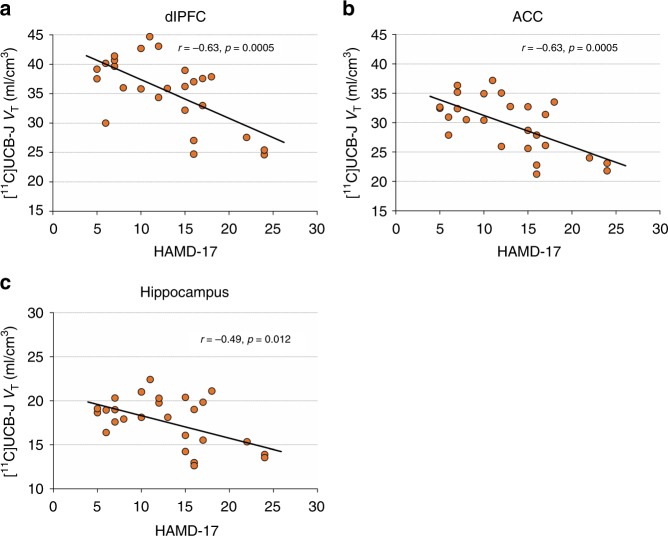
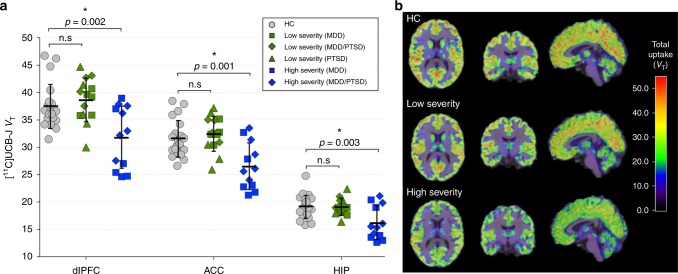
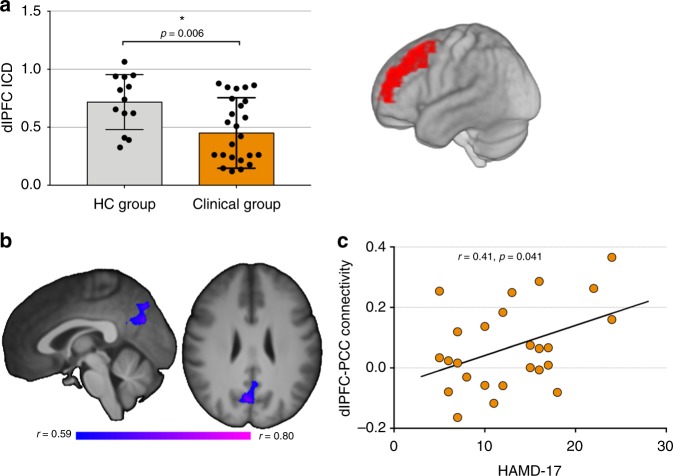
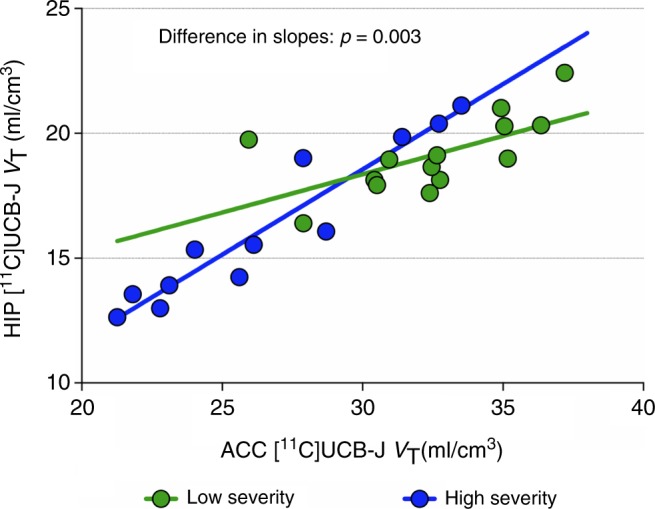
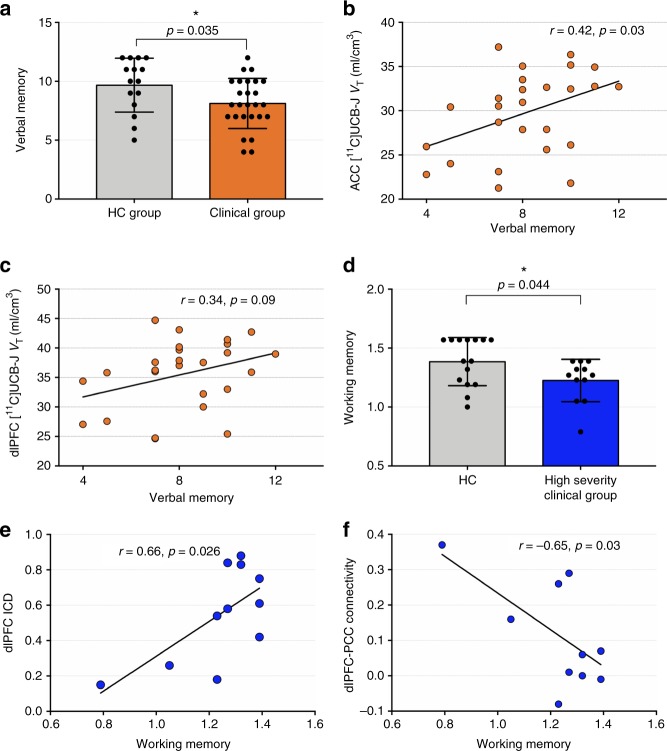
Synaptic loss and deficits in functional connectivity are hypothesized to contribute to symptoms associated with major depressive disorder (MDD) and post-traumatic stress disorder (PTSD). The synaptic vesicle glycoprotein 2A (SV2A) can be used to index the number of nerve terminals, an indirect estimate of synaptic density. Here, we used positron emission tomography (PET) with the SV2A radioligand [ 11 C]UCB-J to examine synaptic density in n = 26 unmedicated individuals with MDD, PTSD, or comorbid MDD/PTSD. The severity of depressive symptoms was inversely correlated with SV2A density, and individuals with high levels of depression showing lower SV2A density compared to healthy controls ( n = 21). SV2A density was also associated with aberrant network function, as measured by magnetic resonance imaging (MRI) functional connectivity. This is the first in vivo evidence linking lower synaptic density to network alterations and symptoms of depression. Our findings provide further incentive to evaluate interventions that restore synaptic connections to treat depression.
Overview
The claims and statistics of this paper haven’t been checked yet.
Free: it reads the open-access text and checks the first 5 claims that cite a source we can check. Create a free account to check every claim.
Integrity signals
Registry
Cites
Statistics
Figures
Verification
Claims the paper makes
The claims and statistics of this paper haven’t been checked yet.
Free: it reads the open-access text and checks the first 5 claims that cite a source we can check. Create a free account to check every claim.
Claims other papers make about this one
Each is checked against this paper’s own text: does it say what the citing paper says it does?
The cited source doesn’t support the claim as written.
In the citing paper
“It was found that the dlPFC-posterior cingulate cortex connection was inversely negatively linked to the severity of depression symptoms and connected with synapse activity in the dlPFC, indicating that synaptic loss may impair antagonistism within the centers of both networks, which are typically at odds. 474”
From Major depressive disorder: hypothesis, mechanism, prevention and treatment (2024) · cites this paper as [474]
Checked by a reasoning model — may be wrong.
Experimental — accuracy not yet measuredThe source backs part of the claim, not all of it — or backs it for a different population, condition or comparison.
In the citing paper
“Additionally, it was shown that compared with healthy subjects, subjects with MDD had reduced dlPFC resting-state connectivity throughout the brain.”
From Major depressive disorder: hypothesis, mechanism, prevention and treatment (2024) · cites this paper as [474]
Experimental — accuracy not yet measuredThe source backs part of the claim, not all of it — or backs it for a different population, condition or comparison.
In the citing paper
“They reported lower distribution volumes (VT, representing specific and unspecific binding) of 11C-UCB-J in the depressed group within the hippocampus, anterior cingulate cortex and dorsolateral prefrontal cortex, as well as other regions not assessed in their primary analysis: occipital cortex, parietal cortex, temporal cortex, cerebellum, putamen.”
From Preliminary evidence for preserved synaptic density in late-life depression (2024) · cites this paper as [22]
Experimental — accuracy not yet measuredThe source backs part of the claim, not all of it — or backs it for a different population, condition or comparison.
In the citing paper
“The only other study that has investigated 11C-UCB-J in depression focused on unmedicated depressed MDD/PTSD adults under the age of 60 [22].”
From Preliminary evidence for preserved synaptic density in late-life depression (2024) · cites this paper as [22]
Experimental — accuracy not yet measuredThe source backs part of the claim, not all of it — or backs it for a different population, condition or comparison.
In the citing paper
“PET studies on several neuropsychiatric disorders linked to synaptic dysfunction, including depression, have found lower cerebral SV2A density in patients compared to healthy individuals [17–22].”
From Effects of escitalopram on synaptic density in the healthy human brain: a randomized controlled trial (2023) · cites this paper as [20]
Experimental — accuracy not yet measured
22 more claims about this paper
Create a free account to see every claim other papers make about this one.
Self-check
Percentages, sums and reported differences re-computed from the paper’s own numbers.
The self-check needs the paper’s full text.
Citations
Cites
Diagnostic and Statistical Manual of Mental Disorders
American Psychiatric Association (2013) · doi:10.1176/appi.books.9780890425596 · Cited by 116,369
Kessler, R. C., Berglund, P., Demler, O., Jin, R., Merikangas, K. R., & Walters, E. E. (2005) · Archives of General Psychiatry · doi:10.1001/archpsyc.62.6.593 · Cited by 20,391
A new depression scale designed to be sensitive to change
Montgomery, S. A., & Åsberg, M. (1979) · British Journal of Psychiatry · doi:10.1192/bjp.134.4.382 · Cited by 13,962
The human brain is intrinsically organized into dynamic, anticorrelated functional networks
Fox, M. D., Snyder, A. Z., Vincent, J. L., Corbetta, M., Van Essen, D. C., & Raichle, M. E. (2005) · Proceedings of the National Academy of Sciences · doi:10.1073/pnas.0504136102 · Cited by 8,553
Molecular Mechanisms of Depression: Perspectives on New Treatment Strategies
Lang, U. E., & Borgwardt, S. (2013) · Cellular Physiology and Biochemistry · doi:10.1159/000350094 · Cited by 8,475
Development of a Rating Scale for Primary Depressive Illness
HAMILTON, M. (1967) · British Journal of Social and Clinical Psychology · doi:10.1111/j.2044-8260.1967.tb00530.x · Cited by 8,410
mTOR-Dependent Synapse Formation Underlies the Rapid Antidepressant Effects of NMDA Antagonists
Li, N., Lee, B., Liu, R.-J., Banasr, M., Dwyer, J. M., Iwata, M., Li, X.-Y., Aghajanian, G., & Duman, R. S. (2010) · Science · doi:10.1126/science.1190287 · Cited by 2,881
Self-citationSüdhof, T. C. (2004) · Annual Review of Neuroscience · doi:10.1146/annurev.neuro.26.041002.131412 · Cited by 2,547
Tononi, G., & Cirelli, C. (2014) · Neuron · doi:10.1016/j.neuron.2013.12.025 · Cited by 2,356
Neurodegenerative Diseases Target Large-Scale Human Brain Networks
Seeley, W. W., Crawford, R. K., Zhou, J., Miller, B. L., & Greicius, M. D. (2009) · Neuron · doi:10.1016/j.neuron.2009.03.024 · Cited by 2,350
Kaiser, R. H., Andrews-Hanna, J. R., Wager, T. D., & Pizzagalli, D. A. (2015) · JAMA Psychiatry · doi:10.1001/jamapsychiatry.2015.0071 · Cited by 2,281
Synaptic plasticity and depression: new insights from stress and rapid-acting antidepressants
Duman, R. S., Aghajanian, G. K., Sanacora, G., & Krystal, J. H. (2016) · Nature Medicine · doi:10.1038/nm.4050 · Cited by 1,750
Self-citationSynaptic Dysfunction in Depression: Potential Therapeutic Targets
Duman, R. S., & Aghajanian, G. K. (2012) · Science · doi:10.1126/science.1222939 · Cited by 1,651
Self-citation(1995) · American Journal of Psychiatry · doi:10.1176/ajp.152.7.973 · Cited by 1,610
Neurocircuitry of Mood Disorders
Price, J. L., & Drevets, W. C. (2010) · Neuropsychopharmacology · doi:10.1038/npp.2009.104 · Cited by 1,606
Peripheral cytokine and chemokine alterations in depression: a meta‐analysis of 82 studies
Köhler, C. A., Freitas, T. H., Maes, M., de Andrade, N. Q., Liu, C. S., Fernandes, B. S., Stubbs, B., Solmi, M., Veronese, N., Herrmann, N., et al. (2017) · Acta Psychiatrica Scandinavica · doi:10.1111/acps.12698 · Cited by 1,443
Brewer, J. A., Worhunsky, P. D., Gray, J. R., Tang, Y.-Y., Weber, J., & Kober, H. (2011) · Proceedings of the National Academy of Sciences · doi:10.1073/pnas.1112029108 · Cited by 1,409
Identification of a Common Neurobiological Substrate for Mental Illness
Goodkind, M., Eickhoff, S. B., Oathes, D. J., Jiang, Y., Chang, A., Jones-Hagata, L. B., Ortega, B. N., Zaiko, Y. V., Roach, E. L., Korgaonkar, M. S., et al. (2015) · JAMA Psychiatry · doi:10.1001/jamapsychiatry.2014.2206 · Cited by 1,404
Rauch, S. L., Shin, L. M., & Phelps, E. A. (2006) · Biological Psychiatry · doi:10.1016/j.biopsych.2006.06.004 · Cited by 1,397
Cuthbert, B. N. (2014) · World Psychiatry · doi:10.1002/wps.20087 · Cited by 1,377
Drevets, W. C. (2001) · Current Opinion in Neurobiology · doi:10.1016/s0959-4388(00)00203-8 · Cited by 1,146
Tsuno, N., Besset, A., & Ritchie, K. (2005) · The Journal of Clinical Psychiatry · doi:10.4088/jcp.v66n1008 · Cited by 1,084
Bridging animal and human models of exercise-induced brain plasticity
Voss, M. W., Vivar, C., Kramer, A. F., & van Praag, H. (2013) · Trends in Cognitive Sciences · doi:10.1016/j.tics.2013.08.001 · Cited by 1,030
The role of default network deactivation in cognition and disease
Anticevic, A., Cole, M. W., Murray, J. D., Corlett, P. R., Wang, X.-J., & Krystal, J. H. (2012) · Trends in Cognitive Sciences · doi:10.1016/j.tics.2012.10.008 · Cited by 978
Self-citationKoolschijn, P. C. M. P., van Haren, N. E. M., Lensvelt‐Mulders, G. J. L. M., Hulshoff Pol, H. E., & Kahn, R. S. (2009) · Human Brain Mapping · doi:10.1002/hbm.20801 · Cited by 902
A meta-analysis of structural brain abnormalities in PTSD
KARL, A., SCHAEFER, M., MALTA, L., DORFEL, D., ROHLEDER, N., & WERNER, A. (2006) · Neuroscience & Biobehavioral Reviews · doi:10.1016/j.neubiorev.2006.03.004 · Cited by 881
Shafer, A. B. (2006) · Journal of Clinical Psychology · doi:10.1002/jclp.20213 · Cited by 837
Decreased expression of synapse-related genes and loss of synapses in major depressive disorder
Kang, H. J., Voleti, B., Hajszan, T., Rajkowska, G., Stockmeier, C. A., Licznerski, P., Lepack, A., Majik, M. S., Jeong, L. S., Banasr, M., et al. (2012) · Nature Medicine · doi:10.1038/nm.2886 · Cited by 808
Self-citationBora, E., Fornito, A., Pantelis, C., & Yücel, M. (2012) · Journal of Affective Disorders · doi:10.1016/j.jad.2011.03.049 · Cited by 763
Müller-Gärtner, H. W., Links, J. M., Prince, J. L., Bryan, R. N., McVeigh, E., Leal, J. P., Davatzikos, C., & Frost, J. J. (1992) · Journal of Cerebral Blood Flow & Metabolism · doi:10.1038/jcbfm.1992.81 · Cited by 756
Childhood poverty, chronic stress, and adult working memory
Evans, G. W., & Schamberg, M. A. (2009) · Proceedings of the National Academy of Sciences · doi:10.1073/pnas.0811910106 · Cited by 724
Feder, A., Parides, M. K., Murrough, J. W., Perez, A. M., Morgan, J. E., Saxena, S., Kirkwood, K., aan het Rot, M., Lapidus, K. A. B., Wan, L.-B., et al. (2014) · JAMA Psychiatry · doi:10.1001/jamapsychiatry.2014.62 · Cited by 613
Imaging synaptic density in the living human brain
Finnema, S. J., Nabulsi, N. B., Eid, T., Detyniecki, K., Lin, S.-F., Chen, M.-K., Dhaher, R., Matuskey, D., Baum, E., Holden, D., et al. (2016) · Science Translational Medicine · doi:10.1126/scitranslmed.aaf6667 · Cited by 575
Self-citationNeurocognitive impairment in drug-free patients with major depressive disorder
Porter, R. J., Gallagher, P., Thompson, J. M., & Young, A. H. (2003) · British Journal of Psychiatry · doi:10.1192/bjp.182.3.214 · Cited by 519
Differential expression of synaptic vesicle protein 2 (SV2) isoforms
Bajjalieh, S., Frantz, G., Weimann, J., McConnell, S., & Scheller, R. (1994) · The Journal of Neuroscience · doi:10.1523/jneurosci.14-09-05223.1994 · Cited by 440
Chen, M.-K., Mecca, A. P., Naganawa, M., Finnema, S. J., Toyonaga, T., Lin, S.-F., Najafzadeh, S., Ropchan, J., Lu, Y., McDonald, J. W., et al. (2018) · JAMA Neurology · doi:10.1001/jamaneurol.2018.1836 · Cited by 431
Self-citationBluhm, R. L., Williamson, P. C., Osuch, E. A., Frewen, P. A., Stevens, T. K., Boksman, K., Neufeld, R. W. J., Théberge, J., & Lanius, R. A. (2009) · Journal of Psychiatry and Neuroscience · doi:10.1139/jpn.0925 · Cited by 422
Feyissa, A. M., Chandran, A., Stockmeier, C. A., & Karolewicz, B. (2009) · Progress in Neuro-Psychopharmacology and Biological Psychiatry · doi:10.1016/j.pnpbp.2008.10.005 · Cited by 421
Rapid-acting glutamatergic antidepressants: the path to ketamine and beyond
Krystal, J. H., Sanacora, G., & Duman, R. S. (2013) · Biological Psychiatry · doi:10.1016/j.biopsych.2013.03.026 · Cited by 406
Self-citationMcGirr, A., Berlim, M. T., Bond, D. J., Fleck, M. P., Yatham, L. N., & Lam, R. W. (2015) · Psychological Medicine · doi:10.1017/s0033291714001603 · Cited by 373
Akiki, T. J., Averill, C. L., & Abdallah, C. G. (2017) · Current Psychiatry Reports · doi:10.1007/s11920-017-0840-4 · Cited by 365
Liu, R.-J., & Aghajanian, G. K. (2008) · Proceedings of the National Academy of Sciences · doi:10.1073/pnas.0706679105 · Cited by 346
Holmes, S. E., Hinz, R., Conen, S., Gregory, C. J., Matthews, J. C., Anton-Rodriguez, J. M., Gerhard, A., & Talbot, P. S. (2018) · Biological Psychiatry · doi:10.1016/j.biopsych.2017.08.005 · Cited by 346
Self-citationDuric, V., Banasr, M., Stockmeier, C. A., Simen, A. A., Newton, S. S., Overholser, J. C., Jurjus, G. J., Dieter, L., & Duman, R. S. (2013) · International Journal of Neuropsychopharmacology · doi:10.1017/s1461145712000016 · Cited by 304
Self-citationKetamine Treatment and Global Brain Connectivity in Major Depression
Abdallah, C. G., Averill, L. A., Collins, K. A., Geha, P., Schwartz, J., Averill, C., DeWilde, K. E., Wong, E., Anticevic, A., Tang, C. Y., et al. (2017) · Neuropsychopharmacology · doi:10.1038/npp.2016.186 · Cited by 300
Nabulsi, N. B., Mercier, J., Holden, D., Carré, S., Najafzadeh, S., Vandergeten, M.-C., Lin, S.-F., Deo, A., Price, N., Wood, M., et al. (2016) · Journal of Nuclear Medicine · doi:10.2967/jnumed.115.168179 · Cited by 296
Self-citationREDD1 is essential for stress-induced synaptic loss and depressive behavior
Ota, K. T., Liu, R.-J., Voleti, B., Maldonado-Aviles, J. G., Duric, V., Iwata, M., Dutheil, S., Duman, C., Boikess, S., Lewis, D. A., et al. (2014) · Nature Medicine · doi:10.1038/nm.3513 · Cited by 267
Self-citationDecreased anterior cingulate volume in combat-related PTSD
Woodward, S. H., Kaloupek, D. G., Streeter, C. C., Martinez, C., Schaer, M., & Eliez, S. (2006) · Biological Psychiatry · doi:10.1016/j.biopsych.2005.07.033 · Cited by 259
Gray Matter Correlates of Posttraumatic Stress Disorder: A Quantitative Meta-Analysis
Kühn, S., & Gallinat, J. (2013) · Biological Psychiatry · doi:10.1016/j.biopsych.2012.06.029 · Cited by 259
Consistent impaired verbal memory in PTSD: A meta-analysis
Johnsen, G. E., & Asbjørnsen, A. E. (2008) · Journal of Affective Disorders · doi:10.1016/j.jad.2008.02.007 · Cited by 235
Riazi, K., Galic, M. A., Kentner, A. C., Reid, A. Y., Sharkey, K. A., & Pittman, Q. J. (2015) · The Journal of Neuroscience · doi:10.1523/jneurosci.4485-14.2015 · Cited by 228
Unified Framework for Development, Deployment and Robust Testing of Neuroimaging Algorithms
Joshi, A., Scheinost, D., Okuda, H., Belhachemi, D., Murphy, I., Staib, L. H., & Papademetris, X. (2011) · Neuroinformatics · doi:10.1007/s12021-010-9092-8 · Cited by 227
Self-citationKassem, M. S., Lagopoulos, J., Stait-Gardner, T., Price, W. S., Chohan, T. W., Arnold, J. C., Hatton, S. N., & Bennett, M. R. (2013) · Molecular Neurobiology · doi:10.1007/s12035-012-8365-7 · Cited by 220
Finnema, S. J., Nabulsi, N. B., Mercier, J., Lin, S.-F., Chen, M.-K., Matuskey, D., Gallezot, J.-D., Henry, S., Hannestad, J., Huang, Y., et al. (2018) · Journal of Cerebral Blood Flow & Metabolism · doi:10.1177/0271678x17724947 · Cited by 218
Self-citationSleep Disturbance in Adults With Posttraumatic Stress Disorder: A Review
Lamarche, L. J., & Koninck, J. D. (2007) · The Journal of Clinical Psychiatry · doi:10.4088/jcp.v68n0813 · Cited by 186
Metabolism, Metabolomics, and Inflammation in Posttraumatic Stress Disorder
Mellon, S. H., Gautam, A., Hammamieh, R., Jett, M., & Wolkowitz, O. M. (2018) · Biological Psychiatry · doi:10.1016/j.biopsych.2018.02.007 · Cited by 184
Executive Function and Higher-Order Cognition: Definition and Neural Substrates
Miller, E. K., & Wallis, J. D. (2009) · Elsevier eBooks · doi:10.1016/b978-008045046-9.00418-6 · Cited by 169
Prevalence and association of somatic symptoms in patients with Major Depressive Disorder
Vaccarino, A. L., Sills, T. L., Evans, K., & Kalali, A. H. (2008) · Journal of Affective Disorders · doi:10.1016/j.jad.2008.01.009 · Cited by 164
Reduced global functional connectivity of the medial prefrontal cortex in major depressive disorder
Murrough, J. W., Abdallah, C. G., Anticevic, A., Collins, K. A., Geha, P., Averill, L. A., Schwartz, J., DeWilde, K. E., Averill, C., Jia‐Wei Yang, G., et al. (2016) · Human Brain Mapping · doi:10.1002/hbm.23235 · Cited by 153
Self-citationDistracted and down: neural mechanisms of affective interference in subclinical depression
Kaiser, R. H., Andrews-Hanna, J. R., Spielberg, J. M., Warren, S. L., Sutton, B. P., Miller, G. A., Heller, W., & Banich, M. T. (2015) · Social Cognitive and Affective Neuroscience · doi:10.1093/scan/nsu100 · Cited by 147
Chen, G., Hu, X., Li, L., Huang, X., Lui, S., Kuang, W., Ai, H., Bi, F., Gu, Z., & Gong, Q. (2016) · Scientific Reports · doi:10.1038/srep21825 · Cited by 145
Krystal, J. H., Abdallah, C. G., Averill, L. A., Kelmendi, B., Harpaz-Rotem, I., Sanacora, G., Southwick, S. M., & Duman, R. S. (2017) · Current Psychiatry Reports · doi:10.1007/s11920-017-0829-z · Cited by 145
Self-citationUnderstanding the relationship between co-occurring PTSD and MDD: Symptom severity and affect
Post, L. M., Zoellner, L. A., Youngstrom, E., & Feeny, N. C. (2011) · Journal of Anxiety Disorders · doi:10.1016/j.janxdis.2011.08.003 · Cited by 135
Abdallah, C. G., Averill, C. L., Salas, R., Averill, L. A., Baldwin, P. R., Krystal, J. H., Mathew, S. J., & Mathalon, D. H. (2017) · Biological Psychiatry: Cognitive Neuroscience and Neuroimaging · doi:10.1016/j.bpsc.2017.04.006 · Cited by 111
Self-citationScheinost, D., Benjamin, J., Lacadie, C. M., Vohr, B., Schneider, K. C., Ment, L. R., Papademetris, X., & Constable, R. T. (2012) · NeuroImage · doi:10.1016/j.neuroimage.2012.05.073 · Cited by 102
Self-citationSatterthwaite, T. D., Cook, P. A., Bruce, S. E., Conway, C., Mikkelsen, E., Satchell, E., Vandekar, S. N., Durbin, T., Shinohara, R. T., & Sheline, Y. I. (2016) · Molecular Psychiatry · doi:10.1038/mp.2015.149 · Cited by 90
Becker, S., & Lim, J. (2003) · Journal of Cognitive Neuroscience · doi:10.1162/089892903322370744 · Cited by 85
Clausen, A. N., Francisco, A. J., Thelen, J., Bruce, J., Martin, L. E., McDowd, J., Simmons, W. K., & Aupperle, R. L. (2017) · Depression and Anxiety · doi:10.1002/da.22613 · Cited by 80
Scheinost, D., Holmes, S. E., DellaGioia, N., Schleifer, C., Matuskey, D., Abdallah, C. G., Hampson, M., Krystal, J. H., Anticevic, A., & Esterlis, I. (2018) · Neuropsychopharmacology · doi:10.1038/npp.2017.229 · Cited by 73
Self-citationBA11 FKBP5 expression levels correlate with dendritic spine density in postmortem PTSD and controls
Young, K. A., Thompson, P. M., Cruz, D. A., Williamson, D. E., & Selemon, L. D. (2015) · Neurobiology of Stress · doi:10.1016/j.ynstr.2015.07.002 · Cited by 72
Abdallah, C. G., Dutta, A., Averill, C. L., McKie, S., Akiki, T. J., Averill, L. A., & William Deakin, J. F. (2018) · Chronic Stress · doi:10.1177/2470547018796102 · Cited by 70
White matter abnormalities associated with military PTSD in the context of blast TBI
Davenport, N. D., Lim, K. O., & Sponheim, S. R. (2015) · Human Brain Mapping · doi:10.1002/hbm.22685 · Cited by 68
The impact of image smoothness on intrinsic functional connectivity and head motion confounds
Scheinost, D., Papademetris, X., & Constable, R. T. (2014) · NeuroImage · doi:10.1016/j.neuroimage.2014.03.035 · Cited by 68
Self-citationInflammation at the Intersection of Behavior and Somatic Symptoms
Irwin, M. R. (2011) · Psychiatric Clinics of North America · doi:10.1016/j.psc.2011.05.005 · Cited by 67
Rapid Acting Antidepressants in Chronic Stress Models: Molecular and Cellular Mechanisms
Hare, B. D., Ghosal, S., & Duman, R. S. (2017) · Chronic Stress · doi:10.1177/2470547017697317 · Cited by 67
Self-citationNelson, M. D., & Tumpap, A. M. (2017) · CNS Spectrums · doi:10.1017/s1092852916000833 · Cited by 63
(2006) · PubMed · Cited by 60
Alterations in Anatomical Covariance in the Prematurely Born
Scheinost, D., Kwon, S. H., Lacadie, C., Vohr, B. R., Schneider, K. C., Papademetris, X., Constable, R. T., & Ment, L. R. (2015) · Cerebral Cortex · doi:10.1093/cercor/bhv248 · Cited by 60
Self-citationCortical abnormalities and association with symptom dimensions across the depressive spectrum
Lener, M. S., Kundu, P., Wong, E., Dewilde, K. E., Tang, C. Y., Balchandani, P., & Murrough, J. W. (2016) · Journal of Affective Disorders · doi:10.1016/j.jad.2015.10.027 · Cited by 53
Research works printed but not linked: 1
- Scheinost D., et al. Multimodal investigation of network level effects using intrinsic functional connectivity, anatomical covariance, and structure-to-function correlations in unmedicated major depressive disorder. Neuropsychopharmacology43, 1119–1127 (2018). PMC5854800 28944772 · DOI · Paper page
Cited by
Major depressive disorder: hypothesis, mechanism, prevention and treatment
Cui, L., Li, S., Wang, S., Wu, X., Liu, Y., Yu, W., Wang, Y., Tang, Y., Xia, M., & Li, B. (2024) · Signal Transduction and Targeted Therapy · doi:10.1038/s41392-024-01738-y · Cited by 1,244
Duman, R. S., Sanacora, G., & Krystal, J. H. (2019) · Neuron · doi:10.1016/j.neuron.2019.03.013 · Cited by 1,026
“Preliminary studies using this ligand demonstrate a reduction in SV2A ligand binding levels in PFC and hippocampus of severely depressed patients (Holmes et al., 2018).”
BackgroundSelf-citationPsilocybin induces rapid and persistent growth of dendritic spines in frontal cortex in vivo
Shao, L.-X., Liao, C., Gregg, I., Davoudian, P. A., Savalia, N. K., Delagarza, K., & Kwan, A. C. (2021) · Neuron · doi:10.1016/j.neuron.2021.06.008 · Cited by 626
Hassamal, S. (2023) · Frontiers in Psychiatry · doi:10.3389/fpsyt.2023.1130989 · Cited by 578
“Greater symptoms of depression are associated with reduced radioligand binding to SV2A in the dorsolateral prefrontal cortex, anterior cingulate cortex, and hippocampal regions (141).”
BackgroundHare, B. D., & Duman, R. S. (2020) · Molecular Psychiatry · doi:10.1038/s41380-020-0685-9 · Cited by 366
“Evidence of reduced synapse number is provided by a recent positron emission tomography study reporting decreased levels of ligand binding to synaptic vesicle glycoprotein 2 A (SV2A) in depressed patients [16].”
BackgroundSelf-citation
Metadata
- Authors
- Holmes, S. E., Scheinost, D., Finnema, S. J., Naganawa, M., Davis, M. T., DellaGioia, N., Nabulsi, N., Matuskey, D., Angarita, G. A., Pietrzak, R. H., Duman, R. S., Sanacora, G., Krystal, J. H., Carson, R. E., & Esterlis, I.
- Affiliations
- Yale University (US)
- Corresponding author
- Esterlis, Irina
- ORCID
- Venue
- Nature Communications
- Published
- 2019-04-04
- Volume
- 10
- Issue
- 1
- Pages
- 1529-1529
- ISSN
- 2041-1723 (ISSN-L)
- PMC
- PMC6449365
- OpenAlex
- W2933363539
- Cited by
- 484
- References
- 79
- Citations by year
- 2026: 51 · 2025: 92 · 2024: 67 · 2023: 62 · 2022: 72 · 2021: 66 · 2020: 59 · 2019: 12
- FWCI
- 32.39
- Type
- journal article
- Language
- en
- Open access
- gold
- doi.org
- Licence
- cc-by
- creativecommons.org/licenses/by/4.0 (tdm)
- creativecommons.org/licenses/by/4.0 (vor)
- Locations
- Nature Communications (publishedVersion, cc-by)
- Europe PMC (PubMed Central) (publishedVersion, cc-by)
- PubMed Central (publishedVersion, cc-by)
- PubMed (publishedVersion)
- RePEc: Research Papers in Economics (submittedVersion)
- DOAJ (DOAJ: Directory of Open Access Journals) (submittedVersion, cc-by-sa)
- DOAJ (DOAJ: Directory of Open Access Journals) (submittedVersion)
- Funders
- U.S. Department of Veterans Affairs
- Yale University
- National Alliance for Research on Schizophrenia and Depression
- National Center for PTSD, U.S. Department of Veterans Affairs
- Janssen Pharmaceuticals
- Topics
- Health Sciences › Medicine › Pharmacology (medical) › Treatment of Major Depression
- Life Sciences › Neuroscience › Cognitive Neuroscience › Functional Brain Connectivity Studies
- Life Sciences › Neuroscience › Cellular and Molecular Neuroscience › Neurotransmitter Receptor Influence on Behavior
- Keywords
- synaptic density, major depressive disorder, post-traumatic stress disorder, depression severity, synaptic loss, SV2A, [11C]UCB-J, functional connectivity, brain network alterations, comorbid depression
- MeSH terms
- Adult, Depression, Major Depressive Disorder, Depressive Disorder, Major, Female, Humans, Male, Membrane Glycoproteins, Middle Aged, Nerve Tissue Proteins, Stress Disorders, Post-Traumatic, Synapses, Positron-Emission Tomography
About these checks
Registry, retraction, Cites and statistics results are computed, not judged, with one exception: a printed reference that no index lists is read once by a model before it counts as a citation error. Claims are extracted by a model and kept only when their quote appears verbatim in the text; each cited source is then checked, with a model’s help, for whether it says what the claim relies on. Those verdicts can be wrong — read the claim’s quote and the cited source before relying on one.
Statistics and arithmetic are recomputed, not judged.
Confidence bands are shown only for fields calibrated on our annotated test set. None is calibrated yet, so no band is shown.
What counts as a claim ›How we measure confidence ›How we check this ›
Are you an author, or do you see a problem with this page? Request a review
Data sources
Bibliographic data: Semantic Scholar, OpenAlex, Crossref.
Contains information from the Semantic Scholar Academic Graph Datasets, made available under the ODC Attribution License (ODC-BY 1.0).
Semantic Scholar’s data is described in: Kinney, R., et al. (2023). The Semantic Scholar Open Data Platform. arXiv:2301.10140.
